1. Search Result
Search Result
Pathways Recommended: Cell Cycle/DNA Damage
Results for "

DNA-damaging

" in MedChemExpress (MCE) Product Catalog:

658

Inhibitors & Agonists

7

Screening Libraries

7

Fluorescent Dye

10

Biochemical Assay Reagents

12

Peptides

2

Inhibitory Antibodies

103

Natural
Products

40

Isotope-Labeled Compounds

5

Click Chemistry

9

Oligonucleotides

1

GMP Molecules

Cat. No. Product Name Target Research Areas Chemical Structure
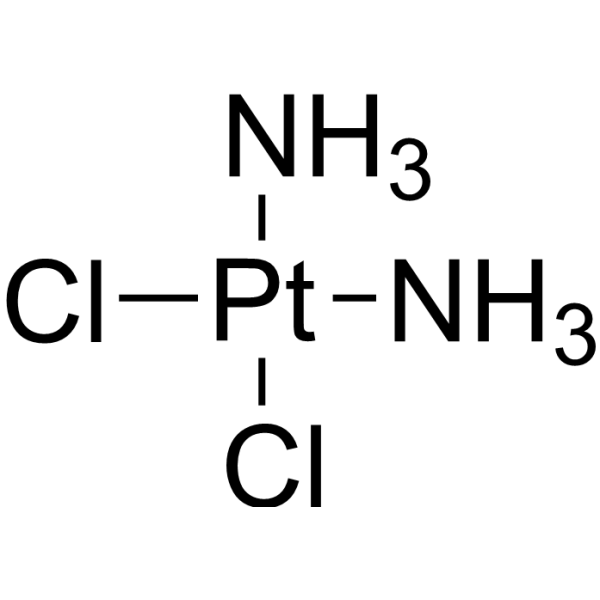
  • HY-17394
    Cisplatin
    Maximum Cited Publications
    768 Publications Verification

    cis-Platinum; CDDP; cis-Diaminodichloroplatinum

    DNA Alkylator/Crosslinker Ferroptosis Autophagy Pyroptosis Lipoxygenase Cancer
    Cisplatin (CDDP) is an antineoplastic chemotherapy agent by cross-linking with DNA and causing DNA damage in cancer cells. Cisplatin activates ferroptosis and induces autophagy .
    Cisplatin
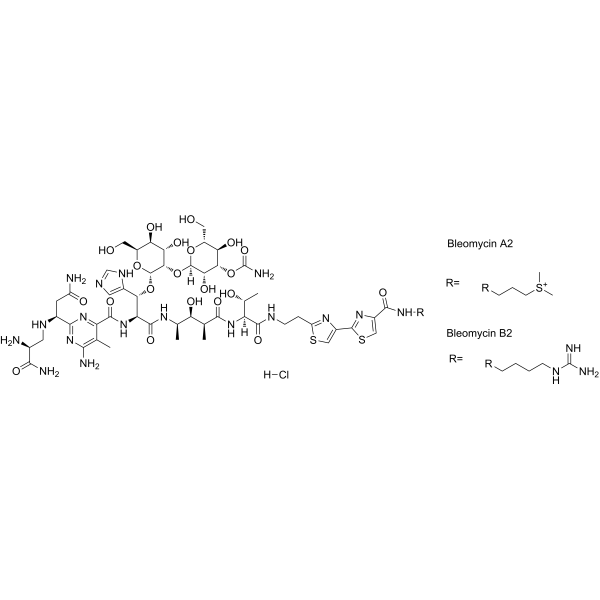
  • HY-17565A
    Bleomycin hydrochloride
    190+ Cited Publications

    DNA/RNA Synthesis Antibiotic Cancer
    Bleomycin hydrochloride is a DNA synthesis inhibitor. Bleomycin hydrochloride is a DNA damaging agent. Bleomycin hydrochloride is an antitumor antibiotic .
    Bleomycin hydrochloride
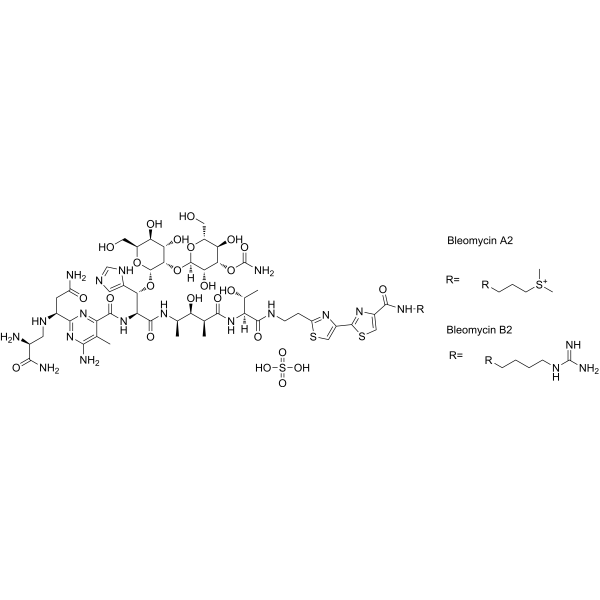
  • HY-17565
    Bleomycin sulfate
    Maximum Cited Publications
    191 Publications Verification

    Bleomycin sulfate

    DNA/RNA Synthesis Antibiotic Cancer
    Bleomycin sulfate is a DNA synthesis inhibitor. Bleomycin hydrochloride is a DNA damaging agent. Bleomycin sulfate is an antitumor antibiotic .
    Bleomycin sulfate
  • HY-N0124
    Dioscin
    10+ Cited Publications

    Collettiside III; CCRIS 4123

    Autophagy Apoptosis Cardiovascular Disease Cancer
    Dioscin (CCRIS 4123; Collettiside III) is a natural plant-derived steroidal saponin that has good anti-cancer activity against a variety of cancer cells. Dioscin causes DNA damage and induces apoptosis in HeLa and SiHa cells. Dioscin regulates ROS-mediated DNA damage and mitochondrial signaling pathways, exerting anticancer activity .
    Dioscin
  • HY-100016
    AZD0156
    10+ Cited Publications

    ATM/ATR Apoptosis Cancer
    AZD0156 is a potent, selective and orally active ATM inhibitor with an IC50 of 0.58 nM. AZD0156 inhibits the ATM-mediated signaling, prevents DNA damage checkpoint activation, disrupts DNA damage repair, and induces tumor cell apoptosis .
    AZD0156
  • HY-107407
    SB-218078
    5 Publications Verification

    Checkpoint Kinase (Chk) CDK PKC Apoptosis Cancer
    SB-218078 is a potent, selective, ATP-competitive and cell-permeable checkpoint kinase 1 (Chk1) inhibitor that inhibits Chk1 phosphorylation of cdc25C with an IC50 of 15 nM. SB-218078 is less potently inhibits Cdc2 (IC50 of 250 nM) and PKC (IC50 of 1000 nM). SB-218078 causes apoptosis by DNA damage and cell cycle arrest .
    SB-218078
  • HY-130250
    SR-4835
    15+ Cited Publications

    CDK Apoptosis Cancer
    SR-4835 is a potent, highly selective and ATP competitive dual inhibitor of CDK12/CDK13 (CDK12: IC50=99 nM, Kd=98 nM; CDK13: Kd=4.9 nM). SR-4835 acts in synergy with DNA-damaging chemotherapy and PARP inhibitors and provokes triple-negative breast cancer (TNBC) cell death .
    SR-4835
  • HY-137316A

    DNA Alkylator/Crosslinker Drug Metabolite Cancer
    Phosphoramide mustard cyclohexanamine is a biologically active metabolite of Cyclophosphamide (HY-17420), with anticancer activitiy. Phosphoramide mustard cyclohexanamine induces DNA damage .
    Phosphoramide mustard cyclohexanamine
  • HY-Y0958
    Methoxyamine hydrochloride
    1 Publications Verification

    O-Methylhydroxylamine hydrochloride

    DNA/RNA Synthesis Apoptosis Cancer
    Methoxyamine (O-Methylhydroxylamine) hydrochloride is an orally active and potent base excision repair (BER) inhibitor. Methoxyamine hydrochloride binds to 3’ hydroxyl groups that are left behind by 3-methylpurine-DNA glycosylase (MPG) following excision of the damaged base and thus inhibits BER activity. Methoxyamine hydrochloride binds directly to the apyrimidinic (AP) sites. Methoxyamine hydrochloride synergistically enhances the therapeutic efficacy of DNA-damaging agents .
    Methoxyamine hydrochloride
  • HY-134929
    Benitrobenrazide
    2 Publications Verification

    BNBZ; Hexokinase 2 inhibitor 1

    Hexokinase Apoptosis Cancer
    Benitrobenrazide (BNBZ) is the orally active inhibitor for hexokinase 2 with an IC50 of 0.53 µM. Benitrobenrazide causes DNA damage, and exhibits antitumor effect .
    Benitrobenrazide
  • HY-B0077
    Bendamustine hydrochloride
    5+ Cited Publications

    SDX-105

    DNA Alkylator/Crosslinker Apoptosis Neurological Disease Inflammation/Immunology Cancer
    Bendamustine hydrochloride (SDX-105), a purine analogue, is a DNA cross-linking agent. Bendamustine hydrochloride activats DNA-damage stress response and apoptosis. Bendamustine hydrochloride has potent alkylating, anticancer and antimetabolite properties .
    Bendamustine hydrochloride
  • HY-13567
    Bendamustine
    5+ Cited Publications

    SDX-105 free base

    DNA Alkylator/Crosslinker Apoptosis Neurological Disease Inflammation/Immunology Cancer
    Bendamustine (SDX-105 free base), a purine analogue, is a DNA cross-linking agent. Bendamustine activates DNA-damage stress response and apoptosis. Bendamustine has potent alkylating, anticancer and antimetabolite properties .
    Bendamustine
  • HY-13700
    Nedaplatin
    1 Publications Verification

    NSC 375101D

    DNA/RNA Synthesis Cancer
    Nedaplatin (NSC 375101D) is a derivative of cisplatin and DNA damage agent.
    Nedaplatin
  • HY-101089
    RHPS4
    5 Publications Verification

    Telomerase Apoptosis Cancer
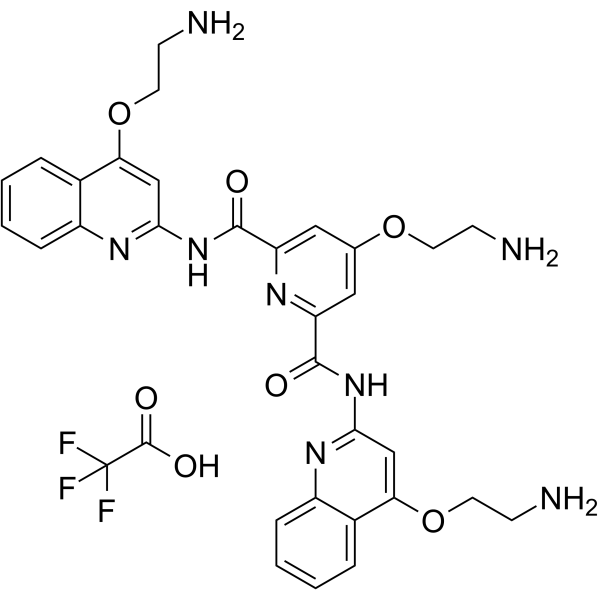
    RHPS4 is a potent telomerase inhibitor (IC50 = 0.33 μM). RHPS4 is a DNA damage inducer .
    RHPS4
  • HY-14808
    Adarotene
    10+ Cited Publications

    ST1926

    Apoptosis Cancer
    Adarotene is an effective apoptosis inducer, which surprisingly produces DNA damage and exhibites a potent antiproliferative activity on a large panel of human tumor cells.
    Adarotene
  • HY-148962

    Checkpoint Kinase (Chk) Cancer
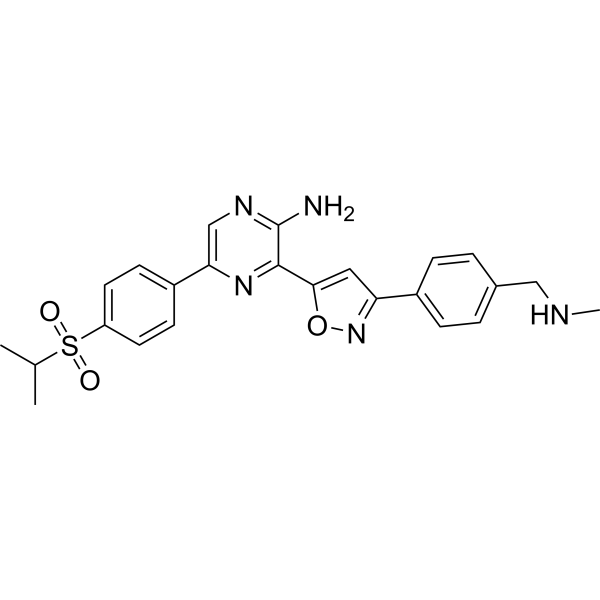
    LY2880070 is an orally active CHK1 inhibitor, IC50 < 1 nM. LY2880070 can be used as an anticancer agent for combination with DNA damaging agents .
    LY2880070
  • HY-19791

    N-Acetyl-Calicheamicin γ; N-Acetyl-γ-calicheamicin

    ADC Payload DNA/RNA Synthesis Antibiotic Bacterial Infection Cancer
    N-Acetyl-Calicheamicin (N-Acetyl-Calicheamicin γ), an enediyne anti-tumor antibiotic, is an ADC cytotoxin. N-Acetyl-Calicheamicin can induce DNA damage, and can be used in the synthesis of ADC .
    N-Acetyl-Calicheamicin
  • HY-111183
    Neocarzinostatin (solution)
    1 Publications Verification

    Zinostatin; Vinostatin

    DNA/RNA Synthesis Bacterial Apoptosis Antibiotic Infection Cancer
    Neocarzinostatin (solution), a potent DNA-damaging, anti-tumor antibiotic, recognizes double-stranded DNA bulge and induces DNA double strand breaks (DSBs). Neocarzinostatin induces apoptosis. Neocarzinostatin has potential for EpCAM-positive cancers treatment .
    Neocarzinostatin (solution)
  • HY-108708

    PARP Cancer
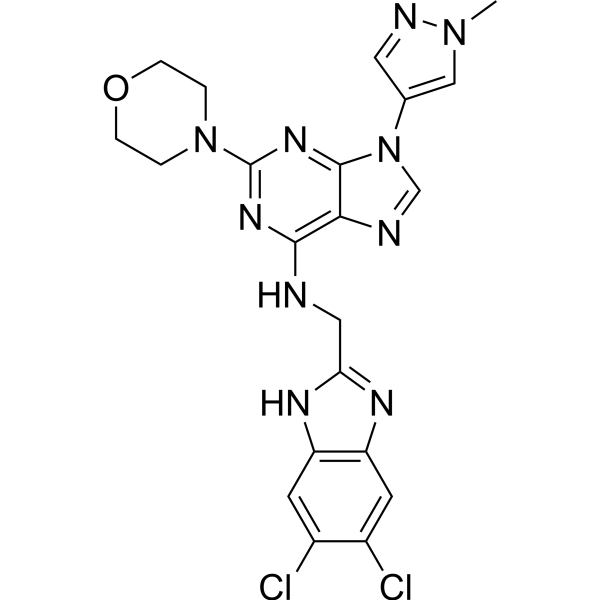
    GeA-69 is a selective, allosteric inhibitor of poly-adenosine-diphosphate-ribose polymerase 14 (PARP14) targeting macrodomain 2 (MD2), with a Kd value of 2.1 μM. GeA-69 involves in DNA damage repair mechanisms and prevents recruitment of PARP14 MD2 to sites of laser-induced DNA damage .
    GeA-69
  • HY-153215

    Ligands for E3 Ligase Cancer
    MEL24 is an Mdm2 E3 ligase inhibitor that reduces cell survival and increases sensitivity to DNA damaging agents in a p53-dependent manner for in vitro antitumor studies .
    MEL24
  • HY-19747
    HPOB
    3 Publications Verification

    HDAC Apoptosis Cancer
    HPOB is a highly potent and selective inhibitor of HDAC6 with an IC50 of 56 nM. HPOB displays >30 fold less potent against other HDACs. HPOB enhances the effectiveness of DNA-damaging anticancer agents in transformed cells but not normal cells. HPOB does not block the ubiquitin-binding activity of HDAC6 .
    HPOB
  • HY-139621

    DNA Alkylator/Crosslinker Cancer
    Colibactin 742 is a covalently binding DNA-damaging agent targeting DNA, with an IC50 of 5.2 μM against human cervical cancer cells (HeLa). Colibactin 742 covalently binds to DNA, forming interstrand crosslinks (ICLs), activating the Fanconi anemia DNA repair pathway, inducing γH2AX and FANCD2 foci formation and cell cycle arrest, while exacerbating mismatch repair deficiency (MMRd)-related mutations. Colibactin 742 can mimic the genotoxicity of natural Colibactin while avoiding its instability, and is mainly used in colorectal cancer (CRC) related research, including microbial tumorigenesis mechanisms, DNA damage repair pathways, and mutation signature analysis .
    Colibactin 742
  • HY-16445B

    Nucleoside Antimetabolite/Analog Drug Metabolite Apoptosis DNA/RNA Synthesis Cancer
    CNDAC hydrochloride is a metabolite of the orally active agent Sapacitabine (HY-16445), and a nucleoside analog. CNDAC hydrochloride induces DNA damage and apoptosis .
    CNDAC hydrochloride
  • HY-137316

    DNA Alkylator/Crosslinker Drug Metabolite Cancer
    Phosphoramide mustard is a biologically active metabolite of Cyclophosphamide (HY-17420), with anticancer activitiy. Phosphoramide mustard induces DNA damage .
    Phosphoramide mustard
  • HY-14714
    NSC-207895
    2 Publications Verification

    XI-006

    MDM-2/p53 Cancer
    NSC-207895 (XI-006), a DNA damaging agent, is an anticancer agent and p53 activator .
    NSC-207895
  • HY-W338852

    Drug Metabolite Cancer
    Gentisuric acid, a metabolite of Aspirin (HY-14654), is a substrate of α-amidating monooxygenase (PAM). Gentisuric acid prevents DNA-damage by Mitomycin C (HY-13316) .
    Gentisuric acid
  • HY-108640A

    MDM-2/p53 Parasite Apoptosis Infection Cancer
    HLI373 dihydrochloride is an efficacious Hdm2 inhibitor. HLI373 dihydrochloride inhibits the ubiquitin ligase activity of Hdm2. HLI373 dihydrochloride is effective in inducing apoptosis of several tumor cells that are sensitive to DNA-damaging agents . Antimalarial activity .
    HLI373 dihydrochloride
  • HY-N4321
    Glucotropaeolin potassium
    1 Publications Verification

    Benzylglucosinolate potassium

    DNA/RNA Synthesis Cancer
    Glucotropaeolin potassium (Benzylglucosinolate potassium) , a glucosinolate contained in cruciferous vegetables, causes a moderate decrease in spontaneous DNA damage in animals .
    Glucotropaeolin potassium
  • HY-163942

    DNA/RNA Synthesis Cancer
    GSK_WRN4 is an orally active WRN helicase inhibitor (pIC50=7.6). GSK_WRN4 induces DNA damage markers (p21, p-γH2AX, p-KAP1). GSK_WRN4 selectively inhibits microsatellite-unstable tumor growth in vitro and in vivo by inducing DNA double-strand breaks, particularly at expanded TA repeats and regions of DNA damage .
    GSK_WRN4
  • HY-W011425

    Nitrilotris(methylenephosphonic acid)

    Environmental Pollutants DNA Alkylator/Crosslinker MOFs Cancer
    NTPO (Nitrilotris methylenephosphonic acid) is a DNA damage inducer, causing genomic DNA damage and fragmentation, activating ATR-mediated cell cycle checkpoints. The DNA damaging effects of NTPO are abrogated by base excision repair (BER) but not nucleotide excision repair (NER) .
    NTPO
  • HY-W265757

    DNA/RNA Synthesis Cancer
    4-Ethylcatechol is a ring-dihydroxylated metabolite of 4-Ethylphenol that leads to oxidative DNA damage .
    4-Ethylcatechol
  • HY-N0124R

    Collettiside III (Standard); CCRIS 4123 (Standard)

    Reference Standards Autophagy Apoptosis Cardiovascular Disease Cancer
    Dioscin (Standard) is the analytical standard of Dioscin. This product is intended for research and analytical applications. Dioscin (CCRIS 4123; Collettiside III) is a natural plant-derived steroidal saponin that has good anti-cancer activity against a variety of cancer cells. Dioscin causes DNA damage and induces apoptosis in HeLa and SiHa cells. Dioscin regulates ROS-mediated DNA damage and mitochondrial signaling pathways, exerting anticancer activity .
    Dioscin (Standard)
  • HY-W341499

    Endogenous Metabolite Others
    5-Formyl-2'-deoxyuridine is a product formed when the 5-methyl group of thymine in DNA undergoes oxidation due to exposure to gamma radiation or certain chemical agents. Serving as a biomarker of oxidative DNA damage, 5-formyl-2'-deoxyuridine is employed in investigations of DNA damage and repair mechanisms. Additionally, 5-Formyl-2'-deoxyuridine can be used in studies involving chemically crosslinking with peptides derived from the RecA protein .
    5-Formyl-2'-deoxyuridine
  • HY-W718423

    IDPP

    DNA/RNA Synthesis MDM-2/p53 Cancer
    Isodecyl diphenyl phosphate (IDPP) is a flame retardant. Isodecyl diphenyl phosphate induces cytotoxicity, DNA damage, mitochondrial dysfunction and oxidative stress in cancer cells, and mediates DNA damage and cell cycle arrest via a p53-dependent pathway .
    Isodecyl diphenyl phosphate
  • HY-121641

    Reactive Oxygen Species (ROS)
    Nitrosobenzene is a radical scavenger that can be used to study oxidative DNA damage and the respiratory burst reaction of neutrophils induced by nitro compounds .
    Nitrosobenzene
  • HY-W004924

    Endogenous Metabolite Others
    5-Hydroxymethyluracil is a product of oxidative DNA damage. 5-Hydroxymethyluracil can be used as a potential epigenetic mark enhancing or inhibiting transcription with bacterial RNA polymerase.
    5-Hydroxymethyluracil
  • HY-116496

    N7-Methyladenine

    DNA Alkylator/Crosslinker Cancer
    7-Methyladenine (N7-Methyladenine), a methylated analog of Adenine (HY-B0152), is a biomarker of DNA damage from exposure to methylating agents .
    7-Methyladenine
  • HY-19118

    FFC14A

    Apoptosis Cancer
    KP1019 (FFC14A) is a Ru(III)-based anti-metastatic and cytotoxic anti-cancer agent. KP1019 induces DNA damage and apoptosis in cancer cells .
    KP1019
  • HY-121199

    Apoptosis Cancer
    Germanicol is a selective antineoplastic agent against human colon cancer cell lines HCT-116 and HT29 . Germanicol induces apoptosis via chromatin condensation and DNA damage .
    Germanicol
  • HY-N3798

    Bacterial Infection
    Effusanin A is a natural product that can be found in Isodon rugosus. Effusanin A exhibits DNA-damaging and antibacterial activities .
    Effusanin A
  • HY-W004460

    Environmental Pollutants Biochemical Assay Reagents Cancer
    9,10-Dimethylanthracene is a polycyclic aromatic hydrocarbon that acts as a DNA-damaging agent. 9,10-Dimethylanthracene is promising for research of carcinogenic risks of environmental pollutants .
    9,10-Dimethylanthracene
  • HY-108640

    MDM-2/p53 Parasite Apoptosis Infection Cancer
    HLI373 is an efficacious Hdm2 inhibitor. HLI373 inhibits the ubiquitin ligase activity of Hdm2. HLI373 is effective in inducing apoptosis of several tumor cells that are sensitive to DNA-damaging agents . Antimalarial activity .
    HLI373
  • HY-175812

    Endonuclease Cancer
    MU876 (Compound 32) is a MUS81 inhibitor with an IC50 of 0.5  μM. MU876 effectively inhibits MUS81-dependent homologous recombination (HR) and break-induced replication (BIR) pathways. MU876 sensitizes cancer cells to DNA-damaging agents, such as Cisplatin (HY-17394), through impairing their ability to repair DNA lesions. MU876 can be used for cancers chemotherapy research .
    MU876
  • HY-137843

    DNA/RNA Synthesis Cancer
    NSC 80467, a DNA damaging agent, selectively inhibits survivin. NSC 80467 preferentially inhibits DNA synthesis and results in induction of γH2AX and pKAP1, two markers of DNA damage .
    NSC 80467
  • HY-16445A

    Nucleoside Antimetabolite/Analog Drug Metabolite Apoptosis DNA/RNA Synthesis Cancer
    CNDAC is a metabolite of the orally active agent Sapacitabine (HY-16445), and a nucleoside analog. CNDAC induces DNA damage and apoptosis .
    CNDAC
  • HY-N7229

    DNA/RNA Synthesis Cancer
    Rabdosin B is an ent-kaurene diterpenoid with anticancer effects. Rabdosin B induces DNA damage in cells, and inhibits lettuce root hair development of seedlings .
    Rabdosin B
  • HY-177780

    Molecular Glues CDK Apoptosis Cancer
    Cyclin K degrader 2 is a molecular glucose degrading agent that targets the cyclin K protein. Cyclin K degrader 2 has inhibitory activity against CDK1 and CDK9. Cyclin K degrader 2 causes a decrease in RNA polymerase II Ser2 phosphorylation levels, downregulation of DNA damage response gene expression, accumulation of DNA damage, G1 phase arrest of the cell cycle, and apoptosis. Cyclin K degrader 2 can be used for cancer research .
    Cyclin K degrader 2
  • HY-146548

    Apoptosis Bcl-2 Family Caspase PARP Cancer
    Anticancer Agent 43 is a potent anticancer agent. Anticancer Agent 43 induces apoptosis by caspase 3, PARP1, and Bax dependent mechanisms. Anticancer Agent 43 induces DNA damage .
    Anticancer agent 43
  • HY-P4978

    Checkpoint Kinase (Chk) Cancer
    CBP501 Affinity Peptide is a Chk kinase inhibitor that can abrogate G2 arrest induced by DNA-damaging agents. CBP501 Affinity Peptide can be used in cancer research .
    CBP501 Affinity Peptide
  • HY-161383

    Checkpoint Kinase (Chk) Cancer
    CHK1-IN-9 (compound 11) is an orally active CHK1 inhibitor with an IC50 value of 0.55 nM. CHK1-IN-9 can enhance the effect of DNA-damaging drugs on tumor cells. CHK1-IN-9 has synergistic anticancer effects with Gemcitabine (HY-17026) .
    CHK1-IN-9

Inquiry Online

Your information is safe with us. * Required Fields.

Salutation


Country or Region *

Applicant Name *


Organization Name *

Department *


Email Address *


Product Name *

Cat. No.


Requested quantity *

Phone Number *


Remarks

Inquiry Online

Inquiry Information

Product Name:
Cat. No.:
Quantity:
MCE Japan Authorized Agent:

