1. Search Result
Search Result
Results for "

GGPPS

" in MedChemExpress (MCE) Product Catalog:

18

Inhibitors & Agonists

2

Peptides

4

Natural
Products

2

Isotope-Labeled Compounds

2

Antibodies

2

Oligonucleotides

Cat. No. Product Name Target Research Areas Chemical Structure
  • HY-113037C

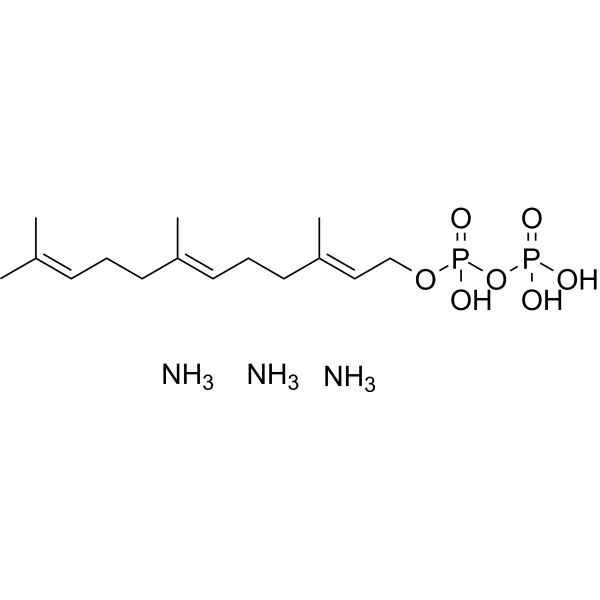
    Farnesyl diphosphate ammonium

    TRP Channel Endogenous Metabolite Calcium Channel Neurological Disease Inflammation/Immunology Cancer
    Farnesyl pyrophosphate (Farnesyl diphosphate) ammonium is a metabolic intermediate in the mevalonate (MVA) pathway. It is a TRP channel (TRPM2) agonist that triggers Ca2+ influx and cell death. Farnesyl pyrophosphate ammonium is a key branch substrate for cholesterol synthesis, ubiquinone synthesis, protein farnesylation, and geranylgeranyl pyrophosphate (GGPP) synthesis. Farnesyl pyrophosphate ammonium is used in research on cerebral ischemia, neurodegenerative diseases, pancreatic cancer, inflammation, and autoimmune diseases .
    Farnesyl pyrophosphate ammonium
  • HY-U00145
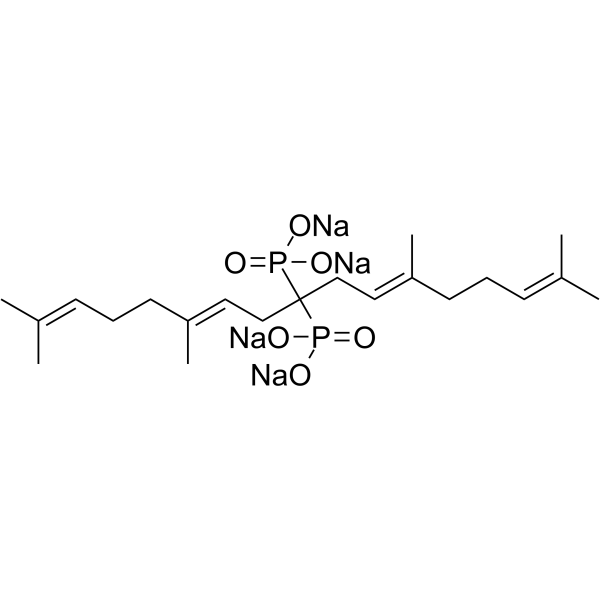
    Digeranyl bisphosphonate
    3 Publications Verification

    DGBP

    Ras Inflammation/Immunology
    Digeranyl bisphosphonate (DGBP) is a potent geranylgeranylpyrophosphate (GGPP) synthase inhibitor, which inhibits geranylgeranylation of Rac1.
    Digeranyl bisphosphonate
  • HY-113037

    (E/Z)-Farnesyl diphosphate

    TRP Channel Endogenous Metabolite Neurological Disease
    (E/Z)-Farnesyl pyrophosphate ((E/Z)-Farnesyl diphosphate), a 15-carbon isoprenoid, is a metabolic intermediate of the mevalonate (MVA) pathway. (E/Z)-Farnesyl pyrophosphate is a TRPM2 (TRP Channel) agonist, activates TRPM2 opening for ion influx. (E/Z)-Farnesyl pyrophosphate is a key branch substrate for cholesterol synthesis, ubiquinones synthesis, protein farnesylation decoration, and geranyl-geranyl pyrophosphate (GGPP) synthesis .
    (E/Z)-Farnesyl pyrophosphate
  • HY-135700

    Calcineurin Ras HMG-CoA Reductase (HMGCR) Metabolic Disease Inflammation/Immunology
    Mevalonolactone is an intermediate metabolite in the eukaryotic mevalonate pathway, serving as the stable δ-lactone form of mevalonate with oral activity. Mevalonolactone exhibits binding affinity for ZNF384 (Ka = 12.6 μM) and inhibitory activity against aconitase (aconitase). Mevalonolactone promotes the nuclear localization of ZNF384 and enhances its binding to the GGPPS promoter. Mevalonolactone induces insulin resistance, disrupts glucose and lipid metabolism, enhances the isoprenylation of K-Ras, and inhibits the activation of the insulin signaling pathway. Mevalonolactone inhibits polypeptide synthesis of HMG-CoA reductase in isolated rat hepatocytes, promotes its degradation, and reduces its enzymatic activity. Mevalonolactone impairs mitochondrial function in rat brains. Mevalonolactone promotes the development of metabolically unhealthy obesity. Mevalonolactone can be used in research related to metabolically abnormal obesity, mevalonic aciduria, HMGCR-related limb-girdle myopathy, and statin-induced myopathy .
    Mevalonolactone
  • HY-P10031

    GLP Receptor GCGR Metabolic Disease
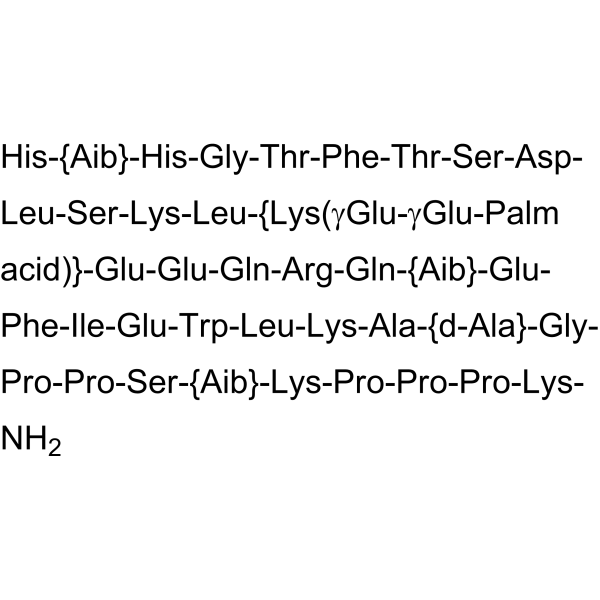
    SAR441255 is a potent unimolecular peptide GLP-1/GIP/GCG receptor triagonist. SAR441255 displays high potency with balanced activation of all three target receptors.?SAR441255 shows positive acute glucoregulatory effectss in diabetic obese monkeys .
    SAR441255
  • HY-113037CS

    Farnesyl diphosphate-d2 triammonium

    Isotope-Labeled Compounds TRP Channel Endogenous Metabolite Calcium Channel Neurological Disease Inflammation/Immunology Cancer
    Farnesyl pyrophosphate-d2 (Farnesyl diphosphate-d2) triammonium is a deuterium labeled Farnesyl pyrophosphate triammonium (HY-113037C). Farnesyl pyrophosphate ammonium is a metabolic intermediate in the mevalonate (MVA) pathway. It is a TRP channel (TRPM2) agonist that triggers Ca2+ influx and cell death. Farnesyl pyrophosphate ammonium is a key branch substrate for cholesterol synthesis, ubiquinone synthesis, protein farnesylation, and geranylgeranyl pyrophosphate (GGPP) synthesis. Farnesyl pyrophosphate ammonium is used in research on cerebral ischemia, neurodegenerative diseases, pancreatic cancer, inflammation, and autoimmune diseases.
    Farnesyl pyrophosphate-d2 triammonium
  • HY-113037B

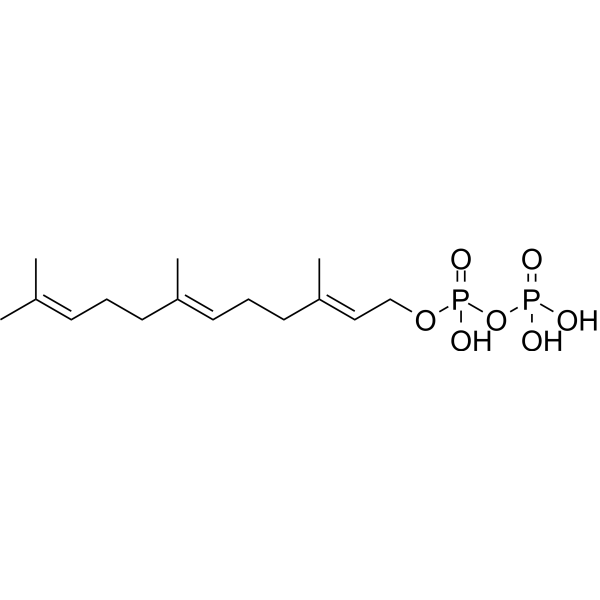
    Farnesyl diphosphate

    TRP Channel Endogenous Metabolite Calcium Channel Neurological Disease Inflammation/Immunology Cancer
    Farnesyl pyrophosphate is a metabolic intermediate in the mevalonate (MVA) pathway. It is a TRP channel (TRPM2) agonist that triggers Ca2+ influx and cell death. Farnesyl pyrophosphate is a key branch substrate for cholesterol synthesis, ubiquinone synthesis, protein farnesylation, and geranylgeranyl pyrophosphate (GGPP) synthesis. Farnesyl pyrophosphate is used in research on cerebral ischemia, neurodegenerative diseases, pancreatic cancer, inflammation, and autoimmune diseases.
    Farnesyl pyrophosphate
  • HY-113752

    Parasite Infection
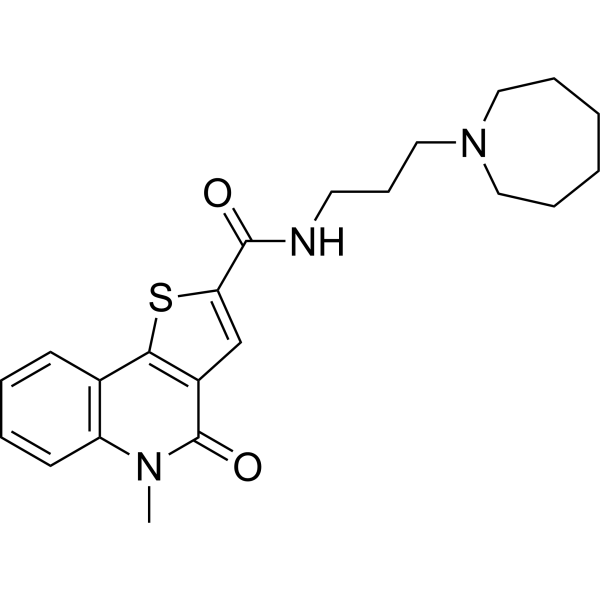
    MMV019313 is a potent, non-bisphosphonate inhibitor of farnesyl/geranylgeranyl diphosphate synthase (FPPS/GGPPS) with an IC50 of 0.82 µM. MMV019313 has activity against P. falciparum (Parasite) .
    MMV019313
  • HY-113037AS

    Farnesyl diphosphate-d6

    Isotope-Labeled Compounds TRP Channel Endogenous Metabolite Calcium Channel Neurological Disease Inflammation/Immunology Cancer
    Farnesyl pyrophosphate-d6 (Farnesyl diphosphate-d6) is a deuterium labeled Farnesyl pyrophosphate (HY-113037B). Farnesyl pyrophosphate is a metabolic intermediate in the mevalonate (MVA) pathway. It is a TRP channel (TRPM2) agonist that triggers Ca2+ influx and cell death. Farnesyl pyrophosphate is a key branch substrate for cholesterol synthesis, ubiquinone synthesis, protein farnesylation, and geranylgeranyl pyrophosphate (GGPP) synthesis. Farnesyl pyrophosphate is used in research on cerebral ischemia, neurodegenerative diseases, pancreatic cancer, inflammation, and autoimmune diseases.
    Farnesyl pyrophosphate-d6
  • HY-P10031A

    GLP Receptor GCGR Metabolic Disease
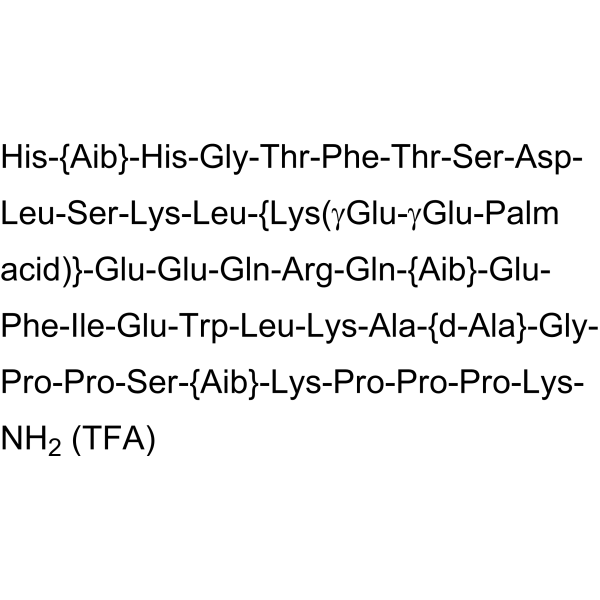
    SAR441255 TFA is a potent unimolecular peptide GLP-1/GIP/GCG receptor triagonist. SAR441255 TFA displays high potency with balanced activation of all three target receptors.?SAR441255 TFA shows positive acute glucoregulatory effectss in diabetic obese monkeys .
    SAR441255 TFA
  • HY-136829

    Apoptosis Others
    BPH-675 is a large bisphosphonate inhibitor with long hydrophobic side chains and a potent and selective geranylgeranyl diphosphate synthase (GGPPS) inhibitor with an IC50 of 0.71 μM. GGPPS inhibitor promotes HUVEC apoptosis .
    BPH-675
  • HY-RS05402

    Small Interfering RNA (siRNA) Others

    GGPS1 Human Pre-designed siRNA Set A contains three designed siRNAs for GGPS1 gene (Human), as well as a negative control, a positive control, and a FAM-labeled negative control.

    GGPS1 Human Pre-designed siRNA Set A
    GGPS1 Human Pre-designed siRNA Set A
  • HY-124723

    Farnesyl Transferase Cancer
    Gerfelin inhibits geranylgeranyl diphosphate synthase (GGPP synthase) activity with an IC50 of 3.5 μg/mL .
    Gerfelin
  • HY-113869

    Apoptosis PI3K Akt Cancer
    BPH-628 is an aromatic geranylgeranyl diphosphate synthase (GGPPS) inhibitor, with a pIC50 of 6.1 .
    BPH-628
  • HY-113793

    Ras Cancer
    BPH-742 (compound 9) is a Geranylgeranyl diphosphate synthase inhibitor with IC50 of 0.1 μM. BPH-742 has antitumor activity .
    BPH-742
  • HY-RS19684

    Small Interfering RNA (siRNA) Others

    Ggps1 Mouse Pre-designed siRNA Set A contains three designed siRNAs for Ggps1 gene (Mouse), as well as a negative control, a positive control, and a FAM-labeled negative control.

    Ggps1 Mouse Pre-designed siRNA Set A
    Ggps1 Mouse Pre-designed siRNA Set A
  • HY-126472

    Farnesyl Transferase Cancer
    BPH252 (Compound 4) is a geranylgeranyl diphosphate synthase inhibitor. BPH252 can be used in research on bisphosphonate-based anticancer inhibitors .
    BPH252
  • HY-186013

    Apoptosis Cancer
    CML-07-119 is a selective inhibitor of GGPP synthase (GGPPS) with an IC50 of ~27 nM. CML-07-119 induces apoptosis and exhibits anticancer activity against acute myeloid leukemia (AML) cells, including those harbouring TP53 mutations. CML-07-119 inhibits tumor growth in an AML mouse xenograft model. CML-07-119 can be used for AML research .
    CML-07-119

Inquiry Online

Your information is safe with us. * Required Fields.

Salutation


Country or Region *

Applicant Name *


Organization Name *

Department *


Email Address *


Product Name *

Cat. No.


Requested quantity *

Phone Number *


Remarks

Inquiry Online

Inquiry Information

Product Name:
Cat. No.:
Quantity:
MCE Japan Authorized Agent:

