



1. Search Result
Search Result
Results for "

HBV surface antigen

" in MedChemExpress (MCE) Product Catalog:

32

Inhibitors & Agonists

1

Peptides

3

Inhibitory Antibodies

11

Natural
Products

2

Recombinant Proteins

2

Oligonucleotides

Cat. No. Nombre del producto Target Áreas de investigación Chemical Structure
  • HY-N0699
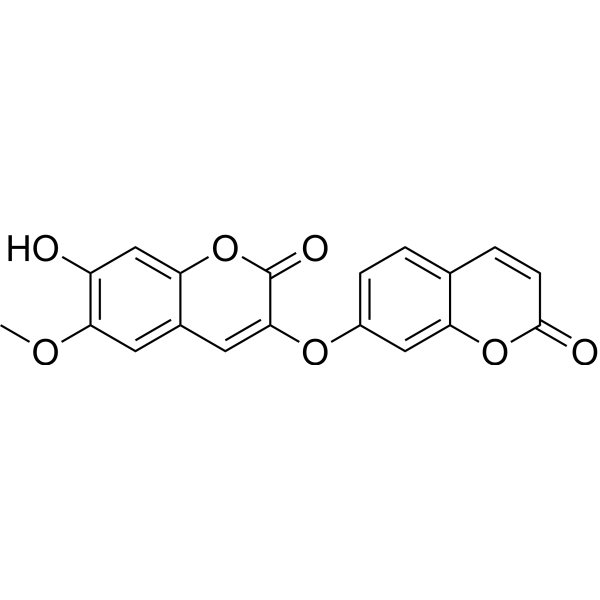
    Daphnoretin
    3 Publications Verification

    Dephnoretin; Thymelol

    PKC Influenza Virus NOD-like Receptor (NLR) Apoptosis HBV JNK PI3K Akt CDK Caspase Bcl-2 Family Infection Inflammation/Immunology Cancer
    Daphnoretin (Dephnoretin; Thymelol) is a protein kinase C (PKC) activator that inhibits the expression of hepatitis B virus (HBV) surface antigen (HBsAg) and exhibits antiviral activity. Daphnoretin exerts its antitumor effects by inhibiting the activation of the PI3K/AKT signaling pathway and triggers the mitochondrial apoptosis pathway. Daphnoretin alleviates chondrocyte apoptosis and inflammatory responses by inhibiting endoplasmic reticulum stress and activation of the NLRP3 inflammasome. Daphnoretin regulates the differentiation and maturation of dendritic cells, inhibits their immunostimulatory function by downregulating the phosphorylation level of JNK, and thus exerts a protective effect in skin graft rejection .
    Daphnoretin
  • HY-147266

    VIR-2218 sodium

    Small Interfering RNA (siRNA) HBV Infection
    Elebsiran (VIR-2218) sodium is a siRNA that targets and degrades hepatitis B virus (HBV) and hepatitis D virus (HDV) RNA transcripts. Elebsiran sodium leads to a significant decrease in HBV surface antigen (HBsAg) and a reduction in viral load. Elebsiran sodium binds to the sialic acid-depleted glycoprotein receptor (ASGPR) on the surface of liver cells through the GalNAc ligand, achieving liver-targeted delivery and demonstrating improved liver safety. Elebsiran sodium can be used for the study of chronic HBV/HDV infections .
    Elebsiran sodium
  • HY-P990015

    VIR-3434

    HBV Infection
    Tobevibart (VIR-3434) is a human IgG1 lambda monoclonal antibody against hepatitis B virus (HBV) surface antigen (HBsAg). Tobevibart shows potent neutralization against HBsAg from all HBV genotypes in vitro and inhibits viral entry of HBV and hepatitis delta virus (HDV). Recommend Isotype Controls: Human IgG1 lambda2, Isotype Control (HY-P990096) .
    Tobevibart
  • HY-145638A

    RO7445482 sodium

    HBV Infection
    Xalnesiran (RO7445482) sodium is a small interfering RNA molecule that targets a conserved region of the
    hepatitis B virus (HBV) genome . Xalnesiran sodium can be used for the research of chronic hepatitis B infection .
    Xalnesiran sodium
  • HY-P991674

    BJT-778

    HBV Infection Inflammation/Immunology
    Brelovitug (BJT-778) is a humanized IgG1 neutralizing monoclonal antibody targeting hepatitis B surface antigen (HBsAg). Brelovitug binds with high affinity to HBsAg purified from HBV serotypes ad and ay, with Kd values of 0.22 nM and 0.39 nM, respectively. Brelovitug binds with high affinity to HBsAg of HBV genotypes A, B, C and D, with IC50 values of 0.07, 0.02, 0.02 and 0.07 nM, respectively. Brelovitug can be used in research related to chronic hepatitis B and chronic hepatitis D .
    Brelovitug
  • HY-133721

    HBV Infection Inflammation/Immunology
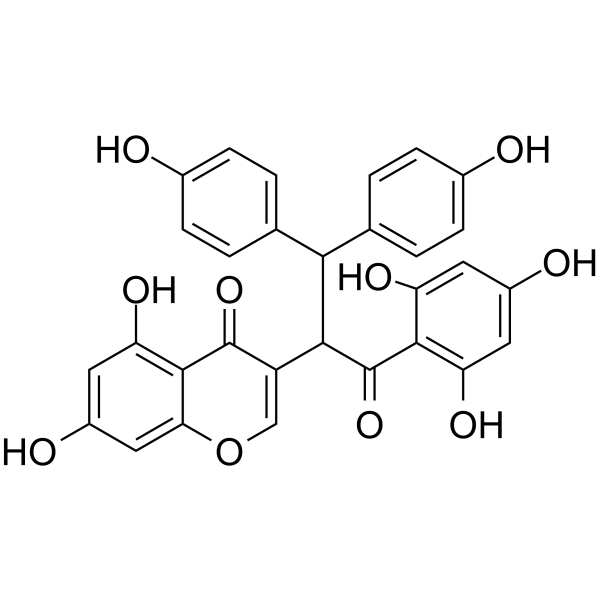
    Chamaechromone is a biflavonoid ingredient isolated from the roots of Stellera chamaejasme L. (Thymelaeaceae). Chamaechromone possesses anti-hepatitis B virus (HBV) effects against the surface antigen of HBV (HBsAg) secretion and has insecticidal activities .
    Chamaechromone
  • HY-147266A

    VIR-2218

    HBV Small Interfering RNA (siRNA) Infection
    Elebsiran (VIR-2218) is a siRNA that targets and degrades hepatitis B virus (HBV) and hepatitis D virus (HDV) RNA transcripts. Elebsiran leads to a significant decrease in HBV surface antigen (HBsAg) and a reduction in viral load. Elebsiran binds to the sialic acid-depleted glycoprotein receptor (ASGPR) on the surface of liver cells through the GalNAc ligand, achieving liver-targeted delivery and demonstrating improved liver safety. Elebsiran can be used for the study of chronic HBV/HDV infections .
    Elebsiran
  • HY-P99541

    anti-hepatitis B; OST 577; SDZ-OST 577

    HBV Infection
    Tuvirumab (OST 577; SDZ-OST 577) is a human IgG1 subclass monoclonal antibody directed against HBV surface antigen (HBsAg). Tuvirumab binds specifically and with high affinity (K=3.6 nM) to HBsAg. Tuvirumab has the potential for chronic hepatitis B research .
    Tuvirumab
  • HY-126970

    HBV Infection
    HBF-0259 is a potent and selective inhibitor of hepatitis B virus (HBV) surface antigen (HBsAg) secretion, with an EC50 of 1.5 μM in HepG2.2.15 cells. HBF-0259 has no effect on HBV DNA synthesis .
    HBF-0259
  • HY-177300

    Toll-like Receptor (TLR) HBV IFNAR Interleukin Related Infection Inflammation/Immunology
    TLR7/8 agonist 13 is an orally active dual agonist of TLR7 (lowest effective concentrations (LEC) [hTLR7] = 1.6 μM) and TLR8 (LEC [hTLR8] = 1.6 μM). TLR7/8 agonist 13 exhibits agonistic activity against human peripheral blood mononuclear cells (hPBMCs) (LEC [hPBMC] = 0.5 μM). TLR7/8 agonist 13 induces endogenous IFNα, activating myeloid dendritic cells and monocytes toward a TH1 phenotype in mice and cynomolgus monkeys. TLR7/8 agonist 13 reduces viral load and HBV surface antigen expression in a mouse model of chronic AAV-HBV infection. TLR7/8 agonist 13 has the potential to indirectly induce IFNγ, which may promote HBV antigen-specific CD8 T cell-mediated responses. TLR7/8 agonist 13 can be used to study hepatitis B virus .
    TLR7/8 agonist 13
  • HY-N12105

    HBV Infection
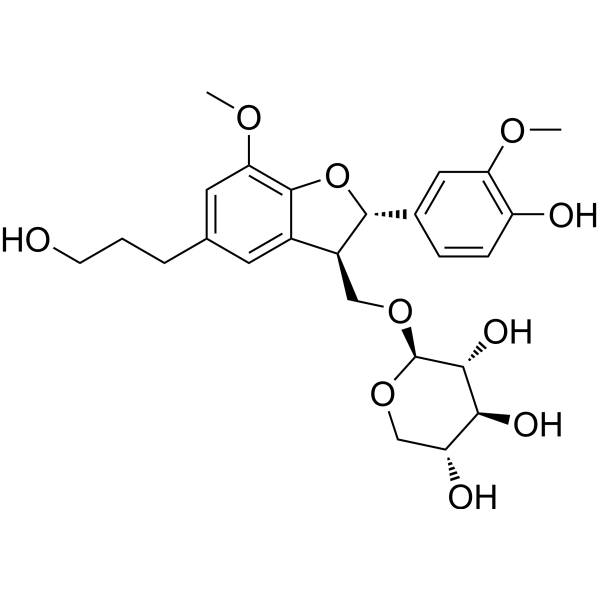
    Dihydrodehydrodiconiferyl alcohol 9-O-β-D-xylopyranoside is an anti-hepatitis B virus (anti-HBV) agent. Dihydrodehydrodiconiferyl alcohol 9-O-β-D-xylopyranoside inhibits HBV surface antigen (HBsAg) and HBV e antigen (HBeAg) secretion on Hep G2.2.15 cell line, with IC50 values of 1.67 and >2.15 mM, respectively .
    Dihydrodehydrodiconiferyl alcohol 9-O-β-D-xylopyranoside
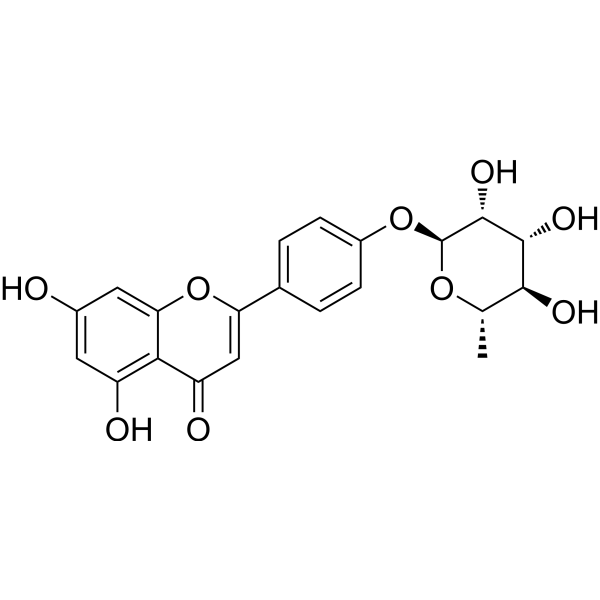
  • HY-N2882

    HBV Infection
    Apigenin-4'-α-L-rhamnoside is a potent inhibitor of HBV. Apigenin-4'-α-L-rhamnoside inhibits the secretory level of HBV surface antigen (HBsAg) in HepG2.2.15 cells .
    Apigenin-4'-α-L-rhamnoside
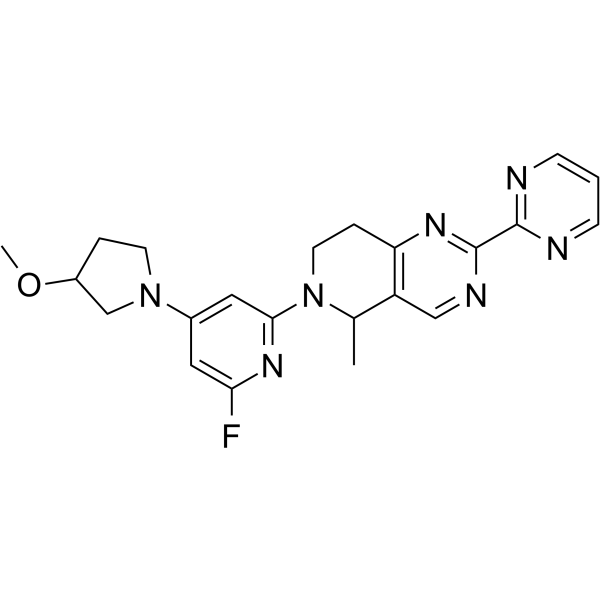
  • HY-145052

    HBV Infection
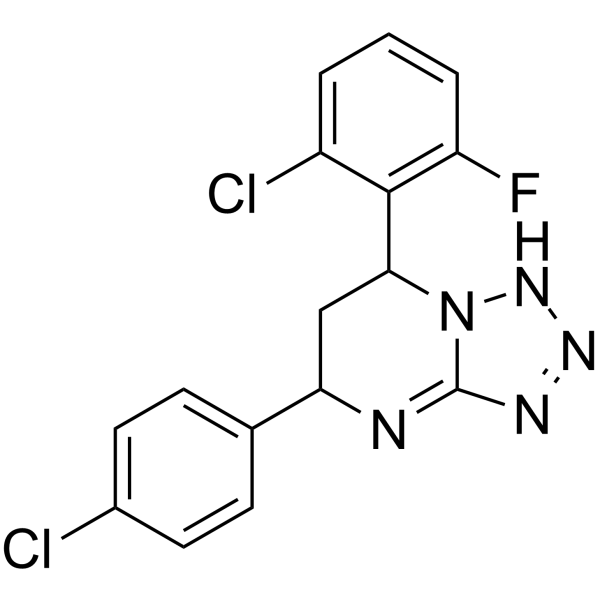
    HBV-IN-9 is a potent HBsAg (HBV Surface antigen) inhibitor (IC50=10 nM) and HBV DNA production inhibitor (IC50=0.15 nM in HepG2.2.15 cells) . From patent WO2018001952A1, example 20.
    HBV-IN-9
  • HY-145060

    HBV Infection
    HBV-IN-12 is a potent hepatitis B surface antigen (HBsAg) inhibitor. From patent WO2021204252A1, compound 1_B .
    HBV-IN-13
  • HY-145059

    HBV Infection
    HBV-IN-12 is a potent hepatitis B surface antigen (HBsAg) inhibitor (0.001 μM< EC50 ≤0.05 μM). HBV-IN-12 shows anti-HBV DNA activity (0.001 μM<EC50 ≤0.02 μM). From patent WO2021204252A1, compound 15 .
    HBV-IN-12
  • HY-W754691

    HBV Infection
    Glaziovine is an antiviral agent found in Hypserpa nitida. Glaziovine exhibits significant inhibitory activity against HBV, capable of suppressing hepatitis B virus surface antigen (HBsAg) secretion in Hep G2.2.15 cells transfected with HBV, with an IC50 of 8 nM .
    Glaziovine
  • HY-171181

    HBV Infection
    ZINC20451377 is a small molecule targeting hepatitis B (HBV) surface antigen (HBsAg) and can effectively inhibit wild-type hepatitis B and tenofovir (HY-13910)-resistant hepatitis B .
    ZINC20451377
  • HY-159987

    HBV Infection
    AB-161 is an orally active HBV RNA destabilizer and a PAPD5/7 inhibitor, with its primary action focused in the liver. AB-161 treats Hepatitis B Virus (HBV) infection by lowering the levels of Hepatitis B surface antigen (HBsAg), with an EC50 value of 2.2 nM for HBsAg. AB-161 can be used in the field of HBV infection research .
    AB-161
  • HY-P4046

    HIV Inflammation/Immunology
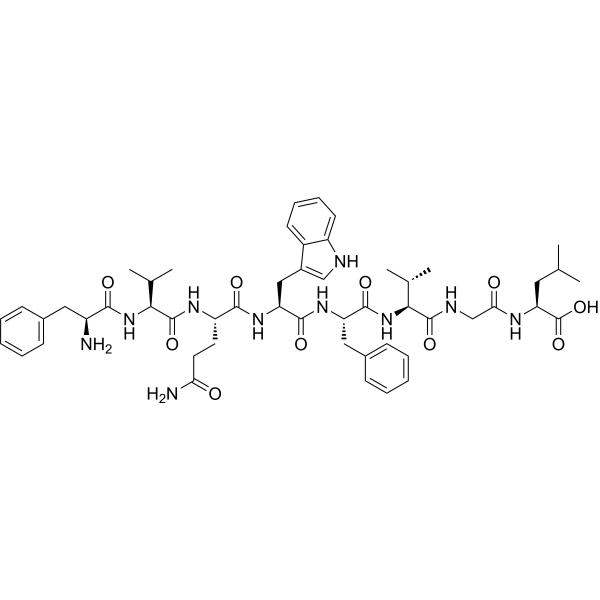
    HBV Seq2 aa:179-186 serve as effective motifs for CTL response in H-2b system after in vitro restimulation of the primed T cells. HBV Seq2 aa:179-186 is a novel epitope identified on the surface antigen of hepatitis B virus .
    HBV Seq2 aa:179-186
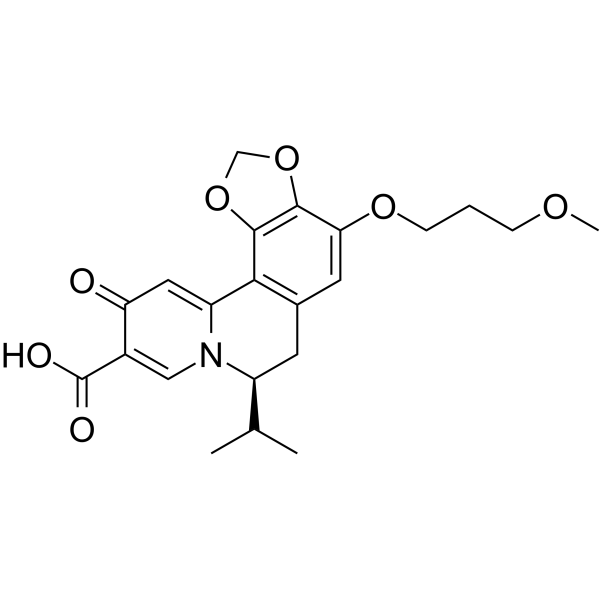
  • HY-145053

    HBV Infection
    HBV-IN-10 is an enantiomer of compound 6 (WO2021204258A1). Compound 6 is a hepatitis B surface antigen (HBsAg) inhibitor (0.001 μM< EC50 ≤0.05 μM). From patent WO2021204258A1, compound 6 .
    HBV-IN-10
  • HY-173278

    HBV Potassium Channel Infection
    AIC263282 is a potent Hepatitis B Virus (HBV) capsid assembly modulator with an EC50 of 3.8 nM. AIC263282 shows an IC50 of 61 nM for hERG. AIC263282 exhibits activity against viral replication and hepatitis B surface antigen (HBsAG) on primary human hepatocytes .
    AIC263282
  • HY-N3093

    (+)-Periglaucine B

    HBV Infection
    Periglaucine B ((+)-Periglaucine B) is an alkaloid and an HBsAg inhibitor. Periglaucine B can be isolated from Pericampylus glaucus. Periglaucine B inhibits the secretion of hepatitis B virus (HBV) surface antigen (HBsAg) in Hep G2.2.15 cells with an IC50 of 0.47 mM .
    Periglaucine B
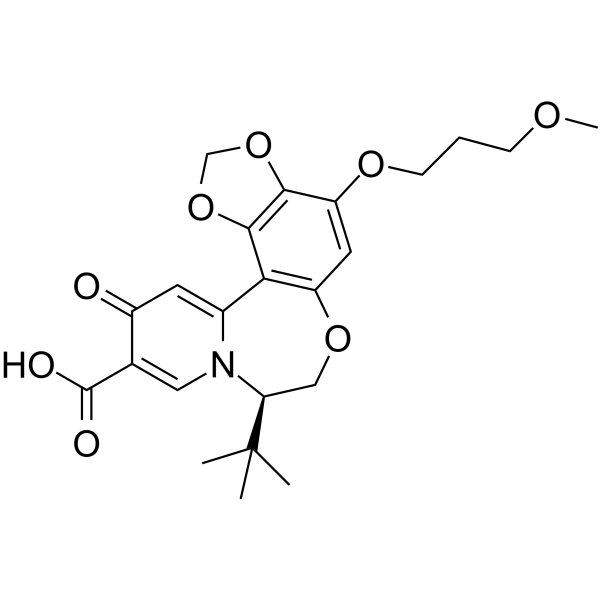
  • HY-145053A

    HBV Infection
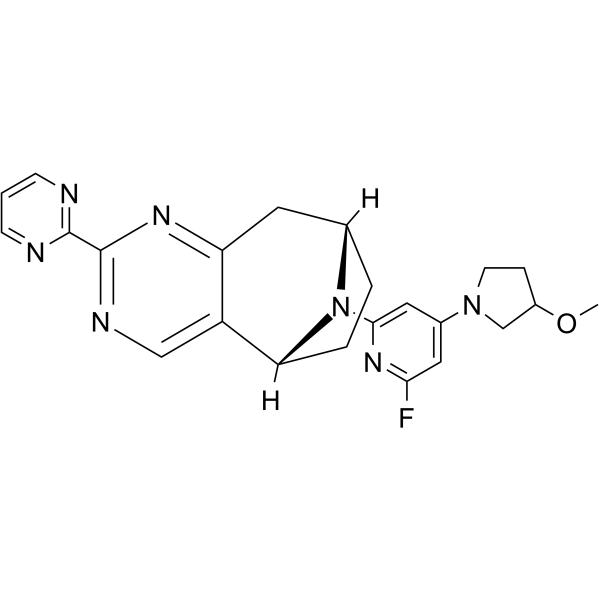
    (5S,8R)-HBV-IN-10 is an enantiomer of compound 6 (WO2021204258A1). Compound 6 is a hepatitis B surface antigen (HBsAg) inhibitor (0.001 μM< EC50 ≤0.05 μM). From patent WO2021204258A1, compound 6 .
    (5S,8R)-HBV-IN-10
  • HY-N3094

    HBV HIV Infection
    Periglaucine A, a hasubanane-type alkaloid, can be isolated from Pericampylus glaucus. Periglaucine A can inhibits HBV surface antigen (HBsAg) secretion in Hep G2.2.15 cells. Periglaucine A also shows anti-HIV-1 activity in C8166 cells (EC50: 204 μM) .
    Periglaucine A
  • HY-145713

    HBV-IN-19

    HBV Infection
    GS-8873 is an orally active inhibitor for the production of hepatitis B virus (HBV) surface antigen (HBsAg) with an EC50 of 4 nM. GS-8873 exhibits good pharmacokinetic characters in rats and metabolic stability in human hepatocytes. GS-8873 causes neurofunctional deficits in rats and cynomolgus monkeys .
    GS-8873
  • HY-107315

    HBV Apoptosis Infection Cancer
    Alisol F 24-acetate is a triterpene compound that can be isolated from the rhizomes of Alisma orientalis. Alisol F 24-acetate inhibits the secretion of HBV surface antigen HBsAg and HBeAg with IC50 values of 7.7 µM and 5.1 µM. Alisol F 24-acetate has proapoptotic activity and can be used for cancer research .
    Alisol F 24-acetate
  • HY-N12102

    HBV Infection
    Dihydrodehydrodiconiferyl alcohol 9-O-α-L-rhamnopyranoside (compound 1) is a lignan with anti-HBC activity. Dihydrodehydrodiconiferyl alcohol 9-O-α-L-rhamnopyranoside targets HBV surface antigen with IC50s of 0.58 mM (HBsAg) and >2.4 mM (HBeAg). Dihydrodehydrodiconiferyl alcohol 9-O-α-L-rhamnopyranoside can be isolated from star anise .
    Dihydrodehydrodiconiferyl alcohol 9-O-α-L-rhamnopyranoside
  • HY-145713A

    HBV-IN-19 TFA

    HBV Infection
    GS-8873 TFA is the TFA salt form of GS-8873 (HY-145713). GS-8873 TFA is an orally active inhibitor for the production of hepatitis B virus (HBV) surface antigen (HBsAg) with an EC50 of 4 nM. GS-8873 TFA exhibits good pharmacokinetic characters in rats and metabolic stability in human hepatocytes. GS-8873 TFA causes neurofunctional deficits in rats and cynomolgus monkeys .
    GS-8873 TFA
  • HY-126970R

    HBV Infection
    HBF-0259 (Standard) is the analytical standard of HBF-0259. This product is intended for research and analytical applications. HBF-0259 is a potent and selective inhibitor of hepatitis B virus (HBV) surface antigen (HBsAg) secretion, with an EC50 of 1.5 μM in HepG2.2.15 cells. HBF-0259 has no effect on HBV DNA synthesis .
    HBF-0259 (Standard)
  • HY-N0699R

    Dephnoretin (Standard); Thymelol (Standard)

    Reference Standards PKC NOD-like Receptor (NLR) Apoptosis HBV Caspase Akt JNK PI3K CDK Influenza Virus Bcl-2 Family Infection Inflammation/Immunology Cancer
    Daphnoretin (Dephnoretin; Thymelol) (Standard) is the analytical standard of Daphnoretin (HY-N0699). This product is used for research and analytical applications. Daphnoretin is a protein kinase C (PKC) activator that can inhibit the expression of hepatitis B virus (HBV) surface antigen (HBsAg) and has antiviral activity. Daphnoretin exerts its anti-tumor effect by inhibiting the activation of the PI3K/AKT signaling pathway, triggering the mitochondrial apoptosis pathway. Daphnoretin alleviates chondrocyte apoptosis and inflammatory responses by inhibiting endoplasmic reticulum stress and the activation of the NLRP3 inflammasome. Daphnoretin can regulate the differentiation and maturation of dendritic cells, by down-regulating the phosphorylation level of JNK, inhibiting its immune stimulating function, thereby playing a protective role in skin transplant rejection reactions.
    Daphnoretin (Standard)
  • HY-181347

    HBV Infection
    GLPG3808 is an orally active PAPD5/7 inhibitor. GLPG3808 inhibits the expression of HBcAg in various cells infected with HBV. GLPG3808 reduces the hepatitis B surface antigen levels in HBV-infected animal models. GLPG3808 can be used for the research of hepatitis B virus infection .
    GLPG3808
  • HY-N17893

    Others Others
    Swertiachoside B (compound 4) is a tetrahydroxanthone glycoside (3-nortetrahydroswertiamarin) that occurs throughout the whole plant of Swertia chirayita .
    Swertiachoside B

Consulta en línea

Your information is safe with us. * Required Fields.

Saludo


Country or Region *

Nombre del solicitante *


Nombre de la Organizaciòn *

Department *


Direcciòn del E-mail *


Nombre del producto *

Cat. No.


Requested quantity *

Número de teléfono *


Observaciones

Consulta en línea

Inquiry Information

Nombre del producto:
Cat. No.:
Cantidad:
MCE Japan Authorized Agent:

