

1. Search Result
Search Result
Results for "

HG2

" in MedChemExpress (MCE) Product Catalog:

19

Inhibitors & Agonists

3

Fluorescent Dye

3

Biochemical Assay Reagents

1

Peptides

2

Natural
Products

1

Isotope-Labeled Compounds

1

Antibodies

Cat. No. Product Name Target Research Areas Chemical Structure
  • HY-104042
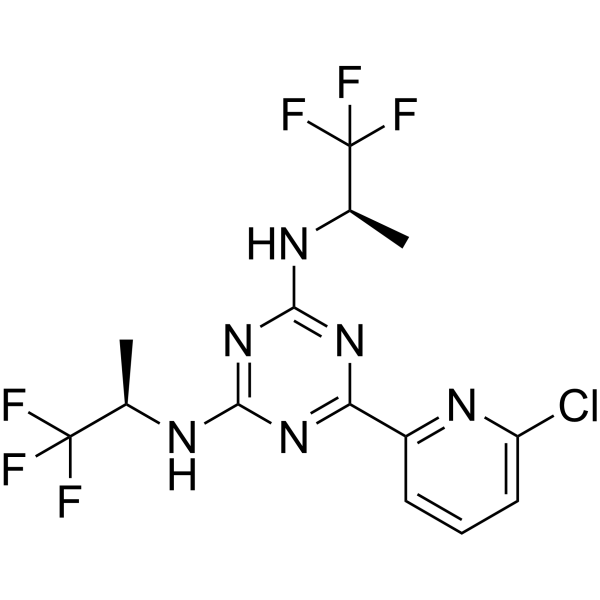
    Vorasidenib
    Maximum Cited Publications
    7 Publications Verification

    AG-881

    Isocitrate Dehydrogenase (IDH) Cancer
    Vorasidenib (AG-881) is an orally available, brain penetrant second-generation dual mutant isocitrate dehydrogenases 1 and 2 (mIDH1/2) inhibitor. Vorasidenib (AG-881) exhibits nanomolar inhibition of (D)-2-hydroxyglutarate (D-2-HG), and the IC50 ranges of 0.04~22 nM against IDH1 R132C, IDH1 R132G, IDH1 R132H and IDH1 R132S and 7~14 nM against IDH2 R140Q and 130 nM against IDH2 R172K. Vorasidenib can be used for the study of grade 2 astrocytoma or oligodendroglioma with a susceptible IDH1/2 mutation [2].
    Vorasidenib
  • HY-103641
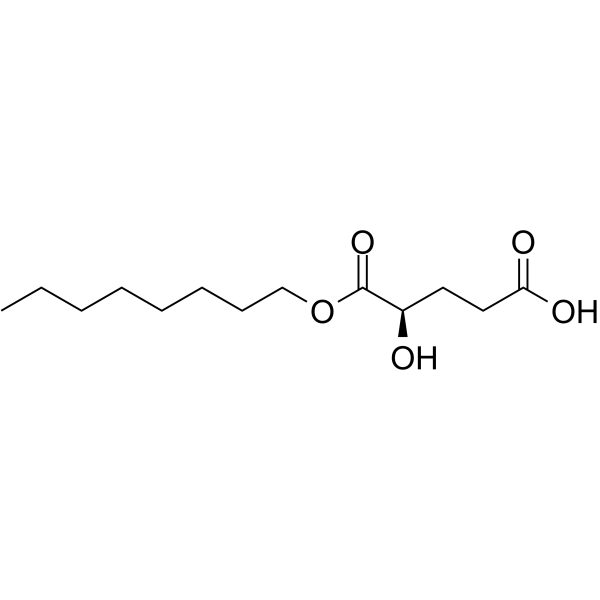
    (2R)-Octyl-α-hydroxyglutarate
    3 Publications Verification

    (2R)-Octyl-2-HG

    Drug Isomer Cancer
    (2R)-Octyl-α-hydroxyglutarate ((2R)-Octyl-2-HG) is a modified form of D-isomer 2-Hydroxyglutarate.
    (2R)-Octyl-α-hydroxyglutarate
  • HY-B1306
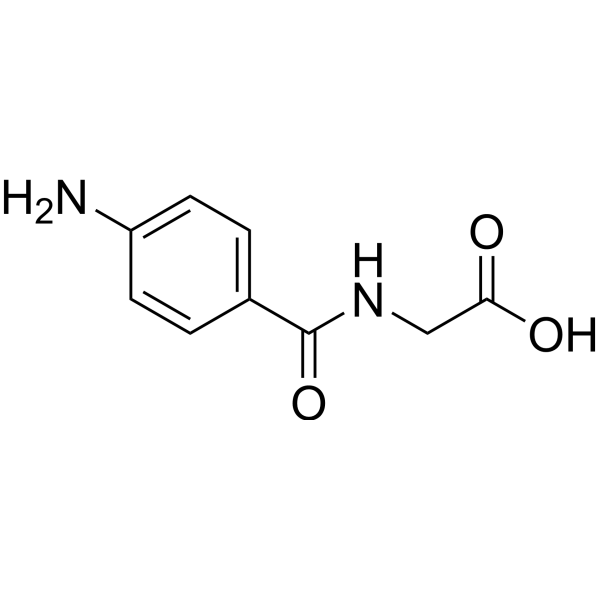
    4-Aminohippuric acid
    4 Publications Verification

    p-Aminohippuric acid

    Others Neurological Disease Metabolic Disease
    4-Aminohippuric acid (p-Aminohippuric acid) is a coordination ligand for metal ions (such as Cu 2+, Fe 3+, Hg 2+) and a functionalization reagent for nanomaterials. 4-Aminohippuric acid can coordinate with metal ions or modify the surface of materials such as carbon nanotubes and gold nanoparticles through amino and carboxyl groups. 4-Aminohippuric acid can form stable complexes with metal ions or participate in the synthesis of nanomaterials as a reducing agent/stabilizer, enriching metal ions or giving nanoparticles peroxidase-mimicking activity. 4-Aminohippuric acid can be used to construct highly sensitive electrochemical sensors or colorimetric sensors to detect and quantitatively analyze heavy metal ions such as copper, iron, and mercury in environmental water samples and biological samples. 4-Aminohippuric acid may also be a biomarker for attention-deficit/hyperactivity disorder (ADHD) [2] .
    4-Aminohippuric acid
  • HY-151644
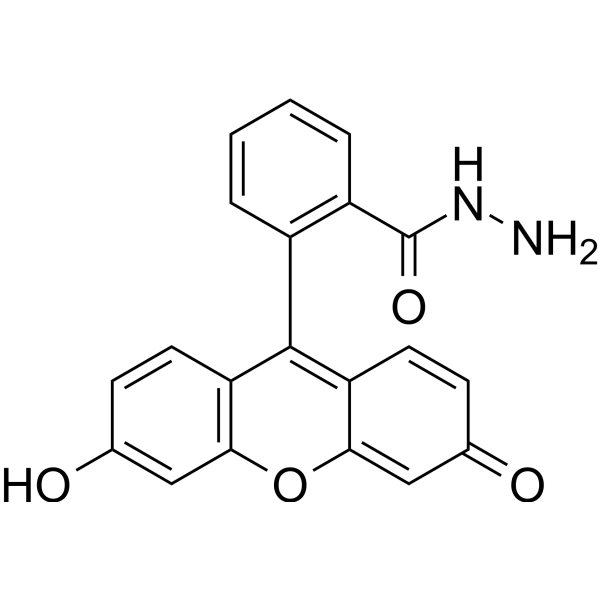
    Fluorescein hydrazide
    1 Publications Verification

    Fluorescent Dye Others
    Fluorescein hydrazide is a sensitive fluorescent probe for Hg 2+ and Co 2+ that induces obvious color changes and fluorescence changes. Fluorescein hydrazide can be prepared by the reaction of fluorescein and hydrazine. Fluorescein hydrazide exhibits an excitation wavelength of 508 nM and an emission wavelength of 531 nM [1][2][3].
    Fluorescein hydrazide
  • HY-201263

    Biochemical Assay Reagents Cancer
    p-SCN-Bn-TCMC is a bifunctional chelator. Its cyclen backbone binds Hg 2+, while its isothiocyanate group allows for conjugation to biomolecules. p-SCN-Bn-TCMC can be used in the research of prostate cancer .
    p-SCN-Bn-TCMC
  • HY-Y0102

    2-Mercaptobenzoic acid

    Biochemical Assay Reagents Drug Intermediate Infection
    Thiosalicylic acid (2-Mercaptobenzoic acid) is an organosulfur compound bearing both sulfhydryl and carboxyl functional groups. Thiosalicylic acid acts as a desulfurizing agent. Thiosalicylic acid also serves as a ligand to synthesize azosulfonamide derivatives with antibacterial and antifungal activities, as well as their Fe 3+, Cu 2+ and Hg 2+ chelates [2].
    Thiosalicylic acid
  • HY-W011060

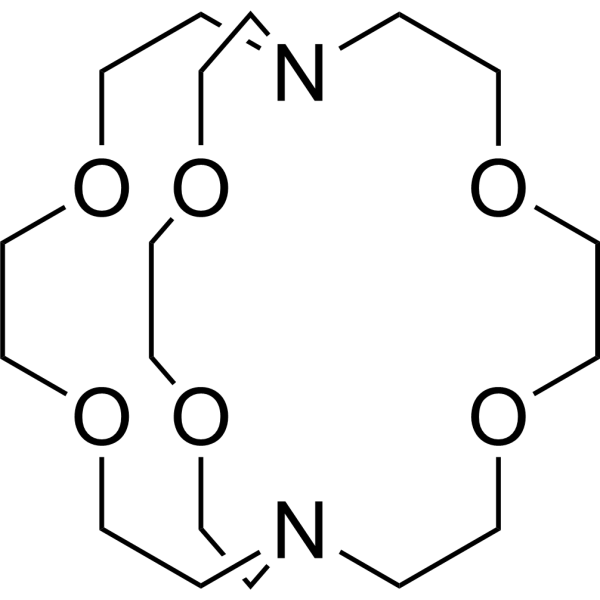
    4,7,13,16,21,24-Hexaoxa-1,10-diazabicyclo[8.8.8]hexacosane

    Biochemical Assay Reagents Others
    Cryptand 2.2.2 (4,7,13,16,21,24-Hexaoxa-1,10-diazabicyclo[8.8.8]hexacosane) is a metal ion chelator. Cryptand 2.2.2 forms stable mononuclear, protonated and dinuclear complexes with copper (II) ions; forms protonated complexes with hydrogen ions; and also forms stable complexes with Zn 2+, Co 2+, Ni 2+, Cd 2+, Hg 2+ and Pb 2+ ions. Cryptand 2.2.2 can be used for the preparation of nanoparticles, transition metal compounds, etc.
    Cryptand 2.2.2
  • HY-103641A
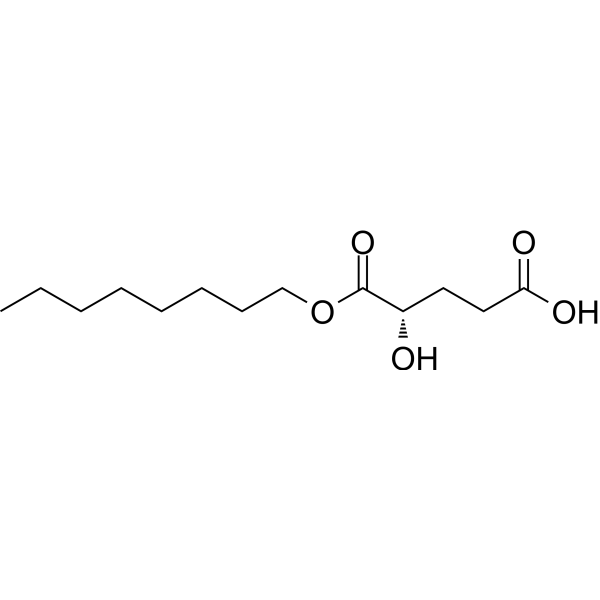
    (2S)-Octyl-α-hydroxyglutarate
    2 Publications Verification

    (2S)-Octyl-2-HG

    Drug Isomer Cancer
    (2S)-Octyl-α-hydroxyglutarate ((2S)-Octyl-2-HG) is a modified form of S-isomer 2-Hydroxyglutarate.
    (2S)-Octyl-α-hydroxyglutarate
  • HY-P5706

    Bacterial Infection Inflammation/Immunology
    HG2 is a fast-acting antimicrobial peptide. HG2 shows anti-biofilm and anti-inflammatory activities. HG2 is active against Gram-positive pathogens, especially against MRSA strains (MIC: 16-32 μg/mL). HG2 can bind to bacterial lipids and reduces ATP concentration in S. aureus MRSA USA300 cells .
    HG2
  • HY-129079
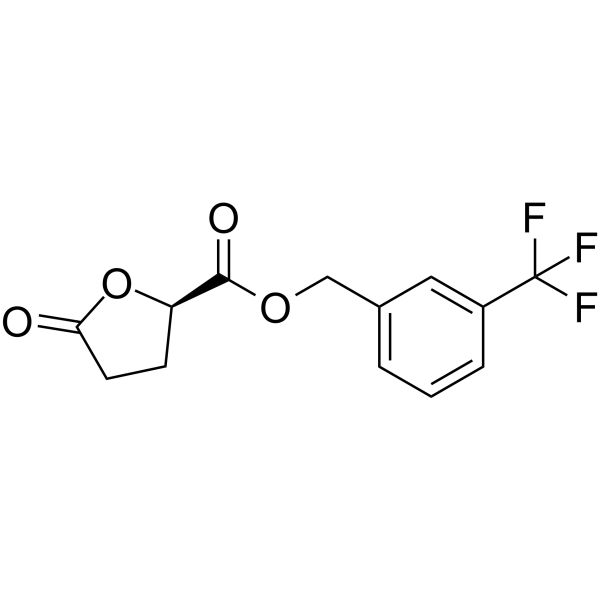
    TFMB-(R)-2-HG
    3 Publications Verification

    Estrogen Receptor/ERR Histone Demethylase Fat Mass and Obesity-associated Protein (FTO) Cancer
    TFMB-(R)-2-HG is a cell membrane-permeable (R)-2-HG and acute myeloid leukemia (AML) oncogenic factor. TFMB-(R)-2-HG competitively inhibits α-ketoglutarate-dependent dioxygenases such as KDM2B and FTO. TFMB-(R)-2-HG impairs cell differentiation in response to Estrogen withdrawal. TFMB-(R)-2-HG is used in acute myeloid leukemia and glioma research [2] .
    TFMB-(R)-2-HG
  • HY-B1306R

    p-Aminohippuric acid (Standard)

    Reference Standards Biochemical Assay Reagents Neurological Disease Metabolic Disease
    4-Aminohippuric acid (p-Aminohippuric acid) (Standard) is the analytical standard of 4-Aminohippuric acid (HY-B1306). This product is intended for research and analytical applications. 4-Aminohippuric acid (p-Aminohippuric acid) is a coordination ligand for metal ions (such as Cu 2+, Fe 3+, Hg 2+) and a functionalization reagent for nanomaterials. 4-Aminohippuric acid can coordinate with metal ions or modify the surface of materials such as carbon nanotubes and gold nanoparticles through amino and carboxyl groups. 4-Aminohippuric acid can form stable complexes with metal ions or participate in the synthesis of nanomaterials as a reducing agent/stabilizer, enriching metal ions or giving nanoparticles peroxidase-mimicking activity. 4-Aminohippuric acid can be used to construct highly sensitive electrochemical sensors or colorimetric sensors to detect and quantitatively analyze heavy metal ions such as copper, iron, and mercury in environmental water samples and biological samples. 4-Aminohippuric acid may also be a biomarker for attention-deficit/hyperactivity disorder (ADHD) [2] .
    4-Aminohippuric acid (Standard)
  • HY-103641C

    Octyl-2-HG

    Histone Methyltransferase Cancer
    Octyl-α-hydroxyglutarate (octyl-2-HG) increases histone methylation and enhances viability of LMP1-negative NPC cells .
    Octyl-α-hydroxyglutarate
  • HY-B1306S

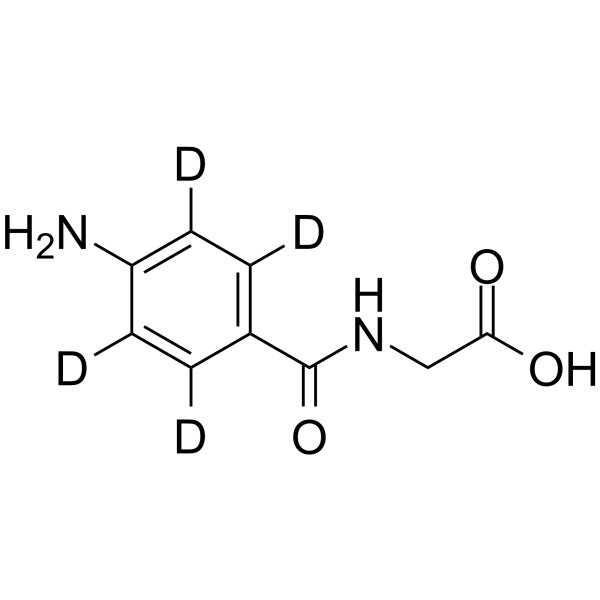
    p-Aminohippuric acid-d4

    Biochemical Assay Reagents Neurological Disease Metabolic Disease
    4-Aminohippuric acid-d4 (p-Aminohippuric acid-d4) is the deuterium labeled 4-Aminohippuric acid (HY-B1306). 4-Aminohippuric acid (p-Aminohippuric acid) is a coordination ligand for metal ions (such as Cu 2+, Fe 3+, Hg 2+) and a functionalization reagent for nanomaterials. 4-Aminohippuric acid can coordinate with metal ions or modify the surface of materials such as carbon nanotubes and gold nanoparticles through amino and carboxyl groups. 4-Aminohippuric acid can form stable complexes with metal ions or participate in the synthesis of nanomaterials as a reducing agent/stabilizer, enriching metal ions or giving nanoparticles peroxidase-mimicking activity. 4-Aminohippuric acid can be used to construct highly sensitive electrochemical sensors or colorimetric sensors to detect and quantitatively analyze heavy metal ions such as copper, iron, and mercury in environmental water samples and biological samples. 4-Aminohippuric acid may also be a biomarker for attention-deficit/hyperactivity disorder (ADHD) [2] .
    4-Aminohippuric acid-d4
  • HY-120765

    Isocitrate Dehydrogenase (IDH) Cancer
    BRD2879 is a potent IDH1-R132H inhibitor with IC50 values of 0.05, 2.5, >20, >20 µM for IDH1-R132H, IDH1-R132C, IDH1-WT, IDH2-R140Q, respectively. BRD2879 reduces (R)-2-hydroxyglutarate (R-2HG) levels .
    BRD2879
  • HY-D1750

    Fluorescent Dye Others
    Rhodamine B thiolactone is a high-sensitive Hg 2+ indicator used for measuring Hg 2+ concentration.
    Rhodamine B thiolactone
  • HY-D1549

    Fluorescent Dye Others
    o-Pah is a BODIPY derivative with an -NH2 and -OH substituted meso-Ph group. o-Pah exhibits metal-induced J-aggregation in the presence of Cu 2+ and a specific fluorescence enhancement for Hg 2+ (Ex/Em=483/(495-600) nM) .
    o-Pah
  • HY-143234

    Isocitrate Dehydrogenase (IDH) Cancer
    mIDH1-IN-1 (compound 43) is a potent and selective mIDH1 (mutant isocitrate dehydrogenases 1) inhibitor, with an IC50 of 961.5 nM. mIDH1-IN-1 potently inhibits intracellular 2-HG (2-hydroxyglutarate) production in HT1080 cells, with an EC50 of 208.6 ± 8.0 nM. mIDH1-IN-1 shows a significant anti-proliferation activity on IDH1 mutant-U-87 cells, with an IC50 of 41.8 nM. mIDH1-IN-1 is an antitumor agent, and can be used for IDH1 mutated solid tumors research .
    mIDH1-IN-1
  • HY-145743

    Isocitrate Dehydrogenase (IDH) Cancer
    CP-17 is a potent and selective IDH2/R140Q inhibitor with an IC50 of 40.75 nM. CP-17 exhibits excellent selectivity of >55-fold against the wild-type IDH2. CP-17 exhibits robust D-2-HG suppression activity in TF-1 (IDH2/R140Q) cells and reverses the cellular differentiation block induced by the R140Q mutation. CP-17 can be used for acute myeloid leukemia (AML) research .
    CP-17
  • HY-104042R

    AG-881 (Standard)

    Reference Standards Isocitrate Dehydrogenase (IDH) Cancer
    Vorasidenib (Standard) is the analytical standard of Vorasidenib (HY-104042). This product is intended for research and analytical applications. Vorasidenib (AG-881) is an orally available, brain penetrant second-generation dual mutant isocitrate dehydrogenases 1 and 2 (mIDH1/2) inhibitor. Vorasidenib (AG-881) exhibits nanomolar inhibition of (D)-2-hydroxyglutarate (D-2-HG), and the IC50 ranges of 0.04~22 nM against IDH1 R132C, IDH1 R132G, IDH1 R132H and IDH1 R132S and 7~14 nM against IDH2 R140Q and 130 nM against IDH2 R172K. Vorasidenib can be used for the study of grade 2 astrocytoma or oligodendroglioma with a susceptible IDH1/2 mutation [2].
    Vorasidenib (Standard)

Inquiry Online

Your information is safe with us. * Required Fields.

Salutation


Country or Region *

Applicant Name *


Organization Name *

Department *


Email Address *


Product Name *

Cat. No.


Requested quantity *

Phone Number *


Remarks

Inquiry Online

Inquiry Information

Product Name:
Cat. No.:
Quantity:
MCE Japan Authorized Agent:

