16 Results for "

J774A.1 macrophage cells

" in MedChemExpress (MCE) Product Catalog:
Products (16)

16 Results for "J774A.1 macrophage cells" in MCE Product Catalog:

1
1 Cited Publications
Cat. No.: HY-P10086
CAS No.: 1289375-12-7
Synonyms: Human TREM-1(213-221)
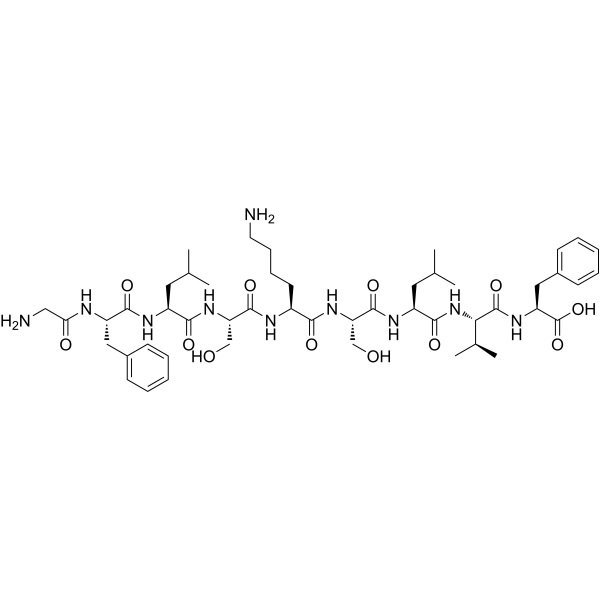
TREM-1 inhibitory peptide GF9 (Human TREM-1 (213-221)) is a TREM-1 inhibitor. TREM-1 inhibitory peptide GF9 blocks the TREM-1 signaling pathway via a ligand-independent mechanism, spontaneously inserts into the cell membrane to dissociate TREM-1 from DAP-12, and functions through the Signaling Chain Homooligomerization (SCHOOL) model. TREM-1 inhibitory peptide GF9 reduces the levels of TNFα, IL-1β, IL-6, and M-CSF. TREM-1 inhibitory peptide GF9 inhibits tumor growth, prolongs the survival of mice with pancreatic cancer models, ameliorates collagen-induced arthritis, and exerts protective effects on bone and cartilage simultaneously. TREM-1 inhibitory peptide GF9 can be used in research related to arthritis, pancreatic cancer, retinopathy, alcoholic liver disease, and liver cancer .
loading...
    loading...
Cat. No.: HY-N6801
CAS No.: 23282-20-4
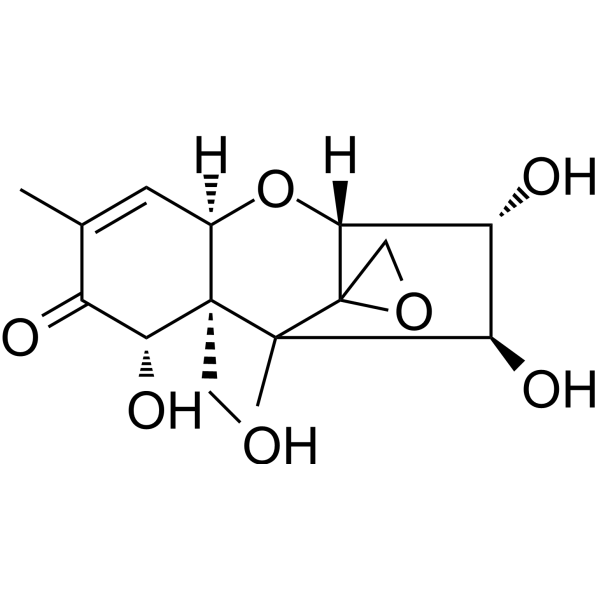
Nivalenol, a trichothecene mycotoxin that can be produced by Fusarium graminearum, is a fungal metabolite present in agricultural product. Nivalenol modulates apoptotic pathway, cell cycle regulation, Bax, ERK, caspase-3, and poly-ADP-ribose synthase activity in macrophages. Nivalenol inhibits ribosomal peptidyltransferase site, protein synthesis, DNA synthesis, and cell proliferation. Nivalenol induces late-stage apoptotic morphological changes, reduces cellular metabolism, and decreases cell proliferation in erythroleukemia cells. Nivalenol induces lymphocyte apoptosis in murine thymus, spleen, and Peyer's patches. Nivalenol can be used for the research of erythroleukemia .
loading...
    loading...
Cat. No.: HY-N16039
CAS No.: 126221-76-9
TAN-1030A is an indolocarbazole alkaloid with macrophage-activating properties. TAN-1030A induces spreading of a murine macrophage cell line, Mm 1, and augmentes the phagocytic activity, Fc gamma receptor expression and β-glucuronidase activity of murine macrophage cell lines, Mm 1 and J774A.1. TAN-1030A can activate macrophage functions in mice .
loading...
    loading...
Cat. No.: HY-133133
CAS No.: 4818-19-3
IIIM-1270is a NLRP3 inflammasome inhibitor. IIIM-1270 inhibits IL-1β release in mouse macrophages (J774A.1 cells) (IC50 = 3.5 μM) and significantly reduced the protein expression level of mature IL-1β. IIIM-1270 can be used for the study of inflammation .
loading...
    loading...
Cat. No.: HY-130703
CAS No.: 23582-83-4
Purity:  92.36%
Target:  

Others

Research Areas:  

Infection

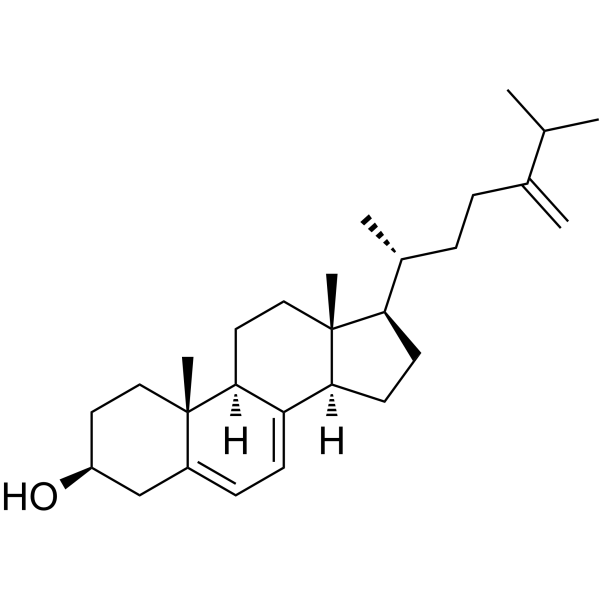
5-Dehydroepisterol is a C28 alkylated sterol based on ergostane, and serves as a major component of the sterol pool in Leishmania parasites. The content of 5-Dehydroepisterol in Leishmania promastigotes can be depleted by 22,26-Azasterol, Amiodarone (HY-14187) and Tomatine (HY-N2166). Among these agents, Amiodarone (HY-14187) inhibits the biosynthetic process of this sterol by disrupting the function of squalene epoxidase. 5-Dehydroepisterol can be used in the research of leishmaniasis and cutaneous leishmaniasis .
loading...
    loading...
Cat. No.: HY-133132
CAS No.: 2468202-93-7
IIIM-1266 is a NLRP3 inflammasome inhibitor. IIIM-1266 inhibits IL-1β release in mouse macrophages (J774A.1 cells) (IC50 = 2.3 μM) and significantly reduced the protein expression level of mature IL-1β. IIIM-1266 can be used for the study of inflammation .
loading...
    loading...
Cat. No.: HY-155927
CAS No.: 474922-82-2
Synonyms: 14:0 PEG1000 PE ammonium; 1,2-Dimyristoyl-sn-glycero-3-phosphoethanolamine-N-[methoxy(polyethylene glycol)-1000] ammonium
Target:  

Liposome

Research Areas:  

Others

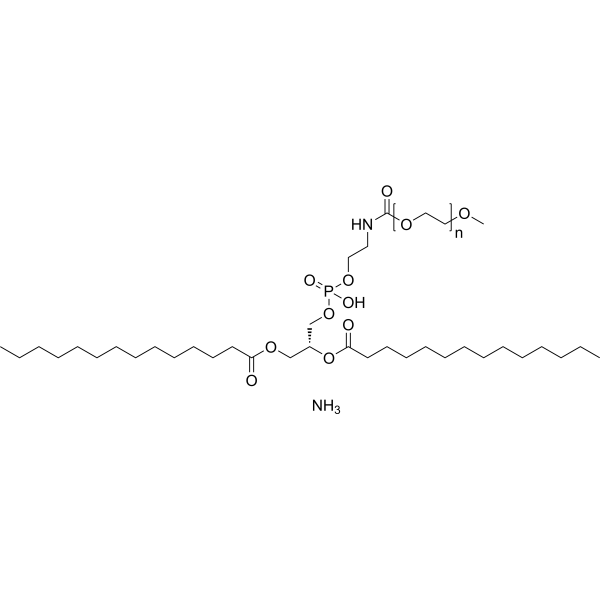
DMPE-PEG1000 ammonium (14:0 PEG1000 PE ammonium) is a methoxy-capped PEGylated phospholipid containing two C14 lipid chains and a PEG1000 group. DMPE-PEG1000 can be incorporated as a PEG-lipid component into conjugated polymer nanoparticles for nanoparticle surface modification. DMPE-PEG1000 ammonium is applicable for researches related to PEGylated nanoparticle preparation and fluorescence imaging .
loading...
    loading...
Cat. No.: HY-146158
CAS No.: 1859978-72-5
Synonyms: WX-081; Sudapyridine
Target:  

Bacterial ATP Synthase

Research Areas:  

Infection

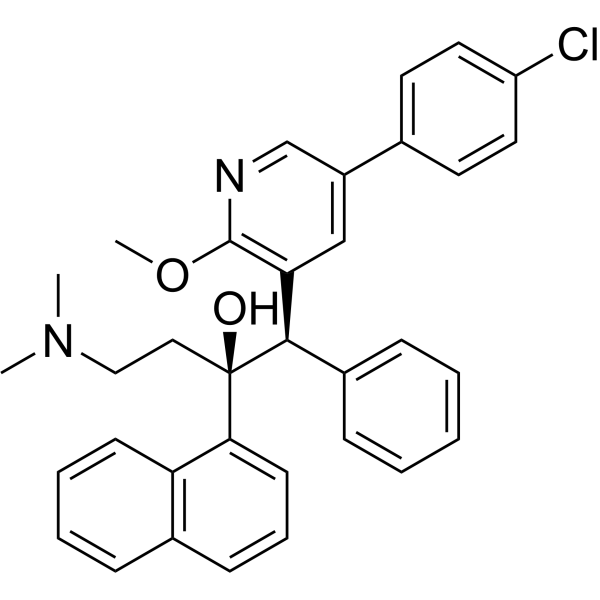
Fudapirine (WX-081; Sudapyridine) is an orally active bactericidal agent that targets mycobacterial ATP synthase. Fudapirine induces mycobacterial death by inhibiting ATP synthesis, disrupting proton motive force and depleting bacterial energy. Fudapirine can be used in the research of tuberculosis and *Mycobacterium tuberculosis* infection .
loading...
    loading...
Cat. No.: HY-179407
CAS No.: 2574572-03-3
Research Areas:  

Inflammation/Immunology

LT-104A is a potent PDE4 inhibitor that elevates intracellular cAMP levels (EC50 = 1.9 μM) and inhibits PDE4D3 activity (IC50 = 9.3 μM). LT-104A activates the cAMP-PKA-CREB anti-inflammatory signaling pathway and suppresses NF-κB-related gene expression (Il1b and Nos2). LT-104A can be used for inflammation-related disease research .
loading...
    loading...
Cat. No.: HY-184470
MyD88 degrader-1 is an orally active molecular glue degrader targeting MyD88, with a DC50 of 0.74 μM, and exhibits potent anti-inflammatory activity. MyD88 degrader-1 promotes ubiquitination and proteasomal degradation of MyD88, blocks the activation of the NF-κB signaling pathway, and downregulates the transcription of pro-inflammatory genes such as IL-6 and IL-1β. MyD88 degrader-1 alleviates symptoms in acute lung injury models. MyD88 degrader-1 can be used in studies related to acute lung injury .
loading...
    loading...
Cat. No.: HY-183688
CAS No.: 3104354-58-4
Research Areas:  

Infection

MptpB-IN-3 is a selective inhibitor of Mycobacterium tuberculosis protein tyrosine phosphatase B (MptpB) with an IC50 of 0.19 μM. MptpB-IN-3 blocks MptpB-mediated inhibition of the macrophage MAPK pathway and restores the phosphorylation levels of Erk1/2 and p38. MptpB-IN-3 exhibits direct anti-tuberculosis activity against Mycobacterium tuberculosis and reduces the Mycobacterium tuberculosis load in mouse macrophages. MptpB-IN-3 can be used for tuberculosis research .
loading...
    loading...
Cat. No.: HY-187914
CAS No.: 2245791-50-6
Target:  

Bacterial

Research Areas:  

Infection

OTB-658 is a conformationally restricted oxazolidinone antibacterial candidate that exhibits bacteriostatic activity against Mycobacterium tuberculosis. OTB-658 enters macrophages and inhibits intracellular M. tuberculosis growth. OTB-658 exhibits dose-dependent antibacterial activity. OTB-658 is used in research related to tuberculosis and drug-resistant tuberculosis .
loading...
    loading...
Cat. No.: HY-P11759
Target:  

Drug Derivative

Research Areas:  

Cancer

Myr-transportan-Cys is a derivative of the cell-penetrating peptide Transportan (HY-P1732), and its conjugated myristoyl group (Myr) enhances the interaction between the peptide and cell membranes. Myr-transportan-Cys integrates three key delivery functions: nucleic acid condensation, cell penetration, and endosomal escape. Myr-transportan-Cys can form immunostimulatory tandem peptide nanocomplexes (iTPNCs) for encapsulating and delivering immunostimulatory oligonucleotide cargos to tumors .
loading...
    loading...
Cat. No.: HY-182380
CAS No.: 1632152-27-2
ODZ10117 is a STAT3 and NLRP3 inhibitor with a human STAT3 SH2 domain IC50 of 7.5 μM. ODZ10117 binds to the STAT3 SH2 domain, suppressing tyrosine phosphorylation, dimerization, nuclear translocation, and transcriptional activity. ODZ10117 binds to NLRP3, impairs NEK7 interaction, prevents inflammasome formation, and inhibits caspase-1 and IL-1β cleavage.ODZ10117 reduces MSU (HY-B2130A)-induced IL-1β release, lowers LPS (HY-D1056)-induced sepsis mortality, and exhibits anti-inflammatory effects. ODZ10117 induces apoptosis, suppresses breast cancer cell migration and invasion, reduces tumor growth and lung metastasis, and extends survival in breast cancer models. ODZ10117 can be used for the research of Monosodium urate (HY-B2130A)-induced peritonitis, LPS-induced sepsis, breast cancer, glioblastoma, and Alzheimer's disease .
loading...
    loading...
Cat. No.: HY-184214
Antileishmanial agent-44 is a histone deacetylase inhibitor targeting Leishmania donovani Sir2, with an IC50 of 0.652 μM against amastigotes. Antileishmanial agent-44 elevates ROS levels to induce oxidative stress, which causes mitochondrial membrane potential depolarization, cytochrome c release, phosphatidylserine externalization and DNA fragmentation, triggers apoptosis-like cell death, and arrests the cell cycle. Antileishmanial agent-44 upregulates the expression of Th1-type cytokines and NO in macrophages, reshapes host immune responses to eliminate intracellular parasites. Antileishmanial agent-44 inhibits parasites in infected golden hamsters in vivo. Antileishmanial agent-44 can be used for the research of visceral leishmaniasis.
loading...
    loading...
Cat. No.: HY-P992379
Synonyms: BAG3-H2L4

Target:  

Bcl-2 Family

Research Areas:  

Cancer

IB001 is a humanized anti-BAG3 antibody that inhibits BAG3, with a KD value of 14.4 nM for human BAG3. IB001 blocks BAG3-dependent monocyte/macrophage activation, interferes with the interaction between BAG3 and IFITM-2, and disrupts tumor microenvironment signaling pathways. IB001 inhibits tumor growth, reduces α-SMA-positive fibroblasts, and blocks BAG3-dependent IL-6 release. IB001 accumulates in a time-dependent manner in pancreatic ductal adenocarcinoma tumors. IB001 can be used for research related to pancreatic ductal adenocarcinoma .
loading...
    loading...
  • 1

