67 Results for "

Lactose

" in MedChemExpress (MCE) Product Catalog:
Products (67)

67 Results for "Lactose" in MCE Product Catalog:

4
4 Cited Publications
Cat. No.: HY-B2123
CAS No.: 63-42-3
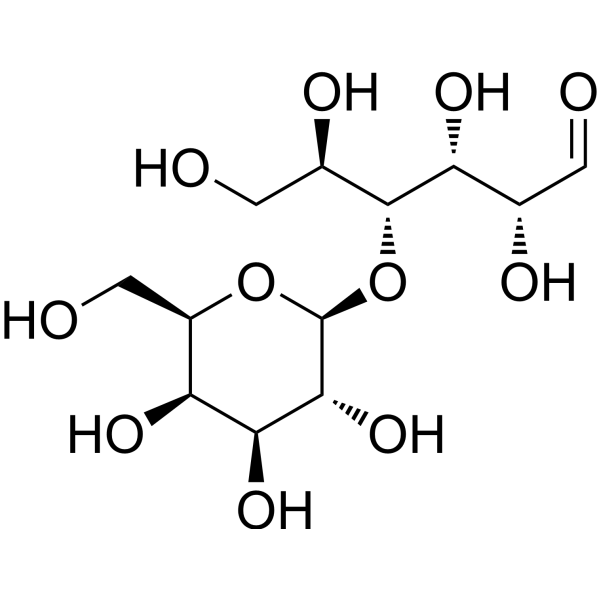
Lactose is a β-galactoside consisting of galactose and glucose residues, the main carbohydrate in mammalian breast milk. Lactose, a macronutrient and an inducer of host innate immune responses, possesses immune modulatory functions .
loading...
    loading...
Cat. No.: HY-N2514
CAS No.: 14641-93-1
Synonyms: α-D-Lactose
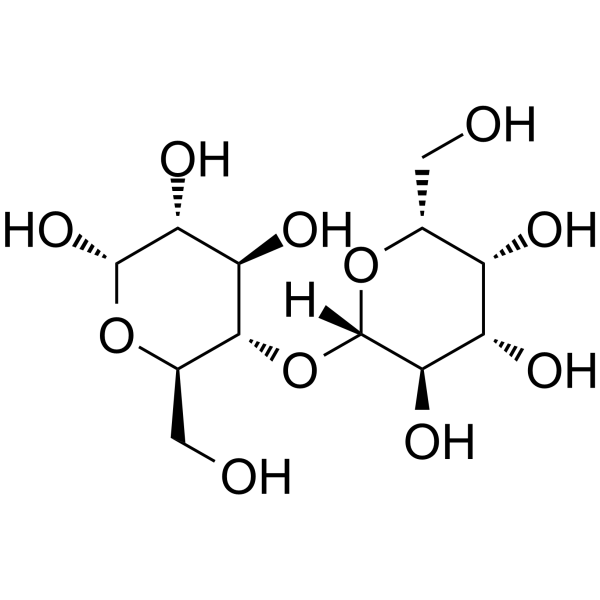
α-Lactose (α-D-Lactose) is the major sugar present in milk. Lactose exists in the form of two anomers, α and β. The α form normally crystallizes as a monohydrate .
loading...
    loading...
Cat. No.: HY-W150340
CAS No.: 5965-66-2
Research Areas:  

Cancer

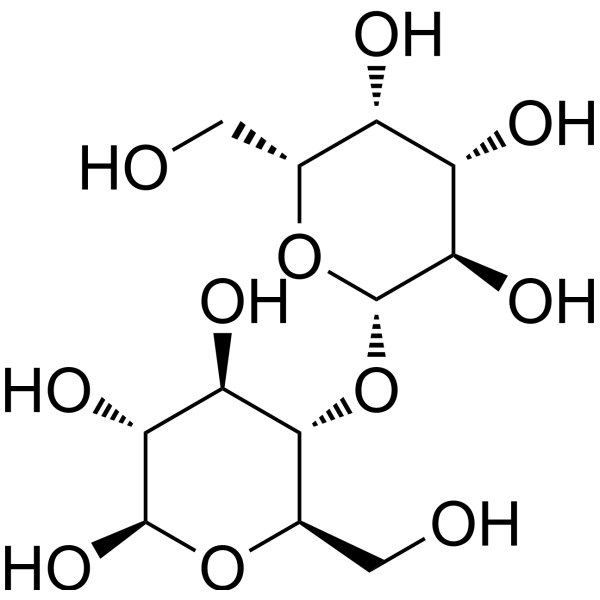
β-Lactose is a disaccharide commonly found in milk and dairy products. It consists of two monosaccharides, glucose and galactose, linked by β-glycosidic bonds. β-Lactose has various applications in the food industry, especially as a sweetener and bulking agent. Furthermore, it can be used as a substrate for enzymes involved in lactose metabolism and as a model compound for studying carbohydrate-protein interactions.
loading...
    loading...
41
41 Publications Verification
Cat. No.: HY-15921
CAS No.: 367-93-1
Synonyms: Isopropyl β-D-thiogalactoside
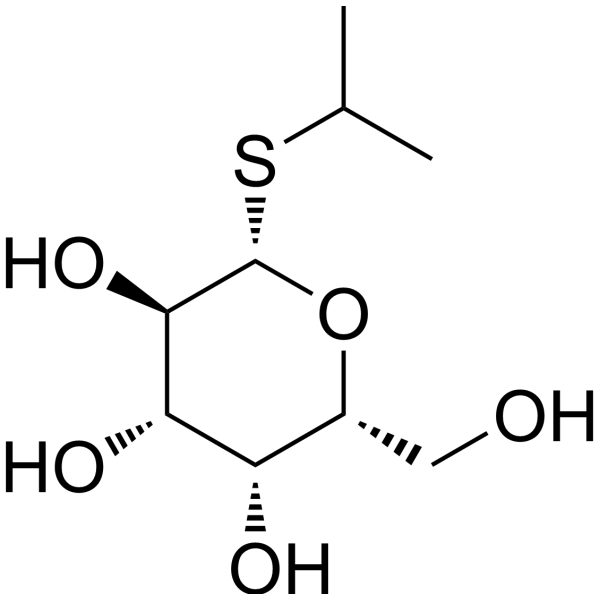
IPTG is a molecular mimic of allolactose, a lactose metabolite that triggers transcription of the lac operon, and it is therefore used to induce protein expression where the gene is under the control of the lac operator.
loading...
    loading...
1
1 Cited Publications
Cat. No.: HY-N10528
CAS No.: 41312-47-4
Synonyms: 3-Fucosyl-D-Lactose
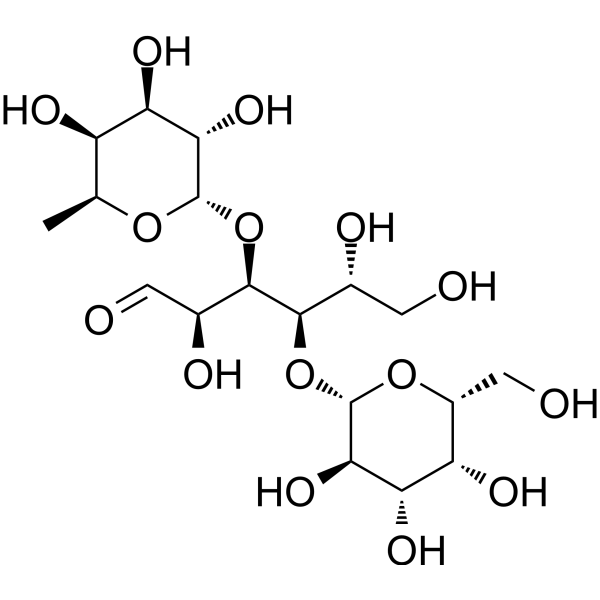
3-Fucosyllactose (3-Fucosyl-D-lactose) is one of the major fucosylated oligosaccharides found in human breast milk. 3-Fucosyllactose shows prebiotic, immunomodulator, neonatal brain development, and antimicrobial function .
loading...
    loading...
Cat. No.: HY-P2869
CAS No.: 9031-11-2
Synonyms: EC 3.2.1.23; GAL
Target:  

Glycosidase

Research Areas:  

Metabolic Disease

β-Galactosidase, E. coli (EC 3.2.1.23; GAL) is a glycoside hydrolase that hydrolyzes the β-glycosidic bonds formed between galactose and its organic moieties. β-Galactosidase, E. coli can hydrolyze lactose to form glucose and galactose, and enter glycolysis; it can also catalyze the transgalactosylation of lactose into allolactose; allolactose can be cracked into monosaccharides .
loading...
    loading...
Cat. No.: HY-W087904
CAS No.: 5989-81-1
Synonyms: α-D-Lactose hydrate
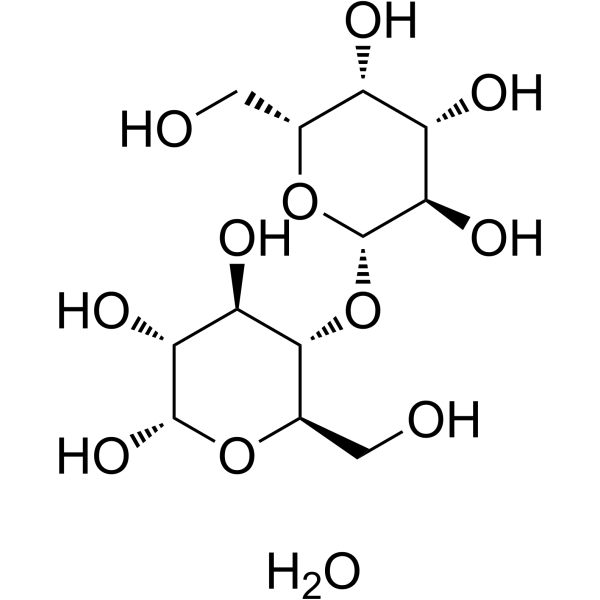
α-Lactose hydrate (α-D-Lactose (hydrate)) is the primary carbohydrate in the milk of most mammals. α-Lactose hydrate consists of glucose and galactose and exists in two isomeric forms, α and β. α-Lactose hydrate has numerous applications in the food and pharmaceutical industries, such as serving as a bulking or agglomerating agent, and a diluent for pigments, flavors or enzymes .
loading...
    loading...
Cat. No.: HY-W015954
CAS No.: 24347-58-8
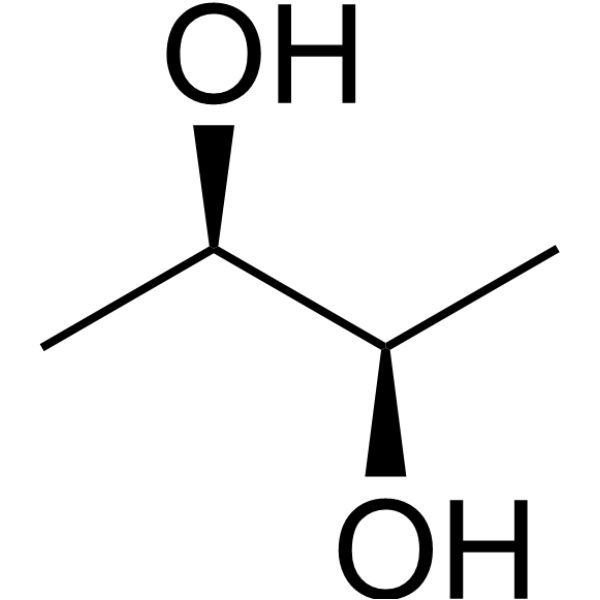
(2R,3R)-Butane-2,3-diol is a non-covalent, reversible agonist targeting lanthanum (La 3+)-sensitive calcium channels in bacteria (e.g., Escherichia coli) with an EC50 of approximately 25 mM. (2R,3R)-Butane-2,3-diol binds to calcium channel proteins or related complexes, induces channel opening, promotes extracellular calcium influx, and triggers intracellular calcium transients, which may regulate bacterial physiological activities such as growth, metabolism, and signal transduction. (2R,3R)-Butane-2,3-diol mediates bacterial-host cell signaling interactions and affects the metabolic balance of intestinal microorganisms, and can be used to study lactose intolerance and other related diseases .
loading...
    loading...
Cat. No.: HY-P3185
CAS No.: 9028-54-0
Research Areas:  

Metabolic Disease

Beta-galactose dehydrogenase is a selective catalyst for β-galactose. Under pH 8.6 conditions, beta-galactose dehydrogenase catalyzes the oxidation of β-galactose, produced by the hydrolysis of lactose by β-galactosidase, with nicotinamide adenine dinucleotide (NAD) to produce reduced nicotinamide adenine dinucleotide (NADH). Beta-galactose dehydrogenase specifically mediates this oxidation reaction for the quantitative detection of the substrate, used in the analysis of lactose concentration in samples such as breast milk .
loading...
    loading...
Cat. No.: HY-B1673
CAS No.: 64044-51-5
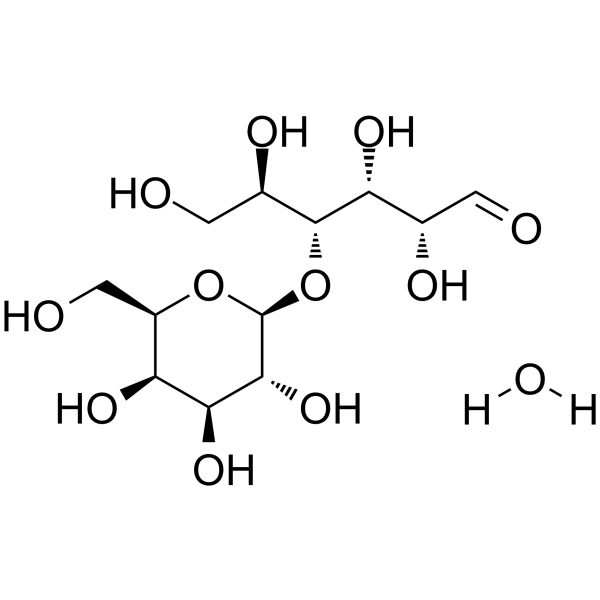
D-Lactose monohydrate is a sugar. D-Lactose monohydrate can be utilized by most bacteria. D-Lactose monohydrate promotes the growth of tobacco B6S3 tumor tissue. D-Lactose monohydrate is used in the research of the growth mechanism of plant tumor tissues and the sugar utilization of bacteria .
loading...
    loading...
Cat. No.: HY-112747
CAS No.: 97281-51-1
Synonyms: LPI; PE (soy)
Target:  

Phospholipase

Research Areas:  

Infection

Soy PE (LPI) is the most abundant phospholipid in prokaryotes and the second most abundant found in the membrane of mammalian, plant, and yeast cells, comprising approximately 25% of total mammalian phospholipids. In the brain, phosphatidylethanolamine comprises almost half of the total phospholipids. It is synthesized mainly through the cytidine diphosphate-ethanolamine and phosphatidylserine decarboxylation pathways, which occur in the endoplasmic reticulum (ER) and mitochondrial membranes, respectively. It is a precursor in the synthesis of phosphatidylcholine and arachidonoyl ethanolamide and is a source of ethanolamine used in various cellular functions. In E.coli, phosphatidylethanolamine deficiency prevents proper assembly of lactose permease, suggesting a role as a lipid chaperone. It is a cofactor in the propagation of prions in vitro and can convert recombinant mammalian proteins into infectious molecules even in the absence of RNA. This product contains phosphatidylethanolamine molecular species with variable fatty acyl chain lengths at the sn-1 and sn-2 positions .
loading...
    loading...
Cat. No.: HY-B2123R
CAS No.: 63-42-3
Lactose (Standard) is the analytical standard of Lactose. This product is intended for research and analytical applications. Lactose is a β-galactoside consisting of galactose and glucose residues, the main carbohydrate in mammalian breast milk. Lactose, a macronutrient and an inducer of host innate immune responses, possesses immune modulatory functions .
loading...
    loading...
Cat. No.: HY-156905
CAS No.: 1202854-87-2
Research Areas:  

Others

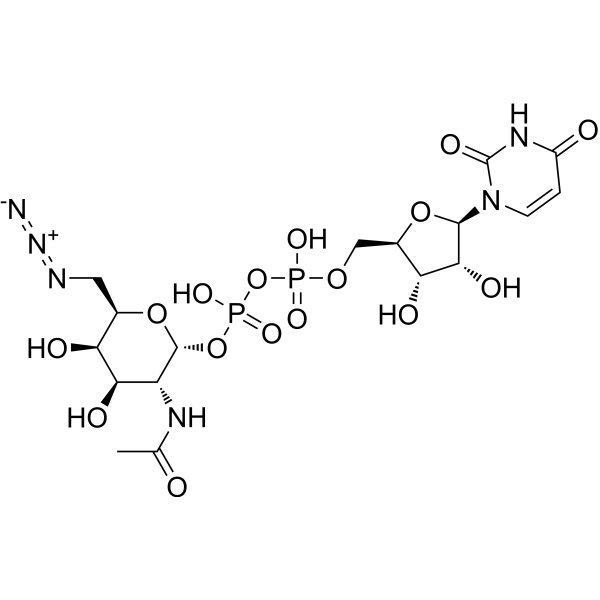
6-Azido-N-acetylgalactosamine-UDP (Compound 5) is a 6-azido-modified nucleotide sugar. It acts as an active sugar donor in lactose glycosylation catalyzed by beta-1,3-N-Acetylhexaminyltransferase (LgtA). Azido-modified nucleotide sugars are strategically used in copper-free click chemistry to modify the N-glycan core structure of IgG .
loading...
    loading...
Cat. No.: HY-137249
CAS No.: 95079-19-9
Purity:  98.32%
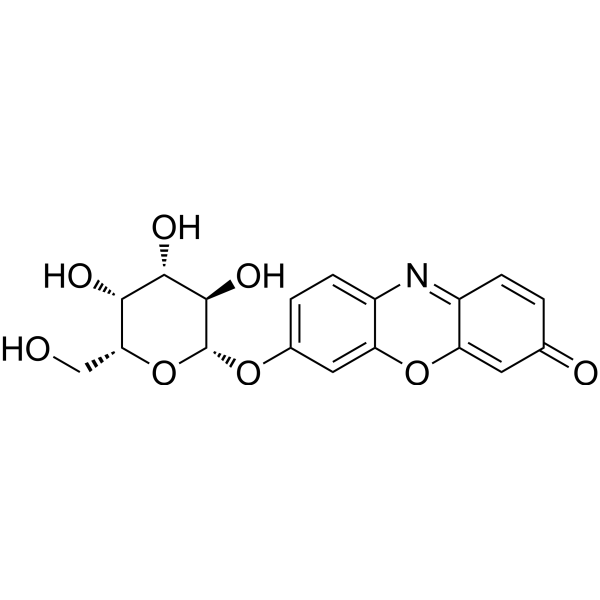
Resorufin-β-D-galactopyranoside is a commonly used substrate in various biochemical assays to measure the activity of β-galactosidase, an important enzyme involved in lactose metabolism and regulation of gene expression. Resorufin-β-D-galactopyranoside has unique chemical properties and can be hydrolyzed by β-galactosidase to form a red fluorescent product called resorufin. This makes it a useful tool for detecting and quantifying β-galactosidase activity in biological samples such as bacteria or mammalian cells.
loading...
    loading...
Cat. No.: HY-154921
CAS No.: 4682-48-8
Purity:  ≥98.0%
Synonyms: LacCer (bovine buttermilk)
Target:  

Endogenous Metabolite

Research Areas:  

Others

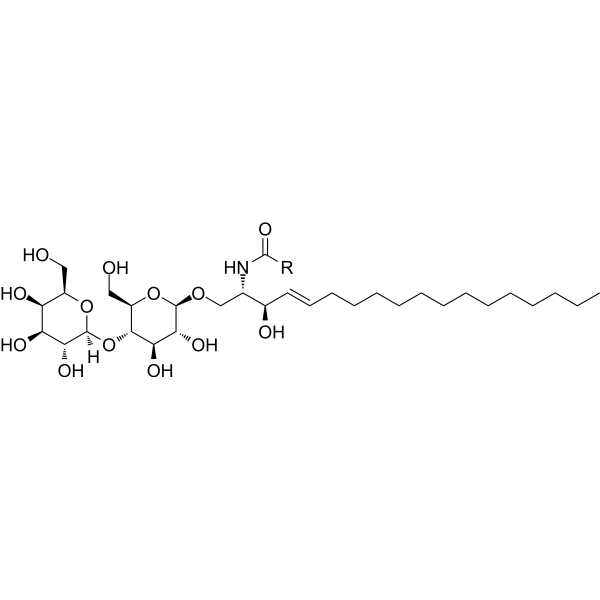
Lactosylceramide (bovine buttermilk) (LacCer (bovine buttermilk)) is a natural lactosylceramide (LacCer) mixture derived from bovine buttermilk, belonging to neutral glycosphingolipids, and composed of a lactose polar head group and a ceramide backbone. LacCer is an important component of cell membrane glycosphingolipids and is associated with processes such as signal transduction, cell recognition, cell adhesion, and cell growth. LacCer derived from bovine buttermilk contains multiple molecular species composed of different long-chain bases and fatty acyl groups. Lactosylceramide (bovine buttermilk) can be used for research related to lactosylceramide and glycosphingolipids .
loading...
    loading...
Cat. No.: HY-B1673R
CAS No.: 64044-51-5
D-Lactose monohydrate (Standard) is the analytical standard of D-Lactose monohydrate (HY-B1673). This product is intended for research and analytical applications. D-Lactose monohydrate is a sugar. D-Lactose monohydrate can be utilized by most bacteria. D-Lactose monohydrate promotes the growth of tobacco B6S3 tumor tissue. D-Lactose monohydrate is used in the research of the growth mechanism of plant tumor tissues and the sugar utilization of bacteria .
loading...
    loading...
Cat. No.: HY-W779009
CAS No.: 287100-62-3
Target:  

Bacterial

Research Areas:  

Others

[1-13Cglc]Lactose monohydrate is an isotopic labeling drug .
loading...
    loading...
Cat. No.: HY-B1610K
Sodium Citrate Buffer, 0.5M, pH 5.5 is a metal chelator and buffering agent. Sodium Citrate Buffer, 0.5M, pH 5.5 requires oxygen to participate in the oxidation process to reduce pink defects in cooked ground turkey, and it does not function via heme iron chelation or iron complex interaction. When mixed with 50% (by vol.) 1,3-dimethylimidazolium methyl sulfate, Sodium Citrate Buffer, 0.5M, pH 5.5 can serve as an aqueous buffering medium to maintain the catalytic efficiency of the hyperthermophilic β-glycosidase CelB for lactose hydrolysis at 80°C, while also acting as a reaction medium for CelB-catalyzed lactose hydrolysis and galactosyltransferase assays .
loading...
    loading...
Cat. No.: HY-157353
Synonyms: MAC
MacConkey Agar (MAC) can be used for selective isolation and culture of intestinal pathogens. The composition of 1 liter of MacConkey Agar (MAC) is: 20.0g peptone, 10.0 g lactose, 1.5 g Bile salt number three, 5.0 g sodium chloride, 0.03g Neutral red, 0.001 g Crystal viol and 15.0 g agar .
loading...
    loading...
Cat. No.: HY-W008864
CAS No.: 6291-42-5
Synonyms: β-OctaacetylLactose
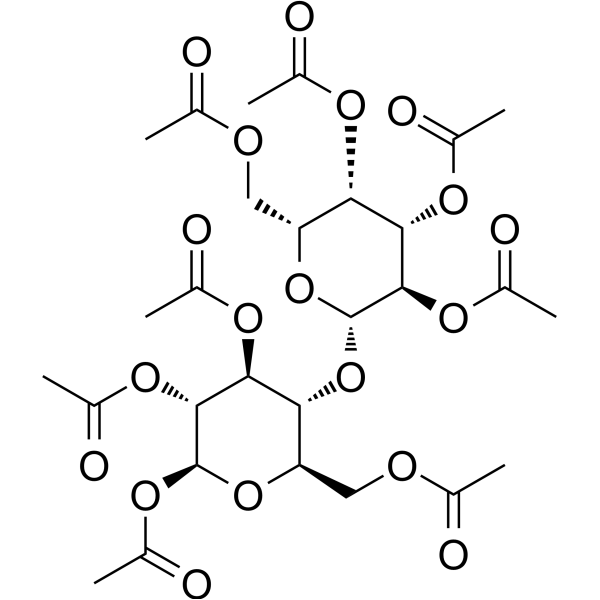
Lactose octaacetate shows mild to moderate antifungal activity against some fungi, but it has low or no activity against bacteria and yeast. Lactose octaacetate shows low cytotoxicity to MDBK cells, Hep-2 and MDCK cells. Lactose octaacetate has antiviral activity against PV-1 .
loading...
    loading...