Search Result
| Isoforms Recommended: |
Mcl-1
|
Results for "
MCL-1
" in MedChemExpress (MCE) Product Catalog:
1
Isotope-Labeled Compounds
| Cat. No. |
Product Name |
Target |
Research Areas |
Chemical Structure |
-
- HY-100741
-
|
|
Bcl-2 Family
|
Cancer
|
|
S63845 is a potent and selective myeloid cell leukemia 1 (MCL1) inhibitor with a Kd of 0.19 nM for human MCL1 [1].
|
-
-
- HY-112218
-
|
S-64315
|
Bcl-2 Family
|
Cancer
|
|
MIK665 (S-64315), derived from S63845, is a myeloid cell leukemia sequence 1 (MCL1) inhibitor [1]. MIK665 has an IC50 of 1.81 nM for MCL1 .
|
-
-
- HY-101533
-
|
|
Bcl-2 Family
|
Cancer
|
|
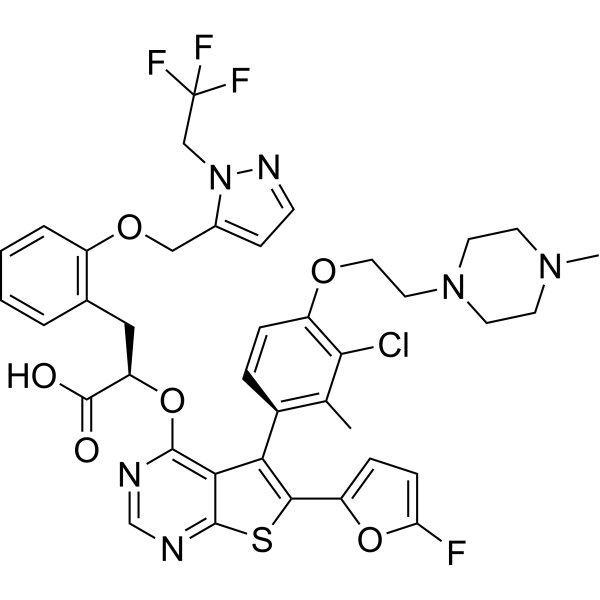
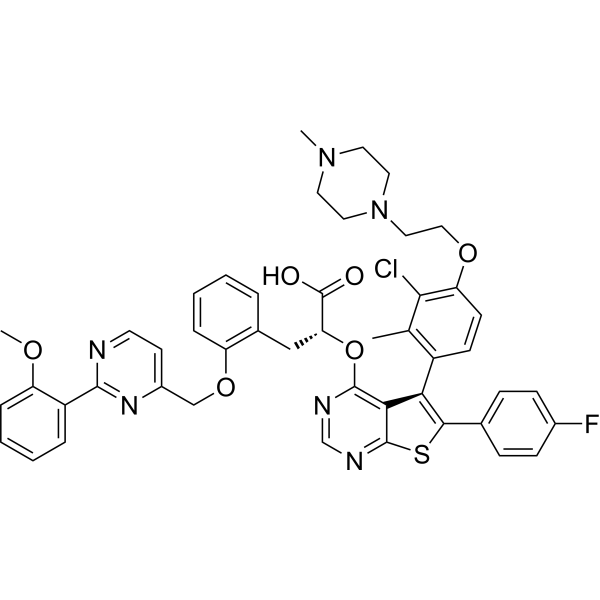
AZD-5991 is a potent and selective Mcl-1 inhibitor with an IC50 of 0.7 nM in FRET assay and a Kd of 0.17 nM in surface plasmon resonance (SPR) assay [1].
|
-
-
- HY-18628
-
UMI-77
4 Publications Verification
|
Bcl-2 Family
|
Cancer
|
|
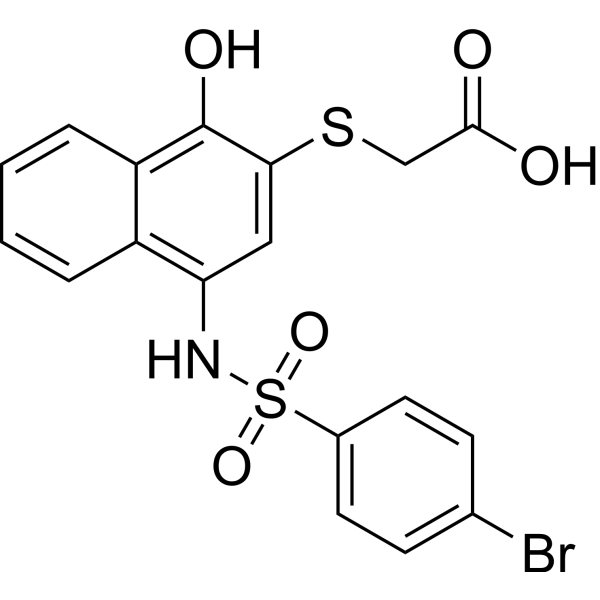
UMI-77 is a selective Mcl-1 inhibitor, which shows high binding affinity to Mcl-1 (IC50=0.31 μM). UMI-77 binds to the BH3 binding groove of Mcl-1 with Ki of 490 nM, showing selectivity over other members of anti-apoptotic Bcl-2 members.
|
-
-
- HY-12422
-
|
|
CDK
|
Cancer
|
|
Voruciclib is an orally active and selective CDK inhibitor with Ki values of 0.626 nM-9.1 nM. Voruciclib potently blocks CDK9, the transcriptional regulator of MCL-1. Voruciclib represses expression of MCL-1 in multiple models of diffuse large B-cell lymphoma (DLBCL) [1].
|
-
-
- HY-149672
-
|
|
Bcl-2 Family
Apoptosis
|
Cancer
|
|
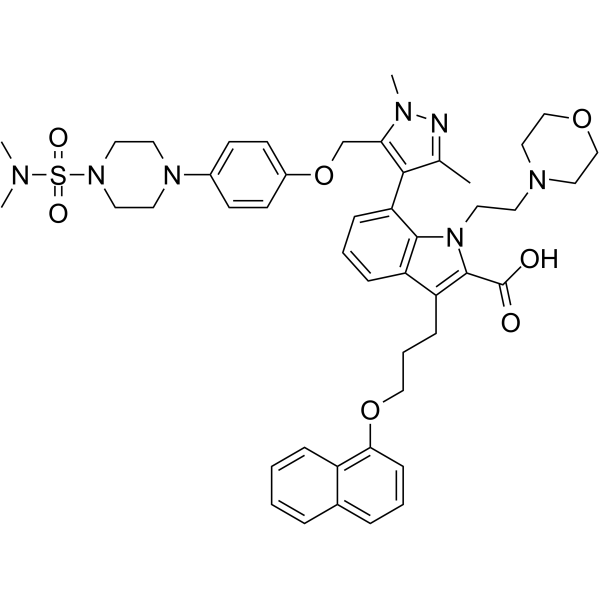
ABBV-467 is a selective MCL-1 inhibitor (Ki: <0.01 nM). ABBV-467 induces apoptosis. ABBV-467 induces cancer cell death and inhibits tumor growth in models of hematological malignancies, such as multiple myeloma [1].
|
-
-
- HY-125877
-
|
|
PROTACs
Bcl-2 Family
|
Cancer
|
|
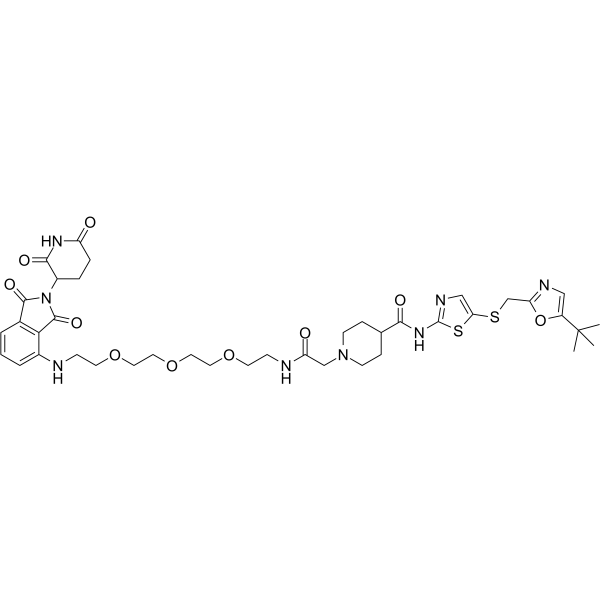
PROTAC Mcl1 degrader-1 (compound C3), a proteolysis targeting chimera (PROTAC) based on Cereblon ligand, is a potently and selectively Mcl-1 (Bcl-2 family member) inhibitor with an IC50 of 0.78 μM. PROTAC Mcl1 degrader-1 inhibits Bcl-2 with an IC50 of 0.54 μM [1].
|
-
-
- HY-W008296
-
|
|
PROTAC Linkers
|
Cancer
|
|
NH2-C6-NH-Boc is a PROTAC linker which refers to the alkyl/ether composition. NH2-C6-NH-Boc can be used in the synthesis the Mcl-1 inhibitor based on PROTAC [1].
|
-
-
- HY-12468
-
|
|
Bcl-2 Family
Apoptosis
|
Cancer
|
|
A-1210477 is a potent and selective inhibitor of MCL-1 with a Ki of 0.45 nM [1]. A-1210477 specifically binds MCL-1 and promotes apoptosis of cancer cells in an MCL-1-dependent manner .
|
-
-
- HY-101565
-
|
AMG-176
|
Bcl-2 Family
|
Cancer
|
|
Tapotoclax (AMG-176) is a potent, selective and orally active MCL-1 inhibitor, with a Ki of 0.13 nM [1] .
|
-
-
- HY-132307
-
|
|
Bcl-2 Family
Apoptosis
|
Cancer
|
|
Mcl-1 inhibitor 6 is an orally active, selective myeloid cell leukemia 1 (Mcl-1) protein inhibitor with a Kd of 0.23 nM and a Ki of 0.02 μM. Mcl-1 inhibitor 6 possesses superior selectivity over other Bcl-2 family members (Bcl-2, Bcl2A1, Bcl-xL, and Bcl-w, Kd>10 μM). Mcl-1 inhibitor 6 is a potent antitumor agent [1].
|
-
-
- HY-112859
-
-
-
- HY-162858
-
|
|
Bcl-2 Family
Caspase
Apoptosis
|
Cancer
|
|
BRD-810 is a potent and selective MCL1 inhibitor with a Kd of 0.3 nM. BRD-810 can specifically block the BH3 binding groove of MCL1, while having little effect on other anti-apoptotic proteins (such as Bcl-2, Bcl-xL). BRD-810 effectively destroys the MCL1-BAK complex (IC50 = 1.2 nM) in cancer cells, rapidly activates Caspase and induces cell apoptosis. BRD-810 can be used in the research of various cancers such as hematological tumors and solid tumors [1].
|
-
-
- HY-12020
-
TW-37
4 Publications Verification
|
Bcl-2 Family
|
Cancer
|
|
TW-37 is a potent Bcl-2 inhibitor with Ki values of 260, 290 and 1110 nM for Mcl-1, Bcl-2 and Bcl-xL, respectively.
|
-
-
- HY-15613
-
|
Marinopyrrole A
|
Bcl-2 Family
|
Cancer
|
|
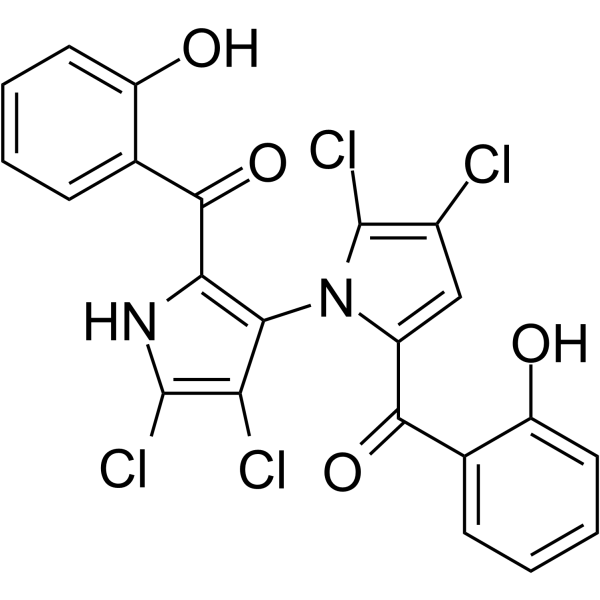
Maritoclax (Marinopyrrole A) is a novel and specific Mcl-1 inhibitor with an IC50 value of 10.1 μM, and shows >8 fold selectivity than BCL-xl (IC50 > 80 μM).
|
-
-
- HY-16695
-
|
Inhibitor of MCL-1
|
Bcl-2 Family
|
Cancer
|
|
MIM-1 is an inhibitor of myeloid cell factor 1 (Mcl-1).
|
-
-
- HY-129700
-
|
|
Bcl-2 Family
|
Cancer
|
|
MCL-1/BCL-2-IN-2 (Compound 6) is a potent and selective Mcl-1 and Bcl-2 dual inhibitor [1].
|
-
-
- HY-109184
-
|
AMG 397
|
Bcl-2 Family
|
Cancer
|
|
Murizatoclax (AMG 397) is a potent, selective and orally active inhibitor of myeloid leukemia 1 (MCL-1) inhibitor, with a Ki of 15 pM. Murizatoclax competitive binds to the BH3-binding groove of MCL1 with pro-apoptotic BCL-2 family members. Murizatoclax can be used for the research of cancer [1] .
|
-
-
- HY-155472
-
|
|
Bcl-2 Family
|
Cancer
|
|
Mcl-1 inhibitor 17 is a Mcl-1 protein inhibitor. Mcl-1 inhibitor 17 can be used for the research of cancer and other diseases [1].
|
-
-
- HY-128360
-
|
|
PROTACs
Bcl-2 Family
Apoptosis
Caspase
|
Cancer
|
|
dMCL1-2 is a potent, selective MCL1 PROTAC degrader based on a Cereblon ligand, with a KD value of 30 nM for binding to MCL1. dMCL1-2 induces ubiquitination and degradation of MCL1. dMCL1-2 degrades MCL1, cleaves Caspase-3, and induces Apoptosis. dMCL1-2 can be used in research related to multiple myeloma [1].
|
-
-
- HY-129478
-
TC11
2 Publications Verification
|
Caspase
Bcl-2 Family
CDK
|
Cancer
|
|
TC11 is a MCL1 degrader and Caspase-9 and CDK1 activator. TC11 functions as a phenylacetylamide derivative and is structurally related to immunomodulatory active molecules. TC11 induces degradation of MCL1 leading to apoptotic death [1] during prolonged mitotic arrest.
|
-
-
- HY-15464
-
|
AT-101; R-(-)-gossypol acetic acid
|
Bcl-2 Family
Autophagy
|
Cancer
|
|
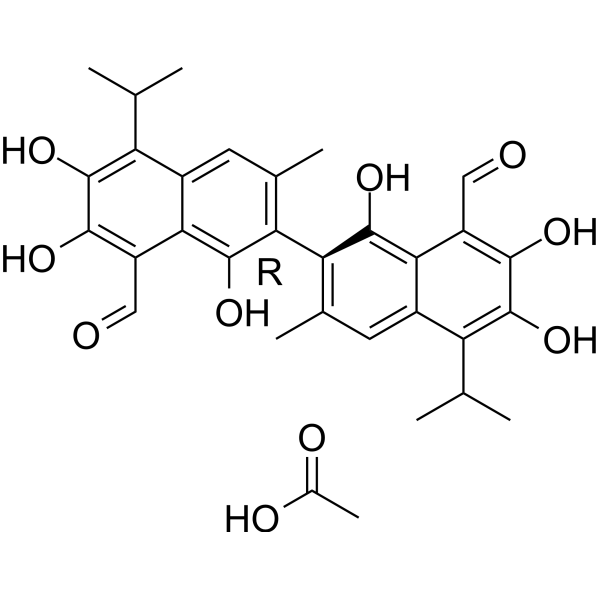
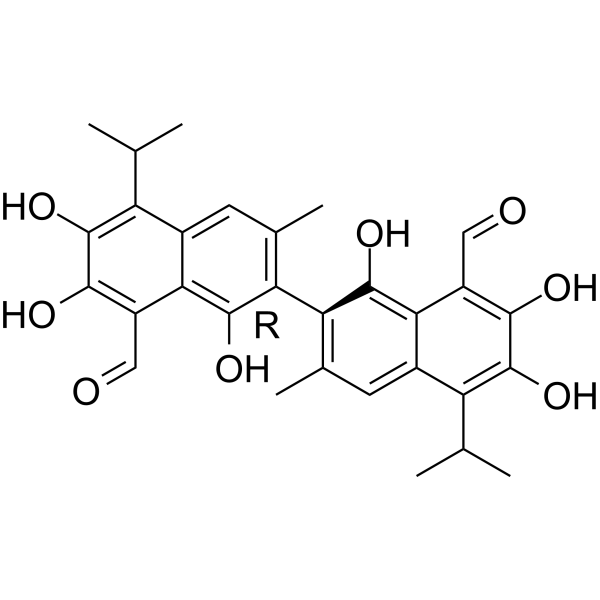
(R)-(-)-Gossypol (AT-101) is the levorotatory isomer of a natural product Gossypol. AT-101 is determined to bind to Bcl-2, Mcl-1 and Bcl-xL proteins with Kis of 260±30 nM, 170±10 nM, and 480±40 nM, respectively.
|
-
-
- HY-129702
-
|
|
Bcl-2 Family
|
Cancer
|
|
MCL-1/BCL-2-IN-4 (Compound 7) is a potent and selective Mcl-1 and Bcl-2 dual inhibitor [1].
|
-
-
- HY-129681
-
|
|
Bcl-2 Family
|
Cancer
|
|
MCL-1/BCL-2-IN-2 (Compound Nap-1) is a potent and selective Mcl-1 and Bcl-2 dual inhibitor with IC50s of 4.45 and 3.18 μM, respectively [1].
|
-
-
- HY-164515
-
|
|
Apoptosis
Mitochondrial Metabolism
Caspase
PARP
|
Cancer
|
|
ONC213 is an orally active αKGDH inhibitor. ONC213 can suppress mitochondrial respiration and elevate α-ketoglutarate levels by inhibiting αKGDH activity. ONC213 can induce cells apoptosis by inducing mitochondrial stress response and inhibiting translation of MCL-1. ONC213 can be used for the research of cancer, such as acute myeloid leukemia research (AML) [1].
|
-
-
- HY-13408
-
|
Apogossypol; NSC736630
|
Bcl-2 Family
|
Cancer
|
|
(+)-Apogossypol is a pan-BCL-2 antagonist. (+)-Apogossypol binds to Mcl-1, Bcl-2 and Bcl-xL with EC50s of 2.6, 2.8 and 3.69 µM, respectively.
|
-
-
- HY-16669
-
|
|
Bcl-2 Family
|
Cancer
|
|
Mcl1-IN-1 is an inhibitor of myeloid cell factor 1 (Mcl-1) (IC50=2.4 µM).
|
-
-
- HY-12422A
-
|
|
CDK
|
Cancer
|
|
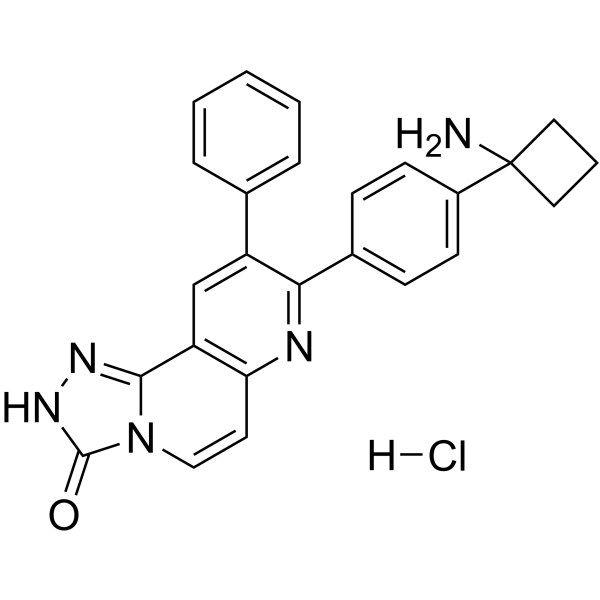
Voruciclib hydrochloride is an orally active and selective CDK inhibitor with Ki values of 0.626 nM-9.1 nM. Voruciclib hydrochloride potently blocks CDK9, the transcriptional regulator of MCL-1. Voruciclib hydrochloride represses expression of MCL-1 in multiple models of diffuse large B-cell lymphoma (DLBCL) [1].
|
-
-
- HY-19551
-
|
ApoG2
|
Bcl-2 Family
Apoptosis
Autophagy
Fungal
ROS Kinase
|
Infection
Cancer
|
|
Apogossypolone (ApoG2) is an orally active Bcl-2 family proteins inhibitor with Ki values of 35, 25 and 660 nM for Bcl-2, Mcl-1 and Bcl-XL, respectively. Apogossypolone shows antitumor activities, induces cell apoptosis [1] and autophagy . Apogossypolone also has antifungal activity .
|
-
-
- HY-12527
-
-
-
- HY-178226
-
|
|
ADC Payload
Topoisomerase
Survivin
Bcl-2 Family
IAP
|
Cancer
|
|
PBX-7016 is a Camptothecin (HY-16560) derivative. PBX-7016 can selectively inhibit Topoisomerase 1. PBX-7016 can specifically bind and degrade the cancer protein DDX5, thereby down-regulating the expression of anti-apoptotic proteins such as Survivin, Mcl-1, and XIAP, and promoting the apoptosis of cancer cells. PBX-7016 can be used to synthesis of ADCs [1].
|
-
-
- HY-158783
-
|
|
Ceramidase
Bcl-2 Family
LPL Receptor
Apoptosis
|
Neurological Disease
|
|
SACLAC, a Ceramide analog, is a potent and covalent acid ceramidase (ASAH1; AC) inhibitor with a Ki of 97.1 nM. SACLAC effectively blocks AC activity and induces a decrease in sphingosine 1-phosphate (S1P) and total ceramide levels. SACLAC reduces the levels of splicing factor SF3B1 and alternative Mcl-1 mRNA splicing, increases pro-apoptotic Mcl-1S levels to induce apoptosis in acute myeloid leukemia (AML) cells. SACLAC reduces the leukemic burden in human AML xenograft mouse models [1] .
|
-
-
- HY-100741A
-
|
|
Bcl-2 Family
|
Cancer
|
|
(S,R)-S63845 is the isomer of S63845 (HY-100741), and can be used as an experimental control. S63845 is a potent and selective myeloid cell leukemia 1 (MCL1) inhibitor with a Kd of 0.19 nM for human MCL1 [1].
|
-
-
- HY-112591
-
|
XMH95
|
Apoptosis
HIV
Wnt
Bcl-2 Family
|
Cancer
|
|
NSC260594 induces Apoptosis. NSC260594 binds the shallow groove of the Mcl-1 protein, and inhibits Mcl-1 expression through down-regulation of Wnt signaling proteins. NSC260594 can also recognize G9-G10-A11-G12 RNA tetraloop of HIV and prevent the binding of the Gag protein within the 5’-UTR. NSC260594 inhibits tumor growth, and can be used for research of Triple-negative breast cancers (TNBCs) [1].
|
-
-
- HY-148203
-
|
|
Bcl-2 Family
|
Cancer
|
|
Mcl-1 inhibitor 9 (example 2) is a myeloid cell leukemia 1 (Mcl-1) inhibitor with IC50 value of 0.21889 nM. Mcl-1 inhibitor 9 shows anti-tumor activity [1].
|
-
-
- HY-RS08230
-
-
MCL1 Human Pre-designed siRNA Set A
-
- HY-163293
-
|
|
Bcl-2 Family
|
Cancer
|
|
Mcl-1 inhibitor 18 (compound 57) is a myeloid cell leukemia 1 (Mcl-1) inhibitor, and can be used for study of cancer [1].
|
-
-
- HY-145826
-
|
|
Bcl-2 Family
|
Cancer
|
|
Mcl-1 inhibitor 8 is a MCL-1 inhibitor, example 228, extracted from patent WO2019222112 [1].
|
-
-
- HY-163681
-
-
-
- HY-101533A
-
|
|
Bcl-2 Family
|
Cancer
|
|
AZD-5991 Racemate is the racemate of AZD-5991. AZD-5991 Racemate is a Mcl-1 inhibitor with an IC50 of <3 nM in FRET assay.
|
-
-
- HY-100741C
-
|
|
Bcl-2 Family
Drug Isomer
|
Cancer
|
|
(R,R)-S63845 is the isomer of S63845 (HY-100741), and can be used as an experimental control. S63845 is a potent and selective myeloid cell leukemia 1 (MCL1) inhibitor with a Kd of 0.19 nM for human MCL1 [1].
|
-
-
- HY-101533B
-
|
|
Bcl-2 Family
|
Cancer
|
|
AZD-5991 S-enantiomer is the less active enantiomer of AZD-5991. AZD-5991 S-enantiomer is a Mcl-1 inhibitor with an IC50 of 6.3 μM in FRET assay and a Kd of 0.98 μM in surface plasmon resonance (SPR) assay.
|
-
-
- HY-145825
-
|
|
Bcl-2 Family
|
Cancer
|
|
Mcl-1 inhibitor 7 is a potent Mcl-1 inhibitor, example 35, extracted from patent WO2020097577A [1].
|
-
-
- HY-133015
-
|
|
Bcl-2 Family
|
Cancer
|
|
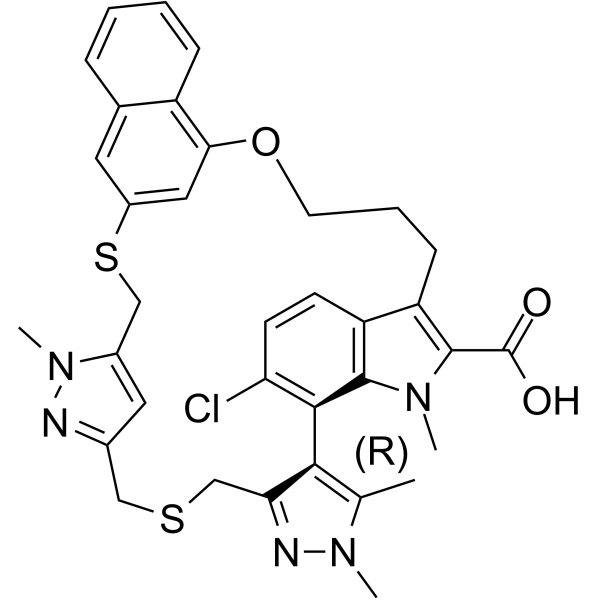
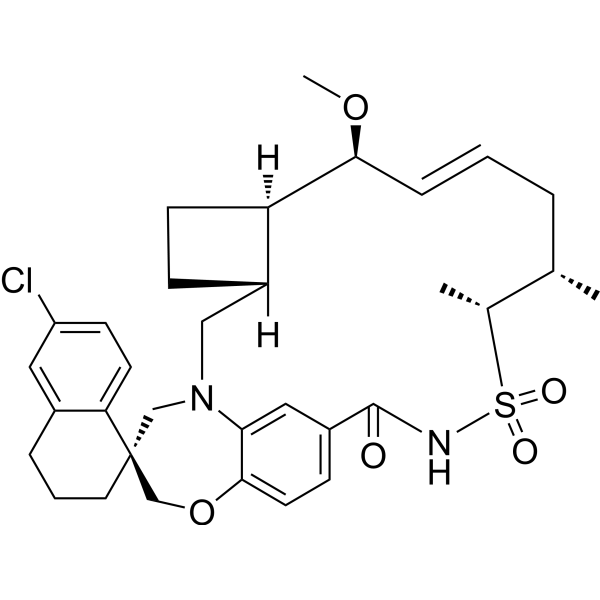
Mcl-1 inhibitor 3 (compound 1) is a highly potent and orally activate macrocyclic Mcl-1 inhibitor (Ki= 0.061 nM; IC50=19 nM in an OPM-2 cell viability assay). Mcl-1 inhibitor 3 shows good pharmacokinetic properties and excellent in vivo efficacy without toxicity [1]..
|
-
-
- HY-129701
-
|
|
Bcl-2 Family
|
Cancer
|
|
MCL-1/BCL-2-IN-3 (Compound 2) is a potent and selective Mcl-1 and Bcl-2 dual inhibitor with IC50s of 5.95 and 4.78 μM, respectively [1].
|
-
-
- HY-153423
-
|
|
Bcl-2 Family
|
Cancer
|
|
Mcl-1 inhibitor 12 (Example 10) is a MCL-1 inhibitor (Ki: 0.22 nM). Mcl-1 inhibitor 12 can be used for the research of cancers [1].
|
-
-
- HY-153423A
-
|
|
Bcl-2 Family
|
Cancer
|
|
Mcl-1 inhibitor 13 (Example 9) is a MCL-1 inhibitor (Ki: 8.2 nM). Mcl-1 inhibitor 13 can be used for the research of cancers [1].
|
-
-
- HY-154962
-
|
|
Bcl-2 Family
|
Cancer
|
|
Mcl-1 inhibitor 15 (Compound (Ra)-15) is a Mcl-1 inhibitor (Ki: 0.02 nM). Mcl-1 inhibitor 15 can be used for research of cancer [1].
|
-
-
- HY-148899
-
|
|
Bcl-2 Family
|
Cancer
|
|
Mcl-1 inhibitor 10 (compound 43) is a relatively strong MCL-1 inhibitor (IC50=0.67 μM). Mcl-1 inhibitor 10 interacts with specific binding sites of MCL-1 protein to block the pro-survival signal of MCL-1 and push cancer cells into apoptosis. Mcl-1 inhibitor 10 can be used in the study of MCL-1 dependent cancers [1].
|
-
-
- HY-170763
-
|
|
Apoptosis
Bcl-2 Family
|
Cancer
|
|
Mcl-1 inhibitor 22 (Example 36) is a myeloid cell leukemia-1 (MCL-1) inhibitor which inhibits the antiapoptotoic activity of MCL-1 by inhibiting its interaction with proapototic proteins. Mcl-1 inhibitor 22 exhibits anti-proliferation activities against various cancer cell lines and can be utilized in cancer research [1].
|
-
- HY-170762
-
|
|
Apoptosis
Bcl-2 Family
|
Cancer
|
|
Mcl-1 inhibitor 21 (Example 1-36) is a Mcl-1 inhibitor with an IC50 of 328 nM. Mcl-1 inhibitor 21 exhibits proapototic and anti-proliferation activities against SUDHL5 and SUDHL10 cell lines and can be utilized in cancer research [1].
|
-
- HY-154961
-
|
|
Bcl-2 Family
|
Cancer
|
|
Mcl-1 inhibitor 14 (Compound (Ra)-10) is an inhibitor of myeloid cell leukemia-1 (MCL-1) with an Ki of 0.018 nM and can be used for anticancer research [1].
|
-
- HY-12826
-
|
|
Beta-lactamase
Bcl-2 Family
Bacterial
|
Cancer
|
|
IMB-XH1 is an inhibitor of myeloid cell factor 1 (Mcl-1) [1]. IMB-XH1 is a non-competitive Delhi metallo-β-lactamase (NDM-1) inhibitor. The IC50s of IMB-XH1 against metallo-β-lactamases NDM-1, IMP-4, ImiS and L1 are 0.4637 μM, 3.980 μM, 0.2287 μM and 1.158 μM, respectively .
|
-
- HY-150507
-
|
JNJ-78394355
|
Bcl-2 Family
|
Cancer
|
|
JNJ-4355, a chemical probe, is a highly potent MCL-1 (myeloid cell leukemia-1) inhibitor, with KI of 18 pM. JNJ-4355 shows antitumor activity [1] .
|
-
- HY-178010
-
|
|
Bcl-2 Family
Apoptosis
|
Cancer
|
|
Mcl-1-IN-17 (Compound 25) is an orally active Myeloid Cell Leukemia 1 (Mcl-1) inhibitor with a Ki < 0.08 nM. Mcl-1-IN-17 has a significant antiproliferative activity (GI50s of 39 and 105 nM for H929 and A427 cells, respectively) and inhibits cell apoptosis. Mcl-1-IN-17 can be used for hematological and solid cancers research [1].
|
-
- HY-159588
-
|
|
Bcl-2 Family
|
Cancer
|
|
Mcl-1 inhibitor 20 (compound 47) is a Mcl-1 inhibitor with anti-leukemic effects. Mcl-1 inhibitor 20 can bind to the BH3 binding groove of Mcl-1 (Ki=24 nM), occupy the P1 pocket in Mcl-1, and form interactions with Lys234 and Val249. Mcl-1 inhibitor 20 has good microsomal stability, pharmacokinetic characteristics and low cardiotoxicity [1].
|
-
- HY-155012
-
|
|
Bcl-2 Family
|
Cancer
|
|
Mcl-1 inhibitor 16 (Compound 9) is a mitochondrial targeting Platinum-based inhibitor of Mcl-1. Mcl-1 inhibitor 1 induces Bax/Bak-dependent apoptosis in cancer cells. Mcl-1 inhibitor 16 can be used alone or together with ABT-199 (HY-15531) and shows anti-tumor activity [1].
|
-
- HY-RS08231
-
-
Mcl1 Mouse Pre-designed siRNA Set A
- HY-130261
-
|
|
Bcl-2 Family
|
Cancer
|
|
Mcl-1 antagonist 1 is a Mcl-1 protein antagonist extracted from patent WO2019173181, compound 200 [1].
|
-
- HY-100762
-
|
|
Bcl-2 Family
|
Cancer
|
|
Mcl1-IN-11 (Compound G) is a selective Mcl-1 inhibitor, less potent at Bcl-2, with Kis of 0.06 and 4.2 μM, respectively [1].
|
-
- HY-170763A
-
|
|
Apoptosis
Bcl-2 Family
|
Cancer
|
|
(+)-Mcl-1 inhibitor 22 (Example 37) is a myeloid cell leukemia-1 (MCL-1) inhibitor which inhibits the antiapoptotoic activity of MCL-1 by inhibiting its interaction with proapototic proteins. (+)-Mcl-1 inhibitor 22 exhibits anti-proliferation activities against various cancer cell lines and can be utilized in cancer research [1].
|
-
- HY-178910
-
|
|
Bcl-2 Family
Apoptosis
|
Cancer
|
|
Mcl-1-IN-20 (Compound 26d) is a Mcl-1 inhibitor with Kis of 0.59, 6.6 and 3.6 μM against Mcl-1, Bcl-xL and Bcl-2. Mcl-1-IN-20 exhibits significant anti-proliferative activity against pancreatic cancer cells and can induce apoptosis in BxPC-3 cells. Mcl-1-IN-20 can be used for the study of pancreatic cancer [1].
|
-
- HY-178008
-
|
|
Bcl-2 Family
Caspase
Apoptosis
|
Cancer
|
|
Mcl-1-IN-16 is an effective macrocyclic myeloid cell leukemia 1 (Mcl-1) inhibitor with a Ki of below 0.08 nM. Mcl-1-IN-16 maintains high selectivity (>50,000-fold) for Mcl-1 over other antiapoptotic Bcl-2 family members Bcl-2 and Bcl-xL. Mcl-1-IN-16 leads to the activation of caspase-3/7, thereby initiating cell apoptosis. Mcl-1-IN-16 achieves tumor regression in a lung cancer-derived tumor xenograft mice model. Mcl-1-IN-16 can be used in the research of solid tumor such as nonsmall cell lung cancer (NSCLC) [1].
|
-
- HY-170762A
-
|
|
Apoptosis
Bcl-2 Family
|
Cancer
|
|
(+)-Mcl-1 inhibitor 21 (Example 1-37) is a Mcl-1 inhibitor with an IC50 of 172 nM. (+)-Mcl-1 inhibitor 21 exhibits proapototic and anti-proliferation activities against SUDHL5 and SUDHL10 cell lines and can be utilized in cancer research [1].
|
-
- HY-170762B
-
|
|
Apoptosis
Bcl-2 Family
|
Cancer
|
|
(-)-Mcl-1 inhibitor 21 (Example 1-38) is a Mcl-1 inhibitor with an IC50 of 7.51 μM. (-)-Mcl-1 inhibitor 21 exhibits proapototic and anti-proliferation activities against SUDHL5 and SUDHL10 cell lines and can be utilized in cancer research [1].
|
-
- HY-124846
-
|
|
Bcl-2 Family
|
Cancer
|
|
MI-223 is a Mcl-1 regulator (Kd = 160 nM). MI-223 binds to the BH1 domain, blocking Mcl-1-stimulated homologous recombination DNA repair, thus sensitizing cancer cells to DNA replication agents. MI-223 can be used in research on cancers such as lung cancer [1].
|
-
- HY-170763B
-
|
|
Bcl-2 Family
Apoptosis
|
Cancer
|
|
(-)-Mcl-1 inhibitor 22 (compound 38) is an Mcl-1 inhibitor that works by blocking the interaction between Mcl-1 and pro-apoptotic proteins, reducing the anti-apoptotic activity of Mcl-1. (-)-Mcl-1 inhibitor 22 can be used in cancer research [1].
|
-
- HY-122721
-
|
|
Bcl-2 Family
|
Cancer
|
|
Mcl1-IN-5 (compound 21) is a MCL-1 inhibitor. Mcl1-IN-5 can be used for the research of cancers [1].
|
-
- HY-RS08232
-
-
Mcl1 Rat Pre-designed siRNA Set A
- HY-145825A
-
|
|
Bcl-2 Family
|
Cancer
|
|
(E)-Mcl-1 inhibitor 7 (Example 34) is a Mcl-1 inhibitor (Ki: <1 nM, IC50: <500 nM). (E)-Mcl-1 inhibitor 7 can be used for research of cancers [1].
|
-
- HY-112218A
-
|
|
Bcl-2 Family
|
Cancer
|
|
(R)-MIK665 is the less active enantiomer of MIK665. MIK665 is a special Mcl-1 inhibitor with an IC50 of 1.81 nM.
|
-
- HY-159513
-
|
|
Bcl-2 Family
Apoptosis
|
Cancer
|
|
Bcl-2/Mcl-1-IN-4 (compound 20) is a dual inhibitor targeting Bcl-2 (Ki=0.49 μM) and Mcl-1 (Ki=0.51 μM). Bcl-2/Mcl-1-IN-4 significantly inhibits cancer cell proliferation and effectively induces apoptosis in U937 cells. Bcl-2/Mcl-1-IN-4 can be used in cancer research [1].
|
-
- HY-116220
-
|
|
Others
|
Others
|
|
Mcl1-IN-14 (compound 5) is a reversible covalent inhibitor of Mcl-1 with the activity of inhibiting Mcl-1. Mcl1-IN-14 covalently targets the non-catalytic lysine side chain of Mcl-1 and has higher potency than non-covalent counterparts, which can be used to develop Mcl-1 inhibitory compounds and study related biological phenomena.
|
-
- HY-123564
-
|
|
Bcl-2 Family
|
Others
|
|
Mcl1-IN-7 (compound 11) is a reversible covalent inhibitor of Mcl-1 with the activity of inhibiting Mcl-1. By covalently targeting the non-catalytic lysine side chain of Mcl-1, it has higher potency than non-covalent counterparts and can be used to develop Mcl-1 inhibitory compounds and study related biological phenomena.
|
-
- HY-W286906
-
|
|
Bcl-2 Family
Apoptosis
|
Cancer
|
|
Mcl1-IN-15 (Compound 7) is the inhibitor for myeloid cell leukemia 1 (Mcl-1) with an IC50 of 8.73 μM. Mcl1-IN-15 inhibits Mcl1-BH3 peptide interaction, activates the Bak/Bax-mediated apoptosis and exhibits antitumor activity [1].
|
-
- HY-111467
-
-
- HY-128607
-
|
|
Bcl-2 Family
|
Cancer
|
|
Mcl1-IN-9 is a potent myeloid cell leukemia-1 (Mcl-1) Inhibitor with an IC50 of 446 nM in reengineered BCR-ABL+ B-ALL cells and a Ki of 0.03 nM [1].
|
-
- HY-100763
-
|
|
Bcl-2 Family
|
Cancer
|
|
Mcl1-IN-12 (Compound F) is a selective Mcl-1 inhibitor, less potent at Bcl-2, with Kis of 0.29 and 3.1 μM, respectively. Anti-tumor activity [1].
|
-
- HY-111468
-
|
|
Bcl-2 Family
|
Cancer
|
|
Mcl1-IN-3 is an inhibitor of Mcl1 extracted from patent WO2015153959A2, compound example 57; has an IC50 and Ki of 0.67 and 0.13 μM, respectively.
|
-
- HY-162780
-
|
|
Bcl-2 Family
|
Cancer
|
|
Mcl-1-IN-19 (compound 26) binds to Mcl-1, with the Ki of 86 pM. Mcl-1-IN-19 inhibits growth in H929 cells with the GI of 43 nM [1].
|
-
- HY-144430
-
|
|
Bcl-2 Family
|
Cancer
|
|
Bcl-2/Mcl-1-IN-1 (compound 3) is a Bcl-2/Mcl-1 inhibitor, with Kis of 1.19 μM and 4.53 μM for Mcl-1 and Bcl-2, respectively. Bcl-2/Mcl-1-IN-1 can be used for the research of cancer [1].
|
-
- HY-144431
-
|
|
Bcl-2 Family
|
Cancer
|
|
Bcl-2/Mcl-1-IN-3 (compound 1) is a Bcl-2/Mcl-1 inhibitor, with Kis of 0.14 μM and 0.23 μM for Mcl-1 and Bcl-2, respectively. Bcl-2/Mcl-1-IN-3 can be used for the research of cancer [1].
|
-
- HY-144428
-
|
|
Bcl-2 Family
|
Cancer
|
|
Bcl-2/Mcl-1-IN-2 (compound 2) is a Bcl-2/Mcl-1 inhibitor, with Kis of 0.88 μM and 4.70 μM for Mcl-1 and Bcl-2, respectively. Bcl-2/Mcl-1-IN-2 can be used for the research of cancer [1].
|
-
- HY-164453
-
|
|
Bcl-2 Family
Apoptosis
|
Cancer
|
|
A-1248767 is a MCL-1 inhibitor (IC50=23.9 nM; Ki=0.41 nM) with anticancer activity. A-1248767, a derivative of A-1210477 (HY-12468), binds to MCL-1 with high affinity, induces the increase of intracellular MCL-1 protein, and promotes tumor cell apoptosis [1].
|
-
- HY-161732
-
|
|
Bcl-2 Family
|
Cancer
|
|
GQN-B37-E is a potent selective binder and inhibitor of MCL-1. GQN-B37-E binds to the BH3-domain-binding pocket in MCL-1. GQN-B37-E exhibits binding affinity for MCL-1 at the submicromolar range (Ki = 0.6 μM) without apparent binding to BCL-2 or BCL-XL [1].
|
-
- HY-164452
-
|
|
Bcl-2 Family
Apoptosis
Caspase
|
Cancer
|
|
A-1155905 is a MCL-1 inhibitor (IC50=33.5 nM; Ki=0.58 nM) with anticancer activity. A-1155905 selectively binds to MCL-1 with sufficient affinity to disrupt the MCL-1-bim complex in living cells. A-1155905-induced death of MCL-1-dependent cell lines is caspase-dependent and occurs via apoptosis [1].
|
-
- HY-115928
-
|
|
Bcl-2 Family
|
Cancer
|
|
M24 is a Mcl-1 selective inhibitor. M24 exhibits good binding affinity against Mcl-1 with Ki value of 0.33 μM. M24 exhibits good anti-proliferative activity and induce apoptosis in HepG2 cells [1].
|
-
- HY-125908
-
-
- HY-116532
-
|
|
Bcl-2 Family
|
Cancer
|
|
YCW-E11 is a Bcl-2, and Mcl-1 inhibitor with Ki values of 0.83 and 0.33 μM, respectively. YCW-E11 induces cell apoptosis through the mitochondrial pathway and exhibits antitumor activity. YCW-E11 can be utilized in cancer research [1].
|
-
- HY-146097
-
|
|
P-glycoprotein
Apoptosis
|
Cancer
|
|
RMS5, a tetrandrine analogue, is a potent P-glycoprotein (P-gp) inhibitor. RMS5 has markedly antiproliferative and cytotoxic effects on cancer cells. RMS5 slightly diminishes the expression of the anti-apoptotic Bcl-2 family proteins Bcl-XL and Mcl-1. RMS3 causes PARP cleavage, a marker for cells undergoing apoptosis. RMS5 has strong anticancer property [1].
|
-
- HY-18628S
-
|
|
Isotope-Labeled Compounds
Bcl-2 Family
|
Cancer
|
|
UMI-77-d4 is the deuterium labeled UMI-77. UMI-77 is a selective Mcl-1 inhibitor, which shows high binding affinity to Mcl-1 (IC50=0.31 μM). UMI-77 binds to the BH3 binding groove of Mcl-1 with Ki of 490 nM, showing selectivity over other members of anti-apoptotic Bcl-2 members.
|
-
- HY-155245
-
|
|
CDK
Bcl-2 Family
|
Cancer
|
|
A09-003 is a CDK-9 inhibitor (IC50: 16 nM). A09-003 inhibits leukemia cell proliferation (IC50: 1.90, 0.86, 2.49, 1.84, 0.48 μM for BDCM, Molm-14, THP-1, U937, MV4-11 cells). A09-003 induces apoptosis and decreases Mcl-1 expression through Thr163 dephosphorylation [1].
|
-
- HY-183601
-
|
|
Bcl-2 Family
Apoptosis
|
Cancer
|
|
Mcl-1-IN-22 is a selective Mcl-1 inhibitor with a Ki of 0.015 μM. Mcl-1-IN-22 binds selectively to Mcl-1, disrupts the Mcl-1/Bak complex to release free Bak, triggering intrinsic apoptosis. Mcl-1-IN-22 can be used for the research of ovarian cancer [1].
|
-
- HY-115529
-
|
|
Bcl-2 Family
Apoptosis
|
Cancer
|
|
(-)BI97D6 is a broad-spectrum inhibitor of the Bcl-2 protein family, inhibiting Mcl-1, Bcl-2, Bcl-xL and Bcl-1 with IC50 values of 0.025, 0.031, 0.076 and 0.122 μM, respectively. (-)BI97D6 stimulates cell death through the Bak and Bax mediated mitochondrial apoptosis pathway. In addition, (-)BI97D6 inhibits Mcl-1 and can effectively induce apoptosis in acute myeloid leukemia (AML) cells [1].
|
-
- HY-119009
-
|
|
JAK
STAT
NF-κB
Bcl-2 Family
|
Cancer
|
|
TM-233 is an inhibitor of the JAK/STAT and NF-κB signaling pathways, exhibiting significant antitumor activity. TM-233 reduces the expression of the anti-apoptotic protein Mcl-1 by inhibiting the phosphorylation of JAK2 and STAT3, and regulates its transcription by directly binding to the Mcl-1 gene promoter. Additionally, TM-233 prevents the translocation of NF-κB from the cytoplasm to the nucleus by inhibiting its DNA-binding activity, thereby reducing nuclear NF-κB expression. TM-233 shows potential in overcoming Bortezomib (HY-10227) resistance and can be applied in research related to multiple myeloma [1].
|
-
- HY-181746
-
|
|
Bcl-2 Family
Apoptosis
Caspase
PARP
|
Cancer
|
|
Bcl-2/Mcl-1-IN-5 (Compound S6) is a Bcl-2 and Mcl-1 inhibitor. Bcl-2/Mcl-1-IN-5 promotes Apoptosis, downregulates anti-apoptotic proteins Bcl-2 and Mcl-1, induces mitochondrial membrane potential depolarization, and activates the Caspase-dependent apoptotic cascade, as evidenced by Caspase-3 activation and PARP1 cleavage. Bcl-2/Mcl-1-IN-5 has anti-hepatocellular carcinoma activity [1].
|
-
- HY-183601A
-
|
|
Bcl-2 Family
Apoptosis
|
Cancer
|
|
Mcl-1-IN-22 hydrochloride is a tetrahydro-β-carboline-based Mcl-1 inhibitor with a Ki of 0.015 μM. Mcl-1-IN-22 hydrochloride shows antitumor activity, induces apoptosis and produces synergistic antitumor effects in combination with Cisplatin (HY-17394) and Paclitaxel (HY-B0015). Mcl-1-IN-22 hydrochloride can be used for the research of cancer, such as ovarian cancer [1].
|
-
- HY-181054
-
|
|
Bcl-2 Family
Apoptosis
Reactive Oxygen Species (ROS)
|
Cancer
|
|
Mcl-1-IN-21 is a selective Mcl-1 protein inhibitor. Mcl-1-IN-21 can induce apoptosis, elevate intracellular ROS, reduce mitochondrial membrane potential, exert cytotoxicity against human cervical cancer cells, and inhibit tumor growth in a human cervical cancer xenograft mouse model. Mcl-1-IN-21 can be used for the research of cervical cancer [1].
|
-
- HY-W043574
-
|
|
Bcl-2 Family
Drug Derivative
|
Cancer
|
|
6-Ethyl-7-hydroxy-4-methyl-2H-chromen-2-one (Compound 32), a derivative of Coumarin (HY-N0709), acts as a Mcl-1 inhibitor with a Ki of 5.47 μM and an IC50 of 30.88 μM. 6-Ethyl-7-hydroxy-4-methyl-2H-chromen-2-one is applicable for cancer research [1].
|
-
- HY-181767
-
|
|
PROTACs
HDAC
Bcl-2 Family
Apoptosis
|
Cancer
|
|
PROTAC HDAC3 degrader-1 is a selective PROTAC degrader targeting HDAC3 with a DC50 of 30.73 nM. PROTAC HDAC3 degrader-1 induces degradation of HDAC3 via the ubiquitin-proteasome system. PROTAC HDAC3 degrader-1 promotes apoptosis, induces DNA damage, and downregulates anti-apoptotic proteins Mcl-1 and Bcl-xL. PROTAC HDAC3 degrader-1 can be used for the research of acute myeloid leukemia [1].
|
-
- HY-161274
-
|
|
Bcl-2 Family
|
Cancer
|
|
Bfl-1-IN-1 (Compound 15) is a potent and selective Bfl-1 inhibitor. Bfl-1-IN-1 inhibits Bfl-1 and Mcl-1 with Kis of 0.63 and 6.77 μM, respectively [1].
|
-
- HY-15613R
-
|
Marinopyrrole A (Standard)
|
Bcl-2 Family
Reference Standards
|
Cancer
|
|
Maritoclax (Standard) is the analytical standard of Maritoclax. This product is intended for research and analytical applications. Maritoclax (Marinopyrrole A) is a novel and specific Mcl-1 inhibitor with an IC50 value of 10.1 μM, and shows >8 fold selectivity than BCL-xl (IC50 > 80 μM).
|
-
- HY-160438B
-
|
|
Bcl-2 Family
Survivin
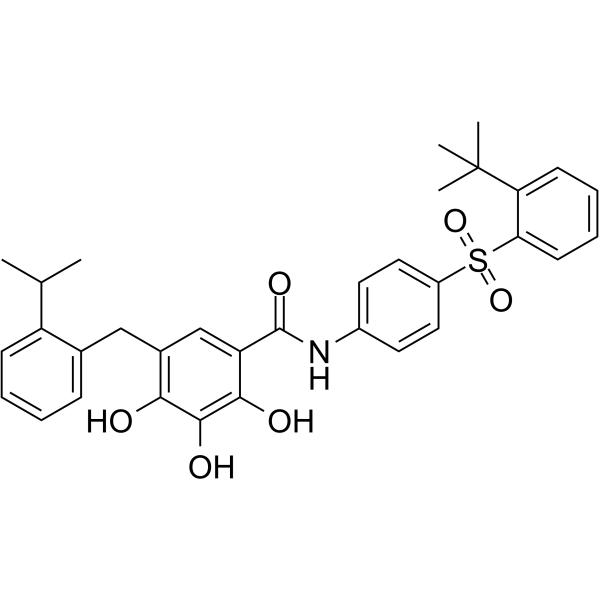
|
Cancer
|
|
PBX-7011 TFA is a derivative of camptothecin (HY-16560), which inhibits expressions of the cancer related survival genes DDX5, Survivin, Mcl-1 and XIAP in cells FaDu, degrades DDX5 proteins and exhibits anticancer activity [1].
|
-
- HY-183328
-
|
|
MNK
Bcl-2 Family
|
Cancer
|
|
MNK1/2-IN-11 is a potent, selective and orally active MNK1/2 inhibitor with MNK1 IC50 of 1.2 nM, MNK2 IC50 of 1.3 nM. MNK1/2-IN-11 reduces eukaryotic translation initiation factor 4E phosphorylation, decreases Mcl-1 and Cyclin D1 expression. MNK1/2-IN-11 inhibits tumor growth in mouse CT26 colorectal tumor models. MNK1/2-IN-11 can be used for the research of colorectal cancer [1].
|
-
- HY-120113
-
|
|
Apoptosis
Bcl-2 Family
STAT
|
Others
|
|
SC-2001 is a compound structurally related to obatoclax that has better antitumor effects than obatoclax in liver cancer cell lines, downregulating Mcl-1 protein levels, inhibiting STAT3 phosphorylation, inducing apoptosis, and enhancing SHP1 expression and activity.
|
-
- HY-121638B
-
-
- HY-15464A
-
|
AT-101 (acetic acid); (-)-Gossypol acetic acid; (R)-Gossypol acetic acid
|
Bcl-2 Family
Autophagy
|
Cancer
|
|
(R)-(-)-Gossypol acetic acid (AT-101 (acetic acid)) is the levorotatory isomer of a natural product Gossypol. AT-101 is determined to bind to Bcl-2, Mcl-1 and Bcl-xL proteins with Kis of 260±30 nM, 170±10 nM, and 480±40 nM, respectively.
|
-
- HY-P4095
-
|
|
CXCR
|
Cancer
|
|
NoxaBH3 is a cysteine-based cross-linked peptide with increased cell permeability and higher inhibitory activity against Mcl-1. NoxaBH3 binds to the endogenous CXCR4 ligand to produce ubiquitin-Noxabh3 conjugate. NoxaBH3 is then delivered to cancer cells [1].
|
-
- HY-122759
-
|
|
STAT
Survivin
Bcl-2 Family
Apoptosis
|
Cancer
|
|
CPA7 is a novel Stat3 inhibitor. CPA7 downregulates survivin, Bcl-XL, and Mcl-1. CPA7 induces Apoptosis. CPA7 enhances the radiosensitivity of prostate cancer. CPA7 has anti-cancer effects against prostate cancer [1] .
|
-
- HY-101533R
-
|
|
Bcl-2 Family
Reference Standards
|
Cancer
|
|
AZD-5991 (Standard) is the analytical standard of AZD-5991 (HY-101533). This product is intended for research and analytical applications. AZD-5991 is a potent and selective Mcl-1 inhibitor with an IC50 of 0.7 nM in FRET assay and a Kd of 0.17 nM in surface plasmon resonance (SPR) assay [1].
|
-
- HY-W689801
-
|
|
Bcl-2 Family
Apoptosis
|
Cancer
|
|
A-1208746 is an inhibitor for MCL-1, with a Ki of 0.454 nM. A-1208746 activates caspase-3/-7, induces apoptosis in cell H929, and decreases mitochondrial membrane potential. A-1208746 synergies with Navitoclax (HY-10087), and can be used in cancer research [1].
|
-
- HY-125876
-
|
|
PROTACs
Bcl-2 Family
|
Cancer
|
|
PROTAC Bcl2 degrader-1 (Compound C5) is a PROTAC based on Cereblon ligand, which potently and selectively induces the degradation of Bcl-2 (IC50, 4.94 μM; DC50, 3.0 μM) and Mcl-1 (IC50, 11.81 μM) by introducing the E3 ligase cereblon (CRBN)-binding ligand pomalidomide to Mcl-1/Bcl-2 dual inhibitor Nap-1 [1] (Blue: CRBN ligand, Black: linker;Pink: Mcl-1/Bcl-2 inhibitor, Nap-1).
|
-
- HY-176142
-
|
|
CDK
c-Myc
Apoptosis
Bcl-2 Family
|
Cancer
|
|
YX0798 is a selective and orally active CDK9 inhibitor (Kd: 0.28 nM). YX0798 downregulates the oncoprotein c-MYC and pro-survival protein MCL-1. YX0798 disrupts the cell cycle and results in transcriptomic reprogramming, eventually leading to cell apoptosis. YX0798 has antitumor activity [1].
|
-
- HY-155153
-
|
|
Apoptosis
CDK
|
Others
|
|
CDK9-IN-24 (compound 21a) is a highly selective CDK9 inhibitor with significant inhibitory effect on tumor growth. CDK9-IN-24 effectively blocks cell proliferation and induces apoptosis by downregulating Mcl-1 and c-Myc, and can be used in acute myeloid leukemia research [1].
|
-
- HY-P2343
-
|
|
Apoptosis
|
Cancer
|
|
BH3 hydrochloride, a BBB penetrated peptide, provoke apoptosis either by direct activation of pro-apoptotic Bax/Bak or by neutralizing anti-apoptotic Bcl-2 proteins (Bcl-2, Bcl-XL, Bcl-w, Mcl-1 and A-1) via their BH3 domian [1] .
|
-
- HY-N0831
-
|
|
Bcl-2 Family
COX
Apoptosis
|
Inflammation/Immunology
Cancer
|
|
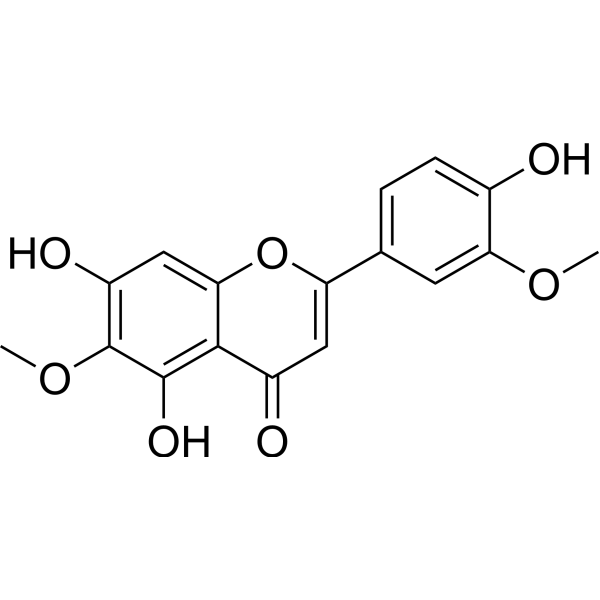
Jaceosidin is a flavonoid isolated from Artemisia vestita, induces apoptosis in cancer cells, activates Bax and down-regulates Mcl-1 and c-FLIP expression [1]. Jaceosidin exhibits anti-cancer , anti-inflammatory activities, decreases leves of inflammatory markers, and suppresses COX-2 expression and NF-κB activation .
|
-
- HY-10357
-
|
|
Akt
mTOR
Apoptosis
GSK-3
Bcl-2 Family
|
Metabolic Disease
Inflammation/Immunology
Cancer
|
|
MK-2206 free base is an orally active pan-AKT inhibitor, with IC50 values of 8 nM, 12 nM and 65 nM against AKT1, AKT2 and AKT3, respectively. MK-2206 free base inhibits the Akt/mTOR signaling pathway and reduces the levels of downstream GSK3β and Mcl-1 via proteasomal degradation. MK-2206 free base induces G1-phase cell cycle arrest, apoptosis, epithelial-mesenchymal transition, fibroblast activation and extracellular matrix deposition. MK-2206 free base causes transient hyperglycemia and hyperinsulinemia in animals. MK-2206 free base can be used in research related to solid tumors, renal fibrosis and hypercholesterolemia [1] .
|
-
- HY-101972
-
-
- HY-15191
-
|
BI-97C1
|
Bcl-2 Family
|
Cancer
|
|
Sabutoclax is a potent and effective Bcl-2 Family (Bcl-2, Bcl-XL, Mcl-1, Bfl-1) inhibitor with IC50s of 0.32 μM, 0.31 μM, 0.20 μM, and 0.62 μM, respectively. Sabutoclax increases Bax, Bim, PUMA and survivin expression [1] .
|
-
- HY-167881
-
|
|
Bcl-2 Family
|
Cancer
|
|
MLS-0053105, a chloromaleimide, is a selective BFL-1 inhibitor with an IC50 of 0.4 µM for Bfl-1/F-Bid. MLS-0053105 shows over 10 times less potent inhibition of Bcl-W, Bcl-2, and Bcl-XL and no activity against Bcl-B and Mcl-1 [1].
|
-
- HY-112041
-
|
PTC596
|
BMI1
Apoptosis
|
Cancer
|
|
Unesbulin (PTC596) is an orally active and selective B-cell-specific Moloney murine leukemia virus integration site 1 (BMI-1) inhibitor. Unesbulin downregulates MCL-1 and induces p53-independent mitochondrial apoptosis in acute myeloid leukemia (AML) cells. Unesbulin has anti-leukemic activity [1] .
|
-
- HY-118341
-
|
|
Apoptosis
Bcl-2 Family
|
Cancer
|
|
Clitocine, an adenosine nucleoside analog isolated from mushroom, is a potent and efficacious readthrough agent. Clitocine acts as a suppressor of nonsense mutations and can induce the production of p53 protein in cells harboring p53 nonsense-mutated alleles. Clitocine can induce apoptosis in multidrug-resistant human cancer cells by targeting Mcl-1. Anticancer activity [1] .
|
-
- HY-114855
-
|
|
Bcl-2 Family
|
Metabolic Disease
|
|
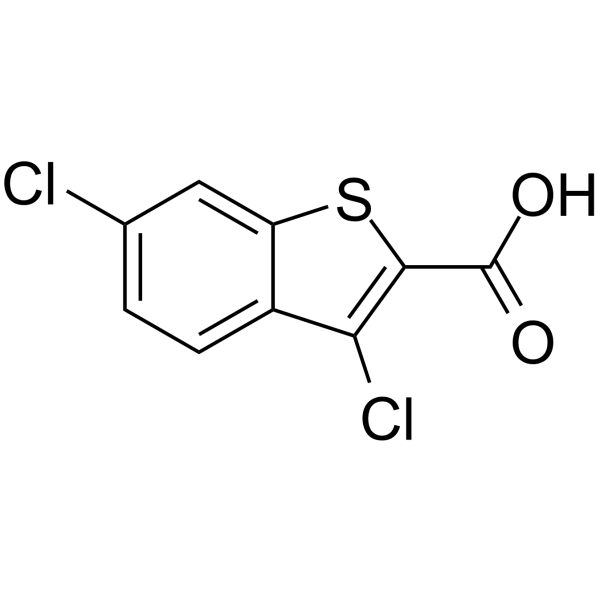
BT2 is a BCKDC kinase (BDK) inhibitor with an IC50 of 3.19 μM. BT2 binding to BDK triggers helix movements in the N-terminal domain, resulting in the dissociation of BDK from the branched-chain α-ketoacid dehydrogenase complex (BCKDC) [1]. BT2 (compound 4) is also a potent and selective Mcl-1 inhibitor with a Ki value of 59 μM .
|
-
- HY-138697
-
|
VOB560
|
Bcl-2 Family
Apoptosis
|
Cancer
|
|
S65487 (VOB560), a potent and selective BCL-2 inhibitor, is a proagent of S55746. S65487 is also active on BCL-2 mutations, such as G101V and D103Y. S65487 has poor affinity with MCL-1, BFL-1 and BCL-XL. S65487 induces apoptosis and has anticaner activities [1] .
|
-
- HY-138697B
-
|
VOB560 hydrochloride
|
Bcl-2 Family
Apoptosis
|
Cancer
|
|
S65487 (VOB560) hydrochloride, a potent and selective Bcl-2 inhibitor, is a proagent of S55746. S65487 hydrochloride is also active on BCL-2 mutations, such as G101V and D103Y. S65487 hydrochloride has poor affinity with MCL-1, BFL-1 and BCL-XL. S65487 hydrochloride induces apoptosis and has anticaner activities [1] .
|
-
- HY-149495
-
|
|
PROTACs
CDK
|
Cancer
|
|
CP-07 is a potent and selective PROTACCDK9 degrader (DC50: 43 nM). CP-07 inhibits 22RV1 cell proliferation (IC50: 62 nM) and colony formation by down-regulating Mcl-1 and c-Myc. CP-07 inhibits 22RV1 xenograft tumor growth. CP-07 can be used for research of prostate cancer [1].
|
-
- HY-N16746
-
|
|
GSK-3
Bcl-2 Family
MMP
Caspase
|
Neurological Disease
Cancer
|
|
Nordentatin is a selective inhibitor targeting GSK-3 with anticancer activity. Nordentatin can inhibit the phosphorylation of GSK-3, downregulate the anti-apoptotic protein Mcl-1 and activate caspase-3 to induce apoptosis (apoptosis). Nordentatin also inhibits the expression of migration-related protein MMP-9 and exerts anti-proliferation and anti-migration activities. Nordentatin is used in research into cancers such as neuroblastoma [1] .
|
-
- HY-N0831R
-
|
|
Reference Standards
Bcl-2 Family
COX
Apoptosis
|
Inflammation/Immunology
Cancer
|
|
Jaceosidin (Standard) is the analytical standard of Jaceosidin. This product is intended for research and analytical applications. Jaceosidin is a flavonoid isolated from Artemisia vestita, induces apoptosis in cancer cells, activates Bax and down-regulates Mcl-1 and c-FLIP expression [1]. Jaceosidin exhibits anti-cancer , anti-inflammatory activities, decreases leves of inflammatory markers, and suppresses COX-2 expression and NF-κB activation .
|
-
- HY-N0087
-
|
Beta-Guttiferrin
|
Bcl-2 Family
Autophagy
|
Cancer
|
|
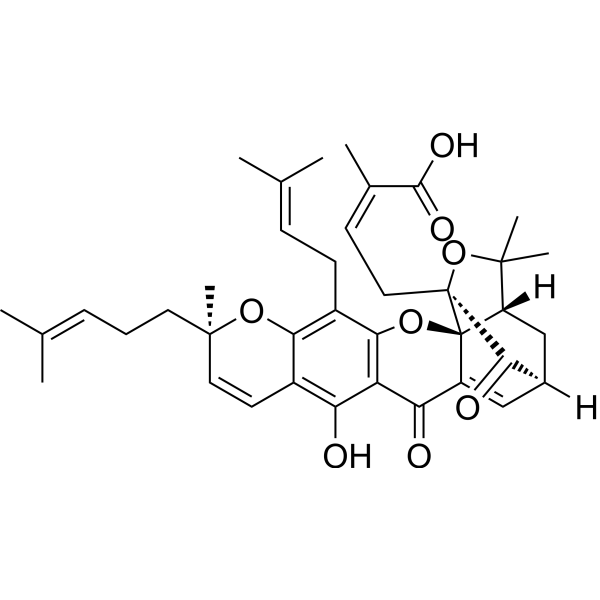
Gambogic Acid (Beta-Guttiferrin) is derived from the gamboges resin of the tree Garcinia hanburyi. Gambogic Acid (Beta-Guttiferrin) inhibits Bcl-XL, Bcl-2, Bcl-W, Bcl-B, Bfl-1 and Mcl-1 with IC50s of 1.47 μM, 1.21 μM, 2.02 μM, 0.66 μM, 1.06 μM and 0.79 μM.
|
-
- HY-138697A
-
|
VOB560 sulfate
|
Bcl-2 Family
Apoptosis
|
Cancer
|
|
S65487 (VOB560) sulfate, a potent and selective Bcl-2 inhibitor, is a proagent of S55746. S65487 sulfate is also active on BCL-2 mutations, such as G101V and D103Y. S65487 sulfate has poor affinity with MCL-1, BFL-1 and BCL-XL. S65487 sulfate induces apoptosis and has anticaner activities [1] .
|
-
- HY-111537
-
|
|
c-Myc
CDK
Bcl-2 Family
|
Others
|
|
rel-AZ5576 is a selective CDK9 inhibitor with the activity of downregulating Mcl-1 and MYC mRNA transcription and protein expression in diffuse large B-cell lymphoma by inhibiting CDK9, promoting MYC protein turnover, reducing MYC phosphorylation on the stable Ser62 residue and downregulating MYC transcriptional targets, inhibiting the growth of diffuse large B-cell lymphoma cell lines in vitro and in vivo and independent of the cell origin.
|
-
- HY-161733
-
|
|
Bcl-2 Family
|
Cancer
|
|
GQN-B37-Me is a MCL-1 inhibitor. GQN-B37-Me induces caspase-dependent apoptosis. GQN-B37-Me exhibits noteworthy cytotoxicity in H929 (IC50 = 3.71 μM) and MV-4-11 (IC50 = 5.57 μM) cells. GQN-B37-Me can be used for the research of leukemia [1].
|
-
- HY-125718
-
|
|
JAK
Src
STAT
c-Myc
Bcl-2 Family
Apoptosis
|
Cancer
|
|
MLS-2384 free base is a dual JAK/Src kinase inhibitor. MLS-2384 free base downregulates STAT3 downstream proteins c-Myc and Mcl-1. MLS-2384 free base induces Apoptosis. MLS-2384 free base exhibits anticancer activity against prostate cancer, breast cancer, skin cancer, ovarian cancer, lung cancer, and liver cancer [1].
|
-
- HY-76474A
-
|
|
Apoptosis
Syk
|
Inflammation/Immunology
Cancer
|
|
BAY 61-3606 hydrochloride is an orally available, ATP-competitive, reversible and highly selective Syk inhibitor with a Ki of 7.5 nM and an IC50 of 10 nM . BAY 61-3606 hydrochloride reduces ERK1/2 and Akt phosphorylation in neuroblastoma cell. BAY 61-3606 hydrochloride induces a large decrease of Syk phosphorylation in K-rn cell lysates. BAY 61-3606 hydrochloride sensitizes TRAIL-induced apoptosis by downregulating Mcl-1 in breast cancer cells.
|
-
- HY-14985
-
|
|
Syk
Apoptosis
|
Inflammation/Immunology
Cancer
|
|
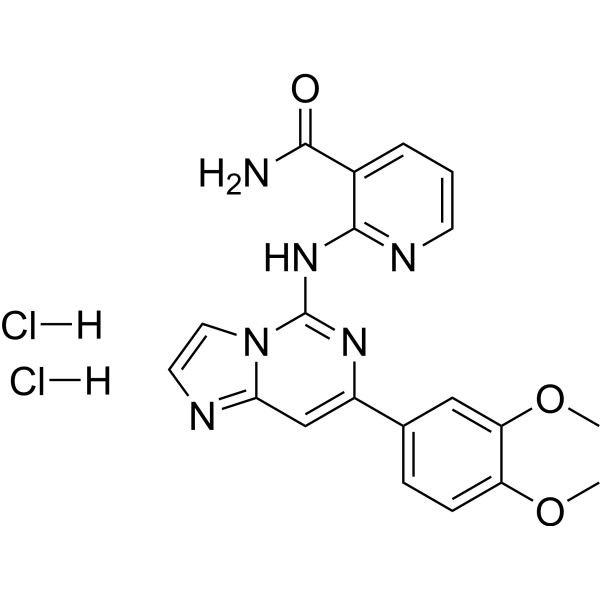
BAY 61-3606 dihydrochloride is an orally available, ATP-competitive, reversible and highly selective Syk inhibitor with a Ki of 7.5 nM an IC50 of 10 nM [1]. BAY 61-3606 dihydrochloride reduces ERK1/2 and Akt phosphorylation in neuroblastoma cell . BAY 61-3606 dihydrochloride induces a large decrease of Syk phosphorylation in K-rn cell lysates . Bay 61-3606 dihydrochloride sensitizes TRAIL-induced apoptosis by downregulating Mcl-1 in breast cancer cells .
|
-
- HY-76474
-
|
|
Syk
Apoptosis
|
Inflammation/Immunology
Cancer
|
|
BAY 61-3606 is an orally available, ATP-competitive, reversible and highly selective Syk inhibitor with a Ki of 7.5 nM and an IC50 of 10 nM [1]. BAY 61-3606 reduces ERK1/2 and Akt phosphorylation in neuroblastoma cell . BAY 61-3606 induces a large decrease of Syk phosphorylation in K-rn cell lysates . Bay 61-3606 sensitizes TRAIL-induced apoptosis by downregulating Mcl-1 in breast cancer cells .
|
-
- HY-15163A
-
|
|
FLT3
JAK
CDK
|
Cancer
|
|
Zotiraciclib hydrochloride is a novel small molecule multi-target enzyme inhibitor with activity in inhibiting tumor growth. Zotiraciclib hydrochloride exerts its anti-tumor effect by reducing the level of Myc through inhibiting cyclin-dependent kinase 9 (CDK9). Zotiraciclib hydrochloride may be useful for inhibiting cancers that cross the blood-brain barrier. The high protein level of MCL-1 of Zotiraciclib hydrochloride is associated with survival, suggesting that it may serve as a prognostic factor and inhibitory target in further studies [1].
|
-
- HY-173065
-
|
|
CDK
Apoptosis
|
Cancer
|
|
CDK9-IN-36 (Compound T7) is a potent, selective and metabolically stable CDK9 inhibitor with an IC50 value of 1.2 nM. CDK9-IN-36 effectively suppresses cell proliferation, reduces colony formation, and induces apoptosis in Osimertinib (HY-15772)-resistant NSCLC cells by downregulating Mcl-1. CDK9-IN-36 also demonstrates antitumor efficacy in a tumor xenograft model [1].
|
-
- HY-169797
-
|
|
STAT
Survivin
Apoptosis
|
Cancer
|
|
STAT3-IN-38 (Compound 4m) is an inhibitor of STAT3 (KD of rhSTAT3: 45.33 µM). STAT3-IN-38 binds to the SH2 domain of STAT3 protein and suppresses the STAT3’s phosphorylation at site pTyr705 as well as its downstream genes (Survivin and Mcl-1). STAT3-IN-38 could block cell-cycle and induce Apoptosis in colorectal cancer cells [1].
|
-
- HY-119271
-
|
SDS-1-021
|
c-Myc
Apoptosis
|
Cancer
|
|
CMLD010509 (SDS-1-021) is a highly specific inhibitor of the oncogenic translation program supporting multiple myeloma (MM)-including key oncoproteins such as MYC, MDM2, CCND1, MAF, and MCL-1. CMLD010509 (SDS-1-021) shows an IC50 below 10 nM for most MM cell lines and induces apoptosis. CMLD010509 (SDS-1-021) is a potent and selective translation inhibitor through an eIF4E phosphorylation-independent mechanism [1].
|
-
- HY-N0087R
-
|
Beta-Guttiferrin (Standard)
|
Reference Standards
Bcl-2 Family
Autophagy
|
Cancer
|
|
Gambogic Acid (Standard) is the analytical standard of Gambogic Acid. This product is intended for research and analytical applications. Gambogic Acid (Beta-Guttiferrin) is derived from the gamboges resin of the tree Garcinia hanburyi. Gambogic Acid (Beta-Guttiferrin) inhibits Bcl-XL, Bcl-2, Bcl-W, Bcl-B, Bfl-1 and Mcl-1 with IC50s of 1.47 μM, 1.21 μM, 2.02 μM, 0.66 μM, 1.06 μM and 0.79 μM.
|
-
- HY-181078
-
|
|
c-Myc
Apoptosis
Bcl-2 Family
|
Cancer
|
|
Cephalotaxine-ester-(R)-1-ethoxy-3-mercaptopropan-2-ol-Ph (3,4OMe) is an anti-leukemic agent with potent ribosome-targeting protein synthesis inhibition. Cephalotaxine-ester-(R)-1-ethoxy-3-mercaptopropan-2-ol-Ph (3,4OMe) downregulates short-lived oncoproteins, including c-Myc and Mcl-1, by inhibiting protein synthesis. Cephalotaxine-ester-(R)-1-ethoxy-3-mercaptopropan-2-ol-Ph (3,4OMe) induces cell cycle arrest at the G0/G1 phase and triggers mitochondrial pathway-mediated apoptosis in acute myeloid leukemia (AML) cells. Cephalotaxine-ester-(R)-1-ethoxy-3-mercaptopropan-2-ol-Ph (3,4OMe) is applicable for research on leukemia [1].
|
-
- HY-103019
-
|
(+)-BAY-1251152; (+)-VIP152; (S)-Enitociclib
|
Drug Isomer
CDK
Apoptosis
DNA/RNA Synthesis
|
Inflammation/Immunology
Cancer
|
Enitociclib ((+)-BAY-1251152; (+)-VIP152) is a selective CDK9 inhibitor (IC50=3 nM) that inhibits transcriptional elongation by blocking Ser2/Ser5 phosphorylation of RNA polymerase II. Enitociclib specifically depletes key short-lived proteins such as c-MYC, MCL-1 and induces tumor cell apoptosis. Enitociclib also interferes with the production of enhancer RNAs (eRNA) and enhancer-promoter interactions, and downregulates oncogene expression at the epigenetic level. Enitociclib exerts synergistic effects with agents including Bortezomib (HY-10227), Lenalidomide (HY-A0003), Pomalidomide (HY-10984), Venetoclax (HY-15531) and Paclitaxel (HY-B0015), and even reverses paclitaxel resistance. Enitociclib serves as a vital research tool for various malignancies such as double-hit diffuse large B-cell lymphoma, multiple myeloma and pancreatic ductal adenocarcinoma [1] .
|
-
- HY-101972R
-
|
|
Phosphatase
Reference Standards
Bcl-2 Family
|
Neurological Disease
Metabolic Disease
|
|
AZ-PFKFB3-67 (Standard) is the analytical standard of AZ-PFKFB3-67 (HY-101972). This product is intended for research and analytical applications. AZ-PFKFB3-67 is a potent and selective PFKFB3 kinase inhibitor with IC50s of 11, 159 and 1130 nM for PFKFB3, PFKFB2 and PFKFB1, respectively. AZ-PFKFB3-67 reduces MCL-1. AZ-PFKFB3-67 has neuroprotective activity [1] .
|
-
- HY-149007
-
|
|
STAT
Apoptosis
|
Cancer
|
|
STAT3-IN-11 (7a) is a selective STAT3 inhibitor that inhibits the phosphorylation of STAT3 at site pTyr705. STAT3-IN-11 inhibits the phosphorylation of downstream genes (Survivin and Mcl-1) without affecting its upstream tyrosine kinases (Src and JAK2) levels and p-STAT1 expression. STAT3-IN-11 can induce cancer cell apoptosis, which is potential for the discovery of effective STAT3 inhibitors and antitumor agents against cancers [1].
|
-
- HY-164468
-
|
|
Bcl-2 Family
Apoptosis
Autophagy
|
Cancer
|
|
Ch282-5 is an orally active inhibitor targeting the Bcl-2 protein, inducing mitochondria-dependent apoptosis (Apoptosis) by disrupting mitophagy and the mTOR pathway. Ch282-5 exhibits antiproliferative activity against colorectal cancer cells both in vitro and in vivo, and it also inhibits metastasis. Additionally, Ch282-5 enhances Oxaliplatin (HY-17371)-induced autophagy (Autophagy) by downregulating the Mcl-1 protein and increasing platelet count, alleviating adverse effects of Navitoclax (HY-10087) [1].
|
-
- HY-164460
-
|
|
Pim
|
Cancer
|
|
AZD1897 is a PIM1, PIM2, and PIM3 inhibitor with IC50 values of less than 3 nM for these three PIM kinases. AZD1897 exhibits anticancer activity and synergistically inhibits the activity of acute myeloid leukemia (AML) cells in combination with Capivasertib (HY-15431). This synergistic inhibitory effect is achieved through the inhibition of the mTOR and MCL1 pathways [1] .
|
-
- HY-179023
-
|
|
CDK
Apoptosis
Reactive Oxygen Species (ROS)
Caspase
Bcl-2 Family
c-Myc
IAP
|
Cancer
|
|
CDK9-IN-45 (Compound B11) is a highly selective CDK9 inhibitor with IC50 values for CDK9 and CDK1 of 7.13 and 489.5 nM respectively. CDK9-IN-45 exhibits a potent inhibitory effect on colorectal cancer cells. CDK9-IN-45 induces cell apoptosis and leads to significant accumulation of ROS. CDK9-IN-45 activates Caspase-3, downregulates Mcl-1, XIAP, and c-Myc. CDK9-IN-45 can be used for research on colorectal cancer [1].
|
-
- HY-179633
-
|
|
CDK
Apoptosis
DNA/RNA Synthesis
Bcl-2 Family
IAP
|
Cancer
|
|
ZLMT-72 is an orally active dual CDK2 and CDK9 inhibitor with IC50s of 0.741 nM and 1.03 nM, respectively. ZLMT-72 shows good selectivity in kinase profiling andcholinesterase inhibition activity. ZLMT-72 has strong antiproliferative effects in the colorectal cancer (CRC) cell line HCT116 (GI50 < 0.1 nM). ZLMT-72 induces apoptosis by inhibiting thephosphorylation of retinoblastoma and RNA polymerase II, resulting in downregulation of antiapoptotic proteins (Mcl-1 and XIAP). ZLMT-72 can be used for the study of colorectal cancer (CRC) [1].
|
-
- HY-180190
-
|
|
Microtubule/Tubulin
Bcl-2 Family
MDM-2/p53
CDK
Apoptosis
|
Cancer
|
|
Tubulin polymerization-IN-85 (Compound C21) is a tubulin polymerization inhibitor (IC50 = 1.59 μM) targeting the colchicine binding site. Tubulin polymerization-IN-85 can cause cancer cells G2/M phase arrest and induce apoptosis. Tubulin polymerization-IN-85 downregulates the expression of Bcl-2, Bcl-xl, Mcl-1, Cyclin B1, cdc25, cdc2 protein and upregulates P53, P21, Bad and Bax levels. Tubulin polymerization-IN-85 can be used for the research of cancer, such as cervical cancer [1].
|
-
- HY-119271A
-
|
(-)-SDS-1-021
|
c-Myc
Apoptosis
|
Cancer
|
|
(-)-CMLD010509 ((-)-SDS-1-021) is an isomer of CMLD010509 (SDS-1-021) (HY-119271). CMLD010509 (SDS-1-021) is a highly specific inhibitor of the oncogenic translation program supporting multiple myeloma (MM)-including key oncoproteins such as MYC, MDM2, CCND1, MAF, and MCL-1. CMLD010509 (SDS-1-021) shows an IC50 below 10 nM for most MM cell lines and induces apoptosis. CMLD010509 (SDS-1-021) is a potent and selective translation inhibitor through an eIF4E phosphorylation-independent mechanism [1].
|
-
- HY-N0763
-
Angelicin
Maximum Cited Publications
11 Publications Verification
Isopsoralen
|
Apoptosis
Virus Protease
NF-κB
p38 MAPK
JNK
Caspase
|
Infection
Inflammation/Immunology
Cancer
|
|
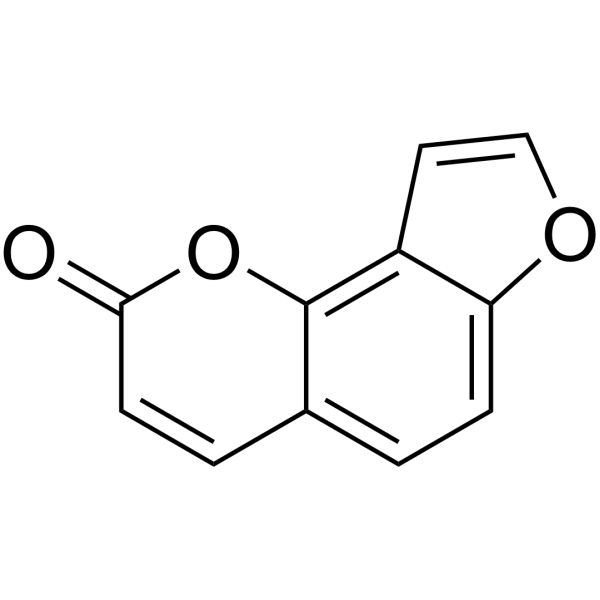
Angelicin is a furanocoumarin compound that functions as an inhibitor of NF-κB and MAPK signaling pathways, exhibiting anti-inflammatory, antiviral, and antitumor activities. It suppresses the lytic replication of γ-herpesviruses, such as MHV-68, early during viral infection, potentially inhibiting RTA gene expression (IC50=28.95 μM). Angelicin also mitigates inflammation by inhibiting the phosphorylation and nuclear translocation of NF-κB, and the phosphorylation of p38 and JNK. Furthermore, it induces apoptosis in neuroblastoma cells by downregulating anti-apoptotic proteins like Bcl-2, Bcl-xL, and Mcl-1, while activating caspase-9 and caspase-3.
|
-
- HY-108232
-
MK-2206
Maximum Cited Publications
462 Publications Verification
|
Bcl-2 Family
Apoptosis
mTOR
Akt
GSK-3
|
Metabolic Disease
Inflammation/Immunology
Cancer
|
|
MK-2206 is an orally active pan-AKT inhibitor, with IC50 values of 8 nM, 12 nM and 65 nM against AKT1, AKT2 and AKT3, respectively. MK-2206 inhibits the Akt/mTOR signaling pathway and reduces the levels of downstream GSK3β and Mcl-1 via proteasomal degradation. MK-2206 induces G1-phase cell cycle arrest, apoptosis, epithelial-mesenchymal transition, fibroblast activation and extracellular matrix deposition. MK-2206 causes transient hyperglycemia and hyperinsulinemia in animals. MK-2206 can be used in research related to solid tumors, renal fibrosis and hypercholesterolemia [1] .
|
-
- HY-171334A
-
|
|
PROTACs
PIN1
CDK
Akt
c-Myc
Apoptosis
Reactive Oxygen Species (ROS)
|
Cancer
|
|
P1D-34 is a Pin1 PROTAC degrader with a DC50 value of 177 nM. P1D-34 also down-regulates Pin1 client proteins such as Cyclin D1, Rb, Mcl-1, Akt, and c-Myc. P1D-34 shows anti-proliferative activities in a panel of acute myeloid leukemia (AML) cell lines. P1D-34 induces cell DNA damage and apoptosis by releasing ROS generation. Pink: PIN1 ligand (HY-171442A), Blue: CRBN ligand (HY-14658), Black: Linker (HY-W014883) [1].
|
-
- HY-123034
-
|
|
CDK
Bcl-2 Family
Apoptosis
|
Cancer
|
|
CDKI-83 is a potent CDK9 and CDK1 inhibitor with Ki values of 21 nM and 72 nM for CDK9/T1 and CDK1/B, respectively. CDKI-83 demonstrates effective anti-proliferative activity in human tumour cell lines with a GI50<1 μM. CDKI-83 effectively induces apoptosis in A2780 human ovarian cancer cells. CDKI-83 reduces phosphorylation at Ser-2 of RNA polymerase II (RNAPII) by inhibiting cellular CDK9 activity, and down-regulates Mcl-1 and Bcl-2. CDKI-83 has the potential for anti-cancer research [1].
|
-
- HY-W040129
-
|
|
DNA Alkylator/Crosslinker
DNA/RNA Synthesis
Apoptosis
Caspase
|
Infection
Neurological Disease
Cancer
|
|
Chromomycin A3 is an inhibitor that selectively binds to GC-rich DNA sequences. Chromomycin A3 targets the DNA minor groove after forming a dimer with Mg 2+. Chromomycin A3 inhibits DNA replication and transcription, blocks the binding of Sp1 transcription factor to target gene promoters, downregulates the expression of anti-apoptotic proteins such as FLIP, Mcl-1, and XIAP, and induces S-phase cycle arrest and caspase-dependent apoptosis in tumor cells. Chromomycin A3 can antagonize oxidative stress induced by glutathione depletion and neuronal apoptosis induced by Camptothecin (HY-15660). Chromomycin A3 can be used in basic research on malignant tumors such as cholangiocarcinoma, and is a potential chemosensitizer and GC-rich region probe [1] .
|
-
- HY-10358
-
|
MK-2206 (2HCl)
|
Bcl-2 Family
Apoptosis
mTOR
Akt
GSK-3
|
Cardiovascular Disease
Inflammation/Immunology
Cancer
|
|
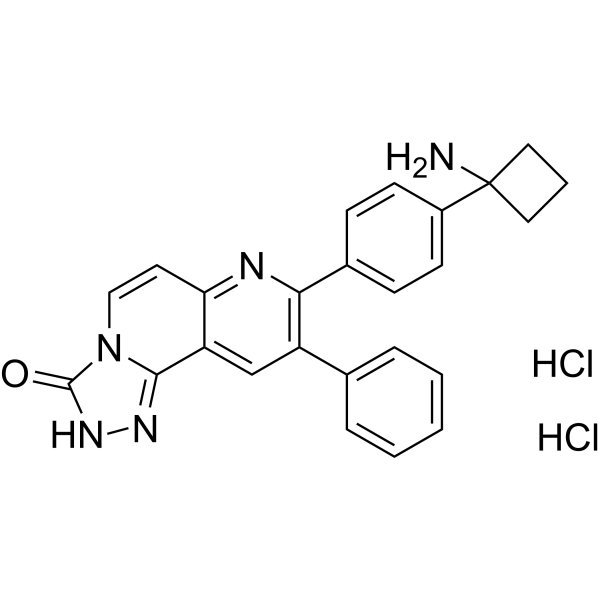
MK-2206 dihydrochloride (MK-2206 2HCl) is an orally active pan-AKT inhibitor, with IC50 values of 8 nM, 12 nM and 65 nM against AKT1, AKT2 and AKT3, respectively. MK-2206 dihydrochloride inhibits the Akt/mTOR signaling pathway and reduces the levels of downstream GSK3β and Mcl-1 via proteasomal degradation. MK-2206 dihydrochloride induces G1-phase cell cycle arrest, apoptosis, epithelial-mesenchymal transition, fibroblast activation and extracellular matrix deposition. MK-2206 dihydrochloride causes transient hyperglycemia and hyperinsulinemia in animals. MK-2206 dihydrochloride can be used in research related to solid tumors, renal fibrosis and hypercholesterolemia [1] .
|
-
- HY-178499
-
|
|
CDK
c-Myc
Bcl-2 Family
|
Neurological Disease
Cancer
|
|
CDK9-IN-44 (Compound 7) is a selective CDK9 inhibitor (IC50=7.6 μM). CDK9-IN-44 inhibits CDK9/cyclin T1 kinase activity, blocking transcriptional elongation, reducing the expression of pro-cancer proteins (such as MCL1, c-MYC), and inducing tumor cell apoptosis. CDK9-IN-44 is promising for research of glioblastoma (GBM) and central nervous system (CNS) disorders [1].
|
-
- HY-162919
-
|
|
CDK
Apoptosis
c-Myc
|
Cancer
|
|
YK-2168 is a potent and selective CDK9 inhibitor with an IC50 of 5.9 nM. YK-2168 inhibits phosphorylation of the CDK9 substrate pS2-RNA Pol II C-terminal domain. YK-2168 induces apoptosis in tumor cells, suppresses expression of CDK9-regulated genes including MYC and Mcl1, and inhibits tumor growth in CDX mice models. YK-2168 can be used for the research of cancer, such as leukemia [1].
|
-
- HY-15191B
-
|
(S)-BI-97C1
|
Bcl-2 Family
|
Cancer
|
|
(S)-Sabutoclax ((S)-BI-97C1), an optically pure apogossypol derivative, is pan-active inhibitor of antiapoptotic B-cell lymphoma/leukemia-2 (Bcl-2) family proteins. (S)-Sabutoclax (Compound II) inhibits the binding of BH3 peptides to Bcl-XL, Bcl-2, Mcl-1, and Bfl-1 with IC50 values of 0.31, 0.32, 0.20, and 0.62 μM, respectively. (S)-Sabutoclax also potently inhibits cell growth of human prostate cancer, lung cancer, and lymphoma cell lines with EC50 values of 0.13, 0.56, and 0.049 μM, respectively. (S)-Sabutoclax can be used for the research of apoptosis-based therapies against cancer [1].
|
-
- HY-X0009
-
|
GFH009; JSH-009; SLS009
|
CDK
DYRK
Apoptosis
Bcl-2 Family
c-Myc
Caspase
PARP
DNA/RNA Synthesis
|
Metabolic Disease
Inflammation/Immunology
Cancer
|
|
Tambiciclib (GFH009, JSH-009) is an orally active, highly potent and selective CDK9 inhibitor (IC50 = 1 nM), demonstrating >200-fold selectivity over other CDKs, >100-fold selectivity over DYRK1A/B, and excellent selectivity over 468 kinases/mutants. Tambiciclib demonstrates potent in vitro and in vivo antileukemic efficacy in acute myeloid leukemia (AML) mouse models by inhibiting RNA Pol II phosphorylation, downregulating MCL1 and MYC, and inducing apoptosis. Tambiciclib can be used for AML research [1].
|
-
- HY-162619
-
|
|
Apoptosis
CDK
|
Cancer
|
|
CDK9-IN-33 (compound C35) is a potent, selective and orally active CDK9 inhibitor with IC50 values of 17.44, 160, 316.30, 1771.00, >10000 nM for CDK9, CDK7, CDK2, CDK4, CDK6 respectively. CDK9-IN-33 induces apoptosis. CDK9-IN-33 decreases the protein expression of RPB1 CTD Ser2, RPB1, MCL1. CDK9-IN-33 shows anti-tumor activity [1].
|
-
- HY-181587
-
|
|
PDGFR
Carbonic Anhydrase
STAT
Akt
ERK
Apoptosis
Caspase
|
Cancer
|
|
PDGFRA/CAIX/XII-IN-1 is an inhibitor of PDGFRA, CA IX and CA XII, with an IC50 of 20 nM against PDGFRA, a Ki of 93.3 nM against CA IX, and a Ki of 80.0 nM against CA XII. PDGFRA/CAIX/XII-IN-1 binds to the ATP-binding pocket of PDGFRA and blocks the downstream STAT3, AKT and ERK1/2 signaling pathways. PDGFRA/CAIX/XII-IN-1 induces G0/G1 cell cycle arrest and endogenous apoptosis (Apoptosis), including cleavage of PARP-1, caspase-9 and caspase-3, activation of caspase 3/7, and down-regulation of Mcl-1. PDGFRA/CAIX/XII-IN-1 exhibits antiproliferative activity in eosinophilic leukemia cells. PDGFRA/CAIX/XII-IN-1 can be used for the research of leukemia [1].
|
-
- HY-W040129R
-
|
|
Reference Standards
Bacterial
Fungal
Apoptosis
Antibiotic
|
Infection
Neurological Disease
Cancer
|
|
Chromomycin A3 (Standard) is the analytical standard of Chromomycin A3 (HY-W040129). This product is intended for research and analytical applications. Chromomycin A3 is an inhibitor that selectively binds to GC-rich DNA sequences. Chromomycin A3 targets the DNA minor groove after forming a dimer with Mg 2+. Chromomycin A3 inhibits DNA replication and transcription, blocks the binding of Sp1 transcription factor to target gene promoters, downregulates the expression of anti-apoptotic proteins such as FLIP, Mcl-1, and XIAP, and induces S-phase cycle arrest and caspase-dependent apoptosis in tumor cells. Chromomycin A3 can antagonize oxidative stress induced by glutathione depletion and neuronal apoptosis induced by Camptothecin (HY-15660). Chromomycin A3 can be used in basic research on malignant tumors such as cholangiocarcinoma, and is a potential chemosensitizer and GC-rich region probe [1] .
|
-
- HY-10358R
-
|
MK-2206 (2HCl) (Standard)
|
Organoid
Reference Standards
Akt
Autophagy
Apoptosis
|
Cardiovascular Disease
Inflammation/Immunology
Cancer
|
|
MK-2206 dihydrochloride (MK-2206 2HCl) (Standard) is the analytical standard of MK-2206 dihydrochloride (HY-10358). This product is intended for research and analytical applications. MK-2206 dihydrochloride is an orally active pan-AKT inhibitor, with IC50 values of 8 nM, 12 nM and 65 nM against AKT1, AKT2 and AKT3, respectively. MK-2206 dihydrochloride inhibits the Akt/mTOR signaling pathway and reduces the levels of downstream GSK3β and Mcl-1 via proteasomal degradation. MK-2206 dihydrochloride induces G1-phase cell cycle arrest, apoptosis, epithelial-mesenchymal transition, fibroblast activation and extracellular matrix deposition. MK-2206 dihydrochloride causes transient hyperglycemia and hyperinsulinemia in animals. MK-2206 dihydrochloride can be used in research related to solid tumors, renal fibrosis and hypercholesterolemia [1] .
|
-
- HY-N8146
-
|
|
STAT
Bcl-2 Family
Ser/Thr Kinase
Survivin
c-Myc
Apoptosis
Necroptosis
CDK
|
Infection
Cancer
|
|
Bruceantinol is a quassinoid that can be isolated from Brucea javanica, inhibits pepper mottle virus (PepMoV) in pepper. Bruceantinol is a STAT3 inhibitor demonstrating potent antitumor activity in in vitro and in vivo human colorectal cancer (CRC) models. Bruceantinol has potent anti-leukemic activity. Bruceantinol strongly inhibits STAT3 DNA-binding ability (IC50 = 2.4 pM), blocks the constitutive and IL-6-induced STAT3 activation, and suppresses transcription of MCL-1, PTTG1, survivin and c-Myc. Bruceantinol binds with CDK2/4/6 to facilitate protein degradation through proteasome pathway. Bruceantinol can dose- and time-dependently reduces the cell growth, impede cell proliferation, disrupts the cell cycle, and induces necrosis in MCF-7 cells and apoptosis in MDA-MB-231 cells [1] .
|
-
- HY-X0009A
-
|
GFH009 dimaleate; JSH-009 dimaleate; SLS009 dimaleate
|
CDK
DYRK
Apoptosis
Bcl-2 Family
c-Myc
Caspase
PARP
DNA/RNA Synthesis
|
Cancer
|
|
Tambiciclib (GFH009, JSH-009) dimaleate is an orally active, highly potent and selective CDK9 inhibitor (IC50 = 1 nM), demonstrating >200-fold selectivity over other CDKs, >100-fold selectivity over DYRK1A/B, and excellent selectivity over 468 kinases/mutants. Tambiciclib dimaleate demonstrates potent in vitro and in vivo antileukemic efficacy in acute myeloid leukemia (AML) mouse models by inhibiting RNA Pol II phosphorylation, downregulating MCL1 and MYC, and inducing apoptosis. Tambiciclib dimaleate can be used for AML research [1].
|
-
- HY-103019A
-
|
(±)-BAY-1251152; (±)-VIP152
|
CDK
Apoptosis
DNA/RNA Synthesis
|
Cancer
|
|
(±)-Enitociclib ((±)-BAY-1251152) is the racemic mixture of Enitociclib (HY-103019E). Enitociclib is a selective CDK9 inhibitor and apoptosis inducer. Enitociclib inhibits CDK9 activity and reduces the phosphorylation of Ser2 in the carboxyl-terminal domain (CTD) of RNA polymerase Pol II, thereby downregulating the transcription of key oncogenes such as MYC and MCL1. Enitociclib has anti-proliferative activity targeting MYC + lymphoma and multiple myeloma (MM) cells, and has synergistic effects with Bortezomib (HY-10227) and Lenalidomide (HY-A0003), and can be used in the research of hematological malignancies [1] .
|
-
- HY-103019B
-
|
(R)-Enitociclib; (-)-BAY-1251152; (-)-VIP152
|
Drug Isomer
CDK
Apoptosis
DNA/RNA Synthesis
|
Cancer
|
|
(-)-Enitociclib ((R)-Enitociclib) is an enantiomer of Enitociclib (HY-103019E) with an optical rotation of (-). Enitociclib is a selective CDK9 inhibitor and apoptosis inducer. Enitociclib inhibits CDK9 activity and reduces the phosphorylation of Ser2 in the carboxyl-terminal domain (CTD) of RNA polymerase Pol II, thereby downregulating the transcription of key oncogenes such as MYC and MCL1. Enitociclib has anti-proliferative activity targeting MYC + lymphoma and multiple myeloma (MM) cells, and has synergistic effects with Bortezomib (HY-10227) and Lenalidomide (HY-A0003), and can be used in the research of hematological malignancies [1] .
|
-
- HY-103019AR
-
|
(±)-BAY-1251152 (Standard); (±)-VIP152 (Standard)
|
Reference Standards
CDK
Apoptosis
DNA/RNA Synthesis
|
Cancer
|
|
(±)-Enitociclib (Standard) is the analytical standard of (±)-Enitociclib (HY-103019A). This product is intended for research and analytical applications. (±)-Enitociclib ((±)-BAY-1251152) is the racemic mixture of Enitociclib (HY-103019E). Enitociclib is a selective CDK9 inhibitor and apoptosis inducer. Enitociclib inhibits CDK9 activity and reduces the phosphorylation of Ser2 in the carboxyl-terminal domain (CTD) of RNA polymerase Pol II, thereby downregulating the transcription of key oncogenes such as MYC and MCL1. Enitociclib has anti-proliferative activity targeting MYC+ lymphoma and multiple myeloma (MM) cells, and has synergistic effects with Bortezomib (HY-10227) and Lenalidomide (HY-A0003), and can be used in the research of hematological malignancies [1] .
|
-
- HY-101778
-
|
EU-5346
|
Bcl-2 Family
|
Cancer
|
|
ML311 is a potent and selective inhibitor of the Mcl-1/Bim interaction.
|
-
- HY-103019R
-
|
(+)-BAY-1251152 (Standard); (+)-VIP152 (Standard); (S)-Enitociclib (Standard)
|
Reference Standards
Drug Isomer
Apoptosis
DNA/RNA Synthesis
CDK
|
Cancer
|
|
Enitociclib (Standard) is the analytical standard of Enitociclib (HY-103019). This product is intended for research and analytical applications. Enitociclib ((+)-BAY-1251152; (+)-VIP152) is a selective CDK9 inhibitor (IC50=3 nM) that inhibits transcriptional elongation by blocking Ser2/Ser5 phosphorylation of RNA polymerase II. Enitociclib specifically depletes key short-lived proteins such as c-MYC, MCL-1 and induces tumor cell apoptosis. Enitociclib also interferes with the production of enhancer RNAs (eRNA) and enhancer-promoter interactions, and downregulates oncogene expression at the epigenetic level. Enitociclib exerts synergistic effects with agents including Bortezomib (HY-10227), Lenalidomide (HY-A0003), Pomalidomide (HY-10984), Venetoclax (HY-15531) and Paclitaxel (HY-B0015), and even reverses paclitaxel resistance. Enitociclib serves as a vital research tool for various malignancies such as double-hit diffuse large B-cell lymphoma, multiple myeloma and pancreatic ductal adenocarcinoma [1] .
|
-
- HY-122627
-
|
|
Bcl-2 Family
Apoptosis
|
Cancer
|
|
CLZ-8 (Compound 8) is an orally active Mcl-1-PUMA interface inhibitor, with a Ki of 0.3 μM. CLZ-8 exhibits dual activity on reduce PUMA-dependent apoptosis while deactivating Mcl-1-mediated anti-apoptosis in cancer cells [1].
|
-
- HY-103019BR
-
|
(R)-Enitociclib (Standard); (-)-BAY-1251152 (Standard); (-)-VIP152 (Standard)
|
Reference Standards
Drug Isomer
CDK
Apoptosis
DNA/RNA Synthesis
|
Cancer
|
|
(-)-Enitociclib (Standard) is the analytical standard of (-)-Enitociclib (HY-103019B). This product is intended for research and analytical applications. (-)-Enitociclib ((R)-Enitociclib) is an enantiomer of Enitociclib (HY-103019E) with an optical rotation of (-). Enitociclib is a selective CDK9 inhibitor and apoptosis inducer. Enitociclib inhibits CDK9 activity and reduces the phosphorylation of Ser2 in the carboxyl-terminal domain (CTD) of RNA polymerase Pol II, thereby downregulating the transcription of key oncogenes such as MYC and MCL1. Enitociclib has anti-proliferative activity targeting MYC+ lymphoma and multiple myeloma (MM) cells, and has synergistic effects with Bortezomib (HY-10227) and Lenalidomide (HY-A0003), and can be used in the research of hematological malignancies [1] .
|
-
- HY-153803
-
|
|
PROTACs
Molecular Glues
Btk
|
Cancer
|
GBD-9 is a degrader based on the E3 ubiquitin ligase CRBN that targets BTK and the G1 to S phase transition protein GSPT1. GBD-9 has both PROTAC and molecular glue properties by inducing ubiquitination and proteasomal degradation of target proteins. GBD-9 can efficiently degrade wild-type and mutant BTK (such as C481S mutation) and GSPT1. GBD-9 significantly inhibits tumor cell proliferation by inducing G1 phase arrest in cancer cells, downregulating anti-apoptotic proteins (BCL-2, MCL-1) and activating Caspase-3 to induce apoptosis. GBD-9 is mainly used in the research of hematological tumors such as diffuse large B-cell lymphoma (DLBCL) and acute myeloid leukemia (AML) [1] .
GBD-9 is composed of E3 ubiquitin ligase ligand (pink part) 5-Aminothalidomide (HY-W023573), target protein ligand (blue part) Btk Inhibitor: IBT6A (HY-13036A), and PROTAC linker (black part) Nonanoic acid (HY-N7057).
|
-
- HY-19471
-
|
|
Drug Isomer
CDK
VEGFR
Survivin
Apoptosis
|
Cancer
|
|
(rac)-ZK-304709 is an isoform of ZK-304709 and is an orally active multi-targeted tumor growth inhibitor that inhibits multiple cell cycle-dependent kinases (CDKs), vascular endothelial growth factor receptor kinases (VEGF-RTKs), and platelet-derived growth factor receptor kinase β (PDGF-RTKβ). (rac)-ZK-304709 can dose-dependently inhibit the proliferation and colony formation of neuroendocrine tumor (NET) cells. (rac)-ZK-304709 directly acts on NET cells by inducing G2 cell cycle arrest and apoptosis, while reducing the expression of MCL1, survivin, and HIF1α. (rac)-ZK-304709 effectively controls tumor growth by inducing apoptosis and inhibiting tumor-induced angiogenesis, and may become a potential agent for inhibiting NET [1].
|
-
- HY-15867
-
|
(+)-Meayamycin B
|
SF3B1
Bcl-2 Family
Apoptosis
|
Cancer
|
|
Meayamycin B ((+)-Meayamycin B) is a potent SF3B1 inhibitor. Meayamycin B upregulates the proapoptotic Mcl-1S and downregulates Mcl-1L at the pre-mRNA splicing level. Meayamycin B does not regulate the alternative splicing of Bcl-x. Meayamycin B and ABT-737 (HY-50907) synergistically causes Apoptosis. Meayamycin B exhibits anticancer activity against non-small cell lung cancer [1].
|
-
- HY-101778R
-
|
EU-5346 (Standard)
|
Reference Standards
Bcl-2 Family
|
Cancer
|
|
ML311 (Standard) (EU-5346 (Standard)) is the analytical standard of ML311 (HY-101778). This product is intended for research and analytical applications. ML311 is a potent and selective inhibitor of the Mcl-1/Bim interaction.
|
-
- HY-N3913
-
|
|
STAT
Bcl-2 Family
|
Cancer
|
|
Furowanin A is a flavonoid with anti-neoplastic effects. Furowanin A inhibits STAT3/Mcl-1 axis to suppress proliferation, block cell cycle progression, induce apoptosis and promote autophagy. Furowanin A potently inhibits colorectal cancer (CRC) cells [1].
|
-
- HY-N17676
-
|
|
Bcl-2 Family
|
Cancer
|
|
3-Tridecylphenol is a cardanol. 3-Tridecylphenol can be isolated from K. hookeriana. 3-Tridecylphenol shows Ki values of >23 μM and >33 μM in BclxL/Bak and Mcl-1/Bid displacement assays, respectively. 3-Tridecylphenol can be used in cancer research [1].
|
-
- HY-170406
-
|
|
Bcl-2 Family
|
Cancer
|
|
BCL-XL-IN-3 (Compound 11) is an inhibitor for BCL-XL with a Ki < 0.01 nM. BCL-XL-IN-3 inhibits the cell viability in normal Molt-4 and Digitonin (HY-N4000)-permeabilized Molt-4 with EC50 of 77.8 nM and 0.07 nM. BCL-XL-IN-3 can be used as ADC toxin for synthesis of Clezutoclax (HY-137774) [1].
|
-
- HY-139453A
-
|
|
DNA Alkylator/Crosslinker
|
Cancer
|
|
LP-284 is a potent DNA alkylating agent that kills solid tumours. LP-284 can be used in the studies of hematologic cancers with compromised DNA repair, such as mantle cell lymphoma (MCL) .
|
-
- HY-135275
-
|
|
Bcl-2 Family
|
Cancer
|
|
BCL-XL-IN-4 (compound 10) is a potent and selective BCL-XL inhibitor with Ki values of 0.042, 170 nM for BCL-XL, BCL-2, respectively. BCL-XL-IN-4 shows cytotoxicity [1].
|
-
- HY-P991899
-
|
LCB73 Antibody
|
ADC Antibody
CD19
|
Cancer
|
|
IKS03 Antibody (LCB73 Antibody) is an anti-human CD19 antibody. IKS03 Antibody can generate antibody drug conjugate (ADC) (IKS03) with a pyrrolobenzodiazepine (PBD) dimer payload. IKS03 Antibody can be used for the study of diffuse large B-cell lymphoma (DLBCL) and mantle cell lymphoma (MCL) .
|
-
- HY-13313
-
XL888
5 Publications Verification
|
HSP
Apoptosis
|
Cancer
|
|
XL888 is a potent and orally active HSP90 inhibitor with an IC50 value of 24 nM. XL888 shows anti-proliferation activity and induces Apoptosis. XL888 shows anti-tumor activity [1] .
|
-
- HY-130709
-
|
|
PROTACs
CDK
|
Cancer
|
|
PROTAC CDK2/9 Degrader-1 (Compound F3) is a potent dual degrader for CDK2 (DC50=62 nM) and CDK9 (DC50=33 nM). PROTAC CDK2/9 Degrader-1 suppresses prostate cancer PC-3 cell proliferation (IC50=0.12 µM) by effectively blocking the cell cycle in S and G2/M phases. PROTAC CDK2/9 Degrader-1 is a PROTAC by tethering CDK inhibitor with Cereblon ligand [1].
|
-
- HY-W058849
-
|
|
AMPK
mTOR
Apoptosis
|
Cancer
|
|
MT 63-78 is a specific and potent direct AMPK activator with an EC50 of 25 μM. MT 63–78 also induces cell mitotic arrest and apoptosis. MT 63-78 blocks prostate cancer growth by inhibiting the lipogenesis and mTORC1 pathways. MT 63-78 has antitumor effects [1].
|
-
- HY-P991225
-
|
|
Fc Receptor (FcR)
CD20
|
Inflammation/Immunology
Cancer
|
|
BI-1206 is a recombinant and antagonistic human monoclonal antibody targeting FcγRIIB (CD32B). BI-1206 can block CD20 internalization induced by Rituximab (HY-P9913) itself or combined with others including Ibrutinib (HY-10997), Venetoclax (HY-15531), and CHOP. BI-1206 can enhance or recover the activity of Rituximab or other anti-CD20 monoclonal antibodies. BI-1206 has cytolytic activity against malignant B cells. BI-1206 can be studied for cancer research such as mantle cell lymphoma (MCL) .
|
-
- HY-182671
-
|
|
PI3K
Btk
Apoptosis
|
Cancer
|
|
SRX3305 is an BTK/PI3K/BRD4 inhibitor with IC50s of 6.5 nM, 15 nM, and 4 nM toward BTK, PI3Kɑ and PI3Kδ, respectively. SRX3305 attenuates chronic lymphocytic leukemia (CLL) and mantle cell lymphoma (MCL) cell proliferation and promotes apoptosis in a dose-dependent fashion. SRX3305 yields potent anti-tumor effects but spares healthy bystander cells. SRX3305 inhibits the activation-induced proliferation of primary CLL cells in vitro and effectively blocks microenvironment-mediated survival signals. SRX3305 blocks CLL cell migration toward CXCL-12 and CXCL-13. SRX3305 maintains its anti-tumor effects in Ibrutinib (HY-10997)-resistant CLL cells. SRX3305 can be used for research in CLL, diffuse large B-cell lymphoma (DLBCL) and MCL .
|
-
| Cat. No. |
Product Name |
Target |
Research Area |
-
- HY-P2343
-
|
|
Apoptosis
|
Cancer
|
|
BH3 hydrochloride, a BBB penetrated peptide, provoke apoptosis either by direct activation of pro-apoptotic Bax/Bak or by neutralizing anti-apoptotic Bcl-2 proteins (Bcl-2, Bcl-XL, Bcl-w, Mcl-1 and A-1) via their BH3 domian [1] .
|
-
- HY-P4095
-
|
|
CXCR
|
Cancer
|
|
NoxaBH3 is a cysteine-based cross-linked peptide with increased cell permeability and higher inhibitory activity against Mcl-1. NoxaBH3 binds to the endogenous CXCR4 ligand to produce ubiquitin-Noxabh3 conjugate. NoxaBH3 is then delivered to cancer cells [1].
|
| Cat. No. |
Product Name |
Target |
Research Area |
Image |
-
- HY-P991225
-
|
|
Fc Receptor (FcR)
CD20
|
Inflammation/Immunology
Cancer
|
|
BI-1206 is a recombinant and antagonistic human monoclonal antibody targeting FcγRIIB (CD32B). BI-1206 can block CD20 internalization induced by Rituximab (HY-P9913) itself or combined with others including Ibrutinib (HY-10997), Venetoclax (HY-15531), and CHOP. BI-1206 can enhance or recover the activity of Rituximab or other anti-CD20 monoclonal antibodies. BI-1206 has cytolytic activity against malignant B cells. BI-1206 can be studied for cancer research such as mantle cell lymphoma (MCL) .
|
-
(5)
-
- HY-P991899
-
|
LCB73 Antibody
|
ADC Antibody
CD19
|
Cancer
|
|
IKS03 Antibody (LCB73 Antibody) is an anti-human CD19 antibody. IKS03 Antibody can generate antibody drug conjugate (ADC) (IKS03) with a pyrrolobenzodiazepine (PBD) dimer payload. IKS03 Antibody can be used for the study of diffuse large B-cell lymphoma (DLBCL) and mantle cell lymphoma (MCL) .
|
-
(5)
| Cat. No. |
Product Name |
Category |
Target |
Chemical Structure |
-
- HY-N0087
-
-
-
- HY-N0831
-
-
-
- HY-W040129
-
|
|
Microorganisms
Source Classification
|
DNA Alkylator/Crosslinker
DNA/RNA Synthesis
Apoptosis
Caspase
|
|
Chromomycin A3 is an inhibitor that selectively binds to GC-rich DNA sequences. Chromomycin A3 targets the DNA minor groove after forming a dimer with Mg 2+. Chromomycin A3 inhibits DNA replication and transcription, blocks the binding of Sp1 transcription factor to target gene promoters, downregulates the expression of anti-apoptotic proteins such as FLIP, Mcl-1, and XIAP, and induces S-phase cycle arrest and caspase-dependent apoptosis in tumor cells. Chromomycin A3 can antagonize oxidative stress induced by glutathione depletion and neuronal apoptosis induced by Camptothecin (HY-15660). Chromomycin A3 can be used in basic research on malignant tumors such as cholangiocarcinoma, and is a potential chemosensitizer and GC-rich region probe [1] .
|
-
-
- HY-N0763
-
Angelicin
Maximum Cited Publications
11 Publications Verification
Isopsoralen
|
Classification of Application Fields
Leguminosae
Coumarins
Phenylpropanoids
Psoralea corylifolia L.
Plants
Disease Research Fields
Source Classification
Cancer
|
Apoptosis
Virus Protease
NF-κB
p38 MAPK
JNK
Caspase
|
|
Angelicin is a furanocoumarin compound that functions as an inhibitor of NF-κB and MAPK signaling pathways, exhibiting anti-inflammatory, antiviral, and antitumor activities. It suppresses the lytic replication of γ-herpesviruses, such as MHV-68, early during viral infection, potentially inhibiting RTA gene expression (IC50=28.95 μM). Angelicin also mitigates inflammation by inhibiting the phosphorylation and nuclear translocation of NF-κB, and the phosphorylation of p38 and JNK. Furthermore, it induces apoptosis in neuroblastoma cells by downregulating anti-apoptotic proteins like Bcl-2, Bcl-xL, and Mcl-1, while activating caspase-9 and caspase-3.
|
-
-
- HY-118341
-
-
-
- HY-15464
-
-
-
- HY-N8146
-
-
-
- HY-N3913
-
-
-
- HY-N17676
-
-
-
- HY-N0831R
-
-
-
- HY-N0087R
-
-
-
- HY-W040129R
-
|
|
Microorganisms
Source Classification
|
Reference Standards
Bacterial
Fungal
Apoptosis
Antibiotic
|
|
Chromomycin A3 (Standard) is the analytical standard of Chromomycin A3 (HY-W040129). This product is intended for research and analytical applications. Chromomycin A3 is an inhibitor that selectively binds to GC-rich DNA sequences. Chromomycin A3 targets the DNA minor groove after forming a dimer with Mg 2+. Chromomycin A3 inhibits DNA replication and transcription, blocks the binding of Sp1 transcription factor to target gene promoters, downregulates the expression of anti-apoptotic proteins such as FLIP, Mcl-1, and XIAP, and induces S-phase cycle arrest and caspase-dependent apoptosis in tumor cells. Chromomycin A3 can antagonize oxidative stress induced by glutathione depletion and neuronal apoptosis induced by Camptothecin (HY-15660). Chromomycin A3 can be used in basic research on malignant tumors such as cholangiocarcinoma, and is a potential chemosensitizer and GC-rich region probe [1] .
|
-
-
- HY-N16746
-
-
| Cat. No. |
Product Name |
Chemical Structure |
-
- HY-18628S
-
|
|
|
UMI-77-d4 is the deuterium labeled UMI-77. UMI-77 is a selective Mcl-1 inhibitor, which shows high binding affinity to Mcl-1 (IC50=0.31 μM). UMI-77 binds to the BH3 binding groove of Mcl-1 with Ki of 490 nM, showing selectivity over other members of anti-apoptotic Bcl-2 members.
|
-
| Cat. No. |
Product Name |
|
Classification |
-
- HY-RS08230
-
|
|
|
siRNAs
Human Pre-designed siRNA Sets
|
|
MCL1 Human Pre-designed siRNA Set A contains three designed siRNAs for MCL1 gene (Human), as well as a negative control, a positive control, and a FAM-labeled negative control.
|
-
- HY-RS08231
-
|
|
|
siRNAs
Mouse Pre-designed siRNA Sets
|
|
Mcl1 Mouse Pre-designed siRNA Set A contains three designed siRNAs for Mcl1 gene (Mouse), as well as a negative control, a positive control, and a FAM-labeled negative control.
|
-
- HY-RS08232
-
|
|
|
siRNAs
Rat Pre-designed siRNA Sets
|
|
Mcl1 Rat Pre-designed siRNA Set A contains three designed siRNAs for Mcl1 gene (Rat), as well as a negative control, a positive control, and a FAM-labeled negative control.
|
Your information is safe with us. * Required Fields.
Inquiry Information
- Product Name:
- Cat. No.:
- Quantity:
- MCE Japan Authorized Agent:

