From 11:00 pm to 12:00 pm EST ( 8:00 pm to 9:00 pm PST ) on January 6th, the website will be under maintenance. We are sorry for the inconvenience. Please arrange your schedule properly.
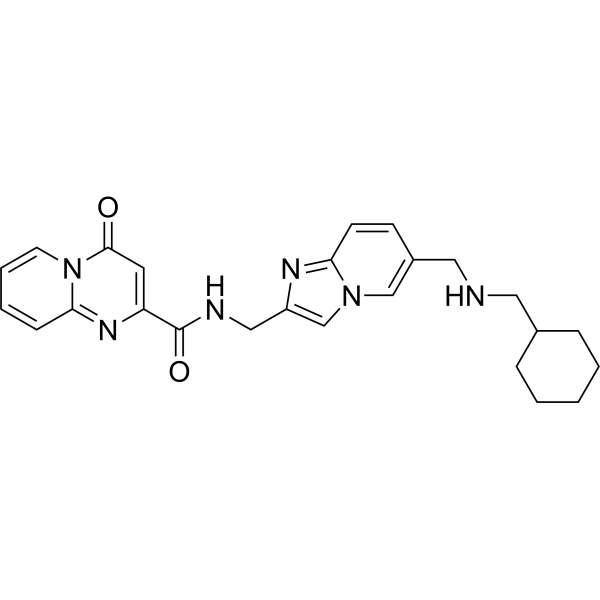
STM2457 is a first-in-class, highly potent, selective and orally active METTL3 inhibitor with an IC50 of 16.9 nM. STM2457 can be used for the research of acute myeloid leukaemia (AML) .
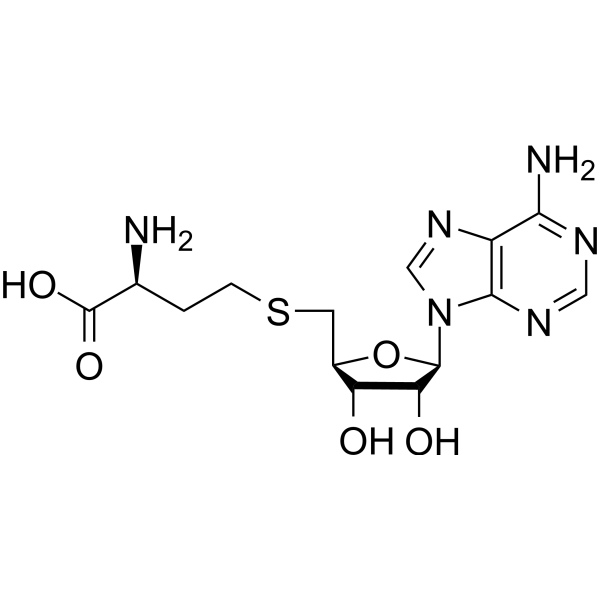
SAH (S-Adenosylhomocysteine) is an amino acid derivative and a modulartor in several metabolic pathways. It is an intermediate in the synthesis of cysteine and adenosine . SAH is an inhibitor for METTL3-METTL14 heterodimer complex (METTL3-14) with an IC50 of 0.9 µM .
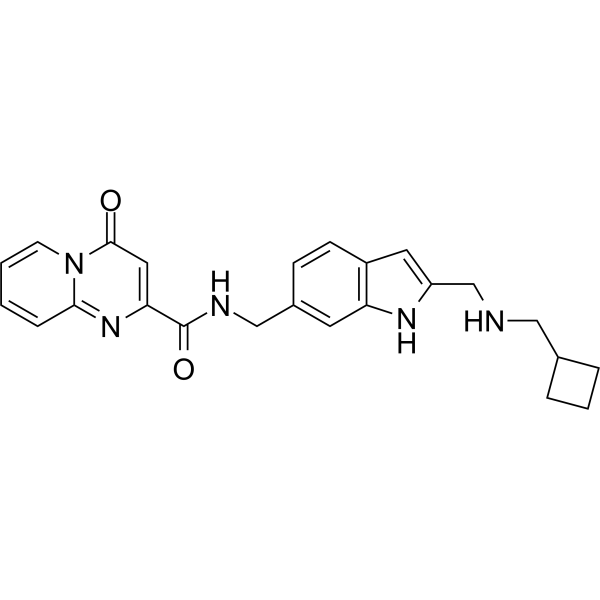
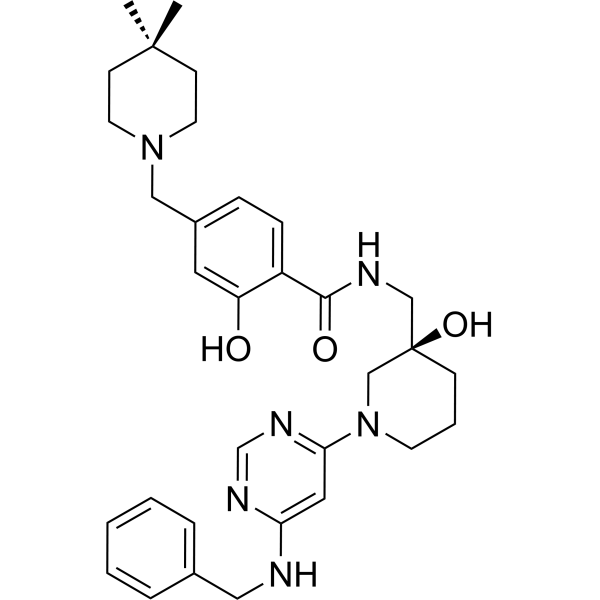
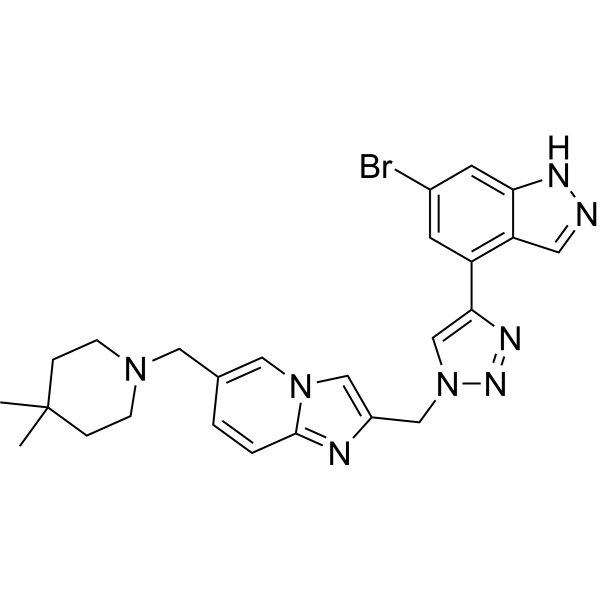
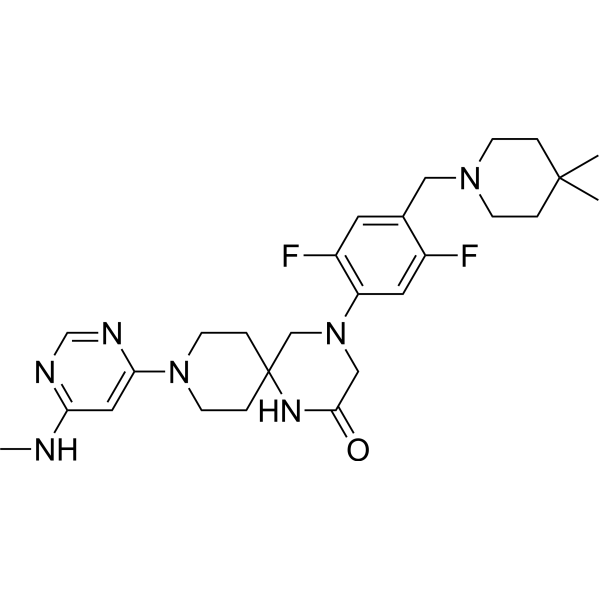
STC-15 is an orally active RNA methyltransferase METTL3 inhibitor with the activity of activating anti-tumor immunity and reshaping the tumor microenvironment. STC-15 inhibits tumor growth by activating anti-cancer immune responses associated with increased interferon signaling and synergizes with T-cell checkpoint blockade. STC-15 can be used in the study of proliferative diseases such as cancer and autoimmune diseases [3].
CHMA1004 (Methyl piperazine-2-carboxylate; METTL3 activator-1) dihydrochloride is a METTL3/METTL14/WTAP methyltransferase complex activator. CHMA1004 dihydrochloride exhibits neuroprotective and anxiolytic potential by enhancing m 6A methylation modification of RNA. CHMA1004 dihydrochloride promotes HIV replication in an infection context. CHMA1004 dihydrochloride can be used in studies related to anxiety disorders and HIV-1 infection .
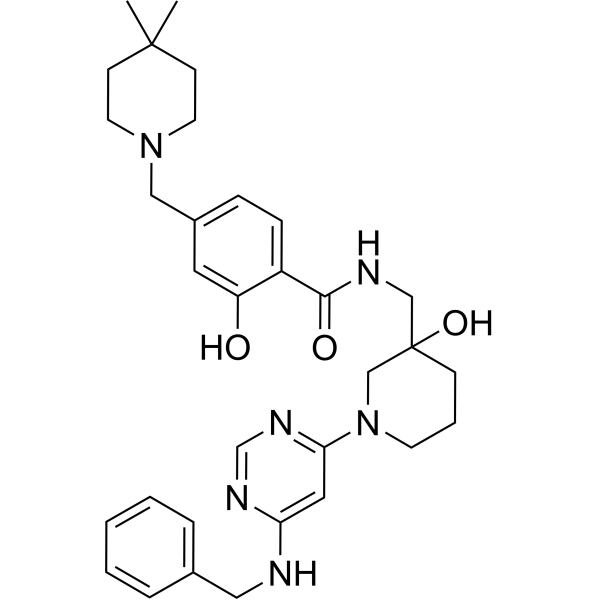
STM3006 is a highly potent, selective, and orally active inhibitor of METTL3 (IC50: 5 nM). STM3006 can reduce the m6A level, promote the formation of dsRNA, trigger a cell-intrinsic interferon response, and enhance the killing effect of T cells on tumors. STM3006 has anti-tumor activity, and its combination with anti-PD-1 immunotherapy yields better results .
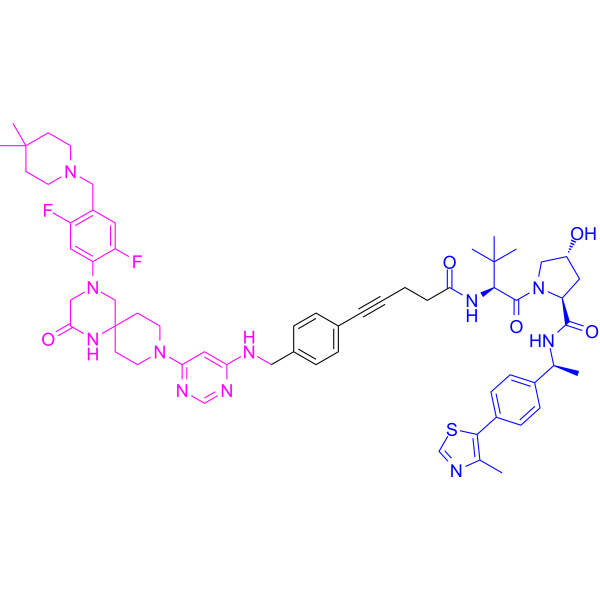
WD6305 is a potent and selective METTL3-METTL14 PROTAC degrader. WD6305 has DC50 values of 140 nM and 194 nM for METTL3 and METTL14, respectively. WD6305 inhibits m 6A modification and proliferation of AML cells, and induces apoptosis. WD6305 has antitumor activity .(Pink: UZH2 (HY-115717); Black: Linker; Blue: VHL ligand (HY-150803))
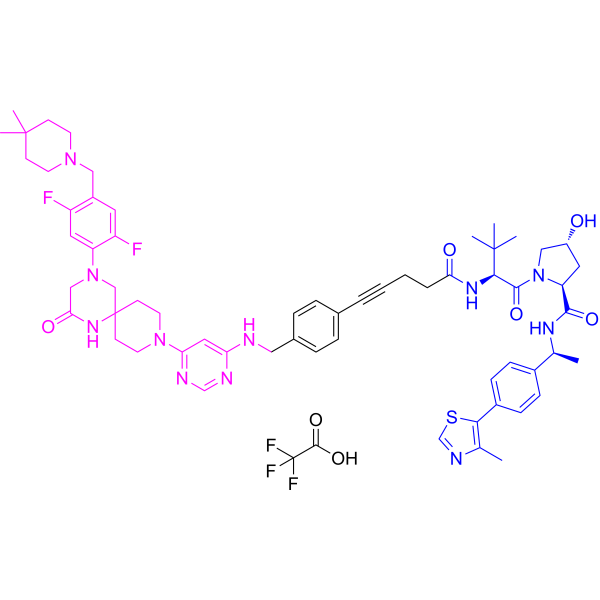
WD6305 TFA is a potent and selective METTL3-METTL14 PROTAC degrader. WD6305 TFA has DC50 values of 140 nM and 194 nM for METTL3 and METTL14, respectively. WD6305 TFA inhibits m 6A modification and proliferation of AML cells, and induces apoptosis. WD6305 TFA has antitumor activity .(Pink: UZH2 (HY-115717); Black: Linker; Blue: VHL ligand (HY-150803))
UZH1a is a potent and selective METTL3 inhibitor, with an IC50 of 280 nM. UZH1a can be used for epitranscriptomic modulation of cellular processes. UZH1a has antitumor activity. UZH1a also can be used as a chemical probe for studying METTL3 .
RSM3 is a METTL3-METTL14 complex inhibitor with a Kd of 3.10 μM for the METTL3-METTL14 complex. RSM3 reduces the m 6A modification level of SLC31A1 and the global RNA methylation level. RSM3 upregulates programmed cell death-related genes, enhances cell apoptosis, inhibits pro-cancer signals and suppresses tumor growth. RSM3 is applicable to the research of preeclampsia and cancer .
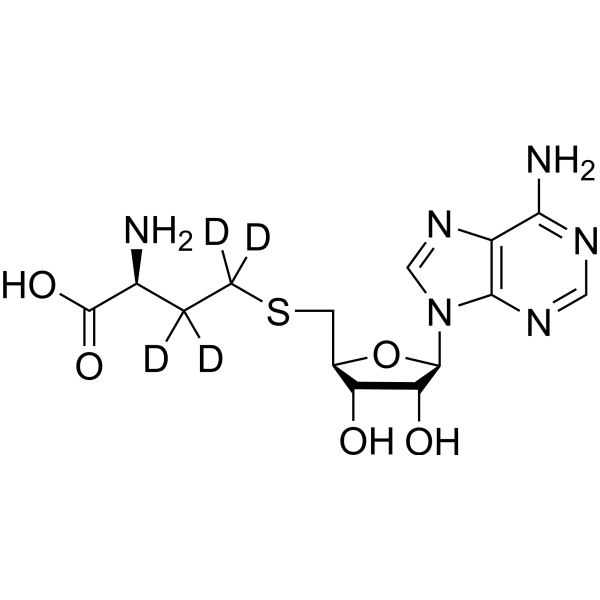
SAH-d4 is the deuterium labeled SAH. SAH (S-Adenosylhomocysteine) is an amino acid derivative and a modulartor in several metabolic pathways. It is an intermediate in the synthesis of cysteine and adenosine . SAH is an inhibitor for METTL3-METTL14 heterodimer complex (METTL3-14) with an IC50 of 0.9 μM .
PROTAC METTL3 degrader 1 is a VHL-based PROTAC METTL3 degrader (DC50: 220 nM in MOLM-13 cells). PROTAC METTL3 degrader 1 inhibits METTL3/14 complex with an IC50 value of 341 nM. PROTAC METTL3 degrader 1 can be used for the research of acute myeloid leukemia and gastric cancer .
AF151 is a METTL3 PROTAC degrader with the DC50 of 0.43 μM in MOLM-13 cells. AF151 inhibits cell growth by significantly degrading METTL3 protein and reducing m6A levels. AF151 can induce cell apoptosis and reduce the level of Bcl-2 protein. AF151 can be used for research on cancer such as acute myeloid leukemia (AML). (Pink: METTL3 Ligand (HY-174874); Blue: VHL Ligand (HY-125845); Black: Linker; VHL Ligand+Linker (HY-174875)) .
UZH1 is a racemate of UZH1a and UZH1b. UZH1a is a potent and selective METTL3 inhibitor, with an IC50 of 280 nM. UZH1b (IC50=28 µM) is essentially inactive. UZH1 can be used for epitranscriptomic modulation of cellular processes. UZH1 has antitumor activity. UZH1 also can be used as a chemical probe for studying METTL3 .
METTL3 Human Pre-designed siRNA Set A contains three designed siRNAs for METTL3 gene (Human), as well as a negative control, a positive control, and a FAM-labeled negative control.
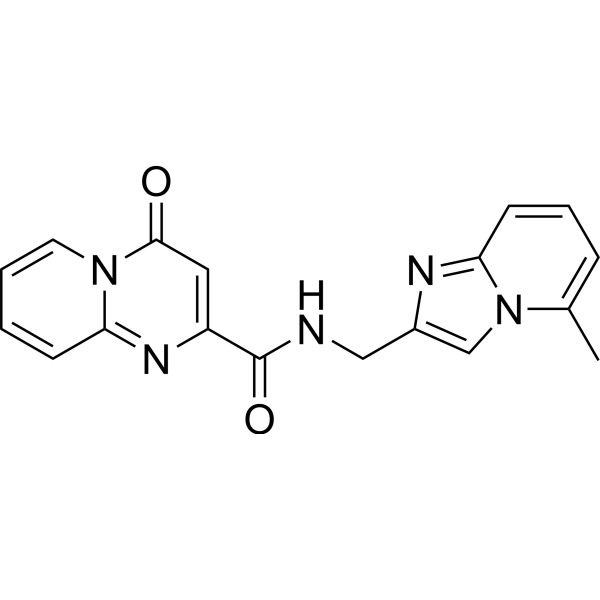
METTL3-IN-8 (F039-0002) is a potent METTL3 inhibitor. METTL3-IN-8 strongly ameliorates Dextran sulfate sodium salt (DSS) (HY-116282C)-induced colitis. METTL3-IN-8 can be used Inflammatory bowel disease (IBD) research .
METTL3-IN-9 (compound C3) is an inhibitor of methyltransferase-like METTL3, an RNA methyltransferase that catalyzes the N6-methyladenosine (m6A) modification of mRNA in eukaryotic cells .
EP652 is a METTL3 inhibitor and antitumor agent with IC50 values of 2 nM, <10 nM, and 37 nM in SPA, intracellular, and ATPlite assays, respectively. EP652 exhibits high selectivity against 40 other methyltransferases and FTO, and possesses favorable pharmacokinetic parameters. EP652 reduces intracellular N 6-methyladenosine (m 6A) levels in mRNA. EP652 inhibits tumor growth and progression of both hematologic malignancies and solid tumors. EP652 can be used for the research of acute myeloid leukemia, ovarian cancer, non-small cell lung cancer, and hypopharyngeal squamous cell carcinoma .
Mettl3 Mouse Pre-designed siRNA Set A contains three designed siRNAs for Mettl3 gene (Mouse), as well as a negative control, a positive control, and a FAM-labeled negative control.
SAH (Standard) is the analytical standard of SAH. This product is intended for research and analytical applications. SAH (S-Adenosylhomocysteine) is an amino acid derivative and a modulartor in several metabolic pathways. It is an intermediate in the synthesis of cysteine and adenosine . SAH is an inhibitor for METTL3-METTL14 heterodimer complex (METTL3-14) with an IC50 of 0.9 μM .
N6-Methyladenosine (Standard) is the analytical standard of N6-Methyladenosine. This product is intended for research and analytical applications. N6-Methyladenosine is the most prevalent internal (non-cap) modification present in the messenger RNA (mRNA) of all higher eukaryotes. N6-Methyladenosine can modifies viral RNAs and has antiviral activities.
In Vitro: N6-methyladenosine (m6A) is selectively recognized by the human YTH domain family 2 (YTHDF2) protein to regulate mRNA degradation. N6-methyladenosine (m6A), a prevalent internal modification in the messenger RNA of all eukaryotes, is post-transcriptionally installed by m6A methyltransferase (e.g., MT-A70) within the consensus sequence of G(m6A)C (70%) or A(m6A)C (30%). N6-methyladenosine (m6A)-containing RNAs are greatly enriched in the YTHDF-bound portion and diminished in the flow-through portion . N6-methyladenosine (m6A), the most abundant internal RNA modification, functions in diverse biological processes, including regulation of embryonic stem cell self-renewal and differentiation. N6-methyladenosine (m6A) is a large protein complex, consisting in part of methyltransferase-like 3 (METTL3) and methyltransferase-like 14 (METTL14) catalytic subunits .
METTL3-IN-11 is an excellent, selective METTL3 inhibitor (IC50 = 45.31 nM). METTL3-IN-11 exhibits high selectivity towards METTL3 compared to DNMT1, EZH1, MLL1, and PRMT1. METTL3-IN-11 reduces the m6A level of total RNA in MOLM-13 and SKOV3 cells, induces cell apoptosis, and inhibits cell migration. METTL3-IN-11 can reduce the expression of m6A downstream target genes (c-MYC and BCL2). METTL3-IN-11 can be used for the study of ovarian cancer and acute myeloid leukemia .
RSM3 TFA is a METTL3-METTL14 complex inhibitor with a Kd of 3.10 μM for the METTL3-METTL14 complex. RSM3 TFA reduces the m 6A modification level of SLC31A1 and the global RNA methylation level. RSM3 TFA upregulates programmed cell death-related genes, enhances cell apoptosis, inhibits pro-cancer signals and suppresses tumor growth. RSM3 TFA is applicable to the research of preeclampsia and cancer .
PROTAC METTL3-14 degrader 1 (compound 30) is a PROTAC degrader of METTL3-14. PROTAC METTL3-14 degrader 1 shows a 50% or higher degradation of METTL3 and/or METTL14(Pink: Ligand for target protein (HY-115717); Black: Linker (HY-168686); Blue: Ligand for E3 ligase (HY-10984)) .
CHMA1004 (Methyl piperazine-2-carboxylate; METTL3 activator-1 free base) is a METTL3/METTL14/WTAP methyltransferase complex activator . CHMA1004 exhibits neuroprotective and anxiolytic potential by enhancing m 6A methylation modification of RNA. CHMA1004 promotes HIV replication in an infection context. CHMA1004 can be used in studies related to anxiety disorders and HIV-1 infection .
METTL3-IN-5 (Compound 13) is a METTL3 inhibitor. METTL3-IN-5 inhibits MOLM-13 growth with an IC50 less than 2 μM. METTL3-IN-5 has weak hERG inhibitory activity (IC50 >30 μM). METTL3-IN-5 can be used for AML research .
METTL1-WDR4-IN-2, an adenosine derivative, is a selective methyltransferase Like 1 (METTL1)-WDR4 inhibitor with an IC50 of 41 μM. METTL1-WDR4-IN-2 shows selectivity against METTL3-14 (IC50 of 958 μM) and METTL16 (IC50 of 208 μM). METTL1-WDR4-IN-2 can be used for the study of cancer .
METTL3-IN-12 (Compound 15) is a selective METTL3 inhibitor with an IC50 of 50 nM. METTL3-IN-12 exhibits significant anti-proliferative activity in various leukemia cell lines. METTL3-IN-12 can be used for research on leukemia .
Mettl3 Rat Pre-designed siRNA Set A contains three designed siRNAs for Mettl3 gene (Rat), as well as a negative control, a positive control, and a FAM-labeled negative control.
METTL3-IN-7 (7460-0250) is a potent METTL3 inhibitor. METTL3-IN-7 strongly ameliorates Dextran sulfate sodium salt (DSS) (HY-116282C)-induced colitis. METTL3-IN-7 can be used Inflammatory bowel disease (IBD) research .
Antiviral agent 23 (compound 11b) is an antiviral agent to enterovirus 71 (EV71) with an EC50 value of 94 nM. Antiviral agent 23 effectively suppresses the activity of METTL3/METTL14. Antiviral agent 23 can be used for the research of infection .
SAH- 13C10 is the 13C labeled SAH . SAH (S-Adenosylhomocysteine) is an amino acid derivative and a modulartor in several metabolic pathways. It is an intermediate in the synthesis of cysteine and adenosine . SAH is an inhibitor for METTL3-METTL14 heterodimer complex (METTL3-14) with an IC50 of 0.9 μM [3].
Antiviral agent 24 is a potent antiviral agent with EC50 values of 0.101, 19.9, 91.2 µM for EV71, CVA21, EV68, respectively. Antiviral agent 24 inhibits METTL3/METTL14 activity in a dose-dependent manner .
METTL3-IN-13 is a METTL3 inhibitor. METTL3-IN-13 is applicable to the research of multiple cancers such as hypopharyngeal squamous cell carcinoma and non-small cell lung cancer .
E3 Ligase Ligand-linker Conjugate 137 is the linker and E3 ligase ligand for the PROTACMETTL3-14 degrader 1 (HY-162282), which can be used for research on acute myeloid leukemia .
EP102 is an orally active, selective inhibitor of the METTL3/METTL14 complex with an IC50 of 2 nM. EP102 reduces intracellular N6-methyladenosine levels, inhibits cancer cell proliferation, and thereby suppresses tumor growth in mouse models. EP102 is applicable for the research of acute myeloid leukemia, ovarian solid tumors and advanced solid tumors .
RSM3 is a METTL3-METTL14 complex inhibitor with a Kd of 3.10 μM for the METTL3-METTL14 complex. RSM3 reduces the m 6A modification level of SLC31A1 and the global RNA methylation level. RSM3 upregulates programmed cell death-related genes, enhances cell apoptosis, inhibits pro-cancer signals and suppresses tumor growth. RSM3 is applicable to the research of preeclampsia and cancer .
RSM3 TFA is a METTL3-METTL14 complex inhibitor with a Kd of 3.10 μM for the METTL3-METTL14 complex. RSM3 TFA reduces the m 6A modification level of SLC31A1 and the global RNA methylation level. RSM3 TFA upregulates programmed cell death-related genes, enhances cell apoptosis, inhibits pro-cancer signals and suppresses tumor growth. RSM3 TFA is applicable to the research of preeclampsia and cancer .
SAH (S-Adenosylhomocysteine) is an amino acid derivative and a modulartor in several metabolic pathways. It is an intermediate in the synthesis of cysteine and adenosine . SAH is an inhibitor for METTL3-METTL14 heterodimer complex (METTL3-14) with an IC50 of 0.9 µM .
SAH (Standard) is the analytical standard of SAH. This product is intended for research and analytical applications. SAH (S-Adenosylhomocysteine) is an amino acid derivative and a modulartor in several metabolic pathways. It is an intermediate in the synthesis of cysteine and adenosine . SAH is an inhibitor for METTL3-METTL14 heterodimer complex (METTL3-14) with an IC50 of 0.9 μM .
N6-Methyladenosine (Standard) is the analytical standard of N6-Methyladenosine. This product is intended for research and analytical applications. N6-Methyladenosine is the most prevalent internal (non-cap) modification present in the messenger RNA (mRNA) of all higher eukaryotes. N6-Methyladenosine can modifies viral RNAs and has antiviral activities.
In Vitro: N6-methyladenosine (m6A) is selectively recognized by the human YTH domain family 2 (YTHDF2) protein to regulate mRNA degradation. N6-methyladenosine (m6A), a prevalent internal modification in the messenger RNA of all eukaryotes, is post-transcriptionally installed by m6A methyltransferase (e.g., MT-A70) within the consensus sequence of G(m6A)C (70%) or A(m6A)C (30%). N6-methyladenosine (m6A)-containing RNAs are greatly enriched in the YTHDF-bound portion and diminished in the flow-through portion . N6-methyladenosine (m6A), the most abundant internal RNA modification, functions in diverse biological processes, including regulation of embryonic stem cell self-renewal and differentiation. N6-methyladenosine (m6A) is a large protein complex, consisting in part of methyltransferase-like 3 (METTL3) and methyltransferase-like 14 (METTL14) catalytic subunits .
SAH-d4 is the deuterium labeled SAH. SAH (S-Adenosylhomocysteine) is an amino acid derivative and a modulartor in several metabolic pathways. It is an intermediate in the synthesis of cysteine and adenosine . SAH is an inhibitor for METTL3-METTL14 heterodimer complex (METTL3-14) with an IC50 of 0.9 μM .
SAH- 13C10 is the 13C labeled SAH . SAH (S-Adenosylhomocysteine) is an amino acid derivative and a modulartor in several metabolic pathways. It is an intermediate in the synthesis of cysteine and adenosine . SAH is an inhibitor for METTL3-METTL14 heterodimer complex (METTL3-14) with an IC50 of 0.9 μM [3].
SAH (S-Adenosylhomocysteine) is an amino acid derivative and a modulartor in several metabolic pathways. It is an intermediate in the synthesis of cysteine and adenosine . SAH is an inhibitor for METTL3-METTL14 heterodimer complex (METTL3-14) with an IC50 of 0.9 µM .
METTL3 Human Pre-designed siRNA Set A contains three designed siRNAs for METTL3 gene (Human), as well as a negative control, a positive control, and a FAM-labeled negative control.
Mettl3 Mouse Pre-designed siRNA Set A contains three designed siRNAs for Mettl3 gene (Mouse), as well as a negative control, a positive control, and a FAM-labeled negative control.
Mettl3 Rat Pre-designed siRNA Set A contains three designed siRNAs for Mettl3 gene (Rat), as well as a negative control, a positive control, and a FAM-labeled negative control.
Inquiry Online
Your information is safe with us. * Required Fields.
Western blot analysis of extracts from THP-1(lane 2(20μg), Jurkat (lane 3(20μg) and NIH3T3(lane 4(20μg) using FOXO1A (HY-P80132) Rabbit mAb. Proteins were transferred
to a PVDF membrane and blocked with 5% non-fat milk in TBST for 2 hour at room temperature. The primary antibody (1/1000) and Loading control antibody (Beta Actin, HY-P80438, 1/10000) was
used in 5% non-fat milk in TBST at 4°C overnight. Goat Anti-Mouse/Rabbit IgG-HRP Secondary Antibody (1/10000) was used for 1 hour at room temperature.
Western blot analysis of extracts from THP-1(lane 2(20μg), Jurkat (lane 3(20μg) and NIH3T3(lane 4(20μg) using FOXO1A (HY-P80132) Rabbit mAb. Proteins were transferred
to a PVDF membrane and blocked with 5% non-fat milk in TBST for 2 hour at room temperature. The primary antibody (1/1000) and Loading control antibody (Beta Actin, HY-P80438, 1/10000) was
used in 5% non-fat milk in TBST at 4°C overnight. Goat Anti-Mouse/Rabbit IgG-HRP Secondary Antibody (1/10000) was used for 1 hour at room temperature.
Western blot analysis of extracts from THP-1(lane 2(20μg), Jurkat (lane 3(20μg) and NIH3T3(lane 4(20μg) using FOXO1A (HY-P80132) Rabbit mAb. Proteins were transferred
to a PVDF membrane and blocked with 5% non-fat milk in TBST for 2 hour at room temperature. The primary antibody (1/1000) and Loading control antibody (Beta Actin, HY-P80438, 1/10000) was
used in 5% non-fat milk in TBST at 4°C overnight. Goat Anti-Mouse/Rabbit IgG-HRP Secondary Antibody (1/10000) was used for 1 hour at room temperature.
Western blot analysis of extracts from THP-1(lane 2(20μg), Jurkat (lane 3(20μg) and NIH3T3(lane 4(20μg) using FOXO1A (HY-P80132) Rabbit mAb. Proteins were transferred
to a PVDF membrane and blocked with 5% non-fat milk in TBST for 2 hour at room temperature. The primary antibody (1/1000) and Loading control antibody (Beta Actin, HY-P80438, 1/10000) was
MedchemExpress Validation 03
Western blot analysis of extracts from THP-1(lane 2(20μg), Jurkat (lane 3(20μg) and NIH3T3(lane 4(20μg) using FOXO1A (HY-P80132) Rabbit mAb. Proteins were transferred
MedchemExpress Validation 04
Western blot analysis of extracts from THP-1(lane 2(20μg), Jurkat (lane 3(20μg) and NIH3T3(lane 4(20μg) using FOXO1A (HY-P80132) Rabbit mAb. Proteins were transferred
to a PVDF membrane and blocked with 5% non-fat milk in TBST for 2 hour at room temperature. The primary antibody (1/1000) and Loading control antibody (Beta Actin, HY-P80438, 1/10000) was
used in 5% non-fat milk in TBST at 4°C overnight. Goat Anti-Mouse/Rabbit IgG-HRP Secondary Antibody (1/10000) was used for 1 hour at room temperature.
MedchemExpress Validation
Western blot analysis of extracts from THP-1(lane 2(20μg), Jurkat (lane 3(20μg) and NIH3T3(lane 4(20μg) using FOXO1A (HY-P80132) Rabbit mAb. Proteins were transferred
to a PVDF membrane and blocked with 5% non-fat milk in TBST for 2 hour at room temperature. The primary antibody (1/1000) and Loading control antibody (Beta Actin, HY-P80438, 1/10000) was
used in 5% non-fat milk in TBST at 4°C overnight. Goat Anti-Mouse/Rabbit IgG-HRP Secondary Antibody (1/10000) was used for 1 hour at room temperature.
Western blot analysis of extracts from THP-1(lane 2(20μg), Jurkat (lane 3(20μg) and NIH3T3(lane 4(20μg) using FOXO1A (HY-P80132) Rabbit mAb. Proteins were transferred
to a PVDF membrane and blocked with 5% non-fat milk in TBST for 2 hour at room temperature. The primary antibody (1/1000) and Loading control antibody (Beta Actin, HY-P80438, 1/10000) was
used in 5% non-fat milk in TBST at 4°C overnight. Goat Anti-Mouse/Rabbit IgG-HRP Secondary Antibody (1/10000) was used for 1 hour at room temperature.
MedchemExpress Validation
Western blot analysis of extracts from THP-1(lane 2(20μg), Jurkat (lane 3(20μg) and NIH3T3(lane 4(20μg) using FOXO1A (HY-P80132) Rabbit mAb. Proteins were transferred
to a PVDF membrane and blocked with 5% non-fat milk in TBST for 2 hour at room temperature. The primary antibody (1/1000) and Loading control antibody (Beta Actin, HY-P80438, 1/10000) was
used in 5% non-fat milk in TBST at 4°C overnight. Goat Anti-Mouse/Rabbit IgG-HRP Secondary Antibody (1/10000) was used for 1 hour at room temperature.
MedchemExpress Validation
Western blot analysis of extracts from THP-1(lane 2(20μg), Jurkat (lane 3(20μg) and NIH3T3(lane 4(20μg) using FOXO1A (HY-P80132) Rabbit mAb. Proteins were transferred
to a PVDF membrane and blocked with 5% non-fat milk in TBST for 2 hour at room temperature. The primary antibody (1/1000) and Loading control antibody (Beta Actin, HY-P80438, 1/10000) was
used in 5% non-fat milk in TBST at 4°C overnight. Goat Anti-Mouse/Rabbit IgG-HRP Secondary Antibody (1/10000) was used for 1 hour at room temperature.
MedchemExpress Validation
Western blot analysis of extracts from THP-1(lane 2(20μg), Jurkat (lane 3(20μg) and NIH3T3(lane 4(20μg) using FOXO1A (HY-P80132) Rabbit mAb. Proteins were transferred
to a PVDF membrane and blocked with 5% non-fat milk in TBST for 2 hour at room temperature. The primary antibody (1/1000) and Loading control antibody (Beta Actin, HY-P80438, 1/10000) was
used in 5% non-fat milk in TBST at 4°C overnight. Goat Anti-Mouse/Rabbit IgG-HRP Secondary Antibody (1/10000) was used for 1 hour at room temperature.
MedchemExpress Validation
Western blot analysis of extracts from THP-1(lane 2(20μg), Jurkat (lane 3(20μg) and NIH3T3(lane 4(20μg) using FOXO1A (HY-P80132) Rabbit mAb. Proteins were transferred
to a PVDF membrane and blocked with 5% non-fat milk in TBST for 2 hour at room temperature. The primary antibody (1/1000) and Loading control antibody (Beta Actin, HY-P80438, 1/10000) was
used in 5% non-fat milk in TBST at 4°C overnight. Goat Anti-Mouse/Rabbit IgG-HRP Secondary Antibody (1/10000) was used for 1 hour at room temperature.
MedchemExpress Validation
Western blot analysis of extracts from THP-1(lane 2(20μg), Jurkat (lane 3(20μg) and NIH3T3(lane 4(20μg) using FOXO1A (HY-P80132) Rabbit mAb. Proteins were transferred
to a PVDF membrane and blocked with 5% non-fat milk in TBST for 2 hour at room temperature. The primary antibody (1/1000) and Loading control antibody (Beta Actin, HY-P80438, 1/10000) was
used in 5% non-fat milk in TBST at 4°C overnight. Goat Anti-Mouse/Rabbit IgG-HRP Secondary Antibody (1/10000) was used for 1 hour at room temperature.
MedchemExpress Validation
Western blot analysis of extracts from THP-1(lane 2(20μg), Jurkat (lane 3(20μg) and NIH3T3(lane 4(20μg) using FOXO1A (HY-P80132) Rabbit mAb. Proteins were transferred
to a PVDF membrane and blocked with 5% non-fat milk in TBST for 2 hour at room temperature. The primary antibody (1/1000) and Loading control antibody (Beta Actin, HY-P80438, 1/10000) was
used in 5% non-fat milk in TBST at 4°C overnight. Goat Anti-Mouse/Rabbit IgG-HRP Secondary Antibody (1/10000) was used for 1 hour at room temperature.
MedChemExpress values your privacy and your trust is important to us. We use cookies to enhance your website experience. Some cookies are necessary to run the website.
Privacy and Cookie Policy

