

51 Results for "

Middle cerebral artery occlusion

" in MedChemExpress (MCE) Product Catalog:
Products (51)

51 Results for "Middle cerebral artery occlusion" in MCE Product Catalog:

73
73 Publications Verification
Cat. No.: HY-107202
CAS No.: 24939-03-5
Purity:  99.40%
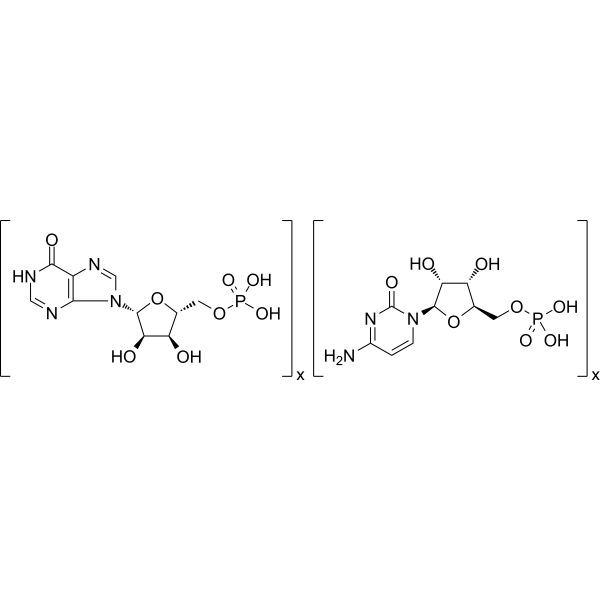
Synonyms: Poly(I:C)
Polyinosinic-polycytidylic acid (Poly(I:C)) is a synthetic analog of double-stranded RNA and an agonist of toll-like receptor 3 (TLR3) and retinoic acid inducible gene I (RIG-I)-like receptors (RIG-I and MDA5). Polyinosinic-polycytidylic acid can be used as a vaccine adjuvant to enhance innate and adaptive immune responses, and to alter the tumor microenvironment. Polyinosinic-polycytidylic acid can directly trigger cancer cells to undergo apoptosis .
loading...
    loading...
19
19 Cited Publications
Cat. No.: HY-17468
CAS No.: 28395-03-1
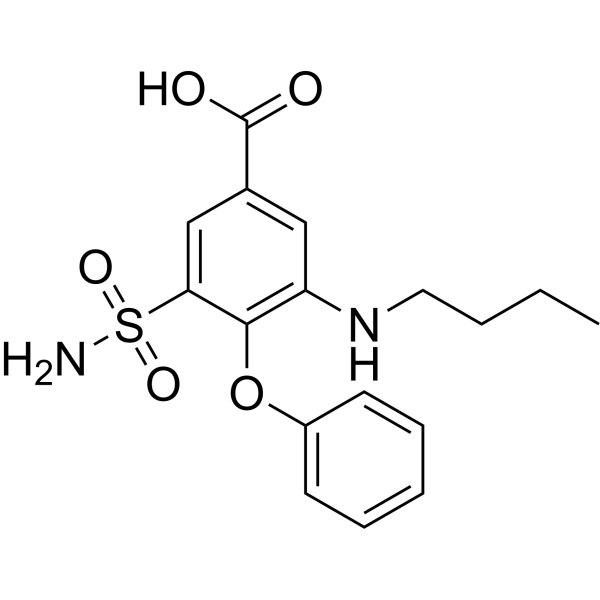
Synonyms: Ro 10-6338; PF 1593
Target:  

NKCC

Bumetanide (Ro 10-6338; PF 1593), a highly potent loop diuretic, is a Na +-K +-Cl + cotransporter (NKCC) blocker. Bumetanide is a selective NKCC1 inhibitor, but also inhibits NKCC2, with IC50s of 0.68 μM and 4.0 μM for hNKCC1A and hNKCC2A, respectively .
loading...
    loading...
14
14 Cited Publications
Cat. No.: HY-17355
CAS No.: 104632-25-9
Target:  

Dopamine Receptor

Research Areas:  

Neurological Disease

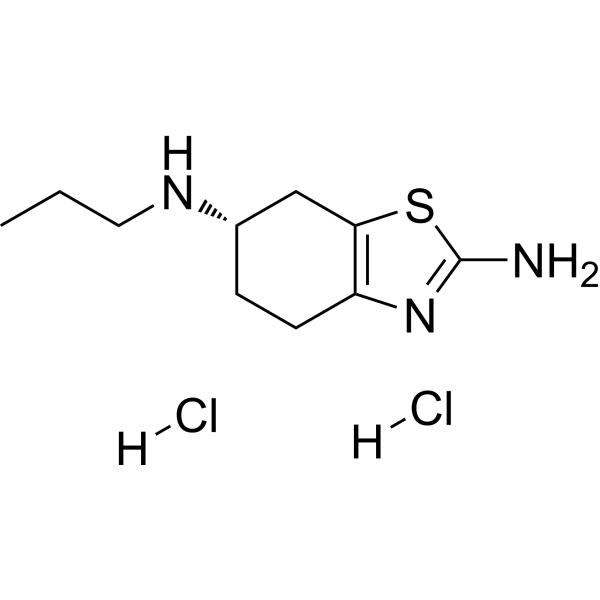
Pramipexole dihydrochloride is a selective and blood-brain barrier (BBB) penetrant dopamine D2-type receptor agonist, with Kis of 2.2 nM, 3.9 nM, 0.5 nM and 1.3 nM for D2-type receptor, D2, D3 and D4 receptors, respectively. Pramipexole dihydrochloride can be used for the research of Parkinson's disease (PD) and restless legs syndrome (RLS) .
loading...
    loading...
14
14 Cited Publications
Cat. No.: HY-B0410
CAS No.: 104632-26-0
Target:  

Dopamine Receptor

Research Areas:  

Neurological Disease

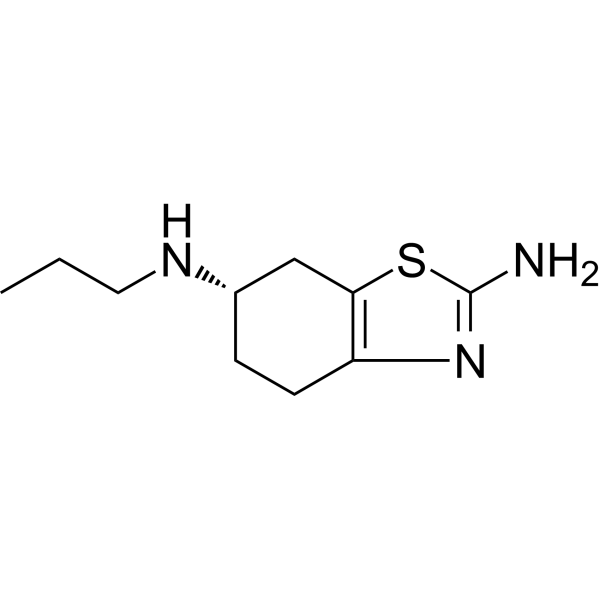
Pramipexole is a selective and blood-brain barrier (BBB) penetrant dopamine D2-type receptor agonist, with Kis of 2.2 nM, 3.9 nM, 0.5 nM and 1.3 nM for D2-type receptor, D2, D3 and D4 receptors, respectively. Pramipexole can be used for the research of Parkinson's disease (PD) and restless legs syndrome (RLS) .
loading...
    loading...
14
14 Cited Publications
Cat. No.: HY-B0410A
CAS No.: 191217-81-9
Target:  

Dopamine Receptor

Research Areas:  

Neurological Disease

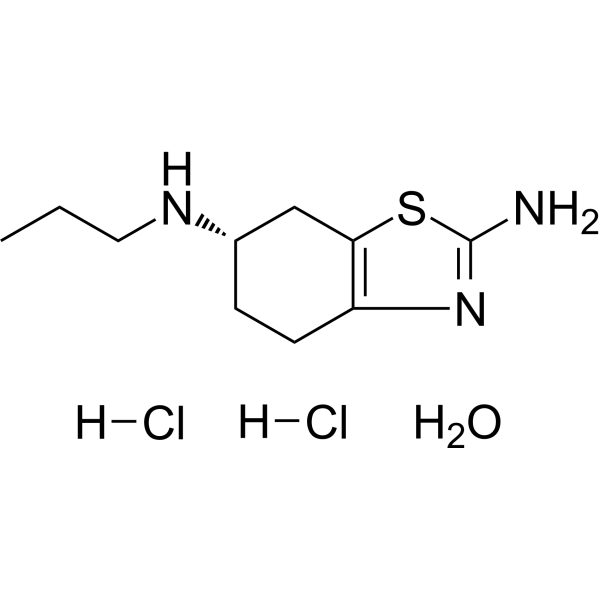
Pramipexole dihydrochloride hydrate is a selective and blood-brain barrier (BBB) penetrant dopamine D2-type receptor agonist, with Kis of 2.2 nM, 3.9 nM, 0.5 nM and 1.3 nM for D2-type receptor, D2, D3 and D4 receptors, respectively. Pramipexole dihydrochloride hydrate can be used for the research of Parkinson's disease (PD) and restless legs syndrome (RLS) .
loading...
    loading...
11
11 Cited Publications
Cat. No.: HY-107202A
Purity:  51.00%
Poly(I:C):Kanamycin (1:1) is a mixture of Poly(I:C) (HY-107202) and Kanamycin (HY-16566). Poly(I:C) is a synthetic analog of double-stranded RNA and an agonist of toll-like receptor 3 (TLR3) and retinoic acid inducible gene I (RIG-I)-like receptors (RIG-I and MDA5). Poly(I:C) can be used as a vaccine adjuvant to enhance innate and adaptive immune responses, and to alter the tumor microenvironment. Poly(I:C) can directly trigger cancer cells to undergo apoptosis. Kanamycin stabilizes Poly(I:C) .
loading...
    loading...
6
6 Cited Publications
Cat. No.: HY-50722
CAS No.: 357400-13-6
Synonyms: NNC 55-0396 dihydrochloride
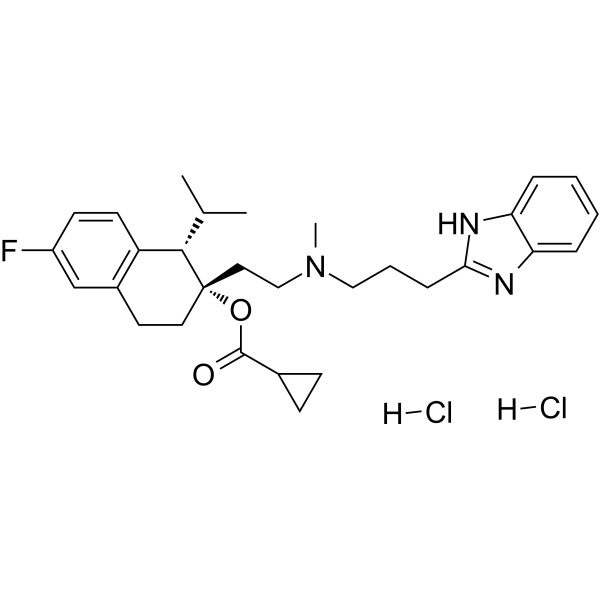
NNC 55-0396 (NNC 55-0396 dihydrochloride) is a blood-brain-barrier-permeable T-type Ca 2+ channel inhibitor and pan-P450 inhibitor. NNC 55-0396 selectively inhibits T-type Ca 2+ channels, suppresses HIF-1α expression and stability and inhibits Kv currents. NNC 55-0396 reduces brain infarct and attenuates neurological dysfunction. NNC 55-0396 inhibits the activity of multiple P450 enzymes. NNC 55-0396 (free base) can be used for the research of brain injury, hypertension, and glioblastoma .
loading...
    loading...
5
5 Cited Publications
Cat. No.: HY-N0361
CAS No.: 19408-84-5
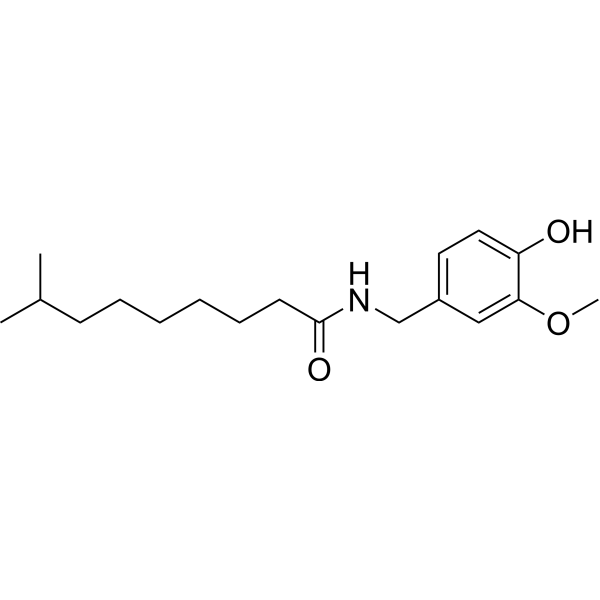
Dihydrocapsaicin, a capsaicin, is a potent and selective TRPV1 (transient receptor potential vanilloid channel 1) agonist. Dihydrocapsaicin reduces AIF, Bax, and Caspase-3 expressions, and increased Bcl-2, Bcl-xL and p-Akt levels. Dihydrocapsaicin enhances the hypothermia-induced neuroprotection following ischemic stroke via PI3K/Akt regulation in rat .
loading...
    loading...
5
5 Cited Publications
Cat. No.: HY-N2255
CAS No.: 25127-29-1
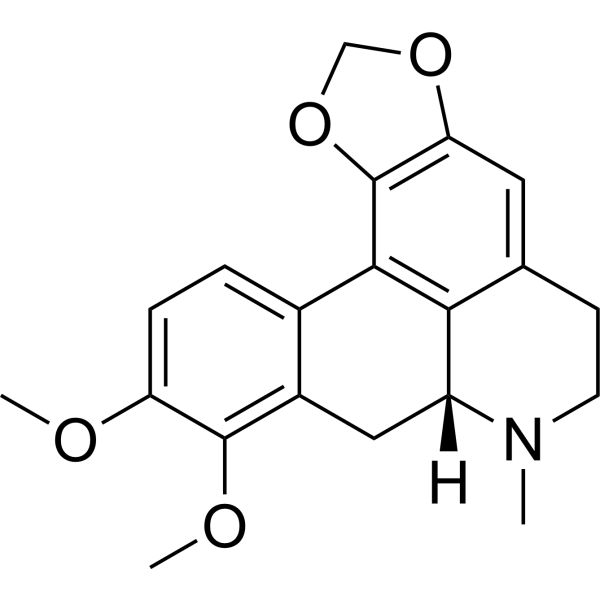
Crebanine is an isoquinoline-like alkaloid that can be derived from Stephania. Crebanine is an antagonist of the α7-nAChR with an IC50 of 19.1 μM. Crebanine suppresses the proliferation, migration, and invasion of cancer cells, triggers reactive oxygen species (ROS) burst, and promotes apoptosis. Crebanine inhibits the AKT/FoxO3a, NF-κB and MAPK signaling pathways. Crebanine attenuates NOX2 hyperactivation, exhibits antioxidant properties by reducing reactive oxygen species and peroxidation in microglia cells. Crebanine inhibits voltage-dependent Na + current in guinea-pig ventricular myocytes. Crebanine has high inhibitory activity against gram-positive animal pathogenic bacteria. Crebanine ameliorates ischemia-reperfusion brain damage in middle cerebral artery occlusion and reperfusion (MCAO/R) rats. Crebanine significantly improves Scopolamine (HY-N0296)-induced cognitive deficits in ICR mice. Crebanine can be used for the study of hepatocellular carcinoma (HCC), cerebral ischemia and Alzheimer's disease .
loading...
    loading...
1
1 Cited Publications
Cat. No.: HY-149164
CAS No.: 245728-44-3
Purity:  99.39%
Target:  

GPR65

BTB09089 is a T cell death-associated gene 8 (TDAG8/GPR65) specific agonist. BTB09089 increases TDAG8 expression and regulates the cytokine production of T cells and macrophages .
loading...
    loading...
1
1 Cited Publications
Cat. No.: HY-120380
CAS No.: 133314-07-5
Purity:  99.8%
Target:  

MOFs PARP

Research Areas:  

Neurological Disease

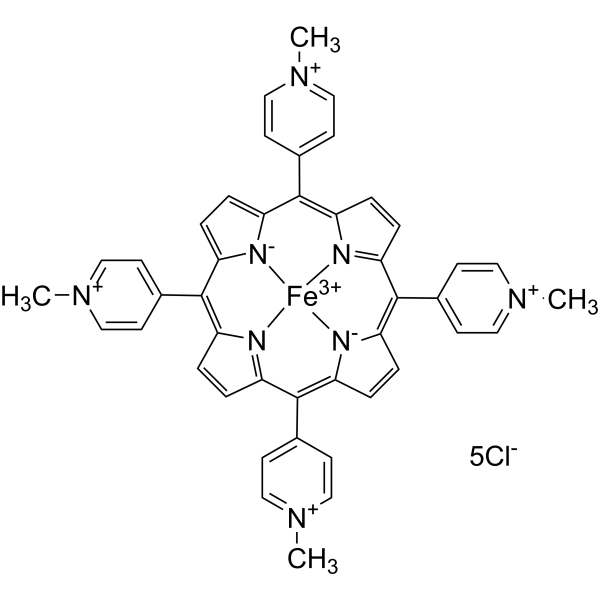
FeTMPyP is an orally active poly (ADP-ribose) polymerase (PARP) inhibitor. FeTMPyP inhibits cell death, nitrotyrosine formation, and depolarization of mitochondrial transmembrane potential. FeTMPyP reduces homocysteine-induced nitrosative stress and partially restores TFEB protein and mRNA levels. FeTMPyP improves functional and behavioral deficits caused by chronic constriction injury in rats. FeTMPyP alleviates acute cerebral infarction in a rat model of middle cerebral artery occlusion with mild hyperglycemia. FeTMPyP can be used in studies related to neuropathic pain, renal aging, ischemic penumbra, and hyperglycemic stroke .
loading...
    loading...
1
1 Cited Publications
Cat. No.: HY-161104
CAS No.: 2252448-93-2
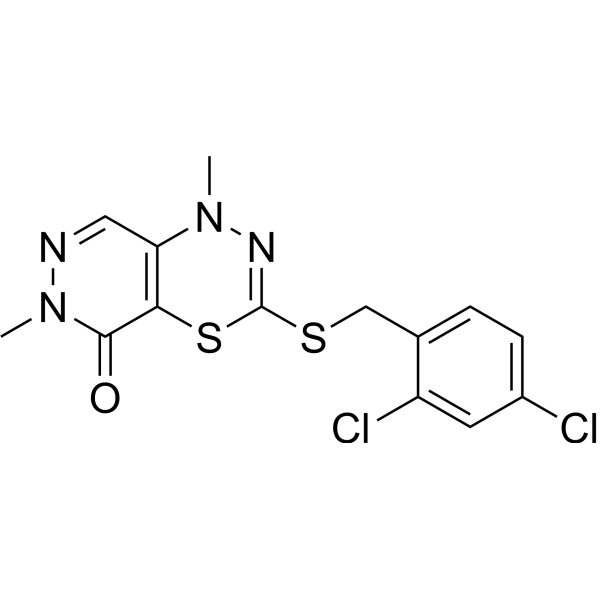
Kv2.1-IN-1 is an orally active and blood-brain barrier penetrant Kv2.1 inhibitor with an IC50 of 0.07 μM. Kv2.1-IN-1 exhibits a selectivity >130 fold over other K +, Na +, and Ca 2+ ion channels. Kv2.1-IN-1 decreases the apoptosis of HEK293 cells induced by H2O2. Kv2.1-IN-1 produces significant neuroprotection efficacy in middle cerebral artery occlusion (MCAO) rat. Kv2.1-IN-1 can be used for the study of ischemic stroke .
loading...
    loading...
1
1 Cited Publications
Cat. No.: HY-13056
CAS No.: 1065559-56-9
Purity:  96.81%
Target:  

Drug Metabolite

Research Areas:  

Neurological Disease

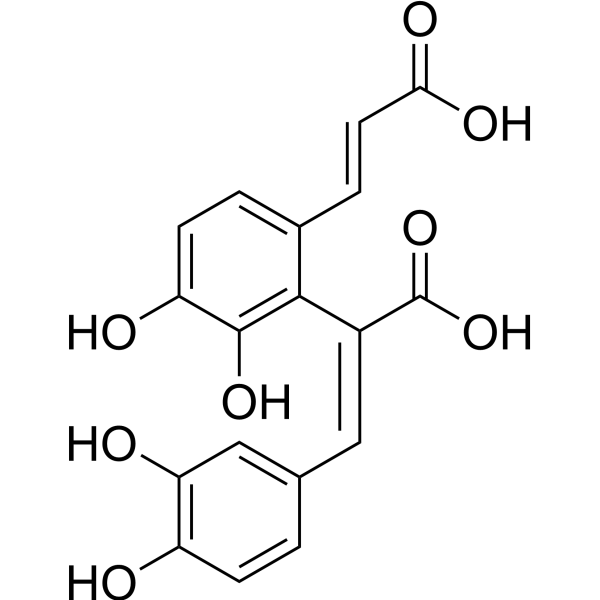
SMND-309 is a metabolite of salvianolic acid B, and exhibits neuroprotective effects in cultured neurons and in permanent middle cerebral artery occlusion rats .
loading...
    loading...
1
1 Cited Publications
Cat. No.: HY-129674
CAS No.: 527680-56-4
Purity:  99.29%
Target:  

nAChR

Research Areas:  

Neurological Disease

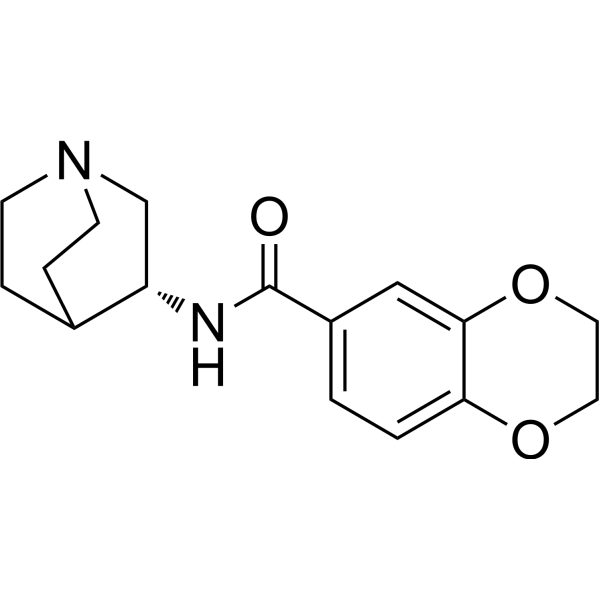
PHA 568487 free base is a selective alpha 7 nicotinic acetylcholine receptor (α-7 nAchR) agonist. PHA 568487 free base reduces neuroinflammation .
loading...
    loading...
Cat. No.: HY-P10275
Target:  

Apoptosis

Research Areas:  

Neurological Disease

Tat-NTS peptide is a cell-penetrating peptide with neuroprotective effects. Tat-NTS peptide can specifically inhibit the nuclear translocation of ANXA1 and reduce neuronal apoptosis in ischemic areas. Moreover, Tat-NTS peptide can reduce the volume of cerebral ischemic infarction and can be used in the research of ischemic stroke .
loading...
    loading...
Cat. No.: HY-P5883
CAS No.: 2126166-03-6
Synonyms: tatM2NX
Target:  

TRP Channel

TAT-M2NX (tatM2NX) is a selective inhibitor targeting human TRPM2 channels and exerts inhibitory effects on ischemic stroke. TAT-M2NX reduces H2O2-induced calcium influx via TRPM2 channels. After traumatic brain injury in mice, TAT-M2NX preserves hippocampal long-term potentiation, improves memory function, and reduces infarct volume after middle cerebral artery occlusion, but it shows no effect on female mice. TAT-M2NX can be used in studies related to traumatic brain injury and ischemic stroke .
loading...
    loading...
Cat. No.: HY-N7905
CAS No.: 520-14-9
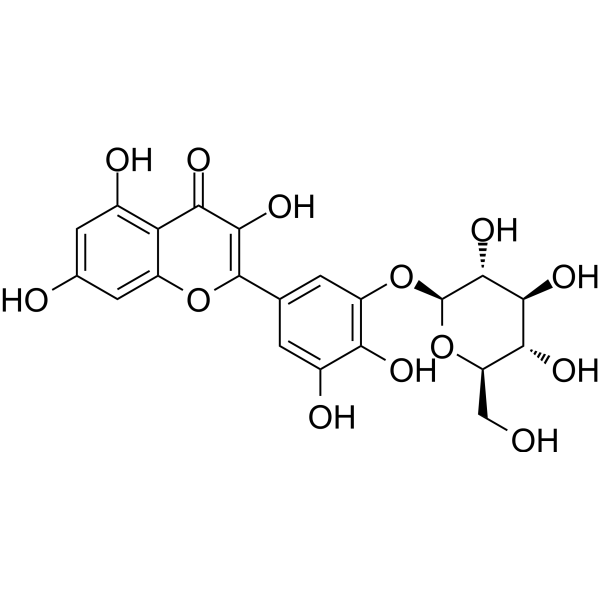
Myricetin 3'-glucoside is an orally active glycosylated flavonoid. Myricetin 3'-glucoside inhibits the cerebral ischemia-induced elevation of inflammatory cytokine levels, including TNF-α, IL-6 and IL-1β. Myricetin 3'-glucoside reverses the cerebral ischemia-mediated downregulation of Bcl-2 protein levels and reduces the cerebral ischemia-induced upregulation of Bax protein levels. Myricetin 3'-glucoside reduces cerebral infarct volume, increases the number of Nissl bodies, and improves neurological function scores in a rat model of middle cerebral artery occlusion (MCAO). Myricetin 3'-glucoside can be used in cerebral ischemia-related research .

loading...
    loading...
Cat. No.: HY-121833
CAS No.: 286935-60-2
Purity:  95.76%
Target:  

Trk Receptor Akt ERK

Research Areas:  

Neurological Disease Cancer

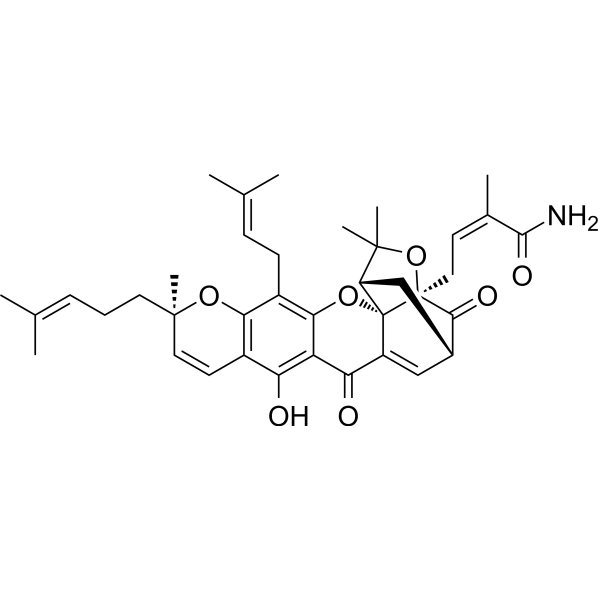
Gambogic amide is a potent and selective agonist of TrkA and also induces its tyrosine phosphorylation and activation of downstream signaling, including Akt and MAPK. Gambogic amide specifically interacts with the cytoplasmic juxtamembrane domain of the TrkA receptor and triggers its dimerization, leading to activation. Gambogic amide has neuroprotective activity preventing glutamate-induced neuronal cell death. Gambogic amide has improved efficacy in a transient middle cerebral artery occlusion model of stroke and could be used to study neurodegenerative diseases and stroke .
loading...
    loading...
Cat. No.: HY-107202GL
CAS No.: 24939-03-5
Synonyms: Poly(I:C) (GMP Like)
Polyinosinic-polycytidylic acid (Poly(I:C)) (GMP Like) is the GMP Like class Polyinosinic-polycytidylic acid (HY-107202), and can be used as pharmaceutical excipients. Polyinosinic-polycytidylic acid (Poly(I:C)) is a synthetic analog of double-stranded RNA and an agonist of toll-like receptor 3 (TLR3) and retinoic acid inducible gene I (RIG-I)-like receptors (RIG-I and MDA5). Polyinosinic-polycytidylic acid can be used as a vaccine adjuvant to enhance innate and adaptive immune responses, and to alter the tumor microenvironment. Polyinosinic-polycytidylic acid can directly trigger cancer cells to undergo apoptosis .
loading...
    loading...
Cat. No.: HY-162359
CAS No.: 2573211-25-1
Target:  

IRAK

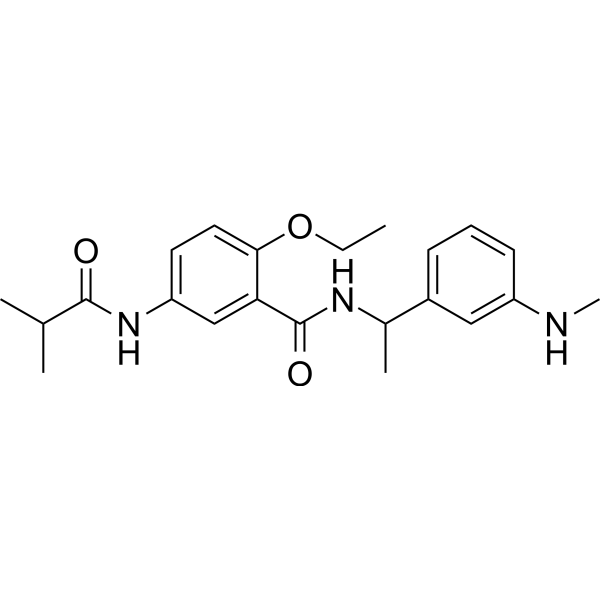
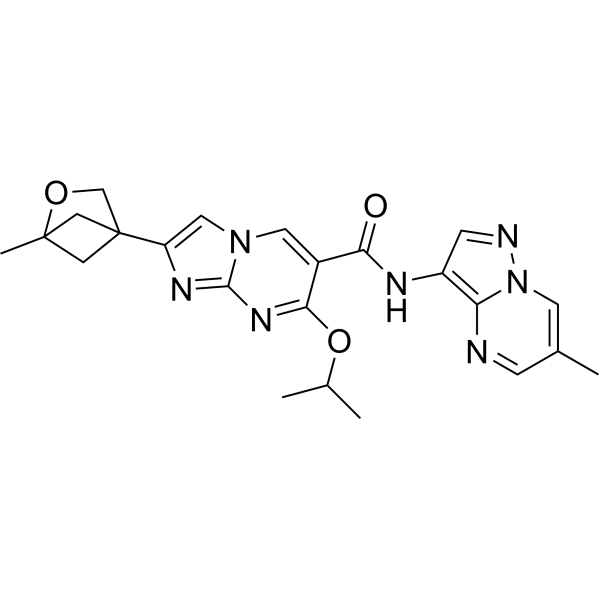
BIO-7488 is an orally active, selective and blood-brain barrier permeable IRAK4 inhibitor, with an IC50 value of 0.5 nM. BIO-7488 inhibits the production of pro-inflammatory cytokines (IL-1β, TNFα, IL-6) and demonstrates anti-inflammatory effects in both LPS (HY-D1056) and distal hypoxic-middle cerebral artery occlusion (DH-MCAO) ischemic stroke model. BIO-7488 can be used for the study of neuroinflammatory-related diseases, particularly ischemic stroke .
loading...
    loading...

