From 11:00 pm to 12:00 pm EST ( 8:00 pm to 9:00 pm PST ) on January 6th, the website will be under maintenance. We are sorry for the inconvenience. Please arrange your schedule properly.
Anti-MouseCD4 Antibody (GK1.5) is an anti-mouseCD4 IgG2b monoclonal antibody. Anti-MouseCD4 Antibody (GK1.5) can significantly deplete CD4+T cells. Anti-MouseCD4 Antibody (GK1.5) can extend the survival rate of xenograft models. Anti-MouseCD4 Antibody (GK1.5) can be used for research on immunology. The recommend isotype control of Anti-MouseCD4 Antibody (GK1.5): Rat IgG2b kappa, Isotype Control (HY-P990682) .
InsB (9-23) (Insulin B chain (9-23)) is an HLA-DQ8-restricted insulin B-chain peptide composed of amino acid residues 9-23. InsB (9-23) serves as a major MHC II class-restricted antigen. InsB (9-23) supports the recognition and activation of T cells, stimulates the secretion of IFN-γ and cytokines, and induces cross-reactive immune responses. InsB (9-23)-specific CD4 T cells can initiate diabetes . InsB (9-23) can be used in research related to type 1 diabetes and autoimmune diabetes .
Anti-Mouse CXCR3/CD183 Antibody (CXCR3-173) is an anti-mouseCXCR3/CD183 IgG monoclonal antibody. Anti-Mouse CXCR3/CD183 Antibody (CXCR3-173) weakens the immune response by reducing the infiltration of CD4+ and CD8 +T cells. Anti-Mouse CXCR3/CD183 Antibody (CXCR3-173) significantly prolongs the survival time of heart or islet transplants in mice. Anti-Mouse CXCR3/CD183 Antibody (CXCR3-173) can be used for researches on immunology and cancer such as pancreatic cancer .
Pam2Cys (Dipalmitoyl-S-glyceryl-cysteine; S-[2,3-Bis(palmitoyloxy)propyl]cysteine) is a TLR2 agonist and immunostimulant. Pam2Cys binds to TLR2 to activate dendritic cells and trigger the TLR2-dependent NF-κB signaling pathway. Pam2Cys also induces dendritic cell maturation by upregulating the expression of cell surface MHC II molecules. Pam2Cys activates innate immune signaling pathways, drives pro-inflammatory and antimicrobial responses, enhances the expression of macrophage activation markers, increases phagocytic activity, induces the release of IL-12 and pro-inflammatory cytokines, and polarizes macrophages into a pro-inflammatory, antimicrobial phenotype without interfering with IL-10-induced macrophage polarization. Pam2Cys also serves as the lipid moiety in synthetic lipopeptide vaccines and possesses self-adjuvant properties. Pam2Cys enhances the immunogenicity of conjugated peptide segments and induces cellular and humoral immune responses. However, it does not activate CD4T cells in mouse splenocyte cultures when used alone. Pam2Cys activates pulmonary TLR2 signaling pathways, triggers innate immune responses, recruits neutrophils and macrophages, induces the secretion of various cytokines, alleviates symptoms and damages associated with influenza A virus infection in mice without impairing adaptive immunity. Pam2Cys can be used in studies related to tuberculosis and influenza A virus infection .
Ordastobart (INBRX-106; ES-102) is a hexavalent OX40 agonist antibody. Ordastobart enhances OX40 receptor clustering, signaling, and downstream activation, thereby increasing the proliferation and activation of CD4+ and CD8 +T cells in vitro and in vivo. Ordastobart exhibits anti-tumor effects and improves survival in mouse models of cancer. Ordastobart is indicated for research in cancers such as fibrosarcoma and colorectal cancer .
Anti-Mouse LAG-3 Antibody (C9B7W) is an anti-mouseLAG-3 IgG1 monoclonal antibody. Anti-Mouse LAG-3 Antibody (C9B7W) can enhance CD4+T cell function and exert anti-tumor effects without blocking the interaction between LAG-3 and MHCII. Anti-Mouse LAG-3 Antibody (C9B7W) can be used for research on cancer such as head and neck squamous cell carcinoma (HNSCC) .
Ferrichrome is a hydroxamate siderophore produced by various fungi, including U. sphaerogena, that facilitates iron chelation and uptake by these organisms. It can be used as a heterosiderophore by bacteria, including Pseudomonas aeruginosa and Vibrio parahaemolyticus. Ferrichrome (0.8 μM) inhibits concanavalin A-induced proliferation of mouse spleen monocytes and reduces the number of concanavalin A-stimulated CD4+ T cells expressing IL-2 receptor. It also inhibits the heme-catalyzed oxidation of LDL by hydrogen peroxide in a concentration-dependent manner.
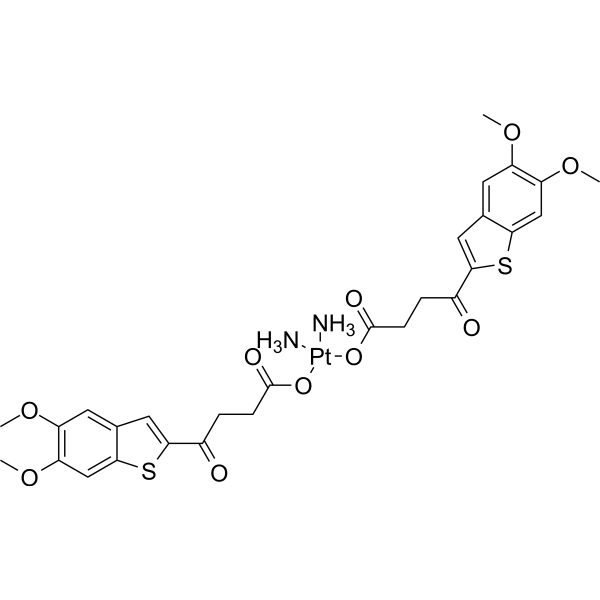
MSA-2-Pt, platinum salt-modified MSA-2 (HY-136927), is a STING agonist. MSA-2-Pt inducing cell death by platinum and activating the STING pathway by MSA-2. MSA-2-Pt direct activates STING pathway, induces phosphorylation of TBK1, IRF3, and NF-κB p65. MSA-2-Pt enhances tumor infiltration of CD4+ and CD8 +T cells, and induces tumor cell death and apoptosis in mouse colon carcinoma and melanoma models .
Anti-Mouse IL-2 Antibody (S4B6-1) is an anti-mouseIL-2 IgG2a monoclonal antibody. Anti-Mouse IL-2 Antibody (S4B6-1) can reduce CD4+T cells and increase Tregs. Anti-Mouse IL-2 Antibody (S4B6-1) can induce Th17 cell differentiation. Anti-Mouse IL-2 Antibody (S4B6-1) can be used for research on cancer such as melanoma. The recommend isotype control of Anti-Mouse IL-2 Antibody (S4B6-1): Rat IgG2a kappa, Isotype Control (HY-P990679) .
Anti-Mouse OX40L/CD134L Antibody (RM134L) is an anti-mouseOX40L/CD134L IgG2b monoclonal antibody. Anti-Mouse OX40L/CD134L Antibody (RM134L) reduces immune response by inhibiting the OX40/OX40L signaling pathway. Anti-Mouse OX40L/CD134L Antibody (RM134L) can inhibit plasma cell differentiation and antibody secretion. Anti-Mouse OX40L/CD134L Antibody (RM134L) can prolong the survival time of cell transplantation by inhibiting CD4+T cells. Anti-Mouse OX40L/CD134L Antibody (RM134L) can be used for researches on inflammation and cancer such as graft versus host disease (GVHD), allergic reaction, lupus nephritis and hepatocellular carcinoma (HCC) .
Anti-CD4 Antibody (OKT-4) is a kind of mouse IgG2b κ chimeric antibody inhibitor, targeting to human CD4. Anti-CD4 Antibody (OKT-4) can deplete T cells. Anti-CD4 Antibody (OKT-4) can be used for the researches of cancer, infection and immunology, such as melanoma and adenovirus infection .
PTX-35 is a human IgG monoclonal antibody (mAb) targeting TNFRSF25. PTX-35 reduces the suppressive activity of regulatory T cells and enhances CD4+ T cell effector responses in a mouse melanoma model. PTX-35 can be used in Islet cell transplant rejection and Solid tumours research. Recommended isotype control: Human IgG1 lambda2, Isotype Control (HY-P990096) .
Anti-Mouse Galectin-9 Antibody (RG9-1) is an anti-mouseGalectin-9 IgG2b monoclonal antibody. Anti-Mouse Galectin-9 Antibody (RG9-1) promotes inflammatory response by enhancing the secretion of IFN-γ, TNF-α, and IL-6. Anti-Mouse Galectin-9 Antibody (RG9-1) can increase CD8 T cell and Treg frequency. Anti-Mouse Galectin-9 Antibody (RG9-1) reduces graft survival time by increasing CD4+ and CD8 +T cell infiltration. Anti-Mouse Galectin-9 Antibody (RG9-1) can be used for researches on inflammation conditions, cancer and xenotransplantation such as ischemia-reperfusion, colon cancer, breast cancer and leukemia .
Etrasimod arginine is an orally available S1P receptor modulator that is a potent full agonist of the S1P1 receptor and has partial agonist activity at S1P4. Etrasimod arginine reduces inflammation in a CD4+CD45RB highT cell-transferred mouse colitis model .
Anti-Mouse CD8α Antibody (YTS169.4) is an IgG2 monoclonal antibody targeting mouseCD8α. Anti-Mouse CD8α Antibody (YTS169.4) rapidly depletes or downregulates CD8 + T cells in the spleens of Biozzi AB/H mice. Anti-Mouse CD8α Antibody (YTS169.4) is applicable to research related to hepatitis B virus infection . Recommended isotype control: Rat IgG2b kappa, Isotype Control (HY-P990682).
Anti-Mouse 4-1BBL/CD137L Antibody (TKS-1) is a rat-derived IgG2a κ antibody inhibitor, targeting to mouse4-1BBL/CD137L. Anti-Mouse 4-1BBL/CD137L Antibody (TKS-1) can block 4-1BB ligand (4-1BBL) and inhibit CD4+ and CD8 +T cells. Anti-Mouse 4-1BBL/CD137L Antibody (TKS-1) can be used for the researches of cancer, infection, inflammation and immunology, such as MC38 tumor, lymphocytic choriomeningitis virus (LCMV) infection and herpetic stromal keratitis (HSK) .
M133 peptide is a coronavirus-specific CD4T cell epitope. M133 peptide is immunodominant in mice infected with the neurotropic coronavirus (the JHM strain of mouse hepatitis virus). M133 peptide forms a complex with MHC II molecules, which is recognized by specific TCRs, thereby activating CD4T cells .
BND-35 is a human monoclonal antibody (mAb) targeting LILRB4/ILT3/CD85k. BND-35 blocks the interaction of ILT3 with APOE and fibronectin, enhances the pro-inflammatory activity of various myeloid cells, and reverses ILT3-mediated immunosuppression of T cells by various suppressive myeloid cells. BND-35 has anti-tumor activity in the hILT3 transgenic mouse tumor model .
PD-1/PD-L1 inhibitory peptide C8 is inhibits PD-1/PD-L1 interaction, promotes the activation of CD8+ and CD4+ T cells, and increases the IFN-γ secretion. PD-1/PD-L1 inhibitory peptide C8 exhibits antitumor efficacy in mouse model .
SLW131 (Compound 10) is the antagonist for CCR7 with a good affinity of Ki of 9.85 nM. SLW131 inhibits CCL19-induced Go protein activation with an IC50 of 29.4 μM, inhibits β-arrestin2 recruitment with an IC50 of 6.0 μM. SLW131 inhibits CCL19-induced cell morphological changes in primary BMDCs, and CCR7-mediated migration in mouseCD4+ T cell .
Anti-MouseCD4 Antibody (YTS 177) reacts with the mouseCD4. Anti-MouseCD4 Antibody (YTS 177) shows non-depleting but binding does induce rapid internalization of CD4 on both CD4+ Foxp3- T cells and Foxp3 + regulatory T cells. Recommend Isotype Controls: Rat IgG2a kappa, Isotype Control (HY-P990679) .
Anti-Rat CD4 Antibody (W3/25) reacts with rat CD4. Anti-Rat CD4 Antibody (W3/25) inhibits CD4+ T cell activation by downregulating the CD4 molecule on the surface of lymphocytes. Anti-Rat CD4 Antibody (W3/25) inhibits antigen-induced T cell proliferation and IL2 production in MLR experiments. Anti-Rat CD4 Antibody (W3/25) can be used for the study of experimental allergic encephalomyelitis (EAE). Recommend Isotype Controls: Mouse IgG1 kappa, Isotype Control (HY-P99977) .
Anti-Mouse CD8α Antibody (YTS 105.18) is a non-depleting rat IgG2a monoclonal antibody. Anti-Mouse CD8α Antibody (YTS 105.18) binds to CD8α (epitope c) on mouse CD8 +T cells; when used in combination with a non-depleting anti-CD4 antibody, it does not deplete CD8 +T cells but instead promotes the induction of peripheral tolerance in this cell subset. Anti-Mouse CD8α Antibody (YTS 105.18) can be used in studies of graft rejection .
CyGbPF is a granzyme B-specific near-infrared fluorescent probe. CyGbPF can be cleaved by granzyme B to remove the peptide cage group, restoring near-infrared fluorescence. CyGbPF passively accumulates in mouse tumors, and its activated fluorescence correlates with granzyme B expression, CD8 + cytotoxic T lymphocyte populations, and CD4+ helper T lymphocyte populations in tumor tissues. CyGbPF is efficiently cleared by the kidneys, enabling the assessment of immune activation via optical urine analysis. CyGbPF allows real-time non-invasive evaluation of cancer immunotherapeutic efficacy in living animals. CyGbPF can be used in research on cancers such as breast cancer. Excitation wavelength/emission wavelength: approximately 658 nm/approximately 717 nm .
XAN-5 is a mitochondrial DNA G-quadruplex (mtG4) ligand with a Kd of 3.8 μM. XAN-5 selectively binds and stabilizes mtG4 structures, disrupting mitochondrial gene transcription and DNA replication. XAN-5 triggers mitochondrial dysfunction, ROS overproduction, G0 phase arrest and caspase-dependent apoptosis. XAN-5 inhibits autophagy and induces immunogenic cell death. XAN-5 inhibits tumor growth in a mouse liver cancer model while enhancing tumor-infiltrating CD4+ and CD8 +T cells. XAN-5 targets two cancer resistance mechanisms simultaneously. XAN-5 can be used for the research of liver cancer .
P2X7R antagonist-1 is an orally active P2X7 receptor antagonist with an IC50 of 3.57 μM. P2X7R antagonist-1 inhibits the proliferation, invasion and metastasis abilities of cancer cells. P2X7R antagonist-1 downregulates the expression of FAK and MMP-9. P2X7R antagonist-1 suppresses tumor growth and metastasis in a mouse breast cancer model. P2X7R antagonist-1 promotes the activation of CD4 and CD8T cells. P2X7R antagonist-1 can be used in breast cancer-related research .
Anti-Human/Mouse LY6E Antibody (9B12) is a high-affinity, multi-target antibody that binds specifically to LY6E. Anti-Human/Mouse LY6E Antibody (9B12) binds specifically to cell-surface LY6E and enters lysosomes via lipid raft-dependent endocytosis, thereby effectively inhibiting the growth of various LY6E-expressing solid tumors (such as breast cancer and lung cancer) in both in vitro and in vivo models. Anti-Human/Mouse LY6E Antibody (9B12) exerts a dual mechanism of action: on one hand, it blocks the interaction between PILRα and CD8α, specifically reduces the survival rate of peripheral CD8 +T cells and induces their activation, breaking the state of cellular quiescence; on the other hand, it recognizes and immunoprecipitates IDE under both non-denaturing and denaturing conditions, which is applicable to studies on the subcellular localization and protein interactions of IDE. The regulatory effect of Anti-Human/Mouse LY6E Antibody (9B12) on CD8 +T cells strictly depends on the presence of PILRα, and it does not affect CD4+T cells or T cell development in the thymus, exhibiting high specificity .
CyGbPF is a granzyme B-specific near-infrared fluorescent probe. CyGbPF can be cleaved by granzyme B to remove the peptide cage group, restoring near-infrared fluorescence. CyGbPF passively accumulates in mouse tumors, and its activated fluorescence correlates with granzyme B expression, CD8 + cytotoxic T lymphocyte populations, and CD4+ helper T lymphocyte populations in tumor tissues. CyGbPF is efficiently cleared by the kidneys, enabling the assessment of immune activation via optical urine analysis. CyGbPF allows real-time non-invasive evaluation of cancer immunotherapeutic efficacy in living animals. CyGbPF can be used in research on cancers such as breast cancer. Excitation wavelength/emission wavelength: approximately 658 nm/approximately 717 nm .
InsB (9-23) (Insulin B chain (9-23)) is an HLA-DQ8-restricted insulin B-chain peptide composed of amino acid residues 9-23. InsB (9-23) serves as a major MHC II class-restricted antigen. InsB (9-23) supports the recognition and activation of T cells, stimulates the secretion of IFN-γ and cytokines, and induces cross-reactive immune responses. InsB (9-23)-specific CD4 T cells can initiate diabetes . InsB (9-23) can be used in research related to type 1 diabetes and autoimmune diabetes .
Ferrichrome is a hydroxamate siderophore produced by various fungi, including U. sphaerogena, that facilitates iron chelation and uptake by these organisms. It can be used as a heterosiderophore by bacteria, including Pseudomonas aeruginosa and Vibrio parahaemolyticus. Ferrichrome (0.8 μM) inhibits concanavalin A-induced proliferation of mouse spleen monocytes and reduces the number of concanavalin A-stimulated CD4+ T cells expressing IL-2 receptor. It also inhibits the heme-catalyzed oxidation of LDL by hydrogen peroxide in a concentration-dependent manner.
M133 peptide is a coronavirus-specific CD4T cell epitope. M133 peptide is immunodominant in mice infected with the neurotropic coronavirus (the JHM strain of mouse hepatitis virus). M133 peptide forms a complex with MHC II molecules, which is recognized by specific TCRs, thereby activating CD4T cells .
PD-1/PD-L1 inhibitory peptide C8 is inhibits PD-1/PD-L1 interaction, promotes the activation of CD8+ and CD4+ T cells, and increases the IFN-γ secretion. PD-1/PD-L1 inhibitory peptide C8 exhibits antitumor efficacy in mouse model .
MCE MouseCD4+T Cells Negative Selection Kit is designed for the isolation of CD4+T cells from single cell suspensions of mouse spleen cells and lymph nodes.
Anti-MouseCD4 Antibody (GK1.5) is an anti-mouseCD4 IgG2b monoclonal antibody. Anti-MouseCD4 Antibody (GK1.5) can significantly deplete CD4+T cells. Anti-MouseCD4 Antibody (GK1.5) can extend the survival rate of xenograft models. Anti-MouseCD4 Antibody (GK1.5) can be used for research on immunology. The recommend isotype control of Anti-MouseCD4 Antibody (GK1.5): Rat IgG2b kappa, Isotype Control (HY-P990682) .
Anti-Mouse CXCR3/CD183 Antibody (CXCR3-173) is an anti-mouseCXCR3/CD183 IgG monoclonal antibody. Anti-Mouse CXCR3/CD183 Antibody (CXCR3-173) weakens the immune response by reducing the infiltration of CD4+ and CD8 +T cells. Anti-Mouse CXCR3/CD183 Antibody (CXCR3-173) significantly prolongs the survival time of heart or islet transplants in mice. Anti-Mouse CXCR3/CD183 Antibody (CXCR3-173) can be used for researches on immunology and cancer such as pancreatic cancer .
Ordastobart (INBRX-106; ES-102) is a hexavalent OX40 agonist antibody. Ordastobart enhances OX40 receptor clustering, signaling, and downstream activation, thereby increasing the proliferation and activation of CD4+ and CD8 +T cells in vitro and in vivo. Ordastobart exhibits anti-tumor effects and improves survival in mouse models of cancer. Ordastobart is indicated for research in cancers such as fibrosarcoma and colorectal cancer .
Anti-Mouse LAG-3 Antibody (C9B7W) is an anti-mouseLAG-3 IgG1 monoclonal antibody. Anti-Mouse LAG-3 Antibody (C9B7W) can enhance CD4+T cell function and exert anti-tumor effects without blocking the interaction between LAG-3 and MHCII. Anti-Mouse LAG-3 Antibody (C9B7W) can be used for research on cancer such as head and neck squamous cell carcinoma (HNSCC) .
Anti-Mouse IL-2 Antibody (S4B6-1) is an anti-mouseIL-2 IgG2a monoclonal antibody. Anti-Mouse IL-2 Antibody (S4B6-1) can reduce CD4+T cells and increase Tregs. Anti-Mouse IL-2 Antibody (S4B6-1) can induce Th17 cell differentiation. Anti-Mouse IL-2 Antibody (S4B6-1) can be used for research on cancer such as melanoma. The recommend isotype control of Anti-Mouse IL-2 Antibody (S4B6-1): Rat IgG2a kappa, Isotype Control (HY-P990679) .
Anti-Mouse OX40L/CD134L Antibody (RM134L) is an anti-mouseOX40L/CD134L IgG2b monoclonal antibody. Anti-Mouse OX40L/CD134L Antibody (RM134L) reduces immune response by inhibiting the OX40/OX40L signaling pathway. Anti-Mouse OX40L/CD134L Antibody (RM134L) can inhibit plasma cell differentiation and antibody secretion. Anti-Mouse OX40L/CD134L Antibody (RM134L) can prolong the survival time of cell transplantation by inhibiting CD4+T cells. Anti-Mouse OX40L/CD134L Antibody (RM134L) can be used for researches on inflammation and cancer such as graft versus host disease (GVHD), allergic reaction, lupus nephritis and hepatocellular carcinoma (HCC) .
Anti-CD4 Antibody (OKT-4) is a kind of mouse IgG2b κ chimeric antibody inhibitor, targeting to human CD4. Anti-CD4 Antibody (OKT-4) can deplete T cells. Anti-CD4 Antibody (OKT-4) can be used for the researches of cancer, infection and immunology, such as melanoma and adenovirus infection .
PTX-35 is a human IgG monoclonal antibody (mAb) targeting TNFRSF25. PTX-35 reduces the suppressive activity of regulatory T cells and enhances CD4+ T cell effector responses in a mouse melanoma model. PTX-35 can be used in Islet cell transplant rejection and Solid tumours research. Recommended isotype control: Human IgG1 lambda2, Isotype Control (HY-P990096) .
Anti-Mouse Galectin-9 Antibody (RG9-1) is an anti-mouseGalectin-9 IgG2b monoclonal antibody. Anti-Mouse Galectin-9 Antibody (RG9-1) promotes inflammatory response by enhancing the secretion of IFN-γ, TNF-α, and IL-6. Anti-Mouse Galectin-9 Antibody (RG9-1) can increase CD8 T cell and Treg frequency. Anti-Mouse Galectin-9 Antibody (RG9-1) reduces graft survival time by increasing CD4+ and CD8 +T cell infiltration. Anti-Mouse Galectin-9 Antibody (RG9-1) can be used for researches on inflammation conditions, cancer and xenotransplantation such as ischemia-reperfusion, colon cancer, breast cancer and leukemia .
Anti-Mouse CD8α Antibody (YTS169.4) is an IgG2 monoclonal antibody targeting mouseCD8α. Anti-Mouse CD8α Antibody (YTS169.4) rapidly depletes or downregulates CD8 + T cells in the spleens of Biozzi AB/H mice. Anti-Mouse CD8α Antibody (YTS169.4) is applicable to research related to hepatitis B virus infection . Recommended isotype control: Rat IgG2b kappa, Isotype Control (HY-P990682).
Anti-Mouse 4-1BBL/CD137L Antibody (TKS-1) is a rat-derived IgG2a κ antibody inhibitor, targeting to mouse4-1BBL/CD137L. Anti-Mouse 4-1BBL/CD137L Antibody (TKS-1) can block 4-1BB ligand (4-1BBL) and inhibit CD4+ and CD8 +T cells. Anti-Mouse 4-1BBL/CD137L Antibody (TKS-1) can be used for the researches of cancer, infection, inflammation and immunology, such as MC38 tumor, lymphocytic choriomeningitis virus (LCMV) infection and herpetic stromal keratitis (HSK) .
BND-35 is a human monoclonal antibody (mAb) targeting LILRB4/ILT3/CD85k. BND-35 blocks the interaction of ILT3 with APOE and fibronectin, enhances the pro-inflammatory activity of various myeloid cells, and reverses ILT3-mediated immunosuppression of T cells by various suppressive myeloid cells. BND-35 has anti-tumor activity in the hILT3 transgenic mouse tumor model .
Anti-MouseCD4 Antibody (YTS 177) reacts with the mouseCD4. Anti-MouseCD4 Antibody (YTS 177) shows non-depleting but binding does induce rapid internalization of CD4 on both CD4+ Foxp3- T cells and Foxp3 + regulatory T cells. Recommend Isotype Controls: Rat IgG2a kappa, Isotype Control (HY-P990679) .
Anti-Rat CD4 Antibody (W3/25) reacts with rat CD4. Anti-Rat CD4 Antibody (W3/25) inhibits CD4+ T cell activation by downregulating the CD4 molecule on the surface of lymphocytes. Anti-Rat CD4 Antibody (W3/25) inhibits antigen-induced T cell proliferation and IL2 production in MLR experiments. Anti-Rat CD4 Antibody (W3/25) can be used for the study of experimental allergic encephalomyelitis (EAE). Recommend Isotype Controls: Mouse IgG1 kappa, Isotype Control (HY-P99977) .
Anti-Mouse CD8α Antibody (YTS 105.18) is a non-depleting rat IgG2a monoclonal antibody. Anti-Mouse CD8α Antibody (YTS 105.18) binds to CD8α (epitope c) on mouse CD8 +T cells; when used in combination with a non-depleting anti-CD4 antibody, it does not deplete CD8 +T cells but instead promotes the induction of peripheral tolerance in this cell subset. Anti-Mouse CD8α Antibody (YTS 105.18) can be used in studies of graft rejection .
Anti-Human/Mouse LY6E Antibody (9B12) is a high-affinity, multi-target antibody that binds specifically to LY6E. Anti-Human/Mouse LY6E Antibody (9B12) binds specifically to cell-surface LY6E and enters lysosomes via lipid raft-dependent endocytosis, thereby effectively inhibiting the growth of various LY6E-expressing solid tumors (such as breast cancer and lung cancer) in both in vitro and in vivo models. Anti-Human/Mouse LY6E Antibody (9B12) exerts a dual mechanism of action: on one hand, it blocks the interaction between PILRα and CD8α, specifically reduces the survival rate of peripheral CD8 +T cells and induces their activation, breaking the state of cellular quiescence; on the other hand, it recognizes and immunoprecipitates IDE under both non-denaturing and denaturing conditions, which is applicable to studies on the subcellular localization and protein interactions of IDE. The regulatory effect of Anti-Human/Mouse LY6E Antibody (9B12) on CD8 +T cells strictly depends on the presence of PILRα, and it does not affect CD4+T cells or T cell development in the thymus, exhibiting high specificity .
CD4 is a glycoprotein critical in immune responses that binds to interleukin-16 and forms a homodimer. It enhances helper T cell-mediated immune responses and regulates processes such as defense against Gram-negative bacteria and calcium signaling. CD4 Protein, Mouse (HEK293, His) is the recombinant mouse-derived CD4 protein, expressed by HEK293 , with C-His, C-6*His labeled tag.
CD4 is a glycoprotein critical in immune responses that binds to interleukin-16 and forms a homodimer. It enhances helper T cell-mediated immune responses and regulates processes such as defense against Gram-negative bacteria and calcium signaling. CD4 Protein, Mouse (Biotinylated, HEK293, His-Avi) is the recombinant mouse-derived CD4 protein, expressed by HEK293 , with C-His, C-Avi labeled tag.
(5)
Product Comparison
Compare
Clear All
Compare Products
Products
In-stock
-
+
Add to Cart
Cat. No.
Species
Source
Tag
Accession
Gene ID
Molecular Weight
Purity
Endotoxin Level
Biological Activity
Appearance
Formulation
Storage & Stability
Shipping
Free Sample
YesNo
Size
* This product has been "discontinued".
Optimized version of product available:
/
In-stock
-
+
Add to Cart
Get quote
Inquiry Online
Your information is safe with us. * Required Fields.
Western blot analysis of extracts from THP-1(lane 2(20μg), Jurkat (lane 3(20μg) and NIH3T3(lane 4(20μg) using FOXO1A (HY-P80132) Rabbit mAb. Proteins were transferred
to a PVDF membrane and blocked with 5% non-fat milk in TBST for 2 hour at room temperature. The primary antibody (1/1000) and Loading control antibody (Beta Actin, HY-P80438, 1/10000) was
used in 5% non-fat milk in TBST at 4°C overnight. Goat Anti-Mouse/Rabbit IgG-HRP Secondary Antibody (1/10000) was used for 1 hour at room temperature.
Western blot analysis of extracts from THP-1(lane 2(20μg), Jurkat (lane 3(20μg) and NIH3T3(lane 4(20μg) using FOXO1A (HY-P80132) Rabbit mAb. Proteins were transferred
to a PVDF membrane and blocked with 5% non-fat milk in TBST for 2 hour at room temperature. The primary antibody (1/1000) and Loading control antibody (Beta Actin, HY-P80438, 1/10000) was
used in 5% non-fat milk in TBST at 4°C overnight. Goat Anti-Mouse/Rabbit IgG-HRP Secondary Antibody (1/10000) was used for 1 hour at room temperature.
Western blot analysis of extracts from THP-1(lane 2(20μg), Jurkat (lane 3(20μg) and NIH3T3(lane 4(20μg) using FOXO1A (HY-P80132) Rabbit mAb. Proteins were transferred
to a PVDF membrane and blocked with 5% non-fat milk in TBST for 2 hour at room temperature. The primary antibody (1/1000) and Loading control antibody (Beta Actin, HY-P80438, 1/10000) was
used in 5% non-fat milk in TBST at 4°C overnight. Goat Anti-Mouse/Rabbit IgG-HRP Secondary Antibody (1/10000) was used for 1 hour at room temperature.
Western blot analysis of extracts from THP-1(lane 2(20μg), Jurkat (lane 3(20μg) and NIH3T3(lane 4(20μg) using FOXO1A (HY-P80132) Rabbit mAb. Proteins were transferred
to a PVDF membrane and blocked with 5% non-fat milk in TBST for 2 hour at room temperature. The primary antibody (1/1000) and Loading control antibody (Beta Actin, HY-P80438, 1/10000) was
MedchemExpress Validation 03
Western blot analysis of extracts from THP-1(lane 2(20μg), Jurkat (lane 3(20μg) and NIH3T3(lane 4(20μg) using FOXO1A (HY-P80132) Rabbit mAb. Proteins were transferred
MedchemExpress Validation 04
Western blot analysis of extracts from THP-1(lane 2(20μg), Jurkat (lane 3(20μg) and NIH3T3(lane 4(20μg) using FOXO1A (HY-P80132) Rabbit mAb. Proteins were transferred
to a PVDF membrane and blocked with 5% non-fat milk in TBST for 2 hour at room temperature. The primary antibody (1/1000) and Loading control antibody (Beta Actin, HY-P80438, 1/10000) was
used in 5% non-fat milk in TBST at 4°C overnight. Goat Anti-Mouse/Rabbit IgG-HRP Secondary Antibody (1/10000) was used for 1 hour at room temperature.
MedchemExpress Validation
Western blot analysis of extracts from THP-1(lane 2(20μg), Jurkat (lane 3(20μg) and NIH3T3(lane 4(20μg) using FOXO1A (HY-P80132) Rabbit mAb. Proteins were transferred
to a PVDF membrane and blocked with 5% non-fat milk in TBST for 2 hour at room temperature. The primary antibody (1/1000) and Loading control antibody (Beta Actin, HY-P80438, 1/10000) was
used in 5% non-fat milk in TBST at 4°C overnight. Goat Anti-Mouse/Rabbit IgG-HRP Secondary Antibody (1/10000) was used for 1 hour at room temperature.
Western blot analysis of extracts from THP-1(lane 2(20μg), Jurkat (lane 3(20μg) and NIH3T3(lane 4(20μg) using FOXO1A (HY-P80132) Rabbit mAb. Proteins were transferred
to a PVDF membrane and blocked with 5% non-fat milk in TBST for 2 hour at room temperature. The primary antibody (1/1000) and Loading control antibody (Beta Actin, HY-P80438, 1/10000) was
used in 5% non-fat milk in TBST at 4°C overnight. Goat Anti-Mouse/Rabbit IgG-HRP Secondary Antibody (1/10000) was used for 1 hour at room temperature.
MedchemExpress Validation
Western blot analysis of extracts from THP-1(lane 2(20μg), Jurkat (lane 3(20μg) and NIH3T3(lane 4(20μg) using FOXO1A (HY-P80132) Rabbit mAb. Proteins were transferred
to a PVDF membrane and blocked with 5% non-fat milk in TBST for 2 hour at room temperature. The primary antibody (1/1000) and Loading control antibody (Beta Actin, HY-P80438, 1/10000) was
used in 5% non-fat milk in TBST at 4°C overnight. Goat Anti-Mouse/Rabbit IgG-HRP Secondary Antibody (1/10000) was used for 1 hour at room temperature.
MedchemExpress Validation
Western blot analysis of extracts from THP-1(lane 2(20μg), Jurkat (lane 3(20μg) and NIH3T3(lane 4(20μg) using FOXO1A (HY-P80132) Rabbit mAb. Proteins were transferred
to a PVDF membrane and blocked with 5% non-fat milk in TBST for 2 hour at room temperature. The primary antibody (1/1000) and Loading control antibody (Beta Actin, HY-P80438, 1/10000) was
used in 5% non-fat milk in TBST at 4°C overnight. Goat Anti-Mouse/Rabbit IgG-HRP Secondary Antibody (1/10000) was used for 1 hour at room temperature.
MedchemExpress Validation
Western blot analysis of extracts from THP-1(lane 2(20μg), Jurkat (lane 3(20μg) and NIH3T3(lane 4(20μg) using FOXO1A (HY-P80132) Rabbit mAb. Proteins were transferred
to a PVDF membrane and blocked with 5% non-fat milk in TBST for 2 hour at room temperature. The primary antibody (1/1000) and Loading control antibody (Beta Actin, HY-P80438, 1/10000) was
used in 5% non-fat milk in TBST at 4°C overnight. Goat Anti-Mouse/Rabbit IgG-HRP Secondary Antibody (1/10000) was used for 1 hour at room temperature.
MedchemExpress Validation
Western blot analysis of extracts from THP-1(lane 2(20μg), Jurkat (lane 3(20μg) and NIH3T3(lane 4(20μg) using FOXO1A (HY-P80132) Rabbit mAb. Proteins were transferred
to a PVDF membrane and blocked with 5% non-fat milk in TBST for 2 hour at room temperature. The primary antibody (1/1000) and Loading control antibody (Beta Actin, HY-P80438, 1/10000) was
used in 5% non-fat milk in TBST at 4°C overnight. Goat Anti-Mouse/Rabbit IgG-HRP Secondary Antibody (1/10000) was used for 1 hour at room temperature.
MedchemExpress Validation
Western blot analysis of extracts from THP-1(lane 2(20μg), Jurkat (lane 3(20μg) and NIH3T3(lane 4(20μg) using FOXO1A (HY-P80132) Rabbit mAb. Proteins were transferred
to a PVDF membrane and blocked with 5% non-fat milk in TBST for 2 hour at room temperature. The primary antibody (1/1000) and Loading control antibody (Beta Actin, HY-P80438, 1/10000) was
used in 5% non-fat milk in TBST at 4°C overnight. Goat Anti-Mouse/Rabbit IgG-HRP Secondary Antibody (1/10000) was used for 1 hour at room temperature.
MedchemExpress Validation
Western blot analysis of extracts from THP-1(lane 2(20μg), Jurkat (lane 3(20μg) and NIH3T3(lane 4(20μg) using FOXO1A (HY-P80132) Rabbit mAb. Proteins were transferred
to a PVDF membrane and blocked with 5% non-fat milk in TBST for 2 hour at room temperature. The primary antibody (1/1000) and Loading control antibody (Beta Actin, HY-P80438, 1/10000) was
used in 5% non-fat milk in TBST at 4°C overnight. Goat Anti-Mouse/Rabbit IgG-HRP Secondary Antibody (1/10000) was used for 1 hour at room temperature.
MedChemExpress values your privacy and your trust is important to us. We use cookies to enhance your website experience. Some cookies are necessary to run the website.
Privacy and Cookie Policy

