1. Search Result
Search Result
Pathways Recommended: Stem Cell/Wnt Cell Cycle/DNA Damage
Results for "

Non-small cell lung cancer (NSCLC)

" in MedChemExpress (MCE) Product Catalog:

247

Inhibitors & Agonists

1

Screening-Bibliotheken

2

Fluorescent Dyes

3

Peptides

21

Inhibitory Antibodies

11

Natural
Products

9

Isotope-Labeled Compounds

2

Click Chemistry

Art. -Nr. Produktname Target Forschungsgebiete Chemical Structure
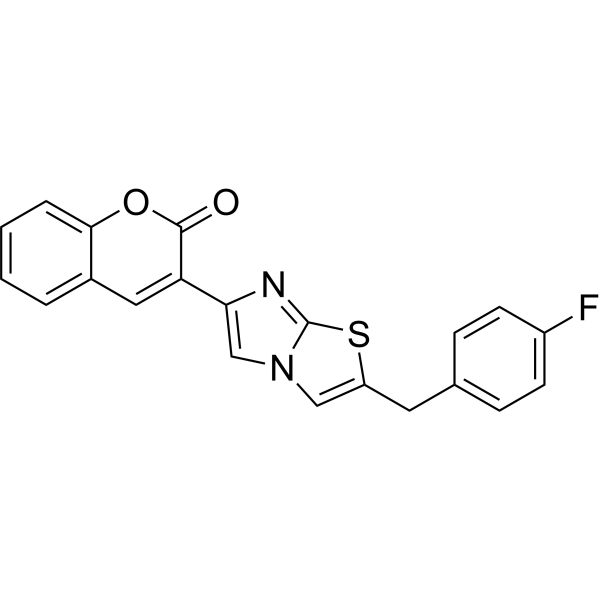
  • HY-110171
    iMDK
    5 Publications Verification

    PI3K Cancer
    iMDK is a potent PI3K inhibitor and inhibits the growth factor MDK (also known as midkine or MK). iMDK suppresses non-small cell lung cancer (NSCLC) cooperatively with A MEK inhibitor without harming normal cells and mice .
    iMDK
  • HY-112870
    Firmonertinib
    5+ Cited Publications

    Alflutinib; Furmonertinib; AST2818

    EGFR Cancer
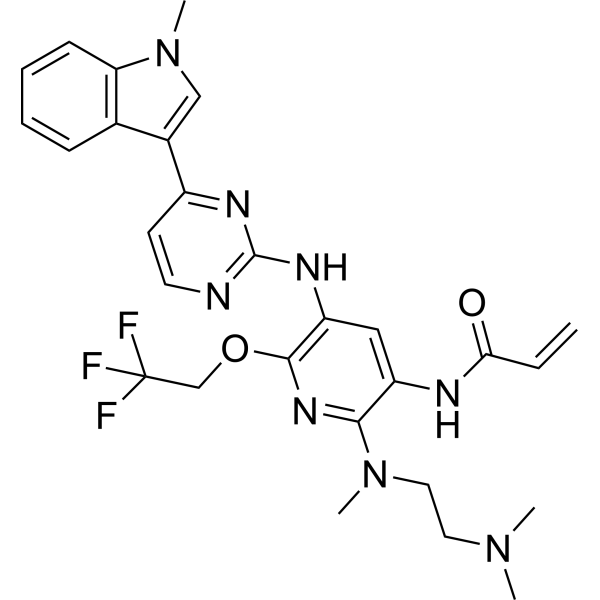
    Firmonertinib (Alflutinib; Furmonertinib) is an orally active, mutant-selective, and highly brain penetrant EGFR inhibitor. Firmonertinib inhibits EGFR active mutations as well as the T790M acquired resistant mutation. Firmonertinib has the potential for the research of cancer diseases, especially advanced non-small cell lung cancer (NSCLC) with EGFR ex20ins mutation .
    Firmonertinib
  • HY-P99269
    Sibrotuzumab
    1 Publications Verification

    BIBH 1; Anti-Human FAP Recombinant Antibody

    FAP Cancer
    Sibrotuzumab (BIBH 1) is a humanized IgG1 monoclonal antibody targets fibroblast activation protein (FAP). Sibrotuzumab can be used for the research of colorectal cancer and non-small cell lung cancer (NSCLC) .
    Sibrotuzumab
  • HY-162307

    PROTACs Keap1-Nrf2 Cancer
    Nrf2 degrader 1 (compound 1) is a PROTAC Nrf2 degrader with a DC50 of 0.1-1 μM in huH1 cells. Nrf2 degrader 1 inhibits cancer cells growth for A549 and LK-2 cells with IC50 values of 100 nM and 40 nM, respectively. Nrf2 degrader 1 can be used for the study of liver cancer, non-small cell lung cancer (NSCLC) and squamous cell carcinoma of lung cancer .
    Nrf2 degrader 1
  • HY-175749

    Molecular Glues Wee1 Inflammation/Immunology Cancer
    BMS-986463, a CRBN E3 ligase modulator (CELMoD), is a WEE1 kinase molecular glue degrader. BMS-986463 significantly inhibits tumor regression and reduces the level of phospho-CDK2. BMS-986463 can be used for advanced malignant solid tumors like non-small cell lung cancer (NSCLC) research .
    BMS-986463
  • HY-P10944

    NNS309

    FAP Inflammation/Immunology Cancer
    Unlabeled FXX489 (NNS309) is a fibroblast activation protein (FAP)-targeting ligand. Unlabeled FXX489 can be labeled with 68Ga and 177Lu and shows anticancer effects. Unlabeled FXX489 can be used for the study of pancreatic ductal adenocarcinoma (PDAC), non-small cell lung cancer (NSCLC), breast cancer (BC), and colorectal cancer (CRC) .
    Unlabeled FXX489
  • HY-147340

    Tirumotecan

    Drug-Linker Conjugates for ADC Cancer
    TL033 is a drug-Linker conjugates for ADC. TL033 contains a linker and bioactive small molecule toxins. TL033 can conjugate with Sacituzumab antibody (anti Trop-2) for synthesizing BT001021. BT001021 has anti-cancer activities against various cancers, such as breast cancer, non-small cell lung cancer (NSCLC), gastric cancer .
    TL033
  • HY-P9986

    MTIG-7192A; RG-6058

    CD28 Cancer
    Tiragolumab is an immune checkpoint inhibitor binding to the T-cell immunoglobulin and ITIM domain (TIGIT). Tiragolumab in combination with Atezolizumab (HY-P9904) and Bevacizumab (HY-P9906) has benefit in unresectable hepatocellular carcinoma. Tiragolumab can be used to study non-small cell lung cancer (NSCLC) and melanoma .
    Tiragolumab
  • HY-112870A
    Firmonertinib mesylate
    5+ Cited Publications

    Alflutinib mesylate; Furmonertinib mesylate; AST2818 mesylate

    EGFR Inflammation/Immunology Cancer
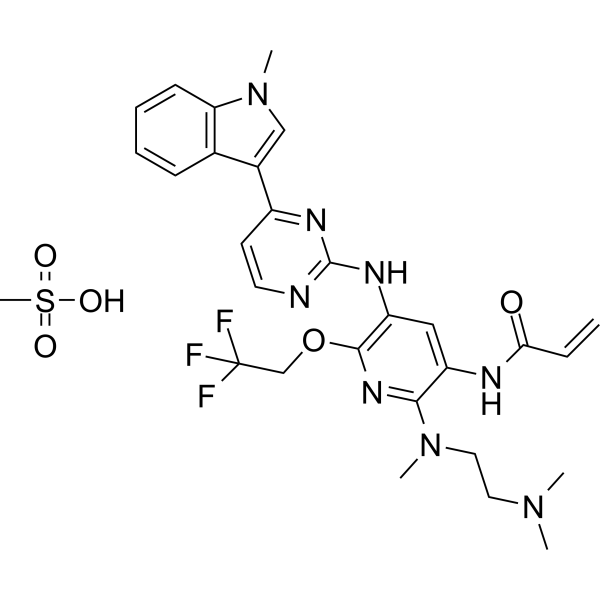
    Firmonertinib (Alflutinib; Furmonertinib) mesylate is is an orally active, mutant-selective, and blood-brain barrier penetrant EGFR inhibitor. Firmonertinib mesylate inhibits EGFR active mutations as well as the T790M acquired resistant mutation. Firmonertinib mesylate has the potential for the research of cancer diseases, especially advanced non-small cell lung cancer (NSCLC) with EGFR ex20ins mutation .
    Firmonertinib mesylate
  • HY-147340A

    Tirumotecan TFA

    Drug-Linker Conjugates for ADC Cancer
    TL033 TFA is a drug-Linker conjugates for ADC. TL033 TFA contains a linker and bioactive small molecule toxins. TL033 TFA can conjugate with Sacituzumab antibody (anti Trop-2) for synthesizing BT001021. BT001021 has anti-cancer activities against various cancers, such as breast cancer, non-small cell lung cancer (NSCLC), gastric cancer .
    TL033 TFA
  • HY-176857

    PROTACs STAT Inflammation/Immunology Cancer
    PROTAC STAT6 degrader-1 (Compound I-2) is a potent STAT6 PROTAC degrader with a DC50 <1 nM. PROTAC STAT6 degrader-1 inhibits STAT6 activity with an IC50 of <0.1 pM. PROTAC STAT6 degrader-1 can be used for inflammatory and cancers research, such as non-small cell lung cancer (NSCLC) .
    PROTAC STAT6 degrader-1
  • HY-144680

    ZL-2313

    EGFR Cancer
    BLU-945 is a potent, highly selective, reversible and orally active epidermal growth factor receptor (EGFR) tyrosine kinase inhibitor (TKIs). BLU-945 can effectively inhibit EGFR with L858R and/or exon 19 deletion mutation, T790M mutation and C797S mutation. BLU-945 can be used for the research of lung cancer including non-small cell lung cancer (NSCLC) .
    BLU-945
  • HY-P99379

    CAN04; Anti-IL-1RAP/IL-1R3 Reference Antibody (nidanilimab)

    Interleukin Related Cancer
    Nidanilimab (CAN04) is a fully humanized monoclonal anti-IL1RAP antibody with a Kd value of 1.10 pM. Nidanilimab blocks IL1α and IL1β signaling and stimulates the immune system to destroy tumour cells. Nidanilimab can be used in research of non-small lung cancer (NSCLC) and pancreatic ductal adenocarcinoma (PDAC) .
    Nidanilimab (Nadunolimab)
  • HY-124295

    ABT-301; MPT0E028; TMU-C-0012

    HDAC Akt Apoptosis Inflammation/Immunology Cancer
    Imofinostat (ABT-301; MPT0E028) is an orally active and selective HDAC inhibitor with IC50s of 53.0 nM, 106.2 nM, 29.5 nM for HDAC1, HDAC2 and HDAC6, respectively. Imofinostat has a weak inhibitory effect on HDAC8 (IC50 of 2.5 ​​μM), but no inhibitory effect on HDAC4 (IC50>10 μM). Imofinostat reduces the viability of B-cell lymphomas by inducing apoptosis and possesses potent direct Akt targeting ability and reduces Akt phosphorylation in B-cell lymphoma. Imofinostat has a broad-spectrum antitumor activity, including colorectal cancer, B-cell lymphoma, non-small cell lung carcinoma (NSCLC), and pancreatic cancer, while also showing therapeutic potential in non-tumor diseases like emphysema and pulmonary fibrosis .
    Imofinostat
  • HY-107553
    Chetomin
    1 Publications Verification

    HSP Apoptosis Cancer
    Chetomin, an active component of Chaetomium globosum, is a heat shock protein 90/hypoxia-inducible factor 1 alpha (Hsp90/HIF1α) pathway inhibitor. Chetomin is a potent, nontoxic non-small cell lung cancer cancer stem cells (NSCLC CSC)-targeting molecule .
    Chetomin
  • HY-114358
    Tamnorzatinib
    2 Publications Verification

    ONO-7475

    TAM Receptor Trk Receptor Cancer
    Tamnorzatinib (ONO-7475) is a potent, selective, and orally active Axl/Mer inhibitor with IC50 values of 0.7 nM and 1.0 nM, respectively. Tamnorzatinib sensitizes AXL-overexpressing EGFR-mutant NSCLC cells to the EGFR-TKIs, suppresses the emergence and maintenance of tolerant cells. Tamnorzatinib combines with Osimertinib (HY-15772) provides a bright promise for the study of EGFR-mutated non-small cell lung cancer (NSCLC).
    Tamnorzatinib
  • HY-13299
    MK-8033
    3 Publications Verification

    c-Met/HGFR Cancer
    MK-8033 is an orally active ATP competitive c-Met/Ron dual inhibitor (IC50s: 1 nM (c-Met),7 nM (Ron)), with preferential binding to the activated kinase conformation. MK-8033 can be used in the research of cancers, such as breast and bladder cancers, non-small cell lung cancers (NSCLCs) .
    MK-8033
  • HY-P99202

    Transmembrane Glycoprotein Cancer
    Vibostolimab is an anti-TIGIT (T cell immunoglobulin and ITIM domain) monoclonal antibody. Vibostolimab shows antitumor activity, and can be used in non-small cell lung cancer (NSCLC) and melanoma research .
    Vibostolimab
  • HY-19642A
    Glesatinib hydrochloride
    2 Publications Verification

    MGCD265 hydrochloride

    TAM Receptor c-Met/HGFR Cancer
    Glesatinib hydrochloride (MGCD265 hydrochloride) is an orally active, potent MET/SMO dual inhibitor. Glesatinib hydrochloride, a tyrosine kinase inhibitor, antagonizes P-glycoprotein (P-gp) mediated multidrug resistance (MDR) in non-small cell lung cancer (NSCLC) .
    Glesatinib hydrochloride
  • HY-P5005

    CMV PD-1/PD-L1 Infection Inflammation/Immunology Cancer
    VIPhyb is a vasoactive intestinal polypeptide (VIP) receptor antagonist. VIPhyb can inhibit VIP signaling, increase T-cell immunity and downregulate PD1. VIPhyb can inhibit cancer cell proliferation. VIPhyb can reduce inflammatory cytokine expression. VIPhyb can enhance viral clearance. VIPhyb can be used for the researches of cancer, infection and inflammation and immunology, such as non-small cell lung cancer (NSCLC), cytomegalovirus infection and colitis .
    VIPhyb
  • HY-118263
    Dacomitinib hydrate
    25+ Cited Publications

    PF-00299804 hydrate; PF-299804 hydrate

    EGFR Cancer
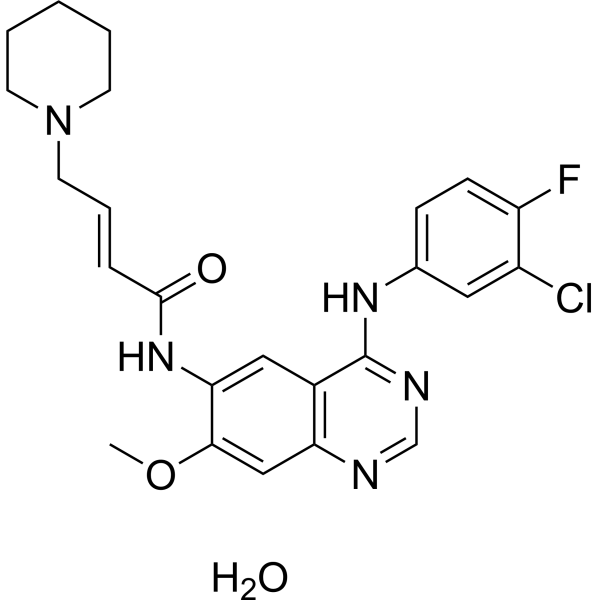
    Dacomitinib (PF-00299804) hydrate is an orally active, irreversible pan-ErbB inhibitor. Dacomitinib hydrate can be used in the research of cancers such as metastatic non-small cell lung cancer (NSCLC) .
    Dacomitinib hydrate
  • HY-P99223

    MEDI-575

    PDGFR Cancer
    Tovetumab (MEDI-575) is an anti-PDGFRα monoclonal antibody that selectively blocks the PDGFRα signal transduction. Tovetumab can be used in the research of glioblastoma and non-small cell lung cancer (NSCLC) .
    Tovetumab
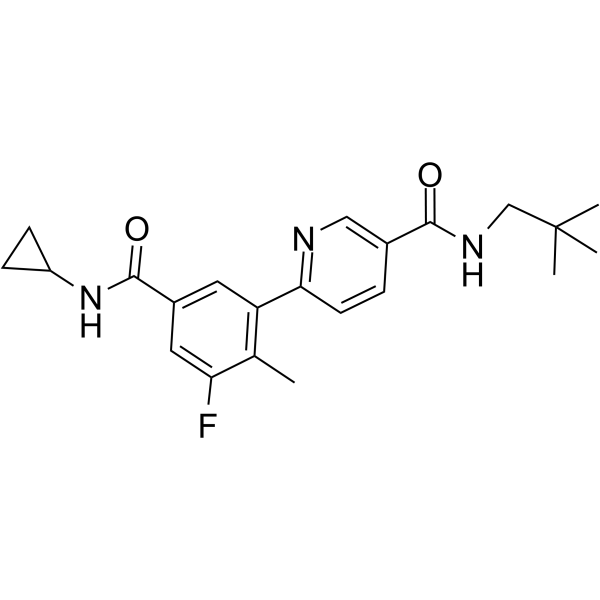
  • HY-P99827

    TSR-022; GSK4069889

    Tim3 Cancer
    Cobolimab (TSR-022) is an anti-TIM-3 monoclonal antibody. Cobolimab mediates the internalization of TIM3 with an IC50 value of 0.4464 nM. Cobolimab has potential application in solid tumors and non-small cell lung cancer (NSCLC) .
    Cobolimab
  • HY-114842
    TDRL-551
    1 Publications Verification

    DNA/RNA Synthesis Cancer
    TDRL-551 is a potent replication protein A (RPA) inhibitor (IC50 = 18 µM). TDRL-551 inhibits RPA-DNA interaction and increases the anti-cancer efficacy of Platinum (Pt)-based chemotherapy. TDRL-551 can be used for the research of cancer, such as non-small cell lung cancer (NSCLC) .
    TDRL-551
  • HY-P990049

    JMT-101; MRG003 Antibody

    EGFR Cancer
    Becotatug (JMT-101) is a humanized IgG1 antibody targeting EGFR. Becotatug can also be conjugated to Afatinib (HY-10261) and Osimertinib (HY-15772) as a synthetic ADC. Becotatug can be used for the study of EGFR-mutated advanced non-small cell lung cancer (NSCLC) .
    Becotatug
  • HY-117366

    PKC Cancer
    PS432 is a PKC inhibitor with IC50s of 16.9 μM (PKCι) and 18.5 μM (PKCζ), respectively. PS432 effectively inhibits the proliferation of non-small cell lung cancer cells (NSCLCs) and tumor growth in mouse xenograft models .
    PS432
  • HY-147259

    c-Met/HGFR Cancer
    Dalmelitinib is an orally active selective c-Met kinase inhibitor (IC50: 2.9 nM) that binds to the ATP-binding region of c-Met. Dalmelitinib induces the phosphorylation of MET, partially or completely inhibits the phosphorylation of AKT and ERK. Dalmelitinib potently inhibits cancer cell (c-Met oncogene amplification) proliferation, and is used for the research of cancers like human non-small cell lung cancer (NSCLC) .
    Dalmelitinib
  • HY-148803

    c-Met/HGFR Cancer
    Vabametkib is a MET TKI inhibitor. Vabametkib can be used in research on non-small cell lung cancer (NSCLC) .
    Vabametkib
  • HY-176205

    AB801

    TAM Receptor Cancer
    Ligritinib (AB801) is an orally active AXL receptor tyrosine kinase inhibitor. Ligritinib blocks the downstream signaling pathway by inhibiting the kinase activity of AXL. Ligritinib can be used in cancer research, especially in combination with chemotherapy for non-small cell lung cancer (NSCLC) .
    Ligritinib
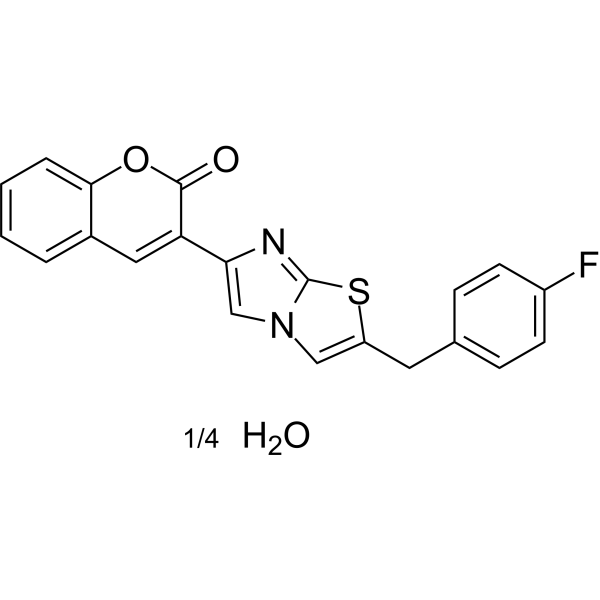
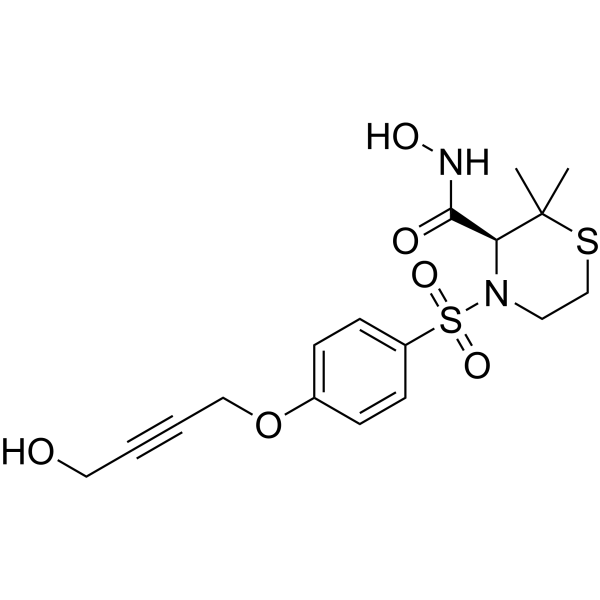
  • HY-110171A
    iMDK quarterhydrate
    5 Publications Verification

    PI3K Cancer
    iMDK quarterhydrate is a potent PI3K inhibitor and inhibits the growth factor MDK (also known as midkine or MK). iMDK quarterhydrate suppresses non-small cell lung cancer (NSCLC) cooperatively with A MEK inhibitor without harming normal cells and mice .
    iMDK quarterhydrate
  • HY-18030A

    Anaplastic lymphoma kinase (ALK) Cancer
    CEP-28122 mesylate salt, a diaminopyrimidine derivative, is a potent, selective, and orally active ALK inhibitor with an IC50 value of 1.9 nM. CEP-28122 mesylate salt has antitumor activity in experimental models of ALK-positive human cancers. CEP-28122 mesylate salt has good pharmacodynamic and pharmacokinetic activity. CEP-28122 mesylate salt can be used for the study of ALK-positive anaplastic large-cell lymphoma (ALCL), non-small cell lung cancer (NSCLC), and neuroblastoma cells .
    CEP-28122 mesylate salt
  • HY-18030

    Anaplastic lymphoma kinase (ALK) Cancer
    CEP-28122, a diaminopyrimidine derivative, is a potent, selective, and orally active ALK inhibitor with an IC50 value of 1.9 nM. CEP-28122 has antitumor activity in experimental models of ALK-positive human cancers. CEP-28122 has good pharmacodynamic and pharmacokinetic activity. CEP-28122 can be used for the study of ALK-positive anaplastic large-cell lymphoma (ALCL), non-small cell lung cancer (NSCLC), and neuroblastoma cells .
    CEP-28122
  • HY-19637

    Topoisomerase Cancer
    SW044248 is a non-canonical topoisomerase I inhibitor, and selectively toxic for certain non-small cell lung cancer (NSCLC) cell lines.
    SW044248
  • HY-19642

    MGCD265

    TAM Receptor c-Met/HGFR Cancer
    Glesatinib (MGCD265) is an orally active, potent MET/SMO dual inhibitor. Glesatinib, a tyrosine kinase inhibitor, antagonizes P-glycoprotein (P-gp) mediated multidrug resistance (MDR) in non-small cell lung cancer (NSCLC) .
    Glesatinib
  • HY-P99921

    HuMax-AXL-ADC

    Antibody-Drug Conjugates (ADCs) TAM Receptor Cancer
    Enapotamab vedotin is an AXL-targeted antibody-drug conjugate (ADC) with inhibitory potential against high AXL expressing non-small cell lung cancer (NSCLC). Enapotamab vedotin also exhibits resistant to EGFR inhibitor such as Osimertinib (HY-15772) .
    Enapotamab vedotin
  • HY-W423595

    EGFR Cancer
    BEBT-109 is a potent pan-mutant-selective EGFR inhibitor. BEBT-109 has improved pharmacokinetic properties. BEBT-109 can be used for multiple mutant-EGFR-driven non-small cell lung cancer (NSCLC) research .
    BEBT-109
  • HY-147281

    Drug-Linker Conjugates for ADC Cancer
    BAY 1135626 is used to synthesize BAY 1129980, and use to anti-tumor research. BAY 1129980 is a Auristatin-based anti-C4.4A (LYPD3) antibody–agent conjugate (ADC), is used to non–small cell lung cancer (NSCLC) research .
    BAY 1135626
  • HY-138751A
    limertinib diTFA
    1 Publications Verification

    ASK120067 diTFA

    EGFR Cancer
    limertinib (ASK120067) diTFA is a potent and orally active inhibitor of EGFR T790M (IC50: 0.3 nM) with selectivity over EGFR WT (IC50: 6.0 nM). limertinib diTFA is a third-generation EGFR-TKI for the research of non-small cell lung cancer (NSCLC) .
    limertinib diTFA
  • HY-124084

    Stearoyl-CoA Desaturase (SCD) Cancer
    SW203668 is an irreversible stearoyl CoA desaturase (SCD) inhibitor with an IC50 of 54 nM. SW203668 covalently binds and inhibits SCD, depletes unsaturated fatty acids, and triggers cell death in sensitive cells. SW203668 requires demethylation by CYP4F11 to form its active SCD-inhibiting form; differential CYP4F11 expression drives selective cytotoxicity. SW203668 exerts cytotoxicity toward CYP4F11-expressing non-small cell lung cancer (NSCLC) cells and spares CYP4F11-lacking NSCLC cells. SW203668 inhibits tumor growth in immunodeficient mice bearing CYP4F11-expressing NSCLC xenografts and spares mouse skin sebocytes. SW203668 can be used for the research of non-small cell lung cancer .
    SW203668
  • HY-143466

    FAK ULK AMPK Apoptosis Autophagy Cancer
    ULK1-IN-2 (compound 3s) is a potent ULK1 inhibitor. ULK1-IN-2 shows highest cytotoxic effect against cancer cell lines, with IC50 of 1.94 μM in A549. ULK1-IN-2 can induce apoptosis and simultaneously block autophagy, and can be used to study NSCLC (Non-small cell lung cancer) .
    ULK1-IN-2
  • HY-W001983

    Dihydropyrimidine Dehydrogenase (DPD) Cancer
    5-Iodouracil (Compound 4b) is an irreversible dihydropyrimidine dehydrogenase (DPD) inhibitor (IC50=0.22 μM). 5-Iodouracil is promising for research of DPD-overexpressing solid tumors like non-small cell lung cancer (NSCLC) .
    5-Iodouracil
  • HY-175837

    EGFR Apoptosis Cancer
    EGFR-IN-172 is a EGFR inhibitor. EGFR-IN-172 effectively inhibits the proliferation of non-small cell lung cancer (NSCLC) cells carrying the L858R, T790M and C797S drug-resistant mutations. EGFR-IN-172 inhibits EGFR phosphorylation, induces cell cycle arrest and apoptosis. EGFR-IN-172 can be used for the study of NSCLC .
    EGFR-IN-172
  • HY-123766

    EGFR Cancer
    EGFR-IN-99 (compound 1a) is a potent EGFR and HER2 Exon 20 insertion mutant inhibitor. EGFR-IN-99 has excellent antiproliferative activity against DFCI127 cells, with an EC50 of 11.5 nM. EGFR-IN-99 can be used for the research of non-small cell lung cancer (NSCLC) .
    EGFR-IN-99
  • HY-151377

    RET EGFR Aurora Kinase c-Fms MAP4K Cancer
    RET-IN-19 (compound 59) is a potent RET inhibitor, with IC50 values of 6.8 and 13.51 nM against RET-wt and RET V804M, respectively. RET-IN-19 shows anticancer activity. RET-IN-19 can be used for non-small cell lung cancer (NSCLC) research .
    RET-IN-19
  • HY-179143

    EGFR Akt Apoptosis Cancer
    EGFR-IN-185 is a EGFR inhibitor. EGFR-IN-185 exhibits potent activity against non-small cell lung cancer (NSCLC) cells harboring EGFR mutations. EGFR-IN-185 inhibits colony formation and migration, induces G0/G1 arrest, and promots apoptosis, which are associated with the suppression of EGFR and AKT phosphorylation. EGFR-IN-185 can be used for the research of  NSCLC .
    EGFR-IN-185
  • HY-173403

    TrxR Reactive Oxygen Species (ROS) Apoptosis Cancer
    TrxR-IN-8 (Compound 6f) is a selective TrxR inhibitor (IC50: 10.2 μM). TrxR-IN-8 induces apoptosis through oxidative stress by stimulating the production of reactive oxygen species (ROS), reducing intracellular thiols, and lowering the glutathione/glutathione ratio. TrxR-IN-8 exhibits significant cytotoxicity against non-small cell lung cancer (NSCLC) cells .
    TrxR-IN-8
  • HY-164476

    EGFR GSK-3 PD-1/PD-L1 Cancer
    ES-072 is an orally effective selective EGFR mutant (EGFR-T790M) inhibitor. ES-072 activates GSK3α by inhibiting EGFR-T790M activity, which promotes phosphorylation of PD-L1 at Ser279 and Ser283. The phosphorylated PD-L1 recruits the E3 ubiquitin ligase ARIH1, leading to ubiquitination and proteasomal degradation of PD-L1. This mechanism not only reduces cancer cell growth but also enhances anti-tumor immune response by lowering PD-L1 levels. ES-072 can be used to inhibit proliferation in non-small cell lung cancer (NSCLC) cells .
    ES-072
  • HY-161470

    Histone Demethylase E1/E2/E3 Enzyme DNA/RNA Synthesis Caspase Apoptosis Cancer
    WS-384 is a dual LSD1 and DCN1-UBC12 protein-protein interaction inhibitor with oral activity, with IC50 values of 338.79 nM and 14.81 nM, respectively. WS-384 possesses anticancer activity and can cause cell cycle arrest, DNA damage, and induce apoptosis. WS-384 can be used in the research of non-small cell lung cancer (NSCLC) .
    WS-384
  • HY-175527

    HyT Anaplastic lymphoma kinase (ALK) Apoptosis Inflammation/Immunology Cancer
    ALK degrader 2 is an orally active ALK HyT degrader that degrades EML4-ALK levels (DC50 = 8 nM) and nucleophosmin (NPM)-ALK protein levels (DC50 = 102 nM). ALK degrader 2 mediates ALK degradation via the Hsp70 chaperone system and ubiquitin-proteasome pathway. ALK degrader 2 induces significant S-phase cell cycle arrest and apoptosis in H3122 cells. ALK degrader 2 shows anti-tumor activity in mice bearing H3122 xenografts. ALK degrader 2 can be used for the study of non-small cell lung cancer (NSCLC). (Pink: ALK ligand (HY-W754809), Blue: Hyt (HY-W013021), Black: Linker (HY-Y1760), ALK ligand-linker conjugate (HY-175528)) .
    ALK degrader 2
  • HY-162098

    PROTACs Microtubule/Tubulin Apoptosis Cancer
    PROTAC tubulin-Degrader-1 is a α/β/β3-tubulin PROTAC degrader. PROTAC tubulin-Degrader-1 exhibits potent anti-proliferative activity against multiple human tumor cell lines. PROTAC tubulin-Degrader-1 induces G2/M phase arrest and apoptosis and inhibits colony formation in A549 and A549/Taxol cells. PROTAC tubulin-Degrader-1demonstrates potent anti-tumor efficacy in A549 and A549/Taxol (Taxol-resistant) xenograft model. PROTAC tubulin-Degrader-1 can be used for the study of non-small cell lung cancer (NSCLC). (Pink: Tubulin ligand (HY-N2146), Blue: CRBN Ligand (HY-10984), Black: Linker (HY-N6056)) .
    PROTAC tubulin-Degrader-1

Online-Anfrage

Your information is safe with us. * Required Fields.

Anrede


Country or Region *

Name des Antragstellers *


Name der Organisation *

Department *


E-Mail-Addresse *


Produktname *

Art. -Nr.


Requested quantity *

Telefonnummer *


Bemerkungen

Online-Anfrage

Inquiry Information

Produktname:
Art. -Nr.:
Menge:
MCE Japan Authorized Agent:

