1. Search Result
Search Result
Results for "

ORMOSIL/xerogel-based quenchometric oxygen sensors

" in MedChemExpress (MCE) Product Catalog:

1273

阻害剤およびアゴニスト

8

スクリーニングライブラリ

71

蛍光色素

70

生化学アッセイ試薬

43

ペプチド

1

MCE キット

6

阻害性抗体

307

天然物

2

組換えタンパク質

99

同位体標識化合物

3

クリックケミストリー

8

オリゴヌクレオチド

Targets Recommended:
製品番号 製品名 Target 研究分野 構造式
  • HY-B2130
    Uric acid
    20+ Cited Publications

    Environmental Pollutants Endogenous Metabolite Reactive Oxygen Species (ROS) Cardiovascular Disease Inflammation/Immunology
    Uric acid, scavenger of oxygen radical, is a very important antioxidant that help maintains the stability of blood pressure and antioxidant stress. Uric acid can remove reactive oxygen species (ROS) such as singlet oxygen and peroxynitrite, inhibiting lipid peroxidation .
    Uric acid
  • HY-B2130A
    Uric acid sodium
    20+ Cited Publications

    Monosodium urate

    Reactive Oxygen Species (ROS) Endogenous Metabolite Cardiovascular Disease Metabolic Disease
    Uric acid sodium (Monosodium urate), scavenger of oxygen radical, is a very important antioxidant that help maintains the stability of blood pressure and antioxidant stress. Uric acid sodium can remove reactive oxygen species (ROS) such as singlet oxygen and peroxynitrite, inhibiting lipid peroxidation .
    Uric acid sodium
  • HY-B0739
    Citicoline
    4 Publications Verification

    Cytidine diphosphate-choline; CDP-Choline; Cytidine 5'-diphosphocholine

    Apoptosis Endogenous Metabolite Reactive Oxygen Species (ROS) Caspase Neurological Disease Cancer
    Citicoline is an endogenous intermediate in the synthesis of phosphatidylcholine which is a component of cell membranes. Citicoline inhibits reactive oxygen species (ROS) and apoptosis. Citicoline can be used for neurological disease and hearing loss study .
    Citicoline
  • HY-W011664
    1,3-Diphenylisobenzofuran
    25+ Cited Publications

    DPBF

    Fluorescent Dye Reactive Oxygen Species (ROS) Others
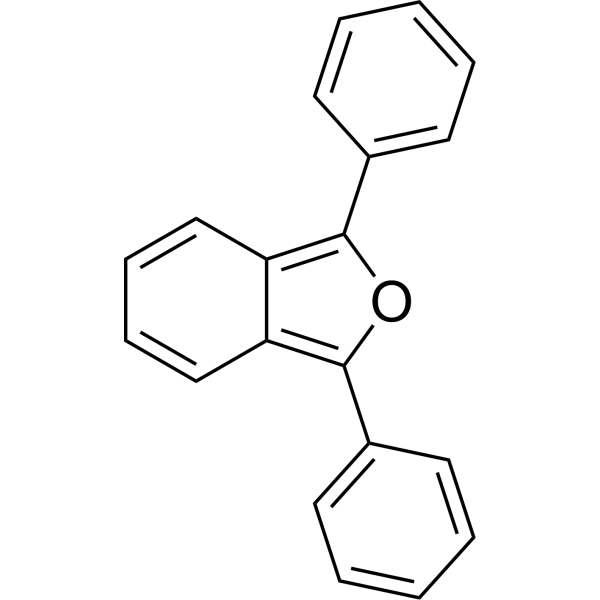
    1,3-Diphenylisobenzofuran (DPBF) has been developed as a selective probe for the detection and quantitative determination of hydrogen peroxide in samples containing different reactive nitrogen and oxygen species (RNOS). DPBF is a fluorescent probe which, for almost 20 years, was believed to react in a highly specific manner toward some reactive oxygen species such as singlet oxygen and hydroxy, alkyloxy or alkylperoxy radicals .
    1,3-Diphenylisobenzofuran
  • HY-135849
    Catalase, Aspergillus niger
    4 Publications Verification

    Reactive Oxygen Species (ROS) Cancer
    Catalase, Aspergillus niger is a key enzyme in the metabolism of H2O2 and reactive oxygen species (ROS), and its expression and localization is markedly altered in tumors . Free oxygen radical scavenger.
    Catalase, Aspergillus niger
  • HY-126793

    DCFH2-DA

    Fluorescent Dye Reactive Oxygen Species (ROS) Others
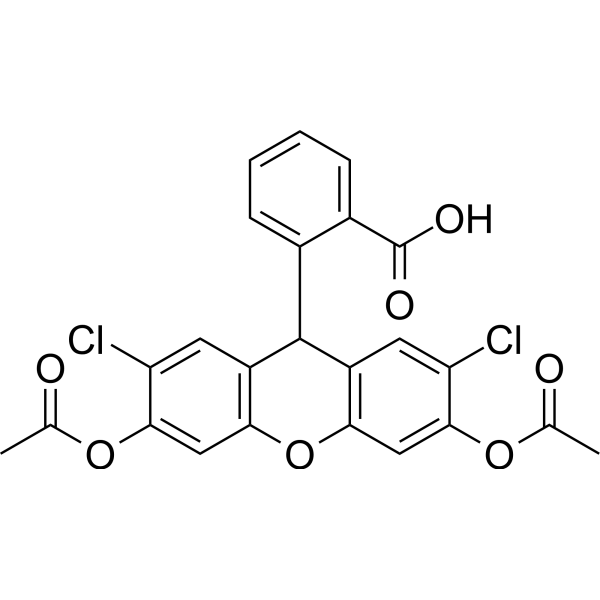
    2′,7′-Dichlorofluorescein diacetate (DCFH2-DA) is a cell-permeable fluorescent probe. 2′,7′-Dichlorofluorescein diacetate can be used to detect the generation of reactive oxygen intermediates and for assessing the overall oxidative stress in toxicological phenomenon .
    2′,7′-Dichlorofluorescein diacetate
  • HY-W105135

    Biochemical Assay Reagents Others
    2,6-Dichloroquinone-4-chloroimide is a spray reagent for organic compounds. 2,6-Dichloroquinone-4-chloroimide can be used in thin-layer chromatograms and detecting phenol and its derivatives. 2,6-Dichloroquinone-4-chloroimide can be used as an optical sensor for rapid detection of permethrin in treated wood .
    2,6-Dichloroquinone-4-chloroimide
  • HY-D0034

    ABMDMA

    Fluorescent Dye MOFs Cancer
    9,10-Anthracenediyl-bis(methylene)dimalonic acid (ABMDMA) is a biological dye and indicator used to detect singlet oxygen generation (SOG). 9,10-Anthracenediyl-bis(methylene)dimalonic acid is water-soluble derivative of anthracene. 9,10-Anthracenediyl-bis(methylene)dimalonic acid can be photobleached by singlet oxygen to its corresponding endoperoxide. This reaction can be monitored spectrophotometrically by recording the decrease of absorbance at 400 nm .
    9,10-Anthracenediyl-bis(methylene)dimalonic acid
  • HY-W074143

    [Ru(DPP)3]Cl2

    Fluorescent Dye Cancer
    Tris(4,7-diphenyl-1,10-phenanthroline)ruthenium(II) dichloride ([Ru(dpp)3] 2+) is an electrochemiluminescent (ECL) probe and oxygen-sensitive sensor. Tris(4,7-diphenyl-1,10-phenanthroline)ruthenium(II) dichloride can be used to modify electrode surfaces for the detection of sulfates (S2O8 2-) and oxalates, based on electrochemical reactions that generate excited-state species, releasing photons through irreversible redox reactions. Tris(4,7-diphenyl-1,10-phenanthroline)ruthenium(II) dichloride utilizes the oxygen quenching of fluorescence mechanism, where fluorescence intensity reflects the metabolic rate of living microorganisms or oxygen levels within cells/tumors, allowing for real-time detection. Tris(4,7-diphenyl-1,10-phenanthroline)ruthenium(II) dichloride's main applications include microbial detection, antibacterial activity studies, and tumor microenvironment research .
    Tris(4,7-diphenyl-1,10-phenanthroline)ruthenium(II) dichloride
  • HY-D1563
    pH Receptor Probe
    1 Publications Verification

    Fluorescent Dye Others
    pH Receptor Probe is a pH-sensitive cyanine derivative and a environmental sensitive fluorophore. pH Receptor Probe has a pH-sensitive maximal absorption at 644 nm and emission at 664 nm. pH Receptor Probe has been used as a pH sensor of lysosomal compartments .
    pH Receptor Probe
  • HY-15930
    TMB
    5+ Cited Publications

    BM blue; Sure Blue TMB

    Fluorescent Dye MOFs Reactive Oxygen Species (ROS) Others
    TMB is a non-toxic, non-mutagenic, colorless dye that is also used as a chromogenic agent in enzyme detection systems based on horseradish peroxidase (HRP). TMB can function as a photoacoustic probe for reactive oxygen and nitrogen species (ROS/RNS), reacting with hypochlorite, hydrogen peroxide, singlet oxygen, and nitrogen dioxide to produce blue oxidation products. TMB can detect the singlet oxygen produced by the outer membrane of Escherichia coli ATCC 25922 .
    TMB
  • HY-129064

    SOD

    SOD Inflammation/Immunology Cancer
    Superoxide dismutase, Porcine erythrocytes (SOD) is the only antioxidant enzyme that scavenges the superoxide anion by converting this free radical to oxygen and hydrogen peroxide, thus preventing peroxynitrite production and further damage. Superoxide dismutase, Porcine erythrocytes is extensively researched and used in anti-inflammatory, antitumor, radiation protection, and antisenility applications .
    Superoxide dismutase, Porcine erythrocytes
  • HY-W040143

    Reactive Oxygen Species (ROS) Fluorescent Dye Inflammation/Immunology
    2',7'-Dichlorofluorescein is an important fluorescent product in the detection of oxidative stress and can be used to measure reactive oxygen species (ROS) (Ex=503 nm and Em=523 nm) .
    2',7'-Dichlorofluorescein
  • HY-Y0481

    Stannous chloride, 98%; Tin(II) chloride, anhydrous, 98%; Anhydrous stannous chloride, 98%

    Biochemical Assay Reagents Reactive Oxygen Species (ROS) Others
    Tin(II) chloride, 98% (Stannous chloride) is a biochemical reagent with genotoxicity, mutagenicity, mitotic recombinogenicity, and reactive oxygen species-inducing activity .
    Tin(II) chloride, 98%
  • HY-Y1134

    D-(-)-Tartaric acid

    Biochemical Assay Reagents Bacterial Infection
    D-Tartaric acid (D-(-)-Tartaric acid) serves as an additive in beverages and other food products. When combined with pyrrole, D-Tartaric acid is used to construct a D-TA/polypyrrole-based bacterial imprinted polymer sensor for the detection of Vibrio parahaemolyticus. D-Tartaric acid enhances the sensitivity of polypyrrole-based bacterial imprinted polymer sensors for detecting Vibrio parahaemolyticus. D-Tartaric acid is applicable to research on Vibrio parahaemolyticus infection .
    D-Tartaric acid
  • HY-W099730

    Tinosorb S

    Others Others
    Bemotrizinol (Tinosorb S), a compound that can absorb ultraviolet light, has been shown to accept atomic oxygen generated by N-oxide photodeoxygenation .
    Bemotrizinol
  • HY-B0739A
    Citicoline sodium
    4 Publications Verification

    Cytidine diphosphate-choline sodium; CDP-Choline sodium; Cytidine 5'-diphosphocholine sodium

    Endogenous Metabolite Apoptosis Reactive Oxygen Species (ROS) Caspase Neurological Disease Cancer
    Citicoline sodium is an endogenous intermediate in the synthesis of phosphatidylcholine which is a component of cell membranes. Citicoline sodium inhibits reactive oxygen species (ROS) and apoptosis. Citicoline sodium can be used for neurological disease and hearing loss study .
    Citicoline sodium
  • HY-111278
    Pyocyanin
    2 Publications Verification

    Pyocyanine; Sanazin; Sanasin

    Reactive Oxygen Species (ROS) Bacterial Drug Metabolite Endogenous Metabolite Infection Inflammation/Immunology
    Pyocyanin (Pyocyanine) is a toxic, quorum sensing (QS) controlled metabolite produced by Pseudomonas aeruginosa. Pyocyanin is a REDOX active compound that promotes the production of reactive oxygen species (ROS). Pyocyanin has antibacterial and anti-inflammatory activity .
    Pyocyanin
  • HY-154954
    Ogremorphin
    2 Publications Verification

    OGM; GPR68-IN-1; OGM-8345

    GPR68 Ferroptosis Inflammation/Immunology Cancer
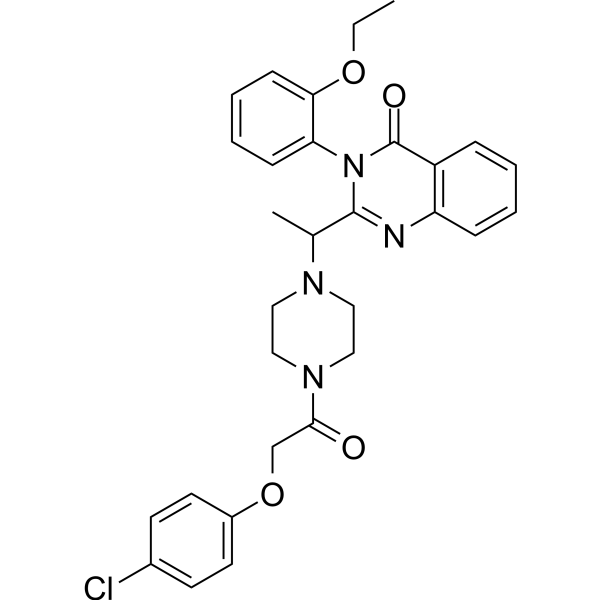
    Ogremorphin (OGM) is a G protein coupled sensor GPR68 inhibitor with anti-inflammatory and anti-tumor activities. Ogremorphin can inhibit the migration of human melanoma cells and induce ferroptosis in glioblastoma cells .
    Ogremorphin
  • HY-15930A
    TMB dihydrochloride
    5+ Cited Publications

    BM blue dihydrochloride; Sure Blue TMB dihydrochloride

    Fluorescent Dye Reactive Oxygen Species (ROS) Others
    TMB dihydrochloride is the dihydrochloride form of TMB (HY-15930). TMB dihydrochloride is a non-toxic, non-mutagenic, colorless dye that is also used as a chromogenic agent in enzyme detection systems based on horseradish peroxidase (HRP). TMB dihydrochloride can function as a photoacoustic probe for reactive oxygen and nitrogen species (ROS/RNS), reacting with hypochlorite, hydrogen peroxide, singlet oxygen, and nitrogen dioxide to produce blue oxidation products. TMB dihydrochloride can detect the singlet oxygen produced by the outer membrane of Escherichia coli ATCC 25922 .
    TMB dihydrochloride
  • HY-169798

    Fluorescent Dye VSV Infection
    1,9-Dimethylmethylene blue is a photosensitizer, virus inactivator and hemoglobin oxidant derived from methylene blue. When activated, 1,9-Dimethylmethylene blue generates reactive oxygen species including singlet oxygen, and acts as a metachromatic dye. When activated in monomeric or dimeric form, 1,9-Dimethylmethylene blue induces photoinactivation of R17 phage and vesicular stomatitis virus and oxidizes hemoglobin via non-singlet oxygen reactive oxygen species or singlet oxygen-mediated pathways, respectively. The monomeric form, with higher nucleic acid affinity, achieves virus inactivation under specific conditions without forming methemoglobin. 1,9-Dimethylmethylene blue binds to substances such as glycosaminoglycans to produce color changes. Although it is susceptible to interference from non-glycosaminoglycan components in urine, it is still applicable to spectrophotometric analysis for glycosaminoglycan quantification. With these unique photochemical and binding properties, 1,9-Dimethylmethylene blue is widely used in studies of viral infections and related biochemical analyses .
    1,9-Dimethylmethylene blue
  • HY-172445

    SS-DNA

    Biochemical Assay Reagents Others
    Deoxyribonucleic acid sodium salt from salmon testes (ssstDNA) can be used to make anti-adhesion layers (AALs) for passivating gold plasmonic sensor surfaces .
    Deoxyribonucleic acid sodium salt from salmon testes
  • HY-W020249

    Biochemical Assay Reagents Others
    Sodium ionophore X is a neutral ionophore that binds highly selectively to sodium ions (Na +) to form stable complexes. Sodium ionophore X can be used to construct ion-selective chemical sensors (including optical sensors and electrochemical sensors) .
    Sodium ionophore X
  • HY-D1122

    Fluorescent Dye Others
    Janus green B is a supravital stain. Janus green B staining reaction is oxygen dependent, and is reversibly inhibited by cyanide. Janus green B has been used for staining peripheral nerves in live insects, lymphatic vessels of rabbits and mitochondria .
    Janus green B
  • HY-B0831
    Buprofezin
    2 Publications Verification

    Environmental Pollutants Reactive Oxygen Species (ROS) Oxidative Phosphorylation Others
    Buprofezin is a broad-spectrum insecticide and chitin synthesis inhibitor that targets developmental stage coleopteran pests.Buprofezin promotes the conversion of energy metabolism from the aerobic tricarboxylic acid (TCA) cycle and oxidative phosphorylation to anaerobic glycolysis. Buprofezin also promotes the production of reactive oxygen species (ROS) by inhibiting cytochrome c oxidase .
    Buprofezin
  • HY-121134
    Decylubiquinone
    1 Publications Verification

    Reactive Oxygen Species (ROS) Neurological Disease Cancer
    Decylubiquinone is an analog of ubiquinone (coenzyme Q10). Decylubiquinone blocks reactive oxygen species (ROS) production in response to glutathione depletion and inhibits activation of the mitochondrial permeability transition .
    Decylubiquinone
  • HY-P10817

    Proton Pump Reactive Oxygen Species (ROS) Metabolic Disease
    Corza6 is a potent and selective human voltage-gated proton channel (hHv1) peptide inhibitor. Corza6 binds to the external voltage sensor domain (VSD) loop in hHv1 with a Kd of ~1 nM at the natural, hyperpolarized resting membrane potential (RMP) of mammalian cells. Corza6 allows capacitation in sperm and permits sustained reactive oxygen species (ROS) production in white blood cells (WBCs) .
    Corza6
  • HY-113050

    2,3-DPG

    Parasite Infection Neurological Disease
    2,3-Diphosphoglyceric acid (2,3-DPG) is an intermediate of the glycolytic pathway. 2,3-Diphosphoglyceric acid stabilizes the deoxygenated form of hemoglobin by allosteric binding and facilitates oxygen release at tissue sites. 2, 3-diphosphoglyceric acid has antiparasitic activity. 2,3-Diphosphoglyceric acid can be used in the study of Alzheimer's disease (AD) .
    2,3-Diphosphoglyceric acid
  • HY-126195

    ML-090

    NADPH Oxidase Neurological Disease
    Fluoflavine (ML-090) is a selective NOX1 inhibitor and reactive oxygen species inhibitor. Fluoflavine reduces reactive oxygen species production, NOX1-mediated downstream signaling events, and oxygen-glucose deprivation-induced retinal ganglion cell death. Fluoflavine inhibits NADPH oxidase activity and pathological retinal neovascularization induced by oxygen-induced retinopathy in the retinas of ischemic mice. Fluoflavine can be used in studies related to retinal ischemia-reperfusion injury and proliferative retinopathy .
    Fluoflavine
  • HY-109654

    Reactive Oxygen Species (ROS) Metabolic Disease
    Ensulizole is a sulfonated UV absorber and can intense UVB and partial UVA absorption. Ensulizole can damage the DNA through the generation of reactive oxygen species (ROS) upon UV or sunlight irradiation .
    Ensulizole
  • HY-P10817A

    Proton Pump Reactive Oxygen Species (ROS) Metabolic Disease
    Corza6 TFA is a potent and selective human voltage-gated proton channel (hHv1) peptide inhibitor. Corza6 TFA binds to the external voltage sensor domain (VSD) loop in hHv1 with a Kd of ~1 nM at the natural, hyperpolarized resting membrane potential (RMP) of mammalian cells. Corza6 TFA allows capacitation in sperm and permits sustained reactive oxygen species (ROS) production in white blood cells (WBCs) .
    Corza6 TFA
  • HY-D0156

    Fluorescent Dye Others
    ZnAF-1, a fluorescein-based zinc sensor containing the N,N-bis(2-pyridylmethyl)ethylenediamine chelating unit, can be used for Zn2+ detection . ZnAF-1 can bind Zn(II) with a 1 : 1 stoichiometry .
    ZnAF-1
  • HY-109116

    Leukomethylene blue

    Biochemical Assay Reagents Others
    Hydromethylthionine (Leukomethylene blue) has a very active photochemically active reagent, especially in its interaction with dissolved oxygen. The photochemical activity of Hydromethylthionine is mainly regulated by the reaction of its triplet state with dissolved oxygen, which reacts with dissolved oxygen to form Methylene Blue (HY-14536) and hydronium ions under ultraviolet light. Hydromethylthionine can be used for the photodegradation of model pollutants in semiconductor photocatalysis and for the study of indicators in chemical analysis .
    Hydromethylthionine
  • HY-15930B
    TMB dihydrochloride x.hydrate
    5+ Cited Publications

    Sure Blue TMB dihydrochloride x.hydrate

    Fluorescent Dye Reactive Oxygen Species (ROS) Others
    TMB (dihydrochloride x.hydrate) is the dihydrochloride x hydrate form of TMB (HY-15930). TMB (dihydrochloride x.hydrate) is a non-toxic, non-mutagenic, colorless dye that is also used as a chromogenic agent in enzyme detection systems based on horseradish peroxidase (HRP). TMB (dihydrochloride x.hydrate) can function as a photoacoustic probe for reactive oxygen and nitrogen species (ROS/RNS), reacting with hypochlorite, hydrogen peroxide, singlet oxygen, and nitrogen dioxide to produce blue oxidation products. TMB (dihydrochloride x.hydrate) can detect the singlet oxygen produced by the outer membrane of Escherichia coli ATCC 25922 .
    TMB dihydrochloride x.hydrate
  • HY-N7152

    Apoptosis Cancer
    6-Dehydrogingerdione sensitizes human hepatoblastoma Hep G2 cells to TRAIL-induced apoptosis via reactive oxygen species-mediated increase of DR5 .
    6-Dehydrogingerdione
  • HY-153591

    Reactive Oxygen Species (ROS) Infection Neurological Disease Inflammation/Immunology Cancer
    ROS-IN-1 is a mitochondrial ROS inhibitor. ROS-IN-1 can reduce oxidative stress or inhibit reactive oxygen species (ROS) production .
    ROS-IN-1
  • HY-W130442

    SOD Inflammation/Immunology
    N-Isopropyl-N'-phenyl-p-phenylenediamine is an antioxidant used in rubber manufacturing to reduce the detrimental effect of oxygen. N-Isopropyl-N'-phenyl-p-phenylenediamine can cause contact allergy .
    N-Isopropyl-N'-phenyl-p-phenylenediamine
  • HY-153016
    HIF-2α agonist 2
    1 Publications Verification

    HIF/HIF Prolyl-Hydroxylase Inflammation/Immunology
    HIF-2α agonist 2 (compound 10) is a HIF-2α agonist with an EC50 value of 1.68 μM at the dose of 20 μM. HIF-2α agonist 2 is non-cytotoxic against 786-O-HRE-Luc cells. HIF-2α agonist 2 can be used for oxygen metabolism research .
    HIF-2α agonist 2
  • HY-D1677

    Fluorescent Dye Others
    5(6)-Carboxynaphthofluorescein is a pH-dependent fluorophore. 5(6)-Carboxynaphthofluorescein shows good sensitivity in an alkaline pH range and it can be exploited in the construction of fiber-optic pH sensors. 5(6)-Carboxynaphthofluorescein can be used as a fluorescent pH indicator (Ex/Em=593/668 nm) .
    5(6)-Carboxynaphthofluorescein
  • HY-DY1071

    Fluorescent Dye Others
    pH Receptor Probe (solution) is a pH-sensitive cyanine derivative and a environmental sensitive fluorophore. pH Receptor Probe has a pH-sensitive maximal absorption at 644 nm and emission at 664 nm. pH Receptor Probe has been used as a pH sensor of lysosomal compartments .
    Solvent and concentration: DMSO: 10 mM
    pH Receptor Probe (solution)
  • HY-113050A

    2,3-DPG pentasodium

    Parasite Others
    2,3-Diphosphoglyceric acid (2,3-DPG) pentasodium is an intermediate of the glycolytic pathway. 2,3-Diphosphoglyceric acid pentasodium stabilizes the deoxygenated form of hemoglobin by allosteric binding and facilitates oxygen release at tissue sites. 2,3-Diphosphoglyceric acid pentasodium binds to hemoglobin and decrease its affinity for oxygen .
    2,3-Diphosphoglyceric acid pentasodium
  • HY-B2130R

    Reference Standards Reactive Oxygen Species (ROS) Endogenous Metabolite Inflammation/Immunology
    Uric acid (Standard) is the analytical standard of Uric acid. This product is intended for research and analytical applications. Uric acid, scavenger of oxygen radical, is a very important antioxidant that help maintains the stability of blood pressure and antioxidant stress. Uric acid can remove reactive oxygen species (ROS) such as singlet oxygen and peroxynitrite, inhibiting lipid peroxidation .
    Uric acid (Standard)
  • HY-125062

    Glucosilsteviol

    GLUT Metabolic Disease
    Steviolmonoside (Glucosilsteviol) is a structural analogue of steviol. Steviolmonoside decreases glucose production and inhibits oxygen uptake in rat renal cortical tubules .
    Steviolmonoside
  • HY-155254

    Biochemical Assay Reagents Others
    Sodium ionophore VI is a sodium ionophore that has been employed for developing cation optical sensors .
    Sodium ionophore VI
  • HY-155363

    AMPK Metabolic Disease
    AMPK activator 13 is a potent activator of AMPK. AMPK activator 13 inhibits mitotic clonal expansion of 3T3-L1 cells by activating AMPK pathway and enhances cell mitochondrial oxygen consumption rate. AMPK activator 13 can be used in study obesity .
    AMPK activator 13
  • HY-W127832
    Ru(dpp)3(PF6)2
    1 Publications Verification

    Fluorescent Dye Others
    Ru(dpp)3(PF6)2 is a ruthenium (II) polypyridine complex and oxygen-sensing luminophore with excellent photostability and bright orange emission properties based on metal-to-ligand charge transfer (MLCT). Ru(dpp)3(PF6)2 undergoes oxygen-induced collisional luminescence quenching following the Stern-Volmer relationship, and can also engage in Förster-type resonance energy transfer with closed-form BTF6. Featuring excellent photophysical and electrochemical properties, Ru(dpp)3(PF6)2 is applied in studies on quenching-type oxygen sensors based on fluorinated ORMOSIL/xerogels and solid-state light-emitting devices .
    Ru(dpp)3(PF6)2
  • HY-115658

    Bacterial Infection Metabolic Disease
    VU0420373 is a potent heme sensor system (HssRS) activator with an EC50 of 10.7 μM and a pEC50 of 4.97. VU0420373 induces heme biosynthesis, and is toxic to fermenting S. aureus .
    VU0420373
  • HY-117005

    Bacterial Infection
    C450-0730 is an antagonist targeting the AHL membrane-bound sensor kinase and is an antagonist of the nine-transmembrane protein LuxN of Vibrio harveyi . C450-0730 competitively binds to the LuxN AI-1 binding site and specifically antagonizes the LuxN/AI-1 quorum sensing signal in Vibrio harveyi. The inhibitory activity of C450-0730 against LuxN I209F was not significant .
    C450-0730
  • HY-15930C
    TMB monosulfate
    5+ Cited Publications

    BM blue monosulfate; Sure Blue TMB monosulfate

    Fluorescent Dye Reactive Oxygen Species (ROS) Others
    TMB monosulfate is the monosulfate form of TMB (HY-15930). TMB monosulfate is a non-toxic, non-mutagenic, colorless dye that is also used as a chromogenic agent in enzyme detection systems based on horseradish peroxidase (HRP). TMB monosulfate can function as a photoacoustic probe for reactive oxygen and nitrogen species (ROS/RNS), reacting with hypochlorite, hydrogen peroxide, singlet oxygen, and nitrogen dioxide to produce blue oxidation products. TMB monosulfate can detect the singlet oxygen produced by the outer membrane of Escherichia coli ATCC 25922 .
    TMB monosulfate
  • HY-117245

    Reactive Oxygen Species (ROS) Fungal Others
    Pallidol is a potent and selective singlet oxygen quencher. Pallidol shows antioxidant and antifungal activities .
    Pallidol

オンラインお問い合わせ

入力情報は安全に管理されます. 必須入力項目.

タイトル


国或いは地域 *

お名前 *


組纖名 *

デパートメント *


メールアドレス *


製品名 *

製品番号


カスタマ需要量 *

電話番号 *


必ず会社名を記載ください。個人への返信は行いません。

備考

バルクお問い合わせ

Inquiry Information

製品名:
製品番号:
数量:
MCE 日本正規代理店:

