










27 Results for "

PACAP Receptor

" in MedChemExpress (MCE) Product Catalog:
Products (27)

27 Results for "PACAP Receptor" in MCE Product Catalog:

5
5 Cited Publications
Cat. No.: HY-P0221
CAS No.: 137061-48-4
Synonyms: Pituitary Adenylate Cyclase Activating Polypeptide 38
PACAP (1-38), human, ovine, rat is a PAC1 receptor agonist. PACAP (1-38), human, ovine, rat binds to PACAP type I receptor, PACAP type II receptor VIP1, and PACAP type II receptor VIP2 with IC50s of 4 nM, 2 nM, and 1 nM, respectively. PACAP (1-38), human, ovine, rat increases the α-secretase activity. PACAP (1-38), human, ovine, rat elevates cytosolic Ca 2+, increases proliferation and increases phosphorylation of extracellular regulates kinase (ERK) and the epidermal growth factor receptor (EGFR). PACAP (1-38), human, ovine, rat demonstrates potent, efficacious, and sustained stimulatory effects on sympathetic neuronal NPY and catecholamine production. PACAP (1-38), human, ovine, rat can be used for neurotrophic and neuroprotective research .
loading...
    loading...
3
3 Cited Publications
Cat. No.: HY-P0176
CAS No.: 127317-03-7
Synonyms: PACAP 1-27
Target:  

PACAP Receptor

PACAP (1-27), human, ovine, rat (PACAP 1-27) is the N-terminal fragment of PACAP-38, and is a potent PACAP receptor agonist with IC50s of 3 nM, 2 nM and 5 nM for rat PAC1, rat VPAC1 and human VPAC2, respectively .
loading...
    loading...
3
3 Cited Publications
Cat. No.: HY-P0176A
Synonyms: PACAP 1-27 TFA
Target:  

PACAP Receptor

PACAP (1-27), human, ovine, rat TFA (PACAP 1-27 TFA) is the N-terminal fragment of PACAP-38, and is a potent PACAP receptor agonist with IC50s of 3 nM, 2 nM and 5 nM for rat PAC1, rat VPAC1 and human VPAC2, respectively .
loading...
    loading...
2
2 Cited Publications
Cat. No.: HY-133529
CAS No.: 878437-15-1
Purity:  97.00%
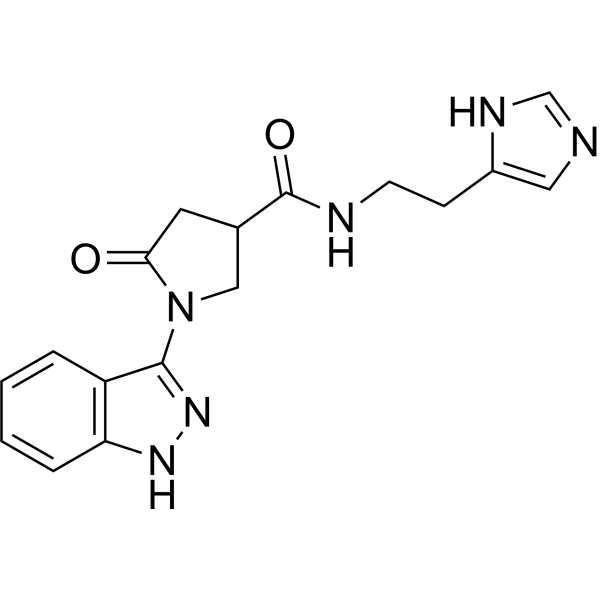
PA-8 is a potent, selective and orally active PACAP type I (PAC1) receptor antagonist. PA-8 inhibits the phosphorylation of CREB induced by PACAP in PAC1-, but not VPAC1- or VPAC2-receptor. PA-8 also inhibits PACAP-induced cAMP elevation with an IC50 of 2 nM .
loading...
    loading...
2
2 Cited Publications
Cat. No.: HY-P0220A
Target:  

PACAP Receptor

Research Areas:  

Neurological Disease

PACAP (6-38), human, ovine, rat TFA is a potent PACAP receptor antagonist with IC50s of 30, 600, and 40 nM for PACAP type I receptor, PACAP type II receptor VIP1, and PACAP type II receptor VIP2, respectively.
loading...
    loading...
2
2 Cited Publications
Cat. No.: HY-P0220
CAS No.: 143748-18-9
Target:  

PACAP Receptor

Research Areas:  

Neurological Disease

PACAP (6-38), human, ovine, rat is a potent PACAP receptor antagonist with IC50s of 30, 600, and 40 nM for PACAP type I receptor, PACAP type II receptor VIP1, and PACAP type II receptor VIP2, respectively.
loading...
    loading...
1
1 Cited Publications
Cat. No.: HY-147557
CAS No.: 2305204-24-2
Purity:  99.17%
Synonyms: PAC1R antagonist 1
Target:  

PACAP Receptor

Research Areas:  

Neurological Disease

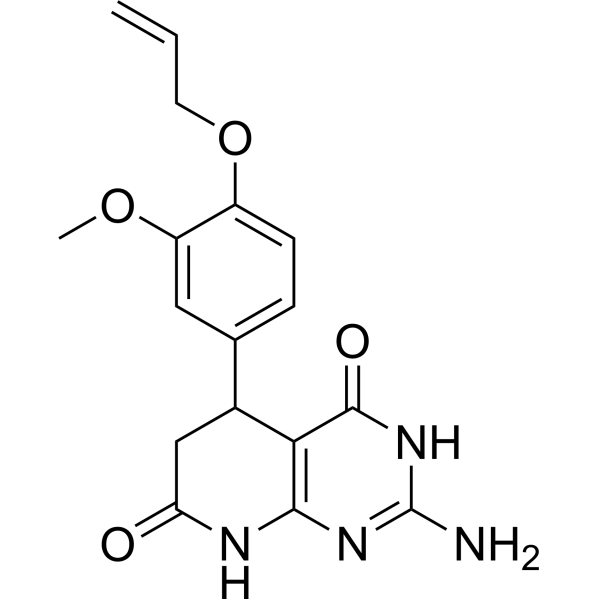
PA-915 (PAC1R antagonist 1) is a potent and orally active antagonist of PAC1 receptor. PA-915 inhibits pituitary adenylate cyclase-activating polypeptide (PACAP)-induced CREB phosphorylation. PA-915 can inhibit PACAP- and nerve injury-induced allodynia. PA-915 can be used for the research of neuropathic pain .
loading...
    loading...
Cat. No.: HY-P99509
CAS No.: 2225850-33-7
Synonyms: AMG-301

Target:  

Adenylate Cyclase

Research Areas:  

Neurological Disease

Zelminemab (AMG-301) is a humanized monoclonal antibody that inhibits PACAP type I (PAC1) receptor .
loading...
    loading...
Cat. No.: HY-P0221C
CAS No.: 129405-61-4
Target:  

PACAP Receptor

Research Areas:  

Metabolic Disease

PACAP (1-38) free acid is a desamido-PACAP (1-38), human, ovine, rat (HY-P0221). PACAP (1-38) free acid can activate the human PAC1 receptor. PACAP (1-38) free acid induces cyclic AMP (cAMP) generation in both NS-1 neuroendocrine cells and non-neuroendocrine HEK293 cells .
loading...
    loading...
Cat. No.: HY-P1845
CAS No.: 138764-85-9
Research Areas:  

Others

PACAP-38 (31-38), human, mouse, rat is a fragment containing the C-terminal 31-38 fragment of PACAP (1-38), human, ovine, rat (HY-P0221). PACAP-38 (31-38), human, mouse, rat does not bind to the PACAP receptor .
loading...
    loading...
Cat. No.: HY-129421
CAS No.: 1436004-46-4
Purity:  99.73%
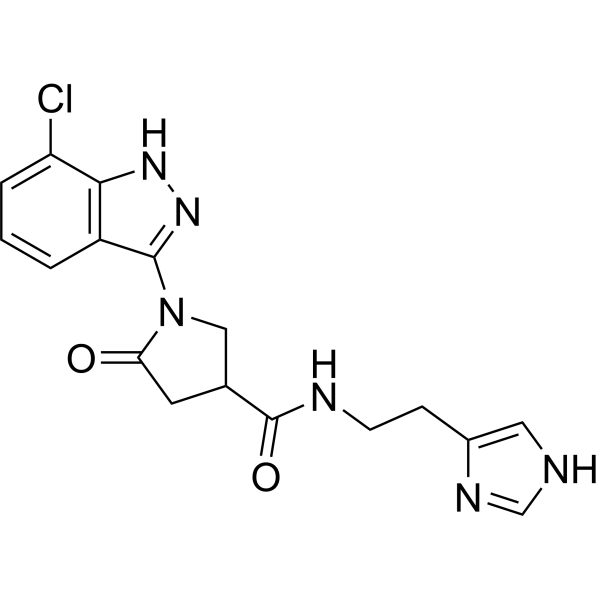
PA-9 is a pituitary adenylate cyclase-activating polypeptide (PACAP) type I (PAC1) receptor antagonist. PA-9 dose dependently inhibits PACAP-induced cAMP elevation with an IC50 of 5.6 nM. PA-9 can be used for the research of neuropathic and/or inflammatory pain .
loading...
    loading...
Cat. No.: HY-P4127A
M65 TFA is a deleted peptide of maxadilan (61 a.a.) with deletion of the residues between positions 24 and 42 and is a specific antagonist of PACAP type 1 receptor that inhibits ANP secretion and can be used for relevant researches .
loading...
    loading...
Cat. No.: HY-P1845A
Research Areas:  

Neurological Disease

PACAP-38 (31-38), human, mouse, rat TFA is a fragment containing the C-terminal 31-38 fragment of PACAP (1-38), human, ovine, rat (HY-P0221). PACAP-38 (31-38), human, mouse, rat TFA does not bind to the PACAP receptor .
loading...
    loading...
Cat. No.: HY-P4127
CAS No.: 1872440-65-7
Target:  

Peptides

Research Areas:  

Neurological Disease

M65 is a deleted peptide of maxadilan (61 a.a.) with deletion of the residues between positions 24 and 42 and is a specific antagonist of PACAP type 1 receptor that inhibits ANP secretion and can be used for relevant researches .
loading...
    loading...
Cat. No.: HY-P3117
CAS No.: 136134-68-4
Synonyms: Pituitary adenylate cyclase-activating peptide (6-27)
Target:  

Adenylate Cyclase

Research Areas:  

Neurological Disease

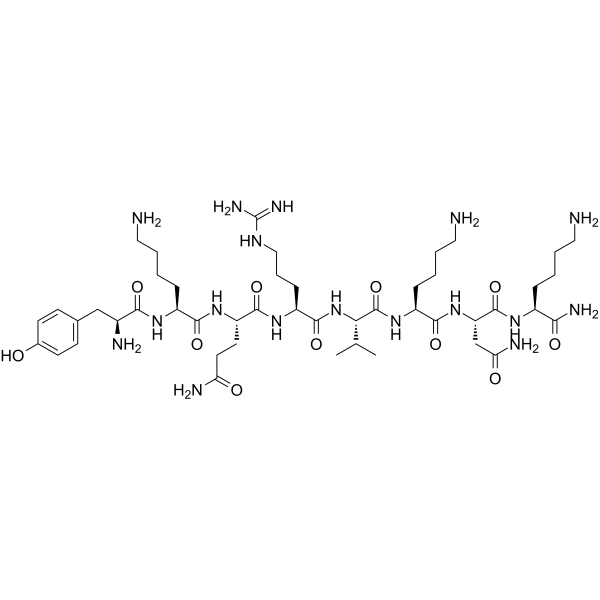
PACAP (6-27) (human, ovine, rat) is a PACAP receptor antagonist that blocks the canine adrenal catecholamine response to exogenous vasoactive intestinal peptide (VIP). PACAP (6-27) (human, ovine, rat) has the potential to study cardiovascular and neurological diseases .
loading...
    loading...
Cat. No.: HY-P1817
CAS No.: 144025-82-1
Target:  

PACAP Receptor

Research Areas:  

Cardiovascular Disease

PACAP-38 (16-38), human, mouse, rat is a peptide fragment encompassing the C-terminal 16-38 segment of PACAP (1-38), human, ovine, rat (HY-P0221). PACAP-38 (16-38), human, mouse, rat lacks the N-terminal 1-15 receptor activation core, but retains the ability to bind to the PAC/VPAC receptor family (PAC1/VPAC1/VPAC2 receptor). PACAP-38 (16-38), human, mouse, rat promotes histamine release and exerts a certain degree of hypotensive effect .
loading...
    loading...
Cat. No.: HY-P0221A
Synonyms: Pituitary Adenylate Cyclase Activating Polypeptide 38 TFA
PACAP (1-38), human, ovine, rat TFA is a PAC1 receptor agonist. PACAP (1-38), human, ovine, rat TFA binds to PACAP type I receptor, PACAP type II receptor VIP1, and PACAP type II receptor VIP2 with IC50s of 4 nM, 2 nM, and 1 nM, respectively. PACAP (1-38), human, ovine, rat TFA increases the α-secretase activity. PACAP (1-38), human, ovine, rat TFA elevates cytosolic Ca 2+, increases proliferation and increases phosphorylation of extracellular regulates kinase (ERK) and the epidermal growth factor receptor (EGFR). PACAP (1-38), human, ovine, rat TFA demonstrates potent, efficacious, and sustained stimulatory effects on sympathetic neuronal NPY and catecholamine production. PACAP (1-38), human, ovine, rat TFA can be used for neurotrophic and neuroprotective research .
loading...
    loading...
Cat. No.: HY-P0221B
Target:  

PACAP Receptor

Research Areas:  

Endocrinology

PACAP (1-38) free acid TFA is an endogenous neuropeptide. PACAP (1-38) free acid TFA potently stimulates antral motility and somatostatin secretion, inhibits the secretion of gastrin and stimulates the release of vasoactive intestinal polypeptide, gastrin releasing peptide and substance P. PACAP (1-38) free acid TFA also enhances N-methyl-D-aspartate receptor function and expression of brain-derived neurotrophic factor through RACK1 .
loading...
    loading...
Cat. No.: HY-P1817A
Target:  

PACAP Receptor

Research Areas:  

Cardiovascular Disease

PACAP-38 (16-38), human, mouse, rat acetate is a peptide fragment encompassing the C-terminal 16-38 segment of PACAP (1-38), human, ovine, rat (HY-P0221). PACAP-38 (16-38), human, mouse, rat acetate lacks the N-terminal 1-15 receptor activation core, but retains the ability to bind to the PAC/VPAC receptor family (PAC1/VPAC1/VPAC2 receptor). PACAP-38 (16-38), human, mouse, rat acetate promotes histamine release and exerts a certain degree of hypotensive effect .
loading...
    loading...
Cat. No.: HY-P89687
Synonyms: Pituitary adenylate cyclase-activating polypeptide type I Receptor, PAC1 Receptor, PAC1R, PACAP type I Receptor, PACAP-R-1, PACAP-R1, ADCYAP1R1

Host:  

Mouse

Application:  

WB, IP, ELISA

Reactivity:  

human

loading...
    loading...

