
From 11:00 pm to 12:00 pm EST ( 8:00 pm to 9:00 pm PST ) on January 6th, the website will be under maintenance. We are sorry for the inconvenience. Please arrange your schedule properly.
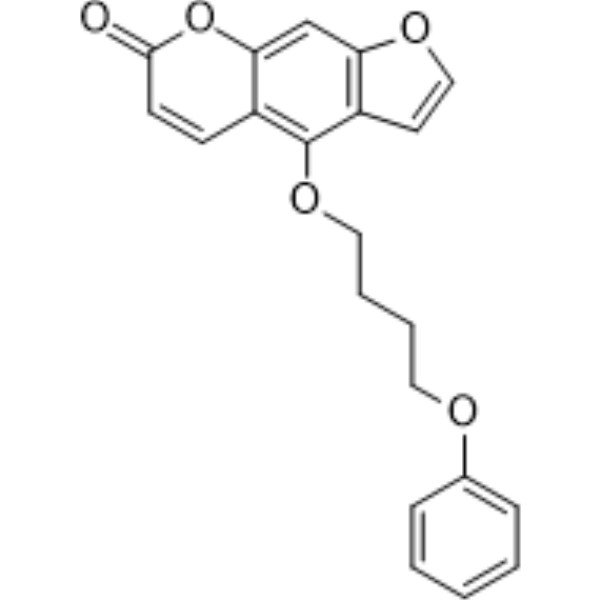
PAP-1 (5-(4-Phenoxybutoxy)psoralen) is a potent, selective, and orally active Kv1.3 blocker (EC50=2 nM). PAP-1 blocks Kv1.3 in a use-dependent manner and acts by preferentially binding to the C-type inactivated state of the channel. PAP-1 exhibits 23-fold selectivity over Kv1.5 (EC50=45 nM), and further displays 33- to 125-fold selectivity over all other Kv1-family channels. PAP-1 does not exhibit cytotoxic or phototoxic effects .
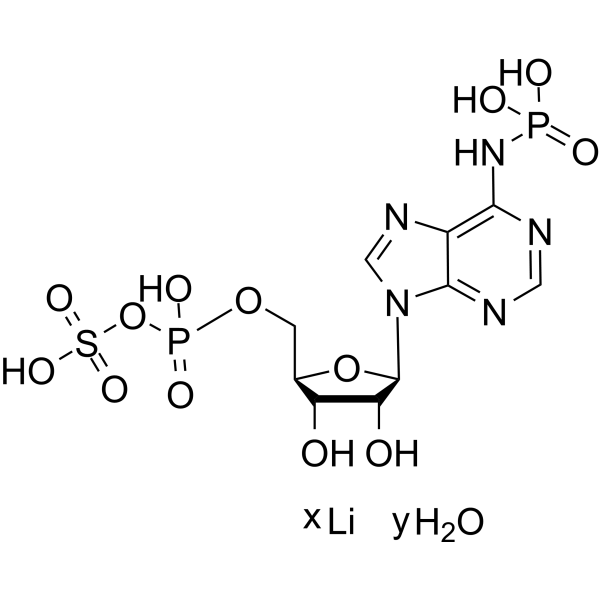
3′-Phosphoadenosine 5′-phosphosulfate tetralithium salt (PAPS tetralithium salt) is the cosubstrate and the source of sulfonic acid groups in sulfation reactions. 3′-Phosphoadenosine 5′-phosphosulfate tetralithium salt is important for maintaining sulfation balance in living organisms .
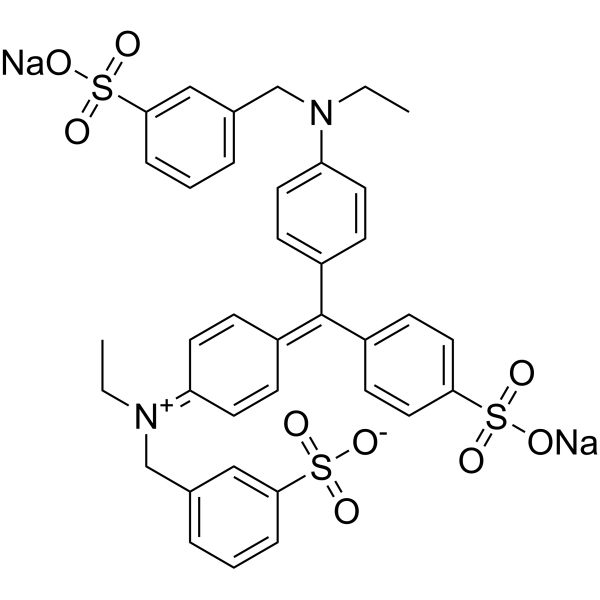
Light green SF yellowish (Acid Green 5) is a water-soluble triarylmethane dye. Light green SF yellowish serves as a histological stain that selectively labels mitochondria, collagen, and cartilage, while being an essential component of Papanicolaou staining. Light green SF yellowish is commonly used as a cytoplasmic counterstain for nuclear stains, and is applied in Masson's trichrome staining for collagen fibers, Pap staining, and cytological polychromatic staining in histopathology. Light green SF yellowish also induces growth inhibition and local fibrosarcomas in rats and exerts mild pulmonary tumorigenicity in mice .
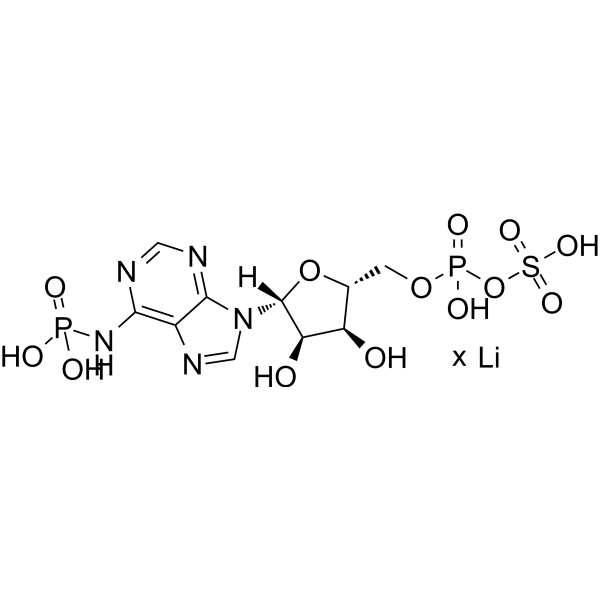
Adenosine 3'-phosphate 5'-phosphosulfate lithium, an adenine nucleotide derivative, is a selective P2Y1 antagonist with no effect on P2Y2, P2Y4, or P2Y6 receptors. Adenosine 3'-phosphate 5'-phosphosulfate lithium can competitive inhibit ADP-induced platelet aggregation, as well as the ability of ADP to cause shape change and increases in Ca 2+ in platelets, but had no effect on the inhibition of stimulated adenylate cyclase by ADP. Adenosine 3'-phosphate 5'-phosphosulfate lithium is a co-substrate used for the sulfonation of glycans. Adenosine 3'-phosphate 5'-phosphosulfate lithium can be used for Golgi-resident PAP-specific 3'-phosphatase-coupled sulfotransferase assays, which as donor substrate to transfer a sulfonate group .
Adenosine 3'-phosphate 5'-phosphosulfate, an adenine nucleotide derivative, is a selective P2Y1 antagonist with no effect on P2Y2, P2Y4, or P2Y6 receptors. Adenosine 3'-phosphate 5'-phosphosulfate can competitive inhibit ADP-induced platelet aggregation, as well as the ability of ADP to cause shape change and increases in Ca 2+ in platelets, but had no effect on the inhibition of stimulated adenylate cyclase by ADP. Adenosine 3'-phosphate 5'-phosphosulfate is a co-substrate used for the sulfonation of glycans. Adenosine 3'-phosphate 5'-phosphosulfate can be used for Golgi-resident PAP-specific 3'-phosphatase-coupled sulfotransferase assays, which as donor substrate to transfer a sulfonate group .
16:0 Lyso PS (1-Palmitoyl-2-hydroxy-sn-glycero-3-phospho-L-serine sodium) is a lysophospholipid. 16:0 Lyso PS serves as a standard for preparing standard curves .
PY-PAP is a photoactivatable affinity probe and a derivative of PY-60 (HY-141644). PY-PAP retains the cellular function of activating YAP transcriptional activity. In 293A cells, PY-PAP can label cathepsin D (CTSD) and annexin A2 (ANXA2) through ultraviolet crosslinking and click reactions. PY-PAP plays a key role in identifying ANXA2 as the specific target of PY-60 .
PAP-1 (Standard) is the analytical standard of PAP-1. This product is intended for research and analytical applications. PAP-1 (5-(4-Phenoxybutoxy)psoralen) is a potent, selective, and orally active Kv1.3 blocker (EC50=2 nM). PAP-1 blocks Kv1.3 in a use-dependent manner and acts by preferentially binding to the C-type inactivated state of the channel. PAP-1 exhibits 23-fold selectivity over Kv1.5 (EC50=45 nM), and further displays 33- to 125-fold selectivity over all other Kv1-family channels. PAP-1 does not exhibit cytotoxic or phototoxic effects .
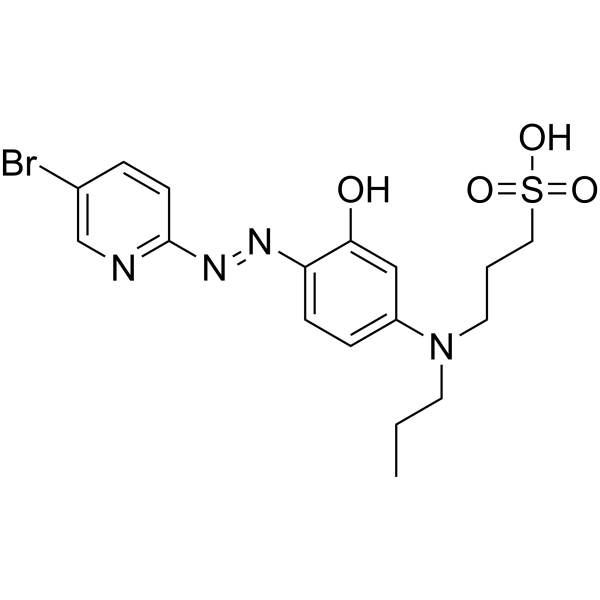
5-Br-PAPS is a highly specific Zn 2+ metallochromic indicator. 5-Br-PAPS is used in assays for measuring free Zn 2+ by forming a deeply colored red Zn 2+ complex .
ASAP2 Human Pre-designed siRNA Set A contains three designed siRNAs for ASAP2 gene (Human), as well as a negative control, a positive control, and a FAM-labeled negative control.
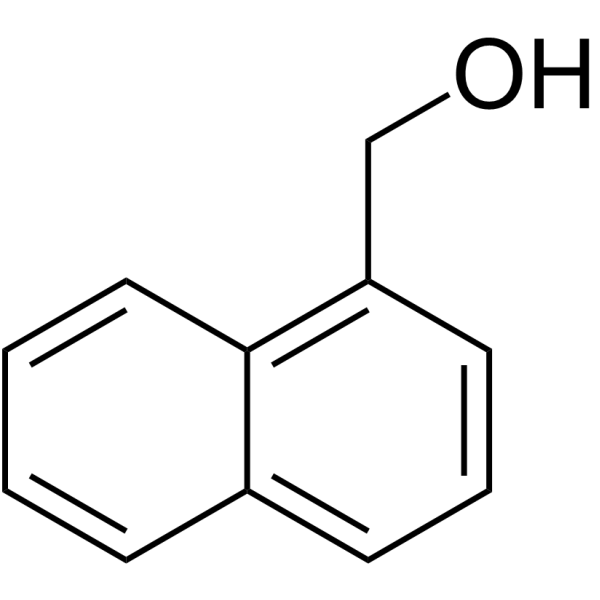
1-Naphthalenemethanol is a hydroxyl-substituted naphthalene derivative. 1-Naphthalenemethanol can be extracted from the root of Annona senegalensis. 1-Naphthalenemethanol is a photolysis product of 1-napthaleneacetic acid. 1-Naphthalenemethanol, together with PAPS, provides some protection against the irreversible inactivation of AST IV caused by N-OH-2AF. 1-Naphthalenemethanol can be used in antibacterial research .
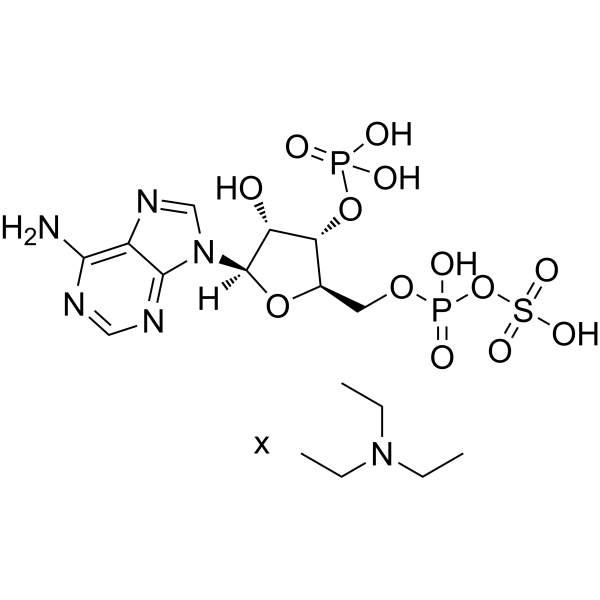
Adenosine 3'-phosphate 5'-phosphosulfate triethylamine, an adenine nucleotide derivative, is a selective P2Y1 antagonist with no effect on P2Y2, P2Y4, or P2Y6 receptors. Adenosine 3'-phosphate 5'-phosphosulfate triethylamine can competitive inhibit ADP-induced platelet aggregation, as well as the ability of ADP to cause shape change and increases in Ca 2+ in platelets, but had no effect on the inhibition of stimulated adenylate cyclase by ADP. Adenosine 3'-phosphate 5'-phosphosulfate triethylamine is a co-substrate used for the sulfonation of glycans. Adenosine 3'-phosphate 5'-phosphosulfate triethylamine can be used for Golgi-resident PAP-specific 3'-phosphatase-coupled sulfotransferase assays, which as donor substrate to transfer a sulfonate group .
PAP-IN-2 (Compound 35) is a purple acid phosphatase (PAP) inhibitor (Kis: 186 nM). PAP-IN-2 can be used for development of anti-osteoporotic compounds .
PAP-IN-1 (compound 28) is an inhibitor of purple acid phosphatases(PAPs), a ubiquitous binuclear metallohydrolase. PAP-IN-1 inhibits mammalian PAP with Ki value of 168 nM. PAP-IN-1 targets to pig PAP with Kic value of 0.17 μM. PAP inhibitors can be used for research of anti-osteoporotic drugs .
Pap12-6 is a 12-mer peptide derived from the antimicrobial peptide Papiliocin of yellow butterfly larva. Pap12-6 kills bacteria by penetrating and disrupting their membranes, exhibiting strong antibacterial activity. Pap12-6 exerts its anti-inflammatory effects through the TLR4-mediated NF-κB signaling pathway .
Adenosine 3'-phosphate 5'-phosphosulfate lithium hydrate, an adenine nucleotide derivative, is a selective P2Y1 antagonist with no effect on P2Y2, P2Y4, or P2Y6 receptors. Adenosine 3'-phosphate 5'-phosphosulfate lithium hydrate can competitive inhibit ADP-induced platelet aggregation, as well as the ability of ADP to cause shape change and increases in Ca 2+ in platelets, but had no effect on the inhibition of stimulated adenylate cyclase by ADP. Adenosine 3'-phosphate 5'-phosphosulfate lithium hydrate is a co-substrate used for the sulfonation of glycans. Adenosine 3'-phosphate 5'-phosphosulfate lithium hydrate can be used for Golgi-resident PAP-specific 3'-phosphatase-coupled sulfotransferase assays, which as donor substrate to transfer a sulfonate group .
PAP 248-286 (Prostatic acid phosphatase (248-286)) acetate is a biological active peptide. PAP (248-286) acetate is a semen-derived enhancer of viral infection (SEVI) factor found in semen. This peptide greatly increases HIV infection through enhanced virion attachment to target cells. .
PAP 248-286 (Prostatic acid phosphatase (248-286)) is a biological active peptide. PAP (248-286) peptide is a semen-derived enhancer of viral infection (SEVI) factor found in semen. This peptide greatly increases HIV infection through enhanced virion attachment to target cells .
Acid Phosphatase, Prostatic (ACP/PAP) (Acid Phos, 5'-nucleotidase, Thiamine monophosphatase, PAPf39) is a biological material or organic compound that can be used in life science research .
Sipuleucel-T is a cancer vaccine. Sipuleucel-T recognizes prostatic acid phosphatase (PAP), present PAP antigens, and stimulates the immune response against prostate cancer cells .
Nitro-PAPS disodium dihydrate is a highly sensitive colometric reagent for Fe(II) detection with a maximal absorption wavelength of 592 nm. Nitro-PAPS disodium dihydrate is suitable for the determination of Fe(II) in serum and also be used to determine micro molar levels of Cu, Zn, Ni, Co and V .
SARS-CoV-2 RdRp-IN-1 (Compound PAP-2) is a potent SARS-CoV-2 RdRp inhibitor, with an EC50 of 1.11 μM. SARS-CoV-2 RdRp-IN-1 can bind directly to SARS-CoV-2 RdRp, fully resistance to the exoribonuclease (ExoN) and exhibit broad spectrum anti-CoV activities .
PAPOLA Human Pre-designed siRNA Set A contains three designed siRNAs for PAPOLA gene (Human), as well as a negative control, a positive control, and a FAM-labeled negative control.
Pdap1 Mouse Pre-designed siRNA Set A contains three designed siRNAs for Pdap1 gene (Mouse), as well as a negative control, a positive control, and a FAM-labeled negative control.
PDAP1 Human Pre-designed siRNA Set A contains three designed siRNAs for PDAP1 gene (Human), as well as a negative control, a positive control, and a FAM-labeled negative control.
TUSC2 Human Pre-designed siRNA Set A contains three designed siRNAs for TUSC2 gene (Human), as well as a negative control, a positive control, and a FAM-labeled negative control.
MRPS30 Human Pre-designed siRNA Set A contains three designed siRNAs for MRPS30 gene (Human), as well as a negative control, a positive control, and a FAM-labeled negative control.
ASAP1 Human Pre-designed siRNA Set A contains three designed siRNAs for ASAP1 gene (Human), as well as a negative control, a positive control, and a FAM-labeled negative control.
Acp3 Mouse Pre-designed siRNA Set A contains three designed siRNAs for Acp3 gene (Mouse), as well as a negative control, a positive control, and a FAM-labeled negative control.
REG3A Human Pre-designed siRNA Set A contains three designed siRNAs for REG3A gene (Human), as well as a negative control, a positive control, and a FAM-labeled negative control.
1-Naphthalenemethanol (Standard) is the analytical standard of 1-Naphthalenemethanol (HY-W017241). This product is intended for research and analytical applications. 1-Naphthalenemethanol is a hydroxyl-substituted naphthalene derivative. 1-Naphthalenemethanol can be extracted from the root of Annona senegalensis. 1-Naphthalenemethanol is a photolysis product of 1-napthaleneacetic acid. 1-Naphthalenemethanol, together with PAPS, provides some protection against the irreversible inactivation of AST IV caused by N-OH-2AF. 1-Naphthalenemethanol can be used in antibacterial research .
Pap12-6-10 is an MD-2 ligand that binds to the hydrophobic pocket of MD-2 to inhibit the dimerization of the TLR4/MD-2 complex and downstream inflammatory signal transduction. Pap12-6-10 also binds to LPS to permeabilize bacterial cell membranes and induce oxidative stress, leading to bacterial death. Pap12-6-10 regulates LPS-induced inflammatory responses through the TLR4 signaling pathway and exhibits antibacterial activity against multidrug-resistant Gram-negative bacteria. Pap12-6-10 shows low tendency to induce drug resistance and low preclinical cytotoxicity, and it prevents organ damage in a mouse model of sepsis. Pap12-6-10 can be used for research related to Gram-negative sepsis and carbapenem-resistant Acinetobacter baumannii infections .
Pdap1 Rat Pre-designed siRNA Set A contains three designed siRNAs for Pdap1 gene (Rat), as well as a negative control, a positive control, and a FAM-labeled negative control.
Asap1 Mouse Pre-designed siRNA Set A contains three designed siRNAs for Asap1 gene (Mouse), as well as a negative control, a positive control, and a FAM-labeled negative control.
Acp3 Rat Pre-designed siRNA Set A contains three designed siRNAs for Acp3 gene (Rat), as well as a negative control, a positive control, and a FAM-labeled negative control.
AtSAL1-IN-1 (compound V20) is a competitive inhibitor of AtSAL1. AtSAL1-IN-1 elevates the levels of 3’-phosphoadenosine 5’-phosphate (PAP), activates stress-responsive genes and improves oxidative stress tolerance in Arabidopsis. AtSAL1-IN-1 can be used for study of chloroplast-mediated cellular signaling pathways .
Light green SF yellowish (Acid Green 5) is a water-soluble triarylmethane dye. Light green SF yellowish serves as a histological stain that selectively labels mitochondria, collagen, and cartilage, while being an essential component of Papanicolaou staining. Light green SF yellowish is commonly used as a cytoplasmic counterstain for nuclear stains, and is applied in Masson's trichrome staining for collagen fibers, Pap staining, and cytological polychromatic staining in histopathology. Light green SF yellowish also induces growth inhibition and local fibrosarcomas in rats and exerts mild pulmonary tumorigenicity in mice .
5-Br-PAPS is a highly specific Zn 2+ metallochromic indicator. 5-Br-PAPS is used in assays for measuring free Zn 2+ by forming a deeply colored red Zn 2+ complex .
Adenosine 3'-phosphate 5'-phosphosulfate lithium, an adenine nucleotide derivative, is a selective P2Y1 antagonist with no effect on P2Y2, P2Y4, or P2Y6 receptors. Adenosine 3'-phosphate 5'-phosphosulfate lithium can competitive inhibit ADP-induced platelet aggregation, as well as the ability of ADP to cause shape change and increases in Ca 2+ in platelets, but had no effect on the inhibition of stimulated adenylate cyclase by ADP. Adenosine 3'-phosphate 5'-phosphosulfate lithium is a co-substrate used for the sulfonation of glycans. Adenosine 3'-phosphate 5'-phosphosulfate lithium can be used for Golgi-resident PAP-specific 3'-phosphatase-coupled sulfotransferase assays, which as donor substrate to transfer a sulfonate group .
16:0 Lyso PS (1-Palmitoyl-2-hydroxy-sn-glycero-3-phospho-L-serine sodium) is a lysophospholipid. 16:0 Lyso PS serves as a standard for preparing standard curves .
Adenosine 3'-phosphate 5'-phosphosulfate lithium hydrate, an adenine nucleotide derivative, is a selective P2Y1 antagonist with no effect on P2Y2, P2Y4, or P2Y6 receptors. Adenosine 3'-phosphate 5'-phosphosulfate lithium hydrate can competitive inhibit ADP-induced platelet aggregation, as well as the ability of ADP to cause shape change and increases in Ca 2+ in platelets, but had no effect on the inhibition of stimulated adenylate cyclase by ADP. Adenosine 3'-phosphate 5'-phosphosulfate lithium hydrate is a co-substrate used for the sulfonation of glycans. Adenosine 3'-phosphate 5'-phosphosulfate lithium hydrate can be used for Golgi-resident PAP-specific 3'-phosphatase-coupled sulfotransferase assays, which as donor substrate to transfer a sulfonate group .
Nitro-PAPS disodium dihydrate is a highly sensitive colometric reagent for Fe(II) detection with a maximal absorption wavelength of 592 nm. Nitro-PAPS disodium dihydrate is suitable for the determination of Fe(II) in serum and also be used to determine micro molar levels of Cu, Zn, Ni, Co and V .
Pap12-6 is a 12-mer peptide derived from the antimicrobial peptide Papiliocin of yellow butterfly larva. Pap12-6 kills bacteria by penetrating and disrupting their membranes, exhibiting strong antibacterial activity. Pap12-6 exerts its anti-inflammatory effects through the TLR4-mediated NF-κB signaling pathway .
PAP 248-286 (Prostatic acid phosphatase (248-286)) acetate is a biological active peptide. PAP (248-286) acetate is a semen-derived enhancer of viral infection (SEVI) factor found in semen. This peptide greatly increases HIV infection through enhanced virion attachment to target cells. .
PAP 248-286 (Prostatic acid phosphatase (248-286)) is a biological active peptide. PAP (248-286) peptide is a semen-derived enhancer of viral infection (SEVI) factor found in semen. This peptide greatly increases HIV infection through enhanced virion attachment to target cells .
Pap12-6-10 is an MD-2 ligand that binds to the hydrophobic pocket of MD-2 to inhibit the dimerization of the TLR4/MD-2 complex and downstream inflammatory signal transduction. Pap12-6-10 also binds to LPS to permeabilize bacterial cell membranes and induce oxidative stress, leading to bacterial death. Pap12-6-10 regulates LPS-induced inflammatory responses through the TLR4 signaling pathway and exhibits antibacterial activity against multidrug-resistant Gram-negative bacteria. Pap12-6-10 shows low tendency to induce drug resistance and low preclinical cytotoxicity, and it prevents organ damage in a mouse model of sepsis. Pap12-6-10 can be used for research related to Gram-negative sepsis and carbapenem-resistant Acinetobacter baumannii infections .
1-Naphthalenemethanol is a hydroxyl-substituted naphthalene derivative. 1-Naphthalenemethanol can be extracted from the root of Annona senegalensis. 1-Naphthalenemethanol is a photolysis product of 1-napthaleneacetic acid. 1-Naphthalenemethanol, together with PAPS, provides some protection against the irreversible inactivation of AST IV caused by N-OH-2AF. 1-Naphthalenemethanol can be used in antibacterial research .
1-Naphthalenemethanol (Standard) is the analytical standard of 1-Naphthalenemethanol (HY-W017241). This product is intended for research and analytical applications. 1-Naphthalenemethanol is a hydroxyl-substituted naphthalene derivative. 1-Naphthalenemethanol can be extracted from the root of Annona senegalensis. 1-Naphthalenemethanol is a photolysis product of 1-napthaleneacetic acid. 1-Naphthalenemethanol, together with PAPS, provides some protection against the irreversible inactivation of AST IV caused by N-OH-2AF. 1-Naphthalenemethanol can be used in antibacterial research .
The REG-3 alpha/REG3A protein is a bactericidal C-type lectin that selectively targets Gram-positive bacteria by binding to the peptidoglycan carbohydrate moiety. Its antimicrobial action extends to membrane phospholipid binding, forming pores that help eliminate bacteria. REG-3 alpha/REG3A Protein, Human (HEK293, His) is the recombinant human-derived REG-3 alpha/REG3A protein, expressed by HEK293 , with C-His labeled tag.
PAP proteins play a dual regulatory role in cell growth, exhibiting different effects depending on the specific growth factors involved. In fibroblasts, it exerts a positive regulatory effect by enhancing PDGFA-stimulated cell growth. PAP Protein, Human (His) is the recombinant human-derived PAP protein, expressed by E. coli , with N-6*His labeled tag.
REG-3 beta/REG3B Protein, a bactericidal C-type lectin, combats intestinal Gram-positive and Gram-negative bacteria, except S.typhimurium. It inhibits S.enteritidis translocation, safeguarding against infection. Beyond antibacterial action, REG-3 beta functions hormonally, activating EXTL3 receptor for cell-specific signaling. In the pancreas, it notably stimulates cell proliferation. REG-3 beta/REG3B Protein, Mouse is the recombinant mouse-derived REG-3 beta/REG3B protein, expressed by E. coli , with no tag.
The acid prostatic phosphatase (ACPP) protein, is an acid tyrosine phosphatase that skillfully dephosphorylates a variety of substrates. ACPP-VLP possesses lipid phosphatase activity and inactivates lysophosphatidic acid. ACPP/Prostatic Acid Phosphatase Protein, Mouse (HEK293, His) is the recombinant mouse-derived ACPP/Prostatic Acid Phosphatase protein, expressed by HEK293 , with C-His labeled tag.
PPAP protein, a nonspecific tyrosine phosphatase, has anticancer and antiproliferative activities. The PPAP protein dephosphorylates a variety of substrates under acidic conditions (pH 4-6), resulting in the inactivation of lysophosphatidic acid in seminal plasma. The PPAP protein is also a common biomarker for prostate cancer and can inhibit tumor development. Prostatic acid phosphatase/ACPP Protein, Human (HEK293, His, solution) is the recombinant human-derived Prostatic acid phosphatase/ACPP protein, expressed by HEK293 , with C-6*His labeled tag.
Prostatic acid phosphatase (ACPP) functions as a multifunctional tyrosine phosphatase under acidic conditions (pH 4-6), dephosphorylating a variety of substrates, including orthophosphate monoesters. ACPP has lipid phosphatase activity and inactivates lysophosphatidic acid in seminal plasma. Prostatic acid Phosphatase/ACPP Protein, Human (HEK293, GFP-His) is the recombinant human-derived Prostatic acid Phosphatase/ACPP protein, expressed by HEK293 , with C-His, GFP labeled tag.
Prostatic acid Phosphatase/ACPP Protein-VLP, Human (HEK293, His) is recommended for animal immunization, ELISA. It is not recommended for receptor-ligand interaction detection and SPR/BLI assay since there are other irrelevant membrane proteins of the host on the VLP envelope, and the receptor-ligand interaction will have strong background interference. High requirements for chips and experimental protocols are needed for SPR/BLI assays. If VLP control is required, it is recommended HY-P701236. Tags can only be detected under denaturing conditions.
Annexin A2/ANXA2 protein is a calcium-regulated membrane-binding protein that binds two calcium ions. Annexin A2/ANXA2 Protein, Mouse (His) is the recombinant mouse-derived Annexin A2/ANXA2 protein, expressed by E. coli , with N-His labeled tag.
Acid prostatic phosphatase (ACPP) is an enzyme that catalyzes the conversion of orthophosphate monoesters into alcohol and orthophosphate. ACPP is regulated by androgens and secreted by prostate epithelial cells. Prostatic acid phosphatase/ACPP Protein, Human (HEK293, His) is the recombinant human-derived Prostatic acid phosphatase/ACPP protein, expressed by HEK293 , with C-His labeled tag.
REG-3 α/REG3A proteins exhibit identical protein-binding, oligosaccharide-binding, and peptidoglycan-binding activities.It negatively regulates keratinocyte differentiation and positively regulates keratinocyte proliferation and wound healing, emphasizing its role in skin-related processes.REG-3 alpha/REG3A Protein, Mouse (HEK293, His) is the recombinant mouse-derived REG-3 alpha/REG3A protein, expressed by HEK293 , with C-His labeled tag.
REG-3 α/REG3A protein is a bactericidal C-type lectin lacking an EPN motif that acts as a hormone in response to stimuli such as IL17A and the intestinal microbiome. It is secreted by various cell types and activates the receptor EXTL3, initiating cell-specific signaling pathways. REG-3 alpha/REG3A Protein, Rat (HEK293, Fc) is the recombinant rat-derived REG-3 alpha/REG3A protein, expressed by HEK293 , with C-hFc labeled tag.
REG-3 α/REG3A protein is a bactericidal C-type lectin lacking an EPN motif that acts as a hormone in response to stimuli such as IL17A and the intestinal microbiome. It is secreted by various cell types and activates the receptor EXTL3, initiating cell-specific signaling pathways. REG-3 alpha/REG3A Protein, Rat (HEK293, His) is the recombinant rat-derived REG-3 alpha/REG3A protein, expressed by HEK293 , with C-His labeled tag.
Regenerating islet-derived protein 3-gamma; REG-3-gamma; Pancreatitis-associated protein 1B; REG3G; PAP-1B; Regenerating islet-derived protein III-gamma
REG-3 gamma/REG3G protein is a bactericidal C-type lectin that specifically targets Gram-positive bacteria by binding to the peptidoglycan surface moiety, mediating bacterial killing. It limits bacterial colonization of intestinal epithelial surfaces and limits microbiota-induced adaptive immune responses. REG-3 gamma/REG3G Protein, Human (HEK293, Fc) is the recombinant human-derived REG-3 gamma/REG3G protein, expressed by HEK293 , with C-hFc labeled tag.
Regenerating islet-derived protein 3-gamma; REG-3-gamma; Pancreatitis-associated protein 1B; REG3G; PAP-1B; Regenerating islet-derived protein III-gamma
REG-3 gamma/REG3G protein is a bactericidal C-type lectin that specifically targets Gram-positive bacteria by binding to the peptidoglycan surface moiety, mediating bacterial killing. It limits bacterial colonization of intestinal epithelial surfaces and limits microbiota-induced adaptive immune responses. REG-3 gamma/REG3G Protein, Human (HEK293, His) is the recombinant human-derived REG-3 gamma/REG3G protein, expressed by HEK293 , with C-6*His labeled tag.
The FIP1L1 protein is an important component of the CPSF complex and is responsible for the formation of the 3' end of pre-mRNA. FIP1L1 Protein, Human (sf9, His, GST) is the recombinant human-derived FIP1L1 protein, expressed by sf9 insect cells , with N-8*His, N-GST labeled tag.
Annexin A2; Annexin II; Annexin-2; Calpactin I heavy chain; Calpactin-1 heavy chain; Chromobindin-8; Lipocortin II; Placental anticoagulant protein IV; PAP-IV; Protein I; p36;
WB, ICC/IF, ELISA
Human, Mouse, Rat
Annexin-2/ANXA2 Antibody (YA5571) is a Mouse-derived and non-conjugated IgG3 monoclonal antibody, targeting to Annexin-2/ANXA2.
PY-PAP is a photoactivatable affinity probe and a derivative of PY-60 (HY-141644). PY-PAP retains the cellular function of activating YAP transcriptional activity. In 293A cells, PY-PAP can label cathepsin D (CTSD) and annexin A2 (ANXA2) through ultraviolet crosslinking and click reactions. PY-PAP plays a key role in identifying ANXA2 as the specific target of PY-60 .
3′-Phosphoadenosine 5′-phosphosulfate tetralithium salt (PAPS tetralithium salt) is the cosubstrate and the source of sulfonic acid groups in sulfation reactions. 3′-Phosphoadenosine 5′-phosphosulfate tetralithium salt is important for maintaining sulfation balance in living organisms .
Adenosine 3'-phosphate 5'-phosphosulfate lithium, an adenine nucleotide derivative, is a selective P2Y1 antagonist with no effect on P2Y2, P2Y4, or P2Y6 receptors. Adenosine 3'-phosphate 5'-phosphosulfate lithium can competitive inhibit ADP-induced platelet aggregation, as well as the ability of ADP to cause shape change and increases in Ca 2+ in platelets, but had no effect on the inhibition of stimulated adenylate cyclase by ADP. Adenosine 3'-phosphate 5'-phosphosulfate lithium is a co-substrate used for the sulfonation of glycans. Adenosine 3'-phosphate 5'-phosphosulfate lithium can be used for Golgi-resident PAP-specific 3'-phosphatase-coupled sulfotransferase assays, which as donor substrate to transfer a sulfonate group .
Adenosine 3'-phosphate 5'-phosphosulfate, an adenine nucleotide derivative, is a selective P2Y1 antagonist with no effect on P2Y2, P2Y4, or P2Y6 receptors. Adenosine 3'-phosphate 5'-phosphosulfate can competitive inhibit ADP-induced platelet aggregation, as well as the ability of ADP to cause shape change and increases in Ca 2+ in platelets, but had no effect on the inhibition of stimulated adenylate cyclase by ADP. Adenosine 3'-phosphate 5'-phosphosulfate is a co-substrate used for the sulfonation of glycans. Adenosine 3'-phosphate 5'-phosphosulfate can be used for Golgi-resident PAP-specific 3'-phosphatase-coupled sulfotransferase assays, which as donor substrate to transfer a sulfonate group .
16:0 Lyso PS (1-Palmitoyl-2-hydroxy-sn-glycero-3-phospho-L-serine sodium) is a lysophospholipid. 16:0 Lyso PS serves as a standard for preparing standard curves .
ASAP2 Human Pre-designed siRNA Set A contains three designed siRNAs for ASAP2 gene (Human), as well as a negative control, a positive control, and a FAM-labeled negative control.
Adenosine 3'-phosphate 5'-phosphosulfate lithium hydrate, an adenine nucleotide derivative, is a selective P2Y1 antagonist with no effect on P2Y2, P2Y4, or P2Y6 receptors. Adenosine 3'-phosphate 5'-phosphosulfate lithium hydrate can competitive inhibit ADP-induced platelet aggregation, as well as the ability of ADP to cause shape change and increases in Ca 2+ in platelets, but had no effect on the inhibition of stimulated adenylate cyclase by ADP. Adenosine 3'-phosphate 5'-phosphosulfate lithium hydrate is a co-substrate used for the sulfonation of glycans. Adenosine 3'-phosphate 5'-phosphosulfate lithium hydrate can be used for Golgi-resident PAP-specific 3'-phosphatase-coupled sulfotransferase assays, which as donor substrate to transfer a sulfonate group .
PAPOLA Human Pre-designed siRNA Set A contains three designed siRNAs for PAPOLA gene (Human), as well as a negative control, a positive control, and a FAM-labeled negative control.
Pdap1 Mouse Pre-designed siRNA Set A contains three designed siRNAs for Pdap1 gene (Mouse), as well as a negative control, a positive control, and a FAM-labeled negative control.
PDAP1 Human Pre-designed siRNA Set A contains three designed siRNAs for PDAP1 gene (Human), as well as a negative control, a positive control, and a FAM-labeled negative control.
TUSC2 Human Pre-designed siRNA Set A contains three designed siRNAs for TUSC2 gene (Human), as well as a negative control, a positive control, and a FAM-labeled negative control.
MRPS30 Human Pre-designed siRNA Set A contains three designed siRNAs for MRPS30 gene (Human), as well as a negative control, a positive control, and a FAM-labeled negative control.
ASAP1 Human Pre-designed siRNA Set A contains three designed siRNAs for ASAP1 gene (Human), as well as a negative control, a positive control, and a FAM-labeled negative control.
Acp3 Mouse Pre-designed siRNA Set A contains three designed siRNAs for Acp3 gene (Mouse), as well as a negative control, a positive control, and a FAM-labeled negative control.
REG3A Human Pre-designed siRNA Set A contains three designed siRNAs for REG3A gene (Human), as well as a negative control, a positive control, and a FAM-labeled negative control.
Pdap1 Rat Pre-designed siRNA Set A contains three designed siRNAs for Pdap1 gene (Rat), as well as a negative control, a positive control, and a FAM-labeled negative control.
Asap1 Mouse Pre-designed siRNA Set A contains three designed siRNAs for Asap1 gene (Mouse), as well as a negative control, a positive control, and a FAM-labeled negative control.
Acp3 Rat Pre-designed siRNA Set A contains three designed siRNAs for Acp3 gene (Rat), as well as a negative control, a positive control, and a FAM-labeled negative control.
Inquiry Online
Your information is safe with us. * Required Fields.
Western blot analysis of extracts from THP-1(lane 2(20μg), Jurkat (lane 3(20μg) and NIH3T3(lane 4(20μg) using FOXO1A (HY-P80132) Rabbit mAb. Proteins were transferred
to a PVDF membrane and blocked with 5% non-fat milk in TBST for 2 hour at room temperature. The primary antibody (1/1000) and Loading control antibody (Beta Actin, HY-P80438, 1/10000) was
used in 5% non-fat milk in TBST at 4°C overnight. Goat Anti-Mouse/Rabbit IgG-HRP Secondary Antibody (1/10000) was used for 1 hour at room temperature.
Western blot analysis of extracts from THP-1(lane 2(20μg), Jurkat (lane 3(20μg) and NIH3T3(lane 4(20μg) using FOXO1A (HY-P80132) Rabbit mAb. Proteins were transferred
to a PVDF membrane and blocked with 5% non-fat milk in TBST for 2 hour at room temperature. The primary antibody (1/1000) and Loading control antibody (Beta Actin, HY-P80438, 1/10000) was
used in 5% non-fat milk in TBST at 4°C overnight. Goat Anti-Mouse/Rabbit IgG-HRP Secondary Antibody (1/10000) was used for 1 hour at room temperature.
Western blot analysis of extracts from THP-1(lane 2(20μg), Jurkat (lane 3(20μg) and NIH3T3(lane 4(20μg) using FOXO1A (HY-P80132) Rabbit mAb. Proteins were transferred
to a PVDF membrane and blocked with 5% non-fat milk in TBST for 2 hour at room temperature. The primary antibody (1/1000) and Loading control antibody (Beta Actin, HY-P80438, 1/10000) was
used in 5% non-fat milk in TBST at 4°C overnight. Goat Anti-Mouse/Rabbit IgG-HRP Secondary Antibody (1/10000) was used for 1 hour at room temperature.
Western blot analysis of extracts from THP-1(lane 2(20μg), Jurkat (lane 3(20μg) and NIH3T3(lane 4(20μg) using FOXO1A (HY-P80132) Rabbit mAb. Proteins were transferred
to a PVDF membrane and blocked with 5% non-fat milk in TBST for 2 hour at room temperature. The primary antibody (1/1000) and Loading control antibody (Beta Actin, HY-P80438, 1/10000) was
MedchemExpress Validation 03
Western blot analysis of extracts from THP-1(lane 2(20μg), Jurkat (lane 3(20μg) and NIH3T3(lane 4(20μg) using FOXO1A (HY-P80132) Rabbit mAb. Proteins were transferred
MedchemExpress Validation 04
Western blot analysis of extracts from THP-1(lane 2(20μg), Jurkat (lane 3(20μg) and NIH3T3(lane 4(20μg) using FOXO1A (HY-P80132) Rabbit mAb. Proteins were transferred
to a PVDF membrane and blocked with 5% non-fat milk in TBST for 2 hour at room temperature. The primary antibody (1/1000) and Loading control antibody (Beta Actin, HY-P80438, 1/10000) was
used in 5% non-fat milk in TBST at 4°C overnight. Goat Anti-Mouse/Rabbit IgG-HRP Secondary Antibody (1/10000) was used for 1 hour at room temperature.
MedchemExpress Validation
Western blot analysis of extracts from THP-1(lane 2(20μg), Jurkat (lane 3(20μg) and NIH3T3(lane 4(20μg) using FOXO1A (HY-P80132) Rabbit mAb. Proteins were transferred
to a PVDF membrane and blocked with 5% non-fat milk in TBST for 2 hour at room temperature. The primary antibody (1/1000) and Loading control antibody (Beta Actin, HY-P80438, 1/10000) was
used in 5% non-fat milk in TBST at 4°C overnight. Goat Anti-Mouse/Rabbit IgG-HRP Secondary Antibody (1/10000) was used for 1 hour at room temperature.
Western blot analysis of extracts from THP-1(lane 2(20μg), Jurkat (lane 3(20μg) and NIH3T3(lane 4(20μg) using FOXO1A (HY-P80132) Rabbit mAb. Proteins were transferred
to a PVDF membrane and blocked with 5% non-fat milk in TBST for 2 hour at room temperature. The primary antibody (1/1000) and Loading control antibody (Beta Actin, HY-P80438, 1/10000) was
used in 5% non-fat milk in TBST at 4°C overnight. Goat Anti-Mouse/Rabbit IgG-HRP Secondary Antibody (1/10000) was used for 1 hour at room temperature.
MedchemExpress Validation
Western blot analysis of extracts from THP-1(lane 2(20μg), Jurkat (lane 3(20μg) and NIH3T3(lane 4(20μg) using FOXO1A (HY-P80132) Rabbit mAb. Proteins were transferred
to a PVDF membrane and blocked with 5% non-fat milk in TBST for 2 hour at room temperature. The primary antibody (1/1000) and Loading control antibody (Beta Actin, HY-P80438, 1/10000) was
used in 5% non-fat milk in TBST at 4°C overnight. Goat Anti-Mouse/Rabbit IgG-HRP Secondary Antibody (1/10000) was used for 1 hour at room temperature.
MedchemExpress Validation
Western blot analysis of extracts from THP-1(lane 2(20μg), Jurkat (lane 3(20μg) and NIH3T3(lane 4(20μg) using FOXO1A (HY-P80132) Rabbit mAb. Proteins were transferred
to a PVDF membrane and blocked with 5% non-fat milk in TBST for 2 hour at room temperature. The primary antibody (1/1000) and Loading control antibody (Beta Actin, HY-P80438, 1/10000) was
used in 5% non-fat milk in TBST at 4°C overnight. Goat Anti-Mouse/Rabbit IgG-HRP Secondary Antibody (1/10000) was used for 1 hour at room temperature.
MedchemExpress Validation
Western blot analysis of extracts from THP-1(lane 2(20μg), Jurkat (lane 3(20μg) and NIH3T3(lane 4(20μg) using FOXO1A (HY-P80132) Rabbit mAb. Proteins were transferred
to a PVDF membrane and blocked with 5% non-fat milk in TBST for 2 hour at room temperature. The primary antibody (1/1000) and Loading control antibody (Beta Actin, HY-P80438, 1/10000) was
used in 5% non-fat milk in TBST at 4°C overnight. Goat Anti-Mouse/Rabbit IgG-HRP Secondary Antibody (1/10000) was used for 1 hour at room temperature.
MedchemExpress Validation
Western blot analysis of extracts from THP-1(lane 2(20μg), Jurkat (lane 3(20μg) and NIH3T3(lane 4(20μg) using FOXO1A (HY-P80132) Rabbit mAb. Proteins were transferred
to a PVDF membrane and blocked with 5% non-fat milk in TBST for 2 hour at room temperature. The primary antibody (1/1000) and Loading control antibody (Beta Actin, HY-P80438, 1/10000) was
used in 5% non-fat milk in TBST at 4°C overnight. Goat Anti-Mouse/Rabbit IgG-HRP Secondary Antibody (1/10000) was used for 1 hour at room temperature.
MedchemExpress Validation
Western blot analysis of extracts from THP-1(lane 2(20μg), Jurkat (lane 3(20μg) and NIH3T3(lane 4(20μg) using FOXO1A (HY-P80132) Rabbit mAb. Proteins were transferred
to a PVDF membrane and blocked with 5% non-fat milk in TBST for 2 hour at room temperature. The primary antibody (1/1000) and Loading control antibody (Beta Actin, HY-P80438, 1/10000) was
used in 5% non-fat milk in TBST at 4°C overnight. Goat Anti-Mouse/Rabbit IgG-HRP Secondary Antibody (1/10000) was used for 1 hour at room temperature.
MedchemExpress Validation
Western blot analysis of extracts from THP-1(lane 2(20μg), Jurkat (lane 3(20μg) and NIH3T3(lane 4(20μg) using FOXO1A (HY-P80132) Rabbit mAb. Proteins were transferred
to a PVDF membrane and blocked with 5% non-fat milk in TBST for 2 hour at room temperature. The primary antibody (1/1000) and Loading control antibody (Beta Actin, HY-P80438, 1/10000) was
used in 5% non-fat milk in TBST at 4°C overnight. Goat Anti-Mouse/Rabbit IgG-HRP Secondary Antibody (1/10000) was used for 1 hour at room temperature.
MedChemExpress values your privacy and your trust is important to us. We use cookies to enhance your website experience. Some cookies are necessary to run the website.
Privacy and Cookie Policy

