1. Search Result
Search Result
Results for "

PCNA

" in MedChemExpress (MCE) Product Catalog:

33

Inhibitors & Agonists

1

Biochemical Assay Reagents

4

Peptides

4

Natural
Products

2

Recombinant Proteins

1

Isotope-Labeled Compounds

5

Antibodies

3

Oligonucleotides

Cat. No. Product Name Target Research Areas Chemical Structure
  • HY-N0692
    Schisandrol B
    2 Publications Verification

    Gomisin-A; TJN-101; Wuweizi alcohol-B

    Reactive Oxygen Species (ROS) Cytochrome P450 Autophagy Cancer
    Schisandrol B (Gomisin-A) is a major active constituent of Schisandra chinensis with hepato-protective effects. Schisandrol B inhibits reactive oxygen species (ROS) production. Schisandrol B inhibits the activity of P-glycoprotein and CYP3A and also has anti-inflammatory, anti-diabetic and antioxidant activities .
    Schisandrol B
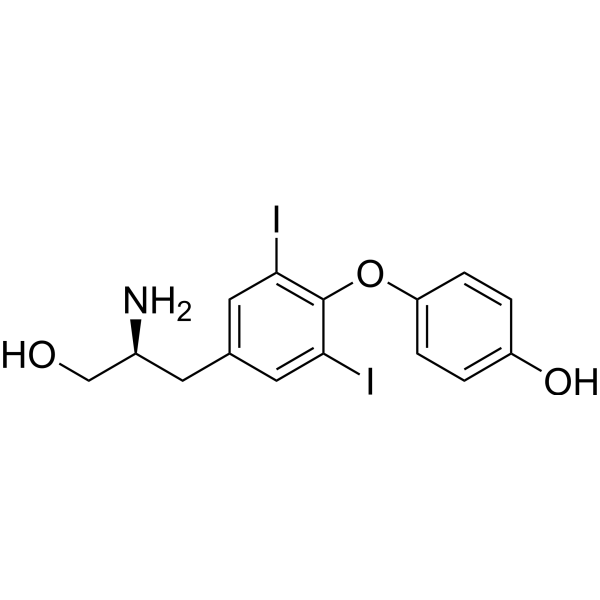
  • HY-110111
    T2AA
    2 Publications Verification

    DNA/RNA Synthesis Cancer
    T2AA is a monoubiquitinated proliferating cell nuclear antigen (PCNA) inhibitor that prevents DNA repair, increases double-strand break (DSB) formation and promotes necroptosis and cell cycle arrest in G1 phase .
    T2AA
  • HY-N0095
    (S)-10-Hydroxycamptothecin
    1 Publications Verification

    10-HCPT; 10-Hydroxycamptothecin

    Topoisomerase Apoptosis Cancer
    (S)-10-Hydroxycamptothecin (10-HCPT;10-Hydroxycamptothecin) is a DNA topoisomerase I inhibitor of isolated from the Chinese plant Camptotheca accuminata. (S)-10-Hydroxycamptothecin exhibits a remarkable apoptosis-inducing effect. (S)-10-Hydroxycamptothecin has the potential for hepatoma, gastric carcinoma, colon cancer and leukaemia treatment .
    (S)-10-Hydroxycamptothecin
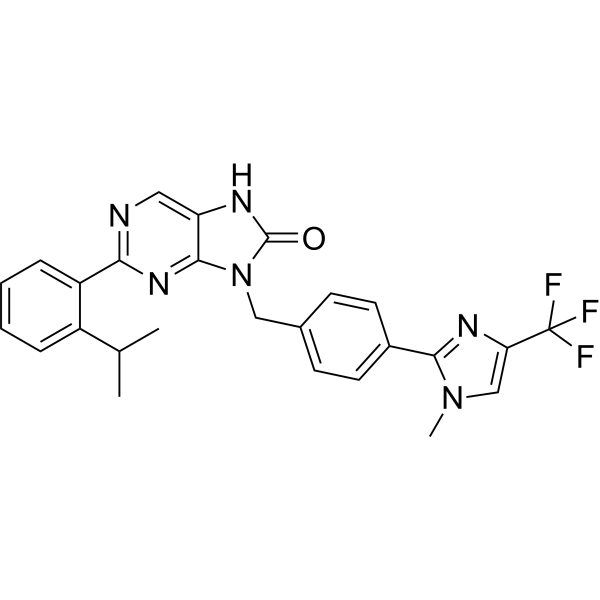
  • HY-124012

    DNA/RNA Synthesis Apoptosis Cancer
    PCNA-I1 is a selective small molecule inhibitor targeting proliferating cell nuclear antigen (PCNA) with anticancer activity. PCNA-I1 can stabilize the PCNA trimer structure (Kd=0.14-0.41μM), reduce its binding to chromatin, induce tumor cell cycle arrest, inhibit DNA replication and repair, and enhance the anti-tumor effect of DNA damaging agents. PCNA-I1 can be used in the study of targeted therapy for prostate cancer, lung cancer and other tumors .
    PCNA-I1
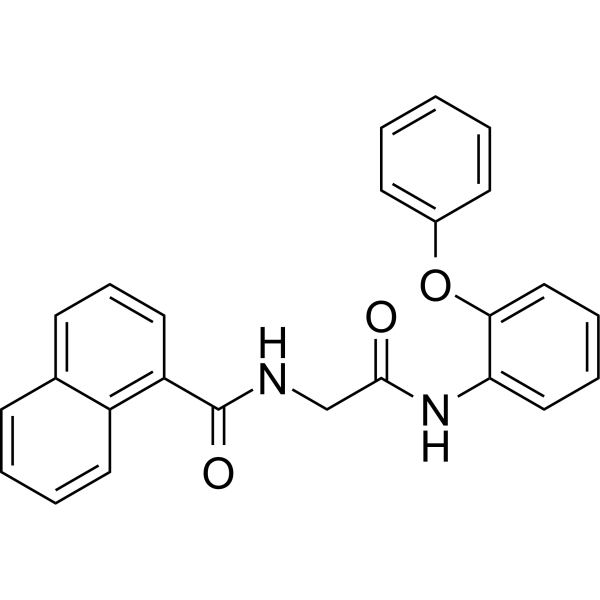
  • HY-120836
    AOH1160
    1 Publications Verification

    DNA/RNA Synthesis Apoptosis Cancer
    AOH1160 is a potent oral small molecule proliferating cell nuclear antigen (PCNA) inhibitor that interferes with DNA replication, blocks homologous recombination-mediated DNA repair, leads to cell cycle arrest and induces apoptosis .
    AOH1160
  • HY-160700

    Deubiquitinase JNK Cancer
    TNG348 is an orally available allosteric inhibitor of the ubiquitin-specific protease USP1. TNG348 specifically and efficiently inhibits the activity of USP1, inhibiting its deubiquitination of proliferative PCNA and FANCD2, thereby disrupting the DNA repair process. TNG348 has inhibitory activity against breast and ovarian cancers carrying BRCA1/2 mutations and other homologous recombination defects (HRD) .
    TNG348
  • HY-P4322
    H-Ile-Lys-Val-Ala-Val-OH
    1 Publications Verification

    ERK Akt Neurological Disease Cancer
    H-Ile-Lys-Val-Ala-Val-OH is one of the most potent active sites of laminin-1. H-Ile-Lys-Val-Ala-Val-OH promotes cell adhesion, neurite outgrowth, and tumor growth. H-Ile-Lys-Val-Ala-Val-OH stimulates BMMSC population growth and proliferation by activating MAPK/ERK1/2 and PI3K/Akt signalling pathways .
    H-Ile-Lys-Val-Ala-Val-OH
  • HY-B1866
    Linuron
    1 Publications Verification

    Environmental Pollutants Androgen Receptor Herbicide Infection Metabolic Disease Cancer
    Linuron is a phenylurea herbicide widely used to control the growth of grasses and weeds in various crops and orchards. Linuron acts as a photosystem II inhibitor. It also functions as a competitive androgen receptor (AR) antagonist, with an EC50 of 200 μM and a Ki of 100 μM against rat AR, and an EC50 of 20 μM against human AR. Linuron exhibits reproductive toxicity in animals and acts as an endocrine disruptor .\n

    Linuron
  • HY-NP199
    Bovine pituitary extract
    1 Publications Verification

    Reactive Oxygen Species (ROS) Inflammation/Immunology
    Bovine pituitary extract is a bovine pituitary extract that can be used as a mitogenic supplement in serum-free growth media. Bovine pituitary extract is rich in growth factors. Bovine pituitary extract not only promotes the proliferation of corneal keratinocytes and maintains their phenotype, but also exerts significant antioxidant stress protective effects on human prostate epithelial cells .
    Bovine pituitary extract
  • HY-125576

    Bacterial Infection
    Griselimycin is a cyclic lipopeptide produced by Streptomyces. Griselimycin specifically binds to the sliding clamp of bacterial DNA polymerase and does not interact with human PCNA. Griselimycin exhibits potent antibacterial activity against Mycobacterium tuberculosis (including drug-resistant strains) and a variety of Gram-negative bacteria .
    Griselimycin
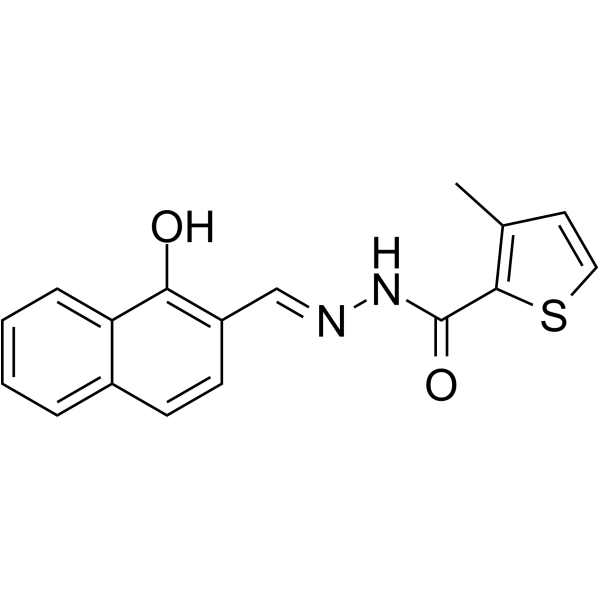
  • HY-153365

    Deubiquitinase Cancer
    I-138 is an orally active, reversible inhibitor of USP1-UAF1 (IC50: 4.1 nM; Ki: 5.4 nM), structurally related to ML323 (HY-17543). I-138 induces monoubiquitination of FANCD2 and PCNA in cells and eliminates USP1 autocleavage in cells .
    I-138
  • HY-13338

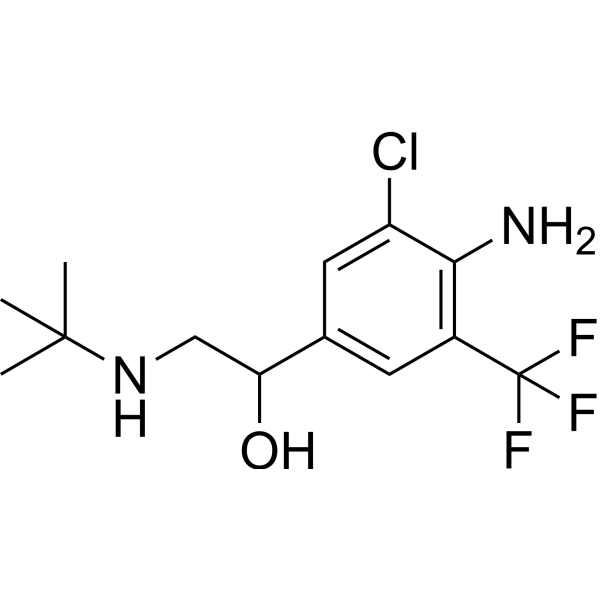
    Adrenergic Receptor Cardiovascular Disease
    Mabuterol is a selective and orally active beta-2 adrenergic receptor (ADRB2) agonist. Mabuterol inhibits the proliferation and suppresses the increase of intracellular Ca2+ induced by PDGF-BB. Mabuterol suppresses the protein expressions of Drp-1, cyclinD1 and PCNA and enhanced the expression of Mfn-2 induced by PDGF-BB .
    Mabuterol
  • HY-200129

    DNA/RNA Synthesis Cancer
    PCNA-IN-1 (Compound 11) is a PCNA/PIP-box interaction inhibitor, with IC50 of >50 μM. PCNA-IN-1 can be used in research of cancer .
    PCNA-IN-1
  • HY-RS10159

    Small Interfering RNA (siRNA) Others

    PCNA Human Pre-designed siRNA Set A contains three designed siRNAs for PCNA gene (Human), as well as a negative control, a positive control, and a FAM-labeled negative control.

    PCNA Human Pre-designed siRNA Set A
    PCNA Human Pre-designed siRNA Set A
  • HY-RS23107

    Small Interfering RNA (siRNA) Others

    Pcna Rat Pre-designed siRNA Set A contains three designed siRNAs for Pcna gene (Rat), as well as a negative control, a positive control, and a FAM-labeled negative control.

    Pcna Rat Pre-designed siRNA Set A
    Pcna Rat Pre-designed siRNA Set A
  • HY-P10825

    DNA/RNA Synthesis Cancer
    p21PBP, a 20 amino-acid peptide, is an inhibitor of DNA replication. p21PBP specifically binds to purified proliferating cell nuclear antigen (PCNA) in tumour cell extracts. p21PBP is promising for research of cancers .
    p21PBP
  • HY-W755295

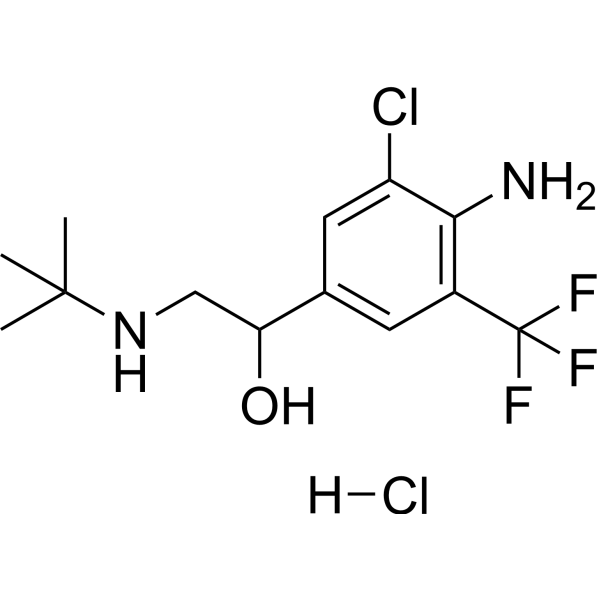
    Adrenergic Receptor Cardiovascular Disease
    Mabuterol hydrochloride is a selective and orally active beta-2 adrenergic receptor (ADRB2) agonist. Mabuterol hydrochloride inhibits the proliferation and suppresses the increase of intracellular Ca2+ induced by PDGF-BB. Mabuterol hydrochloride suppresses the protein expressions of Drp-1, cyclinD1 and PCNA and enhanced the expression of Mfn-2 induced by PDGF-BB .
    Mabuterol hydrochloride
  • HY-W755295R

    Reference Standards Adrenergic Receptor Cardiovascular Disease
    Mabuterol (hydrochloride) (Standard) is the analytical standard of Mabuterol (hydrochloride). This product is intended for research and analytical applications. Mabuterol hydrochloride is a selective and orally active beta-2 adrenergic receptor (ADRB2) agonist. Mabuterol hydrochloride inhibits the proliferation and suppresses the increase of intracellular Ca2+ induced by PDGF-BB. Mabuterol hydrochloride suppresses the protein expressions of Drp-1, cyclinD1 and PCNA and enhanced the expression of Mfn-2 induced by PDGF-BB .
    Mabuterol hydrochloride (Standard)
  • HY-13338R

    Adrenergic Receptor Reference Standards Cardiovascular Disease
    Mabuterol (Standard) is the analytical standard of Mabuterol. This product is intended for research and analytical applications. Mabuterol is a selective and orally active beta-2 adrenergic receptor (ADRB2) agonist. Mabuterol inhibits the proliferation and suppresses the increase of intracellular Ca2+ induced by PDGF-BB. Mabuterol suppresses the protein expressions of Drp-1, cyclinD1 and PCNA and enhanced the expression of Mfn-2 induced by PDGF-BB .
    Mabuterol (Standard)
  • HY-110111A

    DNA/RNA Synthesis Others
    T2AA hydrochloride is a non-peptide small molecule PCNA inhibitor T2 amino alcohol (T2AA) that lacks thyroid hormone activity. T2AA hydrochloride inhibits the interaction of PCNA/PIP-box peptide (IC50=~1 μM) and the interaction of PCNA with full-length p21 protein .
    T2AA hydrochloride
  • HY-117846

    DNA/RNA Synthesis Cancer
    MLAF50 is apotent REV1 UBM2-Ubiquitin interaction inhibitor. MLAF50 inhibits chromatin co-localization of REV1 with PCNA following DNA-damage induction .
    MLAF50
  • HY-152051S

    Isotope-Labeled Compounds Adrenergic Receptor Cardiovascular Disease
    Mabuterol-d9 (hydrochloride) is deuterium labeled Mabuterol (hydrochloride). Mabuterol hydrochloride is a selective and orally active beta-2 adrenergic receptor (ADRB2) agonist. Mabuterol hydrochloride inhibits the proliferation and suppresses the increase of intracellular Ca2+ induced by PDGF-BB. Mabuterol hydrochloride suppresses the protein expressions of Drp-1, cyclinD1 and PCNA and enhanced the expression of Mfn-2 induced by PDGF-BB .
    Mabuterol-d9 hydrochloride
  • HY-N0095R

    10-HCPT (Standard); 10-Hydroxycamptothecin (Standard)

    Reference Standards Topoisomerase Apoptosis Cancer
    (S)-10-Hydroxycamptothecin (Standard) is the analytical standard of (S)-10-Hydroxycamptothecin. This product is intended for research and analytical applications. (S)-10-Hydroxycamptothecin (10-HCPT;10-Hydroxycamptothecin) is a DNA topoisomerase I inhibitor of isolated from the Chinese plant Camptotheca accuminata. (S)-10-Hydroxycamptothecin exhibits a remarkable apoptosis-inducing effect. (S)-10-Hydroxycamptothecin has the potential for hepatoma, gastric carcinoma, colon cancer and leukaemia treatment .
    (S)-10-Hydroxycamptothecin (Standard)
  • HY-163691

    Carbonic Anhydrase Cancer
    Antitumor agent-163 (Compound 3) is a photosensitizer used in Molecular-Targeted Photodynamic Therapy (MT-PDT) targeting carbonic anhydrase IX (CAIX). Antitumor agent-163 inactivates CAIX protein via singlet oxygen under 540 nm wavelength light, without affecting internal standard proteins such as α-tubulin, β-actin, and proliferating cell nuclear antigen (PCNA). Antitumor agent-163 induces cell membrane damage, inhibits cell viability (IC50 is 0.2 and 0.05 μM for A549 and U87MG). Antitumor agent-163 exhibits antitumor efficacy in mouse model .
    Antitumor agent-163
  • HY-N0692R

    Gomisin-A (Standard); TJN-101 (Standard); Wuweizi alcohol-B (Standard)

    Reference Standards Reactive Oxygen Species (ROS) Cytochrome P450 Autophagy Cancer
    Schisandrol B (Standard) is the analytical standard of Schisandrol B. This product is intended for research and analytical applications. Schisandrol B (Gomisin-A) is a major active constituent of Schisandra chinensis with hepato-protective effects. Schisandrol B inhibits reactive oxygen species (ROS) production. Schisandrol B inhibits the activity of P-glycoprotein and CYP3A and also has anti-inflammatory, anti-diabetic and antioxidant activities .
    Schisandrol B (Standard)
  • HY-123715

    Apoptosis Cancer
    Anticancer agent 255 is a monocarbonylated curcumin-1,2,3-oxazole conjugate with significant anticancer activity. The IC50 values of Anticancer agent 255 in prostate cancer cells PC-3 and DU-145 are 8.8μM and 9.5μM respectively. The IC50 values of Anticancer agent 255 against breast cancer cells MCF-7, MDA-MB-231 and 4T1 are 6μM, 10μM and 6.4μM, showing good anti-cancer activity Effect. Anticancer agent 255 can induce mitochondria-mediated apoptosis in cancer cells and prevent cell cycle progression. Anticancer agent 255 down-regulated the cell proliferation marker PCNA and inhibited the activation of cell survival proteins. Anticancer agent 255 up-regulated the pro-apoptotic protein Bax and down-regulated the anti-apoptotic protein Bcl-2 .
    Anticancer agent 255
  • HY-RS16672

    Small Interfering RNA (siRNA) Others

    Pcna Mouse Pre-designed siRNA Set A contains three designed siRNAs for Pcna gene (Mouse), as well as a negative control, a positive control, and a FAM-labeled negative control.

    Pcna Mouse Pre-designed siRNA Set A
    Pcna Mouse Pre-designed siRNA Set A
  • HY-183488

    RRRRRRRRRCCLGIPEQEY

    Apoptosis PARP Cancer
    R9-caPep (RRRRRRRRRCCLGIPEQEY) is a cell-penetrating peptide derived from proliferating cell nuclear antigen (PCNA). R9-caPep selectively blocks the interactions between PCNA and FEN1, as well as between PCNA and LIGI, while preserving the binding of POLD3 to PCNA. R9-caPep interferes with DNA synthesis and homologous recombination-mediated double-strand DNA break repair, inducing S-phase arrest, DNA damage accumulation, and apoptosis. R9-caPep inhibits the growth of tumor volume and weight of neuroblastoma in nude mice . R9-caPep can be used in research related to neuroblastoma and triple-negative breast cancer .
    R9-caPep
  • HY-117171

    Bcl-2 Family DNA/RNA Synthesis Apoptosis Prostaglandin Receptor Inflammation/Immunology
    Proquinazid is a Bcl-2 and PCNA modulator, oxidative stress inducer, genotoxin and apoptosis inducer. Proquinazid causes DNA damage and also triggers apoptosis by regulating pro-apoptotic and anti-apoptotic proteins .
    Proquinazid
  • HY-180216

    Deubiquitinase Cancer
    USP1-IN-15 is an orally active and selective USP1 inhibitor with an IC50 of 12.3 nM. USP1-IN-15 has a high specificity for USP1 with negligible inhibition against all off-target DUBs. USP1-IN-15 suppresses colony formation, induces S-phase arrest, and stabilizes ubiquitinated PCNA. USP1-IN-15 also shows synergistic antiproliferative activity. USP1-IN-15 achieves significant tumor growth inhibition in vivo. USP1-IN-15 can be used for BRCA-mutated breast cancer .
    USP1-IN-15
  • HY-183581

    Deubiquitinase DNA/RNA Synthesis Cancer
    USP1-IN-18 is an orally active USP1 inhibitor with a human IC50 of 17.0 nM. USP1-IN-18 inhibits USP1-UAF1 deubiquitinase activity and drives ubiquitinated PCNA accumulation. USP1-IN-18 induces DNA damage, replication stress, and G2-M phase cell cycle arrest. USP1-IN-18 can be used for the research of triple-negative breast cancer .
    USP1-IN-18
  • HY-183363

    Deubiquitinase Cancer
    USP1-IN-17 is an orally active USP1/UAF1 complex inhibitor. USP1-IN-17 exhibits potent anti-proliferative activity against BRCA1-mutant human breast cancer MDA-MB-436 cells, with an IC50 value of 8.1 nM. USP1-IN-17 binds to USP1 to stabilize the enzyme conformation, impairs deubiquitination function, elevates the monoubiquitination level of PCNA, inhibits cancer cell proliferation, and induces DNA damage accumulation. USP1-IN-17 can be used for the research of BRCA1-mutated cancers .
    USP1-IN-17
  • HY-180585

    Monoamine Oxidase Guanylate Cyclase PKG Collagen Cardiovascular Disease
    LOXL2/sGC modulator-2 (Compound 9k) is a selective and orally active lysyl oxidase-like 2 (LOXL2) and soluble guanylate cyclase (sGC) dual-target regulator. LOXL2/sGC modulator-2 shows inhibitory activity for LOXL2 with an IC50 of 0.1 μM and can activate sGC. LOXL2/sGC modulator-2 can ameliorate vascular remodeling and reduce pulmonary artery pressure. LOXL2/sGC modulator-2 can downregulate PKG1, PCNA, α-SMA, collagen I and fibronectin levels. LOXL2/sGC modulator-2 can be used for the research of pulmonary arterial hypertension .
    LOXL2/sGC modulator-2

Inquiry Online

Your information is safe with us. * Required Fields.

Salutation


Country or Region *

Applicant Name *


Organization Name *

Department *


Email Address *


Product Name *

Cat. No.


Requested quantity *

Phone Number *


Remarks

Inquiry Online

Inquiry Information

Product Name:
Cat. No.:
Quantity:
MCE Japan Authorized Agent:

