

51 Results for "

PLD

" in MedChemExpress (MCE) Product Catalog:
Products (51)

51 Results for "PLD" in MCE Product Catalog:

  • Isoforms Recommended:
5
5 Cited Publications
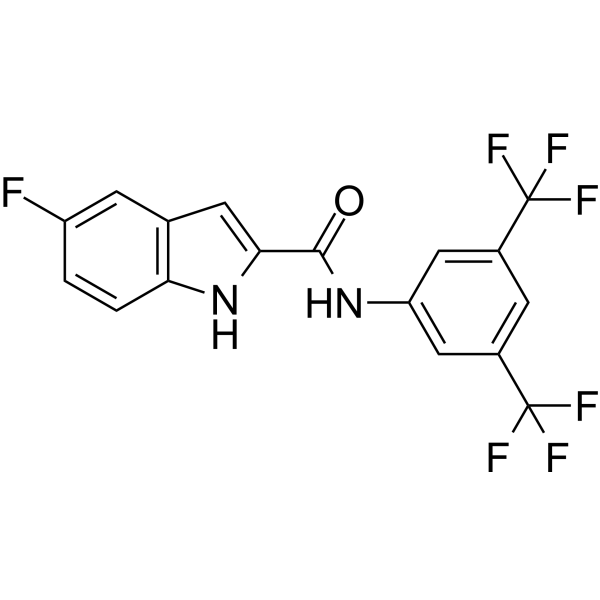
Cat. No.: HY-12807
CAS No.: 939055-18-2
Purity:  98.00%
Synonyms: 5-Fluoro-2-indolyl deschlorohalopemide
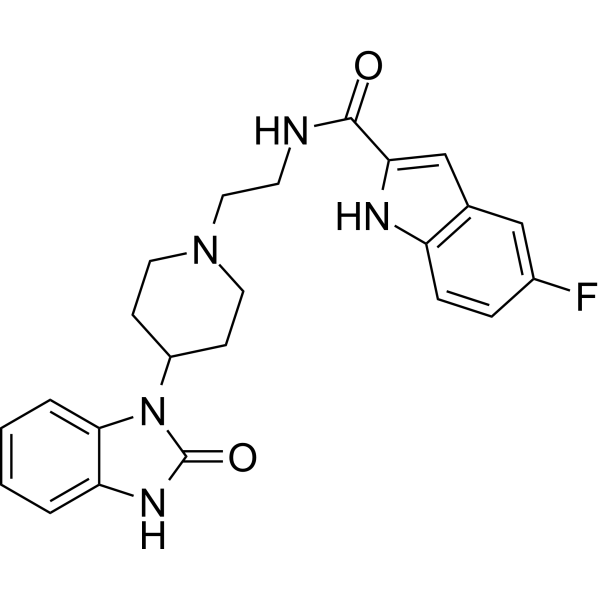
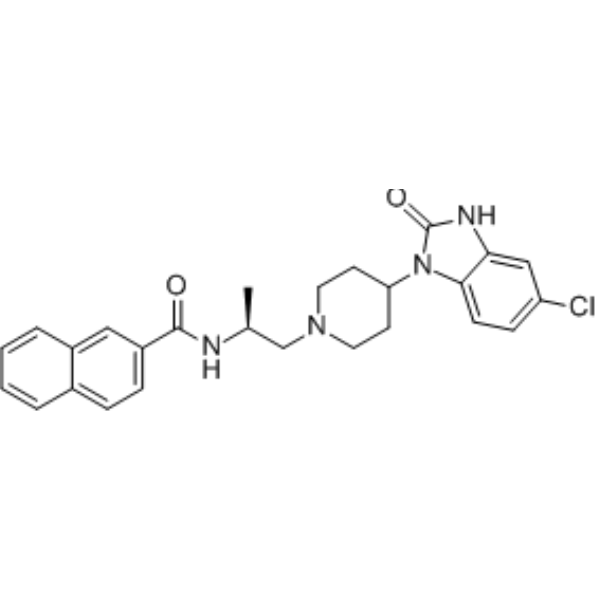
FIPI is a phospholipase D (PLD) inhibitor with an IC50 for PLD1 and PLD2 of about 25 nM. FIPI regulates cytoskeletal recombination, cell diffusion and chemotaxis. FIPI can be used in cancer research. In addition, FIPI can enhance the secretion and aggregation of platelet dense particles, inhibit thrombosis, reduce ischemic stroke infarct volume and improve nerve function .
loading...
    loading...
3
3 Cited Publications
Cat. No.: HY-131181
CAS No.: 2393840-15-6
Purity:  99.73%
Target:  

Phospholipase

Research Areas:  

Neurological Disease

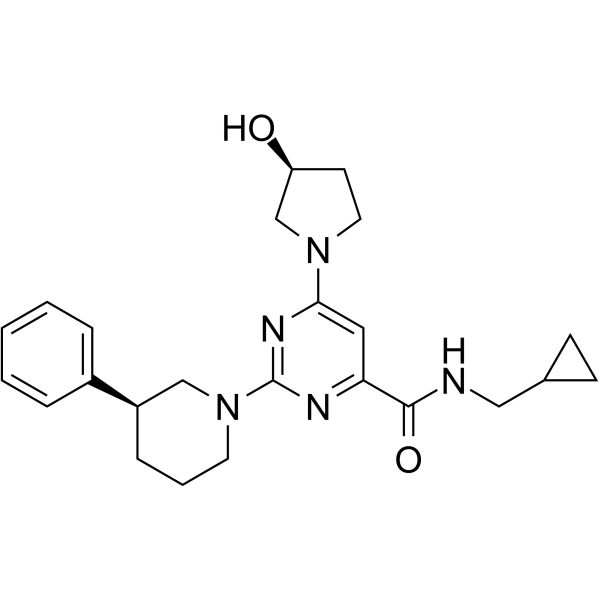
LEI-401 is a first-in-class, selective, and CNS-active NAPE-PLD (N-acylphosphatidylethanolamine phospholipase D) inhibitor, with an IC50 of 27 nM. LEI-401 modulates emotional behavior in mice .
loading...
    loading...
1
1 Cited Publications
Cat. No.: HY-121983
CAS No.: 1130067-34-3
Purity:  98.95%
CAY10594 is an orally active PLD2 inhibitor with an IC50 of 140 nM. CAY10594 has activities such as anti-tumor, anti-oxidation and liver protection. CAY10594 can be used for the research of diseases like breast cancer, acute liver injury and colitis .
loading...
    loading...
1
1 Cited Publications
Cat. No.: HY-119093
CAS No.: 59831-65-1
Purity:  99.65%
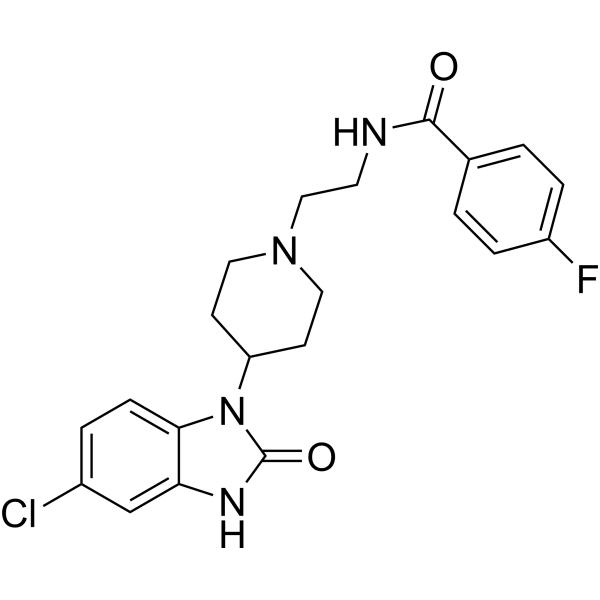
Halopemide is a potent phospholipase D (PLD) inhibitor, with IC50s of 220 and 310 nM for human PLD1 and PLD2, respectively. Halopemid is a dopamine receptors antagonist, and acts a psychotropic agent .
loading...
    loading...
1
1 Cited Publications
Cat. No.: HY-101293
CAS No.: 1246303-14-9
Purity:  98.06%
Synonyms: CID-53361951; ML-270
VU0359595 (CID-53361951; ML-270) is a potent and selective pharmacological phospholipase D1 (PLD1) inhibitor with an IC50 of 3.7 nM. VU0359595 is >1700-fold selective for PLD1 over PLD2 (IC50 of 6.4 μM). VU0359595 can be used for the research of cancer, diabetes, neurodegenerative and inflammatory diseases .
loading...
    loading...
1
1 Cited Publications
Cat. No.: HY-155774
CAS No.: 923417-09-8
Purity:  99.71%
Target:  

Phospholipase

Research Areas:  

Metabolic Disease

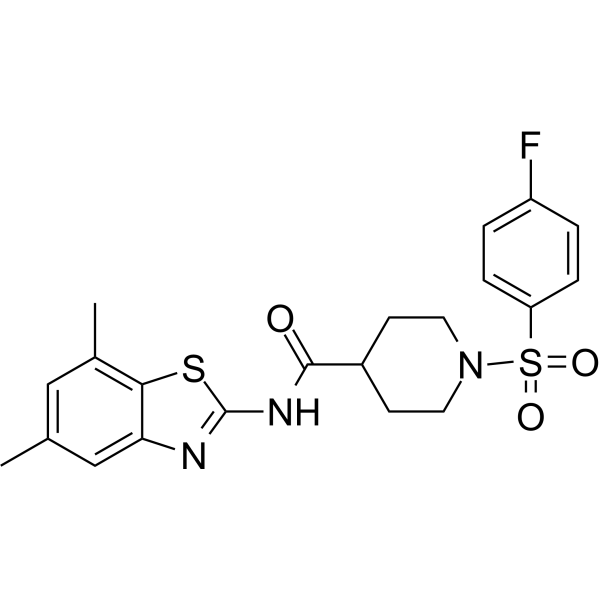
APE-PLD (VU533) activator is a potent NAPE-PLD activator with an EC50 value of 0.30 µM. NAPE-PLD activator (VU533) can enhance NAPE-PLD activity and increase efferocytosis by macrophages. NAPE-PLD activator (VU533) can be used for cardiometabolic diseases research .
loading...
    loading...
Cat. No.: HY-P2812
CAS No.: 9001-87-0
Synonyms: PLD
Phospholipase D, Streptomyces chromofuscus (PLD) is an enzyme of the phospholipase superfamily, which widely exists in bacteria, yeast, plants, animals and viruses, and is often used in biochemical research. Phospholipase D can catalyze the hydrolysis of phosphodiester bonds in glycerophospholipids to produce phosphatidic acid and soluble choline. Phospholipase D is involved in a variety of disease-related processes, including diabetes, atherogenesis, obesity, tumorigenesis, immune response, and neuroendocrine function .
loading...
    loading...
Cat. No.: HY-108612
CAS No.: 1130067-06-9
Purity:  98.55%
Synonyms: CAY10593
Target:  

Phospholipase

Research Areas:  

Cancer

VU0155069 (CAY10593), is a selective phospholipase D1 (PLD1) inhibitor with an IC50 value of 46 nM in vitro. VU0155069 (CAY10593) strongly inhibits the invasive migration of several cancer cell lines in transwell assays .
loading...
    loading...
Cat. No.: HY-148123
CAS No.: 39382-08-6
Purity:  88.59%
Glycerophospholipids and cephalins are a class of phospholipid compounds and important components of neural membranes. Glycerophospholipids and cephalins are hydrolysis substrates of phospholipase (such as PLA2, PLC, and PLD). After complete hydrolysis, they produce 1 mol of glycerol, phosphate, ethanolamine, and 2 mol of fatty acids, respectively. Glycerophospholipids and cephalins can maintain membrane structure, fluidity, and ion permeability, and serve as precursors of second messengers such as arachidonic acid and diacylglycerol. Glycerophospholipids and cephalins can regulate signal transduction, cell apoptosis, and membrane transport, and are used in the study of neurodegenerative diseases (such as Alzheimer's disease) .
loading...
    loading...
Cat. No.: HY-155773
CAS No.: 923509-20-0
Purity:  98.53%
Target:  

FAAH Epoxide Hydrolase

Research Areas:  

Cardiovascular Disease

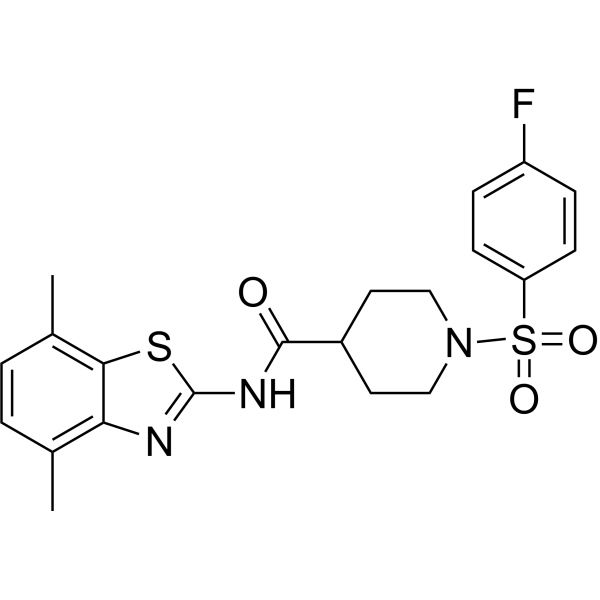
VU534 is a NAPE-PLD activator, with an EC50 of 0.30 μM. VU534 is dual inhibitors of FAAH and sEH (IC50 of 1.2 μM). VU534 increases efferocytosis in a NAPE-PLD dependent manner. VU534 has the potential for cardiometabolic diseases study [1] .
loading...
    loading...
Cat. No.: HY-150412
CAS No.: 1244639-78-8
Purity:  99.33%
Target:  

Phospholipase

Research Areas:  

Cancer

VU0364739 is a selective PLD2 inhibitor (IC50: 22 nM). VU0364739 decreases cancer cell proliferation .
loading...
    loading...
Cat. No.: HY-P2812A
CAS No.: 9001-87-0
Target:  

Phospholipase

Research Areas:  

Cardiovascular Disease Cancer

Phospholipase D, peanut is a phospholipase D (EC 3.1.4.4) of the PLD superfamily found in peanuts, acting as a phosphodiesterase and signaling enzyme with activity toward phosphatidylcholine. Phospholipase D hydrolyzes phosphatidylcholine to phosphatidic acid and choline, and catalyzes transphosphatidylation reactions. Phospholipase D can be used for the research of myocardial disease, ischemic heart disease, congestive heart failure, diabetic cardiomyopathy, cardiac hypertrophy, vascular abnormalities, breast cancer, gastric cancer, renal cancer, colorectal cancer .
loading...
    loading...
Cat. No.: HY-P1341
CAS No.: 343268-91-7
Synonyms: Orexin A (17-33) (human, mouse, rat, bovine)
OXA (17-33) (Orexin A (17-33) (human, mouse, rat, bovine)) is the shortest active orexin peptide that selectively targets OX1 (EC50=8.29 nM), with 23-fold selectivity for the OX1 receptor over the OX2 receptor. The activity of OXA (17-33) depends on the Tyr17, Leu20, Asn25, His26 residues and the spatial conformation of the α-helix. OXA (17-33) activates signaling pathways involving inositol-1,4,5-trisphosphate receptor (IP3R), phospholipase D (PL-D) and choline-Sigma-1R, thereby increasing the cytoplasmic Ca 2+ level in nucleus accumbens neurons, an effect that is blocked by Sigma-1R antagonists. OXA (17-33) serves as an important biological probe for investigating the function of the OX1 receptor. OXA (17-33) can be modified via incorporation of mixed disulfide bonds of homocysteine and cysteamine, and is widely used in studies related to insomnia and narcolepsy .
loading...
    loading...
Cat. No.: HY-155342
CAS No.: 2324948-66-3
Purity:  99.06%
Target:  

Phospholipase

Research Areas:  

Inflammation/Immunology

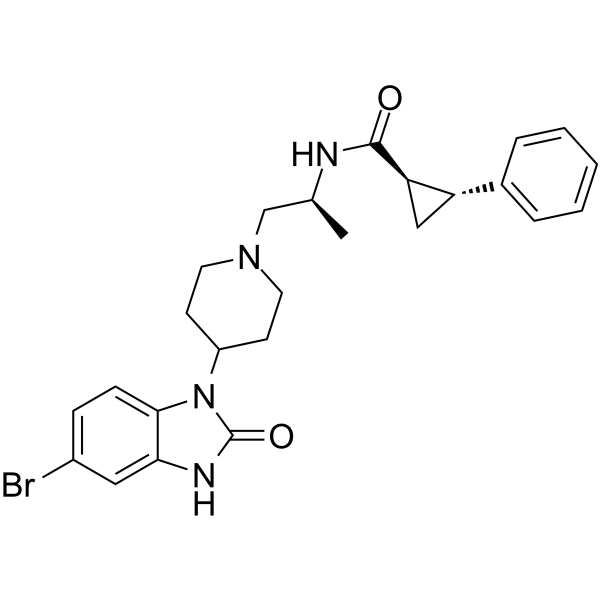
A3373, a novel chemical inhibitor of Phospholipase D1 (PLD1) and PLD2, with IC50 of 325 nM and 15.15?μM, respectively, inhibits LPS-induced immune response and plays important roles in autoimmune arthritis, bone demineralization and osteoclastogenesis .
loading...
    loading...
Cat. No.: HY-114095
CAS No.: 1158347-73-9
Purity:  99.64%
Synonyms: VU0285655-1
BML-280 (VU0285655-1) is a potent and selective phospholipase D2 (PLD2) inhibitor. BML-280 has the ability to prevent caspase-3 cleavage and reduction in cell viability induced by high glucose. BML-280 can be used for rheumatoid arthritis research .
loading...
    loading...
Cat. No.: HY-RS19152
Research Areas:  

Others

Pld2 Mouse Pre-designed siRNA Set A contains three designed siRNAs for Pld2 gene (Mouse), as well as a negative control, a positive control, and a FAM-labeled negative control.

loading...
    loading...
Cat. No.: HY-108616
CAS No.: 1244640-48-9
Target:  

Phospholipase

Research Areas:  

Cancer

VU 0364739 hydrochloride is a highly selective phospholipase D2 (PLD2) inhibitor with IC50s of 20 and 1500 nM for PLD2 and PLD1, respectively. VU 0364739 hydrochloride induces apoptosis and it can be used for cancer research .
loading...
    loading...
Cat. No.: HY-118994
CAS No.: 2190502-57-7
Purity:  99.54%
Target:  

Phospholipase

Research Areas:  

Neurological Disease

ARN19874 is a selective, reversible uncompetitive N-acylphosphatidylethanolamine phospholipase D (NAPE-PLD) activity inhibitor with an IC50 of ~34 μM .
loading...
    loading...
Cat. No.: HY-116165
CAS No.: 1426916-02-0
Purity:  ≥98.0%
Target:  

Phospholipase

Research Areas:  

Cancer

ML298 is a potent and selective inhibitor of Phospholipase D2 (PLD2) with an IC50 of 355 nM. ML298 decreases invasive migration in U87-MG glioblastoma cells .
loading...
    loading...
Cat. No.: HY-P2812B
CAS No.: 9001-87-0
Target:  

Phospholipase

Research Areas:  

Cardiovascular Disease Cancer

Phospholipase D, cabbage is a phospholipase D of the PLD superfamily found in cabbage, acting as a phosphodiesterase and signaling enzyme with activity toward phosphatidylcholine. Phospholipase D hydrolyzes phosphatidylcholine to phosphatidic acid and choline, and catalyzes transphosphatidylation reactions. Phospholipase D can be used for the research of myocardial disease, ischemic heart disease, congestive heart failure, diabetic cardiomyopathy, cardiac hypertrophy, vascular abnormalities, breast cancer, gastric cancer, renal cancer, colorectal cancer .
loading...
    loading...

