17 Results for "

Photoactivation

" in MedChemExpress (MCE) Product Catalog:
Products (17)

17 Results for "Photoactivation" in MCE Product Catalog:

3
3 Cited Publications
Cat. No.: HY-B1157
CAS No.: 3902-71-4
Synonyms: Trisoralen; Trioxysalen; TMP
Research Areas:  

Inflammation/Immunology

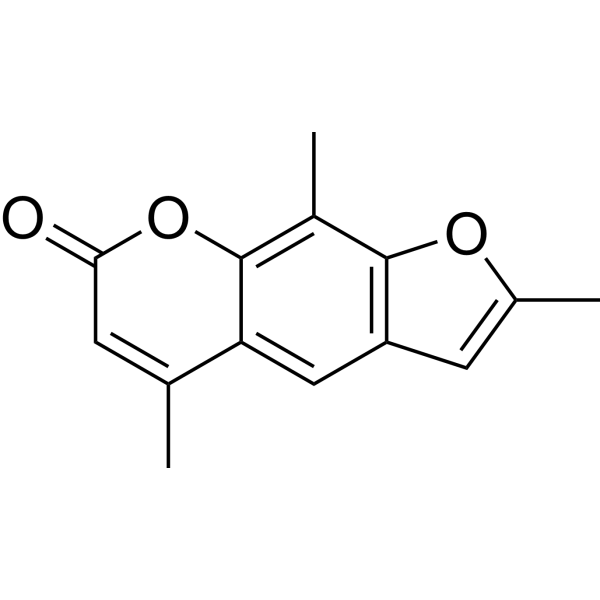
Trioxsalen (Trisoralen), a psoralen derivative, is a photochemical DNA crosslinker. Trioxsalen only works after photoactivation with near ultraviolet light. Trioxsalen is a photosensitizer that can be used for the research of vitiligo and hand eczema. Trioxsalen is used for visualization of genomic interstrand cross-links localized by laser photoactivation .
loading...
    loading...
1
1 Cited Publications
Cat. No.: HY-W007712
CAS No.: 3430-17-9
Synonyms: 2-Bromo-3-picoline
2-Bromo-3-methylpyridine (2-Bromo-3-picoline) is a heterocyclic intermediate of the halomethylpyridine family. 2-Bromo-3-methylpyridine can be used in the synthesis of platinum(IV) diazide complexes .
loading...
    loading...
Cat. No.: HY-134928A
CAS No.: 1821308-73-9
Purity:  ≥90.0%
Synonyms: A2E TFA; N-retinylidene-N-retinylethanolamine TFA
Research Areas:  

Cancer

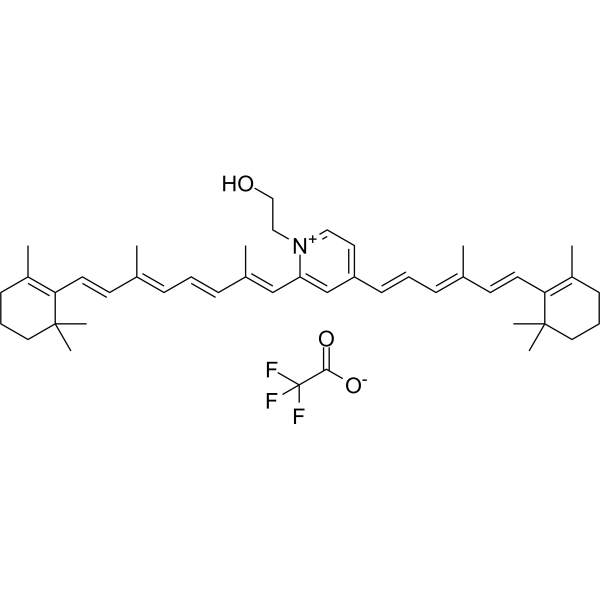
Pyridinium bisretinoid A2E (A2E) TFA is a fluorophore that can be isolated from lipofuscin in the retinal pigment epithelium (RPE). Pyridinium bisretinoid A2E TFA is an initiator of blue-light-induced apoptosis. Photoactivation of Pyridinium bisretinoid A2E TFA mediates autophagy and the production of reactive oxygen species. Pyridinium bisretinoid A2E TFA can be used in the study of retinal degenerative diseases .
loading...
    loading...
Cat. No.: HY-134928
CAS No.: 173449-96-2
Synonyms: A2E
Research Areas:  

Cancer

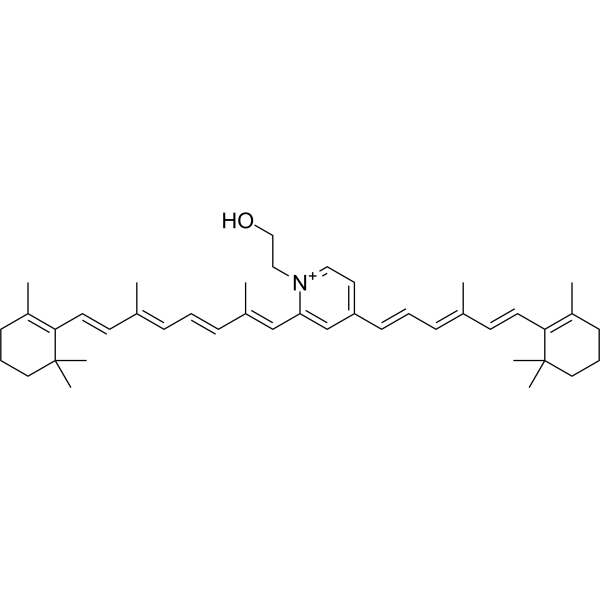
Pyridinium bisretinoid A2E (A2E) is a fluorophore that can be isolated from lipofuscin in the retinal pigment epithelium (RPE). Pyridinium bisretinoid A2E is an initiator of blue-light-induced apoptosis. Photoactivation of Pyridinium bisretinoid A2E mediates autophagy and the production of reactive oxygen species. Pyridinium bisretinoid A2E can be used in the study of retinal degenerative diseases .
loading...
    loading...
Cat. No.: HY-164126
CAS No.: 1404341-58-7
Target:  

Others

Research Areas:  

Others

6-O-Bis-(4,5-dimethoxy-2-nitrobenzyloxyphosphoryl)-D-trehalose is a synthetic compound that interferes with plant sugar signaling. After being absorbed by plants, 6-O-Bis-(4,5-dimethoxy-2-nitrobenzyloxyphosphoryl)-D-trehalose can trigger the release of T6P by light exposure, thereby activating the signaling pathway inside the plant. 6-O-Bis-(4,5-dimethoxy-2-nitrobenzyloxyphosphoryl)-D-trehalose can be used to study plant biosynthesis .
loading...
    loading...
Cat. No.: HY-134928AS
Purity:  ≥90.0%
Synonyms: A2E-d4 TFA
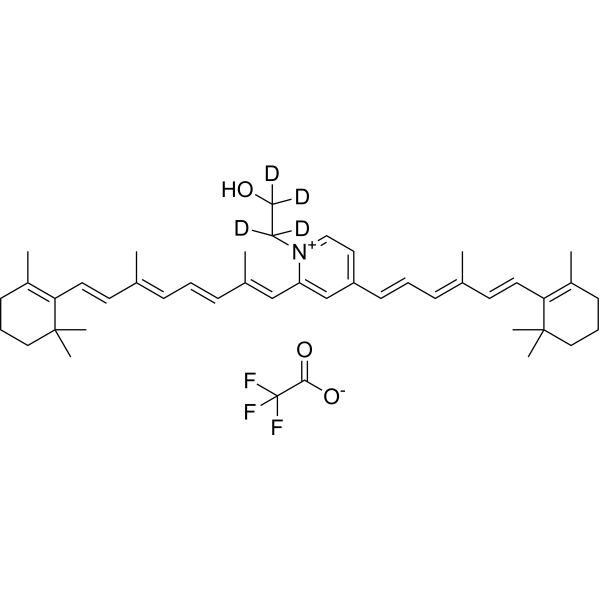
Pyridinium bisretinoid A2E-d4 TFA is the deuterium-labeled Pyridinium bisretinoid A2E (HY-134928). Pyridinium bisretinoid A2E (A2E)is an initiator of blue-light-induced apoptosis. Photoactivation of Pyridinium bisretinoid A2E mediates autophagy and the production of reactive oxygen species .
loading...
    loading...
Cat. No.: HY-126943
CAS No.: 930772-88-6
Target:  

Fluorescent Dye

Research Areas:  

Others

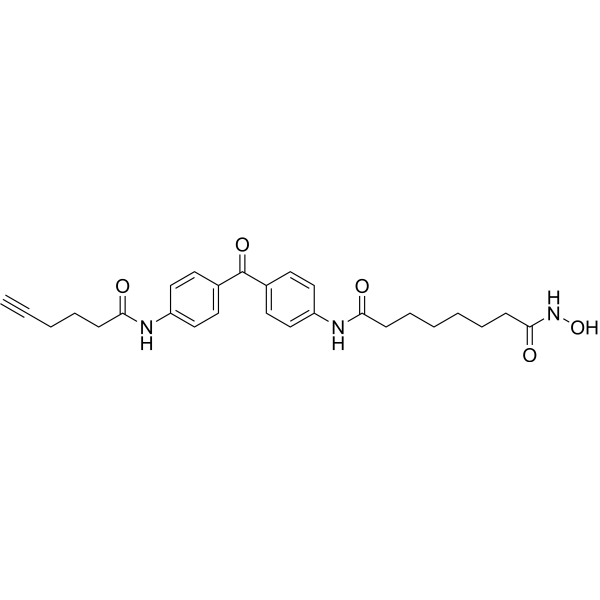
SAHA-BPyne is an activity-based protein profiling (ABPP) probe for detecting HDAC activity, which covalently labels the proximal proteins through a photoactivation. SAHA-BPyne inhibits HDAC activity in HeLa nuclear lysate with an IC50 of less than 5 μM .
loading...
    loading...
Cat. No.: HY-D2923
CAS No.: 1811539-43-1
PA-JF549-Halo ligand is a covalently linked conjugate comprising the photoactivatable fluorescent dye PA-JF549 and a ligand for the HaloTag protein. PA-JF549-Halo ligand exhibts inherent structural properties and predispose it to localize within mitochondria. PA-JF549-Halo ligand combines the exceptional brightness, photostability, and cell permeability of the JF549 dye with photoactivation capabilities and the high specificity characteristic of HaloTag protein labeling technology. PA-JF549-Halo ligand enables high-quality single-molecule imaging and super-resolution imaging of specific proteins within live cells .
loading...
    loading...
Cat. No.: HY-D1246
CAS No.: 58880-05-0
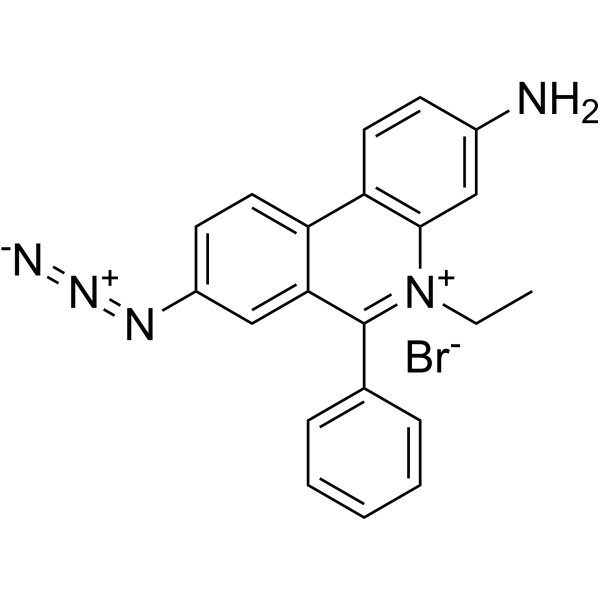
Ethidium monoazide bromide is a DNA intercalating fluorescent dye that enters bacteria with damaged membranes. Ethidium monoazide bromide can be covalently linked to DNA by photoactivation. Ethidium monoazide bromide stains only dead cells . Ethidium monoazide (bromide) is a click chemistry reagent, it contains an Azide group and can undergo copper-catalyzed azide-alkyne cycloaddition reaction (CuAAc) with molecules containing Alkyne groups. It can also undergo strain-promoted alkyne-azide cycloaddition (SPAAC) reactions with molecules containing DBCO or BCN groups.
loading...
    loading...
Cat. No.: HY-145323
CAS No.: 2883123-79-1
Research Areas:  

Cancer

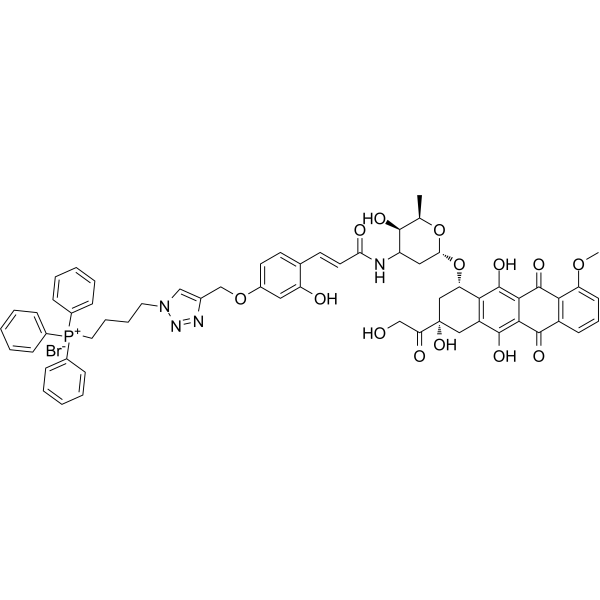
Mitochondria-Targeted Photoactivatable Proagent accumulates in the mitochondria and shows light-triggered temporally controlled cell death. Mitochondria-Targeted Photoactivatable Proagent can be used in a novel drug delivery platform that provides on-demand, real-time, organelle-specific agent release and monitoring upon photoactivation .
loading...
    loading...
Cat. No.: HY-N15782
CAS No.: 1985595-31-0
Category:  

Lipids

Target:  

TRP Channel

18:0-PhoDAG is a photoswitchable diacylglycerol (DAG) that allows rapid photoactivation of these DAG-sensitive TRP channels .
loading...
    loading...
Cat. No.: HY-B1157R
CAS No.: 3902-71-4
Synonyms: Trisoralen (Standard); Trioxysalen (Standard); TMP (Standard)
Trioxsalen (Standard) is the analytical standard of Trioxsalen. This product is intended for research and analytical applications. Trioxsalen (Trisoralen), a psoralen derivative, is a photochemical DNA crosslinker. Trioxsalen only works after photoactivation with near ultraviolet light. Trioxsalen is a photosensitizer that can be used for the research of vitiligo and hand eczema. Trioxsalen is used for visualization of genomic interstrand cross-links localized by laser photoactivation .
loading...
    loading...
Cat. No.: HY-178319
CAS No.: 2482779-07-5
Synonyms: PZL-1
Photoazolol-1 is a β-adrenergic receptor (βAR)-blocker derivative. Photoazolol-1 can transfer from an inverse agonist to a neutral antagonist upon photoactivation .
loading...
    loading...
Cat. No.: HY-164125
CAS No.: 1404341-61-2
Target:  

Ser/Thr Protease SnRK

Research Areas:  

Others

6-O-Bis[1-(2-nitrophenyl)-ethoxyphosphoryl]-D-trehalose is an important signaling molecule that regulates carbon utilization and growth in plants. 6-O-Bis[1-(2-nitrophenyl)-ethoxyphosphoryl]-D-trehalose releases T6P through light activation, which can stimulate starch synthesis and promote plant growth by inhibiting SnRK1, a protein kinase involved in energy conservation and survival. 6-O-Bis[1-(2-nitrophenyl)-ethoxyphosphoryl]-D-trehalose can be used to study plant growth and metabolism .
loading...
    loading...
Cat. No.: HY-131019
CAS No.: 2341841-03-8
Target:  

mGluR

Research Areas:  

Neurological Disease

JF-NP-26, an inactive photocaged derivative of raseglurant, is the first caged mGlu5 receptor negative allosteric modulator. Uncaging of JF-NP-26 is elicited with light pulses in the visible spectrum (405 nm). JF-NP-26 induces light-dependent analgesia in models of inflammatory and neuropathic pain in freely behaving animals .
loading...
    loading...
Cat. No.: HY-D3446
CAS No.: 2358677-26-4
PA-SiR-Halo is a photoactivatable fluorophore targeting HaloTag. When bound to HaloTag, PA-SiR-Halo stabilizes its fluorescent form under physiological pH. After conjugation and photoactivation, it exhibits enhanced resistance to nucleophiles, and enables live-cell confocal imaging, fixed-cell single-molecule localization microscopy imaging, live-cell single-particle tracking, as well as live-cell single-molecule localization microscopy imaging of dynamic mitochondrial structures without the need for washing .
loading...
    loading...
Cat. No.: HY-D3240
CAS No.: 2375541-43-6
Photoactive NTR probe (Compound 1) is a covalent crosslinker and Fluorescent indicator targeting Nitroreductase. The Photoactive NTR probe undergoes a sequential activation process: it is first activated via nitroreductase-mediated nitro-to-amino conversion, and then forms a fluorescent product upon photoactivation. The Photoactive NTR probe can form covalent adducts with the side chains of cysteine, tyrosine, lysine and histidine in adjacent proteins to reduce fluorophore diffusion. The Photoactive NTR probe enables super-resolution (STORM) imaging of active mitochondrial nitroreductase microdomains in living cells .
loading...
    loading...
  • 1

