49 Results for "

Phototoxicity

" in MedChemExpress (MCE) Product Catalog:
Products (49)

49 Results for "Phototoxicity" in MCE Product Catalog:

20
20 Publications Verification
Cat. No.: HY-W854659
CAS No.: 72984-36-2
Synonyms: Ce6 trisodium
Chlorin e6 Ce6 (trisodium) is a water-soluble derivative of chlorophyll, belonging to the chlorin class of photosensitizers with an absorption wavelength range of 600-670 nm. Chlorin e6 trisodium emits characteristic red fluorescence upon light excitation, enabling real-time identification of tumor boundaries and progression. Chlorin e6 trisodium can be used for the study of photodynamic therapy (PDT) of cancers (bladder cancer) and fluorescence diagnosis of neoplastic lesions .
loading...
    loading...
13
13 Cited Publications
Cat. No.: HY-10015
CAS No.: 870653-45-5
Purity:  99.83%
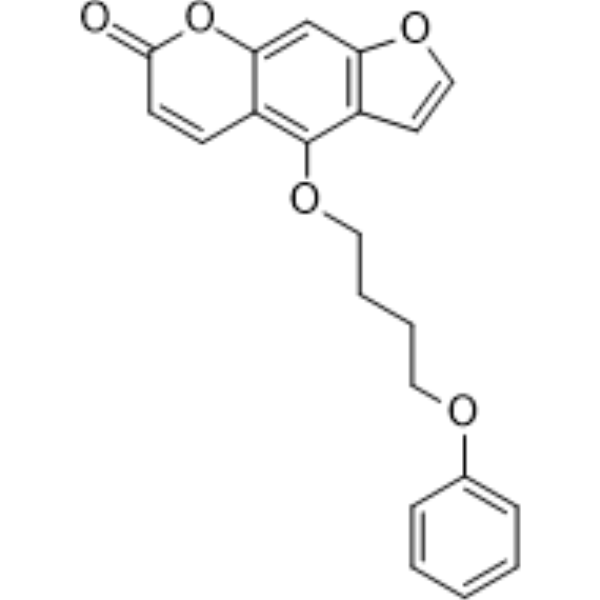
Synonyms: 5-(4-Phenoxybutoxy)psoralen
Target:  

Potassium Channel

Research Areas:  

Inflammation/Immunology

PAP-1 (5-(4-Phenoxybutoxy)psoralen) is a potent, selective, and orally active Kv1.3 blocker (EC50=2 nM). PAP-1 blocks Kv1.3 in a use-dependent manner and acts by preferentially binding to the C-type inactivated state of the channel. PAP-1 exhibits 23-fold selectivity over Kv1.5 (EC50=45 nM), and further displays 33- to 125-fold selectivity over all other Kv1-family channels. PAP-1 does not exhibit cytotoxic or phototoxic effects .
loading...
    loading...
4
4 Cited Publications
Cat. No.: HY-128973
CAS No.: 24533-72-0
Purity:  ≥98.0%
Research Areas:  

Cancer

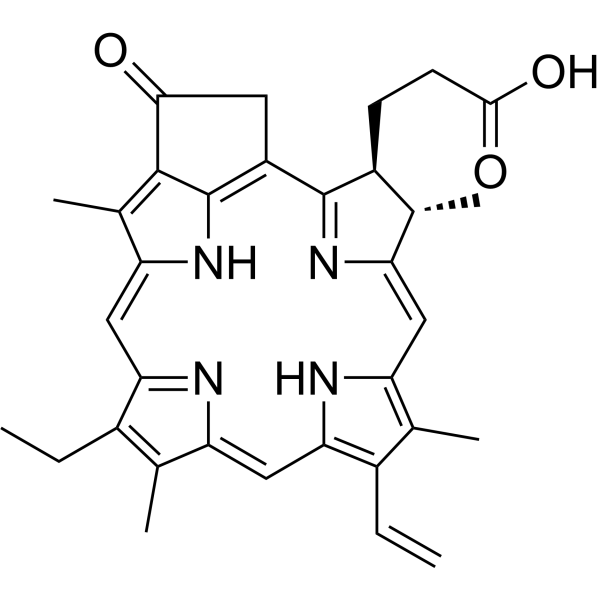
Pyropheophorbide-a (Ppa) is a photosensitizer used in photodynamic therapy (PDT) for tumors. Pyropheophorbide-a exhibits phototoxic effects on tumor cells, such as cervical cancer cells, and also has anti-lipogenesis activity. Pyropheophorbide-a shows potential for research in the fields of cancer and age-related macular degeneration (AMD). Pyropheophorbide-a derivatives also demonstrate inhibitory activity against tumor cells .
loading...
    loading...
3
3 Cited Publications
Cat. No.: HY-101259
CAS No.: 182135-66-6
Purity:  99.5%
Synonyms: BMS 614
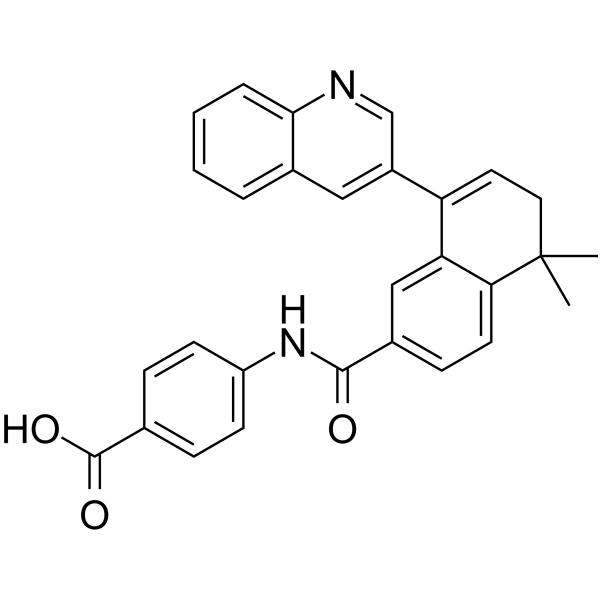
BMS-195614 (BMS 614) is an orally active neutral RARα-selective antagonist with a Ki of 2.5 nM. BMS-195614 restores the expression of Bcl2. BMS-195614 inhibits the transactivation of NF-κB, AP-1 and PPAR. BMS-195614 downregulates the expression of IL-6 and VEGF. BMS-195614 reduces blue light-induced phototoxicity and inhibits cell migration. BMS-195614 modulates inflammation and angiogenesis .
loading...
    loading...
2
2 Cited Publications
Cat. No.: HY-120870
CAS No.: 1621326-32-6
Purity:  ≥99.0%
Target:  

Myosin

Research Areas:  

Metabolic Disease

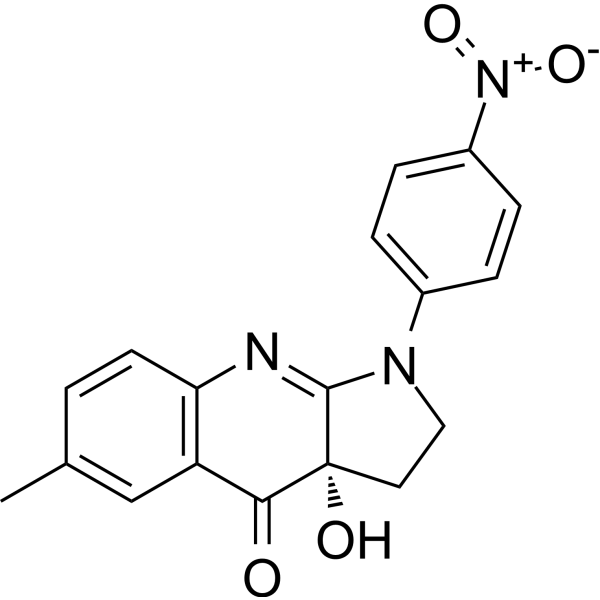
para-Nitroblebbistatin is a derivative of Blebbistatin (HY-13813) and an inhibitor of myosin II. para-Nitroblebbistatin is photostable, non-cytotoxic, and non-phototoxic. para-Nitroblebbistatin can serve as an ideal substitute for Blebbistatin (HY-13813) to study the role of myosin II in physiology, development, and cell biology .
loading...
    loading...
Cat. No.: HY-13568
CAS No.: 51234-28-7
Purity:  99.24%
Synonyms: LRCL 3794
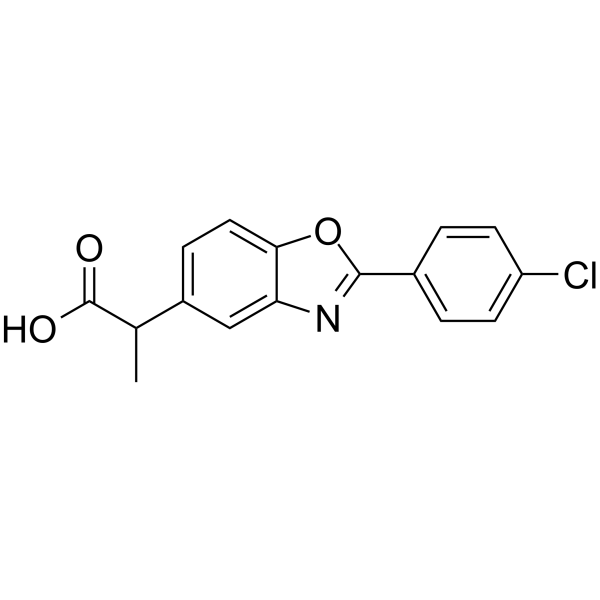
Benoxaprofen (LRCL 3794) is a nonsteroidal anti-inflammatory agent that blocks the biosynthesis of inflammatory mediators such as leukotrienes and prostaglandins by inhibiting 5-LOX, PGH2 synthase and cytochrome P-450. Benoxaprofen exhibits significant toxicity: it not only alters cellular redox status, uncouples oxidative phosphorylation and disrupts calcium ion homeostasis, but also causes liver injury through the formation of covalent adducts between its active metabolites and hepatic proteins. Benoxaprofen shows strong phototoxicity under ultraviolet irradiation, and induces erythrocyte lysis, mast cell degranulation and histamine release. Benoxaprofen is widely used in studies of urticaria and related phototoxic mechanisms .
loading...
    loading...
Cat. No.: HY-D2318
CAS No.: 2081888-04-0
Flipper-TR 5 is a Flipper probe containing a terminal carboxylate for retention on the plasma membrane. Flipper-TR 5 selectively labels the cytoplasmic membrane, and exhibits excellent mechanical sensitivity, negligible cytotoxicity and controllable phototoxicity .
loading...
    loading...
Cat. No.: HY-N4139
CAS No.: 548-03-8
Protohypericin is a compound that can be extracted from Hypericum perforatum. Protohypericin has low photocytotoxicity but can be efficiently photoconverted into Hypericin (HY-N0453) with high phototoxicity under visible light. Protohypericin can be used in cancer research .
loading...
    loading...
Cat. No.: HY-W587892
CAS No.: 7289-52-3
Synonyms: 1-Methoxydecane
Research Areas:  

Others

Decyl methyl ether is a new type of strong fatty ether. Decyl methyl ether is non-genotoxic and phototoxic/photosensitizing .
loading...
    loading...
Cat. No.: HY-W026842
CAS No.: 85-52-9
Synonyms: o-Benzoylbenzoic acid
Target:  

Drug Derivative

Research Areas:  

Others

2-Benzoylbenzoic acid is a Benzophenone (HY-Y0546) analog. 2-Benzoylbenzoic acid is non-phototoxic due to the alteration of the functional groups. 2-Benzoylbenzoic acid can be used to study the mechanism of phototoxicit .
loading...
    loading...
Cat. No.: HY-148949A
Purity:  99.53%
Target:  

Kallikrein

Research Areas:  

Others

Kallikrein 5-IN-2 TFA is the TFA salt form of Kallikrein 5-IN-2 (HY-148949). Kallikrein 5-IN-2 TFA is a selective inhibitor for kallikrein 5 (KLK5) with pIC50 of 7.1. Kallikrein 5-IN-2 TFA is non-phototoxic (100 μg/mL) and non-irritant. Kallikrein 5-IN-2 is stable at pH 4-pH 8 under non-oxidative condition. Kallikrein 5-IN-2 is potent in ameliorating the Netherton syndrome .
loading...
    loading...
Cat. No.: HY-W013521
CAS No.: 6259-76-3
Hexyl salicylate is a type of salicylic acid ester fragrance component used in cosmetics, household cleaners and detergents, featuring a gentle, floral/herbaceous sweet scent .
loading...
    loading...
Cat. No.: HY-10015R
CAS No.: 870653-45-5
Synonyms: 5-(4-Phenoxybutoxy)psoralen (Standard)
PAP-1 (Standard) is the analytical standard of PAP-1. This product is intended for research and analytical applications. PAP-1 (5-(4-Phenoxybutoxy)psoralen) is a potent, selective, and orally active Kv1.3 blocker (EC50=2 nM). PAP-1 blocks Kv1.3 in a use-dependent manner and acts by preferentially binding to the C-type inactivated state of the channel. PAP-1 exhibits 23-fold selectivity over Kv1.5 (EC50=45 nM), and further displays 33- to 125-fold selectivity over all other Kv1-family channels. PAP-1 does not exhibit cytotoxic or phototoxic effects .
loading...
    loading...
Cat. No.: HY-178152
RuOPt is a photoactivatable Ru(II)-Pt(IV) complex with reduced dark toxicity. Under irradiation, RuOPt induces apoptosis, generates ROS, and inhibits tumor spheroid growth, demonstrating comparable phototoxicity .
loading...
    loading...
Cat. No.: HY-147690
CAS No.: 2138330-43-3
Target:  

Photosensitizer

Research Areas:  

Cancer

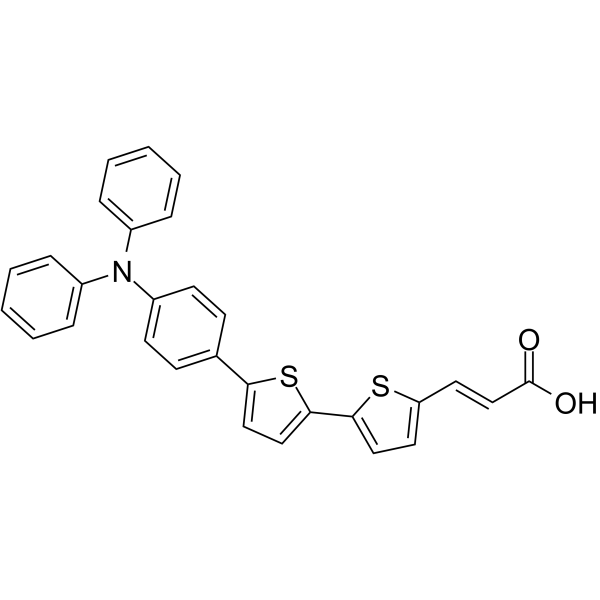
Photosensitizer-2 (compound 1) is a organic D-π-A sensitizer against phototoxicity. Photosensitizer-2 contains an acrylic acid moiety that exerts high levels of phototoxicity. Photosensitizer-2 shows antitumor activity against HeLa cells, with IC50 values of 20.9 ± 4.5 μM (dark) and 0.046 ± 0.012 μM (irradiation), respectively .
loading...
    loading...
Cat. No.: HY-N10611
CAS No.: 24568-67-0
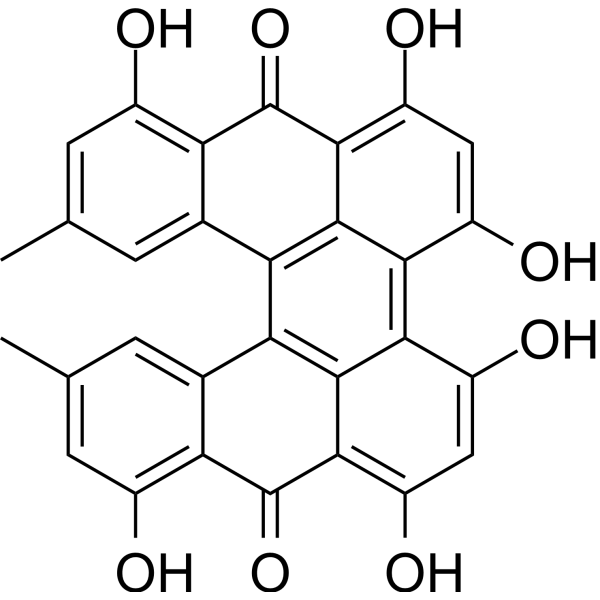
Elsinochrome A is a perylene quinone photosensitizer, and can generate reactive oxygen species (ROS) to induce apoptosis and autophagy under light excitation. Elsinochrome A also shows antifungal activity against C. albicans biofilm through photodynamic antimicrobial chemotherapy (PACT). Elsinochrome A can be used for research of photodynamic therapy (PDT) (Ex: 460 nm) .
loading...
    loading...
Cat. No.: HY-137989
CAS No.: 618109-05-0
Synonyms: Voriconazole oxynitride
Target:  

Fungal

Research Areas:  

Infection

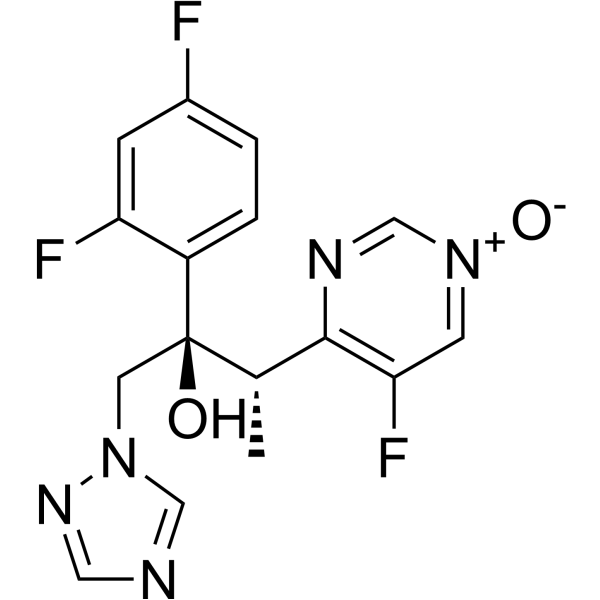
Voriconazole N-oxide (Voriconazole oxynitride) is a potent antifungal agent. Voriconazole N-oxide has phototoxicity and photocarcinogenicity. Voriconazole N-oxide does not sensitize keratinocytes to ultraviolet B (UVB) .
loading...
    loading...
Cat. No.: HY-N3491
CAS No.: 484-74-2
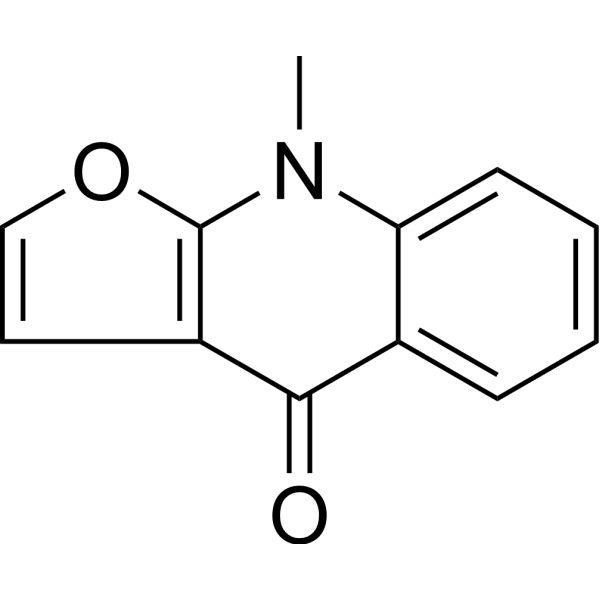
Isodictamnine is a phototoxic furoquinoline compound of the Turnipaceae family. Isodictamnine is phototoxic to certain bacteria and yeasts under long-wave UV light .
loading...
    loading...
Cat. No.: HY-N7402
CAS No.: 6378-65-0
Category:  

Natural Products Animals

Target:  

Others

Hexyl hexanoate is a fruit aroma component with potential food and beverage additive activity. Hexyl hexanoate is found in alcoholic beverages and is used to blend fruit flavors. Hexyl hexanoate is present in many fruits, Parmesan cheese, alcoholic beverages, and black tea. Hexyl hexanoate is a volatile component produced as a result of fruit ripening. Toxicity assessments of hexyl hexanoate showed that it is not mutagenic and that exposure is below safety thresholds for repeated dose, reproduction, and local respiratory toxicity. Hexyl hexanoate is also below thresholds in skin sensitization assessments, and for phototoxicity and photosensitization, the results showed that it does not present a relevant risk. Hexyl hexanoate is considered non-persistent, non-bioaccumulative, and non-toxic according to the environmental criteria of the International Fragrance Association .
loading...
    loading...
Cat. No.: HY-108053
CAS No.: 372960-05-9
Target:  

Parasite Apoptosis

Research Areas:  

Infection

CDRI-97/78 is an antimalarial agent. CDRI-97/78 has phototoxicity and can induce cell apoptosis and G2/M phase arrest. CDRI-97/78 can be used for the research of infection .
loading...
    loading...

