1. Search Result
Search Result
Results for "

Resensitization

" in MedChemExpress (MCE) Product Catalog:

14

Inhibitors & Agonists

1

Natural
Products

Cat. No. Product Name Target Research Areas Chemical Structure
  • HY-172262

    VDAC Bcl-2 Family Apoptosis Cancer
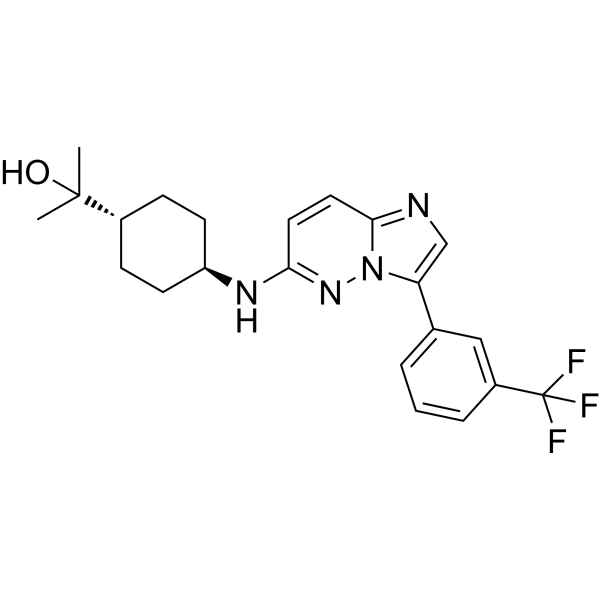
    WEHI-3773 is a VDAC2 ligand and apoptosis modulator. WEHI-3773 directly binds to the β7-β10 region of VDAC2 and disrupts its interaction with BAX and BAK. WEHI-3773 regulates BAX-mediated apoptosis in BAK-deficient cells by modulating conformational activation of BAX, mitochondrial redistribution, and cytochrome c release. WEHI-3773 overcomes Venetoclax (HY-15531) resistance, resensitizes leukemia cells carrying BAX mutations to BH3 mimetics, and enables long-term clonogenic survival of BAK-deficient cells treated with BH3 mimetics. WEHI-3773 is applicable to research related to acute myeloid leukemia .
    WEHI-3773
  • HY-46866

    Apoptosis Caspase PARP Metabolic Disease Inflammation/Immunology Cancer
    Isoegomaketone is an orally active apoptosis inducer and radiosensitizer. Isoegomaketone regulates multiple key signaling pathways such as PI3K/AKT/mTOR, NF-κB, MAPK, cleaves Caspase family proteins and PARP, and modulates Bax, AIF and endoplasmic reticulum stress proteins. Isoegomaketone also induces autophagy and keratinocyte proliferation, effectively reduces the levels of inflammatory factors and oxidative stress, inhibits adipocyte differentiation, and resensitizes TRAIL-resistant cancer cells. Isoegomaketone can be applied to research related to colorectal cancer, melanoma, lung cancer, prostate cancer, liver cancer, as well as rheumatoid arthritis and obesity .
    Isoegomaketone
  • HY-150184

    DNA/RNA Synthesis Cancer
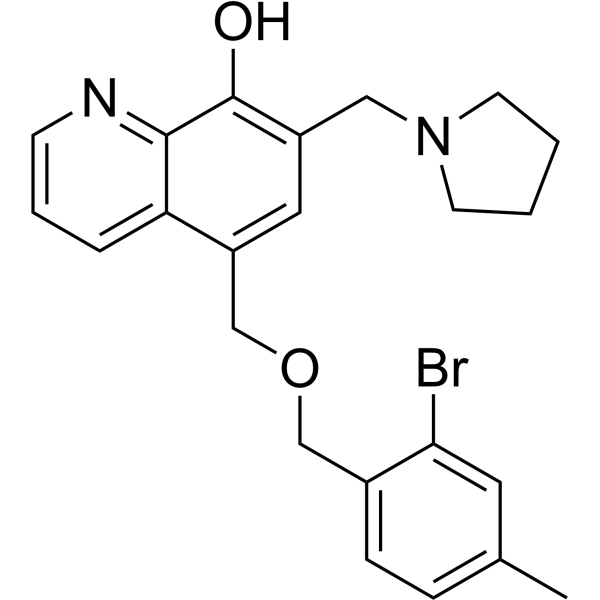
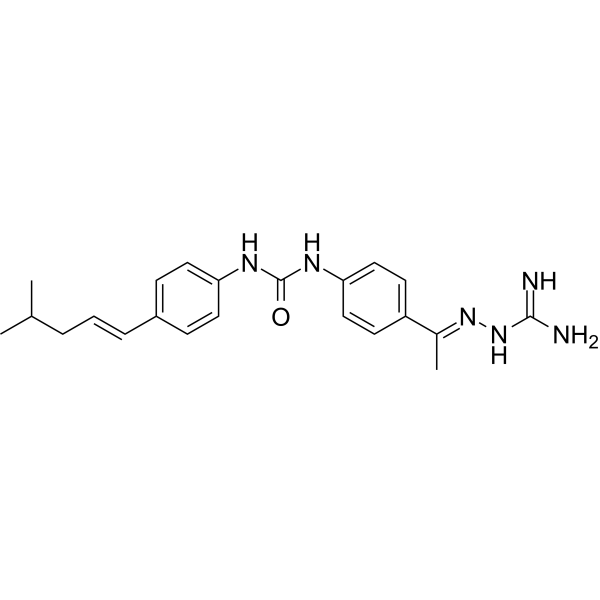
    And1-IN-1 is a potent And1 inhibitor with an IC50 of 2.08 μM. And1-IN-1 binds to the N-terminus of And-1 and induces a conformational change in And-1, which promotes the interaction of And-1 with E3 ligase CUL4B for ubiquitin-mediated degradation. And1-IN-1 suppresses the growth of a broad range of cancers and resensitizes platinum-resistant ovarian cancer cells to platinum agents. And1-IN-1 can be used for the studies of ovarian cancer and breast cancer .
    And1-IN-1
  • HY-179505

    YAP Cancer
    OPN-9652 is a potent, orally active, and covalent TEAD inhibitor (MSTO-211H TEAD IC50 = 0.005 µM) targeting the central palmitate binding pocket of TEADs. OPN-9652 reduces TEAD-dependent reporter activity and expression of TEAD targets (CTGF and CYR61). OPN-9652 resensitizes drug-tolerant SOX10 KO cells to BRAFi + MAPKi. OPN-9652 delays the onset of tumor resistance to BRAFi + MEKi from minimal residual disease (MRD) in a BRAF mutant A375 xenograft mouse model. OPN-9652 can be used for melanoma research .
    OPN-9652
  • HY-162324

    Survivin Cancer
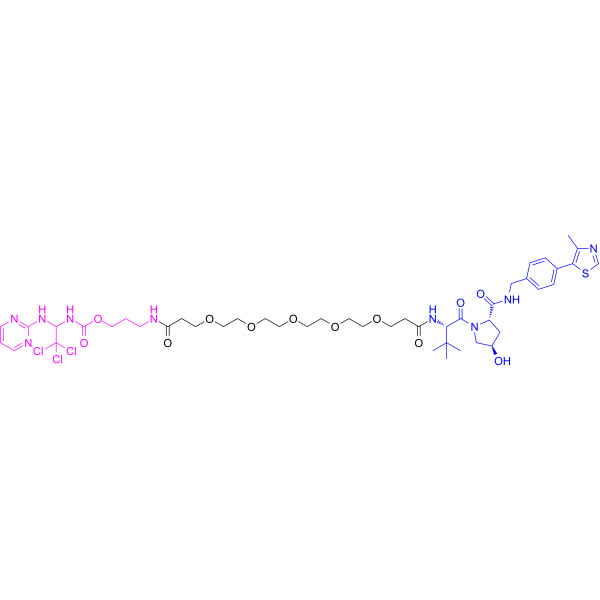
    MX106-4C is a survivin inhibitor that selectively kills ABCB1-positive colorectal cancer cells. MX106-4C can exert synergistic anticancer effects with Doxorubicin or resensitize drug-resistant ABCB1 cells to Doxorubicin .
    MX106-4C
  • HY-124952

    Fungal Infection
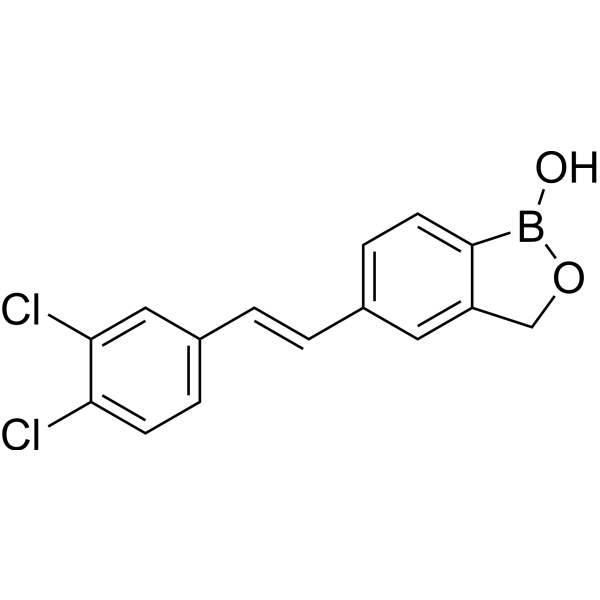
    iKIX1 is an antifungal agent and resensitizes drug-resistant C. glabrata to azole antifungals in vitro. iKIX1 inhibits the interaction between the KIX domain of the mediator subunit CgGal11A and the activation domain of CgPdr1, the IC50 and Ki values are 190.2 μM and 18 μM, respectively. iKIX1 is used for the study of multidrug resistance and C. glabrata infection .
    iKIX1
  • HY-169083

    Apoptosis Bcl-2 Family Cancer
    Bcl-2-IN-22 (compound 1) is a gold(I) NHC complex with anticancer activity. Bcl-2-IN-22 induces apoptosis via the mitochondrial pathway with an IC50 value of 0.014 μM. In addition, Bcl-2-IN-22 targets BCL-2 family members and exhibits pro-apoptosis and resensitization properties in multidrug-resistant leukemia cells that overexpress BCL-2 .
    Bcl-2-IN-22
  • HY-144621

    Bacterial Infection Inflammation/Immunology
    Antibacterial agent 75 (compound 24) is an antibacterial agent. Antibacterial agent 75 (compound 24) is able to re-sensitize VRSA to vancomycin .
    Antibacterial agent 75
  • HY-159930

    Bacterial Infection
    Antibiotic adjuvant 3 (compound 8g) is an antibiotic adjuvant with potent colistin-potentiating activity and low mammalian toxicity. Antibiotic adjuvant 3 has minimum re-sensitizing concentration of 0.25 μg/mL agnist of Escherichia coli AR-0493 .
    Antibiotic adjuvant 3
  • HY-159929

    Bacterial Infection
    Antibiotic adjuvant 2 (compound 5q) is an antibiotic adjuvant with potent colistin-potentiating activity and low mammalian toxicity. Antibiotic adjuvant 2 has minimum re-sensitizing concentration of 0.125 μg/mL agnist of Escherichia coli AR-0493 .
    Antibiotic adjuvant 2
  • HY-161661

    Caspase Cancer
    Anticancer agent 223 (Compound V-d) is an anticancer agent that triggers cell death through caspase-dependent and caspase-independent mechanisms. Anticancer agent 223 inhibits tumor spheroid formation and resensitizes cisplatin (HY-17394)-resistant A2780 cells to cisplatin (HY-17394) treatment .
    Anticancer agent 223
  • HY-174425

    Cytochrome P450 Cancer
    CYP1B1-IN-9 is a highly selective and competitive CYP1B1 Inhibitor with IC50 values of 1.48 nM, > 100 μM, and > 80 μM for CYP1B1, CYP1A1, and CYP1A2, respectively. CYP1B1-IN-9 significantly inhibits the migration and invasion of A549/T cells. CYP1B1-IN-9 has the ability to resensitize Paclitaxel (HY-B0015)-resistant cells, and good metabolic stability and safety, and shows favorable pharmacokinetic parameters. CYP1B1-IN-9 can be used for the study of tumor-drug resistance .
    CYP1B1-IN-9
  • HY-173132

    Aldose Reductase Cancer
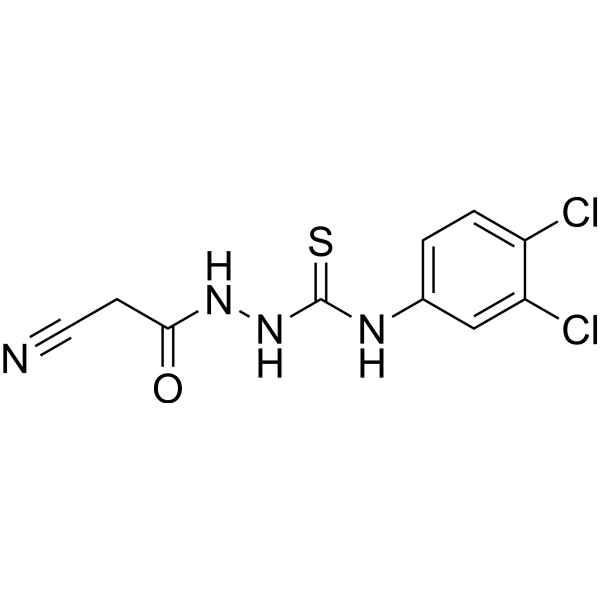
    AKR1Cs-IN-1 (Compound 29) is a potent and broad-spectrum inhibitor targeting members of the Aldo-Keto Reductase 1C family (AKR1C1-1C4). By simultaneously occupying the SP2 and SP3 pockets, it effectively inhibits multiple isoforms and disrupts metabolic pathways associated with drug resistance. In enzymatic activity assays, AKR1Cs-IN-1 exhibited significant inhibitory potency, with IC50 values of 0.09, 0.28, 0.05, and 0.51 µM against AKR1C1, AKR1C2, AKR1C3, and AKR1C4, respectively. In the doxorubicin (DOX)-resistant breast cancer cell line MCF-7/ADR, AKR1Cs-IN-1 showed remarkable resensitization effects and significantly enhanced the cytotoxicity of DOX. AKR1Cs-IN-1 holds promise for research on overcoming drug resistance in breast cancer .
    AKR1Cs-IN-1
  • HY-W154247

    Bacterial Infection
    IP6C is a specific inhibitor and phage sensitizer targeting type II Thoeris systems. IP6C competitively binds to histidine in the catalytic pocket of ThsB, blocks the production of the His-ADPR alarm signal and inhibits ThsA activation, thereby relieving bacterial stasis of phage replication. IP6C selectively resensitizes drug-resistant bacteria carrying type II Thoeris systems (such as Pseudomonas aeruginosa) to phage lysis, without affecting other bacteria, and shows no toxicity to mice and human cell lines. IP6C significantly improves the survival rate of infected mice, and can be used to overcome bacterial phage defense mechanisms and study Pseudomonas aeruginosa infections .
    Thoeris system: (named after the Egyptian goddess of fertility and protection), is a widespread anti-phage immune defense system in bacteria and archaea. Thoeris system belongs to the "Abortion Infection (Abi)" mechanism of bacteria: when an individual bacterium detects phage invasion, it initiates a suicide program and dies, thereby blocking phage replication and spread, and protecting the surrounding bacterial population from infection.
    IP6C

Inquiry Online

Your information is safe with us. * Required Fields.

Salutation


Country or Region *

Applicant Name *


Organization Name *

Department *


Email Address *


Product Name *

Cat. No.


Requested quantity *

Phone Number *


Remarks

Inquiry Online

Inquiry Information

Product Name:
Cat. No.:
Quantity:
MCE Japan Authorized Agent:

