
37 Results for "

T-cell acute lymphoblastic leukemia cells

" in MedChemExpress (MCE) Product Catalog:
Products (37)

37 Results for "T-cell acute lymphoblastic leukemia cells" in MCE Product Catalog:

52
52 Publications Verification
Cat. No.: HY-15676
CAS No.: 1229705-06-9
Purity:  99.93%
Synonyms: RG7388
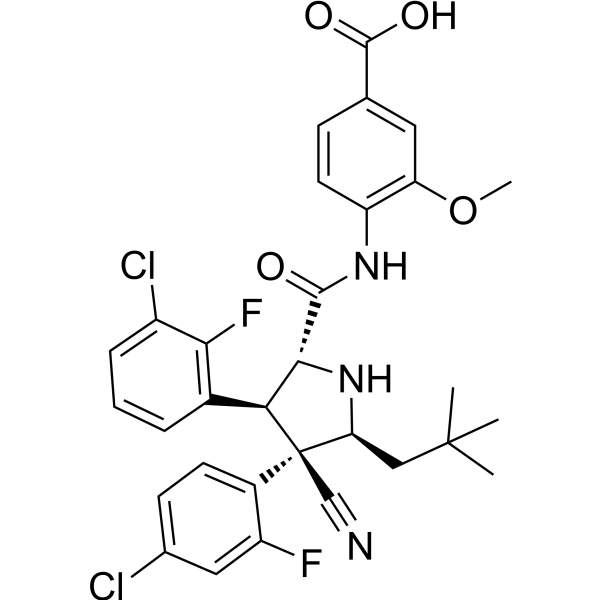
Idasanutlin (RG7388) is an orally bioavailable MDM2 inhibitor with an IC50 of 6 nM. Idasanutlin disrupts MDM2-p53 binding, stabilizes and activates p53, triggering cell cycle arrest, apoptosis, and reduced cancer cell viability. Idasanutlin reduces EGFR protein expression and phosphorylation, suppresses downstream SHP2, MEK1/2, ERK1/2, AKT, mTOR, p70(S6K1), and S6 signaling. Idasanutlin induces mitochondrial ROS production, drives p38 MAPK phosphorylation, upregulates NOXA, and mediates caspase-3-dependent apoptosis and gasdermin E-mediated pyroptosis. Idasanutlin can be used for the research of TP53-mutant non-small cell lung cancer, T-cell acute lymphoblastic leukemia, colorectal carcinoma, melanoma, diffuse large B-cell lymphoma, mantle cell lymphoma, non-Hodgkin lymphoma, severe fever with thrombocytopenia syndrome, neuroblastoma, acute lymphoblastic leukemia, relapsed or refractory acute myeloid leukemia, osteosarcoma, solid tumors, and hematological tumors .
loading...
    loading...
10
10 Cited Publications
Cat. No.: HY-137471
CAS No.: 2682114-39-0
Purity:  99.80%
Synonyms: RIN1
Target:  

Notch

Research Areas:  

Cancer

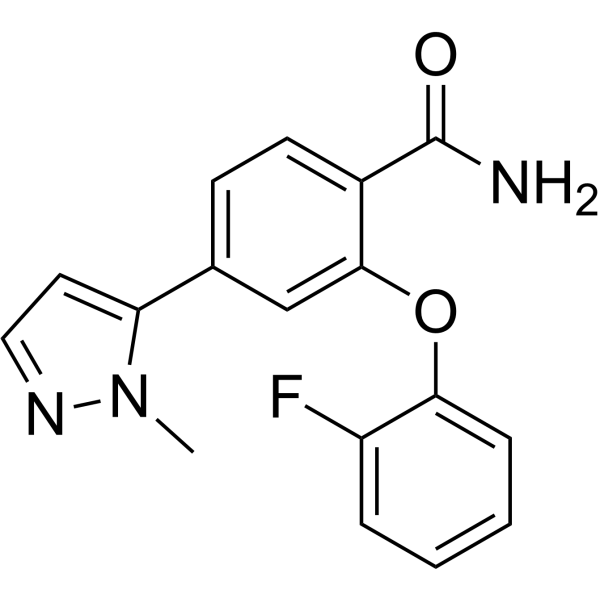
RBPJ Inhibitor-1 (RIN1), the first RBPJ inhibitor, blocks the functional interaction of RBPJ with SHARP. RBPJ Inhibitor-1 (RIN1) inhibits NOTCH-dependent tumor cell proliferation .
loading...
    loading...
4
4 Cited Publications
Cat. No.: HY-13701
CAS No.: 121032-29-9
Purity:  99.76%
Synonyms: 506U78; GW 506U78; Nelzarabine
Research Areas:  

Cancer

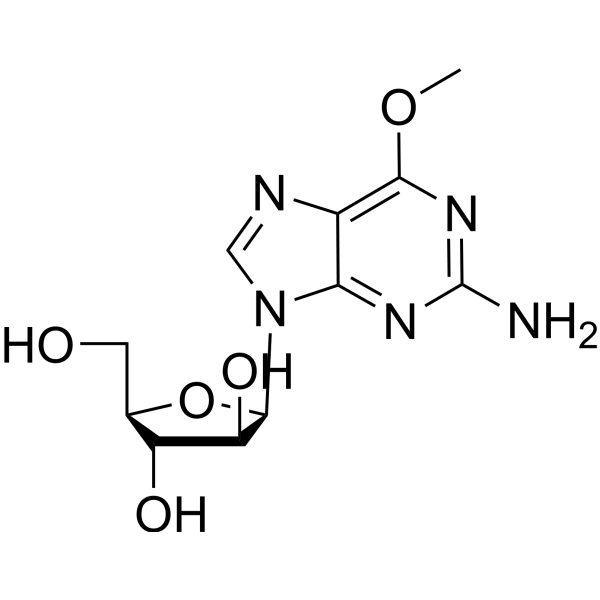
Nelarabine (506U78) is a nucleoside analogue and can be used for the research of T cell acute lymphoblastic leukemia (T-ALL) .
loading...
    loading...
3
3 Cited Publications
Cat. No.: HY-P9963
CAS No.: 853426-35-4
Synonyms: bscCD19xCD3; AMG-103; MEDI-538; MT-103; BLINCYTO

Target:  

CD19

Research Areas:  

Cancer

Blinatumomab (Anatumomab) is a bispecific monoclonal antibody with two binding sites, one for CD3E on T cells and one for CD19 on B cells. Blinatumomab can be used in research for acute lymphoblastic leukemia .
loading...
    loading...
2
2 Cited Publications
Cat. No.: HY-115568
CAS No.: 2140289-17-2
Purity:  98.34%
Research Areas:  

Cancer

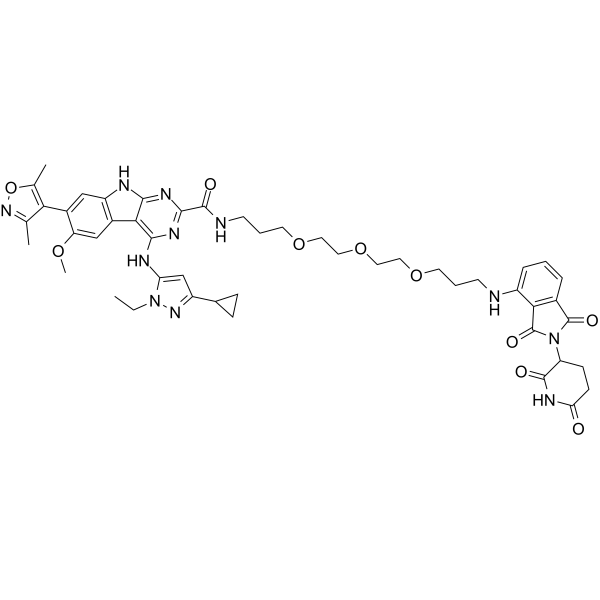
BETd-246 is a BRD2/3/4 PROTAC degrader targeting the BET family. BETd-246 induces ubiquitination and proteasomal degradation of BRD2, BRD3 and BRD4 by recruiting the CUL4-RBX1-DDB1-CRBN E3 ubiquitin ligase complex; it also inhibits TRAT1 expression and depletes BET proteins. BETd-246 suppresses cancer cell proliferation and invasion, disrupts the cell cycle and induces apoptosis. BETd-246 is applicable to research related to triple-negative breast cancer and T-cell acute lymphoblastic leukemia .
loading...
    loading...
1
1 Cited Publications
Cat. No.: HY-133557
CAS No.: 2365172-19-4
Purity:  98.84%
Research Areas:  

Cancer

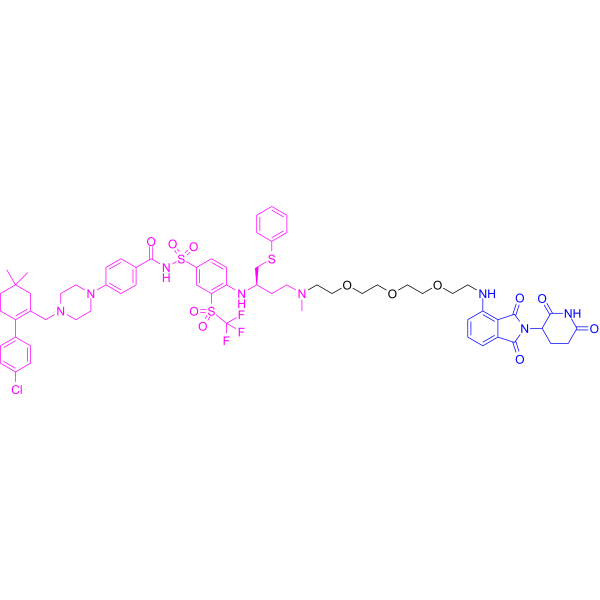
XZ739 is a potent and selective BCL-XL PROTAC degrader with a DC50 of 2.5 nM. XZ739 recruits CRBN to ubiquitinate and degrade BCL-XL via the ubiquitin-proteasome system. XZ739 also induces cell cycle arrest and caspase-mediated apoptosis. XZ739 can be used in research related to T-cell acute lymphoblastic leukemia and cholangiocarcinoma .
loading...
    loading...
1
1 Cited Publications
Cat. No.: HY-153244
CAS No.: 2088715-91-5
Purity:  98.07%
Target:  

CDK

Research Areas:  

Cancer

MFH290 is an orally active, selective covalent CDK12/CDK13 inhibitor, with an IC50 of 25 nM against human CDK12 and 49 nM against human CDK13. MFH290 reduces the phosphorylation level of CTD-RNAPII-Ser2, downregulates genes related to DNA damage response (DDR), and inhibits transcription factors regulated by super-enhancers. MFH290 can be used in research related to various cancers including leukemia .
loading...
    loading...
Cat. No.: HY-176244
CAS No.: 1351116-34-1
Research Areas:  

Cancer

KI-TOX-A3 is a TOX protein-protein interaction inhibitor that blocks the TOX-KAT7 protein-protein interaction with an IC50 of 0.51 μM. KI-TOX-A3 induces proteasomal degradation of TOX, restores KAT7-mediated H3K14 acetylation, reverses exhaustion of CD8 + T cells, and inhibits the proliferation of T cell acute lymphoblastic leukemia (T-ALL) cells. KI-TOX-A3 shows promise for use in studies of hematological malignancies such as T-ALL .
loading...
    loading...
Cat. No.: HY-174876
Research Areas:  

Cancer

PZ671 is a Bcl-xL PROTAC degrader that recruits cereblon, with a DC50 of 0.9 nM in MOLT-4 T-ALL cells. PZ671 induces apoptosis via activation of caspase-3 and cleavage of PARP, and exhibits antitumor activity in T-cell acute lymphoblastic leukemia and small cell lung cancer models. PZ671 can be used for the research of T-cell acute lymphoblastic leukemia and small cell lung cancer .
loading...
    loading...
Cat. No.: HY-149878
CAS No.: 3037514-38-5
Purity:  98.81%
Research Areas:  

Cancer

BD-9136 is a selective BRD4 PROTAC degrader with a DC50 of 1.2 nM, and exhibits a selectivity of ≥1000-fold over BRD2 and BRD3. BD-9136 preferentially forms a ternary complex with the BD1 domain of BRD4, and downregulates the expression of B7-H4 by disrupting the PR-P300-BRD4 axis. BD-9136 depletes BRD4 protein in tumor tissues, inhibits tumor growth, reduces B7-H4 protein expression, increases CD8+ T cell infiltration, and enhances tumor sensitivity to anti-PD-L1. Degradation of BRD4 by BD-9136 rescues the erythroid differentiation block induced by LSD1 inhibition, and transient administration restores erythroid output while retaining HbF induction. BD-9136 causes no adverse effects in mice at effective doses. BD-9136 can be used in studies related to acute myeloid leukemia, acute lymphoblastic leukemia and breast cancer .
loading...
    loading...
Cat. No.: HY-P99914
CAS No.: 2559704-23-1
Synonyms: GNC-038
Emfizatamab (GNC-038) is a monoclonal antibody against CD19/CD3E/TNFRSF9/PD-L1. Emfizatamab exhibits antitumor activity, being capable of activating CD3 and 4-1BB signals on T cells, as well as targeting the high expression of CD19 or PD-L1 on tumor cells. Emfizatamab functions as a CD19-specific T cell engager by mediating direct antitumor activity. Emfizatamab can also overcome the inhibition of T cells by PD-L1. Emfizatamab can be used in the research of tumors such as R/R non-Hodgkin lymphoma or acute lymphoblastic leukemia .
loading...
    loading...
Cat. No.: HY-172798
Target:  

PROTACs Bcl-2 Family

Research Areas:  

Cancer

XZ338 is a highly potent and selective BCL-XL PROTAC degrader derived from A-1331852 (HY-19741), with a DC50 of 0.43 nM in MOLT‑4 cells. XZ338 induces the formation of a ternary complex with BCL-XL and VHL E3 ligase, mediates target protein degradation via the ubiquitin-proteasome system, and exhibits significantly weaker degradation activity in platelets than in tumor cells. XZ338 possesses anti-cancer activity. XZ338 can be used in the research of T-cell acute lymphoblastic leukemia (T-ALL) .
loading...
    loading...
Cat. No.: HY-171178
CAS No.: 2902651-64-1
Target:  

p38 MAPK

Research Areas:  

Cancer

DK2403 (compound 25) is a MAP2K7 inhibitor (IC50= 0.01 μM). DK2403 can effectively inhibit MAP2K7 without significantly disrupting the larger kinase group and can be used to study childhood T-cell acute lymphoblastic leukemia .
loading...
    loading...
Cat. No.: HY-169789
CAS No.: 2361545-75-5
Target:  

PI3K

Research Areas:  

Metabolic Disease Cancer

PKN3-IN-1 (compound 16) inhibits PKN3 (serine/threonine protein kinase 3) and GAK (cyclin G-associated kinase) with IC50 of 0.014 μM and Ki of 0.0044 μM respectively. PKN3-IN-1 is a potential tool compound to study the cell biology of PKN3 and its role in pancreatic and prostate cancer and T-cell acute lymphoblastic leukemia .
loading...
    loading...
Cat. No.: HY-175281
CAS No.: 2933135-82-9
Target:  

PROTACs Src

Research Areas:  

Cancer

SJ11646 is a LCK PROTAC degrader with a DC50 value of 0.00838 pM against LCK. SJ11646 recruits CRBN and LCK to form a ternary complex, inducing cereblon-mediated proteasomal degradation of LCK. SJ11646 induces cytotoxicity in T-ALL cells, but such cytotoxicity is reduced in cells harboring the LCK T316I mutation. SJ11646 can be used in studies related to T-cell acute lymphoblastic leukemia .
loading...
    loading...
Cat. No.: HY-175280
CAS No.: 3095033-62-5
Lck degrader-1 is a molecular glue degrader that recruits cereblon to target LCK and CK1α. Lck degrader-1 promotes the formation of the LCK/CRBN-DDB1 ternary complex with an EC50 of 77.1 nM, and induces the degradation of LCK and CK1α. LCK degradation induced by Lck degrader-1 depends on the G415-containing helical G-loop degron, and maintains LCK-degrading activity in cells with the LCK T316I gatekeeper mutation. Lck degrader-1 can be used for research related to T-cell acute lymphoblastic leukemia (T-ALL) and LCK inhibitor resistance .
loading...
    loading...
Cat. No.: HY-162676
CAS No.: 3081937-95-0
Target:  

PROTACs Src

Research Areas:  

Cancer

SJ45566 a potent and orally active PROTAC-based LCK degrader, with a DC50 of 1.21 nM. SJ45566 can be used in the research for T‑Cell Acute Lymphoblastic Leukemia .
loading...
    loading...
Cat. No.: HY-164466
CAS No.: 2682205-20-3
Target:  

Calcium Channel Notch

Research Areas:  

Cancer

CAD204520, a SERCA inhibitor (IC50 = 0.34 μM), targets mutated over wild type NOTCH1 proteins in T-cell acute lymphoblastic leukemia (T-ALL) and mantle cell lymphoma (MCL). CAD204520 can be used for T-ALL and MCL research .
loading...
    loading...
Cat. No.: HY-136522
CAS No.: 2262489-89-2
Purity:  98.15%
Research Areas:  

Cancer

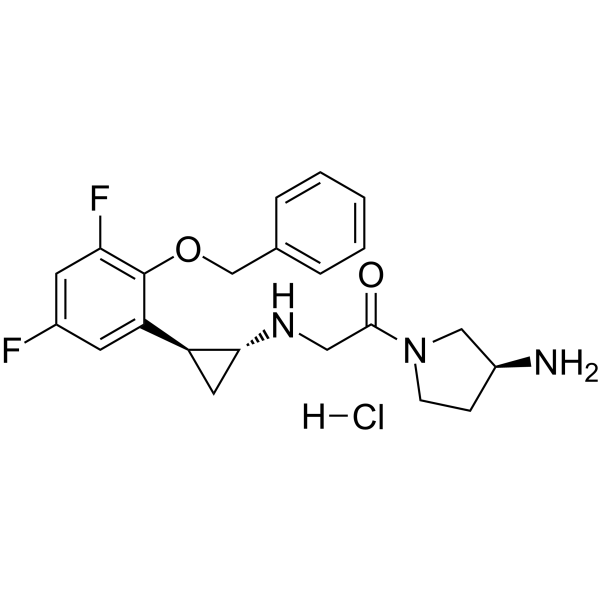
S2116, a N-alkylated tranylcypromine (TCP) derivative, is a potent lysine-specific demethylase 1 (LSD1) inhibitor. S2116 increases H3K9 methylation and reciprocal H3K27 deacetylation at super-enhancer regions. S2116 induces apoptosis in TCP-resistant T-cell acute lymphoblastic leukemia (T-ALL) cells by repressing transcription of the NOTCH3 and TAL1 genes. S2116 significantly retardes the growth of T-ALL cells in xenotransplanted mice .
loading...
    loading...
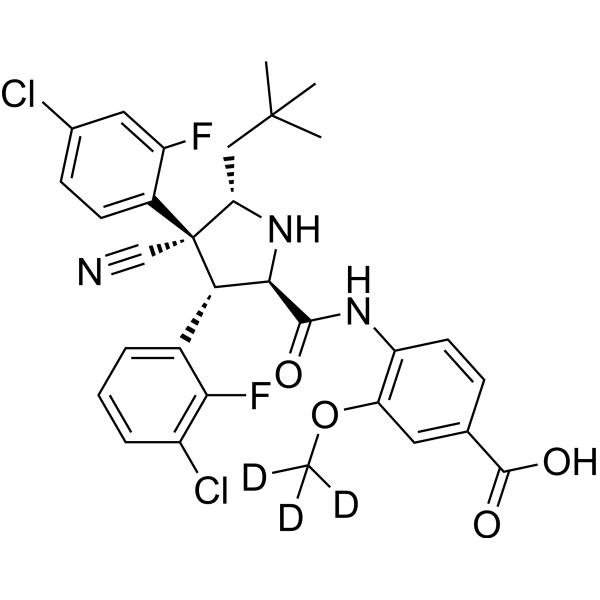
Cat. No.: HY-153939S
Purity:  99.57%
Synonyms: RG7388-d3-1
Idasanutlin-d3-1 (RG7388-d3-1) is the deuterated-labeled Idasanutlin (HY-15676). Idasanutlin (RG7388) is an orally bioavailable MDM2 inhibitor with an IC50 of 6 nM. Idasanutlin disrupts MDM2-p53 binding, stabilizes and activates p53, triggering cell cycle arrest, apoptosis, and reduced cancer cell viability. Idasanutlin reduces EGFR protein expression and phosphorylation, suppresses downstream SHP2, MEK1/2, ERK1/2, AKT, mTOR, p70(S6K1), and S6 signaling. Idasanutlin induces mitochondrial ROS production, drives p38 MAPK phosphorylation, upregulates NOXA, and mediates caspase-3-dependent apoptosis and gasdermin E-mediated pyroptosis. Idasanutlin can be used for the research of TP53-mutant non-small cell lung cancer, T-cell acute lymphoblastic leukemia, colorectal carcinoma, melanoma, diffuse large B-cell lymphoma, mantle cell lymphoma, non-Hodgkin lymphoma, severe fever with thrombocytopenia syndrome, neuroblastoma, acute lymphoblastic leukemia, relapsed or refractory acute myeloid leukemia, osteosarcoma, solid tumors, and hematological tumors .
loading...
    loading...

