1. Search Result
Search Result
Results for "

TDP-43

" in MedChemExpress (MCE) Product Catalog:

23

Inhibitors & Agonists

1

Natural
Products

1

Recombinant Proteins

5

Antibodies

3

Oligonucleotides

Cat. No. Product Name Target Research Areas Chemical Structure
  • HY-128892
    EN6
    5 Publications Verification

    Autophagy Neurological Disease
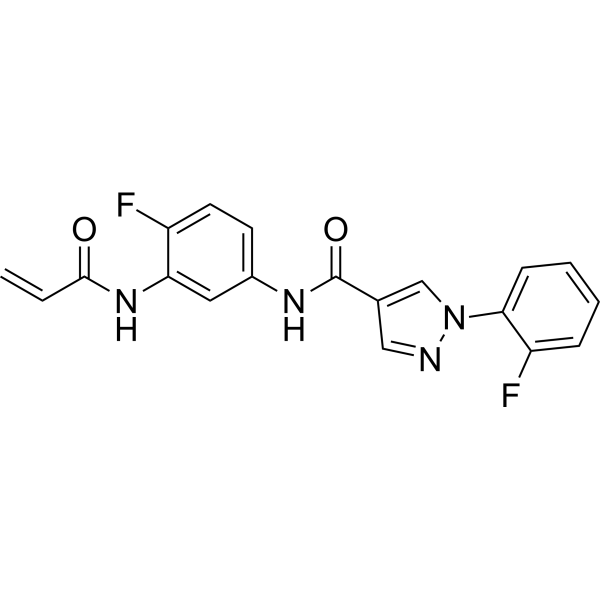
    EN6 is a small-molecule in vivo autophagy activator that covalently targets cysteine 277 in the ATP6V1A subunit of the lysosomal v-ATPase. EN6-mediated modification of ATP6V1A uncouples v-ATPase from Rag, leading to inhibition of mTORC1 signalling, increased lysosomal acidification, and activation of autophagy. EN6 also scavenges TDP-43 aggregates (causative agents of frontotemporal dementia) in a lysosome-dependent manner .
    EN6
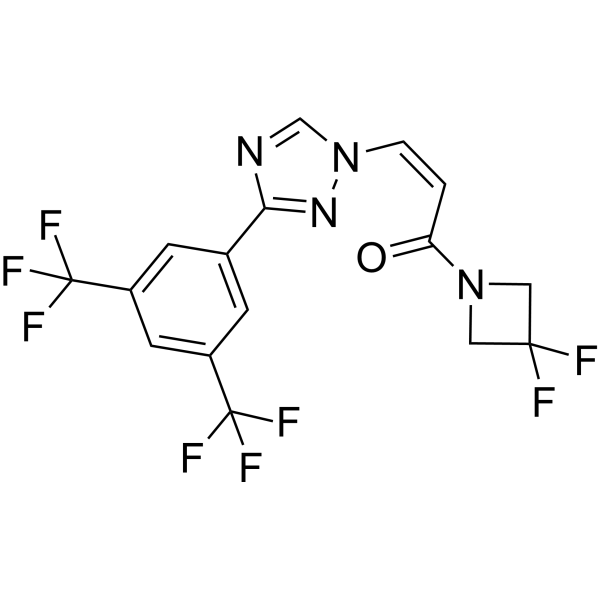
  • HY-163575

    TDP-43-IN-2

    Amyloid-β Neurological Disease
    ACI-19626 (TDP-43-IN-2) is a TDP-43 aggregation inhibitor that can be used in the research of neurodegenerative diseases .
    ACI-19626
  • HY-163574
    TDP-43 ligand-1
    1 Publications Verification

    hnRNP Neurological Disease
    TDP-43 ligand-1 is a specific ligand for TDP43, and its Ki value for binding to TDP-43 protein aggregates is 78 nM. TDP-43 ligand-1 can be used in the research of PET imaging probes for TDP-43 proteinopathies.
    TDP-43 ligand-1
  • HY-153898

    Amyloid-β Neurological Disease
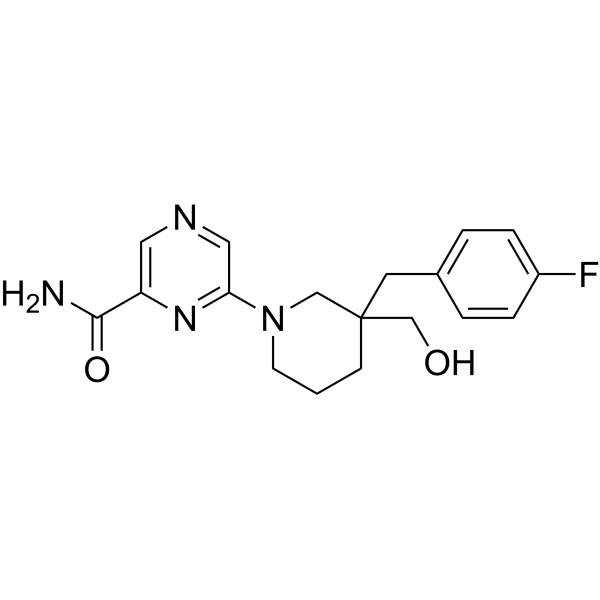
    rTRD01 is an orally active, specific TDP-43 binder that targets the RRM1 and RRM2 domains of TDP-43. rTRD01 partially disrupts the interaction between TDP-43 and c9orf72 repeat RNA, but does not affect the binding of TDP-43 to canonical binding sequences. rTRD01 exhibits significant neuroprotective effects in zebrafish models, improves motor function and protects against paraquat (a widely used herbicide)-induced neurodegeneration, with no teratogenicity at high concentrations. rTRD01 is not a general antioxidant and cannot counteract Rotenone (HY-B1756)-induced neuronal death. rTRD01 can be used to study amyotrophic lateral sclerosis and other TDP-43 proteinopathies .
    rTRD01
  • HY-160115

    DNA/RNA Synthesis Neurological Disease
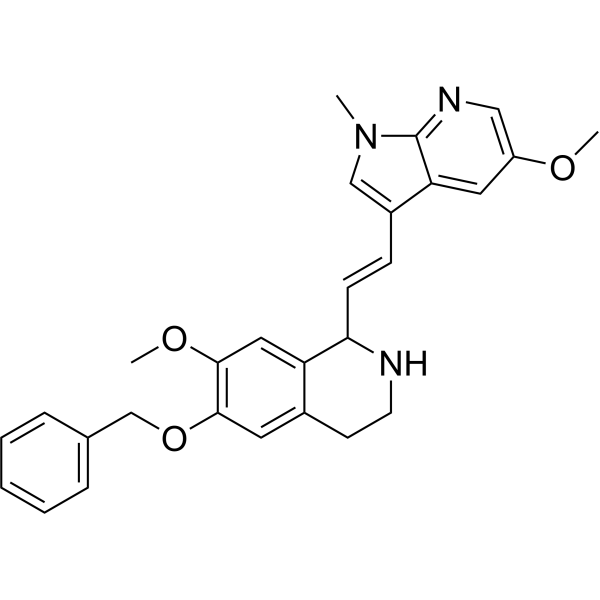
    TDP-43 degrader-1 (Compound example 7) is a TDP-43 degrader. TDP-43 degrader-1 reduces the aggregation of TDP-43-positive HuR stress granules in cells and promotes the relocalization of abnormally distributed TDP-43 in the cytoplasm to the nucleus. TDP-43 degrader-1 can be used in the study of amyotrophic lateral sclerosis and Alzheimer's disease .
    TDP-43 degrader-1
  • HY-N0819
    Raddeanin A
    1 Publications Verification

    Apoptosis PI3K Akt ERK mTOR Wnt β-catenin Wee1 JNK VEGFR CDK Neurological Disease Inflammation/Immunology Cancer
    Raddeanin A is an oleanane-type triterpenoid saponin with oral activity. Raddeanin A inhibits SRC, mTOR, JNK, VEGFR2, NLRP3 inflammasome, Wnt/β-catenin, Wee1, PI3K/AKT signaling pathway, MAPK/ERK signaling pathway, AR-FL, AR-Vs, and downregulates the expression of p-PI3K and p-AKT. Raddeanin A inhibits osteoclast formation, bone resorption, osteolysis, cancer cell invasion, migration, proliferation, angiogenesis and epithelial-mesenchymal transition, while induces apoptosis, cell cycle arrest, ROS production, immunogenic cell death and dendritic cell maturation. Raddeanin A improves blood-retinal barrier function, alleviates inflammation, regulates the tumor microenvironment, and enhances the activity of anti-PD-1 antibody. Raddeanin A is applicable to the research of breast cancer-associated osteolysis, human osteosarcoma, colorectal cancer, glioblastoma, Alzheimer's disease, cholangiocarcinoma, melanoma, non-small cell lung cancer, castration-resistant prostate cancer and multiple myeloma .
    Raddeanin A
  • HY-145313

    Tau Protein Neurological Disease
    TTBK1-IN-2 (compound 29) is a potent Tau-Tubulin kinase (TTBK1) inhibitor with IC50s of 0.24 and 4.22 µM, respectively. TTBK1-IN-2 reveals good brain penetration in vivo and is able to reduce TDP-43 phosphorylation not only in cell cultures but also in the spinal cord of transgenic TDP-43 mice .
    TTBK1-IN-2
  • HY-179492

    hnRNP Neurological Disease
    ACI-19278 is a TDP-43 PET tracer with an average Kd of 25 nM. ACI-19278 only binds to pathological TDP-43 aggregates and does not cross-react with Aβ, Tau, etc. [ 18F]ACI-19278 successfully visualized the TDP-43 pathology in the human brain through positron emission computed tomography. ACI-19278 can be used for in vivo diagnosis of TDP-43 protein lesions .
    ACI-19278
  • HY-W012985

    ATP Synthase Apoptosis Metabolic Disease Cancer
    Methyl pyruvate is a methyl ester derivative of pyruvic acid. Methyl pyruvate induces insulin release and membrane depolarization. Methyl pyruvate rescues proteasome damage and nuclear localization of TdP-43 caused by overexpression of σ1RE102Q by enhancing ATP synthesis. Methyl pyruvate selectively protects normal lung fibroblasts from cell death induced by Irinotecan (HY-16562). Methyl pyruvate promotes apoptosis and necrosis in cancer cells and downregulates angiogenesis and cell cycle pathways. Methyl pyruvate is an effective substrate for dihydrodihydrogen dehydrogenase.
    Methyl pyruvate
  • HY-172450

    Interleukin Related Neurological Disease Inflammation/Immunology
    AIM4 is a compound that can inhibit the aggregation of TDP-43. AIM4 has good biocompatibility and anti-inflammatory activity. AIM4 can be used in the research of diseases such as amyotrophic lateral sclerosis .
    AIM4
  • HY-168323

    p97 Others
    UP163 enhances the activity of ATPase, and activates valosin-containing protein (VCP) with an EC50 of 9.0 μM. UP163 reduces MG-132 (HY-13259)-induced TDP-43 aggregates .
    UP163
  • HY-148629

    JNK Neurological Disease
    GDC-0134 (RG6000) is a modulator targeting dual leucine zipper kinase (DLK) that can cross the blood-brain barrier. By inhibiting the kinase activity of DLK, GDC-0134 blocks the activation of the downstream JNK signaling pathway, suppresses DLK-dependent retrograde signal transduction of axon-to-soma degeneration, and exerts neuroprotective activity. GDC-0134 reduces TDP-43 protein aggregation and decreases the degree of neuromuscular junction denervation in motor neurons. GDC-0134 can be used in the research of amyotrophic lateral sclerosis (ALS), Alzheimer's disease and other DLK-related neurodegenerative diseases .
    GDC-0134
  • HY-17660

    DNA/RNA Synthesis Neurological Disease
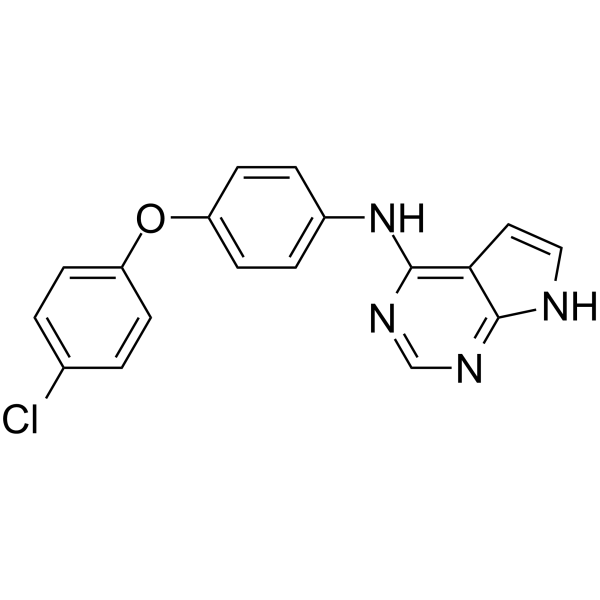
    G923-0271 is a TDP-43 protein inhibitor. G923-0271 can be used for the research of neurological disease, such as Alzheimer's Disease .
    G923-0271
  • HY-176381

    E3 Ligase Ligand-Linker Conjugates Cancer
    BTK ligand 11-alcohol-PEG6-azido is a synthesized E3 ligase ligand-linker conjugate that can be used in the synthesis of PROTACs, such as TDP-43 degrader-1 (HY-122828) .
    BTK ligand 11-alcohol-PEG6-azido
  • HY-181846

    DNA/RNA Synthesis Neurological Disease
    nTRD22 is an RNA-binding allosteric modulator targeting TDP-43. nTRD22 binds to the N-terminal domain of TDP-43, thereby allosterically regulating the RNA-binding domain of TDP-43 and reducing its RNA-binding ability. nTRD22 decreases the TDP-43 protein level in primary motor neurons. nTRD22 alleviates motor dysfunction in amyotrophic lateral sclerosis models. nTRD22 is applicable to related research on amyotrophic lateral sclerosis .
    nTRD22
  • HY-172544

    Tau Protein Neurological Disease
    TTBK1/2-IN-3 (Compound 10) is a potent inhibitor of tau tubulin kinase 1 (TTBK1) and TTBK2, with IC50 values of 579 nM and 258 nM, respectively. TTBK1/2-IN-3 inhibits the phosphorylation of TDP-43. TTBK1/2-IN-3 reduces the expression of primary cilia on the surface of iPSCs .
    TTBK1/2-IN-3
  • HY-RS23806

    Small Interfering RNA (siRNA) Others

    Tardbp Rat Pre-designed siRNA Set A contains three designed siRNAs for Tardbp gene (Rat), as well as a negative control, a positive control, and a FAM-labeled negative control.

    Tardbp Rat Pre-designed siRNA Set A
    Tardbp Rat Pre-designed siRNA Set A
  • HY-185550

    Drug Intermediate Neurological Disease
    ACI-19626 precursor (Compound 20) is the precursor of the TDP-43 protein probe ACI-19626 (HY-163575). ACI-19626 is a TDP-43 aggregation inhibitor that can be used in imaging diagnostics such as positron emission tomography (PET) to detect and distinguish related neurodegenerative diseases .
    ACI-19626 precursor
  • HY-RS14208

    Small Interfering RNA (siRNA) Others

    TARDBP Human Pre-designed siRNA Set A contains three designed siRNAs for TARDBP gene (Human), as well as a negative control, a positive control, and a FAM-labeled negative control.

    TARDBP Human Pre-designed siRNA Set A
    TARDBP Human Pre-designed siRNA Set A
  • HY-186073

    HDAC Neurological Disease
    HDAC1 activator-1 is a specific HDAC1 activator with orally activity, exerting no significant effects on other HDAC family members. HDAC1 activator-1 exhibits neuroprotective activity, ameliorates cognitive and motor function deficits by reducing neuronal loss and gliosis. HDAC1 activator-1 specifically activates HDAC1 in SH-SY5Y cells and exerts regulatory effects on aberrant cell cycle and DNA damage. HDAC1 activator-1 can be used for the research of TDP-43 proteinopat1-related neurodegenerative diseases including Amyotrophic Lateral Sclerosis (ALS) and cerebral ischemia-related neurological injury .
    HDAC1 activator-1
  • HY-RS17352

    Small Interfering RNA (siRNA) Others

    Tardbp Mouse Pre-designed siRNA Set A contains three designed siRNAs for Tardbp gene (Mouse), as well as a negative control, a positive control, and a FAM-labeled negative control.

    Tardbp Mouse Pre-designed siRNA Set A
    Tardbp Mouse Pre-designed siRNA Set A
  • HY-156600A

    SBT-272 trihydrochloride

    Mitochondrial Metabolism Neurological Disease
    Bevemipretide trihydrochloride (SBT-272 trihydrochloride) is a blood-brain barrier-permeable mitochondrial function repair agent. Bevemipretide trihydrochloride stabilizes cardiolipin in the inner mitochondrial membrane, restores mitochondrial structure, respiratory function, motor capacity and upper motor neuron health. Bevemipretide trihydrochloride reduces astrogliosis and microgliosis in mice with amyotrophic lateral sclerosis. Bevemipretide trihydrochloride prevents stroke-induced mitochondrial dysfunction . Bevemipretide trihydrochloride is applicable to research related to amyotrophic lateral sclerosis, Parkinson's disease, dementia with Lewy bodies and Huntington's disease .
    Bevemipretide trihydrochloride
  • HY-185545

    Ligands for Target Protein for PROTAC Trk Receptor Cancer
    NTRK1-ligand-1 (Compound 15) is a NTRK1 ligand. NTRK1-ligand-1 serves as a Ligand for Target Protein for PROTAC, which is applicable to the development and design of PROTAC NTRK1 degraders, such as PROTAC NTRK1 degrader-1 (HY-181052). NTRK1-ligand-1 can be used in the research of solid tumors .
    NTRK1-ligand-1

Inquiry Online

Your information is safe with us. * Required Fields.

Salutation


Country or Region *

Applicant Name *


Organization Name *

Department *


Email Address *


Product Name *

Cat. No.


Requested quantity *

Phone Number *


Remarks

Inquiry Online

Inquiry Information

Product Name:
Cat. No.:
Quantity:
MCE Japan Authorized Agent:

