
110 Results for "

TiO2 sol-gel film

" in MedChemExpress (MCE) Product Catalog:
Products (110)

110 Results for "TiO2 sol-gel film" in MCE Product Catalog:

32
32 Publications Verification
Cat. No.: HY-K2005

High Sensitivity ECL Kit enables low picogram detection of antigen by oxidizing luminol in the presence of HRP and peroxide. This reaction produces a prolonged chemiluminescence which can be visualized on X-ray film or digital imaging systems. The 100 mL is defined as the base specification. All larger sizes correspond to incremental volumes of this base.

loading...
    loading...
8
8 Cited Publications
Cat. No.: HY-K2006

Sensitive ECL Kit enables low picogram detection of antigen by oxidizing luminol in the presence of HRP and peroxide. This reaction produces a prolonged chemiluminescence which can be visualized on X-ray film or digital imaging systems. The 100 mL is defined as the base specification. All larger sizes correspond to incremental volumes of this base.

loading...
    loading...
1
1 Cited Publications
Cat. No.: HY-W127758
CAS No.: 9005-32-7
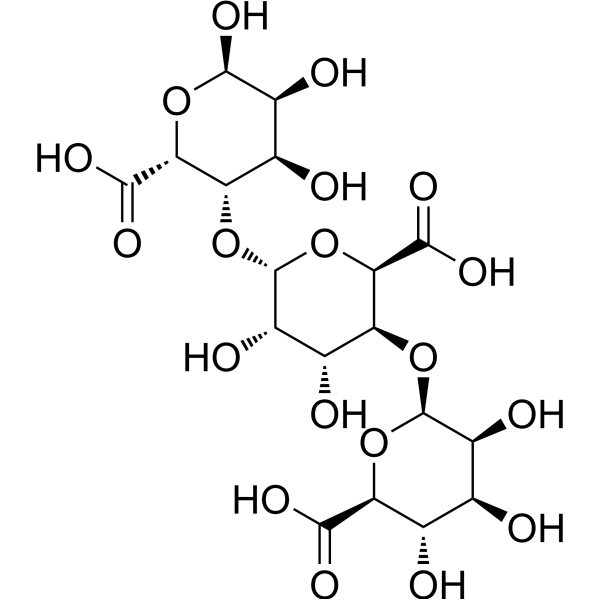
Alginic acid is a natural polysaccharide, which has been widely concerned and applied due to its excellent water solubility, film formation, biodegradability and biocompatibility. Alginic acid induces oxidative stress-mediated hormone secretion disorder, apoptosis and autophagy in mouse granulosa cells and ovaries. Alginic acid has an inhibitory effect on histamine release. Anti-anaphylactic and anti-inflammatory properties [2] .
loading...
    loading...
1
1 Cited Publications
Cat. No.: HY-Y0395
CAS No.: 25487-66-5
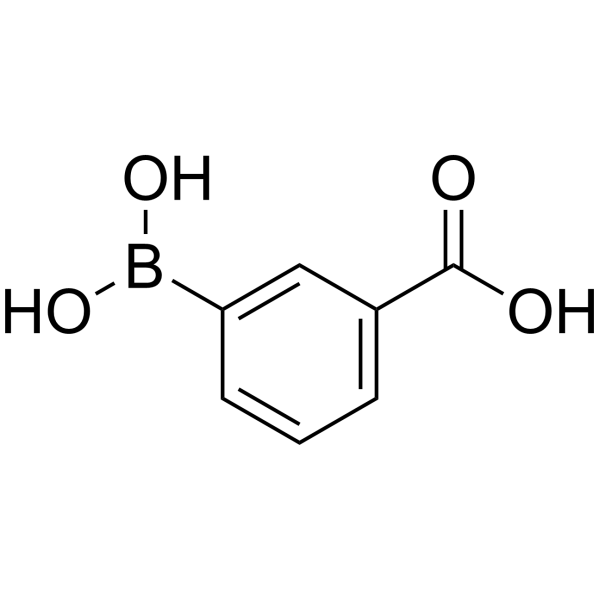
3-Carboxyphenylboronic acid is a biochemical reagent with multiple functions including nanoparticle enhancement, perovskite passivation, fluorescence quenching, and adhesion. 3-Carboxyphenylboronic acid improves tumor penetration and pulmonary retention of nanoparticles, and serves as a tumor-targeting ligand for carboxymethyl chitosan nanoparticles. 3-Carboxyphenylboronic acid optimizes film crystallization via coordinate chelation of free lead/iodide ions in perovskites. 3-Carboxyphenylboronic acid acts as an additive for n-i-p perovskite solar cells. Conjugation of 3-Carboxyphenylboronic acid with PPEG8 quenches the near-infrared fluorescence of single-walled carbon nanotubes, enabling aqueous dispersion of carbon nanotubes through binding to the diol structure of saccharides [2] .
loading...
    loading...
Cat. No.: HY-Y1310A
CAS No.: 9005-38-3
Sodium alginate is an anionic straight chain polysaccharide. Sodium alginate can be obtained from different species of algae. Sodium alginate has different properties, such as pH-sensitivity, nontoxicity, nonimmunogenicity. Sodium alginate has weak gelation, viscosity, and film-forming properties. Sodium alginate can be utilized to prepare gels and film materials for food preservation. Sodium alginate is a versatile functional biomaterial for viscosity enhancement, stabilizer, matrixing agent, encapsulation polymer, bioadhesive and film former [2] .
loading...
    loading...
Cat. No.: HY-W051271
CAS No.: 13463-67-7
Synonyms: Titanium dioxide
Titanium(IV) oxide is a photosensitizer and photocatalyst. Titanium(IV) oxide can be used as a pharmaceutical excipient such as a flow aid, coating agent, sunscreen, colorant, etc. Pharmaceutical excipients or pharmaceutical excipients refer to other chemical substances used in the pharmaceutical process other than the drug ingredients. Pharmaceutical excipients generally refer to inactive ingredients in pharmaceutical preparations that can improve the stability, solubility and processability of pharmaceutical preparations. Pharmaceutical excipients also affect the absorption, distribution, metabolism and elimination (ADME) process of co-administered drugs. Titanium(IV) oxide can use light energy to generate electron-hole pairs to degrade pollutants. Photons excite electrons in TiO2 to generate active oxygen species (such as ·OH and ·O2 -), thereby oxidizing and mineralizing pollutants such as organic compounds and heavy metals. TiO2 can be used in the research of environmental remediation fields such as water treatment, air purification and self-cleaning materials [2] .
loading...
    loading...
Cat. No.: HY-W017758
CAS No.: 504-63-2
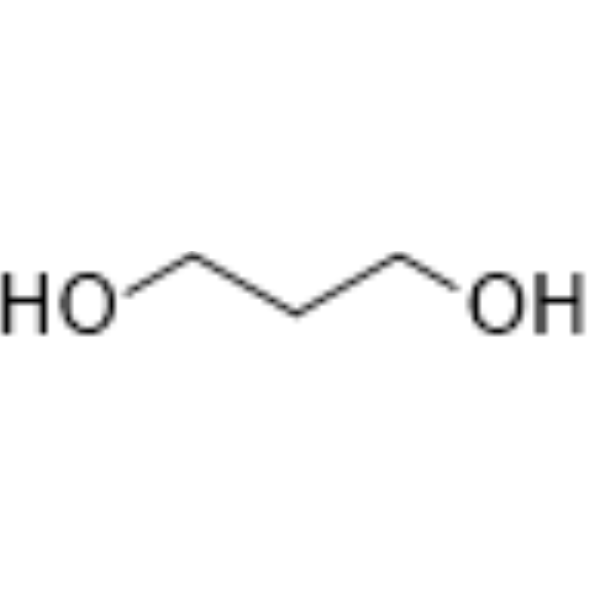
1,3-Propanediol is a versatile plant-derived humectant and solvent . 1,3-Propanediol can be produced by Klebsiella pneumoniae via glycerol fermentation, with the highest yield under anaerobic conditions. 1,3-Propanediol serves as a solvent and stabilizer in film preparation processes [2].
loading...
    loading...
Cat. No.: HY-Y1309
CAS No.: 90-15-3
Synonyms: Furro ER; NSC 9586; Nako TRB
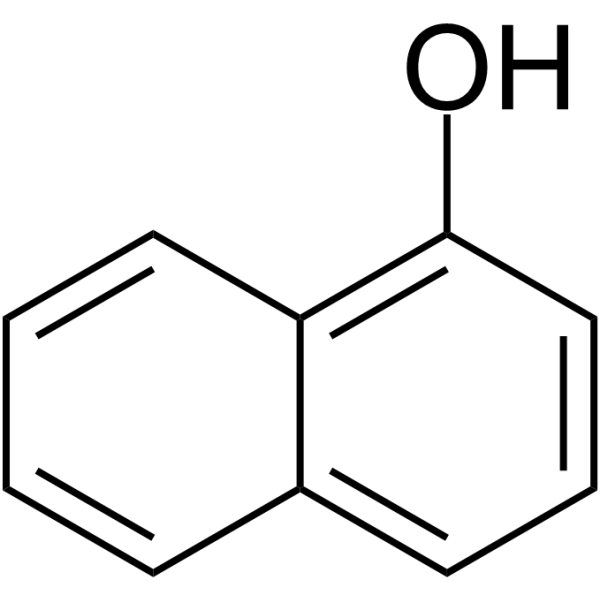
1-naphthol (Furro ER) is an excited state proton transfer (ESPT) fluorescent molecular probe. 1-naphthol can sense the hydrophobic domains in micellar aggregation and accurately sense the sol-gel transition. 1-naphthol can be used to study the thermally induced microenvironmental changes and hydration levels of Pluronic F127 (PF127) in different microenvironments in aqueous media .
loading...
    loading...
Cat. No.: HY-W011426
CAS No.: 142-91-6
Synonyms: Propan-2-yl hexadecanoate
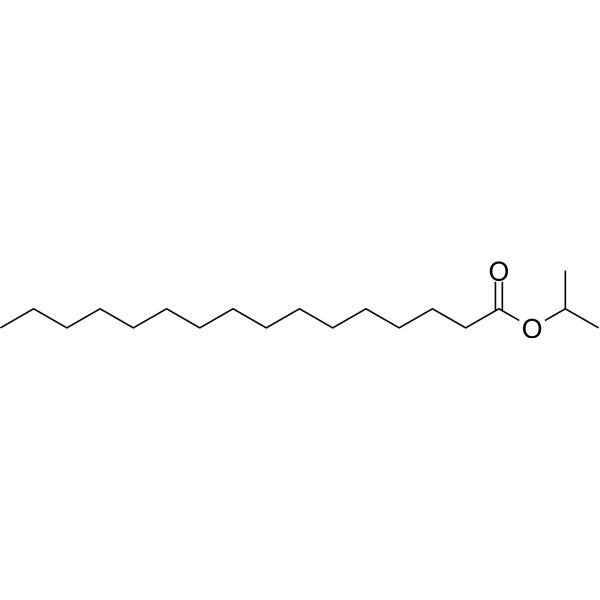
Isopropyl palmitate is an fatty acid ester. Isopropyl palmitate can be used for design and characterization of bioactive bilayer films. The bilayer membrane not only has the ability to scavenge free radicals and inhibit lipid peroxidation, but also can inhibit the growth of known foodborne pathogens. Isopropyl palmitate can be used as an excipient, such as lubricant, oily carrier, solvent, controlled-release transdermal film. Pharmaceutical excipients, or pharmaceutical auxiliaries, refer to other chemical substances used in the pharmaceutical process other than pharmaceutical ingredients. Pharmaceutical excipients generally refer to inactive ingredients in pharmaceutical preparations, which can improve the stability, solubility and processability of pharmaceutical preparations. Pharmaceutical excipients also affect the absorption, distribution, metabolism, and elimination (ADME) processes of co-administered drugs [2].
loading...
    loading...
Cat. No.: HY-W115746
CAS No.: 9004-57-3
Synonyms: Ethyl cellulose N-100
Research Areas:  

Others

Ethyl cellulose (viscosity 100 cP) is a non-toxic cellulose derivative with unique properties including oil gel formation, active ingredient delivery and film-forming ability. Ethyl cellulose (viscosity 100 cP) can serve as a pharmaceutical excipient, such as a coating agent, flavoring agent, tablet filler, etc. [2] .
loading...
    loading...
Cat. No.: HY-D0219
CAS No.: 76-61-9
Synonyms: Thymolsulphonephthalein
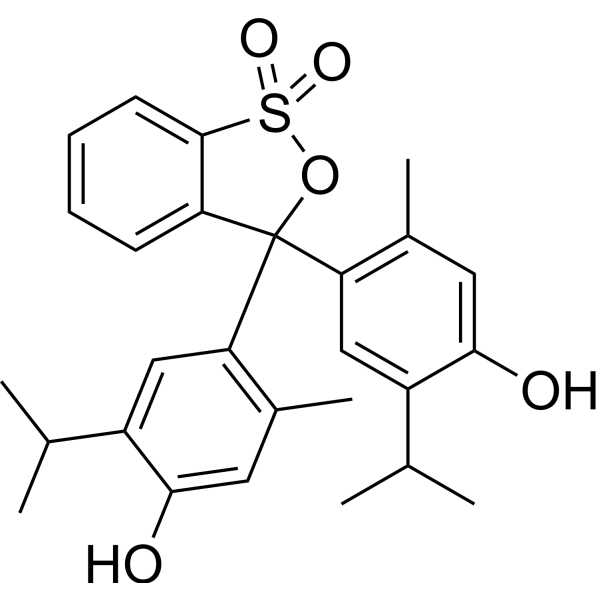
Thymol blue is a reversible pH indicator that responds to the pH of the solution through structural changes of protonation and deprotonation. Thymol blue is red (HI - form) under acidic conditions and blue (I 2- form) under alkaline conditions. Quantitative detection is achieved through the absorption peak shift (435 nm/596 nm) of the UV-visible spectrum. Thymol blue selectively responds to pH changes, changing from red to yellow at pH 1.2-2.8 and from yellow to blue at pH 8.0-9.6. Thymol blue can be fixed in a silica gel matrix through sol-gel technology to form a solid-state sensor for in-situ pH measurement in the marine environment and acid-base monitoring in the biomedical field[1][2].
loading...
    loading...
Cat. No.: HY-Y1219H
CAS No.: 112926-00-8
Silica gel, high-purity grade, 200-400 mesh is a low-density, high-surface-area, high-purity inert additive that can be used to prepare chromatographic column sieve plates based on the sol-gel method. Silica gel, high-purity grade prevents DNA degradation by absorbing water from plant leaves, and is suitable for the preservation of field-collected samples for subsequent DNA extraction, restriction endonuclease digestion, PCR amplification and gene sequencing. It can also be reused after being saturated with water. Silica gel, high-purity grade can provide a non-toxic, inert aquatic environment for embedded cells, allowing nutrients, oxygen and metabolic waste to diffuse freely and blocking external pollution, thereby maintaining the activity of fibroblasts and epithelial cells [2].
loading...
    loading...
Cat. No.: HY-W019885A
CAS No.: 7758-29-4
Synonyms: Sodium triphosphate pentabasic, 98%
Sodium tripolyphosphate (STPP), 98% is an inorganic, non-toxic polyphosphate crosslinker, inducer and enhancer. Sodium tripolyphosphate (STPP), 98% induces the formation of unique needle-like microcrystals in sodium alginate-chitosan composite films. Sodium tripolyphosphate (STPP), 98% enhances the DPPH free radical scavenging activity of sodium alginate-chitosan composite films .
loading...
    loading...
Cat. No.: HY-W089777
CAS No.: 2530-83-8
Synonyms: GPTMS
3-Glycidyloxypropyltrimethoxysilane (GPTMS) is a silicon source for the preparation of inorganic-organic hybrid polymers. 3-Glycidyloxypropyltrimethoxysilane can be used to prepare hard coatings of organic polymers, such as contact lens materials in the optical industry, as well as related materials in the fields of electronics, thin films, sensors, nanoimprinting, waveguides, and biology .
loading...
    loading...
Cat. No.: HY-W007531
CAS No.: 171197-80-1
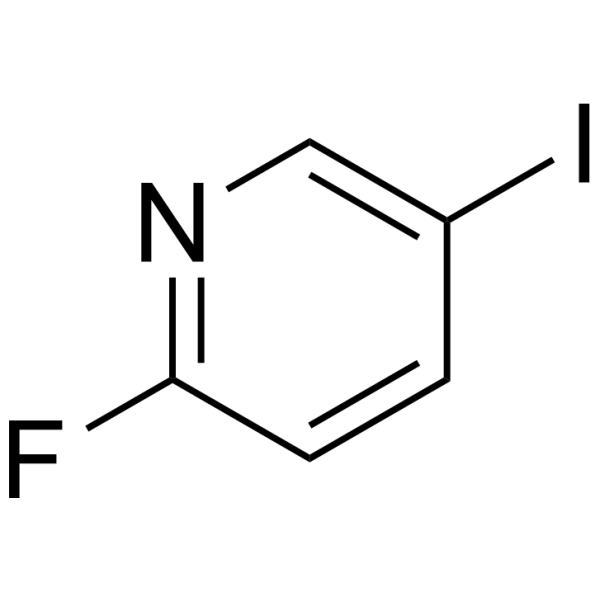
2-Fluoro-5-iodopyridine is an electrolyte additive. 2-Fluoro-5-iodopyridine can not only effectively protect the anode by forming a stable SEI film, but also convert dead lithium into active lithium. 2-Fluoro-5-iodopyridine effectively improves the performance of lithium metal batteries .
loading...
    loading...
Cat. No.: HY-172445
CAS No.: 438545-06-3
Synonyms: SS-DNA
Deoxyribonucleic acid sodium salt from salmon testes (SS-DNA) is a double-stranded deoxyribonucleic acid sodium salt extracted from salmon testes, which serves as an anti-adhesion agent and surface passivating agent for the surface of gold plasmonic sensors. Deoxyribonucleic acid sodium salt from salmon testes forms a nanoscale-thick film on the surface of gold plasmonic sensors, preventing non-specific adsorption of subsequent DNA analyte layers .
loading...
    loading...
Cat. No.: HY-D0947
CAS No.: 531-53-3
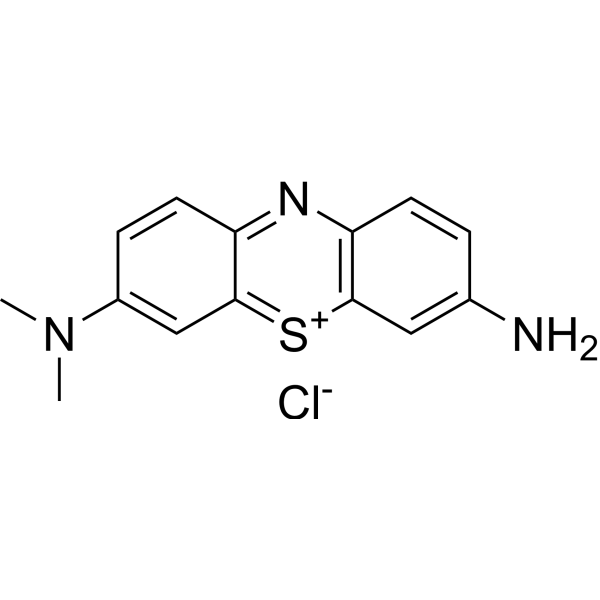
Azure A chloride is a phenothiazine dye. Azure A chloride is an alternative DNA dye used for the separation of DNA and protein fragments in agarose gel electrophoresis and PAGE. Azure A chloride can be chemisorbed on the surface of mild steel according to the Langmuir adsorption isotherm to form a protective film. Azure A chloride binds to double-stranded DNA in a non-cooperative manner via weak intercalation, triggering molecular conformational disturbance, restricted rotational motion, and changes in optical activity [2] .
loading...
    loading...
Cat. No.: HY-W392209A
CAS No.: 25086-89-9
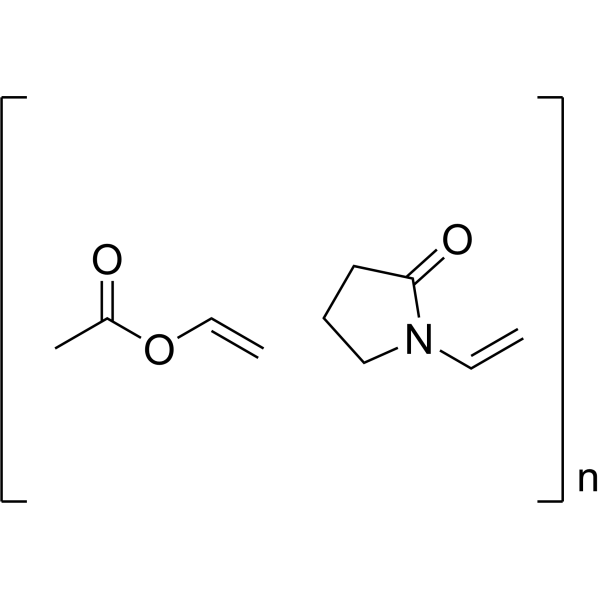
Copovidone can be used as an excipient, such as Film formers, adhesives, etc. Pharmaceutical excipients, or pharmaceutical auxiliaries, refer to other chemical substances used in the pharmaceutical process other than pharmaceutical ingredients. Pharmaceutical excipients generally refer to inactive ingredients in pharmaceutical preparations, which can improve the stability, solubility and processability of pharmaceutical preparations. Pharmaceutical excipients also affect the absorption, distribution, metabolism, and elimination (ADME) processes of co-administered drugs .
loading...
    loading...
Cat. No.: HY-Y1365C
CAS No.: 9000-70-8
Fish Gelatin,suitable for cell culture is an essential natural biopolymer. Fish Gelatin,suitable for cell culture can be isolated from fish processing by-products, such as fish skin, scales, bones and fish maw. Fish Gelatin,suitable for cell culture has been considered as a feasible substitute for mammalian gelatin. Modified Fish gelatin shows significant promise across various industries, including nanomaterials, 3D printing, thin films, coatings, and biopharmaceuticals. Fish Gelatin,suitable for cell culture can be used for cell culture [2].
loading...
    loading...
Cat. No.: HY-W143531
CAS No.: 133331-77-8
Synonyms: NOV03; SHR8058
Research Areas:  

Inflammation/Immunology

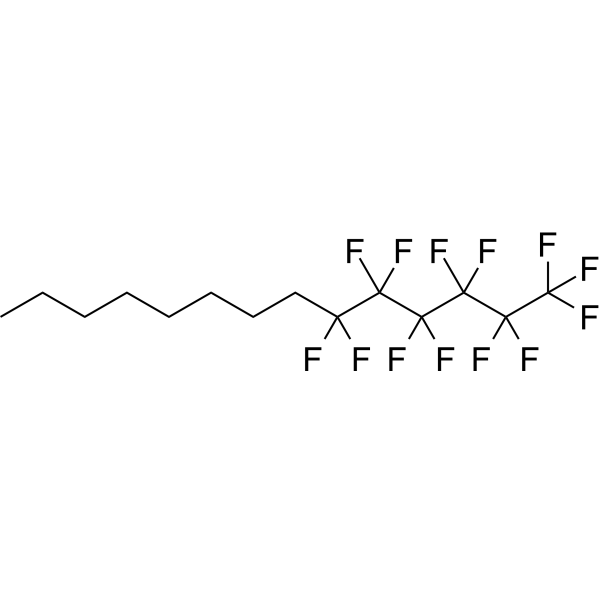
Perfluorohexyloctane (NOV03), a semifluorinated alkane, reduces tear film instability in Meibomian gland dysfunction and evaporative dry eye disease. Perfluorohexyloctane is a long-term tamponade agent. Perfluorohexyloctane increases tear film breakup time and lipid layer thickness .
loading...
    loading...

