
108 Results for "

U2OS cell

" in MedChemExpress (MCE) Product Catalog:
Products (108)

108 Results for "U2OS cell" in MCE Product Catalog:

7
7 Publications Verification
Cat. No.: HY-113596
CAS No.: 102029-73-2
Purity:  99.22%
Synonyms: Acetyl-CoA trisodium
Acetyl-coenzyme A (Acetyl-CoA) trisodium is a membrane-impermeant central metabolic intermediate, participates in the TCA cycle and oxidative phosphorylation metabolism. Acetyl-coenzyme A trisodium, regulates various cellular mechanisms by providing (sole donor) acetyl groups to target amino acid residues for post-translational acetylation reactions of proteins. Acetyl Coenzyme A trisodium is also a key precursor of lipid synthesis .
loading...
    loading...
7
7 Publications Verification
Cat. No.: HY-19979
CAS No.: 339163-65-4
Target:  

FOXM1 DNA/RNA Synthesis

Research Areas:  

Inflammation/Immunology

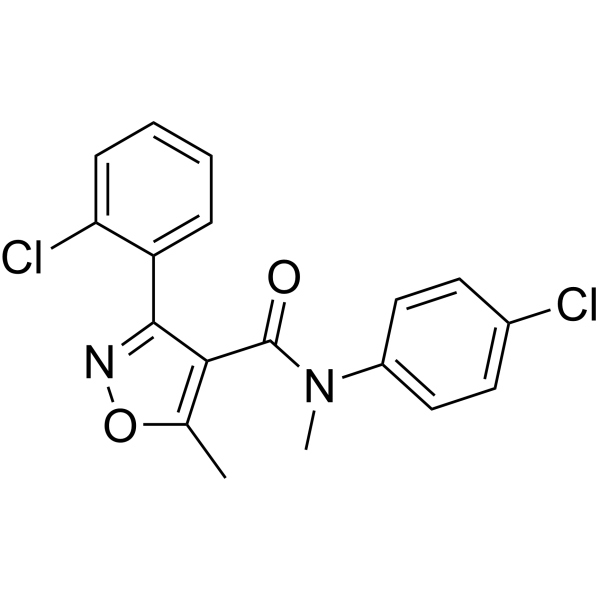
RCM-1 is a forkhead box M1 (FOXM1) inhibitor with an EC50 of 0.72 μM in U2OS cells. RCM-1 blocks the nuclear localization and increased the proteasomal degradation of FOXM1. RCM-1 can be used for asthma and other chronic airway diseases research .
loading...
    loading...
7
7 Publications Verification
Cat. No.: HY-113596A
CAS No.: 32140-51-5
Purity:  97%
Synonyms: Acetyl-CoA lithium
Acetyl-coenzyme A (Acetyl-CoA) lithium is a membrane-impermeant central metabolic intermediate, participates in the TCA cycle and oxidative phosphorylation metabolism. Acetyl-coenzyme A lithium, regulates various cellular mechanisms by providing (sole donor) acetyl groups to target amino acid residues for post-translational acetylation reactions of proteins. Acetyl Coenzyme A lithium is also a key precursor of lipid synthesis .
loading...
    loading...
6
6 Cited Publications
Cat. No.: HY-112680A
CAS No.: 2444713-88-4
Purity:  99.49%
Target:  

G-quadruplex

Research Areas:  

Neurological Disease

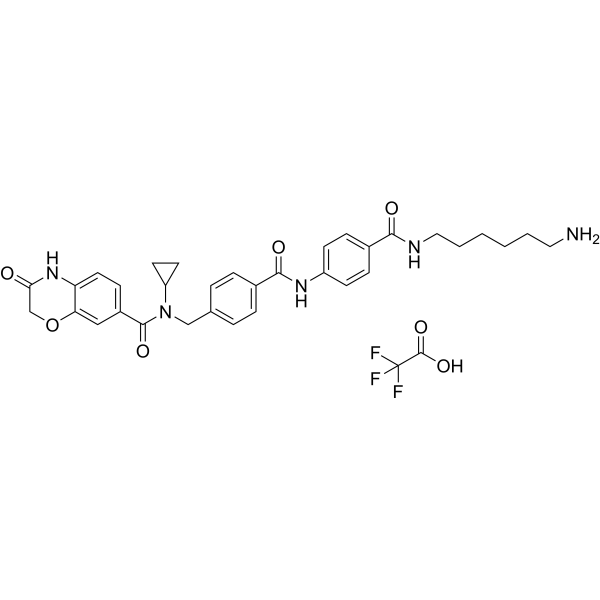
Carboxy pyridostatin trifluoroacetate salt is a G-quadruplex ligand. Carboxy pyridostatin trifluoroacetate salt has a highly molecular specificity to RNA on DNA G4s and reduces ATF-5 protein. Carboxy pyridostatin trifluoroacetate salt reduces cell proliferation and hinders stress granule (SG) formation .
loading...
    loading...
6
6 Cited Publications
Cat. No.: HY-112680
CAS No.: 1417638-60-8
Target:  

G-quadruplex

Research Areas:  

Neurological Disease

Carboxypyridostatin is a G-quadruplex ligand. Carboxypyridostatin has a highly molecular specificity to RNA on DNA G4s and reduces ATF-5 protein. Carboxypyridostatin reduces cell proliferation and hinders stress granule (SG) formation .
loading...
    loading...
5
5 Cited Publications
Cat. No.: HY-128892
CAS No.: 1808714-73-9
Purity:  99.42%
Target:  

Autophagy

Research Areas:  

Neurological Disease

EN6 is a small-molecule in vivo autophagy activator that covalently targets cysteine 277 in the ATP6V1A subunit of the lysosomal v-ATPase. EN6-mediated modification of ATP6V1A uncouples v-ATPase from Rag, leading to inhibition of mTORC1 signalling, increased lysosomal acidification, and activation of autophagy. EN6 also scavenges TDP-43 aggregates (causative agents of frontotemporal dementia) in a lysosome-dependent manner .
loading...
    loading...
3
3 Cited Publications
Cat. No.: HY-14229
CAS No.: 1197300-24-5
Purity:  99.71%
Synonyms: CCDC
TGR5 Receptor Agonist (CCDC), a potent Takeda G protein-coupled receptor 5 (TGR5; GPCR19) agonist, shows improved potency in the U2-OS cells and melanophore cells with pEC50s of 6.8 and 7.5, respectively. TGR5 Receptor Agonist can induce peripheral and central hypersensitivity to bladder distension in mice, and increase intracellular Ca 2+ concentration. TGR5 Receptor Agonist can also reduces food intake and improves insulin responsiveness, in diet-induced obese mice. TGR5 Receptor Agonist can be used to research diabetes, bladder hypersensitivity and anti-obesity .
loading...
    loading...
3
3 Cited Publications
Cat. No.: HY-162289
CAS No.: 3036029-78-1
Target:  

DNA/RNA Synthesis

Research Areas:  

Neurological Disease Cancer

FAZ-3780 is an inhibitor that binds to the NTF2L domain of G3BP1/2. FAZ-3780 binds to the NTF2L nsP3 of G3BP1 with high affinity, with a Kd of 0.15 μM and a Pep-FRET IC50 of 0.7 μM. FAZ-3780 targets the protein-protein interaction domain of G3BP1/2, and specifically inhibits the co-condensation of G3BP1, caprin 1 and RNA in vitro. FAZ-3780 inhibits stress granule formation and disassembles pre-formed stress granules. FAZ-3780 can be used in studies related to cancer and neurodegenerative diseases .
loading...
    loading...
2
2 Cited Publications
Cat. No.: HY-135416
CAS No.: 98072-47-0
Streptolysin O is a cholesterol-targeting, thiol-activated pore-forming toxin. Streptolysin O binds to cholesterol via its C-terminal domain 4, oligomerizes to form arc-shaped or ring-shaped structures, inserts amphipathic helices into the lipid bilayer, and forms transmembrane β-barrel pores, resulting in cell permeabilization. Streptolysin O enables controllable cell membrane permeabilization, fluorescent probe delivery, and exogenous molecule uptake .
loading...
    loading...
2
2 Cited Publications
Cat. No.: HY-134828
CAS No.: 2043321-54-4
Purity:  99.74%
Research Areas:  

Cancer

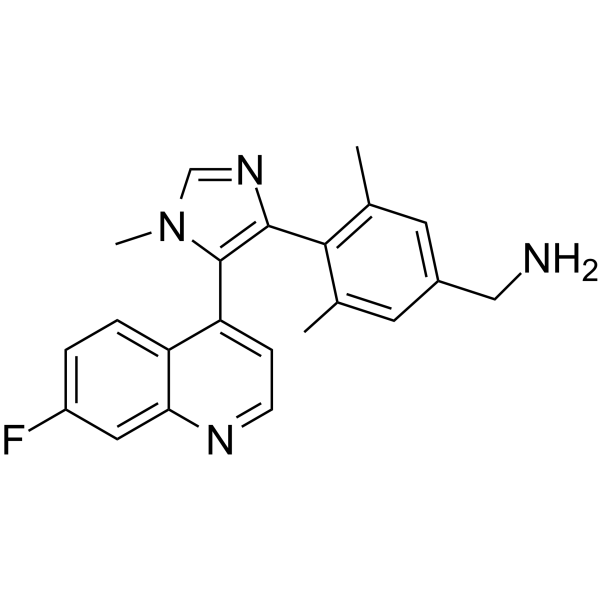
AZ506 is a potent SMYD2 inhibitor with an IC50 of 17 nM. AZ506 inhibits SMYD2 methyltransferase activity in cells, leading to a decrease in the SMYD2-mediated methylation signal .
loading...
    loading...
1
1 Cited Publications
Cat. No.: HY-148764
CAS No.: 890808-56-7
Purity:  99.90%
Research Areas:  

Cancer

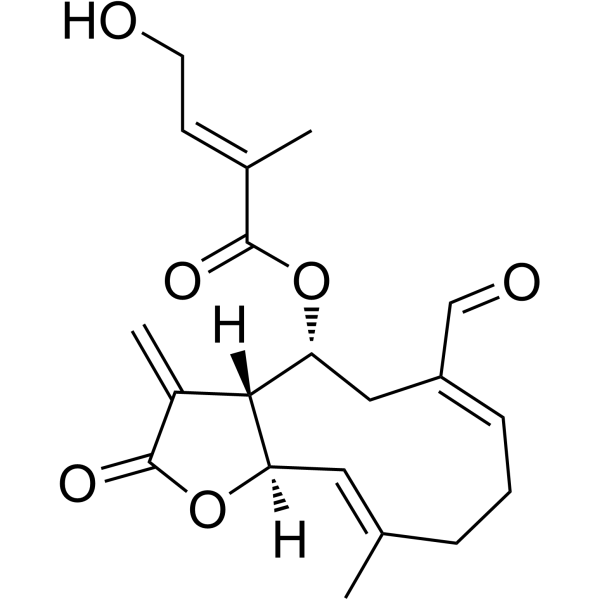
M47 is a molecular glue that selectively destabilizes Cryptochrome 1 (CRY1) and increases degradation of the CRY1 in the nucleus. M47 enhances apoptosis in Ras-transformed P53-deficient mouse skin fibroblast lines and enhances life span in p53 knockout mice. M47 can be used in research of cancer .
loading...
    loading...
1
1 Cited Publications
Cat. No.: HY-158742
CAS No.: 2171036-89-6
Purity:  99.30%
Synonyms: GL13; SBB-A-B
Target:  

Tyrosinase

Research Areas:  

Others

SBB-Analogue (GL13) Biotin (GL13; SBB-A-B) consists of a Sudan Black B (SBB) (HY-D0213) derivative conjugated with biotin. SBB-Analogue (GL13) Biotin potently detects senescent cells and eliminates the drawback of false-positive staining caused by serum starvation and cell fusion in SA-β-gal assays. SBB-Analogue (GL13) Biotin can be used in flow cytometry, immunofluorescence analysis, and other applications .
loading...
    loading...
1
1 Cited Publications
Cat. No.: HY-168438
CAS No.: 930856-19-2
Target:  

EGFR Akt ERK

Research Areas:  

Cardiovascular Disease

ERBB agonist-1 is a ERBB4 agonist with an EC50 of 10.5 μM. ERBB agonist-1 enhances NRG1-induced ERBB4 homodimerization and activates the PI3K/Akt and MAPK/ERK signaling pathways. ERBB agonist-1 acts as a cell survival promoter, anti-hypertrophic agent, anti-fibrotic agent, and cardioprotective agent. ERBB agonist-1 is applicable to the research of heart failure .
loading...
    loading...
1
1 Cited Publications
Cat. No.: HY-B0877
CAS No.: 3093-35-4
Synonyms: SQ-18566
Halcinonide (SQ-18566) is an orally active Smoothened (Smo) agonist. Halcinonide activates the Hedgehog signaling pathway by binding to Smo and promoting its internalization and expression, thereby activating Gli transcription factors. Halcinonide not only stimulates cell proliferation, increases the expression of cyclin D2/CDK6 and inhibits the degradation of caspase-3, but also suppresses Bcl-2/Bax-mediated apoptosis, oxidative stress and inflammatory responses. Halcinonide activates RxRγ to upregulate the expression of myelin genes, thereby reducing cerebral infarction and improving behavioral deficits. Halcinonide has been used in studies related to multiple sclerosis and ischemic stroke .
loading...
    loading...
1
1 Cited Publications
Cat. No.: HY-117213
CAS No.: 1233332-37-0
Synonyms: S1P1-IN-Ex26
Ex26 (S1P1-IN-Ex26) is a potent and selective sphingosine 1-phosphate receptor 1 (S1P1) antagonist (IC50=0.93 nM). Ex26 shows >3,000-fold selectivity for S1P1 over other Sphingosine 1-phosphate receptors. Ex26 can be used in experimental autoimmune encephalomyelitis reseach .
loading...
    loading...
1
1 Cited Publications
Cat. No.: HY-W011215
CAS No.: 84-75-3
Dihexyl phthalate is one of the commonly used phthalate esters in various plastics and consumer products. Dihexyl phthalate is classified as a priority pollutant and an endocrine disruptor. Dihexyl phthalate can induce reactive oxygen species (ROS) accumulation, promote inflammation, and lead to significant increases in apoptosis and inflammation-related gene expression levels. Dihexyl phthalate can cause testicular atrophy and is a reproductive toxicant .
loading...
    loading...
1
1 Cited Publications
Cat. No.: HY-115570
CAS No.: 1644443-92-4
Purity:  ≥98.0%
Synonyms: GW108X
Target:  

Kinesin ULK Autophagy

Research Areas:  

Cancer

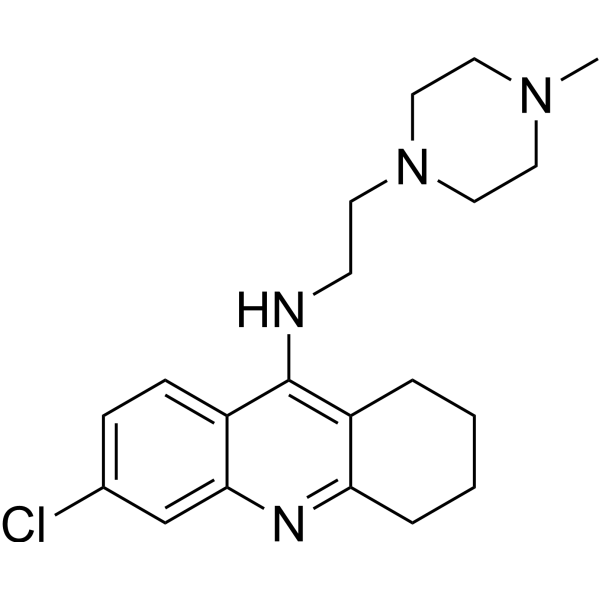
GW406108X is a specific Kif15 (Kinesin-12) inhibitor with an IC50 of 0.82 uM in ATPase assays. GW406108X, a potent autophagy inhibitor, shows ATP competitive inhibition against ULK1 with a pIC50 of 6.37 (427 nM). GW406108X inhibits ULK1 kinase activity and blocks autophagic flux, without affecting the upstream signaling kinases mTORC1 and AMPK .
loading...
    loading...
1
1 Cited Publications
Cat. No.: HY-135416A
CAS No.: 98072-47-0
Purity:  ≥96.0%
Recombinant Streptolysin O is a cholesterol-targeting, thiol-activated pore-forming toxin. Recombinant Streptolysin O binds to cholesterol via its C-terminal domain 4, oligomerizes to form arc-shaped or ring-shaped structures, inserts amphipathic helices into the lipid bilayer, and forms transmembrane β-barrel pores, resulting in cell permeabilization. Recombinant Streptolysin O enables controllable cell membrane permeabilization, fluorescent probe delivery, and exogenous molecule uptake .
loading...
    loading...
Cat. No.: HY-151500
CAS No.: 3026599-90-3
Purity:  99.20%
Research Areas:  

Metabolic Disease

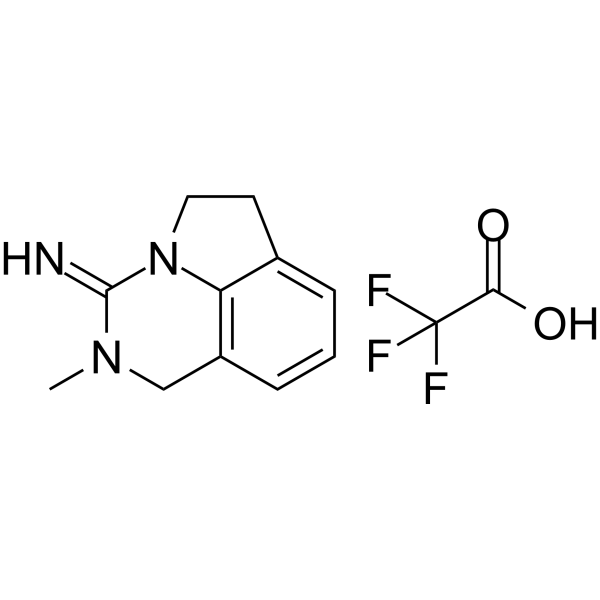
JBSNF-00002 free base is an orally active small molecule inhibitor of the tricyclic nicotinamide N-methyltransferase (NNMT) with IC50 values for human, mouse and monkey sources of NNMT of 33, 210 and 190 nM respectively. JBSNF-00002 free base can reduce endogenous MNA levels in U2OS osteosarcoma cells, with its EC50 being 2.5 μM. JBSNF-00002 free base exhibits significant anti-obesity and anti-diabetic activities in the diet-induced obesity (DIO) model. JBSNF-00002 free base can be used for the study of metabolic diseases such as obesity, type 2 diabetes and non-alcoholic fatty liver disease .
loading...
    loading...
Cat. No.: HY-N4067
CAS No.: 566-24-5
Synonyms: isoCDCA
Category:  

Natural Products

Isochenodeoxycholic acid (isoCDCA) is a FXR agonist. Isochenodeoxycholic acid activates the activity of FXR and induces the mRNA expression of FXR target genes (Ostβ and Kng1). Isochenodeoxycholic acid serves as a substrate for the liver class I ADH γγ isozyme-mediated 3β-dehydrogenation reaction .
loading...
    loading...

