

1. Search Result
Search Result
Results for "

adverse effect

" in MedChemExpress (MCE) Product Catalog:

22

Inhibitors & Agonists

1

Biochemical Assay Reagents

3

Peptides

1

Inhibitory Antibodies

4

Natural
Products

1

Oligonucleotides

Cat. No. Product Name Target Research Areas Chemical Structure
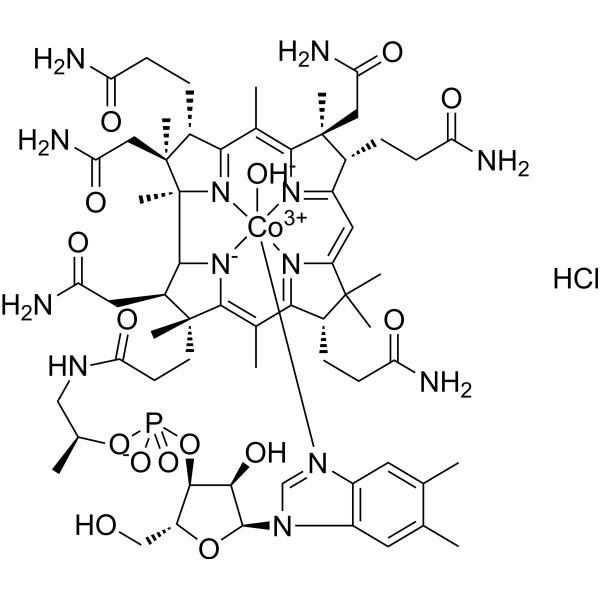
  • HY-B2209A
    Hydroxocobalamin monohydrochloride
    3 Publications Verification

    Vitamin B12a monohydrochloride

    Endogenous Metabolite Metabolic Disease
    Hydroxocobalamin monohydrochloride (Vitamin B12a monohydrochloride) is an injectable naturally occurring form of vitamin B12 with a favorable adverse effect profile, used as a dietary supplement in the treatment of vitamin B12 deficiency including pernicious anemia .
    Hydroxocobalamin monohydrochloride
  • HY-P991628

    PF-08634404

    PD-1/PD-L1 VEGFR Cancer
    SSGJ-707 (PF-08634404) is a bispecific antibody targeting VEGF and PD-1. SSGJ-707 exerts dual anti-tumor effects by neutralizing VEGF and blocking the PD-1 signaling pathway. SSGJ-707 can be combined with platinum-based chemotherapy to inhibit advanced non-small cell lung cancer (NSCLC), and its inhibitory effect is not limited by PD-L1 expression levels. In the HARMONi-2 trial, the objective response rate of SSGJ-707 correlates with the PD-L1 tumor proportion score, and the incidence of grade ≥3 adverse events is comparable to that of Inetetamab (HY-P99969). SSGJ-707 is being extensively investigated for a variety of malignancies including advanced NSCLC, colorectal cancer and small cell lung cancer .
    SSGJ-707
  • HY-W018555

    Endogenous Metabolite Bacterial Infection Neurological Disease
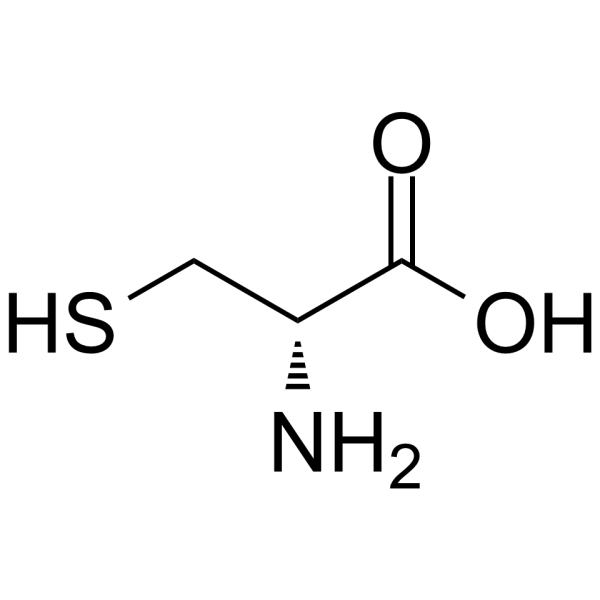
    D-Cysteine, the D-isomer of cysteine, is an orally active antibacterial agent and a regulator of neural progenitor cell proliferation. D-Cysteine can inhibit Escherichia coli, Streptococcus mutans, and Streptococcus sanguinis. The no-observed-adverse-effect level of D-Cysteine in rats should be less than 500 mg/kg/day .
    D-Cysteine
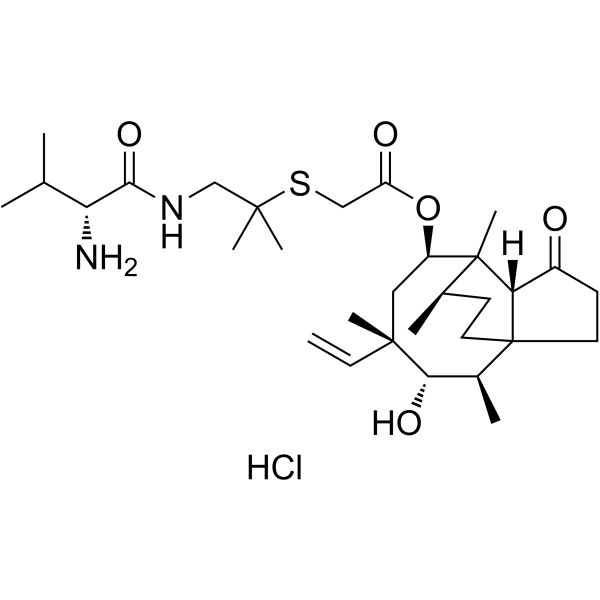
  • HY-B0027
    Valnemulin hydrochloride
    2 Publications Verification

    Antibiotic Bacterial Infection Metabolic Disease
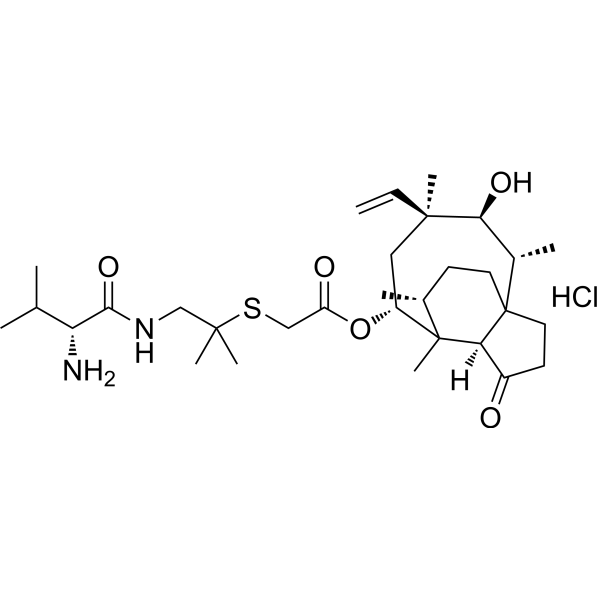
    Valnemulin hydrochloride is an orally effective truncated pleurotin antibiotic that inhibits protein synthesis in bacteria by binding to peptidyl transferase in the 50s ribosome subunit. Valnemulin hydrochloride effectively eliminates Mycobacterium bovis in the lungs in an experimental bovine model of Mycoplasma bovis infection. Valnemulin hydrochloride can reduce the mortality of epidemic rabbit enteropathy and has no adverse effect on the growth performance of rabbits .
    Valnemulin hydrochloride
  • HY-Y1054

    Stearic Acid Magnesium(II) Salt

    Environmental Pollutants Biochemical Assay Reagents Others
    Magnesium stearate is a commonly used pharmaceutical lubricant. But Magnesium stearate leads to an adverse effect on bonding between particles. Magnesium stearate can be used as an excipient, such as lubricant. Pharmaceutical excipients, or pharmaceutical auxiliaries, refer to other chemical substances used in the pharmaceutical process other than pharmaceutical ingredients. Pharmaceutical excipients generally refer to inactive ingredients in pharmaceutical preparations, which can improve the stability, solubility and processability of pharmaceutical preparations. Pharmaceutical excipients also affect the absorption, distribution, metabolism, and elimination (ADME) processes of co-administered drugs .
    Magnesium stearate
  • HY-W116336D

    Biochemical Assay Reagents Fungal Bacterial Infection Cancer
    Zinc oxide, <100 nm particle size is a nitrate reductase modulator and growth promoter with plant stress resistance activity and oral toxicity. Zinc oxide, <100 nm particle size acts as a nutrient source for maize plants. By enhancing nitrate reductase activity and reducing free proline levels, it significantly improves plant height, root length and dry matter weight of maize, and its growth-promoting effect is comparable to that of traditional zinc sulfate fertilizer. Zinc oxide, <100 nm particle size induces anemia-related and persistent tissue inflammatory damage, leading to obvious histopathological adverse reactions in the stomach, pancreas, eyes and prostate of rats. Zinc oxide, <100 nm particle size acts as a non-toxic antibacterial agent and selective cytotoxin against multiple bacteria, fungi and spores .
    Zinc oxide, <100 nm particle size
  • HY-124473

    Naphthafluorescein

    HIF/HIF Prolyl-Hydroxylase Cancer
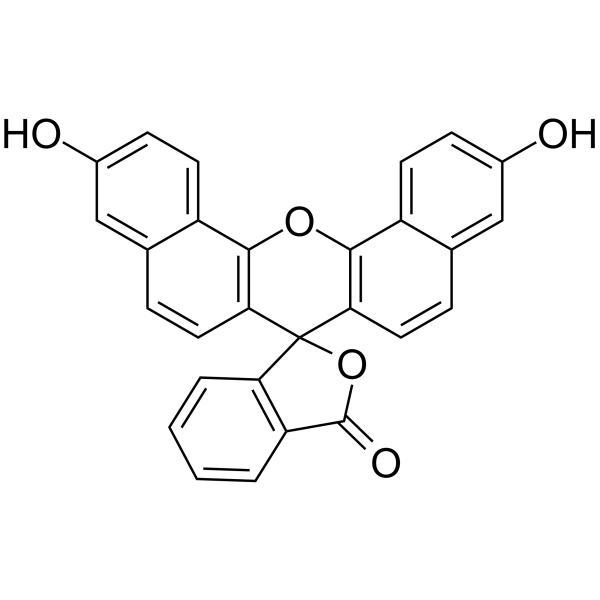
    Naphthofluorescein inhibits the interaction between HIF-1 and Mint3. Naphthofluorescein suppresses Mint3-dependent HIF-1 activity and glycolysis in cancer cells and macrophages without cytotoxicity in vitro and adverse effect in vivo . Naphthofluorescein is also a fluorescent pH-sensitive probe that can be used for functional Cerenkov imaging .
    Naphthofluorescein
  • HY-P1812
    AUNP-12
    3 Publications Verification

    NP-12

    PD-1/PD-L1 Cancer
    AUNP-12 (NP-12) is a peptide antagonist of the PD-1 signaling pathway, displays equipotent antagonism toward PD-L1 and PD-L2 in rescue of lymphocyte proliferation and effector functions. AUNP-12 exhibits immune activation, excellent antitumor activity, and potential for better management of immune-related adverse events (irAEs) .
    AUNP-12
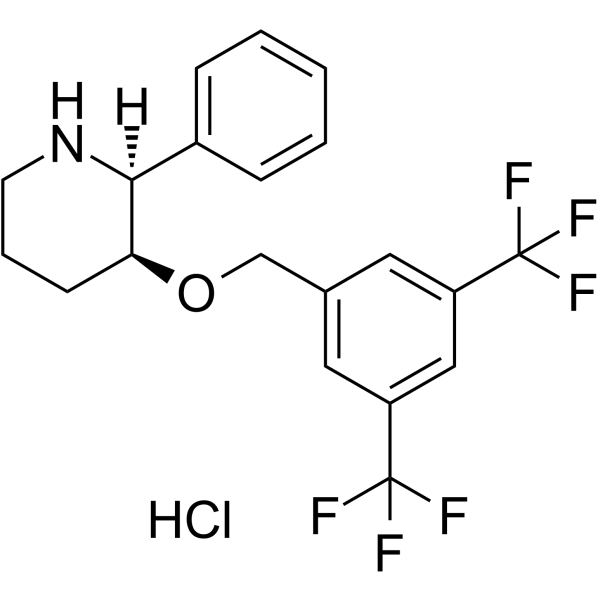
  • HY-14406A
    L-733060 hydrochloride
    1 Publications Verification

    Neurokinin Receptor Neurological Disease Cancer
    L-733060 hydrochloride is a selective neurokinin-1 (NK-1) receptor antagonist. L-733060 hydrochloride mainly regulates pain transmission and neural plasticity by blocking the binding of Substance P (P substance) to the NK-1 receptor. L-733060 hydrochloride blocks the promoting effect of Substance P on long-term potentiation (LTP) in the hippocampus. L-733060 hydrochloride reverses the orofacial hyperalgesia induced by experimental occlusal interference (EOI) in rats. L-733060 hydrochloride hydrochloride inhibits neurogenic plasma extravasation at a dose that does not cause adverse cardiovascular effects in rodents, and also acts as an anti-tumor agent. L-733060 hydrochloride can be used for the study of chronic orofacial pain .
    L-733060 hydrochloride
  • HY-14753

    Cannabinoid Receptor Cardiovascular Disease Metabolic Disease
    Rosonabant is a selective antagonist for cannabinoid receptor (CB1 receptor), which reduces body weight and improves improves the risk of obesity-related cardiovascular metabolic diseases. Rosonabant exhibits adverse side effect, such as nausea and mental disorder .
    Rosonabant
  • HY-W015850

    Insecticide Infection
    2,3-Dimethylmaleic anhydride is biofumigant found in Colocasia esculenta var. esculenta (L.) Schott. 2,3-Dimethylmaleic anhydride is highly toxic to insect pests for stored grains even at very low concentration, but has no adverse effect on seed germination. 2,3-Dimethylmaleic anhydride can be used as insecticide .
    2,3-Dimethylmaleic anhydride
  • HY-176783

    Toll-like Receptor (TLR) Neurological Disease
    GNE-5152 is an orthosteric SARM1 base-exchange (BE) inhibitor. GNE-5152 sustainably activates SARM1 at subinhibitory concentrations under mildly activating conditions, and this synergistic adverse effect increases NAD consumption, induces axon degradation and neurodegeneration and releases neurofilament-light (NfL) in cortical neurons. GNE-5152 can be used for neurodegenerative diseases research .
    GNE-5152
  • HY-146459
    Akt1-IN-1
    1 Publications Verification

    Akt Cancer
    Akt1-IN-1 (compound 5b) is a potent and selective Akt1 inhibitor with an IC50 value of 18.79 nM in MIA Paca-2 cells. Akt1-IN-1 does not exhibit obvious teratogenicity, hepatotoxicity and cardiotoxicity (No Observed Adverse Effect Level > 100 µM). Akt1-IN-1 can be used for researching anticancer .
    Akt1-IN-1
  • HY-Y1054R

    Stearic Acid Magnesium(II) Salt (Standard)

    Biochemical Assay Reagents Reference Standards Others
    Magnesium stearate (Standard) is the analytical standard of Magnesium stearate. This product is intended for research and analytical applications. Magnesium stearate is a commonly used pharmaceutical lubricant. But Magnesium stearate leads to an adverse effect on bonding between particles. Magnesium stearate can be used as an excipient, such as lubricant. Pharmaceutical excipients, or pharmaceutical auxiliaries, refer to other chemical substances used in the pharmaceutical process other than pharmaceutical ingredients. Pharmaceutical excipients generally refer to inactive ingredients in pharmaceutical preparations, which can improve the stability, solubility and processability of pharmaceutical preparations. Pharmaceutical excipients also affect the absorption, distribution, metabolism, and elimination (ADME) processes of co-administered drugs .
    Magnesium stearate (Standard)
  • HY-145427

    DNA-PK Cancer
    NU5455 is a potent, selective, and orally active inhibitor of DNA-PKcs. NU5455 administration increases both the efficacy and the toxicity of a parenterally administered topoisomerase inhibitor. NU5455 enhances the activity of Doxorubicin released locally in liver tumor xenografts without inducing any adverse effect .
    NU5455
  • HY-P1812A
    AUNP-12 TFA
    3 Publications Verification

    NP-12 TFA

    PD-1/PD-L1 Cancer
    AUNP-12 TFA (NP-12 TFA) is a peptide antagonist of the PD-1 signaling pathway, displays equipotent antagonism toward PD-L1 and PD-L2 in rescue of lymphocyte proliferation and effector functions. AUNP-12 TFA exhibits immune activation, excellent antitumor activity, and potential for better management of immune-related adverse events (irAEs) .
    AUNP-12 TFA
  • HY-114898

    Mitochondrial Metabolism Cardiovascular Disease Neurological Disease
    ML404 (Compound 38) is an inhibitor of the mitochondrial permeability transition pore (mtPTP), which can suppress mitochondrial swelling (EC50=4.9 nM) and only disrupts mitochondrial coupling (an adverse effect) at concentrations > 100 μM. ML404 can be utilized in research related to multiple sclerosis (MS), amyotrophic lateral sclerosis (ALS), Alzheimer's disease (AD), muscular dystrophies (MD), myocardial infarction, and stroke .
    ML404
  • HY-14406

    Neurokinin Receptor Neurological Disease Cancer
    L-733060 is a selective neurokinin-1 (NK-1) receptor antagonist. L-733060 mainly regulates pain transmission and neural plasticity by blocking the binding of Substance P (P substance) to the NK-1 receptor. L-733060 blocks the promoting effect of Substance P on long-term potentiation (LTP) in the hippocampus. L-733060 reverses the orofacial hyperalgesia induced by experimental occlusal interference (EOI) in rats. L-733060 hydrochloride inhibits neurogenic plasma extravasation at a dose that does not cause adverse cardiovascular effects in rodents, and also acts as an anti-tumor agent. L-733060 can be used for the study of chronic orofacial pain .
    L-733060
  • HY-B0027R

    Reference Standards Antibiotic Bacterial Metabolic Disease Inflammation/Immunology
    Valnemulin (hydrochloride) (Standard) is the analytical standard of Valnemulin (hydrochloride). This product is intended for research and analytical applications. Valnemulin (hydrochloride) is an orally effective truncated pleurotin antibiotic that inhibits protein synthesis in bacteria by binding to peptidyl transferase in the 50s ribosome subunit. Valnemulin hydrochloride effectively eliminates Mycobacterium bovis in the lungs in an experimental bovine model of Mycoplasma bovis infection. Valnemulin hydrochloride can reduce the mortality of epidemic rabbit enteropathy and has no adverse effect on the growth performance of rabbits .
    Valnemulin hydrochloride (Standard)
  • HY-W018555R

    Reference Standards Endogenous Metabolite Bacterial Infection Neurological Disease
    D-Cysteine (Standard) is the analytical standard of D-Cysteine. This product is intended for research and analytical applications. D-Cysteine, the D-isomer of cysteine, is an orally active antibacterial agent and a regulator of neural progenitor cell proliferation. D-Cysteine can inhibit Escherichia coli, Streptococcus mutans, and Streptococcus sanguinis. The no-observed-adverse-effect level of D-Cysteine in rats should be less than 500 mg/kg/day[1][2][3][4].
    D-Cysteine (Standard)
  • HY-W141788

    Bacterial Infection
    N-Butyryl-DL-homocysteine thiolactone is an N-acyl homoserine lactone (AHL) analogue. AHLs are potent inhibitors of biofilm formation and virulence factors, and has been used for degrading microbial communities, reducing bacterial pathogenicity .
    N-Butyryl-DL-homocysteine thiolactone
  • HY-112014

    Methylglucamine metrizoate

    Biochemical Assay Reagents Cardiovascular Disease Neurological Disease
    Meglumine Metrizoate (Methylglucamine metrizoate) is an ionic water-soluble contrast medium. Meglumine Metrizoate has a good imaging effect in cerebral angiography. Compared with the non-ionic contrast medium Metrizamide (HY-W000133), Meglumine Metrizoate has a higher probability of causing adverse effects such as EEG deterioration and bradycardia .
    Meglumine Metrizoate

Inquiry Online

Your information is safe with us. * Required Fields.

Salutation


Country or Region *

Applicant Name *


Organization Name *

Department *


Email Address *


Product Name *

Cat. No.


Requested quantity *

Phone Number *


Remarks

Inquiry Online

Inquiry Information

Product Name:
Cat. No.:
Quantity:
MCE Japan Authorized Agent:

