


27 Results for "

aging process

" in MedChemExpress (MCE) Product Catalog:
Products (27)

27 Results for "aging process" in MCE Product Catalog:

32
32 Publications Verification
Cat. No.: HY-N0088
CAS No.: 498-02-2
Synonyms: Acetovanillone
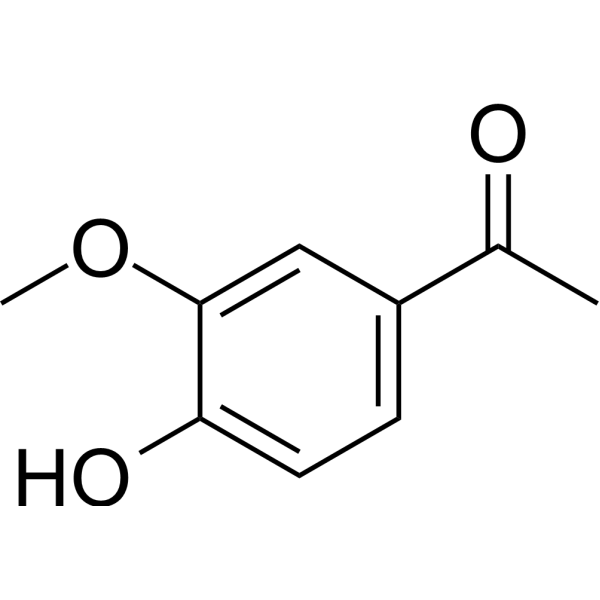
Apocynin is a selective NADPH-oxidase inhibitor with an IC50 of 10 μM . Apocynin improves acute lung inflammation in Carrageenan (HY-125474)-induced pleurisy mice model . Apocynin can also be used for cancer research . Apocynin reverses the aging process in mesenchymal stem cells to promote osteogenesis and increases bone mass .
loading...
    loading...
7
7 Cited Publications
Cat. No.: HY-N0160
CAS No.: 525-79-1
Synonyms: 6-Furfuryladenine; N6-Furfuryladenine
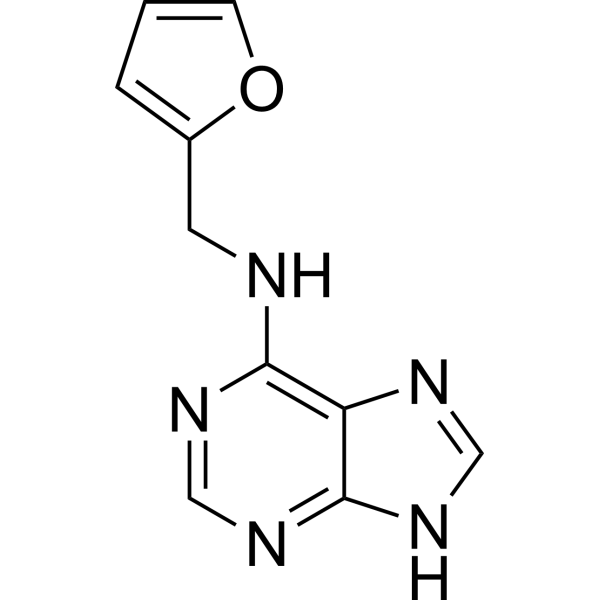
Kinetin (N6-furfuryladenine) belongs to the family of N6-substituted adenine derivatives known as cytokinins, which are plant hormones involved in cell division, differentiation and other physiological processes. Kinetin has anti-aging effects .
loading...
    loading...
2
2 Cited Publications
Cat. No.: HY-126255
CAS No.: 2237268-08-3
Purity:  99.88%
Target:  

NAMPT

Research Areas:  

Metabolic Disease

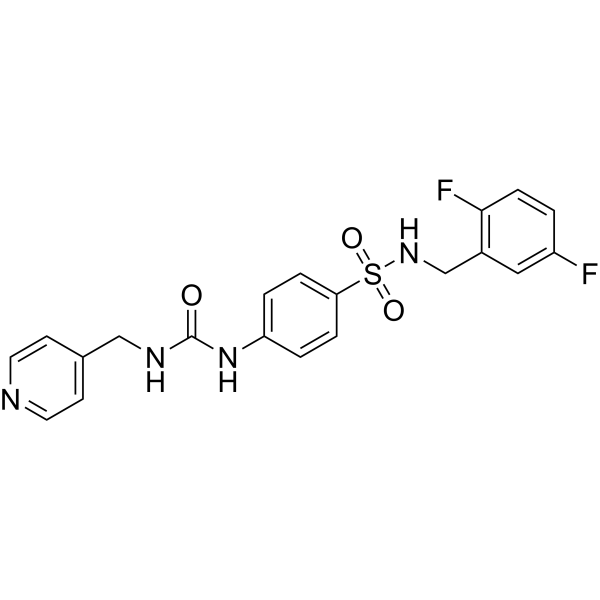
SBI-797812 is an orally active nicotinamide phosphoribosyltransferase (NAMPT) activator. SBI-797812 shifts NAMPT to NMN formation, increases NAMPT affinity for ATP, stabilizes phosphorylated NAMPT, promotes consumption of the pyrophosphate by-product, and blunts feedback inhibition by NAD +. SBI-797812 increases intracellular nicotinamide mononucleotide (NMN) and elevates liver NAD + in mice .
loading...
    loading...
1
1 Cited Publications
Cat. No.: HY-108801A
CAS No.: 862111-32-8
Purity:  97.66%

Target:  

VEGFR

Research Areas:  

Cardiovascular Disease Cancer

Aflibercept (VEGF Trap) is a soluble decoy VEGFR constructed by fusing the Ig domains of VEGFR1 and VEGFR2 with the Fc region of human IgG1. Aflibercept inhibits VEGF signaling by reducing VEGF-regulated processes. Aflibercept can be used for thr research of age-related macular degeneration (AMD) and cardiovascular disease .
loading...
    loading...
1
1 Cited Publications
Cat. No.: HY-108801
CAS No.: 862111-32-8
Synonyms: VEGF Trap; VEGF-TRAPR1R2; VEGF-trapR1

Target:  

VEGFR

Aflibercept (VEGF Trap) is a soluble decoy VEGFR constructed by fusing the Ig domains of VEGFR1 and VEGFR2 with the Fc region of human IgG1. Aflibercept inhibits VEGF signaling by reducing VEGF-regulated processes. Aflibercept can be used for thr research of age-related macular degeneration (AMD) and cardiovascular disease .
loading...
    loading...
Cat. No.: HY-P991488

Target:  

Interleukin Related

Research Areas:  

Inflammation/Immunology

BI-765423 is a selective monoclonal antibody inhibitor targeting IL-11. BI-765423 blocks IL-11-mediated signaling, inhibits fibroblast activation, and can extend the healthy lifespan of mammals, counteract cellular senescence in human cells, and alleviate inflammatory aging-related pathological processes. BI-765423 is primarily used in research on fibrotic diseases such as idiopathic pulmonary fibrosis (IPF) .
loading...
    loading...
Cat. No.: HY-W391506
CAS No.: 9011-14-7
Synonyms: Poly(methyl methacrylate), beads; PMMA
Research Areas:  

Others

Poly (methyl methacrylate) (Poly(methyl methacrylate), beads; PMMA) is an amorphous glassy acrylic thermoplastic polymer belonging to the acrylate family, synthesized from methyl methacrylate monomers. Poly (methyl methacrylate) drives biochemical processes including free volume expansion induced by inelastic deformation, yield stress and strain softening regulated by physical aging, acid hydrolysis to polymethacrylic acid, multi-stage combustion, oxygen-dependent thermal decomposition, primary amine-mediated polypentanimide formation, and grafting/crosslinking-based copolymer and composite formation. Poly (methyl methacrylate) exhibits histocompatibility, low toxicity, low inflammatory potential, and fracture resistance; it can form functional blends and composites for biomedical and dental applications; it also allows performance-enhancing chemical and mechanical modifications. Poly (methyl methacrylate) is applicable to studies related to cranial repair .
loading...
    loading...
Cat. No.: HY-164238
CAS No.: 62512-91-8
Research Areas:  

Endocrinology Cancer

LysoPC (18:3) is a type of lysophospholipid metabolite with biomarker properties. LysoPC (18:3) stably exists in human follicular fluid, and its abundance dynamically changes with age, synchronously regulating the body's lipid metabolism process, follicular development process and oocyte maturation process. The down-regulation of LysoPC (18:3) content is associated with breast cancer lesions and follicular aging changes accompanied by in vitro fertilization in elderly women. LysoPC (18:3) can be used in studies related to breast cancer and infertility in elderly women .
loading...
    loading...
Cat. No.: HY-W585874
CAS No.: 5746-03-2
Target:  

EAAT Apoptosis

Nε-(Carboxyethyl) lysine is an advanced glycation end product (AGE). Nε-(Carboxyethyl) lysine induces cross-linking between proteins, thereby affecting protein structure and function and causing protein denaturation. Nε-(Carboxyethyl) lysine binds to the RAGE receptor, affects cell signal transduction, and regulates processes such as inflammatory responses, cell proliferation, and apoptosis. Nε-(Carboxyethyl) lysine affects glutamate transporters, reduces glutamate uptake and S100β protein secretion, influences neurotransmission in the nervous system, and exhibits diabetes-related neurotoxicity .
loading...
    loading...
Cat. No.: HY-65008
CAS No.: 21642-98-8
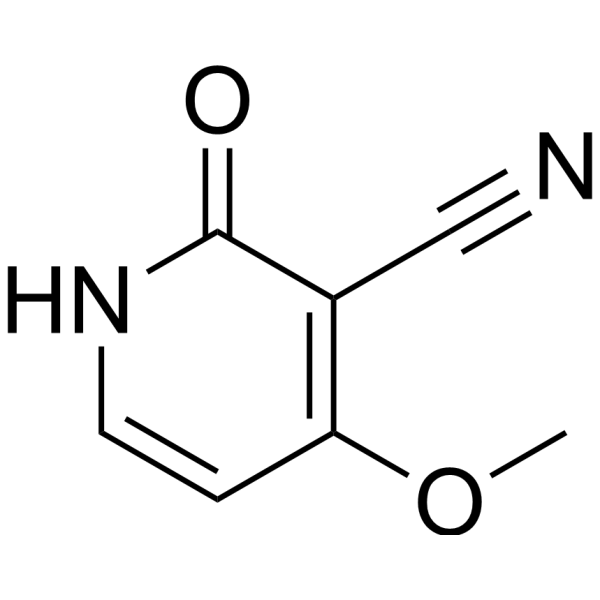
N-Demethylricinine is a ricinine, can be interconverted with ricinine in senescent and green castor plant leaves. Ricinine, is a α-pyridone alkaloid biosynthetically related to the pyridine nucleotide cycle. The alkaloid catabolism of ricinine is associated with aging process .
loading...
    loading...
Cat. No.: HY-162269
CAS No.: 3041005-21-1
Target:  

NAMPT

Research Areas:  

Inflammation/Immunology

Nampt activator-5 is a NAMPT activator with a KD value of 6.19 μM. Nampt activator-5 activates the rate-limiting enzyme in NAD + biosynthesis and promotes NAD + production. Nampt activator-5 delays the senescence process of senescent hepatocytes, extends the lifespan of *Caenorhabditis elegans*, and alleviates age-related dysfunction and abnormal biomarkers in naturally aged mice. Nampt activator-5 can be used in aging research .
loading...
    loading...
Cat. No.: HY-N0160R
CAS No.: 525-79-1
Synonyms: 6-Furfuryladenine (Standard); N6-Furfuryladenine (Standard)
Kinetin (Standard) is the analytical standard of Kinetin. This product is intended for research and analytical applications. Kinetin (N6-furfuryladenine) belongs to the family of N6-substituted adenine derivatives known as cytokinins, which are plant hormones involved in cell division, differentiation and other physiological processes. Kinetin has anti-aging effects .
loading...
    loading...
Cat. No.: HY-107965
CAS No.: 8001-23-8
Synonyms: Safflower seed oil (from Carthamus tinctorius seed)
Safflower oil (from Carthamus tinctorius seed) is rich in unsaturated fatty acids such as linoleic acid and oleic acid, as well as tocopherols and phenolic compounds, and exhibits antioxidant, anti-aging and blood lipid-regulating effects. Safflower oil (from Carthamus tinctorius seed) inhibits the activities of collagenase and elastase, and exerts antioxidant activity by scavenging free radicals. Linoleic acid in safflower oil (from Carthamus tinctorius seed) reduces blood cholesterol levels. Safflower oil (from Carthamus tinctorius seed) can be applied to research in fields such as skin aging, atherosclerosis, edible oil processing and industrial raw material development .
loading...
    loading...
Cat. No.: HY-133859
CAS No.: 51314-51-3
Research Areas:  

Metabolic Disease

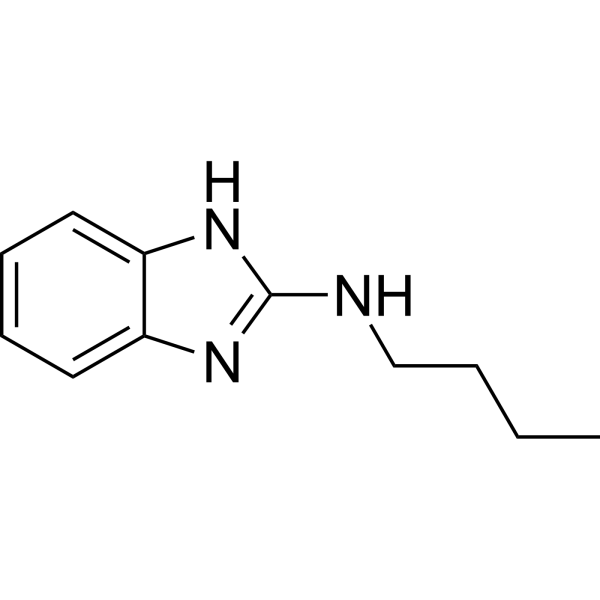
M084 is a benzimidazole derivative. M084 inhibits the mitochondrial respiration, activate mitochondrial unfolded protein response and AMPK, recruites SIR-2.1 and SKN-1, and finally through the transcription factor DAF-16, delays the aging process of C. elegans .
loading...
    loading...
Cat. No.: HY-D2992
KSA02 is a two-dimensional intelligent fluorescent probe. KSA02 not only detects the activity of the aging-related β-galactosidase (SA-β-gal), but also can simultaneously sense the pH value changes of the lysosomal microenvironment where SA-β-gal is located. KSA02 can distinguish between aging and cancer, track the aging process, and evaluate the efficacy of anti-aging agents. KSA02 can be used for the study of aging biology .
loading...
    loading...
Cat. No.: HY-128135
CAS No.: 6265-56-1
Target:  

PPAR

Research Areas:  

Inflammation/Immunology

MHY 553 is a PPARα agonist that is effective when taken orally. MHY 553 helps alleviate liver fat accumulation by increasing fatty acid oxidation and reducing inflammation during the aging process. MHY 553 inhibits the accumulation of triglycerides induced by liver X receptor agonists in HepG2 cells. MHY 553 significantly suppresses the expression of inflammatory mRNA in aging rats .
loading...
    loading...
Cat. No.: HY-N0088R
CAS No.: 498-02-2
Synonyms: Acetovanillone (Standard)
Apocynin (Standard) is the analytical standard of Apocynin. This product is intended for research and analytical applications. Apocynin is a selective NADPH-oxidase inhibitor with an IC50 of 10 μM . Apocynin improves acute lung inflammation in Carrageenan (HY-125474)-induced pleurisy mice model . Apocynin can also be used for cancer research . Apocynin reverses the aging process in mesenchymal stem cells to promote osteogenesis and increases bone mass .
loading...
    loading...
Cat. No.: HY-L134
193 compounds

Aging is an unavoidable process, leading to cell senescence due to physiochemical changes in an organism. Aging cells cease to divide and drive the progression of illness through various pathways, resulting in the death of an organism ultimately. Anti-aging activities are primarily involved in the therapies of age-related disorders such as Parkinson's Disease (PD), Alzheimer's Disease (AD), cardiovascular diseases, cancer, and chronic obstructive pulmonary diseases.

Natural products are known as effective molecules in anti-aging treatments, which delay the aging process through influencing several pathways and thus ensure an extended lifespan. MCE offers a unique collection of 193 natural products with validated anti-aging activity. MCE anti-aging natural product library is a useful tool for the study of aging-related diseases drugs and pharmacology.

Cat. No.: HY-L034
7,594 compounds

Aging is a complex biological process characterized by functional decline of tissues and organs, structural degeneration, and reduced adaptability and resistance, all of which contribute to an increase in morbidity and mortality caused by multiple chronic diseases, such as Alzheimer's disease, cancer, and diabetes. Many theories, which fall into two main categories: programmed and error theories, have been proposed to explain the process of aging, but neither of them appears to be fully satisfactory. The programmed theories imply that aging relies on specific gene regulation, and the error theories emphasize the internal and environmental damages accumulated to living organisms. The damage theories proposed the nine hallmarks that were generally considered to contribute to the aging process: genomic instability, telomere attrition, epigenetic alterations, loss of proteostasis, deregulated nutrient-sensing, mitochondrial dysfunction, cellular senescence, stem cell exhaustion, and altered intercellular communication.

MCE Anti-Aging Compound Library contains 7,594 compounds, mainly targeting Sirtuin, mTOR, IGF-1R, AMPK, p53, Telomerase, Mitophagy, Mitochondrial Metabolism, COX, Cytochrome P450, Oxidase, etc. This library is a useful tool for anti-aging research.

Cat. No.: HY-L034M
381 compounds

Research has shown that drugs targeting aging pathways demonstrate promising potential in models of age-related diseases such as Alzheimer's disease, cardiovascular diseases, metabolic syndrome, osteoarthritis, and various malignancies. This suggests that intervening in the biological processes of aging may enable synergistic prevention and treatment of multiple chronic diseases. Against the backdrop of the gradual elucidation of core aging mechanisms-including cellular senescence, telomere attrition, epigenetic dysregulation, and chronic inflammation anti-aging research has shifted from traditional phenotypic interventions toward targeting key pathways that regulate biological age.

The MCE Anti-Aging Compound Library Mini is precisely built upon this cutting-edge concept. It focuses on aging-related targets validated through genetic or functional studies, comprising 381 compounds designed to provide systematic research tools for aging biology and intervention strategy development. The library covers core mechanisms such as mTOR, SIRT, energy metabolism, clearance of senescent cells, optimization of mitochondrial function, and telomere maintenance. For each target, 1-5 compounds with clear activity and strong representativeness have been carefully selected, spanning the entire translational spectrum from preclinical tool molecules to clinically investigational drugs.

