1. Search Result
Search Result
Results for "

anti-oxidative activity

" in MedChemExpress (MCE) Product Catalog:

166

Inhibitors & Agonists

2

Screening Libraries

8

Biochemical Assay Reagents

1

Peptides

124

Natural
Products

13

Isotope-Labeled Compounds

Cat. No. Product Name Target Research Areas Chemical Structure
  • HY-N0293
    Paeoniflorin
    35+ Cited Publications

    Peoniflorin

    HSP Infection Neurological Disease Cancer
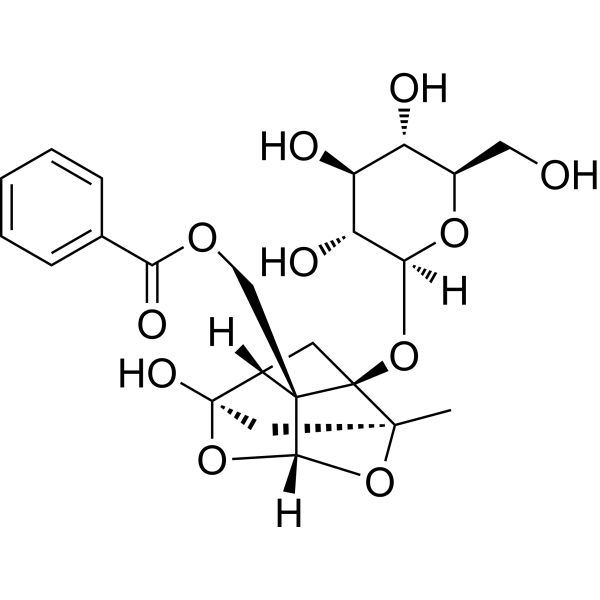
    Paeoniflorin is a heat shock protein-inducing compound and commonly exists in the plants of Paeoniaceae family, with various biological activities, including anticancer activity, anti-inflammatory activity, enhancing cognition and attenuating learning impairment, anti-oxidative stress, antiplatelet aggregation, expansion of blood vessels, and reducing blood viscosity .
    Paeoniflorin
  • HY-N0003
    Honokiol
    Maximum Cited Publications
    66 Publications Verification

    NSC 293100

    Akt Autophagy HCV ERK Cancer
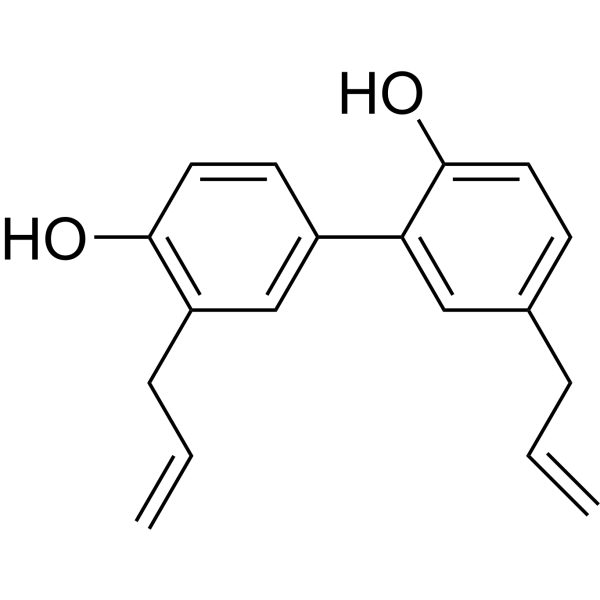
    Honokiol is a bioactive, biphenolic phytochemical that possesses potent antioxidative, anti-inflammatory, antiangiogenic, and anticancer activities by targeting a variety of signaling molecules. It inhibits the activation of Akt. Honokiol can readily cross the blood brain barrier .
    Honokiol
  • HY-N0452
    Hyperoside
    20+ Cited Publications

    Quercetin 3-O-galactoside; Quercetin 3-O-β-D-galactopyranoside

    Influenza Virus Fungal NF-κB Apoptosis Infection Inflammation/Immunology Cancer
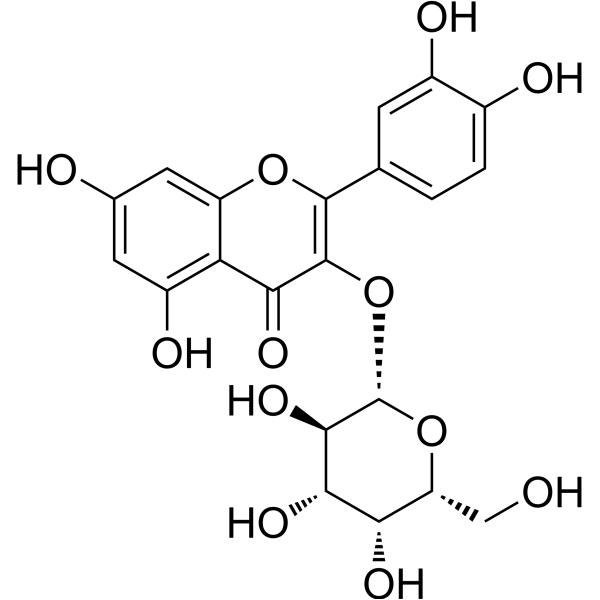
    Hyperoside is a NF-κB inhibitor, found from Hypericum monogynum. Hyperoside shows anti-tumor, antifungal, anti-inflammatory, anti-viral, and anti-oxidative activities, and can induce apoptosis .
    Hyperoside
  • HY-N0009
    Geniposide
    15+ Cited Publications

    Amyloid-β Influenza Virus Neurological Disease
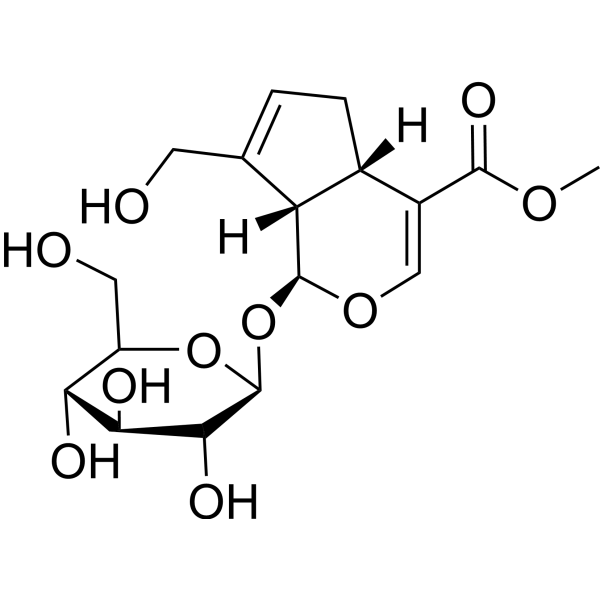
    Geniposide is an iridoid glucoside extracted from Gardenia jasminoidesEllis fruits; exhibits a varity of biological activities such as anti-diabetic, antioxidative, antiproliferative and neuroprotective activities.
    Geniposide
  • HY-14615
    [6]-Gingerol
    10+ Cited Publications

    (S)-(+)-[6]Gingerol

    AMPK Apoptosis Cancer
    [6]-Gingerol is an active compound isolated from Ginger (Zingiber officinale), exhibits a variety of biological activities including anticancer, anti-inflammation, and anti-oxidation.
    [6]-Gingerol
  • HY-B2230
    Hinokitiol
    5+ Cited Publications

    β-Thujaplicin

    Keap1-Nrf2 DNA Methyltransferase Virus Protease Infection Cancer
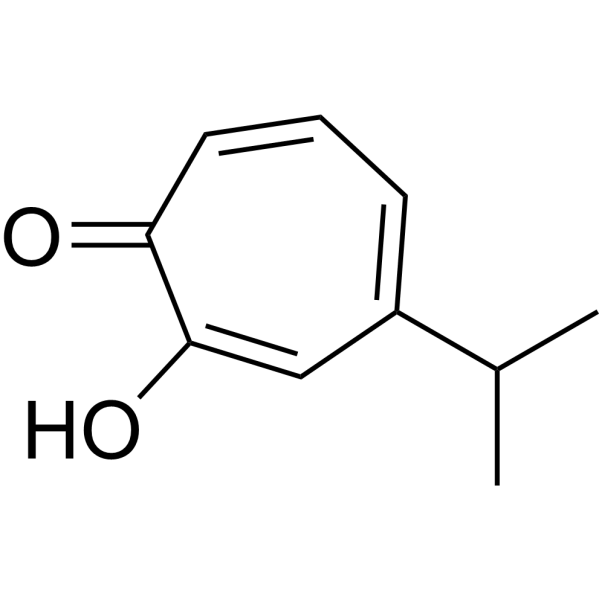
    Hinokitiol is a component of essential oils isolated from Chymacyparis obtusa, reduces Nrf2 expression, and decreases DNMT1 and UHRF1 mRNA and protein expression, with anti-infective, anti-oxidative, and anti-tumor activities.
    Hinokitiol
  • HY-15121
    L-Theanine
    5 Publications Verification

    L-Glutamic Acid γ-ethyl amide; Nγ-Ethyl-L-glutamine

    Apoptosis Endogenous Metabolite Reactive Oxygen Species (ROS) Neurological Disease Cancer
    L-Theanine (L-Glutamic Acid γ-ethyl amide) is a non-protein amino acid contained in green tea leaves, which blocks the binding of L-glutamic acid to glutamate receptors in the brain, and with neuroprotective, anticancer and anti-oxidative activities. L-Theanine can pass through the blood–brain barrier and is orally active .
    L-Theanine
  • HY-N0540
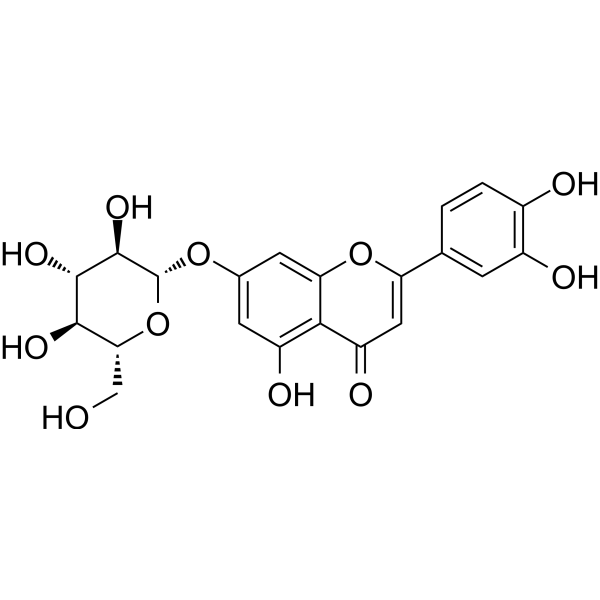
    Cynaroside
    10+ Cited Publications

    Luteolin 7-glucoside; Luteolin 7-O-β-D-glucoside

    Influenza Virus DNA/RNA Synthesis Apoptosis Parasite Bacterial Fungal Infection Cardiovascular Disease Cancer
    Cynaroside (Luteolin 7-glucoside) is a flavonoid compound that exhibits anti-oxidative capabilities. Cynaroside is also a potent influenza RNA-dependent RNA polymerase inhibitor with an IC50 of 32 nM. Cynaroside also is a promising inhibitor for H2O2-induced apoptosis, has cytoprotection against oxidative stress-induced cardiovascular diseases. Cynaroside also has antibacterial, antifungal and anticancer activities, antioxidant and anti-inflammatory activities .
    Cynaroside
  • HY-14616
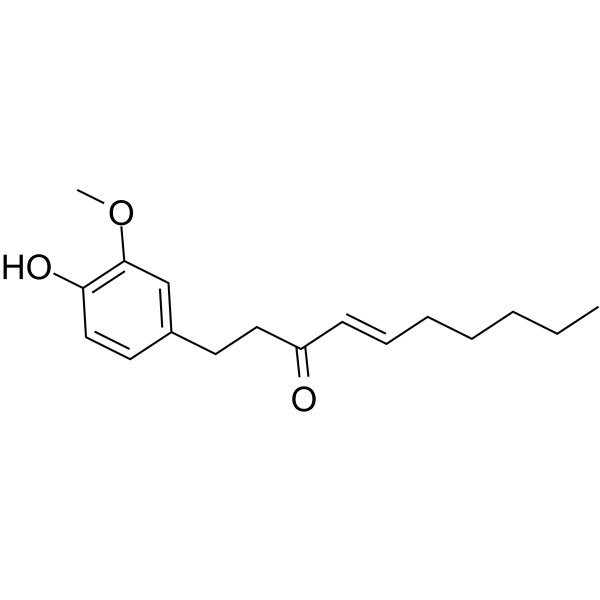
    Shogaol
    10+ Cited Publications

    [6]-Shogaol; 6-Shogaol

    Autophagy Cancer
    Shogaol ([6]-Shogaol), an active compound isolated from Ginger (Zingiber officinale Rosc), exhibits a variety of biological activities including anticancer, anti-inflammation, and anti-oxidation.
    Shogaol
  • HY-N0823
    Lithospermic acid
    5+ Cited Publications

    (+)-Lithospermic acid

    NO Synthase AMPK Keap1-Nrf2 Xanthine Oxidase Apoptosis Cardiovascular Disease Inflammation/Immunology
    Lithospermic acid ((+)-Lithospermic acid) is a plant-derived polycyclic phenolic carboxylic acid isolated from Salvia miltiorrhiza, and has the anti-oxidative and hepatoprotective activity on carbon tetrachloride (CCl4)-induced acute liver damage in vitro and in vivo .
    Lithospermic acid
  • HY-N0321

    trans-Caftaric acid

    Others Cardiovascular Disease Neurological Disease Inflammation/Immunology
    Caftaric acid (trans-Caftaric acid) is a polyphenolic antidiuretic, antioxidant and anti-apoptotic agent that can be hydrolyzed by intestinal microbial esterases. Caftaric acid exerts its antioxidant and potential anti-inflammatory effects mainly through intestinal microbial metabolism. Caftaric acid can reduce renal damage, restore electrolyte balance, renal function indicators and antioxidant enzyme activities in a rat albinism model, and further exert anti-oxidative stress and anti-inflammatory activities .
    Caftaric acid
  • HY-70072
    D609
    5+ Cited Publications

    Phospholipase Infection Inflammation/Immunology Cancer
    D609, an antitumoural xanthate, is a specific and competitive phosphatidyl choline-specific phospholipase C (PC-PLC) inhibitor with a Ki of 6.4 μM. D609 is an antioxidative protector and has antiviral and anti-inflammatory activity .
    D609
  • HY-N0783
    Eupatilin
    5+ Cited Publications

    PPAR Autophagy Neurological Disease Inflammation/Immunology Cancer
    Eupatilin, a lipophilic flavonoid isolated from Artemisia argyi Lévl. et Van., is a PPARα agonist, and possesses anti-apoptotic, anti-oxidative and anti-inflammatory activities.
    Eupatilin
  • HY-N0017
    Bergenin
    5+ Cited Publications

    Cuscutin

    NF-κB Autophagy Apoptosis Bacterial Fungal Virus Protease Infection Inflammation/Immunology Cancer
    Bergenin is a cytoprotective and antioxidative polyphenol found in many medicinal plants. Bergenin has a wide spectrum activities such as hepatoprotective, antiinflammatory, immunomodulatory, antitumor, antiviral, and antifungal properties .
    Bergenin
  • HY-N0494
    Gentiopicroside
    4 Publications Verification

    Gentiopicrin

    Cytochrome P450 HCV Inflammation/Immunology
    Gentiopicroside, a naturally occurring iridoid glycoside, inhibits P450 activity, with an IC50 and a Ki of 61 μM and 22.8 μM for CYP2A6; Gentiopicroside has anti-inflammatoryand antioxidative effects.
    Gentiopicroside
  • HY-N0765
    Isoliquiritin
    2 Publications Verification

    Fungal Infection Neurological Disease Inflammation/Immunology
    Isoliquiritin, isolated from Licorice Root, inhibits angiogenesis and tube formation. Isoliquiritin also exhibits antidepressant-like, anti-oxidative, anti-Inflammatory effects and antifungal activity .
    Isoliquiritin
  • HY-N3006
    Sakuranetin
    5+ Cited Publications

    Fungal Infection Inflammation/Immunology
    Sakuranetin is a cherry flavonoid phytoalexin, shows strong antifungal activity . Sakuranetin has anti-inflammatory and antioxidative activities. Sakuranetin ameliorates LPS-induced acute lung injury .
    Sakuranetin
  • HY-N0073
    Sarsasapogenin
    4 Publications Verification

    Parigenin; Sarsagenin

    Endogenous Metabolite NF-κB Metabolic Disease Inflammation/Immunology Cancer
    Sarsasapogenin is a sapogenin from the Chinese medical herb Anemarrhena asphodeloides Bunge, with antidiabetic, anti-oxidative, anticancer and anti-inflamatory activities.
    Sarsasapogenin
  • HY-133968
    24-Methylenecholesterol
    2 Publications Verification

    Ostreasterol

    Acyltransferase Reactive Oxygen Species (ROS) Inflammation/Immunology
    24-Methylenecholesterol (Ostreasterol) is a regulator targeting acyl-CoA cholesterol acyltransferase (ACAT) with anti-aging and neuroprotective effects. 24-Methylenecholesterol mimics the effects of nerve growth factor (NGF), can extend yeast lifespan through an anti-oxidative stress mechanism, and exhibits neuroprotective activity in PC12 cells. 24-Methylenecholesterol can reduce intracellular reactive oxygen species (ROS) and malondialdehyde (MDA) levels, activate anti-oxidative stress pathways (such as UTH1, SOD-related genes), and promote synaptic growth .
    24-Methylenecholesterol
  • HY-N0344
    Farrerol
    5+ Cited Publications

    (-)-Farrerol

    Others Neurological Disease Inflammation/Immunology Cancer
    Farrerol is a bioactive constituent of Rhododendron, with broad activities such as anti-oxidative, anti-inflammatory, anti-tumor, neuroprotective and hepatoprotective effects .
    Farrerol
  • HY-N0327
    Lobetyolin
    4 Publications Verification

    Apoptosis Xanthine Oxidase Metabolic Disease
    Lobetyolin, a bioactive compound, is derived from Codonopsis pilosula. Lobetyolin has anti-inflammatory, anti-oxidative and xanthine oxidase inhibiting activities. Lobetyolin also induces the apoptosis via the inhibition of ASCT2-mediated glutamine metabolism . Lobetyolin is a click chemistry reagent, it contains an Alkyne group and can undergo copper-catalyzed azide-alkyne cycloaddition (CuAAc) with molecules containing Azide groups.
    Lobetyolin
  • HY-N7046

    Silibinin B

    Amyloid-β Apoptosis JNK p38 MAPK Neurological Disease Cancer
    Silybin B (Silibinin B) is an orally active amyloid-β aggregation inhibitor and ATR pathway activator that can cross the blood-brain barrier. Silybin B inhibits Aβ fibril formation and promotes amorphous aggregate formation, while activating the ATR-mediated DNA damage repair pathway and inhibiting JNK/p38 MAPK signaling. Silybin B can reduce Cisplatin (HY-17394)-induced neuronal DNA damage and apoptosis. Silybin B has anti-oxidative stress, cell cycle regulation and neuroprotective activities. Silybin B is mainly used in the study of Alzheimer's disease and Cisplatin chemotherapy-related neurotoxicity .
    Silybin B
  • HY-W015635
    Diallyl disulfide
    1 Publications Verification

    Environmental Pollutants Cancer
    Diallyl disulfide, an active compound in garlic oil, is an orally active human squalene monooxygenase inhibitor with an IC50 of 400 μM for squalene epoxidation. Diallyl disulfide exhibits obvious anti-inflammatory, anti-oxidative, antidepressant and anti-tumor activities .
    Diallyl disulfide
  • HY-N2155
    Tubuloside A
    1 Publications Verification

    Others Metabolic Disease
    Tubuloside A is a phenylethanoid glycoside with antioxidative effect and hepatoprotective activity.
    Tubuloside A
  • HY-121054
    Chalcone
    1 Publications Verification

    (E/Z)-Benzylideneacetophenone

    Bacterial Parasite Inflammation/Immunology Cancer
    Chalcone is isolated from Glycyrrhiza uralensis and used to synthesize chalcone derivatives. Chalcone derivatives possess varied biological and pharmacological activity, including anti-inflammatory, antioxidative, antibacterial, anticancer, and anti-parasitic activities .
    Chalcone
  • HY-N2204

    Tyrosinase Reactive Oxygen Species (ROS) Inflammation/Immunology
    Swertiajaponin is a tyrosinase inhibitor, forms multiple hydrogen bonds and hydrophobic interactions with the binding pocket of tyrosinase, with an IC50 of 43.47 μM. Swertiajaponin also inhibits oxidative stress-mediated MAPK/MITF signaling, leading to decrease in tyrosinase protein level. Swertiajaponin suppresses melanin accumulation and exhibits strong anti-oxidative activity .
    Swertiajaponin
  • HY-N2447
    Amarogentin
    2 Publications Verification

    AMPK Apoptosis Metabolic Disease Cancer
    Amarogentin is a secoiridoid glycoside that is mainly extracted from Swertia and Gentiana roots. Amarogentin exhibits many biological effects, including anti-oxidative, anti-tumour, and anti-diabetic activities. Amarogentin exerts hepatoprotective and immunomodulatory effects. Amarogentin promotes apoptosis, arrests G2/M cell cycle and downregulates of PI3K/Akt/mTOR signalling pathways. Amarogentin exerts beneficial vasculo-metabolic effect by activating AMPK .
    Amarogentin
  • HY-B2188
    S-Methyl-L-cysteine
    2 Publications Verification

    L-S-Methylcysteine

    Reactive Oxygen Species (ROS) Neurological Disease Metabolic Disease
    S-Methyl-L-cysteine is a natural product that acts as a substrate in the catalytic antioxidant system mediated by methionine sulfoxide reductase A (MSRA), with antioxidative, neuroprotective, and anti-obesity activities.
    S-Methyl-L-cysteine
  • HY-N0007A

    Curcumin III; Didemethoxycurcumin

    Ferroptosis P-glycoprotein DNA/RNA Synthesis Inflammation/Immunology Cancer
    Bisdemethoxycucurmin (Curcumin III) is a curcuminoid compound and an inhibitor of P-glycoprotein and ferroptosis. Bisdemethoxycucurmin exhibits multiple activities such as anti-oxidation, anti-inflammation and anti-tumor. Bisdemethoxycucurmin can be used for the research of tumors and inflammatory diseases .
    Bisdemethoxycucurmin
  • HY-145532

    Apoptosis NF-κB Keap1-Nrf2 Inflammation/Immunology Cancer
    S-allylmercaptocysteine, an organic sulfur compound extracted from garlic, has anti-inflammatory and anti-oxidative effects for various pulmonary diseases. S-allylmercaptocysteine achieves its anti-cancer effect through a variety of pathways such as inducing the apoptosis of cancer cells through the TGF-β signaling pathway, or reducing the NF-κB activity and up-regulating Nrf2 to achieve the effects of anti-inflammation and anti-oxidation .
    S-Allylmercaptocysteine
  • HY-100768
    HTHQ
    2 Publications Verification

    1-O-hexyl-2,3,5-trimethylhydroquinone; HX-1171; BTT-105

    Reactive Oxygen Species (ROS) Cancer
    HTHQ (1-O-hexyl-2,3,5-trimethylhydroquinone) is a potent lipophilic phenolic antioxidant. HTHQ has considerable anti-oxidative activity by directly reacting with reactive oxygen species (ROS) and scavenging ROS to form more stable free radicals .
    HTHQ
  • HY-137315

    Amyloid-β NF-κB mTOR Keap1-Nrf2 Neurological Disease
    TML-6, an orally active curcumin derivative, inhibits the synthesis of the β-amyloid precursor protein and β-amyloid (Aβ). TML-6 can upregulate Apo E, suppress NF-κB and mTOR, and increase the activity of the anti-oxidative Nrf2 gene. TML-6 has the potential for Alzheimer’s disease (AD) research .
    TML-6
  • HY-B2239

    Reactive Oxygen Species (ROS) Metabolic Disease
    Riboflavin Tetrabutyrate is a lipophilic flavin derivative with antioxidative and lipid peroxide-removing activity.
    Riboflavin Tetrabutyrate
  • HY-N0452R

    Quercetin 3-O-galactoside (Standard); Quercetin 3-O-β-D-galactopyranoside (Standard)

    Reference Standards Influenza Virus Fungal NF-κB Apoptosis Infection Inflammation/Immunology Cancer
    Hyperoside (Standard) is the analytical standard of Hyperoside. This product is intended for research and analytical applications. Hyperoside is a NF-κB inhibitor, found from Hypericum monogynum. Hyperoside shows anti-tumor, antifungal, anti-inflammatory, anti-viral, and anti-oxidative activities, and can induce apoptosis .
    Hyperoside (Standard)
  • HY-N5021

    AHSYB

    Others Neurological Disease
    Anhydrosafflor yellow B (AHSYB) is a quinochalcone C-glycoside isolated from Carthamus tinctorius. Anhydrosafflor yellow B inhibits ADP-induced platelet aggregation, exhibits significant anti-oxidative effects in vitro, and possesses certain activity against H2O2-induced cytotoxicity in cultured PC12 cells and primary neuronal cells .
    Anhydrosafflor yellow B
  • HY-15121S

    L-Glutamic Acid γ-ethyl amide-d5; Nγ-Ethyl-L-glutamine-d5

    Apoptosis Endogenous Metabolite Neurological Disease
    L-Theanine-d5 is the deuterium labeled L-Theanine. L-Theanine (L-Glutamic Acid γ-ethyl amide)is a non-protein amino acid contained in green tea leaves, which blocks the binding of L-glutamic acid to glutamate receptors in the brain, and with neuroprotective and anti-oxidative activities. L-Theanine causes anti-stress effects via the inhibition of cortical neuron excitation by oral intake .
    L-Theanine-d5
  • HY-15121R

    L-Glutamic Acid γ-ethyl amide (Standard); Nγ-Ethyl-L-glutamine (Standard)

    Reference Standards Apoptosis Endogenous Metabolite Reactive Oxygen Species (ROS) Neurological Disease Cancer
    L-Theanine (Standard) is the analytical standard of L-Theanine. This product is intended for research and analytical applications. L-Theanine (L-Glutamic Acid γ-ethyl amide) is a non-protein amino acid contained in green tea leaves, which blocks the binding of L-glutamic acid to glutamate receptors in the brain, and with neuroprotective, anticancer and anti-oxidative activities. L-Theanine can pass through the blood–brain barrier and is orally active .
    L-Theanine (Standard)
  • HY-N7692

    Others Others
    Polyporusterone A is a triterpene carboxylic acid isolated from Polyporus umbellatus Fries. Polyporusterone A has inhibitory effect on free radical-induced lysis of red blood cells (hemolysis) .
    Polyporusterone A
  • HY-120784

    Drug Derivative Others
    Hexafluoro-diallylhexaflurobisphenol is a Honokiol analogue (HA). Honokiol is a bioactive, biphenolic phytochemical that possesses potent antioxidative, anti-inflammatory, antiangiogenic, and anticancer activities by targeting a variety of signaling molecules .
    Hexafluoro-diallylhexaflurobisphenol
  • HY-N7766
    Rubropunctatin
    1 Publications Verification

    Apoptosis Inflammation/Immunology Cancer
    Rubropunctatin, an orange azaphilone pigment, is isolated from the extracts of Monascus pilosus-fermented rice (red-mold rice). Rubropunctatin has anti-inflammatory, immunosuppressive and antioxidative effects, and also exhibits anti-tumor activity .
    Rubropunctatin
  • HY-W011787

    N,N′-Diphenyl-p-phenylenediamine

    Reactive Oxygen Species (ROS) Metabolic Disease
    DPPD (N,N′-Diphenyl-p-phenylenediamine) is an orally active polymerization inhibitor and antioxidant with antioxidative activity. DPPD causes reproductive/developmental toxicity in rats. DPPD is widely used in rubber, oils, and feedstuffs, especially for tires in the rubber industry .
    DPPD
  • HY-N0293R

    Peoniflorin (Standard)

    Reference Standards HSP Infection Neurological Disease Cancer
    Paeoniflorin (Standard) is the analytical standard of Paeoniflorin. This product is intended for research and analytical applications. Paeoniflorin is a heat shock protein-inducing compound and commonly exists in the plants of Paeoniaceae family, with various biological activities, including anticancer activity, anti-inflammatory activity, enhancing cognition and attenuating learning impairment, anti-oxidative stress, antiplatelet aggregation, expansion of blood vessels, and reducing blood viscosity .
    Paeoniflorin (Standard)
  • HY-N7693
    Polyporusterone B
    1 Publications Verification

    Others Others
    Polyporusterone B is a triterpene carboxylic acid isolated from Polyporus umbellatus Fries. Polyporusterone B has inhibitory effect on free radical-induced lysis of red blood cells (hemolysis) .
    Polyporusterone B
  • HY-N10610

    Others Inflammation/Immunology
    Ethyl rosmarinate is a phenolic compound that can be isolated from Lycopus lucidus. Ethyl rosmarinate has antioxidative activity. Ethyl rosmarinate inhibits lung inflammation .
    Ethyl rosmarinate
  • HY-N0009R
    Geniposide (Standard)
    15+ Cited Publications

    Reference Standards Amyloid-β Influenza Virus Neurological Disease
    Geniposide (Standard) is the analytical standard of Geniposide. This product is intended for research and analytical applications. Geniposide is an iridoid glucoside extracted from Gardenia jasminoidesEllis fruits; exhibits a varity of biological activities such as anti-diabetic, antioxidative, antiproliferative and neuroprotective activities.
    Geniposide (Standard)
  • HY-N3188

    Akt NF-κB Infection
    Niloticin, tetracyclic triterpenoid compound, is a osteoclastogenesis inhibitor. Niloticin shows anti-viral, antioxidative, and mosquitocidal activities. Niloticin inhibits osteoclastogenesis by blocking RANKL-RANK interaction and suppressing the AKT, MAPK, and NF-κB signaling pathways .
    Niloticin
  • HY-N0073R

    Parigenin (Standard); Sarsagenin (Standard)

    Reference Standards Endogenous Metabolite NF-κB Metabolic Disease Inflammation/Immunology Cancer
    Sarsasapogenin (Standard) is the analytical standard of Sarsasapogenin. This product is intended for research and analytical applications. Sarsasapogenin is a sapogenin from the Chinese medical herb Anemarrhena asphodeloides Bunge, with antidiabetic, anti-oxidative, anticancer and anti-inflamatory activities.
    Sarsasapogenin (Standard)
  • HY-108966

    Beta-secretase Inflammation/Immunology
    Kushenol C, isolated from the roots of Sophora flavescens, shows anti-Inflammatory and anti-oxidative stress activities. Kushenol C inhibits BACE1 (β-site APP cleaving enzyme 1) with an IC50 of 5.45 µM .
    Kushenol C
  • HY-N0540R
    Cynaroside (Standard)
    10+ Cited Publications

    Luteolin 7-glucoside (Standard); Luteolin 7-O-β-D-glucoside (Standard)

    Apoptosis DNA/RNA Synthesis Parasite Bacterial Influenza Virus Fungal Reference Standards Infection Cancer
    Cynaroside (Standard) is the analytical standard of Cynaroside. This product is intended for research and analytical applications. Cynaroside (Luteolin 7-glucoside) is a flavonoid compound that exhibits anti-oxidative capabilities. Cynaroside is also a potent influenza RNA-dependent RNA polymerase inhibitor with an IC50 of 32 nM. Cynaroside also is a promising inhibitor for H2O2-induced apoptosis, has cytoprotection against oxidative stress-induced cardiovascular diseases. Cynaroside also has antibacterial, antifungal and anticancer activities, antioxidant and anti-inflammatory activities .
    Cynaroside (Standard)
  • HY-15121S1

    L-Glutamic Acid γ-ethyl amide-13C2,15N2; Nγ-Ethyl-L-glutamine-13C2,15N2

    DNA/RNA Synthesis Others
    L-Theanine- 13C2, 15N2 (L-Glutamic Acid γ-ethyl amide- 13C2, 15N2) is the 13C- and 15N-labeled L-Theanine (HY-15121). L-Theanine (L-Glutamic Acid γ-ethyl amide) is a non-protein amino acid contained in green tea leaves, which blocks the binding of L-glutamic acid to glutamate receptors in the brain, and with neuroprotective, anticancer and anti-oxidative activities. L-Theanine can pass through the blood–brain barrier and is orally active.
    L-Theanine-13C2,15N2

Inquiry Online

Your information is safe with us. * Required Fields.

Salutation


Country or Region *

Applicant Name *


Organization Name *

Department *


Email Address *


Product Name *

Cat. No.


Requested quantity *

Phone Number *


Remarks

Inquiry Online

Inquiry Information

Product Name:
Cat. No.:
Quantity:
MCE Japan Authorized Agent: