1. Search Result
Search Result
Results for "

azo

" in MedChemExpress (MCE) Product Catalog:

120

Inhibitors & Agonists

71

Fluorescent Dyes

14

Biochemical Assay Reagents

4

Natural
Products

3

Isotope-Labeled Compounds

2

Click Chemistry

Cat. No. Product Name Target Research Areas Chemical Structure
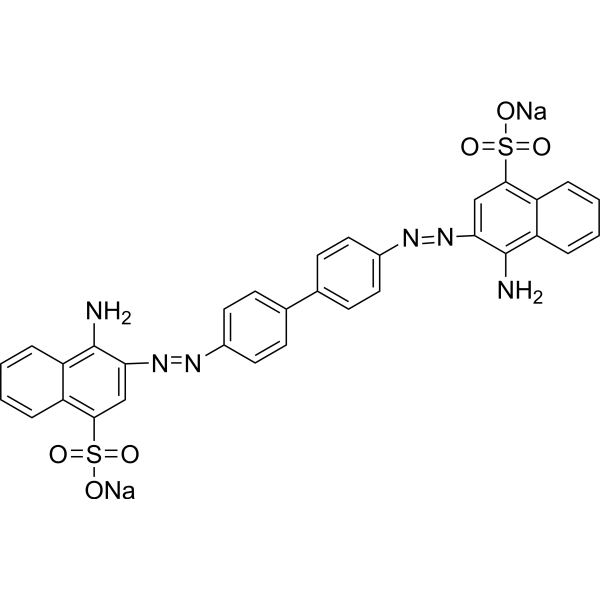
  • HY-D0236
    Congo Red
    4 Publications Verification

    Fluorescent Dye Others
    Congo Red is an azo dye. Congo Red (CR) binding been used as a diagnostic test for the presence of amyloid in tissue sections.
    Congo Red
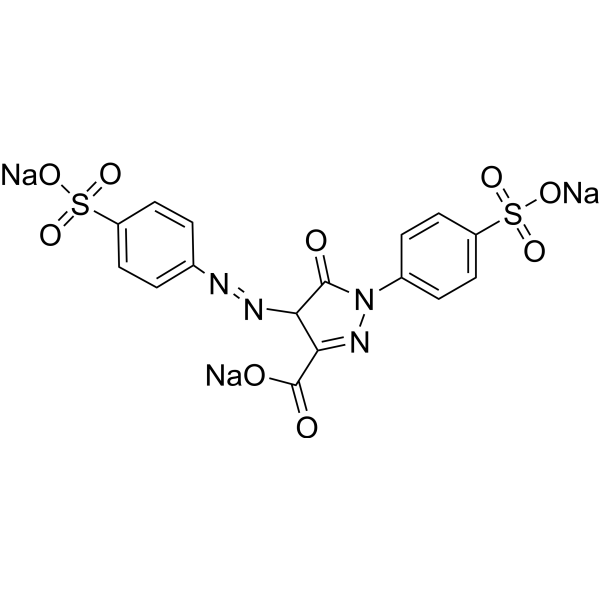
  • HY-D0257
    Tartrazine
    1 Publications Verification

    Acid Yellow 23; FD&C Yellow No. 5

    Environmental Pollutants Fluorescent Dye Cardiovascular Disease Neurological Disease
    Tartrazine (Acid Yellow 23; FD&C Yellow No. 5) is an orally active azo acid dye, orange-yellow powder, soluble in water and turns yellow. Tartrazine is mainly used as a synthetic lemon yellow azo dye for food coloring. Tartrazine is the most stable colorant.Tartrazine induces mitochondria-mediated Apoptosis. Tartrazine can cause neurodevelopmental toxicity, cytotoxicity, and genotoxicity .
    Tartrazine
  • HY-Y0695

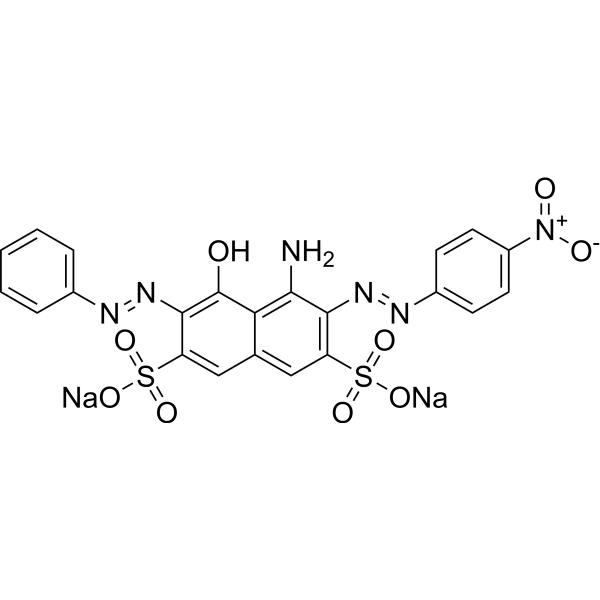
    Naphthol Blue Black

    Environmental Pollutants Fluorescent Dye Others
    Amido Black 10B (Naphthol Blue Black) is a highly toxic azo dye. Amido Black 10B is genotoxic and mutagenic. Amido Black 10B can cause respiratory problems. Amido Black 10B is used for amino acid dyeing .
    Amido Black 10B
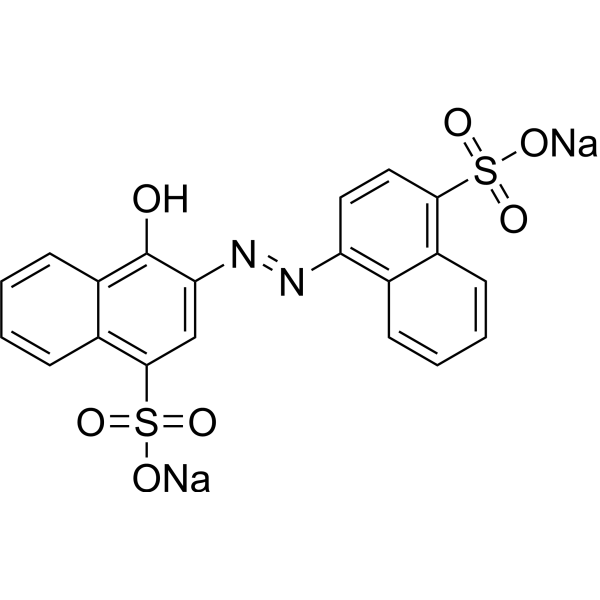
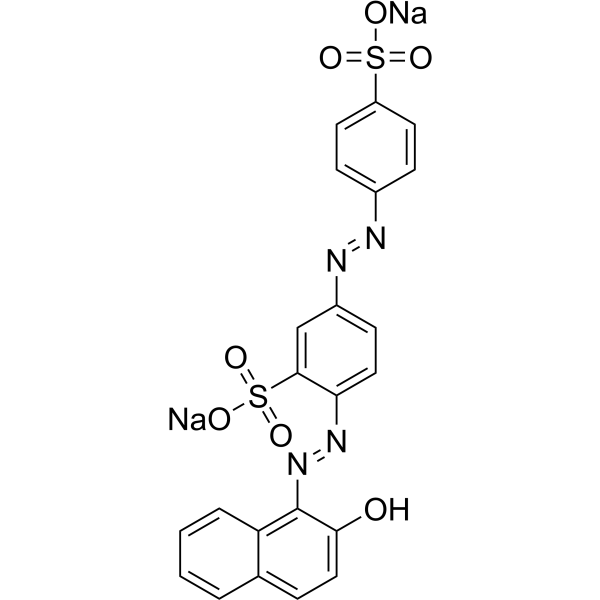
  • HY-128448

    azorubine; Acid Red 14; E122

    Environmental Pollutants Fluorescent Dye Inflammation/Immunology
    Carmoisine (Azorubine) is an azo dye that can be used as a food additive .
    Carmoisine
  • HY-D0256
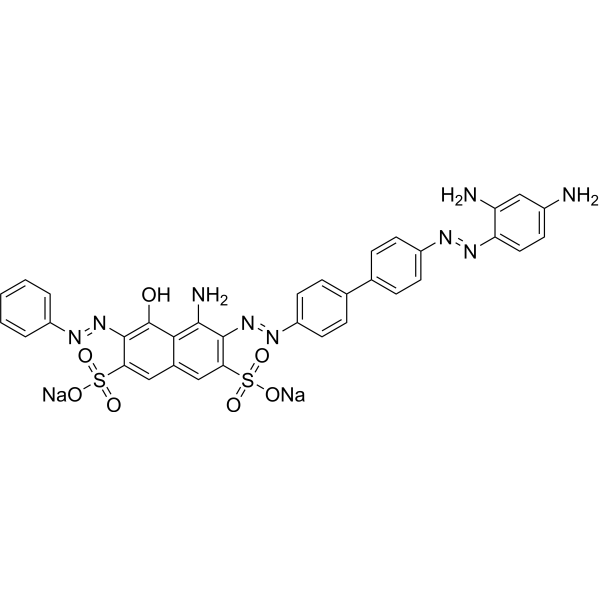
    Direct Black 38
    2 Publications Verification

    Chlorazol Black E; Ferristatin II disodium; C.I. 30235

    Biochemical Assay Reagents Others
    Direct Black 38 (Chlorazol Black E) is a benzidine-based azo dye, a substrate of Enterococcus gallinarum, and is mainly used for textile dyeing. Direct Black 38 is biodegradable after being reduced by microbial enzymes (such as Enterococcus gallinarum azoreductase), breaking the azo bonds and releasing benzidine and 4-aminobiphenyl. Direct Black 38 can be used in environmental toxicology, wastewater treatment and carcinogenicity studies, but its metabolite benzidine is listed as a human carcinogen .
    Direct Black 38
  • HY-D0193
    Ponceau 4R
    1 Publications Verification

    Acid Red 18; New Coccine

    Environmental Pollutants Fluorescent Dye Others
    Ponceau 4R is a synthetic colorant that can be used for food coloring. Ponceau 4R is a strawberry red azo dye that can be used in a variety of foods, usually synthesized from aromatic hydrocarbons, and is stable to light, heat, and acids .
    Ponceau 4R
  • HY-D0249
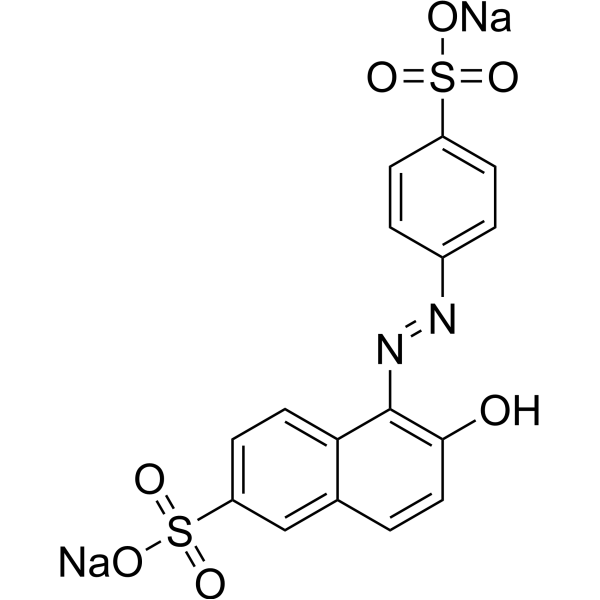
    Sunset Yellow FCF
    1 Publications Verification

    Orange Yellow S; Food Yellow 3; CI 15985

    Environmental Pollutants Fluorescent Dye Others
    Sunset Yellow FCF (Orange Yellow S) is an orange azo dye with a maximum absorption wavelength of 480 nm. Sunset Yellow FCF can be used in food, cosmetics and pharmaceuticals .
    Sunset Yellow FCF
  • HY-118907

    Fluorescent Dye Others
    Methyl Orange is a soluble azo dye commonly used as an acid-base indicator and for staining cells and tissue sections, as well as for dyeing textiles. Methyl Orange appears red at a pH of 3.1 and changes to bright yellow as the pH increases to 4.4. Methyl Orange (500 mg/L) exhibits cytotoxicity and can cause DNA damage .
    Methyl Orange
  • HY-D0307A

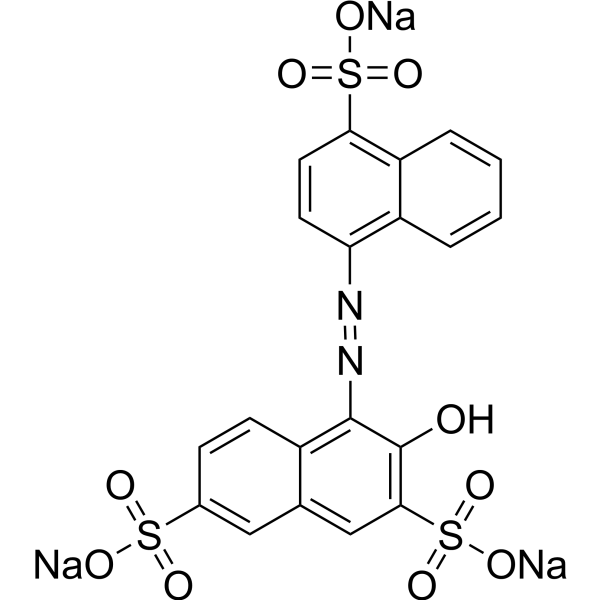
    Acid Red 27; azorubin S; FD & C Red Dye No. 2

    Environmental Pollutants Biochemical Assay Reagents Inflammation/Immunology
    Amaranth is an organic azo dye. Amaranth inhibits cellular immune response. Amaranth can be used as a food additive .
    Amaranth
  • HY-D0342

    Fluorescent Dye Others
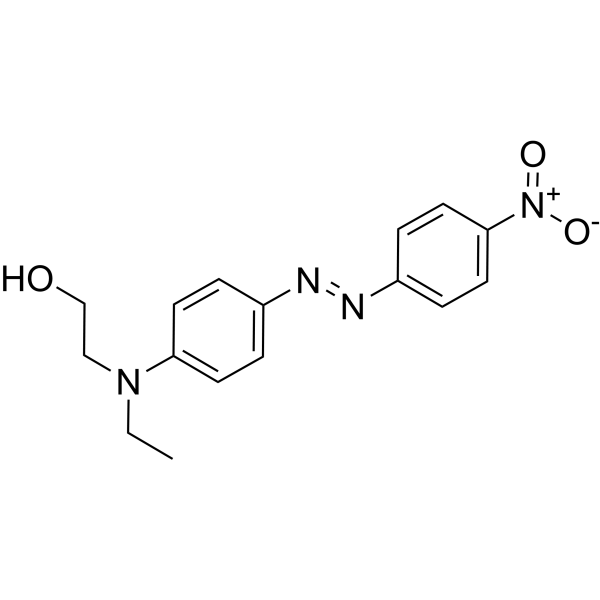
    Disperse Red 1, an azobenzene derivative, is an azo textile dye extensively used for dyeing polyester fabrics in textile industry .
    Disperse Red 1
  • HY-N1442

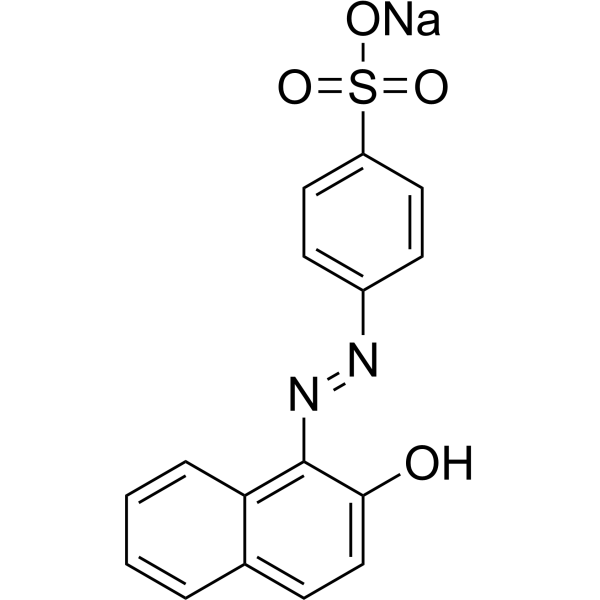
    Orange II; D&C Orange NO. 4

    Environmental Pollutants Biochemical Assay Reagents Others
    Acid Orange 7 (Orange II; D&C Orange NO. 4) is an azo dye widely used in the textile, food and cosmetic industries. Acid Orange 7 is mainly used as a colorant by combining with fibers and other substances through azo bonds. Acid Orange 7 has a maximum absorption wavelength at 484-485 nm, and the concentration is measured using a UV-visible spectrophotometer. Acid Orange 7 is difficult to degrade and has a certain degree of toxicity. It is often used to study various sewage treatment technologies and photocatalytic degradation reactions, and to evaluate the removal effects of different treatment methods on organic pollutants .
    Acid orange 7
  • HY-135712

    Acid Orange GG

    Environmental Pollutants Biochemical Assay Reagents Others
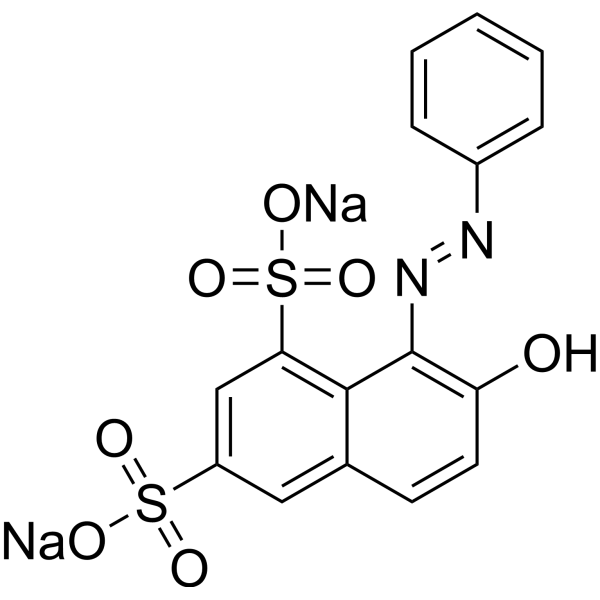
    Orange G is an azo dye commonly found in textile wastewater and is mainly used for textile dyeing. Orange G has a coloring function and can give textiles a specific color. The stability and potential hazards of Orange G in the environment are often used to study the removal effects of various wastewater treatment technologies on difficult-to-degrade organic pollutants, especially the degradation of azo dyes. Related research focuses on how to destroy the azo bond of Orange G through chemical, physical or biological methods to achieve harmless treatment to solve the problem of textile wastewater pollution .
    Orange G
  • HY-W115738

    Biochemical Assay Reagents Others
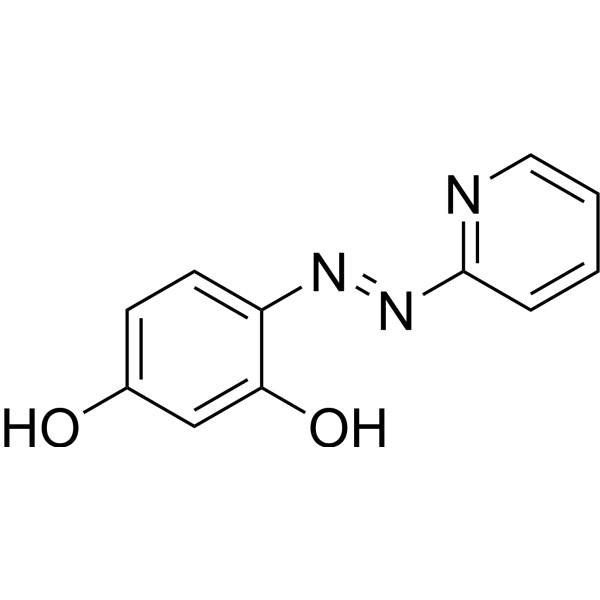
    PAR is an azo dye widely used as a colorimetric reagent for metal ions. PAR forms stable chelates with different metal ions. PAR can also complex with heavy metal ions in polar organic solvents, such as ethanol .
    PAR
  • HY-D1379

    Acid red 1

    Environmental Pollutants Fluorescent Dye Others
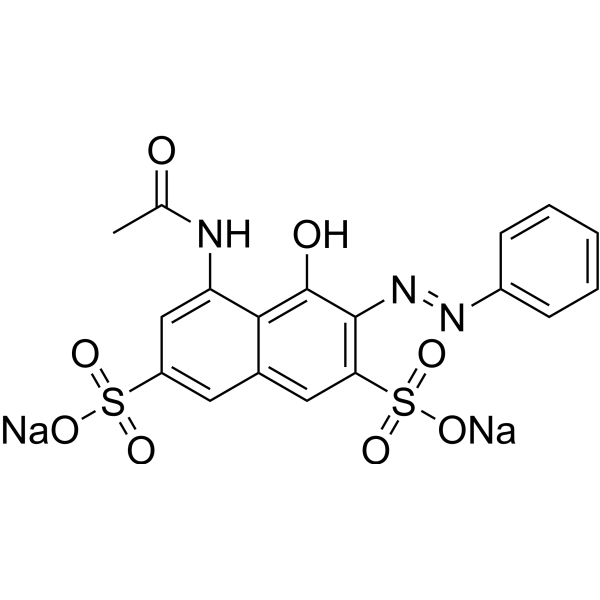
    Azophloxine, also known as acid red 1 (AR1), is a member of synthetic red azo dye family .
    Azophloxine
  • HY-W151206

    Fluorescent Dye Others
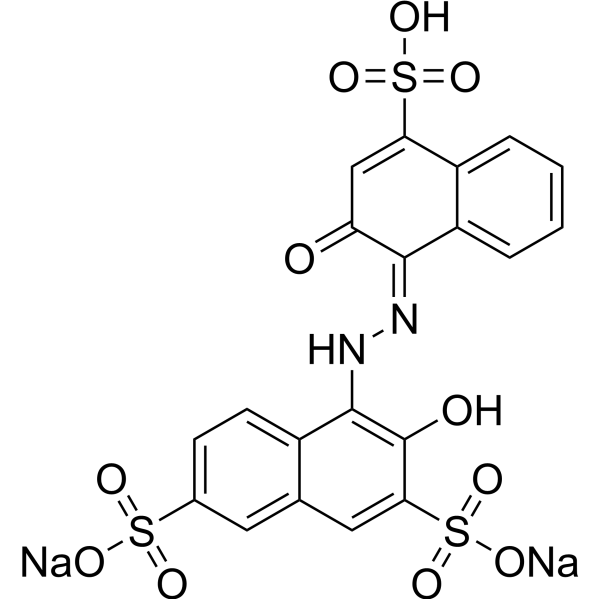
    Hydroxy naphthol blue disodium is an azo dye compound commonly used as an acid-base indicator (λmax = 650 nm). Within the pH range of 12 to 13, the indicator solution of Hydroxy naphthol blue disodium appears pale red in the presence of calcium ions and dark blue in the presence of disodium EDTA .
    Hydroxy naphthol blue disodium
  • HY-128369

    Metanil Yellow

    Environmental Pollutants Cytochrome P450 Others
    Acid Yellow 36 (Metanil Yellow) is an azo dye and a pH indicator. Acid Yellow 36 changes its color from red at pH 1.2 to yellow at pH 2.3. Acid Yellow 36 is used in the leather, paper and textile industries. Acid Yellow 36 acts as a bifunctional inducer of specific isozymes of P-450 and cytosolic enzymes .
    Acid Yellow 36
  • HY-D0705

    Hydrogen 4-aminoazobenzene-3,4'-disulphonate sodium salt

    Fluorescent Dye Others
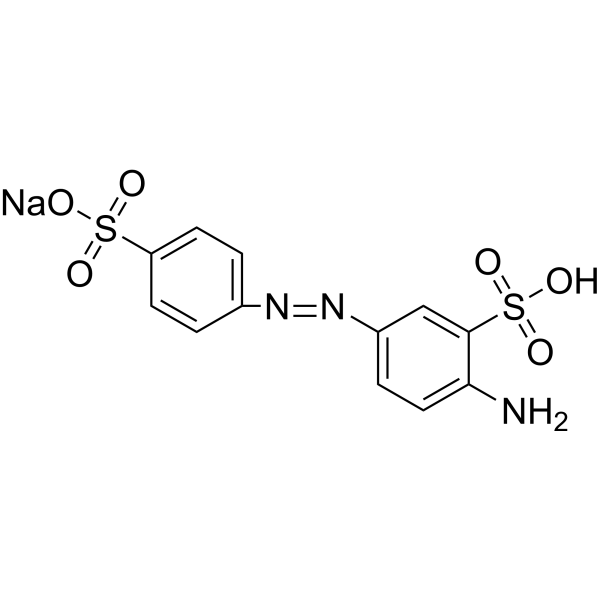
    Acid Yellow 9 monosodium salt is an azo dye, degraded by Pseudomonas fluorescens as sole source of carbon, nitrogen and energy for the bacterium .
    Acid Yellow 9 monosodium salt
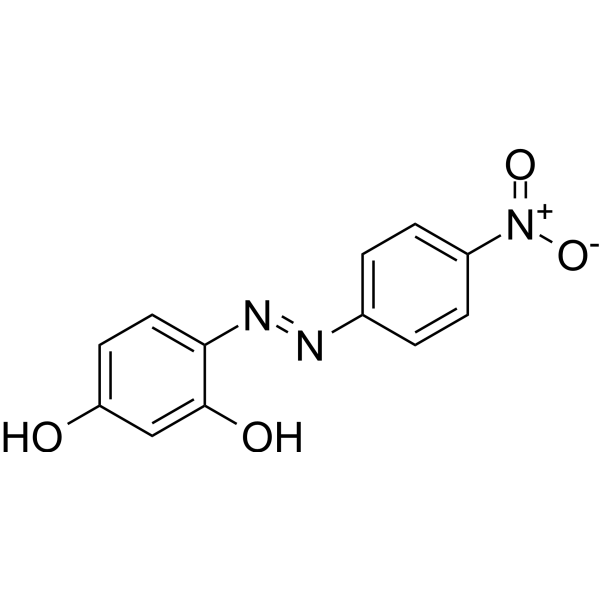
  • HY-D0228

    azo Violet; Magneson I

    Fluorescent Dye Others
    4-(4-Nitrophenylazo)resorcinol (Azo Violet) is an azo purple dye used experimentally as a pH indicator, showing yellow when the pH value is lower than 11 and purple when the pH value is higher than 13. In slightly alkaline or alkaline environments, it also turns dark blue in the presence of magnesium salts. Azo Violet can also be used to test for the presence of ammonium ions. The color of the ammonium chloride or ammonium hydroxide solution will change depending on the concentration of azo violet used .
    4-(4-Nitrophenylazo)resorcinol
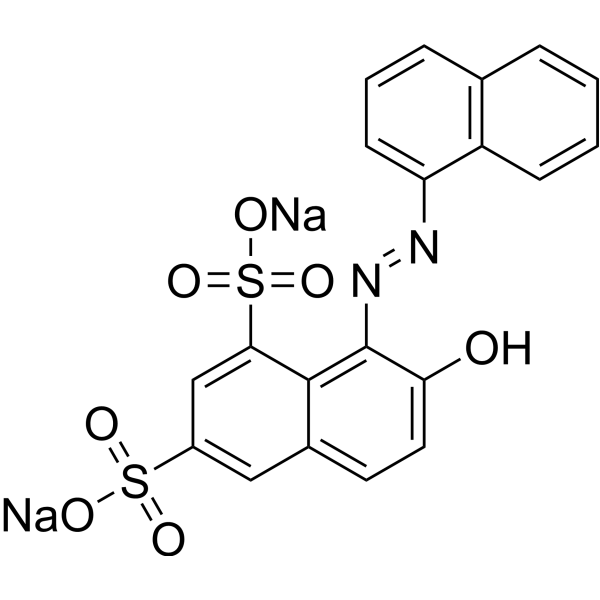
  • HY-D0929

    α-Naphthol Orange

    Fluorescent Dye Others
    Orange I (α-Naphthol Orange) is an anionic azo dye that can form a complex with Methylene blue (HY-14536) and cause fluorescence quenching. The equilibrium constant of the complex of Orange I and Methylene blue is 79900 mol -1·dm 3. Orange I can change the absorption spectrum of itself and Methylene blue .
    Orange I
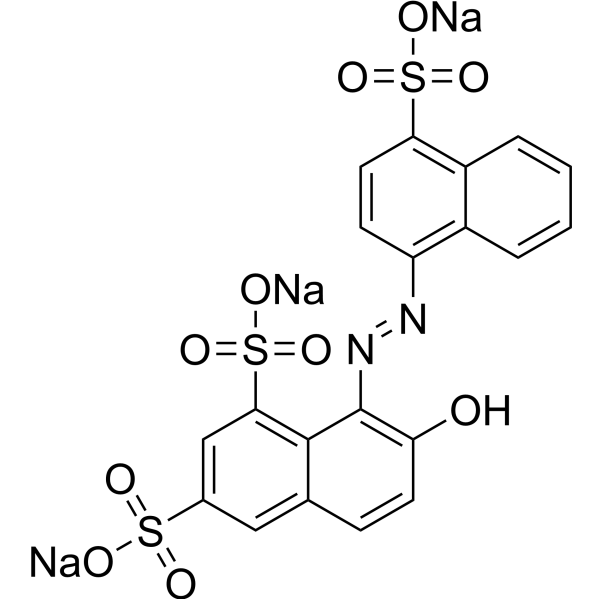
  • HY-121525

    Ponceau BS

    Biochemical Assay Reagents Others
    Biebrich scarlet is an azo organosulfur dyes.
    Biebrich scarlet
  • HY-121986

    Solvent yellow 5

    Fluorescent Dye Others
    Yellow AB (Solvent yellow 5) is an azo dye that can be used as food dye .
    Yellow AB
  • HY-D1480

    Fluorescent Dye Others
    Crystal Ponceau 6R is a red azo dye. Crystal Ponceau 6R used in histology, for staining fibrin with the martius, scarlet and blue (MSB) Trichrome stain .
    Crystal Ponceau 6R
  • HY-Y0700

    Fluorescent Dye Others
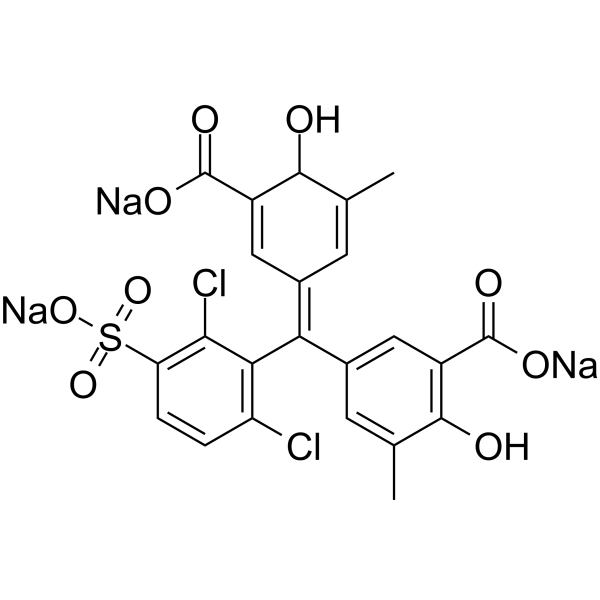
    Calconcarboxylic acid, an azo dye, acts as a silver-ion sensitizer to stain protein in SDS-PAGE gels. Calconcarboxylic acid increases silver binding on protein bands or spots by the formation of a silver-dye complex and also increases the reducing power o
    Calconcarboxylic acid
  • HY-118320

    Mordant orange 1

    Fluorescent Dye Others
    Alizarine Yellow R (Mordant orange 1), Salicylic acid derivative (HY-B0167), is an azo dye. Alizarine Yellow R is used as a pH indicator and a biological stain in chemical examinations and dyeing industries .
    Alizarine Yellow R
  • HY-D1270

    SARS-CoV Infection
    Direct Violet 1, an azo dye, is a textile dye. Direct Violet 1 is also the protein-protein interaction (PPI) between the SARS-CoV-2 spike protein and ACE2 inhibitor with IC50s of 1.47-2.63 μM .
    Direct Violet 1
  • HY-W127722

    Biochemical Assay Reagents Others
    Direct Red 75 tetrasodium salt is an azo dye.
    Direct Red 75 tetrasodium
  • HY-W040297

    o-Toluene-azo-o-toluidine

    Biochemical Assay Reagents Others
    2-Methyl-5-(p-tolyldiazenyl)aniline is a biochemical reagent that can be used as a biological material or organic compound for life science related research.
    2-Methyl-5-(p-tolyldiazenyl)aniline
  • HY-D0421

    Fluorescent Dye Others
    C.I. Solvent yellow 18 is a lipid-soluble fluorescent azo dye, which is widely used in industries such as textiles, medicine, food, cosmetics, plastics, paints, inks, photography and papermaking .
    C.I. Solvent yellow 18
  • HY-D0307AR

    Acid Red 27 (Standard); azorubin S (Standard); FD & C Red Dye No. 2 (Standard)

    Fluorescent Dye Reference Standards Others
    Amaranth (Standard) is the analytical standard of Amaranth. This product is intended for research and analytical applications. Amaranth is a dark red to purple azo dye used as a food dye and cosmetics. Amaranth is an anionic dye that can be applied to natural and synthetic fibers, leather, paper, and phenol-formaldehyde resins.
    Amaranth (Standard)
  • HY-108127

    NM-004; APAZA

    Glutathione Peroxidase Inflammation/Immunology
    NAA-004 (NM-004) is a novel azo compound formed by linking 5-aminosalicylic acid and 4-aminophenylacetic acid through an azo bond. NAA-004 has oral activity. NAA-004 can inhibit colon damage, intracavitary fluid accumulation, and MPO activity. NAA-004 can be used for research on colitis .
    NAA-004
  • HY-128448R

    azorubine (Standard); Acid Red 14 (Standard); E122 (Standard)

    Fluorescent Dye Reference Standards Inflammation/Immunology
    Carmoisine (Standard) is the analytical standard of Carmoisine. This product is intended for research and analytical applications. Carmoisine (Azorubine) is an azo dye that can be used as a food additive .
    Carmoisine (Standard)
  • HY-D0249R

    Orange Yellow S (Standard); Food Yellow 3 (Standard); CI 15985 (Standard)

    Fluorescent Dye Reference Standards Others
    Sunset Yellow FCF (Standard) is the analytical standard of Sunset Yellow FCF. This product is intended for research and analytical applications. Sunset Yellow FCF (Orange Yellow S) is an orange azo dye with a maximum absorption wavelength of 480 nm. Sunset Yellow FCF can be used in food, cosmetics and pharmaceuticals .
    Sunset Yellow FCF (Standard)
  • HY-D0257R

    Acid Yellow 23 (Standard); FD&C Yellow No. 5 (Standard)

    Fluorescent Dye Reference Standards Others
    Tartrazine (Standard) is the analytical standard of Tartrazine. This product is intended for research and analytical applications. Tartrazine is an azo acid dye, orange-yellow powder, soluble in water and turns yellow. It is mainly used as a synthetic lemon yellow azo dye for food coloring. It is the most stable colorant.
    Tartrazine (Standard)
  • HY-D0640

    Fluorescent Dye
    Acid Orange 116 is an azo dye that can be removed from aqueous solutions by metal ions.
    Acid Orange 116
  • HY-W094747A

    Drug Intermediate Inflammation/Immunology
    Benzalazine is a 5-azo derivative of 5-Aminosalicylic Acid (HY-15027) that can be used for the research of ulcerative colitis and Crohn's disease of the large intestine. The benzalazine metabolite 5-ASA and the 5-ASA metabolite acetyl-5-aminosalicylic acid are excreted mainly with the faeces .
    Benzalazine
  • HY-D2424

    Fluorescent Dye Others
    Disperse Red 343 is an azo dye widely used in the textile industry for dyeing polyester fabrics .
    Disperse Red 343
  • HY-D1173

    Fluorescent Dye Others
    Acid blue 113 is an azo dye whose staining effect is effectively removed by nanoscale zero-valent iron (NZVI) particles.
    Acid blue 113
  • HY-115416

    Barium lithol red

    Fluorescent Dye Others
    Pigment Red 49:1 (Barium lithol red) is an azo lake pigment. The color of Pigment Red 49:1 ranges from yellow to purplish blue .
    Pigment Red 49:1
  • HY-D0256A

    Chlorazol Black E free acid; Ferristatin II; C.I. 30235 free acid

    Biochemical Assay Reagents Others
    Direct Black 38 (Chlorazol Black E; Ferristatin II disodium) free acid is a benzidine-based azo dye, a substrate of Enterococcus gallinarum, and is mainly used for textile dyeing. Direct Black 38 free acid is biodegradable after being reduced by microbial enzymes (such as Enterococcus gallinarum azoreductase), breaking the azo bonds and releasing benzidine and 4-aminobiphenyl. Direct Black 38 free acid can be used in environmental toxicology, wastewater treatment and carcinogenicity studies, but its metabolite benzidine is listed as a human carcinogen .
    Direct Black 38 free acid
  • HY-W110789

    Biochemical Assay Reagents Others
    Ethyl Orange (sodium), indicator grade is an organic azo compound that can be used as a pH indicator from pH 3.0 to pH 4.8, changing color from red to orange.
    Ethyl Orange sodium, indicator grade
  • HY-D0236R

    Fluorescent Dye Reference Standards Others
    Congo Red (Standard) is the analytical standard of Congo Red. This product is intended for research and analytical applications. Congo Red is an azo dye. Congo Red (CR) binding been used as a diagnostic test for the presence of amyloid in tissue sections.
    Congo Red (Standard)
  • HY-D1144

    Fluorescent Dye
    Acid blue 260 is an azo dye whose staining effect is effectively removed by multi-walled carbon nanotubes (MWCNTs). At 298 K, the adsorption capacity of MWCNT is 233.34 mg/g; and increases with the increase of dye concentration and temperature.
    Acid blue 260
  • HY-Y0699R

    Fluorescent Dye Reference Standards Others
    Methyl red (Standard) is the analytical standard of Methyl red. This product is intended for research and analytical applications. Methyl red is an azo dye that acts as a pH indicator. Methyl red is red and yellow at pH 4.4 and 6.0 respectively .
    Methyl red (Standard)
  • HY-131327

    Tyrosinase Cancer
    Azo-resveratrol, an Azo compound, inhibits Mushroom tyrosinase (IC50=36.28 μM).
    Azo-resveratrol
  • HY-129237

    Opioid Receptor Neurological Disease
    Azo-enkephalin is an endorphin analog with significant analgesic activity. Azo-enkephalin can be used in the development of opioid analgesics .
    Azo-enkephalin
  • HY-N15785

    Biochemical Assay Reagents Metabolic Disease
    18:0-azo PC is an analog of phosphatidylcholine (PC). Under light, 18:0-azo PC can be switched on and off by light, forcing the azobenzene portion of the molecule to undergo cis/trans isomerization, leading to the initiation or termination of cell signaling.
    18:0-Azo PC
  • HY-116948

    Drug Derivative Cancer
    Azo-mustard is a nitrogen mustard derivative with mutagenic effects in Drosophila melanogaster males .
    Azo-mustard
  • HY-D0930

    Fluorescent Dye Others
    Acid orange 5 is an azo dye. Acid orange 5 can be used in click chemistry .
    OrangeIV
  • HY-D0534

    Fluorescent Dye Others
    2-4-(2-Cyanoethyl)(2-phenylethyl)aminophenylazo-5-nitrobenzonitrile is a storage-stable, fluid, nonagglomerating dispersions of azo dye .
    2-4-(2-Cyanoethyl)(2-phenylethyl)aminophenylazo-5-nitrobenzonitrile
  • HY-W320994

    Enanthamide

    Fluorescent Dye Others
    Heptanamide (Enanthamide) is a metabolite of azo dye Reactive Black 5 (RB5). Heptanamide can be used for bioremediation of azo dyes contaminated environments research
    Heptanamide

Inquiry Online

Your information is safe with us. * Required Fields.

Salutation


Country or Region *

Applicant Name *


Organization Name *

Department *


Email Address *


Product Name *

Cat. No.


Requested quantity *

Phone Number *


Remarks

Inquiry Online

Inquiry Information

Product Name:
Cat. No.:
Quantity:
MCE Japan Authorized Agent:

