
26 Results for "

colocalization

" in MedChemExpress (MCE) Product Catalog:
Products (26)

26 Results for "colocalization" in MCE Product Catalog:

2
2 Cited Publications
Cat. No.: HY-107665
CAS No.: 62645-28-7
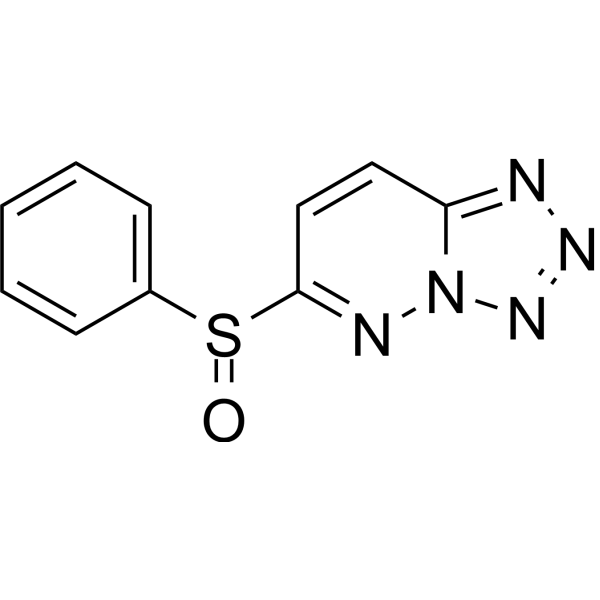
Ro 106-9920 is an orally active NF-κB inhibitor. Ro 106-9920 prevents ubiquitination of IκBα, blocks nuclear translocation of NF-κB, and inhibits NF-κB activation. Ro 106-9920 suppresses TNF-α-induced tissue factor expression and procoagulant activity, enhances TNF-α-mediated cytotoxicity against cancer cells, and eliminates the formation of neutrophil extracellular traps. Ro 106-9920 inhibits NLRP3 inflammasome activation, reduces inflammatory cytokine secretion, decreases myeloperoxidase activity, attenuates renal cell apoptosis, and improves renal function. Ro 106-9920 blocks ANG II (Angiotensin II human) (HY-13948)-induced nuclear localization of p65, internalization of AT1A receptor, colocalization of β-arrestin-2, and expression of COX-2, and alters the formation of β-arrestin endosomes. Ro 106-9920 can be used in research related to non-small cell lung cancer, acute kidney injury, diabetes mellitus, and osteoporosis .
loading...
    loading...
Cat. No.: HY-160222
Target:  

HSV STING IFNAR NF-κB

Research Areas:  

Infection

HSV-60mer sodium is a 60 bp double-stranded DNA oligonucleotide derived from the HSV-1 genome, and also an IFNβ inducer. HSV-60mer sodium colocalizes with endogenous cytoplasmic IFI16 in immune cells. HSV-60mer sodium activates the transcription factors IRF3 and NF-κB, induces the production of proinflammatory cytokines, and inhibits HSV-1 replication in immune cells. HSV-60mer sodium can be used in studies related to herpes simplex virus type 1 infection .
loading...
    loading...
Cat. No.: HY-161739
CAS No.: 2409960-03-6
Target:  

AUTOTACs p62 Autophagy

Research Areas:  

Cancer

YOK-1304 is a p62/Sequestosome-1/SQSTM1 ligand that binds to the p62-ZZ domain. YOK-1304 promotes p62 self-oligomerization and LC3 interaction to facilitate autophagic targeting and p62-dependent selective autophagy. YOK-1304 enhances autophagic flux, induces LC3 puncta formation and p62-LC3 colocalization, and serves as an autophagy-targeting ligand (ATL) that can be linked to target-binding ligands to generate AUTOTAC degraders. YOK-1304 is used in research on cervical cancer and pancreatic cancer .
loading...
    loading...
Cat. No.: HY-125385
CAS No.: 187099-99-6
Purity:  ≥95.0%
Target:  

Endogenous Metabolite

Research Areas:  

Metabolic Disease

Sulforhodamine 101 DHPE is a fluorescent probe made from the conjugation of the phospholipid 1,2-dipalmitoyl-sn-glycero-3-PE to sulforhodamine 101, a red fluorescent dye that displays excitation/emission spectra of 586/605 nm, respectively. It integrates into phospholipid bilayers and has been used for imaging of solid supported lipid bilayers, detection of protein-ligand binding on bilayers, and to monitor colocalization of lipid probes in liposomes via resonance energy transfer (RET).
loading...
    loading...
Cat. No.: HY-115923
CAS No.: 2055829-03-1
Nur77 modulator 2, a Nur77 modulator (Kd of 0.35 μM), is a potent and orally active inflammation inhibitor. Nur77 modulator 2 modulates the colocalization of Nur77 at mitochondria .
loading...
    loading...
Cat. No.: HY-109530
CAS No.: 133107-64-9
Insulin lispro is a recombinant h-Insulin (HY-P0035) analog whose primary structure is identical to regular h-Insulin, except that the proline-lysine at positions B28 and B29 is translocated to lysine-proline, thereby reducing self-association. Insulin lispro stimulates insulin receptor internalization to early endosomes, induces receptor phosphorylation, intracellular internalization, and colocalization with the early endosome marker EEA1. Insulin lispro shows stronger inhibition of hepatic glucose production and stronger inhibition of glucagon secretion. Insulin lispro has lower mitogenic potency. Insulin lispro can be used in the study of diabetes .
loading...
    loading...
Cat. No.: HY-P10979
CAS No.: 116786-35-7
Research Areas:  

Neurological Disease

Buccalin is a neuropeptide that colocalizes with small molecule cardioactive peptides in neuronal B15. When exogenously applied to the ARC neuromuscular junction, Buccalin reduces the amplitude of muscle contraction induced by motor neuron firing and acts only presynaptically. Buccalin has no effect on the rate of muscle relaxation and reduces motor neuron-induced ARC excitatory junction potentials without affecting contraction produced by direct acetylcholine action on the muscle .
loading...
    loading...
Cat. No.: HY-175591
Photosensitizer-7 is a endoplasmic reticulum (ER)-targeted photosensitizer (PS) (λab = 610 nm, λem = 622 nm). Photosensitizer-7shows an IC50 of 4.006 μM in HeLa cells and 3.28 μM in MCF-7 cells under light irradiation. Photosensitizer-7 exhibits dose-dependent cellular uptake and predominant colocalization with ER. Photosensitizer-7 induces dose-dependent intracellular ROS generation, reduces mitochondrial membrane potential, and increases apoptosis upon light irradiation in cells. Photosensitizer-7 significantly inhibits tumor growth in MCF-7 tumor-bearing mice. Photosensitizer-7 can be used for the study of photodynamic anticancer applications .
loading...
    loading...
Cat. No.: HY-176866
CAS No.: 2222756-46-7
Target:  

HDAC

Research Areas:  

Neurological Disease

Rodin-A is an orally active, brain-penetrant and selective histone deacetylase (HDAC)-co-repressor of repressor element-1 silencing transcription factor (CoREST) complex inhibitor with an IC50 value of 1.80 μM for the CoREST complex, 0.15 μM for HDAC1, and 0.43 μM for HDAC2. Rodin-A increases the acetylation level of histone H3K9, upregulates the expression of neuron-related genes, thereby promoting the increase in dendritic spine density, the colocalization of synaptic proteins (SV2A and PSD95), and the improvement of hippocampal long-term potentiation (LTP), exerting synaptic protection and repair activity. Rodin-A is promising for research of neurodegenerative diseases related to synaptic dysfunction, especially Alzheimer’s disease .
loading...
    loading...
Cat. No.: HY-139062
CAS No.: 486991-52-0
Synonyms: C6 Ceramide (d18:1/6:0) Urea; Cer(d18:1/6:0) Urea; D-erythro-Urea-C6-Ceramide
Research Areas:  

Cancer

C6 Urea Ceramide (Cer(d18:1/6:0) Urea) is an inhibitor of neutral ceramidase. C6 Urea Ceramide increases total ceramide levels in wild-type mouse embryonic fibroblasts (MEFs) and HT-29 colon cancer cells. C6 Urea Ceramide (5-10 μM) inhibits proliferation of HT-29 cells and induces apoptosis and autophagy, but is not toxic to non-cancerous cells. C6 Urea Ceramide decreases total and phosphorylated β-catenin levels in HT-29 and HCT116 cells, and induces colocalization of β-catenin with the 20S proteasome. C6 Urea Ceramide (1.25, 2.5, and 5 mg/kg) reduced tumor growth and increased C16, C18, C20, and C24 ceramide levels in tumor tissues in the HT-29 mouse xenograft model.
loading...
    loading...
Cat. No.: HY-117846
CAS No.: 1417653-96-3
Target:  

DNA/RNA Synthesis

Research Areas:  

Cancer

MLAF50 is apotent REV1 UBM2-Ubiquitin interaction inhibitor. MLAF50 inhibits chromatin co-localization of REV1 with PCNA following DNA-damage induction .
loading...
    loading...
Cat. No.: HY-169130
Lyso BD-1, preferentially colocalized in lysosomes and lipid droplets, displays excellent photocytotoxicity (5.57 μM) on triple negative breast cancer cells under white light. Lyso BD-1 displays emission band at 560nm .
loading...
    loading...
Cat. No.: HY-P5829A
Target:  

Bacterial

Research Areas:  

Infection

CRAMP (140-173) (mouse) TFA is a ortholog of human LL-37 antimicrobial peptide. CRAMP (140-173) (mouse) TFA inhibits LPS (HY-D1056)-induced responses, and can not colocalized with TLR3 in BEAS-2B cells .
loading...
    loading...
Cat. No.: HY-D2841
Target:  

Fluorescent Dye

Research Areas:  

Others

FITC-Heparin is a fluorescein isothiocyanate-covalently conjugated heparin glycosaminoglycan fluorescent probe that emits green fluorescence under 488 nm excitation (Ex/Em ≈ 492/514 nm). FITC-Heparin can be used as a fluorescent tracer to monitor the binding and colocalization of Heparin (HY-17567) with extracellular vesicles, endocytosis by monocytes, retention in injured vessel walls, binding to the HGF N domain, Thrombin (MW 37kDa) (HY-114164)-triggered release from nanoSTATs nanocomplexes, and adsorption on electrospun fiber membranes. FITC-Heparin can be used for studies of heparin distribution, cellular uptake, and protein binding .
loading...
    loading...
Cat. No.: HY-176867
Target:  

HDAC

Research Areas:  

Neurological Disease

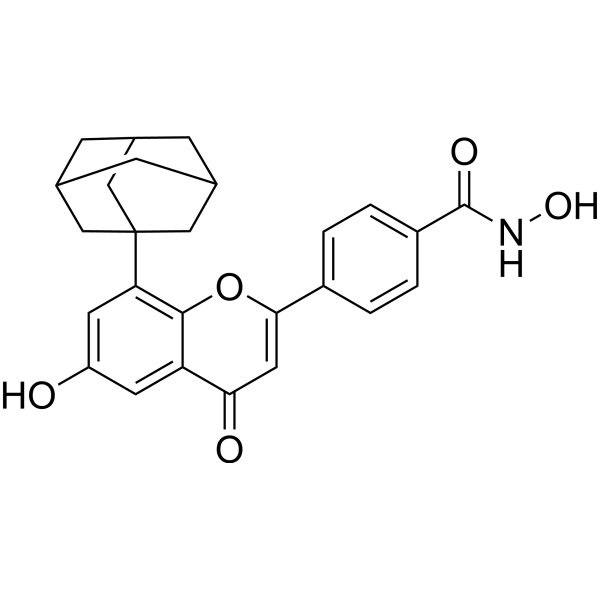
Rodin-B is a selective histone deacetylase (HDAC)-co-repressor of repressor element-1 silencing transcription factor (CoREST) complex inhibitor with an IC50 value of 0.50 μM for the CoREST complex, 0.27 μM for HDAC1, and 0.28 μM for HDAC2. Rodin-B increases the acetylation level of histone H3K9, upregulates the expression of neuron-related genes, thereby promoting the increase in dendritic spine density, the colocalization of synaptic proteins (SV2A and PSD95), and the improvement of hippocampal long-term potentiation (LTP), exerting synaptic protection and repair activity. Rodin-B is promising for research of neurodegenerative diseases related to synaptic dysfunction, especially Alzheimer’s disease .
loading...
    loading...
Cat. No.: HY-D3284
CAS No.: 2158211-22-2
CSF1 is a silicon-rhodamine-based, fluorescence-activatable probe with selectivity for Cu +. CSF1 colocalizes with the endoplasmic reticulum in live cells .
loading...
    loading...
Cat. No.: HY-180304
CAS No.: 2902671-78-5
Target:  

Kinesin

Research Areas:  

Cancer

CCT369834 is an ATP-competitive HSET inhibitor with an IC50 of 39 nM. CCT369834 is a trans-cyclooctene-tagged probe. CCT369834 and HSET specifically co-localize on mitotic spindles. CCT369834 can be used for the research of cancer .
loading...
    loading...
Cat. No.: HY-D2978
CAS No.: 3038636-76-6
MR2-cy5 is a clustered mannose ligand that binds CD206 and enables fluorescence detection of CD206 + macrophages; its fluorescence is selective for CD206 + macrophages and colocalizes with CD206 immunostaining in the infarcted brain region after ischemic stroke. MR2-cy5 can be used for research on ischemic stroke .
loading...
    loading...
Cat. No.: HY-D3255
CAS No.: 866534-64-7
CTAP-1 is a monovalent copper ion probe. CTAP-1 binds to monovalent copper Cu (I) to inhibit photoinduced electron transfer, thereby enhancing fluorescence emission. CTAP-1 produces copper-dependent perinuclear staining that colocalizes with mitochondria and the Golgi apparatus. CTAP-1 can be used for imaging Cu (I) pools, excitation/emission Wavelength: 365/480 nm .
loading...
    loading...
Cat. No.: HY-206870
CAS No.: 3104965-33-2
Research Areas:  

Inflammation/Immunology

BP79 is a potent TSLP receptor inhibitor. BP79 disrupts TSLP-mediated ternary complex formation, blocks TSLPR-IL7Rα co-localization, binds and stabilizes TSLPR, and inhibits phosphorylated STAT3/6. BP79 suppresses immune cell infiltration, secretion of IL-13, IL-4. BP79 can be used for the research of inflammation diseases, such as atopic dermatitis, allergic asthma, and allergic rhinitis .
loading...
    loading...

