


Search Result
Results for "
cytometry
" in MedChemExpress (MCE) Product Catalog:
4
Biochemical Assay Reagents
| Cat. No. |
Product Name |
Target |
Research Areas |
Chemical Structure |
-
- HY-W090090
-
|
Pyrromethene 546
|
Fluorescent Dye
|
Others
|
|
BODIPY493/503 is a BODIPY dye. BODIPY dye is a small molecule dye with strong ultraviolet absorption ability, its fluorescence peak is relatively sharp, and the quantum yield is high. They are relatively insensitive to the polarity and pH of the environment and are relatively stable under different physiological conditions. Due to its structural asymmetry, BODIPY derives a variety of structural products. BODIPY lipid droplet dyes can well pass through the cell membrane into the cell, and localize the neutral lipids in the cell to specifically stain the lipid droplets, which can be used for labeling of live cells and fixed cells . Maximum excitation/emission wavelength: 493/503 nm .
|
-
-
- HY-D0090
-
|
|
Fluorescent Dye
|
Others
|
|
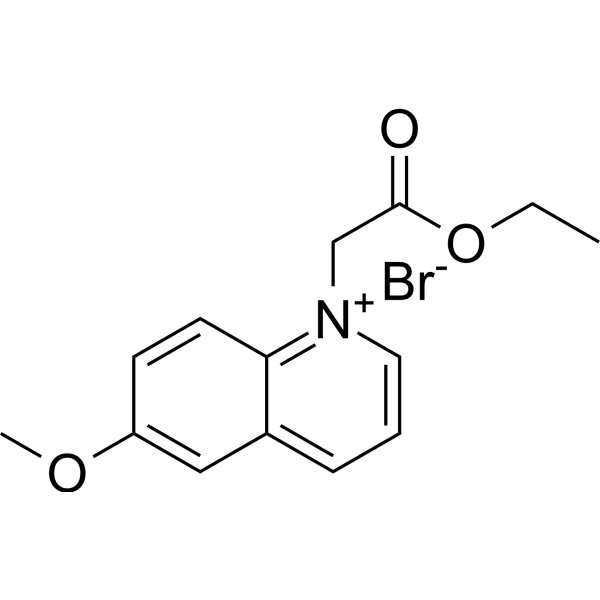
MQAE is a chloride ion (Cl -) fluorescent probe that can be used to measure chloride concentrations. The fluorescence intensity of MQAE decreases proportionally as Cl - ions increase. MQAE has high cell permeability and is suitable for fluorescence detection such as confocal microscopy and flow cytometry (Ex/Em=350/460 nm) .
|
-
-
- HY-D1020
-
-
-
- HY-D0988
-
|
R-PE
|
Fluorescent Dye
Apoptosis
|
Cancer
|
|
R-Phycoerythrin is found in Heterosiphonia japonica. R-Phycoerythrin is an orange-red fluorescent probe with α, β, and γ subunits. R-Phycoerythrin can be used in photodynamic therapy (PDT) to induce apoptosis in tumor cells. R-Phycoerythrin can be used in fluorescence microscopy, flow cytometry, and immunofluorescence analysis (Ex: 495 nm).
|
-
-
- HY-15941
-
|
Fluorescein 5(6)-isothiocyanate; Fluorescein isothiocyanate 5- and 6- isomers
|
Fluorescent Dye
|
Others
|
|
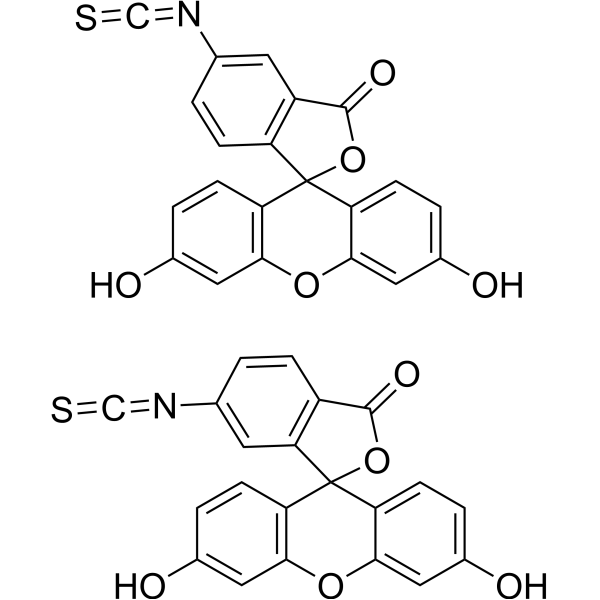
5(6)-FITC (Fluorescein 5(6)-isothiocyanate) is an amine-reactive derivative of a fluorescent dye, characterized by high absorbance and excellent fluorescence quantum yield. The isothiocyanate group of FITC can react with various functional groups on proteins, including amines, thiols, imidazoles, tyrosines and carbonyls, enabling the labeling of proteins such as antibodies and lectins. 5(6)-FITC has a wide range of applications, including flow cytometry, immunofluorescence, protease assays and conjugation. The maximum excitation/emission wavelengths are 492/518 nm .
|
-
-
- HY-D0722
-
|
5-(6)-Carboxyfluorescein diacetate; CFDA
|
Fluorescent Dye
|
Others
|
|
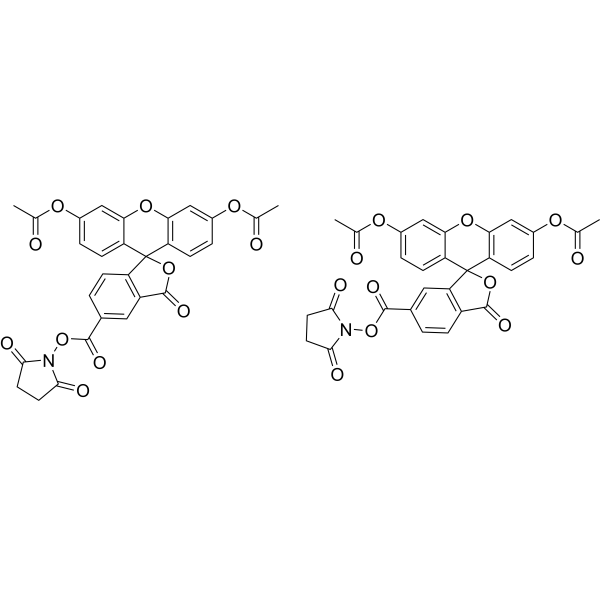
5(6)-CFDA is a common aliphatic luciferin-line organism. CFDA conducts free diffusion into cells, and then it is hydrolyzed into carboxyl fluorescein (CF) by intracellular non-specific lipase. CF containing portion contains an additional negative charge so that it is better retained in cells, compared to fluorescein dyes .
|
-
-
- HY-DY1004
-
|
|
Fluorescent Dye
|
Others
|
BODIPY 493/503 (solution) is a BODIPY dye. BODIPY dye is a small molecule dye with strong ultraviolet absorption ability, its fluorescence peak is relatively sharp, and the quantum yield is high. They are relatively insensitive to the polarity and pH of the environment and are relatively stable under different physiological conditions. Due to its structural asymmetry, BODIPY derives a variety of structural products. BODIPY lipid droplet dyes can well pass through the cell membrane into the cell, and localize the neutral lipids in the cell to specifically stain the lipid droplets, which can be used for labeling of live cells and fixed cells . Maximum excitation/emission wavelength: 493/503 nm. Solvent and concentration: DMSO: 5 mM.
|
-
-
- HY-P990195
-
|
|
MHC
|
Others
|
|
Anti-Mouse MHC Class I (H-2) Antibody (M1/42.3.9.8) is a rat-derived IgG2a κ type antibody inhibitor, targeting to mouse MHC Class I. Anti-Mouse MHC Class I (H-2) Antibody (M1/42.3.9.8) reacts with the mouse H-2 MHC class I alloantigen (all haplotypes). Anti-Mouse MHC Class I (H-2) Antibody (M1/42.3.9.8) can be used for the flow cytometry and immunofluorescence experiments .
|
-
-
- HY-158742
-
|
GL13; SBB-A-B
|
Tyrosinase
|
Others
|
|
SBB-Analogue (GL13) Biotin (GL13; SBB-A-B) consists of a Sudan Black B (SBB) (HY-D0213) derivative conjugated with biotin. SBB-Analogue (GL13) Biotin potently detects senescent cells and eliminates the drawback of false-positive staining caused by serum starvation and cell fusion in SA-β-gal assays. SBB-Analogue (GL13) Biotin can be used in flow cytometry, immunofluorescence analysis, and other applications .
|
-
-
- HY-D0721
-
|
6-Carboxyfluorescein diacetate
|
Fluorescent Dye
|
Others
|
|
6-CFDA is a common aliphatic luciferin-line organism. CFDA conducts free diffusion into cells, and then it is hydrolyzed into carboxyl fluorescein (CF) by intracellular non-specific lipase. CF containing portion contains an additional negative charge so that it is better retained in cells, compared to fluorescein dyes .
|
-
-
- HY-P11329
-
|
|
Fluorescent Dye
|
Others
|
|
GFP11 is a protein fusion tag consisting of 16 amino acids. When GFP11 and GFP1-10 are sufficiently close in physical space, they undergo spontaneous, irreversible complementation to reassemble into an intact, functional GFP protein that emits green fluorescence. GFP11 can be used to form a split GFP system for high-throughput biotechnology and flow cytometry applications .
|
-
-
- HY-P990169
-
|
|
PD-1/PD-L1
|
Inflammation/Immunology
Cancer
|
|
Anti-Mouse/Human phosphorylated PD-1/CD279 Antibody (407.6G12) is a mouse-derived IgG2a κ type antibody inhibitor, targeting to mouse/human phosphorylated PD-1/CD279. Anti-Mouse/Human phosphorylated PD-1/CD279 Antibody (407.6G12) can detect the phosphorylated form of the PD-1 ITSM by both western blot and flow cytometry .
|
-
-
- HY-D0163
-
|
|
DNA Stain
|
Others
|
|
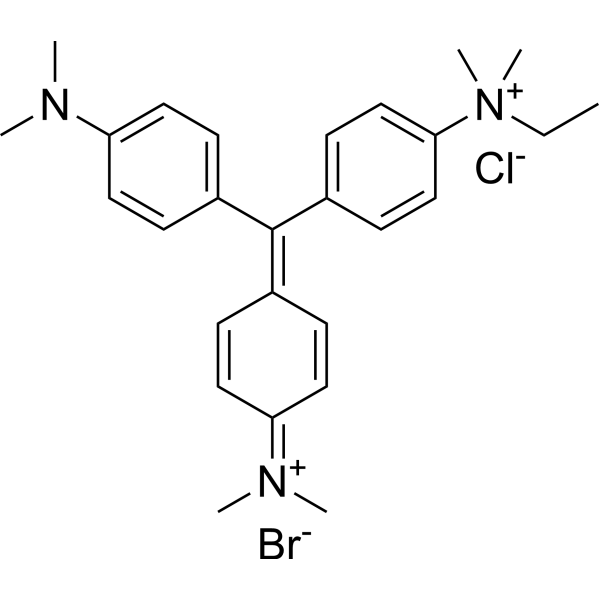
Methyl Green is a non-intercalating fluorescent labeling agent that selectively binds to the major groove of DNA. Methyl Green electrostatically interacts with the major groove of DNA through positively charged groups, exhibiting key activities such as high affinity, resistance to photobleaching, and stable fluorescence emission. Methyl Green can be directly measured by microscopy and flow cytometry, with peaks at 633 and 677 nm. Methyl Green can be used for fluorescent labeling of the nuclei of embryonic tissues or cells, or DNA staining and cell activity detection in gel electrophoresis[1][2][3].
|
-
-
- HY-D2769
-
|
Difluorocarboxyfluorescein azide, 6-isomer
|
Fluorescent Dye
|
Others
|
|
Oregon green 488 azide (Difluorocarboxyfluorescein azide, 6-isomer) is a bright green fluorescent azide-activated probe that reacts with terminal alkynes via copper-catalyzed azide-alkyne cycloaddition (CuAAC). Oregon green 488 azide can label goat anti-mouse IgG and exhibits excellent luminescence efficiency. Oregon green 488 azide, as a streptavidin conjugate, is used for flow cytometry staining of macrophages .
|
-
-
- HY-D0950A
-
|
|
DNA Stain
|
Others
|
|
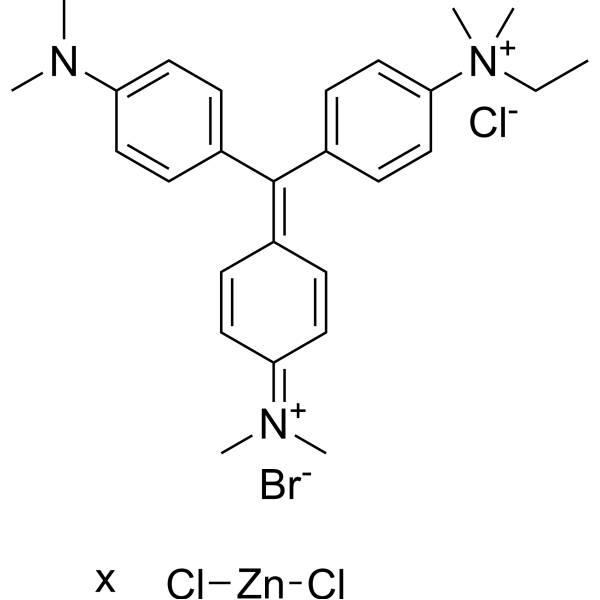
Methyl Green zinc chloride is a potent fluorescent dye. Methyl Green zinc chloride is a DNA stains of cells and electrophoretic gels. Methyl Green zinc chloride can be used as direct measuring of viability by both microscopy and flow cytometry, with peaks at 633 and 677 nm .
|
-
-
- HY-131008
-
|
|
Fluorescent Dye
|
Others
|
|
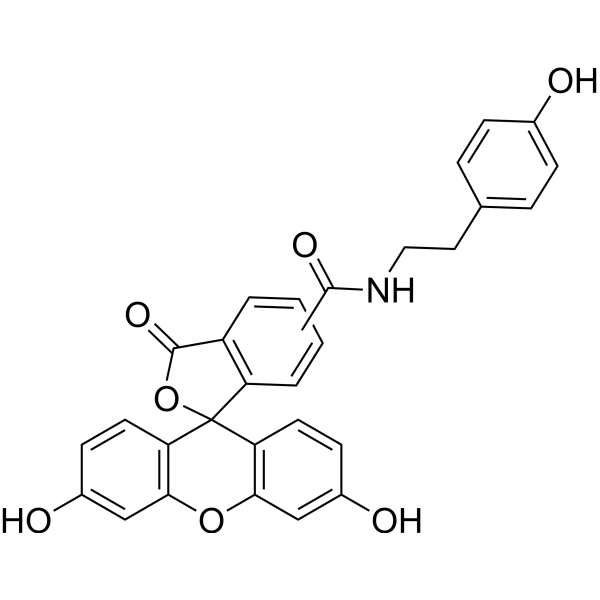
Fluorescein tyramide is a green fluorescent reagent (λabs: 494 nm; λem: 517 nm). Fluorescein tyramide is widely used for tyramide signal amplification (TSA) with a low-abundance in IHC, ICC, in situ hybridization (FISH) and flow cytometry (FCM) applications .
|
-
-
- HY-D2000
-
|
|
Fluorescent Dye
|
Others
|
|
ATTO 488 is a hydrophilic rhodamine-based fluorescent dye with strong absorption and high fluorescence quantum yield. ATTO 488 is suitable for flow cytometry (FACS), fluorescence in situ hybridization (FISH) and most other labeling uses (Ex/Em: 500/520 nm) .
|
-
-
- HY-153232
-
|
|
Fluorescent Dye
Liposome
|
Others
|
|
eGFP circRNA-LNP is a lipid nanoparticle (LNP) containing eGFP circRNA, suitable for assays of RNA delivery, translation efficiency, cell viability, etc. eGFP circRNA carries Enhanced Green Fluorescent Protein (Enhanced Green Fluorescent Protein) eGFP, which will express green fluorescent protein after entering the cell. eGFP is commonly used as a reporter gene detectable by fluorescence microscopy or flow cytometry .
|
-
-
- HY-P990870
-
|
|
CD19
IFNAR
Interleukin Related
|
Inflammation/Immunology
|
|
Anti-CD19 Antibody (4G7) is an anti-human CD19 IgG1 monoclonal antibody. Anti-CD19 Antibody (4G7) reduces the killing effect of CAR T cells on Raji cells. Anti-CD19 Antibody (4G7) can be used for research on immunology. Anti-CD19 Antibody (4G7) is often used in flow cytometry. The recommend isotype control of Anti-CD19 Antibody (4G7): Mouse IgG1 kappa, Isotype Control (HY-P99977) .
|
-
-
- HY-D2443
-
|
|
Fluorescent Dye
|
Cancer
|
|
AF594 DBCO is an AlexaFluor 594-conjugated DBCO click chemistry probe for fluorescent labeling of azido-modified cholesterol probes. DBCO is a commonly used chemical biomarker group. AF594 DBCO (Excitation wavelength about 590 nm, emission wavelength about 617 nm) can be used to label proteins, cells and other biomolecules for fluorescence imaging and flow cytometry detection .
|
-
-
- HY-D2708
-
|
|
Fluorescent Dye
|
Others
|
|
Cy3 Dextran (MW 10000) is a fluorescent labeling reagent that combines Cy3 (HY-D0822) fluorescent dye and Dextran (HY-112624). The Cy3 fluorophore is commonly used in applications such as immunolabeling, nucleic acid labeling, fluorescence microscopy, and flow cytometry. Dextran has an inhibitory effect on thrombocyte aggregation and coagulation factors and is used as a plasma volume expander (Ex/Em = 550/570 nm) .
|
-
-
- HY-P990246
-
|
|
Adhesion G Protein-coupled Receptors (AGPCRs)
|
Inflammation/Immunology
|
|
Anti-Mouse F4/80 Antibody (CI:A3-1) is an anti-mouse F4/80 IgG2b monoclonal antibody. Anti-Mouse F4/80 Antibody (CI:A3-1) can clear macrophages. Anti-Mouse F4/80 Antibody (CI:A3-1) can be used for research on inflammation conditions such as endometriosis. Anti-Mouse F4/80 Antibody (CI:A3-1) often used for flow cytometry analysis and immunohistochemical analysis .
|
-
-
- HY-P990002
-
|
|
c-Kit
|
Inflammation/Immunology
Cancer
|
|
Anti-Mouse CD117/c-Kit Antibody (2B8) is an IgG2b antibody, targeting to mouse CD117/c-Kit. Anti-Mouse CD117/c-Kit Antibody (2B8) reacts with mouse c-Kit (also known as CD117), which is expressed on hematopoietic progenitor cells, mast cells, and acute myeloid leukemia (AML) cells. Anti-Mouse CD117/c-Kit Antibody (2B8) can be used for the detection of flow cytometry, immunofluorescence and immunohistochemistry in cancer and inflammation .
|
-
-
- HY-P990856
-
|
|
Transferrin Receptor
|
Cancer
|
|
Anti-CD71 Antibody (OKT-9) is a kind of mouse IgG1 κ chimeric antibody, targeting to human CD71. Anti-CD71 Antibody (OKT-9) can recognize CD71 also known as Transferrin receptor protein 1 (TfR1). Anti-CD71 Antibody (OKT-9) can be used for the detections of immunohistochemistry, immunofluorescence and flow cytometry in cancer, such as leukemia and lymphoma .
|
-
-
- HY-P990303
-
|
|
Nuclear Factor of activated T Cells (NFAT)
|
Others
|
|
Anti-Mouse 2C TCR Antibody (1B2) is a mouse-derived IgG1 type antibody inhibitor, targeting to mouse 2C TCR. Anti-Mouse 2C TCR Antibody (1B2) recognizes determinants on the variable regions of both the α and β subunits of the TCR (T cell receptor) expressed by the mouse cytotoxic T lymphocyte clone 2C. Anti-Mouse 2C TCR Antibody (1B2) can be used for the detections of immunofluorescence and flow cytometry .
|
-
-
- HY-P990811
-
|
|
Influenza Virus
|
Infection
|
|
Anti-Influenza A virus NP Antibody (H16-L10-4R5 (HB-65)) is mouse-derived IgG2a κ type antibody inhibitor, targeting to influenza virus nucleoprotein. Anti-Influenza A virus NP Antibody (H16-L10-4R5 (HB-65)) reacts with influenza virus nucleoprotein (NP). Anti-Influenza A virus NP Antibody (H16-L10-4R5 (HB-65)) can induce passive immunity to influenza A virus. Anti-Influenza A virus NP Antibody (H16-L10-4R5 (HB-65)) can be used for the detections of western blot, flow cytometry and immunohistochemistry in Influenza A virus infection .
|
-
-
- HY-146245F
-
|
|
Toll-like Receptor (TLR)
|
Inflammation/Immunology
Cancer
|
|
FAM-labeled ODN 1826 sodium, a class B CpG ODN (oligodeoxynucleotide), is a TLR9 agonist. FAM-labeled ODN 1826 sodium can be used to evaluate CpG ODN cellular uptake and localization by confocal laser-scanning microscopy or flow cytometry.
|
-
-
- HY-150743B
-
|
|
Toll-like Receptor (TLR)
|
Inflammation/Immunology
|
|
FITC-labeled ODN 2395 (sodium), a C class oligodeoxynucleotide, is a TLR9 agonist. FITC-labeled ODN 2395 (sodium) can be used to evaluate CpG ODN cellular uptake and localization by confocal laser-scanning microscopy (excitation 495 nm, emission 520 nm) or flow cytometry.
|
-
-
- HY-150724B
-
|
|
Toll-like Receptor (TLR)
|
Inflammation/Immunology
|
|
FITC-labeled ODN 1018 (sodium),an oligodeoxynucleotide, is a TLR-9 agonist. FITC-labeled ODN 1018 (sodium) can be used to evaluate CpG ODN cellular uptake and localization by confocal laser-scanning microscopy (excitation 495 nm, emission 520 nm) or flow cytometry.
|
-
-
- HY-164190
-
|
|
DNA/RNA Synthesis
|
Others
|
|
m7(3'Ma-Biotin)Gppp(2'OMe)ApG ammonium is a Biotin-labled cap analogue that can be used for mRNA synthesis. The efficiency of mRNA delivery can be determined by the detection of Biotin by flow cytometry, which can be used to track mRNA in cells and in living animals and to screen delivery lipid ratios.
|
-
-
- HY-W440908
-
|
|
Liposome
|
Others
|
|
DSPE-PEG2000-Cy3 is a PEG lipid conjugated with a fluorophore. The Cy3 fluorophore is commonly used in applications such as immunolabeling, nucleic acid labeling, fluorescence microscopy and flow cytometry. The absorption wavelength of the Cy3 fluorophore peaks at 548-552 nm, while its emission wavelength reaches a maximum at 562-570 nm .
|
-
-
- HY-D2438
-
|
|
Fluorescent Dye
|
Cancer
|
|
CDDP-PEG-Cy3 is a CDDP-PEG conjugate labeled with Cy3 (HY-D0822). The Cy3 fluorophore is commonly used in applications such as immunolabeling, nucleic acid labeling, fluorescence microscopy, and flow cytometry. The maximum emission wavelength of Cy3 is approximately 562-570 nm. Cisplatin (CDDP) (HY-17394) is an antineoplastic chemotherapy agent by cross-linking with DNA and causing DNA damage in cancer cells. Cisplatin activates ferroptosis and induces autophagy .
|
-
-
- HY-P990198
-
|
|
Galectin
|
Inflammation/Immunology
|
|
Anti-Mouse/Human Mac-2/Galectin-3 Antibody (TIB-166) is a rat-derived anti-mouse/human Mac-2/Galectin-3 IgG2a monoclonal antibody. Anti-Mouse/Human Mac-2/Galectin-3 Antibody (TIB-166) significantly inhibits IL-6 expression (inhibition rates 34.7% and 55.3%). Anti-Mouse/Human Mac-2/Galectin-3 Antibody (TIB-166) is often used for immunoprecipitation, western blot, immunofluorescence, and flow cytometry .
|
-
-
- HY-105552
-
|
|
Biochemical Assay Reagents
|
Others
|
|
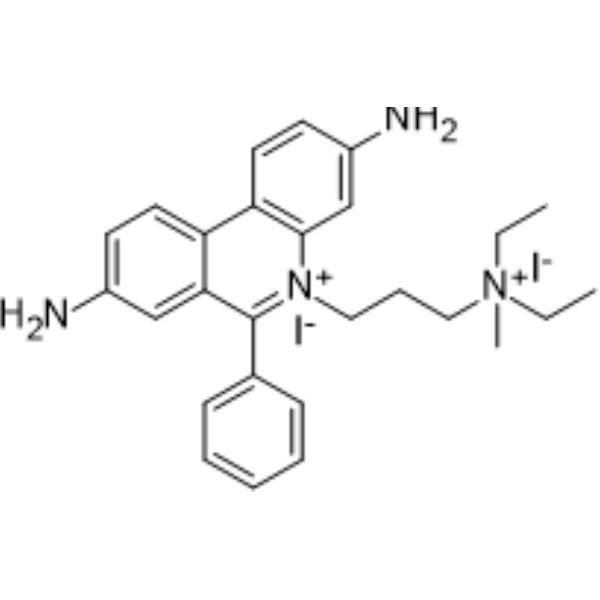
Prolonium (iodide) is membrane impermeant. Prolonium (iodide) can easily penetrate dead or damaged cells. Prolonium (iodide) is a probe that can be used for fluorescence microscopy and flow cytometry .
|
-
-
- HY-D1240
-
|
|
Biochemical Assay Reagents
|
Others
|
|
Rhodamine 101 inner salt is a bright fluorescent dye with excitation and emission maxima at 565 and 595 nm, respectively. It can be used in various biological applications such as fluorescence microscopy, flow cytometry, fluorescence correlation spectroscopy, and ELISA.
|
-
-
- HY-150741B
-
|
|
Toll-like Receptor (TLR)
Interleukin Related
|
Inflammation/Immunology
|
|
FITC-labeled ODN 2216 (sodium) is a human-specific TLR9 (toll-like receptor 9) ligand or agonist. FITC-labeled ODN 2216 (sodium) can be used to evaluate CpG ODN cellular uptake and localization by confocal laser-scanning microscopy (excitation 495 nm, emission 520 nm) or flow cytometry.
|
-
-
- HY-P990275
-
|
|
Transmembrane Glycoprotein
|
Cancer
|
|
Anti-Mouse CD326/EpCAM Antibody (G8.8) is a rat-derived IgG2a κ type antibody inhibitor, targeting to mouse CD326/EpCAM. Anti-Mouse CD326/EpCAM Antibody (G8.8) reacts with CD326 also known as EpCAM (Epithelial Cell Adhesion Molecule). Anti-Mouse CD326/EpCAM Antibody (G8.8) can be used for cancer research, such as lung carcinoma and colorectal carcinoma. Anti-Mouse CD326/EpCAM Antibody (G8.8) can be used for detections of western blot, immunohistochemistry, immunofluorescence and flow cytometry .
|
-
-
- HY-D1993
-
|
|
Fluorescent Dye
HIV
|
Infection
|
|
ATTO 647 NHS ester is a fluorescent label targeting free amino groups. ATTO 647 NHS ester can undergo a nucleophilic reaction with the free amino groups of EF-C peptide via its activated carboxylic acid group to form a stable covalent conjugate. ATTO 647 NHS ester-labeled nanofibers not only retain retroviral transduction-enhancing activity but also maintain stable fluorescent signals in both buffer and cell culture systems. ATTO 647 NHS ester is suitable for detection applications including fluorescence spectroscopy, microscopy and flow cytometry. ATTO 647 NHS ester has been used in studies related to HIV-1 infection .
|
-
-
- HY-N16309
-
|
|
Fluorescent Dye
|
Others
|
|
Cyanine 7 free acid bromide is a near-infrared fluorescent probe for labelling amine groups such as those on antibodies, nucleic acids, and proteins and can be detected using a variety of fluorescence detection techniques such as microscopy and flow cytometry.
|
-
-
- HY-D2760
-
|
|
Fluorescent Dye
|
Others
|
|
BP Fluor 488 acid is a powerful labeling dye. It will react with the amine group in antibody, proteins, peptides, amino-modified oligos, and other target molecules. The dye has an excitation peak at 499 nm and an emission peak at 520 nm. The conjugates are widely used in microscopy, flow cytometry, and other applications.
|
-
-
- HY-D1883B
-
|
|
Fluorescent Dye
|
Others
|
|
Cy7.5-COOH bromide, a cyanine dye, is a highly fluorescent compound (Abs/Em = 781/808 nm). Cy7.5-COOH bromide can be used as a fluorescent probe in a wide-range of applications such as DNA sequencing, flow cytometry and in vivo imaging .
|
-
-
- HY-D1883
-
|
|
Fluorescent Dye
|
Others
|
|
Cy7.5-COOH (compound 8f), a cyanine dye, is a highly fluorescent compound (Abs/Em = 781/808 nm). Cy7.5-COOH can be used as a fluorescent probe in a wide-range of applications such as DNA sequencing, flow cytometry and in vivo imaging .
|
-
-
- HY-D2440
-
|
|
Fluorescent Dye
|
Others
|
|
cRGD-PEG-Cy3 is a Cy3 (HY-D0822) labeled cRGD-PEG conjugate. The Cy3 fluorophore is commonly used in applications such as immunolabeling, nucleic acid labeling, fluorescence microscopy, and flow cytometry. Cy3 has an emission maximum around 562-570 nm. cRGD can be used to modify lipid for improved stability .
|
-
-
- HY-D2437
-
|
|
Fluorescent Dye
Antibiotic
|
Cardiovascular Disease
Cancer
|
|
DOX-PEG-Cy3 (Doxorubicin-PEG-Cy3) is a Cy3 (HY-D0822) labeled DOX-PEG conjugate. The Cy3 fluorophore is commonly used in applications such as immunolabeling, nucleic acid labeling, fluorescence microscopy, and flow cytometry. Cy3 has an emission maximum around 562-570 nm. DOX is a broad-spectrum anthracycline antibiotic with cytotoxic properties .
|
-
-
- HY-D2706
-
|
|
Fluorescent Dye
|
Others
|
|
Cy3 Dextran (MW 3000) is a fluorescent labeling reagent that combines Cy3 (HY-D0822) fluorescent dye and Dextran (HY-112624). The Cy3 fluorophore is commonly used in applications such as immunolabeling, nucleic acid labeling, fluorescence microscopy, and flow cytometry. Dextran has an inhibitory effect on thrombocyte aggregation and coagulation factors and is used as a plasma volume expander (Ex/Em = 550/570 nm) .
|
-
-
- HY-D2836I
-
|
FITC-Hyaluronate (MW 5000)
|
Fluorescent Dye
|
Others
|
|
FITC-HA (MW 5000) is hyaluronic acid (HA) (HY-B0633A) labeled with FITC (HY-66019). FITC-HA retains the ability of HA to bind to receptors (such as CD44) and form extracellular matrices, while it can be detected by fluorescence microscopy or flow cytometry for tracing the localization, binding, internalization and metabolic pathways of HA in cells, tissues or living organisms (Ex/Em ≈ 490/520 nM) .
|
-
-
- HY-D2341
-
|
|
Fluorescent Dye
|
Cancer
|
|
6FC-GABA-Taxol is a fluorescent probe with cell permeability, which is formed by connecting 6FC to the anticancer drug Taxol (HY-B0015) via γ-aminobutyric acid (GABA). 6FC-GABA-Taxol can bind to microtubules in living cells and image them through confocal microscopy. Additionally, 6FC-GABA-Taxol enables the quantification of microtubule binding using flow cytometry without the addition of efflux inhibitors .
|
-
-
- HY-P990274
-
|
|
Transmembrane Glycoprotein
|
Others
|
|
Anti-Canine CD34 Antibody (1H6) is a mouse-derived IgG1 κ type antibody inhibitor, targeting to canine CD34. Anti-Canine CD34 Antibody (1H6) reacts with canine CD34. Anti-Canine CD34 Antibody (1H6) can be used for the separation and identification of CD34 + cells. Anti-Canine CD34 Antibody (1H6) can be used for detections of western blot, immunohistochemistry and flow cytometry .
|
-
-
- HY-P990862
-
|
|
Transmembrane Glycoprotein
|
Cancer
|
|
Anti-CD326/EpCAM Antibody (Ber-EP4) is a kind of mouse IgG1 κ chimeric antibody, targeting to human CD326/EpCAM. Anti-CD326/EpCAM Antibody (Ber-EP4) reacts with human CD326 also known as EpCAM (Epithelial Cell Adhesion Molecule). Anti-CD326/EpCAM Antibody (Ber-EP4) is useful to distinguish between cells of mesothelial and epithelial origin. Anti-CD326/EpCAM Antibody (Ber-EP4) can be used for the detections of immunohistochemistry, immunofluorescence and flow cytometry in cancer, such as colon cancer .
|
-
-
- HY-172269
-
|
|
Fluorescent Dye
|
Others
|
|
BP Fluor 488 is a bright, green-fluorescent dye widely used for labeling aldehydes or ketones in polysaccharides or glycoproteins. The dye has an excitation peak at 499 nm and an emission peak at 520 nm. The conjugates are widely used in microscopy, flow cytometry, and other applications.
|
-
- HY-D2459
-
|
|
Fluorescent Dye
|
Cancer
|
|
Alexa Fluor 430 NHS ester is a compound that couples green fluorescent dye Alexa Fluor 430 to a protein or antibody. Alexa Fluor 430 is used for the generation of stable signals in imaging and flow cytometry. NHS ester can be used to label proteins, amine-modified oligonucleotides and other primary amines (R-NH2) containing amine molecules .
|
-
- HY-D2710
-
|
|
Fluorescent Dye
|
Others
|
|
Cy3 Dextran (MW 40000) is a fluorescent labeling reagent that combines Cy3 (HY-D0822) fluorescent dye and Dextran (HY-112624). The Cy3 fluorophore is commonly used in applications such as immunolabeling, nucleic acid labeling, fluorescence microscopy, and flow cytometry. Dextran has an inhibitory effect on thrombocyte aggregation and coagulation factors and is used as a plasma volume expander (Ex/Em = 550/570 nm) .
|
-
- HY-D2836B
-
|
FITC-Hyaluronate (MW 200000)
|
Fluorescent Dye
|
Others
|
|
FITC-HA (MW 200000) is hyaluronic acid (HA) (HY-B0633A) labeled with FITC (HY-66019). FITC-HA retains the ability of HA to bind to receptors (such as CD44) and form extracellular matrices, while it can be detected by fluorescence microscopy or flow cytometry for tracing the localization, binding, internalization and metabolic pathways of HA in cells, tissues or living organisms (Ex/Em ≈ 490/520 nM) .
|
-
- HY-P990836
-
|
|
Interleukin Related
|
Inflammation/Immunology
|
|
Anti-IL-9 Antibody (MH9A4) is a kind of mouse IgG2b κ chimeric antibody inhibitor, targeting to human IL-9. Anti-IL-9 Antibody (MH9A4) reacts with human IL-9 (interleukin-9) and does not block the binding of IL-9 to the IL-9 receptor. Anti-IL-9 Antibody (MH9A4) can be used for the detection of flow cytometry and ELISA .
|
-
- HY-P990810
-
|
|
Arenavirus
|
Infection
|
|
Anti-LCMV Nucleoprotein Antibody (VL-4) is rat-derived IgG2a κ type antibody inhibitor, targeting to LCMV nucleoprotein. Anti-LCMV Nucleoprotein Antibody (VL-4) reacts with lymphocytic choriomeningitis virus (LCMV) nucleoprotein. Anti-LCMV Nucleoprotein Antibody (VL-4) stain LCMV-infected cell internally with no surface staining. Anti-LCMV Nucleoprotein Antibody (VL-4) can be used for the detections of immunohistochemistry and flow cytometry in LCMV infection .
|
-
- HY-P990816
-
|
|
SARS-CoV
|
Infection
|
|
Anti-SARS-CoV-2 S protein Antibody (NTD, SARS2-29) is a mouse-derived IgG1 κ type antibody inhibitor, targeting to SARS-CoV-2 S protein. Anti-SARS-CoV-2 S protein Antibody (NTD, SARS2-29) reacts with the N-terminal domain (NTD) in the spike (S) protein of SARS-CoV-2 (Severe Acute Respiratory Syndrome Coronavirus 2). Anti-SARS-CoV-2 S protein Antibody (NTD, SARS2-29) can be used for the detections of flow cytometry and ELISA in SARS-CoV-2 infection .
|
-
- HY-P990847
-
|
|
E-Selectin
|
Inflammation/Immunology
|
|
Anti-E-Selectin Antibody (CL2) is a kind of mouse IgG2a κ chimeric antibody inhibitor, targeting to human E-Selectin. Anti-E-Selectin Antibody (CL2) reacts with human E-selectin also known as CD62E, endothelial-leukocyte adhesion molecule 1 (ELAM-1), and leukocyte-endothelial cell adhesion molecule 2 (LECAM2). Anti-E-Selectin Antibody (CL2) directly blocks the binding of E selectin to carbohydrate ligands. Anti-E-Selectin Antibody (CL2) can be used for the detection of flow cytometry .
|
-
- HY-P990826
-
|
|
YB-1
|
Others
|
|
Anti-YB-1 Antibody (21A3) is a mouse-derived IgG1 chimeric antibody inhibitor, targeting to human YB-1. Anti-YB-1 Antibody (21A3) reacts with human Y-box binding protein 1 (YB-1). Anti-YB-1 Antibody (21A3) can be used for the detections of immunohistochemistry, western blot and flow cytometry .
|
-
- HY-P990190
-
|
|
MHC
|
Others
|
|
Anti-Swine MHC Class I (SLAd) Antibody (74-11-10) is a mouse-derived IgG2b κ type antibody inhibitor, targeting to Swine MHC Class I. Anti-Swine MHC Class I (SLAd) Antibody (74-11-10) reacts with the swine leucocyte antigen (SLA) class I. Anti-Swine MHC Class I (SLAd) Antibody (74-11-10) can be used for the research of flow cytometry experiments .
|
-
- HY-P990142
-
|
|
MHC
|
Infection
Inflammation/Immunology
|
|
Anti-Mouse Vβ4 TCR Antibody (KT4) is an anti-mouse Vβ4 TCR IgG2b monoclonal antibody. Anti-Mouse Vβ4 TCR Antibody (KT4) can reduce the proportion of Vβ4 + T cells without affecting their function. Anti-Mouse Vβ4 TCR Antibody (KT4) can be used for research on immunology and infection conditions such as virus infection. Anti-Mouse Vβ4 TCR Antibody (KT4) is often used in flow cytometry .
|
-
- HY-P990141
-
|
|
MHC
|
Inflammation/Immunology
|
|
Anti-Mouse Vβ8 TCR Antibody (F23.1) is an anti-mouse Vβ8 TCR IgG2a monoclonal antibody. Anti-Mouse Vβ8 TCR Antibody (F23.1) can clear Vβ8 + T cells to alleviate immune conditions. Anti-Mouse Vβ8 TCR Antibody (F23.1) can be used for research on autoimmune conditions. Anti-Mouse Vβ8 TCR Antibody (F23.1) is often used in flow cytometry .
|
-
- HY-P990232
-
|
|
IFNAR
|
Others
|
|
Anti-Mouse IFNγRα/CD119 Antibody (2E2) is an Armenian hamster-derived IgG type antibody inhibitor, targeting to mouse IFNγRα/CD119. Anti-Mouse IFNγRα/CD119 Antibody (2E2) reacts with the mouse IFNγR (interferon gamma receptor) α chain also known as CD119 and IFNγ receptor 1. Anti-Mouse IFNγRα/CD119 Antibody (2E2) is a non-neutralizing antibody and does not block the binding of IFNγ to the receptor. Anti-Mouse IFNγRα/CD119 Antibody (2E2) can be used for detections of western blot, flow cytometry and immunoprecipitation .
|
-
- HY-D2435
-
|
|
Fluorescent Dye
|
Inflammation/Immunology
Cancer
|
|
CDDP-PEG-Cy3 is a MTX-PEG conjugate labeled with Cy3 (HY-D0822). The Cy3 fluorophore is commonly used in applications such as immunolabeling, nucleic acid labeling, fluorescence microscopy, and flow cytometry. The maximum emission wavelength of Cy3 is approximately 562-570 nm. Methotrexate (Amethopterin; MTX) (HY-14519), an antimetabolite and antifolate agent, inhibits the enzyme dihydrofolate reductase, thereby preventing the conversion of folic acid into tetrahydrofolate, and inhibiting DNA synthesis. Methotrexate, also an immunosuppressant and antineoplastic agent, is used for the research of rheumatoid arthritis and a number of different cancers (such as acute lymphoblastic leukemia) .
|
-
- HY-159841A
-
|
|
Fluorescent Dye
|
Others
|
|
Filricianine sodium is an hydrophilic fluorochrome. It can be conjugated to antibody with higher D/P ratio and widely used applications including western blotting, microscopy, flow cytometry, and cell based assays.
|
-
- HY-D2736
-
|
|
Fluorescent Dye
|
Others
|
|
BP Light 800 NHS ester is an amine reactive hydrophilic fluorochrome . It can be conjugated to antibody with higher D/P ratio and widely used applications including western blotting, microscopy, flow cytometry, and cell based assays.
|
-
- HY-150725B
-
|
|
Toll-like Receptor (TLR)
IFNAR
|
Inflammation/Immunology
|
|
FITC-labeled ODN 1585 (sodium) is a potent inducer of IFN and TNFα production. FITC-labeled ODN 1585 (sodium) can be used to evaluate CpG ODN cellular uptake and localization by confocal laser-scanning microscopy (excitation 495 nm, emission 520 nm) or flow cytometry.
|
-
- HY-146244B
-
|
|
Toll-like Receptor (TLR)
|
Inflammation/Immunology
|
|
FITC-labeled agatolimod (sodium), a class B CpG ODN (oligodeoxynucleotide), is a TLR9 agonist. FITC-labeled agatolimod (sodium) can be used to evaluate CpG ODN cellular uptake and localization by confocal laser-scanning microscopy (excitation 495 nm, emission 520 nm) or flow cytometry.
|
-
- HY-146245B
-
|
|
Toll-like Receptor (TLR)
|
Inflammation/Immunology
|
|
FITC-labeled ODN 1826 (sodium), a class B CpG ODN (oligodeoxynucleotide), is a TLR9 agonist. FITC-labeled ODN 1826 (sodium) can be used to evaluate CpG ODN cellular uptake and localization by confocal laser-scanning microscopy (excitation 495 nm, emission 520 nm) or flow cytometry.
|
-
- HY-150726B
-
|
|
Toll-like Receptor (TLR)
|
Inflammation/Immunology
|
|
FITC-labeled ODN 1668 (sodium), a class B CpG ODN (oligodeoxynucleotide), is a TLR9 agonist. FITC-labeled ODN 1668 (sodium) can be used to evaluate CpG ODN cellular uptake and localization by confocal laser-scanning microscopy (excitation 495 nm, emission 520 nm) or flow cytometry.
|
-
- HY-150738B
-
|
|
Toll-like Receptor (TLR)
|
Inflammation/Immunology
|
|
FITC-labeled ODN 2088 (sodium) is a potent TLR3, TLR7 and TLR9 inhibitor. FITC-labeled ODN 2088 (sodium) can be used to evaluate CpG ODN cellular uptake and localization by confocal laser-scanning microscopy (excitation 495 nm, emission 520 nm) or flow cytometry.
|
-
- HY-D2760A
-
|
|
Fluorescent Dye
|
Others
|
|
BP Fluor 488 acid triTEA is a powerful labeling dye. It will react with the amine group in antibody, proteins, peptides, amino-modified oligos, and other target molecules. The dye has an excitation peak at 499 nm and an emission peak at 520 nm. The conjugates are widely used in microscopy, flow cytometry, and other applications.
|
-
- HY-150751B
-
|
|
Toll-like Receptor (TLR)
|
Inflammation/Immunology
|
|
FITC-labeled ODN TTAGGG (sodium), a inhibitory oligonucleotide (ODN), is a TLR9, AIM2 and cGAS antagonist. FITC-labeled ODN TTAGGG (sodium) can be used to evaluate CpG ODN cellular uptake and localization by confocal laser-scanning microscopy (excitation 495 nm, emission 520 nm) or flow cytometry.
|
-
- HY-D2434
-
|
|
Fluorescent Dye
|
Others
|
|
HRP-PEG-Cy3 is a HRP and Cy3 (HY-D0822) labeled PEG. The Cy3 fluorophore is commonly used in applications such as immunolabeling, nucleic acid labeling, fluorescence microscopy, and flow cytometry. Cy3 has an emission maximum around 562-570 nm.
|
-
- HY-178353
-
|
|
EGFR
TNF Receptor
Interleukin Related
Apoptosis
|
Inflammation/Immunology
Cancer
|
|
EGFR/Cytokine-IN-1 is an EGFR (IC50 = 0.03 μM) and Cytokine inhibitor (TNF-α, IC50 = 3.1 μM; IL-6, IC50 = 1.6 μM). EGFR/Cytokine-IN-1 shows potent anticancer activity on A549 and MCF7, respectively. EGFR/Cytokine-IN-1 significantly reduces IL-6 and TNF-α levels in A549 cells, and also shows promising ADMET profiles. EGFR/Cytokine-IN-1 can induce apoptosis in a dose-dependent manner. compound 5h can be used for the study of breast cancer and lung cancer .
|
-
- HY-P4900
-
|
|
Caspase
|
Others
|
|
Fluorescein-6-carbonyl-Asp(OMe)-Glu(OMe)-Val-DL-Asp(OMe)-fluoromethylketone is a cell-permeable, non-toxic inhibitor that binds irreversibly to activated caspase-3 in apoptotic cells. The fluorescence intensity can be measured by flow cytometry, microwell plate reader, or fluorescence microscopy .
|
-
- HY-D2012
-
|
|
Fluorescent Dye
|
Others
|
|
ATTO 488 iodacetamid is a fluorescent dye suitable for single molecule detection applications and high-resolution microscopy for use in flow cytometry (FACS), fluorescence in situ hybridization (FISH) experiments. ATTO 488 iodacetamid has an effective excitation wavelength of 480-515 nm. When using an argon ion laser, the excitation wavelength is recommended to be 488 nm.
|
-
- HY-D1883A
-
|
|
Fluorescent Dye
|
Others
|
|
Cy7.5-COOH TEA (compound 8f), a cyanine dye, is a highly fluorescent compound (Abs/Em = 781/808 nm). Cy7.5-COOH TEA can be used as a fluorescent probe in a wide-range of applications such as DNA sequencing, flow cytometry and in vivo imaging .
|
-
- HY-D2761
-
|
|
Fluorescent Dye
|
Others
|
|
DY-680-NHS ester is an amine reactive hydrophilic fluorochrome. It can be conjugated to an antibody with higher D/P ratio without causing fluorescence quenching and conjugate precipitation, and it is widely used in applications including western blotting, microscopy, flow cytometry, and cell-based assays. The spectrum has an excitation of 690nm and emission at 709nm.
|
-
- HY-N16316
-
|
|
Fluorescent Dye
|
Others
|
|
Meso-Cl cyanine 7 free acid chloride is a Meso-Cl cyanine fluorescent dye. Meso-Cl cyanine 7 free acid chloride can be used for labelling amine groups such as those on antibodies, nucleic acids, and proteins and can be detected using a variety of fluorescence detection techniques such as microscopy and flow cytometry (Ex/Em = 778/805 nm) .
|
-
- HY-164191
-
|
|
DNA/RNA Synthesis
|
Others
|
|
m7(3'Ma-Peg5-FAM)Gppp(2'OMe)ApG ammonium is a FAM-labled cap analogue that can be used for mRNA synthesis. The efficiency of mRNA delivery can be determined by the detection of FAM by flow cytometry, which can be used to track mRNA in cells and in living animals and to screen delivery lipid ratios.
|
-
- HY-147861
-
|
|
Topoisomerase
Apoptosis
|
Cancer
|
|
Topoisomerase II inhibitor 11 (compound 3d) is a potent Topoisomerase II inhibitor, with an IC50 of 2.89 μM. Topoisomerase II inhibitor 11 shows 92.46% inhibition on renal cancer cell line A498 with an IC50 of 3.5 μM. Topoisomerase II inhibitor 11 causes cell cycle arrest at the G2/M phase leading to cell proliferation inhibition and pro-apoptotic activity .
|
-
- HY-D2712
-
|
|
Fluorescent Dye
|
Others
|
|
Cy3 Dextran (MW 500000) is a fluorescent labeling reagent that combines Cy3 (HY-D0822) fluorescent dye and Dextran (HY-112624). The Cy3 fluorophore is commonly used in applications such as immunolabeling, nucleic acid labeling, fluorescence microscopy, and flow cytometry. Dextran has an inhibitory effect on thrombocyte aggregation and coagulation factors and is used as a plasma volume expander (Ex/Em = 550/570 nm) .
|
-
- HY-D3320
-
|
|
Fluorescent Dye
|
Others
|
|
APC-AF700 is a tandem fluorochrome conjugate for flow cytometry. APC-AF700 can be incorporated into 10-color and 12-color flow cytometry antibody panels (Ex/Em = 633/715 nm) .
|
-
- HY-D2428
-
|
|
Fluorescent Dye
|
Cardiovascular Disease
Infection
Inflammation/Immunology
Cancer
|
|
OVA-PEG-Cy3 is a Cy3 (HY-D0822)-labeled OVA-PEG conjugate. The Cy3 fluorophore is commonly used in applications such as immunolabeling, nucleic acid labeling, fluorescence microscopy, and flow cytometry. The maximum emission wavelength of Cy3 is approximately 562-570 nm. Ovalbumins (OVA), the main protein found in egg whites, have various biological activities such as anticancer, antihypertensive, antibacterial, antioxidant and immunomodulatory activities. Ovalbumins are the most abundant proteins synthesized in progesterone- or estrogen-treated fallopian tubes and are commonly used as markers to study hormone regulation of gene expression in tissues .
|
-
- HY-D3275
-
|
|
Fluorescent Dye
|
Others
|
|
PE-Cy5.5 is a far-red emitting tandem dye designed based on the principle of fluorescence resonance energy transfer (FRET), and is widely used in multicolor flow cytometry. PE-Cy5.5 consists of phycoerythrin (PE) as the energy donor and the cyanine dye Cy5.5 as the energy acceptor. Upon excitation by blue or green laser light, PE absorbs energy and transfers it to Cy5.5 via FRET, ultimately resulting in Cy5.5 emitting characteristic far-red fluorescence (Ex/Em = 450-500 nm/698 nm) .
|
-
- HY-66020A
-
|
6-Fluorescein Isothiocyanate (90%)
|
Fluorescent Dye
|
Cancer
|
|
6-FITC (90%) (6-Fluorescein Isothiocyanate (90%)) is a derivative of fluorescein used in wide-ranging applications including flow cytometry.
|
-
- HY-D3347
-
|
|
Fluorescent Dye
|
Cancer
|
|
DUPA-FITC is a fluorescent reagent targeting PSMA, which specifically binds to prostate cancer cells expressing PSMA without non-specific binding to normal blood cells. DUPA-FITC can label PSMA-expressing prostate cancer cells in whole blood, followed by internalization and trafficking to acidic intracellular endosomes, during which the fluorescence is quenched. When combined with flow cytometry and density gradient centrifugation enrichment, DUPA-FITC enables quantitative analysis of circulating tumor cells in peripheral blood samples from prostate cancer patients .
|
-
- HY-P991817
-
|
|
Transmembrane Glycoprotein
|
Cancer
|
|
Anti-Mouse CD318 Antibody (9a2) reacts with the mouse that selectively recognized native CD318 protein on both human and mouse cell surfaces in flow cytometry assays.
|
-
- HY-D3327
-
|
|
Fluorescent Dye
|
Others
|
|
PE-AF700 is a tandem fluorescent dye used for flow cytometry, consisting of the donor phycoerythrin (PE) and the acceptor Alexa Fluor 700 (AF700) (Ex/Em = 488 nm/715 nm) .
|
-
- HY-D3274
-
|
|
Fluorescent Dye
|
Others
|
|
PE-Cy5 is a tandem fluorescent dye commonly used in flow cytometry, immunofluorescence, and cell biology research. It is formed by the covalent linkage of two fluorescent molecules, namely phycoerythrin and CY5. PE-Cy5 binds to human FcγRI (CD64), and this binding can be blocked by human pooled serum, anti-CD64 monoclonal antibodies targeting the ligand-binding region, or aggregated IgG. PE-Cy5 supports three-color flow cytometry analysis, and whole blood staining can partially reduce its non-specific binding (Ex/Em = 450-500 nm/665 nm) .
|
-
- HY-D3328
-
|
|
Fluorescent Dye
|
Others
|
|
APC-Cy5.5 is a tandem dye widely used in flow cytometry. It consists of the energy donor allophycocyanin (APC) and the energy acceptor Cy5.5, and operates via the fluorescence resonance energy transfer mechanism (Ex/Em = 650 nm/690 nm) .
|
-
- HY-D3276
-
|
|
Fluorescent Dye
|
Others
|
|
PE-Cy7 is a tandem fluorescent dye composed of R-phycoerythrin (PE) coupled with the near-infrared dye Cy7. It is primarily excited by a 488 nm laser, with a maximum emission wavelength of approximately 780 nm. PE-Cy7 is widely used in flow cytometry and immunofluorescence staining.
|
-
- HY-D3260
-
|
|
Fluorescent Dye
|
Others
|
|
PerCP-Cy5.5 is a tandem fluorescent dye composed of a polydinoflavin-chlorophyll protein complex (PerCP) coupled with the anthocyanin dye Cy5.5. PerCP-Cy5.5 is widely used in multicolor flow cytometry analysis (Ex/Em = 48/677-695 nm).
|
-
- HY-DY1099
-
|
7-AAD (solution)
|
DNA/RNA Synthesis
DNA Stain
Bacterial
Antibiotic
|
Cancer
|
7-Aminoactinomycin D (solution) (7-AAD (solution)) a cell-impermeant fluorescent DNA stain, is a potent RNA polymerase inhibitor. 7-Aminoactinomycin D selectively binds to GC regions of the DNA. 7-Aminoactinomycin D also has antibacterial effects . Solvent and concentration: DMSO: 1 mg/mL
|
-
- HY-D3321
-
|
|
Fluorescent Dye
|
Others
|
|
Streptavidin, R-Phycoerythrin conjugate (SAPE) is a streptavidin-labeled phycoerythrin. Streptavidin, R-Phycoerythrin conjugate (SAPE) can be used in conjunction with biotinylated reagents in anti-Biotin/biotin-labeled systems, suitable for flow cytometry detection, microarray analysis, and microplate detection (Ex/Em = 450-500 nm/575 nm).
|
-
- HY-W416298
-
|
|
DNA/RNA Synthesis
|
Others
|
|
5-Vinyl-uridine (VU) is a uridine analog with a terminal alkene. 5-Vinyl-uridine is incorporated into new RNA by RNA polymerases, replacing endogenous uridine. Then, it can be detected rapidly and sensitively through an IEDDA reaction with a tetrazole probe, thereby enabling the monitoring of the transcription process using fluorescence techniques (such as monitoring through microscopes or flow cytometry).
|
-
- HY-N16307
-
|
|
Fluorescent Dye
|
Others
|
|
Meso-Cl cyanine 7.5 free acid chloride is a Meso-Cl cyanine fluorescent dye. Meso-Cl cyanine 7.5 free acid chloride can be used for labelling amine groups such as those on antibodies, nucleic acids, and proteins and can be detected using a variety of fluorescence detection techniques such as microscopy and flow cytometry (Ex/Em = 815/825 nm) .
|
-
- HY-D3321A
-
|
|
Fluorescent Dye
|
Others
|
|
High concentration Streptavidin, R-Phycoerythrin conjugate (SAPE) is a streptavidin-labeled phycoerythrin. High concentration Streptavidin, R-Phycoerythrin conjugate (SAPE) can be used in conjunction with biotinylated reagents in anti-Biotin/biotin-labeled systems, suitable for flow cytometry detection, microarray analysis, and microplate detection (Ex/Em = 450-500 nm/575 nm).
|
-
- HY-P991783
-
|
|
EGFR
|
Cancer
|
|
Anti-Mouse EGFR (domain I) Antibody (EMab-300) reacts with domain I of the mouse EGFR. Anti-Mouse EGFR (domain I) Antibody (EMab-300) applies to the detection of mouse EGFR using flow cytometry. Recommend Isotype Controls: Rat IgG1 kappa, Isotype Control (HY-P99979) .
|
-
- HY-114118F4
-
|
Semaglutide-Lys(FITC)
|
Fluorescent Dye
GLP Receptor
|
Metabolic Disease
|
|
Semaglutide-FITC (Semaglutide-Lys(FITC)) is a FITC-labeled Semaglutide (a GLP-1R agonist) (HY-114118). Semaglutide-FITC can be used to directly track the distribution, cellular uptake, and transmembrane transport process of vesicles through techniques such as fluorescence imaging and flow cytometry. Semaglutide-FITC can be employed to study the movement and penetration ability of mixed vesicles in porcine intestinal mucus in vitro .
|
-
- HY-D2707
-
|
|
Fluorescent Dye
|
Others
|
|
Cy3 Dextran (MW 5000) is a fluorescent labeling reagent that combines Cy3 (HY-D0822) fluorescent dye and Dextran (HY-112624). The Cy3 fluorophore is commonly used in applications such as immunolabeling, nucleic acid labeling, fluorescence microscopy, and flow cytometry. Dextran has an inhibitory effect on thrombocyte aggregation and coagulation factors and is used as a plasma volume expander (Ex/Em = 550/570 nm) .
|
-
- HY-164189
-
|
|
DNA/RNA Synthesis
|
Others
|
|
m7(3'Ma-Cy3)Gppp(2'OMe)ApG ammonium is a Cy3-labled cap analogue that can be used for mRNA synthesis. The efficiency of mRNA delivery can be determined by the detection of Cy3 by flow cytometry, which can be used to track mRNA in cells and in living animals and to screen delivery lipid ratios.
|
-
- HY-D2705
-
|
|
Fluorescent Dye
|
Others
|
|
Cy3 Dextran (MW 2000) is a fluorescent labeling reagent that combines Cy3 (HY-D0822) fluorescent dye and Dextran (HY-112624). The Cy3 fluorophore is commonly used in applications such as immunolabeling, nucleic acid labeling, fluorescence microscopy, and flow cytometry. Dextran has an inhibitory effect on thrombocyte aggregation and coagulation factors and is used as a plasma volume expander (Ex/Em = 550/570 nm) .
|
-
- HY-D2836E
-
|
FITC-Hyaluronate (MW 10000)
|
Fluorescent Dye
|
Others
|
|
FITC-HA (MW 10000) is hyaluronic acid (HA) (HY-B0633A) labeled with FITC (HY-66019). FITC-HA retains the ability of HA to bind to receptors (such as CD44) and form extracellular matrices, while it can be detected by fluorescence microscopy or flow cytometry for tracing the localization, binding, internalization and metabolic pathways of HA in cells, tissues or living organisms (Ex/Em ≈ 490/520 nM) .
|
-
- HY-D2836J
-
|
FITC-Hyaluronate (MW 3000)
|
Fluorescent Dye
|
Others
|
|
FITC-HA (MW 3000) is hyaluronic acid (HA) (HY-B0633A) labeled with FITC (HY-66019). FITC-HA retains the ability of HA to bind to receptors (such as CD44) and form extracellular matrices, while it can be detected by fluorescence microscopy or flow cytometry for tracing the localization, binding, internalization and metabolic pathways of HA in cells, tissues or living organisms (Ex/Em ≈ 490/520 nM) .
|
-
- HY-D2711
-
|
|
Fluorescent Dye
|
Others
|
|
Cy3 Dextran (MW 100000) is a fluorescent labeling reagent that combines Cy3 (HY-D0822) fluorescent dye and Dextran (HY-112624). The Cy3 fluorophore is commonly used in applications such as immunolabeling, nucleic acid labeling, fluorescence microscopy, and flow cytometry. Dextran has an inhibitory effect on thrombocyte aggregation and coagulation factors and is used as a plasma volume expander (Ex/Em = 550/570 nm) .
|
-
- HY-D2431
-
|
|
Fluorescent Dye
|
Others
|
|
Galactose-PEG-Cy3 is a Cy3 (HY-D0822) labeled Galactose-PEG conjugate. The Cy3 fluorophore is commonly used in applications such as immunolabeling, nucleic acid labeling, fluorescence microscopy, and flow cytometry. Cy3 has an emission maximum around 562-570 nm. Galactose-PEG improves drug cellular uptake and reduces endosomal degradation, and can be used in drug delivery .
|
-
- HY-D2836D
-
|
FITC-Hyaluronate (MW 50000)
|
Fluorescent Dye
|
Others
|
|
FITC-HA (MW 50000) is hyaluronic acid (HA) (HY-B0633A) labeled with FITC (HY-66019). FITC-HA retains the ability of HA to bind to receptors (such as CD44) and form extracellular matrices, while it can be detected by fluorescence microscopy or flow cytometry for tracing the localization, binding, internalization and metabolic pathways of HA in cells, tissues or living organisms (Ex/Em ≈ 490/520 nM) .
|
-
- HY-D2836C
-
|
FITC-Hyaluronate (MW 100000)
|
Fluorescent Dye
|
Others
|
|
FITC-HA (MW 100000) is hyaluronic acid (HA) (HY-B0633A) labeled with FITC (HY-66019). FITC-HA retains the ability of HA to bind to receptors (such as CD44) and form extracellular matrices, while it can be detected by fluorescence microscopy or flow cytometry for tracing the localization, binding, internalization and metabolic pathways of HA in cells, tissues or living organisms (Ex/Em ≈ 490/520 nM) .
|
-
- HY-164188
-
|
|
DNA/RNA Synthesis
|
Others
|
|
m7(3'Ma-Cy5)Gppp(2'OMe)ApG ammonium is a Cy5-labled cap analogue that can be used for mRNA synthesis. The efficiency of mRNA delivery can be determined by the detection of Cy5 by flow cytometry, which can be used to track mRNA in cells and in living animals and to screen delivery lipid ratios.
|
-
- HY-D2836A
-
|
FITC-Hyaluronate (MW 500000)
|
Fluorescent Dye
|
Others
|
|
FITC-HA (MW 500000) is hyaluronic acid (HA) (HY-B0633A) labeled with FITC (HY-66019). FITC-HA retains the ability of HA to bind to receptors (such as CD44) and form extracellular matrices, while it can be detected by fluorescence microscopy or flow cytometry for tracing the localization, binding, internalization and metabolic pathways of HA in cells, tissues or living organisms (Ex/Em ≈ 490/520 nM) .
|
-
- HY-D2430
-
|
|
Fluorescent Dye
Bacterial
Fungal
|
Infection
Cancer
|
|
Chitosan-PEG-Cy3 is a fluorescent labeling reagent that combines Cy3 (HY-D0822) fluorescent dye, Chitosan and polyethylene glycol (PEG). The Cy3 fluorophore is commonly used in applications such as immunolabeling, nucleic acid labeling, fluorescence microscopy, and flow cytometry. Cy3 has an emission maximum around 562-570 nm. Chitosan exhibits antimicrobial activity against various bacteria and fungi .
|
-
- HY-164187
-
|
|
DNA/RNA Synthesis
|
Others
|
|
m7(3'Ma-Cy7)Gppp(2'OMe)ApG ammonium is a Cy7-labled cap analogue that can be used for mRNA synthesis. The efficiency of mRNA delivery can be determined by the detection of Cy7 by flow cytometry, which can be used to track mRNA in cells and in living animals and to screen delivery lipid ratios.
|
-
- HY-D2836H
-
|
FITC-Hyaluronate (MW 7000)
|
Fluorescent Dye
|
Others
|
|
FITC-HA (MW 7000) is hyaluronic acid (HA) (HY-B0633A) labeled with FITC (HY-66019). FITC-HA retains the ability of HA to bind to receptors (such as CD44) and form extracellular matrices, while it can be detected by fluorescence microscopy or flow cytometry for tracing the localization, binding, internalization and metabolic pathways of HA in cells, tissues or living organisms (Ex/Em ≈ 490/520 nM) .
|
-
- HY-D2836
-
|
FITC-Hyaluronate (MW 1000000)
|
Fluorescent Dye
|
Others
|
|
FITC-HA (MW 1000000) is hyaluronic acid (HA) (HY-B0633A) labeled with FITC (HY-66019). FITC-HA retains the ability of HA to bind to receptors (such as CD44) and form extracellular matrices, while it can be detected by fluorescence microscopy or flow cytometry for tracing the localization, binding, internalization and metabolic pathways of HA in cells, tissues or living organisms (Ex/Em ≈ 490/520 nM) .
|
-
- HY-D0988A
-
|
R-PE (concentrated solution)
|
Fluorescent Dye
Apoptosis
|
Others
|
|
R-Phycoerythrin (R-PE) (concentrated solution) is found in Heterosiphonia japonica. R-Phycoerythrin (concentrated solution) is an orange-red fluorescent probe with α, β, and γ subunits. R-Phycoerythrin (concentrated solution) can be used in photodynamic therapy (PDT) to induce apoptosis in tumor cells. R-Phycoerythrin (concentrated solution) can be used in fluorescence microscopy, flow cytometry, and immunofluorescence analysis (Ex/Em = 496/578 nm) .
|
-
- HY-D2433
-
|
|
Fluorescent Dye
|
Others
|
|
Glucose-PEG2000-Cy3 is a Cy3 (HY-D0822) labeled Glucose-PEG conjugate. The Cy3 fluorophore is commonly used in applications such as immunolabeling, nucleic acid labeling, fluorescence microscopy, and flow cytometry. Cy3 has an emission maximum around 562-570 nm. Glucose-PEG improves drug cellular uptake and reduces endosomal degradation, and can be used in drug delivery .
|
-
- HY-D2466
-
|
|
Fluorescent Dye
|
Cardiovascular Disease
|
|
Cy3 Dextran (MW 70000) is a fluorescent labeling reagent that conjugates the Cy3 (HY-D0822) fluorescent dye with Dextran (HY-112624). The Cy3 fluorophore is commonly used in applications such as immunolabeling, nucleic acid labeling, fluorescence microscopy, and flow cytometry. The maximum emission wavelength of Cy3 is approximately 562-570 nm. Dextran inhibits platelet aggregation and coagulation factors, and serves as a plasma volume expander .
|
-
- HY-D2709
-
|
|
Fluorescent Dye
|
Others
|
|
Cy3 Dextran (MW 20000) is a fluorescent labeling reagent that combines Cy3 (HY-D0822) fluorescent dye and Dextran (HY-112624). The Cy3 fluorophore is commonly used in applications such as immunolabeling, nucleic acid labeling, fluorescence microscopy, and flow cytometry. Dextran has an inhibitory effect on thrombocyte aggregation and coagulation factors and is used as a plasma volume expander (Ex/Em = 550/570 nm) .
|
-
- HY-P11110
-
|
|
PD-1/PD-L1
|
Cancer
|
|
RK-10 is a PD-L1 binding peptide. RK-10 conjugated with Cy5 (HY-D0821) or Biotin (HY-B0511) can used to detect PD-L1 expressing tumors with flow cytometry or immunohistochemistry. RK-10 can be used for cancers like NSCLC, breast cancer, squamous cell carcinoma and melanoma detection research .
|
-
- HY-D2601
-
|
|
Fluorescent Dye
|
Others
|
|
ICG PEG3400 NH2 is a polyethylene glycol derivative containing Indocyanine green (ICG) (HY-D0711) fluorescent dye and polyethylene glycol (PEG) and an amino group. The Indocyanine green fluorophore is commonly used in applications such as immunolabeling, nucleic acid labeling, fluorescence microscopy, and flow cytometry. ICG PEG3400 NH2 can be used for fluorescence imaging, fluorescence tracing and fluorescence labeling (Ex/Em=785/813 nm).
|
-
- HY-D2600
-
|
|
Fluorescent Dye
|
Others
|
|
ICG PEG2000 NH2 is a polyethylene glycol derivative containing Indocyanine green (ICG) (HY-D0711) fluorescent dye and polyethylene glycol (PEG) and an amino group. The Indocyanine green fluorophore is commonly used in applications such as immunolabeling, nucleic acid labeling, fluorescence microscopy, and flow cytometry. ICG PEG2000 NH2 can be used for fluorescence imaging, fluorescence tracing and fluorescence labeling (Ex/Em=785/813 nm).
|
-
- HY-D2602
-
|
|
Fluorescent Dye
|
Others
|
|
ICG PEG5000 NH2 is a polyethylene glycol derivative containing Indocyanine green (ICG) (HY-D0711) fluorescent dye and polyethylene glycol (PEG) and an amino group. The Indocyanine green fluorophore is commonly used in applications such as immunolabeling, nucleic acid labeling, fluorescence microscopy, and flow cytometry. ICG PEG5000 NH2 can be used for fluorescence imaging, fluorescence tracing and fluorescence labeling (Ex/Em=785/813 nm).
|
-
- HY-D0988B
-
|
R-PE ammonium sulfate precipitate
|
Fluorescent Dye
Apoptosis
|
Others
|
|
R-Phycoerythrin (R-PE) (ammonium sulfate precipitate) is found in Heterosiphonia japonica. R-Phycoerythrin (ammonium sulfate precipitate) is an orange-red fluorescent probe with α, β, and γ subunits. R-Phycoerythrin (concentrated solution) can be used in photodynamic therapy (PDT) to induce apoptosis in tumor cells. R-Phycoerythrin (ammonium sulfate precipitate) can be used in fluorescence microscopy, flow cytometry, and immunofluorescence analysis (Ex/Em = 496/578 nm) .
|
-
- HY-D2441
-
|
|
Fluorescent Dye
|
Cancer
|
|
TAT-PEG-Cy3 is a fluorescent labeling reagent that combines Cy3 fluorescent dye, Cell membrane penetrating peptide (TAT) and polyethylene glycol (PEG). The Cy3 fluorophore is commonly used in applications such as immunolabeling, nucleic acid labeling, fluorescence microscopy, and flow cytometry. Cy3 has an emission maximum around 562-570 nm. TAT-PEG-Cy3 can be used for cell targeted delivery and biological imaging .
|
-
- HY-D2599
-
|
|
Fluorescent Dye
|
Others
|
|
ICG PEG1000 NH2 is a polyethylene glycol derivative containing Indocyanine green (ICG) (HY-D0711) fluorescent dye and polyethylene glycol (PEG) and an amino group. The Indocyanine green fluorophore is commonly used in applications such as immunolabeling, nucleic acid labeling, fluorescence microscopy, and flow cytometry. ICG PEG1000 NH2 can be used for fluorescence imaging, fluorescence tracing and fluorescence labeling (Ex/Em=785/813 nm).
|
-
- HY-W800695
-
|
|
Fluorescent Dye
|
Others
|
|
BP Fluor 405 DBCO is a blue-fluorescent dye that often used in multi-color applications, including flow cytometry and super-resolution microscopy using STORM. Its excitation is ideally suited for the 407 nm spectral line of the krypton laser or the 408 nm violet laser diode. BP Fluor 405 DBCO reacts with azides via a copper-free click chemistry reaction to form a stable triazole and does not require a Cu-catalyst or elevated temperatures.
|
-
- HY-111330
-
|
HPF; 3'-p-(Hydroxyphenyl) fluorescein
|
Fluorescent Dye
Reactive Oxygen Species (ROS)
|
Others
|
|
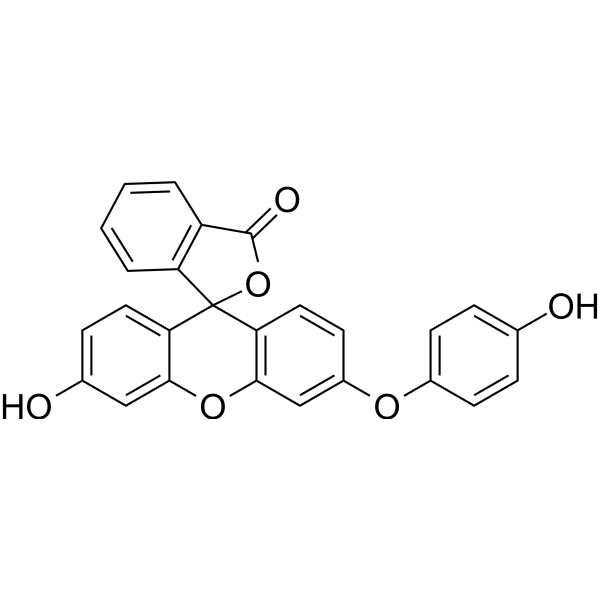
Hydroxyphenyl Fluorescein (HPF) is a stable ROS fluorescent probe dye. Hydroxyphenyl Fluorescein has stronger specificity and stability than H2DCFDA (HY-D0940). Hydroxyphenyl Fluorescein can produce strong green fluorescence through hydroxyl radical reaction with intracellular peroxynitroso. Hydroxyphenyl Fluorescein can be applied for fluorescence microscopy, high-throughput imager, luciferase microplate reader or flow cytometry. Ex/Em=490/515 nm .
|
-
- HY-D2603
-
|
|
Fluorescent Dye
|
Others
|
|
ICG PEG10000 NH2 is a polyethylene glycol derivative containing Indocyanine green (ICG) (HY-D0711) fluorescent dye and polyethylene glycol (PEG) and an amino group. The Indocyanine green fluorophore is commonly used in applications such as immunolabeling, nucleic acid labeling, fluorescence microscopy, and flow cytometry. ICG PEG10000 NH2 can be used for fluorescence imaging, fluorescence tracing and fluorescence labeling (Ex/Em=785/813 nm).
|
-
- HY-D2588
-
|
|
Fluorescent Dye
|
Others
|
|
Cy7.5 PEG-NH2 is a polyethylene glycol derivative containing CY7.5 (HY-D0926) fluorescent dye and polyethylene glycol (PEG) and an amino group. The CY7.5 fluorophore is commonly used in applications such as immunolabeling, nucleic acid labeling, fluorescence microscopy, and flow cytometry. Cy7.5 PEG-NH2 can be used for fluorescence imaging, fluorescence tracing and fluorescence labeling.
|
-
- HY-W800680
-
|
|
Fluorescent Dye
|
Others
|
|
BP Fluor 488 DBCO is a popular labeling dye used in copper-free Click Chemistry reactions. It will react with the azide group in antibody, proteins, peptides, amino-modified oligos, and other target molecules. The dye has an excitation peak at 499 nm and an emission peak at 520 nm. The conjugates are widely used in microscopy, flow cytometry, and other applications. BP Fluor 488 is a pure 5-sulfonated rhodamine molecule and it eliminates the lot-to-lot variation caused by two isomers ratio differences.
|
-
- HY-W781921
-
|
|
Fluorescent Dye
|
Others
|
|
BP Fluor 488 Alkyne is a popular labeling dye used in Click Chemistry reactions. It will react with the azide group in antibody, proteins, peptides, amino-modified oligos, and other target molecules. The dye has an excitation peak at 499 nm and an emission peak at 520 nm. The conjugates are widely used in microscopy, flow cytometry, and other applications. BP Fluor 488 is a pure 5-sulfonated rhodamine molecule and it eliminates the lot-to-lot variation caused by two isomers ratio differences.
|
-
- HY-P990850
-
|
|
c-Myc
|
Cancer
|
|
Anti-c-myc Antibody (9E10) is a kind of mouse IgG1 chimeric antibody, targeting to human c-myc. Anti-c-myc Antibody (9E10) reacts with human c-myc, which is over-expressing in several types of human cancers including lung, breast and colon carcinomas. Anti-c-myc Antibody (9E10) can be can be used for the detections of western blot, ELISA, immunoprecipitation and flow cytometry .
|
-
- HY-153231A
-
|
|
Fluorescent Dye
Liposome
|
Others
|
|
eGFP mRNA-LNP (500 ng/μL) is a lipid nanoparticle (LNP) containing eGFP mRNA. eGFP mRNA-LNP carries Enhanced Green Fluorescent Protein (eGFP), which will express green fluorescent protein after entering the cell. eGFP is commonly used as a reporter gene detectable by fluorescence microscopy or flow cytometry (excitation wavelength = 488 nm; emission wavelength = 535/40 bandpass). eGFP mRNA-LNP can be used for RNA delivery, translation efficiency and cell viability .
|
-
- HY-D2426
-
|
|
Fluorescent Dye
Transferrin Receptor
|
Cardiovascular Disease
|
|
Cy3-Transferrin is a fluorescent labeling reagent that combines Cy3 (HY-D0822) fluorescent dye and Transferrin (HY-P3267). The Cy3 fluorophore is commonly used in applications such as immunolabeling, nucleic acid labeling, fluorescence microscopy, and flow cytometry. Cy3 has an emission maximum around 562-570 nm. Transferrin, a blood-plasma glycoprotein, is a target ligand for transferrin receptor. Transferrin can bind to and mediate the transport of iron .
|
-
- HY-D2436
-
|
|
Fluorescent Dye
Microtubule/Tubulin
Apoptosis
|
Cardiovascular Disease
Cancer
|
|
PTX-PEG-Cy3 (Paclitaxel-PEG-Cy3) is a Cy3 (HY-D0822) labeled PTX-PEG conjugate. The Cy3 fluorophore is commonly used in applications such as immunolabeling, nucleic acid labeling, fluorescence microscopy, and flow cytometry. Cy3 has an emission maximum around 562-570 nm. PTX stabilizes tubulin polymerization. PTX can cause both mitotic arrest and apoptotic cell death. PTX also induces autophagy .
|
-
- HY-116215
-
|
|
Fluorescent Dye
|
Others
|
|
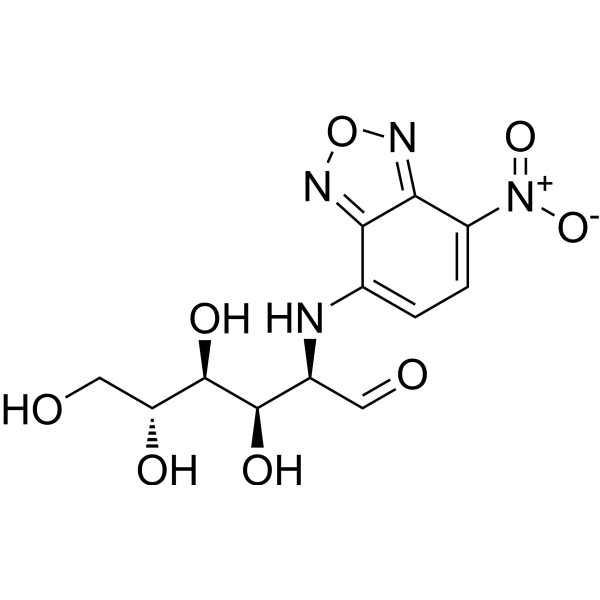
2-NBDG is a fluorescently-labeled deoxyglucose analog that is used primarily to directly monitor glucose uptake by living cells and tissues. It is also used as a topical contrast reagent for the detection of neoplasia. 2-NBDG can be used in real-time confocal, high-resolution, or wide-field fluorescence microscopy as well as in flow cytometry. The probe can be excited by the Argon laser at 488 nm to give the environment-sensitive fluorescence. It has lower photostability than the rhodamine-based fluorescent probes.
|
-
- HY-161283
-
|
|
MAP3K
|
Others
|
|
JT21-25 (compound 9h) is a potent and selective inhibitor of apoptosis signal-regulating kinase 1 (ASK1), with IC50 of 5.1 nM .
|
-
- HY-D3209
-
|
|
Fluorescent Dye
Quinone Reductase
|
Cancer
|
|
NIR-ASM is a near-infrared fluorescent probe that can cross cell membranes and be activated by NQO1. NIR-ASM can distinguish NQO1-expressing cancer cells from normal cells via fluorescence microscopy and flow cytometry. NIR-ASM generates near-infrared fluorescence with a high signal-to-noise ratio in tumor models with NQO1 activity, enabling the detection of endogenous NQO1 activity in vivo. NIR-ASM is applicable to the research of lung cancer and breast cancer .
|
-
- HY-DY1035
-
|
|
Reactive Oxygen Species (ROS)
Fluorescent Dye
|
Others
|
Hydroxyphenyl Fluorescein (HPF) (solution) is a stable ROS fluorescent probe dye. Hydroxyphenyl Fluorescein has stronger specificity and stability than H2DCFDA (HY-D0940). Hydroxyphenyl Fluorescein can produce strong green fluorescence through hydroxyl radical reaction with intracellular peroxynitroso. Hydroxyphenyl Fluorescein can be applied for fluorescence microscopy, high-throughput imager, luciferase microplate reader or flow cytometry. Ex/Em=490/515 nm . Solvent and concentration: DMSO: 10 mM
|
-
- HY-D2439
-
|
|
Fluorescent Dye
|
Cancer
|
|
RGD-PEG-Cy3 is a fluorescent labeling reagent that combines Cy3 fluorescent dye, peptide (RGD) and polyethylene glycol (PEG). The Cy3 fluorophore is commonly used in applications such as immunolabeling, nucleic acid labeling, fluorescence microscopy, and flow cytometry. Cy3 has an emission maximum around 562-570 nm. RGD is a peptide sequence (CRGDKGPDCiRGD) that binds to αvβ3 and αvβ5 integrin receptors on tumor neovasculogenesis to achieve specific tumor tissue targeting .
|
-
- HY-D0150A
-
|
|
Fluorescent Dye
|
Others
|
|
(Z)-Thiazole Orange iodide is an asymmetric cyanine dye whose fluorescence highly depends on the local environment.(Z)-Thiazole Orange iodide is essentially dark in solution; however, its fluorescence increases a thousandfold when (Z)-Thiazole Orange iodide is introduced into double-stranded DNA and RNA (dsDNA or dsRNA). The maximum absorption of Thiazole Orange in complex with DNA is 509 nm, and the maximum emission is 532 nm. Thiazole Orange solution is widely used for determining the percentage of reticulocytes in human peripheral blood with microscopy and flow cytometry.
|
-
- HY-W440911
-
|
|
Liposome
Fluorescent Dye
|
Cancer
|
|
DSPE-PEG2000-Cy5 is a Cy5 (HY-D0821) fluorophore-labeled conjugate of distearoylphosphatidylethanolamine and polyethylene glycol, as well as a liposome component. The Cy5 fluorophore is commonly used for labeling proteins and nucleic acids in imaging, flow cytometry and genomic applications. DSPE-PEG2000-Cy5 supports cell membrane modification, in vivo tumor targeting research and long-term in vivo circulation of its liposomal formulations (Ex/Em=633/670 nm) .
|
-
- HY-D3277
-
|
|
Fluorescent Dye
|
Others
|
|
PE-VF594 is a high-brightness fluorescent dye used in flow cytometry, primarily for labeling antibodies or streptavidin to help identify specific cell subpopulations. PE-VF594 is a tandem dye composed of two covalently linked fluorescent groups: one is phycoerythrin (PE), responsible for absorbing laser energy; the other is the receptor molecule VF594. Energy is transferred from PE to VF594 via fluorescence resonance energy transfer (FRET) mechanism (Ex/Em = 450-500 nm/614 nm) .
|
-
- HY-D0815
-
|
|
Fluorescent Dye
DNA/RNA Synthesis
|
Others
|
|
Propidium Iodide (PI) is a nuclear staining agent that stains DNA. Propidium Iodide is an analogue of ethidine bromide that emits red fluorescence upon embedding in double-stranded DNA. Propidium Iodide cannot pass through living cell membranes, but it can pass through damaged cell membranes to stain the nucleus. Propidium Iodide has a fluorescence wavelength of 493/617 nm and a wavelength of 536/635 nm after Mosaic with DNA. Propidium Iodide is commonly used in the detection of apoptosis (apoptosis) or necrosis (necrosis), and is often used in flow cytometry analysis.
|
-
- HY-D0967
-
|
|
Fluorescent Dye
|
Others
|
|
Cy5-bifunctional dye is a bifunctional dye used for covalent labeling of primary amines on proteins or oligonucleotides (Ex/Em = 649 nm/670 nm). Cy5-bifunctional dye can label recombinant annexin-V to assess phosphatidylserine exposure on the cell surface via flow cytometry. Cy5-bifunctional dye can label anti-human IgG (H + L) secondary antibodies. Cy5-bifunctional dye is applicable to studies of glanders and melioidosis .
|
-
- HY-DY1019
-
|
|
Fluorescent Dye
|
Others
|
2-NBDG (solution) is a fluorescently-labeled deoxyglucose analog that is used primarily to directly monitor glucose uptake by living cells and tissues. It is also used as a topical contrast reagent for the detection of neoplasia. 2-NBDG can be used in real-time confocal, high-resolution, or wide-field fluorescence microscopy as well as in flow cytometry. The probe can be excited by the Argon laser at 488 nm to give the environment-sensitive fluorescence. It has lower photostability than the rhodamine-based fluorescent probes. Solvent and Concentration: Sterile PBS: 5 mM
|
-
- HY-W800694
-
|
|
Fluorescent Dye
|
Others
|
|
BP Fluor 405 alkyne triTEA is a blue-fluorescent dye that often used in multi-color applications, including flow cytometry and super-resolution microscopy using STORM. Its excitation is ideally suited for the 407 nm spectral line of the krypton laser or the 408 nm violet laser diode. BP Fluor 405 alkyne triTEA reacts with azides via a copper-catalyzed click reaction (CuAAC) to form a stable triazole linker. A probe for copper-less detection (BP Fluor 405 DBCO) is also available for application where the presence of copper is not acceptable.
|
-
- HY-D2505
-
|
|
Fluorescent Dye
|
Others
|
|
Cy3-PEG1000-NH2 is a polyethylene glycol derivative containing Cy3 (HY-D0822) fluorescent dye and polyethylene glycol (PEG) and an amino group. The Cy3 fluorophore is commonly used in applications such as immunolabeling, nucleic acid labeling, fluorescence microscopy, and flow cytometry. Cy3 has an emission maximum around 562-570 nm. Cy3-PEG1000-NH2 can be used for fluorescence imaging, fluorescence tracing and fluorescence labeling .
|
-
- HY-P99829
-
|
PF-06647020; ABBV-647; h6M24-vc0101
|
Antibody-Drug Conjugates (ADCs)
Microtubule/Tubulin
|
Cancer
|
|
Cofetuzumab pelidotin (PF-06647020) is a PTK7-targeting ADC comprising a humanized anti-PTK7 mAb (hu6M024, IgG1) joined to an auristatin microtubule inhibitor payload, auristatin-0101 (Aur0101; HY-12522), by a cleavable valine-citrulline (vc)-based linker. Cofetuzumab pelidotin has a DAR of 4. Cofetuzumab pelidotin binds to cell-surface PTK7 with an EC50 of 1153 pM by flow cytometry. Cofetuzumab pelidotin has the potential for solid tumors research .
|
-
- HY-D2506
-
|
|
Fluorescent Dye
|
Others
|
|
Cy3-PEG3400-NH2 is a polyethylene glycol derivative containing Cy3 (HY-D0822) fluorescent dye and polyethylene glycol (PEG) and an amino group. The Cy3 fluorophore is commonly used in applications such as immunolabeling, nucleic acid labeling, fluorescence microscopy, and flow cytometry. Cy3 has an emission maximum around 562-570 nm. Cy3-PEG3400-NH2 can be used for fluorescence imaging, fluorescence tracing and fluorescence labeling .
|
-
- HY-W800692
-
|
|
Fluorescent Dye
|
Others
|
|
BP Fluor 350 Azide is a blue-fluorescent, azide-activated probe that reacts with terminal alkynes via a copper-catalyzed click reaction (CuAAC). It also reacts with strained cyclooctyne via a copper-free click chemistry reaction to form a stable triazole and does not require Cu-catalyst or elevated temperatures.
BP Fluor 350 is a water-soluble, moderately photostable, blue-fluorescent probe optimally excited by the 350 nm laser line. It is routinely used for generation of stable signal in imaging and flow cytometry. The brightness and photostability of blue dyes are best suited to direct imaging of high-abundance targets.
|
-
- HY-D2508
-
|
|
Fluorescent Dye
|
Others
|
|
Cy3-PEG10000-NH2 is a polyethylene glycol derivative containing Cy3 (HY-D0822) fluorescent dye and polyethylene glycol (PEG) and an amino group. The Cy3 fluorophore is commonly used in applications such as immunolabeling, nucleic acid labeling, fluorescence microscopy, and flow cytometry. Cy3 has an emission maximum around 562-570 nm. Cy3-PEG10000-NH2 can be used for fluorescence imaging, fluorescence tracing and fluorescence labeling .
|
-
- HY-D0938
-
|
CFSE; 5(6)-Carboxyfluorescein diacetate succinimidyl ester; 5(6)-CFDA N-succinmidyl ester
|
Fluorescent Dye
|
Others
|
|
CFDA-SE is a fluorescent dye that can penetrate the cell membrane. It can react with the free amine group in the cytoskeleton protein inside the cell, and finally form a protein complex with fluorescence. After entering the cell, CFDA-SE locates in the cell membrane, cytoplasm and nucleus, and the fluorescence staining is strongest in the nucleus .
CFDA-SE dye can be uniformly inherited by the cells with cell division and proliferation, and its attenuation is proportional to the number of cell divisions. This phenomenon can be detected and analyzed by flow cytometry under the excitation light of 488 nm, and can be used to detect the proliferation of cells .
|
-
- HY-D2908
-
|
|
Fluorescent Dye
|
Others
|
SYTO9 is a green fluorescent nucleic acid dye (Ex = 485 nm, Em = 498 nm (DNA)/501 nm (RNA)). SYTO9 can penetrate the intact cell membrane of viable bacteria. When the cell membrane is damaged (cell death), its rate of entry into cells increases, and it competes with propidium iodide (PI) (HY-D0815), another membrane-impermeable dye, for nucleic acid binding sites. SYTO9 is widely used in fluorescence microscopy, flow cytometry, and fluorometric assays in microbiology for bacterial counting, viability assessment, and cell imaging .
|
-
- HY-D2507
-
|
|
Fluorescent Dye
|
Others
|
|
Cy3-PEG5000-NH2 is a polyethylene glycol derivative containing Cy3 (HY-D0822) fluorescent dye and polyethylene glycol (PEG) and an amino group. The Cy3 fluorophore is commonly used in applications such as immunolabeling, nucleic acid labeling, fluorescence microscopy, and flow cytometry. Cy3 has an emission maximum around 562-570 nm. Cy3-PEG5000-NH2 can be used for fluorescence imaging, fluorescence tracing and fluorescence labeling .
|
-
- HY-D3334
-
|
|
Fluorescent Dye
CD74
|
Others
|
|
PE-CF594 is a labeled monoclonal antibody conjugate that specifically binds to HLA-DR on the surface of monocytes and B cells, while acting as a signal attenuator. Through steric hindrance and a possible fluorescence resonance energy transfer mechanism, PE-CF594 specifically reduces the fluorescence intensity of PE-CD124 staining, but does not interfere with the staining of other PE-labeled antibodies such as CD40, CD4 or CD14. PE-CF594 can also be used to detect the emission signal of mt-Keima after excitation with a 561-nm laser, thereby effectively evaluating mitophagy activity .
|
-
- HY-D2765
-
|
|
Biochemical Assay Reagents
|
Others
|
|
BP Fluor 405 Cadaverine is a carbonyl-reactive building block used to modify carboxylic groups in the presence of activators (e.g. EDC or DCC) or activated esters (e.g. NHS esters) through a stable amide bond. Another common application for BP Fluor 405 Cadaverine is cell fixing by treatment with formaldehyde or glutaraldehyde.
BP Fluor 405 is a water-soluble, blue-fluorescent dye that is often used in multi-color applications, including flow cytometry and super-resolution microscopy using STORM. Its excitation is ideally suited for the 407 nm spectral line of the krypton laser or the 408 nm violet laser diode.
|
-
- HY-D2554
-
|
|
Fluorescent Dye
|
Others
|
|
Cy5.5-PEG5000-NH2 is a polyethylene glycol derivative containing Cy5.5 (HY-D0924) fluorescent dye and polyethylene glycol (PEG) and an amino group. The Cy5.5 fluorophore is commonly used in applications such as immunolabeling, nucleic acid labeling, fluorescence microscopy, and flow cytometry. Cy5.5 has an emission maximum around 710 nm. Cy5.5-PEG5000-NH2 can be used for fluorescence imaging, fluorescence tracing and fluorescence labeling.
|
-
- HY-DY1009
-
|
|
Fluorescent Dye
|
Others
|
CFDA-SE (solution) is a fluorescent dye that can penetrate the cell membrane. It can react with the free amine group in the cytoskeleton protein inside the cell, and finally form a protein complex with fluorescence. After entering the cell, CFDA-SE locates in the cell membrane, cytoplasm and nucleus, and the fluorescence staining is strongest in the nucleus . CFDA-SE dye can be uniformly inherited by the cells with cell division and proliferation, and its attenuation is proportional to the number of cell divisions. This phenomenon can be detected and analyzed by flow cytometry under the excitation light of 488 nm, and can be used to detect the proliferation of cells . Solvent and concentration: DMSO: 5 mM
|
-
- HY-D2553
-
|
|
Fluorescent Dye
|
Others
|
|
Cy5.5-PEG3400-NH2 is a polyethylene glycol derivative containing Cy5.5 (HY-D0924) fluorescent dye and polyethylene glycol (PEG) and an amino group. The Cy5.5 fluorophore is commonly used in applications such as immunolabeling, nucleic acid labeling, fluorescence microscopy, and flow cytometry. Cy5.5 has an emission maximum around 710 nm. Cy5.5-PEG3400-NH2 can be used for fluorescence imaging, fluorescence tracing and fluorescence labeling.
|
-
- HY-D2552
-
|
|
Fluorescent Dye
|
Others
|
|
Cy5.5-PEG1000-NH2 is a polyethylene glycol derivative containing Cy5.5 (HY-D0924) fluorescent dye and polyethylene glycol (PEG) and an amino group. The Cy5.5 fluorophore is commonly used in applications such as immunolabeling, nucleic acid labeling, fluorescence microscopy, and flow cytometry. Cy5.5 has an emission maximum around 710 nm. Cy5.5-PEG1000-NH2 can be used for fluorescence imaging, fluorescence tracing and fluorescence labeling.
|
-
- HY-D2555
-
|
|
Fluorescent Dye
|
Others
|
|
Cy5.5-PEG10000-NH2 is a polyethylene glycol derivative containing Cy5.5 (HY-D0924) fluorescent dye and polyethylene glycol (PEG) and an amino group. The Cy5.5 fluorophore is commonly used in applications such as immunolabeling, nucleic acid labeling, fluorescence microscopy, and flow cytometry. Cy5.5 has an emission maximum around 710 nm. Cy5.5-PEG10000-NH2 can be used for fluorescence imaging, fluorescence tracing and fluorescence labeling.
|
-
- HY-DY1006
-
|
|
Fluorescent Dye
DNA/RNA Synthesis
|
Others
|
Propidium Iodide (PI) (solution) is a nuclear staining agent that stains DNA. Propidium Iodide is an analogue of ethidine bromide that emits red fluorescence upon embedding in double-stranded DNA. Propidium Iodide cannot pass through living cell membranes, but it can pass through damaged cell membranes to stain the nucleus. Propidium Iodide has a fluorescence wavelength of 493/617 nm and a wavelength of 536/635 nm after Mosaic with DNA. Propidium Iodide is commonly used in the detection of apoptosis (apoptosis) or necrosis (necrosis) , and is often used in flow cytometry analysis. Solvent and Concentration: Sterile water: 1 mg/mL The 1 mL volume is defined as the base specification. All larger sizes correspond to incremental volumes of this base.
|
-
- HY-P990849
-
|
|
c-Fms
|
Others
|
|
Anti-CSF1R/CD115 Antibody (2-4A5-4) is a kind of rat IgG1 κ chimeric antibody inhibitor, targeting to human CSF1R/CD115. Anti-CSF1R/CD115 Antibody (2-4A5-4) can neutralize colony stimulating factor 1 receptor (CSF1R), also known as CD115. Anti-CSF1R/CD115 Antibody (2-4A5-4) can be used for the detections of immunohistochemistry, functional assays and flow cytometry .
|
-
- HY-D2738
-
|
|
Fluorescent Dye
|
Others
|
|
BP Fluor 532 NHS ester is an amine reactive, yellow-emitting dye routinely used to label proteins or antibodies through primary amines (Lys), amine-modified oligonucleotides, and other amine-containing biomolecules. The labeling occurs most efficiently at pH 7-9 and forms a stable, covalent amide bond.
BP Fluor 532 is a bright yellow-fluorescent dye with pH insensitive emission from pH 4 to pH 10. The excitation of BP Fluor 532 is ideally suited for the frequency-doubled Nd:YAG laser line. BP Fluor 532 can be conjugated to a variety of antibodies, peptides, proteins, tracers, and amplification substrates, and is often used for the generation of stable signals in imaging and flow cytometry.
|
-
- HY-D2768
-
|
|
Fluorescent Dye
|
Others
|
|
BP Fluor 430 NHS Ester is a water-soluble, green-fluorescent dye that is often used in multi-color applications, including flow cytometry and super-resolution microscopy using STORM. Its excitation is ideally suited for the 407 nm spectral line of the krypton laser or the 408 nm violet laser diode. BP Fluor 405 conjugates are pH-insensitive from pH 4 to pH 10.
The NHS ester (or succinimidyl ester) is the most popular amine reactive group for labeling the primary amines of proteins (Lys), amine-modified oligonucleotides, and other amine-containing molecules. Proteins can be labeled with BP Fluor 430 NHS Ester at high molar ratios without significant self-quenching, leading to brighter conjugates and more sensitive detection.
|
-
- HY-P990854
-
|
|
Transmembrane Glycoprotein
|
Cancer
|
|
Anti-CEACAM1/3/5/6/8 Antibody (6G5j) is a kind of mouse IgG1 κ chimeric antibody, targeting to human CEACAM1/3/5/6/8. Anti-CEACAM1/3/5/6/8 Antibody (6G5j) reacts with an antigen epitope shared by human carcinoembryonic antigen-related cell adhesion molecule (CEACAM) 1, 3, 5, 6, and 8. Anti-CEACAM1/3/5/6/8 Antibody (6G5j) can be used for the detections of western blot, ELISA, immunofluorescence immunohistochemistry and flow cytometry in cancer .
|
-
- HY-D1809
-
|
|
Fluorescent Dye
|
Others
|
|
Vari Fluor 405-Streptavidin is a dye marker of Vari Fluor-streptavidin consisting of labeling streptavidin with a Vari Fluor series of fluorescent probes. Streptavidin is a high-affinity tetramer protein, each tetramer consisting of four identical streptavidin subunits. Streptavidin binds to biotin specifically via a reversible non-covalent effect. Streptavidin can achieve rapid and efficient detection of biotin markers, and is often used in immunofluorescence (IF), enzyme-linked immunosorbent assay (ELISA), immunohistochemical staining (IFH), in situ hybridization (ISH) and other experiments. Ex/Em=405 nm/431 nm.
|
-
- HY-D1805
-
|
|
Fluorescent Dye
|
Others
|
|
Vari Fluor 647-Streptavidin is a dye marker of Vari Fluor-streptavidin consisting of labeling streptavidin with a Vari Fluor series of fluorescent probes. Streptavidin is a high-affinity tetramer protein, each tetramer consisting of four identical streptavidin subunits. Streptavidin binds to biotin specifically via a reversible non-covalent effect. Streptavidin can achieve rapid and efficient detection of biotin markers, and is often used in immunofluorescence (IF), enzyme-linked immunosorbent assay (ELISA), immunohistochemical staining (IFH), in situ hybridization (ISH) and other experiments. Ex/Em=650 nm/665 nm.
|
-
- HY-D1808
-
|
|
Fluorescent Dye
|
Others
|
|
Vari Fluor 488-Streptavidin is a dye marker of Vari Fluor-streptavidin consisting of labeling streptavidin with a Vari Fluor series of fluorescent probes. Streptavidin is a high-affinity tetramer protein, each tetramer consisting of four identical streptavidin subunits. Streptavidin binds to biotin specifically via a reversible non-covalent effect. Streptavidin can achieve rapid and efficient detection of biotin markers, and is often used in immunofluorescence (IF), enzyme-linked immunosorbent assay (ELISA), immunohistochemical staining (IFH), in situ hybridization (ISH) and other experiments. Ex/Em=490 nm/515 nm.
|
-
- HY-D1804
-
|
|
Fluorescent Dye
|
Others
|
|
Vari Fluor 680-Streptavidin is a dye marker of Vari Fluor-streptavidin consisting of labeling streptavidin with a Vari Fluor series of fluorescent probes. Streptavidin is a high-affinity tetramer protein, each tetramer consisting of four identical streptavidin subunits. Streptavidin binds to biotin specifically via a reversible non-covalent effect. Streptavidin can achieve rapid and efficient detection of biotin markers, and is often used in immunofluorescence (IF), enzyme-linked immunosorbent assay (ELISA), immunohistochemical staining (IFH), in situ hybridization (ISH) and other experiments. Ex/Em=680 nm/701 nm.
|
-
- HY-D1807
-
|
|
Fluorescent Dye
|
Others
|
|
Vari Fluor 555-Streptavidin is a dye marker of Vari Fluor-streptavidin consisting of labeling streptavidin with a Vari Fluor series of fluorescent probes. Streptavidin is a high-affinity tetramer protein, each tetramer consisting of four identical streptavidin subunits. Streptavidin binds to biotin specifically via a reversible non-covalent effect. Streptavidin can achieve rapid and efficient detection of biotin markers, and is often used in immunofluorescence (IF), enzyme-linked immunosorbent assay (ELISA), immunohistochemical staining (IFH), in situ hybridization (ISH) and other experiments. Ex/Em=555 nm/565 nm.
|
-
- HY-D1806
-
|
|
Fluorescent Dye
|
Others
|
|
Vari Fluor 594-Streptavidin is a dye marker of Vari Fluor-streptavidin consisting of labeling streptavidin with a Vari Fluor series of fluorescent probes. Streptavidin is a high-affinity tetramer protein, each tetramer consisting of four identical streptavidin subunits. Streptavidin binds to biotin specifically via a reversible non-covalent effect. Streptavidin can achieve rapid and efficient detection of biotin markers, and is often used in immunofluorescence (IF), enzyme-linked immunosorbent assay (ELISA), immunohistochemical staining (IFH), in situ hybridization (ISH) and other experiments. Ex/Em=590 nm/617 nm.
|
-
- HY-D2771
-
|
|
Fluorescent Dye
|
Others
|
|
BP Fluor 405 NHS Ester is a water-soluble, blue-fluorescent dye that is often used in multi-color applications, including flow cytometry and super-resolution microscopy using STORM. Its excitation is ideally suited for the 407 nm spectral line of the krypton laser or the 408 nm violet laser diode. BP Fluor 405 conjugates are pH-insensitive from pH 4 to pH 10.
The NHS ester (or succinimidyl ester) is the most popular amine reactive group for labeling with the primary amines of proteins (Lys), amine-modified oligonucleotides, and other amine-containing molecules. Proteins can be labeled with BP Fluor 405 NHS Ester at high molar ratios without significant self-quenching, leading to brighter conjugates and more sensitive detection. BP Fluor 405 conjugates can also be used for the detection of abundance targets.
|
-
- HY-D3330
-
|
|
Fluorescent Dye
|
Others
|
|
APC-Cy7 is an APC-tandem fluorochrome (allophycocyanin-cyanine 7) and degradable fluorochrome, with maximum absorption at ~650 nm, peak emission at 767 nm when excited by a 633 nm red laser, and cell-dependent degradation. APC-Cy7 undergoes time-dependent degradation (decoupling) when bound to peripheral blood leukocytes, leading to nonspecific APC channel signal, with degradation cell type-dependent. APC-Cy7 shows reduced degradation when immunolabeled cells have inhibited metabolic activity or are incubated with vitamin C. APC-Cy7 serves as a tandem fluorochrome in multiparametric flow cytometry for detection of leukocyte surface proteins when conjugated to specific antibodies (Ex/Em = 650 nm/778 nm) .
|
-
- HY-W800701
-
|
|
Biochemical Assay Reagents
|
Others
|
|
BP Fluor 546 DBCO is an azide-reactive probe that can be used for imaging azide-tagged biomolecules via a copper-free click reaction. The DBCO moiety reacts with azides to form a stable triazole and does not require a Cu-catalyst or elevated temperatures. In applications where the presence of copper is a concern, BP Fluor 546 DBCO is an ideal alternative to copper-requiring fluorescent alkynes.
BP Fluor 546 is a water-soluble, pH-insensitive (from pH 4-10), orange-fluorescent dye with absorption and emission maxima at 554 and 570 nm, respectively. It can be used with the 488 nm and 532 nm laser lines. BP Fluor 546 dye conjugates to a variety of antibodies, peptides, proteins, tracers, and amplification substrates, which are often used for generating stable signals in imaging and flow cytometry.
|
-
- HY-D3391
-
|
|
Bacterial
|
Infection
|
|
RMR-Tre is a fluorescent probe targeting the mycobacterial acyltransferase Ag85. Under the catalysis of Ag85, RMR-Tre undergoes 6-position mycoloylation and anchors to the mycobacterial membrane, while achieving fluorescence activation by inhibiting the intramolecular twisted charge transfer state transition. RMR-Tre can distinguish live mycobacteria from dead ones through metabolism-driven labeling, enabling rapid, wash-free, low-background detection of viable bacteria. RMR-Tre reports the drug resistance of Mycobacterium tuberculosis via the trehalose catalytic shift activity readout associated with TreS. In addition, RMR-Tre can be combined with flow cytometry or high-content imaging techniques to visualize and quantitatively analyze the metabolic heterogeneity of Mycobacterium tuberculosis related to persistence and drug resistance. RMR-Tre is widely used in tuberculosis-related research .
|
-
- HY-D2763
-
|
|
Fluorescent Dye
|
Others
|
|
BP Fluor 532 maleimide is a photostable, bright yellow-fluorescent dye with pH insensitive emission from pH 4 to pH 10. The excitation of BP Fluor 532 is ideally suited for the frequency-doubled Nd:YAG laser line. BP Fluor 532 dye can be conjugated to a variety of antibodies, peptides, proteins, tracers, and amplification substrates, and is often used for the generation of stable signals in imaging and flow cytometry.
Maleimide is the most popular sulfhydryl-reactive group for conjugating the dye to a thiol group on a protein, oligonucleotide thiophosphate, or low molecular weight ligand. The maleimide group specifically and efficiently reacts with reduced thiols (sulfhydryl groups, –SH) at pH 6.5 to 7.5 to form a stable thioether bond. The resulting conjugates exhibit brighter fluorescence and greater photostability than the conjugates of many other spectrally similar fluorophores.
|
-
- HY-P991980
-
|
H2Mab-141, H2Mab-19
|
EGFR
|
Cancer
|
|
H2Mab-139 (H2Mab-141;H2Mab-19) is an anti-HER2 monoclonal antibody. H2Mab-139 specifically binds to HER2 on various cancer cells. H2Mab-139 can detect HER2 overexpression in colorectal cancer via flow cytometry and immunohistochemical analysis. H2Mab-139 exhibits anti-tumor activity in mouse oral cancer and breast cancer xenografts. H2Mab-139 is applicable to research related to multiple cancers including colon cancer, oral cancer, and breast cancer .
|
-
- HY-150175
-
|
|
Fluorescent Dye
|
Inflammation/Immunology
|
|
HKSOX-1 and its derivatives (HKSOX-1r and HKSOX-1m) are novel fluorescent probes designed for highly sensitive and selective detection of the superoxide anion radical (O2 •−) in cellular environments. These probes utilize an aryl trifluoromethanesulfonate group that undergoes O2 •−-mediated cleavage, releasing a free phenol and emitting fluorescence. They demonstrate excellent specificity and sensitivity across various pH ranges, withstand interference from strong oxidants and reductants typical in cellular contexts. HKSOX-1r, optimized for cellular retention, has been effectively employed in diverse assays including confocal imaging, flow cytometry, and zebrafish embryo studies, highlighting its utility in investigating O2 •− roles in inflammation, mitochondrial stress, and other physiological processes .
|
-
- HY-D0917
-
|
|
DNA Stain
|
Cancer
|
|
NIR-Red Dead Cell-1 Dye is a DNA-binding fluorescent dye for non-living cells (Ex/Em=515 nm/531 nm). NIR-Red Dead Cell-1 Dye can intercalate into base pairs of double-stranded DNA and produce stronger fluorescence. NIR-Red Dead Cell-1 Dye is suitable for necrotic cells or late apoptotic cells with damaged cell membranes, showing green fluorescence under fluorescence microscopy or flow cytometry. NIR-Red Dead Cell-1 Dye can be used to distinguish live cells from dead cells and distinguish cell membrane integrity. NIR-Red Dead Cell-1 Dye can be attached to the surface of Feraheme (FH) nanoparticles (NPs) to obtain fluorescent dye-functionalized NPs for drug delivery studies .
|
-
- HY-D2745
-
|
|
Fluorescent Dye
|
Others
|
|
BP Fluor 594 NHS ester is the most popular tool for modifying proteins or antibodies through the primary amines (Lys), amine-modified oligonucleotides, and other amine-containing biomolecules with BP Fluor 594 label. The labeling occurs most efficiently at pH 7-9 and forms a stable, covalent amide bond. BP Fluor 594 dye can be used for proteins labeling at high molar ratios without significant self-quenching, enabling brighter conjugates and more sensitive detection.
BP Fluor 594 is bright, water-soluble, and pH-insensitive from pH 4 to pH 10 red-fluorescent dye with absorption and emission maxima at 590 and 617 nm, respectively. It can be used with the 561 nm and 594 nm laser lines. BP Fluor 594 dye conjugated to a variety of antibodies, peptides, proteins, tracers, and amplification substrates often used for generation of stable signal in imaging and flow cytometry.
|
-
- HY-D2939
-
|
|
Fluorescent Dye
|
Others
|
BGSBD is a SNAP-tag-based fluorescent probe (Ex/Em: 435 nm/516 nm) based on the environmentally sensitive fluorescent group SBD, specifically designed for protein labeling of live cells without washing. BGSBD achieves a 280-fold fluorescence enhancement after labeling by ingeniously utilizing the hydrophobic binding pocket of the SNAP-tag protein, providing an ideal tool for real-time monitoring of protein dynamics within cells .
|
-
- HY-P992061
-
|
|
CD3
Calcium Channel
|
Inflammation/Immunology
|
|
Anti-Mouse CD3E Antibody (500A2) is an antibody targeting mouse CD3ε, which specifically binds to the region on CD3ε adjacent to the T cell receptor binding site. Anti-Mouse CD3E Antibody (500A2) triggers functional signal transduction in immature T cells and activates naive T cells. When cross-linked, Anti-Mouse CD3E Antibody (500A2) induces a rapid, robust and transient increase in cytoplasmic calcium concentration, acting as a potent calcium flux inducer. Anti-Mouse CD3E Antibody (500A2) is suitable for multiple experimental techniques such as flow cytometry, immunoprecipitation and EMARS reactions. It can be used to detect CD3E expression on thymocytes, mature T lymphocytes and NK-T cells from different mouse strains, or to identify membrane cluster components of the TCR complex, and shows no cross-reactivity with rat leukocytes .
|
-
- HY-D2747
-
|
|
Fluorescent Dye
|
Others
|
|
BP Fluor 405 acid is a water-soluble, blue-fluorescent dye that is often used in multi-color applications, including flow cytometry and super-resolution microscopy using STORM. Its excitation is ideally suited for the 407 nm spectral line of the krypton laser or the 408 nm violet laser diode. BP Fluor 405 conjugates are pH-insensitive from pH 4 to pH 10.
The carboxylic acid of BP Fluor 405 is a reagent of choice for the preparation of custom activated esters that often are not commercially available. Examples of such activated esters include sulfo-NHS, TFP (2,3,5,6-Tetrafluorophenol), and STP (4-Sulfo-2,3,5,6-Tetrafluorophenol, Sodium Salt). Another common application for the non-activated carboxylic acid is peptide modification during solid phase synthesis, which usually requires in-situ activation with peptide coupling regents, e.g. HATU. BP Fluor 405 acid is also often used for control experiments, and for calibration.
|
-
| Cat. No. |
Product Name |
Type |
-
- HY-W090090
-
|
Pyrromethene 546
|
Fluorescent Dye
|
|
BODIPY493/503 is a BODIPY dye. BODIPY dye is a small molecule dye with strong ultraviolet absorption ability, its fluorescence peak is relatively sharp, and the quantum yield is high. They are relatively insensitive to the polarity and pH of the environment and are relatively stable under different physiological conditions. Due to its structural asymmetry, BODIPY derives a variety of structural products. BODIPY lipid droplet dyes can well pass through the cell membrane into the cell, and localize the neutral lipids in the cell to specifically stain the lipid droplets, which can be used for labeling of live cells and fixed cells . Maximum excitation/emission wavelength: 493/503 nm .
|
-
- HY-D0815
-
|
|
Fluorescent Dye
|
|
Propidium Iodide (PI) is a nuclear staining agent that stains DNA. Propidium Iodide is an analogue of ethidine bromide that emits red fluorescence upon embedding in double-stranded DNA. Propidium Iodide cannot pass through living cell membranes, but it can pass through damaged cell membranes to stain the nucleus. Propidium Iodide has a fluorescence wavelength of 493/617 nm and a wavelength of 536/635 nm after Mosaic with DNA. Propidium Iodide is commonly used in the detection of apoptosis (apoptosis) or necrosis (necrosis), and is often used in flow cytometry analysis.
|
-
- HY-D0938
-
|
CFSE; 5(6)-Carboxyfluorescein diacetate succinimidyl ester; 5(6)-CFDA N-succinmidyl ester
|
Fluorescent Dye
|
|
CFDA-SE is a fluorescent dye that can penetrate the cell membrane. It can react with the free amine group in the cytoskeleton protein inside the cell, and finally form a protein complex with fluorescence. After entering the cell, CFDA-SE locates in the cell membrane, cytoplasm and nucleus, and the fluorescence staining is strongest in the nucleus .
CFDA-SE dye can be uniformly inherited by the cells with cell division and proliferation, and its attenuation is proportional to the number of cell divisions. This phenomenon can be detected and analyzed by flow cytometry under the excitation light of 488 nm, and can be used to detect the proliferation of cells .
|
-
- HY-116215
-
|
|
Fluorescent Dye
|
|
2-NBDG is a fluorescently-labeled deoxyglucose analog that is used primarily to directly monitor glucose uptake by living cells and tissues. It is also used as a topical contrast reagent for the detection of neoplasia. 2-NBDG can be used in real-time confocal, high-resolution, or wide-field fluorescence microscopy as well as in flow cytometry. The probe can be excited by the Argon laser at 488 nm to give the environment-sensitive fluorescence. It has lower photostability than the rhodamine-based fluorescent probes.
|
-
- HY-D0090
-
|
|
Fluorescent Dye
|
|
MQAE is a chloride ion (Cl -) fluorescent probe that can be used to measure chloride concentrations. The fluorescence intensity of MQAE decreases proportionally as Cl - ions increase. MQAE has high cell permeability and is suitable for fluorescence detection such as confocal microscopy and flow cytometry (Ex/Em=350/460 nm) .
|
-
- HY-111330
-
|
HPF; 3'-p-(Hydroxyphenyl) fluorescein
|
Fluorescent Dye
|
|
Hydroxyphenyl Fluorescein (HPF) is a stable ROS fluorescent probe dye. Hydroxyphenyl Fluorescein has stronger specificity and stability than H2DCFDA (HY-D0940). Hydroxyphenyl Fluorescein can produce strong green fluorescence through hydroxyl radical reaction with intracellular peroxynitroso. Hydroxyphenyl Fluorescein can be applied for fluorescence microscopy, high-throughput imager, luciferase microplate reader or flow cytometry. Ex/Em=490/515 nm .
|
-
- HY-D2908
-
|
|
Fluorescent Dye
|
SYTO9 is a green fluorescent nucleic acid dye (Ex = 485 nm, Em = 498 nm (DNA)/501 nm (RNA)). SYTO9 can penetrate the intact cell membrane of viable bacteria. When the cell membrane is damaged (cell death), its rate of entry into cells increases, and it competes with propidium iodide (PI) (HY-D0815), another membrane-impermeable dye, for nucleic acid binding sites. SYTO9 is widely used in fluorescence microscopy, flow cytometry, and fluorometric assays in microbiology for bacterial counting, viability assessment, and cell imaging .
|
-
- HY-D1020
-
|
7-AAD
|
Fluorescent Dye
|
|
7-Aminoactinomycin D (7-AAD) a cell-impermeant fluorescent DNA stain, is a potent RNA polymerase inhibitor. 7-Aminoactinomycin D selectively binds to GC regions of the DNA. 7-Aminoactinomycin D also has antibacterial effects .
|
-
- HY-D0988
-
|
R-PE
|
Fluorescent Dye
|
|
R-Phycoerythrin is found in Heterosiphonia japonica. R-Phycoerythrin is an orange-red fluorescent probe with α, β, and γ subunits. R-Phycoerythrin can be used in photodynamic therapy (PDT) to induce apoptosis in tumor cells. R-Phycoerythrin can be used in fluorescence microscopy, flow cytometry, and immunofluorescence analysis (Ex: 495 nm).
|
-
- HY-15941
-
|
Fluorescein 5(6)-isothiocyanate; Fluorescein isothiocyanate 5- and 6- isomers
|
Fluorescent Dye
|
|
5(6)-FITC (Fluorescein 5(6)-isothiocyanate) is an amine-reactive derivative of a fluorescent dye, characterized by high absorbance and excellent fluorescence quantum yield. The isothiocyanate group of FITC can react with various functional groups on proteins, including amines, thiols, imidazoles, tyrosines and carbonyls, enabling the labeling of proteins such as antibodies and lectins. 5(6)-FITC has a wide range of applications, including flow cytometry, immunofluorescence, protease assays and conjugation. The maximum excitation/emission wavelengths are 492/518 nm .
|
-
- HY-D0722
-
|
5-(6)-Carboxyfluorescein diacetate; CFDA
|
Fluorescent Dye
|
|
5(6)-CFDA is a common aliphatic luciferin-line organism. CFDA conducts free diffusion into cells, and then it is hydrolyzed into carboxyl fluorescein (CF) by intracellular non-specific lipase. CF containing portion contains an additional negative charge so that it is better retained in cells, compared to fluorescein dyes .
|
-
- HY-DY1004
-
|
|
Fluorescent Dye
|
BODIPY 493/503 (solution) is a BODIPY dye. BODIPY dye is a small molecule dye with strong ultraviolet absorption ability, its fluorescence peak is relatively sharp, and the quantum yield is high. They are relatively insensitive to the polarity and pH of the environment and are relatively stable under different physiological conditions. Due to its structural asymmetry, BODIPY derives a variety of structural products. BODIPY lipid droplet dyes can well pass through the cell membrane into the cell, and localize the neutral lipids in the cell to specifically stain the lipid droplets, which can be used for labeling of live cells and fixed cells . Maximum excitation/emission wavelength: 493/503 nm. Solvent and concentration: DMSO: 5 mM.
|
-
- HY-D0721
-
|
6-Carboxyfluorescein diacetate
|
Fluorescent Dye
|
|
6-CFDA is a common aliphatic luciferin-line organism. CFDA conducts free diffusion into cells, and then it is hydrolyzed into carboxyl fluorescein (CF) by intracellular non-specific lipase. CF containing portion contains an additional negative charge so that it is better retained in cells, compared to fluorescein dyes .
|
-
- HY-D2836
-
|
FITC-Hyaluronate (MW 1000000)
|
Fluorescent Dye
|
|
FITC-HA (MW 1000000) is hyaluronic acid (HA) (HY-B0633A) labeled with FITC (HY-66019). FITC-HA retains the ability of HA to bind to receptors (such as CD44) and form extracellular matrices, while it can be detected by fluorescence microscopy or flow cytometry for tracing the localization, binding, internalization and metabolic pathways of HA in cells, tissues or living organisms (Ex/Em ≈ 490/520 nM) .
|
-
- HY-D0163
-
|
|
Fluorescent Dye
|
|
Methyl Green is a non-intercalating fluorescent labeling agent that selectively binds to the major groove of DNA. Methyl Green electrostatically interacts with the major groove of DNA through positively charged groups, exhibiting key activities such as high affinity, resistance to photobleaching, and stable fluorescence emission. Methyl Green can be directly measured by microscopy and flow cytometry, with peaks at 633 and 677 nm. Methyl Green can be used for fluorescent labeling of the nuclei of embryonic tissues or cells, or DNA staining and cell activity detection in gel electrophoresis[1][2][3].
|
-
- HY-D2769
-
|
Difluorocarboxyfluorescein azide, 6-isomer
|
Fluorescent Dye
|
|
Oregon green 488 azide (Difluorocarboxyfluorescein azide, 6-isomer) is a bright green fluorescent azide-activated probe that reacts with terminal alkynes via copper-catalyzed azide-alkyne cycloaddition (CuAAC). Oregon green 488 azide can label goat anti-mouse IgG and exhibits excellent luminescence efficiency. Oregon green 488 azide, as a streptavidin conjugate, is used for flow cytometry staining of macrophages .
|
-
- HY-DY1019
-
|
|
Fluorescent Dye
|
2-NBDG (solution) is a fluorescently-labeled deoxyglucose analog that is used primarily to directly monitor glucose uptake by living cells and tissues. It is also used as a topical contrast reagent for the detection of neoplasia. 2-NBDG can be used in real-time confocal, high-resolution, or wide-field fluorescence microscopy as well as in flow cytometry. The probe can be excited by the Argon laser at 488 nm to give the environment-sensitive fluorescence. It has lower photostability than the rhodamine-based fluorescent probes. Solvent and Concentration: Sterile PBS: 5 mM
|
-
- HY-D0950A
-
|
|
Fluorescent Dye
|
|
Methyl Green zinc chloride is a potent fluorescent dye. Methyl Green zinc chloride is a DNA stains of cells and electrophoretic gels. Methyl Green zinc chloride can be used as direct measuring of viability by both microscopy and flow cytometry, with peaks at 633 and 677 nm .
|
-
- HY-D2000
-
|
|
Fluorescent Dye
|
|
ATTO 488 is a hydrophilic rhodamine-based fluorescent dye with strong absorption and high fluorescence quantum yield. ATTO 488 is suitable for flow cytometry (FACS), fluorescence in situ hybridization (FISH) and most other labeling uses (Ex/Em: 500/520 nm) .
|
-
- HY-D2709
-
|
|
Fluorescent Dye
|
|
Cy3 Dextran (MW 20000) is a fluorescent labeling reagent that combines Cy3 (HY-D0822) fluorescent dye and Dextran (HY-112624). The Cy3 fluorophore is commonly used in applications such as immunolabeling, nucleic acid labeling, fluorescence microscopy, and flow cytometry. Dextran has an inhibitory effect on thrombocyte aggregation and coagulation factors and is used as a plasma volume expander (Ex/Em = 550/570 nm) .
|
-
- HY-D2426
-
|
|
Fluorescent Dye
|
|
Cy3-Transferrin is a fluorescent labeling reagent that combines Cy3 (HY-D0822) fluorescent dye and Transferrin (HY-P3267). The Cy3 fluorophore is commonly used in applications such as immunolabeling, nucleic acid labeling, fluorescence microscopy, and flow cytometry. Cy3 has an emission maximum around 562-570 nm. Transferrin, a blood-plasma glycoprotein, is a target ligand for transferrin receptor. Transferrin can bind to and mediate the transport of iron .
|
-
- HY-D0967
-
|
|
Fluorescent Dye
|
|
Cy5-bifunctional dye is a bifunctional dye used for covalent labeling of primary amines on proteins or oligonucleotides (Ex/Em = 649 nm/670 nm). Cy5-bifunctional dye can label recombinant annexin-V to assess phosphatidylserine exposure on the cell surface via flow cytometry. Cy5-bifunctional dye can label anti-human IgG (H + L) secondary antibodies. Cy5-bifunctional dye is applicable to studies of glanders and melioidosis .
|
-
- HY-D2443
-
|
|
Fluorescent Dye
|
|
AF594 DBCO is an AlexaFluor 594-conjugated DBCO click chemistry probe for fluorescent labeling of azido-modified cholesterol probes. DBCO is a commonly used chemical biomarker group. AF594 DBCO (Excitation wavelength about 590 nm, emission wavelength about 617 nm) can be used to label proteins, cells and other biomolecules for fluorescence imaging and flow cytometry detection .
|
-
- HY-D2708
-
|
|
Fluorescent Dye
|
|
Cy3 Dextran (MW 10000) is a fluorescent labeling reagent that combines Cy3 (HY-D0822) fluorescent dye and Dextran (HY-112624). The Cy3 fluorophore is commonly used in applications such as immunolabeling, nucleic acid labeling, fluorescence microscopy, and flow cytometry. Dextran has an inhibitory effect on thrombocyte aggregation and coagulation factors and is used as a plasma volume expander (Ex/Em = 550/570 nm) .
|
-
- HY-DY1009
-
|
|
Fluorescent Dye
|
CFDA-SE (solution) is a fluorescent dye that can penetrate the cell membrane. It can react with the free amine group in the cytoskeleton protein inside the cell, and finally form a protein complex with fluorescence. After entering the cell, CFDA-SE locates in the cell membrane, cytoplasm and nucleus, and the fluorescence staining is strongest in the nucleus . CFDA-SE dye can be uniformly inherited by the cells with cell division and proliferation, and its attenuation is proportional to the number of cell divisions. This phenomenon can be detected and analyzed by flow cytometry under the excitation light of 488 nm, and can be used to detect the proliferation of cells . Solvent and concentration: DMSO: 5 mM
|
-
- HY-D2466
-
|
|
Fluorescent Dye
|
|
Cy3 Dextran (MW 70000) is a fluorescent labeling reagent that conjugates the Cy3 (HY-D0822) fluorescent dye with Dextran (HY-112624). The Cy3 fluorophore is commonly used in applications such as immunolabeling, nucleic acid labeling, fluorescence microscopy, and flow cytometry. The maximum emission wavelength of Cy3 is approximately 562-570 nm. Dextran inhibits platelet aggregation and coagulation factors, and serves as a plasma volume expander .
|
-
- HY-D2441
-
|
|
Fluorescent Dye
|
|
TAT-PEG-Cy3 is a fluorescent labeling reagent that combines Cy3 fluorescent dye, Cell membrane penetrating peptide (TAT) and polyethylene glycol (PEG). The Cy3 fluorophore is commonly used in applications such as immunolabeling, nucleic acid labeling, fluorescence microscopy, and flow cytometry. Cy3 has an emission maximum around 562-570 nm. TAT-PEG-Cy3 can be used for cell targeted delivery and biological imaging .
|
-
- HY-D2438
-
|
|
Fluorescent Dye
|
|
CDDP-PEG-Cy3 is a CDDP-PEG conjugate labeled with Cy3 (HY-D0822). The Cy3 fluorophore is commonly used in applications such as immunolabeling, nucleic acid labeling, fluorescence microscopy, and flow cytometry. The maximum emission wavelength of Cy3 is approximately 562-570 nm. Cisplatin (CDDP) (HY-17394) is an antineoplastic chemotherapy agent by cross-linking with DNA and causing DNA damage in cancer cells. Cisplatin activates ferroptosis and induces autophagy .
|
-
- HY-D1240
-
|
|
Fluorescent Dye
|
|
Rhodamine 101 inner salt is a bright fluorescent dye with excitation and emission maxima at 565 and 595 nm, respectively. It can be used in various biological applications such as fluorescence microscopy, flow cytometry, fluorescence correlation spectroscopy, and ELISA.
|
-
- HY-D2433
-
|
|
Fluorescent Dye
|
|
Glucose-PEG2000-Cy3 is a Cy3 (HY-D0822) labeled Glucose-PEG conjugate. The Cy3 fluorophore is commonly used in applications such as immunolabeling, nucleic acid labeling, fluorescence microscopy, and flow cytometry. Cy3 has an emission maximum around 562-570 nm. Glucose-PEG improves drug cellular uptake and reduces endosomal degradation, and can be used in drug delivery .
|
-
- HY-DY1035
-
|
|
Fluorescent Dye
|
Hydroxyphenyl Fluorescein (HPF) (solution) is a stable ROS fluorescent probe dye. Hydroxyphenyl Fluorescein has stronger specificity and stability than H2DCFDA (HY-D0940). Hydroxyphenyl Fluorescein can produce strong green fluorescence through hydroxyl radical reaction with intracellular peroxynitroso. Hydroxyphenyl Fluorescein can be applied for fluorescence microscopy, high-throughput imager, luciferase microplate reader or flow cytometry. Ex/Em=490/515 nm . Solvent and concentration: DMSO: 10 mM
|
-
- HY-D2439
-
|
|
Fluorescent Dye
|
|
RGD-PEG-Cy3 is a fluorescent labeling reagent that combines Cy3 fluorescent dye, peptide (RGD) and polyethylene glycol (PEG). The Cy3 fluorophore is commonly used in applications such as immunolabeling, nucleic acid labeling, fluorescence microscopy, and flow cytometry. Cy3 has an emission maximum around 562-570 nm. RGD is a peptide sequence (CRGDKGPDCiRGD) that binds to αvβ3 and αvβ5 integrin receptors on tumor neovasculogenesis to achieve specific tumor tissue targeting .
|
-
- HY-D1993
-
|
|
Fluorescent Dye
|
|
ATTO 647 NHS ester is a fluorescent label targeting free amino groups. ATTO 647 NHS ester can undergo a nucleophilic reaction with the free amino groups of EF-C peptide via its activated carboxylic acid group to form a stable covalent conjugate. ATTO 647 NHS ester-labeled nanofibers not only retain retroviral transduction-enhancing activity but also maintain stable fluorescent signals in both buffer and cell culture systems. ATTO 647 NHS ester is suitable for detection applications including fluorescence spectroscopy, microscopy and flow cytometry. ATTO 647 NHS ester has been used in studies related to HIV-1 infection .
|
-
- HY-D2760
-
|
|
Fluorescent Dye
|
|
BP Fluor 488 acid is a powerful labeling dye. It will react with the amine group in antibody, proteins, peptides, amino-modified oligos, and other target molecules. The dye has an excitation peak at 499 nm and an emission peak at 520 nm. The conjugates are widely used in microscopy, flow cytometry, and other applications.
|
-
- HY-D1883B
-
|
|
Fluorescent Dye
|
|
Cy7.5-COOH bromide, a cyanine dye, is a highly fluorescent compound (Abs/Em = 781/808 nm). Cy7.5-COOH bromide can be used as a fluorescent probe in a wide-range of applications such as DNA sequencing, flow cytometry and in vivo imaging .
|
-
- HY-D1883
-
|
|
Fluorescent Dye
|
|
Cy7.5-COOH (compound 8f), a cyanine dye, is a highly fluorescent compound (Abs/Em = 781/808 nm). Cy7.5-COOH can be used as a fluorescent probe in a wide-range of applications such as DNA sequencing, flow cytometry and in vivo imaging .
|
-
- HY-D2440
-
|
|
Fluorescent Dye
|
|
cRGD-PEG-Cy3 is a Cy3 (HY-D0822) labeled cRGD-PEG conjugate. The Cy3 fluorophore is commonly used in applications such as immunolabeling, nucleic acid labeling, fluorescence microscopy, and flow cytometry. Cy3 has an emission maximum around 562-570 nm. cRGD can be used to modify lipid for improved stability .
|
-
- HY-D2437
-
|
|
Fluorescent Dye
|
|
DOX-PEG-Cy3 (Doxorubicin-PEG-Cy3) is a Cy3 (HY-D0822) labeled DOX-PEG conjugate. The Cy3 fluorophore is commonly used in applications such as immunolabeling, nucleic acid labeling, fluorescence microscopy, and flow cytometry. Cy3 has an emission maximum around 562-570 nm. DOX is a broad-spectrum anthracycline antibiotic with cytotoxic properties .
|
-
- HY-D2706
-
|
|
Fluorescent Dye
|
|
Cy3 Dextran (MW 3000) is a fluorescent labeling reagent that combines Cy3 (HY-D0822) fluorescent dye and Dextran (HY-112624). The Cy3 fluorophore is commonly used in applications such as immunolabeling, nucleic acid labeling, fluorescence microscopy, and flow cytometry. Dextran has an inhibitory effect on thrombocyte aggregation and coagulation factors and is used as a plasma volume expander (Ex/Em = 550/570 nm) .
|
-
- HY-D2836I
-
|
FITC-Hyaluronate (MW 5000)
|
Fluorescent Dye
|
|
FITC-HA (MW 5000) is hyaluronic acid (HA) (HY-B0633A) labeled with FITC (HY-66019). FITC-HA retains the ability of HA to bind to receptors (such as CD44) and form extracellular matrices, while it can be detected by fluorescence microscopy or flow cytometry for tracing the localization, binding, internalization and metabolic pathways of HA in cells, tissues or living organisms (Ex/Em ≈ 490/520 nM) .
|
-
- HY-D2506
-
|
|
Fluorescent Dye
|
|
Cy3-PEG3400-NH2 is a polyethylene glycol derivative containing Cy3 (HY-D0822) fluorescent dye and polyethylene glycol (PEG) and an amino group. The Cy3 fluorophore is commonly used in applications such as immunolabeling, nucleic acid labeling, fluorescence microscopy, and flow cytometry. Cy3 has an emission maximum around 562-570 nm. Cy3-PEG3400-NH2 can be used for fluorescence imaging, fluorescence tracing and fluorescence labeling .
|
-
- HY-D2341
-
|
|
Fluorescent Dye
|
|
6FC-GABA-Taxol is a fluorescent probe with cell permeability, which is formed by connecting 6FC to the anticancer drug Taxol (HY-B0015) via γ-aminobutyric acid (GABA). 6FC-GABA-Taxol can bind to microtubules in living cells and image them through confocal microscopy. Additionally, 6FC-GABA-Taxol enables the quantification of microtubule binding using flow cytometry without the addition of efflux inhibitors .
|
-
- HY-172269
-
|
|
Fluorescent Dye
|
|
BP Fluor 488 is a bright, green-fluorescent dye widely used for labeling aldehydes or ketones in polysaccharides or glycoproteins. The dye has an excitation peak at 499 nm and an emission peak at 520 nm. The conjugates are widely used in microscopy, flow cytometry, and other applications.
|
-
- HY-D2459
-
|
|
Fluorescent Dye
|
|
Alexa Fluor 430 NHS ester is a compound that couples green fluorescent dye Alexa Fluor 430 to a protein or antibody. Alexa Fluor 430 is used for the generation of stable signals in imaging and flow cytometry. NHS ester can be used to label proteins, amine-modified oligonucleotides and other primary amines (R-NH2) containing amine molecules .
|
-
- HY-D2710
-
|
|
Fluorescent Dye
|
|
Cy3 Dextran (MW 40000) is a fluorescent labeling reagent that combines Cy3 (HY-D0822) fluorescent dye and Dextran (HY-112624). The Cy3 fluorophore is commonly used in applications such as immunolabeling, nucleic acid labeling, fluorescence microscopy, and flow cytometry. Dextran has an inhibitory effect on thrombocyte aggregation and coagulation factors and is used as a plasma volume expander (Ex/Em = 550/570 nm) .
|
-
- HY-D2836B
-
|
FITC-Hyaluronate (MW 200000)
|
Fluorescent Dye
|
|
FITC-HA (MW 200000) is hyaluronic acid (HA) (HY-B0633A) labeled with FITC (HY-66019). FITC-HA retains the ability of HA to bind to receptors (such as CD44) and form extracellular matrices, while it can be detected by fluorescence microscopy or flow cytometry for tracing the localization, binding, internalization and metabolic pathways of HA in cells, tissues or living organisms (Ex/Em ≈ 490/520 nM) .
|
-
- HY-D2711
-
|
|
Fluorescent Dye
|
|
Cy3 Dextran (MW 100000) is a fluorescent labeling reagent that combines Cy3 (HY-D0822) fluorescent dye and Dextran (HY-112624). The Cy3 fluorophore is commonly used in applications such as immunolabeling, nucleic acid labeling, fluorescence microscopy, and flow cytometry. Dextran has an inhibitory effect on thrombocyte aggregation and coagulation factors and is used as a plasma volume expander (Ex/Em = 550/570 nm) .
|
-
- HY-D2836D
-
|
FITC-Hyaluronate (MW 50000)
|
Fluorescent Dye
|
|
FITC-HA (MW 50000) is hyaluronic acid (HA) (HY-B0633A) labeled with FITC (HY-66019). FITC-HA retains the ability of HA to bind to receptors (such as CD44) and form extracellular matrices, while it can be detected by fluorescence microscopy or flow cytometry for tracing the localization, binding, internalization and metabolic pathways of HA in cells, tissues or living organisms (Ex/Em ≈ 490/520 nM) .
|
-
- HY-D2836C
-
|
FITC-Hyaluronate (MW 100000)
|
Fluorescent Dye
|
|
FITC-HA (MW 100000) is hyaluronic acid (HA) (HY-B0633A) labeled with FITC (HY-66019). FITC-HA retains the ability of HA to bind to receptors (such as CD44) and form extracellular matrices, while it can be detected by fluorescence microscopy or flow cytometry for tracing the localization, binding, internalization and metabolic pathways of HA in cells, tissues or living organisms (Ex/Em ≈ 490/520 nM) .
|
-
- HY-D2430
-
|
|
Fluorescent Dye
|
|
Chitosan-PEG-Cy3 is a fluorescent labeling reagent that combines Cy3 (HY-D0822) fluorescent dye, Chitosan and polyethylene glycol (PEG). The Cy3 fluorophore is commonly used in applications such as immunolabeling, nucleic acid labeling, fluorescence microscopy, and flow cytometry. Cy3 has an emission maximum around 562-570 nm. Chitosan exhibits antimicrobial activity against various bacteria and fungi .
|
- HY-D2602
-
|
|
Fluorescent Dye
|
|
ICG PEG5000 NH2 is a polyethylene glycol derivative containing Indocyanine green (ICG) (HY-D0711) fluorescent dye and polyethylene glycol (PEG) and an amino group. The Indocyanine green fluorophore is commonly used in applications such as immunolabeling, nucleic acid labeling, fluorescence microscopy, and flow cytometry. ICG PEG5000 NH2 can be used for fluorescence imaging, fluorescence tracing and fluorescence labeling (Ex/Em=785/813 nm).
|
- HY-D2599
-
|
|
Fluorescent Dye
|
|
ICG PEG1000 NH2 is a polyethylene glycol derivative containing Indocyanine green (ICG) (HY-D0711) fluorescent dye and polyethylene glycol (PEG) and an amino group. The Indocyanine green fluorophore is commonly used in applications such as immunolabeling, nucleic acid labeling, fluorescence microscopy, and flow cytometry. ICG PEG1000 NH2 can be used for fluorescence imaging, fluorescence tracing and fluorescence labeling (Ex/Em=785/813 nm).
|
- HY-W800680
-
|
|
Fluorescent Dye
|
|
BP Fluor 488 DBCO is a popular labeling dye used in copper-free Click Chemistry reactions. It will react with the azide group in antibody, proteins, peptides, amino-modified oligos, and other target molecules. The dye has an excitation peak at 499 nm and an emission peak at 520 nm. The conjugates are widely used in microscopy, flow cytometry, and other applications. BP Fluor 488 is a pure 5-sulfonated rhodamine molecule and it eliminates the lot-to-lot variation caused by two isomers ratio differences.
|
- HY-D2436
-
|
|
Fluorescent Dye
|
|
PTX-PEG-Cy3 (Paclitaxel-PEG-Cy3) is a Cy3 (HY-D0822) labeled PTX-PEG conjugate. The Cy3 fluorophore is commonly used in applications such as immunolabeling, nucleic acid labeling, fluorescence microscopy, and flow cytometry. Cy3 has an emission maximum around 562-570 nm. PTX stabilizes tubulin polymerization. PTX can cause both mitotic arrest and apoptotic cell death. PTX also induces autophagy .
|
- HY-D2554
-
|
|
Fluorescent Dye
|
|
Cy5.5-PEG5000-NH2 is a polyethylene glycol derivative containing Cy5.5 (HY-D0924) fluorescent dye and polyethylene glycol (PEG) and an amino group. The Cy5.5 fluorophore is commonly used in applications such as immunolabeling, nucleic acid labeling, fluorescence microscopy, and flow cytometry. Cy5.5 has an emission maximum around 710 nm. Cy5.5-PEG5000-NH2 can be used for fluorescence imaging, fluorescence tracing and fluorescence labeling.
|
- HY-D2553
-
|
|
Fluorescent Dye
|
|
Cy5.5-PEG3400-NH2 is a polyethylene glycol derivative containing Cy5.5 (HY-D0924) fluorescent dye and polyethylene glycol (PEG) and an amino group. The Cy5.5 fluorophore is commonly used in applications such as immunolabeling, nucleic acid labeling, fluorescence microscopy, and flow cytometry. Cy5.5 has an emission maximum around 710 nm. Cy5.5-PEG3400-NH2 can be used for fluorescence imaging, fluorescence tracing and fluorescence labeling.
|
- HY-D2435
-
|
|
Fluorescent Dye
|
|
CDDP-PEG-Cy3 is a MTX-PEG conjugate labeled with Cy3 (HY-D0822). The Cy3 fluorophore is commonly used in applications such as immunolabeling, nucleic acid labeling, fluorescence microscopy, and flow cytometry. The maximum emission wavelength of Cy3 is approximately 562-570 nm. Methotrexate (Amethopterin; MTX) (HY-14519), an antimetabolite and antifolate agent, inhibits the enzyme dihydrofolate reductase, thereby preventing the conversion of folic acid into tetrahydrofolate, and inhibiting DNA synthesis. Methotrexate, also an immunosuppressant and antineoplastic agent, is used for the research of rheumatoid arthritis and a number of different cancers (such as acute lymphoblastic leukemia) .
|
- HY-D2736
-
|
|
Fluorescent Dye
|
|
BP Light 800 NHS ester is an amine reactive hydrophilic fluorochrome . It can be conjugated to antibody with higher D/P ratio and widely used applications including western blotting, microscopy, flow cytometry, and cell based assays.
|
- HY-D2760A
-
|
|
Fluorescent Dye
|
|
BP Fluor 488 acid triTEA is a powerful labeling dye. It will react with the amine group in antibody, proteins, peptides, amino-modified oligos, and other target molecules. The dye has an excitation peak at 499 nm and an emission peak at 520 nm. The conjugates are widely used in microscopy, flow cytometry, and other applications.
|
- HY-D2434
-
|
|
Fluorescent Dye
|
|
HRP-PEG-Cy3 is a HRP and Cy3 (HY-D0822) labeled PEG. The Cy3 fluorophore is commonly used in applications such as immunolabeling, nucleic acid labeling, fluorescence microscopy, and flow cytometry. Cy3 has an emission maximum around 562-570 nm.
|
- HY-D2012
-
|
|
Fluorescent Dye
|
|
ATTO 488 iodacetamid is a fluorescent dye suitable for single molecule detection applications and high-resolution microscopy for use in flow cytometry (FACS), fluorescence in situ hybridization (FISH) experiments. ATTO 488 iodacetamid has an effective excitation wavelength of 480-515 nm. When using an argon ion laser, the excitation wavelength is recommended to be 488 nm.
|
- HY-D1883A
-
|
|
Fluorescent Dye
|
|
Cy7.5-COOH TEA (compound 8f), a cyanine dye, is a highly fluorescent compound (Abs/Em = 781/808 nm). Cy7.5-COOH TEA can be used as a fluorescent probe in a wide-range of applications such as DNA sequencing, flow cytometry and in vivo imaging .
|
- HY-D2761
-
|
|
Fluorescent Dye
|
|
DY-680-NHS ester is an amine reactive hydrophilic fluorochrome. It can be conjugated to an antibody with higher D/P ratio without causing fluorescence quenching and conjugate precipitation, and it is widely used in applications including western blotting, microscopy, flow cytometry, and cell-based assays. The spectrum has an excitation of 690nm and emission at 709nm.
|
- HY-D2712
-
|
|
Fluorescent Dye
|
|
Cy3 Dextran (MW 500000) is a fluorescent labeling reagent that combines Cy3 (HY-D0822) fluorescent dye and Dextran (HY-112624). The Cy3 fluorophore is commonly used in applications such as immunolabeling, nucleic acid labeling, fluorescence microscopy, and flow cytometry. Dextran has an inhibitory effect on thrombocyte aggregation and coagulation factors and is used as a plasma volume expander (Ex/Em = 550/570 nm) .
|
- HY-D2707
-
|
|
Fluorescent Dye
|
|
Cy3 Dextran (MW 5000) is a fluorescent labeling reagent that combines Cy3 (HY-D0822) fluorescent dye and Dextran (HY-112624). The Cy3 fluorophore is commonly used in applications such as immunolabeling, nucleic acid labeling, fluorescence microscopy, and flow cytometry. Dextran has an inhibitory effect on thrombocyte aggregation and coagulation factors and is used as a plasma volume expander (Ex/Em = 550/570 nm) .
|
- HY-D2705
-
|
|
Fluorescent Dye
|
|
Cy3 Dextran (MW 2000) is a fluorescent labeling reagent that combines Cy3 (HY-D0822) fluorescent dye and Dextran (HY-112624). The Cy3 fluorophore is commonly used in applications such as immunolabeling, nucleic acid labeling, fluorescence microscopy, and flow cytometry. Dextran has an inhibitory effect on thrombocyte aggregation and coagulation factors and is used as a plasma volume expander (Ex/Em = 550/570 nm) .
|
- HY-D2836E
-
|
FITC-Hyaluronate (MW 10000)
|
Fluorescent Dye
|
|
FITC-HA (MW 10000) is hyaluronic acid (HA) (HY-B0633A) labeled with FITC (HY-66019). FITC-HA retains the ability of HA to bind to receptors (such as CD44) and form extracellular matrices, while it can be detected by fluorescence microscopy or flow cytometry for tracing the localization, binding, internalization and metabolic pathways of HA in cells, tissues or living organisms (Ex/Em ≈ 490/520 nM) .
|
- HY-D2836J
-
|
FITC-Hyaluronate (MW 3000)
|
Fluorescent Dye
|
|
FITC-HA (MW 3000) is hyaluronic acid (HA) (HY-B0633A) labeled with FITC (HY-66019). FITC-HA retains the ability of HA to bind to receptors (such as CD44) and form extracellular matrices, while it can be detected by fluorescence microscopy or flow cytometry for tracing the localization, binding, internalization and metabolic pathways of HA in cells, tissues or living organisms (Ex/Em ≈ 490/520 nM) .
|
- HY-D2431
-
|
|
Fluorescent Dye
|
|
Galactose-PEG-Cy3 is a Cy3 (HY-D0822) labeled Galactose-PEG conjugate. The Cy3 fluorophore is commonly used in applications such as immunolabeling, nucleic acid labeling, fluorescence microscopy, and flow cytometry. Cy3 has an emission maximum around 562-570 nm. Galactose-PEG improves drug cellular uptake and reduces endosomal degradation, and can be used in drug delivery .
|
- HY-D2836A
-
|
FITC-Hyaluronate (MW 500000)
|
Fluorescent Dye
|
|
FITC-HA (MW 500000) is hyaluronic acid (HA) (HY-B0633A) labeled with FITC (HY-66019). FITC-HA retains the ability of HA to bind to receptors (such as CD44) and form extracellular matrices, while it can be detected by fluorescence microscopy or flow cytometry for tracing the localization, binding, internalization and metabolic pathways of HA in cells, tissues or living organisms (Ex/Em ≈ 490/520 nM) .
|
- HY-D2601
-
|
|
Fluorescent Dye
|
|
ICG PEG3400 NH2 is a polyethylene glycol derivative containing Indocyanine green (ICG) (HY-D0711) fluorescent dye and polyethylene glycol (PEG) and an amino group. The Indocyanine green fluorophore is commonly used in applications such as immunolabeling, nucleic acid labeling, fluorescence microscopy, and flow cytometry. ICG PEG3400 NH2 can be used for fluorescence imaging, fluorescence tracing and fluorescence labeling (Ex/Em=785/813 nm).
|
- HY-D2600
-
|
|
Fluorescent Dye
|
|
ICG PEG2000 NH2 is a polyethylene glycol derivative containing Indocyanine green (ICG) (HY-D0711) fluorescent dye and polyethylene glycol (PEG) and an amino group. The Indocyanine green fluorophore is commonly used in applications such as immunolabeling, nucleic acid labeling, fluorescence microscopy, and flow cytometry. ICG PEG2000 NH2 can be used for fluorescence imaging, fluorescence tracing and fluorescence labeling (Ex/Em=785/813 nm).
|
- HY-D2603
-
|
|
Fluorescent Dye
|
|
ICG PEG10000 NH2 is a polyethylene glycol derivative containing Indocyanine green (ICG) (HY-D0711) fluorescent dye and polyethylene glycol (PEG) and an amino group. The Indocyanine green fluorophore is commonly used in applications such as immunolabeling, nucleic acid labeling, fluorescence microscopy, and flow cytometry. ICG PEG10000 NH2 can be used for fluorescence imaging, fluorescence tracing and fluorescence labeling (Ex/Em=785/813 nm).
|
- HY-D2588
-
|
|
Fluorescent Dye
|
|
Cy7.5 PEG-NH2 is a polyethylene glycol derivative containing CY7.5 (HY-D0926) fluorescent dye and polyethylene glycol (PEG) and an amino group. The CY7.5 fluorophore is commonly used in applications such as immunolabeling, nucleic acid labeling, fluorescence microscopy, and flow cytometry. Cy7.5 PEG-NH2 can be used for fluorescence imaging, fluorescence tracing and fluorescence labeling.
|
- HY-D0150A
-
|
|
Fluorescent Dye
|
|
(Z)-Thiazole Orange iodide is an asymmetric cyanine dye whose fluorescence highly depends on the local environment.(Z)-Thiazole Orange iodide is essentially dark in solution; however, its fluorescence increases a thousandfold when (Z)-Thiazole Orange iodide is introduced into double-stranded DNA and RNA (dsDNA or dsRNA). The maximum absorption of Thiazole Orange in complex with DNA is 509 nm, and the maximum emission is 532 nm. Thiazole Orange solution is widely used for determining the percentage of reticulocytes in human peripheral blood with microscopy and flow cytometry.
|
- HY-D2505
-
|
|
Fluorescent Dye
|
|
Cy3-PEG1000-NH2 is a polyethylene glycol derivative containing Cy3 (HY-D0822) fluorescent dye and polyethylene glycol (PEG) and an amino group. The Cy3 fluorophore is commonly used in applications such as immunolabeling, nucleic acid labeling, fluorescence microscopy, and flow cytometry. Cy3 has an emission maximum around 562-570 nm. Cy3-PEG1000-NH2 can be used for fluorescence imaging, fluorescence tracing and fluorescence labeling .
|
- HY-W800692
-
|
|
Fluorescent Dye
|
|
BP Fluor 350 Azide is a blue-fluorescent, azide-activated probe that reacts with terminal alkynes via a copper-catalyzed click reaction (CuAAC). It also reacts with strained cyclooctyne via a copper-free click chemistry reaction to form a stable triazole and does not require Cu-catalyst or elevated temperatures.
BP Fluor 350 is a water-soluble, moderately photostable, blue-fluorescent probe optimally excited by the 350 nm laser line. It is routinely used for generation of stable signal in imaging and flow cytometry. The brightness and photostability of blue dyes are best suited to direct imaging of high-abundance targets.
|
- HY-D2508
-
|
|
Fluorescent Dye
|
|
Cy3-PEG10000-NH2 is a polyethylene glycol derivative containing Cy3 (HY-D0822) fluorescent dye and polyethylene glycol (PEG) and an amino group. The Cy3 fluorophore is commonly used in applications such as immunolabeling, nucleic acid labeling, fluorescence microscopy, and flow cytometry. Cy3 has an emission maximum around 562-570 nm. Cy3-PEG10000-NH2 can be used for fluorescence imaging, fluorescence tracing and fluorescence labeling .
|
- HY-D2507
-
|
|
Fluorescent Dye
|
|
Cy3-PEG5000-NH2 is a polyethylene glycol derivative containing Cy3 (HY-D0822) fluorescent dye and polyethylene glycol (PEG) and an amino group. The Cy3 fluorophore is commonly used in applications such as immunolabeling, nucleic acid labeling, fluorescence microscopy, and flow cytometry. Cy3 has an emission maximum around 562-570 nm. Cy3-PEG5000-NH2 can be used for fluorescence imaging, fluorescence tracing and fluorescence labeling .
|
- HY-D2765
-
|
|
Fluorescent Dye
|
|
BP Fluor 405 Cadaverine is a carbonyl-reactive building block used to modify carboxylic groups in the presence of activators (e.g. EDC or DCC) or activated esters (e.g. NHS esters) through a stable amide bond. Another common application for BP Fluor 405 Cadaverine is cell fixing by treatment with formaldehyde or glutaraldehyde.
BP Fluor 405 is a water-soluble, blue-fluorescent dye that is often used in multi-color applications, including flow cytometry and super-resolution microscopy using STORM. Its excitation is ideally suited for the 407 nm spectral line of the krypton laser or the 408 nm violet laser diode.
|
- HY-D3320
-
|
|
Fluorescent Dye
|
|
APC-AF700 is a tandem fluorochrome conjugate for flow cytometry. APC-AF700 can be incorporated into 10-color and 12-color flow cytometry antibody panels (Ex/Em = 633/715 nm) .
|
- HY-D2428
-
|
|
Fluorescent Dye
|
|
OVA-PEG-Cy3 is a Cy3 (HY-D0822)-labeled OVA-PEG conjugate. The Cy3 fluorophore is commonly used in applications such as immunolabeling, nucleic acid labeling, fluorescence microscopy, and flow cytometry. The maximum emission wavelength of Cy3 is approximately 562-570 nm. Ovalbumins (OVA), the main protein found in egg whites, have various biological activities such as anticancer, antihypertensive, antibacterial, antioxidant and immunomodulatory activities. Ovalbumins are the most abundant proteins synthesized in progesterone- or estrogen-treated fallopian tubes and are commonly used as markers to study hormone regulation of gene expression in tissues .
|
- HY-D3275
-
|
|
Fluorescent Dye
|
|
PE-Cy5.5 is a far-red emitting tandem dye designed based on the principle of fluorescence resonance energy transfer (FRET), and is widely used in multicolor flow cytometry. PE-Cy5.5 consists of phycoerythrin (PE) as the energy donor and the cyanine dye Cy5.5 as the energy acceptor. Upon excitation by blue or green laser light, PE absorbs energy and transfers it to Cy5.5 via FRET, ultimately resulting in Cy5.5 emitting characteristic far-red fluorescence (Ex/Em = 450-500 nm/698 nm) .
|
- HY-66020A
-
|
6-Fluorescein Isothiocyanate (90%)
|
Fluorescent Dye
|
|
6-FITC (90%) (6-Fluorescein Isothiocyanate (90%)) is a derivative of fluorescein used in wide-ranging applications including flow cytometry.
|
- HY-D3347
-
|
|
Fluorescent Dye
|
|
DUPA-FITC is a fluorescent reagent targeting PSMA, which specifically binds to prostate cancer cells expressing PSMA without non-specific binding to normal blood cells. DUPA-FITC can label PSMA-expressing prostate cancer cells in whole blood, followed by internalization and trafficking to acidic intracellular endosomes, during which the fluorescence is quenched. When combined with flow cytometry and density gradient centrifugation enrichment, DUPA-FITC enables quantitative analysis of circulating tumor cells in peripheral blood samples from prostate cancer patients .
|
- HY-D3327
-
|
|
Fluorescent Dye
|
|
PE-AF700 is a tandem fluorescent dye used for flow cytometry, consisting of the donor phycoerythrin (PE) and the acceptor Alexa Fluor 700 (AF700) (Ex/Em = 488 nm/715 nm) .
|
- HY-D3274
-
|
|
Fluorescent Dye
|
|
PE-Cy5 is a tandem fluorescent dye commonly used in flow cytometry, immunofluorescence, and cell biology research. It is formed by the covalent linkage of two fluorescent molecules, namely phycoerythrin and CY5. PE-Cy5 binds to human FcγRI (CD64), and this binding can be blocked by human pooled serum, anti-CD64 monoclonal antibodies targeting the ligand-binding region, or aggregated IgG. PE-Cy5 supports three-color flow cytometry analysis, and whole blood staining can partially reduce its non-specific binding (Ex/Em = 450-500 nm/665 nm) .
|
- HY-D3328
-
|
|
Fluorescent Dye
|
|
APC-Cy5.5 is a tandem dye widely used in flow cytometry. It consists of the energy donor allophycocyanin (APC) and the energy acceptor Cy5.5, and operates via the fluorescence resonance energy transfer mechanism (Ex/Em = 650 nm/690 nm) .
|
- HY-D3276
-
|
|
Fluorescent Dye
|
|
PE-Cy7 is a tandem fluorescent dye composed of R-phycoerythrin (PE) coupled with the near-infrared dye Cy7. It is primarily excited by a 488 nm laser, with a maximum emission wavelength of approximately 780 nm. PE-Cy7 is widely used in flow cytometry and immunofluorescence staining.
|
- HY-D3260
-
|
|
Fluorescent Dye
|
|
PerCP-Cy5.5 is a tandem fluorescent dye composed of a polydinoflavin-chlorophyll protein complex (PerCP) coupled with the anthocyanin dye Cy5.5. PerCP-Cy5.5 is widely used in multicolor flow cytometry analysis (Ex/Em = 48/677-695 nm).
|
- HY-DY1099
-
|
7-AAD (solution)
|
Fluorescent Dye
|
7-Aminoactinomycin D (solution) (7-AAD (solution)) a cell-impermeant fluorescent DNA stain, is a potent RNA polymerase inhibitor. 7-Aminoactinomycin D selectively binds to GC regions of the DNA. 7-Aminoactinomycin D also has antibacterial effects . Solvent and concentration: DMSO: 1 mg/mL
|
- HY-D3321
-
|
|
Fluorescent Dye
|
|
Streptavidin, R-Phycoerythrin conjugate (SAPE) is a streptavidin-labeled phycoerythrin. Streptavidin, R-Phycoerythrin conjugate (SAPE) can be used in conjunction with biotinylated reagents in anti-Biotin/biotin-labeled systems, suitable for flow cytometry detection, microarray analysis, and microplate detection (Ex/Em = 450-500 nm/575 nm).
|
- HY-D2836H
-
|
FITC-Hyaluronate (MW 7000)
|
Fluorescent Dye
|
|
FITC-HA (MW 7000) is hyaluronic acid (HA) (HY-B0633A) labeled with FITC (HY-66019). FITC-HA retains the ability of HA to bind to receptors (such as CD44) and form extracellular matrices, while it can be detected by fluorescence microscopy or flow cytometry for tracing the localization, binding, internalization and metabolic pathways of HA in cells, tissues or living organisms (Ex/Em ≈ 490/520 nM) .
|
- HY-D0988A
-
|
R-PE (concentrated solution)
|
Fluorescent Dye
|
|
R-Phycoerythrin (R-PE) (concentrated solution) is found in Heterosiphonia japonica. R-Phycoerythrin (concentrated solution) is an orange-red fluorescent probe with α, β, and γ subunits. R-Phycoerythrin (concentrated solution) can be used in photodynamic therapy (PDT) to induce apoptosis in tumor cells. R-Phycoerythrin (concentrated solution) can be used in fluorescence microscopy, flow cytometry, and immunofluorescence analysis (Ex/Em = 496/578 nm) .
|
- HY-D0988B
-
|
R-PE ammonium sulfate precipitate
|
Fluorescent Dye
|
|
R-Phycoerythrin (R-PE) (ammonium sulfate precipitate) is found in Heterosiphonia japonica. R-Phycoerythrin (ammonium sulfate precipitate) is an orange-red fluorescent probe with α, β, and γ subunits. R-Phycoerythrin (concentrated solution) can be used in photodynamic therapy (PDT) to induce apoptosis in tumor cells. R-Phycoerythrin (ammonium sulfate precipitate) can be used in fluorescence microscopy, flow cytometry, and immunofluorescence analysis (Ex/Em = 496/578 nm) .
|
- HY-W800695
-
|
|
Fluorescent Dye
|
|
BP Fluor 405 DBCO is a blue-fluorescent dye that often used in multi-color applications, including flow cytometry and super-resolution microscopy using STORM. Its excitation is ideally suited for the 407 nm spectral line of the krypton laser or the 408 nm violet laser diode. BP Fluor 405 DBCO reacts with azides via a copper-free click chemistry reaction to form a stable triazole and does not require a Cu-catalyst or elevated temperatures.
|
- HY-D3209
-
|
|
Fluorescent Dye
|
|
NIR-ASM is a near-infrared fluorescent probe that can cross cell membranes and be activated by NQO1. NIR-ASM can distinguish NQO1-expressing cancer cells from normal cells via fluorescence microscopy and flow cytometry. NIR-ASM generates near-infrared fluorescence with a high signal-to-noise ratio in tumor models with NQO1 activity, enabling the detection of endogenous NQO1 activity in vivo. NIR-ASM is applicable to the research of lung cancer and breast cancer .
|
- HY-D3277
-
|
|
Fluorescent Dye
|
|
PE-VF594 is a high-brightness fluorescent dye used in flow cytometry, primarily for labeling antibodies or streptavidin to help identify specific cell subpopulations. PE-VF594 is a tandem dye composed of two covalently linked fluorescent groups: one is phycoerythrin (PE), responsible for absorbing laser energy; the other is the receptor molecule VF594. Energy is transferred from PE to VF594 via fluorescence resonance energy transfer (FRET) mechanism (Ex/Em = 450-500 nm/614 nm) .
|
- HY-W800694
-
|
|
Fluorescent Dye
|
|
BP Fluor 405 alkyne triTEA is a blue-fluorescent dye that often used in multi-color applications, including flow cytometry and super-resolution microscopy using STORM. Its excitation is ideally suited for the 407 nm spectral line of the krypton laser or the 408 nm violet laser diode. BP Fluor 405 alkyne triTEA reacts with azides via a copper-catalyzed click reaction (CuAAC) to form a stable triazole linker. A probe for copper-less detection (BP Fluor 405 DBCO) is also available for application where the presence of copper is not acceptable.
|
- HY-D3334
-
|
|
Fluorescent Dye
|
|
PE-CF594 is a labeled monoclonal antibody conjugate that specifically binds to HLA-DR on the surface of monocytes and B cells, while acting as a signal attenuator. Through steric hindrance and a possible fluorescence resonance energy transfer mechanism, PE-CF594 specifically reduces the fluorescence intensity of PE-CD124 staining, but does not interfere with the staining of other PE-labeled antibodies such as CD40, CD4 or CD14. PE-CF594 can also be used to detect the emission signal of mt-Keima after excitation with a 561-nm laser, thereby effectively evaluating mitophagy activity .
|
- HY-D2552
-
|
|
Fluorescent Dye
|
|
Cy5.5-PEG1000-NH2 is a polyethylene glycol derivative containing Cy5.5 (HY-D0924) fluorescent dye and polyethylene glycol (PEG) and an amino group. The Cy5.5 fluorophore is commonly used in applications such as immunolabeling, nucleic acid labeling, fluorescence microscopy, and flow cytometry. Cy5.5 has an emission maximum around 710 nm. Cy5.5-PEG1000-NH2 can be used for fluorescence imaging, fluorescence tracing and fluorescence labeling.
|
- HY-D2555
-
|
|
Fluorescent Dye
|
|
Cy5.5-PEG10000-NH2 is a polyethylene glycol derivative containing Cy5.5 (HY-D0924) fluorescent dye and polyethylene glycol (PEG) and an amino group. The Cy5.5 fluorophore is commonly used in applications such as immunolabeling, nucleic acid labeling, fluorescence microscopy, and flow cytometry. Cy5.5 has an emission maximum around 710 nm. Cy5.5-PEG10000-NH2 can be used for fluorescence imaging, fluorescence tracing and fluorescence labeling.
|
- HY-DY1006
-
|
|
Fluorescent Dye
|
Propidium Iodide (PI) (solution) is a nuclear staining agent that stains DNA. Propidium Iodide is an analogue of ethidine bromide that emits red fluorescence upon embedding in double-stranded DNA. Propidium Iodide cannot pass through living cell membranes, but it can pass through damaged cell membranes to stain the nucleus. Propidium Iodide has a fluorescence wavelength of 493/617 nm and a wavelength of 536/635 nm after Mosaic with DNA. Propidium Iodide is commonly used in the detection of apoptosis (apoptosis) or necrosis (necrosis) , and is often used in flow cytometry analysis. Solvent and Concentration: Sterile water: 1 mg/mL The 1 mL volume is defined as the base specification. All larger sizes correspond to incremental volumes of this base.
|
- HY-D2738
-
|
|
Fluorescent Dye
|
|
BP Fluor 532 NHS ester is an amine reactive, yellow-emitting dye routinely used to label proteins or antibodies through primary amines (Lys), amine-modified oligonucleotides, and other amine-containing biomolecules. The labeling occurs most efficiently at pH 7-9 and forms a stable, covalent amide bond.
BP Fluor 532 is a bright yellow-fluorescent dye with pH insensitive emission from pH 4 to pH 10. The excitation of BP Fluor 532 is ideally suited for the frequency-doubled Nd:YAG laser line. BP Fluor 532 can be conjugated to a variety of antibodies, peptides, proteins, tracers, and amplification substrates, and is often used for the generation of stable signals in imaging and flow cytometry.
|
- HY-D2768
-
|
|
Fluorescent Dye
|
|
BP Fluor 430 NHS Ester is a water-soluble, green-fluorescent dye that is often used in multi-color applications, including flow cytometry and super-resolution microscopy using STORM. Its excitation is ideally suited for the 407 nm spectral line of the krypton laser or the 408 nm violet laser diode. BP Fluor 405 conjugates are pH-insensitive from pH 4 to pH 10.
The NHS ester (or succinimidyl ester) is the most popular amine reactive group for labeling the primary amines of proteins (Lys), amine-modified oligonucleotides, and other amine-containing molecules. Proteins can be labeled with BP Fluor 430 NHS Ester at high molar ratios without significant self-quenching, leading to brighter conjugates and more sensitive detection.
|
- HY-D1809
-
|
|
Fluorescent Dye
|
|
Vari Fluor 405-Streptavidin is a dye marker of Vari Fluor-streptavidin consisting of labeling streptavidin with a Vari Fluor series of fluorescent probes. Streptavidin is a high-affinity tetramer protein, each tetramer consisting of four identical streptavidin subunits. Streptavidin binds to biotin specifically via a reversible non-covalent effect. Streptavidin can achieve rapid and efficient detection of biotin markers, and is often used in immunofluorescence (IF), enzyme-linked immunosorbent assay (ELISA), immunohistochemical staining (IFH), in situ hybridization (ISH) and other experiments. Ex/Em=405 nm/431 nm.
|
- HY-D1805
-
|
|
Fluorescent Dye
|
|
Vari Fluor 647-Streptavidin is a dye marker of Vari Fluor-streptavidin consisting of labeling streptavidin with a Vari Fluor series of fluorescent probes. Streptavidin is a high-affinity tetramer protein, each tetramer consisting of four identical streptavidin subunits. Streptavidin binds to biotin specifically via a reversible non-covalent effect. Streptavidin can achieve rapid and efficient detection of biotin markers, and is often used in immunofluorescence (IF), enzyme-linked immunosorbent assay (ELISA), immunohistochemical staining (IFH), in situ hybridization (ISH) and other experiments. Ex/Em=650 nm/665 nm.
|
- HY-D1808
-
|
|
Fluorescent Dye
|
|
Vari Fluor 488-Streptavidin is a dye marker of Vari Fluor-streptavidin consisting of labeling streptavidin with a Vari Fluor series of fluorescent probes. Streptavidin is a high-affinity tetramer protein, each tetramer consisting of four identical streptavidin subunits. Streptavidin binds to biotin specifically via a reversible non-covalent effect. Streptavidin can achieve rapid and efficient detection of biotin markers, and is often used in immunofluorescence (IF), enzyme-linked immunosorbent assay (ELISA), immunohistochemical staining (IFH), in situ hybridization (ISH) and other experiments. Ex/Em=490 nm/515 nm.
|
- HY-D1804
-
|
|
Fluorescent Dye
|
|
Vari Fluor 680-Streptavidin is a dye marker of Vari Fluor-streptavidin consisting of labeling streptavidin with a Vari Fluor series of fluorescent probes. Streptavidin is a high-affinity tetramer protein, each tetramer consisting of four identical streptavidin subunits. Streptavidin binds to biotin specifically via a reversible non-covalent effect. Streptavidin can achieve rapid and efficient detection of biotin markers, and is often used in immunofluorescence (IF), enzyme-linked immunosorbent assay (ELISA), immunohistochemical staining (IFH), in situ hybridization (ISH) and other experiments. Ex/Em=680 nm/701 nm.
|
- HY-D1807
-
|
|
Fluorescent Dye
|
|
Vari Fluor 555-Streptavidin is a dye marker of Vari Fluor-streptavidin consisting of labeling streptavidin with a Vari Fluor series of fluorescent probes. Streptavidin is a high-affinity tetramer protein, each tetramer consisting of four identical streptavidin subunits. Streptavidin binds to biotin specifically via a reversible non-covalent effect. Streptavidin can achieve rapid and efficient detection of biotin markers, and is often used in immunofluorescence (IF), enzyme-linked immunosorbent assay (ELISA), immunohistochemical staining (IFH), in situ hybridization (ISH) and other experiments. Ex/Em=555 nm/565 nm.
|
- HY-D1806
-
|
|
Fluorescent Dye
|
|
Vari Fluor 594-Streptavidin is a dye marker of Vari Fluor-streptavidin consisting of labeling streptavidin with a Vari Fluor series of fluorescent probes. Streptavidin is a high-affinity tetramer protein, each tetramer consisting of four identical streptavidin subunits. Streptavidin binds to biotin specifically via a reversible non-covalent effect. Streptavidin can achieve rapid and efficient detection of biotin markers, and is often used in immunofluorescence (IF), enzyme-linked immunosorbent assay (ELISA), immunohistochemical staining (IFH), in situ hybridization (ISH) and other experiments. Ex/Em=590 nm/617 nm.
|
- HY-D2771
-
|
|
Fluorescent Dye
|
|
BP Fluor 405 NHS Ester is a water-soluble, blue-fluorescent dye that is often used in multi-color applications, including flow cytometry and super-resolution microscopy using STORM. Its excitation is ideally suited for the 407 nm spectral line of the krypton laser or the 408 nm violet laser diode. BP Fluor 405 conjugates are pH-insensitive from pH 4 to pH 10.
The NHS ester (or succinimidyl ester) is the most popular amine reactive group for labeling with the primary amines of proteins (Lys), amine-modified oligonucleotides, and other amine-containing molecules. Proteins can be labeled with BP Fluor 405 NHS Ester at high molar ratios without significant self-quenching, leading to brighter conjugates and more sensitive detection. BP Fluor 405 conjugates can also be used for the detection of abundance targets.
|
- HY-D3330
-
|
|
Fluorescent Dye
|
|
APC-Cy7 is an APC-tandem fluorochrome (allophycocyanin-cyanine 7) and degradable fluorochrome, with maximum absorption at ~650 nm, peak emission at 767 nm when excited by a 633 nm red laser, and cell-dependent degradation. APC-Cy7 undergoes time-dependent degradation (decoupling) when bound to peripheral blood leukocytes, leading to nonspecific APC channel signal, with degradation cell type-dependent. APC-Cy7 shows reduced degradation when immunolabeled cells have inhibited metabolic activity or are incubated with vitamin C. APC-Cy7 serves as a tandem fluorochrome in multiparametric flow cytometry for detection of leukocyte surface proteins when conjugated to specific antibodies (Ex/Em = 650 nm/778 nm) .
|
- HY-W800701
-
|
|
Fluorescent Dye
|
|
BP Fluor 546 DBCO is an azide-reactive probe that can be used for imaging azide-tagged biomolecules via a copper-free click reaction. The DBCO moiety reacts with azides to form a stable triazole and does not require a Cu-catalyst or elevated temperatures. In applications where the presence of copper is a concern, BP Fluor 546 DBCO is an ideal alternative to copper-requiring fluorescent alkynes.
BP Fluor 546 is a water-soluble, pH-insensitive (from pH 4-10), orange-fluorescent dye with absorption and emission maxima at 554 and 570 nm, respectively. It can be used with the 488 nm and 532 nm laser lines. BP Fluor 546 dye conjugates to a variety of antibodies, peptides, proteins, tracers, and amplification substrates, which are often used for generating stable signals in imaging and flow cytometry.
|
- HY-D3391
-
|
|
Fluorescent Dye
|
|
RMR-Tre is a fluorescent probe targeting the mycobacterial acyltransferase Ag85. Under the catalysis of Ag85, RMR-Tre undergoes 6-position mycoloylation and anchors to the mycobacterial membrane, while achieving fluorescence activation by inhibiting the intramolecular twisted charge transfer state transition. RMR-Tre can distinguish live mycobacteria from dead ones through metabolism-driven labeling, enabling rapid, wash-free, low-background detection of viable bacteria. RMR-Tre reports the drug resistance of Mycobacterium tuberculosis via the trehalose catalytic shift activity readout associated with TreS. In addition, RMR-Tre can be combined with flow cytometry or high-content imaging techniques to visualize and quantitatively analyze the metabolic heterogeneity of Mycobacterium tuberculosis related to persistence and drug resistance. RMR-Tre is widely used in tuberculosis-related research .
|
- HY-D2763
-
|
|
Fluorescent Dye
|
|
BP Fluor 532 maleimide is a photostable, bright yellow-fluorescent dye with pH insensitive emission from pH 4 to pH 10. The excitation of BP Fluor 532 is ideally suited for the frequency-doubled Nd:YAG laser line. BP Fluor 532 dye can be conjugated to a variety of antibodies, peptides, proteins, tracers, and amplification substrates, and is often used for the generation of stable signals in imaging and flow cytometry.
Maleimide is the most popular sulfhydryl-reactive group for conjugating the dye to a thiol group on a protein, oligonucleotide thiophosphate, or low molecular weight ligand. The maleimide group specifically and efficiently reacts with reduced thiols (sulfhydryl groups, –SH) at pH 6.5 to 7.5 to form a stable thioether bond. The resulting conjugates exhibit brighter fluorescence and greater photostability than the conjugates of many other spectrally similar fluorophores.
|
- HY-D0917
-
|
|
Fluorescent Dye
|
|
NIR-Red Dead Cell-1 Dye is a DNA-binding fluorescent dye for non-living cells (Ex/Em=515 nm/531 nm). NIR-Red Dead Cell-1 Dye can intercalate into base pairs of double-stranded DNA and produce stronger fluorescence. NIR-Red Dead Cell-1 Dye is suitable for necrotic cells or late apoptotic cells with damaged cell membranes, showing green fluorescence under fluorescence microscopy or flow cytometry. NIR-Red Dead Cell-1 Dye can be used to distinguish live cells from dead cells and distinguish cell membrane integrity. NIR-Red Dead Cell-1 Dye can be attached to the surface of Feraheme (FH) nanoparticles (NPs) to obtain fluorescent dye-functionalized NPs for drug delivery studies .
|
- HY-D2745
-
|
|
Fluorescent Dye
|
|
BP Fluor 594 NHS ester is the most popular tool for modifying proteins or antibodies through the primary amines (Lys), amine-modified oligonucleotides, and other amine-containing biomolecules with BP Fluor 594 label. The labeling occurs most efficiently at pH 7-9 and forms a stable, covalent amide bond. BP Fluor 594 dye can be used for proteins labeling at high molar ratios without significant self-quenching, enabling brighter conjugates and more sensitive detection.
BP Fluor 594 is bright, water-soluble, and pH-insensitive from pH 4 to pH 10 red-fluorescent dye with absorption and emission maxima at 590 and 617 nm, respectively. It can be used with the 561 nm and 594 nm laser lines. BP Fluor 594 dye conjugated to a variety of antibodies, peptides, proteins, tracers, and amplification substrates often used for generation of stable signal in imaging and flow cytometry.
|
- HY-D2939
-
|
|
Fluorescent Dye
|
BGSBD is a SNAP-tag-based fluorescent probe (Ex/Em: 435 nm/516 nm) based on the environmentally sensitive fluorescent group SBD, specifically designed for protein labeling of live cells without washing. BGSBD achieves a 280-fold fluorescence enhancement after labeling by ingeniously utilizing the hydrophobic binding pocket of the SNAP-tag protein, providing an ideal tool for real-time monitoring of protein dynamics within cells .
|
- HY-D2747
-
|
|
Fluorescent Dye
|
|
BP Fluor 405 acid is a water-soluble, blue-fluorescent dye that is often used in multi-color applications, including flow cytometry and super-resolution microscopy using STORM. Its excitation is ideally suited for the 407 nm spectral line of the krypton laser or the 408 nm violet laser diode. BP Fluor 405 conjugates are pH-insensitive from pH 4 to pH 10.
The carboxylic acid of BP Fluor 405 is a reagent of choice for the preparation of custom activated esters that often are not commercially available. Examples of such activated esters include sulfo-NHS, TFP (2,3,5,6-Tetrafluorophenol), and STP (4-Sulfo-2,3,5,6-Tetrafluorophenol, Sodium Salt). Another common application for the non-activated carboxylic acid is peptide modification during solid phase synthesis, which usually requires in-situ activation with peptide coupling regents, e.g. HATU. BP Fluor 405 acid is also often used for control experiments, and for calibration.
|
| Cat. No. |
Product Name |
Type |
-
- HY-W440911
-
|
|
Biochemical Assay Reagents
|
|
DSPE-PEG2000-Cy5 is a Cy5 (HY-D0821) fluorophore-labeled conjugate of distearoylphosphatidylethanolamine and polyethylene glycol, as well as a liposome component. The Cy5 fluorophore is commonly used for labeling proteins and nucleic acids in imaging, flow cytometry and genomic applications. DSPE-PEG2000-Cy5 supports cell membrane modification, in vivo tumor targeting research and long-term in vivo circulation of its liposomal formulations (Ex/Em=633/670 nm) .
|
-
- HY-153232
-
|
|
Biochemical Assay Reagents
|
|
eGFP circRNA-LNP is a lipid nanoparticle (LNP) containing eGFP circRNA, suitable for assays of RNA delivery, translation efficiency, cell viability, etc. eGFP circRNA carries Enhanced Green Fluorescent Protein (Enhanced Green Fluorescent Protein) eGFP, which will express green fluorescent protein after entering the cell. eGFP is commonly used as a reporter gene detectable by fluorescence microscopy or flow cytometry .
|
-
- HY-W440908
-
|
|
Biochemical Assay Reagents
|
|
DSPE-PEG2000-Cy3 is a PEG lipid conjugated with a fluorophore. The Cy3 fluorophore is commonly used in applications such as immunolabeling, nucleic acid labeling, fluorescence microscopy and flow cytometry. The absorption wavelength of the Cy3 fluorophore peaks at 548-552 nm, while its emission wavelength reaches a maximum at 562-570 nm .
|
-
- HY-153231A
-
|
|
Biochemical Assay Reagents
|
|
eGFP mRNA-LNP (500 ng/μL) is a lipid nanoparticle (LNP) containing eGFP mRNA. eGFP mRNA-LNP carries Enhanced Green Fluorescent Protein (eGFP), which will express green fluorescent protein after entering the cell. eGFP is commonly used as a reporter gene detectable by fluorescence microscopy or flow cytometry (excitation wavelength = 488 nm; emission wavelength = 535/40 bandpass). eGFP mRNA-LNP can be used for RNA delivery, translation efficiency and cell viability .
|
| Cat. No. |
Product Name |
Target |
Research Area |
-
- HY-P11329
-
|
|
Fluorescent Dye
|
Others
|
|
GFP11 is a protein fusion tag consisting of 16 amino acids. When GFP11 and GFP1-10 are sufficiently close in physical space, they undergo spontaneous, irreversible complementation to reassemble into an intact, functional GFP protein that emits green fluorescence. GFP11 can be used to form a split GFP system for high-throughput biotechnology and flow cytometry applications .
|
-
- HY-P11110
-
|
|
PD-1/PD-L1
|
Cancer
|
|
RK-10 is a PD-L1 binding peptide. RK-10 conjugated with Cy5 (HY-D0821) or Biotin (HY-B0511) can used to detect PD-L1 expressing tumors with flow cytometry or immunohistochemistry. RK-10 can be used for cancers like NSCLC, breast cancer, squamous cell carcinoma and melanoma detection research .
|
-
- HY-P4900
-
|
|
Caspase
|
Others
|
|
Fluorescein-6-carbonyl-Asp(OMe)-Glu(OMe)-Val-DL-Asp(OMe)-fluoromethylketone is a cell-permeable, non-toxic inhibitor that binds irreversibly to activated caspase-3 in apoptotic cells. The fluorescence intensity can be measured by flow cytometry, microwell plate reader, or fluorescence microscopy .
|
-
- HY-114118F4
-
|
Semaglutide-Lys(FITC)
|
Fluorescent Dye
GLP Receptor
|
Metabolic Disease
|
|
Semaglutide-FITC (Semaglutide-Lys(FITC)) is a FITC-labeled Semaglutide (a GLP-1R agonist) (HY-114118). Semaglutide-FITC can be used to directly track the distribution, cellular uptake, and transmembrane transport process of vesicles through techniques such as fluorescence imaging and flow cytometry. Semaglutide-FITC can be employed to study the movement and penetration ability of mixed vesicles in porcine intestinal mucus in vitro .
|
-
- HY-K1095
-
2 Publications Verification
|
|
MCE Live & Dead Bacterial Viability and Counting Kit is based on dual-fluorescence staining technology, which can effectively differentiate live bacteria from dead bacteria and enable quantitative detection using flow cytometry. It can also be used for quantitative analysis of various bacterial mixtures.
|
| Cat. No. |
Product Name |
Target |
Research Area |
Image |
-
- HY-P99829
-
|
PF-06647020; ABBV-647; h6M24-vc0101
|
Antibody-Drug Conjugates (ADCs)
Microtubule/Tubulin
|
Cancer
|
|
Cofetuzumab pelidotin (PF-06647020) is a PTK7-targeting ADC comprising a humanized anti-PTK7 mAb (hu6M024, IgG1) joined to an auristatin microtubule inhibitor payload, auristatin-0101 (Aur0101; HY-12522), by a cleavable valine-citrulline (vc)-based linker. Cofetuzumab pelidotin has a DAR of 4. Cofetuzumab pelidotin binds to cell-surface PTK7 with an EC50 of 1153 pM by flow cytometry. Cofetuzumab pelidotin has the potential for solid tumors research .
|
-
(5)
-
- HY-P990195
-
|
|
MHC
|
Others
|
|
Anti-Mouse MHC Class I (H-2) Antibody (M1/42.3.9.8) is a rat-derived IgG2a κ type antibody inhibitor, targeting to mouse MHC Class I. Anti-Mouse MHC Class I (H-2) Antibody (M1/42.3.9.8) reacts with the mouse H-2 MHC class I alloantigen (all haplotypes). Anti-Mouse MHC Class I (H-2) Antibody (M1/42.3.9.8) can be used for the flow cytometry and immunofluorescence experiments .
|
-
(5)
-
- HY-P990169
-
|
|
PD-1/PD-L1
|
Inflammation/Immunology
Cancer
|
|
Anti-Mouse/Human phosphorylated PD-1/CD279 Antibody (407.6G12) is a mouse-derived IgG2a κ type antibody inhibitor, targeting to mouse/human phosphorylated PD-1/CD279. Anti-Mouse/Human phosphorylated PD-1/CD279 Antibody (407.6G12) can detect the phosphorylated form of the PD-1 ITSM by both western blot and flow cytometry .
|
-
(5)
-
- HY-P990870
-
|
|
CD19
IFNAR
Interleukin Related
|
Inflammation/Immunology
|
|
Anti-CD19 Antibody (4G7) is an anti-human CD19 IgG1 monoclonal antibody. Anti-CD19 Antibody (4G7) reduces the killing effect of CAR T cells on Raji cells. Anti-CD19 Antibody (4G7) can be used for research on immunology. Anti-CD19 Antibody (4G7) is often used in flow cytometry. The recommend isotype control of Anti-CD19 Antibody (4G7): Mouse IgG1 kappa, Isotype Control (HY-P99977) .
|
-
(5)
-
- HY-P990246
-
|
|
Adhesion G Protein-coupled Receptors (AGPCRs)
|
Inflammation/Immunology
|
|
Anti-Mouse F4/80 Antibody (CI:A3-1) is an anti-mouse F4/80 IgG2b monoclonal antibody. Anti-Mouse F4/80 Antibody (CI:A3-1) can clear macrophages. Anti-Mouse F4/80 Antibody (CI:A3-1) can be used for research on inflammation conditions such as endometriosis. Anti-Mouse F4/80 Antibody (CI:A3-1) often used for flow cytometry analysis and immunohistochemical analysis .
|
-
(5)
-
- HY-P990002
-
|
|
c-Kit
|
Inflammation/Immunology
Cancer
|
|
Anti-Mouse CD117/c-Kit Antibody (2B8) is an IgG2b antibody, targeting to mouse CD117/c-Kit. Anti-Mouse CD117/c-Kit Antibody (2B8) reacts with mouse c-Kit (also known as CD117), which is expressed on hematopoietic progenitor cells, mast cells, and acute myeloid leukemia (AML) cells. Anti-Mouse CD117/c-Kit Antibody (2B8) can be used for the detection of flow cytometry, immunofluorescence and immunohistochemistry in cancer and inflammation .
|
-
(5)
-
- HY-P990856
-
|
|
Transferrin Receptor
|
Cancer
|
|
Anti-CD71 Antibody (OKT-9) is a kind of mouse IgG1 κ chimeric antibody, targeting to human CD71. Anti-CD71 Antibody (OKT-9) can recognize CD71 also known as Transferrin receptor protein 1 (TfR1). Anti-CD71 Antibody (OKT-9) can be used for the detections of immunohistochemistry, immunofluorescence and flow cytometry in cancer, such as leukemia and lymphoma .
|
-
(5)
-
- HY-P990303
-
|
|
Nuclear Factor of activated T Cells (NFAT)
|
Others
|
|
Anti-Mouse 2C TCR Antibody (1B2) is a mouse-derived IgG1 type antibody inhibitor, targeting to mouse 2C TCR. Anti-Mouse 2C TCR Antibody (1B2) recognizes determinants on the variable regions of both the α and β subunits of the TCR (T cell receptor) expressed by the mouse cytotoxic T lymphocyte clone 2C. Anti-Mouse 2C TCR Antibody (1B2) can be used for the detections of immunofluorescence and flow cytometry .
|
-
(5)
-
- HY-P990872
-
|
|
Inhibitory Antibodies
|
Cancer
|
|
Anti-CA19-9 Antibody (1116-NS-19-9) is a kind of mouse IgG1 κ chimeric antibody, targeting to human CA19-9. Anti-CA19-9 Antibody (1116-NS-19-9) reacts with carbohydrate antigen 19-9 (CA19-9), which is overexpressed in certain cancers, such as gastric and pancreatic cancer. Anti-CA19-9 Antibody (1116-NS-19-9) can be used for the detections of immunohistochemistry, immunofluorescence and flow cytometry .
|
-
(5)
-
- HY-P990811
-
|
|
Influenza Virus
|
Infection
|
|
Anti-Influenza A virus NP Antibody (H16-L10-4R5 (HB-65)) is mouse-derived IgG2a κ type antibody inhibitor, targeting to influenza virus nucleoprotein. Anti-Influenza A virus NP Antibody (H16-L10-4R5 (HB-65)) reacts with influenza virus nucleoprotein (NP). Anti-Influenza A virus NP Antibody (H16-L10-4R5 (HB-65)) can induce passive immunity to influenza A virus. Anti-Influenza A virus NP Antibody (H16-L10-4R5 (HB-65)) can be used for the detections of western blot, flow cytometry and immunohistochemistry in Influenza A virus infection .
|
-
(5)
-
- HY-P990198
-
|
|
Galectin
|
Inflammation/Immunology
|
|
Anti-Mouse/Human Mac-2/Galectin-3 Antibody (TIB-166) is a rat-derived anti-mouse/human Mac-2/Galectin-3 IgG2a monoclonal antibody. Anti-Mouse/Human Mac-2/Galectin-3 Antibody (TIB-166) significantly inhibits IL-6 expression (inhibition rates 34.7% and 55.3%). Anti-Mouse/Human Mac-2/Galectin-3 Antibody (TIB-166) is often used for immunoprecipitation, western blot, immunofluorescence, and flow cytometry .
|
-
(5)
-
- HY-P990275
-
|
|
Transmembrane Glycoprotein
|
Cancer
|
|
Anti-Mouse CD326/EpCAM Antibody (G8.8) is a rat-derived IgG2a κ type antibody inhibitor, targeting to mouse CD326/EpCAM. Anti-Mouse CD326/EpCAM Antibody (G8.8) reacts with CD326 also known as EpCAM (Epithelial Cell Adhesion Molecule). Anti-Mouse CD326/EpCAM Antibody (G8.8) can be used for cancer research, such as lung carcinoma and colorectal carcinoma. Anti-Mouse CD326/EpCAM Antibody (G8.8) can be used for detections of western blot, immunohistochemistry, immunofluorescence and flow cytometry .
|
-
(5)
-
- HY-P990274
-
|
|
Transmembrane Glycoprotein
|
Others
|
|
Anti-Canine CD34 Antibody (1H6) is a mouse-derived IgG1 κ type antibody inhibitor, targeting to canine CD34. Anti-Canine CD34 Antibody (1H6) reacts with canine CD34. Anti-Canine CD34 Antibody (1H6) can be used for the separation and identification of CD34 + cells. Anti-Canine CD34 Antibody (1H6) can be used for detections of western blot, immunohistochemistry and flow cytometry .
|
-
(5)
-
- HY-P990862
-
|
|
Transmembrane Glycoprotein
|
Cancer
|
|
Anti-CD326/EpCAM Antibody (Ber-EP4) is a kind of mouse IgG1 κ chimeric antibody, targeting to human CD326/EpCAM. Anti-CD326/EpCAM Antibody (Ber-EP4) reacts with human CD326 also known as EpCAM (Epithelial Cell Adhesion Molecule). Anti-CD326/EpCAM Antibody (Ber-EP4) is useful to distinguish between cells of mesothelial and epithelial origin. Anti-CD326/EpCAM Antibody (Ber-EP4) can be used for the detections of immunohistochemistry, immunofluorescence and flow cytometry in cancer, such as colon cancer .
|
-
(5)
-
- HY-P990850
-
|
|
c-Myc
|
Cancer
|
|
Anti-c-myc Antibody (9E10) is a kind of mouse IgG1 chimeric antibody, targeting to human c-myc. Anti-c-myc Antibody (9E10) reacts with human c-myc, which is over-expressing in several types of human cancers including lung, breast and colon carcinomas. Anti-c-myc Antibody (9E10) can be can be used for the detections of western blot, ELISA, immunoprecipitation and flow cytometry .
|
-
(5)
-
- HY-P990231
-
|
|
Inhibitory Antibodies
|
Others
|
|
Anti-Rat IgG1 Antibody (RG11/39.4) is a mouse-derived IgG2c κ type antibody inhibitor, targeting to rat IgG1. Anti-Rat IgG1 Antibody (RG11/39.4) reacts with the Fc region of rat IgG1. Anti-Rat IgG1 Antibody (RG11/39.4) can be used for detection of flow cytometry .
|
-
(5)
-
- HY-P990230
-
|
|
Inhibitory Antibodies
|
Others
|
|
Anti-Rat IgG2a Antibody (RG7/1.30) is a mouse-derived IgG2b κ type antibody inhibitor, targeting to rat IgG2a. Anti-Rat IgG2a Antibody (RG7/1.30) reacts with the Fc region of rat IgG2a. Anti-Rat IgG2a Antibody (RG7/1.30) can be used for detections of immunofluorescence, flow cytometry and ELISA .
|
-
(5)
-
- HY-P990836
-
|
|
Interleukin Related
|
Inflammation/Immunology
|
|
Anti-IL-9 Antibody (MH9A4) is a kind of mouse IgG2b κ chimeric antibody inhibitor, targeting to human IL-9. Anti-IL-9 Antibody (MH9A4) reacts with human IL-9 (interleukin-9) and does not block the binding of IL-9 to the IL-9 receptor. Anti-IL-9 Antibody (MH9A4) can be used for the detection of flow cytometry and ELISA .
|
-
(5)
-
- HY-P990810
-
|
|
Arenavirus
|
Infection
|
|
Anti-LCMV Nucleoprotein Antibody (VL-4) is rat-derived IgG2a κ type antibody inhibitor, targeting to LCMV nucleoprotein. Anti-LCMV Nucleoprotein Antibody (VL-4) reacts with lymphocytic choriomeningitis virus (LCMV) nucleoprotein. Anti-LCMV Nucleoprotein Antibody (VL-4) stain LCMV-infected cell internally with no surface staining. Anti-LCMV Nucleoprotein Antibody (VL-4) can be used for the detections of immunohistochemistry and flow cytometry in LCMV infection .
|
-
(5)
-
- HY-P990816
-
|
|
SARS-CoV
|
Infection
|
|
Anti-SARS-CoV-2 S protein Antibody (NTD, SARS2-29) is a mouse-derived IgG1 κ type antibody inhibitor, targeting to SARS-CoV-2 S protein. Anti-SARS-CoV-2 S protein Antibody (NTD, SARS2-29) reacts with the N-terminal domain (NTD) in the spike (S) protein of SARS-CoV-2 (Severe Acute Respiratory Syndrome Coronavirus 2). Anti-SARS-CoV-2 S protein Antibody (NTD, SARS2-29) can be used for the detections of flow cytometry and ELISA in SARS-CoV-2 infection .
|
-
(5)
-
- HY-P990847
-
|
|
E-Selectin
|
Inflammation/Immunology
|
|
Anti-E-Selectin Antibody (CL2) is a kind of mouse IgG2a κ chimeric antibody inhibitor, targeting to human E-Selectin. Anti-E-Selectin Antibody (CL2) reacts with human E-selectin also known as CD62E, endothelial-leukocyte adhesion molecule 1 (ELAM-1), and leukocyte-endothelial cell adhesion molecule 2 (LECAM2). Anti-E-Selectin Antibody (CL2) directly blocks the binding of E selectin to carbohydrate ligands. Anti-E-Selectin Antibody (CL2) can be used for the detection of flow cytometry .
|
-
(5)
-
- HY-P990826
-
|
|
YB-1
|
Others
|
|
Anti-YB-1 Antibody (21A3) is a mouse-derived IgG1 chimeric antibody inhibitor, targeting to human YB-1. Anti-YB-1 Antibody (21A3) reacts with human Y-box binding protein 1 (YB-1). Anti-YB-1 Antibody (21A3) can be used for the detections of immunohistochemistry, western blot and flow cytometry .
|
-
(5)
-
- HY-P990190
-
|
|
MHC
|
Others
|
|
Anti-Swine MHC Class I (SLAd) Antibody (74-11-10) is a mouse-derived IgG2b κ type antibody inhibitor, targeting to Swine MHC Class I. Anti-Swine MHC Class I (SLAd) Antibody (74-11-10) reacts with the swine leucocyte antigen (SLA) class I. Anti-Swine MHC Class I (SLAd) Antibody (74-11-10) can be used for the research of flow cytometry experiments .
|
-
(5)
-
- HY-P990142
-
|
|
MHC
|
Infection
Inflammation/Immunology
|
|
Anti-Mouse Vβ4 TCR Antibody (KT4) is an anti-mouse Vβ4 TCR IgG2b monoclonal antibody. Anti-Mouse Vβ4 TCR Antibody (KT4) can reduce the proportion of Vβ4 + T cells without affecting their function. Anti-Mouse Vβ4 TCR Antibody (KT4) can be used for research on immunology and infection conditions such as virus infection. Anti-Mouse Vβ4 TCR Antibody (KT4) is often used in flow cytometry .
|
-
(5)
-
- HY-P990141
-
|
|
MHC
|
Inflammation/Immunology
|
|
Anti-Mouse Vβ8 TCR Antibody (F23.1) is an anti-mouse Vβ8 TCR IgG2a monoclonal antibody. Anti-Mouse Vβ8 TCR Antibody (F23.1) can clear Vβ8 + T cells to alleviate immune conditions. Anti-Mouse Vβ8 TCR Antibody (F23.1) can be used for research on autoimmune conditions. Anti-Mouse Vβ8 TCR Antibody (F23.1) is often used in flow cytometry .
|
-
(5)
-
- HY-P990232
-
|
|
IFNAR
|
Others
|
|
Anti-Mouse IFNγRα/CD119 Antibody (2E2) is an Armenian hamster-derived IgG type antibody inhibitor, targeting to mouse IFNγRα/CD119. Anti-Mouse IFNγRα/CD119 Antibody (2E2) reacts with the mouse IFNγR (interferon gamma receptor) α chain also known as CD119 and IFNγ receptor 1. Anti-Mouse IFNγRα/CD119 Antibody (2E2) is a non-neutralizing antibody and does not block the binding of IFNγ to the receptor. Anti-Mouse IFNγRα/CD119 Antibody (2E2) can be used for detections of western blot, flow cytometry and immunoprecipitation .
|
-
(5)
-
- HY-P990849
-
|
|
c-Fms
|
Others
|
|
Anti-CSF1R/CD115 Antibody (2-4A5-4) is a kind of rat IgG1 κ chimeric antibody inhibitor, targeting to human CSF1R/CD115. Anti-CSF1R/CD115 Antibody (2-4A5-4) can neutralize colony stimulating factor 1 receptor (CSF1R), also known as CD115. Anti-CSF1R/CD115 Antibody (2-4A5-4) can be used for the detections of immunohistochemistry, functional assays and flow cytometry .
|
-
(5)
-
- HY-P990854
-
|
|
Transmembrane Glycoprotein
|
Cancer
|
|
Anti-CEACAM1/3/5/6/8 Antibody (6G5j) is a kind of mouse IgG1 κ chimeric antibody, targeting to human CEACAM1/3/5/6/8. Anti-CEACAM1/3/5/6/8 Antibody (6G5j) reacts with an antigen epitope shared by human carcinoembryonic antigen-related cell adhesion molecule (CEACAM) 1, 3, 5, 6, and 8. Anti-CEACAM1/3/5/6/8 Antibody (6G5j) can be used for the detections of western blot, ELISA, immunofluorescence immunohistochemistry and flow cytometry in cancer .
|
-
(5)
-
- HY-P991817
-
|
|
Transmembrane Glycoprotein
|
Cancer
|
|
Anti-Mouse CD318 Antibody (9a2) reacts with the mouse that selectively recognized native CD318 protein on both human and mouse cell surfaces in flow cytometry assays.
|
-
(5)
-
- HY-P991783
-
|
|
EGFR
|
Cancer
|
|
Anti-Mouse EGFR (domain I) Antibody (EMab-300) reacts with domain I of the mouse EGFR. Anti-Mouse EGFR (domain I) Antibody (EMab-300) applies to the detection of mouse EGFR using flow cytometry. Recommend Isotype Controls: Rat IgG1 kappa, Isotype Control (HY-P99979) .
|
-
(5)
-
- HY-P991980
-
|
H2Mab-141, H2Mab-19
|
EGFR
|
Cancer
|
|
H2Mab-139 (H2Mab-141;H2Mab-19) is an anti-HER2 monoclonal antibody. H2Mab-139 specifically binds to HER2 on various cancer cells. H2Mab-139 can detect HER2 overexpression in colorectal cancer via flow cytometry and immunohistochemical analysis. H2Mab-139 exhibits anti-tumor activity in mouse oral cancer and breast cancer xenografts. H2Mab-139 is applicable to research related to multiple cancers including colon cancer, oral cancer, and breast cancer .
|
-
(5)
-
- HY-P992061
-
|
|
CD3
Calcium Channel
|
Inflammation/Immunology
|
|
Anti-Mouse CD3E Antibody (500A2) is an antibody targeting mouse CD3ε, which specifically binds to the region on CD3ε adjacent to the T cell receptor binding site. Anti-Mouse CD3E Antibody (500A2) triggers functional signal transduction in immature T cells and activates naive T cells. When cross-linked, Anti-Mouse CD3E Antibody (500A2) induces a rapid, robust and transient increase in cytoplasmic calcium concentration, acting as a potent calcium flux inducer. Anti-Mouse CD3E Antibody (500A2) is suitable for multiple experimental techniques such as flow cytometry, immunoprecipitation and EMARS reactions. It can be used to detect CD3E expression on thymocytes, mature T lymphocytes and NK-T cells from different mouse strains, or to identify membrane cluster components of the TCR complex, and shows no cross-reactivity with rat leukocytes .
|
-
(5)
| Cat. No. |
Product Name |
Category |
Target |
Chemical Structure |
-
- HY-N16309
-
|
|
Lipid
|
Fluorescent Dye
|
|
Cyanine 7 free acid bromide is a near-infrared fluorescent probe for labelling amine groups such as those on antibodies, nucleic acids, and proteins and can be detected using a variety of fluorescence detection techniques such as microscopy and flow cytometry.
|
-
-
- HY-N16316
-
|
|
Lipid
|
Fluorescent Dye
|
|
Meso-Cl cyanine 7 free acid chloride is a Meso-Cl cyanine fluorescent dye. Meso-Cl cyanine 7 free acid chloride can be used for labelling amine groups such as those on antibodies, nucleic acids, and proteins and can be detected using a variety of fluorescence detection techniques such as microscopy and flow cytometry (Ex/Em = 778/805 nm) .
|
-
-
- HY-N16307
-
|
|
Lipid
|
Fluorescent Dye
|
|
Meso-Cl cyanine 7.5 free acid chloride is a Meso-Cl cyanine fluorescent dye. Meso-Cl cyanine 7.5 free acid chloride can be used for labelling amine groups such as those on antibodies, nucleic acids, and proteins and can be detected using a variety of fluorescence detection techniques such as microscopy and flow cytometry (Ex/Em = 815/825 nm) .
|
-
| Cat. No. |
Product Name |
|
Classification |
-
- HY-D2769
-
|
Difluorocarboxyfluorescein azide, 6-isomer
|
|
Azide
|
|
Oregon green 488 azide (Difluorocarboxyfluorescein azide, 6-isomer) is a bright green fluorescent azide-activated probe that reacts with terminal alkynes via copper-catalyzed azide-alkyne cycloaddition (CuAAC). Oregon green 488 azide can label goat anti-mouse IgG and exhibits excellent luminescence efficiency. Oregon green 488 azide, as a streptavidin conjugate, is used for flow cytometry staining of macrophages .
|
-
- HY-D2443
-
|
|
|
DBCO
|
|
AF594 DBCO is an AlexaFluor 594-conjugated DBCO click chemistry probe for fluorescent labeling of azido-modified cholesterol probes. DBCO is a commonly used chemical biomarker group. AF594 DBCO (Excitation wavelength about 590 nm, emission wavelength about 617 nm) can be used to label proteins, cells and other biomolecules for fluorescence imaging and flow cytometry detection .
|
-
- HY-W800694
-
|
|
|
Alkynes
|
|
BP Fluor 405 alkyne triTEA is a blue-fluorescent dye that often used in multi-color applications, including flow cytometry and super-resolution microscopy using STORM. Its excitation is ideally suited for the 407 nm spectral line of the krypton laser or the 408 nm violet laser diode. BP Fluor 405 alkyne triTEA reacts with azides via a copper-catalyzed click reaction (CuAAC) to form a stable triazole linker. A probe for copper-less detection (BP Fluor 405 DBCO) is also available for application where the presence of copper is not acceptable.
|
| Cat. No. |
Product Name |
|
Classification |
-
- HY-W440911
-
|
|
|
Pegylated Lipids
Fluorescent Lipids
|
|
DSPE-PEG2000-Cy5 is a Cy5 (HY-D0821) fluorophore-labeled conjugate of distearoylphosphatidylethanolamine and polyethylene glycol, as well as a liposome component. The Cy5 fluorophore is commonly used for labeling proteins and nucleic acids in imaging, flow cytometry and genomic applications. DSPE-PEG2000-Cy5 supports cell membrane modification, in vivo tumor targeting research and long-term in vivo circulation of its liposomal formulations (Ex/Em=633/670 nm) .
|
-
- HY-153232
-
|
|
|
Liposome
|
|
eGFP circRNA-LNP is a lipid nanoparticle (LNP) containing eGFP circRNA, suitable for assays of RNA delivery, translation efficiency, cell viability, etc. eGFP circRNA carries Enhanced Green Fluorescent Protein (Enhanced Green Fluorescent Protein) eGFP, which will express green fluorescent protein after entering the cell. eGFP is commonly used as a reporter gene detectable by fluorescence microscopy or flow cytometry .
|
-
- HY-146245F
-
|
|
|
CpG ODNs
|
|
FAM-labeled ODN 1826 sodium, a class B CpG ODN (oligodeoxynucleotide), is a TLR9 agonist. FAM-labeled ODN 1826 sodium can be used to evaluate CpG ODN cellular uptake and localization by confocal laser-scanning microscopy or flow cytometry.
|
-
- HY-150743B
-
|
|
|
CpG ODNs
|
|
FITC-labeled ODN 2395 (sodium), a C class oligodeoxynucleotide, is a TLR9 agonist. FITC-labeled ODN 2395 (sodium) can be used to evaluate CpG ODN cellular uptake and localization by confocal laser-scanning microscopy (excitation 495 nm, emission 520 nm) or flow cytometry.
|
-
- HY-150724B
-
|
|
|
CpG ODNs
|
|
FITC-labeled ODN 1018 (sodium),an oligodeoxynucleotide, is a TLR-9 agonist. FITC-labeled ODN 1018 (sodium) can be used to evaluate CpG ODN cellular uptake and localization by confocal laser-scanning microscopy (excitation 495 nm, emission 520 nm) or flow cytometry.
|
-
- HY-164190
-
|
|
|
Cap Analogs
|
|
m7(3'Ma-Biotin)Gppp(2'OMe)ApG ammonium is a Biotin-labled cap analogue that can be used for mRNA synthesis. The efficiency of mRNA delivery can be determined by the detection of Biotin by flow cytometry, which can be used to track mRNA in cells and in living animals and to screen delivery lipid ratios.
|
-
- HY-W440908
-
|
|
|
Pegylated Lipids
Fluorescent Lipids
|
|
DSPE-PEG2000-Cy3 is a PEG lipid conjugated with a fluorophore. The Cy3 fluorophore is commonly used in applications such as immunolabeling, nucleic acid labeling, fluorescence microscopy and flow cytometry. The absorption wavelength of the Cy3 fluorophore peaks at 548-552 nm, while its emission wavelength reaches a maximum at 562-570 nm .
|
-
- HY-153231A
-
|
|
|
Liposome
|
|
eGFP mRNA-LNP (500 ng/μL) is a lipid nanoparticle (LNP) containing eGFP mRNA. eGFP mRNA-LNP carries Enhanced Green Fluorescent Protein (eGFP), which will express green fluorescent protein after entering the cell. eGFP is commonly used as a reporter gene detectable by fluorescence microscopy or flow cytometry (excitation wavelength = 488 nm; emission wavelength = 535/40 bandpass). eGFP mRNA-LNP can be used for RNA delivery, translation efficiency and cell viability .
|
-
- HY-150741B
-
|
|
|
CpG ODNs
|
|
FITC-labeled ODN 2216 (sodium) is a human-specific TLR9 (toll-like receptor 9) ligand or agonist. FITC-labeled ODN 2216 (sodium) can be used to evaluate CpG ODN cellular uptake and localization by confocal laser-scanning microscopy (excitation 495 nm, emission 520 nm) or flow cytometry.
|
-
- HY-160050
-
|
|
|
Aptamers
|
|
CD63-1 aptamer sodium is a high-affinity and specific DNA aptamer targeting the CD63 protein (Kd: 38.71 nM). CD63-1 aptamer sodium efficiently binds to CD63-positive cells, including breast cancer MDA-MB-231 cells and CD63-overexpressing HEK293T cells, with moderate binding affinity (Kd~100 nM) as assessed by flow cytometry .
|
-
- HY-164189
-
|
|
|
Cap Analogs
|
|
m7(3'Ma-Cy3)Gppp(2'OMe)ApG ammonium is a Cy3-labled cap analogue that can be used for mRNA synthesis. The efficiency of mRNA delivery can be determined by the detection of Cy3 by flow cytometry, which can be used to track mRNA in cells and in living animals and to screen delivery lipid ratios.
|
-
- HY-150725B
-
|
|
|
CpG ODNs
|
|
FITC-labeled ODN 1585 (sodium) is a potent inducer of IFN and TNFα production. FITC-labeled ODN 1585 (sodium) can be used to evaluate CpG ODN cellular uptake and localization by confocal laser-scanning microscopy (excitation 495 nm, emission 520 nm) or flow cytometry.
|
-
- HY-146244B
-
|
|
|
CpG ODNs
|
|
FITC-labeled agatolimod (sodium), a class B CpG ODN (oligodeoxynucleotide), is a TLR9 agonist. FITC-labeled agatolimod (sodium) can be used to evaluate CpG ODN cellular uptake and localization by confocal laser-scanning microscopy (excitation 495 nm, emission 520 nm) or flow cytometry.
|
-
- HY-146245B
-
|
|
|
CpG ODNs
|
|
FITC-labeled ODN 1826 (sodium), a class B CpG ODN (oligodeoxynucleotide), is a TLR9 agonist. FITC-labeled ODN 1826 (sodium) can be used to evaluate CpG ODN cellular uptake and localization by confocal laser-scanning microscopy (excitation 495 nm, emission 520 nm) or flow cytometry.
|
-
- HY-150726B
-
|
|
|
CpG ODNs
|
|
FITC-labeled ODN 1668 (sodium), a class B CpG ODN (oligodeoxynucleotide), is a TLR9 agonist. FITC-labeled ODN 1668 (sodium) can be used to evaluate CpG ODN cellular uptake and localization by confocal laser-scanning microscopy (excitation 495 nm, emission 520 nm) or flow cytometry.
|
-
- HY-150738B
-
|
|
|
CpG ODNs
|
|
FITC-labeled ODN 2088 (sodium) is a potent TLR3, TLR7 and TLR9 inhibitor. FITC-labeled ODN 2088 (sodium) can be used to evaluate CpG ODN cellular uptake and localization by confocal laser-scanning microscopy (excitation 495 nm, emission 520 nm) or flow cytometry.
|
-
- HY-150751B
-
|
|
|
CpG ODNs
|
|
FITC-labeled ODN TTAGGG (sodium), a inhibitory oligonucleotide (ODN), is a TLR9, AIM2 and cGAS antagonist. FITC-labeled ODN TTAGGG (sodium) can be used to evaluate CpG ODN cellular uptake and localization by confocal laser-scanning microscopy (excitation 495 nm, emission 520 nm) or flow cytometry.
|
-
- HY-164191
-
|
|
|
Cap Analogs
|
|
m7(3'Ma-Peg5-FAM)Gppp(2'OMe)ApG ammonium is a FAM-labled cap analogue that can be used for mRNA synthesis. The efficiency of mRNA delivery can be determined by the detection of FAM by flow cytometry, which can be used to track mRNA in cells and in living animals and to screen delivery lipid ratios.
|
-
- HY-164188
-
|
|
|
Cap Analogs
|
|
m7(3'Ma-Cy5)Gppp(2'OMe)ApG ammonium is a Cy5-labled cap analogue that can be used for mRNA synthesis. The efficiency of mRNA delivery can be determined by the detection of Cy5 by flow cytometry, which can be used to track mRNA in cells and in living animals and to screen delivery lipid ratios.
|
-
- HY-164187
-
|
|
|
Cap Analogs
|
|
m7(3'Ma-Cy7)Gppp(2'OMe)ApG ammonium is a Cy7-labled cap analogue that can be used for mRNA synthesis. The efficiency of mRNA delivery can be determined by the detection of Cy7 by flow cytometry, which can be used to track mRNA in cells and in living animals and to screen delivery lipid ratios.
|
-
- HY-160051
-
|
|
|
Aptamers
|
|
CD63-2 aptamer sodium is a high-affinity and specific DNA aptamer targeting the CD63 protein (Kd: 78.43 nM). CD63-1 aptamer sodium efficiently binds to CD63-positive cells, including breast cancer MDA-MB-231 cells and CD63-overexpressing HEK293T cells, with moderate binding affinity (Kd~100 nM) as assessed by flow cytometry .
|
-
- HY-W416298
-
|
|
|
Nucleoside Analogs
Uridine
|
|
5-Vinyl-uridine (VU) is a uridine analog with a terminal alkene. 5-Vinyl-uridine is incorporated into new RNA by RNA polymerases, replacing endogenous uridine. Then, it can be detected rapidly and sensitively through an IEDDA reaction with a tetrazole probe, thereby enabling the monitoring of the transcription process using fluorescence techniques (such as monitoring through microscopes or flow cytometry).
|
Your information is safe with us. * Required Fields.
Inquiry Information
- Product Name:
- Cat. No.:
- Quantity:
- MCE Japan Authorized Agent:

