16 Results for "

cytoprotection

" in MedChemExpress (MCE) Product Catalog:
Products (16)

16 Results for "cytoprotection" in MCE Product Catalog:

15
15 Cited Publications
Cat. No.: HY-N0540
CAS No.: 5373-11-5
Synonyms: Luteolin 7-glucoside; Luteolin 7-O-β-D-glucoside
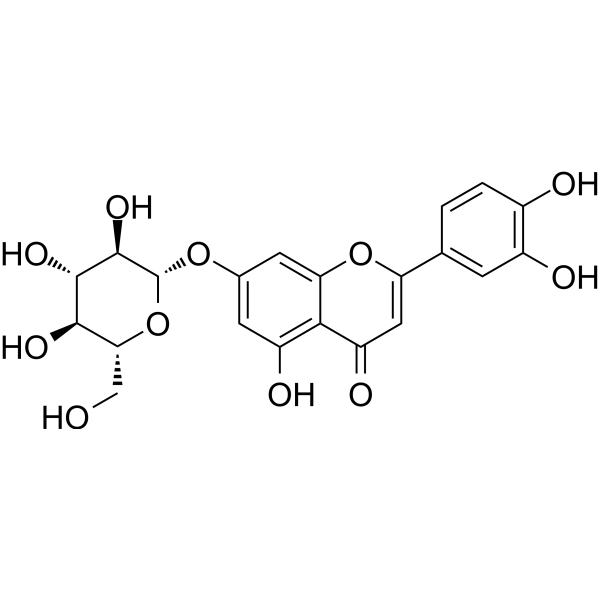
Cynaroside (Luteolin 7-glucoside) is a flavonoid compound that exhibits anti-oxidative capabilities. Cynaroside is also a potent influenza RNA-dependent RNA polymerase inhibitor with an IC50 of 32 nM. Cynaroside also is a promising inhibitor for H2O2-induced apoptosis, has cytoprotection against oxidative stress-induced cardiovascular diseases. Cynaroside also has antibacterial, antifungal and anticancer activities, antioxidant and anti-inflammatory activities .
loading...
    loading...
1
1 Cited Publications
Cat. No.: HY-N0540R
CAS No.: 5373-11-5
Synonyms: Luteolin 7-glucoside (Standard); Luteolin 7-O-β-D-glucoside (Standard)
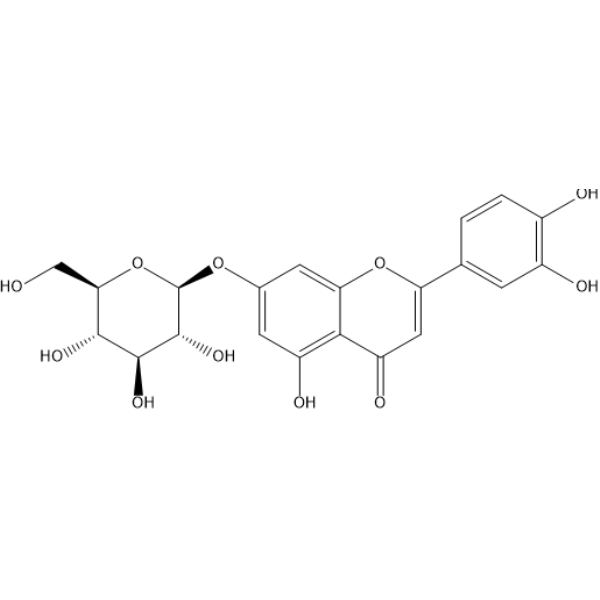
Cynaroside (Standard) is the analytical standard of Cynaroside. This product is intended for research and analytical applications. Cynaroside (Luteolin 7-glucoside) is a flavonoid compound that exhibits anti-oxidative capabilities. Cynaroside is also a potent influenza RNA-dependent RNA polymerase inhibitor with an IC50 of 32 nM. Cynaroside also is a promising inhibitor for H2O2-induced apoptosis, has cytoprotection against oxidative stress-induced cardiovascular diseases. Cynaroside also has antibacterial, antifungal and anticancer activities, antioxidant and anti-inflammatory activities .
loading...
    loading...
Cat. No.: HY-119152
CAS No.: 910627-26-8
Purity:  99.42%
Research Areas:  

Others

CMX-2043 is a novel analogue of α-Lipoic Acid (HY-N0492). CMX-2043 is effective in antioxidant effect, activation of insulin receptor kinase, soluble tyrosine kinase, and Akt phosphorylation. CMX-2043 shows protection against ischemia-reperfusion injury (IRI) in rat model .
loading...
    loading...
Cat. No.: HY-W782399
CAS No.: 17363-08-5
Synonyms: Sodium boranocarbonate
CORM-A1 (Sodium boranocarbonate) is a water-soluble carbon monoxide (CO) releasing molecule that facilitates the investigation of CO's impact on cellular systems. As CO is generated from heme degradation by the enzyme heme oxygenase, it serves as a crucial gaseous signaling mediator in mammalian cells. CORM-A1 not only exhibits anti-oxidant and anti-inflammatory properties but also regulates CO release in a manner dependent on pH and temperature, promoting mild vasorelaxation and hypotension. Furthermore, CORM-A1 has been shown to provide cytoprotection in primary cultures of astrocytes under oxidative stress while also enhancing autophagy due to its boron-containing composition.
loading...
    loading...
Cat. No.: HY-W002040
CAS No.: 616-30-8
Synonyms: 1-Aminoglycerol, 97%
(±)-3-Amino-1,2-propanediol, 97% (1-Aminoglycerol, 97%) is a chiral raw material that can be used for the synthesis of chiral vanadium (V) Schiff base complexes .
loading...
    loading...
Cat. No.: HY-N5073
CAS No.: 178468-00-3
Synonyms: 4''-O-Glucosylvitexin
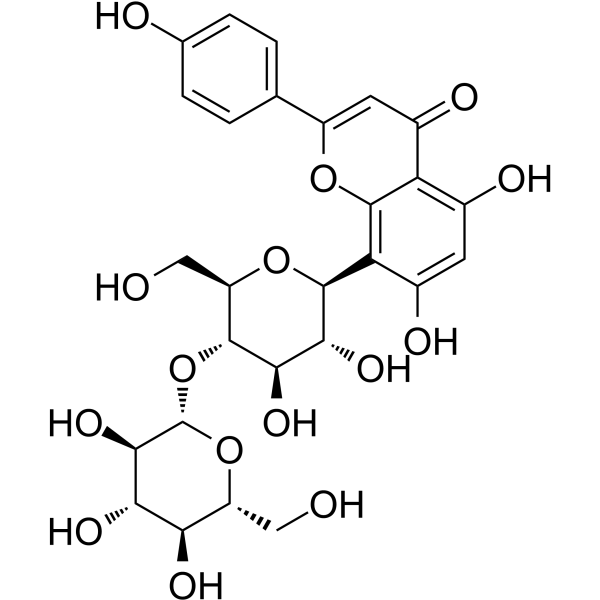
Vitexin-4''-O-glucoside (4''-O-Glucosylvitexin) is an orally active natural flavonoid component with multiple pharmacological effects including antioxidation, anti-inflammation, cytoprotection and anti-apoptosis. Vitexin-4''-O-glucoside regulates the MAPK signaling pathway by downregulating the phosphorylation levels of JNK and p38, thereby blocking endoplasmic reticulum stress responses. Vitexin-4''-O-glucoside alleviates oxidative stress by reducing MDA content and upregulating the activities of SOD and CAT, attenuates inflammation by downregulating the expressions of inflammatory factors TNF-α, IL-1β and IL-6, and also reduces LDH release and inhibits caspase-3 activation. Vitexin-4''-O-glucoside effectively improves drug-induced acute liver injury and exerts significant protective effects against myocardial hypoxia/reoxygenation injury. Vitexin-4''-O-glucoside can be used in studies on acute liver injury, cardiovascular diseases and myocardial hypoxia-reoxygenation injury .
loading...
    loading...
Cat. No.: HY-76779
CAS No.: 25392-41-0
Target:  

Drug Derivative

Research Areas:  

Cancer

4-(Chloromethyl)-7-hydroxycoumarin (compound 4) is a hydroxycoumarin derivative with potent antioxidant effect and high hydroxyl radical-scavenging property. 4-(Chloromethyl)-7-hydroxycoumarin contains a methyl group and a chlorine group in the heterocyclic ring. A series of coumarins incorporating hydroxy-, chloro- and/or chloromethyl-moieties has been investigated as potent inhibitors of the zinc enzyme carbonic anhydrase, expecially tumor-associated isoforms CA IX and XII .
loading...
    loading...
Cat. No.: HY-N0394R
CAS No.: 56-89-3
L-Cystine (Standard) is the analytical standard of L-Cystine. This product is intended for research and analytical applications. L-Cystine, the extracellular form of L-Cysteine (HY-Y0337), is a nutritionally dispensable semiessential sulfur-containing amino acid, occurring in proteins of plants and animals. L-Cystine induces Nrf2 protein elevation in a Keap1 (HY-P75897)-dependent manner and activates Nrf2 transcription factor. L-cystine can elicit cytoprotection by reducing ROS generation and protecting against oxidant- or doxorubicin-induced apoptosis. The reduced reabsorption of L-Cystine in renal tubules and its poor solubility in urine are the important causes of cystine precipitation and cystine crystal formation eventually leading to kidney stones. L-Cystine combined with L-theanine (HY-15121) enhances the production of antigen-specific IgG by increasing glutathione (GSH) levels and T helper 2 (Th2) mediated responses in mice. L-Cystine is promising for research of cystinuria and cystinosis
loading...
    loading...
Cat. No.: HY-177437
CAS No.: 124070-99-1
Target:  

HIV

Research Areas:  

Infection

(±)-PM 92131 is a non-nucleoside HIV-1 inhibitor. (±)-PM 92131 has an anti-HIV-1 activity with IC50s of 45.7 and 53.8 μM for HIV-1 RF strain in XTT cytoprotection and syncytium-forming assay, respectively. (±)-PM 92131 can be used for HIV infections research .
loading...
    loading...
Cat. No.: HY-177437A
CAS No.: 167937-11-3
Target:  

HIV

Research Areas:  

Infection

(+)-PM 92131 is the active enantiomer of (±)-PM 92131 (HY-177437). (+)-PM 92131 is a non-nucleoside HIV-1 inhibitor. (+)-PM 92131 has an anti-HIV-1 activity with EC50s of 0.8 and 0.6 μM for HIV-1 RF strain in XTT cytoprotection and syncytium-forming assay, respectively. (+)-PM 92131 can be used for HIV infections research .
loading...
    loading...
Cat. No.: HY-108869
CAS No.: 118248-91-2
Purity:  99.81%
Synonyms: DPDP
Target:  

Drug Metabolite

Research Areas:  

Inflammation/Immunology

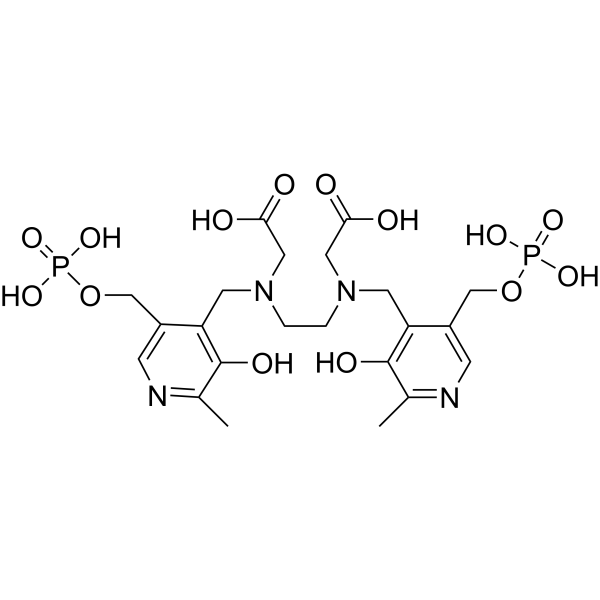
Fodipir is an active metabolite of mangafodipir, involved in mangafodipir-mediated cytoprotection against 7β-hydroxycholesterol-induced cell death.
loading...
    loading...
Cat. No.: HY-P10622
SHLP-3 is a mitochondrial derived peptide encoded by the 16S ribosomal RNA (MT-RNR2) gene. SHLP-3 increases cell viability and reduces apoptosis in insulinoma NIT-1β cells and human prostate cancer 22Rv1 cells. SHLP-3 increases mitochondrial function and exerts cytoprotective effects by increasing mitochondrial oxygen consumption rate (OCR), cellular ATP and reducing the ability to produce ROS. SHLP-3 can be used in the study of diabetes and cancer .
loading...
    loading...
Cat. No.: HY-176817
CAS No.: 944559-31-3
Target:  

GPR109A

GPR109 receptor agonist-3 is an orally active GPR109 receptor agonist, with an IC50 of 310 nM. GPR109 receptor agonist-3 retains the antioxidation and cytoprotection of Lipoic acid (HY-18733). GPR109 receptor agonist-3 reduces total cholesterol (TC), triglyceride (TG), low-density lipoprotein cholesterol (LDL-C) and increases high-density lipoprotein cholesterol (HDL-C) in high-fat diet-fed rats. GPR109 receptor agonist-3 can be used for the study of atherosclerosis .
loading...
    loading...
Cat. No.: HY-19108
CAS No.: 104795-68-8
Target:  

Calcium Channel Actin

Research Areas:  

Inflammation/Immunology Cancer

CI-959 is an orally active cell activation inhibitor. CI-959 selectively suppresses inflammatory cell activation post-receptor signaling via inhibiting calcium influx and weak calmodulin antagonism, without targeting PLC, PKC or NADPH oxidase. CI-959 blocks lung allergic mediator release, anti-IgE bronchial contraction, neutrophil function, T-cell proliferation and DC marker expression while sparing monocytes. CI-959 provides gastric cytoprotection by inhibiting leukocyte adhesion and suppresses tumor motility through F-actin reduction. CI-959 can be used for research on allergies, inflammation, autoimmune diseases, gastric injury, and tumor metastasis .
loading...
    loading...
Cat. No.: HY-P10611
CAS No.: 570382-85-3
Target:  

Amyloid-β

Research Areas:  

Neurological Disease

[D-Ser14]-Humanin is a bioactive peptide in which the Ser14 residue of Humanin (HY-P1928) is changed from L-form to D-form. [D-Ser14]-Humanin has potent inhibitory activity against the fibrillation of amyloid-β. Humanin (HY-P1928) inhibits the aging-related death of various cells caused by amyloid fibrils and oxidative stress, and [D-Ser14]-Humanin has better cell protection activity than Humanin (HY-P1928). [D-Ser14]-Humanin can be used in the study of Alzheimer's disease .
loading...
    loading...
Cat. No.: HY-113886
CAS No.: 104795-66-6
Target:  

Calcium Channel Actin

Research Areas:  

Inflammation/Immunology Cancer

CI-959 free acid is an orally active cell activation inhibitor. CI-959 free acid selectively suppresses inflammatory cell activation post-receptor signaling via inhibiting calcium influx and weak calmodulin antagonism, without targeting PLC, PKC or NADPH oxidase. CI-959 free acid blocks lung allergic mediator release, anti-IgE bronchial contraction, neutrophil function, T-cell proliferation and DC marker expression while sparing monocytes. CI-959 free acid provides gastric cytoprotection by inhibiting leukocyte adhesion and suppresses tumor motility through F-actin reduction. CI-959 free acid can be used for research on allergies, inflammation, autoimmune diseases, gastric injury, and tumor metastasis .
loading...
    loading...
  • 1

