


1. Search Result
Search Result
Results for "

drug-carrier

" in MedChemExpress (MCE) Product Catalog:

50

Inhibitors & Agonists

1

Fluorescent Dyes

31

Biochemical Assay Reagents

4

Natural
Products

3

Isotope-Labeled Compounds

1

Click Chemistry

18

Oligonucleotides

Cat. No. Product Name Target Research Areas Chemical Structure
  • HY-D0886

    Phosphatase Endogenous Metabolite ERK Metabolic Disease Cancer
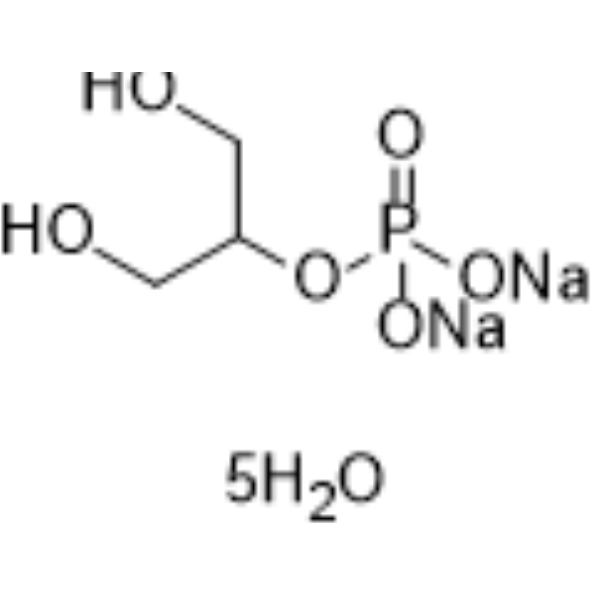
    β-Glycerophosphate disodium salt pentahydrate is a bioactive endogenous metabolite and a phosphatase inhibitor. β-Glycerophosphate disodium salt pentahydrate plays an important role in inducing and maintaining osteoblast differentiation, mineral metabolism and signal transduction, and can be used as a drug carrier to form heat-sensitive hydrogels. β-Glycerophosphate disodium salt hydrate accelerates the calcification of vascular smooth muscle cells .
    β-Glycerophosphate disodium salt pentahydrate
  • HY-126304

    Phosphatase Endogenous Metabolite ERK Metabolic Disease
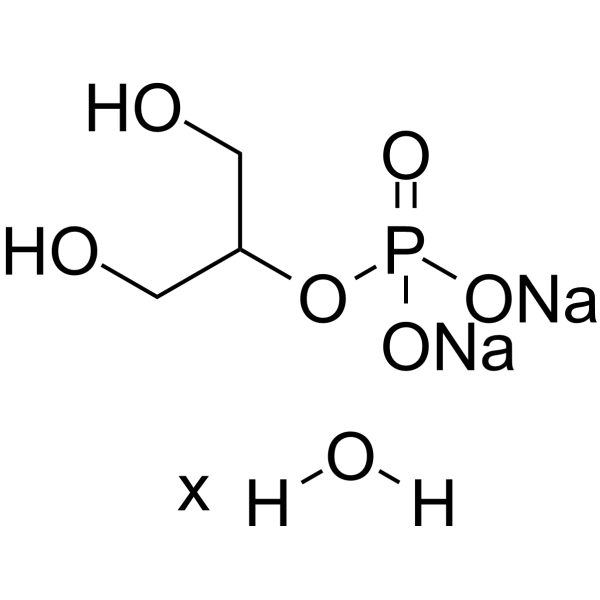
    β-Glycerophosphate disodium salt pentahydrate is a bioactive endogenous metabolite and a phosphatase inhibitor. β-Glycerophosphate disodium salt pentahydrate plays an important role in inducing and maintaining osteoblast differentiation, mineral metabolism and signal transduction, and can be used as a drug carrier to form heat-sensitive hydrogels. β-Glycerophosphate disodium salt hydrate accelerates the calcification of vascular smooth muscle cells .
    β-Glycerophosphate disodium salt hydrate
  • HY-112624B

    Dextran 70; Dextran D70; Dextran T70(MW 64000-76000)

    Bacterial Others
    Dextran 70,000 is a high molecular weight polysaccharide formed by glucose linked by α-(1→6) glycosidic bonds. Dextran 70,000 can expand blood volume through colloidal osmotic pressure effect and inhibit cell adhesion and platelet aggregation through steric hindrance. At the same time, Dextran 70,000 can be used as a drug carrier to achieve targeted delivery through endocytosis. Dextran 70,000 is biologically inert and has low immunogenicity. It can be used for clinical blood volume expansion, anti-thrombotic research, and evaluation of vascular permeability in in vitro experiments. It can also be combined with fluorescent dyes for cell tracking and drug delivery research. The Dextran series of compounds are also natural polysaccharide drug carriers that can be connected to drugs through covalent bonding methods such as ester bonds, amide bonds or click chemistry, or self-assembled to form carriers such as nanoparticles and hydrogels. Dextran is biodegradable and biocompatible, and can achieve targeted delivery and controlled release of drugs. Dextran derivatives can prolong the half-life of drugs, increase local concentrations, and reduce the activity of immune clearance.
    Dextran T70 (MW 70,000)
  • HY-W110584

    Biochemical Assay Reagents Others
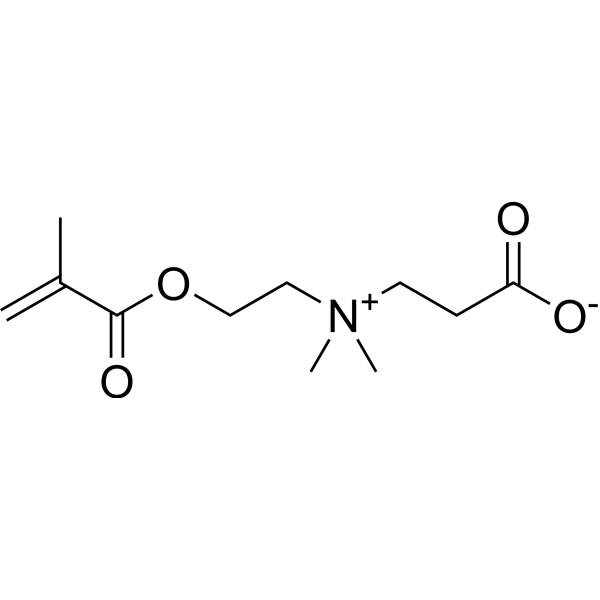
    Carboxybetaine methacrylate is an amphoteric ionic compound with excellent properties such as good hydrophilicity, antistatic property, and biocompatibility. Carboxybetaine methacrylate can be used to prepare tissue engineering scaffolds, drug carriers, and so on .
    Carboxybetaine methacrylate
  • HY-112760
    18:0 mPEG2000 PE sodium
    1 Publications Verification

    DSPE-mPEG2000 sodium; 1,2-Distearoyl-sn-glycero-3-phosphoethanolamine-N-[methoxy(polyethylene glycol)-2000] sodium

    Liposome Others
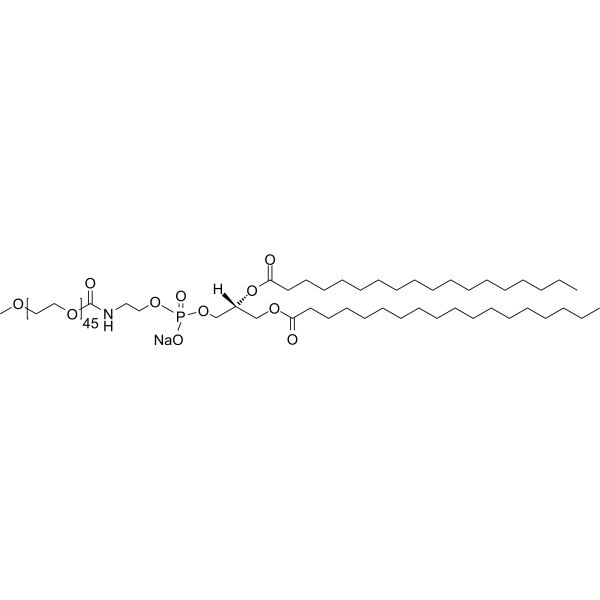
    18:0 mPEG2000 PE (DSPE-mPEG2000) sodium is a conjugate of phospholipid and polyethylene glycol, and it can serve as an important PEG lipid component in lipid nanoparticles (LNPs). 18:0 mPEG2000 PE sodium can be used in the research of gene transfection, drug carriers and drug delivery .
    18:0 mPEG2000 PE sodium
  • HY-143202

    Liposome Biochemical Assay Reagents Others
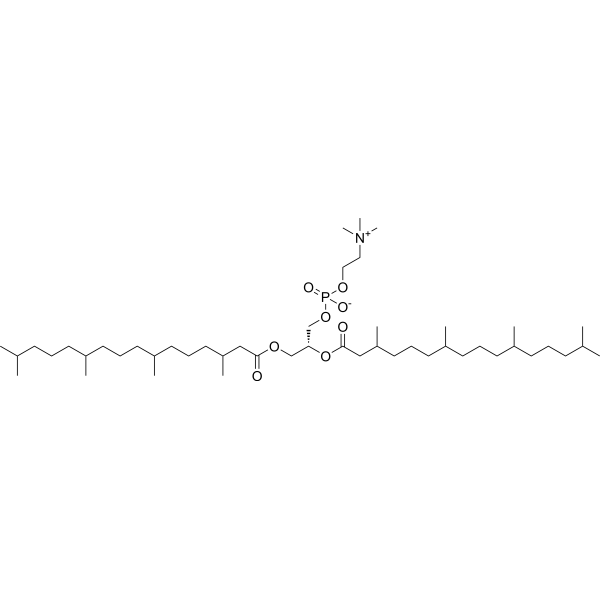
    DPhPC is a phospholipid compound characterized by high mechanical and chemical stability, broad temperature phase stability, and high electrical resistance. DPhPC readily forms unilamellar vesicles and solid-supported bilayers. DPhPC is commonly used as a component of nanoliposomal drug carriers or as a model membrane material for studies on membrane proteins/ion channels .
    DPhPC
  • HY-CP002

    Biochemical Assay Reagents Others
    Bovine Serum Albumin (BSA) is a 583 amino acid protein consisting of three homologous full alpha structural domains. BSA is a spherical protein essential for the transport of molecules such as fatty acids, drugs and hormones from the blood. It is used in many biochemical applications as a drug carrier for biologically active compounds. For long-term storage, recombinant protein solution should be diluted further with 0.1% BSA .
    Bovine Serum Albumin, Carrier Protein
  • HY-W068119A

    2-Maleimidoethylamine hydrochloride

    Biochemical Assay Reagents Cancer
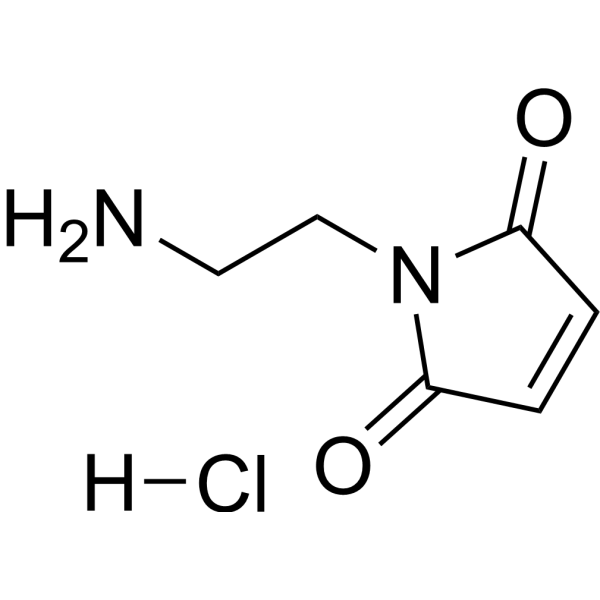
    N-(2-Aminoethyl)maleimide (2-Maleimidoethylamine) hydrochloride is a selective covalent binding agent for thiol groups (RSGs), covalently binding to thiols via an irreversible thioether bond to prepare MMP-2-sensitive nanosystems. Under near-neutral conditions, the maleimide group in N-(2-Aminoethyl)maleimide hydrochloride binds to thiol groups via a nucleophilic addition reaction, and can be used to modify polymers or biological interfaces, enhancing mucosal adhesion and regulating the surface charge of biological interfaces. N-(2-Aminoethyl)maleimide hydrochloride can optimize the adhesion performance of drug delivery carriers and cell interactions with biological interfaces, and is applied in transmucosal drug delivery systems (such as drug carriers for oral and bladder sites) and biomaterial surface engineering research, providing support for tissue implantation, regeneration, and related drug delivery .
    N-(2-Aminoethyl)maleimide hydrochloride
  • HY-W250721A

    CBM 940

    Biochemical Assay Reagents Others
    Carbomer 940 (CBM 940) is an acrylic polymer with high viscosity, good thermal stability and histocompatibility. Carbomer 940 serves as a transdermal drug delivery carrier and an external gel matrix. Carbomer 940 has no cytotoxicity, and it can also improve blood supply in the stasis zone of burns and promote wound repair. Carbomer 940 is applicable to pharmaceutical research .
    Carbomer 940
  • HY-112624J

    Dextran 4; Dextran D4; Dextran T4(MW 3200-4800)

    Bacterial Others
    Dextran 4,000 is a mucus rheology modifier. The dextran molecules in Dextran 4,000 can reduce the cross-link density of mucus through osmotic effects and hydrogen bond substitution, and reduce viscoelasticity and improve the mucociliary/cough clearance index by destroying the DNA-mucin network structure in mucus. Dextran 4,000 has the ability to improve the rheological properties and clearance ability of cystic fibrosis (CF) sputum, and can be used in the study of inhalation therapy or aerosol delivery of mucostatic respiratory diseases. The Dextran series of compounds are also natural polysaccharide drug carriers that can be connected to drugs through covalent bonding methods such as ester bonds, amide bonds or click chemistry, or self-assembled to form carriers such as nanoparticles and hydrogels. Dextran is biodegradable and biocompatible, and can achieve targeted delivery and controlled release of drugs. Dextran derivatives can prolong the half-life of drugs, increase local concentrations, and reduce the activity of immune clearance .
    Dextran T4 (MW 4,000)
  • HY-112624I

    Dextran 3; Dextran D3; Dextran T3(MW 2400-3600)

    Bacterial Others
    Dextran T3 (Dextran 3; Dextran T3(MW 2400-3600)) is a neural tracer and intestinal permeability probe that can move anterogradely and retrogradely in neuronal axons by passive diffusion. Dextran T3 (MW 3,000) is able to permeate across the intestinal epithelial cell membrane in the presence of cholera toxin-induced cytoskeletal disturbance. Dextran T3 (MW 3,000) is used as a fluorescent marker to rapidly label developing neurons (such as Xenopus retinal ganglion cells) and to assess intestinal barrier function. It can be used to study axonal transport in neuroanatomy and permeability changes in intestinal pathophysiology. The Dextran series of compounds are also natural polysaccharide drug carriers that can be connected to drugs through covalent bonding methods such as ester bonds, amide bonds or click chemistry, or self-assembled to form carriers such as nanoparticles and hydrogels. Dextran is biodegradable and biocompatible, and can achieve targeted delivery and controlled release of drugs. Dextran derivatives can prolong the half-life of drugs, increase local concentrations, and reduce the activity of immune clearance .
    Dextran T3 (MW 3,000)
  • HY-B0633B

    Hyaluronan (MW 50000-100000); Hyaluronate (MW 50000-100000)

    Biochemical Assay Reagents PI3K Others
    Hyaluronic acid (MW 50000-100000) (Hyaluronan (MW 50000-100000)) is a biopolymer composed of repeating units of disaccharides with a molecular weight of 50000-100000 Da. Hyaluronic acid (MW 50000-100000) can be used as a drug carrier for drug delivery .
    Hyaluronic acid (MW 50000-100000)
  • HY-172470

    Liposome EGFR Cancer
    DSPE-PEG2000-GE11 is a nanocarrier component composed of DSPE and the EGFR-targeting peptide (GE11). DSPE-PEG2000-GE11 specifically binds to EGFR and mediates receptor-mediated endocytosis of micellar drug carriers. DSPE-PEG2000-GE11 can be used for drug delivery .
    DSPE-PEG2000-GE11
  • HY-W115727B

    PAM,Anion,Mw 18 million

    Biochemical Assay Reagents Others
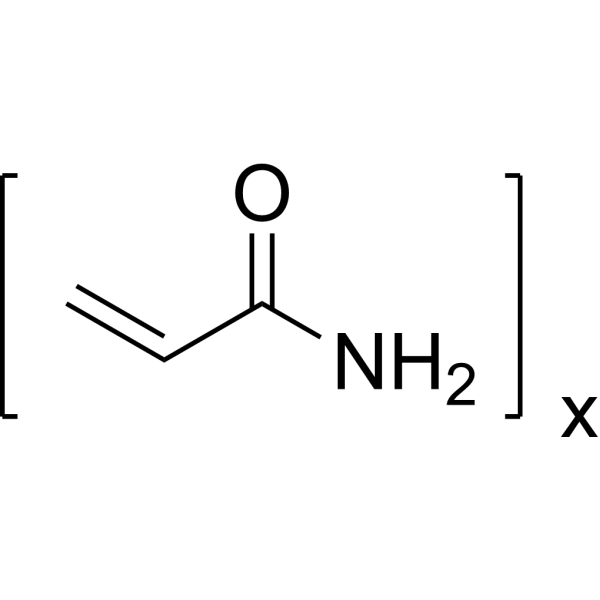
    Polyacrylamide,Anion,Mw 18 million (PAM,Anion,Mw 18 million) is a multifunctional high molecular weight anionic polyacrylamide copolymer. The anionic properties of Polyacrylamide,Anion,Mw 18 million enable it to be used as a flocculant to achieve charge neutralization and aggregation, while its high molecular weight properties provide viscoelastic properties for fluid applications. Polyacrylamide series materials can maintain enzyme activity in enzyme immobilization, act as drug carriers to achieve controlled release, serve as smart materials responding to temperature/pH stimuli, and be used for in vitro toxin adsorption and soft tissue filling through mechanisms such as physical entrapment, covalent binding or chemical crosslinking. Polyacrylamide finds applications in biomedical engineering, environmental management and industrial applications .
    Polyacrylamide,Anion,Mw 18 million
  • HY-W115727E

    PAM,average Mn 150000

    Biochemical Assay Reagents Others
    Polyacrylamide, average Mn 150000 (PAM, average Mn 150000) is a versatile, high-molecular-weight polyacrylamide copolymer. Polyacrylamide series materials can maintain enzyme activity in enzyme immobilization, act as drug carriers to achieve controlled release, serve as smart materials responding to temperature/pH stimuli, and be used for in vitro toxin adsorption and soft tissue filling through mechanisms such as physical entrapment, covalent binding or chemical crosslinking. Polyacrylamide finds applications in biomedical engineering, environmental management and industrial applications .
    Polyacrylamide,average Mn 150000
  • HY-W243303J

    Biochemical Assay Reagents Cancer
    Poly(acrylic acid) (MW 250000) is a synthetic cationic electrolyte containing abundant carboxyl groups (-COOH), which exhibits excellent water absorption and retention properties and is often cross-linked to form hydrogels. Poly(acrylic acid) (with a molecular weight of 250,000). Poly(acrylic acid) (MW 250000) can be used as a non-collagenous analog in the biomimetic mineralization research of type I collagen. Poly(acrylic acid) (MW 250000) has pH responsiveness and biocompatibility and is often used as a drug carrier, surface modifier and functional material .
    Poly(acrylic acid) (MW 250000)
  • HY-N5139
    Lecithins, egg
    1 Publications Verification

    Lecithins, egg yolk; Belovo PL 85

    Cholinesterase (ChE) Angiotensin-converting Enzyme (ACE) Bacterial Infection Neurological Disease Metabolic Disease Inflammation/Immunology
    Lecithins, egg (Lecithins, egg yolk; Belovo PL 85) is an orally active natural phospholipid mixture extracted from egg yolks . Lecithins, egg inhibits the activities of acetylcholinesterase (AChE) and angiotensin-converting enzyme (ACE). Lecithins, egg exhibits antibacterial, antioxidant and anti-inflammatory activities, and helps delay cellular senescence. Lecithins, egg enhances nerve conduction, improves memory and cognitive function, and exerts positive effects on delaying neurodegenerative diseases. Lecithins, egg promotes lipid absorption and alleviates diarrhea. Lecithins, egg acts as a high-efficiency drug carrier for the preparation of targeted drug delivery systems such as liposomes .
    Lecithins, egg
  • HY-112624K

    Dextran 5; Dextran D5; Dextran T5(MW 4500-5500)

    Apoptosis Autophagy Others
    Dextran T5 (MW 5,000) is a sulfated polysaccharide anti-apoptotic and autophagic agent. Dextran T5 (MW 5,000) has sulfated groups and interacts with cell membranes by mimicking endogenous glycosaminoglycans, inhibiting the mitochondrial apoptotic pathway and delaying DNA fragmentation to exert anti-apoptotic activity. Dextran T5 (MW 5,000) also promotes the conversion of LC3-I to LC3-II and the formation of autophagosomes to activate the autophagic pathway. Dextran T5 (MW 5,000) can prolong the survival cycle of CHO cells and increase the production of recombinant erythropoietin (EPO). The Dextran series of compounds are also natural polysaccharide drug carriers that can be connected to drugs through covalent bonding methods such as ester bonds, amide bonds or click chemistry, or self-assembled to form carriers such as nanoparticles and hydrogels. Dextran is biodegradable and biocompatible, and can achieve targeted delivery and controlled release of drugs. Dextran derivatives can prolong drug half-life, increase local concentration and reduce immune clearance activity. The Dextran series of compounds are also natural polysaccharide drug carriers that can be connected to drugs through covalent bonding methods such as ester bonds, amide bonds or click chemistry, or self-assembled to form carriers such as nanoparticles and hydrogels. Dextran is biodegradable and biocompatible, and can achieve targeted delivery and controlled release of drugs. Dextran derivatives can prolong the half-life of drugs, increase local concentrations, and reduce the activity of immune clearance .
    Dextran T5 (MW 5,000)
  • HY-W115727A

    PAM,Anion,Mw 14-16 million

    Biochemical Assay Reagents Others
    Polyacrylamide, Anion, Mw 14-16 million is a multifunctional high molecular weight anionic polyacrylamide copolymer. The anionic properties of Polyacrylamide, Anion, Mw 14-16 million enable it to be used as a flocculant to achieve charge neutralization and aggregation, while its high molecular weight properties provide viscoelastic properties for fluid applications. Polyacrylamide series materials can maintain enzyme activity in enzyme immobilization, achieve controlled release as a drug carrier, respond to temperature/pH stimulation as a smart material, and can also be used for in vitro toxin adsorption and soft tissue filling through mechanisms such as physical embedding, covalent bonding or chemical cross-linking. Polyacrylamide can be used in biomedical engineering, environmental management and industrial applications .
    Polyacrylamide,Anion,Mw 14-16 million
  • HY-112624E

    Dextran 0.8; Dextran D0.8; Dextran T0.8(MW 640-960)

    Biochemical Assay Reagents Others
    Dextran T0.8 (Dextran 0.8; Dextran T0.8(MW 640-960)) is a food additive with a porous network structure that exhibits strong hydration capacity and low browning activity. Dextran T0.8 (MW 800) can improve the coagulation of dairy products and is used as a prebiotic in baked goods. Dextran T0.8 (MW 800) is non-toxic to HeLa cells at a concentration of ~500 μg/mL and has a low relative browning rate in the Maillard reaction. The Dextran series of compounds are also natural polysaccharide drug carriers that can be connected to drugs through covalent bonding methods such as ester bonds, amide bonds or click chemistry, or self-assembled to form carriers such as nanoparticles and hydrogels. Dextran is biodegradable and biocompatible, and can achieve targeted delivery and controlled release of drugs. Dextran derivatives can prolong the half-life of drugs, increase local concentrations, and reduce the activity of immune clearance .
    Dextran T0.8 (MW 800)
  • HY-159069

    Toll-like Receptor (TLR) TNF Receptor Connexin Infection Cancer
    Zymosan (ZM), 95% is a yeast cell wall-derived carbohydrate-rich preparation and immunomodulator. Zymosan (ZM), 95% binds to and activates TLR-2, TLR-4, and Dectin-1 receptor to trigger downstream signaling pathways. Zymosan (ZM), 95% upregulates TLR-2, TLR-4, and TNF-α mRNA expression, increases serum TNF-α levels, and stimulates splenocyte number and viability in mice. Zymosan (ZM), 95% attenuates melanoma growth progression, modulates macrophage marker gene expression, and mediates phagocytosis, ROS generation, and cytokine production. Zymosan (ZM), 95% reduces Connexin 43 protein and mRNA levels, inhibits gap junctional intercellular communication, and induces proinflammatory factor production in human corneal cells. Zymosan (ZM), 95% induces peritoneal inflammation in mice, functions as a drug carrier, and supports fibroblast cell attachment in hydrogel formulations. Zymosan (ZM), 95% can be used for the research of melanoma, tumors, fungal keratitis, ocular surface inflammatory disorders, and peritoneal inflammation .
    Zymosan (ZM), 95%
  • HY-112624H

    Dextran 2; Dextran D2; Dextran T2(MW 1600-2400)

    Biochemical Assay Reagents Others
    Dextran T2 (Dextran 2; Dextran T2(MW 1600-2400)) is a natural high molecular weight polysaccharide, the glycosidic bonds in its structure can be recognized by endo-dextranase and exo-dextranase. Dextran T2 (MW 2,000) breaks the glycosidic bonds in the enzymatic hydrolysis mechanism, releasing products such as D-glucose, Isomaltose (IM2), and Isomaltotriose (IM3). Dextran T2 (MW 2,000) can be used as a model substrate to characterize the catalytic properties of dextranase (such as optimal pH, temperature and product specificity), and to study enzymatic mechanism research and polysaccharide degradation pathways in glycobiology. The Dextran series of compounds are also a natural polysaccharide drug carrier, which can be connected to drugs through covalent bonding methods such as ester bonds, amide bonds or click chemistry, or self-assembled to form carriers such as nanoparticles and hydrogels. Dextran is biodegradable and biocompatible, and can achieve targeted delivery and controlled release of drugs. Dextran derivatives can prolong drug half-life, increase local concentration and reduce immune clearance activity .
    Dextran T2 (MW 2,000)
  • HY-W440917

    Liposome Others
    DSPE-PEG5000-FITC is a fluorescein attached PEG lipid. It can be used to prepare liposomes as drug carrier in targeted drug delivery. The polymer is modified with fluorescein (green) dye which can be used for staining cells, tissues, biomarkers, or nanoparticles.
    DSPE-PEG5000-FITC
  • HY-W440916

    Liposome Others
    DSPE-PEG3400-FITC is a fluorescein attached PEG lipid. It can be used to prepare liposomes as drug carrier in targeted drug delivery. The polymer is modified with fluorescein (green) dye which can be used for staining cells, tissues, biomarkers, or nanoparticles.
    DSPE-PEG3400-FITC
  • HY-W115727D

    PAM,average Mn 40000

    Biochemical Assay Reagents Others
    Polyacrylamide (PAM), average Mn 40000 is a versatile, high-molecular-weight polyacrylamide copolymer. Polyacrylamide series materials can maintain enzyme activity in enzyme immobilization, act as drug carriers to achieve controlled release, serve as smart materials responding to temperature/pH stimuli, and be used for in vitro toxin adsorption and soft tissue filling through mechanisms such as physical entrapment, covalent binding or chemical crosslinking. Polyacrylamide finds applications in biomedical engineering, environmental management and industrial applications .
    Polyacrylamide,average Mn 40000
  • HY-W115727C

    Acrylamide polymer,Nonionic,Mw 5-6 million

    Biochemical Assay Reagents Others
    Polyacrylamide (Acrylamide polymer),Nonionic,Mw 5-6 million is a multifunctional, high-molecular-weight nonionic polyacrylamide copolymer. Polyacrylamide-based materials can maintain enzyme activity in enzyme immobilization, act as drug carriers for controlled release, function as smart materials responsive to temperature/pH stimuli, and be applied in in vitro toxin adsorption and soft tissue filling, through action mechanisms such as physical entrapment, covalent binding or chemical crosslinking. Polyacrylamide finds applications in biomedical engineering, environmental management and industrial applications .
    Polyacrylamide,Nonionic,Mw 5-6 million
  • HY-W339838

    14:0 Lyso PG

    Liposome Cancer
    1-Myristoyl-2-hydroxy-sn-glycero-3-PG sodium is a lysophospholipid containing myristic acid (14:0) at the sn-1 position. It has been used in the generation of micelles, liposomes, and other types of artificial membranes, including lipid-based drug carrier systems.
    1-Myristoyl-2-hydroxy-sn-glycero-3-PG sodium
  • HY-145505

    18:1 Lyso-PG; 1-Oleoyl-2-hydroxy-sn-glycero-3-phospho-(1'-rac-glycerol); 1-Oleoyl-2-hydroxy-sn-glycero-3-phosphoglycerol

    Endogenous Metabolite Liposome Metabolic Disease
    1-Oleoyl-2-hydroxy-sn-glycero-3-PG (18:1 Lyso PE) sodium is a lysophospholipid containing oleic acid (18:1) at the sn-1 position. It can be used in the generation of micelles, liposomes, and other types of artificial membranes, including lipid-based drug carrier systems.
    1-Oleoyl-2-hydroxy-sn-glycero-3-PG sodium
  • HY-145507

    1-Palmitoyl-2-hydroxy-sn-glycero-3-PG sodium; 16:0 Lyso PG; PG(16:0/0:0); 1-Hexadecanoyl-sn-glycero-3-phospho-(1'racglycerol) sodium

    Liposome Metabolic Disease
    1-Palmitoyl-2-hydroxy-sn-glycero-3-phospho-(1'-rac-glycerol) (16:0 Lyso PE) sodium is a lysophospholipid containing palmitic acid (16:0) at the sn-1 position. It can be used in the generation of micelles, liposomes, and other types of artificial membranes, including lipid-based drug carrier systems.
    1-Palmitoyl-2-hydroxy-sn-glycero-3-phospho-(1'-rac-glycerol) sodium
  • HY-164657

    PAMAM

    Radionuclide-Drug Conjugates (RDCs) Cancer
    Polyamidoamine (PAMAM) (20% in methanol) is a new type of drug carrier that has drug encapsulation capabilities internally and biocompatibility on the surface, and can be used as a drug delivery system.
    Polyamidoamine (20% in methanol)
  • HY-126304R

    Reference Standards Phosphatase Endogenous Metabolite ERK Metabolic Disease
    β-Glycerophosphate disodium salt hydrate (Standard) is the analytical standard of β-Glycerophosphate disodium salt hydrate (HY-126304). This product is intended for research and analytical applications. β-Glycerophosphate disodium salt pentahydrate is a bioactive endogenous metabolite and a phosphatase inhibitor. β-Glycerophosphate disodium salt pentahydrate plays an important role in inducing and maintaining osteoblast differentiation, mineral metabolism and signal transduction, and can be used as a drug carrier to form heat-sensitive hydrogels. β-Glycerophosphate disodium salt hydrate accelerates the calcification of vascular smooth muscle cells.
    β-Glycerophosphate disodium salt hydrate (Standard)
  • HY-W1113135

    Biochemical Assay Reagents Others
    Carboxymethyl-β-cyclodextrin sodium salt is a negatively charged β-cyclodextrin derivative, as well as a metal ion chelator and solubilizing reagent. Carboxymethyl-β-cyclodextrin sodium salt forms stable aqueous complexes with Ba 2+, Ca 2+, Cd 2+, Ni 2+, Pb 2+, Sr 2+, and Zn 2+ ions. Carboxymethyl-β-cyclodextrin sodium salt derived hydrogel carriers support oral insulin delivery via paracellular permeation across Caco-2 monolayers and produce sustained hypoglycemic effects in diabetic mice. Carboxymethyl-β-cyclodextrin sodium salt can be conjugated onto folate-modified BSA nanoparticles to boost folate receptor-mediated endocytosis, elevate intracellular anticancer drug uptake and trigger cell apoptosis. Carboxymethyl-β-cyclodextrin sodium salt can be utilized for chiral separation in capillary electrophoresis, development of nanoscale drug carriers and nucleic acid transfection research .
    Carboxymethyl-β-cyclodextrin sodium salt
  • HY-176500

    LPL Receptor Inflammation/Immunology
    Sphingolipid E is a synthetic pseudoceramide sphingolipid similar to type 2 ceramide with a metastable lamellar structure. Sphingolipid E ??can be used as a potential drug carrier to control the penetration of molecules as a lipid component of the intercellular space of the stratum corneum .
    Spns2-IN-3
  • HY-N15594

    SLE

    Ceramidase Others
    Sphingolipid E is a synthetic pseudoceramide sphingolipid similar to type 2 ceramide with a metastable lamellar structure. Sphingolipid E ??can be used as a potential drug carrier to control the penetration of molecules as a lipid component of the intercellular space of the stratum corneum .
    Sphingolipid E
  • HY-145506

    18:0 Lyso PG sodium

    Liposome Metabolic Disease
    1-Stearoyl-2-hydroxy-sn-glycero-3-phospho-(1'-rac-glycerol) (18:0 Lyso PE) sodium is a lysophospholipid containing stearic acid (18:0) at the sn-1 position. It can be used in the generation of micelles, liposomes, and other types of artificial membranes, including lipid-based drug carrier systems.
    1-Stearoyl-2-hydroxy-sn-glycero-3-phospho-(1'-rac-glycerol) sodium
  • HY-W440926

    Liposome Others
    Stearic acid-PEG1000-NHS is a cyclooctyne containing phospholipid PEG polymer. The polymer can self-assemble spontaneously in water to form micelles/lipid bilayer. It can be used to prepare nanoparticles or liposomes as drug carrier in targeted drug delivery system. The DBCO can react with azide molecule via copper free click chemistry to form a stable triazole bond.
    Stearic acid-PEG1000-NHS
  • HY-W440698

    Liposome Cancer
    Cholesterol-PEG2000-Acid is a polydisperse PEG derivative which can be used to create liposome as drug carrier for delivering therapeutic agents into tissues.
    Cholesterol-PEG2000-Acid
  • HY-164211

    PROTAC Linkers Others
    DBCO-PEG2-OH is a functionalized polyethylene glycol (PEG) derivative that can be used to label azide-modified biomolecules spontaneously and as a component of drug carriers .
    DBCO-PEG2-OH
  • HY-W440928

    Liposome Others
    Stearic acid-PEG3400-NHS is a phospholipid polyPEG which can self-assemble in water to form lipid bilayer. The polymer can be used to prepare liposomes as drug carrier to deliver nutrients/therpeutic agents, such as mRNA or DNA.
    Stearic acid-PEG3400-NHS
  • HY-W440907

    Biochemical Assay Reagents Others
    DSPE-PEG5000-Vinylsulfone is a viniyl sulfone PEG lipid which can be used for bioconjugation with cysteine or other thiol molecule through thiol-ene reaction. The polymer is a self-assembling reagetn which forms lipid bilayer in water and can be used as drug carrier to delivery therapeutic agents, such as mRNA or DNA vaccine.
    DSPE-PEG5000-Vinylsulfone
  • HY-W440904

    Biochemical Assay Reagents Others
    DSPE-PEG1000-Vinylsulfone is a viniyl sulfone PEG lipid which can be used for bioconjugation with cysteine or other thiol molecule through thiol-ene reaction. The polymer is a self-assembling reagetn which forms lipid bilayer in water and can be used as drug carrier to delivery therapeutic agents, such as mRNA or DNA vaccine.
    DSPE-PEG1000-Vinylsulfone
  • HY-W440884

    Biochemical Assay Reagents Others
    DSPE-PEG3400-Ald is a self-assemble polyPEG which spontaneously forms lipid bilayer in water. The polymer can be used to prepare nanoparticles or liposomse as a targeted drug carrier, such as mRNA vaccine. The aldehyde is reactive with aminooxy to form a stable oxime linkage or with amine at pH < 7 to form a reversible imine bond.
    DSPE-PEG3400-Ald
  • HY-W440905

    Biochemical Assay Reagents Others
    DSPE-PEG2000-Vinylsulfone is a viniyl sulfone PEG lipid which can be used for bioconjugation with cysteine or other thiol molecule through thiol-ene reaction. The polymer is a self-assembling reagetn which forms lipid bilayer in water and can be used as drug carrier to delivery therapeutic agents, such as mRNA or DNA vaccine.
    DSPE-PEG2000-Vinylsulfone
  • HY-158090

    Drug Derivative Cancer
    Triptolide palmitate is the derivative of Triptolide (HY-32735). Triptolide palmitate exhibits cytotoxicity against cancer cell MCF-7 and A549, with IC50 of 7.5 and 6.4 μM. Triptolide palmitate exhibits a half-time T1/2 of 50.4 min in Sprague Dawley rats. Triptolide palmitate can be utilizd as drug carrier .
    Triptolide palmitate
  • HY-W440903

    Biochemical Assay Reagents Others
    DSPE-PEG5000-IA is a cyclooctyne containing phospholipid PEG polymer. The polymer can self-assemble spontaneously in water to form micelles/lipid bilayer. It can be used to prepare nanoparticles or liposomes as drug carrier in targeted drug delivery system. The DBCO can react with azide molecule via copper free click chemistry to form a stable triazole bond.
    DSPE-PEG5000-IA
  • HY-W440906

    Biochemical Assay Reagents Others
    DSPE-PEG3400-Vinylsulfone is a viniyl sulfone PEG lipid which can be used for bioconjugation with cysteine or other thiol molecule through thiol-ene reaction. The polymer is a self-assembling reagetn which forms lipid bilayer in water and can be used as drug carrier to delivery therapeutic agents, such as mRNA or DNA vaccine.
    DSPE-PEG3400-Vinylsulfone
  • HY-143202S1

    Isotope-Labeled Compounds Others
    DPhPC-d78 is the deuterium labeled DPhPC (HY-143202). DPhPC is a phospholipid compound characterized by high mechanical and chemical stability, broad temperature phase stability, and high electrical resistance. DPhPC readily forms unilamellar vesicles and solid-supported bilayers. DPhPC is commonly used as a component of nanoliposomal drug carriers or as a model membrane material for studies on membrane proteins/ion channels .
    DPhPC-d78
  • HY-B0633P

    Sodium hyaluronate (MW 0.9M-1.0Mda)

    Biochemical Assay Reagents Others
    Hyaluronic acid sodium (MW 0.9M-1.0Mda) (Sodium hyaluronate (MW 0.9M-1.0Mda)) is a biopolymer composed of repeating units of disaccharides with a molecular weight of 0.9 M-1.0 Mda. Hyaluronic acid sodium (MW 0.9M-1.0Mda) can be used as a drug carrier for drug delivery .
    Hyaluronic acid sodium (MW 0.9M-1.0Mda)
  • HY-W339838S

    14:0 Lyso PG-d27 sodium

    Isotope-Labeled Compounds Cancer
    1-Myristoyl-2-hydroxy-sn-glycero-3-PG-d27 sodium (14:0 Lyso PG-d27) is the deuterium labeled 1-Myristoyl-2-hydroxy-sn-glycero-3-PG sodium (HY-W339838). 1-Myristoyl-2-hydroxy-sn-glycero-3-PG sodium is a lysophospholipid containing myristic acid (14:0) at the sn-1 position. It has been used in the generation of micelles, liposomes, and other types of artificial membranes, including lipid-based drug carrier systems.
    1-Myristoyl-2-hydroxy-sn-glycero-3-PG-d27 sodium
  • HY-145507S

    1-Palmitoyl-2-hydroxy-sn-glycero-3-PG-d31 ammonium; 16:0 Lyso PG-d31 ammonium; PG(16:0/0:0)-d31 ammonium; 1-Hexadecanoyl-sn-glycero-3-phospho-(1'racglycerol)-d31 ammonium

    Isotope-Labeled Compounds Metabolic Disease
    1-Palmitoyl-2-hydroxy-sn-glycero-3-phospho-(1'-rac-glycerol)-d31 ammonium (1-Palmitoyl-2-hydroxy-sn-glycero-3-PG-d31 ammonium) is the deuterium labeled 1-Palmitoyl-2-hydroxy-sn-glycero-3-phospho-(1'-rac-glycerol) ammonium (HY-145507). 1-Palmitoyl-2-hydroxy-sn-glycero-3-phospho-(1'-rac-glycerol) (16:0 Lyso PE) sodium is a lysophospholipid containing palmitic acid (16:0) at the sn-1 position. It can be used in the generation of micelles, liposomes, and other types of artificial membranes, including lipid-based drug carrier systems.
    1-Palmitoyl-2-hydroxy-sn-glycero-3-phospho-(1'-rac-glycerol)-d31 ammonium

Inquiry Online

Your information is safe with us. * Required Fields.

Salutation


Country or Region *

Applicant Name *


Organization Name *

Department *


Email Address *


Product Name *

Cat. No.


Requested quantity *

Phone Number *


Remarks

Inquiry Online

Inquiry Information

Product Name:
Cat. No.:
Quantity:
MCE Japan Authorized Agent:

