1. Search Result
Search Result
Results for "

estrogen receptor alpha (ERα)

" in MedChemExpress (MCE) Product Catalog:

131

Inhibitors & Agonists

2

Peptides

8

Natural
Products

13

Isotope-Labeled Compounds

Cat. No. Product Name Target Research Areas Chemical Structure
  • HY-103456
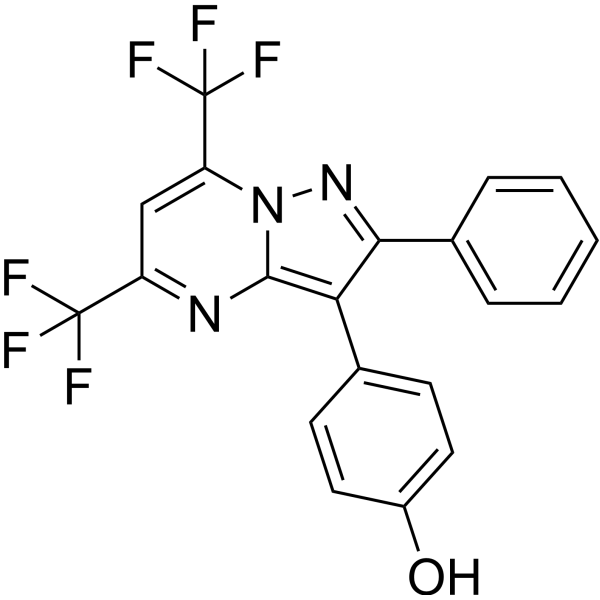
    PHTPP
    Maximum Cited Publications
    30 Publications Verification

    Estrogen Receptor/ERR Cancer
    PHTPP is a selective estrogen receptor β (ERβ) antagonist with 36-fold selectivity over ERα .
    PHTPP
  • HY-19822
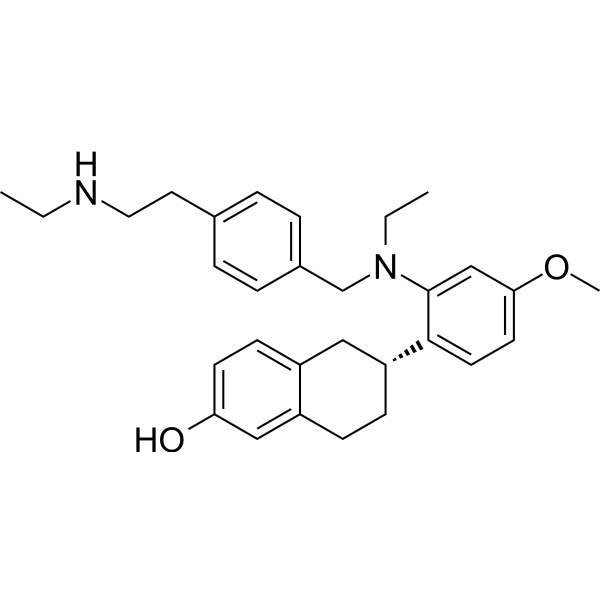
    Elacestrant
    15+ Cited Publications

    RAD1901

    Estrogen Receptor/ERR Cancer
    Elacestrant (RAD1901) is an orally available and selective estrogen receptor degrader (SERD) with IC50s of 48 and 870 nM for ERα and ERβ, respectively. Elacestrant also can inhibit growth of ER + breast cancer cell lines in vitro and in vivo .
    Elacestrant
  • HY-100689
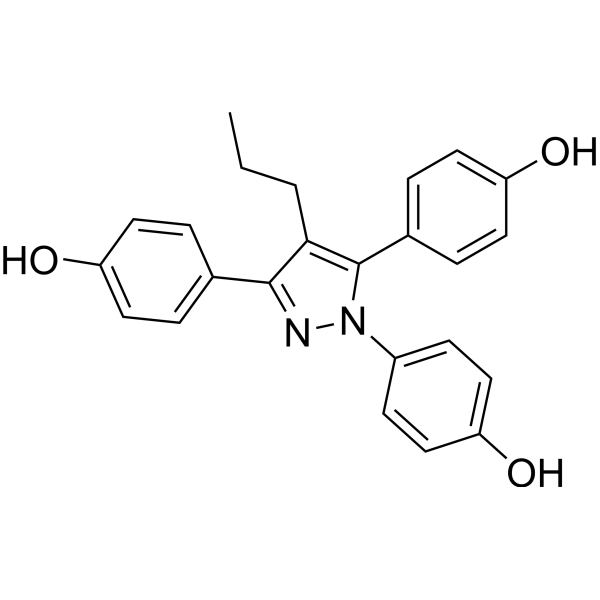
    Propyl pyrazole triol
    15+ Cited Publications

    PPT

    Estrogen Receptor/ERR Cancer
    Propyl pyrazole triol (PPT) is a selective estrogen receptor alpha (ERα) agonist. The relative binding affinity of Propyl pyrazole triol for ERα (ERα: 49%) around 410 times higher compared with estrogen receptor beta (ERβ: 0.12%) .
    Propyl pyrazole triol
  • HY-B0723
    Ospemifene
    2 Publications Verification

    FC-1271a

    Estrogen Receptor/ERR Caspase Neurological Disease Endocrinology Cancer
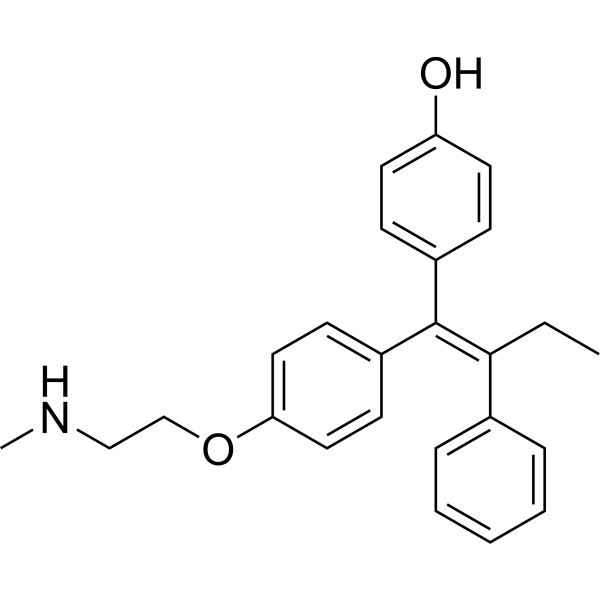
    Ospemifene (FC-1271a) is an orally active and non-estrogenic selective estrogen receptor modulator (SERM) with Ki values of 380 and 410 nM for estrogen receptor α (ERα) and ERβ, respectively. Ospemifene inhibits caspase-3 activity. Ospemifene inhibits neuronal degeneration, prevents bone loss, and increases vaginal weight and vaginal epithelial height. Ospemifene has anticancer activity against breast cancer .
    Ospemifene
  • HY-12870
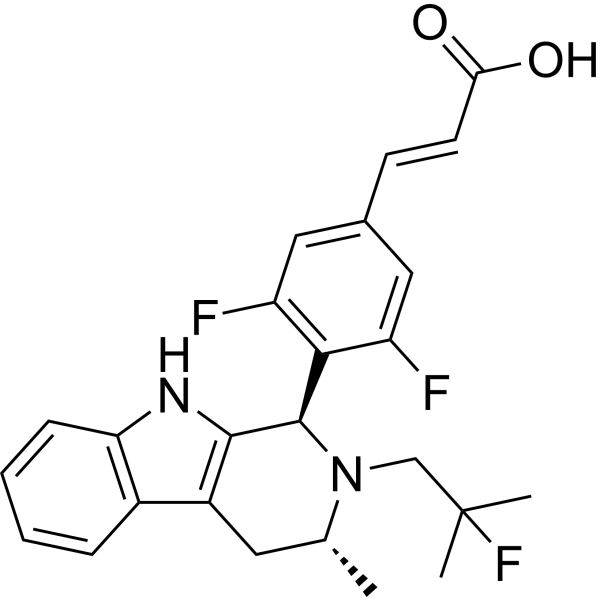
    AZD9496
    25+ Cited Publications

    Estrogen Receptor/ERR Cancer
    AZD9496 is an effective, selective estrogen receptor (ERα) antagonist with an IC50 of 0.28 nM. AZD9496 is an orally active, selective estrogen receptor degrader (SERD).
    AZD9496
  • HY-N0233
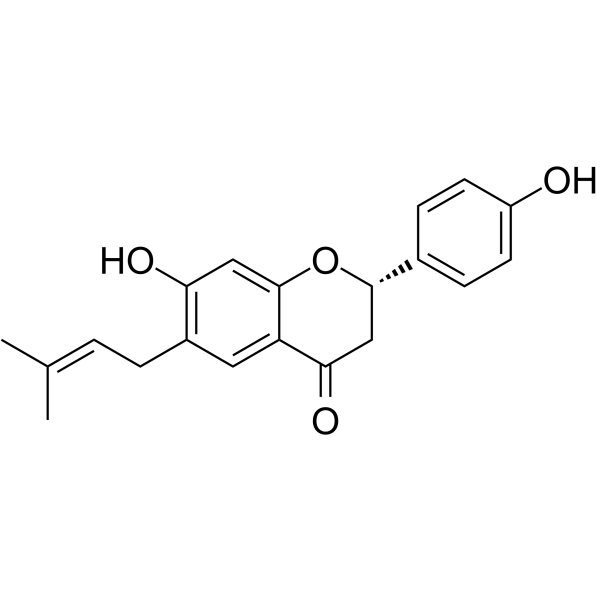
    Bavachin
    Maximum Cited Publications
    12 Publications Verification

    Corylifolin

    Estrogen Receptor/ERR Cancer
    Bavachin, a flavonoid first isolated from seeds of P. corylifolia, acts as a phytoestrogen that activates the estrogen receptors ERα and ERβ with EC50s of 320 and 680 nM, respectively.
    Bavachin
  • HY-B0412
    Estriol
    5 Publications Verification

    Oestriol

    Estrogen Receptor/ERR Endogenous Metabolite Cancer
    Estriol (Oestriol), an orally active estrogen, is a ERα and ERβ agonist. Estriol is a potent GPR30 antagonist in estrogen receptor-negative breast cancer cells. Estriol can ameliorate disease severity through immunomodulatory mechanisms that decrease tissue inflammation. Estriol has powerful proconvulsant effects .
    Estriol
  • HY-19822A
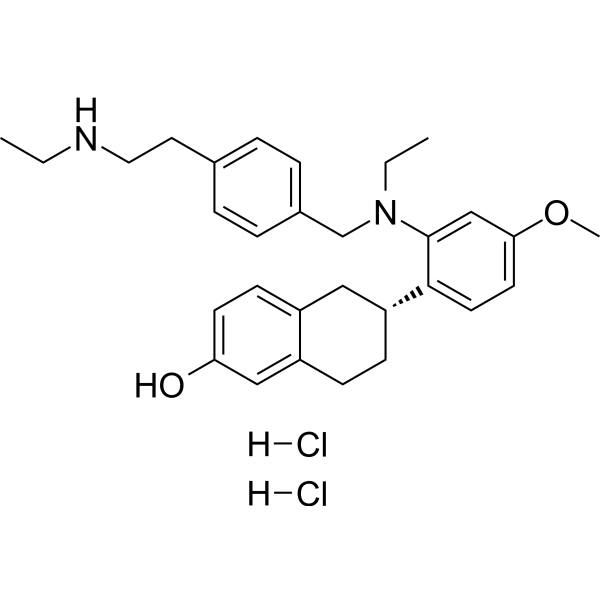
    Elacestrant dihydrochloride
    15+ Cited Publications

    RAD1901 dihydrochloride

    Estrogen Receptor/ERR Cancer
    Elacestrant (RAD1901) dihydrochloride is an orally available and selective estrogen receptor degrader (SERD) with IC50s of 48 and 870 nM for ERα and ERβ, respectively. Elacestrant dihydrochloride also can inhibit growth of ER + breast cancer cell lines in vitro and in vivo .
    Elacestrant dihydrochloride
  • HY-10426
    XCT790
    5+ Cited Publications

    Estrogen Receptor/ERR Autophagy Cancer
    XCT-790 is a potent and selective inverse agonist for ERRα with an IC50 value of 0.37 μM. XCT-790 induces cell death in chemotherapeutic resistant cancer cells. XCT-790 (Compound 12) is inactive against ERRγ and the estrogen receptors ERα and ERβ .
    XCT790
  • HY-103450

    Estrogen Receptor/ERR Endocrinology Cancer
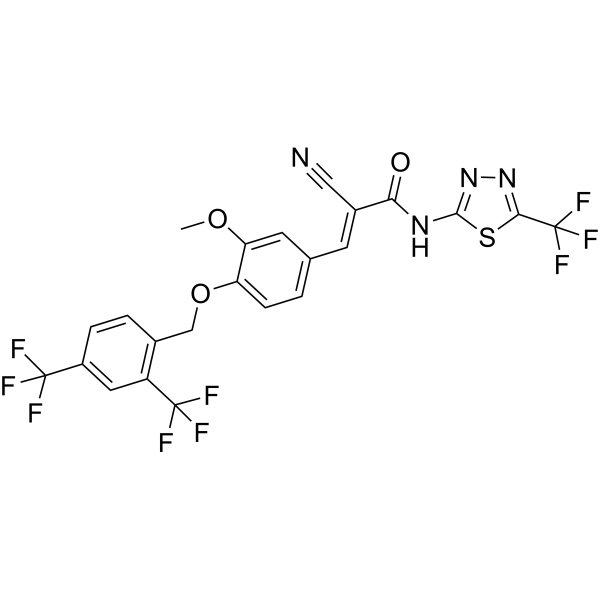
    G-36 is a cell-permeable nonsteroidal antagonist of the G protein-coupled estrogen receptor (GPER/GPR30), which selectively inhibits estrogen-mediated PI3K activation through GPER, rather than Erα. G-36 also inhibits estrogen-mediated calcium mobilization (IC50=112 nM). G-36 is promising for research in the field of cancer .
    G36
  • HY-15731

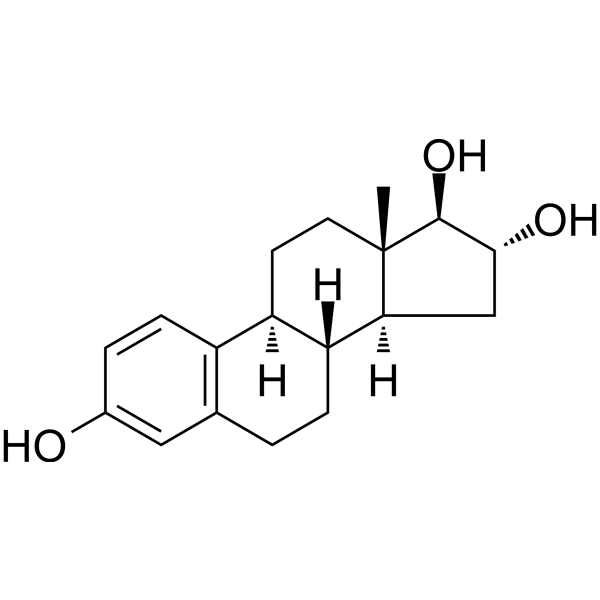
    Estrogen Receptor/ERR Endogenous Metabolite NO Synthase Cardiovascular Disease Cancer
    Estetrol, an orally active estrogen synthesized exclusively during pregnancy by the human fetal liver, is a selective nuclear estrogen receptor modulator. Estetrol binds ERα as well as ERβ (with a fourfold lower affinity). Estetrol increases eNOS expression/activity and NO synthesis in endothelial cells. Estetrol exerts estrogenic actions on the endometrium or the central nervous system but presents antagonistic effects on the breast. Estetrol can be used in contraception and menopausal hormone research .
    Estetrol
  • HY-111226
    GSK5182
    4 Publications Verification

    Estrogen Receptor/ERR Reactive Oxygen Species (ROS) Cardiovascular Disease Cancer
    GSK5182 is a highly selective and orally active inverse agonist of estrogen-related receptor γ (ERRγ) with an IC50 of 79 nM. GSK5182 does not interact with other nuclear receptors, including ERRα or ERα. GSK5182 also induces reactive oxyen species (ROS) generation in hepatocellular carcinoma (HCC) .
    GSK5182
  • HY-B1662
    Hexestrol
    2 Publications Verification

    Estrogen Receptor/ERR Endocrinology
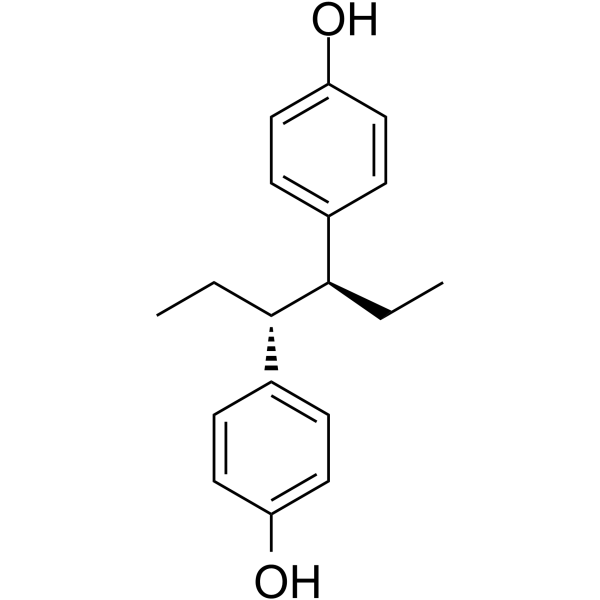
    Hexestrol is a nonsteroidal synthetic estrogen, with a Ki of 0.06 and 0.06 nM for estrogen receptor alpha (ERα) and ERβ. Hexestrol can be used for the research of the diseases caused by estrogen deficiencym, and it also can increase the weight of cattle .
    Hexestrol
  • HY-153468

    TEQ103; Sera2

    Sodium Channel TRP Channel Cancer
    ErSO-TFPy (TEQ103) is an ERα+ tumor cell inhibitor with low nanomolar cytotoxic activity against ERα+ breast cancer cells. ErSO-TFPy activates the sodium channel TRPM4, causes an imbalance of intracellular calcium and sodium ions. ErSO-TFPy dysregulates calcium homeostasis in ERα+ tumor cells, triggers the anticipatory unfolded protein response, and induces rapid immune cell-independent necrotic cell death. ErSO-TFPy can be used for the research of estrogen receptor alpha positive breast cancer .
    ErSO-TFPy
  • HY-144070

    Estrogen Receptor/ERR Cancer
    ErSO-DFP is an anticipatory unfolded protein response (a-UPR) activator. ErSO-DFP has enhanced selectivity for estrogen receptor alpha-positive (ERα+) cancer cells with a wider selectivity window than ErSO (HY-132247). ErSO-DFP displays antitumor activity against MCF-7 in mice. ErSO-DFP can cross the blood brain barrier .
    ErSO-DFP
  • HY-112100

    PROTAC-Linker Conjugates for PAC Estrogen Receptor/ERR Cancer
    MC-Val-Cit-PAB-PROTAC ERα Degrader-1 (compound LP2) consists an ADC linker and a PROTAC, whcih can be conjugated to an antibody to form PACs. MC-Val-Cit-PAB-PROTAC ERα Degrader-1 conjugated to an antibody is a more marked estrogen receptor-alpha (ERα) degrader compared to PROTAC (without Ab) .
    MC-Val-Cit-PAB-PROTAC ERα Degrader-1
  • HY-112611

    Estrogen Receptor/ERR Cancer
    H3B-5942 is a selective, irreversible and orally active estrogen receptor covalent antagonist, inactivates both wild-type and mutant ERα by targeting Cys530, with Kis of 1 nM and 0.41 nM, respectively. H3B-5942 reduces ERα target gene GREB1, shows potent antitumor activity both in multiple cell lines or animals bearing ERα WT or ERα mutations .
    H3B-5942
  • HY-126109

    Estrogen Receptor/ERR Apoptosis Metabolic Disease Endocrinology Cancer
    (±)-8-Prenylnaringenin, a natural prenylated flavonoid, is a potent phytoestrogen. (±)-8-Prenylnaringenin is an orally active selective estrogen receptor modulator (SERM) (Estrogen Receptor/ERR) that inhibits ERα and ERβ with IC50s of 57 nM and 68 nM, respectively. (±)-8-Prenylnaringenin has anticancer effects, and can be used for osteoporosis research .
    (±)-8-Prenylnaringenin
  • HY-W036120

    2,2′,4,4′-Tetrahydroxybenzophenone

    Environmental Pollutants Glycosidase Estrogen Receptor/ERR Pregnane X Receptor (PXR) Metabolic Disease Endocrinology
    Benzophenone-2 (2,2',4,4'-Tetrahydroxybenzophenone) is an organic ultraviolet absorber that is widely used in personal care products and industrial products such as plastics and coatings. Benzophenone-2 is an endocrine disruptor that can interfere with estrogen receptors (ERα receptor) and pregnane X receptor (PXR receptor) activity, leading to reproductive toxicity, immune disorders, and metabolic abnormalities. Benzophenone-2 can inhibit the activity of α-glucosidase (IC50 = 49.72 μM), and can be used for research on diabetes .
    Benzophenone-2
  • HY-N4121
    Isocurcumenol
    1 Publications Verification

    Estrogen Receptor/ERR Apoptosis Cancer
    Isocurcumenol, an estrogen receptor alpha (ERα) inhibitor isolated from Curcuma zedoaria Rhizomes, possesses anti-tumor acticity, with IC50 values of 99.1μg/mL and 178.2 μg/mL in DLA and KB cells, respectively .
    Isocurcumenol
  • HY-125703

    Estrogen Receptor/ERR Apoptosis Infection Inflammation/Immunology Endocrinology Cancer
    Ferutinin, a natural terpenoid compound, is an estrogen receptor ERα agonist and estrogen ERβ-receptor agonist/antagonist with IC50s of 33.1 nM and 180.5 nM, respectively. Ferutinin acts as an electrogenic Ca 2+-ionophore that increases calcium permeability of lipid bilayer membranes, mitochondria. Ferutinin possesses estrogenic, antitumor, antibacterial and antiinflammatory activities .
    Ferutinin
  • HY-110157

    Estrogen Receptor/ERR Neurological Disease
    AC-186 is a selective non-steroidal estrogen receptor β (ERβ) agonist with EC50s of 6 nM and 5000 nM for ERβ and ERα, respectively. AC-186 shows gender selective neuroprotective effects in a male rat model of Parkinson's disease .
    AC-186
  • HY-A0036D

    TSE-424 acetate-D

    Estrogen Receptor/ERR Cancer
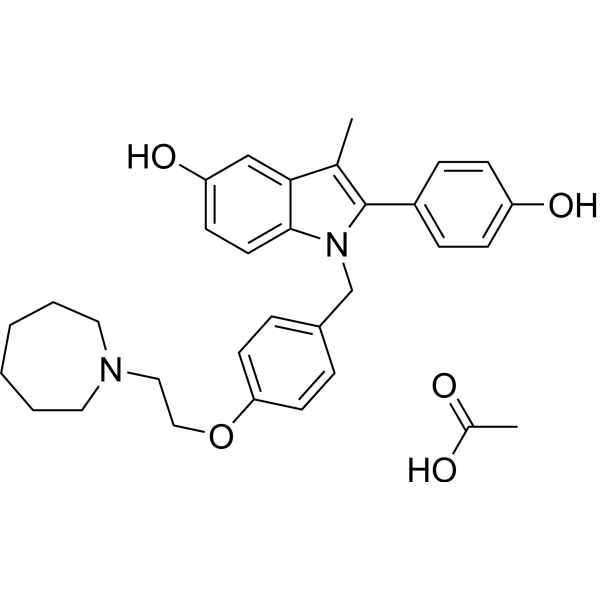
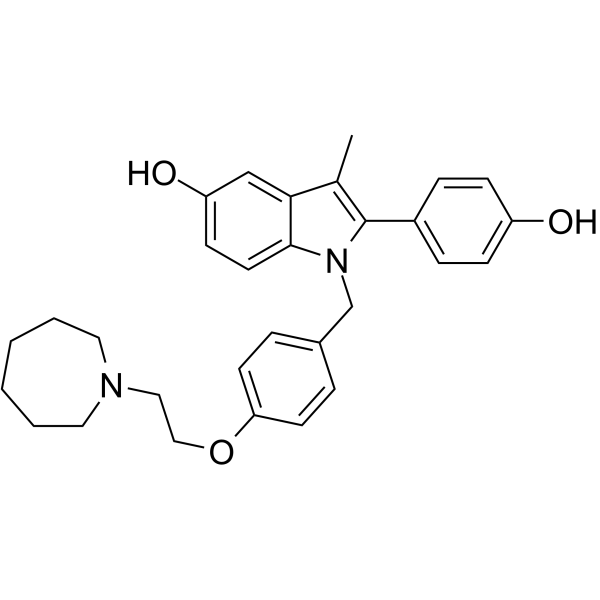
    Bazedoxifene (acetate)-D (TSE-424 (acetate)-D) is the D-crystal form compound of Bazedoxifene acetate (HY-A0036). Bazedoxifene acetate is an orally active, nonsteroidal selective estrogen receptor modulator (SERM), with IC50s of 23 nM and 99 nM for ERα and ERβ, respectively .
    Bazedoxifene acetate-D
  • HY-107835

    FCR 2769

    Environmental Pollutants Apoptosis Bcl-2 Family Parasite Insecticide Infection Cancer
    Flumethrin (FCR 2769) is a pyrethroid insecticide and acaricide . Flumethrin targets voltage-gated sodium channels and estrogen receptor α (ERα). Flumethrin induces cytotoxicity, apoptosis, genotoxicity and DNA damage in breast cancer cells by regulating the expression of BCL2, BAX, TP53 and P21 genes. Flumethrin is applicable to relevant studies on ectoparasite infections (tick and flea burdens) in dogs and cats, as well as breast cancer .
    Flumethrin
  • HY-W1006471

    Estrogen Receptor/ERR Endocrinology
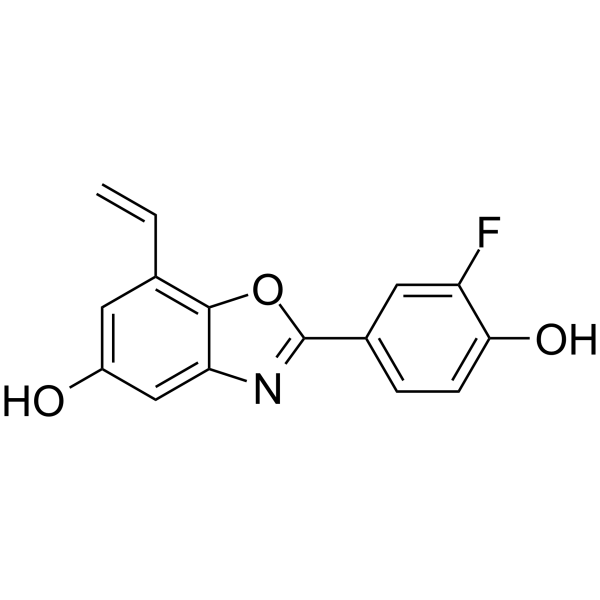
    Estrogen receptor-agonist-1 (compound 4e) is a estrogen receptor (ER) agonist that binds to ERα with high affinity .
    Estrogen receptor-agonist-1
  • HY-112098
    PROTAC ERα Degrader-1
    1 Publications Verification

    PROTACs Estrogen Receptor/ERR Cancer
    PROTAC ERα Degrader-1 comprises an ubiquitin E3 ligase binding group, a linker and a protein binding group. PROTAC ERα Degrader-1 extracts from patent WO2017201449A1, compound P1. PROTAC ERα Degrader-1 is an estrogen receptor-alpha (ERα) degrader.
    PROTAC ERα Degrader-1
  • HY-150601
    Estrogen receptor-IN-1
    1 Publications Verification

    Estrogen Receptor/ERR Metabolic Disease
    Estrogen receptor-IN-1 (compound 16) is a potent estrogen receptor (ER) inhibitor with IC50s of 13, 5µM for ERα and Erβ, respectively .
    Estrogen receptor-IN-1
  • HY-150803

    Ligands for E3 Ligase Cancer
    VHL Ligand 14 (Compound 11) is a VHL ligand for design of PROTAC estrogen receptor α (ERα) degraders, with a binding affinity IC50 of 196 nM .
    VHL Ligand 14
  • HY-145341

    Estrogen Receptor/ERR Cancer
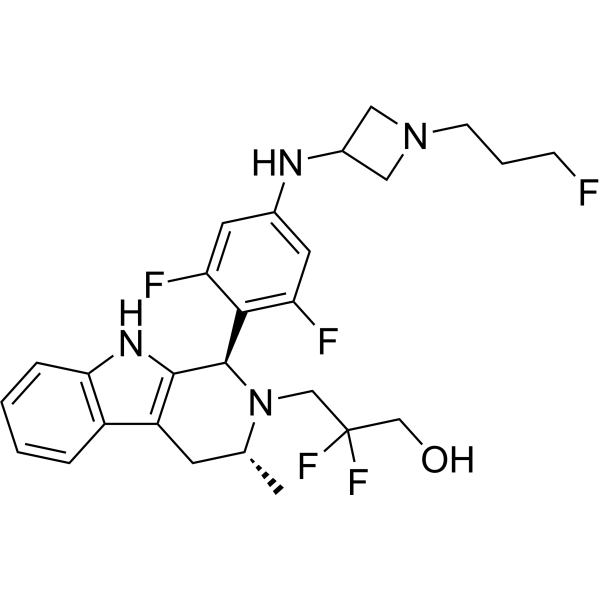
    GNE-149 is an orally bioavailable full antagonist of estrogen receptor α (ERα; IC50=0.053 nM). GNE-149 is a selective estrogen receptor degrader (SERD). GNE-149 can be used for the research of breast cancer .
    GNE-149
  • HY-175785

    Estrogen Receptor/ERR Aryl Hydrocarbon Receptor Apoptosis MDM-2/p53 Cancer
    X15695 is selective and orally active estrogen receptor (ERα) degrader. X15695 is an aryl hydrocarbon receptor (AHR) ligand. X15695 enables AHR to form a complex with the ERα, promoting its proteasomal degradation. X15695 inhibits the breast cancer cells proliferation, promotes cell cycle block and induces apoptosis. X15695 can be used for the study of breast cancer .
    X15695
  • HY-150693

    Estrogen Receptor/ERR Cancer
    Estrogen receptor β antagonist 2 is a potent and selective estrogen receptor β (ERβ) antagonist with IC50s of 109.10, 0.63 µM for Erα and Erβ, respectively .
    Estrogen receptor β antagonist 2
  • HY-12870A
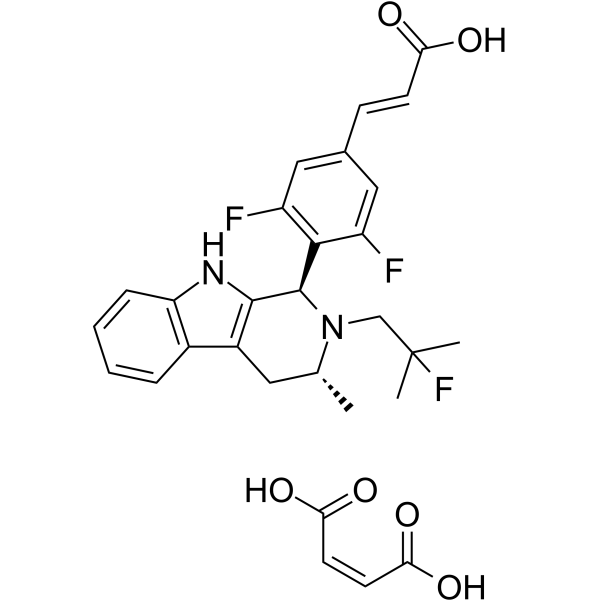
    AZD9496 maleate
    25+ Cited Publications

    Estrogen Receptor/ERR Cancer
    AZD9496 maleate is a potent and selective estrogen receptor (ERα) antagonist with IC50 of 0.28 nM. AZD9496 maleate is an orally bioavailable selective oestrogen receptor degrader (SERD).
    AZD9496 maleate
  • HY-129619

    SNIPERs Estrogen Receptor/ERR Cancer
    SNIPER(ER)-87 consists of an inhibitor of apoptosis protein (IAP) ligand LCL161 derivative that is conjugated to the estrogen receptor α (ERα) ligand 4-hydroxytamoxifen by a PEG linker, and efficiently degrades the ERα protein (IC50=0.097 μM). SNIPER(ER)-87 preferentially recruits XIAP to ERα in the cells, and XIAP is the primary E3 ubiquitin ligase responsible for the SNIPER(ER)-87-induced ERα degradation .
    SNIPER(ER)-87
  • HY-19822D

    RAD1901 S enantiomer

    Estrogen Receptor/ERR Cancer
    Elacestrant S enantiomer (RAD1901 S enantiomer) is an low activity enantiomer of elacestrant. Elacestrant (RAD1901) is a selective and orally available estrogen receptor (ERR) degrader with IC50 values of 48 and 870 nM for ERα and ERβ, respectively .
    Elacestrant (S enantiomer)
  • HY-19822B

    RAD1901 S enantiomer dihydrochloride

    Estrogen Receptor/ERR Cancer
    Elacestrant S enantiomer dihydrochloride (RAD1901 S enantiomer dihydrochloride) is an low activity enantiomer of elacestrant dihydrochloride. Elacestrant (RAD1901) dihydrochloride is a selective and orally available estrogen receptor (ERR) degrader with IC50 values of 48 and 870 nM for ERα and ERβ, respectively.
    Elacestrant S enantiomer dihydrochloride
  • HY-19498

    SIM-688

    NF-κB Inflammation/Immunology
    WAY-204688 is an estrogen receptor (ER-α) selective, orally active inhibitor of NF-κB transcriptional activity with an IC50 of 122 ± 30 nM for NF-κB-luciferase (NF-κB-luc) in HAECT-1 cells.
    WAY-204688
  • HY-128527

    PROTAC-Linker Conjugates for PAC Estrogen Receptor/ERR Cancer
    PROTAC ER Degrader-3 is an intermediate for synthesis of PAC. PAC, consists the ADCs linker and PROTACs, conjugated to an antibody. PAC extracts from patent WO2017201449A1, compound LP2. PAC conjugated to an antibody is a more marked estrogen receptor-alpha (ERα) degrader compared to PROTAC (without Ab) .
    PROTAC ER Degrader-3
  • HY-119418

    Estrogen Receptor/ERR Cancer
    Desketoraloxifene is an estrogen receptors alpha (ERα) activator at an AP-1 site. Desketoraloxifene can be used for the research of osteoporosis and breast cancer .
    Desketoraloxifene
  • HY-N2448

    Estrogen Receptor/ERR Endocrinology
    Lindleyin, isolated from Rhei rhizoma, mediates hormonal effects through estrogen receptors. Lindleyin binds to ERα with estrogenic activity .
    Lindleyin
  • HY-144733

    Estrogen Receptor/ERR Apoptosis Cancer
    ERα antagonist 1 (Compound 19d) is a potent, selective, covalent estrogen receptor α (ERα) antagonist. ERα antagonist 1 induces apoptosis and cell cycle G0/G1 phase arrest in MCF-7 cells .
    ERα antagonist 1
  • HY-131404
    TPBM
    2 Publications Verification

    Estrogen Receptor/ERR Cancer
    TPBM is a potent estrogen receptor α (ERα) inhibitor with an IC50 value of 9 μM for 17β-estradiol (E2)-ERα. TPBM reduces EERα recruitment to an endogenous estrogen-responsive gene. TPBM inhibits E2-dependent growth of ERα-positive cancer cells (IC50=5 μM). TPBM is not toxic to cells and does not affect estrogen-independent cell growth .
    TPBM
  • HY-111484A

    SRN-927 Racemate

    Estrogen Receptor/ERR Cancer
    GDC-0927 Racemate (SRN-927 Racemate) is an estrogen receptor (ER) degrader that can effectively inhibit the activity of ER-α with an IC50 value of 0.2 nM and can be used in diseases related to estrogen receptors.
    GDC-0927 Racemate
  • HY-W114419

    Estrogen Receptor/ERR mTOR Cardiovascular Disease Metabolic Disease
    Bisphenol C is an estrogen receptor-α (ERα) agonist and an ERβ antagonist, with IC50 values of 2.65 nM for ERα and 1.94 nM for ERβ. Bisphenol C is a material of manufacturing polyester polymers like polycarbonate, is widely used in daily items like water bottles, food packaging, textile and so on .
    Bisphenol C
  • HY-168869

    PROTACs Estrogen Receptor/ERR Cancer
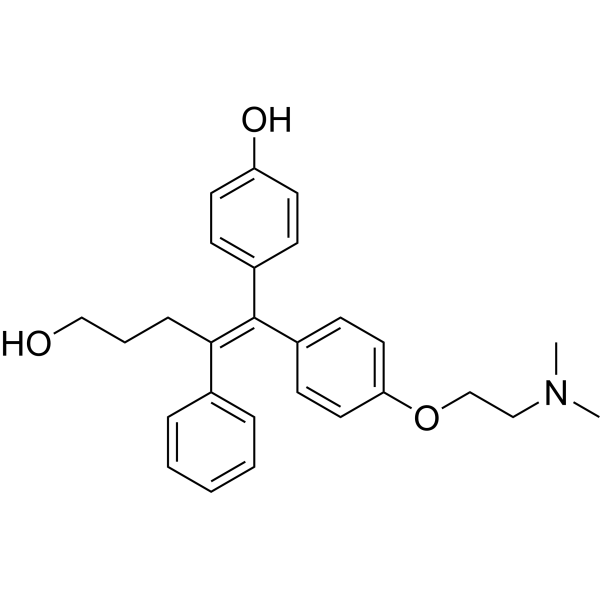
    Tamoxifen-PEG-Clozapine is an estrogen receptor α (ERα) PROTAC degrader. Tamoxifen-PEG-Clozapine degrades ERα via a ubiquitin-proteasome system that uses the ubiquitin protein ligase E3 component N-recognin 5. Tamoxifen-PEG-Clozapine can be used for the research of cancer . (Pink: ERα inhibitor (HY-W271653); Black: linker (HY-168870); Blue: CRBN Ligand (HY-G0021))
    Tamoxifen-PEG-Clozapine
  • HY-126932

    Estrogen Receptor/ERR Cancer
    TTC-352 is an orally bioavailable selective human estrogen receptor (ER) α partial agonist (ShERPA). TTC-352 inhibits the growth of three ER+ breast cancer cells. TTC-352 induces tumor regression accompanied by exit of ERα from the nucleus to extranuclear sites .
    TTC-352
  • HY-132294A

    Estrogen Receptor/ERR Cancer
    (1S,3R)-GNE-502 (compound 179) is a potent ERα degrader with an EC50 value of 13 nM against ERα in MCF7 HCS. (1S,3R)-GNE-502 can be used to research cancer related with estrogen receptor .
    (1S,3R)-GNE-502
  • HY-128528

    PROTAC-Linker Conjugates for PAC Estrogen Receptor/ERR Cancer
    PROTAC ER Degrader-2 is an intermediate for synthesis of PAC. PAC, consists the ADCs linker and PROTACs, conjugated to an antibody. PAC extracts from patent WO2017201449A1, compound LP2. PAC conjugated to an antibody is a more marked estrogen receptor-alpha (ERα) degrader compared to PROTAC (without Ab) .
    PROTAC ER Degrader-2
  • HY-19822S

    RAD1901-d4

    Isotope-Labeled Compounds Estrogen Receptor/ERR Cancer
    Elacestrant-d4 (RAD1901-d4) is a deuterated labeled Elacestrant (HY-19822). Elacestrant (RAD1901) is a selective estrogen receptor (estrogen receptor, ER) degrader (SERD) with oral activity, with IC50 values of 48 and 870 nM for ERα and ERβ, respectively. Elacestrant can also effectively inhibit the growth of ER + breast cancer cell lines both in vitro and in vivo.
    Elacestrant-d4
  • HY-176955

    Estrogen Receptor/ERR Cancer
    ER degrader 12 (Example 1) is an estrogen receptor (ER) degrader with IC50 values for ERα and ERβ of 2.3 and 80.2 nM respectively (TR-FRET experiment). ER degrader 12 inhibits the proliferation of MCF-7 cells, with an IC50 of 1.53 nM. ER degrader 12 can be used for research on breast cancer .
    ER degrader 12
  • HY-163680

    Estrogen Receptor/ERR Cytochrome P450 Cancer
    ERα degrader 9 is a dual targeting ligand for estrogen receptor α (ERα) and aromatase (ARO). ERα degrader 9 can be utilized for synthesis of PROTAC ERα Degrader-9 (HY-163679) .
    ERα degrader 9

Inquiry Online

Your information is safe with us. * Required Fields.

Salutation


Country or Region *

Applicant Name *


Organization Name *

Department *


Email Address *


Product Name *

Cat. No.


Requested quantity *

Phone Number *


Remarks

Inquiry Online

Inquiry Information

Product Name:
Cat. No.:
Quantity:
MCE Japan Authorized Agent:

