1. Search Result
Search Result
Results for "

excision

" in MedChemExpress (MCE) Product Catalog:

13

Inhibitors & Agonists

1

Fluorescent Dyes

2

Biochemical Assay Reagents

1

Natural
Products

1

Isotope-Labeled Compounds

10

Antibodies

1

GMP Molecules

Cat. No. Product Name Target Research Areas Chemical Structure
  • HY-W014622
    CRT0044876
    2 Publications Verification

    DNA/RNA Synthesis Cancer
    CRT0044876 is a potent and selective apurinic/apyrimidinic endonuclease 1 (APE1) inhibitor (IC50=~3 μM). CRT0044876 inhibits the AP endonuclease, 3′-phosphodiesterase and 3′-phosphatase activities of APE1, and is a specific inhibitor of the exonuclease III family of enzymes to which APE1 belongs. CRT0044876 potentiates the cytotoxicity of several DNA base-targeting compounds .
    CRT0044876
  • HY-Y0958
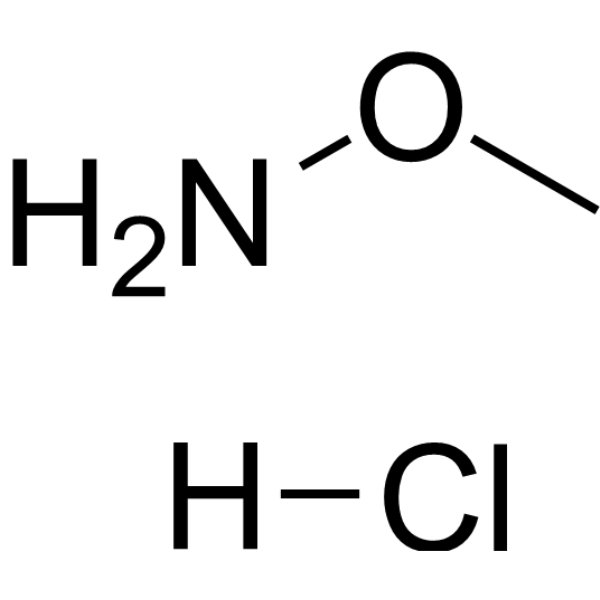
    Methoxyamine hydrochloride
    1 Publications Verification

    O-Methylhydroxylamine hydrochloride

    DNA/RNA Synthesis Apoptosis Cancer
    Methoxyamine (O-Methylhydroxylamine) hydrochloride is an orally active and potent base excision repair (BER) inhibitor. Methoxyamine hydrochloride binds to 3’ hydroxyl groups that are left behind by 3-methylpurine-DNA glycosylase (MPG) following excision of the damaged base and thus inhibits BER activity. Methoxyamine hydrochloride binds directly to the apyrimidinic (AP) sites. Methoxyamine hydrochloride synergistically enhances the therapeutic efficacy of DNA-damaging agents .
    Methoxyamine hydrochloride
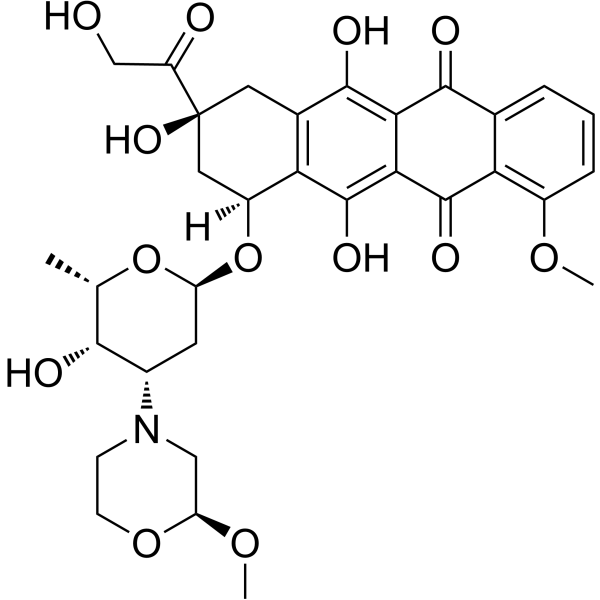
  • HY-15794
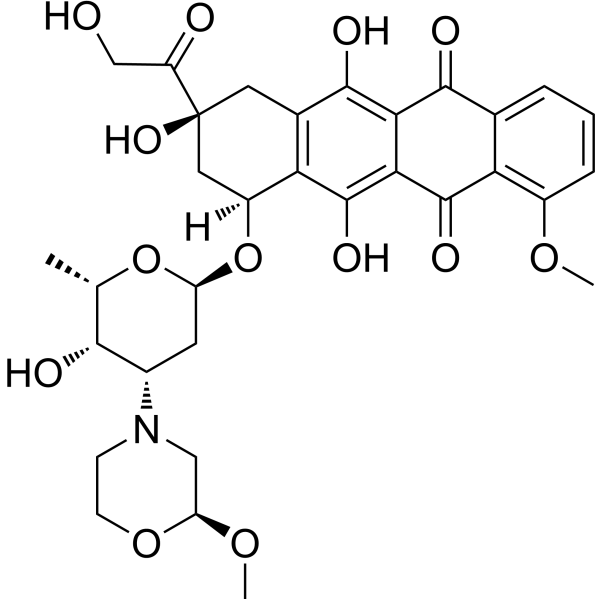
    Nemorubicin
    1 Publications Verification

    Methoxymorpholinyl doxorubicin; FCE 23762; PNU 152243

    G-quadruplex Cancer
    Nemorubicin (Methoxymorpholinyl doxorubicin) is a Doxorubicin derivative with potent antitumor activity. Nemorubicin is highly cytotoxic to a variety of tumor cell lines presenting a multidrug-resistant phenotype. Nemorubicin not only intercalate into the duplex DNA, but also result in significant ligands for G-quadruplex DNA segments, stabilizing their structure. Nemorubicin requirs an intact nucleotide excision repair (NER) system to exert its activity .
    Nemorubicin
  • HY-N2907

    Wnt Ras Endogenous Metabolite Bacterial Fungal PD-1/PD-L1 Tim3 Akt AP-1 STAT Infection Neurological Disease Inflammation/Immunology Cancer
    Atranorin is a secondary metabolite of lichens and AKT inhibitor. Atranorin possesses multiple activities such as antibacterial, anti-inflammatory, antioxidant, anti-glycation, analgesic, and anti-tumor effects. Atranorin has IC50 values for scavenging DPPH and ABTS free radicals of 117 μM and less than 10 μM, respectively. Additionally, Atranorin also exhibits effects in promoting wound healing. Atranorin can be used in the research of various diseases, including myelodysplastic syndromes, tumors, and inflammatory conditions .
    Atranorin
  • HY-147356

    DNA/RNA Synthesis Cancer
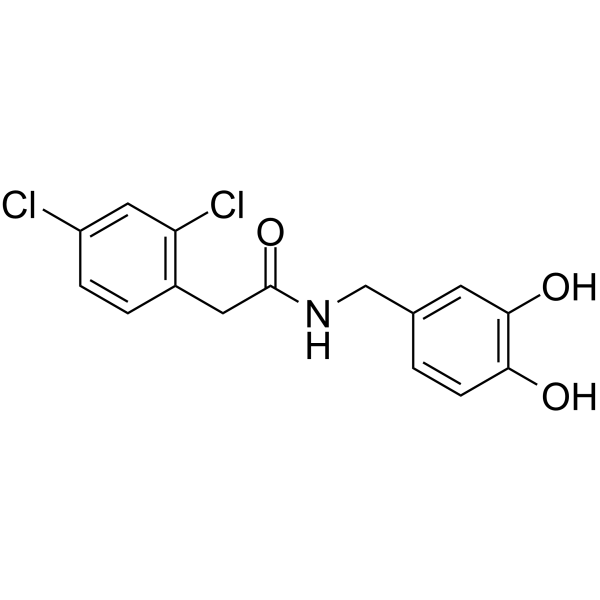
    ERCC1-XPF-IN-2 is a potent ERCC1-XPF endonuclease inhibitor with an IC50 value of 0.6 μM. ERCC1-XPF-IN-2 shows activity in nucleotide excision repair, cisplatin enhancement and γH2AX assays .
    ERCC1-XPF-IN-2
  • HY-Y0958S

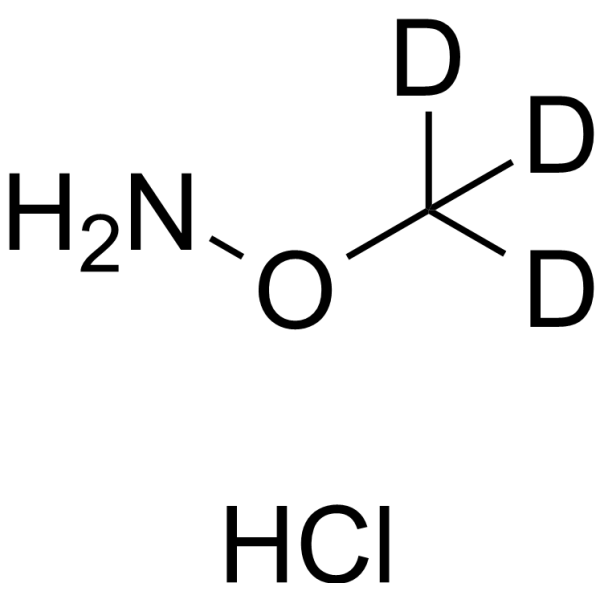
    O-Methylhydroxylamine-d3 hydrochloride

    DNA/RNA Synthesis Apoptosis Isotope-Labeled Compounds Cancer
    Methoxyamine-d3 (O-Methylhydroxylamine-d3) hydrochloride is the deuterium labeled Methoxyamine hydrochloride. Methoxyamine hydrochloride is an orally active and potent base excision repair (BER) inhibitor .
    Methoxyamine-d3 Hydrochloride
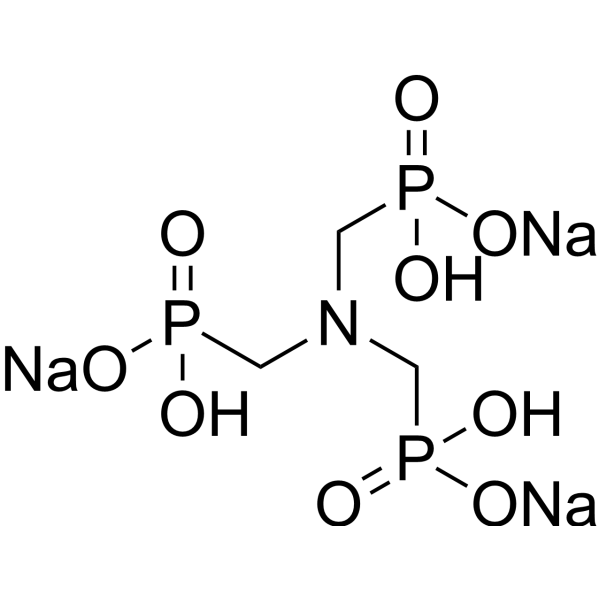
  • HY-W011425

    Nitrilotris(methylenephosphonic acid)

    Environmental Pollutants DNA Alkylator/Crosslinker MOFs Cancer
    NTPO (Nitrilotris methylenephosphonic acid) is a DNA damage inducer, causing genomic DNA damage and fragmentation, activating ATR-mediated cell cycle checkpoints. The DNA damaging effects of NTPO are abrogated by base excision repair (BER) but not nucleotide excision repair (NER) .
    NTPO
  • HY-175466

    PARP DNA/RNA Synthesis Apoptosis Cancer
    BER-IN-1 is a base excision repair (BER) inhibtor, targeting DNA abasic sites. BER-IN-1 cleaves abasic sites via β- and β,δ-elimination mechanisms, disrupts the base excision repair (BER) pathway and leads to DNA double-strand breaks (DSBs). BER-IN-1 can enhance the effectiveness of the PARP inhibitor Olaparib (HY-10162) in homologous recombination (HR)-proficient cancer cells (MDA-MB-231, HeLa, and SKOV3). BER-IN-1 induces an S-phase arrest and apoptosis companied with Olaparib (HY-10162). BER-IN-1 can be used for the research of cancer, such as breast, cervical and ovarian cancer .
    BER-IN-1
  • HY-Y0958R

    O-Methylhydroxylamine hydrochloride (Standard)

    Reference Standards DNA/RNA Synthesis Apoptosis Cancer
    Methoxyamine hydrochloride (Standard) is the analytical standard of Methoxyamine hydrochloride. This product is intended for research and analytical applications. Methoxyamine (O-Methylhydroxylamine) hydrochloride is an orally active and potent base excision repair (BER) inhibitor. Methoxyamine hydrochloride binds to 3’ hydroxyl groups that are left behind by 3-methylpurine-DNA glycosylase (MPG) following excision of the damaged base and thus inhibits BER activity. Methoxyamine hydrochloride binds directly to the apyrimidinic (AP) sites. Methoxyamine hydrochloride synergistically enhances the therapeutic efficacy of DNA-damaging agents .
    Methoxyamine hydrochloride (Standard)
  • HY-15794G

    Methoxymorpholinyl doxorubicin; FCE 23762; PNU 152243

    G-quadruplex Cancer
    Nemorubicin (Methoxymorpholinyl doxorubicin) GMP is a GMP-class Nemorubicin (HY-15794). Nemorubicin is a Doxorubicin derivative with potent antitumor activity. Nemorubicin is highly cytotoxic to a variety of tumor cell lines presenting a multidrug-resistant phenotype. Nemorubicin not only intercalate into the duplex DNA, but also result in significant ligands for G-quadruplex DNA segments, stabilizing their structure. Nemorubicin requirs an intact nucleotide excision repair (NER) system to exert its activity .
    Nemorubicin
  • HY-184013

    DNA/RNA Synthesis Cancer
    SU0617 is a selective SMUG1 inhibitor with a human IC50 of 1.5 μM. SU0617 inhibits base excision repair activity of SMUG1, including excision of modified and damaged pyrimidines from DNA. SU0617 can be used for the research of breast cancer .
    SU0617
  • HY-W974306

    DNA/RNA Synthesis Cancer
    DML3, a 5-methylcytosine DNA glycosylase, is a DNA demethylating agent. DML3 specifically recognizes and excises 5-methylcytosine (5-meC) from DNA through a base excision repair mechanism. DML3 is promising for research of plant epigenetic regulation and cancers .
    DML3
  • HY-181967

    PROTACs PARP DNA/RNA Synthesis PD-1/PD-L1 Cancer
    PROTAC PARP1 degrader-5 is a PARP1 PROTAC degrader with a DC50 of 0.12 μM. PROTAC PARP1 degrader-5 hijacks the ubiquitin-proteasome system via catalytic ternary complex formation to drive sustained PARP1 degradation. PROTAC PARP1 degrader-5 induces DNA damage, drives marginal cytosolic double-stranded DNA accumulation in tumor cells, and up-regulates PD-L1 surface expression in tumor cells. PROTAC PARP1 degrader-5 shows tumor growth inhibition activity in murine melanoma models when encapsulated in lipid nanoparticles. PROTAC PARP1 degrader-5 can be used for the research of cancer, such as melanoma .
    PROTAC PARP1 degrader-5

Inquiry Online

Your information is safe with us. * Required Fields.

Salutation


Country or Region *

Applicant Name *


Organization Name *

Department *


Email Address *


Product Name *

Cat. No.


Requested quantity *

Phone Number *


Remarks

Inquiry Online

Inquiry Information

Product Name:
Cat. No.:
Quantity:
MCE Japan Authorized Agent:

