1. Search Result
Search Result
Results for "

explants

" in MedChemExpress (MCE) Product Catalog:

22

Inhibitors & Agonists

1

Peptides

1

Inhibitory Antibodies

5

Natural
Products

Cat. No. Product Name Target Research Areas Chemical Structure
  • HY-W145499
    Zinc Gluconate
    1 Publications Verification

    PPAR NF-κB Toll-like Receptor (TLR) Inflammation/Immunology Cancer
    Zinc Gluconate is a zinc supplement in the form of a gluconate salt, which plays a role in various physiological processes such as immune function, wound healing, and olfaction. Zinc Gluconate has a LD50 of 39.6 mg/kg in mice (Tail vein injection). Zinc Gluconate can be used in the research of inflammation, zinc deficiency, colds, cancer, and nutritional supplements .
    Zinc Gluconate
  • HY-136979
    RBN012759
    Maximum Cited Publications
    13 Publications Verification

    PARP Inflammation/Immunology Cancer
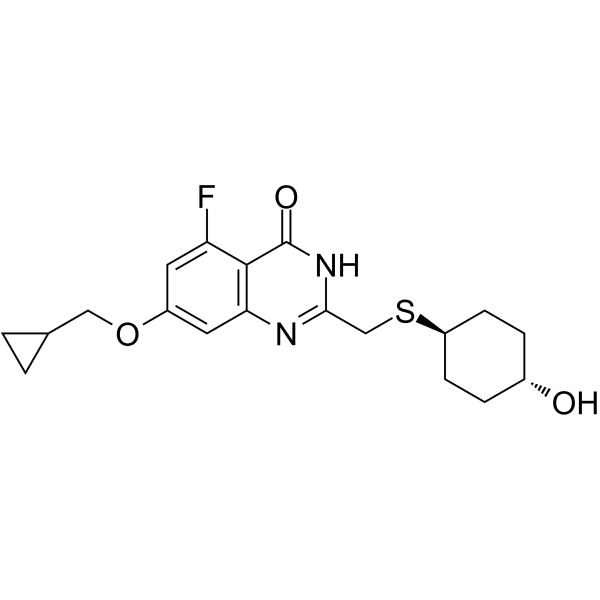
    RBN012759 is a potent, selective and orally active inhibitor of PARP14, with an IC50 of <3 nM. RBN012759 displays 300-fold selectivity over the monoPARPs and 1000-fold selectivity over the polyPARPs. RBN012759 decreases pro-tumor macrophage function and elicits inflammatory responses in tumor explants .
    RBN012759
  • HY-W051140

    Disilver sulfate, 99%

    Environmental Pollutants Biochemical Assay Reagents Others
    Silver sulfate acts as an ethylene inhibitor and a shoot regeneration promoter. Silver sulfate promotes shoot proliferation in explants of the cherry rootstock CAB-6P. Silver sulfate is applicable to studies on the optimization of micropropagation for cherry rootstocks .
    Silver sulfate
  • HY-P10739

    Exosomes Collagen Inflammation/Immunology
    WYRGRL is a selective, high-affinity collagen type II-binding peptide with a IC50 of 140 nM. Collagen type II is the most abundant and specific structural protein in the extracellular matrix of articular cartilage. WYRGRL can precisely target small-molecule compounds such as Dexamethasone (HY-14648) and nanocarrier-engineered exosomes to cartilage, significantly enhancing their therapeutic effects on osteoarthritis .
    WYRGRL
  • HY-112038A
    GSK2983559
    2 Publications Verification

    RIP kinase Inflammation/Immunology
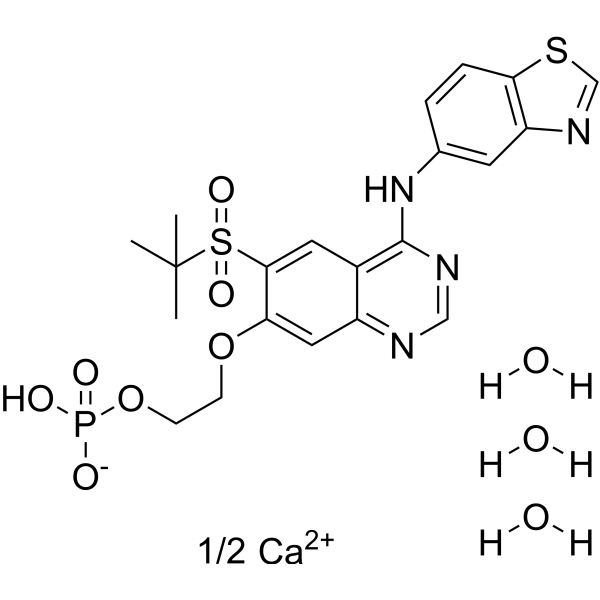
    GSK2983559 is an orally active and potent receptor interacting protein 2 (RIP2) kinase inhibitor. GSK2983559 blocks many proinflammatory cytokine responses in vivo and in human inflammatory bowel disease explant samples .
    GSK2983559
  • HY-112038
    GSK2983559 free acid
    2 Publications Verification

    RIP kinase Inflammation/Immunology
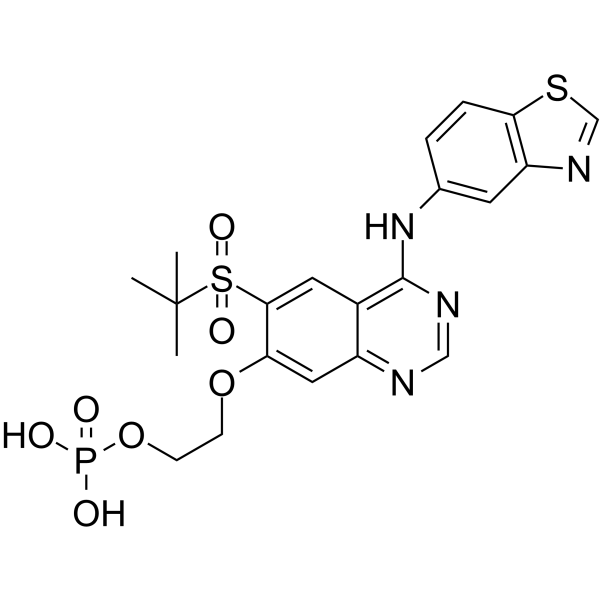
    GSK2983559 free acid (compound 3) is an orally active and potent receptor interacting protein 2 (RIP2) kinase inhibitor. GSK2983559 free acid can block many proinflammatory cytokine responses in vivo and in human inflammatory bowel disease explant samples .
    GSK2983559 free acid
  • HY-N4102

    Apoptosis JNK FOXO Reactive Oxygen Species (ROS) Caspase Neurological Disease
    5,7-Dihydroxy-4-methylcoumarin is an antioxidant. 5,7-Dihydroxy-4-methylcoumarin protects mouse cochlear hair cells from Cisplatin-induced damage, enhances cell viability and inhibits apoptosis. 5,7-Dihydroxy-4-methylcoumarin downregulates phosphorylated JNK levels, increases the ratio of phosphorylated FoxO1 to total FoxO1, scavenges free radicals, reduces ROS accumulation, maintains mitochondrial membrane potential and alleviates mitochondrial dysfunction. 5,7-Dihydroxy-4-methylcoumarin downregulates the expression of caspase-3 and improves cell viability. 5,7-Dihydroxy-4-methylcoumarin can be used in studies related to ototoxicity .
    5,7-Dihydroxy-4-methylcoumarin
  • HY-112642

    TNF Receptor Cancer
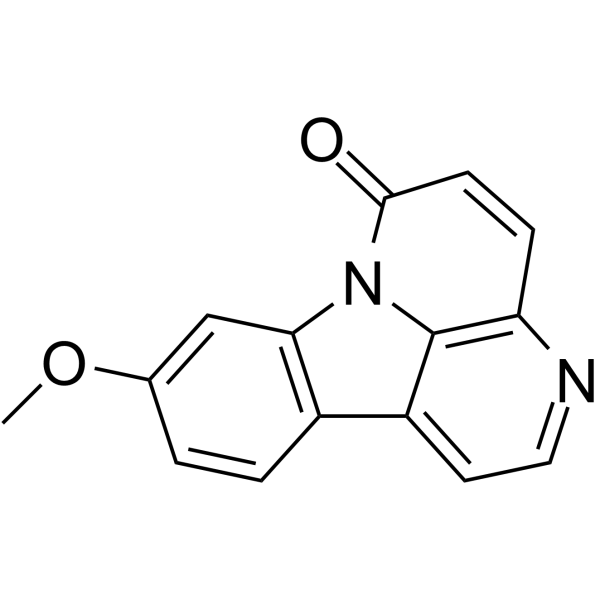
    9-Methoxycanthin-6-one, a canthin-6-one alkaloid, is present in intact plant parts and in callus tissues of different explants. 9-Methoxycanthin-6-one shows anti-tumor activity, inhibits LPS-induced TNF-α and IL-1β .
    9-Methoxycanthin-6-one
  • HY-113438

    Drug Metabolite Bcl-2 Family Akt Apoptosis Cardiovascular Disease Inflammation/Immunology Cancer
    15(S)-HPETE is a precursor of 15(S)-HETE (HY-113336). 15(S)-HPETE is a product of Arachidonic acid (HY-109590) in the 15-lipoxygenase pathway. 15(S)-HPETE reduces Bcl-2, Akt, and phosphorylated Akt protein levels. 15(S)-HPETE induces Apoptosis. 15(S)-HPETE antagonizes the angiogenic effects of 15(S)-HETE. 15(S)-HPETE exhibits antitumor effects against chronic myeloid leukemia. 15(S)-HPETE can be used in adipose tissue explant studies .
    15(S)-HPETE
  • HY-19527
    IST5-002
    1 Publications Verification

    N6-Benzyladenosine-5'-phosphate

    STAT Apoptosis Cancer
    IST5-002, a potent Stat5a/b inhibitor, selectively inhibits transcriptional activity of Stat5a/b (IC50s: 1.5 μM for Stat5a, 3.5 μM for Stat5b). IST5-002 inducs cell apoptotic and death of prostate cancer cells and chronic myeloid leukemia (CML) cells. IST5-002 can be used in the research of prostate cancer and chronic myeloid leukemia (CML) .
    IST5-002
  • HY-N3138

    Bacterial Apoptosis Reactive Oxygen Species (ROS) ERK JNK Caspase SOD Fungal Infection Neurological Disease
    Ombuoside has antioxidant properties, inhibiting ROS production and apoptosis. Ombuoside exerts neuroprotective effects through the ERK-JNK-caspase-3 system. Ombuoside promotes Dopamine biosynthesis through TH and CREB activation. Ombuoside exhibits antimicrobial activity against several Gram-positive and Gram-negative bacteria, as well as Candida albicans
    Ombuoside
  • HY-103702

    Proton Pump DNA/RNA Synthesis Apoptosis Inflammation/Immunology Cancer
    TIP48/49-IN-1 is an orally active, specific RUVBL1/2 (TIP48/49) ATPase inhibitor with an IC50 of 59 nM against purified RUVBL1/2. TIP48/49-IN-1 inhibits the DNA replication process, leading to S-phase arrest. TIP48/49-IN-1 induces apoptosis. TIP48/49-IN-1 can be used for the research of non-small cell lung cancer (NSCLC) cells .
    TIP48/49-IN-1
  • HY-N14827

    SM-216289

    Drug Derivative Neurological Disease
    Xanthofulvin (SM-216289) is an inhibitor of semaphorin 3A. Xanthofulvin blocks its binding to receptors, inhibits growth cone collapse, and accelerates olfactory nerve regeneration in rats in vivo. Xanthofulvin can be used in studies related to traumatic neuronal injury .
    Xanthofulvin
  • HY-165255

    Biochemical Assay Reagents NO Synthase Others
    N-Isobutyl decanamide is a plant growth regulator. N-Isobutyl decanamide promotes the development of adventitious roots in hypocotyl explants of A. thaliana and lateral roots in taproot explants. N-Isobutyl decanamide induces the accumulation of NO in the proliferative sites of adventitious roots .
    N-Isobutyl decanamide
  • HY-100518A

    MMP Inflammation/Immunology
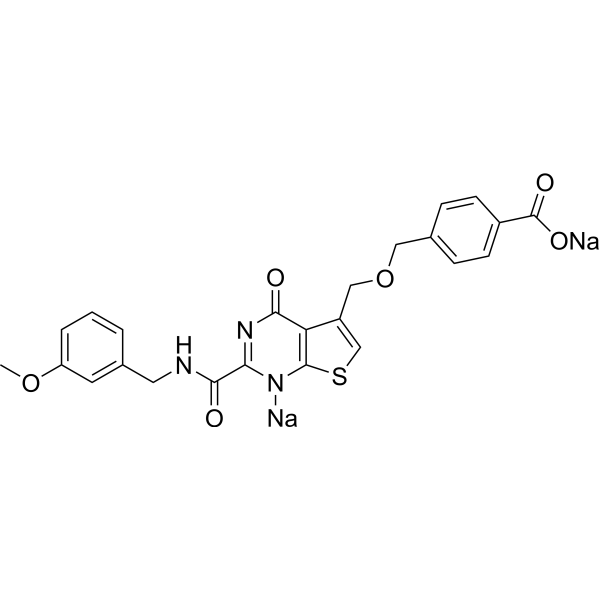
    T26c sodium is a potent and selective MMP13 inhibitor with IC50 value of 6.9 pM. T26c sodium can inhibit the degradation of bovine nasal septal cartilage explants .
    T 26c sodium
  • HY-105140

    MMP Inflammation/Immunology
    CPA 926 is a prodrug of Esculetin (HY-N0284) and is orally active. CPA 926 can inhibit the production of MMP in cartilage explants. CPA 926 can be used for the research of inflammation, such as experimental osteoarthritis .
    CPA 926
  • HY-W419331

    DL-Methionyl-DL-methionine

    JAK mTOR Cancer
    Methionylmethionine (Met-Met) significantly promotes α-s1 casein (αS1-CN) expression in the mammary explants by enhancing intracellular substrate availability and activating JAK2-STAT5 and mTOR-mediated signaling pathways .
    Methionyl-methionine
  • HY-174313

    Bacterial Toll-like Receptor (TLR) Collagen Infection Inflammation/Immunology
    Antibacterial agent 284 (Compound 7) is an Antibacterial agent. Antibacterial agent 284 has a zinc-binding structure and potent inhibitory activity against Legionella pneumophila metalloprotease ProA (IC50: 0.96 μM) with zinc-binding structure. Antibacterial agent 284 significantly inactivates the cleavage of collagen IV and flagellin (ProA substrates) and reduces immune evasion from the TLR5-NF-κB pathway and PMN-mediated inflammation in human lung tissue explants. Antibacterial agent 284 is promising for Legionnaires' disease research .
    Antibacterial agent 284
  • HY-N15491

    Endogenous Metabolite Others
    2-Deoxyecdysone is a circulating ecdysteroid found in Z. atratus and functions as a prohormone during the development of some insects .
    2-Deoxyecdysone
  • HY-P992358

    ADAMTS Cardiovascular Disease
    GSK2394002 is an antibody inhibitor targeting ADAMTS-4 and ADAMTS-5, with cartilage-penetrating ability following systemic administration. GSK2394002 inhibits the release of aggrecan-derived neoepitopes and reduces cartilage degradation, exhibiting the potential to relieve pain, alleviate hyperalgesia and inhibit the progression of joint damage. GSK2394002 also induces potentially irreversible cardiovascular effects such as increased mean arterial pressure and myocardial ischemia in cynomolgus monkeys .
    GSK2394002
  • HY-183647

    NO Synthase Inflammation/Immunology
    iNOs-IN-9 (Compound 10) is a selective inducible nitric oxide synthase (iNOS) inhibitor with an IC50 of 82 nM against hiNOS. iNOs-IN-9 reduces cytokine-induced inflammatory responses and cell necrosis in inflammatory cell models. iNOs-IN-9 can be used for research related to psoriasis .
    iNOs-IN-9
  • HY-181986

    Lipase Apoptosis Cancer
    ERX-208 is an anticancer agent that induces endoplasmic reticulum stress by targeting lysosomal acid lipase A (LIPA), ultimately leading to cancer cell apoptosis. ERX-208 can be used in ovarian cancer research .
    ERX-208

Inquiry Online

Your information is safe with us. * Required Fields.

Salutation


Country or Region *

Applicant Name *


Organization Name *

Department *


Email Address *


Product Name *

Cat. No.


Requested quantity *

Phone Number *


Remarks

Inquiry Online

Inquiry Information

Product Name:
Cat. No.:
Quantity:
MCE Japan Authorized Agent:

