

17 Results for "

extracellular loop

" in MedChemExpress (MCE) Product Catalog:
Products (17)

17 Results for "extracellular loop" in MCE Product Catalog:

  • Categories Recommended:
    More
9
9 Publications Verification
Cat. No.: HY-P1082
CAS No.: 197250-15-0
Research Areas:  

Cardiovascular Disease

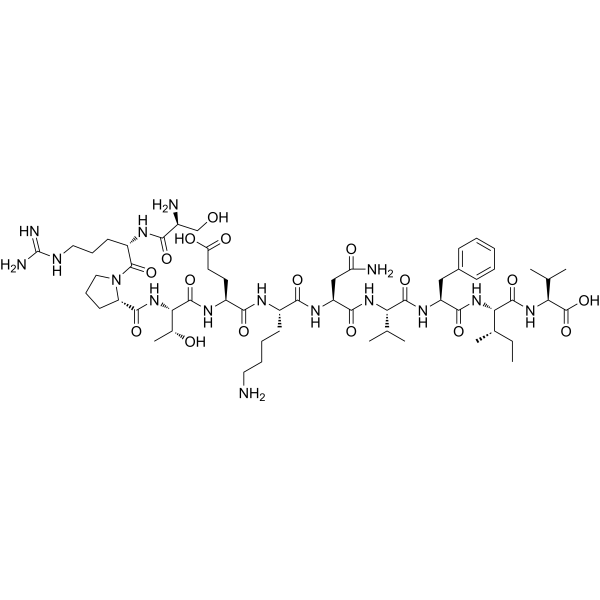
Gap 26 is a connexin mimetic peptide, composed of residue numbers 63-75 of the first extracellular loop of connexin 43 (gap junction blocker), containing the SHVR amino acid motif .
loading...
    loading...
9
9 Publications Verification
Cat. No.: HY-P1082A
Research Areas:  

Cardiovascular Disease

Gap 26 TFA is a connexin mimetic peptide, composed of residue numbers 63-75 of the first extracellular loop of connexin 43 (gap junction blocker), containing the SHVR amino acid motif .
loading...
    loading...
8
8 Cited Publications
Cat. No.: HY-P0139
CAS No.: 198284-64-9
Target:  

Gap Junction Protein

Research Areas:  

Cardiovascular Disease

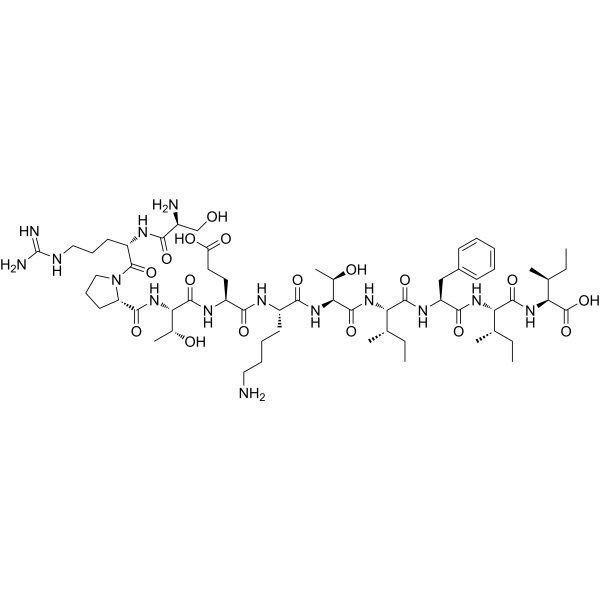
Gap 27, a synthetic connexin43 mimetic peptide, is a gap junction inhibitor. Gap 27 possesses conserved sequence homology to a portion of the second extracellular loop leading into the fourth transmembrane connexin segment .
loading...
    loading...
2
2 Cited Publications
Cat. No.: HY-13242
CAS No.: 1258861-20-9
Purity:  99.92%
Synonyms: LY2940680; ENV-101
Target:  

Smo Gli

Research Areas:  

Cancer

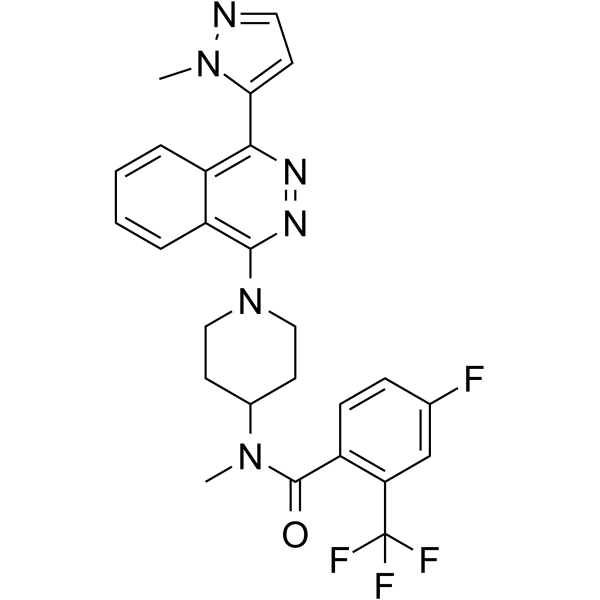
Taladegib (LY2940680) is a Smoothened (SMO) antagonist. Taladegib hydrochloride inhibits the Hedgehog signaling pathway, with an IC50 of 5.5 nM for suppressing GLI1 mRNA expression in DAOY cells and an IC50 of 7.6 nM in CGNP cell proliferation assays. Taladegib binds to the extracellular loop region (site 1) of the transmembrane domain of the SMO receptor, competes with cyclopamine for SMO binding, and thereby inhibits Gli-dependent transcription. Taladegib can be used in studies of Hedgehog pathway-related cancers .
loading...
    loading...
2
2 Cited Publications
Cat. No.: HY-13242A
CAS No.: 1258861-21-0
Synonyms: LY2940680 hydrochloride
Target:  

Smo Gli

Research Areas:  

Cancer

Taladegib (LY2940680) hydrochloride is a Smoothened (SMO) antagonist. Taladegib hydrochloride inhibits the Hedgehog signaling pathway, with an IC50 of 5.5 nM for suppressing GLI1 mRNA expression in DAOY cells and an IC50 of 7.6 nM in CGNP cell proliferation assays. Taladegib hydrochloride binds to the extracellular loop region (site 1) of the transmembrane domain of the SMO receptor, competes with cyclopamine for SMO binding, and thereby inhibits Gli-dependent transcription. Taladegib hydrochloride can be used in studies of Hedgehog pathway-related cancers .
loading...
    loading...
Cat. No.: HY-P1594A
Target:  

Opioid Receptor iGluR

Research Areas:  

Neurological Disease

Dynorphin A (1-10) (TFA), an endogenous opioid neuropeptide, binds to extracellular loop 2 of the κ-opioid receptor. Dynorphin A (1-10) (TFA) also blocks NMDA-activated current with an IC50 of 42.0 μM.
loading...
    loading...
Cat. No.: HY-129359
CAS No.: 160580-70-1
Purity:  98.27%
Target:  

ADC Linkers

Research Areas:  

Cancer

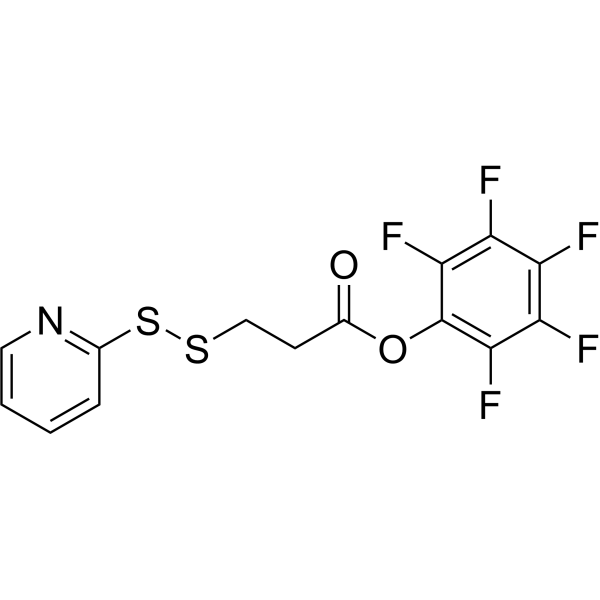
PDP-Pfp is a reducible ADC Linker used as an active molecule targeting the extracellular loop 1 (ECL1) of TM4SF1 .
loading...
    loading...
Cat. No.: HY-P1594
CAS No.: 79994-24-4
Target:  

Opioid Receptor iGluR

Research Areas:  

Neurological Disease

Dynorphin A (1-10) an endogenous opioid neuropeptide, binds to extracellular loop 2 of the κ-opioid receptor. Dynorphin A (1-10) also blocks NMDA-activated current with an IC50 of 42.0 μM.
loading...
    loading...
Cat. No.: HY-129372
CAS No.: 2101206-44-2
Target:  

ADC Linkers

Research Areas:  

Cancer

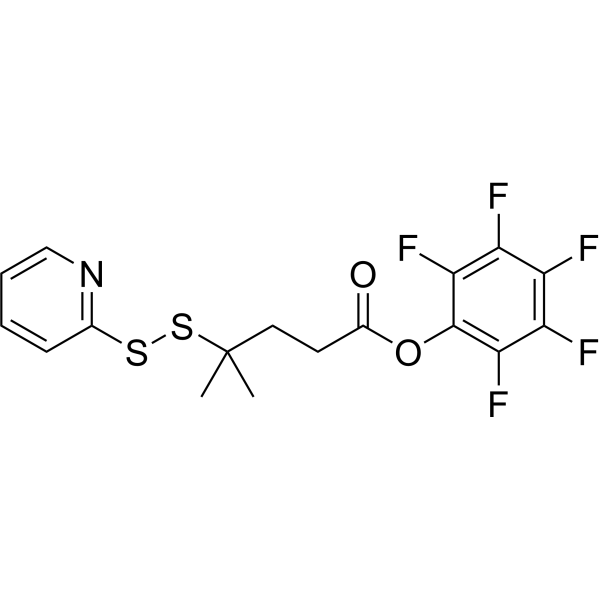
PDdB-Pfp is a cleavable ADC linker used for the agents that target for the extracellular loop 1 (ECL1) of TM4SF1 (transmembrane 4 L6 family member 1) .
loading...
    loading...
Cat. No.: HY-P5389
CAS No.: 403858-30-0
Target:  

Gap Junction Protein

Research Areas:  

Others

Connexin mimetic peptide 40GAP27 is a biological active peptide. (This peptide corresponds to the GAP27 domain of the second extracellular loop of dominant vascular connexin (Cx40), designated as 40Gap 27. It was used to investigate mechanisms through which oxidant stress impairs communication via gap junctions. When administered, 40Gap27attenuates endothelium-dependent subintimal smooth muscle hyperpolarization.)
loading...
    loading...
Cat. No.: HY-P991541

Target:  

CCR HIV

Research Areas:  

Infection

HGS101 is a fully human CCR5 monoclonal antibody with high affinity to CCR5. HGS101 binds to the 2nd extracellular loop (ECL-2) and acts as a signal antagonist. HGS101 restores Maraviroc (HY-13004) inhibition of Maraviroc-resistant HIV-1 infection of PBMCs. HGS101 shows anti-HIV activity by inhibiting CCR5 signaling in simian immunodeficiency virus-uninfected RMs models .
loading...
    loading...
Cat. No.: HY-P10597
CAS No.: 275359-37-0
Target:  

Angiotensin Receptor

Research Areas:  

Others

Angiotensin II type 1 receptor (181-187) is a 9-amino acid sequence of the second extracellular loop of angiotensin II (Ang II) in the renin-angiotensin system. Angiotensin II type 1 receptor (181-187) serves as the localization epitope of angiotensin II receptor autoantibodies (AT1RaAb) and is used to detect and quantify AT1RaAb levels in serum .
loading...
    loading...
Cat. No.: HY-P5387
CAS No.: 514787-21-4
Target:  

Inhibitory Antibodies

Research Areas:  

Others

Connexin mimetic peptide 40,37GAP26 is a biological active peptide. (This peptide corresponds to the GAP26 domain of the extracellular loop of the major vascular connexins (Cx37, Cx40), designated as 37, 40Gap 26 according to Cx homology. It was used to investigate the role of gap junctions in the spread of endothelial hyperpolarizations evoked by cyclopiazonic acid (CPA) through the wall of the rodent iliac artery. The gap junction plaques constructed from Cx37 and Cx40 were abundant in the endothelium. This peptide provides inhibitory effects against subintimal hyperpolarization.)
loading...
    loading...
Cat. No.: HY-118962
CAS No.: 342394-93-8
Target:  

CCR HIV

Research Areas:  

Infection

E913 is a CCR5 antagonist that competes with the binding of antibodies to CCR5 which recognize the C-terminal half of the second extracellular loop (ECL2B) of CCR5. E913 can specifically block the binding of macrophage inflammatory protein-1alpha (MIP-1alpha) to CCR5 (IC50 = 0.002 μM) and MIP-1alpha-elicited cellular Ca 2+ mobilization (IC50 = 0.02 μM). E913 inhibits the replication of laboratory and primary R5 HIV-1 strains as well as various multidrug-resistant monocyte/macrophage tropic (R5) HIV-1 (IC50 = 0.03-0.06 μM). E913 can be used for the research of infection, such as HIV-1 infection .
loading...
    loading...
Cat. No.: HY-P11797
Research Areas:  

Cardiovascular Disease

EP9 is a peptide targeting CD63. EP9 binds specifically to the extracellular region of CD63, including a groove in the large extracellular loop (EC2) or the extracellular end of CD63’s central cavity, triggering endocytosis of decorated nanoemulsions/liposomes into cells. EP9 promotes cellular uptake of decorated nanoemulsions/liposomes into activated cardiac fibroblasts and epicardial stromal cells via caveolae and/or clathrin-coated pits. EP9 can be used for the research of myocardial infarction, cardiac fibrosis .
loading...
    loading...
Cat. No.: HY-P992563
Target:  

CCR

Research Areas:  

Inflammation/Immunology

Anti-Mouse CCR7/CD197 Antibody (C7Mab-2) is a rat-derived IgG2b kappa monoclonal antibody that selectively recognizes mouse CCR7. Anti-Mouse CCR7/CD197 Antibody (C7Mab-2) recognizes the extracellular loop domain of mCCR7 and was prepared by immunization with an extracellular loop peptide. Anti-Mouse CCR7/CD197 Antibody (C7Mab-2) binds with high affinity to cells overexpressing mCCR7, recognizes these cells in flow cytometry, and can be detected in immunohistochemistry of paraffin-embedded cell sections. Anti-Mouse CCR7/CD197 Antibody (C7Mab-2) can be used for CCR7-related assays, such as flow cytometry and immunohistochemistry .
loading...
    loading...
Cat. No.: HY-183050
CAS No.: 3036387-75-1
Research Areas:  

Others

HEP-50768 is an orally active and selective MRGPRX4 (hX4) antagonist. HEP-50768 suppresses basal and bile-acid-stimulated hX4 activity. HEP-50768 binds the receptor’s transmembrane pocket and induces extracellular loop rearrangements. HEP-50768 modulates GPCR microswitch motifs and reduces bile-acid-induced pruritic scratching behaviors. HEP-50768 can be used for the research of cholestatic pruritus .
loading...
    loading...
  • 1

