1. Search Result
Search Result
Results for "

fluorescent sensor

" in MedChemExpress (MCE) Product Catalog:

23

Inhibitors & Agonists

14

Fluorescent Dye

1

Biochemical Assay Reagents

Targets Recommended:
Cat. No. Product Name Target Research Areas Chemical Structure
  • HY-W074143

    Fluorescent Dye Others
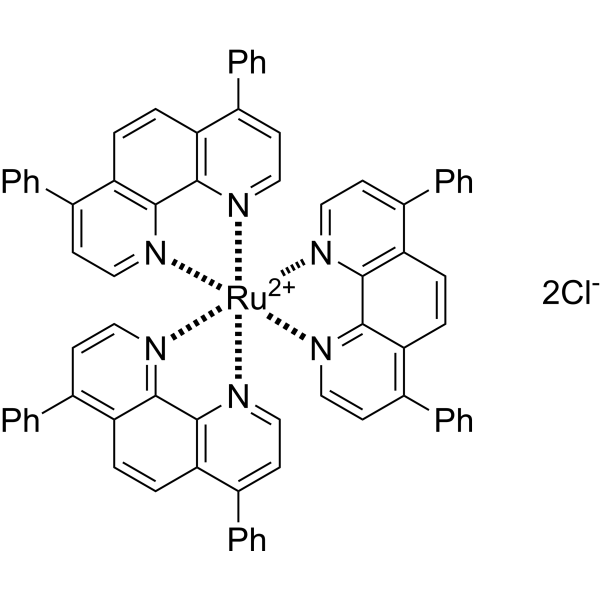
    Tris(4,7-diphenyl-1,10-phenanthroline)ruthenium(II) dichloride ([Ru(dpp)3] 2+) is an electrochemiluminescent (ECL) probe and oxygen-sensitive sensor. Tris(4,7-diphenyl-1,10-phenanthroline)ruthenium(II) dichloride can be used to modify electrode surfaces for the detection of sulfates (S2O8 2-) and oxalates, based on electrochemical reactions that generate excited-state species, releasing photons through irreversible redox reactions. Tris(4,7-diphenyl-1,10-phenanthroline)ruthenium(II) dichloride utilizes the oxygen quenching of fluorescence mechanism, where fluorescence intensity reflects the metabolic rate of living microorganisms or oxygen levels within cells/tumors, allowing for real-time detection. Tris(4,7-diphenyl-1,10-phenanthroline)ruthenium(II) dichloride's main applications include microbial detection, antibacterial activity studies, and tumor microenvironment research .
    Tris(4,7-diphenyl-1,10-phenanthroline)ruthenium(II) dichloride
  • HY-120972

    Fluorescent Dye Others
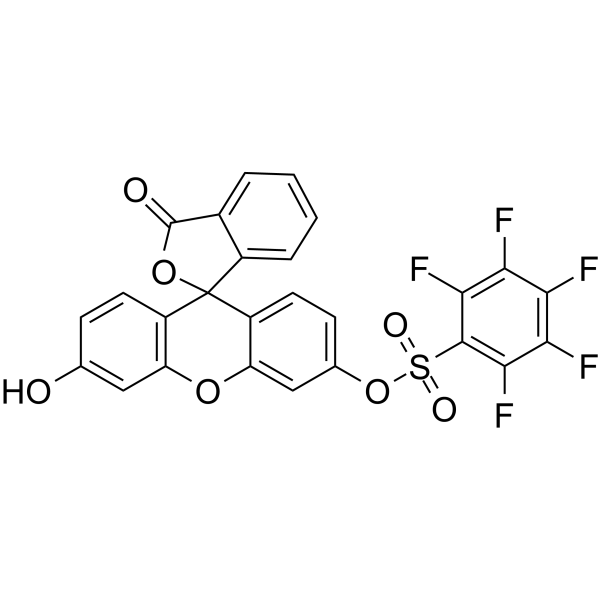
    Pentafluorobenzenesulfonyl fluorescein is a H2O2-selective sensor that can be used to detect H2O2 levels in cells. Pentafluorobenzenesulfonyl fluorescein is generally non-fluorescent, but emits fluorescence when its sulfonyl bond undergoes perhydrolysis by H2O2 . Pentafluorobenzenesulfonyl fluorescein undergoes slight cleavage of its sulfonate ester bond by [Cu (phen)2] 2+, and can detect hydrogen peroxide around the ablation sites of fin tissues and keratinocytes in zebrafish larvae .
    Pentafluorobenzenesulfonyl fluorescein
  • HY-D0982

    Fluorescent Dye Others
    Zinquin is a cell-impermeant fluorescent sensor and used to observe reactive Zn 2+. λex/λem=368/490 nm.
    Zinquin
  • HY-D2335

    Fluorescent Dye Neurological Disease
    SERTlight is a fluorescent agent that can specifically label serotonergic neuronal cell bodies, dendrites, and axonal projections as fluorescent substrates of the serotonin transporter (SERT). SERTlight is orthogonal to various genetically encoded sensors in terms of optics, pharmacology, and operation, enabling multiple imaging. SERTlight allows the use of GRAB5HT sensors to label distal 5HT axonal projections and simultaneously image the release of endogenous 5HT, providing a new multifunctional molecular tool for studying serotonergic systems .
    SERTlight
  • HY-D2775

    Fluorescent Dye Others
    Cobalt(II) ions probe 1 (Compound L) is a fluorescent sensor for Co 2+ detecting in biological environments. Cobalt(II) ions probe 1 can selectively bind with Co 2+ in the presence of other metal ions (Ex: 380 nm) .
    Cobalt(II) ions probe 1
  • HY-D1677

    Fluorescent Dye Others
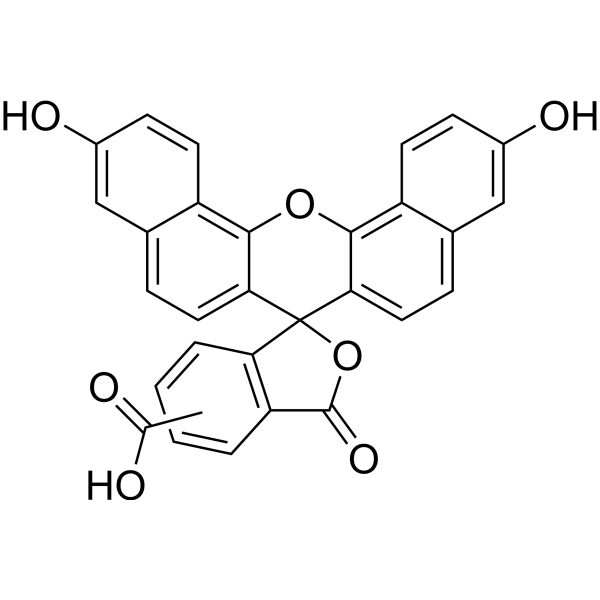
    5(6)-Carboxynaphthofluorescein is a pH-dependent fluorophore. 5(6)-Carboxynaphthofluorescein shows good sensitivity in an alkaline pH range and it can be exploited in the construction of fiber-optic pH sensors. 5(6)-Carboxynaphthofluorescein can be used as a fluorescent pH indicator (Ex/Em=593/668 nm) .
    5(6)-Carboxynaphthofluorescein
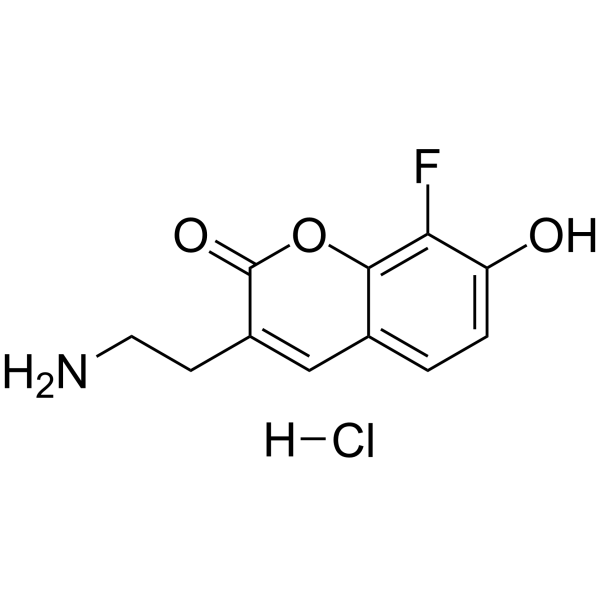
  • HY-131007

    Adrenergic Receptor Metabolic Disease
    FFN270 hydrochloride, a fluorescent tracer of norepinephrine, is a fluorescent substrate of the norepinephrine and vesicular monoamine transporters. FFN270 hydrochloride exhibits two resolved absorption/excitation maxima depending on solvent pH (FFN270 ex: 320 nm or 365 nm, em: 475 nm) and can function as ratiometric fluorescent pH-sensors .
    FFN270 hydrochloride
  • HY-D0140

    ETH 5294

    Fluorescent Dye Others
    Chromoionophore I (ETH 5294) is a hydrophobic pH indicator. Chromoionophore I is used as a transmissive or fluorescent probe molecule in many types of hydrophobic sensor membranes. Chromoionophore I is oil-soluble .
    Chromoionophore I
  • HY-D1441

    Fluorescent Dye Others
    Zinquin AM ester is an AM ester form of Zinquin. Zinquin, a fluorescent dye, is a commonly used sensor for cellular Zn 2+ status .
    Zinquin AM ester
  • HY-D1065

    Fluorescent Dye Inflammation/Immunology
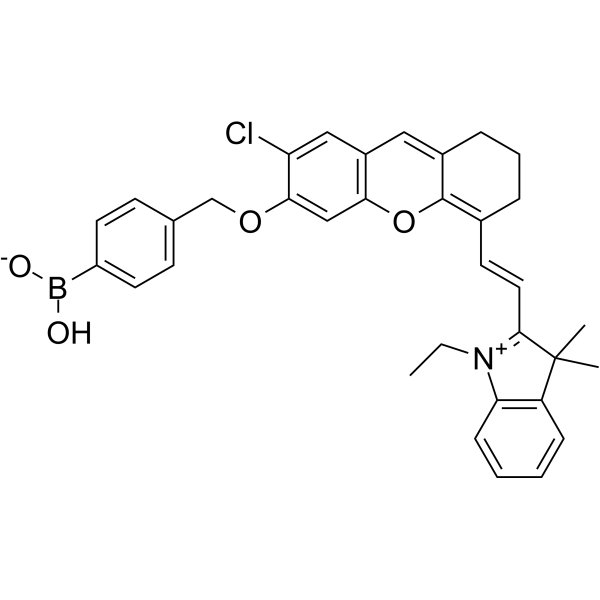
    NIR-H2O2 is a cell-permeable near-infrared (NIR) fluorescent turn-on sensor. NIR-H2O2 has both absorption and emission in the NIR region. NIR-H2O2 responds to H2O2 with a large turn-on NIR fluorescence signal upon excitation in the NIR region. NIR-H2O2 is capable of imaging endogenously produced H2O2 in living cells and mice .
    NIR-H2O2
  • HY-W015012

    Fluorescent Dye Others
    NBD-Hydrazine is an aldehyde- and ketone-reactive fluorescent probe. NBD-Hydrazine has excitation/emission maxima of 468/535 nm in the presence of aldehydes or ketones. NBD-Hydrazine can be used as a starting material to synthesize malondialdehyde-reactive fluorescent probes. NBD-Hydrazine is a synthetic intermediate in the synthesis of cupric and chronic ion colorimetric sensors .
    NBD-Hydrazine
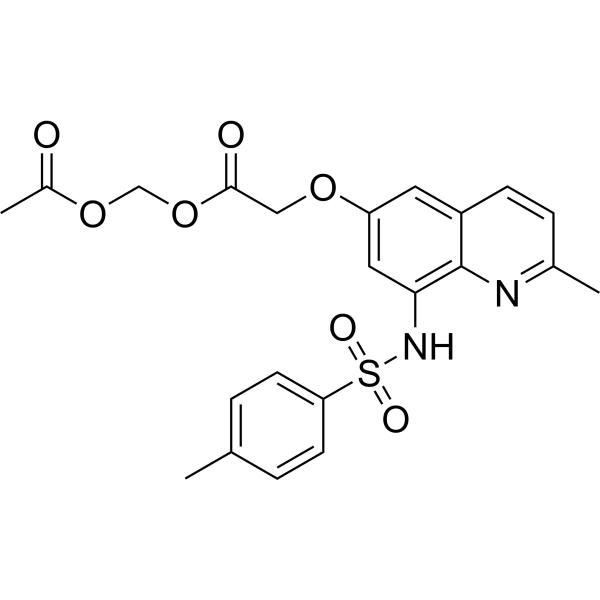
  • HY-D1264

    Zn-green

    Fluorescent Dye Others
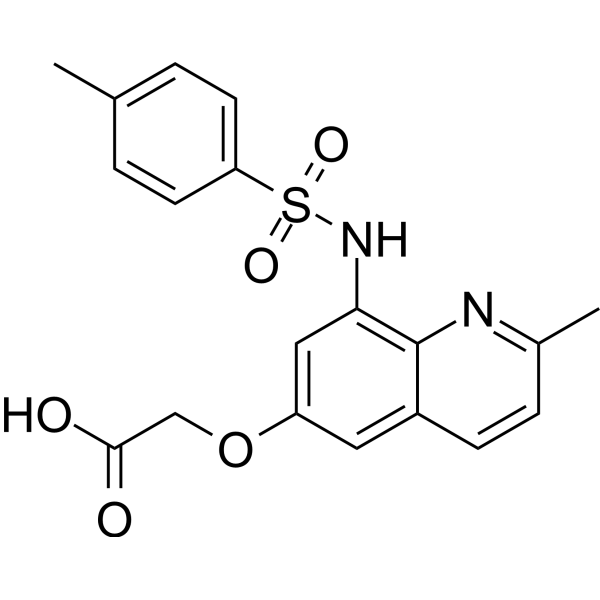
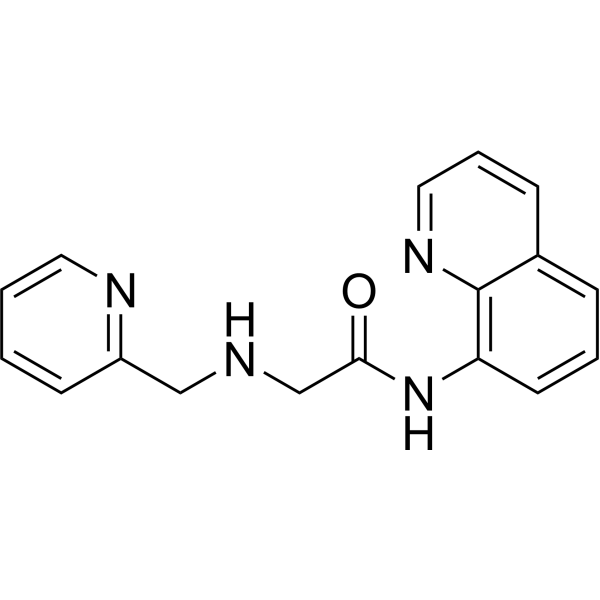
    PMQA (Zn-green), an 8-aminoquinoline-based ratiometric fluorescent sensor, demonstrates the Zn 2+-induced redshift of emission (85 nm). PMQA (Zn-green) is a cell membrane-permeable probe and suitable for imaging Zn 2+ in living cells .
    PMQA
  • HY-W008709

    Biochemical Assay Reagents Others
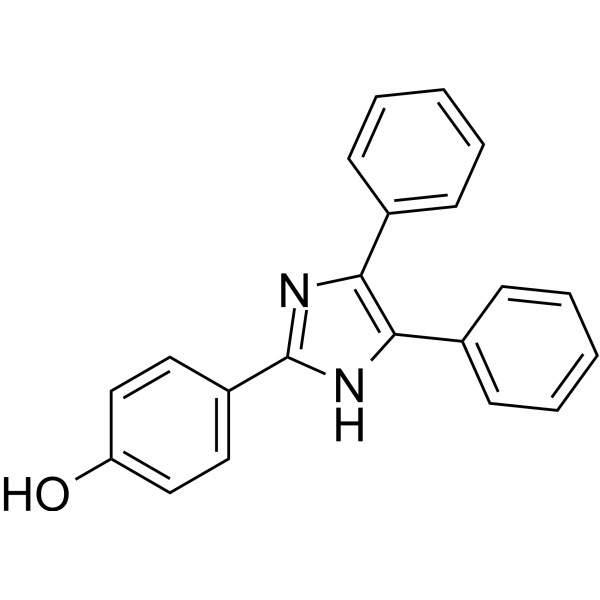
    4-(4,5-Diphenyl-1H-imidazol-2-yl)phenol is an organic compound commonly used in fluorescent dyes and catalysts. It can be used to prepare some organic light-emitting diodes (OLEDs) and organic solar cells, and is widely used in chemical sensors and analytical instruments. In addition, this compound is used as a catalyst or buffer in certain chemical reactions.
    4-(4,5-Diphenyl-1H-imidazol-2-yl)phenol
  • HY-D1066

    Fluorescent Dye Others
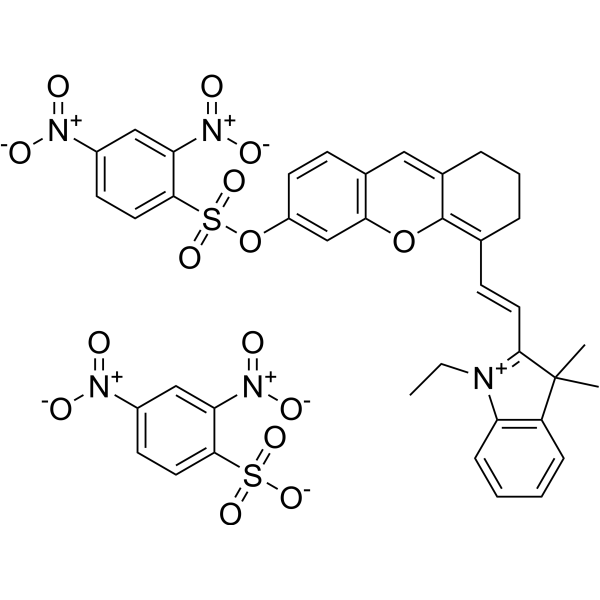
    NIR-Thiol dinitrobenzenesulfonate has both absorption and emission in the NIR region. NIR-Thiol dinitrobenzenesulfonate responds to thiol with a large turn-on NIR fluorescence signal upon excitation in the NIR region. NIR-Thiol dinitrobenzenesulfonate is capable of imaging endogenously produced thiol in living cells and mice .
    NIR-Thiol dinitrobenzenesulfonate
  • HY-113621B

    Fluorescent Dye MMP Cancer
    Ageladine A dihydrochloride is an inhibitor of matrix metalloproteinase (MMP) isolated from the marine sponge Agelas nakamurai, possessing anti-angiogenic activity. Ageladine A dihydrochloride not only inhibits MMP-2 but also MMP-1, MMP-8, MMP-9, MMP-12, and MMP-13, with IC50 values of 4.65 μM, 2.79 μM, 907.12 nM, 1.83 μM, 767.57 nM, and 1.09 μM, respectively. Additionally, Ageladine A dihydrochloride is a pH-sensitive membrane-permeable dye that emits fluorescence in the blue-green range upon UV excitation, featuring a maximum absorption peak at 370 nm. Furthermore, Ageladine A dihydrochloride serves as a reliable and stable fluorescent pH sensor for detecting changes in intracellular pH values .
    Ageladine A dihydrochloride
  • HY-D3206

    Fluorescent Dye Cancer
    CuFS is a reaction-based fluorescent sensor for detecting Cu 2+ with zero background fluorescence. CuFS acts as a fluorescence quencher in the absence of Cu 2+ and as a fluorescence enhancer in the presence of Cu 2+. CuFS can be fabricated into test strips and applied to the detection of Cu 2+ in human cancer cells .
    CuFS
  • HY-DY1083

    Fluorescent Dye Others
    Zinquin (solution) is a cell-impermeant fluorescent sensor and used to observe reactive Zn 2+. λex/λem=368/490 nm.
    Solvent and concentration: DMSO: 5 mM
    Zinquin (solution)
  • HY-W150770

    Isophthalic acid diamide

    Drug Intermediate Others
    Isophthalamide (Isophthalic acid diamide) is a widely used chemical scaffold for the design of high-performance fluorescent chemosensors.Isophthalamide, with its inherent hydrogen-bond-donating properties and tunable chelating cavity, enables highly selective recognition and detection of various analytes ranging from inorganic ions to complex organic molecules.Isophthalamide can be incorporated with various fluorophores to develop sensors displaying “turn-on” or “turn-off” signal responses.Isophthalamide-based sensors are thus capable of detecting diverse analytes including metal ions, anions, neutral molecules, pharmaceuticals, and explosives .
    Isophthalamide
  • HY-D2958

    Fluorescent Dye Others
    ZP1BG is a SNAP tag fluorescent probe for detecting Zn 2+, which is formed by the covalent connection of the zinc sensor ZP1 from the Zinpyr family with the benzyl guanine group. ZP1BG can be used to detect the concentration of Zn 2+ in neuronal organelles such as the Golgi apparatus and mitochondria .
    ZP1BG
  • HY-D3405

    Fluorescent Dye Others
    BO-TAP-3 is an orange fluorescent carbocyanine monomer dye, and it is also a cell impermeable nucleic acid staining agent. When there is no nucleic acid present, BO-TAP-3 shows a non-fluorescent state. However, when it binds to double-stranded DNA, it exhibits multiple fluorescence enhancement effects. BO-TAP-3 can be used for cell nucleus and cytoplasm imaging, bacterial and sperm labeling, and can also be applied in nucleic acid detection and amplification research. It can also be used as a temperature sensor (Ex/Em = 564/600 nM).
    BO-TAP-3
  • HY-D3243

    Fluorescent Dye Others
    Mn1 (M1) is a BODIPY-based Mn 2+-selective "turn-on" Fluorescent sensor and fluorescence modulator. In the absence of Mn 2+, Mn1 undergoes fluorescence quenching via photoinduced electron transfer; binding to Mn 2+ inhibits this mechanism, thereby generating a fluorescence "turn-on" response. Mn1 exhibits Mn 2+-specific cellular fluorescence response .
    Mn1
  • HY-D3282

    Fluorescent Dye Metabolic Disease
    CCF1 is a carbon-rhodol-based turn-on fluorescent copper sensor with high selectivity for Cu + over other biologically relevant metal ions. CCF1 detects changes in labile copper pools in living cells upon copper supplementation and/or depletion. CCF1 identifies elevations in labile copper pools in Atp7a -/ - fibroblast cell models. CCF1 can be used for the research of Menkes disease .
    CCF1
  • HY-W251144

    PTCDI-C5

    Biochemical Assay Reagents
    N,N′-Dipentyl-3,4,9,10-perylenedicarboximide (PTCDI-C5) is an organic semiconductor compound with excellent electron transport activity. N,N′-Dipentyl-3,4,9,10-perylenedicarboximide exhibits high performance in organic field effect transistors (OFETs) and can effectively improve the carrier mobility of the device. The application of N,N′-Dipentyl-3,4,9,10-perylenedicarboximide in organic photovoltaic (OPV) materials enhances the light absorption performance, thereby improving the photoelectric conversion efficiency. N,N′-Dipentyl-3,4,9,10-perylenedicarboximide has also been widely studied for the development of high-performance sensors and fluorescent materials.
    N,N′-Dipentyl-3,4,9,10-perylenedicarboximide

Inquiry Online

Your information is safe with us. * Required Fields.

Salutation


Country or Region *

Applicant Name *


Organization Name *

Department *


Email Address *


Product Name *

Cat. No.


Requested quantity *

Phone Number *


Remarks

Inquiry Online

Inquiry Information

Product Name:
Cat. No.:
Quantity:
MCE Japan Authorized Agent:

