141 Results for "

glutamate agonist

" in MedChemExpress (MCE) Product Catalog:
Products (141)

141 Results for "glutamate agonist" in MCE Product Catalog:

41
41 Publications Verification
Cat. No.: HY-N2309
CAS No.: 487-79-6
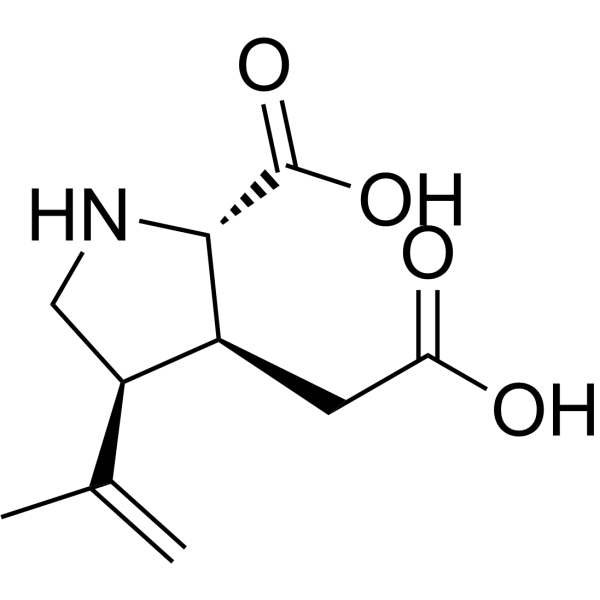
Kainic acid is a potent excitotoxic agent. Kainic acid hydrate also is an agonist for a subtype of ionotropic glutamate receptor. Kainic acid induces seizures .
loading...
    loading...
41
41 Publications Verification
Cat. No.: HY-N2309A
CAS No.: 58002-62-3
Target:  

mGluR

Research Areas:  

Neurological Disease

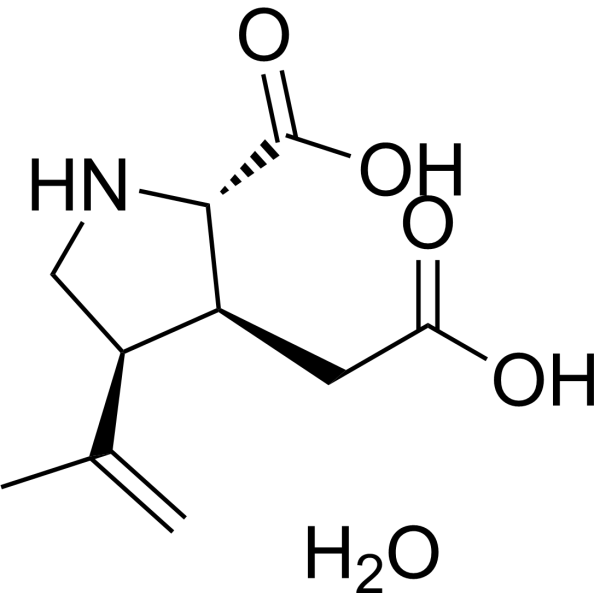
Kainic acid hydrate is a potent excitotoxic agent. Kainic acid hydrate also is an agonist for a subtype of ionotropic glutamate receptor. Kainic acid hydrate induces seizures .
loading...
    loading...
33
33 Cited Publications
Cat. No.: HY-17551
CAS No.: 6384-92-5
Synonyms: N-Methyl-D-aspartic acid
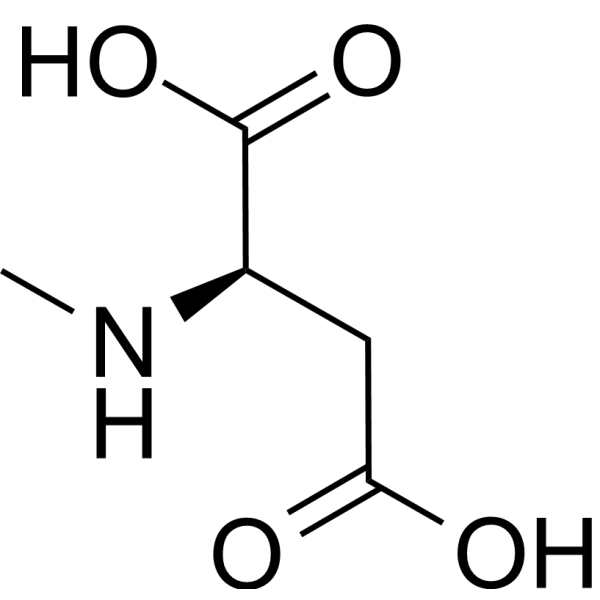
NMDA is a specific agonist for NMDA receptor mimicking the action of glutamate, the neurotransmitter which normally acts at that receptor.
loading...
    loading...
27
27 Cited Publications
Cat. No.: HY-100403
CAS No.: 298690-60-5
Purity:  99.67%
Target:  

mGluR

Research Areas:  

Cancer

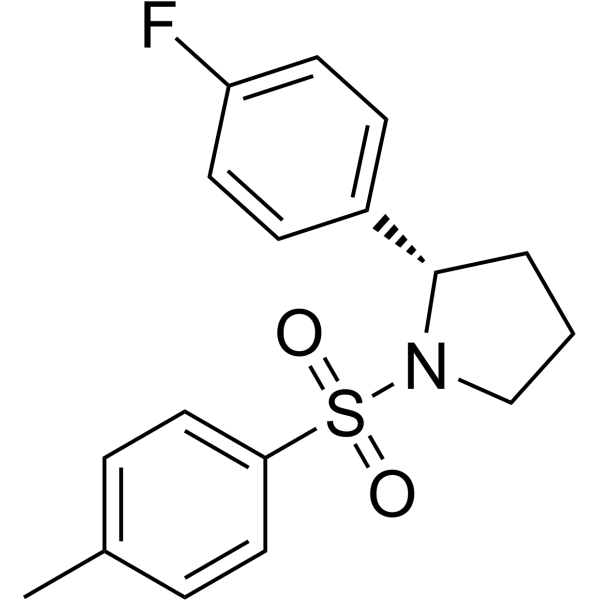
Ro 67-7476 is a potent positive allosteric modulator of mGluR1 and potentiates glutamate-induced calcium release in HEK293 cells expressing rat mGluR1a with an EC50 of 60.1 nM . Ro 67-7476 is a potent P-ERK1/2 agonist and activates ERK1/2 phosphorylation in the absence of exogenously added glutamate (EC50=163.3 nM) .
loading...
    loading...
18
18 Cited Publications
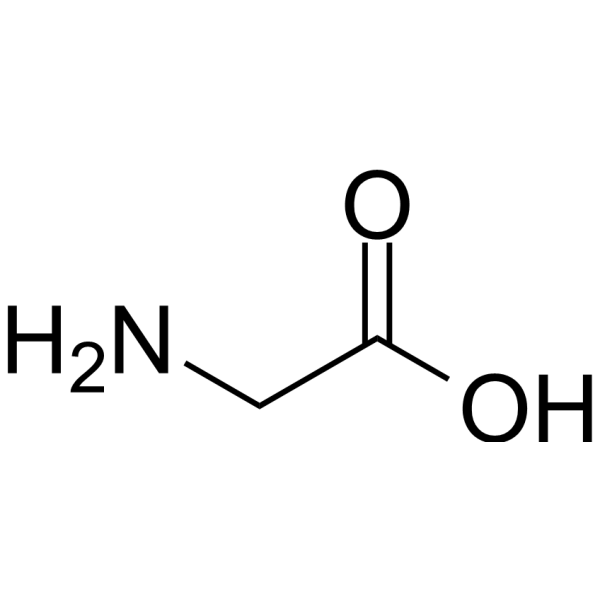
Cat. No.: HY-Y0966
CAS No.: 56-40-6
Glycine is an inhibitory neurotransmitter in the CNS and also acts as a co-agonist along with glutamate, facilitating an excitatory potential at the glutaminergic N-methyl-D-aspartic acid (NMDA) receptors. Glycine is orally active. Glycine inhibits the membrane aggregation of NINJ1 and prevents plasma membrane rupture during cell death. Glycine can be used to study cell protection, cancer, neurological diseases, and angiogenesis .
loading...
    loading...
16
16 Cited Publications
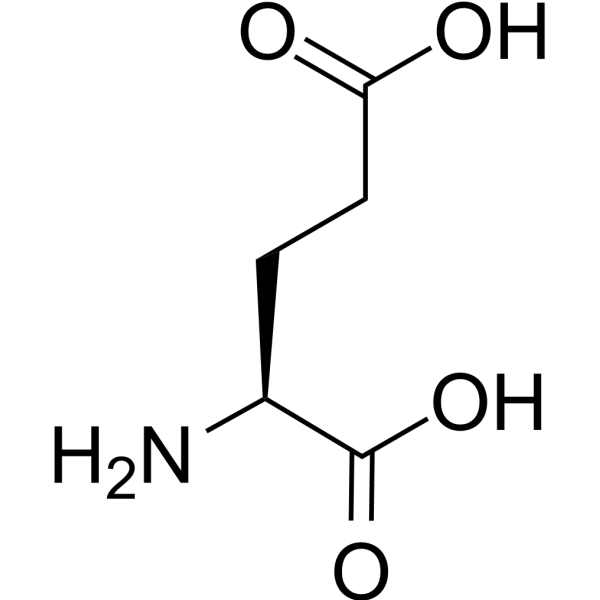
Cat. No.: HY-14608
CAS No.: 56-86-0
Purity:  99.81%
L-Glutamic acid is an excitatory amino acid neurotransmitter that acts as an agonist for all subtypes of glutamate receptors (metabolic rhodophylline, NMDA, and AMPA). L-Glutamic acid has an agonist effect on the release of DA from dopaminergic nerve endings. L-Glutamic acid can be used in the study of neurological diseases. L-Glutamic acid acts at ionotropic and metabotropic glutamate receptors .
loading...
    loading...
15
15 Cited Publications
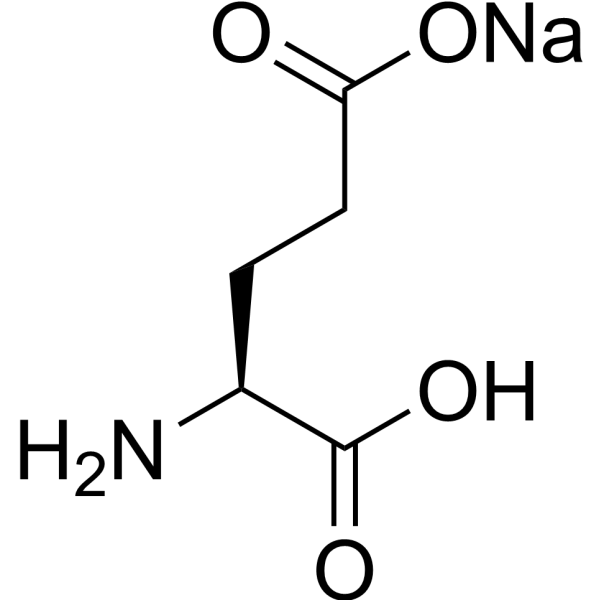
Cat. No.: HY-14608A
CAS No.: 142-47-2
Purity:  ≥98.0%
L-Glutamic acid monosodium salt is an excitatory amino acid neurotransmitter that acts as an agonist for all subtypes of glutamate receptors (metabolic rhodophylline, NMDA, and AMPA). L-Glutamic acid monosodium salt has an agonist effect on the release of DA from dopaminergic nerve endings. L-Glutamic acid monosodium salt can be used in the study of neurological diseases. L-Glutamic acid monosodium salt acts at ionotropic and metabotropic glutamate receptors .
loading...
    loading...
13
13 Cited Publications
Cat. No.: HY-W419700
CAS No.: 7558-63-6
L-Glutamic acid ammonium is an excitatory amino acid neurotransmitter that acts as an agonist for all subtypes of glutamate receptors (metabolic rhodophylline, NMDA, and AMPA). L-Glutamic acid ammonium has an agonist effect on the release of DA from dopaminergic nerve endings. L-Glutamic acid can be used in the study of neurological diseases. L-Glutamic acid ammonium acts at ionotropic and?metabotropic glutamate receptors .
loading...
    loading...
11
11 Cited Publications
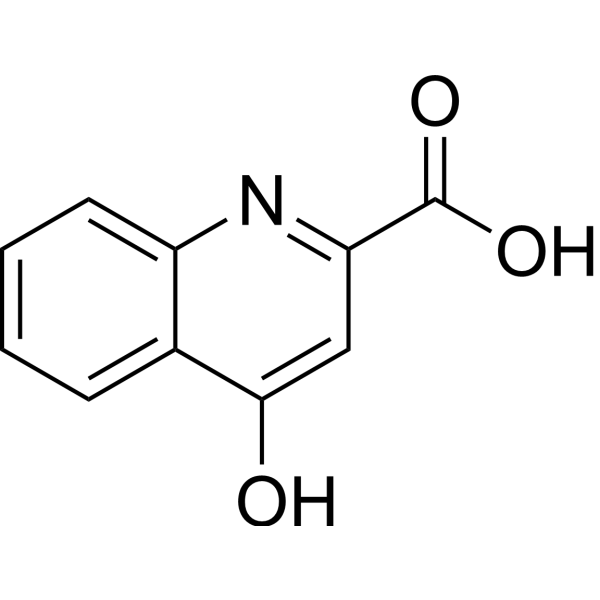
Cat. No.: HY-100806
CAS No.: 492-27-3
Purity:  99.21%
Synonyms: Quinurenic acid
Kynurenic acid, an endogenous tryptophan metabolite, is a broad-spectrum antagonist targeting NMDA, glutamate, α7 nicotinic acetylcholine receptor. Kynurenic acid is also an agonist of GPR35/CXCR8.
loading...
    loading...
11
11 Cited Publications
Cat. No.: HY-107512
CAS No.: 2439-02-3
Purity:  99.79%
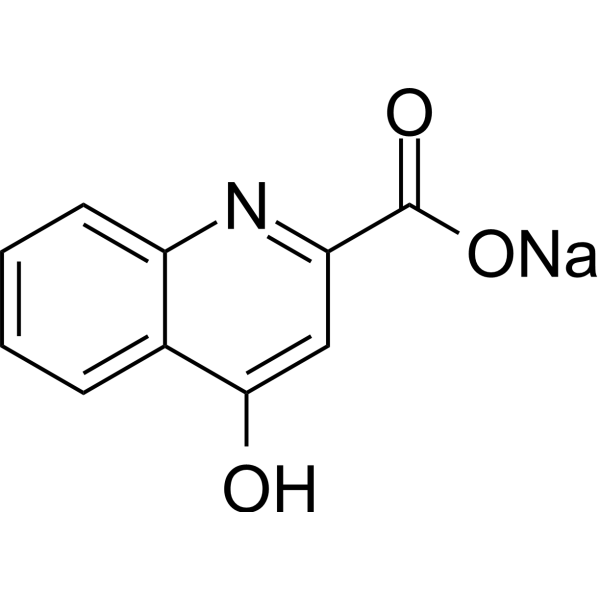
Kynurenic acid sodium, an endogenous tryptophan metabolite, is a broad-spectrum antagonist targeting NMDA, glutamate, α7 nicotinic acetylcholine receptor. Kynurenic acid sodium is also an agonist of GPR35/CXCR8.
loading...
    loading...
7
7 Cited Publications
Cat. No.: HY-100807
CAS No.: 89-00-9
Purity:  99.85%
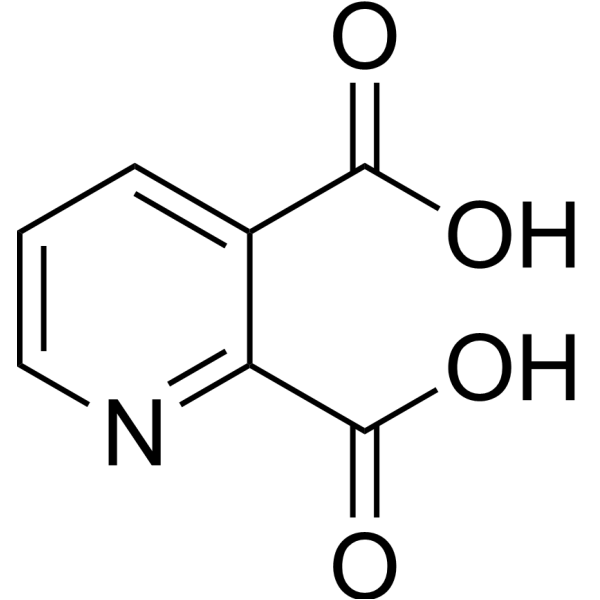
Quinolinic acid, an endogenous metabolite of tryptophan, is a N-methyl-D-aspartate receptor (NMDA receptor) agonist. Quinolinic acid increases glutamate efflux, induces the generation of ROS, activates nitric oxide synthase, produces excessive NO, leading to calcium ion influx and neuronal apoptosis .
loading...
    loading...
4
4 Cited Publications
Cat. No.: HY-100807S
CAS No.: 138946-42-6
Purity:  99.90%
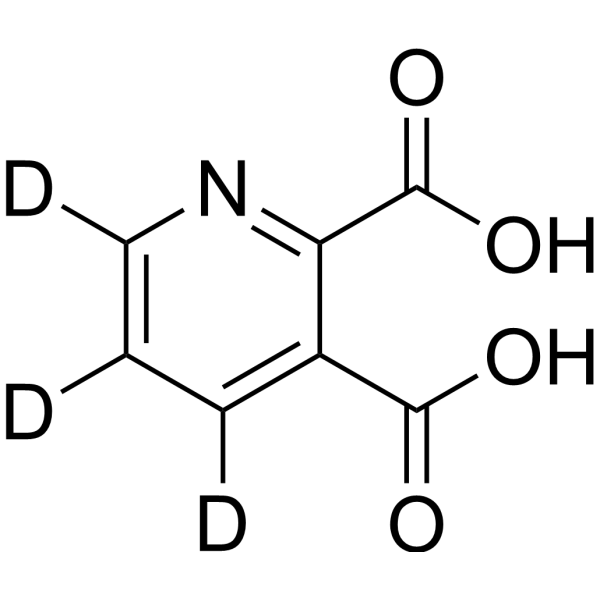
Quinolinic acid-d3 is the deuterium labeled Quinolinic acid. Quinolinic acid, an endogenous metabolite of tryptophan, is a N-methyl-D-aspartate receptor (NMDA receptor) agonist. Quinolinic acid increases glutamate efflux, induces the generation of ROS, activates nitric oxide synthase, produces excessive NO, leading to calcium ion influx and neuronal apoptosis.
loading...
    loading...
3
3 Cited Publications
Cat. No.: HY-100808
CAS No.: 312-84-5
Purity:  ≥98.0%
Synonyms: (R)-Serine
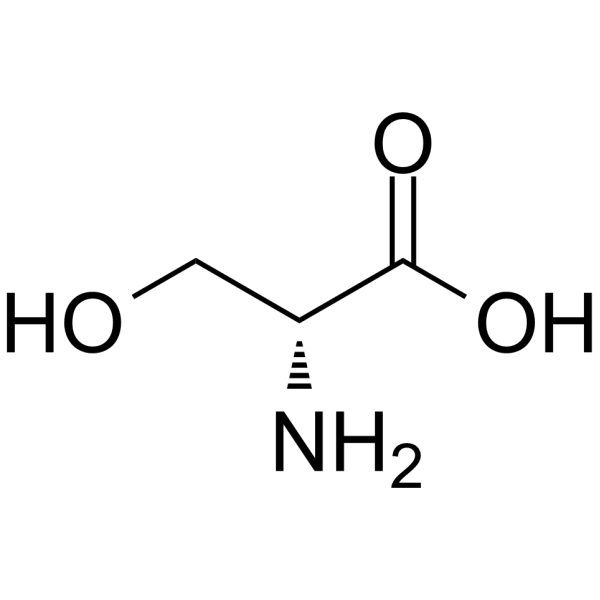
D-Serine ((R)-Serine), an endogenous amino acid involved in glia-synapse interactions that has unique neurotransmitter characteristics, is a potent co-agonist at the NMDA glutamate receptor. D-Serinee has a cardinal modulatory role in major NMDAR-dependent processes including NMDAR-mediated neurotransmission, neurotoxicity, synaptic plasticity, and cell migration .
loading...
    loading...
3
3 Cited Publications
Cat. No.: HY-P1077
CAS No.: 145224-99-3
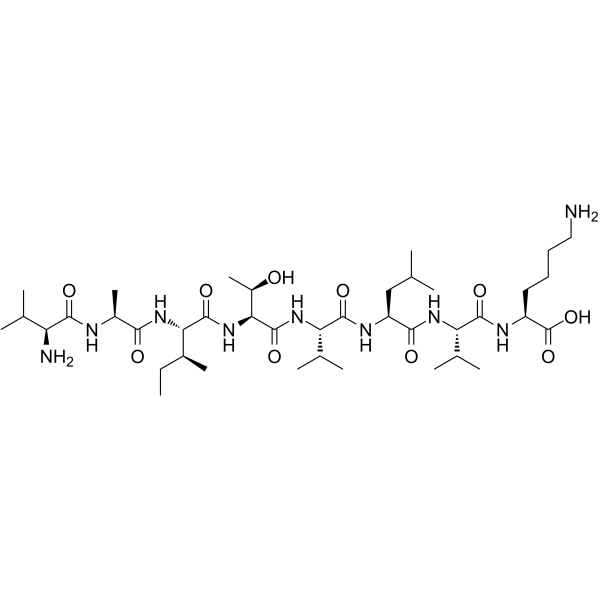
CALP1 is a calmodulin (CaM) agonist (Kd of 88 µM) with binding to the CaM EF-hand/Ca 2+-binding site. CALP1 blocks calcium influx and apoptosis (IC50 of 44.78 µM) through inhibition of calcium channel opening. CALP1 blocks glutamate receptor channels and blocks a store-operated nonselective cation channel. CALP1 activates CaM-dependent phosphodiesterase activity .
loading...
    loading...
3
3 Cited Publications
Cat. No.: HY-P1077A
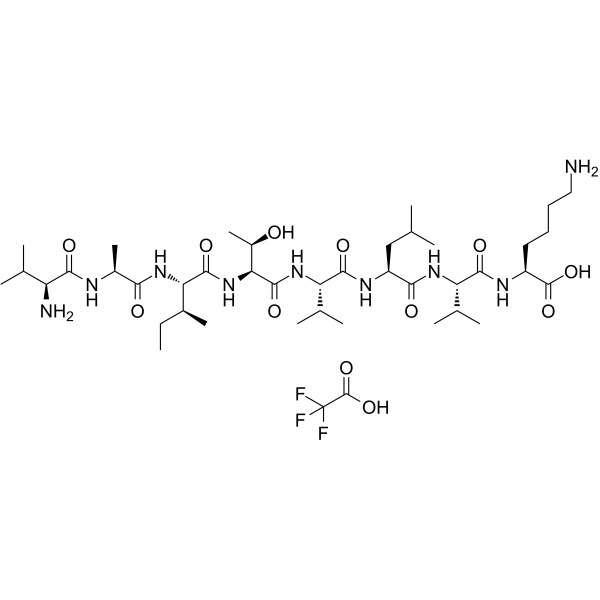
CALP1 TFA is a calmodulin (CaM) agonist (Kd of 88 µM) with binding to the CaM EF-hand/Ca 2+-binding site. CALP1 TFA blocks calcium influx and apoptosis (IC50 of 44.78 µM) through inhibition of calcium channel opening. CALP1 TFA blocks glutamate receptor channels and blocks a store-operated nonselective cation channel. CALP1 TFA activates CaM-dependent phosphodiesterase activity .
loading...
    loading...
2
2 Cited Publications
Cat. No.: HY-W014666
CAS No.: 59-00-7
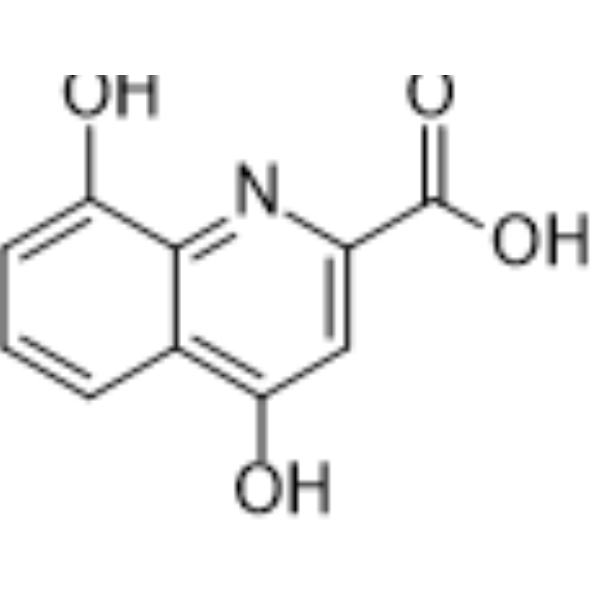
Xanthurenic acid is a putative endogenous Group II metabotropic glutamate receptor agonist, on sensory transmission in the thalamus.
loading...
    loading...
2
2 Cited Publications
Cat. No.: HY-100806S
CAS No.: 350820-13-2
Purity:  98.35%
Synonyms: Quinurenic acid-d5
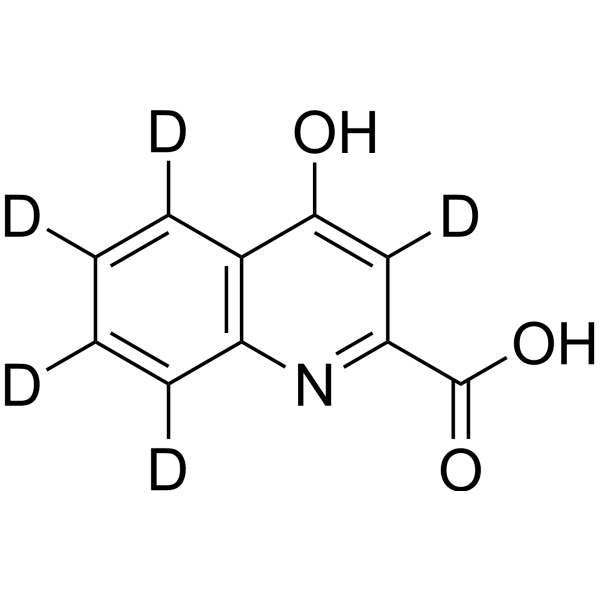
Kynurenic acid-d5 is the deuterium labeled Kynurenic acid. Kynurenic acid, an endogenous tryptophan metabolite, is a broad-spectrum antagonist targeting NMDA, glutamate, α7 nicotinic acetylcholine receptor. Kynurenic acid is also an agonist of GPR35/CXCR8 .
loading...
    loading...
2
2 Cited Publications
Cat. No.: HY-100804
CAS No.: 1115-65-7
Purity:  99.87%
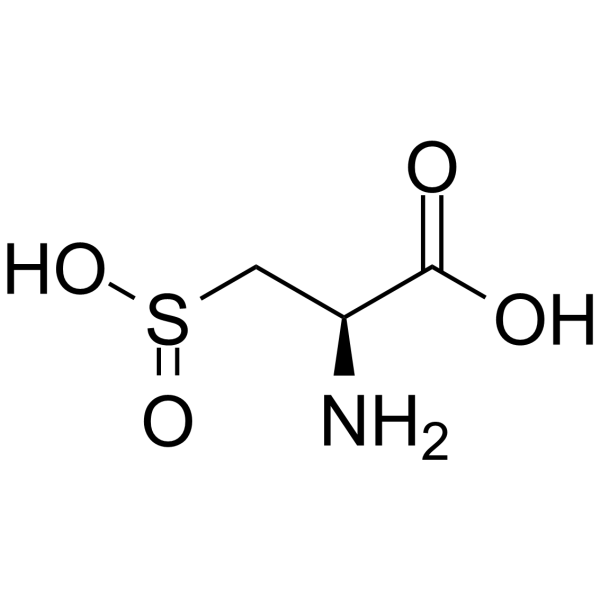
L-Cysteinesulfinic acid is a potent agonist at several rat metabotropic glutamate receptors (mGluRs) with pEC50s of 3.92, 4.6, 3.9, 2.7, 4.0, and 3.94 for mGluR1, mGluR5, mGluR2, mGluR4, mGluR6, and mGluR8, respectively .
loading...
    loading...
2
2 Cited Publications
Cat. No.: HY-W017230
CAS No.: 207121-48-0
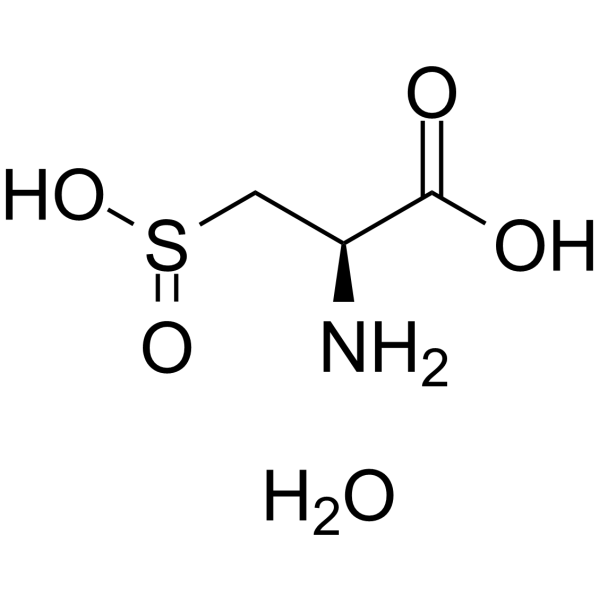
L-Cysteinesulfinic acid monohydrate is a potent agonist at several rat metabotropic glutamate receptors (mGluRs) with pEC50s of 3.92, 4.6, 3.9, 2.7, 4.0, and 3.94 for mGluR1, mGluR5, mGluR2, mGluR4, mGluR6, and mGluR8, respectively .
loading...
    loading...
2
2 Cited Publications
Cat. No.: HY-N5134
CAS No.: 85-32-5
Synonyms: 5'-GMP; 5'-guanosine monophosphate
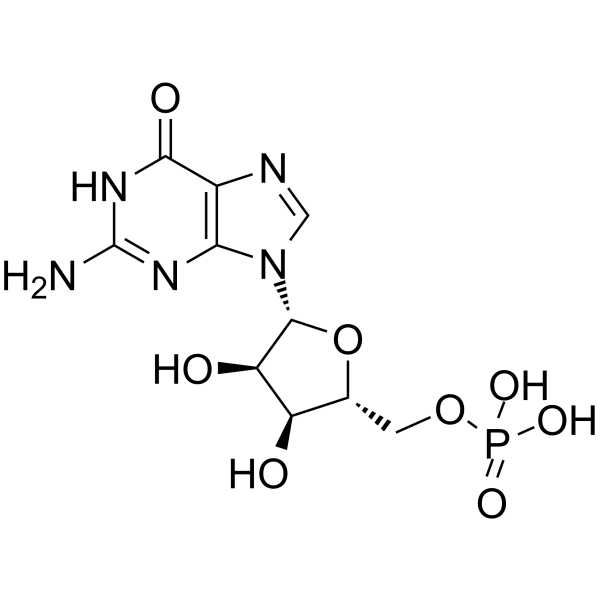
5'-Guanylic acid is a purine nucleotide that participates in physiological processes such as energy metabolism, signal transduction, and gene expression regulation. 5'-Guanylic acid regulates the expression of genes related to fatty acid metabolism. 5'-Guanylic acid is the weak agonist for ionotropic glutamate receptors (iGluR), reduces the activity of the glutamatergic system and exhibits neuroprotective effect. 5'-Guanylic acid also causes neuronal cell death at high concentrations .
loading...
    loading...

