
1. Search Result
Search Result
Results for "

headaches

" in MedChemExpress (MCE) Product Catalog:

58

Inhibitors & Agonists

1

Fluorescent Dye

1

Biochemical Assay Reagents

1

Peptides

2

Inhibitory Antibodies

5

Natural
Products

14

Isotope-Labeled Compounds

1

GMP Molecules

Cat. No. Product Name Target Research Areas Chemical Structure
  • HY-10585
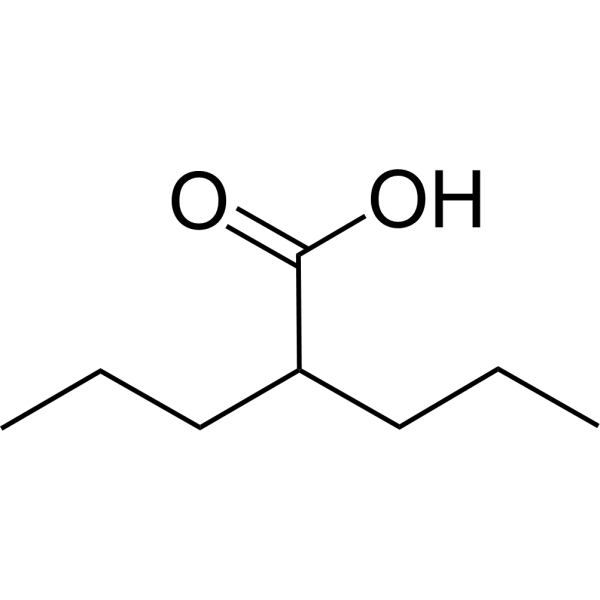
    Valproic acid
    60+ Cited Publications

    VPA; 2-Propylpentanoic acid; Dipropylacetic acid

    Organoid HDAC Autophagy Mitophagy HIV Notch Apoptosis Endogenous Metabolite Infection Neurological Disease Metabolic Disease Inflammation/Immunology Cancer
    Valproic acid (VPA) is an orally active HDAC inhibitor, with IC50 in the range of 0.5 and 2 mM. Valproic acid inhibits HDAC1 (IC50, 400 μM), and induces proteasomal degradation of HDAC2. Valproic acid activates Notch1 signaling and inhibits proliferation in small cell lung cancer (SCLC) cells. Valproic acid is used in the epilepsy, bipolar disorder, metabolic disease, HIV infection and prevention of migraine headaches .
    Valproic acid
  • HY-10585A
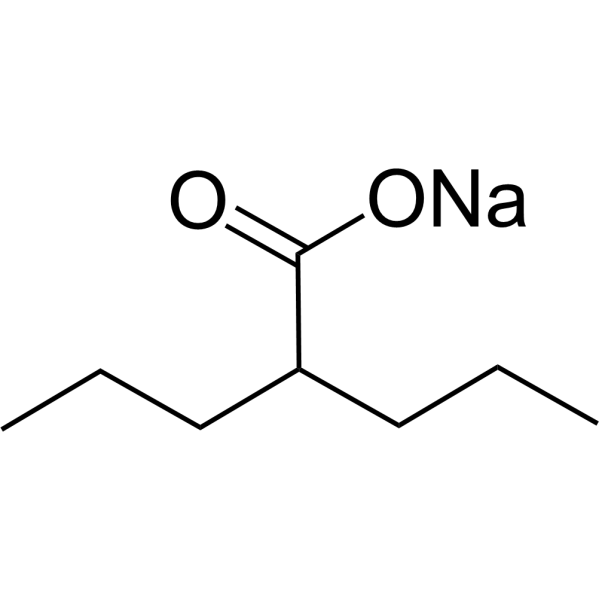
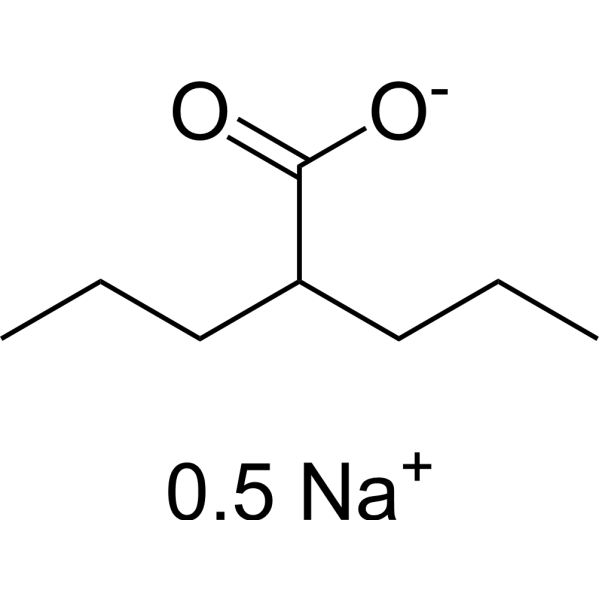
    Valproic acid sodium
    60+ Cited Publications

    Sodium Valproate; VPA sodium; 2-Propylpentanoic acid sodium

    Organoid HDAC Autophagy Mitophagy HIV Notch Apoptosis Endogenous Metabolite Infection Neurological Disease Metabolic Disease Cancer
    Valproic acid (Sodium Valproate) sodium is an orally active HDAC inhibitor, with IC50 in the range of 0.5 and 2 mM, also inhibits HDAC1 (IC50, 400 μM), and induces proteasomal degradation of HDAC2. Valproic acid sodium activates Notch1 signaling and inhibits proliferation in small cell lung cancer (SCLC) cells. Valproic acid sodium is used in the treatment of epilepsy, bipolar disorder, metabolic disease, HIV infection and prevention of migraine headaches .
    Valproic acid sodium
  • HY-122272
    Paroxetine
    15+ Cited Publications

    BRL29060

    Serotonin Transporter Adrenergic Receptor P2X Receptor Apoptosis Neurological Disease Cancer
    Paroxetine is an oral inhibitor that falls under the category of selective serotonin reuptake inhibitors (SSRIs). Paroxetine is also a very weak norepinephrine (NE) reuptake inhibitor, capable of inducing cell apoptosis and having anti-tumor activity. Paroxetine has antidepressant, anti-anxiety, and pain-relieving effects, and it can help improve conditions like obsessive-compulsive disorder, panic disorder, post-traumatic stress disorder, premenstrual anxiety, and chronic headaches .
    Paroxetine
  • HY-B0804
    Nadolol
    5 Publications Verification

    SQ-11725

    Adrenergic Receptor Cardiovascular Disease
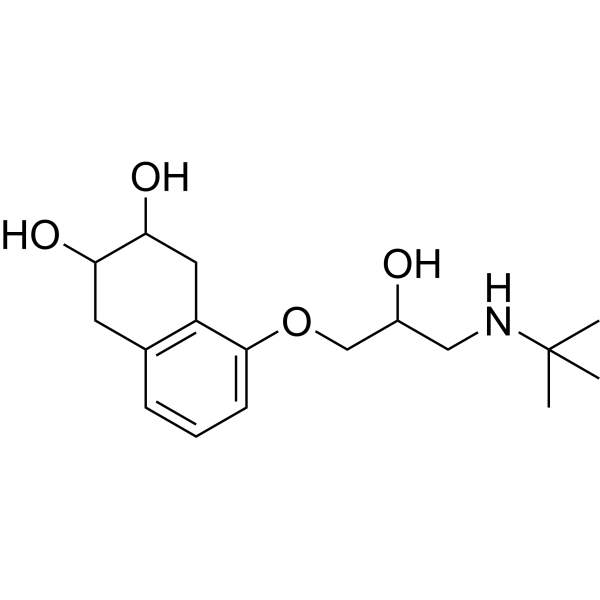
    Nadolol (SQ-11725) is a non-selective and orally active β-adrenergic receptors blocker and is a substrate of organic anion transporting polypeptide 1A2 (OATP1A2). Nadolol has the the potential for high blood pressure, angina pectoris and vascular headaches research .
    Nadolol
  • HY-B0121B
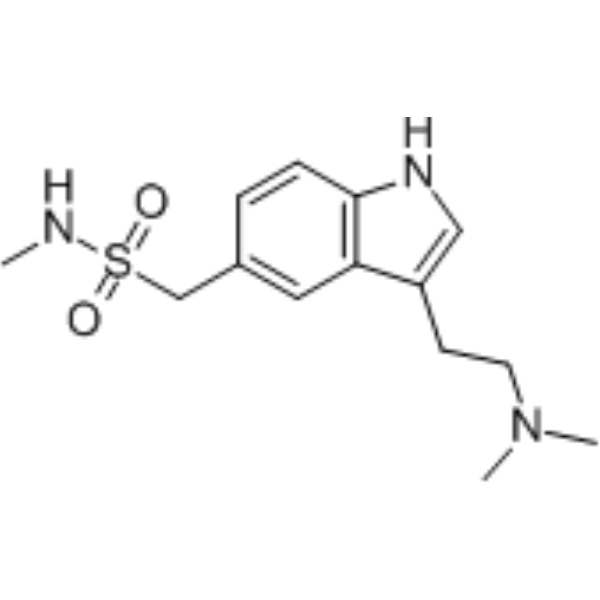
    Sumatriptan
    5+ Cited Publications

    GR 43175 free base

    5-HT Receptor Neurological Disease
    Sumatriptan (GR 43175) is an orally active 5-HT1 receptor agonist with IC50s of 7.3 nm, 9.3nm and 17.8 nm for 5-HT1D, 5-HT1B and 5-HT1F receptors, respectively. Sumatriptan can be used for migraine headache research .
    Sumatriptan
  • HY-P99021
    Galcanezumab
    1 Publications Verification

    LY 2951742

    CGRP Receptor Neurological Disease
    Galcanezumab (LY 2951742) is a humanized IgG4 monoclonal antibody against the CGRP ligand. Galcanezumab can be used for migraine or cluster headaches research .
    Galcanezumab
  • HY-P990774

    ASP-7266; TRAB-1; UPB-101

    Interleukin Related Inflammation/Immunology
    Verekitug (ASP-7266; TRAB-1; UPB-101) is a human monoclonal antibody targeting the thymic stromal lymphopoietin receptor (TSLPR), with a mean half-life of approximately 20 days. At doses of Verekitug ≥100 mg, complete and sustained TSLPR-specific occupancy is achieved, and the antibody does not bind to IL-7Rα. By inhibiting TSLP-driven inflammatory responses, Verekitug blocks TSLP-induced cell proliferation and TARC expression, while reducing fractional exhaled NO levels, blood eosinophil counts, and levels of IL-5 and IgE. Verekitug significantly improves scores for nasal polyps, nasal congestion and olfactory dysfunction, with favorable safety and good tolerability; potential adverse reactions include headache, upper respiratory tract infection, sinusitis and nasopharyngitis. Verekitug is used in relevant studies on asthma, chronic rhinosinusitis with nasal polyps and chronic obstructive pulmonary disease .
    Verekitug
  • HY-101202

    NIH 10815

    Opioid Receptor Neurological Disease
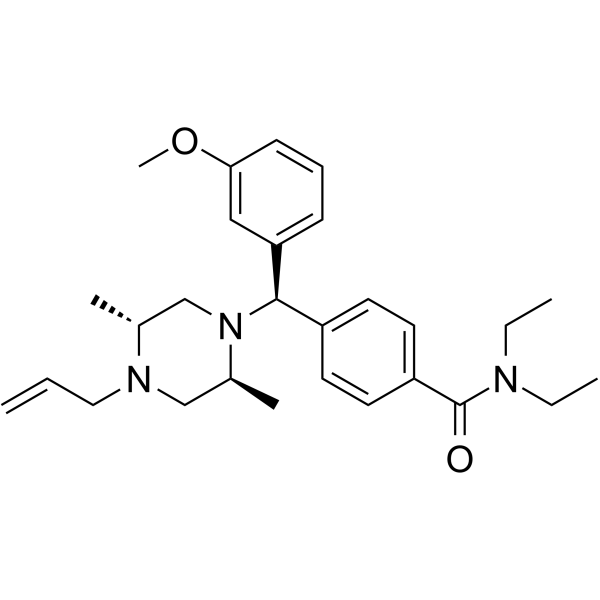
    SNC80 (NIH 10815) is a potent, highly selective and non-peptide δ-opioid receptor agonist with a Ki of 1.78 nM and an IC50 of 2.73 nM. SNC80 also selectively activates μ-δ heteromer in HEK293 cells with an EC50 of 52.8 nM. SNC80 shows antinociceptive, antihyperalgesic and antidepressant‐like effects. SNC80 has the potential for multiple headache disorders treatment .
    SNC80
  • HY-B0121
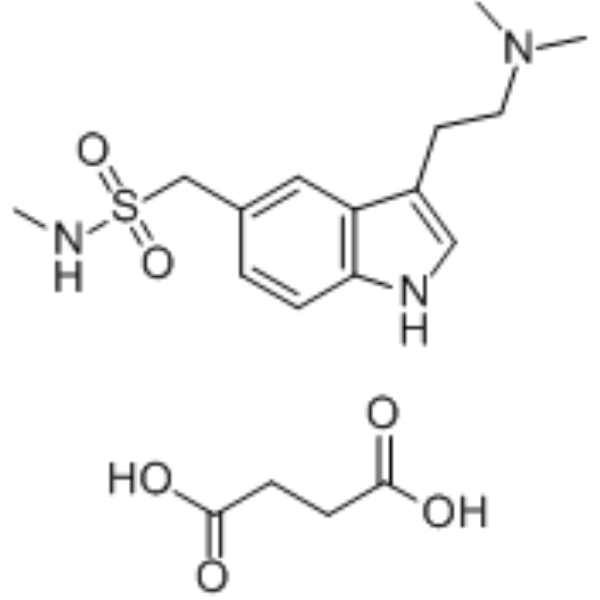
    Sumatriptan succinate
    5+ Cited Publications

    GR 43175 succinate

    5-HT Receptor Neurological Disease
    Sumatriptan succinate (GR 43175) is an orally active 5-HT1 receptor agonist with IC50s of 7.3 nm, 9.3nm and 17.8 nm for 5-HT1D, 5-HT1B and 5-HT1F receptors, respectively. Sumatriptan succinate can be used for migraine headache research .
    Sumatriptan succinate
  • HY-W050162
    (E)-3,4,5-Trimethoxycinnamic acid
    1 Publications Verification

    TMCA

    GABA Receptor 5-HT Receptor Neurological Disease
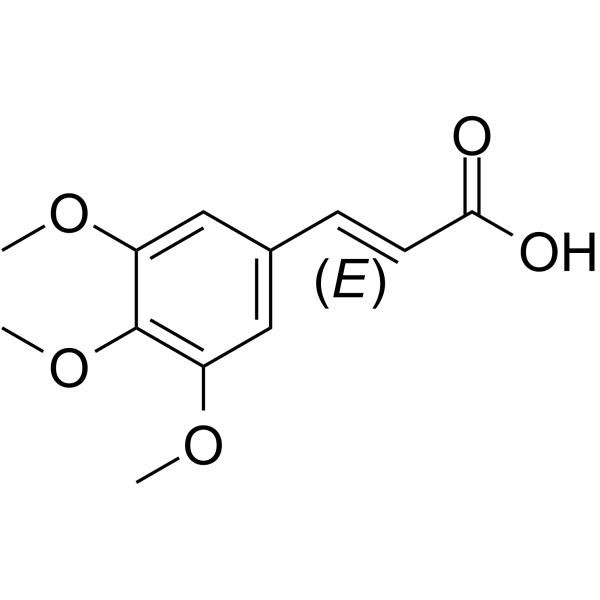
    (E)-3,4,5-Trimethoxycinnamic acid (TMCA) is a cinnamic acid substituted by multi-methoxy groups. (E)-3,4,5-Trimethoxycinnamic acid is an orally active and potent GABAA/BZ receptor agonist. (E)-3,4,5-Trimethoxycinnamic exhibits favourable binding affinity to 5-HT2C and 5-HT1A receptor, with IC50 values of 2.5 and 7.6 μM, respectively. (E)-3,4,5-Trimethoxycinnamic acid shows anticonvulsant and sedative activity. (E)-3,4,5-Trimethoxycinnamic acid can be used for the research of insomnia, headache and epilepsy .
    (E)-3,4,5-Trimethoxycinnamic acid
  • HY-10585S
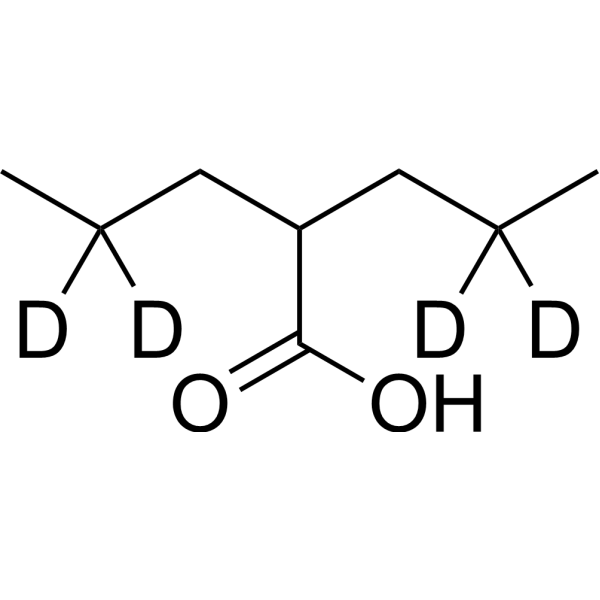
    Valproic acid-d4
    1 Publications Verification

    VPA-d4; 2-Propylpentanoic acid-d4

    HDAC Autophagy Mitophagy HIV Notch Endogenous Metabolite Cancer
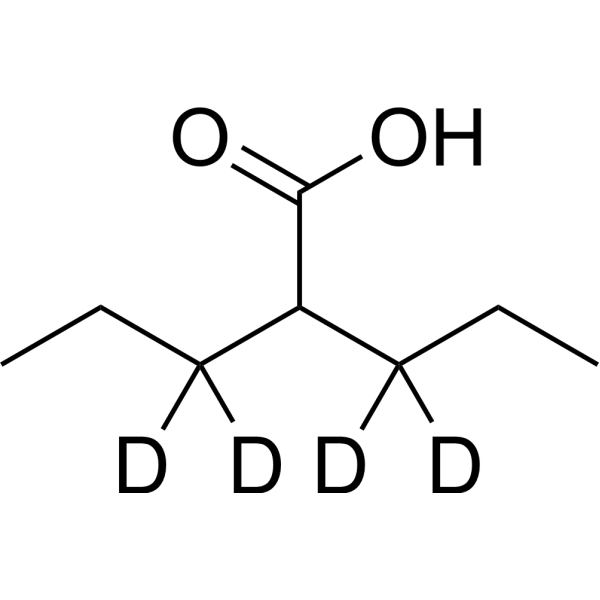
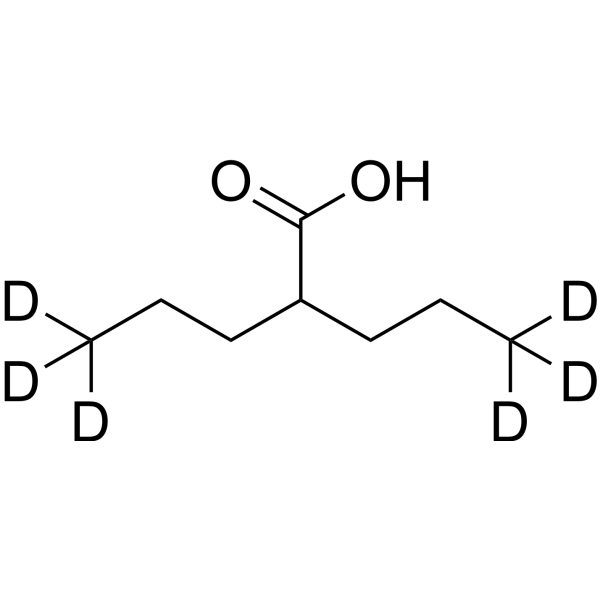
    Valproic acid-d4 is the deuterium labeled Valproic acid. Valproic acid (VPA; 2-Propylpentanoic Acid) is an HDAC inhibitor, with IC50 in the range of 0.5 and 2 mM, also inhibits HDAC1 (IC50, 400 μM), and induces proteasomal degradation of HDAC2. Valproic acid activates Notch1 signaling and inhibits proliferation in small cell lung cancer (SCLC) cells. Valproic acid sodium salt is used in the treatment of epilepsy, bipolar disorder and prevention of migraine headaches .
    Valproic acid-d4
  • HY-10585S1

    VPA-d6; 2-Propylpentanoic acid-d6

    HDAC Autophagy Mitophagy HIV Notch Endogenous Metabolite Cancer
    Valproic acid-d6 is the deuterium labeled Valproic acid. Valproic acid (VPA; 2-Propylpentanoic Acid) is an HDAC inhibitor, with IC50 in the range of 0.5 and 2 mM, also inhibits HDAC1 (IC50, 400 μM), and induces proteasomal degradation of HDAC2. Valproic acid activates Notch1 signaling and inhibits proliferation in small cell lung cancer (SCLC) cells. Valproic acid sodium salt is used in the treatment of epilepsy, bipolar disorder and prevention of migraine headaches .
    Valproic acid-d6
  • HY-78509

    Biochemical Assay Reagents Drug Intermediate Neurological Disease
    Dibenzosuberone belongs to the family of tricyclic antidepressant drugs, commonly referred to as Tricyclic antidepressants (TCAs), and is widely used in research on migraine, tension headaches, anxiety disorders, and schizophrenia. Dibenzosuberone is also a key intermediate in the synthesis of various active pharmaceutical ingredients (APIs), such as Amitriptyline (HY-B0527), Nortriptyline (HY-118620), Noxiptiline or Cyproheptadine (HY-B1622) .
    Dibenzosuberone
  • HY-10585S2

    VPA-d15; 2-Propylpentanoic acid-d15

    HDAC Autophagy Mitophagy HIV Notch Endogenous Metabolite Cancer
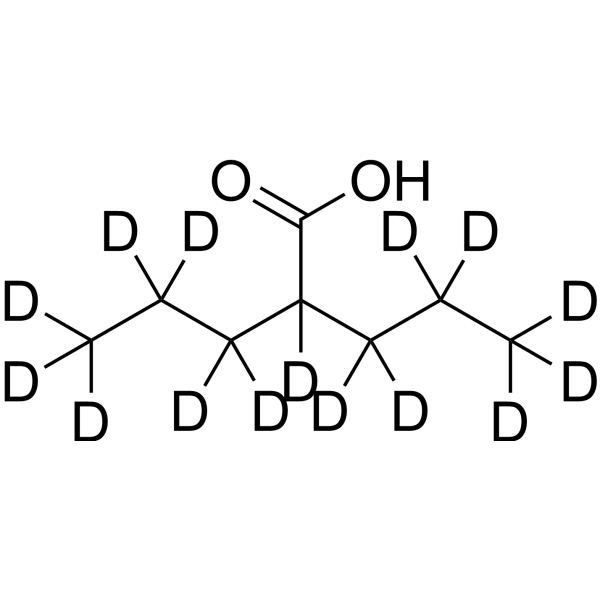
    Valproic acid-d15 is the deuterium labeled Valproic acid. Valproic acid (VPA; 2-Propylpentanoic Acid) is an HDAC inhibitor, with IC50 in the range of 0.5 and 2 mM, also inhibits HDAC1 (IC50, 400 μM), and induces proteasomal degradation of HDAC2. Valproic acid activates Notch1 signaling and inhibits proliferation in small cell lung cancer (SCLC) cells. Valproic acid sodium salt is used in the treatment of epilepsy, bipolar disorder and prevention of migraine headaches .
    Valproic acid-d15
  • HY-10585B

    Sodium Valproate (2:1); VPA sodium (2:1); 2-Propylpentanoic acid sodium (2:1)

    HDAC Autophagy Mitophagy HIV Notch Apoptosis Endogenous Metabolite Infection Neurological Disease Metabolic Disease Cancer
    Valproic acid (VPA) sodium (2:1) is an orally active HDAC inhibitor, with IC50 in the range of 0.5 and 2 mM, also inhibits HDAC1 (IC50, 400 μM), and induces proteasomal degradation of HDAC2. Valproic acid sodium (2:1) activates Notch1 signaling and inhibits proliferation in small cell lung cancer (SCLC) cells. Valproic acid sodium (2:1) is used in the treatment of epilepsy, bipolar disorder, metabolic disease, HIV infection and prevention of migraine headaches .
    Valproic acid sodium (2:1)
  • HY-10585AR

    Sodium Valproate (Standard); VPA sodium (Standard); 2-Propylpentanoic acid sodium (Standard)

    Organoid Reference Standards HDAC Autophagy Mitophagy HIV Notch Apoptosis Endogenous Metabolite Infection Neurological Disease Metabolic Disease Cancer
    Valproic acid (sodium) (Standard) is the analytical standard of Valproic acid (sodium). This product is intended for research and analytical applications. Valproic acid (Sodium Valproate) sodium is an orally active HDAC inhibitor, with IC50 in the range of 0.5 and 2 mM, also inhibits HDAC1 (IC50, 400 μM), and induces proteasomal degradation of HDAC2. Valproic acid sodium activates Notch1 signaling and inhibits proliferation in small cell lung cancer (SCLC) cells. Valproic acid sodium is used in the treatment of epilepsy, bipolar disorder, metabolic disease, HIV infection and prevention of migraine headaches .
    Valproic acid sodium (Standard)
  • HY-10585S4

    VPA-d4-1; 2-Propylpentanoic acid-d4-1

    Isotope-Labeled Compounds HDAC Autophagy Mitophagy HIV Notch Endogenous Metabolite Cancer
    Valproic acid-d4-1 is the deuterium labeled Valproic acid. Valproic acid (VPA; 2-Propylpentanoic Acid) is an HDAC inhibitor, with IC50 in the range of 0.5 and 2 mM, also inhibits HDAC1 (IC50, 400 μM), and induces proteasomal degradation of HDAC2. Valproic acid activates Notch1 signaling and inhibits proliferation in small cell lung cancer (SCLC) cells. Valproic acid sodium salt is used in the treatment of epilepsy, bipolar disorder and prevention of migraine headaches .
    Valproic acid-d4-1
  • HY-122272R

    BRL29060 (Standard)

    Serotonin Transporter Adrenergic Receptor P2X Receptor Apoptosis Reference Standards Neurological Disease Cancer
    Paroxetine (Standard) is the analytical standard of Paroxetine. This product is intended for research and analytical applications. Paroxetine is an oral inhibitor that falls under the category of selective serotonin reuptake inhibitors (SSRIs). Paroxetine is also a very weak norepinephrine (NE) reuptake inhibitor, capable of inducing cell apoptosis and having anti-tumor activity. Paroxetine has antidepressant, anti-anxiety, and pain-relieving effects, and it can help improve conditions like obsessive-compulsive disorder, panic disorder, post-traumatic stress disorder, premenstrual anxiety, and chronic headaches .
    Paroxetine (Standard)
  • HY-130579

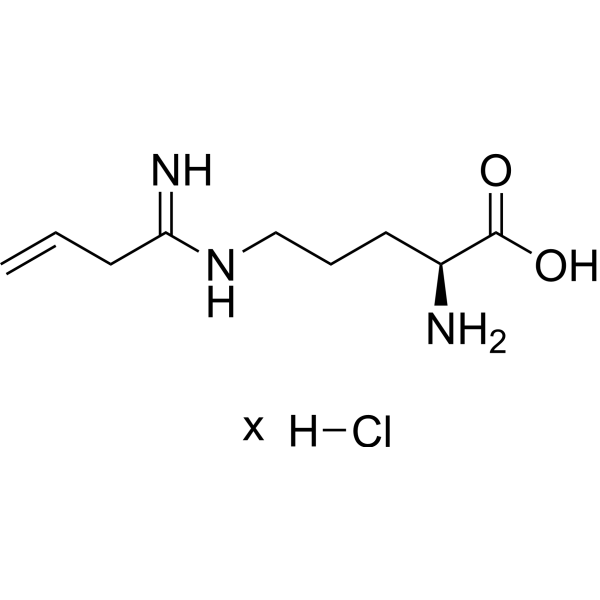
    L-VNIO hydrochloride

    NO Synthase NADPH Oxidase Cardiovascular Disease Neurological Disease
    Vinyl-L-NIO (L-VNIO) hydrochloride is a neuronal nitric oxide synthase (NOS) inhibitor with a rat Ki of 0.10 μM. Vinyl-L-NIO hydrochloride inhibits NADPH oxidase activity, attenuates renal fibrosis, inflammation, oxidative stress indices, and albuminuria. Vinyl-L-NIO hydrochloride can be used for the research of parkinson's disease, migraine headache, and hypertension .
    Vinyl-L-NIO hydrochloride
  • HY-123442

    5-HT Receptor Neurological Disease
    L 775,606 is a potent and selective 5-HT1D receptor agonist. L 775,606 can be used to study migraine headache .
    L 775,606
  • HY-B0804R

    SQ-11725 (Standard)

    Reference Standards Adrenergic Receptor Cardiovascular Disease
    Nadolol (Standard) is the analytical standard of Nadolol. This product is intended for research and analytical applications. Nadolol (SQ-11725) is a non-selective and orally active β-adrenergic receptors blocker and is a substrate of organic anion transporting polypeptide 1A2 (OATP1A2). Nadolol has the the potential for high blood pressure, angina pectoris and vascular headaches research .
    Nadolol (Standard)
  • HY-B0121R

    GR 43175 succinate (Standard)

    5-HT Receptor Reference Standards Neurological Disease
    Sumatriptan (succinate) (Standard) is the analytical standard of Sumatriptan (succinate). This product is intended for research and analytical applications. Sumatriptan succinate (GR 43175) is an orally active 5-HT1 receptor agonist with Kis of 17 nM, 27 nM and 100 nM for 5-HT1D, 5-HT1B and 5-HT1A receptors, respectively. Sumatriptan succinate can be used for migraine headache research .
    Sumatriptan succinate (Standard)
  • HY-B0121BR

    GR 43175 free base (Standard)

    5-HT Receptor Reference Standards Neurological Disease
    Sumatriptan (Standard) is the analytical standard of Sumatriptan. This product is intended for research and analytical applications. Sumatriptan (GR 43175) is an orally active 5-HT1 receptor agonist with IC50s of 7.3 nm, 9.3nm and 17.8 nm for 5-HT1D, 5-HT1B and 5-HT1F receptors, respectively. Sumatriptan can be used for migraine headache research .
    Sumatriptan (Standard)
  • HY-10585AG

    Sodium Valproate; VPA sodium; 2-Propylpentanoic acid sodium

    Organoid HDAC Autophagy Mitophagy HIV Notch Apoptosis Endogenous Metabolite Infection Neurological Disease Metabolic Disease Cancer
    Valproic acid (Sodium Valproate) sodium is an orally active HDAC inhibitor, with IC50 in the range of 0.5 and 2 mM, also inhibits HDAC1 (IC50, 400 μM), and induces proteasomal degradation of HDAC2. Valproic acid sodium activates Notch1 signaling and inhibits proliferation in small cell lung cancer (SCLC) cells. Valproic acid sodium is used in the treatment of epilepsy, bipolar disorder, metabolic disease, HIV infection and prevention of migraine headaches .
    Valproic acid sodium
  • HY-W794759

    Magnesium valproate; VPA magnesium; 2-Propylpentanoic acid magnesium

    Organoid HDAC Autophagy Mitophagy HIV Notch Apoptosis Endogenous Metabolite Infection Neurological Disease Cancer
    Valproic acid magnesium (Magnesium valproate) is an orally active HDAC inhibitor, with IC50 in the range of 0.5 and 2 mM. Valproic acid magnesium inhibits HDAC1 (IC50, 400 μM), and induces proteasomal degradation of HDAC2. Valproic acid magnesium activates Notch1 signaling and inhibits proliferation in small cell lung cancer (SCLC) cells. Valproic acid magnesium is used in the epilepsy, bipolar disorder, metabolic disease, HIV infection and prevention of migraine headaches .
    Valproic acid magnesium
  • HY-110029
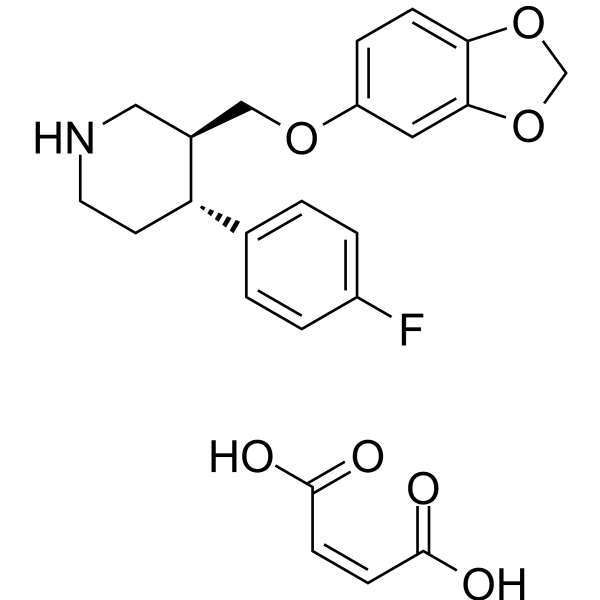
    Paroxetine maleate
    5+ Cited Publications

    BRL29060 maleate

    Serotonin Transporter Neurological Disease
    Paroxetine maleate is a potent and selective inhibitor of SSRI. Paroxetine maleate is used in generalized anxiety disorder, post traumatic stress disorder, premenstrual dysphoric disorder and chronic headache research .
    Paroxetine maleate
  • HY-139068

    Drug Derivative Others
    Ibuprofen arginine is an orally active L-arginine of Ibuprofen (HY-78131). With rapid absorption and high bioavailability, Ibuprofen arginine can effectively relieve a variety of acute pain, and has little damage to gastric mucosa and is well tolerated. Ibuprofen arginine can be used in research for pain relief .
    Ibuprofen arginine
  • HY-119121

    TRP Channel Neurological Disease
    JNJ-38893777 is an orally active and highly selective transient receptor potential vanilloid type 1 (TRPV1) channel antagonist. JNJ-38893777 inhibits neuronal hyperactivation and reduces inflammatory hyperalgesia. JNJ-38893777 is promising for research of migraine headaches, neuropathic and inflammatory pain .
    JNJ-38893777
  • HY-B1658

    (R)-Frovatriptan; SB 209509; VML 251

    5-HT Receptor Neurological Disease
    Frovatriptan is a potent 5-HT1B//D receptor agonist and has the highest 5-HT1B potency in the triptan class. Frovatriptan is apparently cerebroselective. Frovatriptan is efficacious and even superior in some endpoints also when taken during the headache phase in migraine attacks with aura .
    Frovatriptan
  • HY-10585AS1

    Sodium Valproate-d14; VPA-d14 sodium; 2-Propylpentanoic acid-d14 sodium

    Isotope-Labeled Compounds HDAC Autophagy Mitophagy HIV Notch Endogenous Metabolite Cancer
    Valproic acid-d14 (sodium) is deuterium labeled Valproic acid (sodium). Valproic acid sodium salt (Sodium Valproate) is an HDAC inhibitor, with IC50 in the range of 0.5 and 2 mM, also inhibits HDAC1 (IC50, 400 μM), and induces proteasomal degradation of HDAC2. Valproic acid sodium salt activates Notch1 signaling and inhibits proliferation in small cell lung cancer (SCLC) cells. Valproic acid sodium salt is used in the treatment of epilepsy, bipolar disorder and prevention of migraine headaches.
    Valproic acid-d14 sodium
  • HY-10585AS

    Sodium Valproate-d7; VPA-d7 sodium; 2-Propylpentanoic acid-d7 sodium

    Isotope-Labeled Compounds HDAC Autophagy Mitophagy HIV Notch Endogenous Metabolite Cancer
    Valproic acid-d7 (sodium) is the deuterium labeled Valproic acid (sodium salt). Valproic acid sodium salt (Sodium Valproate) is an HDAC inhibitor, with IC50 in the range of 0.5 and 2 mM, also inhibits HDAC1 (IC50, 400 μM), and induces proteasomal degradation of HDAC2. Valproic acid sodium salt activates Notch1 signaling and inhibits proliferation in small cell lung cancer (SCLC) cells. Valproic acid sodium salt is used in the treatment of epilepsy, bipolar disorder and prevention of migraine headaches .
    Valproic acid-d7 sodium
  • HY-10585S3

    Sodium Valproate-d4; VPA-d4 sodium; 2-Propylpentanoic acid-d4 sodium

    Isotope-Labeled Compounds HDAC Autophagy Mitophagy HIV Notch Endogenous Metabolite Cancer
    Valproic acid-d4 (sodium) is the deuterium labeled Valproic acid. Valproic acid (VPA; 2-Propylpentanoic Acid) is an HDAC inhibitor, with IC50 in the range of 0.5 and 2 mM, also inhibits HDAC1 (IC50, 400 μM), and induces proteasomal degradation of HDAC2. Valproic acid activates Notch1 signaling and inhibits proliferation in small cell lung cancer (SCLC) cells. Valproic acid sodium salt is used in the treatment of epilepsy, bipolar disorder and prevention of migraine headaches.
    Valproic acid-d4 sodium
  • HY-107022

    Phosphodiesterase (PDE) Neurological Disease
    BMS-341400 is an orally active selective phosphodiesterase 5 (PDE5) inhibitor with an IC50 value of 0.3 nM. BMS-341400 reduces the degradation of cyclic guanosine monophosphate (cGMP), thereby enhancing nitric oxide (NO)-mediated relaxation of the smooth muscle of the corpus cavernosum and promoting erection. BMS-341400 can be used to study erectile dysfunction.
    BMS-341400
  • HY-W018475

    MK 462 free base

    5-HT Receptor Neurological Disease
    Rizatriptan (MK 462 free base) is an orally active 5-HT1B/5-HT1D receptor agonist, with BBB permeability. Rizatriptan exerts significant anti-migraine effects by constricting intracranial and extracranial blood vessels and inhibiting neuropeptide release. Rizatriptan exhibits species- and tissue-specific metabolic characteristics; for example, it undergoes oxidative deamination mainly by MAO-A in the liver of brown rats, so co-administration with MAO-A inhibitors is prohibited. Rizatriptan may also exacerbate nitroglycerin-induced cutaneous allodynia, prolong the duration of central sensitization, and increase anxiety-like behavior and active drug-seeking behavior in mice. Rizatriptan has been widely used in studies related to migraine and medication-overuse headache .
    Rizatriptan
  • HY-106736

    Drug Derivative Neurological Disease
    Etilefrine pivalate hydrochloride is an orally active compound and can be used for study of migraine headaches .
    Etilefrine pivalate hydrochloride
  • HY-110351

    PGN 1531 hydrochloride

    Prostaglandin Receptor Neurological Disease
    BGC 20-1531 (PGN 1531) hydrochloride is a potent and selective prostanoid EP4 receptor antagonist, with a pKb of 7.6. BGC 20-1531 hydrochloride has the potential for the research of migraine headache .
    BGC-20-1531 hydrochloride
  • HY-108200

    iGluR Cardiovascular Disease Neurological Disease
    UK-315716 is an NMDA receptor antagonist. UK-315716 has a synergistic neuroprotective effect. UK-315716 can be used for research on neurological diseases such as stroke and headache .
    UK-315716
  • HY-19849

    PGN 1531 free base

    Prostaglandin Receptor Neurological Disease
    BGC-20-1531 (PGN 1531) free base is a potent and selective prostanoid EP4 receptor antagonist, with a pKB of 7.6. BGC-20-1531 free base has the potential for the research of migraine headache .
    BGC-20-1531 free base
  • HY-N12081

    Biochemical Assay Reagents Metabolic Disease Inflammation/Immunology
    Oxyresveratrol 4-O-β-D-glucopyranoside (compound 3) is a natural product that can be obtained from the root bark of Morus atropurpurea. Oxyresveratrol 4-O-β-D-glucopyranoside has potential in studies of diabetes, arthritis, rheumatism, cough and headache .
    Oxyresveratrol 4-O-β-D-glucopyranoside
  • HY-B0121A

    GR 43175 hydrochloride

    5-HT Receptor Neurological Disease
    Sumatriptan hydrochloride (GR 43175) is an orally active 5-HT1 receptor agonist with IC50s of 7.3 nm, 9.3nm and 17.8 nm for 5-HT1D, 5-HT1B and 5-HT1F receptors, respectively. Sumatriptan hydrochloride can be used for migraine headache research .
    Sumatriptan hydrochloride
  • HY-B0121BS2

    GR 43175 free base-d5

    5-HT Receptor Isotope-Labeled Compounds Neurological Disease
    Sumatriptan-d5 is deuterated labeled Sumatriptan (HY-B0121B). Sumatriptan (GR 43175) is an orally active 5-HT1 receptor agonist with IC50s of 7.3 nm, 9.3nm and 17.8 nm for 5-HT1D, 5-HT1B and 5-HT1F receptors, respectively. Sumatriptan can be used for migraine headache research .
    Sumatriptan-d5
  • HY-156533

    5-HT Receptor Cancer
    5-HT2 agonist-1 (Compound 24) is a 5-HT2A & 5-HT2B & 5-HT2C agonist, with IC50s of 10 nM, 8.3, and 1.6 nM respectively. 5-HT2 agonist-1 free base can be used for research of depression, alcoholism, tobacco and cocaine addiction, inflammation, cluster headache, PTSD, seizure disorders and other CNS disorders .
    5-HT2 agonist-1
  • HY-156533A

    5-HT Receptor Neurological Disease Inflammation/Immunology Cancer
    5-HT2 agonist-1 (Compound 24) free base is a 5-HT2A & 5-HT2B & 5-HT2C agonist, with IC50s of 10 nM, 8.3, and 1.6 nM respectively. 5-HT2 agonist-1 free base can be used for research of depression, alcoholism, tobacco and cocaine addiction, inflammation, cluster headache, PTSD, seizure disorders and other CNS disorders .
    5-HT2 agonist-1 free base
  • HY-156534

    5-HT Receptor Neurological Disease Inflammation/Immunology Cancer
    5-HT2A&5-HT2C agonist-1 (Example 2) is a 5-HT2A & 5-HT2C agonist, with IC50s of 196 nM and 0.9 nM respectively. 5-HT2A&5-HT2C agonist-1 can be used for research of depression, alcoholism, tobacco and cocaine addiction, inflammation, cluster headache, PTSD, seizure disorders and other CNS disorders .
    5-HT2A&5-HT2C agonist-1
  • HY-P2428

    Endogenous Metabolite Neurological Disease
    RI-61 is a compound that has activity in suppressing migraine, cluster headache, new daily persistent headache and cyclical vomiting syndrome. RI-61 has shown significant efficacy in relieving the symptoms of these disorders. RI-61 helps relieve pain and other related symptoms by modulating the action of neurotransmitters .
    RI-61
  • HY-101635

    Proxibarbital

    5-HT Receptor Histamine Receptor Neurological Disease
    Proxibarbal is a barbiturate derivative. Proxibarbal has anti-anxiety properties and is also used for the study of migraine headaches.
    Proxibarbal
  • HY-101202A

    (Rac)-NIH 10815

    Opioid Receptor Neurological Disease
    (Rac)-SNC80 is a racemate of SNC80 (HY-101202). SNC80 (NIH 10815) is a potent, highly selective and non-peptide δ-opioid receptor agonist with a Ki of 1.78 nM and an IC50 of 2.73 nM. SNC80 shows antinociceptive, antihyperalgesic and antidepressant‐like effects. SNC80 has the potential for multiple headache disorders treatment .
    (Rac)-SNC80
  • HY-B1658S

    (R)-Frovatriptan-d3 hydrochloride; SB 209509-d3 hydrochloride; VML 251-d3 hydrochloride

    5-HT Receptor Neurological Disease
    Frovatriptan-d3 (hydrochloride) is the deuterium labeled Frovatriptan . Frovatriptan is a potent 5-HT1B//D receptor agonist and has the highest 5-HT1B potency in the triptan class. Frovatriptan is apparently cerebroselective. Frovatriptan is efficacious and even superior in some endpoints also when taken during the headache phase in migraine attacks with aura .
    Frovatriptan-d3 hydrochloride
  • HY-B0121BS1

    GR 43175 free base-d6

    Isotope-Labeled Compounds 5-HT Receptor Neurological Disease
    Sumatriptan-d6 is the deuterium labeled Sumatriptan. Sumatriptan is an orally active 5-HT1 receptor agonist with Kis of 17 nM, 27 nM and 100 nM for 5-HT1D, 5-HT1B and 5-HT1A receptors, respectively. Sumatriptan can be used for migraine headache research .
    Sumatriptan-d6
  • HY-B0121BS
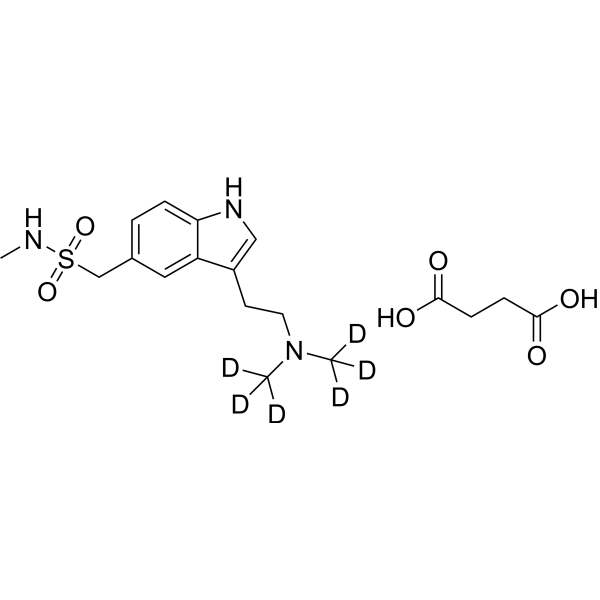
    Sumatriptan-d6 succinate
    1 Publications Verification

    GR 43175C-d6

    5-HT Receptor Isotope-Labeled Compounds Neurological Disease
    Sumatriptan-d6 succinate is the deuterium labeled Sumatriptan succinate. Sumatriptan succinate is an orally active 5-HT1 receptor agonist with Kis of 17 nM, 27 nM and 100 nM for 5-HT1D, 5-HT1B and 5-HT1A receptors, respectively. Sumatriptan succinate can be used for migraine headache research .
    Sumatriptan-d6 succinate

Inquiry Online

Your information is safe with us. * Required Fields.

Salutation


Country or Region *

Applicant Name *


Organization Name *

Department *


Email Address *


Product Name *

Cat. No.


Requested quantity *

Phone Number *


Remarks

Inquiry Online

Inquiry Information

Product Name:
Cat. No.:
Quantity:
MCE Japan Authorized Agent:

