1. Search Result
Search Result
Results for "

histone H4 acetylation

" in MedChemExpress (MCE) Product Catalog:
製品番号 製品名 Target 研究分野 構造式
  • HY-144315

    Snail/HDAC-IN-1

    HDAC Cancer
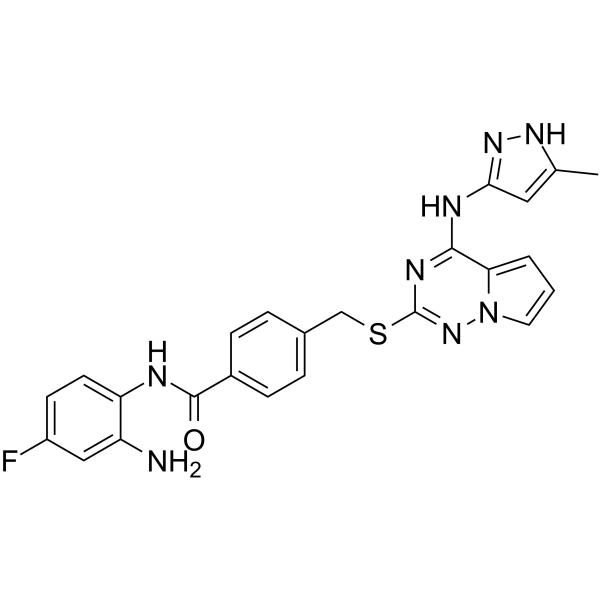
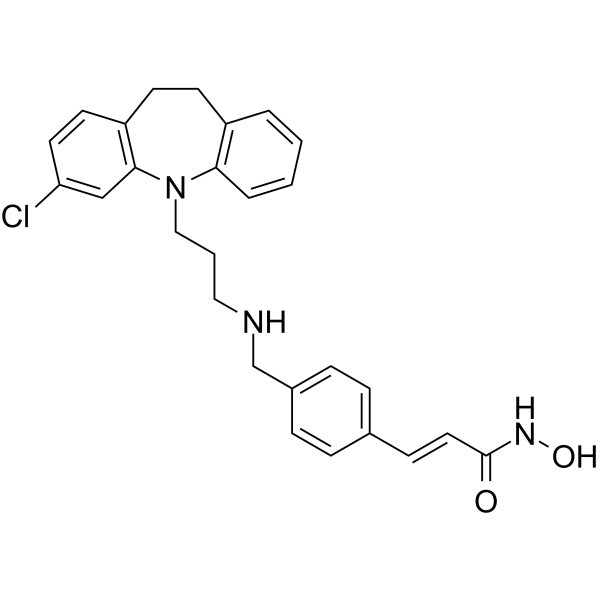
    CYD19 is a potent Snail/HDAC dual target inhibitor. CYD19 displays potent inhibitory activity against HDAC1 with an IC50 of 0.405 μM and potent inhibition against Snail with a Kd of 0.18 μM. CYD19 increases histone H4 acetylation in HCT-116 cells and decreases the expression of Snail protein to induce cell apoptosis .
    CYD19
  • HY-117709

    HDAC Neurological Disease
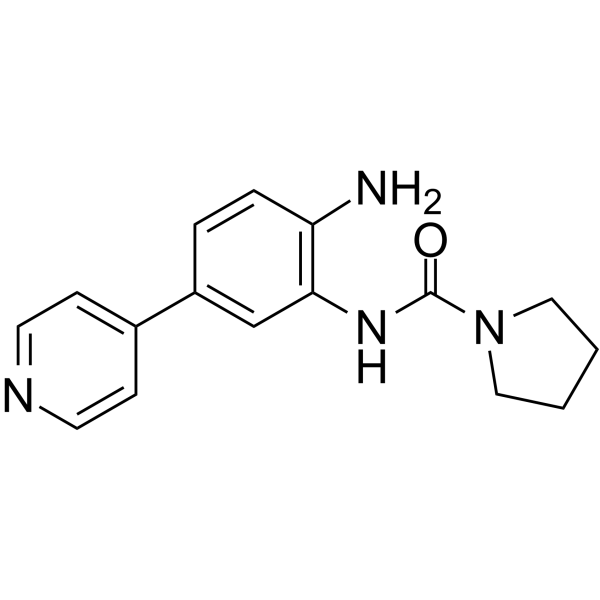
    BRD6688 is a selective HDAC2 inhibitor. BRD6688 increases H4K12 and H3K9 histone acetylation in primary mouse neuronal cells. BRD6688 crosses the blood brain barrier and rescues the memory defects associated with p25 induced neurodegeneration in contextual fear conditioning in a CK-p25 mouse model .
    BRD6688
  • HY-130538
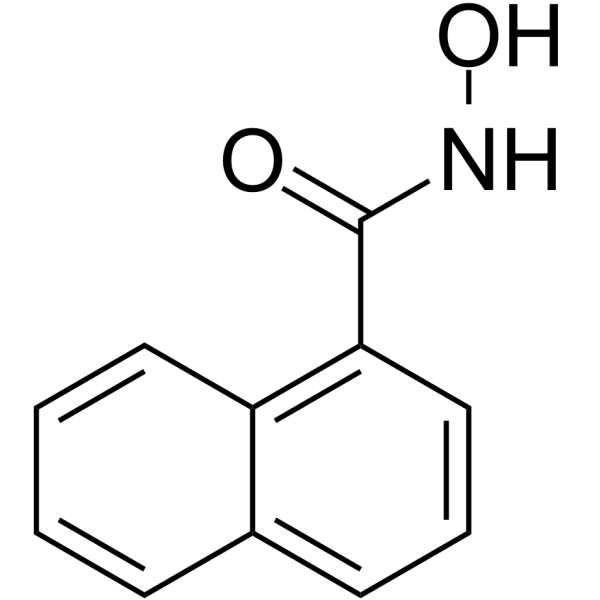
    1-Naphthohydroxamic acid
    2 Publications Verification

    HDAC Cancer
    1-Naphthohydroxamic acid (Compound 2) is a potent and selective HDAC8 inhibitor with an IC50 of 14 μM. 1-Naphthohydroxamic acid is more selectively for HDAC8 than class I HDAC1 and class II HDAC6 (IC50 >100 μM). 1-Naphthohydroxamic acid does not increase global histone H4 acetylation and also does not reduce total intracellular HDAC activity .1-Naphthohydroxamic acid can induce tubulin acetylation .
    1-Naphthohydroxamic acid
  • HY-116818

    HDAC Neurological Disease
    Crebinostat is a potent histone deacetylase (HDAC) inhibitor with IC50 values of 0.7 nM, 1.0 nM, 2.0 nM and 9.3 nM for HDAC1, HDAC2, HDAC3 and HDAC6, respectively. Crebinostat potently induces acetylation of both histone H3 and histone H4 as well as enhances the expression of the cAMP response element-binding protein (CREB) target gene Egr1. Crebinostat increases the density of synapsin-1 punctae along dendrites in cultured neurons. Crebinostat can modulate chromatin-mediated neuroplasticity and exhibits enhanced memory in mice .
    Crebinostat
  • HY-112806

    Drug-Linker Conjugates for ADC HDAC EGFR Microtubule/Tubulin Cancer
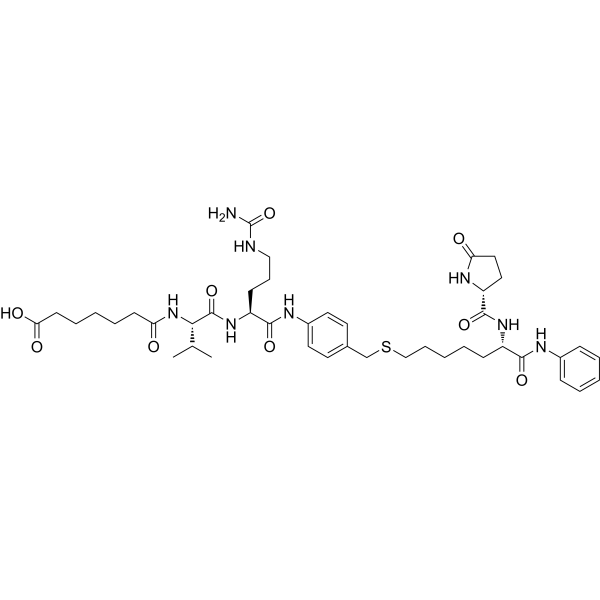
    ST8155AA1 is a part of antibody agent conjugates (ADCs) charged with HDAC inhibitor. ST8155AA1 induces α-tubulin, histone H3/H4 acetylation via direct enzymatic inhibition. ST8155AA1 recognizes and binds EGFR, undergoes internalization into EGFR-expressing tumor cells. ST8155AA1 inhibits cancer cell proliferation and exerts activity in mouse tumor models. ST8155AA1 can be used for the research of non-small cell lung cancer .
    ST8155AA1
  • HY-160461

    HDAC Metabolic Disease
    LTK-14A, a derivative of Garcinol (HY-107569), is a selective histone butyrylation inhibitor. LTK-14A does not affect acetylation. LTK-14A significantly inhibits the butyrylation of H4K5 and downregulated the expression of proadipogenic genes, thus culminating in abolished adipogenesis. LTK-14A can be used for the study of obesity .
    LTK-14A
  • HY-123699

    HDAC Microtubule/Tubulin Cancer
    NCT-10b is a selective HDAC6 inhibitor. NCT-10b mediates preferential α-tubulin acetylation without major histone H4 acetylation.NCT-10b can be used for the research of multiple myeloma .
    NCT-10b
  • HY-162060

    HDAC Cardiovascular Disease
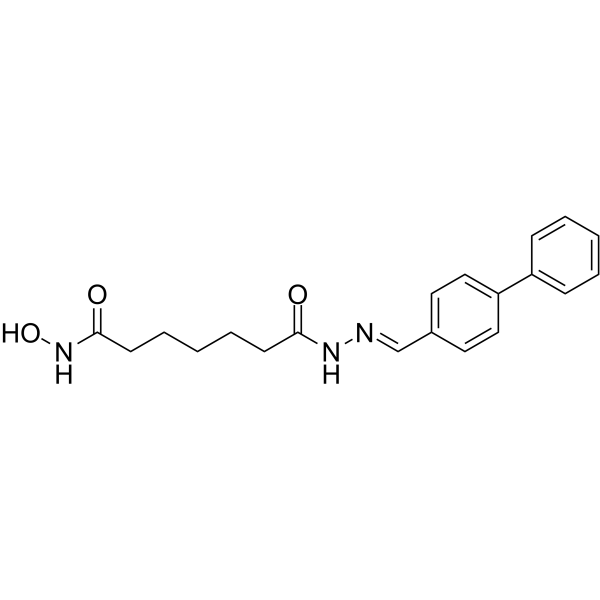
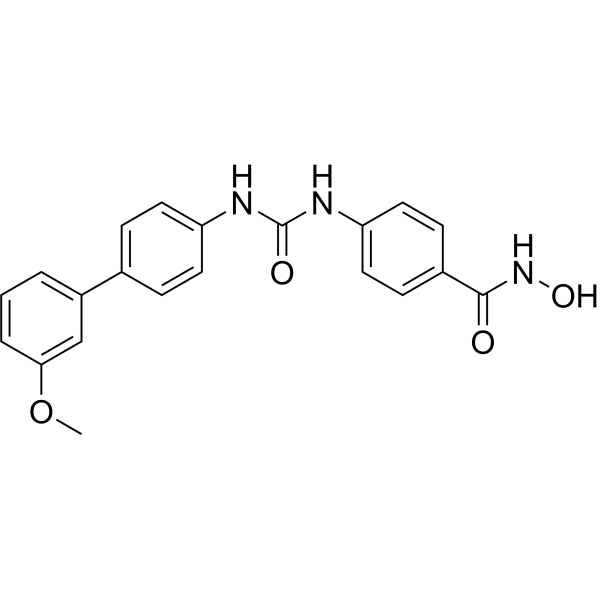
    YPX-C-05 is a hydroxamic acid-based HDAC inhibitor. YPX-C-05 exerts significant vasodilatory effects. YPX-C-05 exhibits inhibitory effects on HDACs and increases histone H4 acetylation in endothelial cells. YPX-C-05 can be used for hypertension research .
    YPX-C-05
  • HY-146351

    HDAC Neurological Disease
    HDAC-IN-38 (compound 13) is a potent HDAC inhibitor. HDAC-IN-38 shows similar micro-molar inhibitory activity toward HDAC1, 2, 3, 5, 6, and 8. HDAC-IN-38 increases cerebral blood flow (CBF), attenuates cognitive impairment, and improves hippocampal atrophy. HDAC-IN-38 also increases the level of histone acetylation (H3K14 or H4K5) .
    HDAC-IN-38
  • HY-121009

    Histone Acetyltransferase Microtubule/Tubulin Cancer
    CCT077791 is a PCAF (IC50: 7.3 μM (FlashPlate); 2.2 μM (Filter assay)) and p300 histone acetyltransferase inhibitor. CCT077791 reduces total acetylation of histones H3 and H4, levels of specific acetylated lysine marks, and acetylation of α-tubulin. CCT077791 can be used in the research of colorectal cancer .
    CCT077791
  • HY-181843

    HDAC Apoptosis Histone Acetyltransferase Microtubule/Tubulin Caspase Cancer
    HDAC-IN-99 is a histone deacetylase (HDAC) inhibitor with an IC50 of 37.73 nM, and it exhibits potent inhibitory activity against HDAC1 (IC50 = 48.09 nM), HDAC2 (IC50 = 300.28 nM) and HDAC6 (IC50 = 9.16 nM). HDAC-IN-99 exerts broad-spectrum antiproliferative activity in various cancer cell lines. HDAC-IN-99 induces S-phase cell cycle arrest and apoptosis in colon cancer cells, increases the acetylation levels of histone H3, histone H4 and α-tubulin, and upregulates the expression of p21 as well as the cleavage of caspase-3. HDAC-IN-99 displays antitumor activity in colon cancer xenograft models. HDAC-IN-99 can be used for the research of colon cancer .
    HDAC-IN-99

オンラインお問い合わせ

入力情報は安全に管理されます. 必須入力項目.

タイトル


国或いは地域 *

お名前 *


組纖名 *

デパートメント *


メールアドレス *


製品名 *

製品番号


カスタマ需要量 *

電話番号 *


必ず会社名を記載ください。個人への返信は行いません。

備考

バルクお問い合わせ

Inquiry Information

製品名:
製品番号:
数量:
MCE 日本正規代理店:

