
1. Search Result
Search Result
Results for "

human plasma

" in MedChemExpress (MCE) Product Catalog:

344

Inhibitors & Agonists

1

Screening Libraries

1

Fluorescent Dye

15

Biochemical Assay Reagents

43

Peptides

15

Inhibitory Antibodies

36

Natural
Products

13

Recombinant Proteins

23

Isotope-Labeled Compounds

5

Antibodies

3

Click Chemistry

4

Oligonucleotides

Cat. No. Product Name Target Research Areas Chemical Structure
  • HY-P1956
    Human serum albumin
    4 Publications Verification

    HSA

    NF-κB NO Synthase Cardiovascular Disease Inflammation/Immunology Cancer
    Human serum albumin (HSA) is the most abundant protein in plasma and is a major determinant of plasma oncotic pressure. Human serum albumin exhibits antioxidant, anticoagulant, anti-inflammatory, anti-platelet aggregation activities as well as colloid osmotic action. Human serum albumin can block the inhibitory effect of GML on human T cells, providing protective function for T cells. Human serum albumin is also associated with cardiovascular diseases and can partially prevent the LPS (HY-D1056) induced oxidative stress, as well as the upregulation of NF-κB, NF-κB, and peroxynitrite (ONOO ) in the vascular wall, contributing to the reduction of blood pressure .
    This product is recombinant Human Serum Albumin expressed in a microbial expression system.
    Human serum albumin
  • HY-N2327
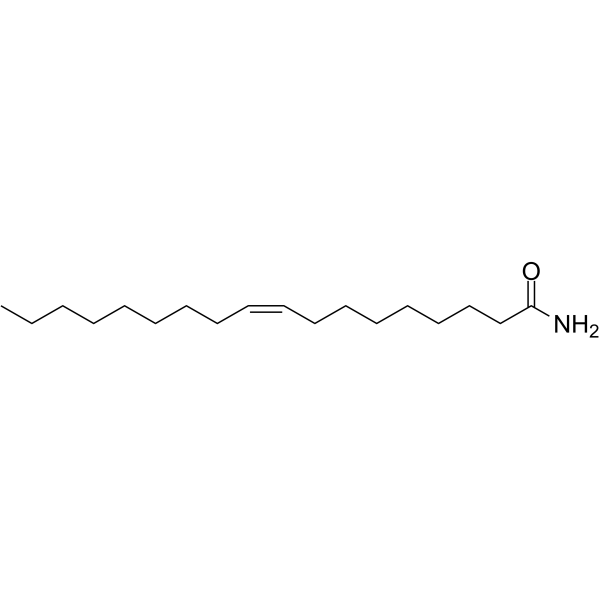
    Oleamide
    1 Publications Verification

    Endogenous Metabolite Others
    Oleamide is an endogenous fatty acid amide which can be synthesized de novo in the mammalian nervous system, and has been detected in human plasma.
    Oleamide
  • HY-50667
    Apixaban
    Maximum Cited Publications
    13 Publications Verification

    BMS-562247-01

    Factor Xa Cardiovascular Disease Cancer
    Apixaban (BMS-562247-01) is a highly selective, reversible and orally active inhibitor of Factor Xa with Ki of 0.08 nM and 0.17 nM in human and rabbit, respectively . Apixaban is in development for the prevention and treatment of various thromboembolic diseases .
    Apixaban
  • HY-133668

    Drug Metabolite Cytochrome P450 PPAR Endocrinology Cancer
    Monoethyl phthalate is an orally active PDX-1 activator and the major hydrolytic metabolite of Diethyl phthalate (HY-Y0284) in vivo, with reproductive toxicity. Monoethyl phthalate targets aromatase (aromatase/CYP19A1) and PPAR to induce cell proliferation. The plasma protein binding rate of Monoethyl phthalate in rats and humans is lower than that of Diethyl phthalate. It exhibits significant enterohepatic circulation in rats and mainly accumulates in liver tissues. Monoethyl phthalate shows no estrogenic activity in estrogen-dependent human breast cancer cells. Monoethyl phthalate can be used in studies of reproductive toxicity and related environmental endocrine disruption mechanisms .
    Monoethyl phthalate
  • HY-113110

    L-Cysteinylglycine; Cys-Gly; H-Cys-Gly-OH

    Endogenous Metabolite Reactive Oxygen Species (ROS) DNA/RNA Synthesis Cardiovascular Disease Cancer
    Cysteinylglycine (L-Cysteinylglycine; Cys-Gly) is a dipeptide formed by the peptide bond linkage between cysteine (Cysteine) and glycine (Glycine). Cysteinylglycine is an important metabolic intermediate in the human body, mainly derived from the degradation of glutathione (GSH). Cysteinylglycine reduces ferric iron to ferrous iron, drives the redox cycle of iron, generates reactive oxygen species (ROS), stimulates oxidative reactions, induces lipid peroxidation of human plasma LDL lipoproteins, and causes oxidative damage to DNA bases. Cysteinylglycine can be used as a biomarker to evaluate ischemic heart disease, breast cancer and other conditions .
    Cysteinylglycine
  • HY-P4070

    Insulin Receptor Metabolic Disease
    Insulin icodec is an Insulin (HY-P0035) analog that strongly but reversibly binds to albumin. Insulin icodec has long plasma half-life. Insulin icodec modulates insulin receptor activity, controls blood glucose levels, reduces HbA1c levels, and binds reversibly to human serum albumin. Insulin icodec can be used for the research of type 2 diabetes mellitus .
    Insulin icodec
  • HY-Y0202

    Catecholcarboxylic acid; NSC 27435

    Endogenous Metabolite Others
    Pyrocatechuic acid is a normal human benzoic acid metabolite found in plasma, and has increased levels after aspirin ingestion.
    Pyrocatechuic acid
  • HY-13327
    Evacetrapib
    3 Publications Verification

    LY2484595

    CETP Cardiovascular Disease
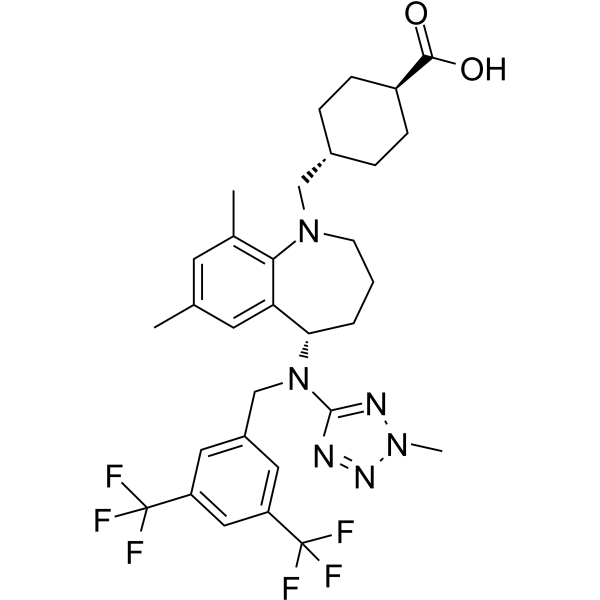
    Evacetrapib is a potent and selective of CETP inhibitor, which inhibits human recombinant CETP protein (IC50 5.5 nM) and CETP activity in human plasma (IC50 36 nM) in vitro.
    Evacetrapib
  • HY-150097

    Biochemical Assay Reagents Metabolic Disease Inflammation/Immunology Cancer
    Recombinant Human Serum Albumin (rHSA) is a non-glycosylated monomeric plasma protein that acts as a core factor for maintaining plasma colloid osmotic pressure. Recombinant Human Serum Albumin (rHSA) possesses multiple physiological functions including carrier, metabolic regulation, detoxification, antioxidation and enzyme mimicking. Recombinant Human Serum Albumin (rHSA) not only scavenges reactive oxygen and nitrogen species via specific residues and binds a variety of endogenous and exogenous compounds to maintain redox homeostasis, but also serves as a biomarker for multiple diseases such as cancer and inflammation. Recombinant Human Serum Albumin (rHSA) broadly supports the development of implantable materials, surgical adhesives and ligand capture, and can be used for research on critical illnesses including hypovolemia, liver failure, severe sepsis and various types of trauma resuscitation .
    Recombinant Human Serum Albumin(rHSA)
  • HY-143228
    SH-42
    3 Publications Verification

    SARS-CoV Cardiovascular Disease Inflammation/Immunology Cancer
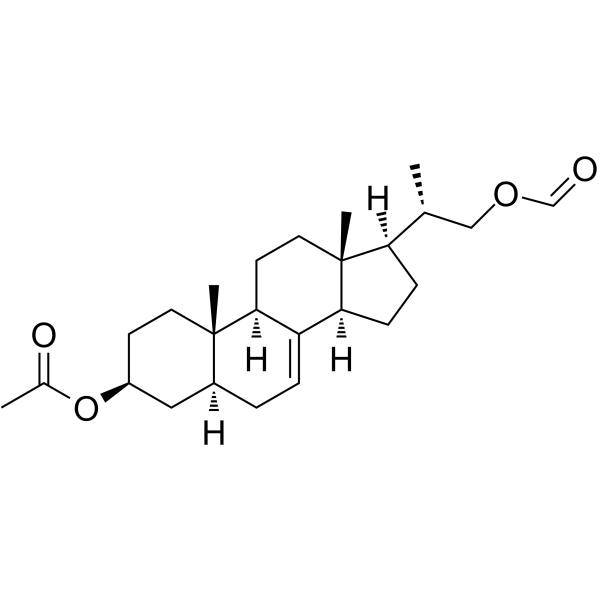
    SH-42 is a potent and selective inhibitor of human Δ 24-dehydrocholesterol reductase (DHCR24), with an IC50 of 42 nM. SH-42 can lead to a significant increase in plasma desmosterol levels of mice .
    SH-42
  • HY-N11200

    Endogenous Metabolite Metabolic Disease
    3-Hydroxyisovalerylcarnitine is a carnitine derivative. 3-Hydroxyisovaleryl carnitine in plasma may serve as a novel biomarker of biotin deficiency in humans, with its concentration increasing with biotin deficiency. Biotin deficiency reduces the activity of biotin-dependent 3-methylcrotonyl-CoA carboxylase, hinders the conversion of 3-methylcrotonyl-CoA into 3-methylglutaconyl-CoA, and impairs the leucine catabolism pathway; resulting in plasma 3-Hydroxyisovalerylcarnitine concentrations rise .
    3-Hydroxyisovalerylcarnitine
  • HY-125913
    Benzamidine
    3 Publications Verification

    Ser/Thr Protease Inflammation/Immunology
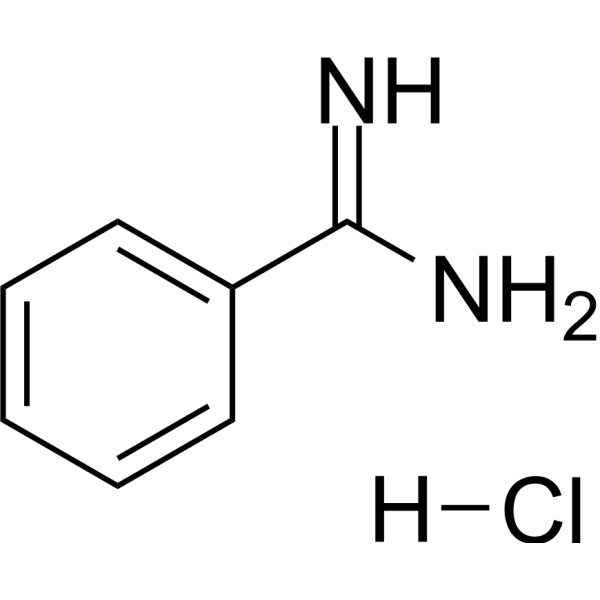
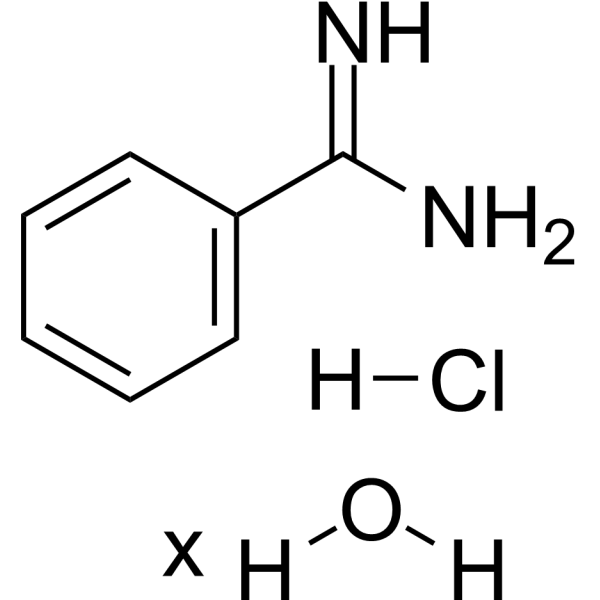
    Benzamidine is a competitive protease inhibitor that blocks the hydrolytic cleavage of glucagon by plasmin, trypsin and thrombin. Benzamidine effectively inhibits the degradation of glucagon by relevant proteases during the collection, storage and analysis of human plasma and blood samples. During in vivo metabolism, Benzamidine undergoes N-hydroxylation and produces multiple metabolites, exhibiting characteristics of delayed excretion or biphasic elimination. Benzamidine only induces slight single-strand DNA breaks at high concentrations and shows no significant genotoxic potential overall. Benzamidine may interfere with the detection of some glucagon antisera, but does not affect key antigen-antibody affinity at specific concentrations. Benzamidine can be used as a stabilizer in glucagon radioimmunoassays to ensure the accuracy and recovery rate of detection results .
    Benzamidine
  • HY-P3469A

    GCGR Metabolic Disease
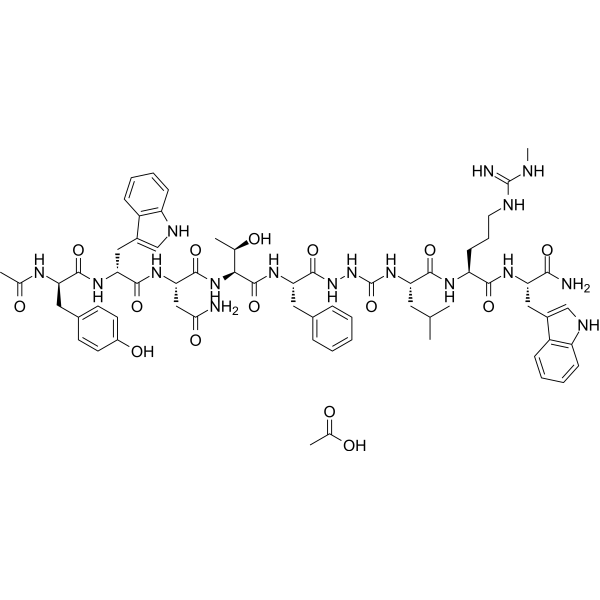
    Dasiglucagon acetate is a human glucagon analog, and can increase plasma glucose. Dasiglucagon can be used in hypoglycemia research .
    Dasiglucagon acetate
  • HY-114297
    Zymosterol
    2 Publications Verification

    Endogenous Metabolite Others
    Zymosterol is a Cholesterol (HY-N0322) biosynthesis metabolite. Zymosterol, a precursor of Cholesterol, is found mostly in the plasma membrane. Zymosterol circulates within the cell .
    Zymosterol
  • HY-129035

    Vanin-1-IN-1

    Pantetheinase Metabolic Disease Inflammation/Immunology
    PFI-653 (Vanin-1-IN-1, compound 3), a chemical probe, is a vanin-1 inhibitor that binds to plasma vanin-1 from mouse, rat, dog, and human. Vanin-1 is a cell surface-associated inositol (GPi) -anchored protein that plays important roles in metabolism and inflammation. PFI-653 inhibits vanin-1 from different species with IC50s of 6.85 nM (human recombinant plasma vanin-1), 9.0 nM (human plasma vanin-1), 24.5 nM (mouse recombinant vanin-1), and 53.4 nM (mouse plasma vanin-1) .
    PFI-653
  • HY-132250

    Drug-Linker Conjugates for ADC Cancer
    MCC-DM1 is a agent-Linker Conjugates for ADC such as Anti-CD22-MCC-DM1. MCC-DM1 can be detected in rat and human plasma, feces, and other tissues .
    MCC-DM1
  • HY-156259

    Acyltransferase Inflammation/Immunology
    PF-07202954 is an orally active, highly selective DGAT2 inhibitor with an IC50 of 10 nM against human DGAT2 and an IC50 of 17 nM against rat DGAT2. PF-07202954 reduces triglyceride synthesis, decreases hepatic triglyceride content and plasma triglyceride levels, inhibits de novo lipogenesis, and suppresses the hepatic SREBP signaling pathway as well as the expression of SREBP target genes. PF-07202954 is applicable to research related to non-alcoholic steatohepatitis .
    PF-07202954
  • HY-125366

    FAP Metabolic Disease
    ARI-3099 is an oral fibroblast activation protein (FAP) inhibitor. ARI-3099 specifically inhibits the proteolytic activity of FAP and blocks the cleavage of human FGF-21 between residues P171 and S172. ARI-3099 extends the half-life of circulating human FGF-21 in mice. ARI-3099 can be used in the research of type 2 diabetes and metabolic disorders .
    ARI-3099
  • HY-14950
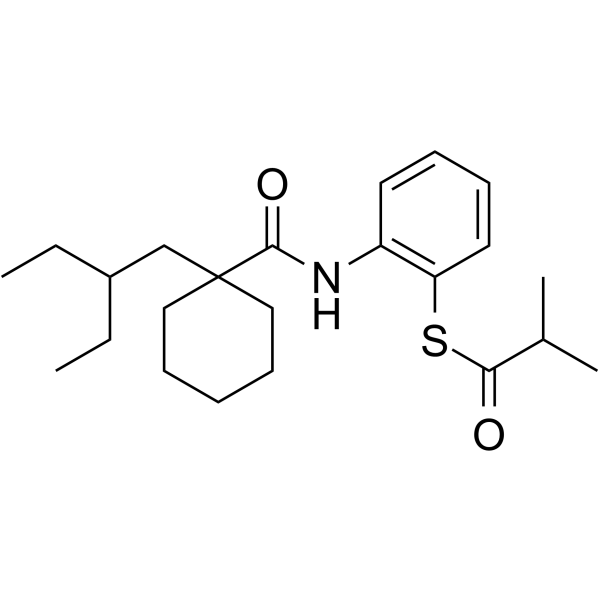
    Dalcetrapib
    2 Publications Verification

    JTT-705; RO4607381

    CETP Cardiovascular Disease Cancer
    Dalcetrapib (JTT-705) is an orally active cholesteryl ester transfer protein (CETP) inhibitor with IC50s of 204.6 nM and 6 μM against recombinant human (rh) CETP and human plasma CETP, respectively .
    Dalcetrapib
  • HY-12089

    CP-529414

    CETP Endocrinology
    Torcetrapib (CP-529414) is a selective, potent cholesteryl ester transfer protein (CETP) inhibitor. A typical inhibition curve for whole human plasma, having a CETP concentration of 37 nM .
    Torcetrapib
  • HY-50667S

    BMS-562247-01-13C,d3

    Factor Xa Cardiovascular Disease
    Apixaban- 13C,d3 (BMS-562247-01- 13C,d3) is a deuterium and 13C labeled Apixaban (HY-50667). Apixaban is a highly selective, reversible inhibitor of Factor Xa with Ki of 0.08 nM and 0.17 nM in human and rabbit, respectively .
    Apixaban-13C,d3
  • HY-107781

    Phosphodiesterase (PDE) Inflammation/Immunology
    PAT-505 is a potent, selective, noncompetitive and orally available autotaxin inhibitor, with an IC50 of 2 nM in Hep3B cells, 9.7 nM in human blood and 62 nM in mouse plasma.
    PAT-505
  • HY-113058

    Endogenous Metabolite Metabolic Disease
    3-Hydroxyoctanoic acid is a hydroxylated fatty acid that has been found in the LPS of Pseudomonas aeruginosa and in methyl-branched poly(3-hydroxyalkanoate) (PHA) polymers produced by Pseudomonas oleophores. It is an agonist of the orphan receptor GPR109B, increasing intracellular calcium in human neutrophils endogenously expressing GPR109B. 3-Hydroxycaprylic acid prevents lipolysis in human adipocytes and is upregulated in human plasma in response to a ketogenic diet. Plasma levels of 3-hydroxyoctanoic acid were also increased 3.41-fold in human male runners exhausted on a treadmill and in a mouse model of autism spectrum disorder (ASD) fed a high-glycemic diet.
    3-Hydroxyoctanoic acid
  • HY-113955

    Microsomal Triglyceride Transfer Protein (MTP) Metabolic Disease
    CP-346086 is a potent and orally active microsomal triglyceride transfer protein (MTP) inhibitor, with an IC50 of 2.0 nM for human and rodent MTP. CP-346086 can lower plasma cholesterol and triglycerides in vivo .
    CP-346086
  • HY-164891

    Molecular Glues Others
    EM12-FS is a cereblon (CRBN) ligand that binds CRBN at His353 and a molecular glue degrader of NTAQ1. EM12-FS has a human plasma half-life of 196 min .
    EM12-FS
  • HY-N4202

    Environmental Pollutants Insecticide Apoptosis p38 MAPK Neurological Disease Inflammation/Immunology Cancer
    Dihydrorotenone is an insecticide and irreversible inhibitor of mitochondrial complex I. Dihydrorotenone may induce Parkinson's disease. Dihydrorotenone induces apoptosis in human plasma cells by triggering endoplasmic reticulum stress and activating the p38 signaling pathway. The oral LD50 of dihydrorotenone in rats is approximately 2.5 g/kg. Dihydrorotenone exhibits insecticide activity and cytotoxicity to plasma cells. Dihydrorotenone can be used to establish animal models of Parkinson's disease, safety assessment of natural pesticides, and potential cancer chemoprevention studies .
    Dihydrorotenone
  • HY-117290

    Factor Xa Cardiovascular Disease
    BMS-962212 is a factor XIa (FXIa) inhibitor with a Ki of 0.7 nM against human FXIa and a Ki of 3 nM against rabbit FXIa. BMS-962212 blocks thrombosis while preserving normal hemostatic function. BMS-962212 is applicable to thrombosis-related research .
    BMS-962212
  • HY-W013378

    Drug Metabolite Neurological Disease
    Carbamazepine 10,11-epoxide is a metabolite of Carbamazepine (HY-B0246). Carbamazepine 10,11-epoxide can be used to monitor for Carbamazepine .
    Carbamazepine 10,11-epoxide
  • HY-P990095

    REGN5459

    CD3 TNF Receptor Cancer
    Vonsetamig (REGN5459) is a human bispecific antibody targeting BCMA and CD3. Vonsetamig triggers T-cell activation, induces plasma cell depletion, and triggers low-level cytokine release. Vonsetamig can be used for the research of relapsed/refractory multiple myeloma .
    Vonsetamig
  • HY-P99110

    SHP643; DX-2930; X124-G01

    Kallikrein Inflammation/Immunology
    Lanadelumab (SHP643) is a human IgG1 monoclonal antibody against plasma kallikrein (pKal) with an Ki value of 0.12 nM. Lanadelumab inhibits both free and HMWK (high molecular weight kininogen)-bound pKal. Lanadelumab has the potential for the research of hereditary angioedema .
    Lanadelumab
  • HY-100064

    EGFR Cancer
    O-Desmethyl gefitinib is an active metabolite of Gefitinib in human plasma. The formation of O-desmethyl gefitinib is dependent on CYP2D6 activity. O-desmethyl gefitinib inhibits EGFR with an IC50 of 36 nM in subcellular assays .
    O-Desmethyl gefitinib
  • HY-153115

    Kallikrein Cardiovascular Disease Inflammation/Immunology
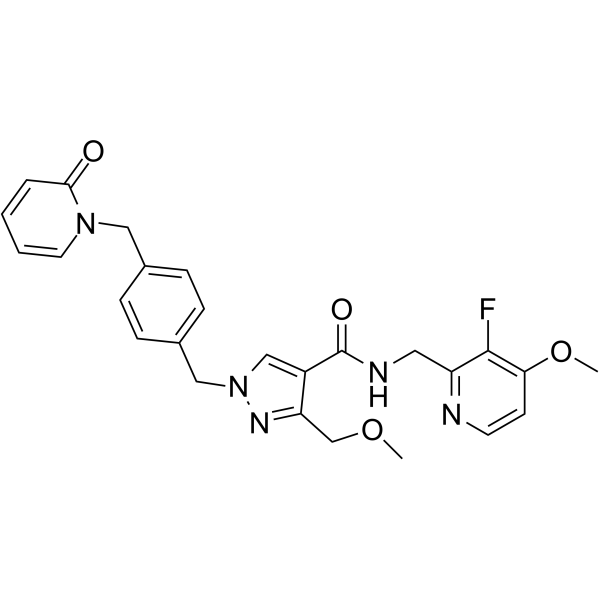
    Plasma kallikrein-IN-4 (Example 153) is a plasma kallikrein inhibitor with an IC50 of 0.016 μM against human plasma kallikrein .
    Plasma kallikrein-IN-4
  • HY-P1255

    Kinetensin (human)

    Neurotensin Receptor Endogenous Metabolite Neurological Disease Endocrinology
    Kinetensin is a neurotensin-like peptide isolated from pepsin-treated human plasma.
    Kinetensin
  • HY-123377A

    SAL067

    Dipeptidyl Peptidase Metabolic Disease
    Fotagliptin benzoate is a Dipeptidyl Peptidase IV (DPP-4) inhibitor (IC50=2.27 nM). Fotagliptin benzoate displays great security in rat and dog. Fotagliptin benzoate can be used for Type 2 diabetes mellitus research .
    Fotagliptin benzoate
  • HY-G0003

    P88; Hydroxy Iloperidone

    Drug Metabolite Neurological Disease
    Iloperidone metabolite Hydroxy Iloperidone (P88; Hydroxy Iloperidone) is an active reduced metabolite of Iloperidone (HY-17410). Iloperidone metabolite Hydroxy Iloperidone can be used for the research of schizophrenia .
    Iloperidone metabolite Hydroxy Iloperidone
  • HY-154921

    LacCer (bovine buttermilk)

    Reactive Oxygen Species (ROS) Inflammation/Immunology
    Lactosylceramide (bovine buttermilk) (LacCer (bovine buttermilk)) is a sphingolipid that highly expressed on the plasma membranes of human phagocytes. Lactosylceramide mediates phagocytosis, chemotaxis, and superoxide generation .
    Lactosylceramide (bovine buttermilk)
  • HY-50667R

    BMS-562247-01 (Standard)

    Reference Standards Factor Xa Cardiovascular Disease Cancer
    Apixaban (Standard) is the analytical standard of Apixaban. This product is intended for research and analytical applications. Apixaban (BMS-562247-01) is a highly selective, reversible and orally active inhibitor of Factor Xa with Ki of 0.08 nM and 0.17 nM in human and rabbit, respectively . Apixaban is in development for the prevention and treatment of various thromboembolic diseases .
    Apixaban (Standard)
  • HY-19365
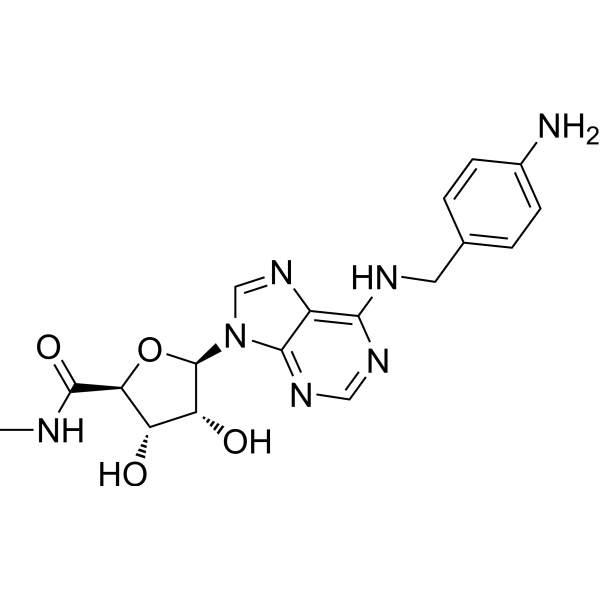
    AB-MECA
    1 Publications Verification

    Adenosine Receptor Neurological Disease
    AB-MECA is a high affinity A3 adenosine receptor agonist with a binding Ki of 430.5 nM for human A3 receptors in CHO cells. AB-MECA can enhance plasma histamine level .
    AB-MECA
  • HY-P4522

    Biochemical Assay Reagents Others
    Bz-Ala-Arg is a dipeptide. Bz-Ala-Arg is also a substrate of human pancreatic carboxypeptidase B and plasma carboxypeptidase N .
    Bz-Ala-Arg
  • HY-P4522A

    Biochemical Assay Reagents Others
    Bz-Ala-Arg TFA is a dipeptide. Bz-Ala-Arg TFA is also a substrate of human pancreatic carboxypeptidase B and plasma carboxypeptidase N .
    Bz-Ala-Arg TFA
  • HY-P5074

    GCGR Metabolic Disease
    GRPP (human) is a 30 amino acid Gcg-derived peptide. GRPP (human) causes slight increases in plasma insulin and decreases in plasma glucagon. GRPP (human) does not affect insulin secretion in rat islets .
    GRPP (human)
  • HY-113406

    DL-Hexanoylcarnitine

    Others Inflammation/Immunology
    (±)-Hexanoylcarnitine exists in human urine and plasma. (±)-Hexanoylcarnitine can be used as a plasma detection indicator in patients with methylmalonic aciduria, propionic acidemia, and medium-chain acyl-CoA dehydrogenase deficiency .
    (±)-Hexanoylcarnitine
  • HY-143255

    Phosphodiesterase (PDE) Cancer
    Enpp-1-IN-11 (compound 23) is a potent Ecto-nucleotide pyrophosphatase/phosphodiesterases 1 (ENPP1) inhibitor with an Ki value of 45 nM. Enpp-1-IN-11 exhibits low clearance in human and mouse liver microsomes, good plasma stability in human and mouse plasma. Enpp-1-IN-11 can be used for researching anticancer .
    Enpp-1-IN-11
  • HY-123377

    SAL067 free base

    Dipeptidyl Peptidase Metabolic Disease
    Fotagliptin is a Dipeptidyl Peptidase IV (DPP-4) inhibitor (IC50=2.27 nM). Fotagliptin displays great security in rat and dog. Fotagliptin can be used for Type 2 diabetes mellitus research .
    Fotagliptin
  • HY-107494

    4-Keto 13-cis-retinoic acid; 4-Oxoisotretinoin; Ro 22-6595

    Endogenous Metabolite Others
    13-cis-4-Oxoretinoic acid (4-Keto 13-cis-retinoic acid) is a metabolite of vitamin A in human plasma .
    13-cis-4-Oxoretinoic acid
  • HY-148177

    ZY-19489; MMV 253; AZ13721412

    Parasite Infection
    Sutidiazine (ZY-19489) is an orally active and antimalarial agent. Sutidiazine inhibits parasitemia-induced infection. Sutidiazine shows short half-lives (approximately 7 h) and an exposure effect .
    Sutidiazine
  • HY-P1245

    Neuropeptide NPFF (human)

    CRFR Others
    Neuropeptide SF human augments paraventricular corticotrophin-releasing hormone (CRH) release and increases adrenocorticotropic hormone (ACTH) and corticosterone levels in the plasma. Neuropeptide SF human play a physiologic role in the regulation of such circadian functions as the activity of motor centers and the HPA axis, through the release of CRH .
    Neuropeptide SF (human)
  • HY-113955A

    Microsomal Triglyceride Transfer Protein (MTP) Metabolic Disease
    CP-346086 dihydrate is a potent and orally active microsomal triglyceride transfer protein (MTP) inhibitor, with an IC50 of 2.0 nM for human and rodent MTP. CP-346086 dihydrate can lower plasma cholesterol and triglycerides in vivo .
    CP-346086 dihydrate
  • HY-151111

    Renin Cardiovascular Disease
    SPH3127 (DRI 18) is a novel, highly potent, and orally active direct renin inhibitor (recombinant human-renin IC50=0.4 nM, human plasma renin activity IC50=0.45 nM). SPH3127 shows antihypertensive effect and can be used in essential hypertension research .
    SPH3127
  • HY-P991629

    Ser/Thr Protease Inflammation/Immunology
    C1 Esterase Inhibitor (Human) is a C1 Esterase inhibitor derived from human plasma. C1 Esterase Inhibitor (Human), a glycoprotein, is a serum protease inhibitor (serpin) that binds covalently and inactivates C1r, C1s, and mannan-binding protein-associated proteases (MASPs). C1 Esterase Inhibitor (Human) has anti-inflammatory effects. C1 Esterase Inhibitor (Human) can be used to prevent angioedema attacks associated with hereditary angioedema .
    C1 Esterase Inhibitor (Human)

Inquiry Online

Your information is safe with us. * Required Fields.

Salutation


Country or Region *

Applicant Name *


Organization Name *

Department *


Email Address *


Product Name *

Cat. No.


Requested quantity *

Phone Number *


Remarks

Inquiry Online

Inquiry Information

Product Name:
Cat. No.:
Quantity:
MCE Japan Authorized Agent:

