
1. Search Result
Search Result
Results for "

inflamed

" in MedChemExpress (MCE) Product Catalog:

22

Inhibitors & Agonists

6

Peptides

1

Natural
Products

1

Isotope-Labeled Compounds

1

Click Chemistry

1

Oligonucleotides

Cat. No. Product Name Target Research Areas Chemical Structure
  • HY-107910
    Hyaluronidase, Bovine testes
    Maximum Cited Publications
    16 Publications Verification

    Hyaluronate 4-glycanohydrolase, Bovine testes; Hyaluronoglucosaminidase, Bovine testes

    NF-κB Inflammation/Immunology Cancer
    Hyaluronidase, Bovine testes (Hyaluronate 4-glycanohydrolase; Hyaluronoglucosaminidase) is an endoglycosidase that depolymerizes Hyaluronic acid (HA) (HY-B0633A) by cleavage of glycosidic bonds. Hyaluronidase degrades HA and activates membrane receptors that trigger pathways converging in NF-κB activation. Hyaluronidase is employed in the research of granulomatous foreign body reactions, soft-tissue necrosis caused by vascular compromise and uncomplicated nodules, overcorrection, inflamed nodules or tissue ischemia associated with HA filler injection .
    Hyaluronidase, Bovine testes
  • HY-148074

    RPT193

    CCR Inflammation/Immunology
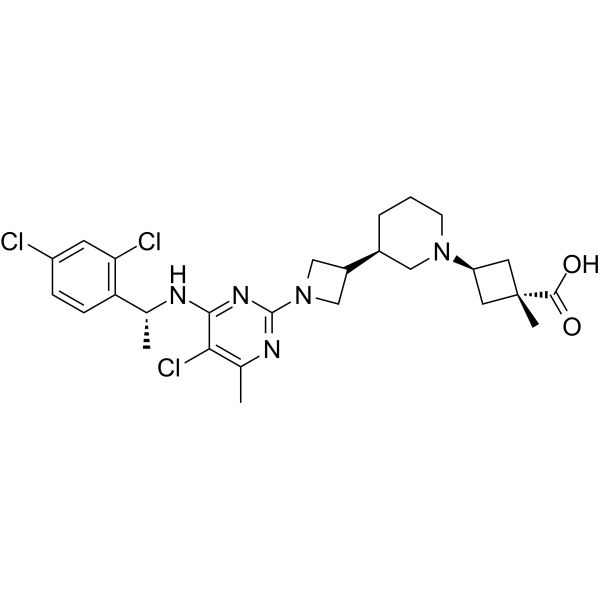
    Zelnecirnon (RPT193) is an orally active inhibitor of CCR4, blocks the recruitment of Th2 inflammatory immune cells into inflamed tissues. Zelnecirnon can be used for allergic inflammation in atopic dermatitis, asthma, and other diseases research .
    Zelnecirnon
  • HY-130605
    BAY-1797
    4 Publications Verification

    P2X Receptor Neurological Disease
    BAY-1797, a chemical probe, is a potent, orally active, and selective P2X4 antagonist, with an IC50 of 211 nM against human P2X4. BAY-1797 displays no or very weak activity on the other P2X ion channels. BAY-1797 shows anti-nociceptive and anti-inflammatory effects .
    BAY-1797
  • HY-124379
    TPCK
    1 Publications Verification

    L-1-Tosylamido-2-phenylethyl chloromethyl ketone; L-TPCK

    Ser/Thr Protease HPV Apoptosis PDK-1 Infection Neurological Disease Inflammation/Immunology Cancer
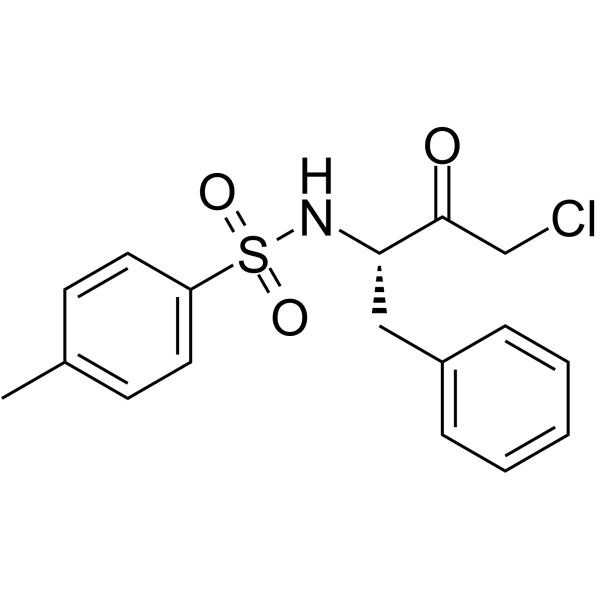
    TPCK (L-1-Tosylamido-2-phenylethyl chloromethyl ketone; L-TPCK) is an effective serine protease inhibitor and also a blocker of the PDK1/Akt pathway. TPCK can modify the E7 protein in actively keratinocyte cells. TPCK can induce cellular apoptosis, suppress tumor growth, reduce hypoxic-ischemic brain injury in rat pups, and affect vascular permeability in inflamed rats .
    TPCK
  • HY-B1128A

    Cephamandole sodium

    Antibiotic Bacterial Infection
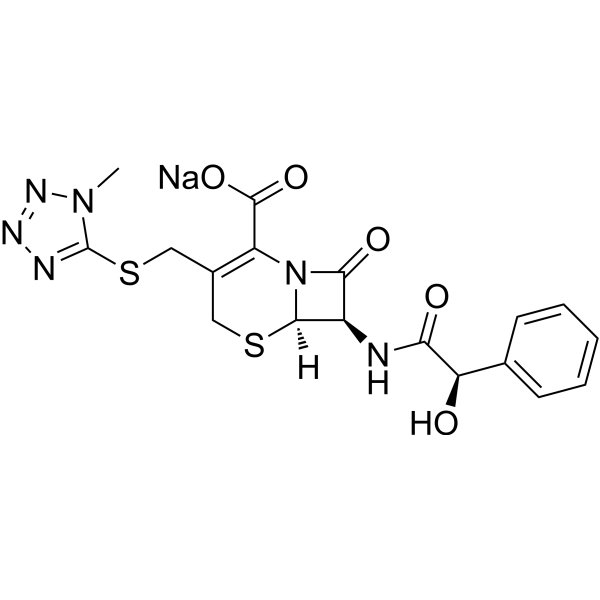
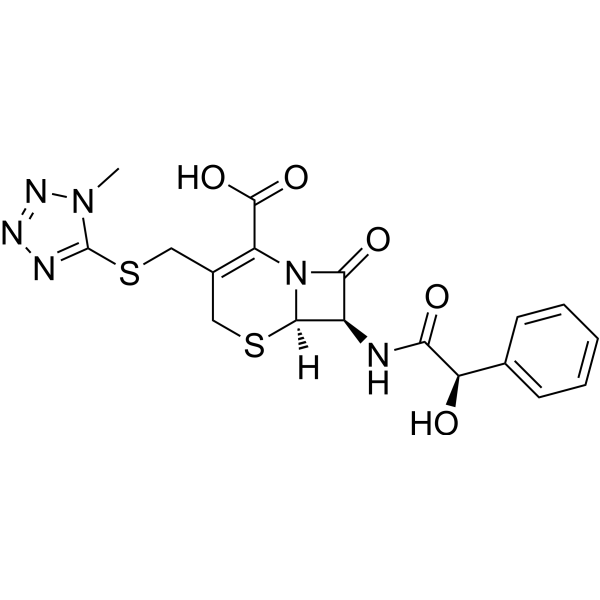
    Cefamandole (Cephamandole) sodium is a semi-synthetic second-generation cephalosporin antibiotic with broad-spectrum antimicrobial activity. Cefamandole sodium is resistant to hydrolysis by β-lactamases produced by some Gram-negative bacteria. Cefamandole sodium kills Gram-positive cocci and various Gram-negative bacilli mainly by inhibiting cell wall synthesis, but it is inactive against Pseudomonas, Proteus vulgaris and Providencia stuartii, and its efficacy is affected by inoculum size. The plasma elimination half-life of Cefamandole sodium in rats is only 0.4 h, it is mainly excreted in urine in biologically active form, and it hardly penetrates the non-inflamed blood-brain barrier. Cefamandole sodium is widely used in studies related to bacterial infections .
    Cefamandole sodium
  • HY-125407

    N-Palmitoyl serinol

    Cannabinoid Receptor Inflammation/Immunology
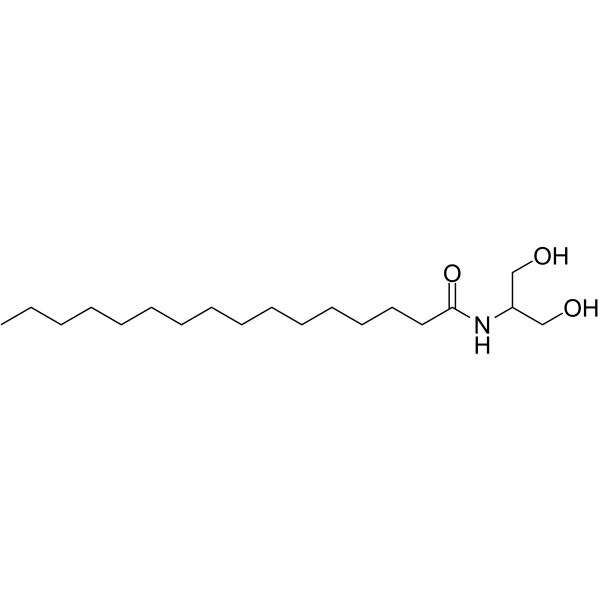
    Palmitoyl serinol (N-Palmitoyl serinol) is an analog of the endocannabinoid N-palmitoyl ethanolamine (PEA). Palmitoyl serinol improves the epidermal permeability barrier in both normal and inflamed skin .
    Palmitoyl serinol
  • HY-N16129

    Nymphaeol A; Propolin C

    COX Reactive Oxygen Species (ROS) Calcium Channel Ferroptosis Mitochondrial Metabolism MMP Inflammation/Immunology Cancer
    Diplacone is an orally active geranyl flavanone. It is isolated from the fruits of Paulownia tomentosa. Diplacone reduces COX-2 levels and increases the pro-MMP2/MMP2 ratio. It induces ferroptosis-mediated cell death. Diplacone enhances mitochondrial Ca 2+ influx and ROS production. It possesses anti-inflammatory and free radical-scavenging activities. Diplacone can be used in research related to ulcerative colitis and non-small cell lung cancer .
    Diplacone
  • HY-177435

    FAP Inflammation/Immunology
    FAPI-800CW is a near-infrared (NIR) fluorescent-labeled fibroblast activation protein (FAP) inhibitor. FAPI-800CW shows specific uptake in inflamed paws in collagen-induced arthritis (CIA) model mice. FAPI-800CW can be used for in vivo molecular imaging of FAP expression in inflammatory diseases such as rheumatoid arthritis (RA) to monitor joint inflammation and disease activity .
    FAPI-800CW
  • HY-P5351A

    Transmembrane Glycoprotein Inflammation/Immunology Cancer
    Hyaluronan-binding peptide, biotin labeled TFA is a biological active peptide. (This peptide is a hyaluronan-binding peptide biotinylated through a C-terminal GGGSK linker. Hyaluronan (HA) is a nonsulfated glycosaminoglycan expressed in the extracellular matrix and on cell surfaces. HA plays a role in fertilization, embryonic development, wound healing, angiogenesis, leukocyte trafficking to inflamed tissues, and cancer metastasis. This peptide has been shown to block HA binding to CD44 receptors and inhibit T cell proliferation.) .
    Hyaluronan-binding peptide, biotin labeled TFA
  • HY-105808

    Drug Derivative Neurological Disease Inflammation/Immunology
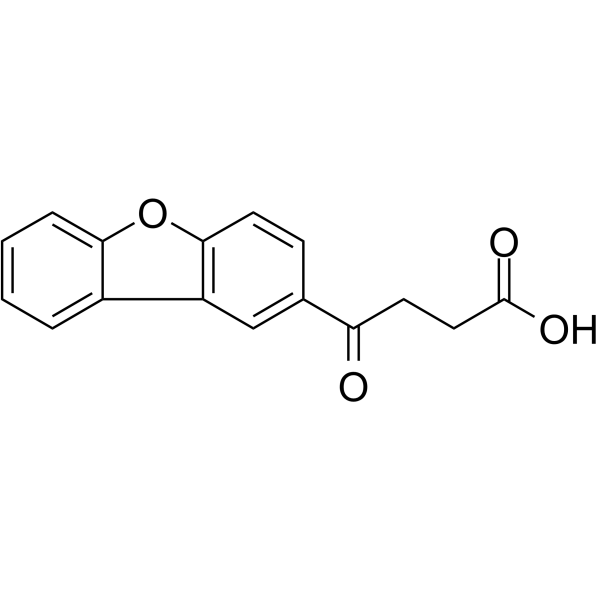
    Furobufen, an anti-inflammatory agent, produces antiarthritic, antipyretic effects. Furobufen has an analgesic effect in inflamed tissue .
    Furobufen
  • HY-B1128

    Cephamandole

    Antibiotic Bacterial Infection
    Cefamandole (Cephamandole) is a semi-synthetic second-generation cephalosporin antibiotic with broad-spectrum antimicrobial activity. Cefamandole is resistant to hydrolysis by β-lactamases produced by some Gram-negative bacteria. Cefamandole kills Gram-positive cocci and various Gram-negative bacilli mainly by inhibiting cell wall synthesis, but it is inactive against Pseudomonas, Proteus vulgaris and Providencia stuartii, and its efficacy is affected by inoculum size. The plasma elimination half-life of Cefamandole in rats is only 0.4 h, it is mainly excreted in urine in biologically active form, and it hardly penetrates the non-inflamed blood-brain barrier. Cefamandole is widely used in studies related to bacterial infections .
    Cefamandole
  • HY-160930

    p38 MAPK Src Syk Inflammation/Immunology
    TOP1288 is a narrow spectrum kinase inhibitor for P38α, Src and Syk kinase, with IC50 of 116nM, 24nM and 659nM, respectively. TOP1288 inhibits inflammatory cytokine release from inflamed biopsies and myofibroblasts .
    TOP1288
  • HY-151559

    Checkpoint Kinase (Chk) STAT CXCR CCR Cancer
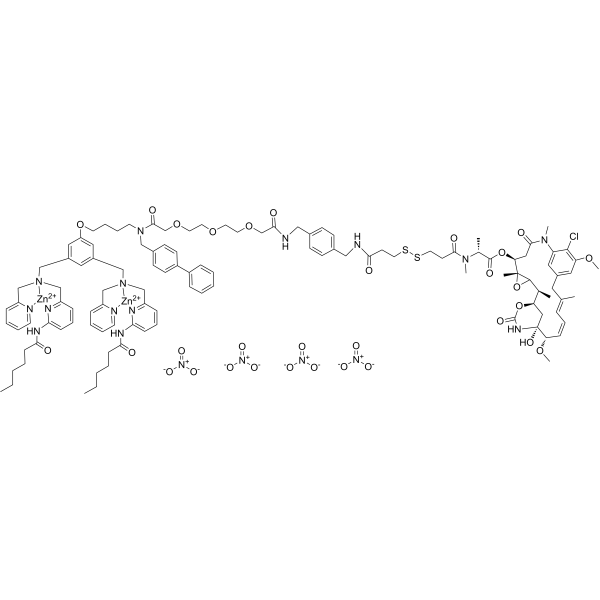
    Zn-DPA-maytansinoid conjugate 1 is a small molecule-based maytansinoid conjugate targeting immune checkpoint. Zn-DPA-maytansinoid conjugate 1 induces lasting regression of tumor growth and rejuvenates tumor microenvironment (TME) to an "inflamed hot tumor" .
    Zn-DPA-maytansinoid conjugate 1
  • HY-133166

    TRP Channel Neurological Disease
    A-889425 is an oral active selective TRPV1 receptor antagonist with the with an IC50 of 335 nM (rat) and 34 nM (human). A-889425 has good penetration into the CNS and reduces mechanical allodynia and spinal neuron responses to mechanical stimulation of Complete Freund's adjuvant (HY-153808)-inflamed rat hind paws .
    A-889425
  • HY-105808R

    Reference Standards Others Neurological Disease Inflammation/Immunology
    Furobufen (Standard) is the analytical standard of Furobufen. This product is intended for research and analytical applications. Furobufen, an anti-inflammatory agent, produces antiarthritic, antipyretic effects. Furobufen has an analgesic effect in inflamed tissue .
    Furobufen (Standard)
  • HY-125407S

    N-Palmitoyl serinol-d5

    Cannabinoid Receptor Inflammation/Immunology
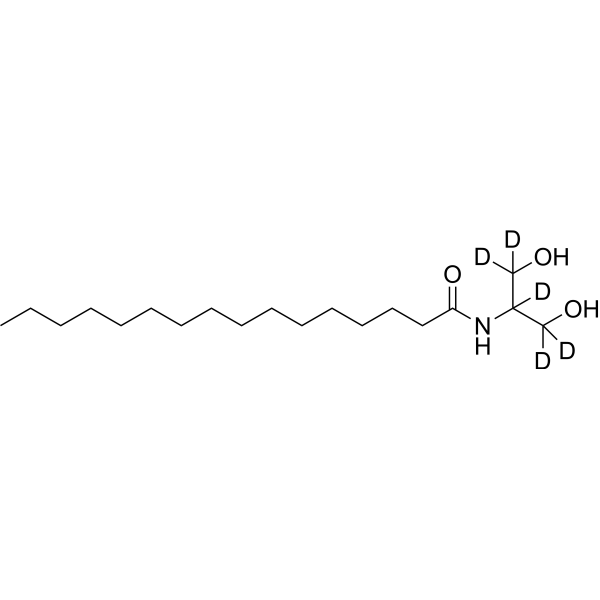
    Palmitoyl serinol-d5 is the deuterium labeled Palmitoyl serinol . Palmitoyl serinol (N-Palmitoyl serinol) is an analog of the endocannabinoid N-palmitoyl ethanolamine (PEA). Palmitoyl serinol improves the epidermal permeability barrier in both normal and inflamed skin .
    Palmitoyl serinol-d5
  • HY-174742

    mRNA Inflammation/Immunology
    Human CCR7 mRNA encodes the human C-C motif chemokine receptor 7 (CCR7) protein, a member of the G protein-coupled receptor family. CCR7 has been shown to control the migration of memory T cells to inflamed tissues, as well as stimulate dendritic cell maturation.
    Human CCR7 mRNA
  • HY-105424

    COX Inflammation/Immunology
    Florifenine is a selective cyclooxygenase (COX) inhibitor with anti-inflammatory activity. Florifenine inhibits TXB2 in human whole blood with an IC50 of 32.5 nM. Florifenine exhibits anti-inflammatory effects in ear oedema. Florifenine inhibits neutrophil migration and reduces PGE2 levles in the inflamed ears. Florifenine inhibits leukocyte migration and PGE2 levels in the air pouch inflammation induced by Zymosan (HY-159069). Florifenine can be used for anti-inflammatory research .
    Florifenine
  • HY-125387

    Src Inflammation/Immunology
    TOP1210 is a narrow-spectrum tyrosine kinase inhibitor with potent inhibitory activity against P38α, Src, and Syk kinases. TOP1210 effectively reduced proinflammatory cytokines released by peripheral blood monocytes, primary macrophages, HT29 cells, inflammatory cells in ulcerative colitis (UC) biopsies, and myofibroblasts isolated from inflamed colonic UC mucosa. TOP1210 showed significant anti-inflammatory effects in cell experiments and UC biopsies, superior to some selective kinase inhibitors. The multi-kinase inhibition of TOP1210 provides the possibility of obtaining a wider range of therapeutic effects, especially in the regulation of autoimmune responses .
    TOP1210
  • HY-B1128B

    Cephamandole lithium

    Antibiotic Bacterial Infection
    Cefamandole (Cephamandole) lithium is a semi-synthetic second-generation cephalosporin antibiotic with broad-spectrum antimicrobial activity. Cefamandole lithium is resistant to hydrolysis by β-lactamases produced by some Gram-negative bacteria. Cefamandole lithium kills Gram-positive cocci and various Gram-negative bacilli mainly by inhibiting cell wall synthesis, but it is inactive against Pseudomonas, Proteus vulgaris and Providencia stuartii, and its efficacy is affected by inoculum size. The plasma elimination half-life of Cefamandole lithium in rats is only 0.4 h, it is mainly excreted in urine in biologically active form, and it hardly penetrates the non-inflamed blood-brain barrier. Cefamandole lithium is widely used in studies related to bacterial infections .
    Cefamandole lithium
  • HY-B1128AR

    Cephamandole sodium (Standard)

    Reference Standards Antibiotic Bacterial Infection
    Cefamandole (sodium) (Standard) is the analytical standard of Cefamandole (sodium). This product is intended for research and analytical applications. Cefamandole (Cephamandole) sodium is a semi-synthetic second-generation cephalosporin antibiotic with broad-spectrum antimicrobial activity. Cefamandole sodium is resistant to hydrolysis by β-lactamases produced by some Gram-negative bacteria. Cefamandole sodium kills Gram-positive cocci and various Gram-negative bacilli mainly by inhibiting cell wall synthesis, but it is inactive against Pseudomonas, Proteus vulgaris and Providencia stuartii, and its efficacy is affected by inoculum size. The plasma elimination half-life of Cefamandole sodium in rats is only 0.4 h, it is mainly excreted in urine in biologically active form, and it hardly penetrates the non-inflamed blood-brain barrier. Cefamandole sodium is widely used in studies related to bacterial infections .
    Cefamandole sodium (Standard)
  • HY-P11798

    P-selectin Cardiovascular Disease Inflammation/Immunology Cancer
    P‑Selectin binding peptide is a short peptide that specifically targets P‑selectin. P‑Selectin binding peptide binds with high affinity to P‑selectin, which is highly expressed on activated platelets, inflamed endothelium, and in the tumor microenvironment. P‑Selectin binding peptide is used for precise targeted delivery and intervention in inflammation, thrombosis, and tumors .
    P-Selectin binding peptide

Inquiry Online

Your information is safe with us. * Required Fields.

Salutation


Country or Region *

Applicant Name *


Organization Name *

Department *


Email Address *


Product Name *

Cat. No.


Requested quantity *

Phone Number *


Remarks

Inquiry Online

Inquiry Information

Product Name:
Cat. No.:
Quantity:
MCE Japan Authorized Agent:

