
20 Results for "

inositol phosphates

" in MedChemExpress (MCE) Product Catalog:
Products (20)

20 Results for "inositol phosphates" in MCE Product Catalog:

  • Categories Recommended:
    More
6
6 Publications Verification
Cat. No.: HY-103320A
CAS No.: 2387505-78-2
Purity:  99.81%
Target:  

CaSR

Research Areas:  

Metabolic Disease

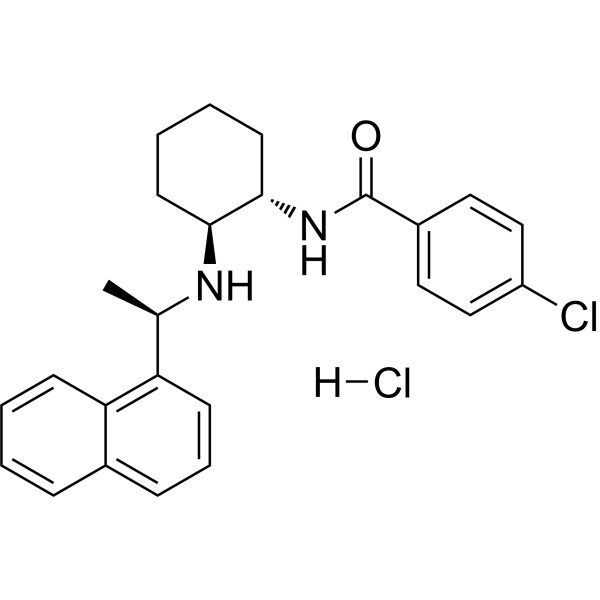
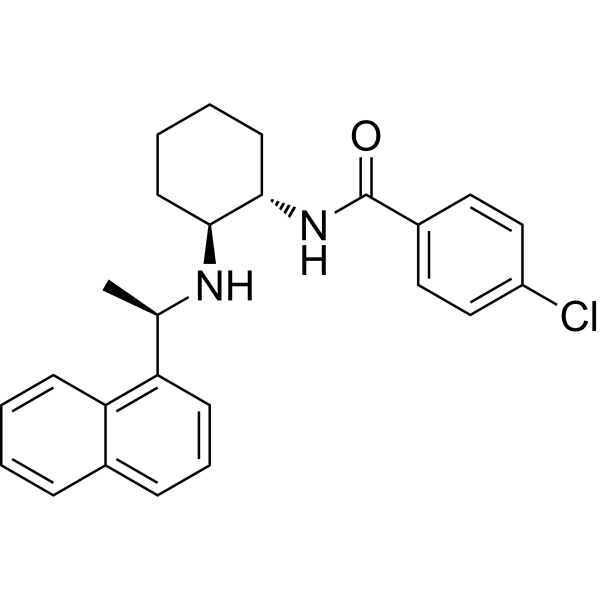
Calhex 231 hydrochloride is a potent negative allosteric modulator that blocks (IC50 = 0.39 μM) increases in [ 3H]inositol phosphates elicited by activating the human wild-type CaSR transiently Ca 2+-sensing receptor. Calhex 231 hydrochloride can be used in the study of traumatic hemorrhagic shock (THS) and diabetic cardiomyopathy (DCM) .
loading...
    loading...
1
1 Cited Publications
Cat. No.: HY-N2581
CAS No.: 14306-25-3
Synonyms: myo-inositol, hexakisdihydrogen phosphate sodium salt; inositol hexaphosphate sodium salt
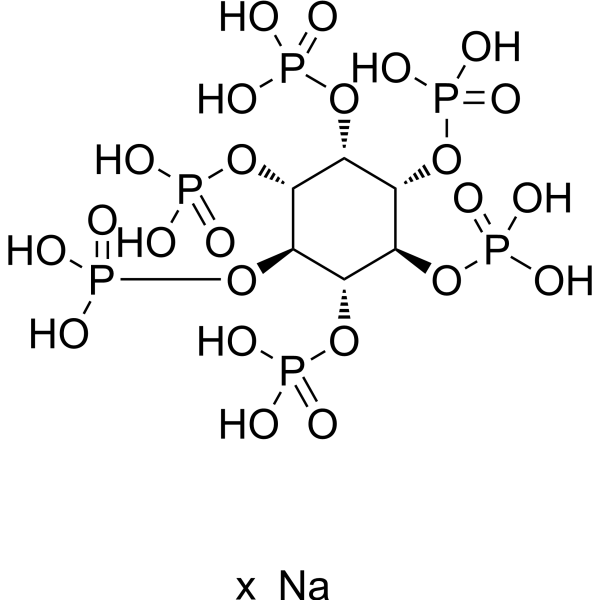
Phytic acid (myo-Inositol; hexakis dihydrogen phosphate; Inositol hexaphosphate) sodium salt is an orally active compound. Phytic acid sodium salt can be derived from the seeds of legumes. Phytic acid sodium salt is a [PO4] 3- storage depot and precursor for other inositol phosphates and pyrophosphates. Phytic acid sodium salt attenuates Aβ oligomers and upregulates autophagy protein. Phytic acid sodium salt can be used in cardiovascular disease, metabolic disease, nervous system disease and cancer research .
loading...
    loading...
1
1 Cited Publications
Cat. No.: HY-N0814
CAS No.: 83-86-3
Synonyms: inositol hexaphosphate; SNF472 free acid
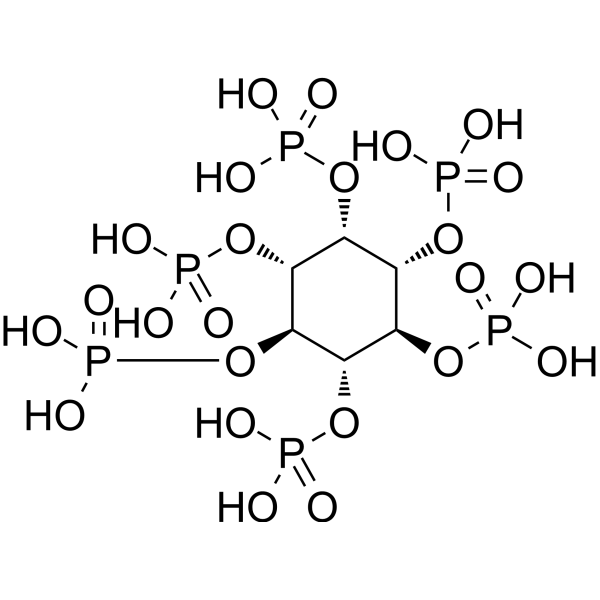
Phytic acid (myo-Inositol; hexakis dihydrogen phosphate; Inositol hexaphosphate) is an orally active compound. Phytic acid can be derived from the seeds of legumes. Phytic acid is a [PO4] 3- storage depot and precursor for other inositol phosphates and pyrophosphates. Phytic acid attenuates Aβ oligomers and upregulates autophagy protein. Phytic acid can be used in cardiovascular disease, metabolic disease, nervous system disease and cancer research .
loading...
    loading...
1
1 Cited Publications
Cat. No.: HY-N2580
CAS No.: 63903-51-5
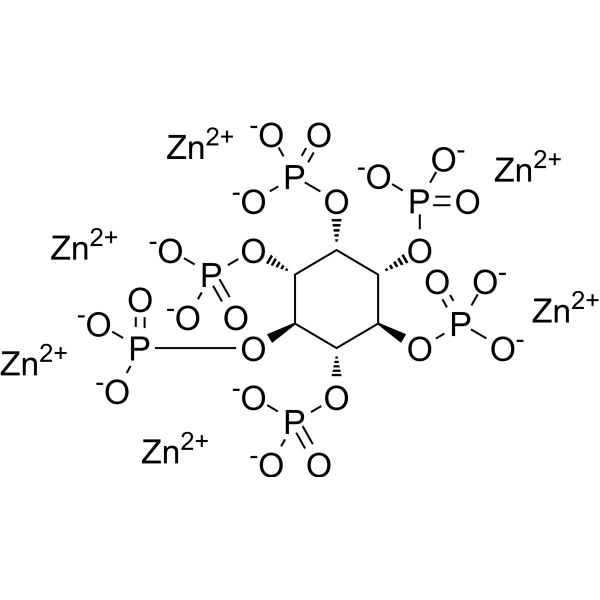
Zinc Phytate (myo-Inositol; hexakis dihydrogen phosphate; Inositol hexaphosphate) is an orally active compound. Zinc Phytate can be derived from the seeds of legumes. Zinc Phytate is a [PO4] 3- storage depot and precursor for other inositol phosphates and pyrophosphates. Zinc Phytate attenuates Aβ oligomers and upregulates autophagy protein. Zinc Phytate can be used in cardiovascular disease, metabolic disease, nervous system disease and cancer research .
loading...
    loading...
1
1 Cited Publications
Cat. No.: HY-W018059
CAS No.: 129832-03-7
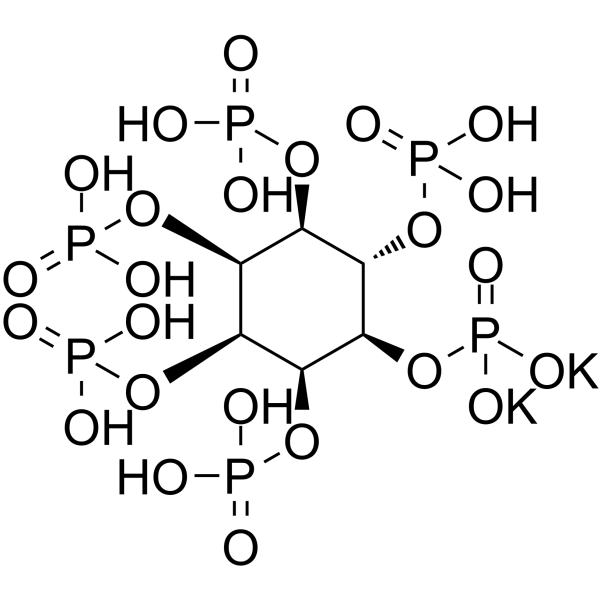
Phytic acid (myo-Inositol) potassium is an orally active compound. Phytic acid potassium can be derived from the seeds of legumes. Phytic acid potassium is a [PO4] 3- storage depot and precursor for other inositol phosphates and pyrophosphates. Phytic acid potassium attenuates Aβ oligomers and upregulates autophagy protein. Phytic acid potassium can be used in cardiovascular disease, metabolic disease, nervous system disease and cancer research .
loading...
    loading...
Cat. No.: HY-P2808
CAS No.: 9001-89-2
Target:  

Phosphatase

Research Areas:  

Inflammation/Immunology

4-Phytase is a type of phytase. Phytase is an enzyme capable of degrading phytic acid into lower inositol phosphates and inositol. Exogenous phytase enhances the utilization of nutrients that are originally bound to phytic acid, thereby reducing the levels of phosphorus, calcium, amino acids, and energy in the diet without compromising animal growth performance, while elevating the apparent ileal digestibility and digestible intake of nutrients to levels comparable to those of nutrient-adequate control groups .
loading...
    loading...
Cat. No.: HY-118010A
CAS No.: 37936-89-3
Purity:  99.77%
Synonyms: d-Norfenfluramine hydrochloride
Target:  

5-HT Receptor

Research Areas:  

Cardiovascular Disease

(+)-Norfenfluramine hydrochloride, a major hepatic metabolite of (+)-fenfluramine, is a selective 5-HT2B receptor agonist (Ki: 11.2 nM). (+)-Norfenfluramine hydrochloride potently stimulates the hydrolysis of inositol phosphates and increases intracellular Ca 2+. (+)-Norfenfluramine hydrochloride can be used for the research of primary pulmonary hypertension and valvular heart disease .
loading...
    loading...
Cat. No.: HY-W131725
CAS No.: 19036-73-8
Synonyms: d-Norfenfluramine
Target:  

5-HT Receptor

Research Areas:  

Cardiovascular Disease

(+)-Norfenfluramine a major hepatic metabolite of (+)-fenfluramine, is a selective 5-HT2B receptor agonist (Ki: 11.2 nM). (+)-Norfenfluramine potently stimulates the hydrolysis of inositol phosphates and increases intracellular Ca 2+. (+)-Norfenfluramine can be used for the research of primary pulmonary hypertension and valvular heart disease .
loading...
    loading...
Cat. No.: HY-120985
CAS No.: 123000-02-2
Target:  

Calcium Channel

Research Areas:  

Neurological Disease

Xestospongins and araguspongins are marine natural products first isolated from Pacific basin sponges, and noted to have vasodilatory properties.1 Inositol phosphates (IP) are important signal transduction messengers acting via IP3 receptors to promote the mobilization of Ca2+ from intracellular stores.2 Araguspongin B antagonizes the calcium-releasing action of inositol 1,4,5-trisphosphate at the receptor level in cerebral microsomes, with an IC50 of 0.6 μM. It is nearly as potent as xestospongin C as an antagonist of the IP3 receptor.
loading...
    loading...
Cat. No.: HY-103320
CAS No.: 652973-93-8
Target:  

CaSR

Research Areas:  

Metabolic Disease

Calhex 231 is a potent negative allosteric modulator that blocks (IC50 = 0.39 μM) increases in [ 3H]inositol phosphates elicited by activating the human wild-type CaSR transiently Ca 2+-sensing receptor. Calhex 231 can be used in the study of traumatic hemorrhagic shock (THS) and diabetic cardiomyopathy (DCM) .
loading...
    loading...
Cat. No.: HY-137608
CAS No.: 221010-51-1
Synonyms: UDP-β-S
Uridine 5'-O-thiodiphosphate (UDP-β-S) is a P2Y6 receptor agonist with an EC50 of 25 nM. Uridine 5'-O-thiodiphosphate resists degradation by extracellular nucleotidases and stimulates the accumulation of inositol phosphates. Uridine 5'-O-thiodiphosphate stimulates contractile responses in endothelium-denuded rat mesenteric arteries. As a mitogen, Uridine 5'-O-thiodiphosphate stimulates DNA synthesis, [ 3H] thymidine incorporation, protein synthesis, [ 3H]leucine incorporation, and increases the number of vascular smooth muscle cells. Uridine 5'-O-thiodiphosphate can be used in the research of cardiovascular diseases such as atherosclerosis .
loading...
    loading...
Cat. No.: HY-137608A
Synonyms: UDP-β-S trisodium
Uridine 5'-O-thiodiphosphate trisodium (UDP-β-S trisodium) is a P2Y6 receptor agonist with an EC50 of 25 nM. Uridine 5'-O-thiodiphosphate trisodium resists degradation by extracellular nucleotidases and stimulates the accumulation of inositol phosphates. Uridine 5'-O-thiodiphosphate trisodium stimulates contractile responses in endothelium-denuded rat mesenteric arteries. As a mitogen, Uridine 5'-O-thiodiphosphate trisodium stimulates DNA synthesis, [ 3H] thymidine incorporation, protein synthesis, [ 3H]leucine incorporation, and increases the number of vascular smooth muscle cells. Uridine 5'-O-thiodiphosphate trisodium can be used in the research of cardiovascular diseases such as atherosclerosis .
loading...
    loading...
Cat. No.: HY-P10270
CAS No.: 147428-10-2
Target:  

PDGFR Mitosis

Research Areas:  

Others

PDGFR Y1021 peptide (phosphorylation) is the phosphorylated fragment of platelet-derived growth factor receptor (PDGFR). PDGFR Y1021 peptide (phosphorylation) supports association of PLCγ to PDGFR through PLCγSH2 domains, and thus promotes the production of inositol phosphates and mitogenic response .
loading...
    loading...
Cat. No.: HY-146873S
CAS No.: 2342575-29-3
D-myo-Inositol, 1-[(2R)-3-[(1-oxoheptadecyl)oxy]-2-[[(9Z)-1-oxo-9-tetradecen-1-yl]oxy]propyl hydrogen phosphate]-d5, ammonium salt (1:1) is an isotopically labeled compound.
loading...
    loading...
Cat. No.: HY-146874S
CAS No.: 2342575-32-8
D-myo-Inositol, 1-[(2R)-3-[(1-oxoheptadecyl)oxy]-2-[[(9Z)-1-oxo-9-hexadecen-1-yl]oxy]propyl hydrogen phosphate]-d5, ammonium salt (1:1) is an isotopically labeled compound.
loading...
    loading...
Cat. No.: HY-181448
Synonyms: inositol hexaphosphate hexalithium; SNF472 hexalithium
Phytic acid (Inositol hexaphosphate hexalithium) hexalithium is an orally active compound. Phytic acid hexalithium can be derived from the seeds of legumes. Phytic acid is a [PO4] 3- storage depot and precursor for other inositol phosphates and pyrophosphates. Phytic acid hexalithium attenuates Aβ oligomers and upregulates Autophagy protein. Phytic acid hexalithium can be used in cardiovascular disease, metabolic disease, nervous system disease and cancer research .
loading...
    loading...
Cat. No.: HY-182654B
MT Medium (With Sucrose) is mainly composed of potassium salts, calcium chloride, magnesium sulfate, and phosphates. The potassium salt concentration is 1650 mg/L, the magnesium sulfate concentration is 370 mg/L, and the inositol concentration is 100 mg/L. MT MT Medium (With Sucrose) has a high vitamin content, as well as high nitrate and thiamine content, and is a sterile solution.
loading...
    loading...
Cat. No.: HY-182654A
MT Medium (With Sucrose, Agar) is mainly composed of potassium salts, calcium chloride, magnesium sulfate, and phosphates. The potassium salt concentration is 1650 mg/L, the magnesium sulfate concentration is 370 mg/L, and the inositol concentration is 100 mg/L. MT Medium (With Sucrose, Agar) has a high vitamin content, as well as high nitrate and thiamine content, and is a sterile solution.
loading...
    loading...
Cat. No.: HY-182654
MT Medium (Agar-Free, Sucrose-Free) is mainly composed of potassium salts, calcium chloride, magnesium sulfate, and phosphates. The potassium salt concentration is 1650 mg/L, the magnesium sulfate concentration is 370 mg/L, and the inositol concentration is 100 mg/L. MT Medium (Agar-Free, Sucrose-Free) has a high vitamin content, as well as high nitrate and thiamine content, and is a sterile solution.
loading...
    loading...
Cat. No.: HY-103320AR
CAS No.: 2387505-78-2
Research Areas:  

Metabolic Disease

Calhex 231 hydrochloride (Standard) is the analytical standard of Calhex 231 hydrochloride (HY-103320A). This product is intended for research and analytical applications. Calhex 231 hydrochloride is a potent negative allosteric modulator that blocks (IC50 = 0.39 μM) increases in [3H]inositol phosphates elicited by activating the human wild-type CaSR transiently Ca2+-sensing receptor. Calhex 231 hydrochloride can be used in the study of traumatic hemorrhagic shock (THS) and diabetic cardiomyopathy (DCM) .
loading...
    loading...
  • 1

