26 Results for "

issues

" in MedChemExpress (MCE) Product Catalog:
Products (26)

26 Results for "issues" in MCE Product Catalog:

30
30 Cited Publications
Cat. No.: HY-13771
CAS No.: 128-13-2
Purity:  99.94%
Synonyms: Ursodeoxycholate; Ursodiol; UDCA
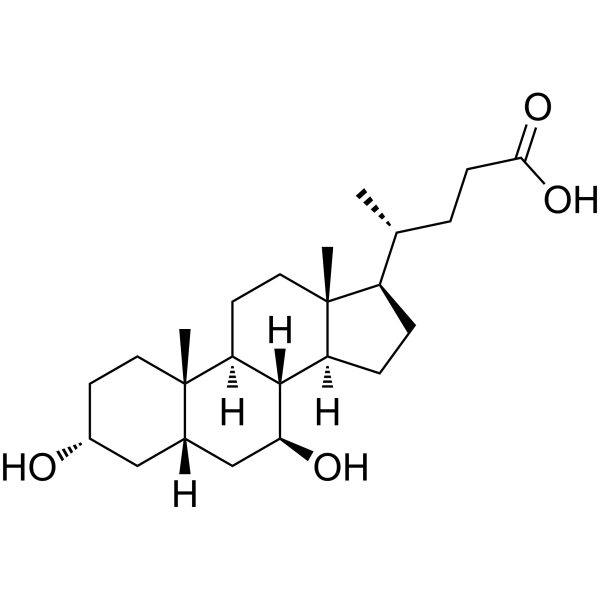
Ursodeoxycholic acid (Ursodeoxycholate) is a secondary bile acid issued from the transformation of (cheno)deoxycholic acid by intestinal bacteria, acting as a key regulator of the intestinal barrier integrity and essential for lipid metabolism. Ursodeoxycholic acid acts as signaling molecule, exerting its effects by interacting with bile acid activated receptors, including G-protein coupled bile acid receptor 5 (TGR5, GPCR19) and the farnesoid X receptor (FXR). Ursodeoxycholic acid can be used for the research of a variety of hepatic and gastrointestinal diseases. Ursodeoxycholic acid also reduces ACE2 expression and is beneficial for reducing SARS-CoV-2 infection. Orally active .
loading...
    loading...
30
30 Cited Publications
Cat. No.: HY-13771A
CAS No.: 2898-95-5
Purity:  99.06%
Synonyms: Ursodeoxycholate sodium; Ursodiol sodium; UCDA sodium
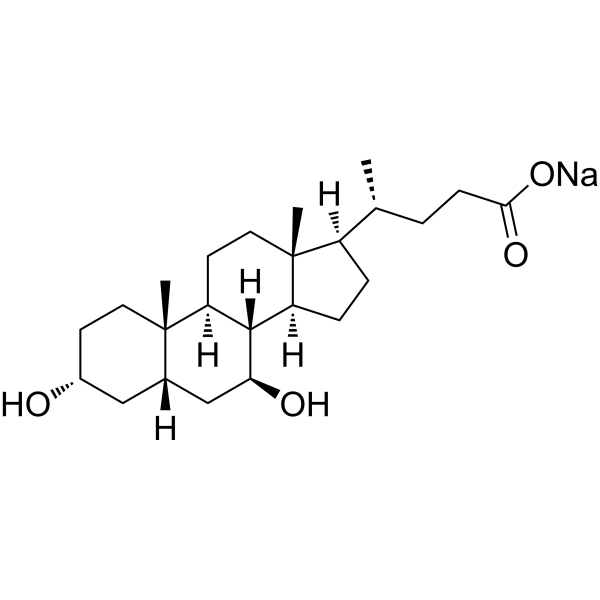
Ursodeoxycholic acid (Ursodeoxycholate) sodium is a secondary bile acid issued from the transformation of (cheno)deoxycholic acid by intestinal bacteria, acting as a key regulator of the intestinal barrier integrity and essential for lipid metabolism. Ursodeoxycholic acid sodium acts as signaling molecule, exerting its effects by interacting with bile acid activated receptors, including G-protein coupled bile acid receptor 5 (TGR5, GPCR19) and the farnesoid X receptor (FXR). Ursodeoxycholic acid sodium can be used for the research of a variety of hepatic and gastrointestinal diseases. Orally active .
loading...
    loading...
Cat. No.: HY-113478S
CAS No.: 347841-46-7
Purity:  99.52%
Synonyms: Ursodeoxycholate-d4; Ursodiol-d4; UDCA-d4
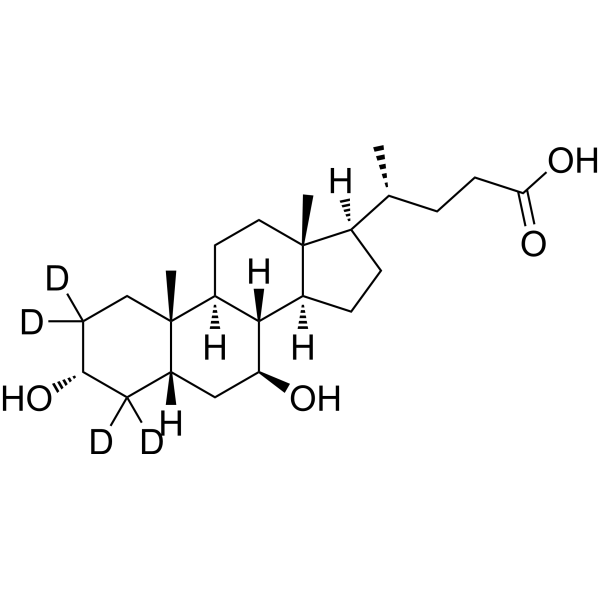
Ursodeoxycholic acid-2,2,4,4-d4 is the deuterium labeled Ursodeoxycholic acid (HY-13771). Ursodeoxycholic acid is a secondary bile acid issued from the transformation of (cheno)deoxycholic acid by intestinal bacteria, acting as a key regulator of the intestinal barrier integrity and essential for lipid metabolism. Ursodeoxycholic acid acts as signaling molecule, exerting its effects by interacting with bile acid activated receptors, including G-protein coupled bile acid receptor 5 (TGR5, GPCR19) and the farnesoid X receptor (FXR). Ursodeoxycholic acid can be used for the research of a variety of hepatic and gastrointestinal diseases. Ursodeoxycholic acid also reduces ACE2 expression and is beneficial for reducing SARS-CoV-2 infection .
loading...
    loading...
Cat. No.: HY-B0326
CAS No.: 26750-81-2
Target:  

Drug Derivative

Research Areas:  

Endocrinology

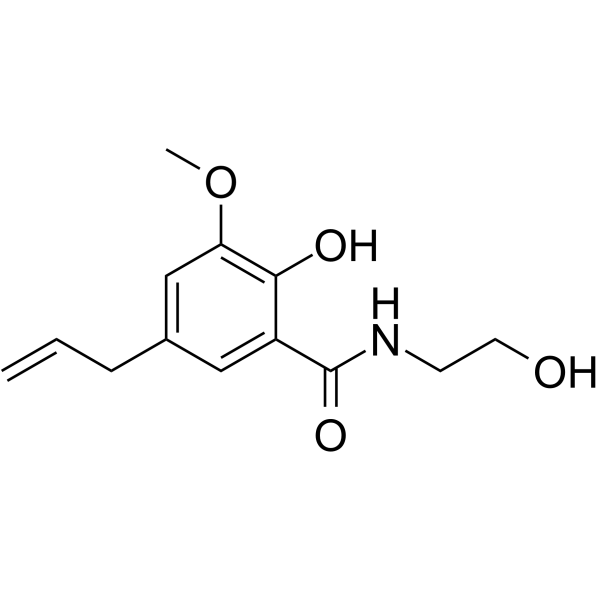
Alibendol can be taken orally. It has anti-spasmodic properties and promotes bile secretion, making it useful for research on digestive system issues like indigestion, nausea, vomiting, and constipation .
loading...
    loading...
Cat. No.: HY-E70574
Research Areas:  

Others

Trypsin/Lys-C complex protease (MS grade) combines Trypsin and Lys-C, two recombinant proteases, to achieve efficient peptide bond hydrolysis. Trypsin specifically cleaves the C-terminal peptide bonds of arginine (R) and lysine (K), while Lys-C specifically cleaves the C-terminal peptide bonds of lysine (K). This combination overcomes issues such as the slower digestion rate of lysine and arginine by rTrypsin, PTM changes on lysine, or hydrophobic C-termini (such as proline) that can lead to missed cleavage. Trypsin/Lys-C complex protease (MS grade) can be used to process complex protein samples that are difficult to enzymatically digest. Trypsin/Lys-C complex protease (MS grade) can be used for protein characterization, single-cell proteomics and large cohort proteomics studies.
loading...
    loading...
Cat. No.: HY-134259
CAS No.: 2250156-71-7
Purity:  98.97%
Target:  

HOXA

Research Areas:  

Cancer

MEISi-2 is a selective inhibitor of MEIS, a key regulator of hematopoietic stem cell (HSC) self-renewal. MEISi-2 is developed for the research of cardiac injuries, hematopoiesis issues, bone marrow transplantations, and cancer .
loading...
    loading...
Cat. No.: HY-13771R
CAS No.: 128-13-2
Synonyms: Ursodeoxycholate (Standard); Ursodiol (Standard); UDCA (Standard)
Ursodeoxycholic acid (Standard) is the analytical standard of Ursodeoxycholic acid. This product is intended for research and analytical applications. Ursodeoxycholic acid (Ursodeoxycholate) is a secondary bile acid issued from the transformation of (cheno)deoxycholic acid by intestinal bacteria, acting as a key regulator of the intestinal barrier integrity and essential for lipid metabolism. Ursodeoxycholic acid acts as signaling molecule, exerting its effects by interacting with bile acid activated receptors, including G-protein coupled bile acid receptor 5 (TGR5, GPCR19) and the farnesoid X receptor (FXR). Ursodeoxycholic acid can be used for the research of a variety of hepatic and gastrointestinal diseases. Ursodeoxycholic acid also reduces ACE2 expression and is beneficial for reducing SARS-CoV-2 infection. Orally active .
loading...
    loading...
Cat. No.: HY-148542
CAS No.: 245660-13-3
Purity:  98.0%
Synonyms: SD-142
Target:  

Endogenous Metabolite

Research Areas:  

Cardiovascular Disease Cancer

EpoY (SD-142) acts as an irreversible inhibitor of the brain's primary tubulin tyrosine carboxypeptidase (TCP), a complex formed by vasohibin-1 (VASH1) and the small vasohibin binding protein (SVBP). By inhibiting TCP with an IC50 value of approximately 500 nM, EpoY effectively decreases levels of detyrosinated alpha-tubulin, which is crucial for microtubule dynamics and neuronal differentiation. This inhibition leads to significant differentiation defects and has been linked to underlying issues associated with cancer and cardiomyopathies.
loading...
    loading...
Cat. No.: HY-13771S1
CAS No.: 63296-46-8
Synonyms: Ursodeoxycholate-13C; Ursodiol-13C; UDCA-13C
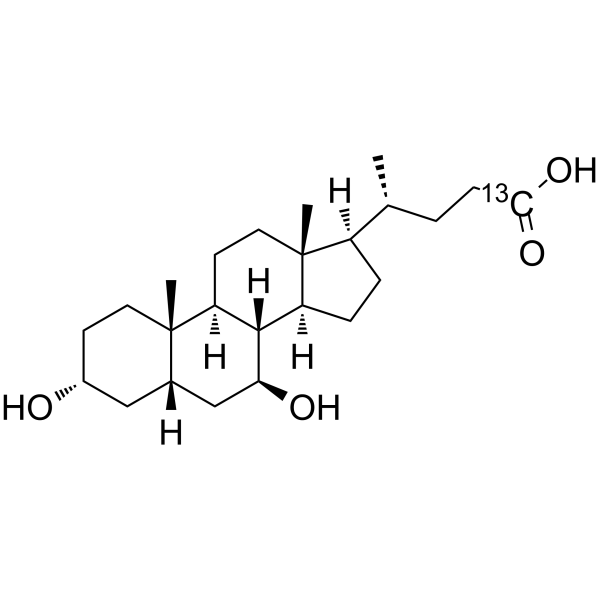
Ursodeoxycholic acid- 13C is the 13C labeled Ursodeoxycholic acid. Ursodeoxycholic acid (Ursodeoxycholate) is a secondary bile acid issued from the transformation of (cheno)deoxycholic acid by intestinal bacteria, acting as a key regulator of the intestinal barrier integrity and essential for lipid metabolism. Ursodeoxycholic acid acts as signaling molecule, exerting its effects by interacting with bile acid activated receptors, including G-protein coupled bile acid receptor 5 (TGR5, GPCR19) and the farnesoid X receptor (FXR). Ursodeoxycholic acid can be used for the research of a variety of hepatic and gastrointestinal diseases. Orally active .
loading...
    loading...
Cat. No.: HY-12629
CAS No.: 1539296-45-1
Synonyms: PF-06297470
Target:  

mGluR

Research Areas:  

Others

PF470 (PF-06297470) is a negative allosteric modulator of metabotropic glutamate receptor 5 (mGluR5) with significant efficacy in Parkinson's disease models, but clinical development was halted due to potential issues found in toxicology studies.
loading...
    loading...
Cat. No.: HY-122787
CAS No.: 6879-02-3
Target:  

Others

Research Areas:  

Others

Tylocrebrine is a compound with anticancer activity. Its clinical research was interrupted due to toxicity issues. By making it into targeted nanoparticles, its inhibitory index can be improved, the killing effect on tumor cells can be enhanced and brain penetration can be reduced.
loading...
    loading...
Cat. No.: HY-123649
CAS No.: 1246470-32-5
Target:  

HCV

Research Areas:  

Others

MK-4882 is an HCV NS5A inhibitor with activity in reducing viral load in a chimpanzee model of HCV infection, but with issues of viral breakthrough, prompting the development of compounds with greater potency against more genotypes and NS5A resistance mutations.
loading...
    loading...
Cat. No.: HY-162968
Target:  

Ras

MRTF-A-in-1 (Compound 14) is MRTF-A inhibitor. MRTF-A-in-1 can inhibit cell proliferation and induce HCC cell aging .
loading...
    loading...
Cat. No.: HY-162969
Target:  

Ras

MRTF-A-in-2 (Compound 16) is MRTF-A inhibitor. MRTF-A-in-1 can inhibit cell proliferation and induce HCC cell aging .
loading...
    loading...
Cat. No.: HY-L030
774 compounds

The composition of endogenous metabolite compounds is affected by the upstream influence of the proteome and genome as well as environmental factors, lifestyle factors, medication, and underlying disease. Therefore, metabolites have been described as proximal reporters of disease because their abundances in biological specimens are often directly related to pathogenic mechanisms. In more recent years, metabolomics approach has been adopted or suggested to be used in various research areas including drug discovery, neurosciences, agriculture, food and nutrition, and environmental sciences.

MCE owns a unique collection of 774 human endogenous metabolites, all of which are derived from human issues. This library is a powerful tool for metabonomics research and metabolism-related drug discovery.

Cat. No.: HY-109194R
CAS No.: 1458063-04-1
Synonyms: REC 0559 (Standard)
Research Areas:  

Neurological Disease

Udonitrectag (Standard) is the analytical standard of Udonitrectag (HY-109194). This product is intended for research and analytical applications. Udonitrectag (REC 0559), a low molecular weight compound that mimics NGF, aims to address the issue of NGF stability .
loading...
    loading...
Cat. No.: HY-E0225
compounds
0.5 mL 96-Well Tube Rack, compliant with the industry-standard SBS (Society for Biomolecular Screening) specifications. This product features a sliding lock mechanism on the lid to prevent tube dislodgement. The side of the rack is equipped with an identifiable barcode for easy compound storage and retrieval. The matching tube (HY-E0224) is made from the same material as this tube, effectively preventing uneven expansion issues during freeze-thaw cycles.
Cat. No.: HY-L0124V
13,082 compounds
The basic requirements for the compounds that are supposed to penetrate the blood-brain barrier are somewhat different from those for the majority of drug discovery projects. Alongside the known problem with delivery of the large and non-polar compounds and their penetrability through the cell membrane, the other issue arises as well: small and polar compounds are not able to pass the Blood-Brain Barrier. Chemspace CNS-focused library comprises quite small, non-polar compounds that are also free from PAINS/toxic fragments and aggregators.
Cat. No.: HY-L141
2,920 compounds

Drug repurposing (also called drug repositioning, reprofiling, or re‑tasking) offers various advantages over developing an entirely new drug for a given indication, for example, lower risk of failure, less investment, and shorter development timelines. But drug repositioning projects are also subject to several risks, including regulatory and intellectual property issues. So the off-patent drugs are optimal for repositioning because of their immediate availability for clinical studies, with high feasibility and relatively low risk.

MCE carefully prepared a unique collection of 2,920 off-patent drugs, which is a good choice for drug repurposing.

Cat. No.: HY-168168
CAS No.: 1544739-76-5
Target:  

Endogenous Metabolite

Research Areas:  

Metabolic Disease

(5aS,6R,6aR)-MK-8666 is a selective GPR40 agonist with activity in promoting fatty acid-induced insulin secretion in pancreatic β cells and intestinal enteroendocrine cells. (5aS,6R,6aR)-MK-8666 has been studied for the inhibition of type 2 diabetes and has shown significant blood glucose lowering effects. Although (5aS,6R,6aR)-MK-8666 is considered to have potential inhibitory advantages, its development was stopped in Phase I clinical trials due to liver safety issues .
loading...
    loading...

