1. Search Result
Search Result
Results for "

larvae

" in MedChemExpress (MCE) Product Catalog:

173

Inhibitors & Agonists

2

Fluorescent Dye

6

Biochemical Assay Reagents

11

Peptides

80

Natural
Products

4

Isotope-Labeled Compounds

Cat. No. Product Name Target Research Areas Chemical Structure
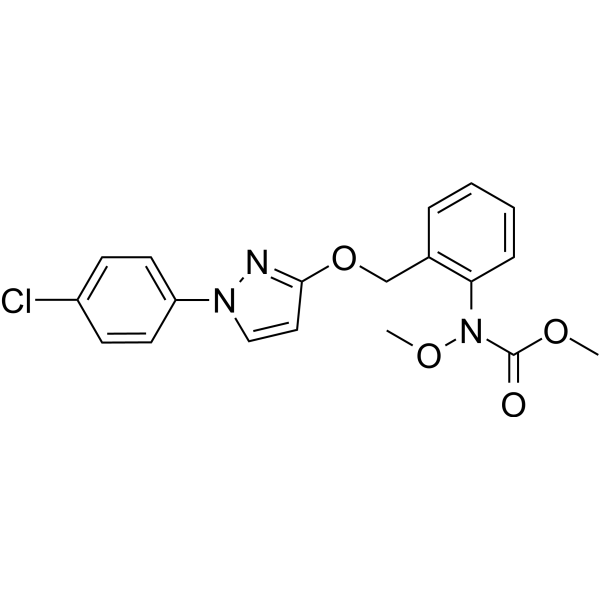
  • HY-N6626
    Pyraclostrobin
    2 Publications Verification

    Environmental Pollutants Bacterial Bcl-2 Family Fungal Autophagy mTOR Beclin1 AMPK Infection Metabolic Disease
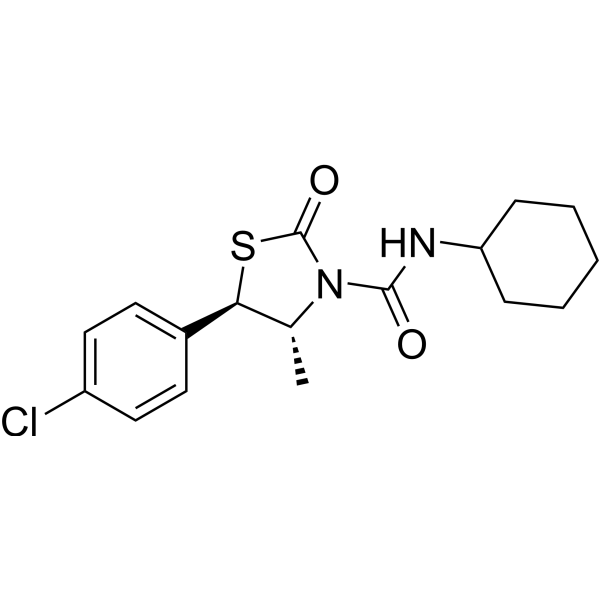
    Pyraclostrobin is a highly effective and broad-spectrum strobilurin fungicide. Pyraclostrobin can induce oxidative DNA damage, mitochondrial dysfunction and autophagy through the activation of AMPK/mTOR signaling. Pyraclostrobin can be used to control crop diseases .
    Pyraclostrobin
  • HY-Y0095

    2-Hydroxyethanesulfonic acid

    Environmental Pollutants Mitochondrial Metabolism Parasite Metabolic Disease
    Isethionic acid is a calcium binder and anionic detergent that enhances mitochondrial calcium binding capacity by competitively binding to calcium binding sites on the outer mitochondrial membrane. Isethionic acid can inhibit calcium-activated mitochondrial respiration. Isethionic acid inhibits barnacle (Balanus amphitrite) larvae with LC50s of 23 μg/mL (24 h) and 17 μg/mL (48 h), respectively. Isethionic acid can inhibit the attachment of barnacle larvae (complete inhibition at 10 μg/mL) and regulate mitochondrial calcium transport, and can enhance ATP-dependent calcium uptake at high calcium concentrations. Isethionic acid can be used to study the mechanism of mitochondrial calcium metabolism.
    Isethionic acid (80% in water)
  • HY-W011256

    Endogenous Metabolite Adenosine Deaminase Metabolic Disease
    Adenosine 2',3'-cyclic phosphate sodium is a 2',3'-cyclic purine nucleotide. Adenosine 2',3'-cyclic phosphate sodium is deaminated by the adenosine deaminase. Adenosine 2',3'-cyclic phosphate sodium can be degrade to 2'-AMP and 3'-AMP .
    Adenosine 2',3'-cyclic phosphate sodium
  • HY-W017423

    Environmental Pollutants Cholinesterase (ChE) Neurological Disease
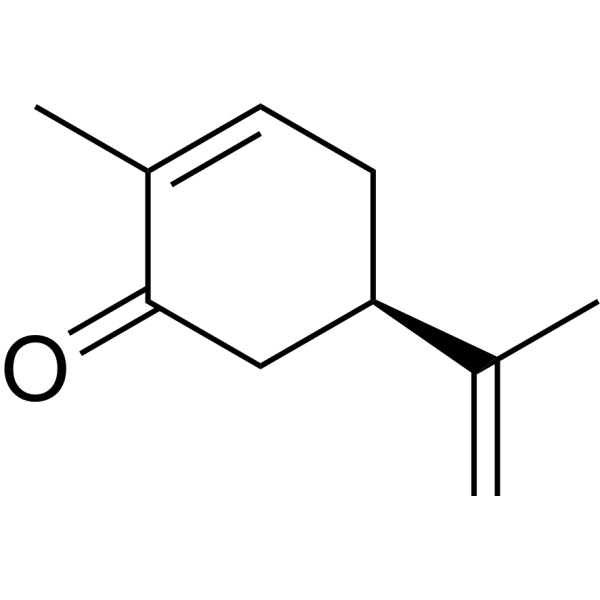
    (-)-Carvone is an insect neurotoxin and a irreversible acetylcholinesterase (AChE) inhibitor. (-)-Carvone can be used as a bird repellent, inhibits larval growth, decreases pupatation rate, and increases mortality of larvae .
    (-)-Carvone
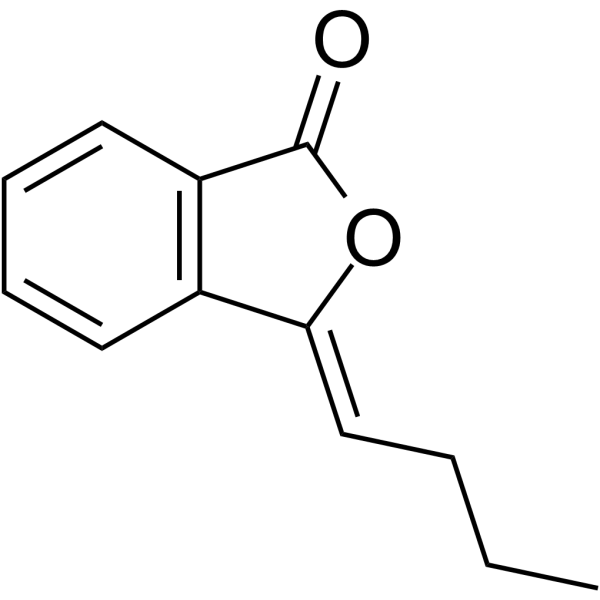
  • HY-N0336
    3-Butylidenephthalide
    1 Publications Verification

    Butylidenephthalide

    Parasite Infection
    3-Butylidenephthalide (Butylidenephthalide) is a phthalic anhydride derivative identified in Ligusticum chuanxiong Hort, and has larvicidal activity (LC50 of 1.56 mg/g for Spodoptera litura larvae) .
    3-Butylidenephthalide
  • HY-164322

    Insecticide Others
    Cyproflanilide is a meta-diamide insecticide. Cyproflanilide exhibits potent insecticidal activity against third Chilo suppressalis and Spodoptera frugiperda larvae. Cyproflanilide can be used for the research of insect pests .
    Cyproflanilide
  • HY-A0278

    (-)-Hexaconazol

    Environmental Pollutants Reactive Oxygen Species (ROS) Fungal SOD Infection Endocrinology
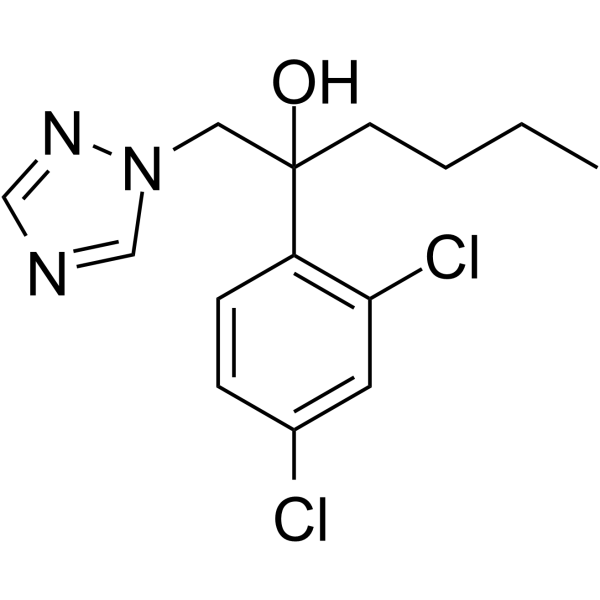
    Hexaconazole is a demethylation enzyme inhibitor and a synthetic fungicide that targets many fungi, especially ascomycetes and basidiomycetes, and it can enhance the activity of SOD and peroxidase. Hexaconazole causes endocrine disorders in zebrafish larvae .
    Hexaconazole
  • HY-N7916

    L-Menthone

    Environmental Pollutants Others
    (-)-Menthone is a monoterpene component of the essential oil of maturing peppermint. (+)-Neomenthyl-β-d-glucoside is a metabolite of (-)-Menthone .Mortality of two biological forms of Anopheles stephensi(larvae) exposed to about 45 ppm (-)-Menthone is 27.67% and 94.92%.
    (-)-Menthone
  • HY-119896

    Environmental Pollutants Herbicide Neurological Disease
    Clethodim is a postemergence herbicide. Clethodim shows developmental toxicity and neurotoxicity in zebrafish embryos and larvae .
    Clethodim
  • HY-N9441

    Others Others
    Ascr#7, an ascaroside, is a hormone of nematodes. Ascr#7 is expressed during nematode development. Ascarosides can induce formation of long-lived and highly stress resistant dauer larvae .
    Ascr#7
  • HY-114117

    GF-3242

    Environmental Pollutants Insecticide Infection
    Tyclopyrazoflor (GF-3242) is a pyridylpyrazole Insecticide. Tyclopyrazoflor exhibits excellent insecticidal efficacy against sap-sucking insects. Tyclopyrazoflor effectively controls insect pests caused by Myzus persicae and Bemisia tabaci larvae .\n

    Tyclopyrazoflor
  • HY-21200

    1-Perfluoroheptanesulfonic acid; Perfluoroheptanesulphonic acid; PFHpS

    iGluR Infection
    Perfluoroheptanesulfonic acid (1-Perfluoroheptanesulfonic acid; Perfluoroheptanesulphonic acid) is a perfluoroalkyl substance (PFAS). PFHpS can induce malformations in zebrafish larvae (EC50=168.1 μM). It has also been found in landfill leachate, and fetal exposure to PFHpS can lead to reduced birth weight.
    Perfluoroheptanesulfonic acid
  • HY-145612

    Biochemical Assay Reagents Others
    Sudan red 7B is a red non-fluorescent stain that can be used to stain fat bodies .
    Sudan red 7B
  • HY-N9496

    Insecticide Infection
    Piperitone is as a powerful repellent and antiappetent agent. Piperitone is very toxic to Cymbopogon schoenanthus (C. schoenanthus) adults, newly laid eggs and to neonate larvae. Insecticidal activity .
    Piperitone
  • HY-W059342

    YI-5301

    Environmental Pollutants Biochemical Assay Reagents Infection
    Etoxazole (YI-5301) is an organofluorine insecticide widely used in agriculture. Etoxazole affects the nymphs, eggs, and larvae of spider mites by inhibiting chitin biosynthesis .
    Etoxazole
  • HY-N3968

    GTN; (R)-(+)-Goniothalamin

    Apoptosis Insecticide Bacterial Fungal Reactive Oxygen Species (ROS) Infection Inflammation/Immunology Cancer
    Goniothalamin is a styryl lactone. Goniothalamin exhibits insecticidal, anti-tumor and antibacterial activities. Goniothalamin induces cell cycle arrest and apoptosis in tumor cells. Goniothalamin acts as a larvicide against Culex quinquefasciatus larvae and as a cytotoxin against brine shrimp larvae. Goniothalamin functions as an antibacterial agent against Gram-positive and Gram-negative bacteria, and also acts as an antifungal agent against pathogens including Candida albicans, Trichophyton rubrum and Trichophyton mentagrophytes. Goniothalamin is applicable to research related to breast cancer, lymphatic filariasis, bacterial infections and fungal infections .
    Goniothalamin
  • HY-N16433

    Parasite Insecticide Infection
    Nodulisporic acid A (Compound 1a) is an insecticidal agent. Nodulisporic acid A can isolated from fermentations of Nodulisporium sp. Nodulisporic acid A has a potent insecticidal activity against the larvae of the blowfly and mosquito with LC50s of 0.5 and 0.3 ppm against A. aegypti and L. seracata, respectively. Nodulisporic acid A can be used for the development of insecticide .
    Nodulisporic acid A
  • HY-N9496R

    Insecticide Reference Standards Infection
    Piperitone (Standard) is the analytical standard of Piperitone. This product is intended for research and analytical applications. Piperitone is as a powerful repellent and antiappetent agent. Piperitone is very toxic to Cymbopogon schoenanthus (C. schoenanthus) adults, newly laid eggs and to neonate larvae. Insecticidal activity .
    Piperitone (Standard)
  • HY-128430

    Parasite DNA/RNA Synthesis Infection
    Farnesyl acetate is a sesquiterpene isolated from the leaves of Amomum gagnepainii. Farnesyl acetate has significant toxicity against red palm weevil larvae with a LD50 of 7867 ppm .
    Farnesyl acetate
  • HY-123063

    5α-Petromyzonol; 5α-PZ

    Others Others
    Petromyzonol (5α-Petromyzonol) is a tetrahydroxy stearol produced by the bile of sea lamprey larvae from the bile acid precursor acetylcholic acid. Petromyzonol sulfate acts as a pheromone and oviposition chemical attractant .
    Petromyzonol
  • HY-W781976

    XDE-175-J

    Insecticide Infection
    Spinetoram J (XDE-175-J) is the major component of Spinetoram. Spinetoram is a green, highly effective and broad-spectrum insecticide, which is friendly to the environment, humans and animals, and degradable .
    Spinetoram J
  • HY-N13239

    Apoptosis Inflammation/Immunology
    Dandelion Extract is a dandelion extract, and its ingredients include: Flavone. Dandelion Extract can reduce LPS-induced inflammatory responses in RAW264.7 cells by regulating cell polarization and apoptosis. Dandelion Extract can also reduce CuSO4-induced inflammatory response in zebrafish larvae. .
    Dandelion Extract
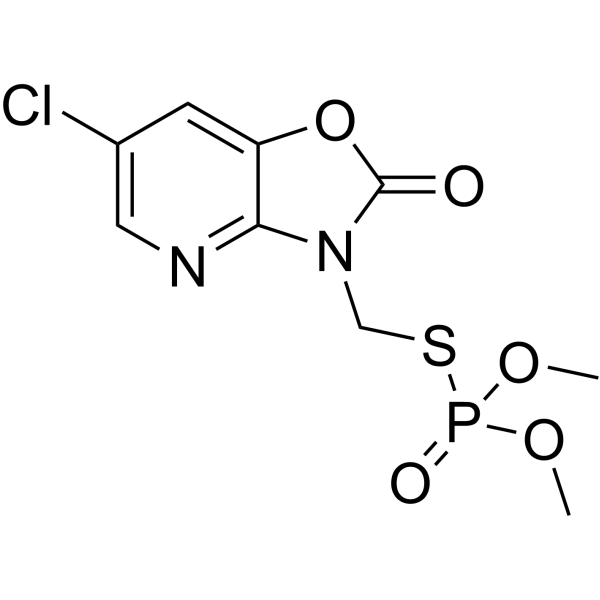
  • HY-114899

    Environmental Pollutants Cholinesterase (ChE) Insecticide Infection Neurological Disease
    Azamethiphos is an acetylcholinesterase inhibitor and insecticide. Azamethiphos covalently binds to acetylcholinesterase via phosphorylation, inhibits its activity, causes acetylcholine to accumulate in cholinergic synapses, triggers uncontrolled excitation of cholinergic sites, induces paralysis and leads to death. Azamethiphos can be used as a bath insecticide in salmonid aquaculture to control sea lice infestations, and it exerts acute toxicity to European lobster larvae, including mortality and movement disorders .
    Azamethiphos
  • HY-N6032

    Phytolaccoside B

    Cholinesterase (ChE) JNK NF-κB Fungal Infection Neurological Disease Inflammation/Immunology
    Esculentoside B (Phytolaccoside B) is a natural product from the roots of Phytolacca acinosa Roxb. Esculentoside B is neurotoxic to zebrafish larvae, and impairs their central nervous system development. Esculentoside B inhibits inflammatory response and has antifungal activity .
    Esculentoside B
  • HY-N9164

    TREM receptor Toll-like Receptor (TLR) MyD88 NF-κB Keap1-Nrf2 Heme Oxygenase (HO) TNF Receptor Interleukin Related p38 MAPK PI3K Akt Reactive Oxygen Species (ROS) Neurological Disease Inflammation/Immunology
    Hecubine is a monoterpene indole alkaloid found in Ervatamia ocinalis. Hecubine activates TREM2 expression, reduces LPS (HY-D1056)-stimulated inammatory cytokines (TNF-αIL-6IL-1β) overexpression, as well as suppresses the levels of TLR4-, MyD88-, MAPK/PI3K/AKT- and NF-κB-related proteins. Hecubin also exhibits antioxidative effect, reduces ROS production and activates of the Nrf2/HO-1 pathway. Hecubine rescues LPS-induced behavioral deficits in zebrash larvae. Hecubine can be used for the research of neural inflammation-associated central nervous system diseases .
    Hecubine
  • HY-124058

    Insecticide Others
    Jacobine?is a pyrrolizidine alkaloid (PA) from Senecio jacobaea . Jacobine is active against second instar larvae of thrips .
    Jacobine
  • HY-W012892

    Phenylmethylacetylene

    Drug Intermediate Infection
    Methylphenylethyne (Phenylmethylacetylene) is an intermediate of bioactive compounds. Methylphenylethyne has antifeedant activities for larvae of Pieris rapae crucivora. Methylphenylethyne can be used for pest control research .
    Methylphenylethyne
  • HY-N8585

    Parasite Infection
    Neoprocurcumenol is a larvicidal compound that exerts significant toxicity on mosquito larvae with LC50 and LC 90 values of 13.69 and 23.92 ppm, respectively .
    Neoprocurcumenol
  • HY-N8914

    Others Others
    Isoshinanolone is a natural product that can be extracted from Plumbago capensis. Isoshinanolone has mosquito larvicidal activity against fourth instar larvae of A. aegypti, with an IC50 value of 1.26 μg/mL .
    Isoshinanolone
  • HY-N1072

    Calcium Channel Inflammation/Immunology
    Wilforgine is a bioactive sesquiterpene alkaloid in Tripterygium wilfordii Hook. F. Wilforgine can induce microstructural and ultrastructural changes in the muscles of Mythimna separata larvae, and the sites of action are proposed to be calcium receptors or channels in the muscular system .
    Wilforgine
  • HY-W585959

    Insecticide Infection
    (E,E)-4,8,12-Trimethyl-1,3,7,11-tridecatetraene (TMTT), a sesquiterpene, is the major herbivore-induced plant volatile that help in defense directly by acting as repellants and indirectly by recruiting insects' natural enemies. (E,E)-4,8,12-Trimethyl-1,3,7,11-tridecatetraene attractes Asian corn borer (ACB, Ostrinia furnacalis) larvae. External supplementation with (E,E)-4,8,12-Trimethyl-1,3,7,11-tridecatetraene hampered the larvae's ability to locate pre-infested maize .
    (E,E)-4,8,12-Trimethyl-1,3,7,11-tridecatetraene
  • HY-W068430

    Insecticide Others
    5,7-Dimethoxy-2,2-dimethylchromene is a synthetic precocenoid, has potential insect control function. 5,7-Dimethoxy-2,2-dimethylchromene induces loss of pigmentation in hatching larvae of shield bug (Eurgaster integriceps) .
    5,7-Dimethoxy-2,2-dimethylchromene
  • HY-18402

    Drug Derivative Cardiovascular Disease
    2-(Methylthio)benzothiazole is a derivative of 2-Mercaptobenzothiazole (HY-W017113). 2-(Methylthio)benzothiazole reduces heart rate, causes pericardial edema and deformity, delays cardiac maturation, decreases stroke volume and cardiac output, and leads to vascular structural defects in zebrafish larvae .
    2-(Methylthio)benzothiazole
  • HY-100540B

    GCA-2

    Flavivirus Dengue Virus Enterovirus Infection
    Golgicide A-2 (GCA-2), a Golgicide A (GCA) derivative, is the most active enantiomer of GCA. Golgicide A-2 displays high selectivity and efficiency in killing An. stephensi larvae and can be used for the research of dengue virus related diseases .
    Golgicide A-2
  • HY-N10349

    Others Infection
    Gluconasturtiin is a feeding activator for the larvae of P. maculipennis. High concentrations of gluconasturtiin is toxic to the larvae .
    Gluconasturtiin
  • HY-U00045

    BRL-38705

    Parasite Others
    Epsiprantel (BRL-38705) is a compound with anti-Echinococcus activity that can cause the death of protoscolex, larvae and adults in vitro, and is more effective against mature worms than larvae in vivo, with no side effects.
    Epsiprantel
  • HY-113903

    Parasite Infection
    (+)-Isopulegol is a terpenoid found in Mentha canadensis L. (+)-Isopulegol shows phagostimulatory activity towards adults of S. granarius and T. confusum. (+)-Isopulegol is a feeding attractant for adults of T. confusum and T. granarium larvae .
    (+)-Isopulegol
  • HY-W643128

    Cholinesterase (ChE) Infection
    Carlina oxide is an AChE inhibitor and antioxidant that kills Culex pipiens larvae (LC50=1.39 μg/mL). Carlina oxide is cytotoxic to vertebrate cells, human dermis, HCT116 and MDA-MB231 cell lines .
    Carlina oxide
  • HY-W015786

    Bacterial Infection Metabolic Disease
    4-Ethoxyphenol is a natural compound isolated from marine gorgonian-associated bacterium Bacillus amyloliquefaciens SCSIO 00856. 4-Ethoxyphenol shows potent antilarval activity towards Bacillus amphitrite larvae with an EC50 value of 24.1 μg/mL .
    4-Ethoxyphenol
  • HY-119381

    Jodfenphos

    Insecticide Others
    Iodofenphos (Jodfenphos) is an insecticide, that can be used as a protectant for stored grains. Iodofenphos is effective against grain pests, such as Sitophilus oryzae, Tribolium castaneum, and larvae of Trogoderma granarium, and has a significant residual toxicity, which could provide good insect control for several months .
    Iodofenphos
  • HY-175607

    Cholinesterase (ChE) nAChR Infection Neurological Disease
    AChE/nAChR-IN-1 (Compound 1a) is dual-functional inhibitor of AChE and nAChR. AChE/nAChR-IN-1 has potent toxicity and larvicidal effectiveness against Culex pipiens larvae with a LC50 of 4 ng/mL. AChE/nAChR-IN-1 can be used as larvicides for mosquito-borne diseases research .
    AChE/nAChR-IN-1
  • HY-P5630

    Bacterial Infection
    Aeschna defensing is an antimicrobial peptide derived from hemolymph of dragonfly aquatic larvae. Aeschna defensing has strong activity against gram-positive bacteria .
    Aeschna defensin
  • HY-P1991

    Parasite Infection
    Isariin D is a cyclodepsipeptide isolated from the fungus Isaria felina, which exhibits significant insecticidal activity against Galleria mellonella larvae .
    Isariin D
  • HY-N2976

    Betulafolianediol 3-acetate; Cabraleadiol 3-acetate

    Others Infection
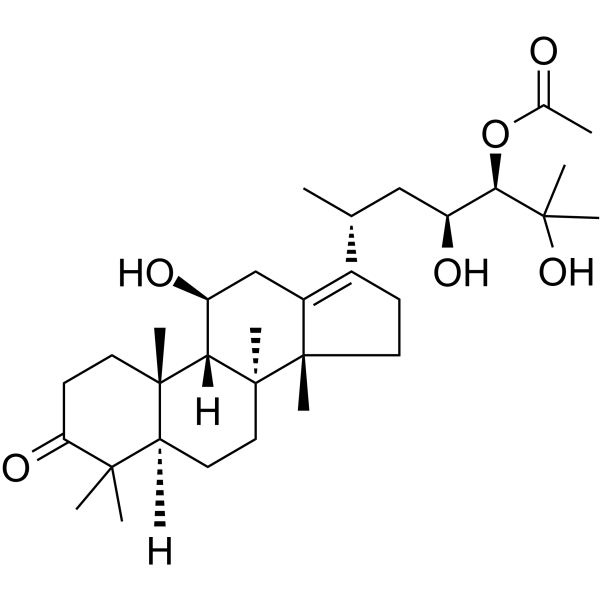
    Cabraleadiol monoacetate is a compound isolated from the lichen Pyxine consocians Vainio. Cabraleadiol monoacetate shows mosquito larvicidal activity against the second instar larvae of Aedes aegypti .
    Cabraleadiol monoacetate
  • HY-N10831

    Others Others
    Ajuganipponin A is a nature product that could be isolated from the aerial parts of Ajuga nipponensis. Ajuganipponin A has antifeedant activity against larvae of the Egyptian cotton leafworm .
    Ajuganipponin A
  • HY-N11642

    Others Others
    Ganodermacetal is a highly oxidized lanostane triterpene, that can be isolated from G. amboinense. Ganodermacetal shows a marked toxicity to brine shrimp larvae .
    Ganodermacetal
  • HY-N10273

    Fungal Infection
    Deoxyfusapyrone is an antifungal alpha-pyrone from Fusarium semitectum. Deoxyfusapyrone shows a strong antibiotic activity towards Geotrichum candidum in disk diffusion assays, but is not toxic to Artemia salina larvae .
    Deoxyfusapyrone
  • HY-172605

    Steroid Sulfatase Cancer
    Steroid sulfatase-IN-9 (compound 54E) is a steroid sulfatase (STS) inhibitor with the inhibition rates of 87.03% at 10 μM. Steroid sulfatase-IN-9 shows no detectable toxic effects in zebrafish larvae model .
    Steroid sulfatase-IN-9
  • HY-W017423R

    Reference Standards Cholinesterase (ChE) Neurological Disease
    (-)-Carvone (Standard) is the analytical standard of (-)-Carvone. This product is intended for research and analytical applications. (-)-Carvone is an insect neurotoxin and a irreversible acetylcholinesterase (AChE) inhibitor. (-)-Carvone can be used as a bird repellent, inhibits larval growth, decreases pupatation rate, and increases mortality of larvae .
    (-)-Carvone (Standard)
  • HY-N8468

    Others Infection
    Gluconasturtiin potassium is a feeding activator for the larvae of P. maculipennis. High concentrations of Gluconasturtiin potassium are toxic to the larvae .
    Gluconasturtiin potassium

Inquiry Online

Your information is safe with us. * Required Fields.

Salutation


Country or Region *

Applicant Name *


Organization Name *

Department *


Email Address *


Product Name *

Cat. No.


Requested quantity *

Phone Number *


Remarks

Inquiry Online

Inquiry Information

Product Name:
Cat. No.:
Quantity:
MCE Japan Authorized Agent: