Search Result
Results for "
murine models
" in MedChemExpress (MCE) Product Catalog:
1
Isotope-Labeled Compounds
| Cat. No. |
Product Name |
Target |
Research Areas |
Chemical Structure |
-
- HY-13535
-
|
|
Integrin
|
Cancer
|
|
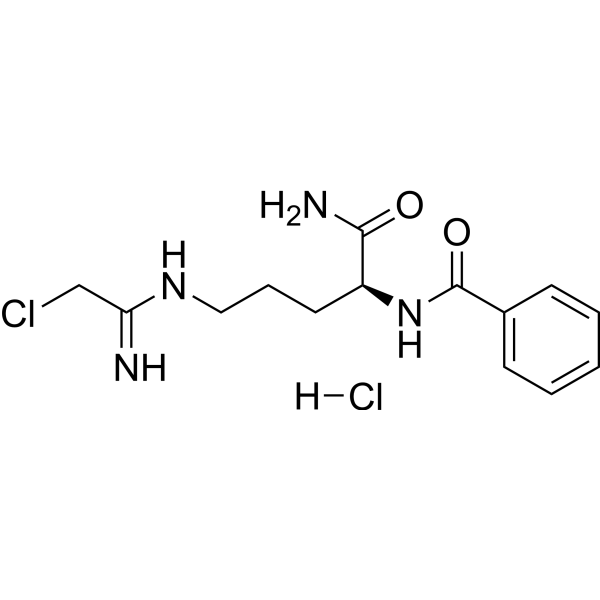
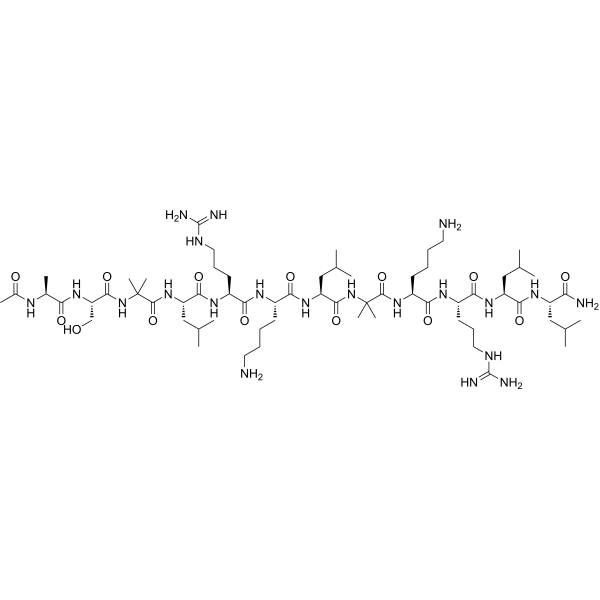
ATN-161 is a novel integrin α5β1 antagonist, which inhibits angiogenesis and growth of liver metastases in a murine model.
|
-
-
- HY-13535A
-
|
ATN-161 TFA salt
|
Integrin
|
Cancer
|
|
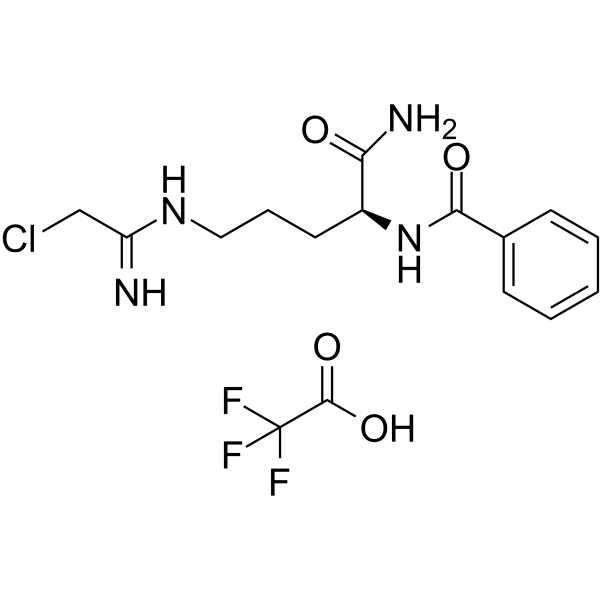
ATN-161 trifluoroacetate salt is a novel integrin α5β1 antagonist, which inhibits angiogenesis and growth of liver metastases in a murine model.
|
-
-
- HY-16261
-
|
INNO-206; DOXO-EMCH
|
Topoisomerase
ADC Payload
|
Cancer
|
|
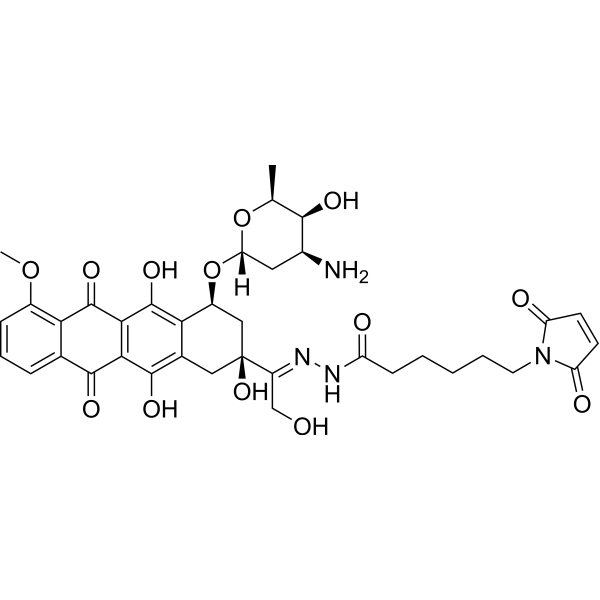
Aldoxorubicin (INNO-206) is an albumin-binding proagent of Doxorubicin (DNA topoisomerase II inhibitor), which is released from albumin under acidic conditions. Aldoxorubicin (INNO-206) has potent antitumor activities in various cancer cell lines and in murine tumor models.
|
-
-
- HY-139400
-
|
FTX-6058
|
Histone Methyltransferase
|
Cardiovascular Disease
|
|
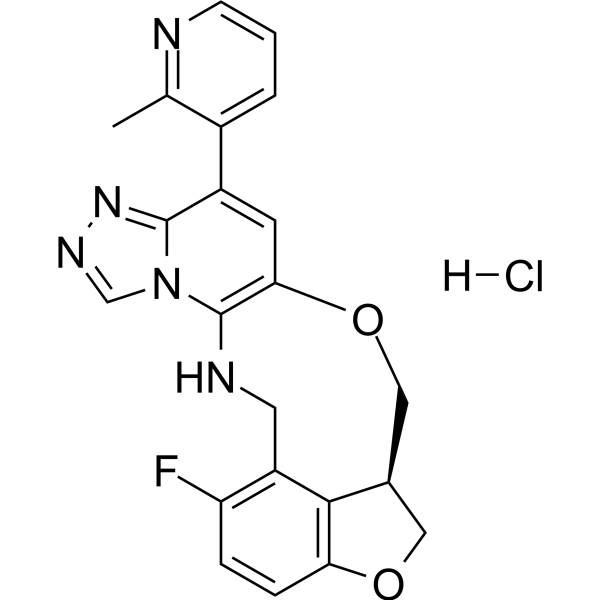
Pociredir (FTX-6058) is a potent and orally active inhibitor of Embryonic Ectoderm Development (EED). Pociredir can induce HbF protein expression in cell and murine models. Pociredir can be used for the research of select hemoglobinopathies, including sickle cell disease and β-thalassemia .
|
-
-
- HY-108741
-
|
|
Guanylate Cyclase
|
Inflammation/Immunology
Cancer
|
|
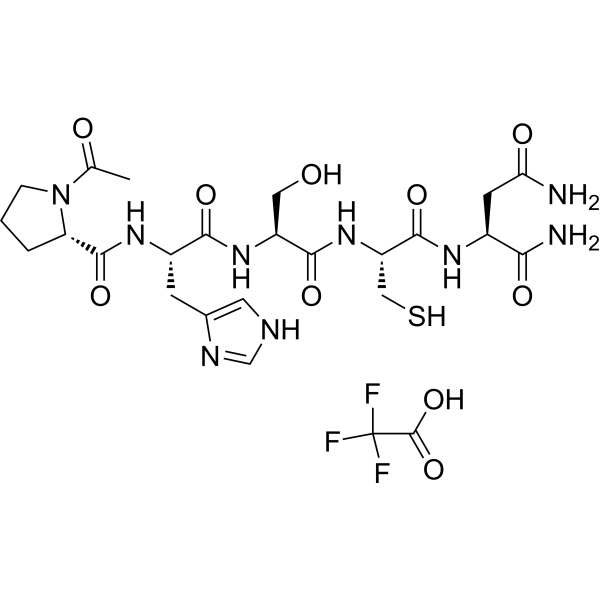
Plecanatide, an analogue of Uroguanylin, is an orally active guanylate cyclase-C (GC-C) receptor agonist. Plecanatide activates GC-C receptors to stimulate cGMP synthesis with an EC50 of 190 nM in T84 cells assay. Plecanatide shows anti-inflammatory activity in models of murine colitis .
|
-
-
- HY-W746708
-
-
-
- HY-P2136
-
-
-
- HY-119515
-
|
(R)-(-)-Denopamine; TA-064
|
Adrenergic Receptor
|
Cardiovascular Disease
Cancer
|
|
Denopamine ((R)-(-)-Denopamine) is an orally active, selective β1-adrenergic agonist. Denopamine prolongs survival in a murine model of congestive heart failure induced by viral myocarditis: suppression of tumor necrosis factor-α production in the heart. Cardiovascular effects .
|
-
-
- HY-116835
-
BI-6901
1 Publications Verification
|
CCR
|
Inflammation/Immunology
|
|
BI 6901 is a potent, selective CCR10 antagonist (pIC50=9.0). BI 6901 shows high selectivity over other GPCRs, including a number of other chemokine receptors. BI 6901 is efficacious in the murine DNFB model of contact hypersensitivity and can be used for inflammation research .
|
-
-
- HY-117037
-
|
|
Apoptosis
ERK
|
Cardiovascular Disease
Cancer
|
|
FR900359 is a depsipeptide selective inhibitor of Gαq/11/14 in mammalia, can inhibits ERK pathway. FR900359 suppresses the proliferation of melanoma cells and decreases of blood pressure. FR900359 also protected against airway hyperreactivity in murine models of allergen sensitization in Ovalbumin, low endotoxin (HY-W250978A)-induced sensitization model of asthma. FR900359 can be used for cancer and cardiovascular disease research .
|
-
-
- HY-N3029
-
|
|
Interleukin Related
Apoptosis
Glutathione Peroxidase
SOD
Glutathione S-transferase
Necroptosis
|
Inflammation/Immunology
|
|
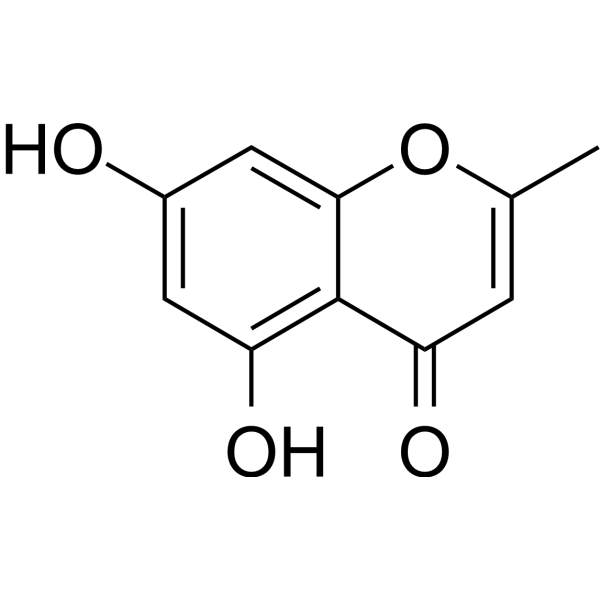
Noreugenin is a phenolic compound found in Calea uniflora Less. Noreugenin inhibits myeloperoxidase activity and reduces levels of proinflammatory cytokines IL-1β and IL-17A levels in LPS (HY-D1056)-induced murine pleurisy model. Noreugenin reduces apoptosis and necrosis. Noreugenin reduces lipid peroxidation, and antioxidant enzyme (CAT, SOD, GST) activity. Noreugenin exhibits anti-inflammatory and antioxidant effects. Noreugenin can be used for the research of inflammatory conditions, such as pleurisy .
|
-
-
- HY-17555
-
|
Centrophenoxine hydrochloride
|
nAChR
iGluR
|
Neurological Disease
|
|
Meclofenoxate (Centrophenoxine) hydrochloride is an ester synthesized from DMAE and pCPA, capable of crossing the blood-brain barrier, and can stimulate memory and enhance cognition .
|
-
-
- HY-B1448
-
|
KW-3049
|
Calcium Channel
Apoptosis
|
Cardiovascular Disease
|
|
Benidipine hydrochloride is an orally active calcium channel antagonist. Benidipine hydrochloride can inhibit cell proliferation and apoptosis. Benidipine hydrochloride has antioxidant activity and can increase nitric oxide synthase activity and improve coronary circulation in hypertensive rats .
|
-
-
- HY-100688
-
ML390
1 Publications Verification
|
Dihydroorotate Dehydrogenase
|
Cancer
|
|
ML390 is a potent dihydroorotate dehydrogenase (DHODH) inhibitor. ML390 is an inducer of myeloid differentiation and causes myeloid differentiation in murine (ER-HoxA9) and human (U937 and THP1) acute myeloid leukemia (AML) models .
|
-
-
- HY-160142
-
|
|
PROTACs
Btk
Syk
MEK
ERK
|
Cancer
|
|
UBX-382 is an orally active BTK PROTAC degrader with a DC50 of 4.56 nM. UBX-382 inhibits B-cell receptor signaling by targeting BTK. UBX-382 shows superior degradation activity for wild-type and mutant BTK proteins. UBX-382 inhibits tumor growth in murine xenograft models harboring wild-type or C481S mutant BTK-expressing TMD-8 cells. UBX-382 can be used for the study of B-cell-related blood cancers .
|
-
-
- HY-13108
-
Bz 423
1 Publications Verification
BZ48
|
Bcl-2 Family
|
Inflammation/Immunology
|
|
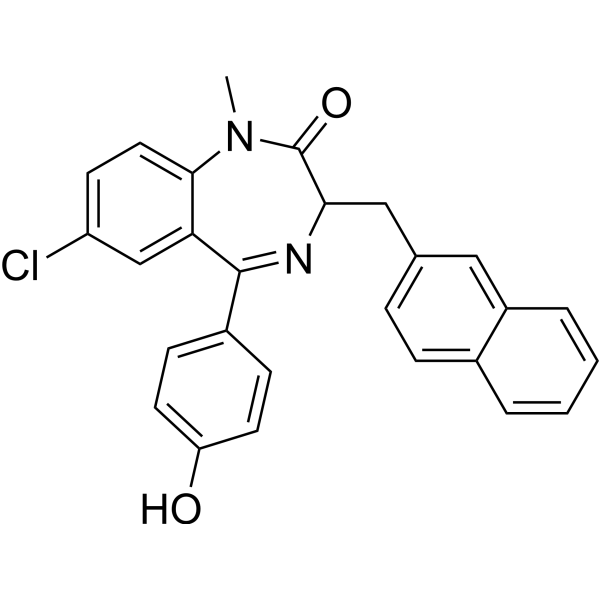
Bz 423 is a pro-apoptotic 1,4-benzodiazepine with therapeutic properties in murine models of lupus demonstrating selectivity for autoreactive lymphocytes, and activates Bax and Bak.
|
-
-
- HY-12929
-
|
SU093
|
Pim
Apoptosis
|
Cancer
|
|
NSC756093 (SU093) is a GBP1:PIM1 interaction inhibitor. NSC756093 binds to GBP1-PIM1 with a Kd of 38 nM. NSC756093 suppresses proliferation, reduces migration, induces G1 phase cell-cycle arrest, and increases apoptotic cell death in ovarian cancer cells. NSC756093 reduces cellular proteasomal activity, induces accumulation of ubiquitinated proteins, and restrains tumor progression and lung metastasis in murine ovarian cancer xenograft models. NSC756093 increases sensitivity of prostate cancer cells to Docetaxel (HY-B0011) and sensitizes GBP1-overexpressing ovarian cancer cells to Paclitaxel (HY-B0015). NSC756093 can be used for the research of prostate cancer and ovarian cancer .
|
-
-
- HY-13545
-
ABT-510
1 Publications Verification
|
Apoptosis
|
Inflammation/Immunology
Cancer
|
|
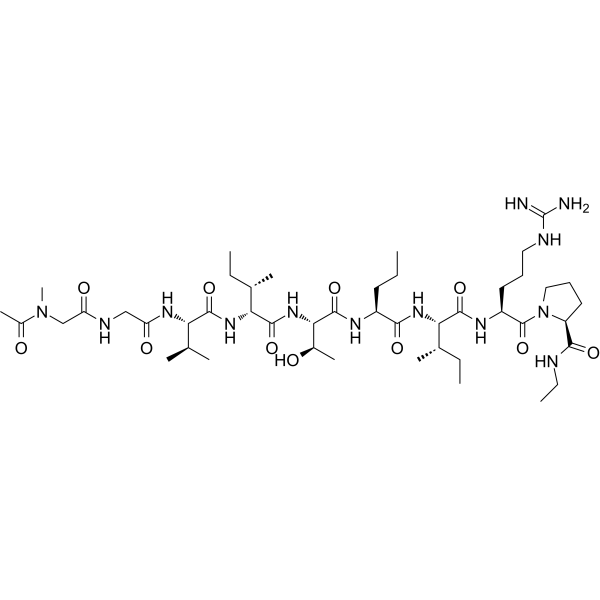
ABT-510 is an anti-angiogenic TSP peptide (Thrombospondin-1 analogue) that induces apoptosis and inhibits ovarian tumour growth in an orthotopic, syngeneic model of epithelial ovarian cancer. ABT-510 also reduces angiogenesis and inflammatory responses in a murine model of inflammatory bowel disease. ABT-510 can be used in studies of cancer (particularly epithelial ovarian cancer) and inflammatory bowel disease (IBD) .
|
-
-
- HY-108741A
-
|
|
Guanylate Cyclase
|
Inflammation/Immunology
Cancer
|
|
Plecanatide acetate, an analogue of Uroguanylin, is an orally active guanylate cyclase-C (GC-C) receptor agonist. Plecanatide acetate activates GC-C receptors to stimulate cGMP synthesis with an EC50 of 190 nM in T84 cells assay. Plecanatide acetate can be used for the research of chronic idiopathic constipation, and it also shows anti-inflammatory activity in models of murine colitis .
|
-
-
- HY-W010983
-
SC-236
2 Publications Verification
|
COX
PPAR
Apoptosis
|
Cardiovascular Disease
Inflammation/Immunology
Cancer
|
|
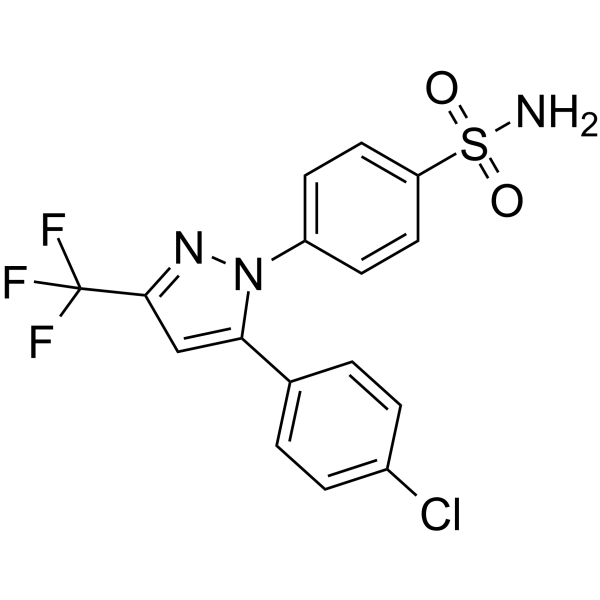
SC-236 is an orally active COX-2 specific inhibitor (IC50 = 10 nM) and a PPARγ agonist. SC-236 suppresses activator protein-1 (AP-1) through c-Jun NH2-terminal kinase. SC-236 exerts anti-inflammatory effects by suppressing phosphorylation of ERK in a murine model .
|
-
-
- HY-120060
-
|
|
Parasite
|
Infection
|
|
GNF6702 is a selective inhibitor of the kinetoplastid proteasome. GNF6702 clears parasites in murine models of leishmaniasis, Chagas disease, and human African trypanosomiasis .
|
-
-
- HY-176438
-
|
|
Tau Protein
|
Neurological Disease
|
|
DDL-357 is a potent secreted clusterin enhancer. DDL-357 reduces phospho-tau in brain and improves memory in the murine 3xTg-AD model .
|
-
-
- HY-176434
-
|
|
Sirtuin
|
Neurological Disease
|
|
DDL-218 is an orally active and potent SirT1 inhibitor. DDL-218 enhances SirT1 in ApoE4-expressing neurons and a murine AD model. DDL-218 can be used in the study of Alzheimer's disease .
|
-
-
- HY-139400A
-
|
FTX-6058 hydrochloride
|
Histone Methyltransferase
|
Cardiovascular Disease
|
|
Pociredir (FTX-6058) hydrochloride is a potent and orally active inhibitor of Embryonic Ectoderm Development (EED). Pociredir hydrochloride can induce HbF protein expression in cell and murine models. Pociredir hydrochloride can be used for the research of select hemoglobinopathies, including sickle cell disease and β-thalassemia .
|
-
-
- HY-13545B
-
|
|
Apoptosis
|
Inflammation/Immunology
Cancer
|
|
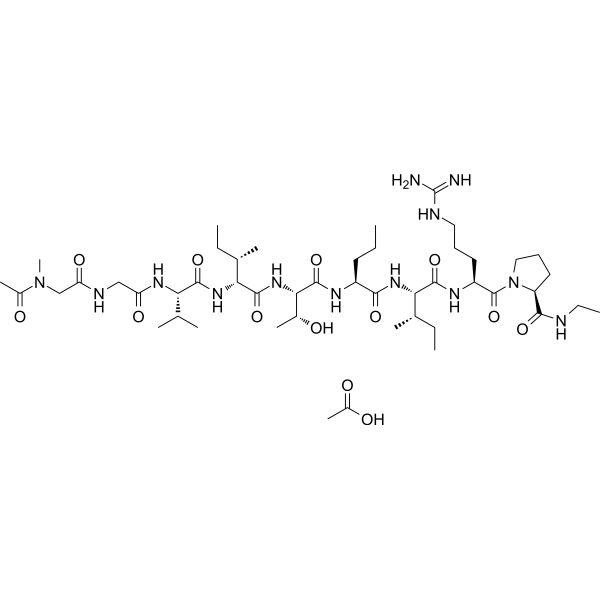
ABT-510 acetate is an anti-angiogenic TSP peptide (Thrombospondin-1 analogue) that induces apoptosis and inhibits ovarian tumour growth in an orthotopic, syngeneic model of epithelial ovarian cancer. ABT-510 acetate also reduces angiogenesis and inflammatory responses in a murine model of inflammatory bowel disease. ABT-510 acetate can be used in studies of cancer (particularly epithelial ovarian cancer) and inflammatory bowel disease (IBD) .
|
-
-
- HY-P10109
-
|
|
Glucose-6-Phosphate Isomerase (GPI)
|
Inflammation/Immunology
|
|
G6PI 325-339 (human) is an efficient inducer of arthritis in B10.Q mice. G6PI 325-339 (human) primes Th1 and Th17 cells cross-reacted with the murine G6PI protein. G6PI 325-339 (human) induces arthritis model operating through a T and B cell-dependent pathway but without antibody effector mechanisms .
|
-
-
- HY-120553
-
|
|
Apoptosis
|
Neurological Disease
|
|
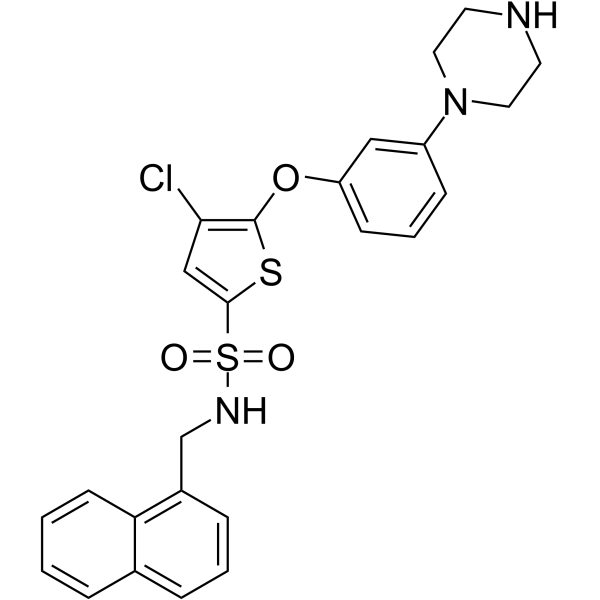
B355252, a phenoxy thiophene sulfonamide small molecule, is a potent NGF receptor agonist. B355252 potentiates NGF-induced neurite outgrowth. B355252 protects ischemic neurons from neuronal loss by attenuating DNA damage, reducing ROS production and the LDH level, and preventing neuronal apoptosis. B355252 has anti-apoptotic effects in glutamate-induced excitotoxicity, as well as in a murine hippocampal cell line (HT22) model of Parkinson disease (PD) .
|
-
-
- HY-119823
-
|
|
P-glycoprotein
|
Cancer
|
|
PGP-4008 is a specific P-glycoprotein (Pgp) inhibitor. PGP-4008 inhibits tumor growth in a murine syngeneic Pgp-mediated multiple agent resistance (MDR) solid tumor model when given in combination with Doxorubicin .
|
-
-
- HY-124484
-
|
|
Notch
|
Cancer
|
|
JI130 (JI051 derivative ) is a stabilizer for the Hes1-PHB2 interaction. JI130 inhibits the ability of Hes1 to repress transcription. JI130 significantly reduces the tumor growth in a murine pancreatic tumor model and has the potential for managing pancreatic cancer .
|
-
-
- HY-P2136F
-
|
|
Apoptosis
|
Neurological Disease
Inflammation/Immunology
Cancer
|
|
Biotin-COG1410 TFA is a biotin labled COG1410 (HY-P2136). COG1410 is an apolipoprotein E-derived peptide and an apoptosis inhibitor. COG1410 exerts neuroprotective and antiinflammatory effects in a murine model of traumatic brain injury (TBI). COG1410 can be used for the research of neurological disease .
|
-
-
- HY-174830
-
|
|
PD-1/PD-L1
|
Cancer
|
|
GJ19 is a PD-L1 inhibitor with an IC50 of 32.06 nM. GJ19 can effectively bind to human/murine PD-L1 protein with Kd values of 171 and 290 nM, respectively. GJ19 concentration-dependently promotes HepG2 cell mortality in a co-culture model of HepG2/hPD-L1 and Jurkat T/hPD-1 cells. GJ19 effectively suppresses tumor growth in a B16-F10 melanoma mouse model. GJ19 can be used for the study of tumor immunotherapy .
|
-
-
- HY-125662A
-
|
|
Reactive Oxygen Species (ROS)
Apoptosis
|
Metabolic Disease
|
|
BMX-001, a novel redox-active metalloporphyrin, improves islet function and engraftment in a murine transplant model. BMX-001 reduces apoptosis in human and murine islets. BMX-001 significantly improves static-glucose stimulated insulin secretion (sGSIS) responses in murine islets. BMX-001 can significantly restore euglycemia in murine islet studies in the presence of the MnSOD. BMX-001 reduces the generation of ROS in a murine islet isolation and culture model .
|
-
-
- HY-100791
-
|
|
CDK
|
Cancer
|
|
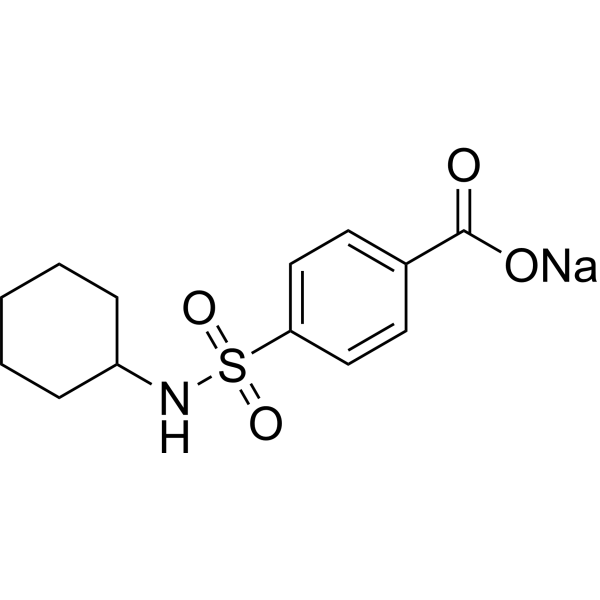
NSC23005 sodium is a novel and effective p18 inhibitor (ED50=5.21 nM) in promoting Hematopoietic stem cells (HSCs) expansion in both murine and human models.
|
-
-
- HY-115567
-
|
1-(β-D-2-Deoxyribofuranosyl)-5-nitroindole
|
Apoptosis
|
Cancer
|
|
5-NIdR (1-(β-D-2-Deoxyribofuranosyl)-5-nitroindole), an artificial nucleoside, exhibits the ability to inhibit the replication of DNA lesions generated by Temozolomide (HY-17364). 5-NIdR induces cancer cells apoptosis and arrests cell cycle at G0 phase. 5-NIdR enhances Temozolomide anti-tumor efficacy in murine glioblastoma model .
|
-
-
- HY-149651
-
|
|
GPR139
|
Neurological Disease
|
|
GPR139 agonist-2 (compound 20a) is a potent GPR139 agonist with an EC50 of 24.7 nM. GPR139 agonist-2 rescues the social interaction deficits and alleviates cognitive deficits in murine schizophrenia models. GPR139 agonist-2 has the potential for antischizophrenia drug research .
|
-
-
- HY-P5545
-
|
|
Bacterial
|
Infection
|
|
Lynronne-1 is an antimicrobial peptide. Lynronne-1 is active against Gram-positive bacterials, including MDR strains (MIC: 8-32 μg/mL for methicillin-resistant MRSA strains). Lynronne-1 reduces the bacterial load in MRSA infected wound murine model. Lynronne-1 is also effective against P. aeruginosa infection .
|
-
-
- HY-173235
-
|
|
Galectin
|
Cardiovascular Disease
Inflammation/Immunology
Cancer
|
|
Galectin-3-IN-6 (Compound 12) is a human and murine galectin-3 (Gal-3) inhibitor, with an IC50 of 12 nM against human galectin-3, an IC50 of 12.6 nM against mutant murine galectin-3 (V160A), and a Kd of 13 nM for human galectin-3, as well as oral bioavailability. Galectin-3-IN-6 reduces the levels of liver fibrosis markers type I collagen and α-smooth muscle actin in mouse models of acute liver injury and fibrosis. Galectin-3-IN-6 can be used for the research of acute liver injury and fibrosis .
|
-
-
- HY-124995
-
|
|
IRAK
Toll-like Receptor (TLR)
ERK
NF-κB
Interleukin Related
|
Inflammation/Immunology
|
|
BMS-986126 is a potent, selective, and orally active IRAK4 inhibitor (IC50 = 5.3 nM). BMS-986126 broadly inhibits MyD88-dependent signaling pathways. BMS-986126 demonstrates robust activity in the MRL/lpr and NZB/NZW murine models of lupus, inhibiting multiple pathogenic responses. BMS-986126 can be used for autoimmune diseases research, such as lupus erythematosus (SLE) .
|
-
-
- HY-178347
-
|
|
Bacterial
|
Infection
|
|
Debio 1453 is a bactericidal FabI inhibitor potent against N. gonorrhoeae (IC50 = 0.6 nM), including drug-resistant strains. Debio 1453 demonstrates a low propensity for resistance selection and is effective in eradicating both planktonic and intracellular bacteria through a mechanism of concurrently inhibiting FabI and engaging the non-mutable NADH cofactor. Debio 1453 clears antibiotic-resistant N. gonorrhoeae infection in a murine vaginal model. Debio 1453 can be used for gonorrhoea research .
|
-
-
- HY-136448
-
|
|
Parasite
|
Infection
|
|
SJ000025081 is a dihydropyridine and acts as a potent antimalarial agent. SJ000025081 results in an obvious suppression of the parasitemia in a murine malaria model infected with P. yoelii .
|
-
-
- HY-W654372
-
|
|
Endogenous Metabolite
|
Cancer
|
|
Tigloyl-L-carnitine (chloride) is a short-chain acylacarnitine containing tiglic acid and L-carnitine. Tigloyl-L-carnitine (chloride) is increased in plasma in certain melanoma xenograft murine models. Tigloyl-L-carnitine (chloride) can be studied in research on melanoma .
|
-
-
- HY-163181
-
|
|
Bacterial
|
Infection
|
|
MSU-43085 is an orally active MmpL3 inhibitor of Mycobacterium tuberculosis (Mtb). MSU-43085 effectively inhibits Mtb in an acute murine tuberculosis infection model. MSU-43085 can be used in tuberculosis research .
|
-
-
- HY-162517
-
|
|
Orthopoxvirus
|
Infection
|
|
UMM-766 is an orally available nucleoside analog. UMM-766 has potent, broad-spectrum antiviral activity against multiple members of the pox virus family. UMM-766 provides protection in a murine model of orthopox disease .
|
-
-
- HY-16261C
-
|
INNO-206 hydrochloride; DOXO-EMCH hydrochloride
|
Topoisomerase
ADC Payload
|
Cancer
|
|
Aldoxorubicin (INNO-206) hydrochloride is an albumin-binding proagent of Doxorubicin (DNA topoisomerase II inhibitor), which is released from albumin under acidic conditions. Aldoxorubicin hydrochloride (INNO-206) has potent antitumor activities in various cancer cell lines and in murine tumor models.
|
-
-
- HY-122588A
-
|
|
Antibiotic
|
Cardiovascular Disease
Metabolic Disease
|
|
Negamycin (hydrochloride) is a dipeptide antibiotic. Negamycin (hydrochloride) can restore dystrophin expression in skeletal and cardiac muscles in mdx Duchenne muscular dystrophy (DMD) murine model. Negamycin (hydrochloride) can bind to a partial sequence of the eukaryotic rRNA-decoding A-site. Negamycin (hydrochloride) can be studied in DMD research .
|
-
-
- HY-P991618
-
|
|
Transmembrane Glycoprotein
|
Cancer
|
|
ST2485 is a monoclonal antitenascin antibody. ST2485 shows additivity in tenascin C binding in vitro as well as in a xenograft model. ST2485 binds human tenascin at an epitope partially shared with BC2. ST2485 cross-reacts with murine tenascin. ST2485 can be studied in antitumor research .
|
-
-
- HY-10615
-
|
|
PARP
|
Cancer
|
|
A-620223 is a PARP-1 inhibitor with a Ki of 8 nM against PARP-1 and EC50 of 3 nM in a whole cell assay. A-620223 demonstrates good in vivo efficacy in a B16F10 subcutaneous murine melanoma model in combination with Temozolomide (TMZ) (HY-17364) and in an MX-1 breast xenograph model in combination with Cisplatin (HY-17394). A-620223 can be used for the studies of melanoma and breast cancer .
|
-
-
- HY-146079
-
|
|
Fungal
|
Infection
|
|
Antifungal agent 31 (compound 12) is a potent and orally active triazole antifungal agents with a pyrrolotriazinone scaffold. Antifungal agent 31 shows antifungal activity against Candida spp. and filamentous fungi. Antifungal agent 31 significantly reduced mortality rates and kidney fungal burden in two murine models of lethal systemic infections .
|
-
-
- HY-146811
-
|
|
Bacterial
|
Inflammation/Immunology
|
|
HSGN-94 is a potent antimicrobial agent with lipoteichoic acid (LTA) biosynthesis inhibition. HSGN-94 inhibits drug-resistant Gram-positive bacteria with MIC values of 0.25-2 μg/mL. HSGN-94 inhibits biofilm formation of MRSA and Vancomycin-resistant Enterococci. HSGN-94 also inhibits pro-inflammatory cytokines, exhibits in vivo efficacy in an MRSA murine wound infection model .
|
-
-
- HY-P10793
-
|
|
EGFR
Apoptosis
|
Cancer
|
|
Cyclic(YCDGFYACYMDV) is a HER2 signaling pathway inhibitor with anti-cancer activity. This compound self-assembles into nanoparticles in aqueous solution and transforms into nanofibers upon specific binding to HER2 on cancer cells. This transformation disrupts HER2 dimerization and subsequent downstream signaling events, leading to cancer cell apoptosis (Apoptosis). The inhibitory effects on HER2 positive breast cancer have been demonstrated to be effective in a murine xenograft model .
|
-
- HY-121726
-
|
|
mTOR
Autophagy
|
Cardiovascular Disease
|
|
3HOI-BA-01 is amTORinhibitor.3HOI-BA-01reduces infarct size and inducedautophagyin a murine myocardial ischemia/reperfusion injury model .
|
-
- HY-145441
-
|
|
Drug Derivative
|
Cancer
|
|
GEM–IB is the conjugate of gemcitabine (GEM)-5'-phosphate with ibandronate (IB). GEM–IB as a single agent or in combination with Docetaxel (DTX) demonstrates reduced tumor burden, preservation of the bone architecture, and improved the survival in a murine model of osteosarcoma (OS) .
|
-
- HY-151808
-
|
|
Btk
|
Neurological Disease
Inflammation/Immunology
Cancer
|
|
JS25 is a selective and covalent inhibitor of BTK that inactivates BTK with an IC50 value of 5.8 nM by chelating Tyr551. JS25 inhibits cancer cells proliferation, pronounces cell death, and promotes murine xenograft model of Burkitt’s lymphoma. JS25 effectively crosses the blood-brain barrier .
|
-
- HY-173472
-
|
|
Bacterial
Beta-lactamase
|
Infection
|
|
MBL-IN-5 is a metallo-β-lactamase (MBL) inhibitor. MBL-IN-5 inhibits three clinically relevant B1 subfamily MBLs (NDM-1, VIM-1, and IMP-1) with IC50s of 0.05 nM, 14 nM and 21 nM respectively. MBL-IN-5 remarkably enhances carbapenems’ effectiveness against MBL-producing clinical strains and significantly reduces the bacterial load in a neutropenic murine thigh infection model combined with the IPM antibiotic .
|
-
- HY-174985
-
|
|
Bacterial
|
Infection
|
|
Anti-MRSA agent 32 (Compound 26) is an orally active and selective SaClpP (Staphylococcus aureus ClpP protease) activator with an EC50 value of 0.98 μM. Anti-MRSA agent 32 activates SaClpP to abnormally degrade bacterial proteins, inhibiting the proliferation of Staphylococcus aureus. Anti-MRSA agent 32 promotes wound healing in a murine skin infection model. Anti-MRSA agent 32 is promising for research of infectious diseases such as methicillin-resistant Staphylococcus aureus (MRSA) infections .
|
-
- HY-174980
-
|
|
Bacterial
|
Infection
|
|
KPC-2-IN-3 (Compound 3b) is a KPC-2 inhibitor with IC50 of 0.533 μM and Kiof 0.194 μM. KPC-2-IN-3 has an antimicrobial activity against carbapenem-resistant K. pneumonia K47-25 and reduces bacterial count with a postantibiotic effect in synergy with Meropenem (HY-13678). KPC-2-IN-3 significantly reduces lung bacterial load in a murine pneumonia model .
|
-
- HY-111749
-
-
- HY-124904
-
-
- HY-P5949
-
|
|
Bacterial
|
Infection
|
|
AMPR-22 is an antimicrobial peptide. AMPR-22 can bind to the bacterial membrane and induces membrane permeabilization. AMPR-22 is effective against murine model of sepsis induced by MDR strains
|
-
- HY-149347
-
|
|
Bacterial
|
Infection
|
|
Mtb-IN-3 (compound 10c) is an inhibitor of Mycobacterium tuberculosis (Mtb). Mtb-IN-3 shows selective, potent in vitro antimycobacterial activity without cytotoxicity. Mtb-IN-3 inhibits colony-forming in spleen in the murine tuberculosis model .
|
-
- HY-162171
-
|
|
Bacterial
|
Infection
|
|
Antibacterial agent 179 (Compound 23) is a potent antibacterial agent, which effectively kills both Gram-negative and Gram-positive bacteria. Antibacterial agent 179 shows potent in vivo antibacterial efficacy in murine corneal infection models caused by Staphylococcus aureus or Pseudomonas aeruginosa .
|
-
- HY-W573700
-
|
|
Others
|
Others
|
|
Methyl everninate is the major constituent of the deuterochloroform. Methyl everninate, rhodomollosides A and B are the derivatives of Methyl everninate, with cytotoxicity against RAW264.7 cells. Both of they shows inhibitory effects with a lipopolysaccharide (LPS)-stimulated murine macrophages RAW 264.7 cells model .
|
-
- HY-N12255
-
|
|
Glyoxalase (GLO)
|
Cancer
|
|
COTC is a bacterial metabolite with anticancer activity that is found in S. griseosporeus. COTC inhibits glyoxalase in the presence of glutathione (GSH). COTC also inhibits the proliferation of HeLa cells (IC50 = 18 µg/mL), as well as reduces tumor growth and improves survival in an Ehrlich murine spontaneous adenocarcinoma model .
|
-
- HY-130116A
-
|
|
STING
|
Cancer
|
|
IACS-8779 disodium is a highly potent stimulator of interferon genes (STING) agonist with robust systemic antitumor efficacy. IACS-8779 disodium shows robust activation of the STING pathway in vitro and a superior systemic anti-tumor response in the B16 murine model of melanoma .
|
-
- HY-118704
-
|
|
mTOR
|
Inflammation/Immunology
Cancer
|
|
P-2281 is a mTOR inhibitor with anticancer and anti-inflammatory efficacies. P2281 inhibits mTOR activity in colon cancer cells. P-2281 suppresses Dextran sulfate sodium salt (HY-116282C) (DSS)-induced colitis by inhibiting T cell function and is efficacious in a murine model of human colitis .
|
-
- HY-158098
-
|
|
FGFR
|
Metabolic Disease
|
|
FGFR1 inhibitor-11 (compound 5g) binds to FGFR1, inactivation of its downstream ERK1/2 and IκBα/NF-κB signaling inhibited RANKL-induced osteoclastogenesis. FGFR1 inhibitor-11 has oral bioactivity .
|
-
- HY-114366
-
|
|
CXCR
|
Others
|
|
BC-1485 is a small molecule inhibitor of Fibrosis-inducing E3 ligase 1 (FIEL1). BC-1485 protects PIAS4 from ubiquitin-mediated degradation. BC-1485 decreases α-SMA, BAL and CXCL1. BC-1485 ameliorates fibrotic lung injury in murine models .
|
-
- HY-155741
-
|
|
Cannabinoid Receptor
|
Neurological Disease
|
|
CB2 PET Radioligand 1 (compound [18F]9) is a PET Radioligand targeting to hCB2 (Ki=7.7 nM). CB2 PET Radioligand 1 is prepared with Cu-mediated 18F-fluorination. CB2 PET Radioligand 1 shows high brain uptake in a murine model of neuroinflammation .
|
-
- HY-119515R
-
|
(R)-(-)-Denopamine (Standard); TA-064 (Standard)
|
Adrenergic Receptor
Reference Standards
|
Cardiovascular Disease
Cancer
|
|
Denopamine (Standard) is the analytical standard of Denopamine. This product is intended for research and analytical applications. Denopamine ((R)-(-)-Denopamine) is an orally active, selective β1-adrenergic agonist. Denopamine prolongs survival in a murine model of congestive heart failure induced by viral myocarditis: suppression of tumor necrosis factor-α production in the heart. Cardiovascular effects .
|
-
- HY-149346
-
|
|
Bacterial
|
Infection
|
|
Mtb-IN-2 (compound 10c) is an antimicrobial agent against Mycobacterium tuberculosis (Mtb), without cytotoxicity. Mtb-IN-2 significantly decreases colony-forming units (CFU) in spleen of murine tuberculosis models, and distinguishes both drug-sensitive and drug-resistant Mtb H37Rv strains. Mtb-IN-2 affects methionine metabolism but not folate pathway directly.
|
-
- HY-170835
-
|
|
Beta-lactamase
Bacterial
|
Infection
Inflammation/Immunology
|
|
NDM-1 inhibitor-7 (Compound A8) is a NDM-1 inhibitor, with IC50 of 10.284 μM. NDM-1 inhibitor-7 restores the ability of MEM to penetrate the cell wall of gram-negative bacteria. NDM-1 inhibitor-7 effectively restores the antibacterial activity of MEM against NDM-1-positive Escherichia coli. NDM-1 inhibitor-7 demonstrates strong efficacy in both the Galleria mellonella infection model and murine peritonitis infection model .
|
-
- HY-169290
-
|
|
JAK
HDAC
|
Inflammation/Immunology
|
|
JAK/HDAC-IN-4 (compound 11 i) is a JAK/HDAC inhibitor with the IC50 values of 0.49 nM and 12 nM for JAK2 and HDAC6, respectively. JAK/HDAC-IN-4 inhibits the cell proliferation and the production of nitric oxide. JAK/HDAC-IN-4 ameliorates psoriasis-like skin lesions in an Imiquimod (HY-B0180)-induced murine model with low toxicity .
|
-
- HY-144705
-
|
|
Cannabinoid Receptor
|
Neurological Disease
|
|
GAT564 (Compound 15d) is a potent allosteric modulator of cannabinoid 1 receptor (CB1R) with EC50s of 87 and 320 nM respectively for cAMP and β-arrestin2. GAT564 markedly promotes orthosteric ligand binding to hCB1R. GAT564 is efficacious as a topical agent that significantly reduces intraocular pressure (IOP) in the ocular normotensive murine model of glaucoma .
|
-
- HY-W010983R
-
-
- HY-147546
-
|
|
Bacterial
|
Infection
|
|
Antibacterial agent 107 (compound 14) is a potent antibacterial agent. Antibacterial agent 107 shows potent antibacterial activity against Gram-positive bacteria, with a MIC of 1.56 μg/mL (MRSA). Antibacterial agent 107 exhibits low hemolytic activity, high membrane selectivity, and rapid bactericidal activity. Antibacterial agent 107 shows effective in vivo efficacy in the murine model of bacterial keratitis caused by Staphylococcus aureus ATCC29213 .
|
-
- HY-P10109A
-
|
hG6PI (325-339) hydrochloride
|
Glucose-6-Phosphate Isomerase (GPI)
|
Inflammation/Immunology
|
|
G6PI 325-339 (human) hydrochloride is an efficient inducer of arthritis in B10.Q mice. G6PI 325-339 (human) hydrochloride primes Th1 and Th17 cells cross-reacted with the murine G6PI protein. G6PI 325-339 (human) hydrochloride induces arthritis model operating through a T and B cell-dependent pathway but without antibody effector mechanisms .
|
-
- HY-161629
-
|
|
Toll-like Receptor (TLR)
|
Cancer
|
|
TLR8 agonist 7 (Compound II-36) is an agonist for Toll-like receptor 8 (TLR8) with EC50 <250 nM. TLR8 agonist 7 is stable in human and murine plasma, induces secretion of cytokines TNFα, with EC50 <1 μM. TLR8 agonist 7 exhibits antitumor activity in MC38-HER2 xenograft mouse model with a tumor growth inhibition (TGI) rate of 98% .
|
-
- HY-163631
-
|
|
Fungal
Endogenous Metabolite
|
Infection
|
|
Antibacterial agent 218 (compound d28) is an orally active sterol 24-C-Methyltransferase inhibitor with the IC50 of 0.273 μM. Antibacterial agent 218 shows antifungal activity against the C.albicans SC5314 with the IC50 of 0.25 μg/mL .
|
-
- HY-148269
-
|
|
Parasite
|
Infection
|
|
AN13762 is a benzoxaborole antimalarial agent. AN13762 augments Plasmodium falciparum stress responses. AN13762 acts against cultured and fresh Plasmodium falciparum isolates and in vivo murine malaria models. AN13762 can be used for the research of malaria .
|
-
- HY-182417
-
|
|
Bacterial
Topoisomerase
|
Infection
|
|
PD 0305970 is an orally active bacterial gyrase and topoisomerase inhibitor. PD 0305970 shows exceptional activity against gram-positive and fastidious organisms and more modest activity against gram-negative species. PD 0305970 shows low spontaneous resistance frequencies. PD 0305970 shows antibacterial efficacy in murine streptococcal sepsis and pneumococcal pneumonia models. PD 0305970 can be used for the research of bacterial infection .
|
-
- HY-183296
-
|
|
NOD-like Receptor (NLR)
Interleukin Related
Caspase
|
Inflammation/Immunology
|
|
NLRP3-IN-91 is a potent NLRP3 inflammasome inhibitor with a Kd of 558.4 nM. NLRP3-IN-91 directly targets the NLRP3 NACHT domain, blocks inflammasome assembly and activation, and exerts anti-inflammatory effects. NLRP3-IN-91 increases survival time in a murine model of LPS (HY-D1056)-induced sepsis. NLRP3-IN-91 can be used for the research of sepsis .
|
-
- HY-180555
-
|
|
PROTACs
STING
|
Inflammation/Immunology
Cancer
|
|
SN38-(PEG)2-Pom-α is a selective PROTAC RPL15 degrader. SN38-(PEG)2-Pom-α induces ubiquitin-mediated degradation of RPL15 without affecting TOP1. SN38-(PEG)2-Pom-α induces damage-associated molecular pattern (DAMP) secretion from cancer cells, which activated cGAS-STING signaling in dendritic cells. SN38-(PEG)2-Pom-α enhances anti-PD-1 immunotherapy in a murine melanoma tumor model expressing human CRBN. SN38-(PEG)2-Pom-α can be used for melanoma research .
|
-
- HY-181598
-
|
|
HyT
Glutathione Peroxidase
Ferroptosis
Reactive Oxygen Species (ROS)
|
Cancer
|
|
GPX4 degrader-1 (Compound RS-1) is a hydrophobic tagging (HyT)-mediated GPX4 degrader (DC50: 8.9 nM in HT1080 cells) GPX4 degrader-1 induces GPX4 degradation. GPX4 degrader-1 induces Ferroptosis. GPX4 degrader-1 increases lipid ROS. GPX4 degrader-1 demonstrates potent antitumor efficacy in a murine mammary carcinoma model .
|
-
- HY-186103
-
|
|
CD1
IFNAR
Interleukin Related
Bacterial
Influenza Virus
|
Infection
Inflammation/Immunology
|
|
Glycolipid C34, α-GalCer (HY-102022) analog, is a CD1d-binding glycolipid antinfection agent. Glycolipid C34 mediates invariant natural killer T cell activation and increases the secretion of IFN-γ and IL-4. Glycolipid C34 promotes clearance of bacterial infections in murine models and enhances protective immunity against viral infections. Glycolipid C34 can be used for the research of bacterial infection, viral infection .
|
-
- HY-182268
-
|
|
Bacterial
Interleukin Related
TNF Receptor
|
Infection
Inflammation/Immunology
|
|
Antibiofilm agent-21 is an orally active prodrug of Antibiofilm agent-20 (HY-182268) with glucuronidation. Antibiofilm agent-21 avoids absorption in the small intestine via reduced membrane permeability, improving colon delivery rate, and converts to its active form in the colon. Antibiofilm agent-21 increases colon length and reduces IL-17 and TNF-α levels in a murine DSS (HY-116282C)-induced colitis model. Antibiofilm agent-21 can be used for the research of inflammatory bowel disease .
|
-
- HY-182030
-
|
|
RSV
|
Infection
|
|
RSV fusion protein IN-1 is an orally active RSV pre-fusion F protein inhibitor with an IC50 of 0.10 nM against RSV. RSV fusion protein IN-1 forms stable hydrogen bonds and π-π stacking interactions with pre-fusion F protein to block viral fusion and entry. RSV fusion protein IN-1 suppresses RSV F protein expression in epithelial cells. RSV fusion protein IN-1 reduces viral burden in the lungs of RSV-infected murine models.RSV fusion protein IN-1 can be used for the research of respiratory syncytial virus (RSV) infection .
|
-
- HY-181967
-
|
|
PROTACs
PARP
DNA/RNA Synthesis
PD-1/PD-L1
|
Cancer
|
|
PROTAC PARP1 degrader-5 is a PARP1 PROTAC degrader with a DC50 of 0.12 μM. PROTAC PARP1 degrader-5 hijacks the ubiquitin-proteasome system via catalytic ternary complex formation to drive sustained PARP1 degradation. PROTAC PARP1 degrader-5 induces DNA damage, drives marginal cytosolic double-stranded DNA accumulation in tumor cells, and up-regulates PD-L1 surface expression in tumor cells. PROTAC PARP1 degrader-5 shows tumor growth inhibition activity in murine melanoma models when encapsulated in lipid nanoparticles. PROTAC PARP1 degrader-5 can be used for the research of cancer, such as melanoma .
|
-
- HY-180419
-
|
|
ERK
Apoptosis
c-Myc
|
Inflammation/Immunology
Cancer
|
|
SF-3-030 is a potent, selective and non-ATP competitive ERK1/2 inhibitor. SF-3-030 selectively induces apoptosis in melanoma cells containing mutated BRaf and constitutively active ERK1/2 signalling. SF-3-030 mitigates multiple features of asthma in a murine model of asthma. SF-3-030 can be used for the research of asthma and melanomasup .
|
-
- HY-180418
-
|
|
Parasite
|
Infection
|
|
Homidium chloride is a potent antiparasitic agent exhibiting activity against Trypanosoma rhodesiense and Trypanosoma congolense. Homidium chloride can reduce parasitaemia in murine models of infection. Homidium chloride can be used for trypanosomiasis research .
|
-
- HY-177933
-
|
|
CCR
|
Neurological Disease
Inflammation/Immunology
|
|
mNOX-E36 is a murine-specific analogue of NOX-E36 (HY-148100), an anti-CCL-2 L-RNA aptamer that binds and neutralises the mouse chemokine CCL-2. mNOX-E36 reduces scarring in an experimental murine model of glaucoma filtration surgery (GFS). mNOX-E36 ameliorates lupus nephritis in mice. mNOX-E36 can be used for GFS and lupus nephritis research .
|
-
- HY-100791R
-
|
|
Others
Reference Standards
|
Cancer
|
|
NSC23005 (sodium) (Standard) is the analytical standard of NSC23005 (sodium) (HY-100791). This product is intended for research and analytical applications. NSC23005 sodium is a novel and effective p18 inhibitor (ED50=5.21 nM) in promoting Hematopoietic stem cells (HSCs) expansion in both murine and human models.
|
-
- HY-183354
-
|
|
Histone Methyltransferase
WDR5
Apoptosis
Caspase
|
Cancer
|
|
HLC40 is a MLL1 histone methyltransferase inhibitor with an IC50 of 0.82 μM by binding to WDR5. HLC40 inhibits proliferation of cancer cells, induces apoptosis and upregulates cleaved caspase-3 levels. HLC40 exhibits antitumor efficacy in a murine AML xenograft model .
|
-
- HY-120120
-
|
|
Microtubule/Tubulin
|
Cancer
|
|
DZ-2384 is a potent microtubule-targeting agent. DZ-2384 increases the rescue frequency and preserves the microtubule network in nonmitotic cells and primary neurons. DZ-2384 acts synergistically with anti-CTLA-4 immunotherapy in Taxane-sensitive and Taxane-resistant xenograft murine models of triple-negative breast cancer (TNBC). DZ-2384 exhibits potent antitumor activity in adult acute lymphocytic leukemia (ALL) models. DZ-2384 can be used for cancer research, such as TNBC and ALL [1][2].
|
-
- HY-181038
-
|
|
Bacterial
|
Infection
|
|
Rifabutin-vonoprazan conjugate 1 is an orally active acid-responsive bifunctional molecule. Rifabutin-vonoprazan conjugate 1 exhibits anti-Helicobacter pylori activity (MIC ≤ 0.125 μg/mL) and acid-suppressive effects (acid inhibition rate > 85% at a dose of 2 mg/kg). Rifabutin-vonoprazan conjugate 1 also demonstrates anti-ulcer activity. Rifabutin-vonoprazan conjugate 1 can be used in research related to Helicobacter pylori infection and gastric ulcer .
|
-
- HY-100688R
-
|
|
Reference Standards
Dihydroorotate Dehydrogenase
|
Cancer
|
|
ML390 (Standard) is the analytical standard of ML390 (HY-100688). This product is intended for research and analytical applications. ML390 is a potent dihydroorotate dehydrogenase (DHODH) inhibitor. ML390 is an inducer of myeloid differentiation and causes myeloid differentiation in murine (ER-HoxA9) and human (U937 and THP1) acute myeloid leukemia (AML) models .
|
-
- HY-183289
-
|
|
Ferroptosis
Reactive Oxygen Species (ROS)
Drug Derivative
|
Neurological Disease
|
|
Ferroptosis-IN-25, Trolox (HY-101445) derivative, is a selective ferroptosis inhibitor. Ferroptosis-IN-25 selectively inhibits ferroptosis by scavenging ROS and suppressing lipid peroxidation independently of glutathion. Ferroptosis-IN-25 reduces corneal neovascularization and edema in murine corneal alkali burn models via topical administration.Ferroptosis-IN-25 can be used for the research of ocular surface diseases .
|
-
- HY-109125
-
|
SPA-S-753 free base
|
Fungal
|
Infection
|
|
SPK-843 is an antifungal agent. SPK-843 shows inhibitory activity against A. fumigatus MF-13, A. flavus TIMM 0057, and A. niger TIMM 2814 with MICs of 0.5 μg/mL, 0.25 μg/mL, and 0.0625 μg/mL, respectively. SPK-843 exhibits dose-dependent efficacy in murine models of pulmonary aspergillosis. SPK-843 can be used for the research of related fungal infections .
|
-
- HY-119200
-
|
|
Endogenous Metabolite
|
Cancer
|
|
LY-195448 hydrochloride is a phenethanolamine that exhibits anti-tumour activity across various murine tumour models. LY-195448 hydrochloride acts by blocking cells at metaphase. LY-195448 hydrochloride has demonstrated a lack of "standard" side effects commonly associated with cancer treatments, such as myelosuppression and gastrointestinal toxicity. LY-195448 hydrochloride was evaluated in a phase I trial, where it showed only mild and reversible side effects like hypotension, tachycardia, and tremor.
|
-
- HY-179518
-
|
|
Fungal
PKA
Ras
|
Infection
|
|
Antifungal agent 140 (compound 5p) is a potent antifungal agent with broad-spectrum antifungal activity. Antifungal agent 140 exerts a dual mechanism by targeting the Ras/cAMP/PKA pathway to inhibit hyphal formation and the ergosterol biosynthesis pathway. Antifungal agent 140 enhances survival, reduces fungal load in the kidneys, and strengthens host immune responses in a murine model of systemic candidiasis. Antifungal agent 140 can be used for research of resistant fungal infections .
|
-
- HY-181671
-
|
|
Bacterial
|
Infection
|
|
Antibacterial agent 324 is an amphipathic antibacterial agent. Antibacterial agent 324 exhibits selective activity against Gram-positive bacteria, with limited activity against enterococci and weak activity against Gram-negative bacteria .
|
-
- HY-160876
-
|
|
Keap1-Nrf2
E1/E2/E3 Enzyme
|
Inflammation/Immunology
|
|
BC-1901S is a proteasome-independent NRF2 activator and stabilizer. BC-1901S binds to DCAF1 (E3 ligase subunit) and disrupts NRF2/DCAF1 interaction, and activates NRF2 by inhibiting NRF2 ubiquitination in a KEAP1-independent manner. BC-1901S shows anti-inflammatory effect in a murine model of LPS-induced acute lung injury .
|
-
- HY-179645
-
|
|
Phosphodiesterase (PDE)
PKA
Interleukin Related
TNF Receptor
Collagen
|
Inflammation/Immunology
|
|
Phosphodiesterase-IN-5 is a potent, orally active and selective phosphodiesterase 10A (PDE10A) inhibitor with an IC50 of 6.2 nM. Phosphodiesterase-IN-5 shows >1612-fold selectivity over other PDEs. Phosphodiesterase-IN-5 exhibits potent antifibrotic efficacy in a Bleomycin (BLM) (HY-108345)-induced murine model of pulmonary fibrosis (PF) by blocking myofibroblast differentiation via the cAMP/PKA/CREB signaling pathway. Phosphodiesterase-IN-5 can be used for the research of PF .
|
-
- HY-161630
-
|
|
Toll-like Receptor (TLR)
|
Cancer
|
|
TLR8 agonist 8 (Compound II-72) is an agonist for Toll-like receptor 8 (TLR8) with EC50 of 0.25-1 μM. TLR8 agonist 8 is stable in human and murine plasma, induces secretion of cytokines TNFα, with EC50 <1 μM. TLR8 agonist 8 exhibits antitumor activity in MC38-HER2 xenograft mouse model with a tumor growth inhibition (TGI) rate of 89% .
|
-
- HY-161631
-
|
|
Toll-like Receptor (TLR)
|
Cancer
|
|
TLR8 agonist 9 (Compound II-77) is an agonist for Toll-like receptor 8 (TLR8) with EC50 of 0.25-1 μM. TLR8 agonist 9 is stable in human and murine plasma, induces secretion of cytokines TNFα, with EC50 <1 μM. TLR8 agonist 9 exhibits antitumor activity in MC38-HER2 xenograft mouse model with a tumor growth inhibition (TGI) rate of 97% .
|
-
- HY-182027
-
|
|
Bacterial
Reactive Oxygen Species (ROS)
Lactate Dehydrogenase
DNA/RNA Synthesis
|
Infection
|
Antibacterial agent 330 is an antibacterial agent. Antibacterial agent 330 triggers ROS accumulation, forms DNA supramolecular complex by intercalation to block DNA replication and inhibits LDH to disturb metabolism, and further prompts bacterial cell rupture to induce the leakage of intracellular content, ultimately causing bacterial death. Antibacterial agent 330 displays antibacterial activity and promotes wound healing in both G. Mellonella larval and murine wound infection models. Antibacterial agent 330 can be used for the research of bacterial infections .
|
-
- HY-159838
-
|
EI‐1071
|
c-Fms
Amyloid-β
|
Neurological Disease
Cancer
|
|
Enrupatinib (EI‐1071) is a potent, orally active, CNS-penetrant and selective CSF1R inhibitor. Enrupatinib inhibits macrophage proliferation and osteoclast differentiation in vitro. Enrupatinib preserves microglia distal to Aβ plaques. Enrupatinib mitigates Alzheimer's disease (AD)-related pathologies by reducing neuroinflammation, preserving neuronal integrity, lowering disease-associated microglia gene expression, and enhancing cognitive function in 5xFAD and J20 mouse models. Enrupatinib reduces tumor-associated macrophage infiltration and enhances antitumor activity of anti-PD-1 antibody in murine colorectal cancer and breast cancer models. Enrupatinib can be used for the research of AD, colorectal cancer, and breast cancer .
|
-
- HY-175033
-
|
|
Epigenetic Reader Domain
Phosphatase
c-Myc
Apoptosis
|
Inflammation/Immunology
|
|
BRD4-IN-11 is an orally active and selective BRD4 inhibitor (IC50 = 26.35 nM (BD1), IC50 = 72.81 nM (BD2)). BRD4-IN-11 is approximately 3- to 18-fold more potent against BRD4 than againstBRD2, BRD3, and BRDT. BRD4-IN-11 enhances H2S release and inhibits the upregulation of fibrotic markers (α-SMA and fibronectin), c-Myc, and CDC25B. BRD4-IN-11 reduces apoptosis in LO2 hepatocytes. BRD4-IN-11 significantly improves liver and lung function in a hepatopulmonary fibrosis model and can be used to study hepatopulmonary fibrosis .
|
-
- HY-W014109
-
|
(E)-5-(2-Bromovinyl)uracil; BVU
|
DNA/RNA Synthesis
|
Infection
|
|
(E)-5-(2-Bromovinyl)uracil (BVU) is a pyrimidine base and an inactive metabolite of the antiviral agents sorivudine and (E)-5-(2-bromovinyl)-2'-deoxyuridine (BVDU) that may be regenerated to BVDU in vivo. BVU irreversibly inactivates dihydropyrimidine dehydrogenase (DPD) in an NADPH-dependent manner. It enhances the efficacy of the chemotherapeutic agent and DPD substrate 5-fluorouracil (HY-90006) in a P388 murine leukemia model when administered at a dose of 200 μmol/kg, increasing survival time.
|
-
- HY-161643
-
|
|
Cholinesterase (ChE)
Keap1-Nrf2
|
Neurological Disease
Inflammation/Immunology
|
|
S21-1011 is a selective inhibitor for butyrylcholinesterase (BChE), with IC50 of 0.059 and 0.162 μM, for eqBChE and hBChE, respectively. S21-1011 exhibits good blood-brain barrier (BBB) permeability and good pharmacokinetic characters. S21-1011 exhibits anti-inflammatory activity through activation of keap1-Nrf2-ARE pathway (EC50 is 23.48 μM for antioxidant element ARE activation), ameliorates cognitive impairment in murine Alzheimer’s disease model .
|
-
- HY-116861
-
|
|
MetAP
|
Cancer
|
|
A-357300 is a reversible and selective MetAP2 inhibitor with IC50s of 0.12 and 57 μM against MetAP2 and MetAP1. A-357300 induces cytostasis by cell cycle arrest at the G1 phase selectively in endothelial cells and in a subset of tumor cells. A-357300 inhibits angiogenesis both in vitro and in vivo and shows potent antitumor efficacy in carcinoma, sarcoma, and neuroblastoma murine models. A-357300 can be used for the studies of neuroblastoma, fibrosarcoma and breast cancer .
|
-
- HY-145586A
-
|
ZSP1273 monohydrate
|
Influenza Virus
DNA/RNA Synthesis
|
Infection
|
|
Onradivir (ZSP1273) monohydrate is an orally active antiviral agent targeting influenza A virus RNA polymerase PB2 subunit with an IC50 of 0.562 nM. Onradivir monohydrate inhibits cap binding to influenza A virus RNA polymerase PB2 subunit, suppresses viral replication, reduces viral titres and RNA loads, and inhibits influenza A virus infection. Onradivir monohydrate maintains high survival rates in influenza A virus-infected mice, and reduces influenza A virus titers in a murine model. Onradivir monohydrate can be used for the research of influenza A virus infection .
|
-
- HY-12927
-
|
|
CXCR
|
Inflammation/Immunology
|
|
SX-517 is a dual CXCR2/1 antagonist, containing boronic acid. SX-517 inhibits CXCL1-induced Ca 2+ flux (IC50=38 nM), and antagonizes CXCL8-induced [(35)S]GTPγS binding (IC50=60 nM) and ERK1/2 phosphorylation. SX-517 has significant ability for inflammation suppression, in both humanized polymorphonuclear (PMN) cells and in murine model .
|
-
- HY-145586
-
|
ZSP1273
|
Influenza Virus
DNA/RNA Synthesis
|
Infection
|
|
Onradivir (ZSP1273) is an orally active antiviral agent targeting influenza A virus RNA polymerase PB2 subunit with an IC50 of 0.562 nM. Onradivir inhibits cap binding to influenza A virus RNA polymerase PB2 subunit, suppresses viral replication, reduces viral titres and RNA loads, and inhibits influenza A virus infection. Onradivir maintains high survival rates in influenza A virus-infected mice, and reduces influenza A virus titers in a murine model. Onradivir can be used for the research of influenza A virus infection .
|
-
- HY-181762
-
|
|
Phosphodiesterase (PDE)
TRP Channel
NF-κB
NOD-like Receptor (NLR)
Interleukin Related
|
Inflammation/Immunology
|
|
Multitarget AD-IN-6 (Compound 39) is a multi-target inhibitor, with an IC50 of 15.54 μM against PDE4B, 15.15 μM against PDE7A, 8.39 μM against PDE3A, and a Kd of 37.7 μM against CHIT1. Multitarget AD-IN-6 acts as a TRPA1 antagonist, reduces the level of the NLRP3 inflammasome multiprotein complex to inhibit its activation, while inhibiting PDE4B, PDE7A and CHIT1, and decreasing the phosphorylation of NF-κB. Multitarget AD-IN-6 improves the pathology of elastase-induced emphysema in mice. Multitarget AD-IN-6 is applicable for the research of chronic obstructive pulmonary disease .
|
-
- HY-100574A
-
|
|
Protein Arginine Deiminase
Apoptosis
MicroRNA
|
Inflammation/Immunology
Cancer
|
|
Cl-amidine hydrochloride is an orally active peptidylarginine deminase (PAD) inhibitor, with IC50 values of 0.8 μM, 6.2 μM and 5.9 μM for PAD1, PAD3, and PAD4, respectively. Cl-amidine hydrochloride induces apoptosis in cancer cells. Cl-amidine hydrochloride induces microRNA (miR)-16 (miRNA-16, microRNA-16) expression and causes cell cycle arrest. Cl-Amidine hydrochloride prevents histone 3 citrullination and neutrophil extracellular trap formation, and improves survival in a murine sepsis model .
|
-
- HY-170585
-
|
|
COX
NF-κB
|
Inflammation/Immunology
|
|
COX-2-IN-51 (E25) is a potent COX-2 inhibitor, with an IC50 of 70.7 nM. COX-2-IN-51 significantly inhibits LPS-induced release of NO and PGE2, expression of COX-2 and iNOS, and activation of NF-κB pathway. COX-2-IN-51 exhibits anti-inflammatory and analgesic effects in diverse murine models through inhibiting NF-κB pathway. COX-2-IN-51 has lower gastrointestinal side effects than Indomethacin (HY-14397) .
|
-
- HY-161827
-
|
|
Bacterial
|
Infection
|
|
Anti-MRSA agent 14 (Compound C17) has antibacterial agent against MRSA and MRSA-infected skin murine model. Anti-MRSA agent 14 is more potential than Norfloxacin (HY-B0132) against MRSA. Anti-MRSA agent 14 disrupts cell membrane and restrains metabolism. Anti-MRSA agent 14 shows antibacterial effects against S. aureus ATCC 6538, S. aureus ATCC 29213, S. epidermidis ATCC 12228, and MRSA with MIC values of 1, 2, 2, 1 μM respectively .
|
-
- HY-100574
-
|
|
Protein Arginine Deiminase
Apoptosis
MicroRNA
|
Inflammation/Immunology
Cancer
|
|
Cl-amidine is an orally active peptidylarginine deminase (PAD) inhibitor, with IC50 values of 0.8 μM, 6.2 μM and 5.9 μM for PAD1, PAD3, and PAD4, respectively. Cl-amidine induces apoptosis in cancer cells. Cl-amidine induces microRNA (miR)-16 (miRNA-16, microRNA-16) expression and causes cell cycle arrest. Cl-Amidine prevents histone 3 citrullination and neutrophil extracellular trap formation, and improves survival in a murine sepsis model .
|
-
- HY-182022
-
|
|
Bacterial
Reactive Oxygen Species (ROS)
Drug Derivative
DNA/RNA Synthesis
|
Infection
|
|
ZLWH-67 is a β-Carboline derivative and Antibacterial agent. ZLWH-67 inhibits DNA synthesis, suppresses biofilm formation, and increases reactive oxygen species (ROS) levels. ZLWH-67 exhibits potent in vitro antibacterial activity against MRSA (MIC = 0.5-4 μg/mL), S. epidermidis (MIC = 4 μg/mL), E. faecalis (MIC = 4-8 μg/mL), and S. pneumoniae (MIC = 16 μg/mL). ZLWH-67 displays anti-MRSA effects in murine skin and pneumonia infection models .
|
-
- HY-147849
-
|
|
Parasite
|
Infection
|
|
JMI-105 is a potent PfFP-2 (Plasmodium falciparum falcipain-2 protease) inhibitor. JMI-105 inhibits the growth of CQ S (3D7; IC50=8.8 µM) and CQ R (RKL-9; IC50=14.3 µM) strains of P. falciparum. JMI-105 significantly decreases parasitemia and prolonged host survival in a murine model with P. berghei ANKA infection. JMI-105 has the potential to be used as an anti-malarial agent .
|
-
- HY-182283
-
|
|
Epoxide Hydrolase
Reactive Oxygen Species (ROS)
Interleukin Related
NF-κB
|
Inflammation/Immunology
|
|
sEH-IN-23 is a soluble epoxide hydrolase inhibitor with a IC50 of 0.8 nM against human sEH and 0.7 nM against murine sEH. sEH-IN-23 inhibits inflammatory factor production mediated by NF-κB activation, reactive oxygen species (ROS) generation, and the release of pro-inflammatory cytokines IL-1β, IL-6 and TNF-α. sEH-IN-23 exhibits anti-inflammatory activity in acute lung injury models. sEH-IN-23 can be used for the research of acute lung injury .
|
-
- HY-157793
-
|
|
Toll-like Receptor (TLR)
NF-κB
MAPKAPK2 (MK2)
|
Inflammation/Immunology
Cancer
|
|
SMU-L11 is a specific TLR7 agonist (EC50=0.024 μM), which recruits MyD88 adapter protein and activates downstream NF-κB and MAPK signaling pathways. In murine models, SMU-L11 significantly enhances immune cell activation and promotes the proliferation of CD4 + T and CD8 + T cells, thereby directly killing tumor cells and inhibiting tumor growth. SMU-L11 can be used for cancer research, and also has the potential for studying immune system diseases .
|
-
- HY-178762S
-
|
|
RIP kinase
Necroptosis
|
Inflammation/Immunology
|
|
RIPK1-IN-35 is a selective and orally active RIPK1 inhibitor with an IC50 of 5.33 nM. RIPK1-IN-35 has a potent protective effect against necroptosis in both human and murine cells. RIPK1-IN-35 shows good therapeutic effects in both TNF-α-induced systemic inflammatory response syndrome and DSS (HY-116282C)-induced inflammatory bowel disease models. RIPK1-IN-35 can be used to the study of inflammatory diseases related to necroptosis .
|
-
- HY-181916
-
|
|
Toll-like Receptor (TLR)
PD-1/PD-L1
|
Inflammation/Immunology
Cancer
|
|
BXY-14 is a TLR2 agonist and vaccine adjuvant. BXY-14 significantly downregulates the expression of intratumoral PD-L1 in mouse models. BXY-14 acts as a vaccine adjuvant to induce antibody responses. BXY-14 exhibits synergistic efficacy when combined with the anti-PD-L1 monoclonal antibody Atezolizumab (HY-P9904) in mouse models of melanoma, and prolongs overall survival. BXY-14 is applicable to research related to melanoma .
|
-
- HY-151439
-
|
|
Fungal
|
Infection
|
|
Antifungal agent 41 (compound B01) is an antifungal agent. Antifungal agent 41 shows inhibitory effect on Candida albicans in virto and vivo. Antifungal agent 41 can be used for the research of invasive fungal infections .
|
-
- HY-13617
-
|
CGP 30694
|
Antifolate
|
Cancer
|
|
Edatrexate (CGP 30694), as known as 10-Ethyl-10-deazaaminopterin, is Methotrexate (HY-14519) analog, exhibits antitumor activity against MTX-resistant tumors. Edatrexate is an antifolate antimetabolite, can be used for reasearch of non-small-cell lung cancer, breast cancer, non-Hodgkin's lymphoma, and cancer of the head and neck .
|
-
- HY-120548
-
|
|
TGF-β Receptor
Integrin
Raf
RIP kinase
ERK
|
Cancer
|
|
KBU2046 is an orally active transforming growth factor-β (TGF-β1) inhibitor. KBU2046 reduces integrin family protein expression, decreases Raf, RIPK1 and ERK phosphorylation to deactivate the ERK signaling pathway, and down-regulates genes linked to TGF-β1 maturation. KBU2046 suppresses tumor cell motility, impedes cancer invasion and metastasis, and inhibits human ESCC growth and metastasis in a murine model. KBU2046 can be used for the researches of triple-negative breast cancer and esophageal squamous cell carcinoma .
|
-
- HY-N3029R
-
|
|
Reference Standards
Interleukin Related
Apoptosis
Glutathione Peroxidase
SOD
Glutathione S-transferase
|
Inflammation/Immunology
|
|
Noreugenin (Standard) is the analytical standard of Noreugenin. This product is intended for research and analytical applications. Noreugenin is a phenolic compound found in Calea uniflora Less. Noreugenin inhibits myeloperoxidase activity and reduces levels of proinflammatory cytokines IL-1β and IL-17A levels in LPS (HY-D1056)-induced murine pleurisy model. Noreugenin reduces apoptosis and necrosis. Noreugenin reduces lipid peroxidation, and antioxidant enzyme (CAT, SOD, GST) activity. Noreugenin exhibits anti-inflammatory and antioxidant effects. Noreugenin can be used for the research of inflammatory conditions, such as pleurisy .
|
-
- HY-178327
-
|
|
DGK
Interleukin Related
|
Inflammation/Immunology
Cancer
|
|
DGKα/ζ-IN-2 is a potent, orally active and selective dual DGKα/ζ inhibitor with IC50 values of 23 nM (DGKα) and 1.2 nM (DGKζ). DGKα/ζ-IN-2 exhibits selectivity over other DGK isoforms, such as DGKβ and DGKγ. DGKα/ζ-IN-2 shows robust and dose-dependent immune activation in the presence of antigen presentation in an OT-1 murine model. DGKα/ζ-IN-2 can be used for antitumor immunity .
|
-
- HY-172533
-
|
|
STING
|
Cancer
|
|
3’,5’-DiOA-dC is a hydrophobic nucleotide lipid and a ligand for the STING agonist c-di-GMP (CDG). 3’,5’-DiOA-dC can assemble with CDG and form stable cyclic dinucleotide nanoparticles via various supramolecular forces driven by molecular recognition. 3’,5’-DiOA-dC can decrease tumor weight and volume, increase CD8 T cell, neutrophils as well as NK cell counts in tumor microenvironment in combination with CDG. 3’,5’-DiOA-dC also increases the levels of TNF-α and IFN-γ in murine melanoma model .
|
-
- HY-100574B
-
Cl-amidine TFA
Maximum Cited Publications
22 Publications Verification
|
Protein Arginine Deiminase
Apoptosis
MicroRNA
|
Inflammation/Immunology
Cancer
|
|
Cl-amidine TFA is an orally active peptidylarginine deminase (PAD) inhibitor, with IC50 values of 0.8 μM, 6.2 μM and 5.9 μM for PAD1, PAD3, and PAD4, respectively. Cl-amidine TFA induces apoptosis in cancer cells. Cl-amidine TFA induces microRNA (miR)-16 (miRNA-16, microRNA-16) expression and causes cell cycle arrest. Cl-Amidine TFA prevents histone 3 citrullination and neutrophil extracellular trap formation, and improves survival in a murine sepsis model .
|
-
- HY-175295A
-
|
|
Bacterial
Reactive Oxygen Species (ROS)
|
Infection
|
|
Anti-MRSA agent 33 iodide is an anti-Methicillin (HY-121544)-resistant Staphylococcus aureus (MRSA) agent, with MIC values of 2-4 μg/mL. Anti-MRSA agent 33 iodide demonstrates effective biofilm eradication and minimal cytotoxicity toward mammalian cells. Anti-MRSA agent 33 iodide specifically binds to phosphatidylglycerol (PG) on bacterial membranes, leading to membrane disruption, excessive production of ROS, and metabolic collapse, ultimately resulting in bacterial cell death. Anti-MRSA agent 33 iodide reduces bacterial load in a murine skin infection model .
|
-
- HY-17015
-
-
- HY-17015A
-
|
RWJ-270201; BCX-1812
|
IKK
JNK
STAT
p38 MAPK
ERK
|
Infection
Inflammation/Immunology
|
|
Peramivir is an novel cyclopentane neuraminidase inhibitor of influenza virus. Peramivir has antiviral activity and anti-cytokines stom effects. Peramivir can be used for the research of COVID-19 .
|
-
- HY-124309
-
|
|
Lactate Dehydrogenase
Apoptosis
|
Cancer
|
|
NHI-2 is a lactate dehydrogenase A (LDHA) inhibitor with an IC50 of 14.7 µM. NHI-2 shows selective for LDHA over LDHB (IC50 = 55.8 µM). NHI-2 is an efficient anti-glycolytic agent. NHI-2 enhances apoptosis, induces cell cycle arrest at S and G2 phases. NHI-2 has a broad spectrum anti-proliferative activity in cancer cells. NHI-2 affects extracellular acidification rate and ATP production. NHI-2 suppresses tumor growth in murine B78 melanoma tumor model .
|
-
- HY-137936
-
|
|
Antibiotic
|
Infection
|
|
Terrecyclic acid is a sesquiterpene originally isolated from A. terreus with antibiotic and anticancer activity. It is active against S. aureus, B. subtilis, and M. roseus (MICs=25, 50, and 25 μg/mL, respectively). Terrecyclic acid induces a heat shock response, increases levels of reactive oxygen species (ROS), and inhibits NF-κB activity and cell growth in 3T3-Y9-B12 cells.2 In vivo, terrecyclic acid (0.1, 1, and 10 mg/ml) reduces the number of ascitic fluid tumor cells in a mouse model of P388 murine leukemia.
|
-
- HY-185150
-
|
9-(2-Phosphonylmethoxy)ethylguanine
|
DNA/RNA Synthesis
CMV
|
Infection
Inflammation/Immunology
Cancer
|
|
PMEG is a nuclear DNA polymerases α, δ, and ε inhibitor that causes DNA chain termination, inhibits DNA synthesis, induces cytotoxicity in dividing cells. PMEG is an acyclic nucleotide phosphonate that forms an active phosphorylated metabolite, PMEG diphosphate, within cells. PMEG has activity against leukemia and melanoma in rodent models. PMEG has poor cell permeability; its prodrug is Rabacfosadine (GS-9219) (HY-13640). PMEG shows antiviral activity against against various DNA virus infections including murine cytomegalovirus (MCMV) and human cytomegalovirus (HCMV). PMEG can be used for the research of non-hodgkin's lymphoma [1][2].
|
-
- HY-P992043
-
|
ANK-101
|
Interleukin Related
PD-1/PD-L1
|
Inflammation/Immunology
Cancer
|
|
Tolododekin alfa (ANK-101) is a drug conjugate that anchors and combines IL-12 with Aluminum Hydroxide (HY-B1521). Tolododekin alfa promotes the recruitment of effector CD8 + T cells to tumor sites, enhances the production of γ-interferon, upregulates the expression of PD-L1, and induces sustained pro-inflammatory gene expression in mouse tumor models. Tolododekin alfa can be used for research related to advanced solid tumors .
|
-
- HY-P991455
-
|
|
TNF Receptor
|
Cancer
|
|
PTX-35 is a human IgG monoclonal antibody (mAb) targeting TNFRSF25. PTX-35 reduces the suppressive activity of regulatory T cells and enhances CD4+ T cell effector responses in a mouse melanoma model. PTX-35 can be used in Islet cell transplant rejection and Solid tumours research. Recommended isotype control: Human IgG1 lambda2, Isotype Control (HY-P990096) .
|
-
- HY-181136
-
|
|
Estrogen Receptor/ERR
|
Metabolic Disease
Cancer
|
|
Antiestrogenic agent-1, an organophosphorus 13α-estrone derivative, is an antiestrogenic agent. Antiestrogenic agent-1 can disrupt estrogen signaling by inhibiting estrogen-mediated transcriptional activity. Antiestrogenic agent-1 can inhibit cancer cells proliferation, migration, invasion and induce G1-phase arrest. Antiestrogenic agent-1 mitigates estrogen-induced uterine growth in immature rats and inhibits tumor growth in a murine triple-negative breast cancer mice model. Antiestrogenic agent-1 can be used for the researches of cancer and endocrinology,such as breast cancer, oropharyngeal squamous cell carcinoma .
|
-
- HY-181124
-
|
Idebenone-2S-FrFK-NH2
|
Drug Derivative
Reactive Oxygen Species (ROS)
Mitochondrial Metabolism
|
Cardiovascular Disease
Neurological Disease
Inflammation/Immunology
|
|
Idebenone-SS-20 (Idebenone-2S-FrFK-NH2) is a Idebenone (HY-N0303) derivative conjugated to the mitochondria-targeting peptide SS-20. Idebenone-SS-20 shows neuroprotective and anti-inflammatory effects. Idebenone-SS-20 can preserve mitochondrial membrane potential, enhance ATP production, reduce ROS accumulation, maintain mitochondrial morphology and elevate NAD+/NADH ratio. Idebenone-SS-20 confers robust neuroprotection in a murine model of transient middle cerebral artery occlusion. Idebenone-SS-20 can be used for the research of cerebral .
|
-
- HY-B1114
-
|
AR-DF 26
|
Potassium Channel
ERK
STAT
NF-κB
COX
Interleukin Related
Reactive Oxygen Species (ROS)
|
Metabolic Disease
|
|
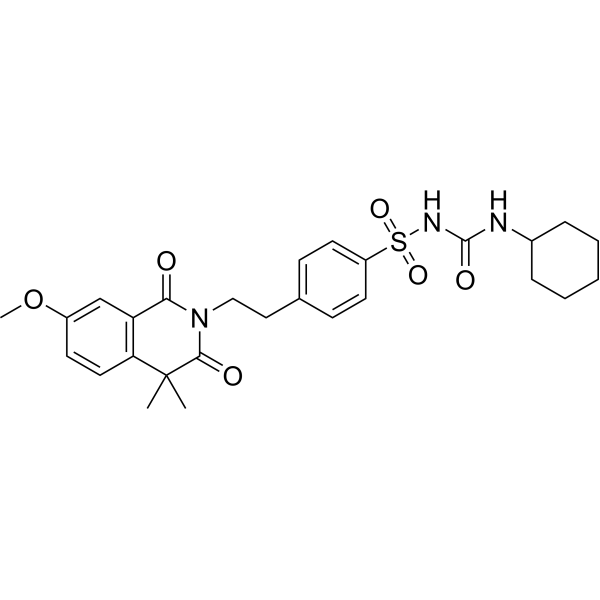
Gliquidone can bind to the pancreatic β-cells and increases insulin release to regulate blood glucose levels. Gliquidone significantly decreases LPS (HY-D1056)-induced proinflammatory responses and inhibits ERK/STAT3/NF-κB phosphorylation in BV2 microglial cells. Gliquidone can suppress microgliosis, microglial hypertrophy mediated by LPS, and proinflammatory cytokine COX-2 and IL-6 levels in murine model. Gliquidone also exhibits good anticancer activity in lung carcinoma cells. Gliquidone has antioxidant property. Gliquidone can be studied in research for type 2 diabetes and cancers .
|
-
- HY-15616
-
|
|
Melanocortin Receptor
|
Cancer
|
|
BMS-470539 is a synthetic MC-1R agonist with potent anti-inflammatory properties. BMS-470539 selectively activates human and murine MC-1R with EC50 values ??of 16.8 nM and 11.6 nM, respectively. In vitro studies have shown that BMS-470539 is able to dose-dependently inhibit TNF-alpha-induced NF-kB activation in human melanoma cells expressing MC-1R. In vivo, subcutaneous injection of BMS-470539 into BALB/c mice effectively inhibited LPS-induced TNF-alpha production with an ED50 of approximately 10 μmol/kg and a pharmacodynamic half-life of approximately 8 hours. It also significantly reduced leukocyte infiltration in a lung inflammation model and attenuated paw swelling in a delayed-type hypersensitivity model, highlighting its efficacy as an anti-inflammatory agent through MC-1R modulation .
|
-
- HY-P9964
-
|
11F8; IMC-11F8; LY3012211
|
EGFR
|
Cancer
|
|
Necitumumab (11F8; IMC-11F8; LY3012211) is a human IgG monoclonal antibody directed against EGFR. Necitumumab binds to the EGF binding site of EGFR, blocks ligand binding, neutralizes ligand-induced EGFR phosphorylation and downstream signaling, induces EGFR internalization and degradation, and mediates antibody-dependent cellular cytotoxicity (ADCC) in EGFR-expressing cells. Necitumumab enhances antitumour activity in combination with Gemcitabine (HY-17026) and Cisplatin (HY-17394) in murine non-small-cell lung cancer xenograft models. Necitumumab can be used in research on cancers such as non-small cell lung cancer and colorectal cancer .
|
-
- HY-122566
-
|
ZINC666243
|
Toll-like Receptor (TLR)
TNF Receptor
|
Cancer
|
|
SMU127 is an agonist of the toll-like receptor 1/2 (TLR1/2) heterodimer. It induces NF-κB signaling in cells expressing human TLR2 (EC50=0.55 μM) but not cells expressing human TLR3, -4, -5, -7, or -8 when used at concentrations ranging from 0.1 to 100 μM. SMU127 induces the production of TNF-α in isolated human peripheral blood mononuclear cells (PBMCs) when used at concentrations ranging from 0.01 to 1 μM. In vivo, SMU127 (0.1 mg/animal) reduces tumor volume in a 4T1 murine mammary carcinoma model.
|
-
- HY-183593
-
|
|
Phosphatase
Akt
Interleukin Related
|
Neurological Disease
|
|
SHIP1-IN-1 is an orally active, blood-brain barrier-permeable SHIP1 ligand. SHIP1-IN-1 exhibits IC50 values of 384 μM and 177 μM against human SHIP1, and an IC50 value of 379 μM against murine SHIP1. SHIP1-IN-1 alters the binding state of SHIP1 to phosphatidylinositol membranes, and regulates phosphoinositide pools and phosphorylated AKT levels. SHIP1-IN-1 enhances the uptake of myelin/membrane fragments and amyloid proteins by microglia, alters gene expression and reduces IL-1β levels. SHIP1-IN-1 can be used in studies related to Alzheimer's disease .
|
-
- HY-182034
-
|
|
Toll-like Receptor (TLR)
Interleukin Related
TNF Receptor
|
Inflammation/Immunology
|
|
GAP214 is a monosaccharide lipid A analogue and TLR4/MD-2 complex modulator.GAP214 binds to the TLR4/MD-2 complex via hydrophobic interactions, salt bridges, and hydrogen bonds, induces dimerization of the complex to initiate intracellular signaling cascades.GAP214 functions as an immunostimulant and vaccine adjuvant, enhances antigen-specific IgG antibody production in a mouse model .
|
-
- HY-D3190
-
|
|
Fluorescent Dye
Apoptosis
|
Inflammation/Immunology
|
|
BODIPY-DOX is a conjugate composed of BODIPY and Doxorubicin (HY-15142A), as well as a pH-activated fluorescent probe for M1 macrophages and an apoptosis inducer. BODIPY-DOX undergoes pH-induced hydrazone bond cleavage in acidic M1 macrophage phagosomes, thereby releasing cytotoxic Doxorubicin (Dox) and inhibiting the function of pro-inflammatory M1 macrophages. BODIPY-DOX highly selectively inhibits the production of relevant pro-inflammatory cytokines by mouse and human monocyte-derived M1 macrophages, while exerting minimal effects on M2 or unactivated macrophages. Therefore, BODIPY-DOX enables simultaneous fluorescent tracing, differentiation and elimination of specific macrophage subsets, and exhibits the potential to regulate tissue regeneration in zebrafish models .
|
-
- HY-151499
-
|
|
Monoamine Oxidase
|
Others
|
|
PXS-6302 is an irreversible lysyl oxidase inhibitor with IC50s of 3.7 μM (Bovine LOX), 3.4 μM (rh LOXL1), 0.4 μM (rh LOXL2), 1.5 μM (rh LOXL3), 0.3 μM (rh LOXL4), respectively. PXS-6302 has readily skin penetrability, reduces collagen deposition and significantly improves scar appearance .
|
-
- HY-151498
-
|
|
Monoamine Oxidase
|
Others
|
|
PXS-4787 is a specific and effective pan-LOX (lysyl oxidase) inhibitor for abolishing lysyl oxidase activity. PXS-4787 inhibits LOX with IC50s of 2 μM (Bovine LOX), 3.2 μM (rh LOXL1), 0.6 μM (rh LOXL2), 1.4 μM (rh LOXL3), 0.2 μM (rh LOXL4), respectively .
|
-
- HY-151498A
-
|
|
Monoamine Oxidase
|
Others
|
|
PXS-4787 hydrochloride is a specific and effective pan-LOX (lysyl oxidase) inhibitor for abolishing lysyl oxidase activity. PXS-4787 hydrochloride inhibits LOX with IC50s of 2 μM (Bovine LOX), 3.2 μM (rh LOXL1), 0.6 μM (rh LOXL2), 1.4 μM (rh LOXL3), 0.2 μM (rh LOXL4), respectively. PXS-4787 hydrochloride reduces deposition and crosslinking of collagen I secreted by human fibroblasts .
|
-
- HY-151499A
-
|
|
Monoamine Oxidase
|
Inflammation/Immunology
|
|
PXS-6302 hydrochloride is an irreversible lysyl oxidase inhibitor with IC50s of 3.7 μM (Bovine LOX), 3.4 μM (rh LOXL1), 0.4 μM (rh LOXL2), 1.5 μM (rh LOXL3), 0.3 μM (rh LOXL4), respectively. PXS-6302 hydrochloride has readily skin penetrability, reduces collagen deposition and significantly improves scar appearance .
|
-
- HY-P990215
-
|
|
Interleukin Related
|
Infection
Inflammation/Immunology
|
|
Anti-Mouse IL-27 p28 Antibody (MM27.7B1) is a mouse-derived anti-mouse IL-27 p28 IgG2a, κ type antibody inhibitor. Anti-Mouse IL-27 p28 Antibody (MM27.7B1) can neutralize IL-27. Anti-Mouse IL-27 p28 Antibody (MM27.7B1) delays CD8+ T cell reconstitution mediated by IL-27 after murine anti-thymocyte globulin (mATG) treatment in BALB/c heart allografts mice models .
|
-
- HY-155811
-
|
|
iGluR
|
Neurological Disease
|
|
DQP-997-74 (compound 2i) is a selective negative allosteric modulator of N-methyl-d-aspartate receptor (NMDAR), specifically targeting GluN2C/D (IC50: 0.069 μM and 0.035 μM), with blood-brain barrier penetrability. Where DQP refers to dihydroquinoline-pyrazoline. DQP-997-74 acts synergistically with the agonist glutamate to exhibit time-dependent enhanced potency in inhibiting hypersynchronous activity driven by high-frequency excitatory synaptic transmission. DQP-997-74 reduces the number of epileptogenesis in a murine model of tuberous sclerosis complex (TSC)-induced epilepsy. DQP-997-74 can be used for research on NMDAR-related neurological diseases .
|
-
- HY-181663
-
|
|
PD-1/PD-L1
JAK
|
Cancer
|
|
PJ27 is a dual PD-1/PD-L1/JAK1 inhibitor, with an IC50 of 414 nM against PD-1/PD-L1, an IC50 of 786 nM against JAK1, a Ka of 294 nM for human PD-1/PD-L1, and a Ka of 473 nM for murine PD-1/PD-L1. PJ27 promotes the infiltration of CD3 +CD8 + and CD3 +CD4 + cells into the tumor microenvironment and exerts a significant immune activation effect. PJ27 inhibits tumor growth in a dose-dependent manner in the LLC lung cancer mouse model. PJ27 is applicable to relevant research on lung cancer .
|
-
- HY-101741
-
|
A-289099
|
Microtubule/Tubulin
Apoptosis
|
Cancer
|
|
A-259745 is an orally active antimitotic agent that binds to the colchicine-binding site of tubulin. A-259745 exhibits potent in vitro cytotoxic activity against both multi-drug-resistant and non-multi-drug-resistant cancer cell lines, with ED50 values of 0.018 μM against HCT-15 and 0.028 μM against NCI-H460 cell lines. A-259745 inhibits tubulin polymerization, disrupts the dynamic equilibrium of the mitotic spindle, arrests dividing cells in metaphase, and subsequently induces apoptosis. A-259745 shows dose-dependent antitumor efficacy in murine tumor models. A-259745 can be used for the study of cancer .
|
-
- HY-B1114R
-
|
AR-DF 26 (Standard)
|
Potassium Channel
Reference Standards
ERK
STAT
NF-κB
COX
Interleukin Related
|
Metabolic Disease
|
|
Gliquidone (Standard) is the analytical standard of Gliquidone. This product is intended for research and analytical applications. Gliquidone can bind to the pancreatic β-cells and increases insulin release to regulate blood glucose levels. Gliquidone significantly decreases LPS (HY-D1056)-induced proinflammatory responses and inhibits ERK/STAT3/NF-κB phosphorylation in BV2 microglial cells. Gliquidone can suppress microgliosis, microglial hypertrophy mediated by LPS, and proinflammatory cytokine COX-2 and IL-6 levels in murine model. Gliquidone also exhibits good anticancer activity in lung carcinoma cells. Gliquidone has antioxidant property. Gliquidone can be studied in research for type 2 diabetes and cancers .
|
-
- HY-175041
-
|
|
Glutathione Peroxidase
Reactive Oxygen Species (ROS)
Cannabinoid Receptor
Ferroptosis
|
Cancer
|
|
GPX4-IN-18 (Compound 17) is a ferrocene-containing inhibitor of glutathione peroxidase 4 (GPX4). GPX4-IN-18 is also an inducer of ferroptosis. GPX4-IN-18 can increase the production of ROS and malondialdehyde (MDA) levels in OS-RC-2 clear cell renal cell carcinoma cells. GPX4-IN-18 induces ferroptosis in HT-1080 cells with IC50s of 0.007 μM (absence of ferrostatin-1) and 1.486 μM (presence of ferrostatin-1). GPX4-IN-18 reduces in vivo tumor volume and intratumoral GPX4 levels in OS-RC-2 xenograft murine model .
|
-
- HY-146245
-
-
- HY-182387
-
|
|
Radionuclide-Drug Conjugates (RDCs)
|
Cancer
|
|
NM404 is a targeted radionuclide processing agent with slow clearance. Radioiodine-labeled NM404 is a small-molecule phospholipid ether analog that exhibits significant tumor uptake capacity and persistent tumor retention properties in more than 45 spontaneous and xenograft tumor models .
|
-
- HY-N16465
-
|
|
Apoptosis
Reactive Oxygen Species (ROS)
STAT
|
Inflammation/Immunology
|
|
Cinnamtannin D1 is an orally active polyphenolic compound with immunosuppressive activity. Cinnamtannin D1 regulates the balance of Th17/Treg cells by inhibiting AHR expression. Cinnamtannin D1 reduces apoptosis and ROS in INS-1 cells and primary cultured murine islets induced by Palmitic acid (PA) (HY-N0830). Cinnamtannin D1 reduces Th17 cell differentiation via downregulating p-STAT3/RORγt and promotes Treg cell differentiation via upregulating p-STAT5/Foxp3. Cinnamtannin D1 exerts excellent anti-arthritic efficacy in collagen-induced arthritis (CIA) model of mice. Cinnamtannin D1 can be used for the study of rheumatoid arthritis (RA) .
|
-
- HY-178949
-
|
|
Antibiotic
Bacterial
DNA/RNA Synthesis
|
Infection
|
|
MRSA antibiotic 3 (Compound C8) is a small-molecule antibiotic active against Methicillin (HY-121544)-resistant Staphylococcus aureus (MRSA), showing a MIC of 0.5 μg/mL against the standard S. aureus strain (ATCC 29213). MRSA antibiotic 3 potently inhibits the ATPase activity of S. aureus DNA gyrase with an IC50 of 0.32 μM. MRSA antibiotic 3 exhibits strong inhibitory activity against five clinical MRSA isolates, with MIC values ranging from 0.5 to 1 μg/mL. MRSA antibiotic 3 demonstrates negligible cytotoxicity at effective antibacterial concentrations and causes no hemolysis in erythrocytes even at extremely high concentrations. MRSA antibiotic 3 shows significant protective effects in both Galleria mellonella infection and murine sepsis models .
|
-
- HY-159905
-
|
|
MAP4K
|
Inflammation/Immunology
|
|
HPK1-IN-54 is a potent HPK1 (Hematopoietic Progenitor Kinase 1) inhibitor that enhances T cell activation and proliferation by inhibiting HPK1 activity, thereby exhibiting antitumor effects. Its IC50 value against HPK1 is 2.67 nM, with excellent selectivity over the MAP4K family (>100-fold) and other selected kinases (>300-fold). HPK1-IN-54 displayed moderate in vivo clearance and reasonable oral exposure in mice and rats. Additionally, HPK1-IN-54 demonstrated strong antitumor efficacy in a CT26 murine colon cancer model and synergistic effects when combined with anti-PD-1 (HY-P9902A). HPK1-IN-54 shows promise for research in the field of immunotherapy .
|
-
- HY-163394
-
|
|
Cannabinoid Receptor
|
Neurological Disease
Inflammation/Immunology
|
|
CB2 receptor agonist 6 (compound 70) is an agonist of CB2R, with EC50 of 162 nM. The IC50 values of CB2 receptor agonist 6 are 4.83 μM for CB1R and 0.88 μM for CB2R.
CB2 receptor agonist 6 is a neuroprotective agent that can be used for the reseach of neurological disease .
|
-
- HY-159730
-
|
|
Aminotransferases (Transaminases)
|
Inflammation/Immunology
Cancer
|
|
ERG245 is a selective amino acid aminotransferase (BCAT1) inhibitor with a human IC50 of 0.5 nM. ERG245 enhances oxidative phosphorylation (OXPHOS) in CD8 + T cells by specifically inhibiting BCAT1 activity, thereby increasing the cytotoxicity of CD8 + T cells. ERG245 shows anti-inflammatory and anti-tumor activities. ERG245 can be used for the researches of cancer anf inflammation, such as colitis and colon cancer .
|
-
- HY-P991995
-
|
OMTX705 antibody
|
ADC Antibody
FAP
|
Cancer
|
|
OMTX005 (OMTX705 antibody) is a humanized anti-FAP IgG1 monoclonal antibody that specifically binds to human (EC50: 0.33 nM)/mouse (EC50: 0.14 nM) FAP proteins and FAP-positive cells. OMTX005 exhibits no cytotoxicity when used alone and fails to induce an increase in caspase 3/7 activity in relevant cells. OMTX005 can be used to synthesize the ADC molecule OMTX705 for tumor research .
|
-
- HY-183607
-
|
|
STING
PD-1/PD-L1
IFNAR
Interleukin Related
CXCR
|
Cancer
|
|
SMU-3k is a STING activator and PD-L1 inhibitor, with a PD-L1 IC50 of 106 nM, a KD of 386 nM for human PD-L1, and a KD of 352 nM for murine PD-L1. SMU-3k activates the STING pathway, induces phosphorylation of TBK1 and IRF3, and promotes the expression of IFN-β, IL-6 and CXCL10. SMU-3k blocks the PD-1/PD-L1 interaction, reduces PD-L1 levels and induces PD-L1 internalization. Through dual immunomodulation, SMU-3k exerts synergistic tumor growth inhibitory effects in a mouse colon cancer model. SMU-3k can be used for the research of colon cancer .
|
-
- HY-169480
-
|
|
Liposome
|
Infection
Cancer
|
|
Lipid C2 is an ionizable cationic lipid that has been used in the formation of lipid nanoparticles (LNP) for mRNA delivery in vivo. LNPs containing Lipid C2 and encapsulating an mRNA reporter selectively accumulate in the liver and spleen but not the heart, lungs, or kidneys in mice. LNP containing Lipid C2 and encapsulating mRNA encoding the Epstein-Barr virus (EBV) protein latent membrane protein 2 (LMP-2), in combination with an anti-programmed cell death protein 1 (PD-1) antibody, decrease tumor volume and reverse T cell exhaustion, as well as increase the percentage of CD3 +CD8 + central and CD3 +CD8 + effector memory T cells and decrease the percentage of CD3 + T cells expressing Pd-1, in the spleen in a CT26 murine EBV-infected colon cancer model .
|
-
- HY-172200A
-
|
|
PD-1/PD-L1
HDAC
|
Inflammation/Immunology
Cancer
|
|
PD-L1/HDAC6-IN-1 TFA is an orally active dual inhibitor of PD-L1 and HDAC6, with IC50 values of 26.8 nM and 78 nM, respectively. PD-L1/HDAC6-IN-1 TFA binds to human and murine PD-L1 proteins with high affinity, while it reduces STAT3 phosphorylation and downregulates PD-L1 expression by inhibiting HDAC6, thus blocking the PD-1/PD-L1 interaction. PD-L1/HDAC6-IN-1 TFA exhibits potent anti-tumor activity in a mouse melanoma model. PD-L1/HDAC6-IN-1 is suitable for research on tumor immune regulation related to melanoma .
|
-
- HY-179452
-
|
|
Ras
CDK
Mitochondrial Metabolism
|
Cancer
|
|
KRAS G13D-IN-2 (compound 8B) is a potent orally active KRAS G13D inhibitor with IC50 values of 1.95 μM (HCT-116 G13D) and 2.16 μM (HCT-15 G13D). KRAS G13D-IN-2 induces G1-phase arrest and mitochondrial membrane depolarization. KRAS G13D-IN-2 induces senescence through CDK6/TWIST1 inhibition. KRAS G13D-IN-2 inhibits tumor growth in murine models. KRAS G13D-IN-2 can be used for KRAS G13D-mutant colorectal cancer research .
|
-
- HY-172200
-
|
|
PD-1/PD-L1
HDAC
|
Inflammation/Immunology
Cancer
|
|
PD-L1/HDAC6-IN-1 is an orally active dual inhibitor of PD-L1 and HDAC6, with IC50 values of 26.8 nM and 78 nM, respectively. PD-L1/HDAC6-IN-1 binds to human and murine PD-L1 proteins with high affinity, while it reduces STAT3 phosphorylation and downregulates PD-L1 expression by inhibiting HDAC6, thus blocking the PD-1/PD-L1 interaction. PD-L1/HDAC6-IN-1 exhibits potent anti-tumor activity in a mouse melanoma model. PD-L1/HDAC6-IN-1 is suitable for research on tumor immune regulation related to melanoma .
|
-
- HY-19938
-
|
|
Biochemical Assay Reagents
|
Cancer
|
|
MTL-005 is a boron-containing radiosensitizer used in Boron Neutron Capture Therapy (BNCT). MTL-005 enriches the boron-10 isotope in tumor tissues, causing nuclear fission under thermal neutron irradiation, releasing high linear energy transfer (LET) α particles and lithium ions, which selectively destroy tumor cells while minimizing damage to surrounding normal tissues. MTL-005 significantly controlls the tumor progression in the SCCVII squamous cell carcinoma mouse model and prolonged the survival of the mice. MTL-005 can be used to study solid tumors such as head and neck cancer.
|
-
- HY-156850
-
|
|
HDAC
NF-κB
|
Cancer
|
|
ITF 3756 is a selective, orally active HDAC6 inhibitor. ITF 3756 antagonizes TNF-α-induced activation of the NF-κB pathway. ITF 3756 reduces PD-L1 expression on human monocytes and CD8 + T cells, and exhibits antitumor activity. ITF 3756 can be used in colon cancer-related research .
|
-
- HY-113040B
-
|
(±)-17(S),18(R)-EETeTr
|
Drug Isomer
|
Others
|
|
(±)-(17S,18R)-Epoxyeicosatetraenoic acid ((±)-17 (S),18 (R)-EETeTr) is one of the constituent enantiomers of (±) 17 (18)-EpETE. (±) 17 (18)-EpETE is an active metabolite of the ω-3 fatty acid eicosapentaenoic acid, and also an agonist of sphingosine-1-phosphate receptor 1 (S1P1) .
|
-
- HY-182058
-
|
|
Beta-lactamase
|
Infection
|
|
ATM potentiator-1 (compound 9) is a β-lactamase inhibitor and efflux pump inhibitor, with an IC50 of 1.6 μM against NDM-1, IC50 values of 12.5 μM and 5.4 μM against OXA-10, an IC50 of 5.0 μM against VIM-2, an IC50 of 26.7 μM against KPC-2, and an IC50 of 3.4 μM against OXA-48. ATM potentiator-1 inhibits the efflux pump activity of *Pseudomonas aeruginosa* and exerts a synergistic inhibitory effect when combined with CCCP. ATM potentiators-1 can be used for the research of carbapenem-resistant *Pseudomonas aeruginosa* (CRPA) infections .
|
-
- HY-182919
-
|
|
Cuproptosis
Reactive Oxygen Species (ROS)
|
Cancer
|
|
Antitumor photosensitizer-10 is an antitumor photosensitizer. Upon near-infrared irradiation, Antitumor photosensitizer-10 generates superoxide anions, reduces the copper-binding capacity of glutathione, releases copper ions, and thereby induces cuproptosis in tumor cells (cuproptosis). Antitumor photosensitizer-10 can be used in breast cancer-related research .
|
-
- HY-W162436
-
|
|
Polo-like Kinase (PLK)
Akt
Apoptosis
Necroptosis
Autophagy
|
Cancer
|
|
MCC1019 is a selective PLK1 PBD inhibitor with an IC50 of 16.4 μmol/L. MCC1019 inactivates the AKT signaling pathway in cancer cells, and induces Apoptosis, Necroptosis and Autophagy. MCC1019 exhibits anticancer activity against lung cancer and prostate cancer .
|
-
- HY-W591838
-
|
PFPeS
|
Biochemical Assay Reagents
Phosphatase
|
Metabolic Disease
|
|
Perfluoropentanesulfonic acid (PFPeS) is a per- and polyfluoroalkyl substance. Perfluoropentanesulfonic acid increases alkaline phosphatase (ALKP). Perfluoropentanesulfonic acid induces systemic toxicity in mouse models and alters the expression of genes related to fatty acid metabolism, inflammation and skin integrity in the liver and skin .
|
-
- HY-181514
-
|
|
STAT
CDK
c-Myc
Apoptosis
|
Cancer
|
|
STAT3-IN-53 (Compound L20) is a STAT3 inhibitor with a Kd value of 6.16 μM. STAT3-IN-53 binds directly to the SH2 domain of STAT3, inhibits phosphorylation at the Y705 site without affecting the total STAT3 protein level, and suppresses the IL-6/JAK/STAT3 pathway. STAT3-IN-53 downregulates the transcription and expression of cyclin-D1 and c-Myc. STAT3-IN-53 induces cell cycle arrest and promotes Apoptosis. STAT3-IN-53 exhibits anticancer activity against colorectal cancer .
|
-
- HY-P99358
-
|
GSK 2398852; Anti-Serum Amyloid P/SAP Reference Antibody (dezamizumab)
|
Complement System
|
Inflammation/Immunology
|
|
Dezamizumab (GSK 2398852) is a fully humanized clonal IgG1 antibody against serum amyloid P component (SAP) with complement activation and amyloid clearance-inducing activities. Dezamizumab binds to SAP associated with amyloid deposits to form complexes that activate complement and mediate phagocytic clearance, triggering activation of the classical complement pathway. Dezamizumab can be used for the research of systemic amyloidosis .
|
-
- HY-182325
-
|
|
Proteasome
Interleukin Related
|
Neurological Disease
|
|
DB-310 is a selective immunoproteasome LMP2 inhibitor with an IC50 value of 80.62 nM. DB-310 inhibits the production of IL-1α in microglia. DB-310 improves cognitive function in the Tg2576 transgenic mouse model of Alzheimer's disease. DB-310 can be used for research related to Alzheimer's disease .
|
-
- HY-169859
-
|
|
Prostaglandin Receptor
Interleukin Related
|
Inflammation/Immunology
Cancer
|
|
EP4 receptor antagonist 7 (Compound 14) is an antagonist of the prostaglandin E2 (PGE2) receptor subtype EP4 with an IC50 value of 1.1 nM. EP4 receptor antagonist 7 inhibits PGE2-induced β-arrestin recruitment in HEK293 cells with an IC50 value of 0.9 nM. EP4 receptor antagonist 7 decreases PGE2-induced expression of mRNA encoding IL-4, macrophage mannose receptor 1 (Mrc1), chitinase-like protein 3 (Chil3), chemokine (C-X-C) motif ligand 1 (Cxcl1), triggering receptor expressed on myeloid cells 2 (Trem2), and arginase-1 (Arg1), in RAW 264.7 macrophages. EP4 receptor antagonist 7 combined with an anti-PD-1 antibody inhibits tumor growth and increases infiltration of CD 8+ T cells into tumors in a CT26 murine colon cancer model .
|
-
- HY-172891
-
|
|
CDK
HDAC
Apoptosis
|
Cancer
|
|
CDK9/HDAC1/HDAC3-IN-1 is dual-functional inhibitor of CDK9 and HDAC. CDK9/HDAC1/HDAC3-IN-1 inhibits the protein activity of CDK9/HDAC/HDAC3 with IC50 s of 0.17 μM, 1.73 μM and 1.11 μM for CDK9, HDAC1, and HDAC3, respectively. CDK9/HDAC1/HDAC3-IN-1 inhibits cancer cells by inducing cell apoptosis and cell cycle arrest in the G2/M phase, as well as tumor growth in a murine TNBC MDA-MB-231 xenograft model. CDK9/HDAC1/HDAC3-IN-1 has a broad-spectrum anti-cancer activity, such as breast cancer, cervical cancer, and liver cancer .
|
-
- HY-172208
-
|
|
PROTACs
Cyclic GMP-AMP Synthase
|
Inflammation/Immunology
|
|
PROTAC cGAS degrader-1 is a potent and selective cGAS PROTAC degrader, with DC50 values of 0.9 μM and 4.6 μM in THP-1 and RAW 264.7 cells, respectively. PROTAC cGAS degrader-1 induces proteasome-mediated degradation of cGAS, inhibits the cGAS signaling pathway, and attenuates double-stranded DNA-induced activation of cGAS in human and mouse cells. PROTAC cGAS degrader-1 is applicable to research related to ulcerative colitis .
|
-
- HY-183557
-
|
|
OGA
|
Neurological Disease
|
|
O-GlcNAcase-IN-6 is an orally active, blood-brain barrier-permeable O-GlcNAcase (OGA) inhibitor with an IC50 of 5.4 nM. O-GlcNAcase-IN-6 inhibits OGA activity, thereby increasing the level of O-GlcNAc glycosylation in brain tissues. O-GlcNAcase-IN-6 can be used for the research of Alzheimer's disease .
|
-
- HY-183080
-
|
|
Bacterial
Penicillin-binding protein (PBP)
|
Infection
|
|
VNRX-14079 is an antibacterial agent and PBP2 inhibitor, with an IC50 value of 1.7 μM against wild-type Neisseria gonorrhoeae PBP2. VNRX-14079 forms a covalent bond with Ser310 of PBP2, interacts with multiple residues of PBP2 to stabilize the complex, and induces an inward conformational change of the β3-β4 loop in chimeric PBP2. VNRX-14079 exhibits antibacterial activity against Ceftriaxone (HY-B0712)-resistant Neisseria gonorrhoeae strains. VNRX-14079 can be used in the research of gonorrhea .
|
-
- HY-P991267
-
|
|
Interleukin Related
|
Inflammation/Immunology
|
|
CAN10 is is a humanized monoclonal antibody inhibitor targeting interleukin 1RAP (IL1RAP). CAN10 blocks IL-1, IL-33, and IL-36 signalling by targeting IL1RAP, preventing downstream proinflammatory and profibrotic responses. CAN10 reduces dermal and pulmonary fibrosis. CAN10 can be used for the research of immune system diseases, such as systemic sclerosis .
|
-
- HY-P991958
-
|
|
CTLA-4
|
Cancer
|
|
GIGA-564 is a fully human anti-CTLA4 IgG1 monoclonal antibody with a Kd of 9.8 nM. GIGA-564 binds to a unique epitope of CTLA-4, mediates FcR-dependent signaling pathways, depletes CTLA-4-highly-expressing regulatory T cells within tumors, and inhibits the proliferation of peripheral regulatory T cells. GIGA-564 exhibits anti-tumor activity in mouse models. GIGA-564 can be used for tumor research .
|
-
- HY-16491
-
|
DJ-927
|
Microtubule/Tubulin
|
Cancer
|
|
Tesetaxel (DJ-927) is an orally active and brain-penetrant taxane tubulin inhibitor. Tesetaxel inhibits tubulin depolymerization with an IC50 of 0.44 μM. Tesetaxel inhibits cancer cells proliferation and shows potent antitumor activity against P-glycoprotein-positive cancer cells. Tesetaxel can be used for the research of cancer, such as solid tumors, liver metastasis, and advanced breast cancer .
|
-
- HY-183333
-
|
|
Fungal
|
Infection
|
|
CHNQD-02204 is a potent and selective antifungal agent with in vitro activity against Candida albicans, with a MIC of 0.025 μg/mL. CHNQD-02204 inhibits ergosterol biosynthesis, disrupts the membrane integrity and biofilm formation of Candida albicans, and suppresses the morphological transition of Candida albicans from yeast to hyphal form. CHNQD-02204 can be used in studies related to candidal infections .
|
-
- HY-177963
-
|
|
DNA Methyltransferase
|
Inflammation/Immunology
|
|
NV914 is an inhibitor of FTSJ1 (tryptophan tRNA-specific 2'-O-methyltransferase) that inhibits the methyltransferase activity of FTSJ1, induces translational readthrough of premature termination codons, and enables genes carrying nonsense mutations to synthesize full-length proteins. NV914 belongs to translational readthrough-inducing compounds (TRIDs). NV914 exhibits translational readthrough activity against nonsense mutations in in vitro systems, does not induce readthrough of natural termination codons, and restores CFTR protein expression. NV914 shows favorable acute oral tolerance in mice, with low health risks and good safety profiles. NV914 is applicable to research related to cystic fibrosis and Shwachman-Diamond syndrome .
|
-
- HY-183589
-
|
|
Ferroptosis
Reactive Oxygen Species (ROS)
|
Metabolic Disease
|
|
Ferroptosis-IN-26 is a CEPT1-targeting ferroptosis inhibitor. Ferroptosis-IN-26 enhances CEPT1-dependent phosphatidylcholine remodeling to enrich cellular membranes with monounsaturated fatty acid-containing phosphatidylcholine (PC-MUFA). Ferroptosis-IN-26 suppresses lipid peroxidation. Ferroptosis-IN-26 can be used for the research of acute liver injury .
|
-
- HY-P991228
-
|
|
Galectin
|
Cancer
|
|
LYT-200 is a humanized monoclonal antibody against galectin-9 (Galectin-9). LYT-200 binds to galectin-9 expressed on the surface of hematologic malignant cells, inhibits pro-leukemic functions and induces cell death. LYT-200 can be used in research related to hematologic malignancies .
|
-
- HY-181779
-
|
|
Bacterial
|
Infection
|
|
Pyridomycin-4-F, Pyridomycin (HY-111402) derivative, is an antimycobacterial agent targeting fatty acid synthesis enzyme InhA (enoyl ACP reductase). Pyridomycin-4-F binds to the pyridomycin binding pocket of InhA, forms hydrogen bond interactions with Lys-165. Pyridomycin-4-F can be used for the research of tuberculosis .
|
-
- HY-P992338
-
|
|
Mesothelin
Constitutive Androstane Receptor
|
Inflammation/Immunology
Cancer
|
|
CT-1119 is an autologous human anti-Mesothelin chimeric antigen receptor macrophage (CAR-M). CT-1119 mediates CAR-dependent, antigen-dependent functional activities. CT-1119 acts as a phagocytosis inducer, tumor cell killer, pro-inflammatory cytokine inducer, and M1 macrophage polarizer. CT-1119 exhibits stronger resistance to M2 repolarization and reduces tumor burden in a mouse lung cancer xenograft model. CT-1119 can be used for the research of mesothelin-expressing solid tumors .
|
-
- HY-181966
-
|
|
Bacterial
DNA/RNA Synthesis
Potassium Channel
|
Infection
|
|
Sideromycin 7 is an antibacterial agent. Sideromycin 7 forms a 7-Bi 3+ coordination complex with bismuth citrate, exerting a three-pronged antibacterial mode of action: direct DNA binding to induce damage and arrest replication, suppression of KdpC synthesis to block KdpFABC-mediated potas-sium transport, and inhibition of ATP production. Sideromycin 7 exhibits potent antibacterial activity against Ciprofloxacin (HY-B0356)-resistant Pseudomonas aeruginosa strains. Sideromycin 7 exerts antibiofilm activity against Pseudomonas aeruginosa. Sideromycin 7 can be used for the research of ciprofloxacin-resistant Pseudomonas aeruginosa infection .
|
-
- HY-P11779
-
-
- HY-D3168
-
|
|
Fluorescent Dye
Reactive Oxygen Species (ROS)
|
Inflammation/Immunology
|
|
PCL-2 is a reactive oxygen species-responsive fluorescent probe that shows almost no response to biologically relevant reactive oxygen species other than hydrogen peroxide. PCL-2 reacts with hydrogen peroxide to release 6-hydroxy-2-cyanobenzothiazole. PCL-2 can be used for chemoselective imaging of hydrogen peroxide in in vitro models and acute inflammation mouse models. PCL-2 is applicable to studies related to acute inflammation .
|
-
- HY-113898
-
|
|
Angiotensin-converting Enzyme (ACE)
Toll-like Receptor (TLR)
Interleukin Related
|
Cardiovascular Disease
Neurological Disease
|
|
Ganoderic acid K is a triterpenoid compound. Ganoderic acid K can be isolated from Ganoderma lucidum. Ganoderic acid K inhibits ACE activity with an IC50 of 2.6×10 -5 M. Ganoderic acid K exhibits direct, high-affinity binding to recombinant MD2 protein, with a Kd value of 0.47 μM. It potently inhibits LPS-induced release of TNF-α and IL-6. It reduces cerebral infarction volume and ameliorates neurological dysfunction in mice with ischemic stroke in the tMCAO model. Ganoderic acid K can be used in studies related to hypertension and ischemic stroke .
|
-
- HY-182033
-
|
|
Bacterial
ClpP
|
Infection
|
|
ClpP agonist 1 is a Staphylococcus aureus ClpP (SaClpP) agonist with an EC50 of 1.44 μM, Kd values of 2.95 μM (isothermal titration calorimetry) and 18 μM (bio-layer interferometry), and a low drug resistance frequency. ClpP agonist 1 reduces bacterial load, shrinks infected area and improves histopathological outcomes in a mouse skin infection model. ClpP agonist 1 can be used for the research of Methicillin (HY-121544)-resistant Staphylococcus aureus (MRSA) skin infections .
|
-
- HY-10823
-
|
GW1843; 1843U89; OSI-7904
|
Thymidylate Synthase
DNA/RNA Synthesis
|
Cancer
|
|
OSI-7904L (GW1843; 1843U89; OSI-7904) is a thymidylate synthase (TS) inhibitor with a Ki of 90 pM. OSI-7904L blocks de novo synthesis of thymidine nucleotides, DNA synthesis and induces cell death. OSI-7904L inhibits the growth of human cells, induces tumor regression, and achieves durable antitumor effects in mouse xenograft models. OSI-7904L can be used in research related to colon adenocarcinoma .
|
-
- HY-160215A
-
|
|
TGF-β Receptor
p38 MAPK
TGF-beta/Smad
Interleukin Related
|
Cancer
|
|
GFH018 is an orally active, selective and ATP-competitive TGF-βR1 inhibitor with an IC50 of 40 nM. GFH018 reactivates the immune system by blocking the immunosuppression mediated by regulatory T cells and M2 macrophages. GFH018 inhibits tumor angiogenesis. GFH018 suppresses tumor growth in mouse tumor models. GFH018 can be used for the research of solid tumors, hepatocellular carcinoma, colorectal cancer, breast cancer, and relapsed/metastatic nasopharyngeal carcinoma .
|
-
- HY-186196
-
|
|
Ferroptosis
Reactive Oxygen Species (ROS)
|
Cancer
|
|
Fentomycin-1 is a ferroptosis inducer. Fentomycin-1 activates lysosomal iron 2+ under acidic conditions with hydrogen peroxide to form a reactive iron-oxo species, which induces oxidative degradation, oxidation, and lipolysis of membrane phospholipids, triggering ferroptosis. Fentomycin-1 can be used for the research of pancreatic ductal adenocarcinoma, breast cancer metastasis, and melanoma .
|
-
- HY-P10739
-
|
|
Exosomes
Collagen
|
Inflammation/Immunology
|
|
WYRGRL is a selective, high-affinity collagen type II-binding peptide with a IC50 of 140 nM. Collagen type II is the most abundant and specific structural protein in the extracellular matrix of articular cartilage. WYRGRL can precisely target small-molecule compounds such as Dexamethasone (HY-14648) and nanocarrier-engineered exosomes to cartilage, significantly enhancing their therapeutic effects on osteoarthritis .
|
-
- HY-183308
-
|
|
Fungal
|
Infection
|
|
Antifungal agent-161 (Compound 7) is an Antifungal agent. Antifungal agent-161 potently inhibits Candida albicans ATCC 36082 (with a MIC of 1.32 μM) and Candida glabrata ATCC 2001 (with a MIC of 1.66 μM). Antifungal agent-161 reduces fungal loads in infected mice and eliminates Candida albicans and Candida glabrata infections. Antifungal agent-161 can be used for the research of candidiasis .
|
-
- HY-160215
-
|
|
TGF-β Receptor
p38 MAPK
TGF-beta/Smad
Interleukin Related
|
Cancer
|
|
GFH018 is an orally active, selective and ATP-competitive TGF-βR1 inhibitor with an IC50 of 40 nM. GFH018 reactivates the immune system by blocking the immunosuppression mediated by regulatory T cells and M2 macrophages. GFH018 inhibits tumor angiogenesis. GFH018 suppresses tumor growth in mouse tumor models. GFH018 can be used for the research of solid tumors, hepatocellular carcinoma, colorectal cancer, breast cancer, and relapsed/metastatic nasopharyngeal carcinoma .
|
-
- HY-P991155
-
|
JNJ-79635322; JNJ-5322
|
CD3
TNF Receptor
|
Cancer
|
|
Ramantamig (JNJ-79635322) is a humanized monoclonal antibody targeting human CD3ε, GPRC5D, and TNFRSF17 (BCMA). Ramantamig binds to BCMA and GPRC5D on multiple myeloma cells, binds to CD3ε on T cells, forms immunological synapses, and enables T-cell-mediated cytotoxicity. Ramantamig activates T cells concomitantly with inducing myeloma cell cytotoxicity, with no nonspecific T-cell activation in the absence of target myeloma cells. Ramantamig carries mutations to reduce interaction with Fc receptors and disrupt protein A binding of monomeric and homodimerized chains. Ramantamig can be used for the research of multiple myeloma .
|
-
- HY-P992151
-
|
LT1002
|
LPL Receptor
Interleukin Related
|
Cardiovascular Disease
Neurological Disease
Inflammation/Immunology
Cancer
|
|
Sphingomab (LT1002) is a mouse-derived IgG1 κ monoclonal antibody and also an inhibitor targeting S1P, with high affinity for S1P and a Kd value of 0.03 ± 0.002 nM. Sphingomab blocks S1P-mediated IL-8 release in ovarian cancer cells. Sphingomab exhibits anti-angiogenic activity in a mouse model of choroidal neovascularization. Sphingomab reduces peripheral blood lymphocyte counts. Sphingomab can be used in the research of ovarian cancer and age-related macular degeneration .
|
-
- HY-183626
-
|
|
PAI-1
Ser/Thr Protease
Furin
MMP
Notch
Apoptosis
|
Inflammation/Immunology
Cancer
|
|
TM5614 sodium is an orally active and specific PAI-1 inhibitor with an IC50 of <6.95 μM. TM5614 sodium blocks the interaction between PAI-1 and serine proteases or LRP-1, and enhances plasmin generation. TM5614 sodium restores macrophage efferocytosis and promotes macrophage polarization. TM5614 sodium alleviates PAI-1-mediated inhibition of Furin, promotes MT1-MMP maturation, activates the NOTCH1 signaling pathway, inhibits proliferation and induces apoptosis. TM5614 sodium promotes skeletal muscle regeneration and alleviates inflammation in a mouse model of skeletal muscle injury. TM5614 sodium can be used in research on skeletal muscle injury-induced inflammation and chronic myeloid leukemia .
|
-
- HY-P991316
-
|
DX-2400; DX-2410
|
MMP
NO Synthase
|
Inflammation/Immunology
Cancer
|
|
KD014 (DX-2400) is a human monoclonal antibody that selectively targets MMP‑14. KD014 inhibits collagen degradation and regulates the polarization of macrophages toward an anti-inflammatory/anti-tumor phenotype. KD014 alleviates joint damage in rheumatoid arthritis and suppresses tumor growth and invasion. KD014 can be used in studies related to breast cancer and rheumatoid arthritis .
|
-
- HY-119726B
-
|
|
Fungal
|
Infection
|
|
Fosmanogepix TFA (APX001 TFA) is an orally active APX001A (HY-18233) prodrug and antifungal agent. Fosmanogepix TFA is effective against Cryptococcus neoformans, Fluconazole (HY-B0101)-resistant C. auris. Fosmanogepix TFA is effective in the treatment of invasive pulmonary aspergillosis and pulmonary murine mucormycosis .
|
-
- HY-P992417
-
|
|
CD20
Apoptosis
|
Cancer
|
|
MT-3724 is a CD20-targeted endotoxin B. MT-3724 binds to CD20, triggers receptor internalization, traffics to the endoplasmic reticulum, and induces permanent ribosomal inactivation to mediate cell killing. MT-3724 can inhibit protein synthesis and promote tumor cell apoptosis. MT-3724 can be used for the research of relapsed or refractory B-cell non-Hodgkin’s lymphomas and diffuse large B-cell lymphoma .
|
-
- HY-W783351
-
|
Coppersensor 790 acetoxymethyl ester
|
Fluorescent Dye
|
Metabolic Disease
|
|
CS790AM (Coppersensor 790 acetoxymethyl ester) is a cell-permeable, Cu +-targeted near-infrared fluorescent probe (λabs=760 nm, λem=790 nm) applicable to live cells. CS790AM can cross lipophilic cell membranes, and is converted into negatively charged CS790 under the action of intracellular esterases to be retained, thus enabling highly sensitive, reversible "turn-on" detection of labile Cu + pools in live cells and mice. CS790AM possesses excellent biocompatibility and selectivity, avoids interference from other metal ions, shows no obvious toxicity, and can be rapidly cleared. CS790AM allows long-term longitudinal monitoring of individual mice, visualizes copper levels in internal organs and isolated livers, and effectively evaluates abnormal copper accumulation in Wilson's disease models (Atp7b -/-) as well as dynamic changes after chelator treatment. CS790AM can be used for research on Wilson's disease and related copper metabolic disorders .
|
-
- HY-P10086
-
|
Human TREM-1(213-221)
|
TREM receptor
TNF Receptor
Interleukin Related
c-Fms
|
Neurological Disease
Inflammation/Immunology
Cancer
|
|
TREM-1 inhibitory peptide GF9 (Human TREM-1 (213-221)) is a TREM-1 inhibitor. TREM-1 inhibitory peptide GF9 blocks the TREM-1 signaling pathway via a ligand-independent mechanism, spontaneously inserts into the cell membrane to dissociate TREM-1 from DAP-12, and functions through the Signaling Chain Homooligomerization (SCHOOL) model. TREM-1 inhibitory peptide GF9 reduces the levels of TNFα, IL-1β, IL-6, and M-CSF. TREM-1 inhibitory peptide GF9 inhibits tumor growth, prolongs the survival of mice with pancreatic cancer models, ameliorates collagen-induced arthritis, and exerts protective effects on bone and cartilage simultaneously. TREM-1 inhibitory peptide GF9 can be used in research related to arthritis, pancreatic cancer, retinopathy, alcoholic liver disease, and liver cancer .
|
-
- HY-P11430
-
|
|
Biochemical Assay Reagents
|
Infection
|
|
UBI (31-38) is a Ubiquicidin-derived octapeptide and anti-bacterial agent. UBI (31-38) selectively interacts with anionic phospholipid membranes and restricts lipid lateral motion. UBI (31-38) induces anionic vesicle aggregation via electrostatic repulsion screening, and undergoes conformational changes in membrane-mimicking environments. UBI (31-38) can be used for the research of infection imaging probes .
|
-
- HY-113011
-
|
|
Endogenous Metabolite
|
Others
|
|
Maltotriose is a maltooligosaccharide and a specific inducer of the Escherichia coli maltose operon. The oligosaccharide structure of Maltotriose acts as a highly efficient drug delivery carrier, which significantly enhances the targeting ability and water solubility of photosensitizers in photodynamic therapy for pancreatic cancer .
|
-
- HY-N0600
-
|
|
Interleukin Related
IFNAR
NF-κB
|
Inflammation/Immunology
|
|
Ginsenoside F3 is a saponin extracted from the leaves of Panax ginseng with immunoenhancing and antitumor immunostimulatory activities. Ginsenoside F3 upregulates RIPOR2 with a Kd value of 3.77 μM. Ginsenoside F3 enhances NF‑κB activation, upregulates T‑bet and downregulates GATA‑3, increases the production of IL‑2 and IFN‑γ, decreases the production of IL‑4 and IL‑10, reverses CD8⁺ T‑cell exhaustion, restores cytokine secretion, and enhances antitumor immunity in a mouse non‑small cell lung cancer model. Ginsenoside F3 can be used for the research of non-small cell lung cancer .
|
-
- HY-118144
-
|
|
Src
Bcr-Abl
p38 MAPK
|
Cancer
|
|
PD166326 is an orally active tyrosine kinase inhibitor with a IC50 of 8 nM against abl tyrosine kinase and a IC50 of 6 nM against src tyrosine kinase. PD166326 blocks Bcr/Abl kinase activity. PD166326 inhibits Bcr/Abl-dependent proliferation and cell cycle progression. PD166326 reduces peripheral blood granulocytosis, alleviates splenomegaly and prolongs survival in a mouse model of chronic myeloid leukemia. PD166326 can be used in research related to chronic myeloid leukemia .
|
-
- HY-N5084
-
|
|
TRP Channel
HDAC
p38 MAPK
JNK
ERK
NF-κB
TNF Receptor
Interleukin Related
|
Neurological Disease
Inflammation/Immunology
Cancer
|
|
Pinocembrin 7-O-[3''-O-galloyl-4'',6''-hexahydroxydiphenoyl]-β-D-glucoside is a TRPV1 antagonist and HDAC7 inhibitor. Pinocembrin 7-O-[3''-O-galloyl-4'',6''-hexahydroxydiphenoyl]-β-D-glucoside blocks TRPV1-mediated calcium influx, suppresses phosphorylation of p65, IκBα, p38, JNK, and ERK1/2, inhibiting NF-κB and MAPK signaling cascades. Pinocembrin 7-O-[3''-O-galloyl-4'',6''-hexahydroxydiphenoyl]-β-D-glucoside reduces production and gene expression of pro-inflammatory cytokines IL-1β, IL-6, and TNF-α. Pinocembrin 7-O-[3''-O-galloyl-4'',6''-hexahydroxydiphenoyl]-β-D-glucoside exhibits potent analgesic activity, elevates thermal pain threshold and mechanical pain threshold in murine models. Pinocembrin 7-O-[3''-O-galloyl-4'',6''-hexahydroxydiphenoyl]-β-D-glucoside restores CD8 + T cell infiltration into bladder cancer tumors and improves bladder cancer immunotherapy efficacy. Pinocembrin 7-O-[3''-O-galloyl-4'',6''-hexahydroxydiphenoyl]-β-D-glucoside can be used for the researches of painand bladder cancer .
|
-
- HY-N2217
-
-
- HY-183784
-
|
|
P2X Receptor
FAK
MMP
|
Cancer
|
|
P2X7R antagonist-1 is an orally active P2X7 receptor antagonist with an IC50 of 3.57 μM. P2X7R antagonist-1 inhibits the proliferation, invasion and metastasis abilities of cancer cells. P2X7R antagonist-1 downregulates the expression of FAK and MMP-9. P2X7R antagonist-1 suppresses tumor growth and metastasis in a mouse breast cancer model. P2X7R antagonist-1 promotes the activation of CD4 and CD8 T cells. P2X7R antagonist-1 can be used in breast cancer-related research .
|
-
- HY-182936
-
|
|
Bacterial
DNA/RNA Synthesis
|
Infection
|
|
Antibacterial agent 338 (Compound 65) is an antibacterial agent and GyrB inhibitor, with an IC50 of 12.60 nM against GyrB from E. coli. Antibacterial agent 338 binds to the ATP-binding domain of E. coli GyrB, thereby inhibiting the ATPase activity of GyrB. Antibacterial agent 338 exhibits broad-spectrum antibacterial activity against multidrug-resistant Gram-negative bacteria. Antibacterial agent 338 reduces bacterial load in a neutropenic mouse thigh infection model. Antibacterial agent 338 can be used for the research of Acinetobacter baumannii infection .
|
-
- HY-108894
-
|
|
Ferroptosis
Reactive Oxygen Species (ROS)
|
Cardiovascular Disease
Inflammation/Immunology
Cancer
|
|
Ferumoxytol is an FDA-approved ultrasmall superparamagnetic iron oxide preparation and iron replacement agent that exerts selective activity against leukemia cells with low ferroportin expression. Ferumoxytol increases intracellular iron levels, induces reactive oxygen species (ROS) production via the Fenton reaction, and triggers oxidative stress and cell death. Ferumoxytol reduces disease burden in mouse models and patient-derived leukemia models. As an MRI contrast agent, Ferumoxytol enables imaging of vascular lesions, tumors and lymph nodes. Ferumoxytol can be used in research related to acute myeloid leukemia and blast-phase chronic myeloid leukemia .
|
-
- HY-182798
-
|
|
Bacterial
Reactive Oxygen Species (ROS)
|
Infection
|
|
Antibacterial agent 337 is an antibacterial agent. Antibacterial agent 337 specifically interacts with PG in bacterial cell membranes, triggering membrane disruption, membrane depolarization, increased permeability, cytoplasmic leakage, ROS accumulation and rapid bacterial death. Antibacterial agent 337 inhibits biofilm formation and disrupts mature biofilms. Antibacterial agent 337 exhibits potent in vivo antibacterial efficacy in a mouse model of Staphylococcus aureus skin abscess. Antibacterial agent 337 can be used in studies of Gram-positive bacterial infections, including methicillin-resistant Staphylococcus aureus infections, vancomycin-resistant Enterococcus faecalis infections and bacterial biofilm infections .
|
-
- HY-183042
-
|
|
p38 MAPK
|
Cancer
|
|
p38α-IN-12 is an orally bioavailable p38α MAPK inhibitor, with an IC50 of 0.11 nM and a Ki of 0.2 nM against human targets. p38α-IN-12 inhibits the production of TNFα in cellular systems and exerts in vivo efficacy in acute mouse models .
|
-
- HY-W011592
-
|
|
NO Synthase
|
Inflammation/Immunology
|
|
N-Phthaloyl-L-glutamic acid is an orally active anti-inflammatory agent. N-Phthaloyl-L-glutamic acid inhibits Lipopolysaccharides (HY-D1056) (LPS)-induced nitric oxide production in murine spleen cells. N-Phthaloyl-L-glutamic acid does not exhibit significant cytotoxicity in vitro against tumor cells and BALB/c mice spleen cell culture. N-Phthaloyl-L-glutamic acid can be used for the research of inflammation .
|
-
| Cat. No. |
Product Name |
Type |
-
- HY-D3190
-
|
|
Fluorescent Dye
|
|
BODIPY-DOX is a conjugate composed of BODIPY and Doxorubicin (HY-15142A), as well as a pH-activated fluorescent probe for M1 macrophages and an apoptosis inducer. BODIPY-DOX undergoes pH-induced hydrazone bond cleavage in acidic M1 macrophage phagosomes, thereby releasing cytotoxic Doxorubicin (Dox) and inhibiting the function of pro-inflammatory M1 macrophages. BODIPY-DOX highly selectively inhibits the production of relevant pro-inflammatory cytokines by mouse and human monocyte-derived M1 macrophages, while exerting minimal effects on M2 or unactivated macrophages. Therefore, BODIPY-DOX enables simultaneous fluorescent tracing, differentiation and elimination of specific macrophage subsets, and exhibits the potential to regulate tissue regeneration in zebrafish models .
|
-
- HY-D3168
-
|
|
Fluorescent Dye
|
|
PCL-2 is a reactive oxygen species-responsive fluorescent probe that shows almost no response to biologically relevant reactive oxygen species other than hydrogen peroxide. PCL-2 reacts with hydrogen peroxide to release 6-hydroxy-2-cyanobenzothiazole. PCL-2 can be used for chemoselective imaging of hydrogen peroxide in in vitro models and acute inflammation mouse models. PCL-2 is applicable to studies related to acute inflammation .
|
| Cat. No. |
Product Name |
Target |
Research Area |
-
- HY-108741
-
|
|
Guanylate Cyclase
|
Inflammation/Immunology
Cancer
|
|
Plecanatide, an analogue of Uroguanylin, is an orally active guanylate cyclase-C (GC-C) receptor agonist. Plecanatide activates GC-C receptors to stimulate cGMP synthesis with an EC50 of 190 nM in T84 cells assay. Plecanatide shows anti-inflammatory activity in models of murine colitis .
|
-
- HY-W746708
-
-
- HY-P2136
-
-
- HY-P10739
-
|
|
Exosomes
Collagen
|
Inflammation/Immunology
|
|
WYRGRL is a selective, high-affinity collagen type II-binding peptide with a IC50 of 140 nM. Collagen type II is the most abundant and specific structural protein in the extracellular matrix of articular cartilage. WYRGRL can precisely target small-molecule compounds such as Dexamethasone (HY-14648) and nanocarrier-engineered exosomes to cartilage, significantly enhancing their therapeutic effects on osteoarthritis .
|
-
- HY-13545
-
ABT-510
1 Publications Verification
|
Apoptosis
|
Inflammation/Immunology
Cancer
|
|
ABT-510 is an anti-angiogenic TSP peptide (Thrombospondin-1 analogue) that induces apoptosis and inhibits ovarian tumour growth in an orthotopic, syngeneic model of epithelial ovarian cancer. ABT-510 also reduces angiogenesis and inflammatory responses in a murine model of inflammatory bowel disease. ABT-510 can be used in studies of cancer (particularly epithelial ovarian cancer) and inflammatory bowel disease (IBD) .
|
-
- HY-108741A
-
|
|
Guanylate Cyclase
|
Inflammation/Immunology
Cancer
|
|
Plecanatide acetate, an analogue of Uroguanylin, is an orally active guanylate cyclase-C (GC-C) receptor agonist. Plecanatide acetate activates GC-C receptors to stimulate cGMP synthesis with an EC50 of 190 nM in T84 cells assay. Plecanatide acetate can be used for the research of chronic idiopathic constipation, and it also shows anti-inflammatory activity in models of murine colitis .
|
-
- HY-P10086
-
|
Human TREM-1(213-221)
|
TREM receptor
TNF Receptor
Interleukin Related
c-Fms
|
Neurological Disease
Inflammation/Immunology
Cancer
|
|
TREM-1 inhibitory peptide GF9 (Human TREM-1 (213-221)) is a TREM-1 inhibitor. TREM-1 inhibitory peptide GF9 blocks the TREM-1 signaling pathway via a ligand-independent mechanism, spontaneously inserts into the cell membrane to dissociate TREM-1 from DAP-12, and functions through the Signaling Chain Homooligomerization (SCHOOL) model. TREM-1 inhibitory peptide GF9 reduces the levels of TNFα, IL-1β, IL-6, and M-CSF. TREM-1 inhibitory peptide GF9 inhibits tumor growth, prolongs the survival of mice with pancreatic cancer models, ameliorates collagen-induced arthritis, and exerts protective effects on bone and cartilage simultaneously. TREM-1 inhibitory peptide GF9 can be used in research related to arthritis, pancreatic cancer, retinopathy, alcoholic liver disease, and liver cancer .
|
-
- HY-13545B
-
|
|
Apoptosis
|
Inflammation/Immunology
Cancer
|
|
ABT-510 acetate is an anti-angiogenic TSP peptide (Thrombospondin-1 analogue) that induces apoptosis and inhibits ovarian tumour growth in an orthotopic, syngeneic model of epithelial ovarian cancer. ABT-510 acetate also reduces angiogenesis and inflammatory responses in a murine model of inflammatory bowel disease. ABT-510 acetate can be used in studies of cancer (particularly epithelial ovarian cancer) and inflammatory bowel disease (IBD) .
|
-
- HY-P10109
-
|
|
Glucose-6-Phosphate Isomerase (GPI)
|
Inflammation/Immunology
|
|
G6PI 325-339 (human) is an efficient inducer of arthritis in B10.Q mice. G6PI 325-339 (human) primes Th1 and Th17 cells cross-reacted with the murine G6PI protein. G6PI 325-339 (human) induces arthritis model operating through a T and B cell-dependent pathway but without antibody effector mechanisms .
|
-
- HY-P2136F
-
|
|
Apoptosis
|
Neurological Disease
Inflammation/Immunology
Cancer
|
|
Biotin-COG1410 TFA is a biotin labled COG1410 (HY-P2136). COG1410 is an apolipoprotein E-derived peptide and an apoptosis inhibitor. COG1410 exerts neuroprotective and antiinflammatory effects in a murine model of traumatic brain injury (TBI). COG1410 can be used for the research of neurological disease .
|
-
- HY-P11430
-
|
|
Biochemical Assay Reagents
|
Infection
|
|
UBI (31-38) is a Ubiquicidin-derived octapeptide and anti-bacterial agent. UBI (31-38) selectively interacts with anionic phospholipid membranes and restricts lipid lateral motion. UBI (31-38) induces anionic vesicle aggregation via electrostatic repulsion screening, and undergoes conformational changes in membrane-mimicking environments. UBI (31-38) can be used for the research of infection imaging probes .
|
-
- HY-P11206A
-
|
murine cardiac TnI peptide TFA
|
Peptides
|
Inflammation/Immunology
|
|
Murine cardiac troponin I peptide (Murine cardiac TnI peptide) TFA is a murine cardiac troponin I (cTnI) peptide. Murine cardiac troponin I peptide TFA can induce significant myocardial inflammation followed by fibrosis and heart failure with increased mortality in mice model. Murine cardiac troponin I peptide TFA can be used for heart failure research .
|
-
- HY-P5545
-
|
|
Bacterial
|
Infection
|
|
Lynronne-1 is an antimicrobial peptide. Lynronne-1 is active against Gram-positive bacterials, including MDR strains (MIC: 8-32 μg/mL for methicillin-resistant MRSA strains). Lynronne-1 reduces the bacterial load in MRSA infected wound murine model. Lynronne-1 is also effective against P. aeruginosa infection .
|
-
- HY-P11206
-
|
murine cardiac TnI peptide
|
Peptides
|
Cardiovascular Disease
Inflammation/Immunology
|
|
Murine cardiac troponin I peptide (Murine cardiac TnI peptide) is a murine cardiac troponin I (cTnI) peptide. Murine cardiac troponin I peptide can induce significant myocardial inflammation followed by fibrosis and heart failure with increased mortality in mice model. Murine cardiac troponin I peptide can be used for heart failure research .
|
-
- HY-P10793
-
|
|
EGFR
Apoptosis
|
Cancer
|
|
Cyclic(YCDGFYACYMDV) is a HER2 signaling pathway inhibitor with anti-cancer activity. This compound self-assembles into nanoparticles in aqueous solution and transforms into nanofibers upon specific binding to HER2 on cancer cells. This transformation disrupts HER2 dimerization and subsequent downstream signaling events, leading to cancer cell apoptosis (Apoptosis). The inhibitory effects on HER2 positive breast cancer have been demonstrated to be effective in a murine xenograft model .
|
-
- HY-P5949
-
|
|
Bacterial
|
Infection
|
|
AMPR-22 is an antimicrobial peptide. AMPR-22 can bind to the bacterial membrane and induces membrane permeabilization. AMPR-22 is effective against murine model of sepsis induced by MDR strains
|
-
- HY-P10109A
-
|
hG6PI (325-339) hydrochloride
|
Glucose-6-Phosphate Isomerase (GPI)
|
Inflammation/Immunology
|
|
G6PI 325-339 (human) hydrochloride is an efficient inducer of arthritis in B10.Q mice. G6PI 325-339 (human) hydrochloride primes Th1 and Th17 cells cross-reacted with the murine G6PI protein. G6PI 325-339 (human) hydrochloride induces arthritis model operating through a T and B cell-dependent pathway but without antibody effector mechanisms .
|
-
- HY-P11779
-
| Cat. No. |
Product Name |
Target |
Research Area |
Image |
-
- HY-P9964
-
|
11F8; IMC-11F8; LY3012211
|
EGFR
|
Cancer
|
|
Necitumumab (11F8; IMC-11F8; LY3012211) is a human IgG monoclonal antibody directed against EGFR. Necitumumab binds to the EGF binding site of EGFR, blocks ligand binding, neutralizes ligand-induced EGFR phosphorylation and downstream signaling, induces EGFR internalization and degradation, and mediates antibody-dependent cellular cytotoxicity (ADCC) in EGFR-expressing cells. Necitumumab enhances antitumour activity in combination with Gemcitabine (HY-17026) and Cisplatin (HY-17394) in murine non-small-cell lung cancer xenograft models. Necitumumab can be used in research on cancers such as non-small cell lung cancer and colorectal cancer .
|
-
(5)
-
- HY-P991155
-
|
JNJ-79635322; JNJ-5322
|
CD3
TNF Receptor
|
Cancer
|
|
Ramantamig (JNJ-79635322) is a humanized monoclonal antibody targeting human CD3ε, GPRC5D, and TNFRSF17 (BCMA). Ramantamig binds to BCMA and GPRC5D on multiple myeloma cells, binds to CD3ε on T cells, forms immunological synapses, and enables T-cell-mediated cytotoxicity. Ramantamig activates T cells concomitantly with inducing myeloma cell cytotoxicity, with no nonspecific T-cell activation in the absence of target myeloma cells. Ramantamig carries mutations to reduce interaction with Fc receptors and disrupt protein A binding of monomeric and homodimerized chains. Ramantamig can be used for the research of multiple myeloma .
|
-
(5)
-
- HY-P991267
-
|
|
Interleukin Related
|
Inflammation/Immunology
|
|
CAN10 is is a humanized monoclonal antibody inhibitor targeting interleukin 1RAP (IL1RAP). CAN10 blocks IL-1, IL-33, and IL-36 signalling by targeting IL1RAP, preventing downstream proinflammatory and profibrotic responses. CAN10 reduces dermal and pulmonary fibrosis. CAN10 can be used for the research of immune system diseases, such as systemic sclerosis .
|
-
(5)
-
- HY-P991316
-
|
DX-2400; DX-2410
|
MMP
NO Synthase
|
Inflammation/Immunology
Cancer
|
|
KD014 (DX-2400) is a human monoclonal antibody that selectively targets MMP‑14. KD014 inhibits collagen degradation and regulates the polarization of macrophages toward an anti-inflammatory/anti-tumor phenotype. KD014 alleviates joint damage in rheumatoid arthritis and suppresses tumor growth and invasion. KD014 can be used in studies related to breast cancer and rheumatoid arthritis .
|
-
(5)
-
- HY-P99358
-
|
GSK 2398852; Anti-Serum Amyloid P/SAP Reference Antibody (dezamizumab)
|
Complement System
|
Inflammation/Immunology
|
|
Dezamizumab (GSK 2398852) is a fully humanized clonal IgG1 antibody against serum amyloid P component (SAP) with complement activation and amyloid clearance-inducing activities. Dezamizumab binds to SAP associated with amyloid deposits to form complexes that activate complement and mediate phagocytic clearance, triggering activation of the classical complement pathway. Dezamizumab can be used for the research of systemic amyloidosis .
|
-
(5)
-
- HY-P991228
-
|
|
Galectin
|
Cancer
|
|
LYT-200 is a humanized monoclonal antibody against galectin-9 (Galectin-9). LYT-200 binds to galectin-9 expressed on the surface of hematologic malignant cells, inhibits pro-leukemic functions and induces cell death. LYT-200 can be used in research related to hematologic malignancies .
|
-
(5)
-
- HY-P991455
-
|
|
TNF Receptor
|
Cancer
|
|
PTX-35 is a human IgG monoclonal antibody (mAb) targeting TNFRSF25. PTX-35 reduces the suppressive activity of regulatory T cells and enhances CD4+ T cell effector responses in a mouse melanoma model. PTX-35 can be used in Islet cell transplant rejection and Solid tumours research. Recommended isotype control: Human IgG1 lambda2, Isotype Control (HY-P990096) .
|
-
(5)
-
- HY-P990215
-
|
|
Interleukin Related
|
Infection
Inflammation/Immunology
|
|
Anti-Mouse IL-27 p28 Antibody (MM27.7B1) is a mouse-derived anti-mouse IL-27 p28 IgG2a, κ type antibody inhibitor. Anti-Mouse IL-27 p28 Antibody (MM27.7B1) can neutralize IL-27. Anti-Mouse IL-27 p28 Antibody (MM27.7B1) delays CD8+ T cell reconstitution mediated by IL-27 after murine anti-thymocyte globulin (mATG) treatment in BALB/c heart allografts mice models .
|
-
(5)
-
- HY-P991618
-
|
|
Transmembrane Glycoprotein
|
Cancer
|
|
ST2485 is a monoclonal antitenascin antibody. ST2485 shows additivity in tenascin C binding in vitro as well as in a xenograft model. ST2485 binds human tenascin at an epitope partially shared with BC2. ST2485 cross-reacts with murine tenascin. ST2485 can be studied in antitumor research .
|
-
(5)
-
- HY-P992043
-
|
ANK-101
|
Interleukin Related
PD-1/PD-L1
|
Inflammation/Immunology
Cancer
|
|
Tolododekin alfa (ANK-101) is a drug conjugate that anchors and combines IL-12 with Aluminum Hydroxide (HY-B1521). Tolododekin alfa promotes the recruitment of effector CD8 + T cells to tumor sites, enhances the production of γ-interferon, upregulates the expression of PD-L1, and induces sustained pro-inflammatory gene expression in mouse tumor models. Tolododekin alfa can be used for research related to advanced solid tumors .
|
-
(5)
-
- HY-P991995
-
|
OMTX705 antibody
|
ADC Antibody
FAP
|
Cancer
|
|
OMTX005 (OMTX705 antibody) is a humanized anti-FAP IgG1 monoclonal antibody that specifically binds to human (EC50: 0.33 nM)/mouse (EC50: 0.14 nM) FAP proteins and FAP-positive cells. OMTX005 exhibits no cytotoxicity when used alone and fails to induce an increase in caspase 3/7 activity in relevant cells. OMTX005 can be used to synthesize the ADC molecule OMTX705 for tumor research .
|
-
(5)
-
- HY-P991958
-
|
|
CTLA-4
|
Cancer
|
|
GIGA-564 is a fully human anti-CTLA4 IgG1 monoclonal antibody with a Kd of 9.8 nM. GIGA-564 binds to a unique epitope of CTLA-4, mediates FcR-dependent signaling pathways, depletes CTLA-4-highly-expressing regulatory T cells within tumors, and inhibits the proliferation of peripheral regulatory T cells. GIGA-564 exhibits anti-tumor activity in mouse models. GIGA-564 can be used for tumor research .
|
-
(5)
-
- HY-P992338
-
|
|
Mesothelin
Constitutive Androstane Receptor
|
Inflammation/Immunology
Cancer
|
|
CT-1119 is an autologous human anti-Mesothelin chimeric antigen receptor macrophage (CAR-M). CT-1119 mediates CAR-dependent, antigen-dependent functional activities. CT-1119 acts as a phagocytosis inducer, tumor cell killer, pro-inflammatory cytokine inducer, and M1 macrophage polarizer. CT-1119 exhibits stronger resistance to M2 repolarization and reduces tumor burden in a mouse lung cancer xenograft model. CT-1119 can be used for the research of mesothelin-expressing solid tumors .
|
-
(5)
-
- HY-P992151
-
|
LT1002
|
LPL Receptor
Interleukin Related
|
Cardiovascular Disease
Neurological Disease
Inflammation/Immunology
Cancer
|
|
Sphingomab (LT1002) is a mouse-derived IgG1 κ monoclonal antibody and also an inhibitor targeting S1P, with high affinity for S1P and a Kd value of 0.03 ± 0.002 nM. Sphingomab blocks S1P-mediated IL-8 release in ovarian cancer cells. Sphingomab exhibits anti-angiogenic activity in a mouse model of choroidal neovascularization. Sphingomab reduces peripheral blood lymphocyte counts. Sphingomab can be used in the research of ovarian cancer and age-related macular degeneration .
|
-
(5)
-
- HY-P992417
-
|
|
CD20
Apoptosis
|
Cancer
|
|
MT-3724 is a CD20-targeted endotoxin B. MT-3724 binds to CD20, triggers receptor internalization, traffics to the endoplasmic reticulum, and induces permanent ribosomal inactivation to mediate cell killing. MT-3724 can inhibit protein synthesis and promote tumor cell apoptosis. MT-3724 can be used for the research of relapsed or refractory B-cell non-Hodgkin’s lymphomas and diffuse large B-cell lymphoma .
|
-
(5)
| Cat. No. |
Product Name |
Category |
Target |
Chemical Structure |
-
- HY-113011
-
-
-
- HY-117037
-
-
-
- HY-N3029
-
-
-
- HY-N5084
-
|
|
Structural Classification
Flavonoids
Classification of Application Fields
Flavonones
Other Diseases
Phenols
Polyphenols
Saxifragaceae
Plants
Penthorum chinense Pursh
Disease Research Fields
Source Classification
|
TRP Channel
HDAC
p38 MAPK
JNK
ERK
NF-κB
TNF Receptor
Interleukin Related
|
|
Pinocembrin 7-O-[3''-O-galloyl-4'',6''-hexahydroxydiphenoyl]-β-D-glucoside is a TRPV1 antagonist and HDAC7 inhibitor. Pinocembrin 7-O-[3''-O-galloyl-4'',6''-hexahydroxydiphenoyl]-β-D-glucoside blocks TRPV1-mediated calcium influx, suppresses phosphorylation of p65, IκBα, p38, JNK, and ERK1/2, inhibiting NF-κB and MAPK signaling cascades. Pinocembrin 7-O-[3''-O-galloyl-4'',6''-hexahydroxydiphenoyl]-β-D-glucoside reduces production and gene expression of pro-inflammatory cytokines IL-1β, IL-6, and TNF-α. Pinocembrin 7-O-[3''-O-galloyl-4'',6''-hexahydroxydiphenoyl]-β-D-glucoside exhibits potent analgesic activity, elevates thermal pain threshold and mechanical pain threshold in murine models. Pinocembrin 7-O-[3''-O-galloyl-4'',6''-hexahydroxydiphenoyl]-β-D-glucoside restores CD8 + T cell infiltration into bladder cancer tumors and improves bladder cancer immunotherapy efficacy. Pinocembrin 7-O-[3''-O-galloyl-4'',6''-hexahydroxydiphenoyl]-β-D-glucoside can be used for the researches of painand bladder cancer .
|
-
-
- HY-N0600
-
-
-
- HY-N2217
-
-
-
- HY-W573700
-
-
-
- HY-N12255
-
|
|
Natural Products
Microorganisms
Source Classification
|
Glyoxalase (GLO)
|
|
COTC is a bacterial metabolite with anticancer activity that is found in S. griseosporeus. COTC inhibits glyoxalase in the presence of glutathione (GSH). COTC also inhibits the proliferation of HeLa cells (IC50 = 18 µg/mL), as well as reduces tumor growth and improves survival in an Ehrlich murine spontaneous adenocarcinoma model .
|
-
-
- HY-N3029R
-
-
-
- HY-N16465
-
|
|
Phenols
Polyphenols
Plants
Lauraceae
Lindera glauca (Siebold & Zucc.) Blume
Source Classification
|
Apoptosis
Reactive Oxygen Species (ROS)
STAT
|
|
Cinnamtannin D1 is an orally active polyphenolic compound with immunosuppressive activity. Cinnamtannin D1 regulates the balance of Th17/Treg cells by inhibiting AHR expression. Cinnamtannin D1 reduces apoptosis and ROS in INS-1 cells and primary cultured murine islets induced by Palmitic acid (PA) (HY-N0830). Cinnamtannin D1 reduces Th17 cell differentiation via downregulating p-STAT3/RORγt and promotes Treg cell differentiation via upregulating p-STAT5/Foxp3. Cinnamtannin D1 exerts excellent anti-arthritic efficacy in collagen-induced arthritis (CIA) model of mice. Cinnamtannin D1 can be used for the study of rheumatoid arthritis (RA) .
|
-
| Cat. No. |
Product Name |
Chemical Structure |
-
- HY-178762S
-
|
|
|
RIPK1-IN-35 is a selective and orally active RIPK1 inhibitor with an IC50 of 5.33 nM. RIPK1-IN-35 has a potent protective effect against necroptosis in both human and murine cells. RIPK1-IN-35 shows good therapeutic effects in both TNF-α-induced systemic inflammatory response syndrome and DSS (HY-116282C)-induced inflammatory bowel disease models. RIPK1-IN-35 can be used to the study of inflammatory diseases related to necroptosis .
|
-
| Cat. No. |
Product Name |
|
Classification |
-
- HY-175421
-
|
|
|
Alkynes
|
|
ArMan is an aryl mannoside ligand that can be chemically functionalized onto the surface of virus-like particles (VLPs) through click chemistry. VLPs can be used to target DC-SIGN dendritic cells, promote the selective co-binding of DC-SIGN and TLR7, and lead to a Th1-type immune response. VLP-ArMan-OvaI/II can significantly inhibit tumor growth in the mouse melanoma model .
|
| Cat. No. |
Product Name |
|
Classification |
-
- HY-146245
-
|
CpG 1826
|
|
CpG ODNs
|
|
ODN 1826 is a class B CpG ODN (oligodeoxynucleotide) and TLR9 agonist. ODN 1826 induces NO and iNOS production and enhances Apoptosis. ODN 1826 enhances immune surveillance. ODN 1826 increases aortic atherosclerotic plaque size. ODN 1826 has antitumor activity against lung cancer, glioma and melanoma .
|
-
- HY-115567
-
|
1-(β-D-2-Deoxyribofuranosyl)-5-nitroindole
|
|
Nucleoside Analogs
|
|
5-NIdR (1-(β-D-2-Deoxyribofuranosyl)-5-nitroindole), an artificial nucleoside, exhibits the ability to inhibit the replication of DNA lesions generated by Temozolomide (HY-17364). 5-NIdR induces cancer cells apoptosis and arrests cell cycle at G0 phase. 5-NIdR enhances Temozolomide anti-tumor efficacy in murine glioblastoma model .
|
-
- HY-169480
-
|
|
|
Cationic Lipids
|
|
Lipid C2 is an ionizable cationic lipid that has been used in the formation of lipid nanoparticles (LNP) for mRNA delivery in vivo. LNPs containing Lipid C2 and encapsulating an mRNA reporter selectively accumulate in the liver and spleen but not the heart, lungs, or kidneys in mice. LNP containing Lipid C2 and encapsulating mRNA encoding the Epstein-Barr virus (EBV) protein latent membrane protein 2 (LMP-2), in combination with an anti-programmed cell death protein 1 (PD-1) antibody, decrease tumor volume and reverse T cell exhaustion, as well as increase the percentage of CD3 +CD8 + central and CD3 +CD8 + effector memory T cells and decrease the percentage of CD3 + T cells expressing Pd-1, in the spleen in a CT26 murine EBV-infected colon cancer model .
|
-
- HY-177814
-
|
|
|
Aptamers
|
|
LJM-3064 sodium is a guanosine-rich 40-mer DNA aptamer that targets myelin. LJM-3064 mediates remyelination in the Theiler's murine encephalomyelitis virus mouse model of multiple sclerosis.
|
-
- HY-177933
-
|
|
|
Aptamers
|
|
mNOX-E36 is a murine-specific analogue of NOX-E36 (HY-148100), an anti-CCL-2 L-RNA aptamer that binds and neutralises the mouse chemokine CCL-2. mNOX-E36 reduces scarring in an experimental murine model of glaucoma filtration surgery (GFS). mNOX-E36 ameliorates lupus nephritis in mice. mNOX-E36 can be used for GFS and lupus nephritis research .
|
Your information is safe with us. * Required Fields.
Inquiry Information
- Product Name:
- Cat. No.:
- Quantity:
- MCE Japan Authorized Agent:

