1. Search Result
Search Result
Results for "

nausea

" in MedChemExpress (MCE) Product Catalog:

115

Inhibitors & Agonists

1

Screening Libraries

2

Peptides

1

Inhibitory Antibodies

5

Natural
Products

26

Isotope-Labeled Compounds

Cat. No. Product Name Target Research Areas Chemical Structure
  • HY-B0002B
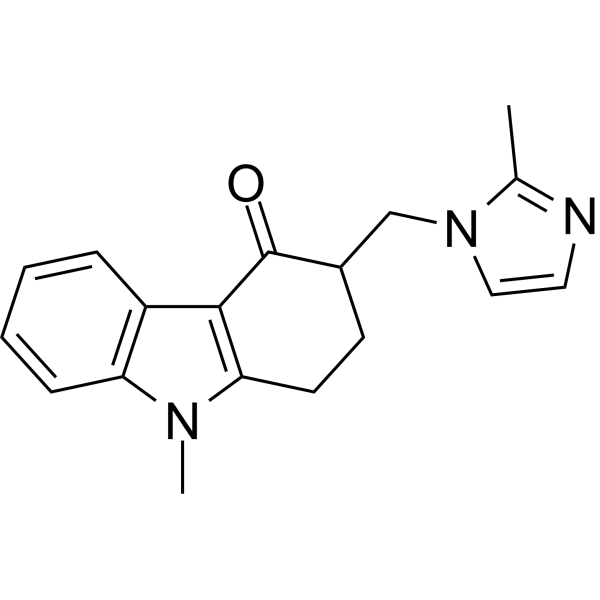
    Ondansetron
    5+ Cited Publications

    GR 38032; SN 307

    5-HT Receptor Neurological Disease
    Ondansetron (GR 38032; SN 307) is a highly selective 5-HT3 receptor antagonist with an IC50 value of 103 pM. Ondansetron exerts its antiemetic effect by antagonizing 5-HT receptors located in localized neurons in the peripheral and central nervous systems. Ondansetron can inhibit nausea and vomiting induced by chemotherapy and radiotherapy .
    Ondansetron
  • HY-B0411
    Domperidone
    5+ Cited Publications

    R33812

    Dopamine Receptor Neurological Disease
    Domperidone (R33812) is an orally active and selective dopamine-2 receptor antagonist. Domperidone acts as an antiemetic and a prokinetic agent through its effects on the chemoreceptor trigger zone and motor function of the stomach and small intestine .
    Domperidone
  • HY-B0807A

    Dopamine Receptor NADPH Oxidase Dengue Virus Flavivirus Neurological Disease Inflammation/Immunology Cancer
    Prochlorperazine dimaleate is an orally active phenothiazine-type dopamine D2 receptor (D2R) antagonist. Prochlorperazine exhibits anti-cancer activity in vitro against various cancer cell lines. Prochlorperazine dimaleate exhibits IC50 values of 6.4 μM, 4.5 μM and 2.3 μM for NOX1, NOX2 and NOX5, respectively. Prochlorperazine dimaleate has antedesmosidic activity against dengue virus (DENV). Prochlorperazine dimaleate can be used for research on nausea, vomiting, migraine, and schizophrenia .
    Prochlorperazine dimaleate
  • HY-W010892

    Hyoscine hydrobromide trihydrate

    mAChR 5-HT Receptor Neurological Disease
    Scopolamine (Hyoscine) hydrobromide trihydrate is a high-affinity muscarinic antagonist that can cross the blood-brain barrier. Scopolamine hydrobromide trihydrate competitively antagonizes 5-HT3 receptors with an IC50 of 2.09 μM. Scopolamine hydrobromide trihydrate can induce cognitive and memory deficits in animals. Scopolamine hydrobromide trihydrate can be used in the research of preventing postoperative nausea and vomiting, motion sickness, nervous system diseases, etc .
    Scopolamine hydrobromide trihydrate
  • HY-B0002
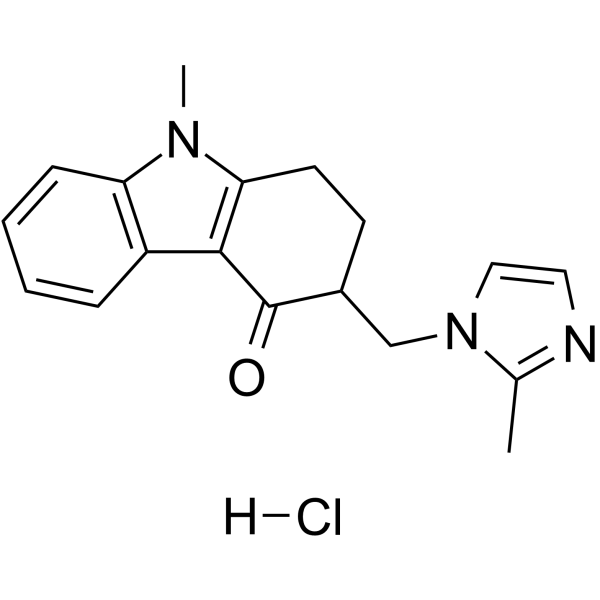
    Ondansetron hydrochloride
    5+ Cited Publications

    GR 38032 hydrochloride; SN 307 hydrochloride

    5-HT Receptor Neurological Disease
    Ondansetron (GR 38032; SN 307) hydrochloride is a highly selective 5-HT3 receptor antagonist with an IC50 value of 103 pM. Ondansetron hydrochloride exerts its antiemetic effect by antagonizing 5-HT receptors located in localized neurons in the peripheral and central nervous systems. Ondansetron hydrochloride can inhibit nausea and vomiting induced by chemotherapy and radiotherapy .
    Ondansetron hydrochloride
  • HY-B0750

    MDL-73147

    5-HT Receptor Cancer
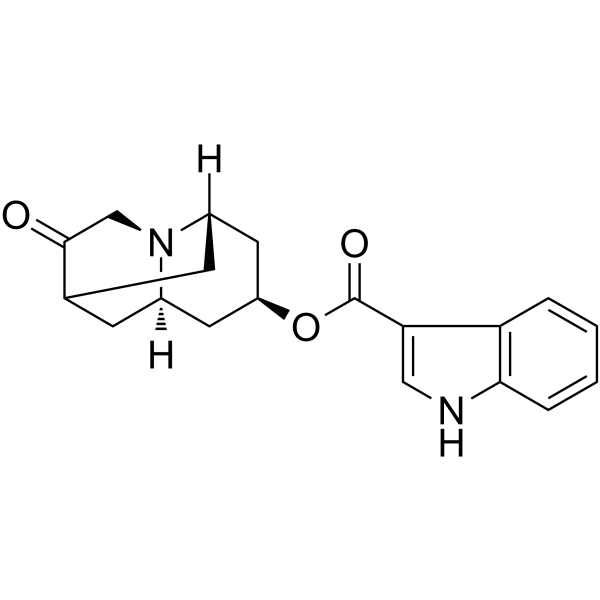
    Dolasetron (MDL-73147) is a serotonin 5-HT3 receptor antagonist. Dolasetron acts as an antiemetics agent and can be used for the research of chemotherapy-induced nausea and vomiting in cancer .
    Dolasetron
  • HY-B1215

    Histamine Receptor Neurological Disease Endocrinology
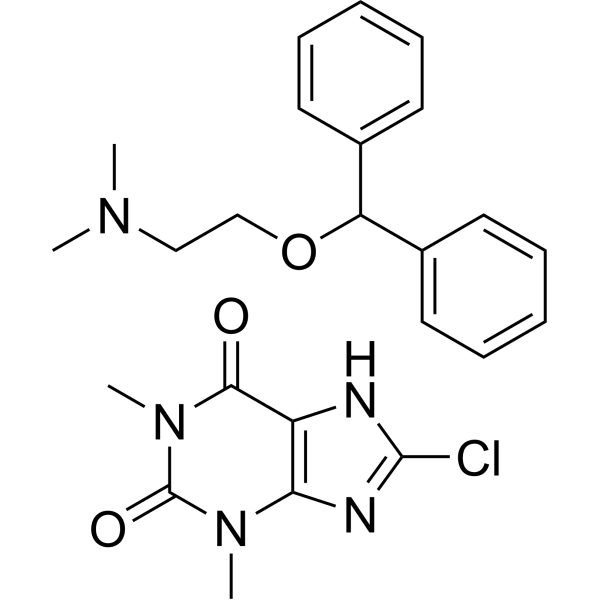
    Dimenhydrinate is an orally active H1-antihistamine consisting of Diphenhydramine (HY-B0303) and 8-Chlorotheophylline. Dimenhydrinate is used to prevent nausea, vomiting, dizziness, and vertigo associated with motion sickness .
    Dimenhydrinate
  • HY-14407A
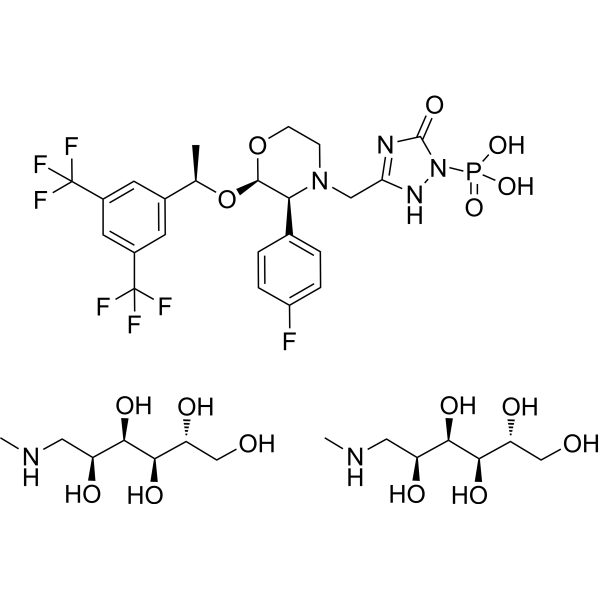
    Fosaprepitant dimeglumine
    3 Publications Verification

    MK-0517; L785298

    Neurokinin Receptor Neurological Disease Endocrinology Cancer
    Fosaprepitant dimeglumine (MK-0517) is a proagent of Aprepitant (HY-10052). Fosaprepitant dimeglumine is a neurokinin-1 receptor antagonist, which is development for the prevention of chemotherapy-induced nausea and vomiting (CINV) .
    Fosaprepitant dimeglumine
  • HY-B0002A

    GR 38032 hydrochloride dihydrate; SN 307 hydrochloride dihydrate

    5-HT Receptor Neurological Disease
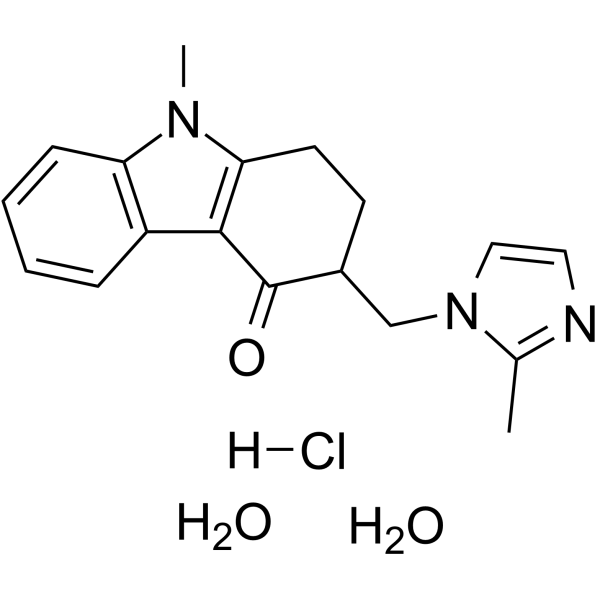
    Ondansetron (GR 38032; SN 307) hydrochloride dehydrate is a highly selective 5-HT3 receptor antagonist with an IC50 value of 103 pM. Ondansetron hydrochloride dehydrate exerts its antiemetic effect by antagonizing 5-HT receptors located in localized neurons in the peripheral and central nervous systems. Ondansetron hydrochloride dehydrate can inhibit nausea and vomiting induced by chemotherapy and radiotherapy .
    Ondansetron hydrochloride dihydrate
  • HY-B0548
    Hydroxyzine
    1 Publications Verification

    Histamine Receptor Inflammation/Immunology Endocrinology
    Hydroxyzine, a benzodiazepine antihistamine agent, acts as an orally active histamine H1-receptor and serotonin antagonist. Hydroxyzine has anxiolytic effect and can be used for the research of generalised anxiety disorder .
    Hydroxyzine
  • HY-A0021
    Palonosetron hydrochloride
    1 Publications Verification

    5-HT Receptor Flavivirus Infection Cardiovascular Disease Neurological Disease
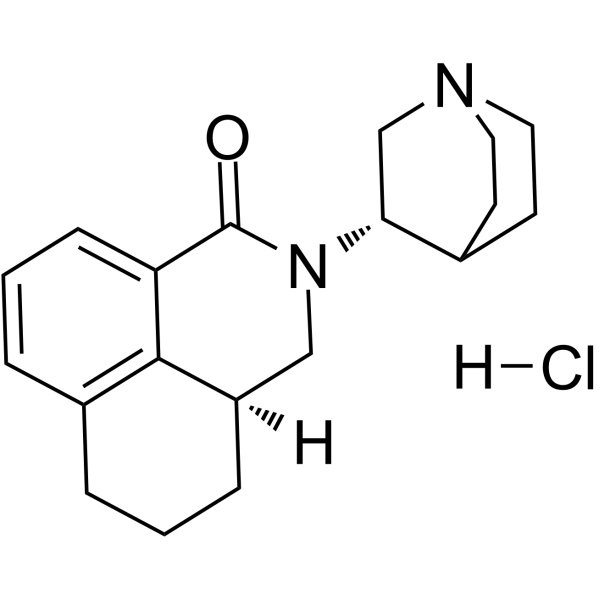
    Palonosetron hydrochloride is a 5-HT3 antagonist primarily used to prevent acute, delayed, and overall chemotherapy-induced nausea and vomiting. In addition, Palonosetron hydrochloride exhibits moderate anti-flavivirus activity and potent anti-Zika virus activity in mammalian cells. Palonosetron hydrochloride also possesses antidepressant activity .
    Palonosetron hydrochloride
  • HY-17382
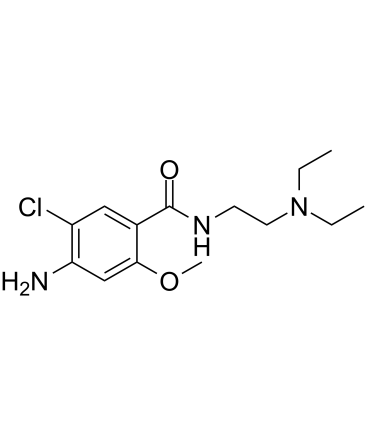
    Metoclopramide
    2 Publications Verification

    5-HT Receptor Dopamine Receptor Endocrinology
    Metoclopramide is a potent antagonist of 5-HT3 and dopamine D2 receptor, with IC50s of 308 nM and 483 nM, respectively. Metoclopramide can be used for the research of nausea and vomiting, gastro-oesophageal reflux, and gastroparesis .
    Metoclopramide
  • HY-B0071

    BRL 43694

    5-HT Receptor Neurological Disease
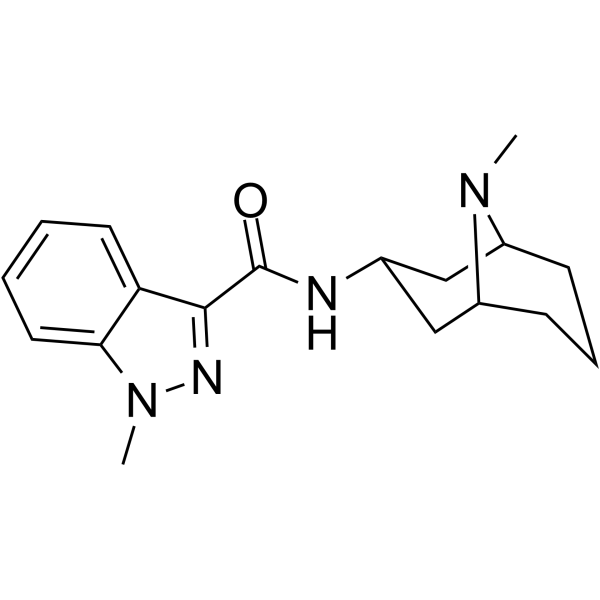
    Granisetron (BRL 43694) is a serotonin 5-HT3 receptor antagonist used as an antiemetic to treat nausea and vomiting following chemotherapy.
    Granisetron
  • HY-B0548A
    Hydroxyzine dihydrochloride
    1 Publications Verification

    Histamine Receptor Inflammation/Immunology Endocrinology
    Hydroxyzine dihydrochloride, a benzodiazepine antihistamine agent, acts as a orally active histamine H1-receptor and serotonin antagonist. Hydroxyzine dihydrochloride has anxiolytic effect and can be used forthe research of generalised anxiety disorder .
    Hydroxyzine dihydrochloride
  • HY-12752A

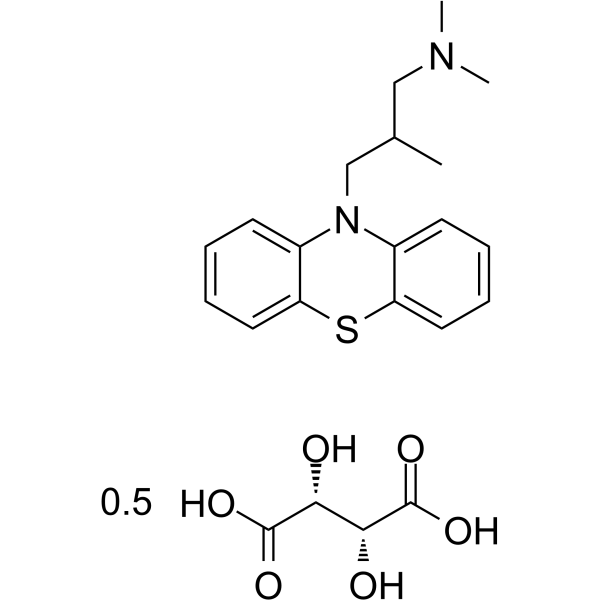
    Trimeprazine hemitartrate

    Histamine Receptor Influenza Virus Neurological Disease Inflammation/Immunology Cancer
    Alimemazine hemitartrate (Trimeprazine hemitartrate) is an antagonist of the histamine (HA) receptor that can be taken orally and also acts as a partial agonist at other GPCR receptors. Alimemazine hemitartrate has effects that include anti-serotonin, antispasmodic, antihistamine, sedation, hypnotic, antiviral, and anti-nausea properties. Alimemazine hemitartrate promotes the growth of pancreatic β-cells in mice and improves diabetes in mice .
    Alimemazine hemitartrate
  • HY-B0595
    Ramosetron Hydrochloride
    1 Publications Verification

    YM060

    5-HT Receptor Neurological Disease Inflammation/Immunology Cancer
    Ramosetron (YM060 free base) Hydrochloride is an orally active 5-HT3 antagonist that improves dysphoria, interference with activity and food avoidance. Ramosetron Hydrochloride is promising for research of irritable bowel syndrome with diarrhea .
    Ramosetron Hydrochloride
  • HY-B0071A

    BRL 43694A

    5-HT Receptor Neurological Disease Cancer
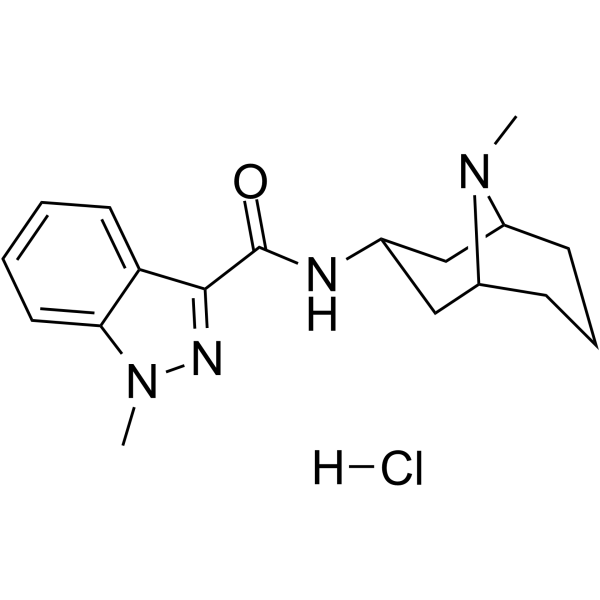
    Granisetron (Hydrochloride) (BRL 43694A) is a serotonin 5-HT3 receptor antagonist used as an antiemetic to treat nausea and vomiting following chemotherapy.
    Granisetron Hydrochloride
  • HY-121388

    (+)-Ledol

    Fungal Infection
    Ledol ((+)-Ledol) is an antifungal agent isolated from the volatile oil components of Rhododendron tomentosum. Ledol also acts as an expectorant and antitussive, while it can cause adverse reactions such as dizziness, nausea and vomiting .
    Ledol
  • HY-B1693
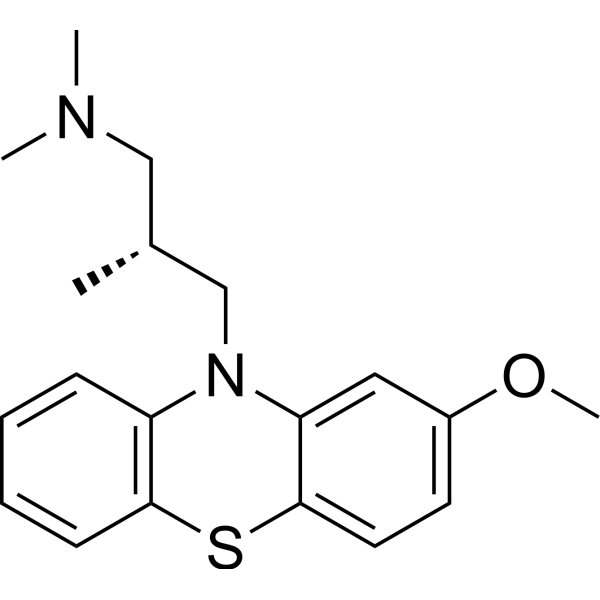
    Levomepromazine
    1 Publications Verification

    Methotrimeprazine

    5-HT Receptor Dopamine Receptor Histamine Receptor Autophagy Enterovirus Calcium Channel Infection Neurological Disease Inflammation/Immunology
    Levomepromazine (Methotrimeprazine) is an orally active antipsychotic compound and Ca 2+ release inducer. Levomepromazine inhibits SERCA pump and induces an increase in cytoplasmic Ca 2+ levels. Levomepromazine has antagonistic effects on a variety of neurotransmitter receptors, including dopamine, cholinergic, serotonin, and histamine receptors. Levomepromazine can induce adaptive ER stress and autophagy. In addition, Levomepromazine has antiviral, anti-inflammatory, neuroprotective and analgesic, sedative and anti-injurious activities. Levomepromazine can be used in the study psychiatric disorders and relieving nausea and vomiting .
    Levomepromazine
  • HY-B1397

    Histamine Receptor Neurological Disease
    Cyclizine, a piperazine-derivative, is a potent and selective histamine H1 receptor antagonist. Cyclizine can be used for the research of nausea, vomiting, and dizziness .
    Cyclizine
  • HY-B0326

    Drug Derivative Endocrinology
    Alibendol can be taken orally. It has anti-spasmodic properties and promotes bile secretion, making it useful for research on digestive system issues like indigestion, nausea, vomiting, and constipation .
    Alibendol
  • HY-12751A

    Ro 2-9578

    Dopamine Receptor Influenza Virus Others
    Trimethobenzamide hydrochloride is a blocker of the D2 receptor. Trimethobenzamide is an antiemetic used to prevent nausea and vomiting.
    Trimethobenzamide hydrochloride
  • HY-116578
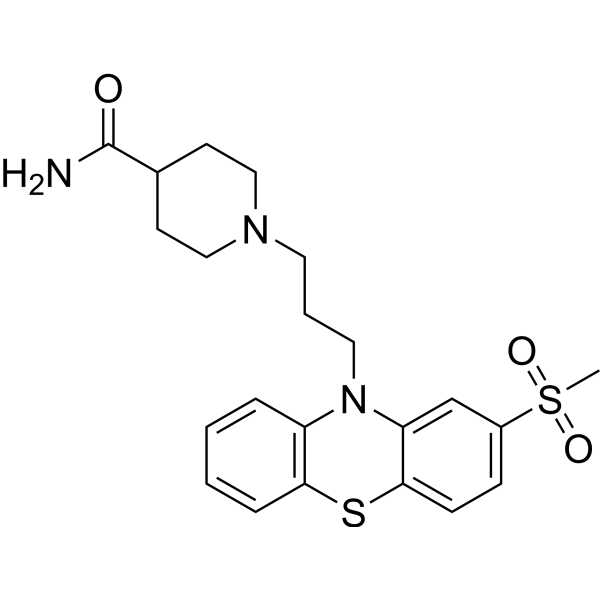
    Metopimazine
    3 Publications Verification

    EXP999; RP9965

    Dopamine Receptor Neurological Disease
    Metopimazine (EXP999; RP9965) is a phenothiazine, orally available, selective dopamine D2 receptor antagonist that does not penetrate the blood-brain barrier. Metopimazine blocks dopamine D2 receptors in the chemoreceptor trigger zone and the periphery, thereby inhibiting nausea and vomiting. Metopimazine is indicated for chemotherapy-induced nausea and vomiting, and has low central side effects due to its poor brain penetration. The use of metopimazine in acute gastroenteritis may have potential risks .
    Metopimazine
  • HY-B2065
    Scopolamine hydrochloride
    20+ Cited Publications

    (-)-Scopolamine hydrochloride; Hyoscine hydrochloride

    mAChR 5-HT Receptor Neurological Disease
    Scopolamine (Hyoscine) hydrochloride is a high-affinity muscarinic antagonist that can cross the blood-brain barrier. Scopolamine hydrochloride competitively antagonizes 5-HT3 receptors with an IC50 of 2.09 μM. Scopolamine hydrochloride can induce cognitive and memory deficits in animals. Scopolamine hydrochloride can be used in the research of preventing postoperative nausea and vomiting, motion sickness, nervous system diseases, etc .
    Scopolamine hydrochloride
  • HY-P10927A

    BRINP2-related peptide TFA

    PKA AP-1 Metabolic Disease
    BRP (BRINP2-related peptide) TFA is a 12-peptide derived from BRINP2 that can cross the blood-brain barrier. BRP TFA induces the central activation of FOS in neuronal cells via the cAMP-PKA-CREB signaling pathway. BRP TFA exerts anorectic and anti-obesity effects without triggering nausea or aversive responses. The action of BRP TFA is independent of the leptin, GLP-1 receptor and melanocortin 4 receptor pathways. BRP TFA is applicable to obesity-related research .
    BRP TFA
  • HY-B1658A

    (R)-Frovatriptan succinate hydrate; SB 209509 succinate hydrate; VML 251 succinate hydrate

    5-HT Receptor Neurological Disease
    Frovatriptan succinate hydrate ((R)-Frovatriptan succinate hydrate) is a potent, high affinity, selective and orally active 5-HT1B (pK50 of 8.2) and 5-HT1D receptor agonist. Frovatriptan succinate hydrate exhibits >10-fold selectivity for 5-HT1B and 5-HT1D over 5-HT1A, 5-HT1F, and 5-HT7 and >1000-fold selectivity over other 5-HT, dopamine, histamine H1, and α1-adrenoceptor. Frovatriptan succinate hydrate has the potential for migraine research .
    Frovatriptan succinate hydrate
  • HY-B0068
    Azasetron hydrochloride
    2 Publications Verification

    Y-25130 hydrochloride

    5-HT Receptor Neurological Disease
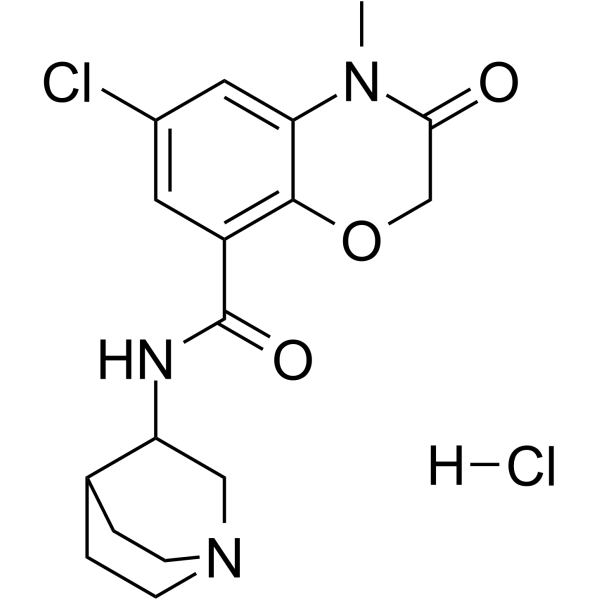
    Azasetron (Y-25130) hydrochloride, a benzamide derivative, is a potent and selective 5-HT3 receptor antagonist. Azasetron is used in the study for Chemotherapy-induced nausea and vomiting (CINV) .
    Azasetron hydrochloride
  • HY-19489

    (±)-Methotrimeprazine; dl-Methotrimeprazine

    Drug Isomer Neurological Disease
    (±)-Levomepromazine ((±)-Methotrimeprazine) is the racemate of Levomepromazine (HY-B1693) .
    (±)-Levomepromazine
  • HY-P10927

    BRINP2-related peptide

    AP-1 PKA Metabolic Disease
    BRP is a 12-peptide derived from BRINP2 that can cross the blood-brain barrier. BRP induces the central activation of FOS in neuronal cells via the cAMP-PKA-CREB signaling pathway. BRP exerts anorectic and anti-obesity effects without triggering nausea or aversive responses. The action of BRP is independent of the leptin, GLP-1 receptor and melanocortin 4 receptor pathways. BRP is applicable to obesity-related research .
    BRP
  • HY-116649

    AM4113

    Cannabinoid Receptor Neurological Disease Metabolic Disease
    CB1 antagonist 2 (AM4113) is an orally active cannabinoid receptor type 1 (CB1R) antagonist. CB1 antagonist 2 suppresses appetite, reduces body weight, and blocks addictive behaviors such as heroin addiction, without causing adverse effects like nausea and depression that are associated with traditional CB1 inverse agonists. CB1 antagonist 2 can be used in studies related to obesity and opioid addiction .
    CB1 antagonist 2
  • HY-17382A
    Metoclopramide hydrochloride hydrate
    2 Publications Verification

    5-HT Receptor Dopamine Receptor Endocrinology
    Metoclopramide hydrochloride hydrate is a potent antagonist of 5-HT3 and dopamine D2 receptor, with IC50s of 308 nM and 483 nM, respectively. Metoclopramide hydrochloride hydrate can be used for the research of nausea and vomiting, gastro-oesophageal reflux, and gastroparesis .
    Metoclopramide hydrochloride hydrate
  • HY-14405A

    GW679769B

    Neurokinin Receptor Cytochrome P450 Neurological Disease Cancer
    Casopitant mesylate (GW679769B) is a potent, selective, brain permeable and orally active neurokinin 1 (NK1) receptor antagonist. Casopitant mesylate is a second in the class of antiemetics that acts to antagonise the emetogenic effect of Substance P (HY-P0201). Casopitant mesylate is also a substrate and a weak-to-moderate inhibitor of CYP3A4. Casopitant mesylate can be used for chemotherapy-induced nausea and vomiting (CINV) and postoperative nausea and vomiting (PONV) .
    Casopitant mesylate
  • HY-14826

    AVE8112

    Phosphodiesterase (PDE) Neurological Disease
    Tilivapram (AVE8112) is an orally active PDE4 inhibitor with procognitive effects. Tilivapram exhibits in vivo efficacy and improves processing speed and psychomotor speed. Oral administration of tilivapram may induce dose-related adverse reactions such as nausea and dizziness, but transdermal delivery enables slow, controlled elevation of plasma concentrations, thereby significantly reducing gastrointestinal discomfort and dizziness. Tilivapram is applicable to research related to neuropsychiatric disorders .
    Tilivapram
  • HY-B1164
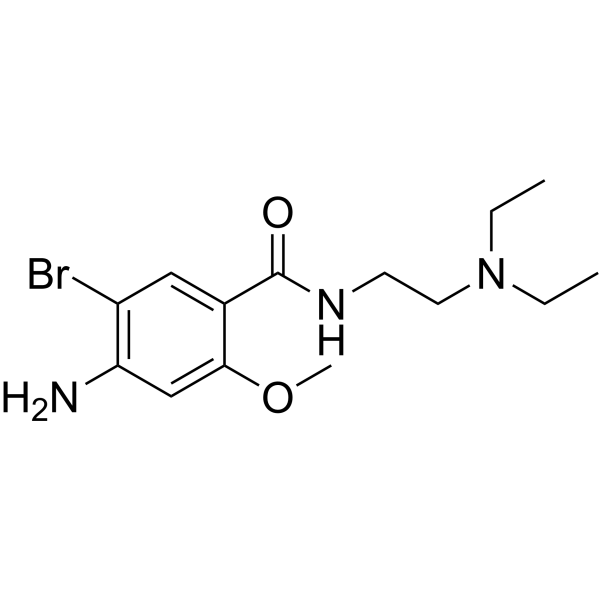
    Bromopride
    2 Publications Verification

    Dopamine Receptor Neurological Disease
    Bromopride is a selective, irreversible, competitive, and orally effective dopamine D2 receptor antagonist. Bromopride can pass through the blood-brain barrier, inhibit the vomiting center, and enhance gastrointestinal motility, exerting antiemetic and gastrointestinal motility effects. Bromopride antagonizes dopamine-mediated vomiting reflexes and promotes gastrointestinal smooth muscle contraction, and has no adverse effects on abdominal wall healing in rats with postoperative abdominal infection. Bromopride can be used for the study of digestive system diseases (such as gastric hypomotility, nausea and vomiting) .
    Bromopride
  • HY-12143

    GR 205171A

    Neurokinin Receptor Neurological Disease
    Vofopitant dihydrochloride (GR 205171A) is a blood-brain barrier-permeable NK1 receptor inhibitor with a pKi of 9.02 in mice. Vofopitant dihydrochloride blocks vomiting-related responses and inhibits pseudoptyalism. Vofopitant dihydrochloride exerts anxiolytic effects, regulates 5-HT receptor function and increases central 5-HT release. Vofopitant dihydrochloride improves hyperarousal symptoms of post-traumatic stress disorder. Vofopitant dihydrochloride can be used in research related to depression, anxiety, vomiting and postoperative nausea and vomiting .
    Vofopitant dihydrochloride
  • HY-B0750B

    MDL-73147EF hydrate

    5-HT Receptor Cancer
    Dolasetron Mesylate hydrate (MDL-73147EF hydrate) is a serotonin 5-HT3 receptor antagonist used to treat nausea and vomiting following chemotherapy .
    Dolasetron Mesylate hydrate
  • HY-14407

    L-758298

    Neurokinin Receptor Neurological Disease Endocrinology Cancer
    Fosaprepitant (L-785298) is a proagent of Aprepitant (HY-10052). Fosaprepitant is a neurokinin-1 receptor antagonist, which is development for the prevention of chemotherapy-induced nausea and vomiting (CINV) .
    Fosaprepitant
  • HY-P99436

    ABR-214936

    Transmembrane Glycoprotein Cardiovascular Disease Inflammation/Immunology Cancer
    Anatumomab mafenatox (ABR-214936) is a 73 KDa recombinant protein to recognize the tumor-associated antigen 5T4, which is widely expressing in malignancy. Anatumomab mafenatox is between a modified form of SEA and a murine Fab. The main side effects of Anatumomab mafenatox are reported to include fever, low blood pressure, pain, nausea and drowsiness .
    Anatumomab mafenatox
  • HY-B0002BS

    GR 38032-d5; SN 307-d5

    5-HT Receptor Isotope-Labeled Compounds Neurological Disease
    Ondansetron-d5 is the deuterium labeled Ondansetron (HY-B0002B). Ondansetron (GR 38032; SN 307) is a highly selective 5-HT3 receptor antagonist with an IC50 value of 103 pM. Ondansetron exerts its antiemetic effect by antagonizing 5-HT receptors located in localized neurons in the peripheral and central nervous systems. Ondansetron can inhibit nausea and vomiting induced by chemotherapy and radiotherapy .
    Ondansetron-d5
  • HY-B1397B

    Histamine Receptor Neurological Disease
    Cyclizine lactate, a piperazine-derivative, is a potent and selective histamine H1 receptor antagonist. Cyclizine lactate can be used for the research of nausea, vomiting, and dizziness .
    Cyclizine lactate
  • HY-14405B

    (R)-GW679769

    Neurokinin Receptor Cancer
    (R)-Casopitant ((R)-GW679769) is the isomer of Casopitant (HY-14405). Casopitant is a NK(1)-receptor antagonist. Casopitant can be used for the research of chemotherapy-induced nausea and vomiting .
    (R)-Casopitant
  • HY-14753

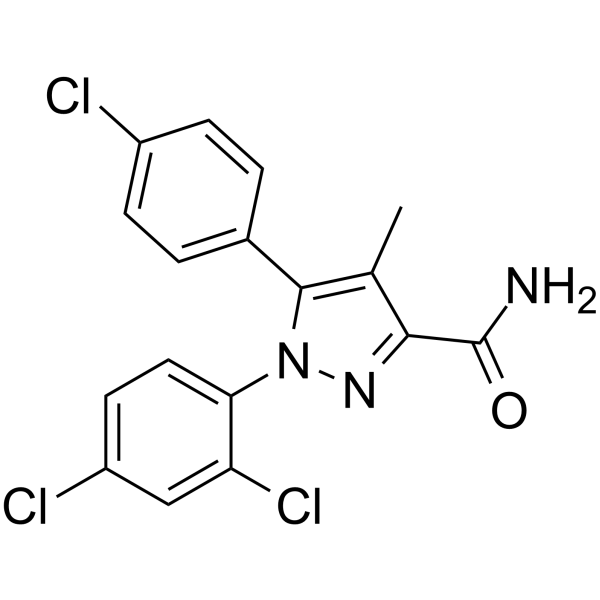
    Cannabinoid Receptor Cardiovascular Disease Metabolic Disease
    Rosonabant is a selective antagonist for cannabinoid receptor (CB1 receptor), which reduces body weight and improves improves the risk of obesity-related cardiovascular metabolic diseases. Rosonabant exhibits adverse side effect, such as nausea and mental disorder .
    Rosonabant
  • HY-B0750A

    MDL-73147EF

    5-HT Receptor Cancer
    Dolasetron Mesylate (MDL-73147EF) is a serotonin 5-HT3 receptor antagonist used to treat nausea and vomiting following chemotherapy .
    Dolasetron Mesylate
  • HY-A0021S

    Isotope-Labeled Compounds 5-HT Receptor Flavivirus Infection Cardiovascular Disease Neurological Disease
    Palonosetron-d3 hydrochloride is the deuterium labeled Palonosetron hydrochloride (HY-A0021). Palonosetron hydrochloride is a 5-HT3 antagonist primarily used to prevent acute, delayed, and overall chemotherapy-induced nausea and vomiting. In addition, Palonosetron hydrochloride exhibits moderate anti-flavivirus activity and potent anti-Zika virus activity in mammalian cells. Palonosetron hydrochloride also possesses antidepressant activity .
    Palonosetron-d3 hydrochloride
  • HY-12142

    GR 205171

    Neurokinin Receptor Neurological Disease
    Vofopitant (GR 205171A) is a blood-brain barrier-permeable NK1 receptor inhibitor with a pKi of 9.02 in mice. Vofopitant blocks vomiting-related responses and inhibits pseudoptyalism. Vofopitant exerts anxiolytic effects, regulates 5-HT receptor function and increases central 5-HT release. Vofopitant improves hyperarousal symptoms of post-traumatic stress disorder. Vofopitant can be used in research related to depression, anxiety, vomiting and postoperative nausea and vomiting .
    Vofopitant
  • HY-B1397C

    Histamine Receptor Neurological Disease
    Cyclizine hydrochloride, a piperazine-derivative, is a potent and selective histamine H1 receptor antagonist. Cyclizine hydrochloride can be used for the research of nausea, vomiting, and dizziness .
    Cyclizine hydrochloride
  • HY-17382B

    5-HT Receptor Dopamine Receptor Neurological Disease
    Metoclopramide hydrochloride is a potent and orally active antagonist of 5-HT3 and dopamine D2 receptor, with IC50s of 308 nM and 483 nM, respectively. Metoclopramide hydrochloride can be used for the research of nausea and vomiting, gastro-oesophageal reflux, and gastroparesis .
    Metoclopramide hydrochloride
  • HY-B1215R

    Reference Standards Histamine Receptor Neurological Disease Endocrinology
    Dimenhydrinate (Standard) is the analytical standard of Dimenhydrinate. This product is intended for research and analytical applications. Dimenhydrinate is an orally active H1-antihistamine consisting of Diphenhydramine (HY-B0303) and 8-Chlorotheophylline. Dimenhydrinate is used to prevent nausea, vomiting, dizziness, and vertigo associated with motion sickness .
    Dimenhydrinate (Standard)
  • HY-14407AR

    MK-0517 (Standard); L785298 (Standard)

    Reference Standards Neurokinin Receptor Neurological Disease Endocrinology Cancer
    Fosaprepitant (dimeglumine) (Standard) is the analytical standard of Fosaprepitant (dimeglumine). This product is intended for research and analytical applications. Fosaprepitant dimeglumine (MK-0517) is a proagent of Aprepitant (HY-10052). Fosaprepitant dimeglumine is a neurokinin-1 receptor antagonist, which is development for the prevention of chemotherapy-induced nausea and vomiting (CINV) .
    Fosaprepitant dimeglumine (Standard)
  • HY-B1693A

    Methotrimeprazine hydrochloride

    5-HT Receptor Dopamine Receptor Histamine Receptor Autophagy Enterovirus Calcium Channel Infection Neurological Disease Inflammation/Immunology
    Levomepromazine (Methotrimeprazine) hydrochloride is an orally active antipsychotic compound and Ca 2+ release inducer. Levomepromazine inhibits SERCA pump and induces an increase in cytoplasmic Ca 2+ levels. Levomepromazine hydrochloride has antagonistic effects on a variety of neurotransmitter receptors, including dopamine, cholinergic, serotonin, and histamine receptors. Levomepromazine hydrochloride can induce adaptive ER stress and autophagy. In addition, Levomepromazine hydrochloride has antiviral, anti-inflammatory, neuroprotective and analgesic, sedative and anti-injurious activities. Levomepromazine hydrochloride can be used in the study psychiatric disorders and relieving nausea and vomiting .
    Levomepromazine hydrochloride

Inquiry Online

Your information is safe with us. * Required Fields.

Salutation


Country or Region *

Applicant Name *


Organization Name *

Department *


Email Address *


Product Name *

Cat. No.


Requested quantity *

Phone Number *


Remarks

Inquiry Online

Inquiry Information

Product Name:
Cat. No.:
Quantity:
MCE Japan Authorized Agent:

