Search Result
Results for "
near infrared (NIR)
" in MedChemExpress (MCE) Product Catalog:
| Cat. No. |
Product Name |
Target |
Research Areas |
Chemical Structure |
-
- HY-112641A
-
|
|
Fluorescent Dye
|
Cancer
|
|
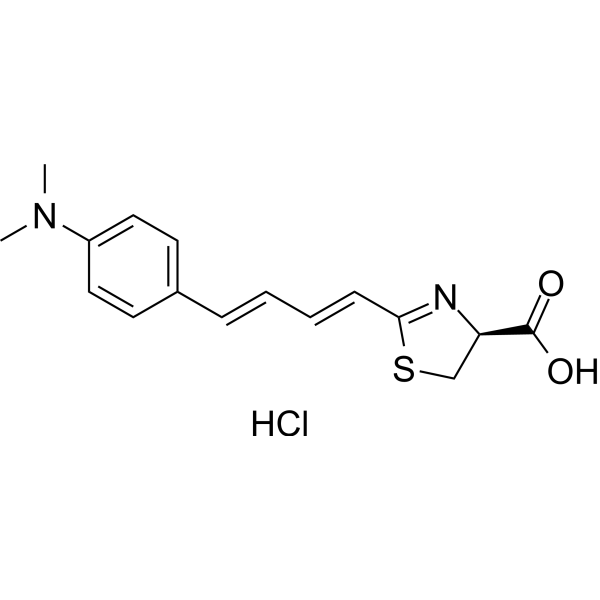
AkaLumine hydrochloride is a D-luciferin (HY-12591A) analogue with a Km of 2.06 μM for recombinant firefly luciferase (Fluc) protein. AkaLumine hydrochloride emits near-infrared (NIR) light (λmax=677 nm) in reactions with native Fluc. AkaLumine hydrochloride has high tissue-penetration and increases detection sensitivity from deep-tissue targets .
|
-
-
- HY-D1068
-
|
DBCO-Sulfo-Cy5
|
Fluorescent Dye
|
Others
|
|
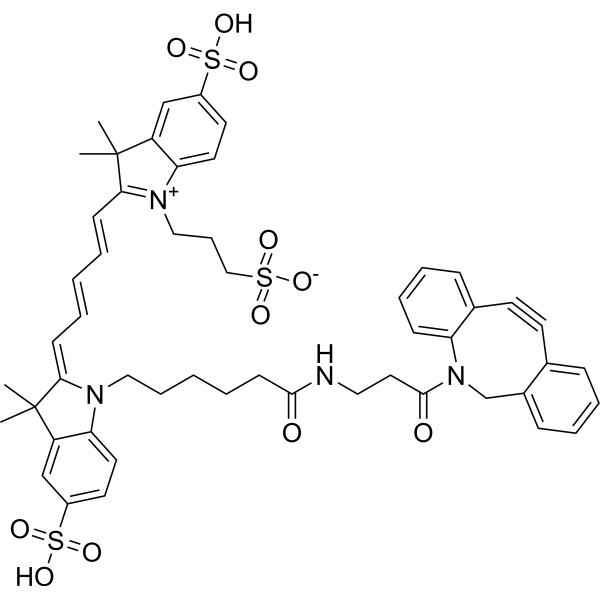
Cy5-DBCO (DBCO-Sulfo-Cy5) is a near-infrared (NIR)red fluorescent dye with λabsand λem of 646nm and 670 nm, respectively. Cy5-DBCO (DBCO-Sulfo-Cy5) is not suitable for staining intracellular components of permeabilezed cell, it may exhibits a high background. Cy5-DBCO is a click chemistry reagent, it contains a DBCO group that can undergo strain-promoted alkyne-azide cycloaddition (SPAAC) with molecules containing Azide groups.
|
-
-
- HY-111653
-
CycLuc1
2 Publications Verification
|
Reactive Oxygen Species (ROS)
|
Others
|
|
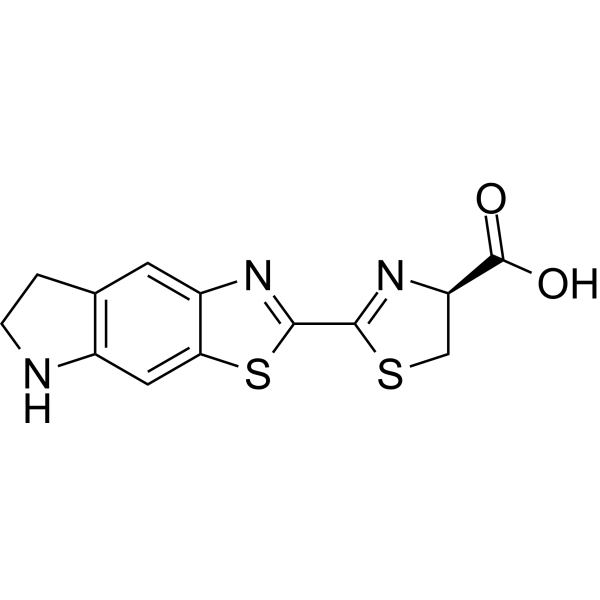
CycLuc1 is a blood-brain barrier permeable luciferase substrate that displays near-infrared (NIR) emission with a peak luminescence wavelength of 599 nm. CycLuc1 can be used for in vivo bioluminescence imaging .
|
-
-
- HY-D1540
-
|
Cy 5.5 amine; Lumiprobe Cy 5.5 amine
|
Fluorescent Dye
|
Others
|
|
Cyanine5.5 amine (Cy 5.5 amine), a Cy5.5 Analogue, is a near-infrared (NIR) fluorescent dye (Ex=648 nm, Em=710 nm). Cyanine5.5 amine can be used in the preparation of Cy5.5-labeled nanoparticles, which can be tracked and imaged with low fluorescence background using confocal microscopy .
|
-
-
- HY-103242
-
|
|
Amyloid-β
|
Neurological Disease
|
|
CRANAD-2 is a specific near-infrared (NIR) fluorescent probe for detecting Aβ plaques (unbound to Aβ: Ex=640 nm; Em=805 nm; after binding: Em=715 nm). CRANAD-2 penetrates the blood-brain barrier and has high affinity for Aβ aggregates, with a Kd value of 38 nM. CRANAD-2 is applicable to research related to Alzheimer's disease and neurodegenerative diseases .
|
-
-
- HY-D1464
-
CH1055
1 Publications Verification
|
Fluorescent Dye
|
Cancer
|
|
CH1055 is a near-infrared II (NIR-II) fluorescent dye that can be used as a fluorescent probe for in vivo imaging. CH1055 can be conjugated with antibodies or ligands for specific imaging (for example the tumor imaging) .
|
-
-
- HY-D2189
-
|
IR 700DX NHS ester
|
Fluorescent Dye
|
Others
|
|
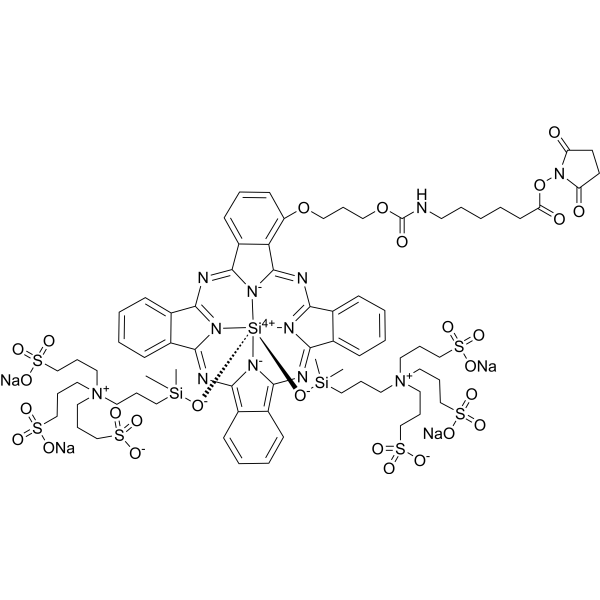
IR 700DX (IR 700DX NHS ester) is a near-infrared (NIR) phthalocyanine dye with extremely high photostability and fluorescence intensity. IR 700DX binds to biomolecules. IR 700DX has excellent water solubility, large extinction coefficient, high fluorescence quantum yield, and does not aggregate in high ionic strength buffers. IR 700DX can be used as a highly flexible photosensitizer .
|
-
-
- HY-D1744
-
|
|
Fluorescent Dye
|
Others
|
|
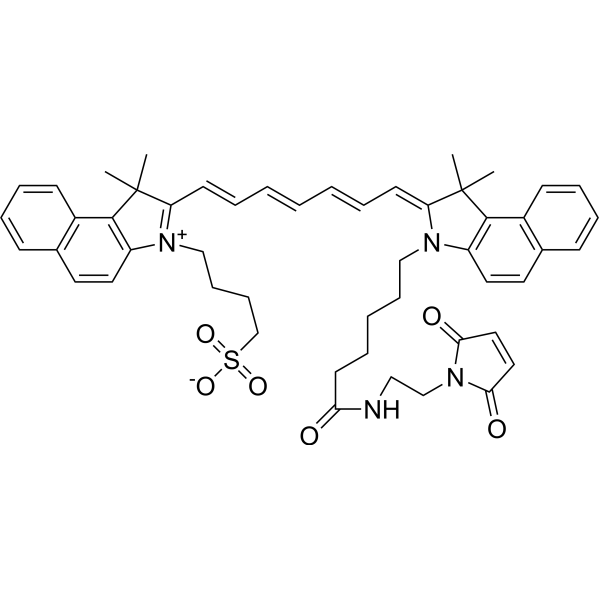
ICG Maleimide is thiol reactive near infrared (NIR) fluorescent dye and used to generate a stable fluorescence signal in bioimaging (Ex/Em = 789/813 nm).
|
-
-
- HY-114879
-
DDAO
1 Publications Verification
|
Fluorescent Dye
Carboxylesterase (CES)
|
Cancer
|
|
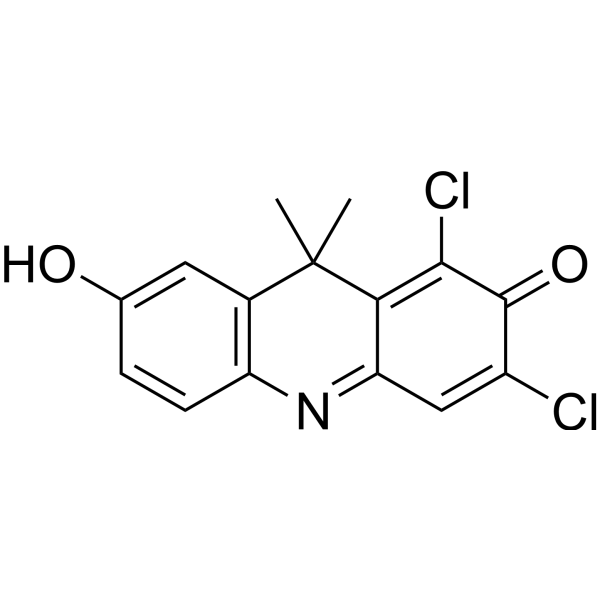
DDAO is a promising near-infrared (NIR) red fluorescent probewith tunable excitation wavelength (600-650nm) and longemission wavelength(λem=656nm). DDAO can de desiged for detection of the activities of different enzymes such asβ-galactosidase,sulfatase, proteinphosphatase2A,carboxylesterase 2, humanalbumin andesterases .
|
-
-
- HY-W088089
-
|
|
Fluorescent Dye
|
Cancer
|
|
ICG-carboxylic acid is near-infrared (NIR) fluorescent probe. ICG is a fluorescent dye used in medical diagnostics. ICG has absorption peaking at 800 nm and can absorb the near IR laser energy and release heat in the dyed tissue (Ex/Em = 785/810 nm) .
|
-
-
- HY-D1873
-
|
|
Fluorescent Dye
|
Others
|
|
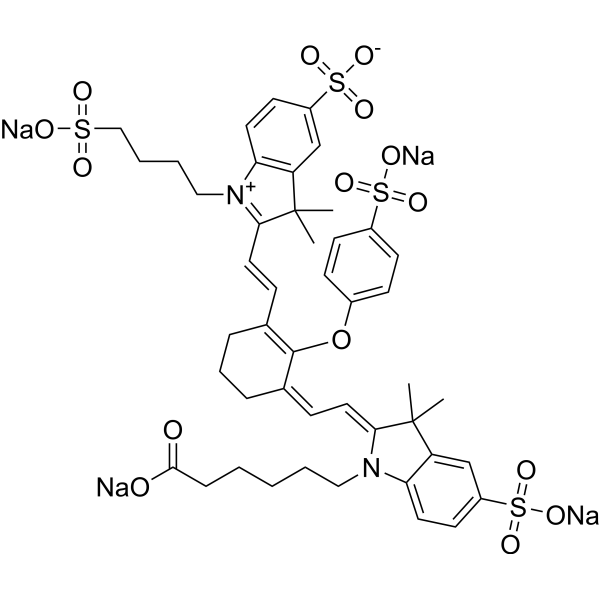
800CW acid is an orally active near-infrared (NIR) dye (excitation/emission 774/789 nm). 800CW acid can be used for intestinal permeability testing. 800CW acid can be used for in vivo imaging studies .
|
-
-
- HY-136946
-
|
|
Fluorescent Dye
|
Others
|
|
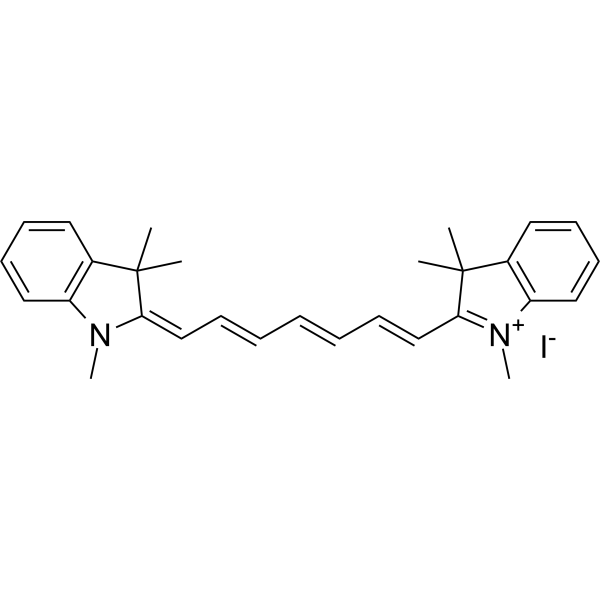
HITCI is a commercially available, positively charged indocarbocyanine dye. HITCI is used typically as a laser dye in the near infrared (NIR) .
|
-
-
- HY-D1719
-
Cypate
1 Publications Verification
|
Fluorescent Dye
|
Others
|
|
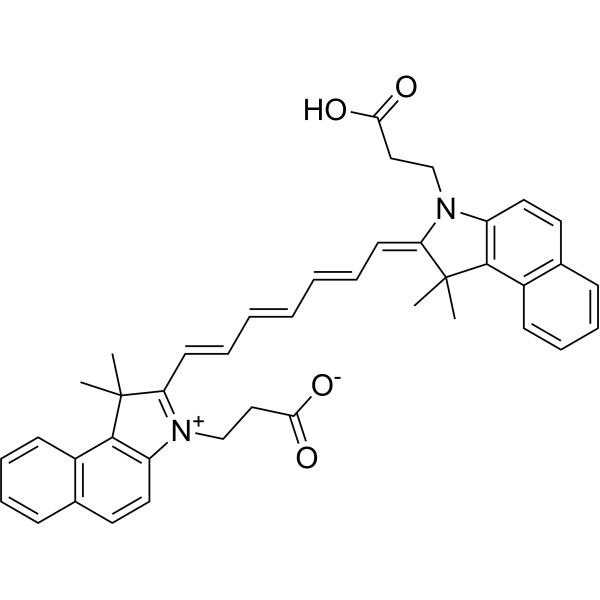
Cypate, a cyanine dye, is a near infrared (NIR) fluorescent probe for in vivo tumor imaging .
|
-
-
- HY-W248594
-
|
|
Fluorescent Dye
|
Others
|
|
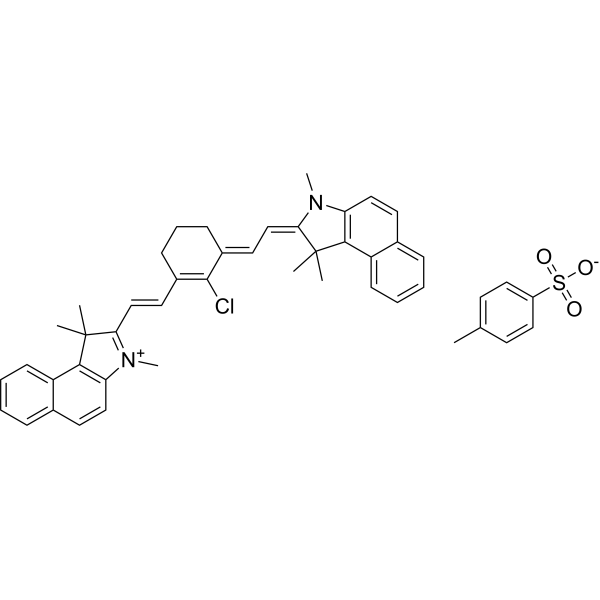
IR 813 tosylate is a near-infrared (NIR) fluorescent dye and can be used for visualizing regional lymph nodes in mice .
|
-
-
- HY-D2328
-
|
Alexa Fluor 680 succinimidyl ester
|
Fluorescent Dye
|
Others
|
|
Alexa Fluor 680 NHS ester (Alexa Fluor 680 succinimidyl ester) is a near-infrared (NIR) fluorescent dye. NHS esters can be used to label to the primary amines (R-NH2) of proteins, amine-modified oligonucleotides, and other amine-containing molecules (Ex/Em = 679/702 nm) .
|
-
-
- HY-D1568
-
|
|
Fluorescent Dye
|
Others
|
|
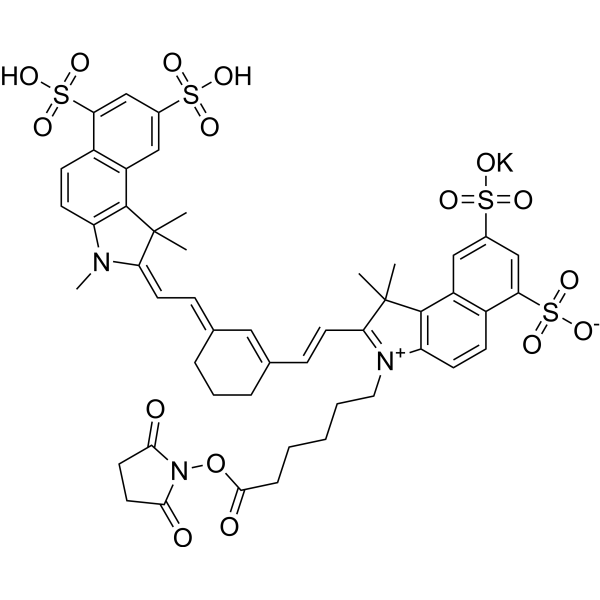
Sulfo-Cy7.5 NHS ester is a near infrared water soluble hydrophilic dye, also is an NHS ester for the modification of amine groups. Sulfo-Cy7.5 NHS ester contains a trimeth ylene bridge and has a linker arm for its attachment to proteins, peptides, and other molecules. Sulfo-Cy7.5 NHS ester can be used for the research of NIR imaging applications .
|
-
-
- HY-D2312
-
|
|
Fluorescent Dye
Ferroptosis
|
Cancer
|
|
Mito-Rh-S is a ratiometric near-infrared (NIR) fluorescent probe that detects the fluctuation of mitochondrial HClO levels during ferroptosis in hepatocellular carcinoma (HCC) .
|
-
-
- HY-W879007
-
|
|
Fluorescent Dye
|
Others
|
|
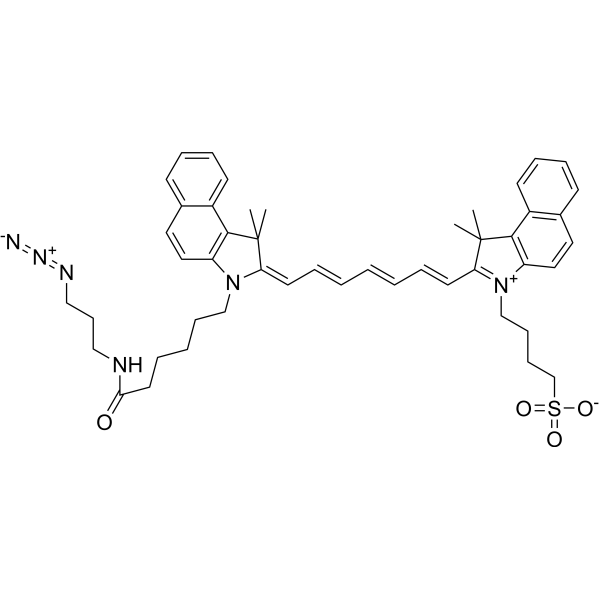
ICG-azide, a near infrared (NIR) fluorescent dye, is a copper (I)-catalyzed azide-alkyne cycloaddition (CuAAC) reagent. ICG-azide can be readily incorporated into dye-stabilized nanoemulsions and facilitate the attachment of targeting ligands via click-chemistry in a simple, scalable, and reproducible reaction .
|
-
-
- HY-D1504
-
|
|
Fluorescent Dye
|
Others
|
|
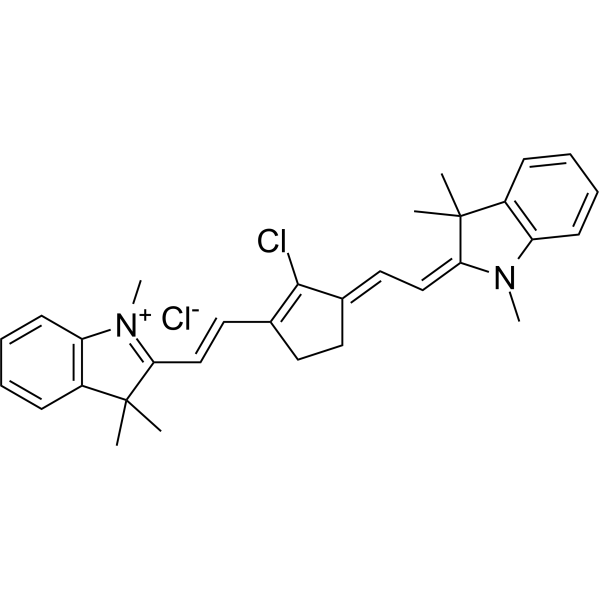
IR-797 chloride is a near-infrared (NIR) dye. IR 797 has absorption maxima near 700 nm. IR-797 shows some aggregation-induced-emission (AIE) properties. IR-797 shows shows cytotoxic .
|
-
-
- HY-D1541
-
|
|
Fluorescent Dye
|
Others
|
|
Sulfo-Cyanine5.5 alkyne, a near-infrared (NIR) fluorescent dye, is an alkyne modified Sulfo-Cyanine5.5 (Ex=67 8nm, Em=694 nm). Sulfo-Cyanine5.5 alkyne can react with azides for Click Chemistry labeling.
|
-
-
- HY-177435
-
|
|
FAP
|
Inflammation/Immunology
|
|
FAPI-800CW is a near-infrared (NIR) fluorescent-labeled fibroblast activation protein (FAP) inhibitor. FAPI-800CW shows specific uptake in inflamed paws in collagen-induced arthritis (CIA) model mice. FAPI-800CW can be used for in vivo molecular imaging of FAP expression in inflammatory diseases such as rheumatoid arthritis (RA) to monitor joint inflammation and disease activity .
|
-
-
- HY-151890
-
|
|
Fluorescent Dye
|
Cancer
|
|
NIR-βgal-2 is a β-galactosidase-activated near-infrared fluorescent probe with superior sensitivity. NIR-βgal-2 can be used for visualizing β-galactosidase in breast cancer .
|
-
-
- HY-D1464A
-
|
|
Fluorescent Dye
|
Cancer
|
|
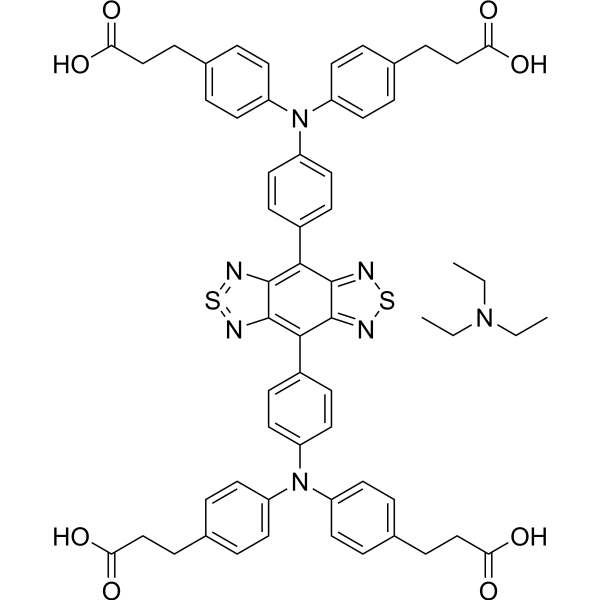
CH1055 triethylamine is a near-infrared II (NIR-II) fluorescent dye that can be used as a fluorescent probe for in vivo imaging. CH1055 triethylamine can be conjugated with antibodies or ligands for specific imaging (for example the tumor imaging) .
|
-
-
- HY-D1450
-
|
S01448
|
Fluorescent Dye
|
Cancer
|
|
IR-1048 is a nitroreductase (NTR)-responsive near-infrared fluorescence (NIR)/photoacoustic (PA) imaging probe and photothermal agent. IR-1048 is coupled with a nitroimidazole group to form IR-1048-MZ. IR-1048-MZ is catalytically reduced by NTR in a hypoxic environment, restoring strong near-infrared absorption and fluorescence emission (NIR II window), while activating the photothermal effect. IR-1048 relies on NTR-mediated electron transfer to relieve intramolecular fluorescence quenching, achieving specific imaging and photothermal ablation of tumor hypoxic areas. IR-1048 is mainly used for high-contrast NIR II/photoacoustic imaging and photothermal therapy research and tumor diagnosis of the tumor hypoxic microenvironment .
|
-
-
- HY-D2345
-
|
|
Fluorescent Dye
Carbonic Anhydrase
|
Cancer
|
|
GZ22-4 is a near-infrared (NIR) fluorescent probe. GZ22-4 shows high affinity for carbonic anhydrase IX (CAIX), with a Kd of 0.2 nM. GZ22-4 can be used for the research of visualize CAIX-positive tumors .
|
-
-
- HY-D2328A
-
|
Alexa Fluor 680 succinimidyl ester diTEA
|
Fluorescent Dye
|
Others
|
|
Alexa Fluor 680 NHS ester (Alexa Fluor 680 succinimidyl ester) diTEA is a near-infrared (NIR) fluorescent dye. NHS esters can be used to label to the primary amines (R-NH2) of proteins, amine-modified oligonucleotides, and other amine-containing molecules (Ex/Em = 679/702 nm) .
|
-
-
- HY-D2268
-
|
|
Fluorescent Dye
Amyloid-β
|
Neurological Disease
|
|
QM-FN-SO3 is a BBB-penetrable near-infrared (NIR) aggregation-induced emission (AIE)-active probe for Aβ plaques. QM-FN-SO3 can be used for in vivo detection of Aβ plaques. QM-FN-SO3 has ultra-high S/N ratio, binding affinity, and high-performance NIR emission .
|
-
-
- HY-141646
-
|
|
Fluorescent Dye
|
Others
|
|
MIT-PZR is a mitochondria-targeted,? low cytotoxicity fluorescent probe that can be used in live cells and in vivo imaging. Ex / Em = 485 / 705 nm
|
-
-
- HY-D1067
-
|
|
Fluorescent Dye
|
Others
|
|
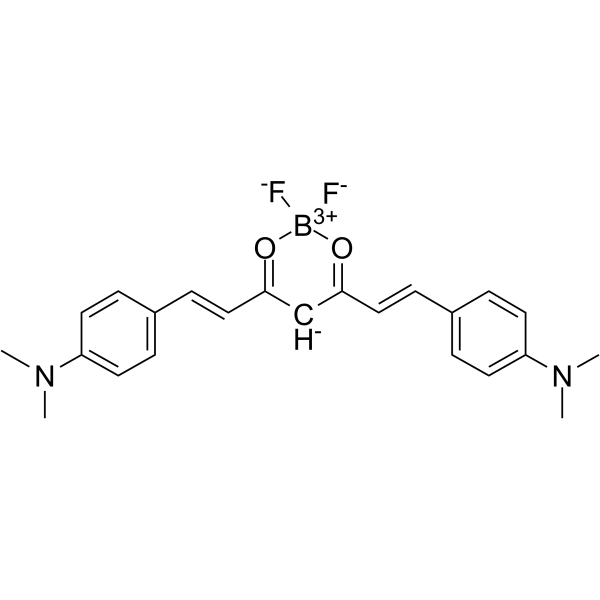
NIR dye-1 (Compound 1h) is a near-infrared (NIR) fluorescent dye. NIR dye-1 has absorption and emission in the NIR region, while retaining an optically tunable hydroxyl group .
|
-
-
- HY-D1535
-
|
|
Fluorescent Dye
|
Others
|
|
IR 813 perchlorate is a near-infrared (NIR) fluorescent dye (Ex=815 nm, Em=840 nm) and can be used for visualizing regional lymph nodes in mice .
|
-
-
- HY-D1065
-
|
|
Fluorescent Dye
|
Inflammation/Immunology
|
|
NIR-H2O2 is a cell-permeable near-infrared (NIR) fluorescent turn-on sensor. NIR-H2O2 has both absorption and emission in the NIR region. NIR-H2O2 responds to H2O2 with a large turn-on NIR fluorescence signal upon excitation in the NIR region. NIR-H2O2 is capable of imaging endogenously produced H2O2 in living cells and mice .
|
-
-
- HY-165424
-
|
|
Fluorescent Dye
Glycosidase
|
Cardiovascular Disease
Cancer
|
|
NIR-BG2 is a near-infrared fluorescent probe targeting senescence-associated β-galactosidase (SA-β-Gal). NIR-BG2 is activated by SA-β-Gal and undergoes hydrolysis to release electrophilic quinone methide that covalently binds to surrounding proteins for in situ labeling, with a 16-fold enhancement of fluorescence signal at 709 nm . NIR-BG2 is promising for research of vivo imaging of cellular senescence .
|
-
-
- HY-D2227
-
|
|
Autophagy
Apoptosis
|
Cancer
|
|
IR-58, a mitochondria-targeting near-infrared (NIR) fluorophore, is an autophagy enhancer. IR-58 kills tumour cells and induces apoptosis via inducing excessive autophagy, which is mediated through the reactive oxygen species (ROS)-Akt-mTOR pathway .
|
-
-
- HY-D2880
-
|
|
Fluorescent Dye
|
Others
|
|
Sulfo-Cyanine5 DBCO is a near-infrared red (NIR) fluorescent dye. Sulfo-Cyanine5 DBCO is a click chemistry reagent, it contains a DBCO group that can undergo strain-promoted alkyne-azide cycloaddition (SPAAC) with molecules containing Azide groups (Ex/Em =646/670 nm) .
|
-
-
- HY-D3000
-
|
|
Fluorescent Dye
|
Metabolic Disease
|
|
NIR-RED ROS-H2O2 Probe is a near-infrared fluorescent probe used for detecting hydrogen peroxide (H₂O₂) and featuring dual-modal fluorescence/photoacoustic imaging capabilities. NIR-RED ROS-H2O2 Probe successfully detects the upregulated fluorescence signal of H₂O₂ in HepG2 cells and a mouse liver injury model. NIR-RED ROS-H2O2 Probe can be used as a biomarker detection tool for drug-induced liver injury (DILI) .
|
-
-
- HY-P5520
-
|
|
Bombesin Receptor
Radionuclide-Drug Conjugates (RDCs)
|
Cancer
|
|
GB-6 is a short linear peptide that targets the gastrin releasing peptide receptor (GRPR). GRPR is overexpressed in pancreatic cancer. Based on the tumor selectivity and tumor-specific accumulation properties of GB-6, GB-6 labeled with near infrared (NIR) fluorescent dyes or radionuclide netium-99m (99mTc) can be used as a high-contrast imaging probe. GB-6 has excellent in vivo stability, with tumor to pancreatic and intestinal fluorescence signal ratios of 5.2 and 6.3, respectively, in SW199 0 subcutaneous xenograft models. GB-6 can rapidly target tumors and accurately delineate tumor boundaries, which has broad application prospects .
|
-
-
- HY-142523
-
-
-
- HY-D1500
-
|
|
Fluorescent Dye
|
Others
|
|
Fluorescent NIR 885 is a cyanine near-infrared-absorbing dye. Fluorescent NIR 885 can be used as a photoprotective agent (extracted from patent WO2014006589 compound 1-35) .
|
-
-
- HY-D1394
-
|
AgAuSe
|
Fluorescent Dye
|
Others
|
|
AgAuSe QDs (AgAuSe) is a near infrared (NIR) fluorescent quantum dots (QDs), with a bright emission from 820 to 1170 nm. AgAuSe QDs can be used for the research in biomedical imaging and NIR devices .
|
-
-
- HY-170490
-
|
|
Photosensitizer
Apoptosis
|
Cancer
|
|
TTQ-SA is a near-infrared (NIR) spiro-AIEgen (aggregation-induced emission luminogen), that converts near-infrared light (NIR) into thermal energy, causing thermal damage and death of tumor cells. TTQ-SA exhibits cellular uptake and targeting ability in cancer cell MF-7. TTQ-SA silences the expression of survivin gene with combination of DNAzyme, enhances the sensitivity of tumor cells to photothermal therapy .
|
-
-
- HY-D1375A
-
|
|
Fluorescent Dye
|
Others
|
|
Sulfo-Cy5 amine hydrochloride is a near-infrared (NIR) amino fluorescent dye. Sulfo-Cy5 amine hydrochloride reacts with electrophilic substances .
|
-
-
- HY-149835
-
|
|
Fluorescent Dye
|
Others
|
|
TTX-P is a fluorescent probe. TTX-P responds in situ to the overexpressed alkaline phosphatase (ALP) in liver, imaging of diabetic liver injury in the near-infrared second-window (NIR-II) region .
|
-
-
- HY-163465
-
|
|
Fluorescent Dye
|
Neurological Disease
|
|
DTNP is a BchE -activated near infrared (NIR) probe with blood-brain permeability. DTNP can be activated by BchE and inhibit its enzyme activity. DTNP can be used in Alzheimer's disease (AD) research .
|
-
-
- HY-152102
-
|
|
Fluorescent Dye
|
Cancer
|
|
BTCy is a near-infrared (NIR) fluorescence probe with polarity-responsive and cell plasma membrane-targeting properties. BTCy can be used for in vivo imaging of tumor tissue (λex = 561 nm, λem = 600-700 nm) .
|
-
-
- HY-W879234
-
|
Sulfo Cy5.5-DBCO
|
Fluorescent Dye
|
Others
|
|
TriSulfo-Cy5.5 DBCO is a near infrared (NIR) fluorescent anthocyanin fluorescent dye.TriSulfo-Cy5.5 DBCO can be used to label proteins, antibodies, peptides, nucleic acid molecules.
|
-
-
- HY-D1325
-
|
|
Fluorescent Dye
|
Others
|
|
Cyanine5.5 alkyne chloride is an alkynyl-modified near-infrared (NIR) fluorescent dye (Ex=678 nm, Em=694 nm). Cyanine5.5 alkyne chloride can react with azides for click chemistry labeling .
|
-
-
- HY-D2974
-
|
|
Fluorescent Dye
|
Others
|
|
DCI-Ac-HMPC is a near-infrared thiol probe. DCI-Ac-HMPC can trigger the intramolecular cascade reaction to in-situ generate NIR coumarin fluorophore. DCI-Ac-HMPC can be used to track the level of thiols .
|
-
-
- HY-D1393
-
|
Pb:Ag2Se
|
Fluorescent Dye
|
Others
|
|
Pb:Ag2Se QDs (Pb:Ag2Se) is an effective biological probe in the second near-infrared window (NIR-II) that can be used in bioimaging with high tissue penetration depth and high spatiotemporal resolution .
|
-
-
- HY-163077
-
|
|
Reactive Oxygen Species (ROS)
Apoptosis
|
Cancer
|
|
Anticancer agent 175 (complex 1) ia a near-infrared (NIR) luminescent theranostic complex. Anticancer agent 175 induces ROS accumulation, mitochondrial damage, disruption of Bax/Bcl-2 equilibrium, and tumor cell apoptosis in HepG2 cell line .
|
-
-
- HY-D2268A
-
|
|
Amyloid-β
Fluorescent Dye
|
Neurological Disease
|
|
QM-FN-SO3 ammonium is a BBB-penetrable near-infrared (NIR) aggregation-induced emission (AIE)-active probe for Aβ plaques. QM-FN-SO3 ammonium can be used for in vivo detection of Aβ plaques. QM-FN-SO3 ammonium has ultra-high S/N ratio, binding affinity, and high-performance NIR emission .
|
-
- HY-151757
-
|
|
Fluorescent Dye
|
Others
|
|
Trisulfo-Cy5-Alkyne is a click chemistry reagent containing an azide group. Trisulfo-Cy5-Alkyne can participate in copper-catalyzed Click Chemistry reactions. Trisulfo-Cy5-Alkyne is a near infrared (NIR) fluorescent dye .
|
-
- HY-D1324
-
|
|
Fluorescent Dye
|
Others
|
|
Cyanine5.5 hydrazide, an analog of Cyanine5.5 fluorophore, is a near-infrared (NIR) fluorescent dye. Cyanine5.5 hydrazide is used for labeling of biomolecules through the condensation between the hydrazide groups and the carbonyl groups. (λex=684 nm, λem=710 nm) .
|
-
- HY-155383
-
|
|
Tau Protein
|
Neurological Disease
Cancer
|
|
TNIR7-1A is a fused cycloheptatriene–BODIPY derivative that displays properties favorable for near-infrared (NIR) imaging (Ex/Em = 600/774 nm in PBS) with high affinity and specificity to Neurofibrillary tangles (NFTs) in vitro. TNIR7-1A effectively penetrated the blood–brain barrier .
|
-
- HY-112641
-
|
|
Fluorescent Dye
|
Cancer
|
|
AkaLumine is a D-luciferin (HY-12591A) analogue with a Km of 2.06 μM for recombinant firefly luciferase (Fluc) protein. AkaLumine emits near-infrared (NIR) light (λmax=677 nm) in reactions with native Fluc. AkaLumine has high tissue-penetration and increases detection sensitivity from deep-tissue targets .
|
-
- HY-151753
-
|
|
Fluorescent Dye
|
Others
|
|
Trisulfo-Cy5.5-Alkyne is a click chemistry reagent containing an azide group. Trisulfo-Cy5.5-Alkyne can participate in copper-catalyzed Click Chemistry reactions. Trisulfo-Cy5.5-Alkyne is a near infrared (NIR) fluorescent anthocyanin fluorescent dye.
|
-
- HY-150971
-
|
|
Pyroptosis
|
Cancer
|
|
ICy-Q is a quinone oxidoreductase 1 (NQO-1)-activated near-infrared (NIR) reagent which can react with NQO-1 to release the reduction product ICy-OH. ICy-OH selectively induces pancreatic cancer cell death through the pyroptosis pathway. ICy-Q can be used as an effective tool for rapid and accurate diagnosis of intraoperative pathological sections .
|
-
- HY-149203
-
|
|
Fluorescent Dye
|
Others
|
|
MQA-P is a multifunctional near-infrared (NIR) fluorescent probe for simultaneously detecting ONOO -, viscosity, and polarity within mitochondria. MQA-P exhibits a remarkable turn-on response to ONOO - (λem=645 nm) and is highly sensitive to viscosity/polarity in the NIR channel with λem>704 nm. MQA-P exhibits excited-state intramolecular charge transfer (ESICT) feature that is highly polarity-sensitive by engineering N,N-dimethylamino as the electron donor and a quinoline cationic unit as the electron acceptor. MQA-P is used for ferroptosis or cancer diagnosis in vitro and in vivo via dual-channel images .
|
-
- HY-D1568A
-
|
|
Fluorescent Dye
|
Others
|
|
Sulfo-Cy7.5 NHS ester tripotassium is a near infrared water soluble hydrophilic dye, also is an NHS ester for the modification of amine groups. Sulfo-Cy7.5 NHS ester tripotassium contains a trimeth ylene bridge and has a linker arm for its attachment to proteins, peptides, and other molecules. Sulfo-Cy7.5 NHS ester tripotassium can be used for the research of NIR imaging applications .
|
-
- HY-149203A
-
|
|
Fluorescent Dye
|
Others
|
|
MQA-P is a multifunctional near-infrared (NIR) fluorescent probe that simultaneously detects ONOO -, viscosity, and polarity within mitochondria. MQA-P exhibits significant response to ONOO -, λem=645 nm; and NIR channel at λem>704 nm Medium is highly sensitive to viscosity/polarity. MQA-P possesses excited-state intramolecular charge transfer (ESICT) properties that are highly sensitive to polarity by designing the N,N-dimethylamino group as the electron donor and the quinoline cation unit as the electron acceptor. MQA-P is used for ferroptosis or cancer diagnosis in vitro and in vivo via dual-channel images .
|
-
- HY-149422
-
|
|
Fluorescent Dye
|
Neurological Disease
|
|
NIR-FP is a near-infrared fluorescent probe with high sensitivity and selectivity for superoxide anion O 2-. O 2- is the main precursor of ROS, and ferroptosis-mediated epilepsy models can be dynamically tracked by detecting O 2-. Ferroptosis-mediated epilepsy models include: kainic acid (HY-N2309)-induced chronic epilepsy model, Pentylenetetrazole-induced acute epilepsy model, and pilocarpine (HY-B0726A)-induced epilepsy model .
|
-
- HY-D1308
-
|
|
Fluorescent Dye
|
Others
|
|
Sulfo-Cyanine5.5 azide tripotassium, a near-infrared (NIR) fluorescent dye, is an azide-functionalized Sulfo-Cyanine5.5 (Ex=678 nm, Em=694 nm). Sulfo-Cyanine5.5 azide tripotassium can react with alkynes for Click Chemistry labeling . It contains an azide group and can undergo copper-catalyzed azide-alkyne cycloaddition (CuAAc) with molecules containing alkyne groups. It can also undergo ring strain-promoted alkyne-azide cycloaddition (SPAAC) with molecules containing DBCO or BCN groups.
|
-
- HY-D3209
-
|
|
Fluorescent Dye
Quinone Reductase
|
Cancer
|
|
NIR-ASM is a near-infrared fluorescent probe that can cross cell membranes and be activated by NQO1. NIR-ASM can distinguish NQO1-expressing cancer cells from normal cells via fluorescence microscopy and flow cytometry. NIR-ASM generates near-infrared fluorescence with a high signal-to-noise ratio in tumor models with NQO1 activity, enabling the detection of endogenous NQO1 activity in vivo. NIR-ASM is applicable to the research of lung cancer and breast cancer .
|
-
- HY-D3222
-
|
|
Fluorescent Dye
|
Neurological Disease
|
|
NIR-PN1 is a blood-brain barrier-permeable near-infrared fluorescent indicator targeting peroxynitrite anion (ONOO −) (Ex/Em = 510 nm/670 nm). NIR-PN1 reacts with ONOO − to trigger a strong near-infrared fluorescence enhancement, enabling the detection of ONOO − flux. NIR-PN1 allows the imaging of ONOO − flux in various Parkinson's disease models. NIR-PN1 is applicable to Parkinson's disease-related research .
|
-
- HY-D3214
-
|
|
Fluorescent Dye
|
Others
|
|
NIR-Cu (Ⅱ) is a near-infrared fluorescent Cu 2+ probe. NIR-Cu (Ⅱ) enables fluorescence imaging of Cu 2+ in living mice. NIR-Cu (Ⅱ) reduces self-absorption and exhibits minimal photobleaching, thus supporting in vivo imaging applications .
|
-
- HY-D2998
-
|
|
Fluorescent Dye
|
Others
|
|
ONOO-LysopH is a new Rhodamine-based near-infrared fluorescent probe. ONOO-LysopH is acid-sensitive, exhibiting rapid near-infrared fluorescence enhancement around 686 nm under acidic pH conditions. ONOO-LysopH also displays a rapid NIR turn-on fluorescence around 678 nm for ONOO− at physiological pH. ONOO-LysopH can target lysosomes to track lysosomal pH changes and image endogenous/exogenous ONOO− in live cells. ONOO-LysopH is applicable for cell imaging ONOO− and tracking lysosomal pH changes .
|
-
- HY-D3198
-
|
|
Fluorescent Dye
Endogenous Metabolite
|
Cancer
|
|
NIR-fluorescent ceramide is a neutral near-infrared (NIF) fluorescent probe (λem=650 nm) based on the C-bridged nitrobenzoxadiazole SCOTfluor core, which enables visualization of lipid metabolic processes such as sphingolipid trafficking. The emission signal of NIR-fluorescent ceramide increases significantly in liposomal environments. NIR-fluorescent ceramide acts as an intracellular trafficking tracer, localizing to regions surrounding the endoplasmic reticulum and Golgi apparatus within a short period, and then translocating to recycling lysosomes over a longer period, thus enabling real-time visualization of sphingolipid trafficking and biological lipid functions in living cells. NIR-fluorescent ceramide also generates metabolic uptake profiles and provides multiple metabolic readouts in human cancer cell lines .
|
-
| Cat. No. |
Product Name |
Type |
-
- HY-112641A
-
|
|
Fluorescent Dyes
|
|
AkaLumine hydrochloride is a D-luciferin (HY-12591A) analogue with a Km of 2.06 μM for recombinant firefly luciferase (Fluc) protein. AkaLumine hydrochloride emits near-infrared (NIR) light (λmax=677 nm) in reactions with native Fluc. AkaLumine hydrochloride has high tissue-penetration and increases detection sensitivity from deep-tissue targets .
|
-
- HY-D1068
-
|
DBCO-Sulfo-Cy5
|
Fluorescent Dyes
|
|
Cy5-DBCO (DBCO-Sulfo-Cy5) is a near-infrared (NIR)red fluorescent dye with λabsand λem of 646nm and 670 nm, respectively. Cy5-DBCO (DBCO-Sulfo-Cy5) is not suitable for staining intracellular components of permeabilezed cell, it may exhibits a high background. Cy5-DBCO is a click chemistry reagent, it contains a DBCO group that can undergo strain-promoted alkyne-azide cycloaddition (SPAAC) with molecules containing Azide groups.
|
-
- HY-111653
-
CycLuc1
2 Publications Verification
|
Fluorescent Dyes
|
|
CycLuc1 is a blood-brain barrier permeable luciferase substrate that displays near-infrared (NIR) emission with a peak luminescence wavelength of 599 nm. CycLuc1 can be used for in vivo bioluminescence imaging .
|
-
- HY-D1540
-
|
Cy 5.5 amine; Lumiprobe Cy 5.5 amine
|
Fluorescent Dyes
|
|
Cyanine5.5 amine (Cy 5.5 amine), a Cy5.5 Analogue, is a near-infrared (NIR) fluorescent dye (Ex=648 nm, Em=710 nm). Cyanine5.5 amine can be used in the preparation of Cy5.5-labeled nanoparticles, which can be tracked and imaged with low fluorescence background using confocal microscopy .
|
-
- HY-D1464
-
CH1055
1 Publications Verification
|
Fluorescent Dyes
|
|
CH1055 is a near-infrared II (NIR-II) fluorescent dye that can be used as a fluorescent probe for in vivo imaging. CH1055 can be conjugated with antibodies or ligands for specific imaging (for example the tumor imaging) .
|
-
- HY-D2189
-
|
IR 700DX NHS ester
|
Fluorescent Dyes
|
|
IR 700DX (IR 700DX NHS ester) is a near-infrared (NIR) phthalocyanine dye with extremely high photostability and fluorescence intensity. IR 700DX binds to biomolecules. IR 700DX has excellent water solubility, large extinction coefficient, high fluorescence quantum yield, and does not aggregate in high ionic strength buffers. IR 700DX can be used as a highly flexible photosensitizer .
|
-
- HY-D1744
-
|
|
Fluorescent Dyes
|
|
ICG Maleimide is thiol reactive near infrared (NIR) fluorescent dye and used to generate a stable fluorescence signal in bioimaging (Ex/Em = 789/813 nm).
|
-
- HY-114879
-
DDAO
1 Publications Verification
|
Fluorescent Dyes
|
|
DDAO is a promising near-infrared (NIR) red fluorescent probewith tunable excitation wavelength (600-650nm) and longemission wavelength(λem=656nm). DDAO can de desiged for detection of the activities of different enzymes such asβ-galactosidase,sulfatase, proteinphosphatase2A,carboxylesterase 2, humanalbumin andesterases .
|
-
- HY-W088089
-
|
|
Fluorescent Dyes
|
|
ICG-carboxylic acid is near-infrared (NIR) fluorescent probe. ICG is a fluorescent dye used in medical diagnostics. ICG has absorption peaking at 800 nm and can absorb the near IR laser energy and release heat in the dyed tissue (Ex/Em = 785/810 nm) .
|
-
- HY-D1873
-
|
|
Fluorescent Dyes
|
|
800CW acid is an orally active near-infrared (NIR) dye (excitation/emission 774/789 nm). 800CW acid can be used for intestinal permeability testing. 800CW acid can be used for in vivo imaging studies .
|
-
- HY-D2328
-
|
Alexa Fluor 680 succinimidyl ester
|
Fluorescent Dyes
|
|
Alexa Fluor 680 NHS ester (Alexa Fluor 680 succinimidyl ester) is a near-infrared (NIR) fluorescent dye. NHS esters can be used to label to the primary amines (R-NH2) of proteins, amine-modified oligonucleotides, and other amine-containing molecules (Ex/Em = 679/702 nm) .
|
-
- HY-D1568
-
|
|
Fluorescent Dyes
|
|
Sulfo-Cy7.5 NHS ester is a near infrared water soluble hydrophilic dye, also is an NHS ester for the modification of amine groups. Sulfo-Cy7.5 NHS ester contains a trimeth ylene bridge and has a linker arm for its attachment to proteins, peptides, and other molecules. Sulfo-Cy7.5 NHS ester can be used for the research of NIR imaging applications .
|
-
- HY-D2312
-
|
|
Fluorescent Dyes
|
|
Mito-Rh-S is a ratiometric near-infrared (NIR) fluorescent probe that detects the fluctuation of mitochondrial HClO levels during ferroptosis in hepatocellular carcinoma (HCC) .
|
-
- HY-W879007
-
|
|
Fluorescent Dyes
|
|
ICG-azide, a near infrared (NIR) fluorescent dye, is a copper (I)-catalyzed azide-alkyne cycloaddition (CuAAC) reagent. ICG-azide can be readily incorporated into dye-stabilized nanoemulsions and facilitate the attachment of targeting ligands via click-chemistry in a simple, scalable, and reproducible reaction .
|
-
- HY-D1504
-
|
|
Fluorescent Dyes
|
|
IR-797 chloride is a near-infrared (NIR) dye. IR 797 has absorption maxima near 700 nm. IR-797 shows some aggregation-induced-emission (AIE) properties. IR-797 shows shows cytotoxic .
|
-
- HY-D1541
-
|
|
Fluorescent Dyes
|
|
Sulfo-Cyanine5.5 alkyne, a near-infrared (NIR) fluorescent dye, is an alkyne modified Sulfo-Cyanine5.5 (Ex=67 8nm, Em=694 nm). Sulfo-Cyanine5.5 alkyne can react with azides for Click Chemistry labeling.
|
-
- HY-151890
-
|
|
Fluorescent Dyes
|
|
NIR-βgal-2 is a β-galactosidase-activated near-infrared fluorescent probe with superior sensitivity. NIR-βgal-2 can be used for visualizing β-galactosidase in breast cancer .
|
-
- HY-D1464A
-
|
|
Fluorescent Dyes
|
|
CH1055 triethylamine is a near-infrared II (NIR-II) fluorescent dye that can be used as a fluorescent probe for in vivo imaging. CH1055 triethylamine can be conjugated with antibodies or ligands for specific imaging (for example the tumor imaging) .
|
-
- HY-D2345
-
|
|
Fluorescent Dyes
|
|
GZ22-4 is a near-infrared (NIR) fluorescent probe. GZ22-4 shows high affinity for carbonic anhydrase IX (CAIX), with a Kd of 0.2 nM. GZ22-4 can be used for the research of visualize CAIX-positive tumors .
|
-
- HY-D2328A
-
|
Alexa Fluor 680 succinimidyl ester diTEA
|
Fluorescent Dyes
|
|
Alexa Fluor 680 NHS ester (Alexa Fluor 680 succinimidyl ester) diTEA is a near-infrared (NIR) fluorescent dye. NHS esters can be used to label to the primary amines (R-NH2) of proteins, amine-modified oligonucleotides, and other amine-containing molecules (Ex/Em = 679/702 nm) .
|
-
- HY-D2268
-
|
|
Fluorescent Dyes
|
|
QM-FN-SO3 is a BBB-penetrable near-infrared (NIR) aggregation-induced emission (AIE)-active probe for Aβ plaques. QM-FN-SO3 can be used for in vivo detection of Aβ plaques. QM-FN-SO3 has ultra-high S/N ratio, binding affinity, and high-performance NIR emission .
|
-
- HY-141646
-
|
|
Fluorescent Dyes
|
|
MIT-PZR is a mitochondria-targeted,? low cytotoxicity fluorescent probe that can be used in live cells and in vivo imaging. Ex / Em = 485 / 705 nm
|
-
- HY-D1067
-
|
|
Fluorescent Dyes
|
|
NIR dye-1 (Compound 1h) is a near-infrared (NIR) fluorescent dye. NIR dye-1 has absorption and emission in the NIR region, while retaining an optically tunable hydroxyl group .
|
-
- HY-D1535
-
|
|
Fluorescent Dyes
|
|
IR 813 perchlorate is a near-infrared (NIR) fluorescent dye (Ex=815 nm, Em=840 nm) and can be used for visualizing regional lymph nodes in mice .
|
-
- HY-D1065
-
|
|
Fluorescent Dyes
|
|
NIR-H2O2 is a cell-permeable near-infrared (NIR) fluorescent turn-on sensor. NIR-H2O2 has both absorption and emission in the NIR region. NIR-H2O2 responds to H2O2 with a large turn-on NIR fluorescence signal upon excitation in the NIR region. NIR-H2O2 is capable of imaging endogenously produced H2O2 in living cells and mice .
|
-
- HY-D2227
-
|
|
Fluorescent Dyes
|
|
IR-58, a mitochondria-targeting near-infrared (NIR) fluorophore, is an autophagy enhancer. IR-58 kills tumour cells and induces apoptosis via inducing excessive autophagy, which is mediated through the reactive oxygen species (ROS)-Akt-mTOR pathway .
|
-
- HY-D2880
-
|
|
Fluorescent Dyes
|
|
Sulfo-Cyanine5 DBCO is a near-infrared red (NIR) fluorescent dye. Sulfo-Cyanine5 DBCO is a click chemistry reagent, it contains a DBCO group that can undergo strain-promoted alkyne-azide cycloaddition (SPAAC) with molecules containing Azide groups (Ex/Em =646/670 nm) .
|
-
- HY-D3000
-
|
|
Fluorescent Dyes
|
|
NIR-RED ROS-H2O2 Probe is a near-infrared fluorescent probe used for detecting hydrogen peroxide (H₂O₂) and featuring dual-modal fluorescence/photoacoustic imaging capabilities. NIR-RED ROS-H2O2 Probe successfully detects the upregulated fluorescence signal of H₂O₂ in HepG2 cells and a mouse liver injury model. NIR-RED ROS-H2O2 Probe can be used as a biomarker detection tool for drug-induced liver injury (DILI) .
|
-
- HY-D1500
-
|
|
Fluorescent Dyes
|
|
Fluorescent NIR 885 is a cyanine near-infrared-absorbing dye. Fluorescent NIR 885 can be used as a photoprotective agent (extracted from patent WO2014006589 compound 1-35) .
|
-
- HY-D1394
-
|
AgAuSe
|
Fluorescent Dyes
|
|
AgAuSe QDs (AgAuSe) is a near infrared (NIR) fluorescent quantum dots (QDs), with a bright emission from 820 to 1170 nm. AgAuSe QDs can be used for the research in biomedical imaging and NIR devices .
|
-
- HY-D1375A
-
|
|
Fluorescent Dyes
|
|
Sulfo-Cy5 amine hydrochloride is a near-infrared (NIR) amino fluorescent dye. Sulfo-Cy5 amine hydrochloride reacts with electrophilic substances .
|
-
- HY-149835
-
|
|
Fluorescent Dyes
|
|
TTX-P is a fluorescent probe. TTX-P responds in situ to the overexpressed alkaline phosphatase (ALP) in liver, imaging of diabetic liver injury in the near-infrared second-window (NIR-II) region .
|
-
- HY-W879234
-
|
Sulfo Cy5.5-DBCO
|
Fluorescent Dyes
|
|
TriSulfo-Cy5.5 DBCO is a near infrared (NIR) fluorescent anthocyanin fluorescent dye.TriSulfo-Cy5.5 DBCO can be used to label proteins, antibodies, peptides, nucleic acid molecules.
|
-
- HY-D1325
-
|
|
Fluorescent Dyes
|
|
Cyanine5.5 alkyne chloride is an alkynyl-modified near-infrared (NIR) fluorescent dye (Ex=678 nm, Em=694 nm). Cyanine5.5 alkyne chloride can react with azides for click chemistry labeling .
|
-
- HY-D2974
-
|
|
Fluorescent Dyes
|
|
DCI-Ac-HMPC is a near-infrared thiol probe. DCI-Ac-HMPC can trigger the intramolecular cascade reaction to in-situ generate NIR coumarin fluorophore. DCI-Ac-HMPC can be used to track the level of thiols .
|
-
- HY-D1393
-
|
Pb:Ag2Se
|
Fluorescent Dyes
|
|
Pb:Ag2Se QDs (Pb:Ag2Se) is an effective biological probe in the second near-infrared window (NIR-II) that can be used in bioimaging with high tissue penetration depth and high spatiotemporal resolution .
|
-
- HY-D2268A
-
|
|
Fluorescent Dyes
|
|
QM-FN-SO3 ammonium is a BBB-penetrable near-infrared (NIR) aggregation-induced emission (AIE)-active probe for Aβ plaques. QM-FN-SO3 ammonium can be used for in vivo detection of Aβ plaques. QM-FN-SO3 ammonium has ultra-high S/N ratio, binding affinity, and high-performance NIR emission .
|
-
- HY-151757
-
|
|
Fluorescent Dyes
|
|
Trisulfo-Cy5-Alkyne is a click chemistry reagent containing an azide group. Trisulfo-Cy5-Alkyne can participate in copper-catalyzed Click Chemistry reactions. Trisulfo-Cy5-Alkyne is a near infrared (NIR) fluorescent dye .
|
-
- HY-D1324
-
|
|
Fluorescent Dyes
|
|
Cyanine5.5 hydrazide, an analog of Cyanine5.5 fluorophore, is a near-infrared (NIR) fluorescent dye. Cyanine5.5 hydrazide is used for labeling of biomolecules through the condensation between the hydrazide groups and the carbonyl groups. (λex=684 nm, λem=710 nm) .
|
-
- HY-155383
-
|
|
Fluorescent Dyes
|
|
TNIR7-1A is a fused cycloheptatriene–BODIPY derivative that displays properties favorable for near-infrared (NIR) imaging (Ex/Em = 600/774 nm in PBS) with high affinity and specificity to Neurofibrillary tangles (NFTs) in vitro. TNIR7-1A effectively penetrated the blood–brain barrier .
|
-
- HY-112641
-
|
|
Fluorescent Dyes
|
|
AkaLumine is a D-luciferin (HY-12591A) analogue with a Km of 2.06 μM for recombinant firefly luciferase (Fluc) protein. AkaLumine emits near-infrared (NIR) light (λmax=677 nm) in reactions with native Fluc. AkaLumine has high tissue-penetration and increases detection sensitivity from deep-tissue targets .
|
-
- HY-151753
-
|
|
Fluorescent Dyes
|
|
Trisulfo-Cy5.5-Alkyne is a click chemistry reagent containing an azide group. Trisulfo-Cy5.5-Alkyne can participate in copper-catalyzed Click Chemistry reactions. Trisulfo-Cy5.5-Alkyne is a near infrared (NIR) fluorescent anthocyanin fluorescent dye.
|
-
- HY-149203
-
|
|
Fluorescent Dyes
|
|
MQA-P is a multifunctional near-infrared (NIR) fluorescent probe for simultaneously detecting ONOO -, viscosity, and polarity within mitochondria. MQA-P exhibits a remarkable turn-on response to ONOO - (λem=645 nm) and is highly sensitive to viscosity/polarity in the NIR channel with λem>704 nm. MQA-P exhibits excited-state intramolecular charge transfer (ESICT) feature that is highly polarity-sensitive by engineering N,N-dimethylamino as the electron donor and a quinoline cationic unit as the electron acceptor. MQA-P is used for ferroptosis or cancer diagnosis in vitro and in vivo via dual-channel images .
|
-
- HY-D1568A
-
|
|
Fluorescent Dyes
|
|
Sulfo-Cy7.5 NHS ester tripotassium is a near infrared water soluble hydrophilic dye, also is an NHS ester for the modification of amine groups. Sulfo-Cy7.5 NHS ester tripotassium contains a trimeth ylene bridge and has a linker arm for its attachment to proteins, peptides, and other molecules. Sulfo-Cy7.5 NHS ester tripotassium can be used for the research of NIR imaging applications .
|
-
- HY-D1308
-
|
|
Fluorescent Dyes
|
|
Sulfo-Cyanine5.5 azide tripotassium, a near-infrared (NIR) fluorescent dye, is an azide-functionalized Sulfo-Cyanine5.5 (Ex=678 nm, Em=694 nm). Sulfo-Cyanine5.5 azide tripotassium can react with alkynes for Click Chemistry labeling . It contains an azide group and can undergo copper-catalyzed azide-alkyne cycloaddition (CuAAc) with molecules containing alkyne groups. It can also undergo ring strain-promoted alkyne-azide cycloaddition (SPAAC) with molecules containing DBCO or BCN groups.
|
-
- HY-D3209
-
|
|
Fluorescent Dyes
|
|
NIR-ASM is a near-infrared fluorescent probe that can cross cell membranes and be activated by NQO1. NIR-ASM can distinguish NQO1-expressing cancer cells from normal cells via fluorescence microscopy and flow cytometry. NIR-ASM generates near-infrared fluorescence with a high signal-to-noise ratio in tumor models with NQO1 activity, enabling the detection of endogenous NQO1 activity in vivo. NIR-ASM is applicable to the research of lung cancer and breast cancer .
|
-
- HY-D3222
-
|
|
Fluorescent Dyes
|
|
NIR-PN1 is a blood-brain barrier-permeable near-infrared fluorescent indicator targeting peroxynitrite anion (ONOO −) (Ex/Em = 510 nm/670 nm). NIR-PN1 reacts with ONOO − to trigger a strong near-infrared fluorescence enhancement, enabling the detection of ONOO − flux. NIR-PN1 allows the imaging of ONOO − flux in various Parkinson's disease models. NIR-PN1 is applicable to Parkinson's disease-related research .
|
-
- HY-D3214
-
|
|
Fluorescent Dyes
|
|
NIR-Cu (Ⅱ) is a near-infrared fluorescent Cu 2+ probe. NIR-Cu (Ⅱ) enables fluorescence imaging of Cu 2+ in living mice. NIR-Cu (Ⅱ) reduces self-absorption and exhibits minimal photobleaching, thus supporting in vivo imaging applications .
|
-
- HY-D2998
-
|
|
Fluorescent Dyes
|
|
ONOO-LysopH is a new Rhodamine-based near-infrared fluorescent probe. ONOO-LysopH is acid-sensitive, exhibiting rapid near-infrared fluorescence enhancement around 686 nm under acidic pH conditions. ONOO-LysopH also displays a rapid NIR turn-on fluorescence around 678 nm for ONOO− at physiological pH. ONOO-LysopH can target lysosomes to track lysosomal pH changes and image endogenous/exogenous ONOO− in live cells. ONOO-LysopH is applicable for cell imaging ONOO− and tracking lysosomal pH changes .
|
-
- HY-D3198
-
|
|
Fluorescent Dyes
|
|
NIR-fluorescent ceramide is a neutral near-infrared (NIF) fluorescent probe (λem=650 nm) based on the C-bridged nitrobenzoxadiazole SCOTfluor core, which enables visualization of lipid metabolic processes such as sphingolipid trafficking. The emission signal of NIR-fluorescent ceramide increases significantly in liposomal environments. NIR-fluorescent ceramide acts as an intracellular trafficking tracer, localizing to regions surrounding the endoplasmic reticulum and Golgi apparatus within a short period, and then translocating to recycling lysosomes over a longer period, thus enabling real-time visualization of sphingolipid trafficking and biological lipid functions in living cells. NIR-fluorescent ceramide also generates metabolic uptake profiles and provides multiple metabolic readouts in human cancer cell lines .
|
| Cat. No. |
Product Name |
Target |
Research Area |
-
- HY-P5520
-
|
|
Bombesin Receptor
Radionuclide-Drug Conjugates (RDCs)
|
Cancer
|
|
GB-6 is a short linear peptide that targets the gastrin releasing peptide receptor (GRPR). GRPR is overexpressed in pancreatic cancer. Based on the tumor selectivity and tumor-specific accumulation properties of GB-6, GB-6 labeled with near infrared (NIR) fluorescent dyes or radionuclide netium-99m (99mTc) can be used as a high-contrast imaging probe. GB-6 has excellent in vivo stability, with tumor to pancreatic and intestinal fluorescence signal ratios of 5.2 and 6.3, respectively, in SW199 0 subcutaneous xenograft models. GB-6 can rapidly target tumors and accurately delineate tumor boundaries, which has broad application prospects .
|
| Cat. No. |
Product Name |
Category |
Target |
Chemical Structure |
| Cat. No. |
Product Name |
|
Classification |
-
- HY-D1068
-
|
DBCO-Sulfo-Cy5
|
|
DBCO
Labeling and Fluorescence Imaging
|
|
Cy5-DBCO (DBCO-Sulfo-Cy5) is a near-infrared (NIR)red fluorescent dye with λabsand λem of 646nm and 670 nm, respectively. Cy5-DBCO (DBCO-Sulfo-Cy5) is not suitable for staining intracellular components of permeabilezed cell, it may exhibits a high background. Cy5-DBCO is a click chemistry reagent, it contains a DBCO group that can undergo strain-promoted alkyne-azide cycloaddition (SPAAC) with molecules containing Azide groups.
|
-
- HY-W879007
-
|
|
|
Azide
|
|
ICG-azide, a near infrared (NIR) fluorescent dye, is a copper (I)-catalyzed azide-alkyne cycloaddition (CuAAC) reagent. ICG-azide can be readily incorporated into dye-stabilized nanoemulsions and facilitate the attachment of targeting ligands via click-chemistry in a simple, scalable, and reproducible reaction .
|
-
- HY-D2880
-
|
|
|
DBCO
|
|
Sulfo-Cyanine5 DBCO is a near-infrared red (NIR) fluorescent dye. Sulfo-Cyanine5 DBCO is a click chemistry reagent, it contains a DBCO group that can undergo strain-promoted alkyne-azide cycloaddition (SPAAC) with molecules containing Azide groups (Ex/Em =646/670 nm) .
|
-
- HY-W879234
-
|
Sulfo Cy5.5-DBCO
|
|
DBCO
|
|
TriSulfo-Cy5.5 DBCO is a near infrared (NIR) fluorescent anthocyanin fluorescent dye.TriSulfo-Cy5.5 DBCO can be used to label proteins, antibodies, peptides, nucleic acid molecules.
|
-
- HY-D1325
-
|
|
|
Alkynes
|
|
Cyanine5.5 alkyne chloride is an alkynyl-modified near-infrared (NIR) fluorescent dye (Ex=678 nm, Em=694 nm). Cyanine5.5 alkyne chloride can react with azides for click chemistry labeling .
|
-
- HY-151757
-
|
|
|
Alkynes
Labeling and Fluorescence Imaging
|
|
Trisulfo-Cy5-Alkyne is a click chemistry reagent containing an azide group. Trisulfo-Cy5-Alkyne can participate in copper-catalyzed Click Chemistry reactions. Trisulfo-Cy5-Alkyne is a near infrared (NIR) fluorescent dye .
|
-
- HY-151753
-
|
|
|
Alkynes
Labeling and Fluorescence Imaging
|
|
Trisulfo-Cy5.5-Alkyne is a click chemistry reagent containing an azide group. Trisulfo-Cy5.5-Alkyne can participate in copper-catalyzed Click Chemistry reactions. Trisulfo-Cy5.5-Alkyne is a near infrared (NIR) fluorescent anthocyanin fluorescent dye.
|
-
- HY-D1308
-
|
|
|
Azide
|
|
Sulfo-Cyanine5.5 azide tripotassium, a near-infrared (NIR) fluorescent dye, is an azide-functionalized Sulfo-Cyanine5.5 (Ex=678 nm, Em=694 nm). Sulfo-Cyanine5.5 azide tripotassium can react with alkynes for Click Chemistry labeling . It contains an azide group and can undergo copper-catalyzed azide-alkyne cycloaddition (CuAAc) with molecules containing alkyne groups. It can also undergo ring strain-promoted alkyne-azide cycloaddition (SPAAC) with molecules containing DBCO or BCN groups.
|
Your information is safe with us. * Required Fields.
Inquiry Information
- Product Name:
- Cat. No.:
- Quantity:
- MCE Japan Authorized Agent:

