25 Results for "

nut

" in MedChemExpress (MCE) Product Catalog:
Products (25)

25 Results for "nut" in MCE Product Catalog:

17
17 Publications Verification
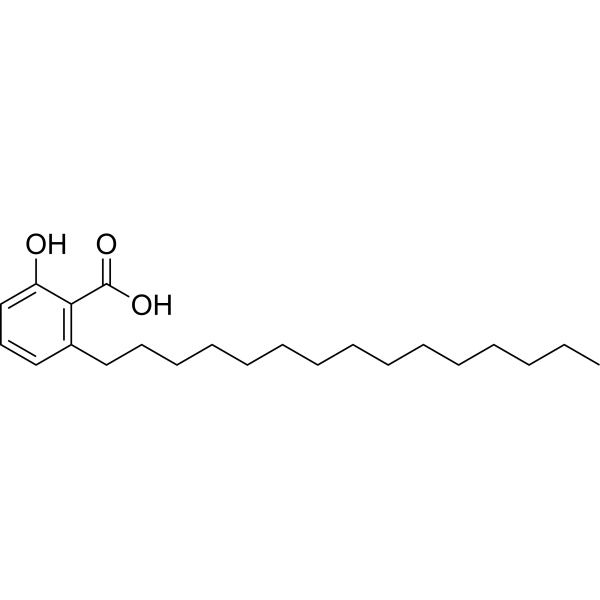
Cat. No.: HY-N2020
CAS No.: 16611-84-0
Synonyms: Hydroginkgolic acid; Ginkgolic Acid C15:0
Anacardic Acid, extracted from cashew nut shell liquid, is a histone acetyltransferase inhibitor, inhibits HAT activity of p300 and PCAF, with IC50s of ∼8.5 μM and ∼5 μM, respectively.
loading...
    loading...
1
1 Cited Publications
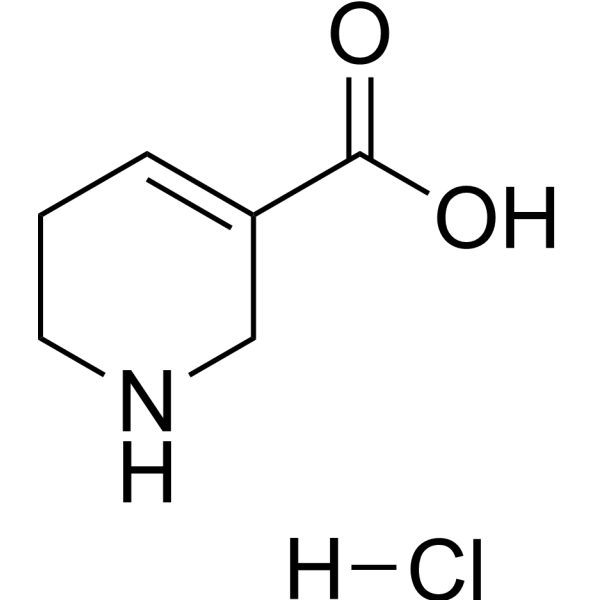
Cat. No.: HY-100809
CAS No.: 6027-91-4
Purity:  99.73%
Guvacine hydrochloride is an alkaloid from the nut of Areca catechu, acts as an inhibitor of GABA transporter, and dispalys modest selectivity for cloned GABA transporters with IC50s of 14 μM (human GAT-1), 39 μM (rat GAT-1), 58 μM (rat GAT-2), 119 μM (human GAT-3), 378 μM (rat GAT-3), and 1870 μM (human BGT-3).
loading...
    loading...
1
1 Cited Publications
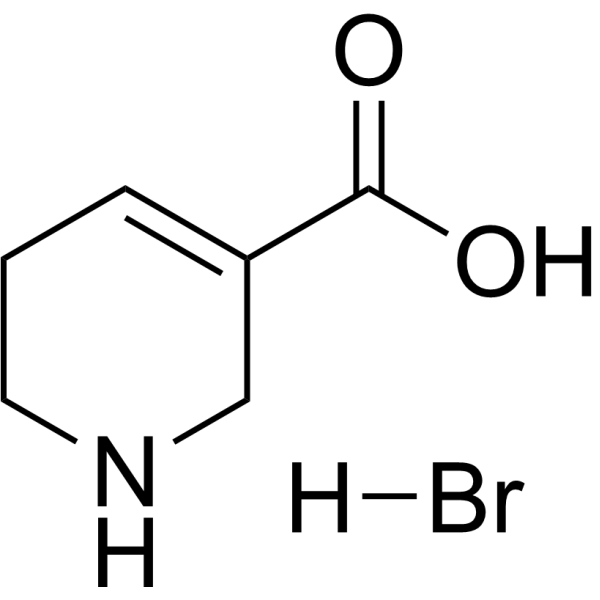
Cat. No.: HY-N2482A
CAS No.: 6027-92-5
Target:  

GABA Receptor

Research Areas:  

Neurological Disease

Guvacine hydrobromide, an alkaloid found in the nut of Areca catechu, is a potent GABA uptakp inhibitor. Guvacine hydrobromide inhibits rat GAT-1, rat GAT-2 and rat GAT-3 with IC50 values of 39 μM, 58 μM and 378 μM, respectively .
loading...
    loading...
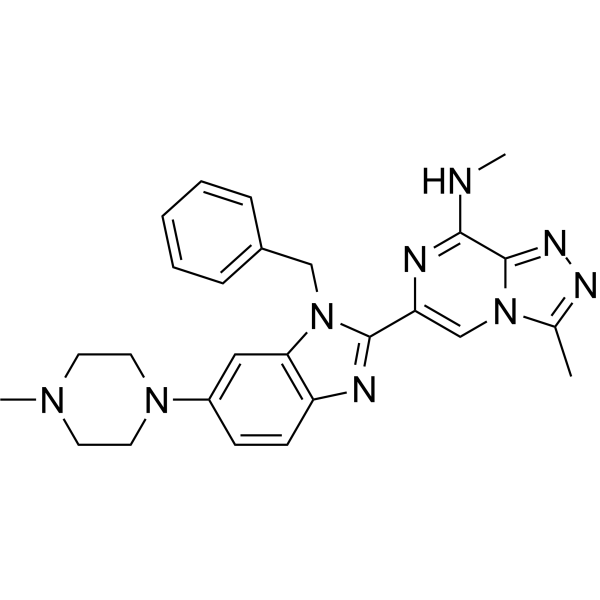
Cat. No.: HY-145550
CAS No.: 1610044-98-8
Purity:  98.97%
Synonyms: BI894999
Research Areas:  

Cancer

Amredobresib (BI894999) is an orally active BET inhibitor. Amredobresib inhibits the binding of BRD4-BD1 and BRD4-BD2 bromodomains to acetylated histones with IC50 values of 5 nM and 41 nM, respectively. Amredobresib exhibits anticancer activity against acute myeloid leukemia (AML) and NUT cancer .
loading...
    loading...
Cat. No.: HY-117286
CAS No.: 1349719-98-7
Purity:  99.46%
Synonyms: TEN-010
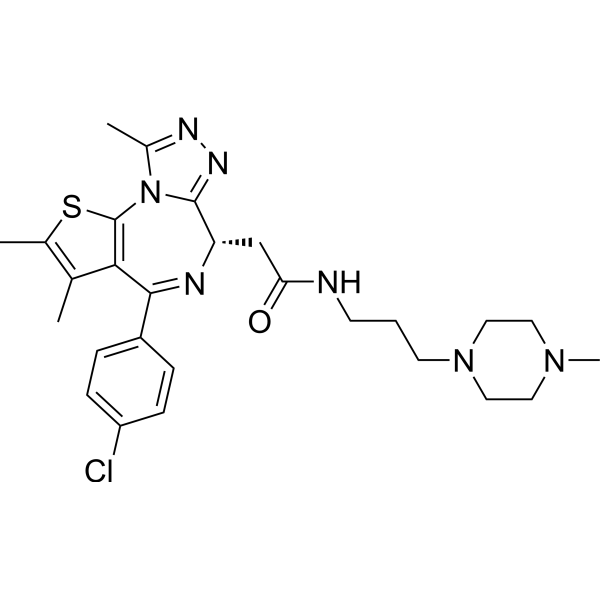
(S)-JQ-35 (TEN-010) is an orally active, blood-brain barrier-permeable bromodomain inhibitor that selectively targets the bromodomain and extra-terminal domain (BET) protein family (BRD4, BRD3, BRD2 and BRDT). (S)-JQ-35 blocks the activation of Myc gene expression by BRD4, thereby inhibiting cancer cell proliferation and promoting cancer cell apoptosis. (S)-JQ-35 can be used in research related to NUT midline carcinoma and neuroblastoma .
loading...
    loading...
Cat. No.: HY-119979
CAS No.: 501-26-8
Purity:  98.02%
Synonyms: Cardanol C15:1
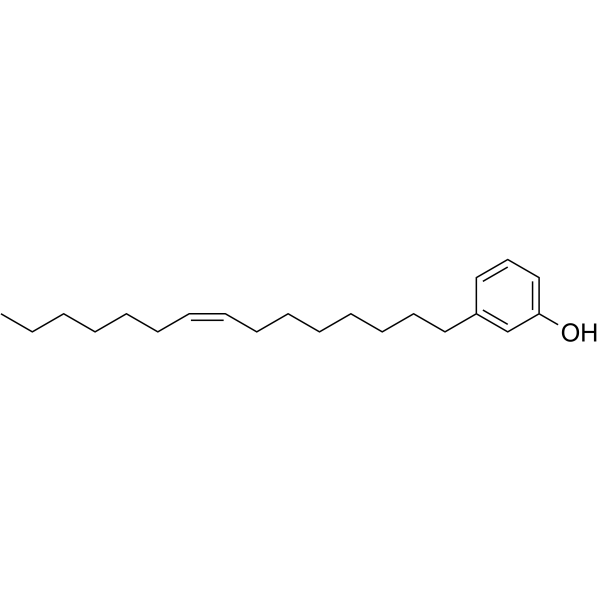
Cardanol monoene (Cardanol C15:1) is a phenolic compound which can be found in cashew nut shell liquid. Cardanol monoene can inhibit cancer cells proliferation, migration, cause S phase arrest, induce apoptosis, ROS production and mitochondrial depolarization. Cardanol monoene downregulates MMP-2, MMP-9, cyclinA1 expression, regulates CDK2, p53, Bax, cytochrome c, cleaved caspase-3, cleaved PARP, Apaf-1 expression and Bax/Bcl-2 ratio. Cardanol monoene shows weak DPPH radical scavenging activity and AChE inhibition activity. Cardanol monoene is lethal to Artemia salina nauplii. Cardanol monoene. Cardanol monoene can be used for the research of cancer, infection and inflamation .
loading...
    loading...
Cat. No.: HY-W001909
CAS No.: 532-12-7
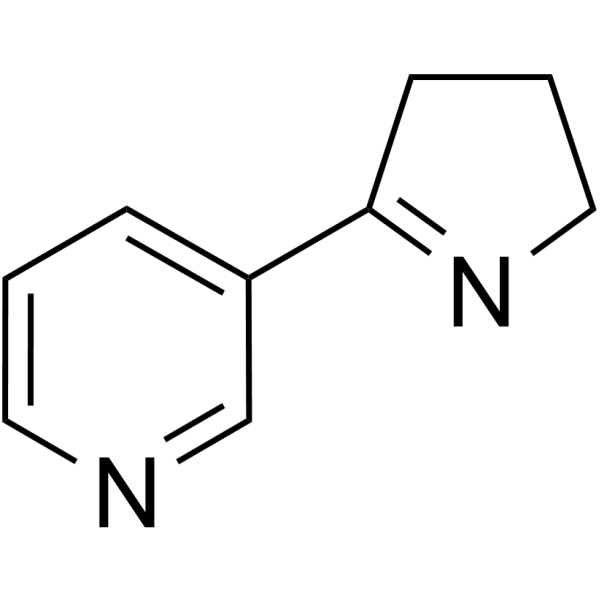
Myosmine, a specific tobacco alkaloid in nuts and nut products, has low affinity for a4b2 nicotinic acetylcholinergic receptors (nAChR) with a Ki of 3300 nM .
loading...
    loading...
Cat. No.: HY-114788
CAS No.: 106325-92-2
Synonyms: L-Lysyl-L-cysteine; Lys-Cys; H-Lys-Cys-OH
Research Areas:  

Others

Lysylcysteine (L-Lysyl-L-cysteine) is a dipeptide composed of lysine and cysteine. Lysylcysteine can be used for the synthesis of the antioxidant Lys-Cys-His-Lys-Pro (KCHKP) .
loading...
    loading...
Cat. No.: HY-W001909S
CAS No.: 66148-17-2
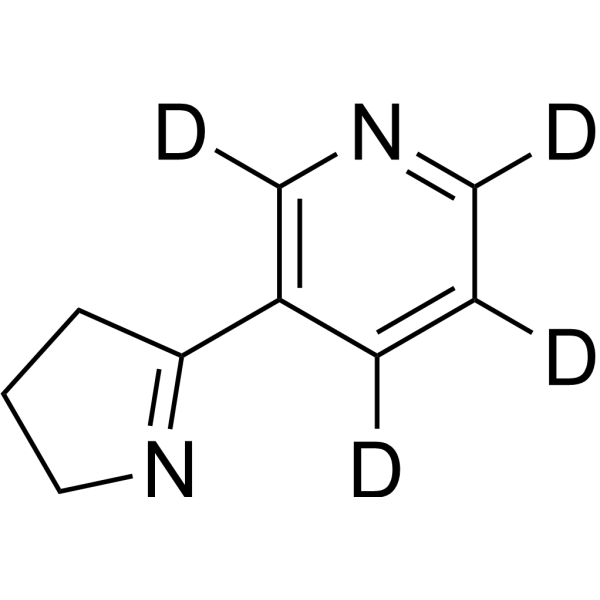
Myosmine-d4 is the deuterium labeled Myosmine. Myosmine, a specific tobacco alkaloid in nuts and nut products, has low affinity for a4b2 nicotinic acetylcholinergic receptors (nAChR) with a Ki of 3300 nM .
loading...
    loading...
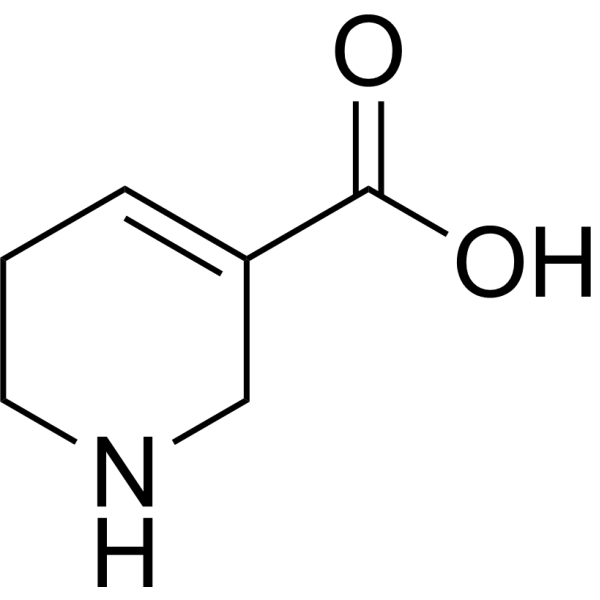
Cat. No.: HY-N2482
CAS No.: 498-96-4
Guvacine, an alkaloid found in the nut of Areca catechu, is a potent GABA uptakp inhibitor. Guvacine inhibits rat GAT-1, rat GAT-2 and rat GAT-3 with IC50 values of 39 μM, 58 μM and 378 μM, respectively .
loading...
    loading...
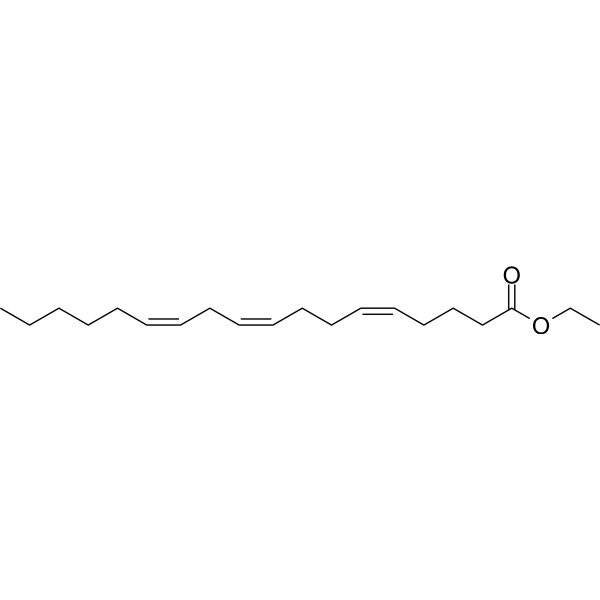
Cat. No.: HY-124187
CAS No.: 493015-74-0
Purity:  ≥98.0%
Synonyms: Ethyl pinolenate
Pinolenic acid is a polyunsaturated fatty acid found in the seed oils of red pine (Pinus orientalis) and maritime pine (Pinus pinaster). Both oils were found to have lipid-lowering properties. A diet containing marine pine nut oil (MPSO) reduces HDL and ApoA1 levels in transgenic mice expressing human ApoA1. MPSO was found to reduce cholesterol efflux in vitro. Korean pine nut oil supplements may help obesity by reducing appetite. People who take this oil experience an increase in the satiety hormones CCK and GLP-1 and a decrease in appetite. The activity of the oil is attributed to pinolenic acid. Pinolenic acid is not metabolized to arachidonic acid and can reduce the level of arachidonic acid in the phosphatidylinositol fraction of HepG2 cells from 15.9% to 7.0%. Pinolenic acid ethyl ester is a neutral, more lipophilic form of the free acid.
loading...
    loading...
Cat. No.: HY-N2020R
CAS No.: 16611-84-0
Synonyms: Hydroginkgolic acid (Standard); Ginkgolic Acid C15:0 (Standard)
Anacardic Acid (Standard) is the analytical standard of Anacardic Acid. This product is intended for research and analytical applications. Anacardic Acid, extracted from cashew nut shell liquid, is a histone acetyltransferase inhibitor, inhibits HAT activity of p300 and PCAF, with IC50s of ~8.5 μM and ~5 μM, respectively.
loading...
    loading...
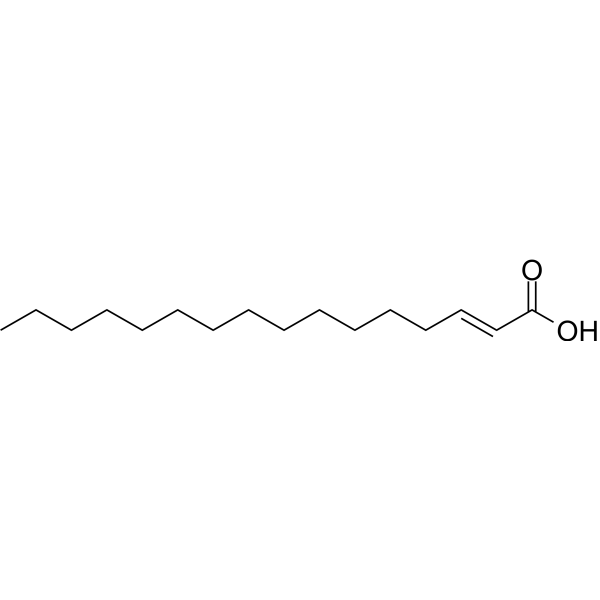
Cat. No.: HY-131306B
CAS No.: 629-56-1
Synonyms: Gaidic acid
2-Hexadecenoic acid is a natural unsaturated fatty acid. It is ubiquitously present in various animal and plant tissues, especially adipose tissue and certain vegetable oils, such as macadamia nut oil. 2-Hexadecenoic acid has unique chemical properties that make it an important component of cell membranes and storage lipids, and participates in various metabolic processes such as lipid metabolism and inflammation. It's also been linked to potential health benefits, including improved insulin sensitivity and a lower risk of heart disease.
loading...
    loading...
Cat. No.: HY-N9407
CAS No.: 18513-76-3
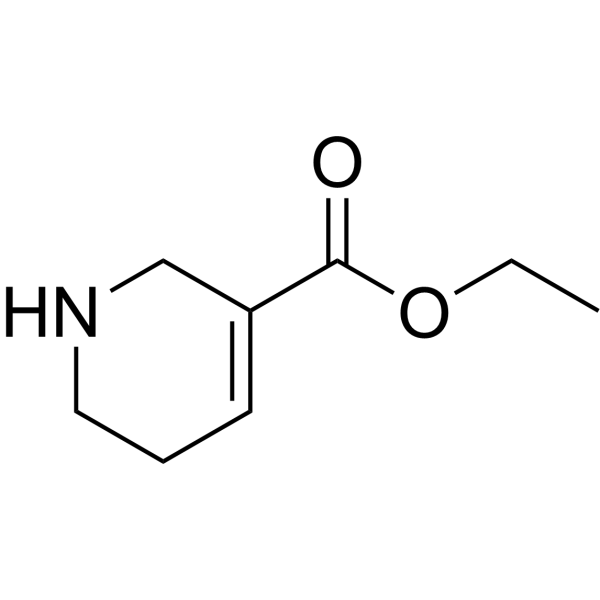
Guvacine ethyl ester (3.1b) is an alkaloid that can be found in betel nut. Guvacine ethyl ester can be used in the synthesis of GABA uptake inhibitor .
loading...
    loading...
Cat. No.: HY-RS09706
Research Areas:  

Others

NUTM1 Human Pre-designed siRNA Set A contains three designed siRNAs for NUTM1 gene (Human), as well as a negative control, a positive control, and a FAM-labeled negative control.

loading...
    loading...
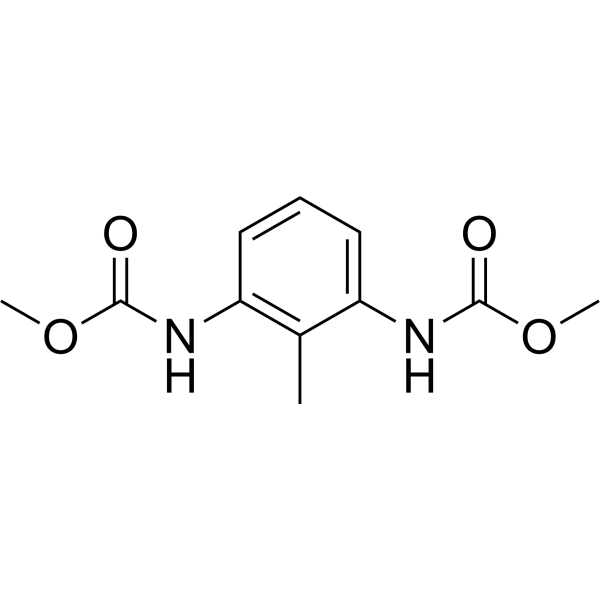
Cat. No.: HY-N3162
CAS No.: 20913-18-2
Category:  

Natural Products Animals

Target:  

Others

Obtucarbamate B is a carbamate derivative, that can be isolated from the South China Sea gorgonian coral Melitodes squamata Nutting .
loading...
    loading...
Cat. No.: HY-W001909R
CAS No.: 532-12-7
Myosmine (Standard) is the analytical standard of Myosmine. This product is intended for research and analytical applications. Myosmine, a specific tobacco alkaloid in nuts and nut products, has low affinity for a4b2 nicotinic acetylcholinergic receptors (nAChR) with a Ki of 3300 nM .
loading...
    loading...
Cat. No.: HY-121374
CAS No.: 51546-63-5
Target:  

Tyrosinase

Research Areas:  

Infection

Cardanol diene is a phenol found in cashew nut shell liquid that inhibits tyrosinase with an IC50 value of 52.5 μM in vitro.1 Cardanol diene is also used to synthesize cardanol-metal complexes that inhibit uropathogenic E. coli biofilm formation.
loading...
    loading...
Cat. No.: HY-127140
CAS No.: 79353-39-2
Target:  

Others

Research Areas:  

Infection

Cardanol triene is a phenol found in cashew nut shell liquid that reversibly inhibits tyrosinase with an IC50 value of 40.5 μM in vitro. A mixture of cardanol mono-, di-, and triene is used to synthesize cardanol-metal complexes that inhibit uropathogenic E. coli biofilm formation.
loading...
    loading...
Cat. No.: HY-177831
Target:  

Liposome

Research Areas:  

Metabolic Disease

Liposomal Vitamin K2 is a specialized delivery system that encapsulates vitamin K2 within tiny liposomes. These liposomes act as protective shells, enhancing the absorption and bioavailability of vitamin K2. Vitamin K2 (menaquinone-7) is?a fat-soluble nut
loading...
    loading...

