1. Search Result
Search Result
Results for "

photodegradation

" in MedChemExpress (MCE) Product Catalog:

32

Inhibitors & Agonists

2

Fluorescent Dye

3

Biochemical Assay Reagents

4

Natural
Products

3

Isotope-Labeled Compounds

Cat. No. Product Name Target Research Areas Chemical Structure
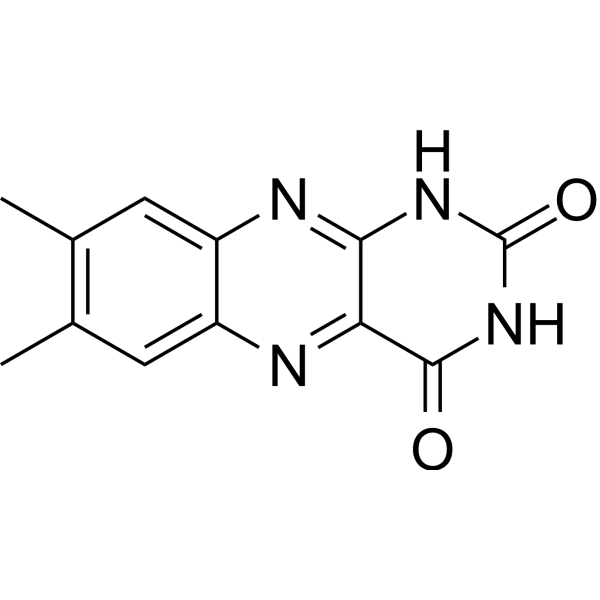
  • HY-115385
    Lumichrome
    2 Publications Verification

    Apoptosis MDM-2/p53 Akt β-catenin Nuclear Factor of activated T Cells (NFAT) NF-κB ERK p38 MAPK Metabolic Disease Cancer
    Lumichrome, a photodegradation product of Riboflavin, is an endogenous compound in humans. Lumichrome inhibits human lung cancer cell growth and induces apoptosis via a p53-dependent mechanism. Lumichrom is the inhibitor for AKT/β-catenin signaling pathway .
    Lumichrome
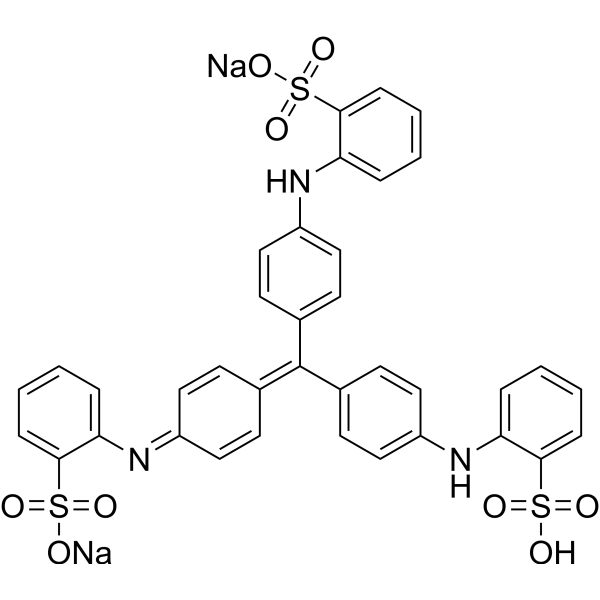
  • HY-D0003

    Environmental Pollutants Bacterial Infection
    Methyl blue belongs to the group of triaminotriphenylmethane dyes. Methyl blue is widely used as antiseptic dye in polychrome staining method and has applications in histological and microbiological staining solutions. Methyl blue has been used as a model to study the effect of various catalysts on photodegradation of dyes .
    Methyl Blue
  • HY-D0077

    Oregon green 488

    Fluorescent Dye Others
    2',7'-Difluorofluorescein (Oregon green 488) is a fluorescein derivative and a pH-sensitive fluorescent probe (pKa ~4.7). Upon excitation at 488 nm, 2',7'-Difluorofluorescein exhibits pH-sensitive fluorescence intensity through the formation of dianions, while its pH sensitivity decreases under excitation at 450 nm, allowing its use in ratiometric pH analysis. 2',7'-Difluorofluorescein can be used for the quantitative analysis of pH values in the range of 2-7 in submicron aerosol particles. 2',7'-Difluorofluorescein undergoes buffer-mediated and buffer-free excited-state proton transfer between different protonated forms, and its cationic form undergoes rapid excited-state deprotonation. 2',7'-Difluorofluorescein is resistant to photodegradation, maintains stable absorption and fluorescence properties within the physiological pH range, and serves as a fluorescent protein label, a component of Ca 2+ indicators, a fluorescent imaging agent, and an anisotropy probe .
    2',7'-Difluorofluorescein
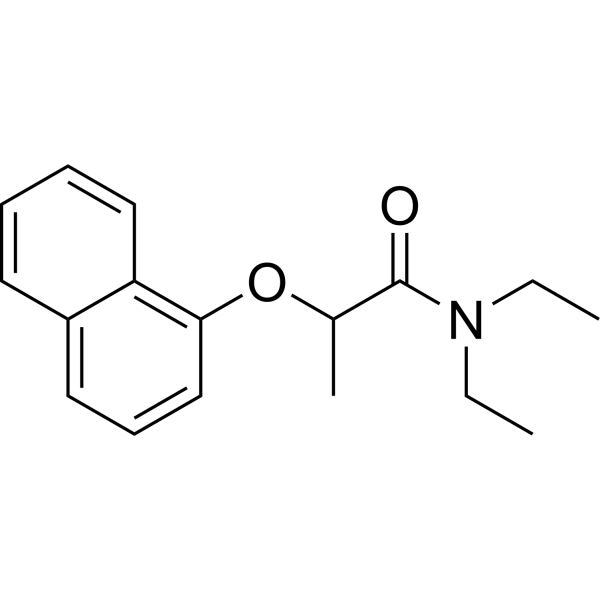
  • HY-B1972

    Napropamid

    Environmental Pollutants DNA/RNA Synthesis Herbicide Others
    Napropamide (Napropamid) is an amide herbicide that can be used to control weeds in fruits, vegetables, tobacco, and ornamental plants. Napropamide mainly exerts its effect by inhibiting DNA synthesis and cell division. Napropamide has moderate to high persistence in the field, with a half-life of 24-131 days, and is prone to photodegradation .
    Napropamide
  • HY-W007577

    Drug Metabolite Others
    4-Nitrobenzaldehyde is a widely used industrial chemical intermediate and also the main photodegradation product of the broad-spectrum antibiotic Chloramphenicol (HY-B0239). 4-Nitrobenzaldehyde has genotoxic and mutagenic effects and poses a certain threat to human health and ecosystems .
    4-Nitrobenzaldehyde
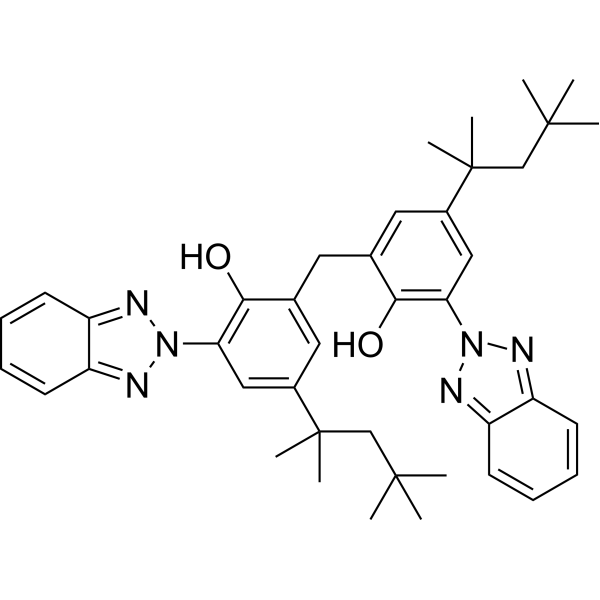
  • HY-B0897
    Bisoctrizole
    1 Publications Verification

    Biochemical Assay Reagents Others
    Bisoctrizole is a broad-spectrum UVA/UVB absorber that belongs to the benzotriazole class of compounds. Bisoctrizole absorbs UV light through hydroxyphenyl groups, causing reversible electronic transitions, thereby converting light energy into heat energy, inhibiting UV-induced material or skin damage. Bisoctrizole is highly efficient in capturing UVA (320-400 nm) and some UVB (280-320 nm) radiation. Bisoctrizole delays the photodegradation of materials such as silicones, improving their UV aging resistance or enhancing the photoprotective ability of sunscreen products .
    Bisoctrizole
  • HY-W086988

    5-Methylbenzotriazole

    Biochemical Assay Reagents Others
    5-Methyl-1H-benzotriazole (5-Methylbenzotriazole) is a benzotriazole derivative, and serves as a key building block for ultraviolet absorbers and light stabilizers. 5-Methyl-1H-benzotriazole reduces the photosensitizing ability of nitrate and dissolved organic matter (DOM), enhances the persistence of microorganic pollutants, inhibits the photodegradation of DOM and drug residues, and quenches the triplet excited states of DOM and methotrexate substructures. 5-Methyl-1H-benzotriazole acts as a corrosion inhibitor for copper and copper alloys, and is present in formulations of anti-icing fluids, dishwasher detergents, aircraft deicing fluids and automotive antifreezes .
    5-Methyl-1H-benzotriazole
  • HY-109116

    Leukomethylene blue

    Biochemical Assay Reagents Others
    Hydromethylthionine (Leukomethylene blue) has a very active photochemically active reagent, especially in its interaction with dissolved oxygen. The photochemical activity of Hydromethylthionine is mainly regulated by the reaction of its triplet state with dissolved oxygen, which reacts with dissolved oxygen to form Methylene Blue (HY-14536) and hydronium ions under ultraviolet light. Hydromethylthionine can be used for the photodegradation of model pollutants in semiconductor photocatalysis and for the study of indicators in chemical analysis .
    Hydromethylthionine
  • HY-W997836

    4-AHP

    Endogenous Metabolite Cancer
    4-Amino-3-hydroxyphenylalanine (4-AHP) is a photodegradation product of Eumelanin. 4-Amino-3-hydroxyphenylalanine can be used for research of melanomagenesis in the skin and age-related macular degeneration .
    4-Amino-3-hydroxyphenylalanine
  • HY-D0485

    Fluorescent Dye Others
    Fluorescent brightener 24 is a stilbene-type fluorescent brightener and fading regulator .
    Fluorescent brightener 24
  • HY-135359

    Drug Metabolite Neurological Disease
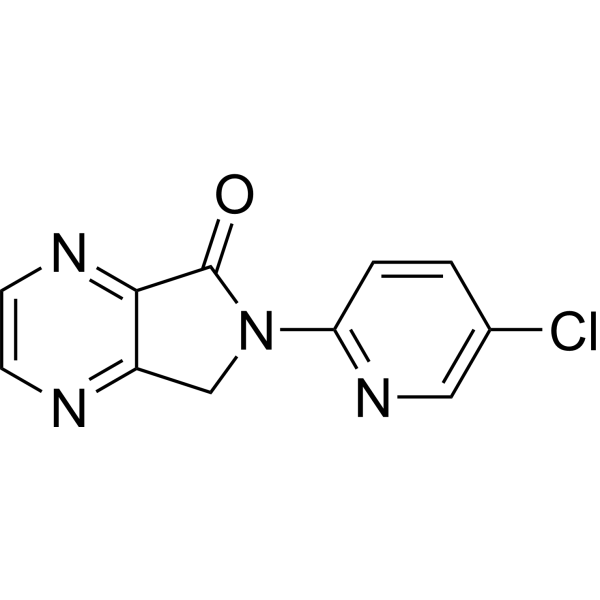
    RP 48497, an impurity of Eszopiclone, is a photodegradation product of Eszopiclone. Eszopiclone is a non-benzodiazepine agent used in the treatment of insomnia .
    RP 48497
  • HY-W783297

    Parasite Infection
    8a-OH-Avermectin B1a is a key primary monooxygenated degradate generated during the photodegradation of Avermectin B1a (HY-15308). 8a-OH-Avermectin B1a can be used for the study of antiparasitic infection .
    8a-OH-Avermectin B1a
  • HY-32952

    6-Fluoropyridine-3-boronic acid

    Drug Intermediate Others
    2-Fluoropyridine-5-boronic acid (6-Fluoropyridine-3-boronic acid) is a drug intermediate that can be used in the synthesis of fatty acid amide hydrolase inhibitors and pyrethroid derivatives .
    2-Fluoropyridine-5-boronic acid
  • HY-115385R

    Reference Standards Apoptosis MDM-2/p53 Akt β-catenin Nuclear Factor of activated T Cells (NFAT) NF-κB ERK p38 MAPK Metabolic Disease Cancer
    Lumichrome (Standard) is the analytical standard of Lumichrome. This product is intended for research and analytical applications. Lumichrome, a photodegradation product of Riboflavin, is an endogenous compound in humans. Lumichrome inhibits human lung cancer cell growth and induces apoptosis via a p53-dependent mechanism. Lumichrom is the inhibitor for AKT/β-catenin signaling pathway. Lumichrom is the inhibitor for AKT/β-catenin signaling pathway .
    Lumichrome (Standard)
  • HY-W775308

    Cannabinoid Receptor Neurological Disease
    Cannabicyclolic acid is a certified reference material categorized as a photodegradation product of the phytocannabinoid Cannabichromenic acid .
    Cannabicyclolic acid
  • HY-W585834

    Insecticide Others
    Fipronil desulfinyl is a photodegradation product of the insecticide Fipronil (HY-B0822) and has similar in vivo toxicity to Fipronil but higher environmental pollution .
    Fipronil desulfinyl
  • HY-135359R

    Drug Metabolite Reference Standards Neurological Disease
    Adenosine 5'-monophosphate (disodium) (Standard) is the analytical standard of Adenosine 5'-monophosphate (disodium). This product is intended for research and analytical applications. Adenosine 5'-monophosphate disodium is an orally active purine nucleotide, and participates in ATP metabolism. Adenosine 5'-monophosphate disodium is also a ligand for adenosine 2B receptor. Adenosine 5'-monophosphate disodium can activate AMPK in skeletal muscle, and ameliorates insulin resistance and impaired glucose metabolism. Adenosine 5'-monophosphate disodium can be used for research of diabetes .
    RP 48497 (Standard)
  • HY-W354971

    Drug Derivative Neurological Disease
    Amisulpride N-oxide is a photodegradation product of Amisulpride (HY-14545) (a dopamine D2/D3 receptor antagonist) .
    Amisulpride N-oxide
  • HY-W997836A

    4-AHP dihydrochloride

    Endogenous Metabolite Cancer
    4-Amino-3-hydroxyphenylalanine dihydrochloride is a photodegradation product of Eumelanin. 4-Amino-3-hydroxyphenylalanine dihydrochloride can be used for research of melanomagenesis in the skin and age-related macular degeneration .
    4-Amino-3-hydroxyphenylalanine dihydrochloride
  • HY-W585834R

    Insecticide Reference Standards Others
    Fipronil desulfinyl (Standard) is the analytical standard of Fipronil desulfinyl. This product is intended for research and analytical applications. Fipronil desulfinyl is a photodegradation product of the insecticide Fipronil (HY-B0822) and has similar in vivo toxicity to Fipronil but higher environmental pollution .
    Fipronil desulfinyl (Standard)
  • HY-W698895

    Isotope-Labeled Compounds Biochemical Assay Reagents Others
    4-Nitrobenzaldehyde-d4 is the deuterium labeled 4-Nitrobenzaldehyde (HY-W007577). 4-Nitrobenzaldehyde is a photodegradation product of chloramphenicol. 4-Nitrobenzaldehyde inhibits plant growth and induces damage of photosynthetic apparatus .
    4-Nitrobenzaldehyde-d4
  • HY-W708917

    Isotope-Labeled Compounds p38 MAPK Apoptosis ERK Akt MDM-2/p53 NF-κB Nuclear Factor of activated T Cells (NFAT) Cancer
    Lumichrome-d8 is the deuterium labeled Lumichrome (HY-115385). Lumichrome, a photodegradation product of Riboflavin, is an endogenous compound in humans. Lumichrome inhibits human lung cancer cell growth and induces apoptosis via a p53-dependent mechanism. Lumichrom is the inhibitor for AKT/β-catenin signaling pathway .
    Lumichrome-d8
  • HY-B1972R

    Napropamid (Standard)

    Herbicide Reference Standards DNA/RNA Synthesis Others
    Napropamide (Standard) (Napropamid (Standard)) is the analytical standard of Napropamide (HY-B1972). This product is intended for research and analytical applications. Napropamide (Napropamid) is an amide herbicide that can be used to control weeds in fruits, vegetables, tobacco, and ornamental plants. Napropamide mainly exerts its effect by inhibiting DNA synthesis and cell division. Napropamide has moderate to high persistence in the field, with a half-life of 24-131 days, and is prone to photodegradation.
    Napropamide (Standard)
  • HY-W007577R

    Reference Standards Drug Metabolite Others
    4-Nitrobenzaldehyde (Standard) is the analytical standard of 4-Nitrobenzaldehyde (HY-W007577). This product is intended for research and analytical applications. 4-Nitrobenzaldehyde is a widely used industrial chemical intermediate and also the main photodegradation product of the broad-spectrum antibiotic Chloramphenicol (HY-B0239). 4-Nitrobenzaldehyde has genotoxic and mutagenic effects and poses a certain threat to human health and ecosystems .
    4-Nitrobenzaldehyde (Standard)
  • HY-B0897R

    Reference Standards Biochemical Assay Reagents Others
    Bisoctrizole (Standard) is the analytical standard of Bisoctrizole (HY-B0897). This product is intended for research and analytical applications. Bisoctrizole is a broad-spectrum UVA/UVB absorber that belongs to the benzotriazole class of compounds. Bisoctrizole absorbs UV light through hydroxyphenyl groups, causing reversible electronic transitions, thereby converting light energy into heat energy, inhibiting UV-induced material or skin damage. Bisoctrizole is highly efficient in capturing UVA (320-400 nm) and some UVB (280-320 nm) radiation. Bisoctrizole delays the photodegradation of materials such as silicones, improving their UV aging resistance or enhancing the photoprotective ability of sunscreen products .
    Bisoctrizole (Standard)
  • HY-W014331

    Herbicide Photosensitizer Others
    Atraton is a 1,3,5-triazine Herbicide and photodegradable substrate. Atraton undergoes photodegradation under the action of the photosensitizer acetone .
    Atraton
  • HY-N11730

    Drug Derivative Others
    6',7'-Epoxyrotenone is a derivative and photodegradation product of Rotenone (HY-B1756), with an acute intraperitoneal LD50 of 7.2 mg/kg in mice .
    6',7'-Epoxyrotenone
  • HY-N11732

    Drug Derivative Inflammation/Immunology
    O-Demethylrotenone is a rotenone (HY-B1756) derivative and a photodegradation product of rotenone that induces acute intraperitoneal toxicity. The acute intraperitoneal LD50 of O-Demethylrotenone in Mus musculus is 8.0 mg/kg .
    O-Demethylrotenone
  • HY-W286414

    DMST

    Drug Derivative Others
    N,N-dimethyl-N'-p-tolylsulfamide (DMST) is a hydrolysis product of Tolylfluanid (HY-W774955). The photodegradation rate of N,N-dimethyl-N'-p-tolylsulfamide in coastal seawater is higher than that in seawater or deionized water .
    N,N-dimethyl-N'-p-tolylsulfamide
  • HY-W720550

    5,6-Epoxy-RP

    DNA/RNA Synthesis Drug Metabolite Cancer
    5,6-Epoxyretinyl palmitate (5,6-Epoxy-RP) is one of the main photodegradation products of Retinyl palmitate (HY-B1384) produced under UVA light irradiation. 5,6-Epoxyretinyl palmitate exhibits phototoxicity to cells and causes significant DNA single-strand breaks, DNA damage, and chromosomal mutations under light conditions .
    5,6-Epoxyretinyl palmitate
  • HY-W724357

    Napropamid-d10

    Isotope-Labeled Compounds DNA/RNA Synthesis Herbicide Others
    Napropamide-d10 (Napropamid-d10) is the deuterium labeled Napropamide (HY-B1972). Napropamide (Napropamid) is an amide herbicide that can be used to control weeds in fruits, vegetables, tobacco, and ornamental plants. Napropamide mainly exerts its effect by inhibiting DNA synthesis and cell division. Napropamide has moderate to high persistence in the field, with a half-life of 24-131 days, and is prone to photodegradation .
    Napropamide-d10
  • HY-181906

    PROTACs Reactive Oxygen Species (ROS) CDK Cancer
    ZnPc-PEG2-VH032 is a VHL-pathway-dependent photodegradation targeting chimera (PDTAC) and cytotoxic agent. ZnPc-PEG2-VH032 (HY-120217) binds to the VHL ligand domain, and then specifically degrades VHL under light irradiation, a process independent of non-specific ROS-mediated protein damage. ZnPc-PEG2-VH032 uses Zinc phthalocyanine (HY-19204) as a photosensitizer, and generates ROS via type I and type II photodynamic pathways under 680 nm LED irradiation. On one hand, it targets and degrades the bound VHL protein through ROS; on the other hand, it exerts direct photodynamic cytotoxicity. Meanwhile, the degradation of VHL downregulates the phosphorylation level of CDK2/4, induces cell cycle arrest in tumor cells, further enhances the sensitivity of tumor cells to oxidative damage caused by ROS, and achieves a synergistic anti-tumor effect. ZnPc-PEG2-VH032 exerts significant in vivo efficacy in an orthotopic mouse model of non-muscle invasive bladder cancer (NMIBC) .
    ZnPc-PEG2-VH032

Inquiry Online

Your information is safe with us. * Required Fields.

Salutation


Country or Region *

Applicant Name *


Organization Name *

Department *


Email Address *


Product Name *

Cat. No.


Requested quantity *

Phone Number *


Remarks

Inquiry Online

Inquiry Information

Product Name:
Cat. No.:
Quantity:
MCE Japan Authorized Agent:

