1. Search Result
Search Result
Isoforms Recommended: Caspase 3
Results for "

procaspase-3

" in MedChemExpress (MCE) Product Catalog:

20

Inhibitors & Agonists

5

Peptides

1

Natural
Products

2

Recombinant Proteins

1

Isotope-Labeled Compounds

Cat. No. Product Name Target Research Areas Chemical Structure
  • HY-12290
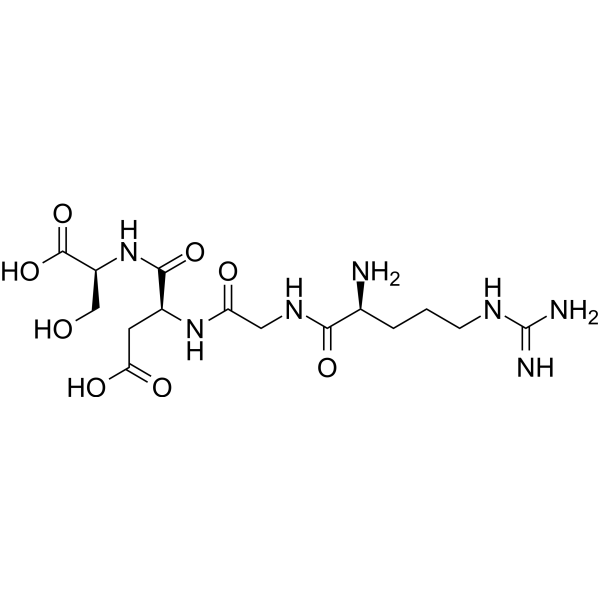
    Arg-Gly-Asp-Ser
    Maximum Cited Publications
    9 Publications Verification

    RGDS peptide; Fibronectin tetrapeptide

    Integrin Inflammation/Immunology
    Arg-Gly-Asp-Ser is an integrin binding sequence that inhibits integrin receptor function. Arg-Gly-Asp-Ser directly and specifically bind pro-caspase-8, pro-caspase-9 and pro-caspase-3, while it does not bind pro-caspase-1.
    Arg-Gly-Asp-Ser
  • HY-P1740
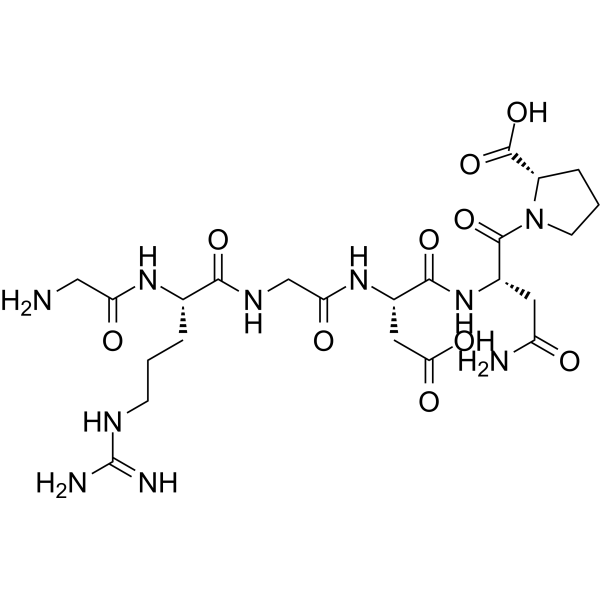
    RGD peptide (GRGDNP)
    5+ Cited Publications

    Integrin Apoptosis Caspase Inflammation/Immunology
    RGD peptide (GRGDNP) is an inhibitor of integrin-ligand interactions. RGD peptide (GRGDNP) competitively inhibits α5β1 binding with extracellular matrice (ECM). RGD peptide (GRGDNP) promotes apoptosis through activation of conformation changes that enhance pro-caspase-3 activation and autoprocessing. RGD peptide (GRGDNP) plays an important role in cell adhesion, migration, growth, and differentiation [3].
    RGD peptide (GRGDNP)
  • HY-100472

    Caspase Cancer
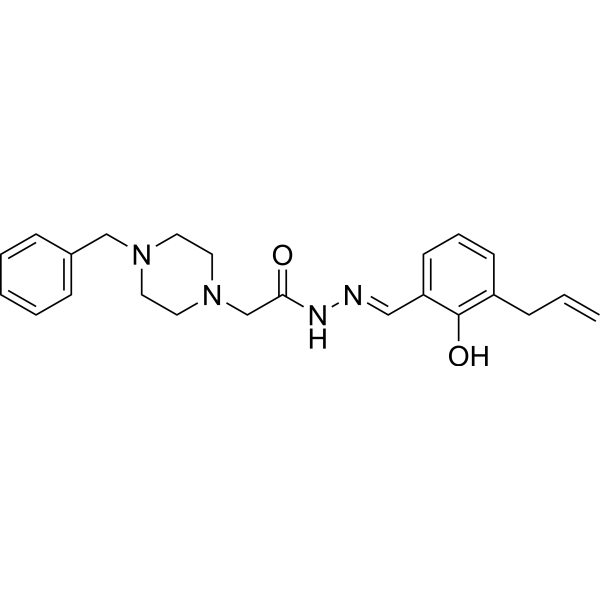
    ZYZ-488 is a competitive apoptotic protease activating factor-1 (Apaf-1) inhibitor. ZYZ-488 inhibits the activation of binding protein procaspase-9 and procaspase-3 .
    ZYZ-488
  • HY-13523
    PAC-1
    5+ Cited Publications

    procaspase activating compound 1

    Caspase Autophagy Apoptosis Cancer
    PAC-1 is a procaspase-3 activator that induces apoptosis in cancer cells with an EC50 of 2.08 μM.
    PAC-1
  • HY-P1740A
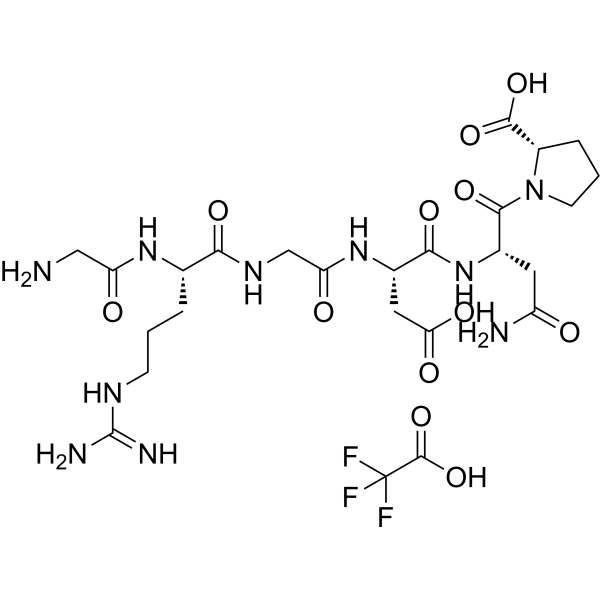
    RGD peptide (GRGDNP) TFA
    5+ Cited Publications

    Integrin Apoptosis Inflammation/Immunology Cancer
    RGD peptide (GRGDNP) TFA is an inhibitor of integrin-ligand interactions. RGD peptide (GRGDNP) TFA competitively inhibits α5β1 binding with extracellular matrice (ECM). RGD peptide (GRGDNP) TFA promotes apoptosis through activation of conformation changes that enhance pro-caspase-3 activation and autoprocessing. RGD peptide (GRGDNP) TFA plays an important role in cell adhesion, migration, growth, and differentiation [3].
    RGD peptide (GRGDNP) TFA
  • HY-10131

    Caspase Others
    Procaspase-3/6 activator 1 (compound 1541) is a highly specific and robust activator of executioner procaspases-3 and -6, with EC50 values of 2.4 ± 0.2 and 2.8 ± 0.3 μM, respectively. Procaspase-3/6 activator 1 does not activate procaspases-1 or -7 .
    Procaspase-3/6 activator 1
  • HY-131688

    PARP Caspase Inflammation/Immunology
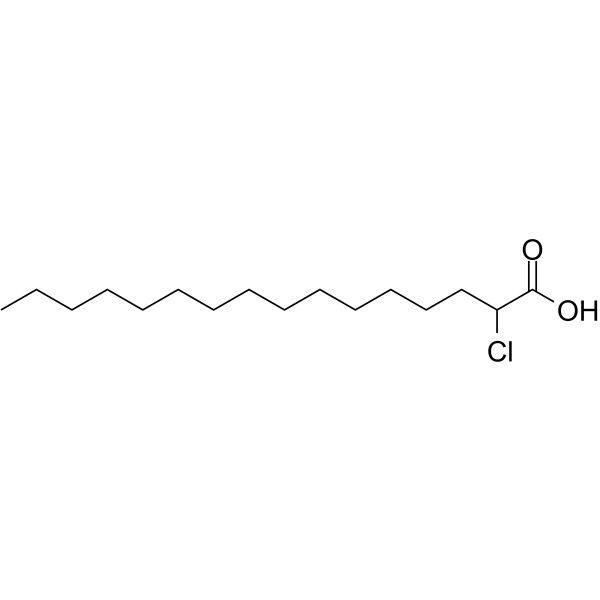
    2-Chlorohexadecanoic acid, an inflammatory lipid mediator, interferes with protein palmitoylation,induces ER-stress markers, reduced the ER ATP content, and activates transcription and secretion of IL-6 as well as IL-8.2-Chlorohexadecanoic acid disrupts the mitochondrial membrane potential and induces procaspase-3 and PARP cleavage.2-Chlorohexadecanoic acid can across blood-brain barrier (BBB) and compromises ER- and mitochondrial functions in the human brain endothelial cell line hCMEC/D3 .
    2-Chlorohexadecanoic acid
  • HY-W748509

    Caspase Apoptosis Cancer
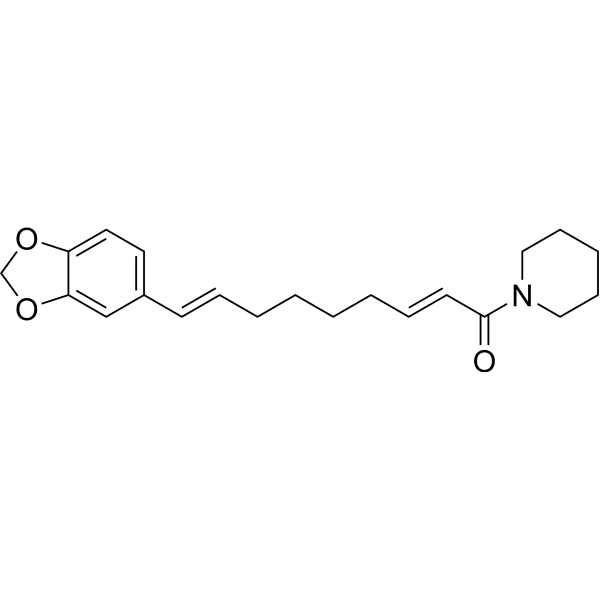
    Pipernonaline is a piperine derivative with antiprostate cancer activity. Pipernonaline inhibits the proliferation of androgen-dependent/independent LNCaP/PC-3 prostate cells. Pipernonaline activates caspase-3 and promotes procaspase-3/PARP cleavage. Pipernonaline also mediates reactive oxygen species (ROS) production, increased intracellular Ca(2+), and mitochondrial membrane depolarization .
    Pipernonaline
  • HY-113471

    Apoptosis HSV Infection Inflammation/Immunology Cancer
    Perillic acid is the metabolite of Perillyl alcohol (HY-N7000). Perillic acid induces lung cancer cell cycle arrest and apoptosis. Perillic acid shows anti-HSV-1 and immunomodulatory activities [3].
    Perillic acid
  • HY-179699

    Caspase Apoptosis Cancer
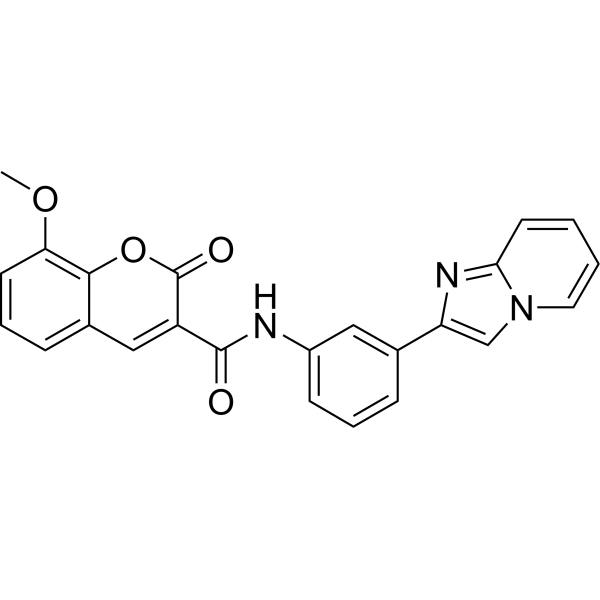
    Procaspase-3 activator 1 is a potent procaspase-3 activator. Procaspase-3 activator directly activates procaspase-3 through zinc chelation, thereby inducing apoptosis and inhibiting cancer cell proliferation. Procaspase-3 activator 1 can be used for the research of non-small cell lung cancer (NSCLC) and melanoma .
    Procaspase-3 activator 1
  • HY-117614

    Caspase Apoptosis Cancer
    WF-210 is a potent procaspase-3 activator with an EC50 value of 0.95 μM. WF-210 induces Apoptosis. WF-210 has anti-tumor activity .
    WF-210
  • HY-13523S

    procaspase activating compound 1-d8

    Isotope-Labeled Compounds Apoptosis Caspase Autophagy Cancer
    PAC-1-d8 (Procaspase activating compound 1-d8) is the deuterium labeled PAC-1 (HY-13523). PAC-1 is a procaspase-3 activator that induces apoptosis in cancer cells with an EC50 of 2.08 μM.
    PAC-1-d8
  • HY-N5033

    Bcl-2 Family Caspase Cancer
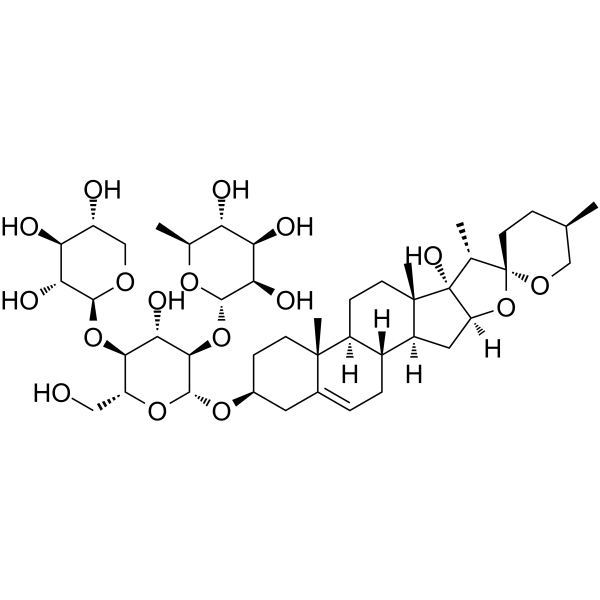
    17-Hydroxy sprengerinin C (compound 10) is a glycoside compound isolated from rhizomes of Polygonatum sibiricum. 17-Hydroxy sprengerinin C possesses stronger anticancer activities. 17-Hydroxy sprengerinin C reduces the expression of Blc-2 and pro-caspase3 and increases the production of Bax .
    17-Hydroxy sprengerinin C
  • HY-119420

    Antibiotic Apoptosis Caspase JNK p38 MAPK TNF Receptor ERK NF-κB Mitochondrial Metabolism Inflammation/Immunology Cancer
    Acetoxycycloheximide is an antibiotic with antitumor activity. Acetoxycycloheximide a protein synthesis inhibitor. Acetoxycycloheximide significantly induces activation of procaspase-3 and subsequent apoptosis mediated by the Cytochrome c from mitochondria via activation of JNK pathway. Acetoxycycloheximide triggers the downregulation of cell surface TNF-R1 via the activation of ERK and p38 MAPK, thereby preventing activation of the NF-κB signaling pathway by TNF-α. Acetoxycycloheximide is much more toxic to female rats than to males. Acetoxycycloheximide can be used for inflammatory and immune diseases and cancers research [3].
    Acetoxycycloheximide
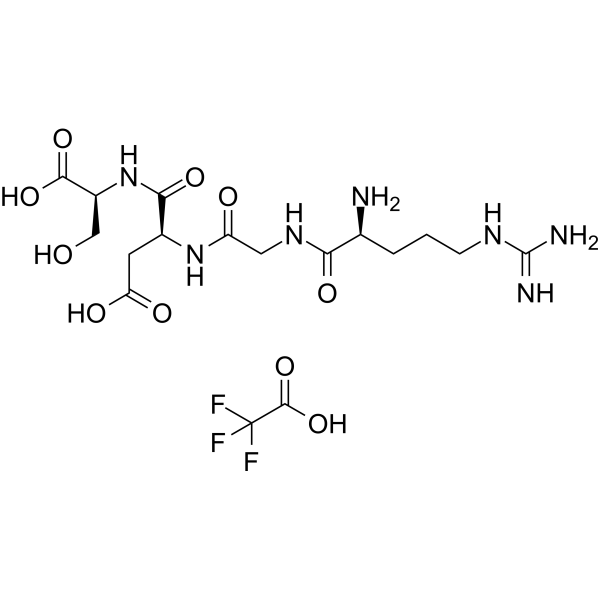
  • HY-12290A

    RGDS peptide TFA; Fibronectin tetrapeptide TFA

    Integrin Inflammation/Immunology
    Arg-Gly-Asp-Ser (TFA) is an integrin binding sequence that inhibits integrin receptor function. Arg-Gly-Asp-Ser (TFA) directly and specifically bind pro-caspase-8, pro-caspase-9 and pro-caspase-3, while it does not bind pro-caspase-1 .
    Arg-Gly-Asp-Ser TFA
  • HY-12290R

    RGDS peptide (Standard); Fibronectin tetrapeptide (Standard)

    Integrin Reference Standards Inflammation/Immunology
    Arg-Gly-Asp-Ser (Standard) is the analytical standard of Arg-Gly-Asp-Ser. This product is intended for research and analytical applications. Arg-Gly-Asp-Ser is an integrin binding sequence that inhibits integrin receptor function. Arg-Gly-Asp-Ser directly and specifically bind pro-caspase-8, pro-caspase-9 and pro-caspase-3, while it does not bind pro-caspase-1.
    Arg-Gly-Asp-Ser (Standard)
  • HY-100472R

    Caspase Reference Standards Cancer
    ZYZ-488 (Standard) is the analytical standard of ZYZ-488 (HY-100472). This product is intended for research and analytical applications. ZYZ-488 is a competitive apoptotic protease activating factor-1 (Apaf-1) inhibitor. ZYZ-488 inhibits the activation of binding protein procaspase-9 and procaspase-3 .
    ZYZ-488 (Standard)
  • HY-131688R

    PARP Caspase Reference Standards Inflammation/Immunology
    Neomycin (sulfate) (Standard) is the analytical standard of Neomycin (sulfate). This product is intended for research and analytical applications. Neomycin sulfate, an aminoglycoside antibiotic, exerts antibacterial activity through irreversible binding of the nuclear 30S ribosomal subunit, thereby blocking bacterial protein synthesis. Neomycin sulfate is a known phospholipase C (PLC) inhibitor. Neomycin sulfate potently inhibits both nuclear translocation of angiogenin and angiogenin-induced cell proliferation and angiogenesis .
    2-Chlorohexadecanoic acid (Standard)
  • HY-181168

    Caspase Pyroptosis Inflammation/Immunology
    Lb54 is a caspase-3 and caspase-7 activator with an EC50 of 660.9 nM for human procaspase-3. Lb54 activates caspase-3/7, which cleaves Gasdermin D (GSDMD) at aspartic acid residue 87 to generate a p10 fragment, preventing formation of the pore-forming p30 fragment of GSDMD. Lb54 suppresses GSDMD-mediated pyroptosis through caspase-3/7 activation, thereby attenuating inflammatory responses and conferring protection against sepsis. Lb54 alleviates acute lung injury, and inhibited systemic inflammation by restraining the maturation of monocyte-derived dendritic cells. Lb54 can be used for the research of sepsis .
    Lb54
  • HY-10132

    Caspase Cancer
    CASP3 activator 1 (compound 1541) Ais an activator of executioner procaspases 3, 6 and 7. CASP3 activator 1 can be used for the research of cancer, neoplastic diseases .
    CASP3 activator 1

Inquiry Online

Your information is safe with us. * Required Fields.

Salutation


Country or Region *

Applicant Name *


Organization Name *

Department *


Email Address *


Product Name *

Cat. No.


Requested quantity *

Phone Number *


Remarks

Inquiry Online

Inquiry Information

Product Name:
Cat. No.:
Quantity:
MCE Japan Authorized Agent:

